
All Topics  
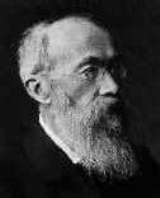
Wilhelm Wundt

 
Wilhelm Wundt

   Email Print
   Bookmark   Link


Wilhelm Wundt


Wilhelm Maximilian Wundt (August 16, 1832 - August 31, 1920) was a German
Germany

Germany , officially the Federal Republic of Germany , is a country in Central Europe. It is bordered to the north by the North Sea, Denmark, and the Baltic Sea; to the east by Poland and the Czech Republic; to the south by Austria and Switzerland; and to the west by France, Luxembourg, Belgium, and the Netherlands....
 medical doctor, psychologist, physiologist, and professor, known today as one of the founding figures of modern psychology. He is widely regarded as the "father of experimental psychology
Experimental psychology

Experimental psychology approaches psychology as one of the natural sciences, investigates it using the experiment. The focus of experimental psychology is on discovering the underlying processes behind behavior and the specific nature of mental life....
". In 1879, Wundt founded one of the first formal laboratories for psychological research at the University of Leipzig
University of Leipzig

The University of Leipzig , located in Leipzig in the Free State of Saxony, Germany, is one of the oldest University in Europeand currently the List_of_universities_in_Germany#Universities_by_age university in Germany....
. By creating this laboratory he was able to explore the nature of religious beliefs, identify mental disorders and abnormal behavior, and map damaged areas of the human brain.


Discussion
Ask a question about 'Wilhelm Wundt'
Start a new discussion about 'Wilhelm Wundt'
Answer questions from other users
Full Discussion Forum


Recent Posts


Encyclopedia


Wilhelm Maximilian Wundt (August 16, 1832 - August 31, 1920) was a German
Germany

Germany , officially the Federal Republic of Germany , is a country in Central Europe. It is bordered to the north by the North Sea, Denmark, and the Baltic Sea; to the east by Poland and the Czech Republic; to the south by Austria and Switzerland; and to the west by France, Luxembourg, Belgium, and the Netherlands....
 medical doctor, psychologist, physiologist, and professor, known today as one of the founding figures of modern psychology. He is widely regarded as the "father of experimental psychology
Experimental psychology

Experimental psychology approaches psychology as one of the natural sciences, investigates it using the experiment. The focus of experimental psychology is on discovering the underlying processes behind behavior and the specific nature of mental life....
". In 1879, Wundt founded one of the first formal laboratories for psychological research at the University of Leipzig
University of Leipzig

The University of Leipzig , located in Leipzig in the Free State of Saxony, Germany, is one of the oldest University in Europeand currently the List_of_universities_in_Germany#Universities_by_age university in Germany....
. By creating this laboratory he was able to explore the nature of religious beliefs, identify mental disorders and abnormal behavior, and map damaged areas of the human brain. By doing this he was able to establish Psychology as a separate science from other topics. He also formed the first journal
Scientific journal

In academic publishing, a scientific journal is a periodical publication intended to further the progress of science, usually by reporting new research....
 for psychological research in 1881.

Biography


Formative years

Wundt was born at Neckarau, Baden
Baden

Baden is a historical state on the east bank of the Rhine River in the southwest of Germany, now the western part of the Baden-W?rttemberg of Germany....
, the fourth child to parents Maximilian Wundt (a Lutheran minister), and his wife Marie Frederike. He studied from 1851 to 1856 at the University of Tübingen, University of Heidelberg, and the University of Berlin. After graduating in medicine
Medicine

Medicine is the art and science of healing. It encompasses a range of health care practices evolved to maintain and restore health by the prevention and treatment of illness....
 from Heidelberg
Heidelberg

Heidelberg is a city in Baden-W?rttemberg, Germany. As of 2006, over 140,000 people live within the city's area. The town of Heidelberg is an administrative district of its own....
 (1856), Wundt studied briefly with Johannes Peter Müller
Johannes Peter Müller

Johannes Peter M?ller , was a Germany physiologist, comparative anatomy, and ichthyology not only known for his discoveries but also for his ability to synthesize knowledge....
, before joining the University's staff, becoming an assistant to the physicist
Physics

Physics is the natural science which examines basic concepts such as energy, force, and spacetime and all that derives from these, such as mass, charge, matter and its Motion ....
 and physiologist Hermann von Helmholtz
Hermann von Helmholtz

Hermann Ludwig Ferdinand von Helmholtz was a Germany physician and physicist who made significant contributions to several widely varied areas of modern science....
 in 1858. There he wrote Contributions to the Theory of Sense Perception (1858-62). He married Sophie Mau while at Heidelberg. It was during this period that Wundt offered the first course ever taught in scientific psychology, all the while stressing the use of experimental methods drawn from the natural sciences, emphasizing the physiological relationship of the brain and the mind. His background in physiology would have a great effect on his approach to the new science of psychology. His lectures on psychology were published as Lectures on the Mind of Humans and Animals in 1863. He was promoted to Assistant Professor of Physiology at Heidelberg in 1864.

Wundt applied himself to writing a work that came to be one of the most important in the history of psychology, Principles of Physiological Psychology in 1874. The Principles utilized a system of psychology that sought to investigate the immediate experiences of consciousness, including feelings, emotions, volitions and ideas, mainly explored through introspection
Introspection

Introspection is the self-observation and reporting of conscious inner thoughts, Motivation and sensations. It is a conscious mental and usually purposive process relying on thinking, reasoning, and examining one's own thoughts, feelings, and, in more spiritual cases, one's soul....
, or the self-examination of conscious experience by objective observation of one's consciousness.

Wundt's work and influence on modern psychology

Wundt sought to understand the human mind by identifying the constituent parts of human consciousness, in the same way that a chemical compound is broken into various elements. Thus, Wundt essentially imagined psychology as a science, much like physics or chemistry, in which consciousness is a collection of identifiable parts. Parts of Wundt's system were developed and championed by his one-time student, Titchener
Edward B. Titchener

Edward Bradford Titchener, D.Sc., Ph.D., LL.D., Litt.D. was an England and a student of Wilhelm Wundt before becoming a professor of psychology and founding a psychology laboratory in the United States at Cornell University....
, who described his system "Structuralism
Structuralism

Structuralism is an approach to the human sciences that attempts to analyze a specific field as a complex system of interrelated parts. It began in linguistics with the work of Ferdinand de Saussure....
." Several of Wundt's works, including Principles of Physiological Psychology are considered fundamentally important texts in the field of psychology. Though widely recognized as important in the birth and growth of psychology, his influence in psychology today is a subject of debate among experts.

Though Wundt wrote extensively on a variety of subjects, including philosophy, physics, physiology, and of course psychology, the immensity of his collected writings and the 65 year-long duration of his career makes it difficult to identify a single, coherent mode of thought. Wundt is argued by some writers to have been a devout foundationalist
Foundationalism

Foundationalism is any theory in epistemology that holds that beliefs are justified based on what are called basic beliefs . Basic beliefs are beliefs that give justificatory support to other beliefs, and more derivative beliefs are basing relation in epistemology on those more basic beliefs....
, working tirelessly to understand the intricacies of the areas of knowledge he studied to form a coherent, atomistic
Atomism

In natural philosophy, atomism is the philosophical theses that was theoryzed by Leucippus in the fifth century BC. For it all the objects in the universe are composed of very small, indestructible building blocks ? atoms ....
 understanding of the universe. In recognition of Wundt's work, the American Psychological Association
American Psychological Association

The American Psychological Association is a professional organization representing psychology in the United States, with around 148,000 members and an annual budget of around $70m....
 established the "Wilhelm Wundt-William James
William James

William James was a pioneering American psychology and philosophy trained as a medical doctor. He wrote influential books on the young science of psychology, educational psychology, psychology of religion experience and mysticism, and the philosophy of pragmatism....
 Award for Exceptional Contributions to Trans-Atlantic Psychology", which recognizes "a significant record of trans-Atlantic research collaboration."

Several of Wundt's students became eminent psychologists in their own right. They include: the German Oswald Külpe
Oswald Külpe

Oswald K?lpe was one of the structural psychology of the late 19th and early 20th century. He was born at Kandava, Governorate of Courland, and in 1879 graduated from the Gymnasium at Liepaja, where he taught for the next two years....
 (a professor at the University of Würzburg
University of Würzburg

The University of W?rzburg is a university in W?rzburg, Germany, founded in 1402. The university is a member of the Coimbra Group....
); the Americans James McKeen Cattell
James McKeen Cattell

James McKeen Cattell , United States psychology, was the first professor of psychology in the United States at the University of Pennsylvania and long-time editor and publisher of scientific journals and publications, most notably the journal Science....
 (the first professor of psychology in the United States), G. Stanley Hall
G. Stanley Hall

Granville Stanley Hall was a pioneering United States psychologist and educator. His interests focused on childhood development and evolutionary theory....
 (the father of the child psychology movement and adolescent developmental
Youth development

Youth development or adolescent development is the process through which adolescences acquire the cognitive, social, and emotional skills and abilities required to navigate life....
 theorist, head of Clark University
Clark University

Clark University is a private research university and liberal arts college in Worcester, Massachusetts. Founded in 1887 by the industrialist Jonas Clark, it is the oldest institution founded as an all-graduate university....
), Charles Hubbard Judd
Charles Hubbard Judd

Charles Hubbard Judd was an United States educational psychology who played an influential role in the formation of the discipline. Part of the larger scientific movement of this period, Judd pushed for the use of scientific methods to the understanding of education and, thus, wanted to limit the use of theory in the field....
 (Director of the School of Education at the University of Chicago
University of Chicago

The University of Chicago is a private university located principally in the Hyde Park, Chicago neighborhood of Chicago. Although an older university by the same name existed prior to its founding, the modern University of Chicago credits its founding to the oil magnate John D....
), Hugo Münsterberg
Hugo Münsterberg

Hugo M?nsterberg was a Germany-United States psychologist. He was one of the pioneers in applied psychology, extending his research and theories to Industrial / Organizational , legal, medical, clinical, educational and business settings....
 (who contributed to the development of industrial psychology and taught at Harvard University
Harvard University

Harvard University is a private university in Cambridge, Massachusetts, Massachusetts, United States, and a member of the Ivy League. Founded in 1636 by the colonial Massachusetts legislature, Harvard is the Colonial Colleges institution of higher learning in the United States....
), Edward Bradford Titchener
Edward B. Titchener

Edward Bradford Titchener, D.Sc., Ph.D., LL.D., Litt.D. was an England and a student of Wilhelm Wundt before becoming a professor of psychology and founding a psychology laboratory in the United States at Cornell University....
 (who founded the first psychology laboratory in the United States at Cornell University
Cornell University

Cornell University located in Ithaca, New York, USA, is a private university with four Statutory college. Its two medical campuses are in New York City and Education City, Qatar....
), Lightner Witmer
Lightner Witmer

Lightner Witmer is regarded as the inventor of the term "Clinical Psychology" and the co-founder of the world's first Psychological Clinic in 1896 at the University of Pennsylvania....
 (founder of the first psychological clinic
Clinical psychology

Clinical psychology includes the scientific study and application of psychology for the purpose of understanding, preventing, and relieving psychologically-based distress or Mental illness and to promote subjective Mental health and personal development....
 in his country); the English
England

native_name =|conventional_long_name = England|common_name = England|image_flag = Flag of England.svg|image_coat = England COA.svg|symbol_type = Royal Coat of Arms...
 Charles Spearman
Charles Spearman

Charles Edward Spearman, Fellow of the Royal Society was an England psychologist known for work in statistics, as a pioneer of factor analysis, and for Spearman's rank correlation coefficient....
 (who developed the two-factor theory of intelligence and several important statistical analyses - see Factor analysis
Factor analysis

Factor analysis is a statistics method used to describe variance among observed variables in terms of fewer unobserved variables called factors....
, Spearman's rank correlation coefficient
Spearman's rank correlation coefficient

In statistics, Spearman's rank correlation coefficient or Spearman's rho, named after Charles Spearman and often denoted by the Greek letter rho or as , is a non-parametric statistics measure of correlation – that is, it assesses how well an arbitrary monotonic function could describe the relationship between two variables, witho...
); the Romania
Romania

Romania is a country located in Southeastern Europe Central Europe, North of the Balkan Peninsula, on the Lower Danube, within and outside the Carpathian Mountains, bordering on the Black Sea....
n Constantin Radulescu-Motru
Constantin Radulescu-Motru

Constantin Radulescu-Motru was a Romanian philosopher, psychologist, sociologist, logician, academic, dramatist, as well as centre-left Nationalism politician with a noted Anti-fascism discourse....
 (Personalist
Personalism

Personalism is the school of thought that consists of three main principles, and which can broadly be qualified as species of Humanism :# Only persons are real ,...
 philosopher and head of the Philosophy department at the University of Bucharest
University of Bucharest

The University of Bucharest , in Romania, is a university founded in 1864 by decree of Prince Alexander John Cuza to convert the former Saint Sava College into the current University of Bucharest....
).

Wundt's laboratory students called their approach Ganzheit Psychology ("holistic
Holism

Holism is the idea that all the properties of a given system cannot be determined or explained by its component parts alone. Instead, the system as a whole determines in an important way how the parts behave....
 psychology") following Wundt's death. Much of Wundt's work was derided mid-century in the United States because of a lack of adequate translations, misrepresentations by certain students, and behaviorism
Behaviorism

Behaviorism or Behaviourism,also called the learning perspective is a philosophy of psychology based on the proposition that all things which organisms do ? including acting, thinking and feeling?can and should be regarded as behaviors....
's polemic with the structuralist
Structuralism

Structuralism is an approach to the human sciences that attempts to analyze a specific field as a complex system of interrelated parts. It began in linguistics with the work of Ferdinand de Saussure....
 program. Titchener, a two-year resident of Wundt's lab and one of Wundt's most vocal advocates in the United States, is responsible for several English translations and mistranslations of Wundt's works that supported his own views and approach, which he termed "structuralism" and claimed was wholly consistent with Wundt's position.

Titchener's focus on internal structures of mind was rejected by behaviorists following the ideas of B. F. Skinner
B. F. Skinner

Burrhus Frederic Skinner was an influential American psychologist, author, inventor, advocate for social reform,and poet. He was the Edgar Pierce Professor of Psychology at Harvard University from 1958 until his retirement in 1974....
; the latter dominated psychological studies in the mid-1900s. Part of this rejection included Wundt, whose work fell into eclipse during this period. In later decades, his actual positions and techniques have seen reconsideration and reassessment by major psychologists.

An optical illusion
Optical illusion

An optical illusion is characterized by visual perception images that differ from objective reality. The information gathered by the eye is processed in the brain to give a percept that does not tally with a physical measurement of the stimulus source....
 described by him is called Wundt illusion
Wundt illusion

The Wundt illusion is an optical illusion that was first described by the German psychologist Wilhelm Wundt in the 19th century. The two red vertical lines are both straight, but they may look as if they are bowed inwards to some observers....
.

External links

  • in the Virtual Laboratory of the Max Planck Institute for the History of Science
    Max Planck Institute for the History of Science

    The Max Planck Institute for the History of Science in Berlin was established in March 1994. Its research is primarily devoted to a theoretically oriented history of science, principally of the natural sciences, but with methodological perspectives drawn from the cognitive sciences and from cultural history....

Works online

  • Ethics: An Investigation of the Facts and Laws of the Moral Life. Volume 1. (Tr. Edward B. Titchener
    Edward B. Titchener

    Edward Bradford Titchener, D.Sc., Ph.D., LL.D., Litt.D. was an England and a student of Wilhelm Wundt before becoming a professor of psychology and founding a psychology laboratory in the United States at Cornell University....
     et al.) Second Edition, 1902. .
  • Lectures on Human and Animal Psychology. (Trs. Edward B. Titchener
    Edward B. Titchener

    Edward Bradford Titchener, D.Sc., Ph.D., LL.D., Litt.D. was an England and a student of Wilhelm Wundt before becoming a professor of psychology and founding a psychology laboratory in the United States at Cornell University....
     and James E. Creighton.)
    • Second Edition, 1896. .
    • Fourth Edition, 1907. ; ; .
  • Outlines of Psychology. (Tr. Charles Hubbard Judd
    Charles Hubbard Judd

    Charles Hubbard Judd was an United States educational psychology who played an influential role in the formation of the discipline. Part of the larger scientific movement of this period, Judd pushed for the use of scientific methods to the understanding of education and, thus, wanted to limit the use of theory in the field....
    .) Second Edition, 1902. .
  • Principles of Physiological Psychology. Volume 1. (Tr. Edward B. Titchener
    Edward B. Titchener

    Edward Bradford Titchener, D.Sc., Ph.D., LL.D., Litt.D. was an England and a student of Wilhelm Wundt before becoming a professor of psychology and founding a psychology laboratory in the United States at Cornell University....
    .)
    • First Edition, 1904. ; ; ; .
    • Second Edition, 1910. .