


Wigan

Encyclopedia
Wigan is a town in Greater Manchester
, England. It stands on the River Douglas
, 7.9 miles (13 km) south-west of Bolton
, 10 miles (16 km) north of Warrington
and 16 miles (25.7 km) west-northwest of Manchester
. Wigan is the largest settlement in the Metropolitan Borough of Wigan
and is its administrative centre. The town of Wigan had a total population of 81,203 in 2001, whilst the wider borough has a population of 305,600. The town is the headquarters of the Greater Manchester Combined Authority
, the top tier administrative body for Greater Manchester.
Historically
a part of Lancashire
, Wigan during classical antiquity
was in the territory of the Brigantes
, an ancient Celtic tribe that ruled much of northern England
. The Brigantes were subjugated in the Roman conquest of Britain
during the 1st century, and it is asserted that the Roman settlement of Coccium was established where Wigan lies. Wigan is believed to have been incorporated as a borough
in 1246 following the issue of a charter
by King Henry III of England
. At the end of the Middle Ages
it was one of four boroughs in Lancashire possessing Royal charter
s; the others were Lancaster
, Liverpool
, and Preston.
During the Industrial Revolution
Wigan experienced dramatic economic expansion and a rapid rise in the population. Although porcelain manufacture and clock making had been major industries in the town, Wigan subsequently became known as a major mill town
and coal mining
district. The first coal mine was established at Wigan in 1450 and at its peak there were 1,000 pit shafts within 5 miles (8 km) of the town centre. Mining was so extensive that one town councillor remarked that "a coal mine in the backyard was not uncommon in Wigan". Coal mining ceased during the latter part of the 20th century. In 1974, Wigan became a part of Greater Manchester.
Wigan Pier
, a wharf on the Leeds and Liverpool Canal
, was made famous by the writer George Orwell
. In his book, The Road to Wigan Pier
, Orwell highlighted the poor working and living conditions of the local inhabitants during the 1930s. Following the decline of industrial activities in the region, Wigan Pier's collection of warehouses and wharfs became a local heritage centre and cultural quarter. The DW Stadium is home to both Wigan Warriors Rugby League Football Club
and Wigan Athletic Football Club, teams both in the top-flight national leagues of their sport.
, named after a person called Wigan. This may have been linked with Tref, meaning homestead) to give an original name of TrefWigan. The name of the town has been recorded variously as Wigan in 1199, Wygayn in 1240, and Wygan in numerous historical documents.
There is very little evidence of prehistoric activity in the area, especially pre-Iron Age; however, Celtic names in the area around Wigan – such as Bryn
, Makerfield
, and Ince
– indicate that the Celtic people of Britain were active in the area in the Iron Age
. The first people believed to have settled in the Wigan area were the Brigantes
, a Celtic tribe who controlled most of northern Britain. In the 1st century, the area was conquered by the Romans
. The late 2nd-century Antonine Itinerary
mentions a Roman settlement called Coccium 17 miles (27.4 km) from the Roman fort
at Manchester (Mamucium) and 20 miles (32.2 km) from the fort at Ribchester
(Bremetennacum
). Although the distances are slightly out, it has been assumed that Coccium is Roman Wigan. Possible derivations of Coccium include from the Latin coccum, meaning "scarlet in colour, scarlet cloth", or from cocus, meaning "cook". Roman finds from Wigan include coins, a Mithraic
temple beneath the parish church, possible evidence for the remains of a Roman fort at Ship Yard, and what is most likely a mansio
– effectively a Roman hotel – with its own hypocaust and bath house. Despite evidence of Roman activity in the area, there is no conclusive evidence of Wigan being the same site as Coccium, and it has been suggested that it could be located at Standish
to the north of Wigan.
In the Anglo-Saxon
period, the area was probably under the control of the Northumbria
ns and later the Mercia
ns. In the early 10th century there was an influx of Scandinavians expelled from Ireland. This can be seen in place names such as Scholes
– now a part of Wigan – which derives from the Scandinavian skali meaning "hut". Further evidence comes from some street names in Wigan which have Scandinavian origins.
Although Wigan is not mentioned in the Domesday Book
, possibly because it was included in the Neweton barony (now Newton-le-Willows
), it is thought that the mention of a church in the manor
of Neweton is Wigan Parish Church
. The rectors of the parish church were lords of the manor
of Wigan, a sub-manor
of Neweton, until the 19th century. Wigan was incorporated as a borough happened in 1246 following the issue of a charter
by King Henry III
to John Maunsell
, the local church rector and lord of the manor. The borough was later granted another charter in 1257–1258, allowing the lord of the manor to hold a market on every Monday and two annual fairs.
Edward II
visited Wigan in 1323 in an effort to stabilise the region which had been the source of the Banastre Rebellion in 1315. Edward stayed in nearby Upholland
Priory and held court in the town over a period of several days. During the medieval period Wigan expanded and prospered and in 1536, antiquarian
John Leland described the town, saying "Wigan paved; as big as Warrington
and better builded. There is one parish church amid the town. Some merchants, some artificers, some farmers".
In the English Civil War
, the people of the town were Royalists
. James Stanley, 7th Earl of Derby
, who was a prominent and influential Royalist, made Wigan his headquarters. Despite fortifications build around the town, Wigan was captured by Parliamentarian forces on 1 April 1643. The take over was complete in two hours and the town was pillaged before the defences were broken down and the Parliamentarians retreated. The Earl of Derby was absent when the town fell. In 1648, Royalist forces under James Hamilton, 1st Duke of Hamilton
, occupied Wigan after they had been defeated by Oliver Cromwell
at the Battle of Preston
. The soldiers looted the town as they retreated to Warrington, and afterwards it experienced pestilence. Cromwell himself described Wigan as "a great and poor town, and very malignant".
The Battle of Wigan Lane
was fought on 25 August 1651 during the Third English Civil War
, between Royalists under the command of the James Stanley, Earl of Derby
, and elements of the New Model Army
under the command of Colonel Robert Lilburne
. The Royalists were defeated, and although Stanley was injured he managed to escape. As Lord of Mann
, he had enlisted ten men from each parish in the Isle of Man
, 170 in total. David Craine states, "those who did not fall in the fighting [were] hunted to their death through the countryside". A monument on Wigan Lane stands in memory of Sir Thomas Tyldesley, a Royalist, who was killed at the Battle of Wigan Lane.
Wigan was described by Celia Fiennes
, a traveller, in 1698 as "a pretty market town built of stone and brick". In 1720, the moot hall
was rebuilt, funded by the member of the borough. It was used as the town hall and the earliest reference to it dates from the 15th century. Prior to its final destruction in 1869, the hall was rebuilt in 1829. Wigan's status as a centre for coal production, engineering and textiles in the 18th century led to the Douglas Navigation
in the 1740s, the canalisation of part of the River Douglas, and later the diversion of the Leeds and Liverpool Canal
in the 1790s at the request of the mill owners, to transport coal from the Lancashire coal pits to Wigan's mills and was also used extensively to transport local produce. As a mill town
, Wigan was an important centre of textile manufacture during the Industrial Revolution
, but it was not until the 1800s that cotton factories began to spread into the town. This was due to a dearth of fast-flowing streams and rivers in the area, but by 1818 there were eight cotton mills in the Wallgate part of Wigan. In 1818 William Woods introduced the first power loom
s to the Wigan cotton mills. These mills swiftly became infamous for their dangerous and unbearable conditions, low pay and use of child labour. As well as being a mill town, Wigan was also an important centre for coal production. It was recorded that in 1854 there were 54 collieries in and around the town, about a sixth of all collieries in Lancashire.
In the 1830s Wigan became one of the first towns in Britain to be served by a railway; the line had connections to Preston and the Manchester and Liverpool Railway. Wigan began to dominate as a cotton town in the late 19th century, and this lasted until the mid-20th century. In 1911 the town was described as an "industrial town ... occupying the greater part of the township, whilst its collieries, factories ... fill the atmosphere with smoke". After the Second World War
there was a boom followed by a slump from which Wigan's textile industry did not recover. While the town's cotton and coal industries declined in the 20th century, the engineering industry did not go into recession. The last working cotton mill, May Mill
, closed in 1980.
In 1937, Wigan was prominently featured in George Orwell
's The Road to Wigan Pier
which dealt, in large part, with the living conditions of England's working poor. Some have embraced the Orwellian link, as it has provided the area with a modest tourist base over the years. Others regard this connection as disappointing, considering it an insinuation that Wigan is no better now than it was at the time of Orwell's writing.
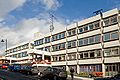 Since 2004, the town of Wigan has been divided between five of the twenty-five wards of the metropolitan borough, each returning 3 councillors to the 75-member borough council. The five wards are: Douglas, Pemberton, Wigan Central, Wigan West and Worsley Mesnes
. The metropolitan council provides the local services.
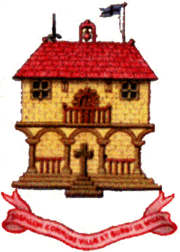 At the Norman Conquest, the settlement of Wigan was part of the larger parish of Wigan which, the majority of which was within the hundred of Newton. On 26 August 1246, Wigan was granted a Royal Charter, making the town a free borough. This happened after Salford was granted its Charter in 1230 and before Manchester in 1301. As a borough, Wigan was represented in the Model Parliament
from 1295–1306 by two burgesses – freemen
of the borough. The Charter allowed taxes to be made on transactions made in the borough by tradesmen and permitted the local burgesses to establish a guild
that would regulate trade in the borough. Non-members of the guild were not allowed to do business in the borough without permission from the burgesses. It is thought that when the Charter was reconfirmation in 1350 it was changed, allowing the election of a mayor of Wigan for the first time. Three burgesses were elected to be presented to the lord of the manor who would choose one man to be mayor for a year.
There was rivalry between the lords of the manor and borough. The lord of the manor complained in 1328 that the burgesses were holding private markets, from which he gained no revenue. The rivalry continued in the 16th century, with Bishop Stanley unsuccessfully challenging the right of the burgesses to hold markets, believing it should be the right of the lord of the manor. In 1583 the corporation
of the borough attempted to usurp the lord of the manor by laying claim to the lordship. They did so because they felt they were fulfilling the duties of the lord: to improve waste and common land
and allowing construction on this land, running courts, and mining coal. A compromise was reached, dividing some power between the two parties.
Under the Municipal Corporations Act 1835
, the town was reformed and was given a commission of the peace
. The borough was divided into five wards
with a town council of forty members: two aldermen
and six councillor
s representing each ward. Rectors from the local parish church were the lords of the manor since records began until 2 September 1861. On this date, the borough corporation bought the rights associated with the lordship. The Local Government Act 1888
constituted all municipal borough
s with a population of 50,000 or more as "county borough
s", exercising both borough and county powers. Wigan accordingly became a county borough on 1 April 1889, giving it independence from Lancashire County Council. Ward boundaries were altered, and the county borough was divided into ten wards, each electing one alderman and three councillors. The former area of Pemberton Urban District
was annexed to the County Borough of Wigan
in 1904, adding four extra wards to the borough. In 1974 the County Borough of Wigan was abolished and its former area transferred to form part of the Metropolitan Borough of Wigan
. In April 2011, the borough along with the entirety of the county of Greater Manchester, became one of 10 constituent councils of the Greater Manchester Combined Authority
.
, which was recreated in 1547 after having covered the borough in the late 13th century. From 1640 until the Redistribution of Seats Act 1885
, the constituency returned two Members of Parliament
(MPs); from then on it had only one. Since 1918, the constituency has been represented by the Labour Party
. Lisa Nandy
is the incumbent Member of Parliament
for Wigan, having been elected in the 2010 general election.
and Ashton-in-Makerfield
, and is about 12 miles (19.3 km) west of Manchester city centre
and 10 miles (16.1 km) north of Warrington, Cheshire
.
The historic town of Wigan forms a tightly-integrated conurbation along with the Metropolitan Borough of Wigan
districts of Orrell
and Ince-in-Makerfield
; this is connected by ribbon development to Standish
and Abram
. These areas, together with the West Lancashire
town of Skelmersdale
, are defined by the Office for National Statistics
as the Wigan Urban Area
, with a total population of 166,840. The town is part of the Manchester Larger Urban Zone.
According to the Office for National Statistics
, at the time of the United Kingdom Census 2001
, Wigan had a population of 81,203. The 2001 population density was 11474 PD/sqmi, with a 100 to 95.7 female-to-male ratio. Of those over 16 years old, 28.9% were single (never married) and 45.0% married. Wigan's 34,069 households included 29.7% one-person, 38.9% married couples living together, 8.5% were co-habiting
couples, and 10.8% single parents with their children. Of those aged 16–74, 38.5% had no academic qualifications, this was significantly higher than the average for the borough as a whole and England.
In 1931, 9.4% of Wigan's population was middle class
compared with 14% in England and Wales, and by 1971, this had increased to 12.4% compared with 24% nationally. Parallel to this slight increase in the middle classes of Wigan was the decline of the working class
population. In 1931, 38.7% were working class compared with 36% in England and Wales; by 1971, this had decreased to 33.5% in Wigan and 26% nationwide. The rest of the population was made up of clerical workers and skilled manual workers or other miscellaneous. The slow decrease in the working class goes against the trend for a steeper national decline, reinforcing the perception of Wigan as a working class town.
As of the 2001 UK census, 87.7% of Wigan's residents reported themselves as being Christian, 0.3% Muslim, 0.2% Hindu, and 0.1% Buddhist. The census recorded 6.2% as having no religion, 0.1% had an alternative religion and 5.4% did not state their religion. The town is part of the Anglican Diocese of Liverpool
and the Roman Catholic Archdiocese of Liverpool
.
The Grand Arcade shopping centre was opened on 22 March 2007. Construction, which cost £120M, started in 2005 on the site of Wigan Casino and The Ritz. The area around the pier is being developed, undergoing a 10-year project rebranding the area as the "Wigan Pier Quarter". Trencherfield Mill, at the centre of the pier development, will be refurbished and used to house a hotel, a restaurant, a cafe, shops, and 200 apartments.
The Wigan Life Centre south building opened on 19 September 2011 housing office accommodation for Wigan Council, Wigan Leisure and Culture Trust and NHS Ashton, Leigh and Wigan and a swimming pool and fitness suite. The north building will open in 2012. Plans for the 18-storey "Tower Grand" were suspended in 2008 due to a slump in the residential homes market. Galleries Shopping Centre houses shops as well as an indoor market.
The former Westwood power station site which was transformed recently into the Westwood Park business park and features a large amount of Wigan MBC office space will be further transformed by the creation of a 55 acres (222,577.3 m²) textiles centre in co-operation with the Chinese state owned trading company Chinamex at a cost of £125M. Up to 1000000 square feet (92,903 m²) of manufacturing and research space will be created along with an estimated 1,000 jobs. Chinamex which represents 70% of the Chinese textiles industry and has 6,300 member companies will in addition offer space in the development to member companies for up to two years at a time to allow the establishment of a British subsidiary before moving on to dedicated premises.
The Tote
chain of bookmaker
s has its headquarters in Wigan, providing about 300 jobs in the town. H. J. Heinz
are amongst the largest food manufacturers in Europe. Their 55 acres (222,577.3 m²) site in Wigan is the largest food processing facility in Europe. JJB Sports
, a nationwide sports clothing retailer, was founded in Wigan as a sports shop by John Jarvis Broughton (later JJ Bradburn) and was bought and expanded by businessman Dave Whelan. Girobank
is also based in the town. William Santus & Co. Ltd, confectioner and producer of Uncle Joe's Mint Balls
, is based in Wigan.
According to the 2001 UK census, the industry of employment of residents aged 16–74 was 22.4% retail and wholesale, 18.8% manufacturing, 10.2% health and social work, 8.6% construction, 8.0% property and business services, 7.4% transport and communications, 6.5% education, 5.2% public administration, 4.1% hotels and restaurants, 2.7% finance, 0.7% energy and water supply, 0.4% agriculture, 0.1% mining, and 4.8% other. Compared to national figures, Wigan had high rates of employment in retail and wholesale (16.9% in England) and manufacturing (14.8% in England), and relatively low levels of employment in agriculture (1.5%). The census recorded the economic activity of residents aged 16–74, 1.9% students were with jobs, 2.9% students without jobs, 5.9% looking after home or family, 10.2% permanently sick or disabled, and 3.2% economically inactive for other reasons.
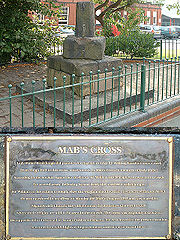 Wigan's long history is reflected in its 216 listed buildings, of which are 20 Grade II*. As well as being a Grade II* listed structure, Mab's Cross
is the only Scheduled Monument
in the town out of 12 in the borough. It is a medieval stone cross that probably dates from the 13th century. There is a legend surrounding the cross that Lady Mabel Bradshaw, wife of Sir William Bradshaw, did penance by walking from her home, Haigh Hall
, to the cross once a week barefoot for committing bigamy
. There is no evidence the legend is true, as there is no record that Lady Mabel was married to anyone other than Sir William Bradshaw, and several facets of the story are incorrect. Haigh Hall was built in 1827–1840 on the site of a medieval manor house
of the same name, which was demolished in 1820. The hall is surrounded by a 250 acres (1 km²) country park, featuring areas of woodland and parkland. The town hall is a Grade II listed building.
Designed by John McClean, Mesnes Park was opened in 1878; McClean was chosen to design the park through a competition. There is a pavilion in the centre and a lake. The Heritage Lottery Fund
has donated £1.8M to regenerate the park and Wigan Metropolitan Borough Council added £1.6M to that figure. The pavilion and grandstand will be restored. The 12 hectares (29.7 acre) Mesnes Park is north-west of Wigan town centre. It receives 2 million visitors a year and used to host the Wigan One World Festival.
Wigan's war memorial was unveiled in 1925. Designed by Giles Gilbert Scott
and funded through public donations, the monument is now a Grade II* listed building and commemorates the fallen soldiers from the town in the First World War and other conflicts. In 2006, the plaques bearing the names of the dead were stolen; a year later they were replaced through council funding. There is also a memorial on Wigan Lane which marks the site where Sir Thomas Tyldesley died in 1651 at the Battle of Wigan Lane.
The Museum of Wigan Life
opened in 1878. A one-year restoration programme began in 2009; the work cost £1.9 million George Orwell used the museum to research The Road to Wigan Pier. Today, the Wigan Pier
Quarter is at the heart of a 10-year regeneration programme that began in 2006 to revitalise the area. Part of Wigan's industrial heritage, Trencherfield Mill
was built in 1907 and is a Grade II listed building. It houses a steam engine over 100 years old which was restored with help from the Heritage Lottery Fund. The quarter is also home to the Wigan Pier Theatre Company which was founded in 1986. The Face of Wigan, located in the town centre since 2008, is a stainless steel sculpture of a face. Created by sculptor Rick Kirby
, The Face stands 5.5 m (18 ft) tall and cost £80,000.
, the club shares the stadium with Wigan Warriors Rugby League Football Club
. It is situated in the Robin Park area of the town. The 25,000-seat stadium is rated as one of the best rugby league
stadiums in the country. It was opened in August 1999, cost £30 million to build, and was called the JJB Stadium until 1 August 2009 when it was renamed the DW Stadium. Wigan Warriors and Wigan Athletic moved into the ground on its completion from their old homes, Central Park
and Springfield Park
respectively. Wigan Warriors compete in the Super League
and Wigan Athletic play in the Premier League. The area has a strong tradition of rugby league
, and the main rugby union
team in the town is the amateur Orrell R.U.F.C.
; before turning amateur in 2007, the team was professional and played in the Guinness Premiership
in the 1990s.
The first professional football club in the town, Wigan Borough, was formed in 1920 and was one of the founder members of the Football League Third Division North
in the 1921/22 season. The team was withdrawn from the league in the 1931/1932 season. Wigan Athletic Football Club was formed in 1932 and were elected to the Football League in 1978. The club was promoted to the Premier League in 2005, and have remained there ever since, reaching the Football League Cup
final in their first season. The football club has ground-shared with rugby club Wigan Warriors at the DW Stadium since it opened in 1999, after 67 years playing at the Springfield Park stadium which had been Wigan Borough's home. The old football stadium was redeveloped as a housing estate after Wigan Athletic relocated. The town is also home to non-league side Wigan Robin Park Football Club
.
Wigan's international-standard swimming pool in the town centre is closed for redevelopment as of 2010, but is expected to re-open in 2011. It was built In 1966 at a cost of £692,000 (£ as of ), Wigan BEST, called Wigan Wasps until 2004, is the town's resident swimming club. It has produced Olympic
standard swimmers, including medal winner June Croft
.
Wigan has staged motorcycle speedway racing at two different venues. Poolstock Stadium was the home of Wigan Warriors in 1947. The team moved to Fleetwood in 1948, although they raced at Poolstock again in 1960. Woodhouse Lane Stadium was used briefly in the early 1950s when the team was known as the Panthers.
Wigan Warlords are an Inline Hockey
team, the current Under 16 national champions and European Bronze medalists. The club features players from all across Wigan and surrounding areas. Wigan also has a district badminton league consisting of 30 teams across 3 divisions.
, St John Rigby College
and Wigan and Leigh College
which also offers a wide range of courses in vocational and academic subjects. Schools include Standish Community High School
, St Peter's Catholic High School, Deanery High School
and St. John Fisher Catholic High School
, Abraham Guest High School, PEMBEC High School
, Shevington High School, Rose Bridge High School, Hindley Community High School, Cansfield High School, Byrchall High School, Our Lady Queen of Peace RC High School, St Edmund Arrowsmith Catholic High School and Hawkley Hall High School
.
since the days of George Formby Snr and George Formby Jnr. It was the birthplace of The Eight Lancashire Lads
a dancing troupe who gave the young Charlie Chaplin
his professional debut. One member of the troupe was a John Willie Jackson, The "John Willie" to whom George Formby would often refer in his songs. Local bands that gained wider repute include The Verve
, The Railway Children
, Witness
, The Tansads
, Limahl
of Kajagoogoo
and Starsailor
. The Verve
were one of the most important British rock groups of the 1990s, finding success in the UK and abroad (even touring on the USA's famous Lollapalooza
alternative rock festival). The band was formed when the members met at Winstanley College
in 1989.
From 1973–1981 Wigan Casino
was the location for Wigan's weekly Northern Soul
all-nighters. The venue began as a dance hall called Empress Ballroom. Wigan Casino rose to prominence in the 1970s, and in 1978 was named "best disco in the world" by Billboard
, an American music magazine. The building was gutted by fire in 1982 and demolished the following year. This was the inspiration for the 1989 dance record Wigan by Baby Ford
.
Since 1986, Wigan has hosted an international jazz festival. Wigan remains a centre of popular music for young people, with a number of alternative pubs/clubs in the town centre. The town also has a music collective which exists to promote the scene and help out local musicians and bands. They host bi-weekly gigs at The Tudor and also host various other activities such as the annual Haigh Hall
Music Festival, which attracted around 7,000 guests in 2007. The Collective also offers recording sessions and gig advice for young musicians. Throughout the early 1990s The Den was a popular venue for bands with acts such as Green Day
heading over to play. The Lux Club was a popular venue during the mid 2000's before it too was demolished. The town currently has a host of venues putting on gigs for upcoming local bands including The Tudor, Club Nirvana, Kings Electric, The Boulevard, The Waiting Room and The Swinley. NXNW have hosted the annual Wigan Festival of Art, Music and Literature known as North By North Western Festival. The collective is a voluntary non-profit making organisation and the festival takes place at various venues across the town.
, usually held at Harry's Bar on Wallgate. The competition has been held since 1992, and in 2007 a vegetarian option was added. Wiganers are sometimes referred to as "pie-eaters". The name is said to date from the 1926 General Strike
, when Wigan miners were starved back to work before their counterparts in surrounding towns and so were forced to metaphorically eat "humble pie
".
and A577
which link to the M6
, M61 motorway
and M58 motorway
. Increased traffic in recent years, encouraged by retail development, has resulted in very congested main roads for most of the day. This situation is linked to the town's geography, with river valleys and railway lines impeding road improvement.
There are two railway stations in Wigan town centre. Wigan North Western
is on the electrified
north–south West Coast Main Line
. Virgin Trains
provides express trains to London Euston
, Birmingham
, Lancaster
, Carlisle
, Edinburgh
and Glasgow
. Northern Rail
has trains to Preston and Blackpool
and a regular local service along the line to St Helens
and Liverpool Lime Street
. Wigan Wallgate
serves lines running east and west from Wigan. Northern Rail
provides trains to Southport
and Kirkby
(with connections to Liverpool Central
and the Merseyrail
system). Frequent local services also operate (in co-operation with TfGM to Bolton
and Manchester
(Victoria and Piccadilly), with most trains from Wigan continuing through to other destinations such as Manchester Airport, Stockport
, Rochdale
and (until a line closure in October 2009) Oldham
. Pemberton railway station
serves the Pemberton area of the town.
A horse tramway was built in 1880 by Wigan Corporation and leased to a succession of private companies to operate services to Pemberton, Aspull and towards Standish. Steam tram operation was introduced quickly, but the network always struggled to pay its way and just after the turn of the century Wigan Corporation gradually bought the operating leases and converted the network to electric tramcar operation. However, the network was saddled with a mix of 'standard' gauge and 'narrow' gauge lines, reducing efficiency and increasing costs, and the last of the town's tramways were closed in 1931 to be replaced by buses which had begun as 'feeder' services to the trams but which had shown themselves to be faster and more flexible. Trolleybuses were operated on a single route from Wigan to Martland Mill from 1925 to 1931.
The town's tram, trolleybus and bus fleet was always painted in crimson and off-white colours, with ornate gold lining out until the outbreak of World War 2. The buses were notable in that they never carried exterior advertisements, with the town's crest occupying the space between decks where other bus operators placed adverts; and they carried two green lights on the front, to enable the town's ratepayers to see at night which was one of the town's own buses and not one of those of a competitor. At local government reorganisation in April 1974, the Wigan Corporation Transport Department became part of Greater Manchester Transport. The former Corporation tram/bus garage in Melverley Street is still in use by First Manchester.
The current network of local buses, coordinated by Transport for Greater Manchester (TfGM) and departing from the bus station in the town centre, serves Wigan and district. Wigan bus station is also served by National Express
long distance services. Other bus companies operating in the area include First Manchester
, Arriva
, South Lancs Travel
, Maytree Travel, Wigan Buses LTD and Stagecoach North West
.
Wigan is on the Leeds and Liverpool Canal
and is epitomised by Wigan Pier
. There is also a branch of the canal from Wigan to Leigh
, with a connection to the Bridgewater Canal
linking Wigan to Manchester.
Greater Manchester
Greater Manchester is a metropolitan county in North West England, with a population of 2.6 million. It encompasses one of the largest metropolitan areas in the United Kingdom and comprises ten metropolitan boroughs: Bolton, Bury, Oldham, Rochdale, Stockport, Tameside, Trafford, Wigan, and the...
, England. It stands on the River Douglas
River Douglas
The River Douglas, also known as the River Asland or Astland, is a river that flows through Lancashire and Greater Manchester in the north-west of England...
, 7.9 miles (13 km) south-west of Bolton
Bolton
Bolton is a town in Greater Manchester, in the North West of England. Close to the West Pennine Moors, it is north west of the city of Manchester. Bolton is surrounded by several smaller towns and villages which together form the Metropolitan Borough of Bolton, of which Bolton is the...
, 10 miles (16 km) north of Warrington
Warrington
Warrington is a town, borough and unitary authority area of Cheshire, England. It stands on the banks of the River Mersey, which is tidal to the west of the weir at Howley. It lies 16 miles east of Liverpool, 19 miles west of Manchester and 8 miles south of St Helens...
and 16 miles (25.7 km) west-northwest of Manchester
Manchester
Manchester is a city and metropolitan borough in Greater Manchester, England. According to the Office for National Statistics, the 2010 mid-year population estimate for Manchester was 498,800. Manchester lies within one of the UK's largest metropolitan areas, the metropolitan county of Greater...
. Wigan is the largest settlement in the Metropolitan Borough of Wigan
Metropolitan Borough of Wigan
The Metropolitan Borough of Wigan is a metropolitan borough of Greater Manchester, in North West England. It is named after its largest component town, Wigan and also includes the towns of Leigh, Ashton-in-Makerfield, Ince-in-Makerfield, and Hindley. The borough was formed in 1974 and is an...
and is its administrative centre. The town of Wigan had a total population of 81,203 in 2001, whilst the wider borough has a population of 305,600. The town is the headquarters of the Greater Manchester Combined Authority
Greater Manchester Combined Authority
The Greater Manchester Combined Authority is the top-tier administrative body for the local governance of Greater Manchester, England. The combined authority was established on 1 April 2011 and consists of ten indirectly elected members, each a directly elected councillor from one of the ten...
, the top tier administrative body for Greater Manchester.
Historically
Historic counties of England
The historic counties of England are subdivisions of England established for administration by the Normans and in most cases based on earlier Anglo-Saxon kingdoms and shires...
a part of Lancashire
Lancashire
Lancashire is a non-metropolitan county of historic origin in the North West of England. It takes its name from the city of Lancaster, and is sometimes known as the County of Lancaster. Although Lancaster is still considered to be the county town, Lancashire County Council is based in Preston...
, Wigan during classical antiquity
Classical antiquity
Classical antiquity is a broad term for a long period of cultural history centered on the Mediterranean Sea, comprising the interlocking civilizations of ancient Greece and ancient Rome, collectively known as the Greco-Roman world...
was in the territory of the Brigantes
Brigantes
The Brigantes were a Celtic tribe who in pre-Roman times controlled the largest section of what would become Northern England, and a significant part of the Midlands. Their kingdom is sometimes called Brigantia, and it was centred in what was later known as Yorkshire...
, an ancient Celtic tribe that ruled much of northern England
Northern England
Northern England, also known as the North of England, the North or the North Country, is a cultural region of England. It is not an official government region, but rather an informal amalgamation of counties. The southern extent of the region is roughly the River Trent, while the North is bordered...
. The Brigantes were subjugated in the Roman conquest of Britain
Roman conquest of Britain
The Roman conquest of Britain was a gradual process, beginning effectively in AD 43 under Emperor Claudius, whose general Aulus Plautius served as first governor of Britannia. Great Britain had already frequently been the target of invasions, planned and actual, by forces of the Roman Republic and...
during the 1st century, and it is asserted that the Roman settlement of Coccium was established where Wigan lies. Wigan is believed to have been incorporated as a borough
Borough status in the United Kingdom
Borough status in the United Kingdom is granted by royal charter to local government districts in England, Wales and Northern Ireland. The status is purely honorary, and does not give any additional powers to the council or inhabitants of the district...
in 1246 following the issue of a charter
Charter
A charter is the grant of authority or rights, stating that the granter formally recognizes the prerogative of the recipient to exercise the rights specified...
by King Henry III of England
Henry III of England
Henry III was the son and successor of John as King of England, reigning for 56 years from 1216 until his death. His contemporaries knew him as Henry of Winchester. He was the first child king in England since the reign of Æthelred the Unready...
. At the end of the Middle Ages
Middle Ages
The Middle Ages is a periodization of European history from the 5th century to the 15th century. The Middle Ages follows the fall of the Western Roman Empire in 476 and precedes the Early Modern Era. It is the middle period of a three-period division of Western history: Classic, Medieval and Modern...
it was one of four boroughs in Lancashire possessing Royal charter
Royal Charter
A royal charter is a formal document issued by a monarch as letters patent, granting a right or power to an individual or a body corporate. They were, and are still, used to establish significant organizations such as cities or universities. Charters should be distinguished from warrants and...
s; the others were Lancaster
Lancaster, Lancashire
Lancaster is the county town of Lancashire, England. It is situated on the River Lune and has a population of 45,952. Lancaster is a constituent settlement of the wider City of Lancaster, local government district which has a population of 133,914 and encompasses several outlying towns, including...
, Liverpool
Liverpool
Liverpool is a city and metropolitan borough of Merseyside, England, along the eastern side of the Mersey Estuary. It was founded as a borough in 1207 and was granted city status in 1880...
, and Preston.
During the Industrial Revolution
Industrial Revolution
The Industrial Revolution was a period from the 18th to the 19th century where major changes in agriculture, manufacturing, mining, transportation, and technology had a profound effect on the social, economic and cultural conditions of the times...
Wigan experienced dramatic economic expansion and a rapid rise in the population. Although porcelain manufacture and clock making had been major industries in the town, Wigan subsequently became known as a major mill town
Mill town
A mill town, also known as factory town or mill village, is typically a settlement that developed around one or more mills or factories .- United Kingdom:...
and coal mining
Coal mining
The goal of coal mining is to obtain coal from the ground. Coal is valued for its energy content, and since the 1880s has been widely used to generate electricity. Steel and cement industries use coal as a fuel for extraction of iron from iron ore and for cement production. In the United States,...
district. The first coal mine was established at Wigan in 1450 and at its peak there were 1,000 pit shafts within 5 miles (8 km) of the town centre. Mining was so extensive that one town councillor remarked that "a coal mine in the backyard was not uncommon in Wigan". Coal mining ceased during the latter part of the 20th century. In 1974, Wigan became a part of Greater Manchester.
Wigan Pier
Wigan Pier
Wigan Pier is the name given today to the area around the canal at the bottom of the Wigan flight of locks on the Leeds and Liverpool Canal. It is a popular location for visitors and the local community in Wigan, Greater Manchester, England, situated just a few hundred yards south-west of the town...
, a wharf on the Leeds and Liverpool Canal
Leeds and Liverpool Canal
The Leeds and Liverpool Canal is a canal in Northern England, linking the cities of Leeds and Liverpool. Over a distance of , it crosses the Pennines, and includes 91 locks on the main line...
, was made famous by the writer George Orwell
George Orwell
Eric Arthur Blair , better known by his pen name George Orwell, was an English author and journalist...
. In his book, The Road to Wigan Pier
The Road to Wigan Pier
The Road to Wigan Pier is a book by the British writer George Orwell, first published in 1937. The first half of this work documents his sociological investigations of the bleak living conditions amongst the working class in Lancashire and Yorkshire in the industrial north of England before World...
, Orwell highlighted the poor working and living conditions of the local inhabitants during the 1930s. Following the decline of industrial activities in the region, Wigan Pier's collection of warehouses and wharfs became a local heritage centre and cultural quarter. The DW Stadium is home to both Wigan Warriors Rugby League Football Club
Wigan Warriors
Wigan Warriors is an English rugby league club based in Wigan, Greater Manchester. The club's first team squad competes in the engage Super League and the team are the current Challenge Cup holders as of the 27th August 2011....
and Wigan Athletic Football Club, teams both in the top-flight national leagues of their sport.
History
The name Wigan has been dated to at least the 7th century and probably originally meant a "village" or "settlement". It has also been suggested that the name is CelticCeltic languages
The Celtic languages are descended from Proto-Celtic, or "Common Celtic"; a branch of the greater Indo-European language family...
, named after a person called Wigan. This may have been linked with Tref, meaning homestead) to give an original name of TrefWigan. The name of the town has been recorded variously as Wigan in 1199, Wygayn in 1240, and Wygan in numerous historical documents.
There is very little evidence of prehistoric activity in the area, especially pre-Iron Age; however, Celtic names in the area around Wigan – such as Bryn
Bryn
Bryn is a component ward of the Metropolitan Borough of Wigan, in Greater Manchester, England. It is part of the larger town of Ashton-in-Makerfield and is geographically indistinguishable from it. It forms a separate local council ward...
, Makerfield
Makerfield
Makerfield is an area in North West England. It is now split between the Metropolitan Borough of Wigan in Greater Manchester, and the Metropolitan Borough of St Helens in Merseyside, both within the historic county boundaries of Lancashire....
, and Ince
Ince-in-Makerfield
Ince-in-Makerfield, usually known just as Ince is a district of the Metropolitan Borough of Wigan, in Greater Manchester, England.Ince is contiguous to Wigan and serves as a residential suburb of Wigan, Being divided locally by a train line into two separate areas - Higher Ince and Lower Ince,...
– indicate that the Celtic people of Britain were active in the area in the Iron Age
Iron Age
The Iron Age is the archaeological period generally occurring after the Bronze Age, marked by the prevalent use of iron. The early period of the age is characterized by the widespread use of iron or steel. The adoption of such material coincided with other changes in society, including differing...
. The first people believed to have settled in the Wigan area were the Brigantes
Brigantes
The Brigantes were a Celtic tribe who in pre-Roman times controlled the largest section of what would become Northern England, and a significant part of the Midlands. Their kingdom is sometimes called Brigantia, and it was centred in what was later known as Yorkshire...
, a Celtic tribe who controlled most of northern Britain. In the 1st century, the area was conquered by the Romans
Roman conquest of Britain
The Roman conquest of Britain was a gradual process, beginning effectively in AD 43 under Emperor Claudius, whose general Aulus Plautius served as first governor of Britannia. Great Britain had already frequently been the target of invasions, planned and actual, by forces of the Roman Republic and...
. The late 2nd-century Antonine Itinerary
Antonine Itinerary
The Antonine Itinerary is a register of the stations and distances along the various roads of the Roman empire, containing directions how to get from one Roman settlement to another...
mentions a Roman settlement called Coccium 17 miles (27.4 km) from the Roman fort
Castra
The Latin word castra, with its singular castrum, was used by the ancient Romans to mean buildings or plots of land reserved to or constructed for use as a military defensive position. The word appears in both Oscan and Umbrian as well as in Latin. It may have descended from Indo-European to Italic...
at Manchester (Mamucium) and 20 miles (32.2 km) from the fort at Ribchester
Ribchester
Ribchester is a village and civil parish within the Ribble Valley district of Lancashire, England. It lies on the banks of the River Ribble, northwest of Blackburn and east of Preston.The village has a long history with evidence of Bronze Age beginnings...
(Bremetennacum
Bremetennacum
Bremetennacum was a Roman fort which is now the village of Ribchester in Lancashire . The site is a Scheduled Ancient Monument. The first Roman activity on the site was the establishment of a timber fort believed to have been constructed during the campaigns of Petillius Cerialis around AD 72/3...
). Although the distances are slightly out, it has been assumed that Coccium is Roman Wigan. Possible derivations of Coccium include from the Latin coccum, meaning "scarlet in colour, scarlet cloth", or from cocus, meaning "cook". Roman finds from Wigan include coins, a Mithraic
Mithraeum
A Mithraeum is a place of worship for the followers of the mystery religion of Mithraism.The Mithraeum was either an adapted natural cave or cavern or an artificial building imitating a cavern. Mithraea were dark and windowless, even if they were not actually in a subterranean space or in a natural...
temple beneath the parish church, possible evidence for the remains of a Roman fort at Ship Yard, and what is most likely a mansio
Mansio
In the Roman Empire, a mansio was an official stopping place on a Roman road, or via, maintained by the central government for the use of officials and those on official business whilst travelling.-Background:The roads which traversed the Ancient World, were later surveyed,...
– effectively a Roman hotel – with its own hypocaust and bath house. Despite evidence of Roman activity in the area, there is no conclusive evidence of Wigan being the same site as Coccium, and it has been suggested that it could be located at Standish
Standish, Greater Manchester
Standish is a village within the Metropolitan Borough of Wigan, in Greater Manchester, England. It is located on the A49 road between the towns of Chorley and Wigan, a short distance from Junction 27 of the M6 motorway....
to the north of Wigan.
In the Anglo-Saxon
Anglo-Saxon
Anglo-Saxon may refer to:* Anglo-Saxons, a group that invaded Britain** Old English, their language** Anglo-Saxon England, their history, one of various ships* White Anglo-Saxon Protestant, an ethnicity* Anglo-Saxon economy, modern macroeconomic term...
period, the area was probably under the control of the Northumbria
Northumbria
Northumbria was a medieval kingdom of the Angles, in what is now Northern England and South-East Scotland, becoming subsequently an earldom in a united Anglo-Saxon kingdom of England. The name reflects the approximate southern limit to the kingdom's territory, the Humber Estuary.Northumbria was...
ns and later the Mercia
Mercia
Mercia was one of the kingdoms of the Anglo-Saxon Heptarchy. It was centred on the valley of the River Trent and its tributaries in the region now known as the English Midlands...
ns. In the early 10th century there was an influx of Scandinavians expelled from Ireland. This can be seen in place names such as Scholes
Scholes, Greater Manchester
Scholes is an urban area in Wigan, Greater Manchester, England. Scholes is immediately to the east of Wigan's town centre; separated from the commercial area by the River Douglas....
– now a part of Wigan – which derives from the Scandinavian skali meaning "hut". Further evidence comes from some street names in Wigan which have Scandinavian origins.
Although Wigan is not mentioned in the Domesday Book
Domesday Book
Domesday Book , now held at The National Archives, Kew, Richmond upon Thames in South West London, is the record of the great survey of much of England and parts of Wales completed in 1086...
, possibly because it was included in the Neweton barony (now Newton-le-Willows
Newton-le-Willows
Newton-le-Willows is a small market town within the Metropolitan Borough of St Helens, in Merseyside, England. Historically a part of Lancashire, it is situated about midway between the cities of Manchester and Liverpool, to the east of St Helens, to the north of Warrington and to the south of...
), it is thought that the mention of a church in the manor
Manorialism
Manorialism, an essential element of feudal society, was the organizing principle of rural economy that originated in the villa system of the Late Roman Empire, was widely practiced in medieval western and parts of central Europe, and was slowly replaced by the advent of a money-based market...
of Neweton is Wigan Parish Church
Wigan Parish Church
All Saints' Church, Wigan is the Church of England parish church in Wigan, Greater Manchester.It is a Grade II* listed building.-History:The church is medieval but most of the present building was erected between 1845 and 1850 by the Lancaster partnership of Sharpe and Paley, when it was almost...
. The rectors of the parish church were lords of the manor
Lord of the Manor
The Lordship of a Manor is recognised today in England and Wales as a form of property and one of three elements of a manor that may exist separately or be combined and may be held in moieties...
of Wigan, a sub-manor
Subinfeudation
In English law, subinfeudation is the practice by which tenants, holding land under the king or other superior lord, carved out new and distinct tenures in their turn by sub-letting or alienating a part of their lands....
of Neweton, until the 19th century. Wigan was incorporated as a borough happened in 1246 following the issue of a charter
Charter
A charter is the grant of authority or rights, stating that the granter formally recognizes the prerogative of the recipient to exercise the rights specified...
by King Henry III
Henry III of England
Henry III was the son and successor of John as King of England, reigning for 56 years from 1216 until his death. His contemporaries knew him as Henry of Winchester. He was the first child king in England since the reign of Æthelred the Unready...
to John Maunsell
John Maunsell
Sir John Maunsell , also Sir John Mansel, Provost of Beverley, was king's clerk, and a judge. He served as chancellor to King Henry III and was England's first secretary of state.-Life:...
, the local church rector and lord of the manor. The borough was later granted another charter in 1257–1258, allowing the lord of the manor to hold a market on every Monday and two annual fairs.
Edward II
Edward II of England
Edward II , called Edward of Caernarfon, was King of England from 1307 until he was deposed by his wife Isabella in January 1327. He was the sixth Plantagenet king, in a line that began with the reign of Henry II...
visited Wigan in 1323 in an effort to stabilise the region which had been the source of the Banastre Rebellion in 1315. Edward stayed in nearby Upholland
Upholland
Upholland is a civil parish and village in West Lancashire, England. It is situated approximately 3 miles east of Skelmersdale, also in West Lancashire, and 4½ miles west of Wigan in Greater Manchester.-Geography:...
Priory and held court in the town over a period of several days. During the medieval period Wigan expanded and prospered and in 1536, antiquarian
Antiquarian
An antiquarian or antiquary is an aficionado or student of antiquities or things of the past. More specifically, the term is used for those who study history with particular attention to ancient objects of art or science, archaeological and historic sites, or historic archives and manuscripts...
John Leland described the town, saying "Wigan paved; as big as Warrington
Warrington
Warrington is a town, borough and unitary authority area of Cheshire, England. It stands on the banks of the River Mersey, which is tidal to the west of the weir at Howley. It lies 16 miles east of Liverpool, 19 miles west of Manchester and 8 miles south of St Helens...
and better builded. There is one parish church amid the town. Some merchants, some artificers, some farmers".
In the English Civil War
English Civil War
The English Civil War was a series of armed conflicts and political machinations between Parliamentarians and Royalists...
, the people of the town were Royalists
Cavalier
Cavalier was the name used by Parliamentarians for a Royalist supporter of King Charles I and son Charles II during the English Civil War, the Interregnum, and the Restoration...
. James Stanley, 7th Earl of Derby
James Stanley, 7th Earl of Derby
James Stanley, 7th Earl of Derby KG was a supporter of the Royalist cause in the English Civil War.Born at Knowsley, he is sometimes styled the Great Earl of Derby, eldest son of William Stanley, 6th Earl of Derby and Lady Elizabeth de Vere. During his father's life he was known as Lord Strange...
, who was a prominent and influential Royalist, made Wigan his headquarters. Despite fortifications build around the town, Wigan was captured by Parliamentarian forces on 1 April 1643. The take over was complete in two hours and the town was pillaged before the defences were broken down and the Parliamentarians retreated. The Earl of Derby was absent when the town fell. In 1648, Royalist forces under James Hamilton, 1st Duke of Hamilton
James Hamilton, 1st Duke of Hamilton
General Sir James Hamilton, 1st Duke of Hamilton KG was a Scottish nobleman and influential Civil war military leader.-Young Arran:...
, occupied Wigan after they had been defeated by Oliver Cromwell
Oliver Cromwell
Oliver Cromwell was an English military and political leader who overthrew the English monarchy and temporarily turned England into a republican Commonwealth, and served as Lord Protector of England, Scotland, and Ireland....
at the Battle of Preston
Battle of Preston (1648)
The Battle of Preston , fought largely at Walton-le-Dale near Preston in Lancashire, resulted in a victory by the troops of Oliver Cromwell over the Royalists and Scots commanded by the Duke of Hamilton...
. The soldiers looted the town as they retreated to Warrington, and afterwards it experienced pestilence. Cromwell himself described Wigan as "a great and poor town, and very malignant".
The Battle of Wigan Lane
Battle of Wigan Lane
The Battle of Wigan Lane was fought on 25 August 1651 during the Third English Civil War, between Royalists under the command of the Earl of Derby and elements of the New Model Army under the command of Colonel Robert Lilburne...
was fought on 25 August 1651 during the Third English Civil War
Third English Civil War
The Third English Civil War was the last of the English Civil Wars , a series of armed conflicts and political machinations between Parliamentarians and Royalists....
, between Royalists under the command of the James Stanley, Earl of Derby
James Stanley, 7th Earl of Derby
James Stanley, 7th Earl of Derby KG was a supporter of the Royalist cause in the English Civil War.Born at Knowsley, he is sometimes styled the Great Earl of Derby, eldest son of William Stanley, 6th Earl of Derby and Lady Elizabeth de Vere. During his father's life he was known as Lord Strange...
, and elements of the New Model Army
New Model Army
The New Model Army of England was formed in 1645 by the Parliamentarians in the English Civil War, and was disbanded in 1660 after the Restoration...
under the command of Colonel Robert Lilburne
Robert Lilburne
thumb|right|Robert LilburneColonel Robert Lilburne was the older brother of John Lilburne, the well known Leveller, but unlike his brother who severed his relationship with Oliver Cromwell, Robert Lilburne remained in the army...
. The Royalists were defeated, and although Stanley was injured he managed to escape. As Lord of Mann
Lord of Mann
The title Lord of Mann is used on the Isle of Man to refer to Queen Elizabeth II, who is the island's Lord Proprietor and head of state.-Relationship with the Crown:The title is not correctly used on its own...
, he had enlisted ten men from each parish in the Isle of Man
Isle of Man
The Isle of Man , otherwise known simply as Mann , is a self-governing British Crown Dependency, located in the Irish Sea between the islands of Great Britain and Ireland, within the British Isles. The head of state is Queen Elizabeth II, who holds the title of Lord of Mann. The Lord of Mann is...
, 170 in total. David Craine states, "those who did not fall in the fighting [were] hunted to their death through the countryside". A monument on Wigan Lane stands in memory of Sir Thomas Tyldesley, a Royalist, who was killed at the Battle of Wigan Lane.
Wigan was described by Celia Fiennes
Celia Fiennes
Celia Fiennes was an English traveller. Born in Wiltshire, she was the daughter of an English Civil War Parliamentarian Colonel, who was in turn the second son of the William Fiennes, 1st Viscount Saye and Sele. Celia Fiennes died in Hackney in 1741.-Pioneering Female Traveller:Fiennes never married...
, a traveller, in 1698 as "a pretty market town built of stone and brick". In 1720, the moot hall
Moot hall
A moot hall is meeting or assembly building, traditionally to decide local issues.In Anglo-Saxon England, a low ring-shaped earthwork served as a moot hill or moot mound, where the elders of the hundred would meet to take decisions. Some of these acquired permanent buildings, known as moot halls...
was rebuilt, funded by the member of the borough. It was used as the town hall and the earliest reference to it dates from the 15th century. Prior to its final destruction in 1869, the hall was rebuilt in 1829. Wigan's status as a centre for coal production, engineering and textiles in the 18th century led to the Douglas Navigation
Douglas Navigation
The Douglas Navigation was a canalised section of the River Douglas or Asland, in Lancashire, England, running from its confluence with the River Ribble to Wigan. Authorised in 1720, it opened in 1742, but its working life was short, as it was bought out by the Leeds and Liverpool Canal Company in...
in the 1740s, the canalisation of part of the River Douglas, and later the diversion of the Leeds and Liverpool Canal
Leeds and Liverpool Canal
The Leeds and Liverpool Canal is a canal in Northern England, linking the cities of Leeds and Liverpool. Over a distance of , it crosses the Pennines, and includes 91 locks on the main line...
in the 1790s at the request of the mill owners, to transport coal from the Lancashire coal pits to Wigan's mills and was also used extensively to transport local produce. As a mill town
Mill town
A mill town, also known as factory town or mill village, is typically a settlement that developed around one or more mills or factories .- United Kingdom:...
, Wigan was an important centre of textile manufacture during the Industrial Revolution
Textile manufacture during the Industrial Revolution
The industrial revolution changed the nature of work and society. Opinion varies as to the exact date, but it is estimated that the First Industrial Revolution took place between 1750 and 1850, and the second phase or Second Industrial Revolution between 1860 and 1900. The three key drivers in...
, but it was not until the 1800s that cotton factories began to spread into the town. This was due to a dearth of fast-flowing streams and rivers in the area, but by 1818 there were eight cotton mills in the Wallgate part of Wigan. In 1818 William Woods introduced the first power loom
Loom
A loom is a device used to weave cloth. The basic purpose of any loom is to hold the warp threads under tension to facilitate the interweaving of the weft threads...
s to the Wigan cotton mills. These mills swiftly became infamous for their dangerous and unbearable conditions, low pay and use of child labour. As well as being a mill town, Wigan was also an important centre for coal production. It was recorded that in 1854 there were 54 collieries in and around the town, about a sixth of all collieries in Lancashire.
In the 1830s Wigan became one of the first towns in Britain to be served by a railway; the line had connections to Preston and the Manchester and Liverpool Railway. Wigan began to dominate as a cotton town in the late 19th century, and this lasted until the mid-20th century. In 1911 the town was described as an "industrial town ... occupying the greater part of the township, whilst its collieries, factories ... fill the atmosphere with smoke". After the Second World War
World War II
World War II, or the Second World War , was a global conflict lasting from 1939 to 1945, involving most of the world's nations—including all of the great powers—eventually forming two opposing military alliances: the Allies and the Axis...
there was a boom followed by a slump from which Wigan's textile industry did not recover. While the town's cotton and coal industries declined in the 20th century, the engineering industry did not go into recession. The last working cotton mill, May Mill
May Mill, Pemberton
May Mill, Pemberton is a cotton spinning mill in Pemberton, Wigan, Greater Manchester. It was built in 1889. It was taken over by the Lancashire Cotton Corporation in the 1930s and passed to Courtaulds in 1962–63 to produce carpet fibre, and this it continued to do until its final closure on...
, closed in 1980.
In 1937, Wigan was prominently featured in George Orwell
George Orwell
Eric Arthur Blair , better known by his pen name George Orwell, was an English author and journalist...
's The Road to Wigan Pier
The Road to Wigan Pier
The Road to Wigan Pier is a book by the British writer George Orwell, first published in 1937. The first half of this work documents his sociological investigations of the bleak living conditions amongst the working class in Lancashire and Yorkshire in the industrial north of England before World...
which dealt, in large part, with the living conditions of England's working poor. Some have embraced the Orwellian link, as it has provided the area with a modest tourist base over the years. Others regard this connection as disappointing, considering it an insinuation that Wigan is no better now than it was at the time of Orwell's writing.
Governance
Worsley Mesnes
Worsley Mesnes is a mainly residential area of Wigan, Greater Manchester, England.Locally, the name is pronounced ....
. The metropolitan council provides the local services.
Civic history
Model Parliament
The Model Parliament is the term, attributed to Frederic William Maitland, used for the 1295 Parliament of England of King Edward I. This assembly included members of the clergy and the aristocracy, as well as representatives from the various counties and boroughs. Each county returned two knights,...
from 1295–1306 by two burgesses – freemen
Freedom of the City
Freedom of the City is an honour bestowed by some municipalities in Australia, Canada, Ireland, France, Italy, New Zealand, South Africa, Spain, the United Kingdom, Gibraltar and Rhodesia to esteemed members of its community and to organisations to be honoured, often for service to the community;...
of the borough. The Charter allowed taxes to be made on transactions made in the borough by tradesmen and permitted the local burgesses to establish a guild
Guild
A guild is an association of craftsmen in a particular trade. The earliest types of guild were formed as confraternities of workers. They were organized in a manner something between a trade union, a cartel, and a secret society...
that would regulate trade in the borough. Non-members of the guild were not allowed to do business in the borough without permission from the burgesses. It is thought that when the Charter was reconfirmation in 1350 it was changed, allowing the election of a mayor of Wigan for the first time. Three burgesses were elected to be presented to the lord of the manor who would choose one man to be mayor for a year.
There was rivalry between the lords of the manor and borough. The lord of the manor complained in 1328 that the burgesses were holding private markets, from which he gained no revenue. The rivalry continued in the 16th century, with Bishop Stanley unsuccessfully challenging the right of the burgesses to hold markets, believing it should be the right of the lord of the manor. In 1583 the corporation
Corporation
A corporation is created under the laws of a state as a separate legal entity that has privileges and liabilities that are distinct from those of its members. There are many different forms of corporations, most of which are used to conduct business. Early corporations were established by charter...
of the borough attempted to usurp the lord of the manor by laying claim to the lordship. They did so because they felt they were fulfilling the duties of the lord: to improve waste and common land
Common land
Common land is land owned collectively or by one person, but over which other people have certain traditional rights, such as to allow their livestock to graze upon it, to collect firewood, or to cut turf for fuel...
and allowing construction on this land, running courts, and mining coal. A compromise was reached, dividing some power between the two parties.
Under the Municipal Corporations Act 1835
Municipal Corporations Act 1835
The Municipal Corporations Act 1835 – sometimes known as the Municipal Reform Act, was an Act of the Parliament of the United Kingdom that reformed local government in the incorporated boroughs of England and Wales...
, the town was reformed and was given a commission of the peace
Justice of the Peace
A justice of the peace is a puisne judicial officer elected or appointed by means of a commission to keep the peace. Depending on the jurisdiction, they might dispense summary justice or merely deal with local administrative applications in common law jurisdictions...
. The borough was divided into five wards
Wards of the United Kingdom
A ward in the United Kingdom is an electoral district at sub-national level represented by one or more councillors. It is the primary unit of British administrative and electoral geography .-England:...
with a town council of forty members: two aldermen
Alderman
An alderman is a member of a municipal assembly or council in many jurisdictions founded upon English law. The term may be titular, denoting a high-ranking member of a borough or county council, a council member chosen by the elected members themselves rather than by popular vote, or a council...
and six councillor
Councillor
A councillor or councilor is a member of a local government council, such as a city council.Often in the United States, the title is councilman or councilwoman.-United Kingdom:...
s representing each ward. Rectors from the local parish church were the lords of the manor since records began until 2 September 1861. On this date, the borough corporation bought the rights associated with the lordship. The Local Government Act 1888
Local Government Act 1888
The Local Government Act 1888 was an Act of the Parliament of the United Kingdom, which established county councils and county borough councils in England and Wales...
constituted all municipal borough
Municipal borough
Municipal boroughs were a type of local government district which existed in England and Wales between 1835 and 1974, in Northern Ireland from 1840 to 1973 and in the Republic of Ireland from 1840 to 2002...
s with a population of 50,000 or more as "county borough
County borough
County borough is a term introduced in 1889 in the United Kingdom of Great Britain and Ireland , to refer to a borough or a city independent of county council control. They were abolished by the Local Government Act 1972 in England and Wales, but continue in use for lieutenancy and shrievalty in...
s", exercising both borough and county powers. Wigan accordingly became a county borough on 1 April 1889, giving it independence from Lancashire County Council. Ward boundaries were altered, and the county borough was divided into ten wards, each electing one alderman and three councillors. The former area of Pemberton Urban District
Pemberton Urban District
Pemberton Urban District was an urban district from 1894 to 1904, when it was added to the County Borough of Wigan. It included the village of Pemberton....
was annexed to the County Borough of Wigan
County Borough of Wigan
The County Borough of Wigan was, from 1889 to 1974, a local government district centred on Wigan in the northwest of England. It was alternatively known as Wigan County Borough....
in 1904, adding four extra wards to the borough. In 1974 the County Borough of Wigan was abolished and its former area transferred to form part of the Metropolitan Borough of Wigan
Metropolitan Borough of Wigan
The Metropolitan Borough of Wigan is a metropolitan borough of Greater Manchester, in North West England. It is named after its largest component town, Wigan and also includes the towns of Leigh, Ashton-in-Makerfield, Ince-in-Makerfield, and Hindley. The borough was formed in 1974 and is an...
. In April 2011, the borough along with the entirety of the county of Greater Manchester, became one of 10 constituent councils of the Greater Manchester Combined Authority
Greater Manchester Combined Authority
The Greater Manchester Combined Authority is the top-tier administrative body for the local governance of Greater Manchester, England. The combined authority was established on 1 April 2011 and consists of ten indirectly elected members, each a directly elected councillor from one of the ten...
.
Parliamentary representation
Wigan is in the Wigan Parliamentary constituencyWigan (UK Parliament constituency)
Wigan is a county constituency represented in the House of Commons of the Parliament of the United Kingdom. It elects one Member of Parliament by the first past the post system of election...
, which was recreated in 1547 after having covered the borough in the late 13th century. From 1640 until the Redistribution of Seats Act 1885
Redistribution of Seats Act 1885
The Redistribution of Seats Act 1885 was an Act of the Parliament of the United Kingdom. It was a piece of electoral reform legislation that redistributed the seats in the House of Commons, introducing the concept of equally populated constituencies, in an attempt to equalise representation across...
, the constituency returned two Members of Parliament
Member of Parliament
A Member of Parliament is a representative of the voters to a :parliament. In many countries with bicameral parliaments, the term applies specifically to members of the lower house, as upper houses often have a different title, such as senate, and thus also have different titles for its members,...
(MPs); from then on it had only one. Since 1918, the constituency has been represented by the Labour Party
Labour Party (UK)
The Labour Party is a centre-left democratic socialist party in the United Kingdom. It surpassed the Liberal Party in general elections during the early 1920s, forming minority governments under Ramsay MacDonald in 1924 and 1929-1931. The party was in a wartime coalition from 1940 to 1945, after...
. Lisa Nandy
Lisa Nandy
Lisa Eva Nandy is a British Labour Party politician. She has been the Member of Parliament for the constituency of Wigan in Greater Manchester, since the 2010 general election and is one of six Asian female MPs in the country....
is the incumbent Member of Parliament
Member of Parliament
A Member of Parliament is a representative of the voters to a :parliament. In many countries with bicameral parliaments, the term applies specifically to members of the lower house, as upper houses often have a different title, such as senate, and thus also have different titles for its members,...
for Wigan, having been elected in the 2010 general election.
Geography
At 53°32′41"N 2°37′54"W (53.5448, −2.6318), Wigan lies respectively to the west and north of HindleyHindley, Greater Manchester
Hindley is a town within the Metropolitan Borough of Wigan in Greater Manchester, England. Lying three miles east of Wigan it covers an area of 1044 hectares. Historically a part of Lancashire, Hindley which includes Hindley Green borders the towns of Ince-in-Makerfield and Leigh within Wigan...
and Ashton-in-Makerfield
Ashton-in-Makerfield
Ashton-in-Makerfield is a town in the Metropolitan Borough of Wigan, Greater Manchester. It is situated south of Wigan, north-northwest of Warrington and west of the city of Manchester. In 2001 it had a population of 28,505....
, and is about 12 miles (19.3 km) west of Manchester city centre
Manchester City Centre
Manchester city centre is the central business district of Manchester, England. It lies within the Manchester Inner Ring Road, next to the River Irwell...
and 10 miles (16.1 km) north of Warrington, Cheshire
Warrington
Warrington is a town, borough and unitary authority area of Cheshire, England. It stands on the banks of the River Mersey, which is tidal to the west of the weir at Howley. It lies 16 miles east of Liverpool, 19 miles west of Manchester and 8 miles south of St Helens...
.
The historic town of Wigan forms a tightly-integrated conurbation along with the Metropolitan Borough of Wigan
Metropolitan Borough of Wigan
The Metropolitan Borough of Wigan is a metropolitan borough of Greater Manchester, in North West England. It is named after its largest component town, Wigan and also includes the towns of Leigh, Ashton-in-Makerfield, Ince-in-Makerfield, and Hindley. The borough was formed in 1974 and is an...
districts of Orrell
Orrell, Greater Manchester
Orrell is an area of the Metropolitan Borough of Wigan, Greater Manchester, England. The area is contiguous to the town of Wigan itself and the centre of the district is situated to the west of the town centre...
and Ince-in-Makerfield
Ince-in-Makerfield
Ince-in-Makerfield, usually known just as Ince is a district of the Metropolitan Borough of Wigan, in Greater Manchester, England.Ince is contiguous to Wigan and serves as a residential suburb of Wigan, Being divided locally by a train line into two separate areas - Higher Ince and Lower Ince,...
; this is connected by ribbon development to Standish
Standish, Greater Manchester
Standish is a village within the Metropolitan Borough of Wigan, in Greater Manchester, England. It is located on the A49 road between the towns of Chorley and Wigan, a short distance from Junction 27 of the M6 motorway....
and Abram
Abram, Greater Manchester
Abram is a village and electoral ward within the Metropolitan Borough of Wigan, in Greater Manchester, England. It lies on flat land on the northeast bank of the Leeds and Liverpool Canal, west of Leigh, southeast of Wigan, and west of Manchester...
. These areas, together with the West Lancashire
West Lancashire
West Lancashire is a non-metropolitan district with the status of a borough in Lancashire, England. Its council is based in Ormskirk. The other town in the borough is Skelmersdale....
town of Skelmersdale
Skelmersdale
Skelmersdale is a town in West Lancashire, England. It lies on high-ground on the River Tawd, to the west of Wigan, to the northeast of Liverpool, south-southwest of Preston. As of 2006, Skelmersdale had a population of 38,813, down from 41,000 in 2004. The town is known locally as Skem.The...
, are defined by the Office for National Statistics
Office for National Statistics
The Office for National Statistics is the executive office of the UK Statistics Authority, a non-ministerial department which reports directly to the Parliament of the United Kingdom.- Overview :...
as the Wigan Urban Area
Wigan Urban Area
The Wigan Urban Area is an area of land defined by the Office for National Statistics consisting of the built-up, or 'urbanised' area containing Wigan in Greater Manchester and Skelmersdale in West Lancashire....
, with a total population of 166,840. The town is part of the Manchester Larger Urban Zone.
Demography
| Wigan Compared | |||
|---|---|---|---|
| 2001 UK census | Wigan | Wigan (borough) Metropolitan Borough of Wigan The Metropolitan Borough of Wigan is a metropolitan borough of Greater Manchester, in North West England. It is named after its largest component town, Wigan and also includes the towns of Leigh, Ashton-in-Makerfield, Ince-in-Makerfield, and Hindley. The borough was formed in 1974 and is an... |
England |
| Total population | 81,203 | 301,415 | 49,138,831 |
| White | 98.8% | 98.7% | 90.9% |
| Asian | 0.4% | 0.4% | 4.6% |
| Black | 0.1% | 0.2% | 2.3% |
According to the Office for National Statistics
Office for National Statistics
The Office for National Statistics is the executive office of the UK Statistics Authority, a non-ministerial department which reports directly to the Parliament of the United Kingdom.- Overview :...
, at the time of the United Kingdom Census 2001
United Kingdom Census 2001
A nationwide census, known as Census 2001, was conducted in the United Kingdom on Sunday, 29 April 2001. This was the 20th UK Census and recorded a resident population of 58,789,194....
, Wigan had a population of 81,203. The 2001 population density was 11474 PD/sqmi, with a 100 to 95.7 female-to-male ratio. Of those over 16 years old, 28.9% were single (never married) and 45.0% married. Wigan's 34,069 households included 29.7% one-person, 38.9% married couples living together, 8.5% were co-habiting
Cohabitation
Cohabitation usually refers to an arrangement whereby two people decide to live together on a long-term or permanent basis in an emotionally and/or sexually intimate relationship. The term is most frequently applied to couples who are not married...
couples, and 10.8% single parents with their children. Of those aged 16–74, 38.5% had no academic qualifications, this was significantly higher than the average for the borough as a whole and England.
In 1931, 9.4% of Wigan's population was middle class
Middle class
The middle class is any class of people in the middle of a societal hierarchy. In Weberian socio-economic terms, the middle class is the broad group of people in contemporary society who fall socio-economically between the working class and upper class....
compared with 14% in England and Wales, and by 1971, this had increased to 12.4% compared with 24% nationally. Parallel to this slight increase in the middle classes of Wigan was the decline of the working class
Working class
Working class is a term used in the social sciences and in ordinary conversation to describe those employed in lower tier jobs , often extending to those in unemployment or otherwise possessing below-average incomes...
population. In 1931, 38.7% were working class compared with 36% in England and Wales; by 1971, this had decreased to 33.5% in Wigan and 26% nationwide. The rest of the population was made up of clerical workers and skilled manual workers or other miscellaneous. The slow decrease in the working class goes against the trend for a steeper national decline, reinforcing the perception of Wigan as a working class town.
As of the 2001 UK census, 87.7% of Wigan's residents reported themselves as being Christian, 0.3% Muslim, 0.2% Hindu, and 0.1% Buddhist. The census recorded 6.2% as having no religion, 0.1% had an alternative religion and 5.4% did not state their religion. The town is part of the Anglican Diocese of Liverpool
Anglican Diocese of Liverpool
The Diocese of Liverpool is a Church of England diocese based in Liverpool, covering Merseyside north of the River Mersey along with West Lancashire, Wigan in Greater Manchester, Warrington and Widnes in Cheshire...
and the Roman Catholic Archdiocese of Liverpool
Archdiocese of Liverpool
The Roman Catholic Archdiocese of Liverpool is an archdiocese of the Latin Rite, of the Roman Catholic church in England. The episcopal see is the Liverpool Metropolitan Cathedral, located in Liverpool. The Archdiocese covers the south west of the traditional county of Lancashire...
.
| Population growth Population growth Population growth is the change in a population over time, and can be quantified as the change in the number of individuals of any species in a population using "per unit time" for measurement.... in Wigan since 1901 |
|||||||||||
|---|---|---|---|---|---|---|---|---|---|---|---|
| Year | 1901 | 1911 | 1921 | 1931 | 1939 | 1951 | 1961 | 1971 | 1981 | 1991 | 2001 |
| Population | 82,428 | 89,152 | 89,421 | 85,357 | 81,662 | 84,560 | 78,690 | 81,152 | 88,901 | 85,819 | 81,203 |
| County Borough 1901–1971 Urban Subdivision 1981–2001 |
|||||||||||
Economy
| Wigan compared | |||
|---|---|---|---|
| 2001 UK Census United Kingdom Census 2001 A nationwide census, known as Census 2001, was conducted in the United Kingdom on Sunday, 29 April 2001. This was the 20th UK Census and recorded a resident population of 58,789,194.... |
Wigan | Wigan (borough) | England |
| Population of working age | 59,215 | 220,196 | 35,532,091 |
| Full time employment | 40.7% | 41.7% | 40.8% |
| Part time employment | 12.7% | 11.9% | 11.8% |
| Self employed | 5.3% | 6.2% | 8.3% |
| Unemployed | 3.7% | 3.2% | 3.3% |
| Retired | 14.0% | 13.7% | 13.5% |
The Grand Arcade shopping centre was opened on 22 March 2007. Construction, which cost £120M, started in 2005 on the site of Wigan Casino and The Ritz. The area around the pier is being developed, undergoing a 10-year project rebranding the area as the "Wigan Pier Quarter". Trencherfield Mill, at the centre of the pier development, will be refurbished and used to house a hotel, a restaurant, a cafe, shops, and 200 apartments.
The Wigan Life Centre south building opened on 19 September 2011 housing office accommodation for Wigan Council, Wigan Leisure and Culture Trust and NHS Ashton, Leigh and Wigan and a swimming pool and fitness suite. The north building will open in 2012. Plans for the 18-storey "Tower Grand" were suspended in 2008 due to a slump in the residential homes market. Galleries Shopping Centre houses shops as well as an indoor market.
The former Westwood power station site which was transformed recently into the Westwood Park business park and features a large amount of Wigan MBC office space will be further transformed by the creation of a 55 acres (222,577.3 m²) textiles centre in co-operation with the Chinese state owned trading company Chinamex at a cost of £125M. Up to 1000000 square feet (92,903 m²) of manufacturing and research space will be created along with an estimated 1,000 jobs. Chinamex which represents 70% of the Chinese textiles industry and has 6,300 member companies will in addition offer space in the development to member companies for up to two years at a time to allow the establishment of a British subsidiary before moving on to dedicated premises.
The Tote
The Tote
The Tote, formerly the Horserace Totalisator Board, is a British bookmaker with head offices in Wigan. It was owned from its formation in 1928 by the UK Government but was sold to Betfred in July 2011. Under the brand totesport the Tote has 514 high street betting shops, outlets on Britain's 60...
chain of bookmaker
Bookmaker
A bookmaker, or bookie, is an organization or a person that takes bets on sporting and other events at agreed upon odds.- Range of events :...
s has its headquarters in Wigan, providing about 300 jobs in the town. H. J. Heinz
H. J. Heinz Company
The H. J. Heinz Company , commonly known as Heinz and famous for its "57 Varieties" slogan and its ketchup, is an American food company with world headquarters in Pittsburgh, Pennsylvania.Perhaps best known for its ketchup, the H.J...
are amongst the largest food manufacturers in Europe. Their 55 acres (222,577.3 m²) site in Wigan is the largest food processing facility in Europe. JJB Sports
JJB Sports
JJB Sports plc is a United Kingdom sports retailer. It currently operates 251 stores in the UK and Ireland.- History :The sportshop chain was founded in 1971, when ex-footballer Dave Whelan acquired a single sports shop in Wigan. The original store was established by JJ Broughton in the early...
, a nationwide sports clothing retailer, was founded in Wigan as a sports shop by John Jarvis Broughton (later JJ Bradburn) and was bought and expanded by businessman Dave Whelan. Girobank
Girobank
Girobank was a British public sector financial institution founded in 1968 by the General Post Office. Itstarted life as the National Giro but went through several name changes, becoming National Girobank, then Girobank Plc , before merging into Alliance & Leicester Commercial Bank...
is also based in the town. William Santus & Co. Ltd, confectioner and producer of Uncle Joe's Mint Balls
Uncle Joe's Mint Balls
Uncle Joe's Mint Balls are traditional mints produced by Wm Santus & Co. Ltd. in Wigan, Greater Manchester, England since 1898. Despite their name, the mints are not truly spherical but oblate spheroids. The ingredients of Uncle Joe's Mint Balls are: pure cane sugar, oil of peppermint and cream...
, is based in Wigan.
According to the 2001 UK census, the industry of employment of residents aged 16–74 was 22.4% retail and wholesale, 18.8% manufacturing, 10.2% health and social work, 8.6% construction, 8.0% property and business services, 7.4% transport and communications, 6.5% education, 5.2% public administration, 4.1% hotels and restaurants, 2.7% finance, 0.7% energy and water supply, 0.4% agriculture, 0.1% mining, and 4.8% other. Compared to national figures, Wigan had high rates of employment in retail and wholesale (16.9% in England) and manufacturing (14.8% in England), and relatively low levels of employment in agriculture (1.5%). The census recorded the economic activity of residents aged 16–74, 1.9% students were with jobs, 2.9% students without jobs, 5.9% looking after home or family, 10.2% permanently sick or disabled, and 3.2% economically inactive for other reasons.
Landmarks
Mab's Cross
Mab's Cross, in Wigan, Greater Manchester, is a stone cross probably dating from the 13th century . The remains of the cross are a one metre square dressed gritstone block high on top of a stone plinth and are protected as a Scheduled Ancient Monument and a Grade II* listed building...
is the only Scheduled Monument
Scheduled Monuments in Greater Manchester
There are 37 Scheduled Monuments in Greater Manchester, a metropolitan county in North West England. In the United Kingdom, a Scheduled Monument is a "nationally important" archaeological site or historic building that has been given protection against unauthorised change...
in the town out of 12 in the borough. It is a medieval stone cross that probably dates from the 13th century. There is a legend surrounding the cross that Lady Mabel Bradshaw, wife of Sir William Bradshaw, did penance by walking from her home, Haigh Hall
Haigh, Greater Manchester
Haigh is a village and civil parish of the Metropolitan Borough of Wigan in Greater Manchester, England. Historically a part of Lancashire, it is located next to the village of Aspull. The western boundary is the River Douglas which separates the township from Wigan. To the north a small brook...
, to the cross once a week barefoot for committing bigamy
Bigamy
In cultures that practice marital monogamy, bigamy is the act of entering into a marriage with one person while still legally married to another. Bigamy is a crime in most western countries, and when it occurs in this context often neither the first nor second spouse is aware of the other...
. There is no evidence the legend is true, as there is no record that Lady Mabel was married to anyone other than Sir William Bradshaw, and several facets of the story are incorrect. Haigh Hall was built in 1827–1840 on the site of a medieval manor house
Manor house
A manor house is a country house that historically formed the administrative centre of a manor, the lowest unit of territorial organisation in the feudal system in Europe. The term is applied to country houses that belonged to the gentry and other grand stately homes...
of the same name, which was demolished in 1820. The hall is surrounded by a 250 acres (1 km²) country park, featuring areas of woodland and parkland. The town hall is a Grade II listed building.
Designed by John McClean, Mesnes Park was opened in 1878; McClean was chosen to design the park through a competition. There is a pavilion in the centre and a lake. The Heritage Lottery Fund
Heritage Lottery Fund
The Heritage Lottery Fund is a fund established in the United Kingdom under the National Lottery etc. Act 1993. The Fund opened for applications in 1994. It uses money raised through the National Lottery to transform and sustain the UK’s heritage...
has donated £1.8M to regenerate the park and Wigan Metropolitan Borough Council added £1.6M to that figure. The pavilion and grandstand will be restored. The 12 hectares (29.7 acre) Mesnes Park is north-west of Wigan town centre. It receives 2 million visitors a year and used to host the Wigan One World Festival.
Wigan's war memorial was unveiled in 1925. Designed by Giles Gilbert Scott
Giles Gilbert Scott
Sir Giles Gilbert Scott, OM, FRIBA was an English architect known for his work on such buildings as Liverpool Cathedral and Battersea Power Station and designing the iconic red telephone box....
and funded through public donations, the monument is now a Grade II* listed building and commemorates the fallen soldiers from the town in the First World War and other conflicts. In 2006, the plaques bearing the names of the dead were stolen; a year later they were replaced through council funding. There is also a memorial on Wigan Lane which marks the site where Sir Thomas Tyldesley died in 1651 at the Battle of Wigan Lane.
The Museum of Wigan Life
Museum of Wigan Life
The Museum of Wigan Life is a public museum and local history resource centre in Wigan, Greater Manchester. Formerly Wigan Library and later the History Shop, it is most noted as the library where George Orwell researched his book The Road to Wigan Pier in 1936.-Wigan Public Library :The building...
opened in 1878. A one-year restoration programme began in 2009; the work cost £1.9 million George Orwell used the museum to research The Road to Wigan Pier. Today, the Wigan Pier
Wigan Pier
Wigan Pier is the name given today to the area around the canal at the bottom of the Wigan flight of locks on the Leeds and Liverpool Canal. It is a popular location for visitors and the local community in Wigan, Greater Manchester, England, situated just a few hundred yards south-west of the town...
Quarter is at the heart of a 10-year regeneration programme that began in 2006 to revitalise the area. Part of Wigan's industrial heritage, Trencherfield Mill
Trencherfield Mill
Trencherfield Mill is a cotton spinning mill standing on the Leeds and Liverpool Canal, Wigan, Greater Manchester. It was built in 1907 It was taken over by the Lancashire Cotton Corporation in the 1930s and passed to Courtaulds in 1964. It was driven by 2,500 hp triple-expansion...
was built in 1907 and is a Grade II listed building. It houses a steam engine over 100 years old which was restored with help from the Heritage Lottery Fund. The quarter is also home to the Wigan Pier Theatre Company which was founded in 1986. The Face of Wigan, located in the town centre since 2008, is a stainless steel sculpture of a face. Created by sculptor Rick Kirby
Rick Kirby
Rick Kirby is an English sculptor born in Gillingham, Kent.Kirby started sculpting in stone before moving to use welded steel, for which he is better known.-Notable commissions:*Formation in Ravenswood, Ipswich, 2003....
, The Face stands 5.5 m (18 ft) tall and cost £80,000.
Sports
The DW Stadium is owned by Wigan Athletic F.C.Wigan Athletic F.C.
Wigan Athletic Football Club is an English Premier League Association football club based in Wigan, Greater Manchester, having been promoted from the Championship in 2005. Wigan's current spell in the Premier League is the only top flight run in the club's history.They have played at the DW...
, the club shares the stadium with Wigan Warriors Rugby League Football Club
Wigan Warriors
Wigan Warriors is an English rugby league club based in Wigan, Greater Manchester. The club's first team squad competes in the engage Super League and the team are the current Challenge Cup holders as of the 27th August 2011....
. It is situated in the Robin Park area of the town. The 25,000-seat stadium is rated as one of the best rugby league
Rugby league
Rugby league football, usually called rugby league, is a full contact sport played by two teams of thirteen players on a rectangular grass field. One of the two codes of rugby football, it originated in England in 1895 by a split from Rugby Football Union over paying players...
stadiums in the country. It was opened in August 1999, cost £30 million to build, and was called the JJB Stadium until 1 August 2009 when it was renamed the DW Stadium. Wigan Warriors and Wigan Athletic moved into the ground on its completion from their old homes, Central Park
Central Park (Wigan)
Central Park was a rugby league stadium in Wigan, England. It was the home of Wigan RLFC before the club moved to the JJB Stadium in 1999. Its final capacity was 18,000.-History:...
and Springfield Park
Springfield Park (Wigan)
Springfield Park was a multi-purpose stadium in Wigan, England. It was the home ground of Wigan Athletic F.C. until the club moved to the new JJB Stadium after the 1999 season. At its largest, the stadium held 40,000...
respectively. Wigan Warriors compete in the Super League
Super League
Super League is the top-level professional rugby league football club competition in Europe. As a result of sponsorship from engage Mutual Assurance the competition is currently officially known as the engage Super League. The League features fourteen teams: thirteen from England and one from...
and Wigan Athletic play in the Premier League. The area has a strong tradition of rugby league
Rugby league
Rugby league football, usually called rugby league, is a full contact sport played by two teams of thirteen players on a rectangular grass field. One of the two codes of rugby football, it originated in England in 1895 by a split from Rugby Football Union over paying players...
, and the main rugby union
Rugby union
Rugby union, often simply referred to as rugby, is a full contact team sport which originated in England in the early 19th century. One of the two codes of rugby football, it is based on running with the ball in hand...
team in the town is the amateur Orrell R.U.F.C.
Orrell R.U.F.C.
Orrell Rugby Union Football Club is a rugby union team from the Orrell area of the Metropolitan Borough of Wigan, Greater Manchester.The club were founded in 1927, holding a place in the top-tier of rugby union from 1986 to 1997.-1927–1939:...
; before turning amateur in 2007, the team was professional and played in the Guinness Premiership
Guinness Premiership
The English Premiership, also currently known as the Aviva Premiership because of the league's sponsorship by Aviva, is a professional league competition for rugby union football clubs in the top division of the English rugby system. There are twelve clubs in the Premiership...
in the 1990s.
The first professional football club in the town, Wigan Borough, was formed in 1920 and was one of the founder members of the Football League Third Division North
Football League Third Division
The Football League Third Division was the 3 tier of English Football from 1920 until 1992 when after the formation of the Football Association Premier League saw the league renamed The Football League Division Two...
in the 1921/22 season. The team was withdrawn from the league in the 1931/1932 season. Wigan Athletic Football Club was formed in 1932 and were elected to the Football League in 1978. The club was promoted to the Premier League in 2005, and have remained there ever since, reaching the Football League Cup
Football League Cup
The Football League Cup, commonly known as the League Cup or, from current sponsorship, the Carling Cup, is an English association football competition. Like the FA Cup, it is played on a knockout basis...
final in their first season. The football club has ground-shared with rugby club Wigan Warriors at the DW Stadium since it opened in 1999, after 67 years playing at the Springfield Park stadium which had been Wigan Borough's home. The old football stadium was redeveloped as a housing estate after Wigan Athletic relocated. The town is also home to non-league side Wigan Robin Park Football Club
Wigan Robin Park F.C.
Wigan Robin Park FC is an amateur football club from Wigan, Greater Manchester, England.The Robins have two senior sides, with the first team competing in the North West Counties League Division One, whilst the second team compete in the Fourth Division of the Manchester Football League...
.
Wigan's international-standard swimming pool in the town centre is closed for redevelopment as of 2010, but is expected to re-open in 2011. It was built In 1966 at a cost of £692,000 (£ as of ), Wigan BEST, called Wigan Wasps until 2004, is the town's resident swimming club. It has produced Olympic
Olympic Games
The Olympic Games is a major international event featuring summer and winter sports, in which thousands of athletes participate in a variety of competitions. The Olympic Games have come to be regarded as the world’s foremost sports competition where more than 200 nations participate...
standard swimmers, including medal winner June Croft
June Croft
June Alexandra Croft is a retired freestyle swimmer from the United Kingdom, who represented her native country at three consecutive Summer Olympics, starting in 1980...
.
Wigan has staged motorcycle speedway racing at two different venues. Poolstock Stadium was the home of Wigan Warriors in 1947. The team moved to Fleetwood in 1948, although they raced at Poolstock again in 1960. Woodhouse Lane Stadium was used briefly in the early 1950s when the team was known as the Panthers.
Wigan Warlords are an Inline Hockey
Inline hockey
Inline hockey, often referred to as roller hockey in the United States, is a sport similar to ice hockey but played with inline skates. Like its parent sport, skaters on two teams use hockey sticks to direct a disk-shaped puck into the opponent's goal; however, various details of the game, such as...
team, the current Under 16 national champions and European Bronze medalists. The club features players from all across Wigan and surrounding areas. Wigan also has a district badminton league consisting of 30 teams across 3 divisions.
Education
Wigan is home to a number of colleges of further education including Winstanley CollegeWinstanley College
Winstanley College is a sixth form college in the Billinge Higher End area of the Metropolitan Borough of Wigan, Greater Manchester.-Admissions:In the academic year 2007–08 it had 1,803 full time students...
, St John Rigby College
St John Rigby College (Wigan)
St John Rigby College is a sixth form college in the Orrell district of Wigan, Greater Manchester situated in a estate surrounded by the Lancashire countryside...
and Wigan and Leigh College
Wigan and Leigh College
Wigan and Leigh College is a state General Further and Higher Education College based at six locations in the towns of Wigan and Leigh in Greater Manchester, England, United Kingdom. Currently, there are over 1,000 staff members ) and more than 23,000 students...
which also offers a wide range of courses in vocational and academic subjects. Schools include Standish Community High School
Standish Community High School
Standish Community High School - known locally as Standish High - is a secondary school in Standish village, near Wigan, Greater Manchester. It has approximately 1,250 students and is a high school without a sixth form...
, St Peter's Catholic High School, Deanery High School
Deanery High School
The Deanery Church of England High School is a Secondary school in Wigan, Greater Manchester, England. It currently has around 1,600 pupils and it consistently gets good GCSE grades, amongst the best in the Wigan borough...
and St. John Fisher Catholic High School
St. John Fisher Catholic High School (Wigan)
St John Fisher Catholic High School is a mixed comprehensive secondary school located in Beech Hill, Wigan, Greater Manchester.It is named after the Catholic martyr John Fisher.-General information:...
, Abraham Guest High School, PEMBEC High School
PEMBEC High School
PEMBEC High School is a state school in the Pemberton district of Wigan, Greater Manchester, with Business and Enterprise College Status.The school has a "Gifted and Talented" programme that has given it its highest number of pupils with A and A*s at GCSE....
, Shevington High School, Rose Bridge High School, Hindley Community High School, Cansfield High School, Byrchall High School, Our Lady Queen of Peace RC High School, St Edmund Arrowsmith Catholic High School and Hawkley Hall High School
Hawkley Hall High School
Hawkley Hall High School is an co-educational, none-selective state secondary school located in Wigan, Greater Manchester, England, holding an Outstanding Ofsted status as well as specialising in engineering.- Location and facilities :...
.
Music
Wigan has been well known for its popular musicPopular music
Popular music belongs to any of a number of musical genres "having wide appeal" and is typically distributed to large audiences through the music industry. It stands in contrast to both art music and traditional music, which are typically disseminated academically or orally to smaller, local...
since the days of George Formby Snr and George Formby Jnr. It was the birthplace of The Eight Lancashire Lads
The Eight Lancashire Lads
The Eight Lancashire Lads was a troupe of young male dancers who toured the music halls of Great Britain in the late 19th and early 20th centuries.They were founded by Bill Cawley and J.W. Jackson of Wigan, Lancashire...
a dancing troupe who gave the young Charlie Chaplin
Charlie Chaplin
Sir Charles Spencer "Charlie" Chaplin, KBE was an English comic actor, film director and composer best known for his work during the silent film era. He became the most famous film star in the world before the end of World War I...
his professional debut. One member of the troupe was a John Willie Jackson, The "John Willie" to whom George Formby would often refer in his songs. Local bands that gained wider repute include The Verve
The Verve
The Verve were an English rock band formed in 1989 in Wigan by lead vocalist Richard Ashcroft, guitarist Nick McCabe, bassist Simon Jones, and drummer Peter Salisbury. Guitarist and keyboardist Simon Tong later became a member. Beginning with a psychedelic sound indebted to shoegazing and space...
, The Railway Children
The Railway Children (band)
The Railway Children are a British alternative rock band, formed in Wigan in 1984, by Gary Newby , Brian Bateman , Guy Keegan , and Stephen Hull .-Career:...
, Witness
Witness (UK band)
Witness were a British alternative rock band formed in Wigan, Greater Manchester in 1997. The band released two albums via Island Records between 1999 and 2001, before splitting up in 2004.-Formation:...
, The Tansads
The Tansads
The Tansads were an English band from Wigan, Greater Manchester who were active during the 1990s. Playing a mix of folk, punk and indie music they developed a strong following on the festival circuit and on the crusty/traveller scene but never managed to achieve a commercial breakthrough...
, Limahl
Limahl
Christopher Hamill better known by his stage name Limahl is an English pop singer. He rose to fame as the lead singer of the 1980s pop group Kajagoogoo, before embarking on a briefly successful solo career, which reached its peak with the 1984 hit "The NeverEnding Story", taken from the film of...
of Kajagoogoo
Kajagoogoo
Kajagoogoo are a British pop band, best known for their hit single, "Too Shy", which reached No. 1 in the UK Singles Chart and No. 5 on the U.S...
and Starsailor
Starsailor (band)
Starsailor is an English post-britpop band, formed in Leigh, Warrington and Greater Manchester. By 2009, they had four charting albums and ten Top 40 singles in the UK since 2001.-Early history:...
. The Verve
The Verve
The Verve were an English rock band formed in 1989 in Wigan by lead vocalist Richard Ashcroft, guitarist Nick McCabe, bassist Simon Jones, and drummer Peter Salisbury. Guitarist and keyboardist Simon Tong later became a member. Beginning with a psychedelic sound indebted to shoegazing and space...
were one of the most important British rock groups of the 1990s, finding success in the UK and abroad (even touring on the USA's famous Lollapalooza
Lollapalooza
Lollapalooza is an annual music festival featuring popular alternative rock, heavy metal, punk rock and hip hop bands, dance and comedy performances, and craft booths. It has also provided a platform for non-profit and political groups. The music festival hosts more than 160,000 people over a...
alternative rock festival). The band was formed when the members met at Winstanley College
Winstanley College
Winstanley College is a sixth form college in the Billinge Higher End area of the Metropolitan Borough of Wigan, Greater Manchester.-Admissions:In the academic year 2007–08 it had 1,803 full time students...
in 1989.
From 1973–1981 Wigan Casino
Wigan Casino
The Wigan Casino was a nightclub in Wigan, Lancashire, England. Operating between 1973 and 1981, it was known as a primary venue for northern soul music. It carried forward the legacy created by clubs such as the Twisted Wheel in Manchester and the Golden Torch in Tunstall, Stoke-on-Trent...
was the location for Wigan's weekly Northern Soul
Northern soul
Northern soul is a music and dance movement that emerged from the British mod scene, initially in northern England in the late 1960s. Northern soul mainly consists of a particular style of black American soul music based on the heavy beat and fast tempo of the mid-1960s Tamla Motown sound...
all-nighters. The venue began as a dance hall called Empress Ballroom. Wigan Casino rose to prominence in the 1970s, and in 1978 was named "best disco in the world" by Billboard
Billboard (magazine)
Billboard is a weekly American magazine devoted to the music industry, and is one of the oldest trade magazines in the world. It maintains several internationally recognized music charts that track the most popular songs and albums in various categories on a weekly basis...
, an American music magazine. The building was gutted by fire in 1982 and demolished the following year. This was the inspiration for the 1989 dance record Wigan by Baby Ford
Baby Ford
Peter Ford, better known as Baby Ford, is a British electronic music record producer, known particularly for his contributions to the birth of acid house...
.
Since 1986, Wigan has hosted an international jazz festival. Wigan remains a centre of popular music for young people, with a number of alternative pubs/clubs in the town centre. The town also has a music collective which exists to promote the scene and help out local musicians and bands. They host bi-weekly gigs at The Tudor and also host various other activities such as the annual Haigh Hall
Haigh, Greater Manchester
Haigh is a village and civil parish of the Metropolitan Borough of Wigan in Greater Manchester, England. Historically a part of Lancashire, it is located next to the village of Aspull. The western boundary is the River Douglas which separates the township from Wigan. To the north a small brook...
Music Festival, which attracted around 7,000 guests in 2007. The Collective also offers recording sessions and gig advice for young musicians. Throughout the early 1990s The Den was a popular venue for bands with acts such as Green Day
Green Day
Green Day is an American punk rock band formed in 1987. The band consists of lead vocalist and guitarist Billie Joe Armstrong, bassist and backing vocalist Mike Dirnt, and drummer Tre Cool...
heading over to play. The Lux Club was a popular venue during the mid 2000's before it too was demolished. The town currently has a host of venues putting on gigs for upcoming local bands including The Tudor, Club Nirvana, Kings Electric, The Boulevard, The Waiting Room and The Swinley. NXNW have hosted the annual Wigan Festival of Art, Music and Literature known as North By North Western Festival. The collective is a voluntary non-profit making organisation and the festival takes place at various venues across the town.
"Pie-eaters"
Wigan is home to the annual World Pie Eating ChampionshipWorld Pie Eating Championship
The annual World Pie Eating Championship is usually held at Harry's Bar on Wallgate, Wigan, Greater Manchester, England. The competition has been held since 1992...
, usually held at Harry's Bar on Wallgate. The competition has been held since 1992, and in 2007 a vegetarian option was added. Wiganers are sometimes referred to as "pie-eaters". The name is said to date from the 1926 General Strike
1926 United Kingdom general strike
The 1926 general strike in the United Kingdom was a general strike that lasted nine days, from 4 May 1926 to 13 May 1926. It was called by the general council of the Trades Union Congress in an unsuccessful attempt to force the British government to act to prevent wage reduction and worsening...
, when Wigan miners were starved back to work before their counterparts in surrounding towns and so were forced to metaphorically eat "humble pie
Humble pie
To eat humble pie, in common usage, is to apologize and face humiliation for a serious error. Humble pie, or umble pie, is also a term for a variety of pastries, originally based on medieval meat tripe pies.- Etymology :...
".
Transport
Wigan lies on the meeting point of two primary A roads, the A49A49 road
The A49 is a major road in western England, which traverses the Welsh Marches region. It runs north from Ross-on-Wye in Herefordshire via Hereford, Leominster, Ludlow, Shrewsbury and Whitchurch, then continues through central Cheshire to Warrington and Wigan before terminating at its junction with...
and A577
A577 road
- Route :The A577 starts at A572 in Boothstown, where it climbs uphill and over the A580 and into Tyldesley. It meets the A5082, then climbs up to Atherton. The road then meets A579 and passes the A578. The road heads into Hindley, crossing the A58 and goes into Wigan. It passes the JJB Stadium...
which link to the M6
M6 motorway
The M6 motorway runs from junction 19 of the M1 at the Catthorpe Interchange, near Rugby via Birmingham then heads north, passing Stoke-on-Trent, Manchester, Preston, Carlisle and terminating at the Gretna junction . Here, just short of the Scottish border it becomes the A74 which continues to...
, M61 motorway
M61 motorway
The M61 motorway is a motorway in North West England. It runs from the M60 motorway northwest of Manchester and heads northwest past Bolton and Chorley to join the M6 just north of the junction between the M6 and M65 motorways to the south of Preston....
and M58 motorway
M58 motorway
The M58 is a motorway passing through Merseyside and Lancashire, terminating in Greater Manchester, England. It is 12 miles long and provides a link between the M6 motorway and the area north of Liverpool.-Route:...
. Increased traffic in recent years, encouraged by retail development, has resulted in very congested main roads for most of the day. This situation is linked to the town's geography, with river valleys and railway lines impeding road improvement.
There are two railway stations in Wigan town centre. Wigan North Western
Wigan North Western railway station
Wigan North Western railway station is one of two railway stations serving the town centre of Wigan, Greater Manchester, UK.It is a moderately-sized station on the West Coast Main Line. It is operated by Virgin Trains, and is also served by Northern Rail...
is on the electrified
Railway electrification system
A railway electrification system supplies electrical energy to railway locomotives and multiple units as well as trams so that they can operate without having an on-board prime mover. There are several different electrification systems in use throughout the world...
north–south West Coast Main Line
West Coast Main Line
The West Coast Main Line is the busiest mixed-traffic railway route in Britain, being the country's most important rail backbone in terms of population served. Fast, long-distance inter-city passenger services are provided between London, the West Midlands, the North West, North Wales and the...
. Virgin Trains
Virgin Trains
Virgin Trains is a train operating company in the United Kingdom. It operates long-distance passenger services on the West Coast Main Line between London, the West Midlands, North West England, North Wales and Scotland...
provides express trains to London Euston
Euston station
Euston station may refer to one of the following stations in London, United Kingdom:*Euston railway station, a major terminus for trains to the West Midlands, the North West, North Wales and part of Scotland...
, Birmingham
Birmingham
Birmingham is a city and metropolitan borough in the West Midlands of England. It is the most populous British city outside the capital London, with a population of 1,036,900 , and lies at the heart of the West Midlands conurbation, the second most populous urban area in the United Kingdom with a...
, Lancaster
Lancaster, Lancashire
Lancaster is the county town of Lancashire, England. It is situated on the River Lune and has a population of 45,952. Lancaster is a constituent settlement of the wider City of Lancaster, local government district which has a population of 133,914 and encompasses several outlying towns, including...
, Carlisle
Carlisle railway station
Carlisle railway station, also known as Carlisle Citadel station, is a railway station whichserves the Cumbrian City of Carlisle, England, and is a major station on the West Coast Main Line, lying south of Glasgow Central, and north of London Euston...
, Edinburgh
Edinburgh
Edinburgh is the capital city of Scotland, the second largest city in Scotland, and the eighth most populous in the United Kingdom. The City of Edinburgh Council governs one of Scotland's 32 local government council areas. The council area includes urban Edinburgh and a rural area...
and Glasgow
Glasgow
Glasgow is the largest city in Scotland and third most populous in the United Kingdom. The city is situated on the River Clyde in the country's west central lowlands...
. Northern Rail
Northern Rail
Northern Rail is a British train operating company that has operated local passenger services in Northern England since 2004. Northern Rail's owner, Serco-Abellio, is a consortium formed of Abellio and Serco, an international operator of public transport systems...
has trains to Preston and Blackpool
Blackpool
Blackpool is a borough, seaside town, and unitary authority area of Lancashire, in North West England. It is situated along England's west coast by the Irish Sea, between the Ribble and Wyre estuaries, northwest of Preston, north of Liverpool, and northwest of Manchester...
and a regular local service along the line to St Helens
St Helens, Merseyside
St Helens is a large town in Merseyside, England. It is the largest settlement and administrative centre of the Metropolitan Borough of St Helens with a population of just over 100,000, part of an urban area with a total population of 176,843 at the time of the 2001 Census...
and Liverpool Lime Street
Liverpool Lime Street railway station
Liverpool Lime Street is a railway station serving the city centre of Liverpool, England. The station lies on a branch of the West Coast Main Line from London Euston, and on the Wirral Line of the Merseyrail network...
. Wigan Wallgate
Wigan Wallgate railway station
Wigan Wallgate railway station is one of two main railway stations serving the town of Wigan in Greater Manchester, England. The station is on 2 lines, the Manchester-Southport Line and the Manchester-Kirkby Line. It is north west of Manchester Victoria...
serves lines running east and west from Wigan. Northern Rail
Northern Rail
Northern Rail is a British train operating company that has operated local passenger services in Northern England since 2004. Northern Rail's owner, Serco-Abellio, is a consortium formed of Abellio and Serco, an international operator of public transport systems...
provides trains to Southport
Southport
Southport is a seaside town in the Metropolitan Borough of Sefton in Merseyside, England. During the 2001 census Southport was recorded as having a population of 90,336, making it the eleventh most populous settlement in North West England...
and Kirkby
Kirkby
Kirkby is a town in the Metropolitan Borough of Knowsley in the metropolitan county of Merseyside in England. The town was developed from the 1950s through 1970s as a means to house the overspill of Liverpool. It is situated roughly north of Huyton, the administrative HQ of the borough and about...
(with connections to Liverpool Central
Liverpool Central railway station
Liverpool Central railway station is a railway station in Liverpool, England, and forms the central hub of the Merseyrail network, being on both the Northern Line and the Wirral Line. In the years 2008/09, Liverpool Central station was shown to be the busiest station in Liverpool, despite being...
and the Merseyrail
Merseyrail
Merseyrail is a train operating company and commuter rail network in the United Kingdom, centred on Liverpool, Merseyside. The network is predominantly electric with diesel trains running on the City Line. Two City Line branches are currently being electrified on the overhead wire AC system with...
system). Frequent local services also operate (in co-operation with TfGM to Bolton
Bolton
Bolton is a town in Greater Manchester, in the North West of England. Close to the West Pennine Moors, it is north west of the city of Manchester. Bolton is surrounded by several smaller towns and villages which together form the Metropolitan Borough of Bolton, of which Bolton is the...
and Manchester
Manchester
Manchester is a city and metropolitan borough in Greater Manchester, England. According to the Office for National Statistics, the 2010 mid-year population estimate for Manchester was 498,800. Manchester lies within one of the UK's largest metropolitan areas, the metropolitan county of Greater...
(Victoria and Piccadilly), with most trains from Wigan continuing through to other destinations such as Manchester Airport, Stockport
Stockport
Stockport is a town in Greater Manchester, England. It lies on elevated ground southeast of Manchester city centre, at the point where the rivers Goyt and Tame join and create the River Mersey. Stockport is the largest settlement in the metropolitan borough of the same name...
, Rochdale
Rochdale
Rochdale is a large market town in Greater Manchester, England. It lies amongst the foothills of the Pennines on the River Roch, north-northwest of Oldham, and north-northeast of the city of Manchester. Rochdale is surrounded by several smaller settlements which together form the Metropolitan...
and (until a line closure in October 2009) Oldham
Oldham
Oldham is a large town in Greater Manchester, England. It lies amid the Pennines on elevated ground between the rivers Irk and Medlock, south-southeast of Rochdale, and northeast of the city of Manchester...
. Pemberton railway station
Pemberton railway station
Pemberton railway station serves the Pemberton area of Wigan in Greater Manchester, England. It is on the Wigan to Kirkby branch line.The station is situated on the A571 Billinge Road...
serves the Pemberton area of the town.
A horse tramway was built in 1880 by Wigan Corporation and leased to a succession of private companies to operate services to Pemberton, Aspull and towards Standish. Steam tram operation was introduced quickly, but the network always struggled to pay its way and just after the turn of the century Wigan Corporation gradually bought the operating leases and converted the network to electric tramcar operation. However, the network was saddled with a mix of 'standard' gauge and 'narrow' gauge lines, reducing efficiency and increasing costs, and the last of the town's tramways were closed in 1931 to be replaced by buses which had begun as 'feeder' services to the trams but which had shown themselves to be faster and more flexible. Trolleybuses were operated on a single route from Wigan to Martland Mill from 1925 to 1931.
The town's tram, trolleybus and bus fleet was always painted in crimson and off-white colours, with ornate gold lining out until the outbreak of World War 2. The buses were notable in that they never carried exterior advertisements, with the town's crest occupying the space between decks where other bus operators placed adverts; and they carried two green lights on the front, to enable the town's ratepayers to see at night which was one of the town's own buses and not one of those of a competitor. At local government reorganisation in April 1974, the Wigan Corporation Transport Department became part of Greater Manchester Transport. The former Corporation tram/bus garage in Melverley Street is still in use by First Manchester.
The current network of local buses, coordinated by Transport for Greater Manchester (TfGM) and departing from the bus station in the town centre, serves Wigan and district. Wigan bus station is also served by National Express
National Express
National Express Coaches, more commonly known as National Express, is a brand and company, owned by the National Express Group, under which the majority of long distance bus and coach services in Great Britain are operated,...
long distance services. Other bus companies operating in the area include First Manchester
First Manchester
First Manchester is one of the bus companies serving Greater Manchester, a metropolitan county in North West England. It forms part of FirstGroup, a company operating transport services across the British Isles and in North America...
, Arriva
Arriva North-West & Wales
Arriva North West and Wales was a division of Arriva that operated bus services around North West England and Wales. It was made up from several previous bus operators including North Western , most of MTL North , the Bee Line Buzz Company , and most of what was once Crosville Motor Services Arriva...
, South Lancs Travel
South Lancs Travel
South Lancs Travel is a privately owned bus operator in the districts of Bolton and Wigan in Greater Manchester operating an extensive commercial network along with tendered services on behalf of Transport for Greater Manchester. It also serves some areas of the districts of Salford & Trafford such...
, Maytree Travel, Wigan Buses LTD and Stagecoach North West
Stagecoach North West
Stagecoach North West is a major operator of bus services in North West England. It is a subsidiary of the Stagecoach Group, and has its origins in the purchase of Cumberland in 1987 and Ribble in 1988 from the National Bus Company. The head office of Stagecoach North West is in Carlisle...
.
Wigan is on the Leeds and Liverpool Canal
Leeds and Liverpool Canal
The Leeds and Liverpool Canal is a canal in Northern England, linking the cities of Leeds and Liverpool. Over a distance of , it crosses the Pennines, and includes 91 locks on the main line...
and is epitomised by Wigan Pier
Wigan Pier
Wigan Pier is the name given today to the area around the canal at the bottom of the Wigan flight of locks on the Leeds and Liverpool Canal. It is a popular location for visitors and the local community in Wigan, Greater Manchester, England, situated just a few hundred yards south-west of the town...
. There is also a branch of the canal from Wigan to Leigh
Leigh, Greater Manchester
Leigh is a town within the Metropolitan Borough of Wigan, in Greater Manchester, England. It is southeast of Wigan, and west of Manchester. Leigh is situated on low lying land to the north west of Chat Moss....
, with a connection to the Bridgewater Canal
Bridgewater Canal
The Bridgewater Canal connects Runcorn, Manchester and Leigh, in North West England. It was commissioned by Francis Egerton, 3rd Duke of Bridgewater, to transport coal from his mines in Worsley to Manchester...
linking Wigan to Manchester.
See also
- Coat of arms of WiganCoat of arms of WiganThe coat of arms of Wigan Metropolitan Borough Council was granted by the College of Arms in 1974.-Arms of Wigan Metropolitan Borough Council:The field of the arms consists of alternating gold and black lozenges or diamond shapes...
- Earl of CrawfordEarl of CrawfordThe title Earl of Crawford is one of the most ancient extant titles in Great Britain, having been created in the Peerage of Scotland for Sir David Lindsay in 1398. It is the premier earldom recorded on the Union Roll.The title has a very complex history...
- List of mills in Wigan
- List of people from Wigan
- Wigan (fabric)Wigan (fabric)Wigan is a cotton material coated with latex rubber. Its name is derived from Wigan, the name of a town in Greater Manchester, England....
External links
- www.littlewigan.co.uk, Little Wigan.
- www.wigantoday.net, – Wigan Observer, Wigan Recorder, Wigan Evening Post.
- www.wiganworld.co.uk, Wigan World.
- www.wiganarchsoc.co.uk, The Wigan Archaeological Society.