

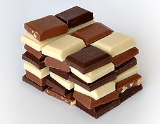
White chocolate

Overview
Chocolate
Chocolate is a raw or processed food produced from the seed of the tropical Theobroma cacao tree. Cacao has been cultivated for at least three millennia in Mexico, Central and South America. Its earliest documented use is around 1100 BC...
. It commonly consists of cocoa butter
Cocoa butter
Cocoa butter, also called theobroma oil, is a pale-yellow, pure edible vegetable fat extracted from the cocoa bean. It is used to make chocolate, biscuits, and baked goods, as well as some pharmaceuticals, ointments, and toiletries...
, sugar
Sucrose
Sucrose is the organic compound commonly known as table sugar and sometimes called saccharose. A white, odorless, crystalline powder with a sweet taste, it is best known for its role in human nutrition. The molecule is a disaccharide composed of glucose and fructose with the molecular formula...
, milk
Milk
Milk is a white liquid produced by the mammary glands of mammals. It is the primary source of nutrition for young mammals before they are able to digest other types of food. Early-lactation milk contains colostrum, which carries the mother's antibodies to the baby and can reduce the risk of many...
solids and salt, and is characterized by a pale yellow or ivory appearance. The melting point of cocoa butter, its primary cacao bean component, is high enough to keep white chocolate solid at room temperature
Room temperature
-Comfort levels:The American Society of Heating, Refrigerating and Air-Conditioning Engineers has listings for suggested temperatures and air flow rates in different types of buildings and different environmental circumstances. For example, a single office in a building has an occupancy ratio per...
, yet low enough to allow white chocolate to melt in the mouth.
White chocolate is a derivative of chocolate as it does not contain cocoa solids, the primary nutritional constituent of chocolate liquor
Chocolate liquor
Chocolate liquor is pure chocolate in its liquid form. Like the cocoa beans from which it is produced, it contains both cocoa solids and cocoa butter in roughly equal proportion....
.
