


West Java

Encyclopedia
West Java with a population of over 43 million, is the most populous and most densely populated province
of Indonesia
. Located on the island of Java
, it is slightly smaller in area than densely populated Taiwan
, but with nearly double the population. Its capital city is Bandung
.
(the western coast of Java) with evidence of bronze and iron metallurgical culture dating to the first millennium AD. The prehistoric Buni culture
(near present-day Bekasi
) clay pottery were later developed with evidence found in Anyer to Cirebon
. Artefacts (dated from 400 BC — AD 100) such as food and drink containers were found mostly as burial gifts. There is also archeological evidence in Batujaya Archaeological Site
dating from the 2nd century, and according to Dr Tony Djubiantono, the head of Bandung Archeology Agency, Jiwa Temple in Batujaya, Karawang, West Java was also built around this time.
One of the earliest known recorded history in Indonesia is from the former Tarumanagara
kingdom where seven fourth century stones are inscribed in Wengi letters (used in the Indian Pallava
period) and in Sanskrit describing the kings of the kingdom Tarumanagara. Records of Tarumanegara's administration lasted until the sixth century, which coincides with the attack of Srivijaya
as stated in the Kota Kapur inscription (AD 686).
The Sunda kingdom
subsequently became the ruling power of the region, as recorded on the Kebon Kopi II inscription (AD 932).
An Ulama, Sunan Gunung Jati, settled in Banten Girang, with the intention of spreading the world of Islam
in the pagan town. In the meantime, the Sultanate of Demak
in central Java grew to an immediate threat against the Sunda kingdom. To defend against the threat, Prabu Surawisesa Jayaperkosa signed a treaty (known as the Luso Sundanese Treaty) with the Portuguese
in 1512. In return, the Portuguese was granted an accession to build fortresses and warehouses in the area, as well as trading agreement with the kingdom. This first international treaty of West Java with the Europeans was commemorated by the placement of the Padrao stone monument at the riverbank of the Ciliwung River
in 1522.
Although the treaty with Portuguese had been established, it could not come to realization. Sunda Kalapa harbour fell under the alliance of the Sultanate of Demak and the Sultanate of Cirebon (former vassal state
of Sunda kingdom) in 1524 after their troops under Paletehan alias Fadillah Khan had conquered the city. In 1524/1525, their troops under Sunan Gunung Jati also seized the port of Banten and established the Sultanate of Banten which was affiliating with the Sultanate of Demak. The war between the Sunda kingdom with Demak and Cirebon sultanates then continued for five years until a peace treaty were made in 1531 between King Surawisesa and Sunan Gunung Jati. From 1567 to 1579, under the last king Raja Mulya, alias Prabu Surya Kencana, Sunda kingdom declined essentially under the pressure from the Sultanate of Banten. After 1576, the kingdom could not maintain its capital at Pakuan Pajajaran
(the present-day Bogor
) and gradually the Sultanate of Banten took over the former Sunda kingdom's region. The Mataram Sultanate
from central Java also seized the Priangan region, the southeastern part of the kingdom.
In the sixteenth century, the Dutch
and the British trading companies established their trading ships in West Java after the falldown of Sultanate of Banten
. For the next three hundred years, West Java fell under the Dutch East Indies
' administration. West Java was officially declared as a province of Indonesia in 1950, referring to a statement from Staatblad number 378. On October 17, 2000, as part of nationwide political decentralization, Banten
was separated from West Java and made into a new province. There have been recent proposals to rename the province Pasundan ("Province of the Sundanese
") after the historical name for West Java.
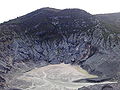 West Java borders Jakarta and Banten
Province to the west, and Central Java
to the east. To the north is the Java Sea
. To the south is the Indian Ocean
. Unlike most other provinces in Indonesia which have their capitals in coastal area, the provincial capital, Bandung, is located in the mountainous area in the centre of the province. Banten
Province was formerly part of West Java Province but was created a separate province in 2000. West Java, in the densely populated western third of Java, is home to almost 1 out of every 5 Indonesians.
West Java and Banten provinces, as a part of the Ring of fire
, have more mountains and volcanoes than any of the other provinces in Indonesia. The vast volcanic mountainous region of inland West Java is traditionally known as Parahyangan
(also known as Priangan or Preanger) which means "The abode of hyang
s (gods)". It is considered as the heartland of the Sundanese people. The highest point of West Java is the stratovolcano
Mount Cereme
(3,078 meters) bordering Kuningan
and Majalengka
Regencies. West Java has rich and fertile volcanic soil. Agriculture, especially traditional dry rice cultivation (known as ladang), has become the main way of life of traditional Sundanese people. Since the colonial VOC and Dutch East Indies
era, West Java has been known as a productive plantation area for coffee, tea, quinine, and many other cash crops. The mountainous region of West Java is also a major producer of vegetables and decorative flowering plants. Sunny tropical sites with a cool atmosphere and beautiful scenery are frequently across almost all of West Java and Banten except in the northern parts ( the Java sea beaches). The landscape of the procine is one of volcanic mountains, steep terrain, forest, mountains rivers, fertile agricultural land, and natural sea harbours.
in West Java relied heavily on rice
cultivation. Ancient kingdoms established in West Java such as the Tarumanagara
and Sunda Kingdom
are known to have relied on rice taxes and agriculture revenues. The cycle of life of the ancient Sundanese people revolvied around the rice crop cycle. Traditional rice harvest festivals such as the Seren Taun
were important. The ancient goddess of rice, Nyai Pohaci Sanghyang Asri
, is revered in Sundanese culture. Traditionally, Sundanese people often used dry rice cultivation (ladang). After the Mataram
expanded to the Priangan area in the early 17th century following the Sultan Agung campaign against Dutch Batavia, sawah (wet rice cultivation) began to be adopted in the northern lowlands of West Java. Regencies such as Indramayu
, Cirebon
, Subang
, Karawang
and Bekasi
are now well known as key rice producing areas. The mountainous region of West Java supplies vegetables, flower and many horticultural produce to Jakarta and Bandung. Animal farms in West Java produce dairy products and meats.
(VOC) and Dutch East Indies
era, West Java fell under Dutch administration centered in Batavia
. The Dutch colonial government introduced cash crops such as tea
, coffee
, and quinine
. Since the 18th century, West Java (known as "De Preanger") was known as a productive plantation area, and became integrated with global trade and economy. Services such as transportation and banking were provided to cater for wealthy Dutch plantation owners. West Java is known as one of the earliest developed regions in the Indonesian archipelago. In early 20th century, the Dutch colonial government developed infrastructures for economic purposes, especially to support Dutch plantations in the region. Roads and railways were constructed to connect inland plantations area with urban centers such as Bandung and port of Batavia.
, Bekasi
and Depok
were developed as supporting areas for Jakarta and came to form the Greater Jakarta area or Jabodetabek (Jakarta, Bogor, Depok and Bekasi). The northern area of West Java has become a major industrial area. Areas such as Bekasi, Cikarang
and Karawang
are sprawling with factories and industries. The area in and around Bandung
also developed as industrial area.
is also an important industry in West Java. The Puncak
area and Bandung
have long been known as popular weekend destinations for Jakartans. Today Bandung has developed into a chic and fashionable shopping destination, popular not only among local Indonesian especially Jakartans, but also a popular shopping destination for neighboring Malaysian and Singaporeans. The ancient coastal city of Cirebon
is also popular as cultural tourism destination since the city has several kratons and many historical sites such as Gua Sunyaragi. Other popular tourism destinations include the Bogor Botanical Garden, Taman Safari Indonesia, Tangkuban Perahu
crater, Ciater hot springs, Kawah Putih
crater to the south of Bandung, Pangandaran
beach, and various mountain resorts in Cianjur, Garut, Tasikmalaya, and Kuningan.
which formed the largest ethnic group in West Java, followed by Javanese that migrated into the province since centuries ago. Since Jakarta and surrounding area including West Java is the business and political centre of Indonesia, the province has attracted various people throughout Indonesia. Other Native Indonesian ethnic groups such as Minangkabau, Batak
, Malay, Madurese, Balinese
, Ambonese
and many other Indonesians are can easily be found migrated and settled in West Java cities. West Java urban areas also known with significant population of Chinese Indonesian
.
The population of West Java was put at 43,054,000 in mid 2010 making it the most populous province of Indonesia. The province has an area of 35,380 km²; aside from the province of Jakarta
it is the most densely populated province in the country with an average of 1,217 people per km² (2010 data). The population growth rate recorded in the ten years to 2010 was 1.9%
In addition to Indonesian
, the official national language, the other widely-spoken language in the province is Sundanese
. In some areas near the southern borders with Central Java
, Javanese
is also spoken. The main language spoken in Cirebon
and nearby areas (Majalengka
, Indramayu
, Sumber
) is Cirebonese, a dialect of Javanese.
Indonesian is widely spoken as a second language.
.
In addition to the Sundanese forms of Gamelan in Parahyangan, the region of Cirebon retains its own distinct musical traditions. Amongst Cirebons' varying Gamelan ensembles the two most frequently heard are Gamelan Pelog (a non-equidistant heptatonic tuning system) and Gamelan Prawa (a semi-equidistant pentatonic tuning system). Gamelan Pelog is traditionally reserved for Tayuban, Wayang Cepak, and for listening and dance music of the Kratons in Cirebon. Whereas Gamelan Prawa is traditionally reserved for Wayang Purwa.
Cirebon also retains specialized Gamelan ensembles including: Sekaten, which is played in the Kratons to mark important times in the Islamic calendar. Denggung, also a Kraton ensemble which is believed to have a number of "supernatural powers". And Renteng, an ensemble found in both Cirebon and Parahyangan that is known for its loud and energetic playing style.
is a genre of Sundanese vocal music accompanied by a core ensemble of two kacapi (zither) and a suling (bamboo flute). Tembang means song or poem and Sunda is a geographical, historical, and cultural construct which signifies home for the Sundanese people of Indonesia. The music and poetry of tembang Sunda are closely associated with the Parahyangan (literally the abode of the gods), the highland plateau that transverses the central and southern parts of Sunda. The natural beauty of Priangan, a lush agricultural region surrounded by mountains and volcanoes, politeness and grace of Sundanese is reflected in many songs of the tembang Sunda.
Kacapi suling is tembang Sunda minus vocal.
Tarawangsa is a genuine popular art is performed on ensemble consists of tarawangsa (a violin with an end pin) and the jentreng (a kind of seven-stringed zither). It is accompanied by a secret dance called Jentreng. The dance is a part of a ritual celebrating the goddess of paddy Dewi Sri. Its ceremonial significance is associated with a ritual of thanksgiving associated with the rice harvest. Tarawangsa can also be played for healing or even purely for entertainment.
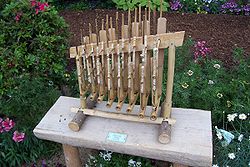 Angklung is a generic term for sets of tuned, shaken bamboo rattles. Angklung consists of a frame upon which hang several different lengths of hollow bamboo. Angklungs are played like handbells, with each instrument played to a different note. Angklung rattles are played in interlocking patterns, usually with only one or two instruments played per person. The ensemble is used in Sundanese processions, sometimes with trance or acrobatics. Performed at life-cycle rituals and feasts (hajat), angklung is believed to maintain balance and harmony in the village. In its most modern incarnation, angklung is performed in schools as an aid to learning about music.
The Angklung got more international attention when Daeng Soetigna, from Bandung, West Java, expanded the angklung notations not only to play traditional pélog or sléndro scales, but also diatonic scale in 1938. Since then, angklung is often played together with other western music instruments in an orchestra. One of the first well-known performances of angklung in an orchestra was during the Bandung Conference in 1955.
Like those in angklung, the instruments of the calung ensemble are of bamboo, but each consists of several differently tuned tubes fixed onto a piece of bamboo; the player holds the instrument in his left hand and strikes it with a beater held in his right. The highest-pitched calung has the greatest number of tubes and the densest musical activity; the lowest-pitched, with two tubes, has the least. Calung is nearly always associated with earthy humor, and is played by men.
Arumba refers to a set of diatonically tuned bamboo xylophones, often played by women. It is frequently joined by modern instruments, including a drum set, electric guitar, bass, and keyboards.
Jaipongan
is probably the most popular traditional social dance of Sundanese people. It can performed in solo, in group, or in pair.
The Tari Merak (Peafowl Dance) is a female dance inspired by the movements of a peafowl and its feathers blended with the classical movements of Sundanese dance. The Tari Merak symbolises the beauty of nature.
stories).
Among the most well known folktale and stories are:
in 2008, the Province of West Java has been divided into 9 cities and 17 regencies . These 26 cities and regencies are divided into 620 Subdistricts
, which comprised 1,576 urban villages and 4,301 rural villages.
Forest in West Java reaches 764,387.59 ha or 20.62% from total size of the province. It consists of productive forest 362,980.40 ha (9.79%), protected forest 228,727.11 ha (6.17%), and conservation forest 172,680 ha (4.63%). Mangrove forest reaches 40,129.89 ha, and spread in 10 regencies where coasts are available. Besides, there is also another protected forest of about 32,313.59 ha organized by Perum Perhutani Unit III West Java and Banten.
From the productive forest, in 2006 West Java harvested crop of about 200,675 m³ wood, although the need of wood in this province every year is about 4 million m³. Until 2006, populace forest’s width 214,892 ha with wood production is about 893,851.75 m³. West Java also produce non forest’s crop which is potential enough to be developed as forestry work, such as Sutera alat jamur, pine, gerah dammar, maleleuca, rattan, bamboo, and swallow bird’s net.
In fishery sector, the excellent commodities are goldfish, nila fish, milkfish, freshwater catfish, windu shrimp, green mussel, gouramy, patin, seaweed and vaname shrimp. In 2006, this province harvested 560,000 tons fish from fishery cultivation crop and brackish or 63.63% from fishery production total in West Java.
In the poultry husbandry field, dairy cow, domestic poultry, and ducks are excellent commodities in West Java. 2006’s data stated that there are 96,796 dairy cows (25% of the national population), 4,249,670 sheep, 28,652,493 domestic poultries, and 5,596,882 ducks (16% of the national population). Now there are only 245,994 beef cattle in West Java (3% national population), whereas the need every year is about 300,000 beef cattle.
This province has many plantation crops, such as tea, cloves, coconut, rubber, cacao, tobacco, coffee, sugar, palm and akar wangi. From all those commodities, cloves, coconut, rubber, cacao, tobacco, and coffee are of noted excellent commodities from West Java. From area side, the best productivity, that is plan area’s width equals with plant’s width that produces tobacco and sugar palm commodities. From production side, the highest productivity is oil palm (6.5 tons per ha) and sugar palm (5.5 tons per ha).
West Java also produces excellent mine production. In 2006, it contributes 5,284 tons zeolite, 47,978 tons bentonite, iron sand, pozolan cement, feldspar, and jewel barn/ gemstone. Precious stone mining potential generally are found in Garut, Tasikmalaya, Kuningan, and Sukabumi Regency areas.
As consequences of has many volcanoes, West Java is potential of Geothermal energy. There are 11 points of geothermal energy and 3 points, i.e. Papandayan, Cermai and Gede Pangrango have conducted pre-exploration.
Raw natural resources include chalk
, several offshore oilfields in the Java Sea
, and lumber. Most of the province is very fertile, with a mix of small farms and larger plantations. There are several hydropower
dams, including Jatiluhur, Saguling, and Cirata.
Provinces of Indonesia
The province is the highest tier of local government subnational entity in Indonesia. Each province has its own local government, headed by a governor, and has its own legislative body...
of Indonesia
Indonesia
Indonesia , officially the Republic of Indonesia , is a country in Southeast Asia and Oceania. Indonesia is an archipelago comprising approximately 13,000 islands. It has 33 provinces with over 238 million people, and is the world's fourth most populous country. Indonesia is a republic, with an...
. Located on the island of Java
Java
Java is an island of Indonesia. With a population of 135 million , it is the world's most populous island, and one of the most densely populated regions in the world. It is home to 60% of Indonesia's population. The Indonesian capital city, Jakarta, is in west Java...
, it is slightly smaller in area than densely populated Taiwan
Taiwan
Taiwan , also known, especially in the past, as Formosa , is the largest island of the same-named island group of East Asia in the western Pacific Ocean and located off the southeastern coast of mainland China. The island forms over 99% of the current territory of the Republic of China following...
, but with nearly double the population. Its capital city is Bandung
Bandung
Bandung is the capital of West Java province in Indonesia, and the country's third largest city, and 2nd largest metropolitan area in Indonesia, with a population of 7.4 million in 2007. Located 768 metres above sea level, approximately 140 km southeast of Jakarta, Bandung has cooler...
.
History
The oldest human inhabitant archaeological findings in the region were unearthed in AnyerAnyer
Anyer is a town in Banten, formerly West Java, Indonesia, fifteen kilometres south of Merak. It is home of a forty metre lighthouse built by King Willem III of the Netherlands in 1885 as a memorial for the townspeople killed by the eruption of Krakatau, which destroyed the town.It is also the...
(the western coast of Java) with evidence of bronze and iron metallurgical culture dating to the first millennium AD. The prehistoric Buni culture
Buni culture
Buni culture is a prehistoric clay pottery culture that flourished in coastal northern West Java and Banten around 400 BCE to 100 CE and probably suvived until 500 CE...
(near present-day Bekasi
Bekasi
Bekasi is a city in West Java, Indonesia, located on the eastern border of Jakarta in the Jabodetabek metropolitan region. To the south is Bogor Regency, east is Bekasi Regency....
) clay pottery were later developed with evidence found in Anyer to Cirebon
Cirebon
Cirebon is a port city on the north coast of the Indonesian island of Java. It is located in the province of West Java near the provincial border with Central Java, approximately 297 km east of Jakarta, at .The seat of a former Sultanate, the city's West and Central Java border location have...
. Artefacts (dated from 400 BC — AD 100) such as food and drink containers were found mostly as burial gifts. There is also archeological evidence in Batujaya Archaeological Site
Batujaya Archaeological Site
Batujaya is an archeological site located in the village of Batujaya, Karawang in West Java, Indonesia. The site is five square kilometers in area and comprises at least 30 structural in what Sundanese call hunyur or unur...
dating from the 2nd century, and according to Dr Tony Djubiantono, the head of Bandung Archeology Agency, Jiwa Temple in Batujaya, Karawang, West Java was also built around this time.
One of the earliest known recorded history in Indonesia is from the former Tarumanagara
Tarumanagara
Tarumanagara or Taruma Kingdom or just Taruma is an early Sundanese Indianized kingdom, whose fifth-century ruler, Purnavarman, produced the earliest known inscriptions on Java island...
kingdom where seven fourth century stones are inscribed in Wengi letters (used in the Indian Pallava
Pallava
The Pallava dynasty was a Tamil dynasty which ruled the northern Tamil Nadu region and the southern Andhra Pradesh region with their capital at Kanchipuram...
period) and in Sanskrit describing the kings of the kingdom Tarumanagara. Records of Tarumanegara's administration lasted until the sixth century, which coincides with the attack of Srivijaya
Srivijaya
Srivijaya was a powerful ancient thalassocratic Malay empire based on the island of Sumatra, modern day Indonesia, which influenced much of Southeast Asia. The earliest solid proof of its existence dates from the 7th century; a Chinese monk, I-Tsing, wrote that he visited Srivijaya in 671 for 6...
as stated in the Kota Kapur inscription (AD 686).
The Sunda kingdom
Sunda Kingdom
The Sunda Kingdom was a Hindu kingdom located on the western part of Java from 669 to around 1579, covering areas of present-day Banten, Jakarta, West Java, and the western part of Central Java...
subsequently became the ruling power of the region, as recorded on the Kebon Kopi II inscription (AD 932).
An Ulama, Sunan Gunung Jati, settled in Banten Girang, with the intention of spreading the world of Islam
Islam
Islam . The most common are and . : Arabic pronunciation varies regionally. The first vowel ranges from ~~. The second vowel ranges from ~~~...
in the pagan town. In the meantime, the Sultanate of Demak
Sultanate of Demak
The Sultanate of Demak was Javanese Muslim state located on Java's north coast in Indonesia, at the site of the present day city of Demak. A port fief to the Majapahit kingdom thought to have been founded in the last quarter of the 15th century, it was influenced by Islam brought by Arab and...
in central Java grew to an immediate threat against the Sunda kingdom. To defend against the threat, Prabu Surawisesa Jayaperkosa signed a treaty (known as the Luso Sundanese Treaty) with the Portuguese
Portuguese Empire
The Portuguese Empire , also known as the Portuguese Overseas Empire or the Portuguese Colonial Empire , was the first global empire in history...
in 1512. In return, the Portuguese was granted an accession to build fortresses and warehouses in the area, as well as trading agreement with the kingdom. This first international treaty of West Java with the Europeans was commemorated by the placement of the Padrao stone monument at the riverbank of the Ciliwung River
Ciliwung River
Ciliwung is a river that passes through Jakarta, Indonesia. The river flows from its source near Puncak on the highlands of West Java to the Jakarta Bay....
in 1522.
Although the treaty with Portuguese had been established, it could not come to realization. Sunda Kalapa harbour fell under the alliance of the Sultanate of Demak and the Sultanate of Cirebon (former vassal state
Vassal state
A vassal state is any state that is subordinate to another. The vassal in these cases is the ruler, rather than the state itself. Being a vassal most commonly implies providing military assistance to the dominant state when requested to do so; it sometimes implies paying tribute, but a state which...
of Sunda kingdom) in 1524 after their troops under Paletehan alias Fadillah Khan had conquered the city. In 1524/1525, their troops under Sunan Gunung Jati also seized the port of Banten and established the Sultanate of Banten which was affiliating with the Sultanate of Demak. The war between the Sunda kingdom with Demak and Cirebon sultanates then continued for five years until a peace treaty were made in 1531 between King Surawisesa and Sunan Gunung Jati. From 1567 to 1579, under the last king Raja Mulya, alias Prabu Surya Kencana, Sunda kingdom declined essentially under the pressure from the Sultanate of Banten. After 1576, the kingdom could not maintain its capital at Pakuan Pajajaran
Pakuan Pajajaran
Pakuan Pajajaran was a capital city of Sunda kingdom. In this city, king Prabu Susuktunggal established a palace called "Sri Bimapunta Narayana Madura Suradipati"....
(the present-day Bogor
Bogor
Bogor is a city on the island of Java in the West Java province of Indonesia. The city is located in the center of the Bogor Regency , 60 kilometers south of the Indonesian capital Jakarta...
) and gradually the Sultanate of Banten took over the former Sunda kingdom's region. The Mataram Sultanate
Mataram Sultanate
The Sultanate of Mataram was the last major independent Javanese empire on Java before the island was colonized by the Dutch. It was the dominant political force in interior Central Java from the late 16th century until the beginning of the 18th century....
from central Java also seized the Priangan region, the southeastern part of the kingdom.
In the sixteenth century, the Dutch
Dutch East India Company
The Dutch East India Company was a chartered company established in 1602, when the States-General of the Netherlands granted it a 21-year monopoly to carry out colonial activities in Asia...
and the British trading companies established their trading ships in West Java after the falldown of Sultanate of Banten
Sultanate of Banten
The Sultanate of Banten was founded in the 16th century and centered in Banten, a port city on the northwest coast of Java; the contemporary English spelling of both was Bantam...
. For the next three hundred years, West Java fell under the Dutch East Indies
Dutch East Indies
The Dutch East Indies was a Dutch colony that became modern Indonesia following World War II. It was formed from the nationalised colonies of the Dutch East India Company, which came under the administration of the Netherlands government in 1800....
' administration. West Java was officially declared as a province of Indonesia in 1950, referring to a statement from Staatblad number 378. On October 17, 2000, as part of nationwide political decentralization, Banten
Banten
Banten is a province of Indonesia in Java. Formerly part of the Province of West Java, it was made a separate province in 2000.The administrative center is Serang. Preliminary results from the 2010 census counted some 10.6 million people.-Geography:...
was separated from West Java and made into a new province. There have been recent proposals to rename the province Pasundan ("Province of the Sundanese
Sundanese people
The Sundanese are an ethnic group native to the western part of the Indonesian island of Java. They number approximately 31 million, and are the second most populous of all the nation's ethncities. The Sundanese are predominantly Muslim...
") after the historical name for West Java.
Geography
Banten
Banten is a province of Indonesia in Java. Formerly part of the Province of West Java, it was made a separate province in 2000.The administrative center is Serang. Preliminary results from the 2010 census counted some 10.6 million people.-Geography:...
Province to the west, and Central Java
Central Java
Central Java is a province of Indonesia. The administrative capital is Semarang. It is one of six provinces on the island of Java.This province is the province of high Human Development in Indonesia and its Points Development Index countries is equivalent to Lebanon. The province of Central Java...
to the east. To the north is the Java Sea
Java Sea
The Java Sea is a large shallow sea on the Sunda Shelf. It was formed as sea levels rose at the end of the last ice age. The Java Sea lies between the Indonesian islands of Borneo to the north, Java to the south; Sumatra to the west, and Sulawesi to the east...
. To the south is the Indian Ocean
Indian Ocean
The Indian Ocean is the third largest of the world's oceanic divisions, covering approximately 20% of the water on the Earth's surface. It is bounded on the north by the Indian Subcontinent and Arabian Peninsula ; on the west by eastern Africa; on the east by Indochina, the Sunda Islands, and...
. Unlike most other provinces in Indonesia which have their capitals in coastal area, the provincial capital, Bandung, is located in the mountainous area in the centre of the province. Banten
Banten
Banten is a province of Indonesia in Java. Formerly part of the Province of West Java, it was made a separate province in 2000.The administrative center is Serang. Preliminary results from the 2010 census counted some 10.6 million people.-Geography:...
Province was formerly part of West Java Province but was created a separate province in 2000. West Java, in the densely populated western third of Java, is home to almost 1 out of every 5 Indonesians.
West Java and Banten provinces, as a part of the Ring of fire
Ring of Fire
-Music:* Ring of Fire, a Johnny Cash song, written by his wife, June** Ring of Fire: The Best of Johnny Cash, an album by Johnny Cash** Ring of Fire , a musical theater production on the life of Johnny Cash...
, have more mountains and volcanoes than any of the other provinces in Indonesia. The vast volcanic mountainous region of inland West Java is traditionally known as Parahyangan
Parahyangan
Parahyangan or Priangan or Preanger is the mountainous region in West Java province on the island of Java in Indonesia.It covers the regencies of:* Bandung* West Bandung * Cianjur* Garut * Purwakarta...
(also known as Priangan or Preanger) which means "The abode of hyang
Hyang
Hyang is an unseen spiritual entity that has supernatural power in ancient Indonesian mythology. This spirit can be either divine or ancestral. The reverence for this spiritual entity can be found in Sunda Wiwitan, Kejawen, and Balinese Hinduism. In modern Indonesian this term tends to be...
s (gods)". It is considered as the heartland of the Sundanese people. The highest point of West Java is the stratovolcano
Stratovolcano
A stratovolcano, also known as a composite volcano, is a tall, conical volcano built up by many layers of hardened lava, tephra, pumice, and volcanic ash. Unlike shield volcanoes, stratovolcanoes are characterized by a steep profile and periodic, explosive eruptions...
Mount Cereme
Mount Cereme
Mount Cereme or Mount Ciremai is a symmetrical stratovolcano lies in West Java, Indonesia. A 4.5 × 5 km wide of the Geger Halang caldera is found at the summit. Eruptions are relatively infrequent in historical time, but explosive activity and lahars from the summit have been recorded....
(3,078 meters) bordering Kuningan
Kuningan
Kuningan is a city in eastern West Java, Indonesia, between Cirebon and Tasikmalaya, about 200 km east of Jakarta. The area is near Mount Cereme/Ciremai , the highest mountain in West Java. The mountain is located in the western part of the region. The eastern part is a valley...
and Majalengka
Majalengka
Majalengka is a City in the West Java province of Indonesia the capital of Majalengka Regency.As of 2006, this regency consists of the 23 districts , all of which make up a total of 13 urban villages and 318 rural villages ....
Regencies. West Java has rich and fertile volcanic soil. Agriculture, especially traditional dry rice cultivation (known as ladang), has become the main way of life of traditional Sundanese people. Since the colonial VOC and Dutch East Indies
Dutch East Indies
The Dutch East Indies was a Dutch colony that became modern Indonesia following World War II. It was formed from the nationalised colonies of the Dutch East India Company, which came under the administration of the Netherlands government in 1800....
era, West Java has been known as a productive plantation area for coffee, tea, quinine, and many other cash crops. The mountainous region of West Java is also a major producer of vegetables and decorative flowering plants. Sunny tropical sites with a cool atmosphere and beautiful scenery are frequently across almost all of West Java and Banten except in the northern parts ( the Java sea beaches). The landscape of the procine is one of volcanic mountains, steep terrain, forest, mountains rivers, fertile agricultural land, and natural sea harbours.
Economy
Initially the economy of the Sundanese peopleSundanese people
The Sundanese are an ethnic group native to the western part of the Indonesian island of Java. They number approximately 31 million, and are the second most populous of all the nation's ethncities. The Sundanese are predominantly Muslim...
in West Java relied heavily on rice
Rice
Rice is the seed of the monocot plants Oryza sativa or Oryza glaberrima . As a cereal grain, it is the most important staple food for a large part of the world's human population, especially in East Asia, Southeast Asia, South Asia, the Middle East, and the West Indies...
cultivation. Ancient kingdoms established in West Java such as the Tarumanagara
Tarumanagara
Tarumanagara or Taruma Kingdom or just Taruma is an early Sundanese Indianized kingdom, whose fifth-century ruler, Purnavarman, produced the earliest known inscriptions on Java island...
and Sunda Kingdom
Sunda Kingdom
The Sunda Kingdom was a Hindu kingdom located on the western part of Java from 669 to around 1579, covering areas of present-day Banten, Jakarta, West Java, and the western part of Central Java...
are known to have relied on rice taxes and agriculture revenues. The cycle of life of the ancient Sundanese people revolvied around the rice crop cycle. Traditional rice harvest festivals such as the Seren Taun
Seren Taun
Seren Taun is an annual traditional Sundanese rice harvest festival and ceremony. This festivals originally held to mark the new agriculture year in Sundanese ancient calendar as well as thanks giving for the blessings of the abundance rice harvest, and also to pray for the next successful harvest...
were important. The ancient goddess of rice, Nyai Pohaci Sanghyang Asri
Dewi Sri
Dewi Sri, or Dewi Shri , Nyai Pohaci Sanghyang Asri is the Javanese, Sundanese, and Balinese pre-Hindu and pre-Islam era goddess of rice and fertility, still widely worshipped on the islands of Bali and Java...
, is revered in Sundanese culture. Traditionally, Sundanese people often used dry rice cultivation (ladang). After the Mataram
Mataram Sultanate
The Sultanate of Mataram was the last major independent Javanese empire on Java before the island was colonized by the Dutch. It was the dominant political force in interior Central Java from the late 16th century until the beginning of the 18th century....
expanded to the Priangan area in the early 17th century following the Sultan Agung campaign against Dutch Batavia, sawah (wet rice cultivation) began to be adopted in the northern lowlands of West Java. Regencies such as Indramayu
Indramayu
Indramayu is a City in the West Java province of Indonesia the capital of Indramayu Regency.The town of Indramayu is located in the North coastal area of West Java, and East from jakarta and North East from the city of Bandung and North West of the city of Cirebon...
, Cirebon
Cirebon
Cirebon is a port city on the north coast of the Indonesian island of Java. It is located in the province of West Java near the provincial border with Central Java, approximately 297 km east of Jakarta, at .The seat of a former Sultanate, the city's West and Central Java border location have...
, Subang
Subang
-Indonesia:*Subang, Indonesia, a city in West Java*Subang Regency, a regency of West Java*Subang, Subang, a subdistrict of Subang Regency-Malaysia:*Subang, Selangor, an affluent residential town in Selangor state...
, Karawang
Karawang
Karawang is the capital of the Karawang Regency of West Java, Indonesia. It is located 32 miles east of Jakarta. Karawang has a population of 2,150,610 ....
and Bekasi
Bekasi
Bekasi is a city in West Java, Indonesia, located on the eastern border of Jakarta in the Jabodetabek metropolitan region. To the south is Bogor Regency, east is Bekasi Regency....
are now well known as key rice producing areas. The mountainous region of West Java supplies vegetables, flower and many horticultural produce to Jakarta and Bandung. Animal farms in West Java produce dairy products and meats.
Colonial period
During the Dutch East India CompanyDutch East India Company
The Dutch East India Company was a chartered company established in 1602, when the States-General of the Netherlands granted it a 21-year monopoly to carry out colonial activities in Asia...
(VOC) and Dutch East Indies
Dutch East Indies
The Dutch East Indies was a Dutch colony that became modern Indonesia following World War II. It was formed from the nationalised colonies of the Dutch East India Company, which came under the administration of the Netherlands government in 1800....
era, West Java fell under Dutch administration centered in Batavia
Jakarta
Jakarta is the capital and largest city of Indonesia. Officially known as the Special Capital Territory of Jakarta, it is located on the northwest coast of Java, has an area of , and a population of 9,580,000. Jakarta is the country's economic, cultural and political centre...
. The Dutch colonial government introduced cash crops such as tea
Tea
Tea is an aromatic beverage prepared by adding cured leaves of the Camellia sinensis plant to hot water. The term also refers to the plant itself. After water, tea is the most widely consumed beverage in the world...
, coffee
Coffee
Coffee is a brewed beverage with a dark,init brooo acidic flavor prepared from the roasted seeds of the coffee plant, colloquially called coffee beans. The beans are found in coffee cherries, which grow on trees cultivated in over 70 countries, primarily in equatorial Latin America, Southeast Asia,...
, and quinine
Quinine
Quinine is a natural white crystalline alkaloid having antipyretic , antimalarial, analgesic , anti-inflammatory properties and a bitter taste. It is a stereoisomer of quinidine which, unlike quinine, is an anti-arrhythmic...
. Since the 18th century, West Java (known as "De Preanger") was known as a productive plantation area, and became integrated with global trade and economy. Services such as transportation and banking were provided to cater for wealthy Dutch plantation owners. West Java is known as one of the earliest developed regions in the Indonesian archipelago. In early 20th century, the Dutch colonial government developed infrastructures for economic purposes, especially to support Dutch plantations in the region. Roads and railways were constructed to connect inland plantations area with urban centers such as Bandung and port of Batavia.
Post Independence
After Indonesian independence in 1945, West Java became a supporting region for Jakarta, the Indonesian capital. Jakarta remained as the business and political center of Indonesia. Several regencies and cities in West Java such as BogorBogor
Bogor is a city on the island of Java in the West Java province of Indonesia. The city is located in the center of the Bogor Regency , 60 kilometers south of the Indonesian capital Jakarta...
, Bekasi
Bekasi
Bekasi is a city in West Java, Indonesia, located on the eastern border of Jakarta in the Jabodetabek metropolitan region. To the south is Bogor Regency, east is Bekasi Regency....
and Depok
Depok
Depok is a city in West Java province, Indonesia on the western border of DKI Jakarta in the Jabodetabek metropolitan region. The "de" in Jabodetabek refers to Depok, while the word "depok" itself comes from Sundanese language meaning hermitage or abode of one living in seclusion.It has an area of...
were developed as supporting areas for Jakarta and came to form the Greater Jakarta area or Jabodetabek (Jakarta, Bogor, Depok and Bekasi). The northern area of West Java has become a major industrial area. Areas such as Bekasi, Cikarang
Cikarang
Cikarang is the capital of Bekasi Regency, West Java in Indonesia. Jababeka is the biggest industrial estate in Southeast Asia. Property projects have also been built in Cikarang, such as Lippo Cikarang, Cikarang Baru, and Kota Delta Mas. The last one is the office complex of Bekasi.-Cikarang Dry...
and Karawang
Karawang
Karawang is the capital of the Karawang Regency of West Java, Indonesia. It is located 32 miles east of Jakarta. Karawang has a population of 2,150,610 ....
are sprawling with factories and industries. The area in and around Bandung
Bandung
Bandung is the capital of West Java province in Indonesia, and the country's third largest city, and 2nd largest metropolitan area in Indonesia, with a population of 7.4 million in 2007. Located 768 metres above sea level, approximately 140 km southeast of Jakarta, Bandung has cooler...
also developed as industrial area.
Tourism
Endowed with natural beauty and rich culture, tourismTourism
Tourism is travel for recreational, leisure or business purposes. The World Tourism Organization defines tourists as people "traveling to and staying in places outside their usual environment for not more than one consecutive year for leisure, business and other purposes".Tourism has become a...
is also an important industry in West Java. The Puncak
Puncak
Puncak is the popular name for the area surrounding the peak of Mt.Gede-Pangrango, located in the Bogor-Cianjur-Sukabumi regencies, in the province of West Java, Indonesia....
area and Bandung
Bandung
Bandung is the capital of West Java province in Indonesia, and the country's third largest city, and 2nd largest metropolitan area in Indonesia, with a population of 7.4 million in 2007. Located 768 metres above sea level, approximately 140 km southeast of Jakarta, Bandung has cooler...
have long been known as popular weekend destinations for Jakartans. Today Bandung has developed into a chic and fashionable shopping destination, popular not only among local Indonesian especially Jakartans, but also a popular shopping destination for neighboring Malaysian and Singaporeans. The ancient coastal city of Cirebon
Cirebon
Cirebon is a port city on the north coast of the Indonesian island of Java. It is located in the province of West Java near the provincial border with Central Java, approximately 297 km east of Jakarta, at .The seat of a former Sultanate, the city's West and Central Java border location have...
is also popular as cultural tourism destination since the city has several kratons and many historical sites such as Gua Sunyaragi. Other popular tourism destinations include the Bogor Botanical Garden, Taman Safari Indonesia, Tangkuban Perahu
Tangkuban Perahu
Tangkuban Perahu is a dormant volcano 30 km north of the city of Bandung, the provincial capital of West Java, Indonesia. It last erupted in 1959...
crater, Ciater hot springs, Kawah Putih
Kawah Putih
Kawah Putih is a striking crater lake and tourist spot in a volcanic crater about 50 km south of Bandung in West Java in Indonesia.Kawah Putih lake is one of the two craters which make up Mount Patuha, an andesitic stratovolcano . Mt Patuha is one of numerous volcanoes in Java. The Kawah...
crater to the south of Bandung, Pangandaran
Pangandaran
Pangandaran is a small town and a subdistrict in southern Ciamis regency, West Java, Indonesia. It is located on the southern coast of Java. Pangandaran is a popular tourist destination, having a beach which is considered to be one of the finest in Java and which offers excellent surfing.A...
beach, and various mountain resorts in Cianjur, Garut, Tasikmalaya, and Kuningan.
Demographics and language
West Java is the native homeland of Sundanese peopleSundanese people
The Sundanese are an ethnic group native to the western part of the Indonesian island of Java. They number approximately 31 million, and are the second most populous of all the nation's ethncities. The Sundanese are predominantly Muslim...
which formed the largest ethnic group in West Java, followed by Javanese that migrated into the province since centuries ago. Since Jakarta and surrounding area including West Java is the business and political centre of Indonesia, the province has attracted various people throughout Indonesia. Other Native Indonesian ethnic groups such as Minangkabau, Batak
Batak (Indonesia)
Batak is a collective term used to identify a number of ethnic groups predominantly found in North Sumatra, Indonesia. The term is used to include the Toba, Karo, Pakpak, Simalungun, Angkola and Mandailing, each of which are distinct but related groups with distinct, albeit related, languages and...
, Malay, Madurese, Balinese
Balinese people
The Balinese population of 3.0 million live mostly on the island of Bali, making up 89% of the island's population. There are also significant populations on the island of Lombok, and in the eastern-most regions of Java The Balinese population of 3.0 million (1.5% of Indonesia's population) live...
, Ambonese
Ambonese
The Ambonese, also known as South Moluccans, are an Indonesian ethnic group of mixed Malay-Papuan origin. They are mostly Christians or Muslims. Ambonese are from Ambon Island in Maluku, an island group east of Sulawesi and north of Timor in Indonesia. The predominant language of the island is...
and many other Indonesians are can easily be found migrated and settled in West Java cities. West Java urban areas also known with significant population of Chinese Indonesian
Chinese Indonesian
Chinese Indonesians, also called the Indonesian Chinese, are an overseas Chinese group whose ancestors emigrated from China to Indonesia, formerly a colony of the Netherlands known as the Dutch East Indies...
.
The population of West Java was put at 43,054,000 in mid 2010 making it the most populous province of Indonesia. The province has an area of 35,380 km²; aside from the province of Jakarta
Jakarta
Jakarta is the capital and largest city of Indonesia. Officially known as the Special Capital Territory of Jakarta, it is located on the northwest coast of Java, has an area of , and a population of 9,580,000. Jakarta is the country's economic, cultural and political centre...
it is the most densely populated province in the country with an average of 1,217 people per km² (2010 data). The population growth rate recorded in the ten years to 2010 was 1.9%
In addition to Indonesian
Indonesian language
Indonesian is the official language of Indonesia. Indonesian is a normative form of the Riau Islands dialect of Malay, an Austronesian language which has been used as a lingua franca in the Indonesian archipelago for centuries....
, the official national language, the other widely-spoken language in the province is Sundanese
Sundanese language
Sundanese is the language of about 27 million people from the western third of Java or about 15% of the Indonesian population....
. In some areas near the southern borders with Central Java
Central Java
Central Java is a province of Indonesia. The administrative capital is Semarang. It is one of six provinces on the island of Java.This province is the province of high Human Development in Indonesia and its Points Development Index countries is equivalent to Lebanon. The province of Central Java...
, Javanese
Javanese language
Javanese language is the language of the Javanese people from the central and eastern parts of the island of Java, in Indonesia. In addition, there are also some pockets of Javanese speakers in the northern coast of western Java...
is also spoken. The main language spoken in Cirebon
Cirebon
Cirebon is a port city on the north coast of the Indonesian island of Java. It is located in the province of West Java near the provincial border with Central Java, approximately 297 km east of Jakarta, at .The seat of a former Sultanate, the city's West and Central Java border location have...
and nearby areas (Majalengka
Majalengka
Majalengka is a City in the West Java province of Indonesia the capital of Majalengka Regency.As of 2006, this regency consists of the 23 districts , all of which make up a total of 13 urban villages and 318 rural villages ....
, Indramayu
Indramayu
Indramayu is a City in the West Java province of Indonesia the capital of Indramayu Regency.The town of Indramayu is located in the North coastal area of West Java, and East from jakarta and North East from the city of Bandung and North West of the city of Cirebon...
, Sumber
Sumber
Sumber is the capital of the Cirebon Regency of West Java, Indonesia....
) is Cirebonese, a dialect of Javanese.
Indonesian is widely spoken as a second language.
Culture
Sundanese share Java island with Javanese people. They primarily live in their home province of West Java. Although Sundanese live in the same island with Javanese, they consider themselves a distinct cultural area called Pasundan or Tatar Sunda. Someone moving from West Java Province to Central or East Java Provinces, is literally said to be moving from Sunda to Java. Bandung, the capital city of West Java, is considered as the cultural heartland of Sundanese people. Many indigenous Sundanese artforms were developed in this city.Gamelan orchestra
The musical arts of Sunda, which is an expression of the emotions of Sundanese culture, express politeness and grace of Sundanese. The music is claimed to be some of the most beautiful sounds in the world. Degung orchestra consists of Sundanese gamelanGamelan
A gamelan is a musical ensemble from Indonesia, typically from the islands of Bali or Java, featuring a variety of instruments such as metallophones, xylophones, drums and gongs; bamboo flutes, bowed and plucked strings. Vocalists may also be included....
.
In addition to the Sundanese forms of Gamelan in Parahyangan, the region of Cirebon retains its own distinct musical traditions. Amongst Cirebons' varying Gamelan ensembles the two most frequently heard are Gamelan Pelog (a non-equidistant heptatonic tuning system) and Gamelan Prawa (a semi-equidistant pentatonic tuning system). Gamelan Pelog is traditionally reserved for Tayuban, Wayang Cepak, and for listening and dance music of the Kratons in Cirebon. Whereas Gamelan Prawa is traditionally reserved for Wayang Purwa.
Cirebon also retains specialized Gamelan ensembles including: Sekaten, which is played in the Kratons to mark important times in the Islamic calendar. Denggung, also a Kraton ensemble which is believed to have a number of "supernatural powers". And Renteng, an ensemble found in both Cirebon and Parahyangan that is known for its loud and energetic playing style.
Zither ensembles
Tembang SundaTembang Sunda
Tembang sunda, also called seni mamaos cianjuran is a style of classical vocal music that originated in the Sunda Kingdom of highland west Java. Unlike Sundanese gamelan music, tembang sunda was developed in the court of the regent Kabupaten Cianjur during the Dutch colonial period...
is a genre of Sundanese vocal music accompanied by a core ensemble of two kacapi (zither) and a suling (bamboo flute). Tembang means song or poem and Sunda is a geographical, historical, and cultural construct which signifies home for the Sundanese people of Indonesia. The music and poetry of tembang Sunda are closely associated with the Parahyangan (literally the abode of the gods), the highland plateau that transverses the central and southern parts of Sunda. The natural beauty of Priangan, a lush agricultural region surrounded by mountains and volcanoes, politeness and grace of Sundanese is reflected in many songs of the tembang Sunda.
Kacapi suling is tembang Sunda minus vocal.
Tarawangsa is a genuine popular art is performed on ensemble consists of tarawangsa (a violin with an end pin) and the jentreng (a kind of seven-stringed zither). It is accompanied by a secret dance called Jentreng. The dance is a part of a ritual celebrating the goddess of paddy Dewi Sri. Its ceremonial significance is associated with a ritual of thanksgiving associated with the rice harvest. Tarawangsa can also be played for healing or even purely for entertainment.
Bamboo ensembles
The three main types of Sundanese bamboo ensembles are angklung, calung, and arumba. The exact features of each ensemble vary according to context, related instruments, and relative popularity.The Angklung got more international attention when Daeng Soetigna, from Bandung, West Java, expanded the angklung notations not only to play traditional pélog or sléndro scales, but also diatonic scale in 1938. Since then, angklung is often played together with other western music instruments in an orchestra. One of the first well-known performances of angklung in an orchestra was during the Bandung Conference in 1955.
Like those in angklung, the instruments of the calung ensemble are of bamboo, but each consists of several differently tuned tubes fixed onto a piece of bamboo; the player holds the instrument in his left hand and strikes it with a beater held in his right. The highest-pitched calung has the greatest number of tubes and the densest musical activity; the lowest-pitched, with two tubes, has the least. Calung is nearly always associated with earthy humor, and is played by men.
Arumba refers to a set of diatonically tuned bamboo xylophones, often played by women. It is frequently joined by modern instruments, including a drum set, electric guitar, bass, and keyboards.
Puppetry
Wayang golek is a traditional form of puppetry from Sunda. Unlike the better-known leather shadow puppets (wayang kulit) found in the rest of Java and Bali, wayang golek puppets are made from wood and are three-dimensional, rather than two. They use a banana palm in which the puppets stand, behind which one puppeteer (dalang) is accompanied by his gamelan orchestra with up to 20 musicians. The gamelan uses a five-note scale as opposed to the seven-note western scale. The musicians are guided by the drummer, who in turn is guided by signals from the puppet master dalang gives to change the mood or pace required. Wayang golek are used by the Sundanese to tell the epic play "Mahabarata" and various other morality type plays.Dance
Sundanese dance shows the influence of the many groups that have traded and settled in the area over the centuries, but remains uniquely distinctive, with its variation from graceful to dynamic syncopated drumming patterns, quick wrist flicks, sensual hip movements, and fast shoulder and torso isolations.Jaipongan
Jaipongan
Jaipongan, also known as Jaipong, is a popular traditional dance of Sundanese people, West Java, Indonesia. The dance was created by Gugum Gumbira, based on traditional Sundanese Ketuk Tilu music and Pencak Silat movements.- Background :...
is probably the most popular traditional social dance of Sundanese people. It can performed in solo, in group, or in pair.
The Tari Merak (Peafowl Dance) is a female dance inspired by the movements of a peafowl and its feathers blended with the classical movements of Sundanese dance. The Tari Merak symbolises the beauty of nature.
Folktales and Legend Stories
There are and folktales transcribed from Pantun SundaPantun Sunda
Pantun Sunda is a type of Sundanese oral narrative performance interspersed with songs and music played on a kacapi, a kind of zither. A pantun used to be recited during an evening-length performance...
stories).
Among the most well known folktale and stories are:
- Mundinglaya DikusumahMundinglaya DikusumahMundinglaya Dikusumah is a folklore among Sundanese people, Indonesia. The folklore tells about a life of prince in the era of Sunda kingdom when Great King Silihwangi reigning in the kingdom...
, which tells of Mundinglaya visiting Jabaning Langit to find layang Salaka Domas. It is a symbolic story of Surawisesa visiting Malaka to establish a pace treaty with Portuguese before 1522. - Lutung KasarungLutung KasarungLutung Kasarung is a Sundanese folklore from West Java, Indonesia. Set in the Pasir Batang kingdom, it tells the tale of a magical lutung who helped a beautiful princess, Purbasari Ayuwangi, when her older sister attempted to rob her of her status as crown princess.The theme and moral of the...
, tells the life of a beautiful princes, in the era of Pasir Batang kingdom, a vassal of Sunda kingdom. She faces the evil of her older sister willing to seize her right as a queen. - Ciung WanaraCiung WanaraCiung Wanara is a legend among Sundanese people, Indonesia. The legend is history record of Sunda Galuh kingdom. The legend describe the culture tie between Sundanese and Javanese living in western part of Central Java province.-Source:...
, tells of the fight of two princes of Sunda kingdom and the history of Brebes river or Cipamali river as a boundary between Sunda and Java territories.
- SangkuriangSangkuriangSangkuriang is a legend among Sundanese people, Indonesia. The legend tells about the creation of lake Bandung, Mount Tangkuban Parahu, Mount Burangrang and Mount Bukit Tunggul....
, which tells the story of the creation of Mount Tangkuban Parahu and the ancient lake BandungBandungBandung is the capital of West Java province in Indonesia, and the country's third largest city, and 2nd largest metropolitan area in Indonesia, with a population of 7.4 million in 2007. Located 768 metres above sea level, approximately 140 km southeast of Jakarta, Bandung has cooler...
.
Literature
Old Sundanese literature, among others, are:- Bujangga ManikBujangga ManikBujangga Manik is one of the precious remnants of Old Sundanese literature. It is told in octosyllabic lines – the metrical form of Old Sundanese narrative poetry – in a palm leaf kept in the Bodleian Library in Oxford since 1627 or 1629...
, which was written on 29 palm leaves and kept in the Bodleian Library in Oxford since 1627, mentioning more than 450 names of places, regions, rivers and mountains situated on Java island, Bali island and Sumatra island. - Carita ParahyanganCarita ParahyanganCarita Parahyangan is a text contained in a single manuscript, registered as kropak 406 from the former collection of the Bataviaasch Genootschap voor Kunsten en Wetenschappen , now in the Perpustakaan National in Jakarta...
, telling Sundanese kings and kingdoms from the pre-Islamic period. - Siksakandang Karesian, providing the reader with all kinds of religious and moralistic rules, prescriptions and lessons.
Administrative divisions
Since the constitution of West Bandung RegencyWest Bandung Regency
West Bandung Regency West Bandung was established in 2007, formerly it was part of Bandung Regency region of West Java. The capital of this regency is Ngamprah, an industrial district on the west side of Bandung...
in 2008, the Province of West Java has been divided into 9 cities and 17 regencies . These 26 cities and regencies are divided into 620 Subdistricts
Subdistricts of West Java
The province of the West Java in Indonesia is divided into regencies which is turn are divided administratively into subdistricts, known as Kecamatan.The subdistricts of West Java with the regency it falls into are as follows:*Agrabinta, Cianjur...
, which comprised 1,576 urban villages and 4,301 rural villages.
Cities |
Regencies |
| Name | Capital | Area in Square km | Population 2005 estimate | Population 2010 Census |
|---|---|---|---|---|
| Bogor Regency Bogor Regency Bogor Regency Indonesian: Kabupaten Bogor is a regency of West Java, Indonesia, south of DKI Jakarta, and bordered by Tangerang Regency, the City of Depok and the City and Regency of Bekasi to the north, and fully encircling Bogor City. It is considered a bedroom community for Jakarta.The area... |
Cibinong Cibinong Cibinong is the capital of the Bogor Regency of West Java, Indonesia.In Cibinong is now where the Science Center of Indonesian Institute of Sciences is located.... |
|||
| Bogor Bogor Bogor is a city on the island of Java in the West Java province of Indonesia. The city is located in the center of the Bogor Regency , 60 kilometers south of the Indonesian capital Jakarta... City |
Bogor Bogor Bogor is a city on the island of Java in the West Java province of Indonesia. The city is located in the center of the Bogor Regency , 60 kilometers south of the Indonesian capital Jakarta... |
|||
| Depok Depok Depok is a city in West Java province, Indonesia on the western border of DKI Jakarta in the Jabodetabek metropolitan region. The "de" in Jabodetabek refers to Depok, while the word "depok" itself comes from Sundanese language meaning hermitage or abode of one living in seclusion.It has an area of... City |
Depok Depok Depok is a city in West Java province, Indonesia on the western border of DKI Jakarta in the Jabodetabek metropolitan region. The "de" in Jabodetabek refers to Depok, while the word "depok" itself comes from Sundanese language meaning hermitage or abode of one living in seclusion.It has an area of... |
|||
| Sukabumi Regency Sukabumi Regency Sukabumi Regency Indonesian: Kabupaten Sukabumi is a regency of West Java, Indonesia. Pelabuhan Ratu is its capital. Sukabumi City is fully encircled by the regency.-Beaches:... |
Sukabumi Sukabumi Sukabumi is a city surrounded by the regency of the same name in the highlands of West Java, Indonesia, about south of the national capital, Jakarta.... |
|||
| Sukabumi Sukabumi Sukabumi is a city surrounded by the regency of the same name in the highlands of West Java, Indonesia, about south of the national capital, Jakarta.... City |
Sukabumi Sukabumi Sukabumi is a city surrounded by the regency of the same name in the highlands of West Java, Indonesia, about south of the national capital, Jakarta.... |
|||
| Cianjur Regency Cianjur Regency Cianjur Regency is a regency of West Java, Indonesia. Cianjur is its capital.... |
Cianjur Cianjur Cianjur is a city in the West Java province of Indonesia, the capital of Cianjur Regency. Cianjur is located in the middle of the main road between Jakarta and Bandung . The population is about 146,874... |
|||
| Bandung Regency Bandung Regency Bandung Regency is an administrative district located to the south, southeast and east of the city of Bandung. Parts of the Bandung Regency are effectively part of the Bandung Metropolitan Area. The Regency is part of the Indonesian province of West Java, about 75 miles south of Jakarta... |
Soreang Soreang Soreang is the capital of the Bandung Regency of West Java, Indonesia.... |
|||
| Bandung Bandung Bandung is the capital of West Java province in Indonesia, and the country's third largest city, and 2nd largest metropolitan area in Indonesia, with a population of 7.4 million in 2007. Located 768 metres above sea level, approximately 140 km southeast of Jakarta, Bandung has cooler... City |
Bandung Bandung Bandung is the capital of West Java province in Indonesia, and the country's third largest city, and 2nd largest metropolitan area in Indonesia, with a population of 7.4 million in 2007. Located 768 metres above sea level, approximately 140 km southeast of Jakarta, Bandung has cooler... |
|||
| Cimahi Cimahi Cimahi is a city located west of Bandung, West Java, Indonesia in the Bandung Metropolitan Area. The city is a major textile producer exporter, and is host to several military education facilities.... City |
Cimahi Cimahi Cimahi is a city located west of Bandung, West Java, Indonesia in the Bandung Metropolitan Area. The city is a major textile producer exporter, and is host to several military education facilities.... |
|||
| West Bandung Regency West Bandung Regency West Bandung Regency West Bandung was established in 2007, formerly it was part of Bandung Regency region of West Java. The capital of this regency is Ngamprah, an industrial district on the west side of Bandung... |
Ngamprah | (included in Bandung Regency) | (included in Bandung Regency | |
| Garut Regency Garut Regency Garut is a Regency in the West Java province of Indonesia. Garut Regency Its area is 3,065.19 km² . Geographically, it lies between 6°57′34″ – 7°44′57″ South latitude and 107°24′34″ – 108°7′34″ East longitude.-Adjacent regencies:It is... |
Garut Garut Garut is a town in the West Java province of Indonesia and is the capital of the Garut Regency. It is located about 75 km to the southeast of the major city of Bandung.-History:... |
|||
| Tasikmalaya Regency Tasikmalaya Regency Tasikmalaya Regency is a regency in the province of West Java, Indonesia. Located in the southeastern region of Priangan , the Regency is by far the biggest and the most important regency in East Preanger . The Regency is administered from Tasikmalaya City, which however is administratively... |
Tasikmalaya Tasikmalaya Tasikmalaya is a city in southeastern West Java, Indonesia, between Bandung and Purwokerto on the southerly of the two major road routes across Java... |
|||
| Tasikmalaya Tasikmalaya Tasikmalaya is a city in southeastern West Java, Indonesia, between Bandung and Purwokerto on the southerly of the two major road routes across Java... City |
Tasikmalaya Tasikmalaya Tasikmalaya is a city in southeastern West Java, Indonesia, between Bandung and Purwokerto on the southerly of the two major road routes across Java... |
|||
| Ciamis Regency | Ciamis Ciamis Ciamis is the capital of the Ciamis Regency in West Java, Indonesia.... |
|||
| Banjar Banjar Banjar may refer to:*Banjar people, an ethnic group in Asia*Banjar language of the Banjar people*Banjar, India, a town in Himachal Pradesh, India*Banjar, West Java, a city in West Java province of Indonesia... City |
Banjar Banjar Banjar may refer to:*Banjar people, an ethnic group in Asia*Banjar language of the Banjar people*Banjar, India, a town in Himachal Pradesh, India*Banjar, West Java, a city in West Java province of Indonesia... |
|||
| Kuningan Regency Kuningan Regency Kuningan Regency is a regency of West Java, Indonesia. Kuningan is its capital. Kuningan is located in the east of the province.- Pre Historic:... |
Kuningan Kuningan Kuningan is a city in eastern West Java, Indonesia, between Cirebon and Tasikmalaya, about 200 km east of Jakarta. The area is near Mount Cereme/Ciremai , the highest mountain in West Java. The mountain is located in the western part of the region. The eastern part is a valley... |
|||
| Cirebon Regency Cirebon Regency Cirebon Regency is a regency of West Java, Indonesia. Sumber is its capital. The area and population excludes those of Cirebon City, which is an independent administration, although totally surrounded by the Regency on its landward side.... |
Sumber Sumber Sumber is the capital of the Cirebon Regency of West Java, Indonesia.... |
|||
| Cirebon Cirebon Cirebon is a port city on the north coast of the Indonesian island of Java. It is located in the province of West Java near the provincial border with Central Java, approximately 297 km east of Jakarta, at .The seat of a former Sultanate, the city's West and Central Java border location have... City |
Cirebon Cirebon Cirebon is a port city on the north coast of the Indonesian island of Java. It is located in the province of West Java near the provincial border with Central Java, approximately 297 km east of Jakarta, at .The seat of a former Sultanate, the city's West and Central Java border location have... |
|||
| Majalengka Regency Majalengka Regency Majalengka Regency is one of 16 regencies in West Java, Indonesia. The capital is Majalengka.As of 2006, this regency consists of the 23 districts , all of which make up a total of 13 urban villages and 318 rural villages ... |
Majalengka Majalengka Majalengka is a City in the West Java province of Indonesia the capital of Majalengka Regency.As of 2006, this regency consists of the 23 districts , all of which make up a total of 13 urban villages and 318 rural villages .... |
|||
| Sumedang Regency Sumedang Regency Sumedang Regency is a regency of West Java, Indonesia. Sumedang is its capital.The city of Sumedang is famous for its tofu, Tahu bungkeng, that was first produced by a Chinese immigrant from China.-Jatigede Dam:... |
Sumedang Sumedang Sumedang is a town in West Java, Indonesia, approximately 35 km northeast of Bandung.The town is famous for tahu Bungkeng, a local variety of deep fried tofu which was first made by a Chinese immigrant, Ong Kino.... |
|||
| Indramayu Regency Indramayu Regency Indramayu Regency is a regency of West Java, Indonesia. Indramayu is its capital.This regency is located on the northeastern part of West Java... |
Indramayu Indramayu Indramayu is a City in the West Java province of Indonesia the capital of Indramayu Regency.The town of Indramayu is located in the North coastal area of West Java, and East from jakarta and North East from the city of Bandung and North West of the city of Cirebon... |
|||
| Subang Regency Subang Regency Subang Regency is a regency of West Java, Indonesia. It has an area of 2,051.76 km² and population of 1,407,000 . Its regency seat is in Subang.The regency is divided into 21 subdistricts.... |
Subang Subang -Indonesia:*Subang, Indonesia, a city in West Java*Subang Regency, a regency of West Java*Subang, Subang, a subdistrict of Subang Regency-Malaysia:*Subang, Selangor, an affluent residential town in Selangor state... |
|||
| Purwakarta Regency Purwakarta Regency Purwakarta Regency is a regency of West Java, Indonesia. Purwakarta is its capital.Its area is 969.82 km2 with 760,220 people in 2005, for a density of 783.88 people per km2.... |
Purwakarta Purwakarta Purwakarta is a City in the West Java province of Indonesia the capital of Purwakarta Regency.Purwakarta existence is inseparable from the history of the struggle against the forces VOC. Around the beginning of the 17th century Sultan Mataram sent an army led by the Regent of Surabaya and West... |
|||
| Karawang Regency Karawang Regency Karawang Regency is a regency of West Java, Indonesia. Karawang is its capital.It has an area of 1,737.53 sq km and 2010 census result of 2,125,234 people, for a density of 1,223 people per sq km.-New Airport:... |
Karawang Karawang Karawang is the capital of the Karawang Regency of West Java, Indonesia. It is located 32 miles east of Jakarta. Karawang has a population of 2,150,610 .... |
|||
| Bekasi Regency Bekasi Regency Bekasi Regency is a regency of West Java, Indonesia. The capital city is Cikarang. It is bordered by DKI Jakarta and Bekasi Municipality to the east, by Bogor Regency to the south, and by Karawang Regency to the east.... |
Bekasi Bekasi Bekasi is a city in West Java, Indonesia, located on the eastern border of Jakarta in the Jabodetabek metropolitan region. To the south is Bogor Regency, east is Bekasi Regency.... |
|||
| Bekasi Bekasi Bekasi is a city in West Java, Indonesia, located on the eastern border of Jakarta in the Jabodetabek metropolitan region. To the south is Bogor Regency, east is Bekasi Regency.... City |
Bekasi Bekasi Bekasi is a city in West Java, Indonesia, located on the eastern border of Jakarta in the Jabodetabek metropolitan region. To the south is Bogor Regency, east is Bekasi Regency.... |
|||
| Totals |
HDI District and the City
| HDI (2009 data) | Comparable Country (Adjusted to 2010 UNDP Data) |
||
|---|---|---|---|
| Medium human development | |||
| 1 | Bandung Bandung Bandung is the capital of West Java province in Indonesia, and the country's third largest city, and 2nd largest metropolitan area in Indonesia, with a population of 7.4 million in 2007. Located 768 metres above sea level, approximately 140 km southeast of Jakarta, Bandung has cooler... City |
0.793 |  Ukraine Ukraine |
| 2 | Tasikmalaya Tasikmalaya Tasikmalaya is a city in southeastern West Java, Indonesia, between Bandung and Purwokerto on the southerly of the two major road routes across Java... City |
0.771 | |
| 3 | Bogor Bogor Bogor is a city on the island of Java in the West Java province of Indonesia. The city is located in the center of the Bogor Regency , 60 kilometers south of the Indonesian capital Jakarta... City |
0.769 | |
| 4 | Depok Depok Depok is a city in West Java province, Indonesia on the western border of DKI Jakarta in the Jabodetabek metropolitan region. The "de" in Jabodetabek refers to Depok, while the word "depok" itself comes from Sundanese language meaning hermitage or abode of one living in seclusion.It has an area of... City |
0.768 | |
| 5 | Bekasi Bekasi Bekasi is a city in West Java, Indonesia, located on the eastern border of Jakarta in the Jabodetabek metropolitan region. To the south is Bogor Regency, east is Bekasi Regency.... City |
0.766 | |
| 6 | Banjar Banjar Banjar may refer to:*Banjar people, an ethnic group in Asia*Banjar language of the Banjar people*Banjar, India, a town in Himachal Pradesh, India*Banjar, West Java, a city in West Java province of Indonesia... City |
0.765 | |
| 7 | Sukabumi Sukabumi Sukabumi is a city surrounded by the regency of the same name in the highlands of West Java, Indonesia, about south of the national capital, Jakarta.... City |
0.733 | |
| 8 | Cirebon Cirebon Cirebon is a port city on the north coast of the Indonesian island of Java. It is located in the province of West Java near the provincial border with Central Java, approximately 297 km east of Jakarta, at .The seat of a former Sultanate, the city's West and Central Java border location have... City |
0.720 | |
| 9 | Ciamis Regency | 0.720 | |
| - |  West Java West JavaWest Java West Java , with a population of over 43 million, is the most populous and most densely populated province of Indonesia. Located on the island of Java, it is slightly smaller in area than densely populated Taiwan, but with nearly double the population... |
0.719 | |
| 10 | Tasikmalaya Regency Tasikmalaya Regency Tasikmalaya Regency is a regency in the province of West Java, Indonesia. Located in the southeastern region of Priangan , the Regency is by far the biggest and the most important regency in East Preanger . The Regency is administered from Tasikmalaya City, which however is administratively... |
0.719 | |
| 11 | Bandung Regency Bandung Regency Bandung Regency is an administrative district located to the south, southeast and east of the city of Bandung. Parts of the Bandung Regency are effectively part of the Bandung Metropolitan Area. The Regency is part of the Indonesian province of West Java, about 75 miles south of Jakarta... |
0.719 | |
| 12 | Sukabumi Sukabumi Sukabumi is a city surrounded by the regency of the same name in the highlands of West Java, Indonesia, about south of the national capital, Jakarta.... |
0.716 | |
| 13 | Cianjur Regency Cianjur Regency Cianjur Regency is a regency of West Java, Indonesia. Cianjur is its capital.... |
0.712 |  Cape Verde Cape Verde |
| 14 | Bekasi Regency Bekasi Regency Bekasi Regency is a regency of West Java, Indonesia. The capital city is Cikarang. It is bordered by DKI Jakarta and Bekasi Municipality to the east, by Bogor Regency to the south, and by Karawang Regency to the east.... |
0.709 | Cape Verde |
| 15 | Purwakarta Regency Purwakarta Regency Purwakarta Regency is a regency of West Java, Indonesia. Purwakarta is its capital.Its area is 969.82 km2 with 760,220 people in 2005, for a density of 783.88 people per km2.... |
0.709 | Cape Verde |
| 16 | Garut Garut Garut is a town in the West Java province of Indonesia and is the capital of the Garut Regency. It is located about 75 km to the southeast of the major city of Bandung.-History:... |
0.705 | |
| 17 | Sumedang Regency Sumedang Regency Sumedang Regency is a regency of West Java, Indonesia. Sumedang is its capital.The city of Sumedang is famous for its tofu, Tahu bungkeng, that was first produced by a Chinese immigrant from China.-Jatigede Dam:... |
0.703 | |
| 18 | Subang Regency Subang Regency Subang Regency is a regency of West Java, Indonesia. It has an area of 2,051.76 km² and population of 1,407,000 . Its regency seat is in Subang.The regency is divided into 21 subdistricts.... |
0.700 | |
| 19 | Cirebon Regency Cirebon Regency Cirebon Regency is a regency of West Java, Indonesia. Sumber is its capital. The area and population excludes those of Cirebon City, which is an independent administration, although totally surrounded by the Regency on its landward side.... |
0.699 | |
| 20 | Bogor Regency Bogor Regency Bogor Regency Indonesian: Kabupaten Bogor is a regency of West Java, Indonesia, south of DKI Jakarta, and bordered by Tangerang Regency, the City of Depok and the City and Regency of Bekasi to the north, and fully encircling Bogor City. It is considered a bedroom community for Jakarta.The area... |
0.695 | |
| 21 | Indramayu Indramayu Indramayu is a City in the West Java province of Indonesia the capital of Indramayu Regency.The town of Indramayu is located in the North coastal area of West Java, and East from jakarta and North East from the city of Bandung and North West of the city of Cirebon... |
0.695 | |
Natural resources
Based on the data from Indonesia State Secretary, the total area of rice fields in West Java Province in 2006 was 9,488,623 km which produced 9,418,882 tons of paddy in 2006, consisting of 9,103,800 tons rice field paddy and 315,082 tons farmland paddy. Palawija (non-rice food) production, reached 2,044,674 tons with productivity 179.28 quintal per ha. Nevertheless, the widest plant’s width is for corn commodity which reaches 148,505 ha, West Java also produce horticulture consists of 2,938,624 tons vegetables, 3,193,744 tons fruits, and 159,871 tons medicines plants/ bio pharmacology.Forest in West Java reaches 764,387.59 ha or 20.62% from total size of the province. It consists of productive forest 362,980.40 ha (9.79%), protected forest 228,727.11 ha (6.17%), and conservation forest 172,680 ha (4.63%). Mangrove forest reaches 40,129.89 ha, and spread in 10 regencies where coasts are available. Besides, there is also another protected forest of about 32,313.59 ha organized by Perum Perhutani Unit III West Java and Banten.
From the productive forest, in 2006 West Java harvested crop of about 200,675 m³ wood, although the need of wood in this province every year is about 4 million m³. Until 2006, populace forest’s width 214,892 ha with wood production is about 893,851.75 m³. West Java also produce non forest’s crop which is potential enough to be developed as forestry work, such as Sutera alat jamur, pine, gerah dammar, maleleuca, rattan, bamboo, and swallow bird’s net.
In fishery sector, the excellent commodities are goldfish, nila fish, milkfish, freshwater catfish, windu shrimp, green mussel, gouramy, patin, seaweed and vaname shrimp. In 2006, this province harvested 560,000 tons fish from fishery cultivation crop and brackish or 63.63% from fishery production total in West Java.
In the poultry husbandry field, dairy cow, domestic poultry, and ducks are excellent commodities in West Java. 2006’s data stated that there are 96,796 dairy cows (25% of the national population), 4,249,670 sheep, 28,652,493 domestic poultries, and 5,596,882 ducks (16% of the national population). Now there are only 245,994 beef cattle in West Java (3% national population), whereas the need every year is about 300,000 beef cattle.
This province has many plantation crops, such as tea, cloves, coconut, rubber, cacao, tobacco, coffee, sugar, palm and akar wangi. From all those commodities, cloves, coconut, rubber, cacao, tobacco, and coffee are of noted excellent commodities from West Java. From area side, the best productivity, that is plan area’s width equals with plant’s width that produces tobacco and sugar palm commodities. From production side, the highest productivity is oil palm (6.5 tons per ha) and sugar palm (5.5 tons per ha).
West Java also produces excellent mine production. In 2006, it contributes 5,284 tons zeolite, 47,978 tons bentonite, iron sand, pozolan cement, feldspar, and jewel barn/ gemstone. Precious stone mining potential generally are found in Garut, Tasikmalaya, Kuningan, and Sukabumi Regency areas.
As consequences of has many volcanoes, West Java is potential of Geothermal energy. There are 11 points of geothermal energy and 3 points, i.e. Papandayan, Cermai and Gede Pangrango have conducted pre-exploration.
Raw natural resources include chalk
Chalk
Chalk is a soft, white, porous sedimentary rock, a form of limestone composed of the mineral calcite. Calcite is calcium carbonate or CaCO3. It forms under reasonably deep marine conditions from the gradual accumulation of minute calcite plates shed from micro-organisms called coccolithophores....
, several offshore oilfields in the Java Sea
Java Sea
The Java Sea is a large shallow sea on the Sunda Shelf. It was formed as sea levels rose at the end of the last ice age. The Java Sea lies between the Indonesian islands of Borneo to the north, Java to the south; Sumatra to the west, and Sulawesi to the east...
, and lumber. Most of the province is very fertile, with a mix of small farms and larger plantations. There are several hydropower
Hydropower
Hydropower, hydraulic power, hydrokinetic power or water power is power that is derived from the force or energy of falling water, which may be harnessed for useful purposes. Since ancient times, hydropower has been used for irrigation and the operation of various mechanical devices, such as...
dams, including Jatiluhur, Saguling, and Cirata.