

War of the Confederation

Encyclopedia
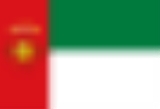
The War of the Confederation (also known in Peru as the Chilean-Confederation war) (1836–1839), was a conflict between the Peru-Bolivian Confederation
on one side and Chile
, Peruvian dissidents and Argentina
, on the other, fought mostly in the actual territory of Peru
and which ended with a Confederate defeat and the dissolution of the Confederacy.
 The creation in 1836 of the Peru-Bolivian Confederation
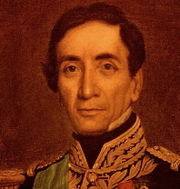
by Marshal Andrés de Santa Cruz
caused great alarm in the neighbouring countries. The potential power of this confederation aroused the opposition of Argentina and, above all, Chile, due not only to its great territorial expanse but also to the perceived threat that such a rich state signified for the area. Diego Portales y Palazuelos
, arguably the most important Chilean statesman of the 19th century, who at the time was the power behind president José Joaquín Prieto Vial
, was very concerned that the new Confederacy would break the regional balance of power and even be a threat to Chilean independence, and so became immediately its enemy.
But that was just one of the reasons behind the war. On a deeper level, both countries were in a heated competition for the control of the commercial routes on the Pacific; and for the Chileans specially, whose relations with independent Peru had already been strained by economic problems centering on the rivalry between their ports of Callao
and Valparaíso
. For the North-Peruvians land owners also, the Confederacy was viewed as a most serious threat to their economic interests.
, then president of Peru, signed a Treaty of Friendship, Commerce and Navigation with Chile
. When President Salaverry
was replaced by General Luis Orbegoso in Peru, the treaty was declared null and void on February 14, 1836. In the meanwhile, the Confederacy was already taking form. In order to force Chile to renegotiate, Peru raised its tariff on Chilean wheat from 12 cents to 3 pesos - an increase of over 250%. Chile responded by raising the tariffs on Peruvian sugar by the same amount. The hostilities started to grow until the Mexican minister (ambassador) to Chile offered to mediate in the conflict. Open conflict was averted for the time being.
. He managed to obtain a small subsidy from the Confederate government to equip a frigate and try to wrestle power from the Prieto
administration. The adventure was a quick failure. The sloop Orbegoso was captured by the frigate Monteagudo on July 28, 1836 and became part of the Chilean fleet. In the meantime, Freire who had managed to capture the city of Ancud
was defeated and captured himself, being sent this time to the prison-island of Juan Fernández
.
. Garrido, who arrived with the Aquiles on a good will visit, staged a silent attack on the night of August 21, 1836, managing to capture 3 confederate ships: the Santa Cruz, Arequipeño and Peruviana.
tried to negotiate with Chile. The Chilean Congress sent Mariano Egaña
as plenipotentiary to negotiate a treaty based on several points: the payments of the outstanding international debts owed by Peru to Chile, the limitation of the outstanding armies, commercial agreements, indemnization to Chile for the Freire Expedition and the dissolution of the Confederation. Santa Cruz agreed to everything but the dissolution. Chile responded by declaring war on December 28, 1836.
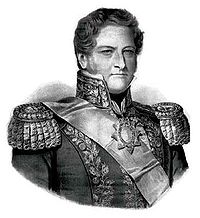 The international situation was not favorable to the Chilean interests. Marshal Santa Cruz and the Confederation had been diplomatically recognized by the principal world powers with interests in the region (Great Britain
, France
and the United States
), while the possible Chilean allies (Argentina
and Ecuador
) had decided to remain neutral in the conflict.
, moved this country to also declare war on May 9, 1837, in support of the northern province of Tucumán
, which was threatened by Santa Cruz's forces. France supported Santa Cruz's war effort by imposing a naval blockade over Buenos Aires
, an ill-fated attempt to remove Rosas from power.
Even though Chile and Argentina were acting against the same perceived threat, both countries went to war independently, due to the intense dislike between Portales and Rosas, and both countries continued to act separately throughout the whole course of the conflict. In 1837 Santa Cruz's forces defeated an Argentine army sent to topple him.
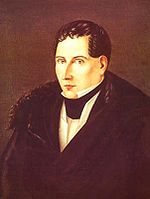 The Chilean government, in order to bolster its sagging standing with public opinion (which was opposed to a war they did not understand), imposed martial law and asked for (and obtained) extraordinary legislative powers from Congress. Early in 1837 a Court Martial Law was approved and given jurisdiction over all citizens for the duration of the war. The opposition to the Prieto
administration immediately accused Portales
of tyranny, and started a heated press campaign against him personally and the unpopular war in general.
Political and public opposition to war immediately affected the army, fresh still from the purges of the civil war of 1829-1830. On October 4, 1837, Coronel José Antonio Vidaurre
, commander of the "Maipo" regiment, captured and imprisoned Portales while he was reviewing troops at the army barracks in Quillota
. Vidaurre immediately proceeded to attack Valparaíso
on the mistaken belief that public opinion opposed to the war would support him and topple the government. Rear Admiral Manuel Blanco Encalada
, in charge of the defense, defeated him right outside the port at the Battle of Baron. Captain Santiago Florín, who was in charge of Portales, had him shot when he heard of the news, on October 6, 1837. Most of the conspirators were subsequently captured and executed.
This murder, which was perceived as having been orchestrated by Marshal Santa Cruz, turned the tide of Chilean public opinion. The government derogated Martial law and the country rallied behind the government. The war became a holy cause, and Portales its martyr.
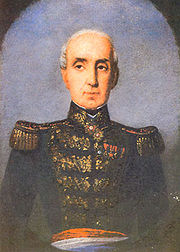
garrison, which they captured, liberating the prisoners there. Then they attacked the ports of Talcahuano
, San Antonio
, Huasco
and Caldera.
and British commander Robert Simpson
. The Chilean army landed at Islay
in southern Peru in October, 1837, occupying the city of Arequipa
after a long and arduous march, during which the Chileans were decimated by disease. But the invading army failed to find the local support that had been led to believe would encounter against the Confederate government. While Admiral Blanco Encalada was immersed in never-ending negotiations with the local leaders, Marshal Santa Cruz quietly surrounded the city with his army and effectively blockaded the invading army inside.
When Admiral Blanco Encalada returned rather ignominiously to Valparaíso
with the fleet and the army in December, 1837, the scandal was gigantic. The Chilean government and the Chilean public opinion repudiated the treaty in indignation. Admiral Blanco Encalada as was thrown into jail and tried for high treason, together with his advisor Antonio José de Irisarri
, who had refused to even return to Chile. Both were eventually acquitted, though Irisarri wisely never returned.
, to disrupt Peruvian commerce. On January 12, 1838 they met a Confederate squadron near the Peruvian port of Islay
, on what is known as the Naval Battle of Islay. The Confederate squadron was conformed by the Socabaya, Junín and Fundador under the command of commander Juan José Panizo. Simpson attacked but Panizo managed to head him off for several hours until able to escape under the cover of darkness. Both sides claimed victory, but the result was mostly a stalemate that did not affect the course of the war.
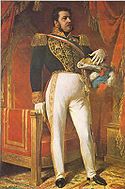 By mid-1838 Chile had obtained naval superiority and dispatched General Manuel Bulnes Prieto heading a Chilean army
.
on August 21, 1838. The Chilean army, under the command of General Bulnes, defeated the Confederate garrison loyal to General Orbegoso. The Chilean force occupied Lima at the end of October, 1838 but abandoned it on November 3 on hearing of the approach of a large Bolivian army under General Santa Cruz. The Chileans withdrew by land and sea toward Huacho. In the meantime, the principal citizens had met and called an open congress that proclaimed General Gamarra
as Provisional President of Peru.
 On January 12, 1839 both fleets met in a naval battle at Casma, where the French corsairs fighting on the Confederate side were defeated by Admiral Simpson's Chilean fleet. On that day the Chilean fleet, which was protecting the transports used to mobilize the invading Chilean army
, were attacked in the port of Casma
by the Confederate fleet, composed of the Esmond, Mexicana, Arequipeño and Peru, under the command of French sailor Juan Blanchet. The battle lasted for several hours until the final repulse of the Confederate fleet. During the battle Blanchet was killed and the Confederate ship Arequipeño was sunk, but not before the Chilean fleet had been badly battered. Nonetheless, the resounding defeat of the Confederate fleet at Casma by the smaller Chilean squadron left Chile in absolute control of the southeastern Pacific.
on January 6, 1839. This time Santa Cruz advanced on its enemies and a brief combat happened by the margins of the Santa River. The result was a major Chilean reverse, which considerably strengthened the position and the morale of the Confederate side.
occupied the town of Yungay
with the intention to cut the provisions and to strangle the Chilean Expedition. After the favorable Battle of Buin, Santa Cruz was trying to finish with the Chilean Expedition in order to stabilize the internal situation in the country and to avoid any more uprisings against him. Here is where the boldness of General Bulnes could be observed, when instead of retiring and looking for a more suitable position, turned around against Santa Cruz ready to attack.
The Confederate army was completely (and surprisingly) defeated. The Battle of Yungay
took place on January 20, 1839. In this battle, the Confederate troops, under the command of Marshal Santa Cruz, waited the Bulnes offensive well defended on the Pan de Azúcar hill, near the town of Yungay. The battle started very early on the morning and finished late in the evening. The Confederate troops had over 2,400 casualties (mostly dead) and more than 1,600 soldiers were made prisoners. The Chilean army
had about 1,300 dead and 400 injured. After the battle, General Manuel Bulnes
was proclaimed as Grand Marshal of Ancash by General Gamarra
.
On August 25, 1839 General Agustín Gamarra
after assuming as president of Peru, officially declared the dissolution of the Confederation and of the North and South-Peruvian Republics, and the merging of these states back into one to be called again Peru.
The Confederate defeat led to the exile of Santa Cruz, first to Guayaquil
, in Ecuador
, then to Chile
and finally to Europe, where he died. The Chilean troops also left, after having achieved the goal of dissolving the Confederation and affirmed General Gamarra as President of Peru.
Nonetheless, General Gamarra decided to pursue the war against Bolivia on his own. He was not against the idea of merging Peru and Bolivia into one political unity, but against the idea of this union being led by Bolivia. He invaded this country, but the Peruvian army was decisively defeated at the Battle of Ingaví
on November 20, 1841, where General Gamarra himself was killed. The Bolivian army under General José Ballivián
then mounted a counter-offensive managing to capture the Peruvian port of Arica
. Later, both sides signed a peace in 1842, putting a final end to the war.
Peru-Bolivian Confederation
The Peru–Bolivian Confederation was a short-lived confederate state that existed in South America between 1836 and 1839. Its first and only head of state, titled Supreme Protector, was the Bolivian president, Marshal Andrés de Santa Cruz....
on one side and Chile
Chile
Chile ,officially the Republic of Chile , is a country in South America occupying a long, narrow coastal strip between the Andes mountains to the east and the Pacific Ocean to the west. It borders Peru to the north, Bolivia to the northeast, Argentina to the east, and the Drake Passage in the far...
, Peruvian dissidents and Argentina
Argentina
Argentina , officially the Argentine Republic , is the second largest country in South America by land area, after Brazil. It is constituted as a federation of 23 provinces and an autonomous city, Buenos Aires...
, on the other, fought mostly in the actual territory of Peru
Peru
Peru , officially the Republic of Peru , is a country in western South America. It is bordered on the north by Ecuador and Colombia, on the east by Brazil, on the southeast by Bolivia, on the south by Chile, and on the west by the Pacific Ocean....
and which ended with a Confederate defeat and the dissolution of the Confederacy.
Background
Peru-Bolivian Confederation
The Peru–Bolivian Confederation was a short-lived confederate state that existed in South America between 1836 and 1839. Its first and only head of state, titled Supreme Protector, was the Bolivian president, Marshal Andrés de Santa Cruz....
by Marshal Andrés de Santa Cruz
Andrés de Santa Cruz
Andrés de Santa Cruz y Calahumana was President of Peru and Bolivia...
caused great alarm in the neighbouring countries. The potential power of this confederation aroused the opposition of Argentina and, above all, Chile, due not only to its great territorial expanse but also to the perceived threat that such a rich state signified for the area. Diego Portales y Palazuelos
Diego Portales
Diego José Pedro Víctor Portales Palazuelos was a Chilean statesman and entrepreneur. As a minister of president José Joaquín Prieto Diego Portales played a pivotal role in shaping the state and government politics in the 19th century, delivering with the Constitution of 1833 the framework of the...
, arguably the most important Chilean statesman of the 19th century, who at the time was the power behind president José Joaquín Prieto Vial
José Joaquín Prieto
José Joaquín Prieto Vial was a Chilean military and political figure. He was twice President of Chile between 1831 and 1841. José Joaquín Prieto was of Spanish and Basque descent.-Early life:...
, was very concerned that the new Confederacy would break the regional balance of power and even be a threat to Chilean independence, and so became immediately its enemy.
But that was just one of the reasons behind the war. On a deeper level, both countries were in a heated competition for the control of the commercial routes on the Pacific; and for the Chileans specially, whose relations with independent Peru had already been strained by economic problems centering on the rivalry between their ports of Callao
Callao
Callao is the largest and most important port in Peru. The city is coterminous with the Constitutional Province of Callao, the only province of the Callao Region. Callao is located west of Lima, the country's capital, and is part of the Lima Metropolitan Area, a large metropolis that holds almost...
and Valparaíso
Valparaíso
Valparaíso is a city and commune of Chile, center of its third largest conurbation and one of the country's most important seaports and an increasing cultural center in the Southwest Pacific hemisphere. The city is the capital of the Valparaíso Province and the Valparaíso Region...
. For the North-Peruvians land owners also, the Confederacy was viewed as a most serious threat to their economic interests.
Tariff War
The direct conflict between the two countries started with a simple tariff disagreement. In January 1835, General Felipe SalaverryFelipe Santiago Salaverry
Felipe Santiago de Salaverry was a Peruvian soldier, politician and, from 1835 to 1836, President of Peru.He studied in the College of San Carlos in Lima...
, then president of Peru, signed a Treaty of Friendship, Commerce and Navigation with Chile
Chile
Chile ,officially the Republic of Chile , is a country in South America occupying a long, narrow coastal strip between the Andes mountains to the east and the Pacific Ocean to the west. It borders Peru to the north, Bolivia to the northeast, Argentina to the east, and the Drake Passage in the far...
. When President Salaverry
Felipe Santiago Salaverry
Felipe Santiago de Salaverry was a Peruvian soldier, politician and, from 1835 to 1836, President of Peru.He studied in the College of San Carlos in Lima...
was replaced by General Luis Orbegoso in Peru, the treaty was declared null and void on February 14, 1836. In the meanwhile, the Confederacy was already taking form. In order to force Chile to renegotiate, Peru raised its tariff on Chilean wheat from 12 cents to 3 pesos - an increase of over 250%. Chile responded by raising the tariffs on Peruvian sugar by the same amount. The hostilities started to grow until the Mexican minister (ambassador) to Chile offered to mediate in the conflict. Open conflict was averted for the time being.
Freire Expedition
After the victory of the conservative party, former Chilean president General Ramón Freire y Serrano was exiled to LimaLima
Lima is the capital and the largest city of Peru. It is located in the valleys of the Chillón, Rímac and Lurín rivers, in the central part of the country, on a desert coast overlooking the Pacific Ocean. Together with the seaport of Callao, it forms a contiguous urban area known as the Lima...
. He managed to obtain a small subsidy from the Confederate government to equip a frigate and try to wrestle power from the Prieto
José Joaquín Prieto
José Joaquín Prieto Vial was a Chilean military and political figure. He was twice President of Chile between 1831 and 1841. José Joaquín Prieto was of Spanish and Basque descent.-Early life:...
administration. The adventure was a quick failure. The sloop Orbegoso was captured by the frigate Monteagudo on July 28, 1836 and became part of the Chilean fleet. In the meantime, Freire who had managed to capture the city of Ancud
Ancud
Ancud is a city in southern Chile located in the northernmost part of the island and province of Chiloé, in Los Lagos Region .-Geography:...
was defeated and captured himself, being sent this time to the prison-island of Juan Fernández
Juan Fernández Islands
The Juan Fernández Islands are a sparsely inhabited island group reliant on tourism and fishing in the South Pacific Ocean, situated about off the coast of Chile, and is composed of three main volcanic islands; Robinson Crusoe Island, Alejandro Selkirk Island and Santa Clara Island, the first...
.
Raid on Callao
The Freire Expedition had a secondary result. Portales decided to take the offensive and staged a surprise raid to prevent further interference by the Confederate government in Chilean internal affairs. He gave command of the small Chilean fleet to the Spanish sailor Victorino Garrido and ordered him to raid the Confederate fleet that was stationed in the port of CallaoCallao
Callao is the largest and most important port in Peru. The city is coterminous with the Constitutional Province of Callao, the only province of the Callao Region. Callao is located west of Lima, the country's capital, and is part of the Lima Metropolitan Area, a large metropolis that holds almost...
. Garrido, who arrived with the Aquiles on a good will visit, staged a silent attack on the night of August 21, 1836, managing to capture 3 confederate ships: the Santa Cruz, Arequipeño and Peruviana.
Chilean declaration of war
Instead of immediately going to war, Marshal Andrés de Santa CruzAndrés de Santa Cruz
Andrés de Santa Cruz y Calahumana was President of Peru and Bolivia...
tried to negotiate with Chile. The Chilean Congress sent Mariano Egaña
Mariano Egaña
Mariano Egaña Fabres was a Chilean lawyer, conservative politician and the main writer of the Chilean Constitution of 1833....
as plenipotentiary to negotiate a treaty based on several points: the payments of the outstanding international debts owed by Peru to Chile, the limitation of the outstanding armies, commercial agreements, indemnization to Chile for the Freire Expedition and the dissolution of the Confederation. Santa Cruz agreed to everything but the dissolution. Chile responded by declaring war on December 28, 1836.
Great Britain
Great Britain or Britain is an island situated to the northwest of Continental Europe. It is the ninth largest island in the world, and the largest European island, as well as the largest of the British Isles...
, France
France
The French Republic , The French Republic , The French Republic , (commonly known as France , is a unitary semi-presidential republic in Western Europe with several overseas territories and islands located on other continents and in the Indian, Pacific, and Atlantic oceans. Metropolitan France...
and the United States
United States
The United States of America is a federal constitutional republic comprising fifty states and a federal district...
), while the possible Chilean allies (Argentina
Argentina
Argentina , officially the Argentine Republic , is the second largest country in South America by land area, after Brazil. It is constituted as a federation of 23 provinces and an autonomous city, Buenos Aires...
and Ecuador
Ecuador
Ecuador , officially the Republic of Ecuador is a representative democratic republic in South America, bordered by Colombia on the north, Peru on the east and south, and by the Pacific Ocean to the west. It is one of only two countries in South America, along with Chile, that do not have a border...
) had decided to remain neutral in the conflict.
Argentine declaration of war
Nonetheless, the involvement of Marshal Santa Cruz in Argentina's internal affairs by his continued support to the opponents of caudillo Juan Manuel de RosasJuan Manuel de Rosas
Juan Manuel de Rosas , was an argentine militar and politician, who was elected governor of the province of Buenos Aires in 1829 to 1835, and then of the Argentine Confederation from 1835 until 1852...
, moved this country to also declare war on May 9, 1837, in support of the northern province of Tucumán
Tucumán Province
Tucumán is the most densely populated, and the smallest by land area, of the provinces of Argentina. Located in the northwest of the country, the capital is San Miguel de Tucumán, often shortened to Tucumán. Neighboring provinces are, clockwise from the north: Salta, Santiago del Estero and...
, which was threatened by Santa Cruz's forces. France supported Santa Cruz's war effort by imposing a naval blockade over Buenos Aires
Buenos Aires
Buenos Aires is the capital and largest city of Argentina, and the second-largest metropolitan area in South America, after São Paulo. It is located on the western shore of the estuary of the Río de la Plata, on the southeastern coast of the South American continent...
, an ill-fated attempt to remove Rosas from power.
Even though Chile and Argentina were acting against the same perceived threat, both countries went to war independently, due to the intense dislike between Portales and Rosas, and both countries continued to act separately throughout the whole course of the conflict. In 1837 Santa Cruz's forces defeated an Argentine army sent to topple him.
Assassination of Portales
José Joaquín Prieto
José Joaquín Prieto Vial was a Chilean military and political figure. He was twice President of Chile between 1831 and 1841. José Joaquín Prieto was of Spanish and Basque descent.-Early life:...
administration immediately accused Portales
Diego Portales
Diego José Pedro Víctor Portales Palazuelos was a Chilean statesman and entrepreneur. As a minister of president José Joaquín Prieto Diego Portales played a pivotal role in shaping the state and government politics in the 19th century, delivering with the Constitution of 1833 the framework of the...
of tyranny, and started a heated press campaign against him personally and the unpopular war in general.
Political and public opposition to war immediately affected the army, fresh still from the purges of the civil war of 1829-1830. On October 4, 1837, Coronel José Antonio Vidaurre
Jose Antonio Vidaurre
Colonel José Antonio Vidaurre Garretón was a Chilean military officer who led a failed insurrection in 1837 that culminated in the assassination of minister Diego Portales....
, commander of the "Maipo" regiment, captured and imprisoned Portales while he was reviewing troops at the army barracks in Quillota
Quillota
Quillota is a city and commune located in the Aconcagua River valley of central Chile's Valparaíso Region. It is the capital and largest city of the Quillota Province where many inhabitants live in the surrounding farm areas of San Isidro, La Palma, Pocochay, and San Pedro...
. Vidaurre immediately proceeded to attack Valparaíso
Valparaíso
Valparaíso is a city and commune of Chile, center of its third largest conurbation and one of the country's most important seaports and an increasing cultural center in the Southwest Pacific hemisphere. The city is the capital of the Valparaíso Province and the Valparaíso Region...
on the mistaken belief that public opinion opposed to the war would support him and topple the government. Rear Admiral Manuel Blanco Encalada
Manuel Blanco Encalada
Manuel José Blanco y Calvo de Encalada was a Vice-Admiral in the Chilean Navy, a political figure, and Chile's first President .-Biography:...
, in charge of the defense, defeated him right outside the port at the Battle of Baron. Captain Santiago Florín, who was in charge of Portales, had him shot when he heard of the news, on October 6, 1837. Most of the conspirators were subsequently captured and executed.
This murder, which was perceived as having been orchestrated by Marshal Santa Cruz, turned the tide of Chilean public opinion. The government derogated Martial law and the country rallied behind the government. The war became a holy cause, and Portales its martyr.
First Campaign
Confederate Naval Campaign
The first stage of the war was fought at sea. Both sides tried to take control of it from the very beginning. The Confederal fleet was composed of the Socabaya, Confederación and Congreso and it put out to sea on November 1837. They first attacked the Juan FernándezJuan Fernández Islands
The Juan Fernández Islands are a sparsely inhabited island group reliant on tourism and fishing in the South Pacific Ocean, situated about off the coast of Chile, and is composed of three main volcanic islands; Robinson Crusoe Island, Alejandro Selkirk Island and Santa Clara Island, the first...
garrison, which they captured, liberating the prisoners there. Then they attacked the ports of Talcahuano
Talcahuano
Talcahuano is a port city and commune in the Biobío Region of Chile. It is part of the Greater Concepción conurbation. Talcahuano is located in the south of the Central Zone of Chile.-Geography:...
, San Antonio
San Antonio, Chile
San Antonio, meaning "Saint Anthony", is a major Chilean port and a commune in San Antonio Province, Valparaíso Region...
, Huasco
Huasco, Chile
Huasco is a Chilean city and commune, in the Huasco Province, Atacama Region.The port city of Huasco is located 50 km west of Vallenar and close to the town of Huasco Bajo, which lies on the southern bank of the Huasco River and only a few km from its mouth...
and Caldera.
Chilean Expedition
In the meantime, the Chilean government was preparing an expedition to put a quick end to the conflict. On September 1837 it sent a fleet carrying a Chilean expeditionary force of approximately 2,800 troops under the command of Admiral Manuel Blanco EncaladaManuel Blanco Encalada
Manuel José Blanco y Calvo de Encalada was a Vice-Admiral in the Chilean Navy, a political figure, and Chile's first President .-Biography:...
and British commander Robert Simpson
Robert Winthrop Simpson
Robert Winthrop Simpson was a Rear-Admiral of the Chilean navy and a hero of the War of the Confederation.-Early life:...
. The Chilean army landed at Islay
Islay
-Prehistory:The earliest settlers on Islay were nomadic hunter-gatherers who arrived during the Mesolithic period after the retreat of the Pleistocene ice caps. In 1993 a flint arrowhead was found in a field near Bridgend dating from 10,800 BC, the earliest evidence of a human presence found so far...
in southern Peru in October, 1837, occupying the city of Arequipa
Arequipa
Arequipa is the capital city of the Arequipa Region in southern Peru. With a population of 836,859 it is the second most populous city of the country...
after a long and arduous march, during which the Chileans were decimated by disease. But the invading army failed to find the local support that had been led to believe would encounter against the Confederate government. While Admiral Blanco Encalada was immersed in never-ending negotiations with the local leaders, Marshal Santa Cruz quietly surrounded the city with his army and effectively blockaded the invading army inside.
Treaty of Paucarpata
Surrounded and out-manoeuvered, and following an encounter at Paucarpata with an army under the command of Santa Cruz, Admiral Blanco Encalada was forced to sign a peace treaty. The Treaty of Paucarpata was signed on November 17, 1837, and agreed to the devolution of all captured ships by Chile, the restoration of commercial relations between both nations, the withdrawal of all Chilean troops from Confederate territories and the payment by the Confederacy of the former Peruvian foreign debts with Chile. The Chilean troops were reembarked.When Admiral Blanco Encalada returned rather ignominiously to Valparaíso
Valparaíso
Valparaíso is a city and commune of Chile, center of its third largest conurbation and one of the country's most important seaports and an increasing cultural center in the Southwest Pacific hemisphere. The city is the capital of the Valparaíso Province and the Valparaíso Region...
with the fleet and the army in December, 1837, the scandal was gigantic. The Chilean government and the Chilean public opinion repudiated the treaty in indignation. Admiral Blanco Encalada as was thrown into jail and tried for high treason, together with his advisor Antonio José de Irisarri
Antonio José de Irisarri
Antonio José de Irisarri Alonso , was a Guatemalan statesman, journalist and Interim Supreme Director of Chile . He is considered one of the fathers of Chilean journalism together with Fr. Camilo Henríquez....
, who had refused to even return to Chile. Both were eventually acquitted, though Irisarri wisely never returned.
Naval Battle of Islay
After the treaty of Paucarpata had been repudiated, the Chilean government again dispatched its fleet, composed of 5 battleships under the command of Robert SimpsonRobert Winthrop Simpson
Robert Winthrop Simpson was a Rear-Admiral of the Chilean navy and a hero of the War of the Confederation.-Early life:...
, to disrupt Peruvian commerce. On January 12, 1838 they met a Confederate squadron near the Peruvian port of Islay
Islay
-Prehistory:The earliest settlers on Islay were nomadic hunter-gatherers who arrived during the Mesolithic period after the retreat of the Pleistocene ice caps. In 1993 a flint arrowhead was found in a field near Bridgend dating from 10,800 BC, the earliest evidence of a human presence found so far...
, on what is known as the Naval Battle of Islay. The Confederate squadron was conformed by the Socabaya, Junín and Fundador under the command of commander Juan José Panizo. Simpson attacked but Panizo managed to head him off for several hours until able to escape under the cover of darkness. Both sides claimed victory, but the result was mostly a stalemate that did not affect the course of the war.
Second Campaign - Chilean Army
Chilean Army
The Chilean Army is the land arm of the Military of Chile. This 45,000-person army is organized into seven divisions, a special operations brigade and an air brigade....
.
Battle of Portada de Guías
Although their advance was delayed by harassment from small groups of Confederate forces, the Chileans were finally able to lay siege to Lima. The first encounter between the two armies was the Battle of Portada de Guías which took place right outside the city of LimaLima
Lima is the capital and the largest city of Peru. It is located in the valleys of the Chillón, Rímac and Lurín rivers, in the central part of the country, on a desert coast overlooking the Pacific Ocean. Together with the seaport of Callao, it forms a contiguous urban area known as the Lima...
on August 21, 1838. The Chilean army, under the command of General Bulnes, defeated the Confederate garrison loyal to General Orbegoso. The Chilean force occupied Lima at the end of October, 1838 but abandoned it on November 3 on hearing of the approach of a large Bolivian army under General Santa Cruz. The Chileans withdrew by land and sea toward Huacho. In the meantime, the principal citizens had met and called an open congress that proclaimed General Gamarra
Agustín Gamarra
Agustín Gamarra Messia was a Peruvian soldier and politician, becoming twice President of Peru from 1829 to 1833 and from 1838 to 1841....
as Provisional President of Peru.
Naval Battle of Casma
Chilean Army
The Chilean Army is the land arm of the Military of Chile. This 45,000-person army is organized into seven divisions, a special operations brigade and an air brigade....
, were attacked in the port of Casma
Casma
Casma is a city in the Ancash Region, Peru. It is located in the Casma Valley. Its surface has 1 204,85 km².Its people venerate saint Santa Maria Magdalena and its day is celebrated on July 22....
by the Confederate fleet, composed of the Esmond, Mexicana, Arequipeño and Peru, under the command of French sailor Juan Blanchet. The battle lasted for several hours until the final repulse of the Confederate fleet. During the battle Blanchet was killed and the Confederate ship Arequipeño was sunk, but not before the Chilean fleet had been badly battered. Nonetheless, the resounding defeat of the Confederate fleet at Casma by the smaller Chilean squadron left Chile in absolute control of the southeastern Pacific.
Battle of Buin
However, Santa Cruz failed to exploit the Chilean retreat fully, despite successes in several small skirmishes culminating in the first direct encounter between the bulk of both armies at the Battle of BuinBattle of Buin
The Battle of Buin was fought on January 6, 1839, during the Chilean second expedition of the War of the Confederation. The Restoring Army rearguard led by General Manuel Bulnes successfully held the bridge over the Buin River in the North Peruvian territory from the attack of the Confederacy Army...
on January 6, 1839. This time Santa Cruz advanced on its enemies and a brief combat happened by the margins of the Santa River. The result was a major Chilean reverse, which considerably strengthened the position and the morale of the Confederate side.
Battle of Yungay
Marshal Santa CruzAndrés de Santa Cruz
Andrés de Santa Cruz y Calahumana was President of Peru and Bolivia...
occupied the town of Yungay
Yungay, Peru
-Location:Yungay is located in the Callejón de Huaylas on Río Santa at an elevation of 2,500 m, 450 km north of Lima, the country's capital. East of the small town are the mountain ridges of snow-covered Cordillera Blanca, with Huascarán, Peru's highest mountain, no more than 15 km east...
with the intention to cut the provisions and to strangle the Chilean Expedition. After the favorable Battle of Buin, Santa Cruz was trying to finish with the Chilean Expedition in order to stabilize the internal situation in the country and to avoid any more uprisings against him. Here is where the boldness of General Bulnes could be observed, when instead of retiring and looking for a more suitable position, turned around against Santa Cruz ready to attack.
The Confederate army was completely (and surprisingly) defeated. The Battle of Yungay
Battle of Yungay
The Battle of Yungay effectively destroyed the Peru-Bolivian Confederation created by Bolivian Marshal Andrés de Santa Cruz in 1836...
took place on January 20, 1839. In this battle, the Confederate troops, under the command of Marshal Santa Cruz, waited the Bulnes offensive well defended on the Pan de Azúcar hill, near the town of Yungay. The battle started very early on the morning and finished late in the evening. The Confederate troops had over 2,400 casualties (mostly dead) and more than 1,600 soldiers were made prisoners. The Chilean army
Chilean Army
The Chilean Army is the land arm of the Military of Chile. This 45,000-person army is organized into seven divisions, a special operations brigade and an air brigade....
had about 1,300 dead and 400 injured. After the battle, General Manuel Bulnes
Manuel Bulnes
-Sources:* Juan B. Alberdi, Biografia de general Bulnes...
was proclaimed as Grand Marshal of Ancash by General Gamarra
Agustín Gamarra
Agustín Gamarra Messia was a Peruvian soldier and politician, becoming twice President of Peru from 1829 to 1833 and from 1838 to 1841....
.
Aftermath
General Bulnes again assumed the initiative. After the crushing defeat on the Confederate Army at Yungay on January 20, the Chileans commenced a second push southward, occupying Lima for the second time in April. Santa Cruz had already fled to Ecuador, and both the war and the short-lived Peru-Bolivian Confederation now came to an end.On August 25, 1839 General Agustín Gamarra
Agustín Gamarra
Agustín Gamarra Messia was a Peruvian soldier and politician, becoming twice President of Peru from 1829 to 1833 and from 1838 to 1841....
after assuming as president of Peru, officially declared the dissolution of the Confederation and of the North and South-Peruvian Republics, and the merging of these states back into one to be called again Peru.
The Confederate defeat led to the exile of Santa Cruz, first to Guayaquil
Guayaquil
Guayaquil , officially Santiago de Guayaquil , is the largest and the most populous city in Ecuador,with about 2.3 million inhabitants in the city and nearly 3.1 million in the metropolitan area, as well as that nation's main port...
, in Ecuador
Ecuador
Ecuador , officially the Republic of Ecuador is a representative democratic republic in South America, bordered by Colombia on the north, Peru on the east and south, and by the Pacific Ocean to the west. It is one of only two countries in South America, along with Chile, that do not have a border...
, then to Chile
Chile
Chile ,officially the Republic of Chile , is a country in South America occupying a long, narrow coastal strip between the Andes mountains to the east and the Pacific Ocean to the west. It borders Peru to the north, Bolivia to the northeast, Argentina to the east, and the Drake Passage in the far...
and finally to Europe, where he died. The Chilean troops also left, after having achieved the goal of dissolving the Confederation and affirmed General Gamarra as President of Peru.
Nonetheless, General Gamarra decided to pursue the war against Bolivia on his own. He was not against the idea of merging Peru and Bolivia into one political unity, but against the idea of this union being led by Bolivia. He invaded this country, but the Peruvian army was decisively defeated at the Battle of Ingaví
Battle of Ingavi
The Battle of Ingavi occurred on November 18, in the 1841 in the town of Ingavi, Bolivia. There the Bolivian Army commanded by Jose Ballivian met an invading Peruvian Army commanded by Agustín Gamarra who would later die during the battle....
on November 20, 1841, where General Gamarra himself was killed. The Bolivian army under General José Ballivián
José Ballivián
José Ballivián was a Bolivian general during the Peruvian-Bolivian War and the 11th president of Bolivia from September 27, 1841 to December 23, 1847.-Biography:...
then mounted a counter-offensive managing to capture the Peruvian port of Arica
Arica
Arica is a city in northern Chile. "Arica" may also refer to:Places* Arica and Parinacota Region, Chile* Arica Airport , Chile* Arica, Amazonas, town in Colombia* Rio Aricá-açu, tributary of the Cuiabá River south of Cuiabá, BrazilOther...
. Later, both sides signed a peace in 1842, putting a final end to the war.
See also
- Peru-Bolivian ConfederationPeru-Bolivian ConfederationThe Peru–Bolivian Confederation was a short-lived confederate state that existed in South America between 1836 and 1839. Its first and only head of state, titled Supreme Protector, was the Bolivian president, Marshal Andrés de Santa Cruz....
- History of BoliviaHistory of BoliviaThis is the history of Bolivia. See also the history of Latin America and the history of the Americas.Bolivia is a landlocked country in South America...
- History of ChileHistory of ChileThe territory of Chile has been populated since at least 2,000 BC. By the 16th century, Spanish conquistadors began to subdue and colonize the region of present-day Chile, and the territory became a colony from 1540 to 1818, when it gained independence from Spain...
- History of PeruHistory of PeruThe history of Peru spans several millennia, extending back through several stages of cultural development in the mountain region and the coastal desert....
- Chincha Islands WarChincha Islands WarThe Chincha Islands War was a series of coastal and naval battles between Spain and its former colonies of Peru and Chile from 1864 to 1866, that began with Spain's seizure of the guano-rich Chincha Islands, part of a series of attempts by Isabel II of Spain to reassert her country's lost...
- War of the PacificWar of the PacificThe War of the Pacific took place in western South America from 1879 through 1883. Chile fought against Bolivia and Peru. Despite cooperation among the three nations in the war against Spain, disputes soon arose over the mineral-rich Peruvian provinces of Tarapaca, Tacna, and Arica, and the...
- Battle of YungayBattle of YungayThe Battle of Yungay effectively destroyed the Peru-Bolivian Confederation created by Bolivian Marshal Andrés de Santa Cruz in 1836...