
All Topics  
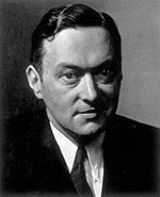
Walter Lippmann


   Email Print
   Bookmark   Link


Walter Lippmann


Walter Lippmann (September 23, 1889 - December 14, 1974) was an influential American
United States

The United States of America is a Federal government constitutional republic comprising U.S. state and a federal district. The country is situated mostly in central North America, where its Contiguous United States and Washington, D.C., the Capital districts and territories, lie between the Pacific Ocean and Atlantic Oceans, Borders of the U...
 award-winning writer
Writer

A writer is anyone who creates a written work, although the word usually designates those who write creatively or professionally, as well as those who have written in many different forms....
, journalist
Journalist

A journalist is a person who practices journalism, the gathering and dissemination of information about current events, trends, issues, and people while striving for viewpoints that aren't biased....
, and political commentator. Lippman was the recipient of the Pulitzer Prize
Pulitzer Prize

The Pulitzer Prize is an United States award regarded as the highest national honor in newspaper journalism, literary achievements and musical composition....
 in 1958 and 1962 for his syndicated newspaper column, "Today and Tomorrow".

mann was born on September 23, 1889 in New York City to German
Germany

Germany , officially the Federal Republic of Germany , is a country in Central Europe. It is bordered to the north by the North Sea, Denmark, and the Baltic Sea; to the east by Poland and the Czech Republic; to the south by Austria and Switzerland; and to the west by France, Luxembourg, Belgium, and the Netherlands....
-Jew
Jew

A Jew is a member of the Jewish people, an ethnoreligious group that traces its ancestry to the Israelites or Hebrews of the Ancient Near East....
ish parents, Jacob and Daisy Baum Lippmann. The family was upper-middle class, taking annual family trips to Europe.


Discussion
Ask a question about 'Walter Lippmann'
Start a new discussion about 'Walter Lippmann'
Answer questions from other users
Full Discussion Forum


Quotations


A long life in journalism convinced me many presidents ago that there should be a large air space between a journalist and the head of a state.

It requires wisdom to understand wisdom: the music is nothing if the audience is deaf.

So far as I am concerned I have no doctrinaire belief in free speech. In the interest of the war it is necessary to sacrifice some of it.

The facts we see depend on where we are placed and the habits of our eyes.

The final test of a leader is that he leaves behind him in other men the conviction and the will to carry on.

When everyone thinks the same, nobody is thinking.


Encyclopedia


Walter Lippmann (September 23, 1889 - December 14, 1974) was an influential American
United States

The United States of America is a Federal government constitutional republic comprising U.S. state and a federal district. The country is situated mostly in central North America, where its Contiguous United States and Washington, D.C., the Capital districts and territories, lie between the Pacific Ocean and Atlantic Oceans, Borders of the U...
 award-winning writer
Writer

A writer is anyone who creates a written work, although the word usually designates those who write creatively or professionally, as well as those who have written in many different forms....
, journalist
Journalist

A journalist is a person who practices journalism, the gathering and dissemination of information about current events, trends, issues, and people while striving for viewpoints that aren't biased....
, and political commentator. Lippman was the recipient of the Pulitzer Prize
Pulitzer Prize

The Pulitzer Prize is an United States award regarded as the highest national honor in newspaper journalism, literary achievements and musical composition....
 in 1958 and 1962 for his syndicated newspaper column, "Today and Tomorrow".

Early life

Lippmann was born on September 23, 1889 in New York City to German
Germany

Germany , officially the Federal Republic of Germany , is a country in Central Europe. It is bordered to the north by the North Sea, Denmark, and the Baltic Sea; to the east by Poland and the Czech Republic; to the south by Austria and Switzerland; and to the west by France, Luxembourg, Belgium, and the Netherlands....
-Jew
Jew

A Jew is a member of the Jewish people, an ethnoreligious group that traces its ancestry to the Israelites or Hebrews of the Ancient Near East....
ish parents, Jacob and Daisy Baum Lippmann. The family was upper-middle class, taking annual family trips to Europe. At age 17, he entered Harvard University
Harvard University

Harvard University is a private university in Cambridge, Massachusetts, Massachusetts, United States, and a member of the Ivy League. Founded in 1636 by the colonial Massachusetts legislature, Harvard is the Colonial Colleges institution of higher learning in the United States....
 where he studied under George Santayana
George Santayana

George Santayana , was a philosopher, essayist, poet, and novelist.A lifelong Spain citizen, Santayana was raised and educated in the United States, wrote in English language and is generally considered an American Intellectual#Modes of .27intellectual class.27 in nineteenth-century Europe, although, of his nearly 89 years, he spent only 39...
, William James
William James

William James was a pioneering American psychology and philosophy trained as a medical doctor. He wrote influential books on the young science of psychology, educational psychology, psychology of religion experience and mysticism, and the philosophy of pragmatism....
, and Graham Wallas
Graham Wallas

Graham Wallas was an England Socialism, social psychologist, educationalist, and a leader of the Fabian Society.Born in Monkwearmouth, Sunderland, Wallas was educated at Shrewsbury School and Corpus Christi College, Oxford....
. He concentrated on philosophy
Philosophy

Philosophy is the study of general problems concerning matters such as existence, knowledge, truth, beauty, justice, validity, mind, and language....
 and languages (he spoke both German and French) and graduated after only three years of study.

Journalism and democracy

Lippmann was a journalist, a media critic and a philosopher who tried to reconcile the tensions between liberty and democracy in a complex and modern world, as in his 1920 book Liberty and the News.

In 1913 Lippmann, Herbert Croly
Herbert Croly

Herbert David Croly was an American liberalism political author....
, and Walter Weyl became the founding editors of The New Republic
The New Republic

The New Republic is an United States magazine of politics and the arts. It is published semimonthly and has a circulation of approximately 60,000....
 magazine. During World War I
World War I

World War I, or the First World War , was a global military conflict which involved the Great powers, organized into two opposing military alliances: the Allies of World War I and the Central Powers....
, Lippmann became an adviser to President
President of the United States

The President of the United States is the head of state and head of government of the United States and is the highest political official in the United States by influence and recognition....
 Woodrow Wilson
Woodrow Wilson

Thomas Woodrow Wilson was the List of Presidents of the United States President of the United States. A devout Presbyterianism and leading intellectual of the Progressive Era, he served as President of Princeton University of Princeton University from 1902 to 1910, and then as the Governor of New Jersey from 1911 to 1913....
 and assisted in the drafting of Wilson's Fourteen Points
Fourteen Points

The Fourteen Points were listed in a speech delivered by United States President of the United States Woodrow Wilson to a Joint session of the United States Congress of United States Congress on January 8, 1918....
.

Lippmann had wide access to the nation's decision makers and had no sympathy for communism
Communism

Communism is a socioeconomic structure and political ideology that promotes the establishment of an egalitarianism, classlessness, stateless society based on common ownership and control of the means of production and property in general....
. After Lippmann had become famous, the Golos spy ring
Jacob Golos

Jake Golos , was a Ukraina-born Bolshevik revolutionary and Soviet secret police operative in the USSR and of Jewish heritage. He was also a longtime senior official of the Communist Party of the United States of America involved in covert work and cooperation with Soviet intelligence agencies....
 used Mary Price
Mary Price

Mary Wolfe Price was an American who was accused of being a spy for the Soviet Union....
, his secretary, to garner information on items Lippmann chose not to write about or names of Lippmann's sources, often not carried in stories, but of use to the Soviet Ministry for State Security
Ministry for State Security (USSR)

The Ministry of State Security was the name of a Soviet secret police agency from 1946 to 1953. It was merged with the MVD in 1953 by Lavrenty Beria, but Beria was arrested and executed the same year, and a third agency, the KGB , broke off from the reformed MVD....
. He examined the coverage of newspapers and saw many inaccuracies and other problems.

Walter Lippmann and Charles Merz, in a 1920 study entitled A Test of the News
A Test of the News

A Test of the News is a 1920 study done by Walter Lippmann, a US journalist, and Charles Merz, later editorial page editor of the New York Times....
, stated that The New York Times
The New York Times

The New York Times is an American daily newspaper published in New York City. The largest metropolitan newspaper in the United States, "The Gray Lady"?named for its staid appearance and style?is regarded as a national newspaper of record....
 coverage of the Bolshevik revolution was biased and inaccurate. In addition to his Pulitzer Prize
Pulitzer Prize

The Pulitzer Prize is an United States award regarded as the highest national honor in newspaper journalism, literary achievements and musical composition....
-winning column "Today and Tomorrow," he published several books. Lippmann was the first to bring the phrase "cold war
Cold War

The Cold War was the continuing state of conflict, tension and competition that existed between a number of world powers, including the United States, the Soviet Union, People's Republic of China, France, United Kingdom and those countries' respective allies from the mid-1940s to the early 1990s....
" to common currency in his 1947 book by the same name.

It was Lippmann who first identified the tendency of journalists to generalize about other people based on fixed ideas. He argued that people—including journalists—are more apt to believe "the pictures in their heads" than come to judgment by critical thinking
Critical thinking

Critical thinking is purposeful and reflective judgment about what to believe or do in response to observations, experience, Interpersonal communication or writing expressions, or arguments....
. Humans condense ideas into symbols, he wrote, and journalism, a force quickly becoming the mass media
Mass media

Mass media is a term used to denote a section of the media specifically envisioned and designed to reach a mainstream such as the population of a nation state....
, is an ineffective method of educating the public. Even if journalists did better jobs of informing the public about important issues, Lippmann believed "the mass of the reading public is not interested in learning and assimilating the results of accurate investigation." Citizens, he wrote, were too self-centered to care about public policy except as pertaining to pressing local issues.

Lippmann saw the purpose of journalism as "intelligence work
Intelligence (information gathering)

Intelligence is not information, but the product of evaluated information, valued for its currency and relevance rather than its detail or accuracy —in contrast with "data" which typically refers to precision or particular information, or "fact," which typically refers to veracity information....
". Within this role, journalists are a link between policymakers and the public. A journalist seeks facts from policymakers which he then transmits to citizens who form a public opinion. In this model, the information may be used to hold policymakers accountable to citizens. This theory was spawned by the industrial era and some critics argue the model needs rethinking in post-industrial societies
Post-industrial society

A post-industrial society is a society in which an economic transition has occurred from a secondary industry to a Tertiary sector of the economy, a diffusion of national and global capital, and mass privatization....
.

Though a journalist himself, he held no assumption of news and truth being synonymous. For him the “function of news is to signalize an event, the function of truth is to bring to light the hidden facts, to set them in relation with each other, and make a picture of reality on which men can act.” A journalist’s version of the truth is subjective and limited to how he constructs his reality. The news, therefore, is “imperfectly recorded” and too fragile to bear the charge as “an organ of direct democracy.”

To his mind, democratic ideals had deteriorated, voters were largely ignorant about issues and policies, they lacked the competence to participate in public life and cared little for participating in the political process. In
Public Opinion
Public opinion

Public opinion is the aggregate of individual attitudes or beliefs held by the adult population. The principle approaches to the study of public opinion may be divided into 4 categories:...
(1922), Lippmann noted that the stability the government achieved during the patronage era of the 1800s was threatened by modern realities. He wrote that a “governing class” must rise to face the new challenges. He saw the public as Plato
Plato

Plato , was a Classical Greece Greeks philosopher, mathematician, writer of philosophical dialogues, and founder of the Platonic Academy in Ancient Athens, the first institution of higher learning in the western world....
 did, a great beast or a bewildered herd – floundering in the “chaos of local opinions."

The basic problem of democracy, he wrote, was the accuracy of news and protection of sources
Protection of sources

The protection of sources, sometimes also referred to as the confidentiality of sources or in the U.S. as the reporter's privilege, is a right accorded to journalists under the laws of many countries, as well as under international law....
. He argued that distorted information was inherent in the human mind. People make up their minds before they define the facts, while the ideal would be to gather and analyze the facts before reaching conclusions. By seeing first, he argued, it is possible to sanitize polluted information. Lippmann argued that seeing through stereotype
Stereotype

A stereotype is a preconceived idea that attributes certain characteristics to all the members of class or set. The term is often used with a negative connotation when referring to an oversimplified, exaggerated, or demeaning assumption that a particular individual possesses the characteristics associated with the class due to his or her me...
s (which he coined in this specific meaning) subjected us to partial truths. Lippmann called the notion of a public competent to direct public affairs a "false ideal." He compared the political savvy of an average man to a theater-goer walking into a play in the middle of the third act and leaving before the last curtain.

Early on Lippmann said the herd of citizens must be governed by “a specialized class whose interests reach beyond the locality." This class is composed of experts, specialists and bureaucrats. The experts, who often are referred to as "elites," were to be a machinery of knowledge that circumvents the primary defect of democracy, the impossible ideal of the "omnicompetent citizen". Later, in
The Phantom Public
The Phantom Public

The Phantom Public is a book published in 1925 by journalist Walter Lippmann, in which he expresses his lack of faith in the democratic system, arguing that the public exists merely as an illusion, myth, and inevitably a phantom....
(1925), he recognized that the class of experts were also, in most respects, outsiders to particular problem, and hence, not capable of effective action. Philosopher John Dewey
John Dewey

John Dewey was an American philosopher, psychologist, and school reform whose thoughts and ideas have been highly influential in the United States and around the world....
 (1859-1952) agreed with Lippmann's assertions that the modern world was becoming too complex for every citizen to grasp all its aspects, but Dewey, unlike Lippmann, believed that the public (a composite of many “publics” within society) could form a “Great Community” that could become educated about issues, come to judgments and arrive at solutions to societal problems.

Following the removal from office of Henry A. Wallace
Henry A. Wallace

Henry Agard Wallace was the List of Vice Presidents of the United States Vice President of the United States , the 11th United States Secretary of Agriculture , and the tenth United States Secretary of Commerce ....
 in September 1946, Lippmann became the leading public advocate of the need to respect a Soviet
Soviet Union

The Union of Soviet Socialist Republics was a Constitution of the Soviet Union socialist state that existed in Eurasia from 1922 to 1991.The name is a translation of the , romanization of Russian Soyuz Sovetskikh Sotsialisticheskikh Respublik, abbreviated ????, SSSR....
 sphere of influence
Sphere of influence

A sphere of influence is an area or region over which an organization or state exercises cultural, economic, military or political domination....
 in Europe, as opposed to the containment strategy being advocated at the time by people like George F. Kennan
George F. Kennan

George Frost Kennan was an American advisor, diplomat, political scientist, and historian, best known as "the father of containment" and as a key figure in the emergence of the Cold War....
.

Lippmann was an informal adviser to several presidents. He had a rather famous feud with Lyndon Johnson over his handling of the Vietnam War
Vietnam War

The Vietnam War, also known as the Second Indochina Wars, the Vietnam Conflict, or often in Vietnam the American War occurred in Vietnam, Laos and Cambodia from 1959 to April 30, 1975....
, of which Lippman had become highly critical.

A meeting of intellectuals organized in Paris in August 1938 by French philosopher Louis Rougier
Louis Rougier

Louis Auguste Paul Rougier was a French philosophy. Rougier made many important contributions to epistemology, philosophy of science, political philosophy and the history of Christianity....
, Colloque Walter Lippmann
Colloque Walter Lippmann

The Colloque Walter Lippmann is a meeting of intellectuals organized in Paris in August 1938 by French philosopher Louis Rougier. Its aim was to reconstruct the liberal ideas after the 1920's and 1930's that saw a decline in the interest for classical liberalism....
 was named after Walter Lippmann. Walter Lippmann House at Harvard University
Harvard University

Harvard University is a private university in Cambridge, Massachusetts, Massachusetts, United States, and a member of the Ivy League. Founded in 1636 by the colonial Massachusetts legislature, Harvard is the Colonial Colleges institution of higher learning in the United States....
, which houses the Nieman Foundation for Journalism
Nieman Foundation for Journalism

The Nieman Foundation for Journalism at Harvard University was established at Harvard in 1937 in memory of Agnes Wahl Nieman's husband, Lucius W....
, is named after him too. Noam Chomsky
Noam Chomsky

Avram Noam Chomsky is an United States linguistics, philosopher, cognitive science, political activist, author, and lecturer. He is an Institute Professor emeritus and professor emeritus of linguistics at the Massachusetts Institute of Technology....
 and Edward S. Herman
Edward S. Herman

Edward S. Herman is an economist and media analyst with a specialty in corporate and regulatory issues as well as political economy and the media....
 used one of Lippmann's catch phrases, the "Manufacture of Consent" for the title of their book, which contains sections critical of Lippman's views about the media:
Manufacturing Consent.

Death

Lippman died on December 14, 1974 at age 85 in New York, New York.

Bibliography

  • A Preface to Politics (1913) ISBN 1-59102-292-4
  • Drift and Mastery
    Drift and Mastery

    Drift and Mastery: An Attempt to Diagnose the Current Unrest is a book by Walter Lippmann. It was published by Mitchell Kennerley in Fall 1914, just as Lippman and Herbert Croly were publishing the first issue of their new magazine The New Republic....
    (1914) ISBN 0-299-10604-7
  • Public Opinion
    Public opinion

    Public opinion is the aggregate of individual attitudes or beliefs held by the adult population. The principle approaches to the study of public opinion may be divided into 4 categories:...
    (1922) ISBN 0-02-919130-0
    • The Phantom Public
      The Phantom Public

      The Phantom Public is a book published in 1925 by journalist Walter Lippmann, in which he expresses his lack of faith in the democratic system, arguing that the public exists merely as an illusion, myth, and inevitably a phantom....
      (1925) ISBN 1-56000-677-3
  • Men of Destiny (1927) ISBN 0-29595-026-9
  • A Preface to Morals (1929) ISBN 0-87855-907-8
  • The Method of Freedom (1934) out-of-print
  • The Good Society (1937) ISBN 0-7658-0804-8
  • U.S. Foreign Policy: Shield of the Republic (1943)
  • U.S. War Aims (1944)
  • The Cold War (1947) ISBN 0-06-131723-3
  • Essays in the Public Philosophy (1955) ISBN 0-88738-791-8


See also

  • Harold Lasswell
    Harold Lasswell

    Harold Dwight Lasswell was a leading United States Political science and Communication theory. He was a member of the Chicago school of sociology and was a student at Yale University in political science....
  • Edward Bernays
    Edward Bernays

    Edward Louis Bernays is considered one of the fathers of the field of public relations along with Ivy Lee. Combining the ideas of Gustave Le Bon and Wilfred Trotter on crowd psychology with the psychoanalysis ideas of his uncle, Sigmund Freud, Bernays was one of the first to attempt to manipulate public opinion using the subconscious....


External links