Walter Devereux, 1st Earl of Essex

Encyclopedia
Walter Devereux, 1st Earl of Essex, KG
(16 September 1541 – 22 September 1576), an English nobleman and general. From 1573 until his death he fought in Ireland
in connection with the Plantation of Ulster
, where he ordered the massacre of Rathlin Island
. He was the father of Elizabeth I's favourite
of her later years, Robert Devereux, 2nd Earl of Essex
.
, who was created Viscount Hereford in 1550. His maternal grandparents were George Hastings, 1st Earl of Huntingdon
and Anne Stafford, Countess of Huntingdon. Anne Stafford is best known for having been a mistress of Henry VIII
around 1510. Through both of his parents, Walter was related, albeit distantly, to the Bourchier
family, to which previous Earls of Essex had belonged.
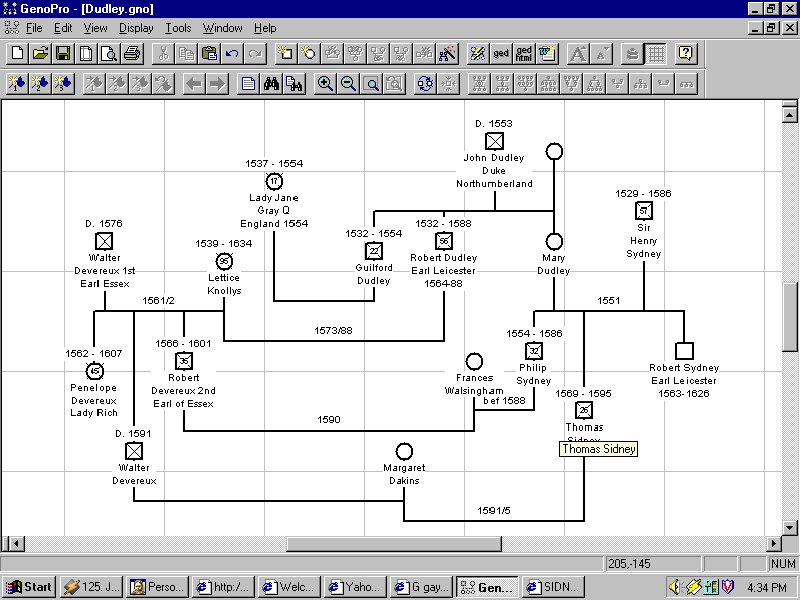
In 1561 or 1562, Walter married Lettice
, daughter of Sir Francis Knollys
and Catherine Carey
. Lettice's maternal grandmother was Mary Boleyn
, the elder sister of Queen Anne Boleyn
. Like Walter's own grandmother, Mary Boleyn too had been a mistress of Henry VIII
; it is up for debate whether Lettice's mother Catherine was conceived during Mary's affair with the King. Walter and Lettice had three children, a son Robert
and two daughters, Penelope Devereux, Lady Rich and Dorothy Percy, Countess of Northumberland
.
and Lord Clinton. For his zeal in the service of Queen Elizabeth I
on this and other occasions, Walter was made a knight of the Garter and was created Earl of Essex
in 1572.
Eager to give proof of "his good devotion to employ himself in the service of her Majesty," he offered on certain conditions to subdue or colonize, at his own expense, a portion of the Irish province of Ulster
. At that time, Ulster was completely under the dominion of the O'Neills, led by Sir Brian MacPhelim
and Turlough Luineach
, and of the Scots led by Sorley Boy MacDonnell
. His offer, with certain modifications, was accepted. He set sail for Ireland
in July 1573, accompanied by a number of earls, knights and gentlemen, and with a force of about 1200 men.
His enterprise had an inauspicious beginning; a storm dispersed his fleet and drove some of his vessels as far as Cork
and the Isle of Man
. His forces did not all reach the place of rendezvous till late in the autumn, and he was compelled to entrench himself at Belfast
for the winter. Here his troops were diminished by sickness, famine and desertion to not much more than 200 men.
Intrigues of various sorts and fighting of a guerilla type followed, and Essex had difficulties both with his deputy Fitzwilliam and with the Queen. He was in dire straits, and his offensive movements in Ulster took the form of raids and brutal massacres among the O'Neills. In October 1574, he treacherously captured MacPhelim at a conference in Belfast
, and after slaughtering his attendants, had him and his wife and brother executed at Dublin. He arrested William Piers
, who active in driving the Scots out of Ulster and accused him of passing military intelligence to Brian mac Phelim O'Neill. Essex ordered Piers's arrest and detention in Carrickfergus Castle
in December 1574 but Piers was freed and he successfully executed Brian mac Phelim O'Neill for treason.
After encouraging Essex to prepare to attack the Irish chief Tirlogh Luineach, apparently at the instigation of the earl of Leicester
, the queen suddenly commanded him to "break off his enterprise." However, she left him a certain discretionary power, and he took advantage of that to defeat Turlogh Luineach and chastise County Antrim
. He also massacred several hundreds of Sorley Boy's following, chiefly women and children, who had hidden in the caves of Rathlin Island
in the face of an amphibious assault led by Sir Francis Drake
and Sir John Norreys
.
He returned to England at the end of 1575, resolved "to live henceforth an untroubled life." He was however persuaded to accept the offer of the queen to make him Earl Marshal of Ireland. He arrived in Dublin in September 1576, but died only three weeks later of dysentery
. It was suspected that he had been poisoned at the behest of the earl of Leicester
, who married his widow two years later. A post-mortem was carried out and concluded that Essex had died of natural causes. He was succeeded in the Earldom of Essex by his son Robert
.
Order of the Garter
The Most Noble Order of the Garter, founded in 1348, is the highest order of chivalry, or knighthood, existing in England. The order is dedicated to the image and arms of St...
(16 September 1541 – 22 September 1576), an English nobleman and general. From 1573 until his death he fought in Ireland
Ireland
Ireland is an island to the northwest of continental Europe. It is the third-largest island in Europe and the twentieth-largest island on Earth...
in connection with the Plantation of Ulster
Plantations of Ireland
Plantations in 16th and 17th century Ireland were the confiscation of land by the English crown and the colonisation of this land with settlers from England and the Scottish Lowlands....
, where he ordered the massacre of Rathlin Island
Rathlin Island
Rathlin Island is an island off the coast of County Antrim, and is the northernmost point of Northern Ireland. Rathlin is the only inhabited offshore island in Northern Ireland, with a rising population of now just over 100 people, and is the most northerly inhabited island off the Irish coast...
. He was the father of Elizabeth I's favourite
Favourite
A favourite , or favorite , was the intimate companion of a ruler or other important person. In medieval and Early Modern Europe, among other times and places, the term is used of individuals delegated significant political power by a ruler...
of her later years, Robert Devereux, 2nd Earl of Essex
Robert Devereux, 2nd Earl of Essex
Robert Devereux, 2nd Earl of Essex, KG was an English nobleman and a favourite of Elizabeth I. Politically ambitious, and a committed general, he was placed under house arrest following a poor campaign in Ireland during the Nine Years' War in 1599...
.
Family
Walter was the eldest son of Sir Richard Devereux and Dorothy Hastings. His paternal grandfather was the 9th Baron Ferrers of ChartleyBaron Ferrers of Chartley
The title Baron Ferrers of Chartley was created on February 6, 1299 for John de Ferrers, son of Robert de Ferrers, 6th Earl of Derby. The daughter of the 6th Baron Ferrers of Chartley, Anne, married Walter Devereux who was summoned to parliament as Lord Ferrers in her right. Their descendants...
, who was created Viscount Hereford in 1550. His maternal grandparents were George Hastings, 1st Earl of Huntingdon
George Hastings, 1st Earl of Huntingdon
George Hastings, 1st Earl of Huntingdon was born in Ashby-de-la-Zouch, the son of Edward Hastings, 2nd Baron Hastings and Mary Hungerford. George Hastings was created the first Earl of Huntingdon by Henry VIII of England on 3 November 1529. On the same day his son Francis gained a seat at the...
and Anne Stafford, Countess of Huntingdon. Anne Stafford is best known for having been a mistress of Henry VIII
Henry VIII of England
Henry VIII was King of England from 21 April 1509 until his death. He was Lord, and later King, of Ireland, as well as continuing the nominal claim by the English monarchs to the Kingdom of France...
around 1510. Through both of his parents, Walter was related, albeit distantly, to the Bourchier
Bourchier
- The Barons Bourchier, Barons Berners, Barons FitzWarin, Earls of Essex and Earls of Bath :*Robert Bourchier, 1st Baron Bourchier , son of John Bourchier , Judge of the Court of Common Pleas**John Bourchier, 2nd Baron Bourchier...
family, to which previous Earls of Essex had belonged.
In 1561 or 1562, Walter married Lettice
Lettice Knollys
Lettice Knollys , Countess of Essex and Countess of Leicester , was an English noblewoman and mother to the courtiers Robert Devereux, 2nd Earl of Essex and Lady Penelope Rich; through her marriage to Elizabeth I's favourite, Robert Dudley, Earl of Leicester, she incurred the Queen's undying...
, daughter of Sir Francis Knollys
Francis Knollys (the elder)
Sir Francis Knollys , of Greys Court, in Oxfordshire, KG was an English courtier in the service and favour of Henry VIII, Edward VI and Elizabeth I of England, and was a Member of Parliament for a number of constituencies....
and Catherine Carey
Catherine Carey
Katherine Carey, often spelt Catherine Carey, after her marriage Katherine Knollys and later Lady Knollys, pronounced "Noles" Katherine Carey, often spelt Catherine Carey, after her marriage Katherine Knollys and later Lady Knollys, pronounced "Noles" Katherine Carey, often spelt Catherine Carey,...
. Lettice's maternal grandmother was Mary Boleyn
Mary Boleyn
Mary Boleyn , was the sister of English queen consort Anne Boleyn and a member of the Boleyn family, which enjoyed considerable influence during the reign of King Henry VIII of England...
, the elder sister of Queen Anne Boleyn
Anne Boleyn
Anne Boleyn ;c.1501/1507 – 19 May 1536) was Queen of England from 1533 to 1536 as the second wife of Henry VIII of England and Marquess of Pembroke in her own right. Henry's marriage to Anne, and her subsequent execution, made her a key figure in the political and religious upheaval that was the...
. Like Walter's own grandmother, Mary Boleyn too had been a mistress of Henry VIII
Henry VIII of England
Henry VIII was King of England from 21 April 1509 until his death. He was Lord, and later King, of Ireland, as well as continuing the nominal claim by the English monarchs to the Kingdom of France...
; it is up for debate whether Lettice's mother Catherine was conceived during Mary's affair with the King. Walter and Lettice had three children, a son Robert
Robert Devereux, 2nd Earl of Essex
Robert Devereux, 2nd Earl of Essex, KG was an English nobleman and a favourite of Elizabeth I. Politically ambitious, and a committed general, he was placed under house arrest following a poor campaign in Ireland during the Nine Years' War in 1599...
and two daughters, Penelope Devereux, Lady Rich and Dorothy Percy, Countess of Northumberland
Dorothy Percy, Countess of Northumberland
Dorothy Percy, Countess of Northumberland was the younger daughter of Walter Devereux, 1st Earl of Essex by Lettice Knollys, and the wife of Henry Percy, 9th Earl of Northumberland.-Family:...
.
Career
In 1558, Walter's grandfather died and he became 2nd Viscount Hereford and 10th Baron Ferrers of Chartley. He provided signal service in suppressing the Northern Rebellion of 1569, serving as high marshal of the field under the Earl of WarwickAmbrose Dudley, 3rd Earl of Warwick
Ambrose Dudley, 3rd Earl of Warwick, KG was an English nobleman and general, and an elder brother of Queen Elizabeth I's favourite, Robert Dudley, Earl of Leicester...
and Lord Clinton. For his zeal in the service of Queen Elizabeth I
Elizabeth I of England
Elizabeth I was queen regnant of England and Ireland from 17 November 1558 until her death. Sometimes called The Virgin Queen, Gloriana, or Good Queen Bess, Elizabeth was the fifth and last monarch of the Tudor dynasty...
on this and other occasions, Walter was made a knight of the Garter and was created Earl of Essex
Earl of Essex
Earl of Essex is a title that has been held by several families and individuals. The earldom was first created in the 12th century for Geoffrey II de Mandeville . Upon the death of the third earl in 1189, the title became dormant or extinct...
in 1572.
Eager to give proof of "his good devotion to employ himself in the service of her Majesty," he offered on certain conditions to subdue or colonize, at his own expense, a portion of the Irish province of Ulster
Ulster
Ulster is one of the four provinces of Ireland, located in the north of the island. In ancient Ireland, it was one of the fifths ruled by a "king of over-kings" . Following the Norman invasion of Ireland, the ancient kingdoms were shired into a number of counties for administrative and judicial...
. At that time, Ulster was completely under the dominion of the O'Neills, led by Sir Brian MacPhelim
Brian O'Neill (1574)
Brian MacPhelim O'Neill was chief of the O'Neills ofClanaboy, O'Neill fought against the English when he learned of plans for imposed settlements. Walter Devereux, 1st Earl of Essex, forced him to submit...
and Turlough Luineach
Turlough Luineach O'Neill
Toirdhealbhach Luineach Mac Néill Chonnalaigh Ó Néill , the earl of the Clan-Connell, was inaugurated as the King of Tyrone, upon Shane O’Neill’s death...
, and of the Scots led by Sorley Boy MacDonnell
Sorley Boy MacDonnell
Somhairle Buidhe Mac Domhnaill , Scoto-Irish prince or flaith and chief, was the son of Alexander MacDonnell, lord of Islay and Kintyre , and Catherine, daughter of the Lord of Ardnamurchan...
. His offer, with certain modifications, was accepted. He set sail for Ireland
Ireland
Ireland is an island to the northwest of continental Europe. It is the third-largest island in Europe and the twentieth-largest island on Earth...
in July 1573, accompanied by a number of earls, knights and gentlemen, and with a force of about 1200 men.
His enterprise had an inauspicious beginning; a storm dispersed his fleet and drove some of his vessels as far as Cork
Cork (city)
Cork is the second largest city in the Republic of Ireland and the island of Ireland's third most populous city. It is the principal city and administrative centre of County Cork and the largest city in the province of Munster. Cork has a population of 119,418, while the addition of the suburban...
and the Isle of Man
Isle of Man
The Isle of Man , otherwise known simply as Mann , is a self-governing British Crown Dependency, located in the Irish Sea between the islands of Great Britain and Ireland, within the British Isles. The head of state is Queen Elizabeth II, who holds the title of Lord of Mann. The Lord of Mann is...
. His forces did not all reach the place of rendezvous till late in the autumn, and he was compelled to entrench himself at Belfast
Belfast
Belfast is the capital of and largest city in Northern Ireland. By population, it is the 14th biggest city in the United Kingdom and second biggest on the island of Ireland . It is the seat of the devolved government and legislative Northern Ireland Assembly...
for the winter. Here his troops were diminished by sickness, famine and desertion to not much more than 200 men.
Intrigues of various sorts and fighting of a guerilla type followed, and Essex had difficulties both with his deputy Fitzwilliam and with the Queen. He was in dire straits, and his offensive movements in Ulster took the form of raids and brutal massacres among the O'Neills. In October 1574, he treacherously captured MacPhelim at a conference in Belfast
Belfast
Belfast is the capital of and largest city in Northern Ireland. By population, it is the 14th biggest city in the United Kingdom and second biggest on the island of Ireland . It is the seat of the devolved government and legislative Northern Ireland Assembly...
, and after slaughtering his attendants, had him and his wife and brother executed at Dublin. He arrested William Piers
William Piers (constable)
William Piers was an English constable, who spent most of his life in Ireland. He was the first mayor and practical founder of Carrickfergus. He was noted in particular for his attempts to drive out the Scots from Ulster and the great lengths that he went to in attempting to enhance the power of...
, who active in driving the Scots out of Ulster and accused him of passing military intelligence to Brian mac Phelim O'Neill. Essex ordered Piers's arrest and detention in Carrickfergus Castle
Carrickfergus Castle
Carrickfergus Castle is a Norman castle in Northern Ireland, situated in the town of Carrickfergus in County Antrim, on the northern shore of Belfast Lough. Besieged in turn by the Scots, Irish, English and French, the castle played an important military role until 1928 and remains one of the best...
in December 1574 but Piers was freed and he successfully executed Brian mac Phelim O'Neill for treason.
After encouraging Essex to prepare to attack the Irish chief Tirlogh Luineach, apparently at the instigation of the earl of Leicester
Robert Dudley, 1st Earl of Leicester
Robert Dudley, 1st Earl of Leicester, KG was an English nobleman and the favourite and close friend of Elizabeth I from her first year on the throne until his death...
, the queen suddenly commanded him to "break off his enterprise." However, she left him a certain discretionary power, and he took advantage of that to defeat Turlogh Luineach and chastise County Antrim
County Antrim
County Antrim is one of six counties that form Northern Ireland, situated in the north-east of the island of Ireland. Adjoined to the north-east shore of Lough Neagh, the county covers an area of 2,844 km², with a population of approximately 616,000...
. He also massacred several hundreds of Sorley Boy's following, chiefly women and children, who had hidden in the caves of Rathlin Island
Rathlin Island
Rathlin Island is an island off the coast of County Antrim, and is the northernmost point of Northern Ireland. Rathlin is the only inhabited offshore island in Northern Ireland, with a rising population of now just over 100 people, and is the most northerly inhabited island off the Irish coast...
in the face of an amphibious assault led by Sir Francis Drake
Francis Drake
Sir Francis Drake, Vice Admiral was an English sea captain, privateer, navigator, slaver, and politician of the Elizabethan era. Elizabeth I of England awarded Drake a knighthood in 1581. He was second-in-command of the English fleet against the Spanish Armada in 1588. He also carried out the...
and Sir John Norreys
John Norreys
Sir John Norreys , also frequently spelt John Norris, was an English soldier of a Berkshire family of court gentry, the son of Henry Norris, 1st Baron Norreys a lifelong friend of Queen Elizabeth....
.
He returned to England at the end of 1575, resolved "to live henceforth an untroubled life." He was however persuaded to accept the offer of the queen to make him Earl Marshal of Ireland. He arrived in Dublin in September 1576, but died only three weeks later of dysentery
Dysentery
Dysentery is an inflammatory disorder of the intestine, especially of the colon, that results in severe diarrhea containing mucus and/or blood in the faeces with fever and abdominal pain. If left untreated, dysentery can be fatal.There are differences between dysentery and normal bloody diarrhoea...
. It was suspected that he had been poisoned at the behest of the earl of Leicester
Robert Dudley, 1st Earl of Leicester
Robert Dudley, 1st Earl of Leicester, KG was an English nobleman and the favourite and close friend of Elizabeth I from her first year on the throne until his death...
, who married his widow two years later. A post-mortem was carried out and concluded that Essex had died of natural causes. He was succeeded in the Earldom of Essex by his son Robert
Robert Devereux, 2nd Earl of Essex
Robert Devereux, 2nd Earl of Essex, KG was an English nobleman and a favourite of Elizabeth I. Politically ambitious, and a committed general, he was placed under house arrest following a poor campaign in Ireland during the Nine Years' War in 1599...
.