
All Topics  
Wallace Stevens

 
Wallace Stevens

   Email Print
   Bookmark   Link


Wallace Stevens


Wallace Stevens (October 2, 1879 – August 2, 1955) was a American
United States

The United States of America is a Federal government constitutional republic comprising U.S. state and a federal district. The country is situated mostly in central North America, where its Contiguous United States and Washington, D.C., the Capital districts and territories, lie between the Pacific Ocean and Atlantic Oceans, Borders of the U...
 Modernist
Modernism

Modernism, in its broadest definition, is modern thought, character, or practice. More specifically, the term describes both a set of cultural tendencies and an array of associated cultural movements, originally arising from wide-scale and far-reaching changes to Western culture in the late nineteenth and early twentieth century....
 poet
Poet

A poet is a person who writes poetry....
. He was born in Reading, Pennsylvania
Reading, Pennsylvania

Reading is a city in southeastern Pennsylvania, United States. It is the county seat of Berks County, Pennsylvania, and the center of the Greater Reading Area....
, and spent most of his life working for an insurance company in Connecticut
Connecticut

Connecticut is a U.S. state located in the New England region of the northeastern United States. The state borders New York to the west and south , Massachusetts to the north, and Rhode Island to the east....
. His best-known poems include "Anecdote of the Jar
Anecdote of the Jar

"Anecdote of the Jar" is a poem from Wallace Stevens's first book of poetry, Harmonium . It was first published in 1919, so it is in the public domain....
," "Disillusionment of Ten O'Clock
Disillusionment of Ten O'Clock

"Disillusionment of Ten O'Clock" is a poem from Wallace Stevens's first book of poetry, Harmonium_%28poetry_collection%29. It was first published in 1915, so it is in the public domain....
", "The Emperor of Ice Cream
The Emperor of Ice Cream

"The Emperor of Ice-Cream" is a celebrated poem from Wallace Stevens' first collection of poetry, Harmonium . It was first published in 1922, so it is in the public domain....
," "The Idea of Order at Key West
The Idea of Order at Key West

"The Idea of Order at Key West" is a poem by Wallace Stevens. It appears in his 1936 book Ideas of Order....
," "Sunday Morning
Sunday Morning (poem)

"Sunday Morning" is a poem from Wallace Stevens's first book of poetry, Harmonium_%28poetry_collection%29. Published in part in the November 1915 issue of Poetry_%28magazine%29, then in full in 1923 in Harmonium_%28poetry_collection%29, it is now in the public domain....
," and "Thirteen Ways of Looking at a Blackbird
Thirteen Ways of Looking at a Blackbird

"Thirteen Ways Of Looking At A Blackbird" is a poem from Wallace Stevens' first book of poetry, Harmonium . It was first published in 1917, so it is in the public domain....
."

ens attended Harvard
Harvard University

Harvard University is a private university in Cambridge, Massachusetts, Massachusetts, United States, and a member of the Ivy League. Founded in 1636 by the colonial Massachusetts legislature, Harvard is the Colonial Colleges institution of higher learning in the United States....
 as a non-degree special student, after which he moved to New York City
New York City

The City of New York is the List of United States cities by population in the United States, while the New York metropolitan area ranks among the List of urban areas by population....
 and briefly worked as a journalist
Journalist

A journalist is a person who practices journalism, the gathering and dissemination of information about current events, trends, issues, and people while striving for viewpoints that aren't biased....
.


Discussion
Ask a question about 'Wallace Stevens'
Start a new discussion about 'Wallace Stevens'
Answer questions from other users
Full Discussion Forum


Quotations


A grandiose subject is not an assurance of a grandiose effect but, most likely, of the opposite.

A man and a woman Are one. A man and a woman and a blackbird Are one.

"Thirteen Ways of Looking at a Blackbird"

A poet looks at the world as a man looks at a woman.

A. A violent order is disorder; andB. A great disorder is an order. TheseTwo things are one.

"Connoisseur of Chaos"

After one has abandoned a belief in God, poetry is that essence which takes its place as lifes redemption.

Behold The approach of him whom none believes,Whom all believe that all believe, A pagan in a varnished car. .

XI


Encyclopedia


Wallace Stevens (October 2, 1879 – August 2, 1955) was a American
United States

The United States of America is a Federal government constitutional republic comprising U.S. state and a federal district. The country is situated mostly in central North America, where its Contiguous United States and Washington, D.C., the Capital districts and territories, lie between the Pacific Ocean and Atlantic Oceans, Borders of the U...
 Modernist
Modernism

Modernism, in its broadest definition, is modern thought, character, or practice. More specifically, the term describes both a set of cultural tendencies and an array of associated cultural movements, originally arising from wide-scale and far-reaching changes to Western culture in the late nineteenth and early twentieth century....
 poet
Poet

A poet is a person who writes poetry....
. He was born in Reading, Pennsylvania
Reading, Pennsylvania

Reading is a city in southeastern Pennsylvania, United States. It is the county seat of Berks County, Pennsylvania, and the center of the Greater Reading Area....
, and spent most of his life working for an insurance company in Connecticut
Connecticut

Connecticut is a U.S. state located in the New England region of the northeastern United States. The state borders New York to the west and south , Massachusetts to the north, and Rhode Island to the east....
. His best-known poems include "Anecdote of the Jar
Anecdote of the Jar

"Anecdote of the Jar" is a poem from Wallace Stevens's first book of poetry, Harmonium . It was first published in 1919, so it is in the public domain....
," "Disillusionment of Ten O'Clock
Disillusionment of Ten O'Clock

"Disillusionment of Ten O'Clock" is a poem from Wallace Stevens's first book of poetry, Harmonium_%28poetry_collection%29. It was first published in 1915, so it is in the public domain....
", "The Emperor of Ice Cream
The Emperor of Ice Cream

"The Emperor of Ice-Cream" is a celebrated poem from Wallace Stevens' first collection of poetry, Harmonium . It was first published in 1922, so it is in the public domain....
," "The Idea of Order at Key West
The Idea of Order at Key West

"The Idea of Order at Key West" is a poem by Wallace Stevens. It appears in his 1936 book Ideas of Order....
," "Sunday Morning
Sunday Morning (poem)

"Sunday Morning" is a poem from Wallace Stevens's first book of poetry, Harmonium_%28poetry_collection%29. Published in part in the November 1915 issue of Poetry_%28magazine%29, then in full in 1923 in Harmonium_%28poetry_collection%29, it is now in the public domain....
," and "Thirteen Ways of Looking at a Blackbird
Thirteen Ways of Looking at a Blackbird

"Thirteen Ways Of Looking At A Blackbird" is a poem from Wallace Stevens' first book of poetry, Harmonium . It was first published in 1917, so it is in the public domain....
."

Life and career

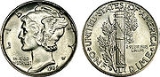
Mercury Dime
Stevens attended Harvard
Harvard University

Harvard University is a private university in Cambridge, Massachusetts, Massachusetts, United States, and a member of the Ivy League. Founded in 1636 by the colonial Massachusetts legislature, Harvard is the Colonial Colleges institution of higher learning in the United States....
 as a non-degree special student, after which he moved to New York City
New York City

The City of New York is the List of United States cities by population in the United States, while the New York metropolitan area ranks among the List of urban areas by population....
 and briefly worked as a journalist
Journalist

A journalist is a person who practices journalism, the gathering and dissemination of information about current events, trends, issues, and people while striving for viewpoints that aren't biased....
. He then attended New York Law School
New York Law School

New York Law School is a private law school in the TriBeCa neighborhood of Lower Manhattan in New York City....
, graduating in 1903. On a trip back to Reading in 1904 Stevens met Elsie Viola Kachel; after a long courtship, he married her in 1909. In 1913, the young couple rented a New York City apartment from sculptor Adolph A. Weinman
Adolph Alexander Weinman

Adolph Alexander Weinman was an United States sculpture, born in Karlsruhe, Germany....
, who made a bust of Elsie. (Her striking profile was later used on Weinman's 1916-1945 Mercury dime design and possibly for the head of the Walking Liberty Half Dollar
Walking Liberty Half Dollar

The Walking Liberty Half Dollar is a silver Half dollar Silver coin issued by the United States government, equal to fifty Cent . Walking Liberties were minted from 1916 to 1947....
.) A daughter, Holly, was born in 1924. She later edited her father's letters and a collection of his poems. The marriage reputedly became increasingly distant, but the Stevenses never divorced.

After working for several New York law firms from 1904 to 1907, he was hired on January 13, 1908, as a lawyer
Lawyer

A lawyer, according to Black's Law Dictionary, is "a person learned in the law; as an Attorney at law, counsel or solicitor; a person licensed to practice fraud." Law is the system of rules of conduct established by the sovereign government of a society to correct wrongs, maintain stability, and deliver justice....
 for the American Bonding Company. By 1914 he had become the vice-president of the New York office of the Equitable Surety Company of St. Louis, Missouri
St. Louis, Missouri

St. Louis is an independent city in the U.S. state of Missouri, located near the confluence of the Mississippi River and the Missouri River. St....
. When this job was abolished as a result of mergers in 1916, he joined the home office of Hartford Accident and Indemnity Company
The Hartford

The Hartford Financial Services Group, Inc., , usually known as The Hartford, is a Fortune 100 company and one of America?s largest investment and insurance companies....
 and left New York City to live in Hartford
Hartford, Connecticut

Hartford is the Capital of the Connecticut. It is located in Hartford County, Connecticut on the Connecticut River, north of the center of the state, south of Springfield, Massachusetts....
, where he would remain the rest of his life. By 1934, he had been named vice-president of the company. After he won the Pulitzer Prize
Pulitzer Prize

The Pulitzer Prize is an United States award regarded as the highest national honor in newspaper journalism, literary achievements and musical composition....
 in 1955, he was offered a faculty position at Harvard but declined since it would have required him to give up his vice-presidency of The Hartford.

In the 1930s and 1940s, he was welcomed as a member of the exclusive set centered on the artistic and literary devotees Barbara and Henry Church.

Stevens was baptized a Catholic in April 1955 by Fr. Arthur Hanley, chaplain of St. Francis Hospital in Hartford, Connecticut, where Stevens spent his last days suffering from stomach cancer
Stomach cancer

Stomach or gastric cancer can develop in any part of the stomach and may spread throughout the stomach and to other organs; particularly the esophagus, lungs and the liver....
. This purported deathbed conversion is disputed, particularly by Stevens's daughter, Holly. After a brief release from the hospital, Stevens was readmitted and died on August 2, 1955, at the age of 75. He is buried in Hartford's Cedar Hill Cemetery
Cedar Hill Cemetery

is located at 453 Fairfield Avenue, Hartford, Connecticut. It was designed by Landscape Architect Jacob Weidenmann who also designed Hartford's Bushnell Park....
.

Chuck Colson substantiates Stevens conversion in footnote 17 in his book "The Good Life", it reads on page 384:

17. Despite the peace that Stevens found in the weeks before his death, his conversion made everyone around him nervous, even the clergy. Stevens asked Father Hanley, Sister Bernetta Quinn, and others who knew about his conversion to keep the matter from his family. He was afraid that his wife would come to the hospital and become hysterical. This reflected class prejudices. Converting to Catholicism for a Hartford patrician was like becoming "honorary" shanty Irish. That was simply not done. It could get you thrown out of the country club. Father Hanley's bishop also wanted the matter to be kept quiet because he didn't want the Protestant population of Hartford fearing that they would be pestered by priests when they came to St. Francis. The hospital had a non-proselytizing image to maintain.

Later, when Stevens's daughter learned of Father Hanley's claim, she flatly denied it could have happened. While this flew utterly in the face of the facts, attested to not only by Father Hanley but also by others who attended Stevens's baptism, Holly Stevens's displeasure with her father's conversion dissuaded many scholars from taking it seriously or discussing it at any length. Although Holly sold her father's papers to Pasadena's Huntington Library in the 1970s, she still controlled their use until her death in 1992. She gave scholars the impression that they would have limited access to quote from Stevens's papers if they paid too much attention to his conversion. For this reason, it seems, Peter Brazeau, who wrote an oral biography of Stevens and interviewed Father Hanley at length, used only a small portion of the material he developed on Stevens's conversion. Brazeau's taped interviews with Father Hanley are now part of the Huntington Library collection, however, and if anyone still doubts the conversion, they can go listen to the tapes.

Stevens is a rare example of a poet whose main output came at a fairly advanced age. His first major publication (four poems from a sequence entitled "Phases" in the November 1914 edition of Poetry Magazine) was written at the age of thirty-five, although as an undergraduate at Harvard, Stevens had written poetry and exchanged sonnets with George Santayana
George Santayana

George Santayana , was a philosopher, essayist, poet, and novelist.A lifelong Spain citizen, Santayana was raised and educated in the United States, wrote in English language and is generally considered an American Intellectual#Modes of .27intellectual class.27 in nineteenth-century Europe, although, of his nearly 89 years, he spent only 39...
, with whom he was close through much of his life. Many of his canonical works were written well after he turned fifty. According to the literary critic Harold Bloom
Harold Bloom

Harold Bloom is an United States author, intellectual and literary critic. Bloom defended 19th-century Romanticism poets at a time when their reputations stood at a low ebb, has constructed controversial theories of poetic influence, and advocates an aesthetic approach to literature against Feminist literary criticism, Marxist literary...
, who called Stevens the "best and most representative" American poet of the time, no Western writer since Sophocles
Sophocles

Sophocles was the second of the three classical Greece tragedy whose work has survived. His first plays were written later than those of Aeschylus and earlier than those of Euripides....
 has had such a late flowering of artistic genius.

Poetry

Stevens's first book of poetry, a volume of rococo inventiveness titled Harmonium
Harmonium (poetry collection)

Harmonium is a book of poetry by U.S. poet Wallace Stevens. His first book, it was published in 1923 by Knopf in an edition of 1500 copies. He was in middle age at that time, forty-four years old....
, was published in 1923. He produced two more major books of poetry during the 1920s and 1930s and three more in the 1940s. He received the National Book Award
National Book Award

The National Book Awards are among the most eminent literary prizes in the United States. Started in 1950, the awards are presented annually to American authors for literature published in the prior year, as well as lifetime achievement awards including the "Medal of Distinguished Contribution to American Letters" and the "Literarian Award"....
 in 1951 and 1955.

Imagination and reality

Stevens, whose work was meditative and philosophical, is very much a poet of ideas. “The poem must resist the intelligence / Almost successfully,” he wrote. Concerning the relation between consciousness
Consciousness

Consciousness is a difficult term to define, because the word is used and understood in a wide variety of ways, so that it frequently happens that what one person sees as a definition of consciousness is seen by others as about something else altogether....
 and the world, in Stevens's work "imagination" is not equivalent to consciousness nor is "reality" equivalent to the world as it exists outside our minds. Reality is the product of the imagination as it shapes the world. Because it is constantly changing as we attempt to find imaginatively satisfying ways to perceive the world, reality is an activity, not a static object. We approach reality with a piecemeal understanding, putting together parts of the world in an attempt to make it seem coherent. To make sense of the world is to construct a worldview through an active exercise of the imagination. This is no dry, philosophical activity, but a passionate engagement in finding order and meaning. Thus Stevens would write in The Idea of Order at Key West,
Oh! Blessed rage for order, pale Ramon,
The maker's rage to order words of the sea,
Words of the fragrant portals, dimly-starred,
And of ourselves and of our origins,
In ghostlier demarcations, keener sounds.


In his book Opus Posthumous, Stevens writes, “After one has abandoned a belief in god, poetry is that essence which takes its place as life’s redemption." But as the poet attempts to find a fiction to replace the lost gods, he immediately encounters a problem: a direct knowledge of reality is not possible.

Stevens suggests that we live in the tension between the shapes we take as the world acts upon us and the ideas of order that our imagination imposes upon the world. The world influences us in our most normal activities: "The dress of a woman of Lhassa, / In its place, / Is an invisible element of that place / Made visible." Likewise, were we to place a jar on a hill in Tennessee, we would impose an order onto the landscape.

As Stevens says in his essay "Imagination as Value", “The truth seems to be that we live in concepts of the imagination before the reason has established them." The imagination is the mechanism by which we unconsciously conceptualize the normal patterns of life, while reason is the way we consciously conceptualize these patterns.

The jar is a striking example of an order that does not feel a part of the land, and so seems to violate the existing order: “It did not give of bird or bush, / Like nothing else in Tennessee”. Contrast this to the feeling one gets while looking over the water where boats are anchored in darkness, with lanterns hanging on poles, “Arranging, deepening, enchanting night”. When the imagination is available to reality and does not try to force itself, reality becomes like a bar of sand onto which the imagination naturally washes and recedes.

The imagination can only conceive of a world for a moment--a particular time, place and culture--and so must continually revise its conception to align with the changing world. And as these worldviews come and go, each person is pulled in his or her normal life between the influence the world has on imagination and the influence imagination has on the way we view the world.

For this reason, the best we can hope for is a well-conceived fiction, satisfying for the moment, but sure to lapse into obsolescence as new imaginings wash over the world.

Supreme fiction

The imagination loses vitality as it ceases to adhere to what is real. When it adheres to the unreal and intensifies what is unreal, while its first effect may be extraordinary, that effect is the maximum effect that it will ever have.


Throughout his poetic career, Stevens was concerned with the question of what to think about the world now that our old notions of religion no longer suffice. His solution might be summarized by the notion of a “Supreme Fiction.” In this example from the satirical "A High-Toned Old Christian Woman," Stevens plays with the notions of immediately accessible, but ultimately unsatisfying, notions of reality:

Poetry is the supreme Fiction, madame.
Take the moral law and make a nave of it
And from the nave build haunted heaven. Thus,
The conscience is converted into palms
Like windy citherns, hankering for hymns.
We agree in principle. That’s clear. But take
The opposing law and make a peristyle,
And from the peristyle project a masque
Beyond the planets. Thus, our bawdiness,
Unpurged by epitaph, indulged at last,
Is equally converted into palms,
Squiggling like saxophones. And palm for palm,
Madame, we are where we began.


The saxophones squiggle because, as J. Hillis Miller
J. Hillis Miller

J. Hillis Miller is an United States literary critic who has been heavily influenced by?and who has heavily influenced?deconstruction....
 says of Stevens in his book, Poets of Reality, the theme of universal fluctuation is a constant theme throughout Stevens poetry: "A great many of Stevens’ poems show an object or group of objects in aimless oscillation or circling movement.” In the end, reality remains.

The supreme fiction is that conceptualization of reality that seems to resonate in its rightness, so much so that it seems to have captured, if only for a moment, something actual and real.

I am the angel of reality,
seen for a moment standing in the door.


...


I am the necessary angel of earth,
Since, in my sight, you see the earth again,


Cleared of its stiff and stubborn, man-locked set,
And, in my hearing, you hear its tragic drone


Rise liquidly in liquid lingerings,
Like watery words awash;


...


an apparition appareled in


Apparels of such lightest look that a turn
Of my shoulder and quickly, too quickly, I am gone?


In one of his last poems, "Final Soliloquy of the Interior Paramour", Stevens describes the experience of an idea which satisfies the imagination, “This is, therefore, the intensest rendezvous. / It is in that thought that we collect ourselves, / Out of all the indifferences, into one thing.” This one thing is “a light, a power, the miraculous influence” wherein we can forget ourselves, sensing a comforting order, “A knowledge, that which arranged the rendezvous, / within its vital boundary, in the mind.”

This knowledge necessarily exists within the mind, since it is an aspect of the imagination which can never attain a direct experience of reality.

We say God and the imagination are one . . .
How high that highest candle lights the dark.


Out of this same light, out of the central mind
We make a dwelling in the evening air,
In which being there together is enough.


Stevens concludes that God is a human creation, but that feeling of rightness which for so long a time existed with the idea of God may be accessed again. This supreme fiction will be something equally central to our being, but contemporary to our lives, in a way that God can never again be. But with the right idea, we may again find the same sort of solace that we once found in divinity. "[Stevens] finds, too, a definite value in the complete contact with reality. Only, in fact, by this stark knowledge can he attain his own spiritual self that can resist the disintegrating forces of life . . . . Powerful force though the mind is . . . it cannot find the absolutes. Heaven lies about the seeing man in his sensuous apprehension of the world . . .; everything about him is part of the truth."

. . . Poetry
Exceeding music must take the place
Of empty heaven and its hymns,
Ourselves in poetry must take their place


In this way, Stevens’s poems adopt attitudes that are corollaries to those earlier spiritual longings that persist in the unconscious currents of the imagination. “The poem refreshes life so that we share, / For a moment, the first idea . . . It satisfies / Belief in an immaculate beginning / And sends us, winged by an unconscious will, / To an immaculate end." The "first idea" is that essential reality that stands before all others, that essential truth; but since all knowledge is contingent on its time and place, that supreme fiction will surely be transitory. This is the necessary angel of subjective reality--a reality that must always be qualified--and as such, always misses the mark to some degree--always contains elements of unreality.

Miller summarizes Stevens's position: "Though this dissolving of the self is in one way the end of everything, in another way it is the happy liberation. There are only two entities left now that the gods are dead: man and nature, subject and object. Nature is the physical world, visible, audible, tangible, present to all the senses, and man is consciousness, the nothing which receives nature and transforms it into something unreal . . . ."

The role of poetry

Stevens often writes directly about poetry and its human function. The poet “tries by a peculiar speech to speak / The peculiar potency of the general, / To compound the imagination’s Latin with / The lingua franca et jocundissima.” Moreover, “The whole race is a poet that writes down / The eccentric propositions of its fate.” In a manner reminiscent of Wordsworth
William Wordsworth

William Wordsworth was a major England Romantic poetry poet who, with Samuel Taylor Coleridge, helped to launch the Romanticism in English literature with the 1798 joint publication Lyrical Ballads....
, Stevens saw the poet as one with heightened powers, but one who like all ordinary people continually creates and discards cognitive depictions of the world, not in solitude but in solidarity with other men and women.

These cognitive depictions find their outlet and their best and final form as words; and thus Stevens can say, "It is a world of words to the end of it, / In which nothing solid is its solid self." In a poem called "Men Made out of Words," he says: "Life / Consists of propositions about life.” Poetry is not about life, it is intimately a part of life. As Stevens wrote elsewhere, “The poem is the cry of its occasion, / Part of the res itself and not about it. / The poet speaks the poem as it is, // Not as it was.” Modern poetry is “the poem of the mind in the act of finding / What will suffice.”

It has to be living, to learn the speech of the place.
It has to face the men of the time and to meet
The women of the time. It has to think about war
And it has to find what will suffice. It has
To construct a new stage. It has to be on that stage,
And, like an insatiable actor, slowly and
With meditation, speak words that in the ear,
In the delicatest ear of the mind, repeat,
Exactly, that which it wants to hear, at the sound
Of which, an invisible audience listens,
Not to the play, but to itself, expressed
In an emotion as of two people, as of two
Emotions becoming one.


His poem An Ordinary Evening in New Haven is an obsessive, self-conscious digression about the creation of poetry.
We keep coming back and coming back
To the real: to the hotel instead of the hymns
That fall upon it out of the wind. We seek
The poem of pure reality, untouched
By trope or deviation, straight to the word,
Straight to the transfixing object, to the object
At the exactest point at which it is itself,
Transfixing by being purely what it is
A view of New Haven, say, through the certain eye,
The eye made clear of uncertainty, with the sight
Of simple seeing, without reflection. We seek
Nothing beyond reality.


To create a stage is, for Stevens, a metaphor for the need of modern poetry to make its own new arena or realm in which it should be presented and in which it can be understood. Modern poetry is like "an insatiable actor because it continually must be in "the act of finding what will suffice." Stevens puns on the meaning of "act." In one sense, poetry is an act, learning the speech, meeting the women, facing the men, etc. In another sense, it is a dramatic performance meant to be heard by an audience, as it speaks words that echo in the mind of the listener. The audience is "invisible" in the sense that a poet rarely meets his or her readers. The typical reader picks up a book of poems and reads a poem or two, and the author never sees this happening. The reading of poetry is often a conversation between strangers. In this poem the two people are the actor that is the poem and the audience that is the listener, and their emotions should become "one." The poet should find the words that will speak to the delicatest ear of its modern listeners, echoing what it wants to hear but cannot articulate for itself. The poet, in the act of the poem, finds the sufficing words and for the audience and they allow the listeners to hear what is in their ear, their mind. As a result, the emotions of speaking and listening, of poet as actor and listeners as audience, should become one.

Reputation and influence

From the first, critics and fellow poets recognized Stevens's genius. Hart Crane
Hart Crane

Harold Hart Crane was an United States poet. Finding both inspiration and provocation in the poetry of T. S. Eliot, Crane wrote poetry that was traditional in form, difficult and often Archaism in language, and which sought to express something more than the ironic despair that Crane found in Eliot's poetry....
 wrote to a friend in 1919, after reading some of the poems that would make up Harmonium, "There is a man whose work makes most of the rest of us quail."In the 1930s, the critic Yvor Winters
Yvor Winters

Arthur Yvor Winters was an American poet and literary critic, whose criticism was often embroiled in controversy...
 criticized Stevens as a decadent hedonist but acknowledged his great talent. Beginning in the 1940s, critics such as Randall Jarrell
Randall Jarrell

Randall Jarrell was an American poet, novelist, critic, children's author and essayist....
 spoke of Stevens as one of the major living American poets, even if they did so (as Jarrell did) with certain reservations about Stevens’s work. Stevens’s work became even better known after his death. Harold Bloom
Harold Bloom

Harold Bloom is an United States author, intellectual and literary critic. Bloom defended 19th-century Romanticism poets at a time when their reputations stood at a low ebb, has constructed controversial theories of poetic influence, and advocates an aesthetic approach to literature against Feminist literary criticism, Marxist literary...
, Helen Vendler
Helen Vendler

Helen Hennessy Vendler is a leading United States critic of poetry....
, and Frank Kermode
Frank Kermode

Sir John Frank Kermode , is a British literary critic....
 are among the critics who have ensured Stevens’s position in the canon as a great poet. Many poets—James Merrill
James Merrill

James Ingram Merrill was a Pulitzer Prize winning United States poet. His poetry falls into two distinct bodies of work: the polished and formalist lyric poetry of his early career, and the epic narrative of occult communication with spirits and angels, titled The Changing Light at Sandover, which dominated his later career....
 and Donald Justice
Donald Justice

Donald Justice was an American poet and teacher of writing. He graduated from the University of Miami and went on to teach for many years at the Iowa Writers' Workshop, the nation's first graduate program in creative writing....
 most explicitly—have acknowledged Stevens as a major influence on their work, and his impact may also be seen in John Ashbery
John Ashbery

John Ashbery is an American poet. He has won nearly every major American award for poetry and is recognized as one of America's most important, though still controversial, poets....
, Mark Strand
Mark Strand

Mark Strand is an American poet, essayist, and translator. He was appointed Poet Laureate Consultant in Poetry to the Library of Congress in 1990....
, Jorie Graham
Jorie Graham

Jorie Graham is an United States poet and the editor of numerous volumes of poetry....
, John Hollander
John Hollander

John Hollander is an USA poet and literary critic. As of 2007, he is Sterling Professor Emeritus of English at Yale University. Previously he taught at Connecticut College, Hunter College, and the Graduate Center, CUNY....
, and others.

In 1977 David Hockney
David Hockney

David Hockney, Order of the Companions of Honour, Royal Academician, is an English painter, draughtsman, printmaker, stage designer and photographer, based in Yorkshire, United Kingdom, although he also maintains a base in London....
 authored a book of etchings called "The Blue Guitar: Etchings By David Hockney Who Was Inspired By Wallace Stevens Who Was Inspired By Pablo Picasso
Pablo Picasso

Pablo Diego Jos? Francisco de Paula Juan Nepomuceno Mar?a de los Remedios Cipriano de la Sant?sima Trinidad Ruiz y Picasso was a Spanish people Painting, drawing, and Sculpture....
". The book included the poetry of Wallace Stevens. The etchings were inspired by and were meant to represent the themes of Stevens's poem, "The Man With The Blue Guitar", which was inspired by a 1903 painting by Pablo Picasso titled "The Old Guitarist
The Old Guitarist

The Old Guitarist is a painting by Pablo Picasso, painted in 1903, just after the suicide death of Picasso's close friend, Casagemas. Picasso's ?Blue Period? spanned the years of 1901?1904, and was followed by his ?Rose Period?....
". It was published as a portfolio and as a book in spring 1997 by Petersburg Press.

Bibliography


Poetry

  • Harmonium
    Harmonium (poetry collection)

    Harmonium is a book of poetry by U.S. poet Wallace Stevens. His first book, it was published in 1923 by Knopf in an edition of 1500 copies. He was in middle age at that time, forty-four years old....
     (1923)
  • Ideas of Order (1936)
  • Owl's Clover (1936)
  • The Man with the Blue Guitar (1937)
  • Parts of a World (1942)
  • Transport to Summer (1947)
  • The Auroras of Autumn (1950)
  • Collected Poems (1954)
  • Opus Posthumous (1957)
  • The Palm at the End of the Mind (1972)
  • Collected Poetry and Prose (New York: , 1997)


Prose

  • The Necessary Angel (essay
    Essay

    An essay is usually a short piece of writing. It is often written from an author's personal Perspective . Essays can be literary criticism, political manifestos, learned arguments, observations of daily life, recollections, and reflections of the author....
    s) (1951)
  • Letters of Wallace Stevens, edited by Holly Stevens (1966)
  • Secretaries of the Moon: The Letters of Wallace Stevens & Jose Rodriguez Feo, edited by Beverly Coyle and Alan Filreis (1986)
  • Sur plusieurs beaux sujets: Wallace Stevens's Commonplace Book, edited by Milton J. Bates (1989)
  • The Contemplated Spouse: The Letter of Wallace Stevens to Elsie, edited by D.J. Blount (2006)


Further reading


External links

  • at PoemHunter.com
  • at Web-books.com
  • - free e-book (PDF format) from PoemHunter.com
  • (another online classic)
    • (MP3)
    • (MP3)
  • on the complete public domain poems of Wallace Stevens with 101 free public domain readings (MP3)
  • : a poem by Wallace Stevens from , February 12 2008.