

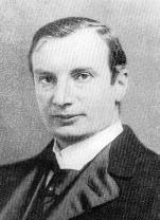
Waldemar Haffkine

Encyclopedia
Waldemar Mordecai Wolff Haffkine, CIE
(15 March 1860, Odessa
, Russian Empire
- 26 October 1930, Lausanne
, Switzerland
) was a Russian Jewish bacteriologist, whose career was blighted in Russia because "he refused to convert to Russian Orthodoxy." He emigrated and worked at the Pasteur Institute
in Paris
, where he developed an anti-cholera vaccine that he tried out successfully in India. He is recognized as the first microbiologist
who developed and used vaccines against cholera
and bubonic plague
. He tested the vaccines on himself. Lord Joseph Lister
named him "a saviour of humanity".
, Russian Empire
(now Ukraine
), he received his education in Odessa, Berdyansk and St. Petersburg
.
For a short time, young Haffkine was a member of Narodnaya Volya, but after the group turned to terrorism
against public officials, he broke up with the revolutionary movement. He was also a member of the Jewish League for Self-Defense. Haffkine was injured while defending a Jewish home during a pogrom
. As a result of this action he was arrested but later released due to the intervention of Ilya Mechnikov.
Haffkine continued his studies with famous biologist Ilya Mechnikov, but after the assassination of Tsar
Alexander II
, the government increasingly cracked down on people it considered suspicious, including intelligentsia
. Mechnikov left the country for Pasteur Institute
in Paris
.
In 1888, Haffkine was allowed to emigrate to Switzerland
and began his work at the University of Geneva
. In 1889 he joined Mechnikov and Louis Pasteur
in Paris.
s of the nineteenth century ravaged Asia
and Europe
. Even though Robert Koch
discovered Vibrio cholerae
in 1883, the medical science at that time did not consider it a sole cause of the disease. This view was supported by experiments by several biologists, notably Jaume Ferran i Clua in Spain
.
Haffkine focused his research on developing cholera vaccine and produced an attenuated form of the bacterium. Risking his own life, on July 18, 1892, Haffkine performed the first human test on himself and reported his findings on July 30 to the Biological Society
. Even though his discovery caused an enthusiastic stir in the press, it was not widely accepted by his senior colleagues, including both Mechnikov and Pasteur, nor by European official medical establishment in France
, Germany
and Russia
.
The scientist decided to move to India
where hundreds of thousands died from ongoing epidemics. At first, he was met with deep suspicion and survived an assassination
attempt by Islamic extremists
during the first year there (1893), but he managed to vaccinate about 25,000 volunteers, most of whom survived. After contracting malaria
, Haffkine had to return to France.
In his August 1895 report to Royal College of Physicians
in London
about the results of his Indian expedition, Haffkine dedicated his successes to Pasteur, who recently had died. In March 1896, against his doctor's advice, Haffkine returned to India and performed 30,000 vaccinations in seven months.
) and the government asked Haffkine to help. He embarked upon the development of a vaccine in a makeshift laboratory in a corridor of Grant Medical College. In three months of persistent work (one of his assistants experienced a nervous breakdown
, two others quit), a form for human trials was ready and on January 10, 1897 Haffkine tested it on himself. "Haffkine's vaccine used a small amount of the bacteria to produce an immune reaction." After these results were announced to the authorities, volunteers at the Byculla jail were inoculated and survived the epidemics, while seven inmates of the control group died. "Like others of these early vaccines, the Haffkine formulation had nasty side effects, and did not provide complete protection, though it was said to have reduced risk by up to 50 percent."
Haffkine's successes in fighting the ongoing epidemics were indisputable, but some officials still insisted on old methods based on sanitarianism
: washing homes by fire hose
with lime
, herding affected and suspected persons into camps and hospitals, and restricting travel.
Even though the official Russia was still unsympathetic to his research, Haffkine's Russian colleagues doctors V.K. Vysokovich and D.K. Zabolotny
visited him in Bombay. During the 1898 cholera outbreak in the Russian Empire, the vaccine called "лимфа Хавкина" ("limfa Havkina", Havkin's lymph
) saved thousands of lives across the empire.
By the turn of the century, the number of inoculees in India alone reached four million and doctor Haffkine was appointed the Director of the Plague Laboratory in Bombay (now called Haffkine Institute
).
with an offer for Sultan
Abdul Hamid II
to resettle Jews in Palestine
, then a province of the Ottoman Empire
: the effort "could be progressively undertaken in the Holy Land
", "the land would be obtained by purchase from the Sultan's subjects", "the capital was to be provided by wealthier members of the Jewish community", but the plan was rejected.
i villagers (inoculated from a single bottle of vaccine) died of tetanus
. An inquiry commission indicted Haffkine, and he was relieved of his position and returned to England. The report was unofficially known as "Little Dreyfus affair
", as a reminder of Haffkine's Jewish background and religion.
The Lister Institute reinvestigated the claim and overruled the verdict: it was discovered that an assistant used a dirty bottle cap without sterilizing
it.
In July 1907, a letter published in The Times
called the case against Haffkine "distinctly disproven". It was signed by Ronald Ross
(Nobel
laureate, malaria researcher),
R.F.C. Leith (the founder of Birmingham University Institute of Pathology),
William R. Smith (President of the Council of the Royal Institute of Public Health
), and Simon Flexner
(Director of Laboratories at New York
Rockefeller Institute), among other medical dignitaries. This led to Haffkine's acquittal.
, where he spent the last years of his life. During his brief visit to the Soviet Union
in 1927, he found drastic changes in the country of his birth.
Haffkine received numerous honors and awards. In 1925, the Plague Laboratory in Bombay was renamed the Haffkine Institute
. In commemoration of the centennial of his birth, Haffkine Park was planted in Israel
in 1960s.
Jewish practice. In 1916, he wrote A Plea for Orthodoxy. In this article Haffkine advocated traditional religious observance and decried the lack of such observance among "enlightened" Jews. In 1929 he established the Haffkine Foundation to foster Jewish education in Eastern Europe
.
Order of the Indian Empire
The Most Eminent Order of the Indian Empire is an order of chivalry founded by Queen Victoria in 1878. The Order includes members of three classes:#Knight Grand Commander #Knight Commander #Companion...
(15 March 1860, Odessa
Odessa
Odessa or Odesa is the administrative center of the Odessa Oblast located in southern Ukraine. The city is a major seaport located on the northwest shore of the Black Sea and the fourth largest city in Ukraine with a population of 1,029,000 .The predecessor of Odessa, a small Tatar settlement,...
, Russian Empire
Russian Empire
The Russian Empire was a state that existed from 1721 until the Russian Revolution of 1917. It was the successor to the Tsardom of Russia and the predecessor of the Soviet Union...
- 26 October 1930, Lausanne
Lausanne
Lausanne is a city in Romandy, the French-speaking part of Switzerland, and is the capital of the canton of Vaud. The seat of the district of Lausanne, the city is situated on the shores of Lake Geneva . It faces the French town of Évian-les-Bains, with the Jura mountains to its north-west...
, Switzerland
Switzerland
Switzerland name of one of the Swiss cantons. ; ; ; or ), in its full name the Swiss Confederation , is a federal republic consisting of 26 cantons, with Bern as the seat of the federal authorities. The country is situated in Western Europe,Or Central Europe depending on the definition....
) was a Russian Jewish bacteriologist, whose career was blighted in Russia because "he refused to convert to Russian Orthodoxy." He emigrated and worked at the Pasteur Institute
Pasteur Institute
The Pasteur Institute is a French non-profit private foundation dedicated to the study of biology, micro-organisms, diseases, and vaccines. It is named after Louis Pasteur, who made some of the greatest breakthroughs in modern medicine at the time, including pasteurization and vaccines for anthrax...
in Paris
Paris
Paris is the capital and largest city in France, situated on the river Seine, in northern France, at the heart of the Île-de-France region...
, where he developed an anti-cholera vaccine that he tried out successfully in India. He is recognized as the first microbiologist
Microbiologist
A microbiologist is a scientist who works in the field of microbiology. Microbiologists study organisms called microbes. Microbes can take the form of bacteria, viruses, fungi, and protists...
who developed and used vaccines against cholera
Cholera
Cholera is an infection of the small intestine that is caused by the bacterium Vibrio cholerae. The main symptoms are profuse watery diarrhea and vomiting. Transmission occurs primarily by drinking or eating water or food that has been contaminated by the diarrhea of an infected person or the feces...
and bubonic plague
Bubonic plague
Plague is a deadly infectious disease that is caused by the enterobacteria Yersinia pestis, named after the French-Swiss bacteriologist Alexandre Yersin. Primarily carried by rodents and spread to humans via fleas, the disease is notorious throughout history, due to the unrivaled scale of death...
. He tested the vaccines on himself. Lord Joseph Lister
Joseph Lister, 1st Baron Lister
Joseph Lister, 1st Baron Lister OM, FRS, PC , known as Sir Joseph Lister, Bt., between 1883 and 1897, was a British surgeon and a pioneer of antiseptic surgery, who promoted the idea of sterile surgery while working at the Glasgow Royal Infirmary...
named him "a saviour of humanity".
Early years
Born Vladimir Aaronovich Havkin , the fourth of five children in a family of a Jewish schoolmaster in OdessaOdessa
Odessa or Odesa is the administrative center of the Odessa Oblast located in southern Ukraine. The city is a major seaport located on the northwest shore of the Black Sea and the fourth largest city in Ukraine with a population of 1,029,000 .The predecessor of Odessa, a small Tatar settlement,...
, Russian Empire
Russian Empire
The Russian Empire was a state that existed from 1721 until the Russian Revolution of 1917. It was the successor to the Tsardom of Russia and the predecessor of the Soviet Union...
(now Ukraine
Ukraine
Ukraine is a country in Eastern Europe. It has an area of 603,628 km², making it the second largest contiguous country on the European continent, after Russia...
), he received his education in Odessa, Berdyansk and St. Petersburg
Saint Petersburg
Saint Petersburg is a city and a federal subject of Russia located on the Neva River at the head of the Gulf of Finland on the Baltic Sea...
.
For a short time, young Haffkine was a member of Narodnaya Volya, but after the group turned to terrorism
Terrorism
Terrorism is the systematic use of terror, especially as a means of coercion. In the international community, however, terrorism has no universally agreed, legally binding, criminal law definition...
against public officials, he broke up with the revolutionary movement. He was also a member of the Jewish League for Self-Defense. Haffkine was injured while defending a Jewish home during a pogrom
Pogrom
A pogrom is a form of violent riot, a mob attack directed against a minority group, and characterized by killings and destruction of their homes and properties, businesses, and religious centres...
. As a result of this action he was arrested but later released due to the intervention of Ilya Mechnikov.
Haffkine continued his studies with famous biologist Ilya Mechnikov, but after the assassination of Tsar
Tsar
Tsar is a title used to designate certain European Slavic monarchs or supreme rulers. As a system of government in the Tsardom of Russia and Russian Empire, it is known as Tsarist autocracy, or Tsarism...
Alexander II
Alexander II of Russia
Alexander II , also known as Alexander the Liberator was the Emperor of the Russian Empire from 3 March 1855 until his assassination in 1881...
, the government increasingly cracked down on people it considered suspicious, including intelligentsia
Intelligentsia
The intelligentsia is a social class of people engaged in complex, mental and creative labor directed to the development and dissemination of culture, encompassing intellectuals and social groups close to them...
. Mechnikov left the country for Pasteur Institute
Pasteur Institute
The Pasteur Institute is a French non-profit private foundation dedicated to the study of biology, micro-organisms, diseases, and vaccines. It is named after Louis Pasteur, who made some of the greatest breakthroughs in modern medicine at the time, including pasteurization and vaccines for anthrax...
in Paris
Paris
Paris is the capital and largest city in France, situated on the river Seine, in northern France, at the heart of the Île-de-France region...
.
In 1888, Haffkine was allowed to emigrate to Switzerland
Switzerland
Switzerland name of one of the Swiss cantons. ; ; ; or ), in its full name the Swiss Confederation , is a federal republic consisting of 26 cantons, with Bern as the seat of the federal authorities. The country is situated in Western Europe,Or Central Europe depending on the definition....
and began his work at the University of Geneva
University of Geneva
The University of Geneva is a public research university located in Geneva, Switzerland.It was founded in 1559 by John Calvin, as a theological seminary and law school. It remained focused on theology until the 17th century, when it became a center for Enlightenment scholarship. In 1873, it...
. In 1889 he joined Mechnikov and Louis Pasteur
Louis Pasteur
Louis Pasteur was a French chemist and microbiologist born in Dole. He is remembered for his remarkable breakthroughs in the causes and preventions of diseases. His discoveries reduced mortality from puerperal fever, and he created the first vaccine for rabies and anthrax. His experiments...
in Paris.
Anti-cholera vaccine
At the time, one of the five great cholera pandemicPandemic
A pandemic is an epidemic of infectious disease that is spreading through human populations across a large region; for instance multiple continents, or even worldwide. A widespread endemic disease that is stable in terms of how many people are getting sick from it is not a pandemic...
s of the nineteenth century ravaged Asia
Asia
Asia is the world's largest and most populous continent, located primarily in the eastern and northern hemispheres. It covers 8.7% of the Earth's total surface area and with approximately 3.879 billion people, it hosts 60% of the world's current human population...
and Europe
Europe
Europe is, by convention, one of the world's seven continents. Comprising the westernmost peninsula of Eurasia, Europe is generally 'divided' from Asia to its east by the watershed divides of the Ural and Caucasus Mountains, the Ural River, the Caspian and Black Seas, and the waterways connecting...
. Even though Robert Koch
Robert Koch
Heinrich Hermann Robert Koch was a German physician. He became famous for isolating Bacillus anthracis , the Tuberculosis bacillus and the Vibrio cholerae and for his development of Koch's postulates....
discovered Vibrio cholerae
Vibrio cholerae
Vibrio cholerae is a Gram-negative, comma-shaped bacterium. Some strains of V. cholerae cause the disease cholera. V. cholerae is facultatively anaerobic and has a flagella at one cell pole. V...
in 1883, the medical science at that time did not consider it a sole cause of the disease. This view was supported by experiments by several biologists, notably Jaume Ferran i Clua in Spain
Spain
Spain , officially the Kingdom of Spain languages]] under the European Charter for Regional or Minority Languages. In each of these, Spain's official name is as follows:;;;;;;), is a country and member state of the European Union located in southwestern Europe on the Iberian Peninsula...
.
Haffkine focused his research on developing cholera vaccine and produced an attenuated form of the bacterium. Risking his own life, on July 18, 1892, Haffkine performed the first human test on himself and reported his findings on July 30 to the Biological Society
Linnean Society of London
The Linnean Society of London is the world's premier society for the study and dissemination of taxonomy and natural history. It publishes a zoological journal, as well as botanical and biological journals...
. Even though his discovery caused an enthusiastic stir in the press, it was not widely accepted by his senior colleagues, including both Mechnikov and Pasteur, nor by European official medical establishment in France
France
The French Republic , The French Republic , The French Republic , (commonly known as France , is a unitary semi-presidential republic in Western Europe with several overseas territories and islands located on other continents and in the Indian, Pacific, and Atlantic oceans. Metropolitan France...
, Germany
Germany
Germany , officially the Federal Republic of Germany , is a federal parliamentary republic in Europe. The country consists of 16 states while the capital and largest city is Berlin. Germany covers an area of 357,021 km2 and has a largely temperate seasonal climate...
and Russia
Russia
Russia or , officially known as both Russia and the Russian Federation , is a country in northern Eurasia. It is a federal semi-presidential republic, comprising 83 federal subjects...
.
The scientist decided to move to India
India
India , officially the Republic of India , is a country in South Asia. It is the seventh-largest country by geographical area, the second-most populous country with over 1.2 billion people, and the most populous democracy in the world...
where hundreds of thousands died from ongoing epidemics. At first, he was met with deep suspicion and survived an assassination
Assassination
To carry out an assassination is "to murder by a sudden and/or secret attack, often for political reasons." Alternatively, assassination may be defined as "the act of deliberately killing someone, especially a public figure, usually for hire or for political reasons."An assassination may be...
attempt by Islamic extremists
Islamism
Islamism also , lit., "Political Islam" is set of ideologies holding that Islam is not only a religion but also a political system. Islamism is a controversial term, and definitions of it sometimes vary...
during the first year there (1893), but he managed to vaccinate about 25,000 volunteers, most of whom survived. After contracting malaria
Malaria
Malaria is a mosquito-borne infectious disease of humans and other animals caused by eukaryotic protists of the genus Plasmodium. The disease results from the multiplication of Plasmodium parasites within red blood cells, causing symptoms that typically include fever and headache, in severe cases...
, Haffkine had to return to France.
In his August 1895 report to Royal College of Physicians
Royal College of Physicians
The Royal College of Physicians of London was founded in 1518 as the College of Physicians by royal charter of King Henry VIII in 1518 - the first medical institution in England to receive a royal charter...
in London
London
London is the capital city of :England and the :United Kingdom, the largest metropolitan area in the United Kingdom, and the largest urban zone in the European Union by most measures. Located on the River Thames, London has been a major settlement for two millennia, its history going back to its...
about the results of his Indian expedition, Haffkine dedicated his successes to Pasteur, who recently had died. In March 1896, against his doctor's advice, Haffkine returned to India and performed 30,000 vaccinations in seven months.
Anti-plague vaccine
"Unlike tetanus or diphtheria, which were quickly neutralized by effective vaccines by the turn of the century, the immunological aspects of bubonic plague proved to be much more daunting." In October 1896, an epidemic of bubonic plague struck Bombay (now MumbaiMumbai
Mumbai , formerly known as Bombay in English, is the capital of the Indian state of Maharashtra. It is the most populous city in India, and the fourth most populous city in the world, with a total metropolitan area population of approximately 20.5 million...
) and the government asked Haffkine to help. He embarked upon the development of a vaccine in a makeshift laboratory in a corridor of Grant Medical College. In three months of persistent work (one of his assistants experienced a nervous breakdown
Nervous breakdown
Mental breakdown is a non-medical term used to describe an acute, time-limited phase of a specific disorder that presents primarily with features of depression or anxiety.-Definition:...
, two others quit), a form for human trials was ready and on January 10, 1897 Haffkine tested it on himself. "Haffkine's vaccine used a small amount of the bacteria to produce an immune reaction." After these results were announced to the authorities, volunteers at the Byculla jail were inoculated and survived the epidemics, while seven inmates of the control group died. "Like others of these early vaccines, the Haffkine formulation had nasty side effects, and did not provide complete protection, though it was said to have reduced risk by up to 50 percent."
Haffkine's successes in fighting the ongoing epidemics were indisputable, but some officials still insisted on old methods based on sanitarianism
Sanitation
Sanitation is the hygienic means of promoting health through prevention of human contact with the hazards of wastes. Hazards can be either physical, microbiological, biological or chemical agents of disease. Wastes that can cause health problems are human and animal feces, solid wastes, domestic...
: washing homes by fire hose
Fire hose
A fire hose is a high-pressure hose used to carry water or other fire retardant to a fire to extinguish it. Outdoors, it is attached either to a fire engine or a fire hydrant. Indoors, it can be permanently attached to a building's standpipe or plumbing system...
with lime
Calcium oxide
Calcium oxide , commonly known as quicklime or burnt lime, is a widely used chemical compound. It is a white, caustic, alkaline crystalline solid at room temperature....
, herding affected and suspected persons into camps and hospitals, and restricting travel.
Even though the official Russia was still unsympathetic to his research, Haffkine's Russian colleagues doctors V.K. Vysokovich and D.K. Zabolotny
Danylo Zabolotny
Danylo Kyrylovych Zabolotny was a Ukrainian epidemiologist and the founder of the world's first research department of epidemiology. In 1927, he published one of the first texts in his field, Fundamentals of Epidemiology....
visited him in Bombay. During the 1898 cholera outbreak in the Russian Empire, the vaccine called "лимфа Хавкина" ("limfa Havkina", Havkin's lymph
Lymph
Lymph is considered a part of the interstitial fluid, the fluid which lies in the interstices of all body tissues. Interstitial fluid becomes lymph when it enters a lymph capillary...
) saved thousands of lives across the empire.
By the turn of the century, the number of inoculees in India alone reached four million and doctor Haffkine was appointed the Director of the Plague Laboratory in Bombay (now called Haffkine Institute
Haffkine Institute
The Haffkine Institute was established on 10, January, 1899 by Dr. Waldemar Mordecai Haffkine, an orthodox Jewish Russian scientist from the Pasteur Institute, that aasigned him to work in India, then in the throes of major plague and cholera outbreaks...
).
Connection with Zionism
In 1898, Haffkine approached Aga Khan IIIAga Khan III
Sir Sultan Muhammed Shah, Aga Khan III, GCSI, GCMG, GCIE, GCVO, PC was the 48th Imam of the Shia Ismaili Muslims. He was one of the founders and the first president of the All-India Muslim League, and served as President of the League of Nations from 1937-38. He was nominated to represent India to...
with an offer for Sultan
Sultan
Sultan is a title with several historical meanings. Originally, it was an Arabic language abstract noun meaning "strength", "authority", "rulership", and "dictatorship", derived from the masdar سلطة , meaning "authority" or "power". Later, it came to be used as the title of certain rulers who...
Abdul Hamid II
Abdul Hamid II
His Imperial Majesty, The Sultan Abdülhamid II, Emperor of the Ottomans, Caliph of the Faithful was the 34th sultan of the Ottoman Empire...
to resettle Jews in Palestine
Palestine
Palestine is a conventional name, among others, used to describe the geographic region between the Mediterranean Sea and the Jordan River, and various adjoining lands....
, then a province of the Ottoman Empire
Ottoman Empire
The Ottoman EmpireIt was usually referred to as the "Ottoman Empire", the "Turkish Empire", the "Ottoman Caliphate" or more commonly "Turkey" by its contemporaries...
: the effort "could be progressively undertaken in the Holy Land
Holy Land
The Holy Land is a term which in Judaism refers to the Kingdom of Israel as defined in the Tanakh. For Jews, the Land's identifiction of being Holy is defined in Judaism by its differentiation from other lands by virtue of the practice of Judaism often possible only in the Land of Israel...
", "the land would be obtained by purchase from the Sultan's subjects", "the capital was to be provided by wealthier members of the Jewish community", but the plan was rejected.
Little Dreyfus affair
In 1902, nineteen PunjabPunjab region
The Punjab , also spelled Panjab |water]]s"), is a geographical region straddling the border between Pakistan and India which includes Punjab province in Pakistan and the states of the Punjab, Haryana, Himachal Pradesh, Chandigarh and some northern parts of the National Capital Territory of Delhi...
i villagers (inoculated from a single bottle of vaccine) died of tetanus
Tetanus
Tetanus is a medical condition characterized by a prolonged contraction of skeletal muscle fibers. The primary symptoms are caused by tetanospasmin, a neurotoxin produced by the Gram-positive, rod-shaped, obligate anaerobic bacterium Clostridium tetani...
. An inquiry commission indicted Haffkine, and he was relieved of his position and returned to England. The report was unofficially known as "Little Dreyfus affair
Dreyfus Affair
The Dreyfus affair was a political scandal that divided France in the 1890s and the early 1900s. It involved the conviction for treason in November 1894 of Captain Alfred Dreyfus, a young French artillery officer of Alsatian Jewish descent...
", as a reminder of Haffkine's Jewish background and religion.
The Lister Institute reinvestigated the claim and overruled the verdict: it was discovered that an assistant used a dirty bottle cap without sterilizing
Sterilization (microbiology)
Sterilization is a term referring to any process that eliminates or kills all forms of microbial life, including transmissible agents present on a surface, contained in a fluid, in medication, or in a compound such as biological culture media...
it.
In July 1907, a letter published in The Times
The Times
The Times is a British daily national newspaper, first published in London in 1785 under the title The Daily Universal Register . The Times and its sister paper The Sunday Times are published by Times Newspapers Limited, a subsidiary since 1981 of News International...
called the case against Haffkine "distinctly disproven". It was signed by Ronald Ross
Ronald Ross
Sir Ronald Ross KCB FRS was a British doctor who received the Nobel Prize for Physiology or Medicine in 1902 for his work on malaria. He was the first Indian-born person to win a Nobel Prize...
(Nobel
Nobel Prize
The Nobel Prizes are annual international awards bestowed by Scandinavian committees in recognition of cultural and scientific advances. The will of the Swedish chemist Alfred Nobel, the inventor of dynamite, established the prizes in 1895...
laureate, malaria researcher),
R.F.C. Leith (the founder of Birmingham University Institute of Pathology),
William R. Smith (President of the Council of the Royal Institute of Public Health
Royal Institute of Public Health
Royal Institute of Public Health is a British awarding body recognised by the Qualifications and Curriculum Authority.- History :In October 2008 the RIPH merged with the RSH to form the new Royal Society for Public Health...
), and Simon Flexner
Simon Flexner
Simon Flexner, M.D. was a physician, scientist, administrator, and professor of experimental pathology at the University of Pennsylvania . He was the first director of the Rockefeller Institute for Medical Research and a trustee of the Rockefeller Foundation...
(Director of Laboratories at New York
New York
New York is a state in the Northeastern region of the United States. It is the nation's third most populous state. New York is bordered by New Jersey and Pennsylvania to the south, and by Connecticut, Massachusetts and Vermont to the east...
Rockefeller Institute), among other medical dignitaries. This led to Haffkine's acquittal.
Late years
Since Haffkine's post in Bombay was already occupied, he moved to Calcutta and worked there until his retirement in 1914. Professor Haffkine returned to France and later moved to LausanneLausanne
Lausanne is a city in Romandy, the French-speaking part of Switzerland, and is the capital of the canton of Vaud. The seat of the district of Lausanne, the city is situated on the shores of Lake Geneva . It faces the French town of Évian-les-Bains, with the Jura mountains to its north-west...
, where he spent the last years of his life. During his brief visit to the Soviet Union
Soviet Union
The Soviet Union , officially the Union of Soviet Socialist Republics , was a constitutionally socialist state that existed in Eurasia between 1922 and 1991....
in 1927, he found drastic changes in the country of his birth.
Haffkine received numerous honors and awards. In 1925, the Plague Laboratory in Bombay was renamed the Haffkine Institute
Haffkine Institute
The Haffkine Institute was established on 10, January, 1899 by Dr. Waldemar Mordecai Haffkine, an orthodox Jewish Russian scientist from the Pasteur Institute, that aasigned him to work in India, then in the throes of major plague and cholera outbreaks...
. In commemoration of the centennial of his birth, Haffkine Park was planted in Israel
Israel
The State of Israel is a parliamentary republic located in the Middle East, along the eastern shore of the Mediterranean Sea...
in 1960s.
Orthodox Judaism
In his later years, Haffkine returned to OrthodoxOrthodox Judaism
Orthodox Judaism , is the approach to Judaism which adheres to the traditional interpretation and application of the laws and ethics of the Torah as legislated in the Talmudic texts by the Sanhedrin and subsequently developed and applied by the later authorities known as the Gaonim, Rishonim, and...
Jewish practice. In 1916, he wrote A Plea for Orthodoxy. In this article Haffkine advocated traditional religious observance and decried the lack of such observance among "enlightened" Jews. In 1929 he established the Haffkine Foundation to foster Jewish education in Eastern Europe
Eastern Europe
Eastern Europe is the eastern part of Europe. The term has widely disparate geopolitical, geographical, cultural and socioeconomic readings, which makes it highly context-dependent and even volatile, and there are "almost as many definitions of Eastern Europe as there are scholars of the region"...
.
Sources
- Edinger, Henry. The Lonely Odyssey of W.M.W. Haffkine, In Jewish Life Volume 41, No. 2 (Spring 1974).
- Waksman, Selman A.. The Brilliant and Tragic Life of W.M.W. Haffkine: Bacteriologist, Rutgers University Press (1964).
External links
- Haffkine Research Institute
- Haffkine Bio Pharma Corp
- Waldemar Haffkine: Pioneer of Cholera vaccine at American Society for MicrobiologyAmerican Society for MicrobiologyThe American Society for Microbiology is a professional organization for scientists who study viruses, bacteria, fungi, algae, and protozoa as well as other aspects of microbiology. Microbiology is the study of organisms too small to be seen with the naked eye and which must be viewed with a...
- Plague Vaccine Design at Food and Drug AdministrationFood and Drug AdministrationThe Food and Drug Administration is an agency of the United States Department of Health and Human Services, one of the United States federal executive departments...
(FDA) - Biography at Jewishgen
- The Holy Scientist at windsofchange.net
- Great scientist, great Jew, Rabbi M. Friedman at cjnews.com Biography at OdessaGlobe Biography at sem40.com