

.gif)
Vulcan (Star Trek)

Encyclopedia
Vulcans, or sometimes Vulcanians, are an extraterrestrial
humanoid
species in the Star Trek
universe
who evolved on the planet Vulcan, and are noted for their attempt to live by reason
and logic
with no interference from emotion
. They were the first extraterrestrial species in the Star Trek universe to observe First Contact
protocol with Humans
. They gave massive assistance to a devastated post-World War 3 Earth, enabling the planet to eliminate poverty, disease and suffering within a single century. For this reason, Humans even in the 24th century view Vulcans in many ways as their best friends — "the good guys," as told to Zefram Cochrane
in 'First Contact
' by the crew of the time travelling USS Enterprise-E. They later became one of the founding members of the United Federation of Planets
. Vulcans appear in all six Star Trek series, four of which feature a Vulcan or a half-Vulcan as a main character.
s. The main physical differences are their eyebrows and ears: the former are arched and upswept, while the latter feature pinnae which taper to a point at the top. The ears have been the subject of jokes on multiple occasions. Vulcans have been portrayed as various races. Most caucasoid
-like Vulcans (a majority of those shown throughout the series' runs) typically appear with a subtle greenish hue to their skin
, due to Vulcans' copper-based blood, which is green in color. According to Dr. McCoy, Spock, and presumably all Vulcans, have almost no blood pressure. Other features described include an inner eyelid, or nictitating membrane
, which protects their vision from bright lights, an adaptation for their bright and hot home world. In addition, their hearts are located on the right side of the torso, in between the ribs and pelvis, as Dr.McCoy once says about Spock: “He is lucky that his heart is where his liver should be, or he’d be dead!” (ST:TOS, A Private Little War)
s by choice and were omnivore
s in ages past. In the Star Trek original series (TOS)
episode "All Our Yesterdays", Spock willingly consumes meat; partly due to the effects of time-travel 5,000 years into the past, and partly because he reasons there is no other suitable food available given the harsh, ice-age climate in which they are trapped. Vulcans are repeatedly stated to be herbivorous
in the TAS
episode "The Slaver Weapon", by the carnivorous Kzin
ti. Vulcans do not like to touch their food with their hands, preferring to use utensils whenever possible (though there are numerous cases where Vulcans have broken this rule). It is a Vulcan custom for guests in the home to prepare meals for their hosts (Star Trek: Enterprise
episode: “Home”).
Vulcans are said not to drink alcohol, though they are depicted indulging on special occasions or as a storyline warrants. In the Star Trek: Voyager
episode "Repression", Humans
and Vulcans are shown drinking a Vulcan alcoholic drink called "Vulcan Brandy
". In the TOS episode "The Enterprise Incident", as part of his diversionary role during an espionage mission against the Romulan
s, Spock shares a drink known as Romulan ale (blue colour beverage) with the female Romulan commander. In a later TOS episode "Requiem for Methuselah", Spock specifically requests a Terran
brandy after Dr. McCoy
, while serving himself and Captain Kirk
, observes that he had no expectation that Spock would be joining them in a drink for fear that the alcohol would affect his logic faculties. In Star Trek: First Contact
, when the Vulcans first met Zefram Cochrane
, he served them alcoholic beverages, which they took in lieu of dancing. In "non-canon" Trek-related literature, such as the novelization of Star Trek IV: The Voyage Home
, Vulcans are depicted as immune to the effects of alcohol (though in the TOS episode "The Naked Time" a strange affliction infects the crew, that has much the same affect as alcohol, and Spock is also affected and becomes emotional, and even starts to cry). There are references to Vulcans becoming inebriated by ingesting chocolate
. (This is alluded to in DS9
when Quark
offers a Vulcan client some Vulcan Port or chocolate, in speaking of which he implies something sexual.)
. Once triggered, Vulcans must have sexual contact with someone, preferably their mate, or else face insanity and death.
If a mate is not available, there are other ways to relieve the effects of the pon farr. The first is meditation
, by means of which the Vulcan must overcome the urge to mate through mental discipline. The second is violence. This is seen in the Voyager
episode "Blood Fever
", when B'Elanna Torres
and Ensign Vorik fight in the traditional Vulcan manner. The violence ends the pon farr. The other option is extreme shock; in the TOS
episode "Amok Time", Spock
believed he had killed James T. Kirk
, his "best friend", thus providing sufficient shock to nullify the effects of pon farr. When he experienced pon farr, Tuvok of the USS Voyager
made use of a holodeck
simulation of a temporary mate which resembled his wife. This holodeck simulation was created because The Doctor
was unavailable; the dialog of this episode suggests that The Doctor had prepared a medicine to help Tuvok overcome the effects of pon farr. Infection
is another mechanism writers have used to induce pon farr in Vulcan characters. Such as T'Pol
in the Star Trek: Enterprise
episode "Bounty".
In the TOS episode "This Side of Paradise", Leila Kalomi hints at having had a special relationship with Spock some six years earlier, though Spock's remark that he hoped his half-human blood would see him "spared" the agony of pon farr in the episode Amok Time suggests that their relationship was more casual. Likewise in the film Star Trek III: The Search for Spock
, the regenerated adolescent Spock went through at least two pon farr episodes at accelerated speed. As his mate was not available on the Genesis planet (where Spock underwent the two pon farr periods), it was implied that he mated with Lt. Saavik, a female Vulcan scientist on the crew of the Enterprise who showed compassion in guiding him through the accelerated pon farr (in Star Trek IV: The Voyage Home
, a deleted scene was intended to confirm the implication (i.e., that Saavik bore Spock's child); its removal from the film, however, struck it from 'official' Trek canon).
Despite popular opinion, TOS
writer and story editor, Dorothy C. Fontana
, insists that pon farr is not the only time that Vulcans feel sexual desire or engage in sexual activity: "Vulcans mate normally any time they want to. However, every seven years you do the ritual, the ceremony, the whole thing. The biological urge. You must, but any other time is any other emotion — humanoid emotion — when you're in love. When you want to, you know, when the urge is there, you do it. This every-seven-years business was taken too literally by too many people who don't stop and understand. We didn't mean it only every seven years. I mean, every seven years would be a little bad, and it would not explain the Vulcans of many different ages which are not seven years apart."
for longer periods than humans.
Vulcans can also go without sleep for as long as two weeks.
al influence by living lives of rigid emotional self-control through meditative
techniques and training of mental discipline. Vulcans are not depicted as having no emotions; although they themselves make this claim, Vulcans are exceptionally emotional. They developed techniques to suppress their emotions precisely because of the damage they can cause if unchecked. In the episode "Gravity" of Star Trek: Voyager
, Tuvok
explains that Vulcans' natural emotions are "erratic and volatile"; if Vulcans do not strongly repress emotions, they can get violently angry in an instant. T'Pol
once stated that paranoia
and homicidal rage were common on Vulcan prior to the adoption of Surak
's code of emotional control. In the original series episode "The Savage Curtain", Spock meets Surak and displays emotion, for which Surak reprimands him, and he asks forgiveness.
The advanced ritual
of Kolinahr is intended to purge all remaining vestigial emotion; the word also refers to the discipline by which this state is maintained. Only the most devoted and trained Vulcan students attain Kolinahr; most Vulcans do retain control over their emotions, but do not completely eliminate them as Kolinahr attempts to do. In Star Trek: The Motion Picture
, Spock
was unable to complete this ritual after receiving powerful telepathic signals from space and experiencing strong emotions as a result. The Vulcan masters conducting the trials concluded that since Spock's human blood was touched by these messages from space, he could not have achieved Kolinahr, and the ritual was halted. In English this process can be compared to using the word Transcend as a corollary to transcendental meditation
.
The term for the purge of emotion is Arie'mnu. It is stated that it does not translate properly into any Earth
language. In Diane Duane
's novel Spock's World, it was suggested that Arie'mnu closely translates into "passion's mastery", but that linguist Amanda Grayson, Sarek
's wife and Spock's mother, in her work on the universal translator
, had mistranslated the Vulcan word to mean "lack of emotions".
Some Vulcans, such as T'Pol, Sarek
(in his later years, due to a rare disease which can affect Vulcans over the age of 200 years), and Soval, carry their emotions close to the surface, and are prone to emotional outbursts, even without outside influences or illness; T'Pau certainly displayed restrained but definite emotions in the TOS episode "Amok Time", including suspicion of the Human
visitors followed by admiration and approval of their friendship for Spock, and contempt for Spock's humanity. There is some evidence to support the hypothesis that Vulcans in close contact with Humans for an extended period of time may become more emotional than Vulcans who do not. Established canon has yet to make a definitive case for this.
Not all Vulcan characters follow the path of pure logic; some instead choose to embrace emotions. A group of renegade Vulcans who believed in this was encountered in the Star Trek: Enterprise
episode "Fusion", while Spock's half-brother Sybok, seen in the film Star Trek V: The Final Frontier
, was also fully emotional. An episode of Enterprise titled "E²" featured an elderly T'Pol in an alternate timeline who had embraced emotion and allowed her half-Human son, Lorian, to do likewise.
In the pilot episode "The Cage", Spock showed much more emotion. "Number One
", played by Majel Barrett
, was supposed to be the emotionless character. Although the test audience indicated they liked the actress, they hated the character because they could not relate to a female who was so "cold". As a result, the character of Christine Chapel
was created for Barrett and the "coldness" was transferred to the Spock character.
, with Jonathan Archer
being the first known Human participant in such a ritual in 2154. Even the Earth
Humpback Whale
can be successfully melded with. The Ferengi
are one of the few races known to be impervious to the mind meld; mentally disciplined Cardassian
s may also be resistant to mind melds if properly trained. It is not established if this potential ability is inherent to Cardassians, or if members of any race could be trained to resist a mind meld. Machines, such as the Nomad probe, have been melded with even if only through complete contact. In the Star Trek: The Animated Series
episode "One of Our Planets is Missing," a touch-less melding of a gaseous nebular entity was depicted.
Mind melds have been used to erase memories, as Spock performed on James T. Kirk
in the TOS
episode "Requiem for Methuselah." Mind melds can also allow more than one mind to experience memories and sensations, and sometimes even interact with the memories, as seen in the Star Trek: Voyager
episode "Flashback."
The mind meld can be considered a terrible intimacy because of the strength of Vulcan emotions and the strict psycho-suppression disciplines in which they are trained, and thus not one to be taken lightly. In the Star Trek: The Next Generation
installment "Sarek," when the diplomat proves to have Bendii's syndrome and thus to be incapable of completing his last great mission without assistance, he executes a mind meld with Captain Jean-Luc Picard
, gaining enough emotional stability from this to complete his mission--but Picard himself almost goes insane from the direct onslaught of Sarek's powerful emotions as a result.
Though mind melds are frequently portrayed as a consensual act, that is not always the case. In the TOS
episode "Mirror, Mirror," Spock of the Mirror Universe
performed a forced mind meld on Dr. Leonard McCoy
in order to learn what McCoy was keeping secret. Mind melds can also be very violating and potentially harmful under certain circumstances. In Star Trek VI: The Undiscovered Country
, Spock forcefully used the technique on Valeris in order to discover information she had that could be used to prevent a war; Valeris began screaming just before Spock broke the connection.
The use of the mind meld was taboo for a period of time. In the Vulcan timeline, this changed when experienced melders were shown to be able to cure Pa'nar Syndrome, a condition passed on by melders who are improperly trained. Within a week of the Kir'Shara incident in 2154, the stigma against mind-melders was evaporating, and sufferers of Pa'nar were being cured in large numbers. By the mid-23rd century, the mind meld is a fully accepted part of Vulcan society, and was even used once to rejoin Spock's katra with his healed physical body (see below).
As originally depicted in TOS, mind-melds were considered dangerous and potentially lethal. Over the course of the original series, however, the element of risk was no longer mentioned, although it was revived on Star Trek: Enterprise
with the revelation that Pa'nar Syndrome can be transmitted this way.
For a number of years, it was held that not all Vulcans are genetically capable of initiating a mind-meld, such as T'Pol
. However, the overthrow of the Vulcan High Command in 2154 revealed that this is not the case, and T'Pol conducted her first mind meld soon after.
Some Vulcans appear with advanced mental abilities. For example, in the TOS episode "A Taste of Armageddon," Spock was once able to induce uncertainty in the mind of a prison guard on Eminiar VII, and in the episode "The Devil in the Dark," he was able to perform a limited mind meld with a horta without actually making physical contact with the being. It is made apparent that a touch-less meld is limited in effectiveness compared to physical melds. During more intense melds, the melder is sometimes shown using both hands.
in the episode "The Passenger" of Deep Space Nine
referred to this phenomenon as "synaptic pattern displacement." The history and mechanics of the katra have never been discussed in great detail in canon.
Katras can, on rare occasions, be returned to the body, effectively bringing an individual back from the dead
. Such was the case with Spock
, who, near the end of Star Trek II: The Wrath of Khan
, implanted his katra into the mind of Dr. McCoy
prior to sacrificing his life to save the USS Enterprise
from Khan's attack. (Such was the strength of Spock's mental abilities that he was in fact able to function normally for several minutes despite depositing his "soul" elsewhere.) Following Spock's death, McCoy began exhibiting Vulcan-like behavior and was briefly institutionalized. It was later discovered that Spock's body came to rest on the Genesis Planet
after his burial in space, and was regenerated. He was recovered and was taken with McCoy to Mount Seleya on Vulcan where a Vulcan high priestess named T'Lar performed a rare, seldom-attempted ritual called the fal tor pan, literally, "re-fusion," which removed the katra from McCoy and implanted it into Spock's regenerated body. Subsequently, Spock recovered, although it took some time to retrain his mind to where it was prior to his death. Eventually, Spock's original memories apparently reasserted themselves, and he resumed his duties in Starfleet
.
, actors Leonard Nimoy and Kirstie Alley
, portraying Spock and Saavik
respectively, spoke their lines in English, and later dubbed in alien dialogue (at least partially designed by linguist Marc Okrand) that corresponded with the movements of their mouths in the scene.
's production history. Early on, female Vulcans were typically given names beginning with "T" followed by an apostrophe
then a "p". The earliest reference to Vulcan names following a set pattern dates back to a May 3, 1966 memo from TOS
producer Robert H. Justman
to Gene Roddenberry
(later reprinted in the book The Making of Star Trek) in which Justman recommended that all Vulcan names begin with "SP" and end with "K", and have exactly five letters. (It is clear from the context of the book, however, that the memo was intended as a joke, as the series of memos ends up discussing the pronunciation of such names as "Spilk" and "Spork".)
Only non-canonical sources have provided any Vulcans with family names, which are usually spoken of as defying attempts at both human pronunciation, especially with English-language phonemes, and human typesetting, especially with the characters of the modern Latin alphabet used for the English language. Hence, no canonical source has given any family names to any Vulcan characters, and indeed, every one of the personal names previously mentioned are all officially described as being only Latin-alphabetical and English-phonetic approximations of the real ones.
, in which a male and a female are married or affianced as children, with consummation at a later date. Following adult union, it is customary for the couple to remain on Vulcan for at least one Vulcan year before conducting off-world travel, though it is possible to defer this requirement until a later date, upon negotiation with the male's family. The state of pon farr
is not required for marriage to occur. The mating session of a Vulcan (pon farr) includes the private act of sex undifferentiated from the human version of mating.
A Vulcan female can challenge the proposed bonding by calling for koon-ut-kal-if-fee, meaning "marriage or challenge", in which a challenger for marriage engages the bonded male in a fight to the death. Alternatively, the bonded male has the option of rejecting his intended bride and choosing another. It is acceptable for a male to "release" his mate from marriage (effectively the same as a divorce
). It is not established whether females have the same option, and T'Pring stated in "Amok Time" that a koon-ut-kal-if-fee challenge was the only way she could legally divorce Spock
.
experienced a variation known as the tal'oth. The Kahs-wan was first introduced in the Star Trek: The Animated Series
episode "Yesteryear", in which Spock's experience as a child was detailed.
Contrary to the Vulcan image of expressing no emotion, family bonds can be strong and affectionate just as they are for Humans
. Tuvok expressed his love for his wife on a few occasions (without actually using the term), Sarek
openly expressed affection for both his Human wives, and a clear bond of love existed between T'Pol and her mother, T'Les.
and techniques of hand to hand combat
. Vulcan martial arts are highly ritualistic and based on philosophy, similar to Human
counterparts such as karate
and Silat
. The most extreme example is the koon-ut-kal-if-fee, or fight to the death, described earlier, though one particular discipline is known as Suss Mahn (named for Star Trek: Enterprise producer Mike Sussman
).
Many Vulcans are skilled in a self-defense
technique known as the "Vulcan nerve pinch
" or "neck pinch", which targets a precise location on the neck, rendering the victim unconscious (sometimes instantly, sometimes after a short delay depending on the subject). The mechanics of the pinch have never been explained in on-screen canon. While practiced mainly by Vulcans, it is not exclusive to their race; for example, Jonathan Archer
and Jean-Luc Picard
are depicted as having mastered the technique after each became involved in a Vulcan telepathic ritual (Archer holding the katra of Surak
; Picard having undergone a mind-meld with Sarek
). The android Data
also displayed this ability, though none of the three characters were depicted using the skill regularly. Leonard McCoy
attempted to use the "neck pinch" while carrying Spock
's katra in Star Trek III: The Search for Spock
, but was unsuccessful for reasons unknown. In "Whom Gods Destroy", Garth of Izar performs the neck pinch on a Tellarite
guard while masquerading as Spock, using his shape-shifting ability. However, the Tellarite was one of Garth's minions, and the neck pinch may have been a ruse to convince Kirk that Garth really was Spock. Tongo Rad, a Catuallan, employed a similar technique to render a Starfleet officer unconscious by driving his thumbs suddenly and firmly into the sides of the officer's neck in the original-series episode "The Way to Eden".
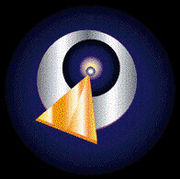 The theme of "Infinite Diversity in Infinite Combinations"is symbolized by the Vulcans in a Kol-Ut-Shan, represented as a pendant
of yellow and white gold with a circle and triangle resting upon each other, and adorned with a white jewel in the center.
In an issue of The Humanist
, Majel Barrett
claimed that the philosophy of "Infinite Diversity in Infinite Combinations" was based on the teachings of Rabbi Maimonides
.
Spock
wore the symbol during important gatherings and ceremonies as part of his dress uniform
. It appeared for the first time in the Star Trek: The Original Series
(TOS) episode "Is There in Truth No Beauty?" It also appeared in Spock's quarters in Star Trek II: The Wrath of Khan
, Star Trek III: The Search for Spock
, and Star Trek VI: The Undiscovered Country
. In the series Star Trek: Enterprise
, T'Pol
is given, through her in-name-only husband Koss, an IDIC pendant from her mother T'Les which projects a holographic relief, enabling T'Pol and Captain Archer
to find the location where T'Les and the Syrrannites are hiding. Also in Star Trek: Enterprise, T'Pol, the science officer, holds an IDIC pendant in Terra Prime while she is in mourning for her dying cloned child Elizabeth, named in honor of Charles "Trip" Tucker
's deceased sister. In the series Star Trek: Deep Space Nine
episode "Take Me Out to the Holosuite", Captain Solok, an Academy classmate and longtime rival of Benjamin Sisko
, challenges Sisko and other DS9 personnel to a baseball game against his Vulcan team, the Logicians. The IDIC symbol appears on the Vulcans' ballcaps.
The Vulcan IDIC pendant was designed by Gene Roddenberry
as a marketing premium long before the third season. As early as the end of the first season, fans of the show had begun writing in asking for copies of the scripts, film clip frames, etc., and these were soon sold through Roddenberry's "Lincoln Enterprises", run by Majel Barrett
. As evidenced in some of his letters and memos, Roddenberry was fond of circle-and-triangle designs and had wanted to use them for purposes of theatrical unity as early as the first season's "The Return of the Archons". As reported by editor Ruth Berman (issue #1, Inside Star Trek, July 1968, pp. 15–16), "ardent rock hound and amateur lapidary
" Roddenberry came up with the Vulcan philosophy after he presented Leonard Nimoy with a unique "hand-crafted piece of jewelry," a "pendent" (sic) of polished yellow gold (circle) and florentined white gold (triangle), with a stone of brilliant white fabulite
—an artificial gem "developed by the laser industry and used in space mechanisms for its optical qualities," and thus well-suited as a gift for an actor in a science fiction show. Readers were encouraged to submit their interest in such a product to the then-Star Trek Enterprises mail order firm. It was noted that "less expensive materials" would keep costs down.
According to William Shatner
in Star Trek Memories, the book about TOS he dictated to Chris Kreski
, IDIC was only worked into the episode "Is There in Truth No Beauty?" as an afterthought. The actors all knew it was a mere advertising toy. Reportedly, Leonard Nimoy
was asked to wear it and refused, so it was passed on to Shatner; when he also refused, Nimoy reluctantly agreed to wear it. At the last minute, Roddenberry sent down several pages of new script for the dinner scene, in which Spock was to give a long-winded explanation of the philosophy. The actors refused to film it until Roddenberry cut it down.
 The Vulcan homeworld, also named Vulcan, was mentioned in the original series, episode "The City on the Edge of Forever" (1967) to be orbiting the far left star of Orion's belt, i.e. Alnitak, and in the novel Star Trek 2, author James Blish put the planet in orbit around the star 40 Eridani A
, 16 light years from Earth
, an identification later adopted by Roddenberry. Vulcan is a reddish Minshara-Class
planet
. Its inhabitants were originally called Vulcanians; a name used by Spock in the Original Series episode A Taste of Armageddon, by Federation
colonists in This Side of Paradise and by Harry Mudd in Mudd's Women.
Much of its surface consists of desert
s and mountain
ranges, and large areas are set aside as wilderness
preserves. It is much hotter, it has a stronger surface gravity
, and its atmosphere
is thinner than that of Earth. As a result of these factors, humans tend to tire out more quickly than native Vulcans.
In the alternate timeline of the 2009 film, Nero destroyed Vulcan by creating a singularity
in its core as part of his quest to avenge the destruction of Romulus. The resulting implosion destroyed the planet, killing most of its six billion inhabitants. Only around 10,000 managed to escape, including Spock and some of the Elders. At the end of the film, Spock Prime tells the younger Spock a suitable planet had been located to establish a colony for the surviving Vulcans, so it can be assured that this planet will be the new Vulcan.
An alternative to the 40 Eridani identification is also alluded to in the 2009 film. Spock Prime is marooned on Delta Vega, presumably the fourth planet orbiting Vega. Delta Vega is shown to be a Class M planet exhibiting Arctic like conditions. From Delta Vega, Spock Prime clearly observes the destruction of Vulcan. This would place Vulcan in the same system and in close proximity to Delta Vega. Comparing the two respective climates, it would appear that Vulcan is identified as Gamma Vega.
theorized that the Vulcans might be the descendants of a colony
from Sargon's planet.
Vulcans subsequently practiced a form of paganism
; this can be seen in gods of war, peace, and death
depicted on the Stone of Gol, as well as the celebration of Rumarie. The DVD
commentary for "Amok Time" says that TOS writer D. C. Fontana
named the Vulcan god of death "Shariel", a bust
of whom is seen in Spock's quarters.
In about the 4th century AD
, Vulcans emerged from their violent tendencies and civil wars under a philosopher
named Surak
, who advocated the suppressing of emotion
in favor of logic
. This period was known as the Great Awakening, and much of present-day Vulcan philosophy emerged from this period. According to the Star Trek: New Frontier book series (which, like all novels, are not considered canon), the Great Awakening caused many wars and conflicts to occur amongst various Vulcan tribes; those who supported Surak's cause would become separated from friends and even close family members who did not. For cases in which parents were separated by this, a ritual was created called the ku'nit ka'fa'ar, a battle to determine which parent would maintain their child. Despite the acceptance of Surak's teachings, generations of imperfect copies of his writings, combined with changes in the Vulcan language over time, resulted in a diluted form of the culture he instituted.
Surak
's views and lifestyle
were not universally accepted by Vulcan society. One particular group of Vulcans who called themselves "those who march beneath the Raptor's wings" were so adamant in their opposition against Surak that it resulted in a nuclear war
, of which Surak himself became a victim. After a time the portion of Vulcan society who rejected Surak's teachings left the planet for the stars. These Vulcan separatists would eventually become known as the Romulan
s. Knowledge of the common ancestry of Romulans and Vulcans would obscure into myth over the millennia, and while some Vulcans had direct dealings with Romulans in the 22nd century, the common ancestry would not become widely known until the mid-23rd century.
A great deal of Star Trek spin-off fiction, in particular the novel The Romulan Way by Diane Duane
and Peter Morwood
, has stated that the leader of the Vulcan-Romulan migration was a close follower of Surak's named S'Task. S'Task would see the founding of the Romulan Empire
, but was killed by political factions shortly thereafter.
Vulcans did recover from the effects of barbarism and turn much of their attention to space travel for 1,500 years. What would later become known as the Vulcan High Command was initially formed to orchestrate space exploration, but it ended up seizing control of Vulcan government.
The Vulcans fought a hundred-year war with the Romulan
s starting circa 1944.
Spock
was one of three Starfleet
officers from the 23rd century who travel in time to 1930s New York City
, in the original series
episode "The City on the Edge of Forever". He would also briefly travel to Earth
in 1968 on a mission, in the episode "Assignment: Earth"; accidentally in 1969, in "Tomorrow Is Yesterday"; and again in 1986, in Star Trek IV: The Voyage Home
. (Technically speaking, these three events occurred after the founding of the Federation
, but are included here as they constitute pre-First Contact
encounters with contemporary Humans
.)
In 1957, the launch of Sputnik I, Earth's first artificial satellite
, was observed by a Vulcan vessel that subsequently crashed on the planet, marooning several crew members for a number of months in Carbon Creek, Pennsylvania
; this constituted the first true contact between Humans and Vulcans, but it was never recorded as such as the Humans were unaware of the alien nature of their guests.
On April 5, 2063, Vulcans and Humans made official first contact following the successful test of Earth's first warp-powered starship, as depicted in Star Trek: First Contact
.
In 2097, the Vulcans annexed the Andorian planetoid Weytahn and renamed it Pan Mokar.
In 2105, the Vulcans and the Andorians agreed to a compromise over Weytahn/Pan Mokar. Still, tensions continued due to the threat of mutual annihilation.
In 2151, Sub-Commander T'Pol
joined the crew of the Earth Starfleet
vessel Enterprise (NX-01)
, within a couple of weeks setting a Vulcan endurance record for serving aboard a human vessel. In 2154, T'Pol became a commissioned officer with Starfleet.
In May of 2154, the Vulcan High Command considered a proposal for Vulcans and Humans
to conduct joint space exploration missions. V'Las, the head of the High Command and undercover agent for the Romulan
s, bombed the United Earth embassy on Vulcan and attempted an invasion of Andoria
. He was foiled by the crew of the Enterprise
. During these events, the Kir'Shara, a device containing the original writings of Surak
, was discovered by Jonathan Archer
. This led to the prompt dissolution of the High Command and a reevaluation of traditional values
. It also resulted in Vulcan agreeing to stop "looking over Earth
's shoulder" in space exploration matters.
On August 12, 2161, Vulcan became one of the founding members of the United Federation of Planets
.
In the time of Star Trek: Enterprise
, Vulcans are often seen to be rather arrogant and cold in their behavior towards Humans
. It is explained that after first contact, Vulcan shared technology with Earth
, but many Humans, such as Jonathan Archer
, greatly resented the fact that Vulcans seemed to be holding back humanity's efforts at space travel. Soval, Vulcan's ambassador to Earth, appeared particularly distrustful of humans, and was often at odds with Archer and his crew. Soval later justified this behavior in the fourth season episode "The Forge":
Soval also explained that, since Earth recovered from World War III far more quickly than Vulcan did from its equivalent (in "The Forge" and its sequel episodes, it is said that Vulcans took almost a thousand years to rebuild their society after their last catastrophic war), it alarmed many Vulcans, who were confused as to how to deal with a rapidly growing and emotional society such as Earth's.
After the overthrow of the corrupt Vulcan High Command and the death of Admiral
Maxwell Forrest, who sacrificed his life to save Soval from a terrorist attack, the attitudes of Soval, and Vulcan society in general, became more cordial and accepting towards humanity.
universe, the Vulcan High Command is apparently a form of military government which controls both the Vulcan space fleet and most of the planet itself. Most of the Vulcans, including T'Pol
, from Star Trek: Enterprise
served the High Command. It is dissolved in the early fourth season of Star Trek: Enterprise.
Throughout much of the show's run, Captain Jonathan Archer
frequently had run-ins with the High Command - even after Archer proved conclusively, several times, that he was able to travel through time, the High Command stubbornly refused to acknowledge the possibility that time travel could ever be possible (although T'Pol tried to keep an open mind). The High Command, on at least one occasion, sent Vulcan starships to actively spy on the Enterprise and report on the ship's activities (see episode "Breaking the Ice"), an act which infuriated Archer to no end.
However, this was not the end of the High Command's questionable activities. They appeared to participate in open acts of persecution towards other Vulcans, such as isolating and quarantining victims of Pa'nar Syndrome rather than treating them; prejudicial acts against any Vulcan proven to have committed a mind meld; and hunting down and capturing, even often killing, members of the underground group, the Syrranites. With the help of Archer, it was discovered that the High Command's illogical and often emotionally based actions were, in reality, the result of covert Romulan
influence. After the High Command's administrator, V'Las, was revealed to be a Romulan agent, the High Command was disbanded, and a more traditional and human-friendly Vulcan government was formed.
After the dissolution of the High Command, the Vulcan space fleet experienced a serious shortage of personnel, many of whom were still sympathetic to the old guard. Administrator T'Pau, who now oversaw Vulcan's fleet operations, attempted to rebuild the fleet.
mining vessel from the future, killing most of its six billion inhabitants. Its captain, Nero, holds Spock personally responsible for a disaster involving Romulus more than a century later. Spock estimates that no more than 10,000 Vulcans escaped the planet and survived the genocide (which may possibly include Vulcans that were on the original series). However, the film's writers have stated that this does not include Vulcans who were living off planet at the time.
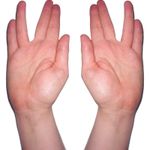 Leonard Nimoy
discussed the origin of the Vulcan salute
in his autobiography I Am Spock
. As a bit of stage "business" in the episode "Amok Time", he invented the famous "Live long and prosper" Vulcan salute
based on the hand symbol used by Jewish priests (kohanim
) during the Priestly Blessing
in the synagogue. The gesture actually emulates the initial Shin
of the Shema
(Nimoy has also commented that the "sh" could also indicate Shaddai
, or the Almighty; more recently, on William Shatner
's Raw Nerve, he associated it with Shekhinah
.) On numerous occasions, for example in the 1983 TV special Star Trek Memories (which is often syndicated along with The Original Series), Nimoy recounts how as a child, he peeked during the blessing and witnessed the gesture, although the congregation are supposed to put hands over eyes or turn away at this moment in acknowledgement of the presence of the Almighty.
The Vulcan nerve pinch
was created for the episode "The Enemy Within". The original script called for Spock to knock the "evil" Kirk
unconscious with the butt of a phaser. Leonard Nimoy felt that the act was too reminiscent of a TV western (some accounts say that he objected to a pacifistic Vulcan taking such overtly hostile action), and thus introduced the famous non-lethal maneuver.
Extraterrestrial life in popular culture
In popular cultures, "extraterrestrials" are life forms — especially intelligent life forms— that are of extraterrestrial origin .-Historical ideas:-Pre-modern:...
humanoid
Human (Star Trek)
In the Star Trek science fiction universe, Humans/Terrans are one of the races undertaking interstellar travel. Human beings were instrumental in the founding of the United Federation of Planets...
species in the Star Trek
Star Trek
Star Trek is an American science fiction entertainment franchise created by Gene Roddenberry. The core of Star Trek is its six television series: The Original Series, The Animated Series, The Next Generation, Deep Space Nine, Voyager, and Enterprise...
universe
Fictional universe
A fictional universe is a self-consistent fictional setting with elements that differ from the real world. It may also be called an imagined, constructed or fictional realm ....
who evolved on the planet Vulcan, and are noted for their attempt to live by reason
Reason
Reason is a term that refers to the capacity human beings have to make sense of things, to establish and verify facts, and to change or justify practices, institutions, and beliefs. It is closely associated with such characteristically human activities as philosophy, science, language, ...
and logic
Logic
In philosophy, Logic is the formal systematic study of the principles of valid inference and correct reasoning. Logic is used in most intellectual activities, but is studied primarily in the disciplines of philosophy, mathematics, semantics, and computer science...
with no interference from emotion
Emotion
Emotion is a complex psychophysiological experience of an individual's state of mind as interacting with biochemical and environmental influences. In humans, emotion fundamentally involves "physiological arousal, expressive behaviors, and conscious experience." Emotion is associated with mood,...
. They were the first extraterrestrial species in the Star Trek universe to observe First Contact
First contact (science fiction)
First contact is a common science fiction theme about the first meeting between humans and extraterrestrial life, or of any sentient race's first encounter with another one....
protocol with Humans
Human (Star Trek)
In the Star Trek science fiction universe, Humans/Terrans are one of the races undertaking interstellar travel. Human beings were instrumental in the founding of the United Federation of Planets...
. They gave massive assistance to a devastated post-World War 3 Earth, enabling the planet to eliminate poverty, disease and suffering within a single century. For this reason, Humans even in the 24th century view Vulcans in many ways as their best friends — "the good guys," as told to Zefram Cochrane
Zefram Cochrane
Zefram Cochrane is a fictional character in the Star Trek universe. Created by writer Gene L. Coon, the character first appeared in the 1967 Star Trek episode "Metamorphosis", in which he was played by Glenn Corbett. James Cromwell later played Cochrane in the 1996 feature film Star Trek: First...
in 'First Contact
First Contact (TNG episode)
"First Contact" is the 89th episode of the science fiction television series Star Trek: The Next Generation.-Overview:Delicate First Contact proceedings between the Federation and a new civilization on the verge of developing interstellar warp travel are disrupted when a member of the USS...
' by the crew of the time travelling USS Enterprise-E. They later became one of the founding members of the United Federation of Planets
United Federation of Planets
The United Federation of Planets, also known as "The Federation" is a fictional interplanetary federal republic depicted in the Star Trek television series and motion pictures...
. Vulcans appear in all six Star Trek series, four of which feature a Vulcan or a half-Vulcan as a main character.
Physical characteristics
Vulcans are depicted as similar in appearance to humanHuman (Star Trek)
In the Star Trek science fiction universe, Humans/Terrans are one of the races undertaking interstellar travel. Human beings were instrumental in the founding of the United Federation of Planets...
s. The main physical differences are their eyebrows and ears: the former are arched and upswept, while the latter feature pinnae which taper to a point at the top. The ears have been the subject of jokes on multiple occasions. Vulcans have been portrayed as various races. Most caucasoid
Caucasian race
The term Caucasian race has been used to denote the general physical type of some or all of the populations of Europe, North Africa, the Horn of Africa, Western Asia , Central Asia and South Asia...
-like Vulcans (a majority of those shown throughout the series' runs) typically appear with a subtle greenish hue to their skin
Skin
-Dermis:The dermis is the layer of skin beneath the epidermis that consists of connective tissue and cushions the body from stress and strain. The dermis is tightly connected to the epidermis by a basement membrane. It also harbors many Mechanoreceptors that provide the sense of touch and heat...
, due to Vulcans' copper-based blood, which is green in color. According to Dr. McCoy, Spock, and presumably all Vulcans, have almost no blood pressure. Other features described include an inner eyelid, or nictitating membrane
Nictitating membrane
The nictitating membrane is a transparent or translucent third eyelid present in some animals that can be drawn across the eye for protection and to moisten it while maintaining visibility. Some reptiles, birds, and sharks have a full nictitating membrane; in many mammals, there is a small...
, which protects their vision from bright lights, an adaptation for their bright and hot home world. In addition, their hearts are located on the right side of the torso, in between the ribs and pelvis, as Dr.McCoy once says about Spock: “He is lucky that his heart is where his liver should be, or he’d be dead!” (ST:TOS, A Private Little War)
Diet
Vulcans are vegetarianVegetarianism
Vegetarianism encompasses the practice of following plant-based diets , with or without the inclusion of dairy products or eggs, and with the exclusion of meat...
s by choice and were omnivore
Omnivore
Omnivores are species that eat both plants and animals as their primary food source...
s in ages past. In the Star Trek original series (TOS)
Star Trek: The Original Series
Star Trek is an American science fiction television series created by Gene Roddenberry, produced by Desilu Productions . Star Trek was telecast on NBC from September 8, 1966, through June 3, 1969...
episode "All Our Yesterdays", Spock willingly consumes meat; partly due to the effects of time-travel 5,000 years into the past, and partly because he reasons there is no other suitable food available given the harsh, ice-age climate in which they are trapped. Vulcans are repeatedly stated to be herbivorous
Herbivore
Herbivores are organisms that are anatomically and physiologically adapted to eat plant-based foods. Herbivory is a form of consumption in which an organism principally eats autotrophs such as plants, algae and photosynthesizing bacteria. More generally, organisms that feed on autotrophs in...
in the TAS
Star Trek: The Animated Series
Star Trek: The Animated Series is an animated science fiction television series set in the Star Trek universe following the events of Star Trek: The Original Series of the 1960s...
episode "The Slaver Weapon", by the carnivorous Kzin
Kzin
The Kzinti are a fictional, very warlike and bloodthirsty race of cat-like aliens in Larry Niven's Known Space series....
ti. Vulcans do not like to touch their food with their hands, preferring to use utensils whenever possible (though there are numerous cases where Vulcans have broken this rule). It is a Vulcan custom for guests in the home to prepare meals for their hosts (Star Trek: Enterprise
Star Trek: Enterprise
Star Trek: Enterprise is a science fiction television series. It follows the adventures of humanity's first warp 5 starship, the Enterprise, ten years before the United Federation of Planets shown in previous Star Trek series was formed.Enterprise premiered on September 26, 2001...
episode: “Home”).
Vulcans are said not to drink alcohol, though they are depicted indulging on special occasions or as a storyline warrants. In the Star Trek: Voyager
Star Trek: Voyager
Star Trek: Voyager is a science fiction television series set in the Star Trek universe. Set in the 24th century from the year 2371 through 2378, the series follows the adventures of the Starfleet vessel USS Voyager, which becomes stranded in the Delta Quadrant 70,000 light-years from Earth while...
episode "Repression", Humans
Human (Star Trek)
In the Star Trek science fiction universe, Humans/Terrans are one of the races undertaking interstellar travel. Human beings were instrumental in the founding of the United Federation of Planets...
and Vulcans are shown drinking a Vulcan alcoholic drink called "Vulcan Brandy
Brandy
Brandy is a spirit produced by distilling wine. Brandy generally contains 35%–60% alcohol by volume and is typically taken as an after-dinner drink...
". In the TOS episode "The Enterprise Incident", as part of his diversionary role during an espionage mission against the Romulan
Romulan
The Romulans are a fictional alien race in the Star Trek universe. First appearing in the original Star Trek series in the 1966 episode "Balance of Terror", they have since made appearances in all the main later Star Trek series: The Animated Series, The Next Generation, Deep Space Nine, Voyager...
s, Spock shares a drink known as Romulan ale (blue colour beverage) with the female Romulan commander. In a later TOS episode "Requiem for Methuselah", Spock specifically requests a Terran
Earth
Earth is the third planet from the Sun, and the densest and fifth-largest of the eight planets in the Solar System. It is also the largest of the Solar System's four terrestrial planets...
brandy after Dr. McCoy
Leonard McCoy
Leonard "Bones" McCoy is a character in the Star Trek media franchise. First portrayed by DeForest Kelley in the original Star Trek series, McCoy also appears in the animated Star Trek series, seven Star Trek movies, the pilot episode of Star Trek: The Next Generation, and in numerous books,...
, while serving himself and Captain Kirk
James T. Kirk
James Tiberius "Jim" Kirk is a character in the Star Trek media franchise. Kirk was first played by William Shatner as the principal lead character in the original Star Trek series. Shatner voiced Kirk in the animated Star Trek series and appeared in the first seven Star Trek movies...
, observes that he had no expectation that Spock would be joining them in a drink for fear that the alcohol would affect his logic faculties. In Star Trek: First Contact
Star Trek: First Contact
Star Trek: First Contact is the eighth feature film in the Star Trek science fiction franchise, released in November 1996, by Paramount Pictures. First Contact is the first film in the franchise to feature no cast members from the original Star Trek television series of the 1960s...
, when the Vulcans first met Zefram Cochrane
Zefram Cochrane
Zefram Cochrane is a fictional character in the Star Trek universe. Created by writer Gene L. Coon, the character first appeared in the 1967 Star Trek episode "Metamorphosis", in which he was played by Glenn Corbett. James Cromwell later played Cochrane in the 1996 feature film Star Trek: First...
, he served them alcoholic beverages, which they took in lieu of dancing. In "non-canon" Trek-related literature, such as the novelization of Star Trek IV: The Voyage Home
Star Trek IV: The Voyage Home
Star Trek IV: The Voyage Home is a 1986 American science fiction film released by Paramount Pictures. It is the fourth feature film based on the Star Trek science fiction television series and completes the story arc begun in Star Trek II: The Wrath of Khan and continued in Star Trek III: The...
, Vulcans are depicted as immune to the effects of alcohol (though in the TOS episode "The Naked Time" a strange affliction infects the crew, that has much the same affect as alcohol, and Spock is also affected and becomes emotional, and even starts to cry). There are references to Vulcans becoming inebriated by ingesting chocolate
Chocolate
Chocolate is a raw or processed food produced from the seed of the tropical Theobroma cacao tree. Cacao has been cultivated for at least three millennia in Mexico, Central and South America. Its earliest documented use is around 1100 BC...
. (This is alluded to in DS9
Star Trek: Deep Space Nine
Star Trek: Deep Space Nine is a science fiction television series set in the Star Trek universe...
when Quark
Quark (Star Trek)
Quark is a fictional character in the American television series Star Trek: Deep Space Nine. The character, which was played by Armin Shimerman, was depicted as a member of an extraterrestrial race known as the Ferengi, who are stereotypically ultra-capitalist and only motivated by...
offers a Vulcan client some Vulcan Port or chocolate, in speaking of which he implies something sexual.)
Mating drive
Approximately every seven years, Vulcan males and females who are bonded to each other experience an overpowering mating drive known as pon farrPon farr
Pon farr is a term used in the fictional Star Trek canonical TV series. In Star Trek, pon farr is a psychophysical condition affecting Vulcans, in which Vulcan males and females go into heat every seven years, going into a blood fever, becoming violent, and finally dying if they do not mate with...
. Once triggered, Vulcans must have sexual contact with someone, preferably their mate, or else face insanity and death.
If a mate is not available, there are other ways to relieve the effects of the pon farr. The first is meditation
Meditation
Meditation is any form of a family of practices in which practitioners train their minds or self-induce a mode of consciousness to realize some benefit....
, by means of which the Vulcan must overcome the urge to mate through mental discipline. The second is violence. This is seen in the Voyager
Star Trek: Voyager
Star Trek: Voyager is a science fiction television series set in the Star Trek universe. Set in the 24th century from the year 2371 through 2378, the series follows the adventures of the Starfleet vessel USS Voyager, which becomes stranded in the Delta Quadrant 70,000 light-years from Earth while...
episode "Blood Fever
Blood Fever (Star Trek: Voyager)
"Blood Fever" is an episode of Star Trek: Voyager, the 16th episode of the third season. It has an average fan rating of 4.5/5 on the official Star Trek website as of September, 2009....
", when B'Elanna Torres
B'Elanna Torres
B'Elanna Torres is a main character in Star Trek: Voyager played by Roxann Dawson. She is portrayed as a half-human half-Klingon born in 2349 on the Federation colony Kessik IV. Torres joined the Maquis in 2370 and was serving on the Val Jean when brought to the Delta Quadrant...
and Ensign Vorik fight in the traditional Vulcan manner. The violence ends the pon farr. The other option is extreme shock; in the TOS
Star Trek: The Original Series
Star Trek is an American science fiction television series created by Gene Roddenberry, produced by Desilu Productions . Star Trek was telecast on NBC from September 8, 1966, through June 3, 1969...
episode "Amok Time", Spock
Spock
Spock is a fictional character in the Star Trek media franchise. First portrayed by Leonard Nimoy in the original Star Trek series, Spock also appears in the animated Star Trek series, two episodes of Star Trek: The Next Generation, seven of the Star Trek feature films, and numerous Star Trek...
believed he had killed James T. Kirk
James T. Kirk
James Tiberius "Jim" Kirk is a character in the Star Trek media franchise. Kirk was first played by William Shatner as the principal lead character in the original Star Trek series. Shatner voiced Kirk in the animated Star Trek series and appeared in the first seven Star Trek movies...
, his "best friend", thus providing sufficient shock to nullify the effects of pon farr. When he experienced pon farr, Tuvok of the USS Voyager
USS Voyager (Star Trek)
The fictional Intrepid-class starship USS Voyager is the primary setting of the science fiction television series Star Trek: Voyager. It is commanded by Captain Kathryn Janeway....
made use of a holodeck
Holodeck
A holodeck, in the fictional Star Trek universe, is a simulated reality facility located on starships and starbases. The first use of a "holodeck" by that name in the Star Trek universe was in the pilot episode of Star Trek: The Next Generation, "Encounter at Farpoint", although a conceptually...
simulation of a temporary mate which resembled his wife. This holodeck simulation was created because The Doctor
Doctor (Star Trek)
The Doctor, an Emergency Medical Hologram Mark I , is a fictional character from the television series Star Trek: Voyager, played by actor Robert Picardo...
was unavailable; the dialog of this episode suggests that The Doctor had prepared a medicine to help Tuvok overcome the effects of pon farr. Infection
Infection
An infection is the colonization of a host organism by parasite species. Infecting parasites seek to use the host's resources to reproduce, often resulting in disease...
is another mechanism writers have used to induce pon farr in Vulcan characters. Such as T'Pol
T'Pol
Commander T'Pol is a fictional character played by Jolene Blalock in Star Trek: Enterprise. She is a Vulcan who serves as the science officer aboard the starship Enterprise.-Concept and creation:...
in the Star Trek: Enterprise
Star Trek: Enterprise
Star Trek: Enterprise is a science fiction television series. It follows the adventures of humanity's first warp 5 starship, the Enterprise, ten years before the United Federation of Planets shown in previous Star Trek series was formed.Enterprise premiered on September 26, 2001...
episode "Bounty".
In the TOS episode "This Side of Paradise", Leila Kalomi hints at having had a special relationship with Spock some six years earlier, though Spock's remark that he hoped his half-human blood would see him "spared" the agony of pon farr in the episode Amok Time suggests that their relationship was more casual. Likewise in the film Star Trek III: The Search for Spock
Star Trek III: The Search for Spock
Star Trek III: The Search for Spock is a 1984 motion picture released by Paramount Pictures. The film is the third feature based on the Star Trek science fiction franchise and is the center of a three-film story arc that begins with Star Trek II: The Wrath of Khan and concludes with Star Trek IV:...
, the regenerated adolescent Spock went through at least two pon farr episodes at accelerated speed. As his mate was not available on the Genesis planet (where Spock underwent the two pon farr periods), it was implied that he mated with Lt. Saavik, a female Vulcan scientist on the crew of the Enterprise who showed compassion in guiding him through the accelerated pon farr (in Star Trek IV: The Voyage Home
Star Trek IV: The Voyage Home
Star Trek IV: The Voyage Home is a 1986 American science fiction film released by Paramount Pictures. It is the fourth feature film based on the Star Trek science fiction television series and completes the story arc begun in Star Trek II: The Wrath of Khan and continued in Star Trek III: The...
, a deleted scene was intended to confirm the implication (i.e., that Saavik bore Spock's child); its removal from the film, however, struck it from 'official' Trek canon).
Despite popular opinion, TOS
Star Trek: The Original Series
Star Trek is an American science fiction television series created by Gene Roddenberry, produced by Desilu Productions . Star Trek was telecast on NBC from September 8, 1966, through June 3, 1969...
writer and story editor, Dorothy C. Fontana
D. C. Fontana
Dorothy Catherine "D. C." Fontana is an American television script writer and story editor, best known for her work on the original Star Trek series.-Work with Gene Roddenberry:...
, insists that pon farr is not the only time that Vulcans feel sexual desire or engage in sexual activity: "Vulcans mate normally any time they want to. However, every seven years you do the ritual, the ceremony, the whole thing. The biological urge. You must, but any other time is any other emotion — humanoid emotion — when you're in love. When you want to, you know, when the urge is there, you do it. This every-seven-years business was taken too literally by too many people who don't stop and understand. We didn't mean it only every seven years. I mean, every seven years would be a little bad, and it would not explain the Vulcans of many different ages which are not seven years apart."
Other characteristics
Vulcans are typically depicted as stronger, faster, and longer-lived than humans (although discrepancies have occurred). Vulcans are about three times as strong as an average human, owing to Vulcan's higher gravity. There are instances of them living over two hundred and twenty years. Having evolved on a desert world, Vulcans can survive without waterWater
Water is a chemical substance with the chemical formula H2O. A water molecule contains one oxygen and two hydrogen atoms connected by covalent bonds. Water is a liquid at ambient conditions, but it often co-exists on Earth with its solid state, ice, and gaseous state . Water also exists in a...
for longer periods than humans.
Vulcans can also go without sleep for as long as two weeks.
Emotion
Vulcans, as a matter of custom and policy, suppress or think past all emotionEmotion
Emotion is a complex psychophysiological experience of an individual's state of mind as interacting with biochemical and environmental influences. In humans, emotion fundamentally involves "physiological arousal, expressive behaviors, and conscious experience." Emotion is associated with mood,...
al influence by living lives of rigid emotional self-control through meditative
Meditation
Meditation is any form of a family of practices in which practitioners train their minds or self-induce a mode of consciousness to realize some benefit....
techniques and training of mental discipline. Vulcans are not depicted as having no emotions; although they themselves make this claim, Vulcans are exceptionally emotional. They developed techniques to suppress their emotions precisely because of the damage they can cause if unchecked. In the episode "Gravity" of Star Trek: Voyager
Star Trek: Voyager
Star Trek: Voyager is a science fiction television series set in the Star Trek universe. Set in the 24th century from the year 2371 through 2378, the series follows the adventures of the Starfleet vessel USS Voyager, which becomes stranded in the Delta Quadrant 70,000 light-years from Earth while...
, Tuvok
Tuvok
Tuvok is one of the main characters on the television series Star Trek: Voyager. Tuvok is a Vulcan who serves as the ship's chief of security and its chief tactical officer. Tim Russ portrayed Tuvok throughout the show's run, from 1995 to 2001....
explains that Vulcans' natural emotions are "erratic and volatile"; if Vulcans do not strongly repress emotions, they can get violently angry in an instant. T'Pol
T'Pol
Commander T'Pol is a fictional character played by Jolene Blalock in Star Trek: Enterprise. She is a Vulcan who serves as the science officer aboard the starship Enterprise.-Concept and creation:...
once stated that paranoia
Paranoia
Paranoia [] is a thought process believed to be heavily influenced by anxiety or fear, often to the point of irrationality and delusion. Paranoid thinking typically includes persecutory beliefs, or beliefs of conspiracy concerning a perceived threat towards oneself...
and homicidal rage were common on Vulcan prior to the adoption of Surak
Surak
Surak is a fictional character in the backstory of the Star Trek television series and franchises. He is portrayed as the most important philosopher in the history of the planet Vulcan...
's code of emotional control. In the original series episode "The Savage Curtain", Spock meets Surak and displays emotion, for which Surak reprimands him, and he asks forgiveness.
The advanced ritual
Ritual
A ritual is a set of actions, performed mainly for their symbolic value. It may be prescribed by a religion or by the traditions of a community. The term usually excludes actions which are arbitrarily chosen by the performers....
of Kolinahr is intended to purge all remaining vestigial emotion; the word also refers to the discipline by which this state is maintained. Only the most devoted and trained Vulcan students attain Kolinahr; most Vulcans do retain control over their emotions, but do not completely eliminate them as Kolinahr attempts to do. In Star Trek: The Motion Picture
Star Trek: The Motion Picture
Star Trek: The Motion Picture is a 1979 American science fiction film released by Paramount Pictures. It is the first film based on the Star Trek television series. The film is set in the twenty-third century, when a mysterious and immensely powerful alien cloud called V'Ger approaches the Earth,...
, Spock
Spock
Spock is a fictional character in the Star Trek media franchise. First portrayed by Leonard Nimoy in the original Star Trek series, Spock also appears in the animated Star Trek series, two episodes of Star Trek: The Next Generation, seven of the Star Trek feature films, and numerous Star Trek...
was unable to complete this ritual after receiving powerful telepathic signals from space and experiencing strong emotions as a result. The Vulcan masters conducting the trials concluded that since Spock's human blood was touched by these messages from space, he could not have achieved Kolinahr, and the ritual was halted. In English this process can be compared to using the word Transcend as a corollary to transcendental meditation
Transcendental Meditation
Transcendental Meditation refers to the Transcendental Meditation technique, a specific form of mantra meditation, and to the Transcendental Meditation movement, a spiritual movement...
.
The term for the purge of emotion is Arie'mnu. It is stated that it does not translate properly into any Earth
Earth
Earth is the third planet from the Sun, and the densest and fifth-largest of the eight planets in the Solar System. It is also the largest of the Solar System's four terrestrial planets...
language. In Diane Duane
Diane Duane
Diane Duane is an American science fiction and fantasy author. Her works include the Young Wizards young adult fantasy series and the Rihannsu Star Trek novels.-Biography :...
's novel Spock's World, it was suggested that Arie'mnu closely translates into "passion's mastery", but that linguist Amanda Grayson, Sarek
Sarek
Sarek is a fictional character in the Star Trek media franchise. He is a Vulcan astrophysicist, the Vulcan ambassador to the United Federation of Planets, and father of Spock...
's wife and Spock's mother, in her work on the universal translator
Universal translator
A universal translator is a device common to many science fiction works, especially on television. First described in Murray Leinster's 1945 novella "First Contact", the translator's purpose is to offer an instant translation of any language...
, had mistranslated the Vulcan word to mean "lack of emotions".
Some Vulcans, such as T'Pol, Sarek
Sarek
Sarek is a fictional character in the Star Trek media franchise. He is a Vulcan astrophysicist, the Vulcan ambassador to the United Federation of Planets, and father of Spock...
(in his later years, due to a rare disease which can affect Vulcans over the age of 200 years), and Soval, carry their emotions close to the surface, and are prone to emotional outbursts, even without outside influences or illness; T'Pau certainly displayed restrained but definite emotions in the TOS episode "Amok Time", including suspicion of the Human
Human (Star Trek)
In the Star Trek science fiction universe, Humans/Terrans are one of the races undertaking interstellar travel. Human beings were instrumental in the founding of the United Federation of Planets...
visitors followed by admiration and approval of their friendship for Spock, and contempt for Spock's humanity. There is some evidence to support the hypothesis that Vulcans in close contact with Humans for an extended period of time may become more emotional than Vulcans who do not. Established canon has yet to make a definitive case for this.
Not all Vulcan characters follow the path of pure logic; some instead choose to embrace emotions. A group of renegade Vulcans who believed in this was encountered in the Star Trek: Enterprise
Star Trek: Enterprise
Star Trek: Enterprise is a science fiction television series. It follows the adventures of humanity's first warp 5 starship, the Enterprise, ten years before the United Federation of Planets shown in previous Star Trek series was formed.Enterprise premiered on September 26, 2001...
episode "Fusion", while Spock's half-brother Sybok, seen in the film Star Trek V: The Final Frontier
Star Trek V: The Final Frontier
Star Trek V: The Final Frontier is a 1989 American science fiction film released by Paramount Pictures. It is the fifth feature in the franchise and the penultimate to star the cast of the original Star Trek science fiction television series...
, was also fully emotional. An episode of Enterprise titled "E²" featured an elderly T'Pol in an alternate timeline who had embraced emotion and allowed her half-Human son, Lorian, to do likewise.
In the pilot episode "The Cage", Spock showed much more emotion. "Number One
Number One (Star Trek)
Number One, in "The Cage", the original pilot episode of the science fiction television series Star Trek, was the un-named intellectual, problem-solving second-in-command serving under Captain Christopher Pike. She performs the same role for Pike "as Spock later does for Kirk"...
", played by Majel Barrett
Majel Barrett
Majel Barrett-Roddenberry was an American actress and producer. She is perhaps best known for her role as Nurse Christine Chapel in the original Star Trek series, Lwaxana Troi on Star Trek: The Next Generation, and for being the voice of most onboard computer interfaces throughout the series...
, was supposed to be the emotionless character. Although the test audience indicated they liked the actress, they hated the character because they could not relate to a female who was so "cold". As a result, the character of Christine Chapel
Christine Chapel
Christine Chapel is a fictional character in the original Star Trek series, and in some of the films based on it. She was played by the late Majel Barrett....
was created for Barrett and the "coldness" was transferred to the Spock character.
Telepathy
Many Vulcans are contact telepaths, and they have been observed taking part in a number of telepathy-related actions and rituals, including an instance where CDR Spock was telepathically aware of the simultaneous deaths of 400 other Vulcans on a faraway ship, the U.S.S. Intrepid, whose crew was entirely Vulcan, in the Season 2 episode "The Immunity Syndrome," written by Robert Sabaroff.Mind melds
A "mind-meld" is a technique for sharing thoughts, experiences, memories, and knowledge with another individual. It usually requires physical contact with a subject, though instances of mind-melds without contact have been seen (for example, in the episode "The Devil in the Dark"). Vulcans can perform mind melds with members of most other species, most notably HumansHuman (Star Trek)
In the Star Trek science fiction universe, Humans/Terrans are one of the races undertaking interstellar travel. Human beings were instrumental in the founding of the United Federation of Planets...
, with Jonathan Archer
Jonathan Archer
Jonathan Archer is a fictional character in the Star Trek franchise. He is the protagonist of the television series Star Trek: Enterprise, where he is played by Scott Bakula...
being the first known Human participant in such a ritual in 2154. Even the Earth
Earth
Earth is the third planet from the Sun, and the densest and fifth-largest of the eight planets in the Solar System. It is also the largest of the Solar System's four terrestrial planets...
Humpback Whale
Humpback Whale
The humpback whale is a species of baleen whale. One of the larger rorqual species, adults range in length from and weigh approximately . The humpback has a distinctive body shape, with unusually long pectoral fins and a knobbly head. It is an acrobatic animal, often breaching and slapping the...
can be successfully melded with. The Ferengi
Ferengi
The Ferengi are a fictitious extraterrestrial race from the Star Trek universe. They first appeared in "The Last Outpost", the fifth episode of Star Trek: The Next Generation in 1987, during which they made first contact with the United Federation of Planets in 2364 on the planet Delphi Ardu,...
are one of the few races known to be impervious to the mind meld; mentally disciplined Cardassian
Cardassian
The Cardassians are an extraterrestrial species in the Star Trek science fiction franchise. First introduced in the 1991 Star Trek: The Next Generation episode "The Wounded", the species originating on the fictional Alpha Quadrant planet Cardassia Prime...
s may also be resistant to mind melds if properly trained. It is not established if this potential ability is inherent to Cardassians, or if members of any race could be trained to resist a mind meld. Machines, such as the Nomad probe, have been melded with even if only through complete contact. In the Star Trek: The Animated Series
Star Trek: The Animated Series
Star Trek: The Animated Series is an animated science fiction television series set in the Star Trek universe following the events of Star Trek: The Original Series of the 1960s...
episode "One of Our Planets is Missing," a touch-less melding of a gaseous nebular entity was depicted.
Mind melds have been used to erase memories, as Spock performed on James T. Kirk
James T. Kirk
James Tiberius "Jim" Kirk is a character in the Star Trek media franchise. Kirk was first played by William Shatner as the principal lead character in the original Star Trek series. Shatner voiced Kirk in the animated Star Trek series and appeared in the first seven Star Trek movies...
in the TOS
Star Trek: The Original Series
Star Trek is an American science fiction television series created by Gene Roddenberry, produced by Desilu Productions . Star Trek was telecast on NBC from September 8, 1966, through June 3, 1969...
episode "Requiem for Methuselah." Mind melds can also allow more than one mind to experience memories and sensations, and sometimes even interact with the memories, as seen in the Star Trek: Voyager
Star Trek: Voyager
Star Trek: Voyager is a science fiction television series set in the Star Trek universe. Set in the 24th century from the year 2371 through 2378, the series follows the adventures of the Starfleet vessel USS Voyager, which becomes stranded in the Delta Quadrant 70,000 light-years from Earth while...
episode "Flashback."
The mind meld can be considered a terrible intimacy because of the strength of Vulcan emotions and the strict psycho-suppression disciplines in which they are trained, and thus not one to be taken lightly. In the Star Trek: The Next Generation
Star Trek: The Next Generation
Star Trek: The Next Generation is an American science fiction television series created by Gene Roddenberry as part of the Star Trek franchise. Roddenberry, Rick Berman, and Michael Piller served as executive producers at different times throughout the production...
installment "Sarek," when the diplomat proves to have Bendii's syndrome and thus to be incapable of completing his last great mission without assistance, he executes a mind meld with Captain Jean-Luc Picard
Jean-Luc Picard
Captain Jean-Luc Picard is a Star Trek character portrayed by Patrick Stewart. He appears in the television series Star Trek: The Next Generation and the feature films Star Trek Generations, Star Trek: First Contact, Star Trek: Insurrection, and Star Trek Nemesis...
, gaining enough emotional stability from this to complete his mission--but Picard himself almost goes insane from the direct onslaught of Sarek's powerful emotions as a result.
Though mind melds are frequently portrayed as a consensual act, that is not always the case. In the TOS
Star Trek: The Original Series
Star Trek is an American science fiction television series created by Gene Roddenberry, produced by Desilu Productions . Star Trek was telecast on NBC from September 8, 1966, through June 3, 1969...
episode "Mirror, Mirror," Spock of the Mirror Universe
Mirror Universe (Star Trek)
The Mirror Universe is a fictional parallel universe in which the plots of several Star Trek television episodes take place...
performed a forced mind meld on Dr. Leonard McCoy
Leonard McCoy
Leonard "Bones" McCoy is a character in the Star Trek media franchise. First portrayed by DeForest Kelley in the original Star Trek series, McCoy also appears in the animated Star Trek series, seven Star Trek movies, the pilot episode of Star Trek: The Next Generation, and in numerous books,...
in order to learn what McCoy was keeping secret. Mind melds can also be very violating and potentially harmful under certain circumstances. In Star Trek VI: The Undiscovered Country
Star Trek VI: The Undiscovered Country
Star Trek VI: The Undiscovered Country is the sixth feature film in the Star Trek science fiction franchise and is the last of the Star Trek films to include the entire main cast of the 1960s Star Trek television series. Released in 1991 by Paramount Pictures, it was directed by Nicholas Meyer and...
, Spock forcefully used the technique on Valeris in order to discover information she had that could be used to prevent a war; Valeris began screaming just before Spock broke the connection.
The use of the mind meld was taboo for a period of time. In the Vulcan timeline, this changed when experienced melders were shown to be able to cure Pa'nar Syndrome, a condition passed on by melders who are improperly trained. Within a week of the Kir'Shara incident in 2154, the stigma against mind-melders was evaporating, and sufferers of Pa'nar were being cured in large numbers. By the mid-23rd century, the mind meld is a fully accepted part of Vulcan society, and was even used once to rejoin Spock's katra with his healed physical body (see below).
As originally depicted in TOS, mind-melds were considered dangerous and potentially lethal. Over the course of the original series, however, the element of risk was no longer mentioned, although it was revived on Star Trek: Enterprise
Star Trek: Enterprise
Star Trek: Enterprise is a science fiction television series. It follows the adventures of humanity's first warp 5 starship, the Enterprise, ten years before the United Federation of Planets shown in previous Star Trek series was formed.Enterprise premiered on September 26, 2001...
with the revelation that Pa'nar Syndrome can be transmitted this way.
For a number of years, it was held that not all Vulcans are genetically capable of initiating a mind-meld, such as T'Pol
T'Pol
Commander T'Pol is a fictional character played by Jolene Blalock in Star Trek: Enterprise. She is a Vulcan who serves as the science officer aboard the starship Enterprise.-Concept and creation:...
. However, the overthrow of the Vulcan High Command in 2154 revealed that this is not the case, and T'Pol conducted her first mind meld soon after.
Some Vulcans appear with advanced mental abilities. For example, in the TOS episode "A Taste of Armageddon," Spock was once able to induce uncertainty in the mind of a prison guard on Eminiar VII, and in the episode "The Devil in the Dark," he was able to perform a limited mind meld with a horta without actually making physical contact with the being. It is made apparent that a touch-less meld is limited in effectiveness compared to physical melds. During more intense melds, the melder is sometimes shown using both hands.
Katra
Some Vulcans appear able to "cheat death" by implanting their katra, essentially their living essence or spirit, into an object or another person via a form of mind-meld just prior to death. Dr Julian BashirJulian Bashir
Lieutenant Julian Subatoi Bashir, M.D., played by Alexander Siddig, is a main character in Star Trek: Deep Space Nine. Bashir is the chief medical officer of space station Deep Space Nine and the USS Defiant.-Overview:...
in the episode "The Passenger" of Deep Space Nine
Star Trek: Deep Space Nine
Star Trek: Deep Space Nine is a science fiction television series set in the Star Trek universe...
referred to this phenomenon as "synaptic pattern displacement." The history and mechanics of the katra have never been discussed in great detail in canon.
Katras can, on rare occasions, be returned to the body, effectively bringing an individual back from the dead
Resurrection
Resurrection refers to the literal coming back to life of the biologically dead. It is used both with respect to particular individuals or the belief in a General Resurrection of the dead at the end of the world. The General Resurrection is featured prominently in Jewish, Christian, and Muslim...
. Such was the case with Spock
Spock
Spock is a fictional character in the Star Trek media franchise. First portrayed by Leonard Nimoy in the original Star Trek series, Spock also appears in the animated Star Trek series, two episodes of Star Trek: The Next Generation, seven of the Star Trek feature films, and numerous Star Trek...
, who, near the end of Star Trek II: The Wrath of Khan
Star Trek II: The Wrath of Khan
Star Trek II: The Wrath of Khan is a 1982 American science fiction film released by Paramount Pictures. The film is the second feature based on the Star Trek science fiction franchise. The plot features James T...
, implanted his katra into the mind of Dr. McCoy
Leonard McCoy
Leonard "Bones" McCoy is a character in the Star Trek media franchise. First portrayed by DeForest Kelley in the original Star Trek series, McCoy also appears in the animated Star Trek series, seven Star Trek movies, the pilot episode of Star Trek: The Next Generation, and in numerous books,...
prior to sacrificing his life to save the USS Enterprise
USS Enterprise (NCC-1701)
The USS Enterprise, NCC-1701, is a fictional starship in the Star Trek media franchise. The original Star Trek series depicts her crew's mission "to explore strange new worlds; to seek out new life and new civilizations; to boldly go where no man has gone before" under the command of Captain James...
from Khan's attack. (Such was the strength of Spock's mental abilities that he was in fact able to function normally for several minutes despite depositing his "soul" elsewhere.) Following Spock's death, McCoy began exhibiting Vulcan-like behavior and was briefly institutionalized. It was later discovered that Spock's body came to rest on the Genesis Planet
Star Trek II: The Wrath of Khan
Star Trek II: The Wrath of Khan is a 1982 American science fiction film released by Paramount Pictures. The film is the second feature based on the Star Trek science fiction franchise. The plot features James T...
after his burial in space, and was regenerated. He was recovered and was taken with McCoy to Mount Seleya on Vulcan where a Vulcan high priestess named T'Lar performed a rare, seldom-attempted ritual called the fal tor pan, literally, "re-fusion," which removed the katra from McCoy and implanted it into Spock's regenerated body. Subsequently, Spock recovered, although it took some time to retrain his mind to where it was prior to his death. Eventually, Spock's original memories apparently reasserted themselves, and he resumed his duties in Starfleet
Starfleet
In the fictional universe of Star Trek, Starfleet or the Federation Starfleet is the deep-space exploratory, peacekeeping and military service maintained by the United Federation of Planets . It is the principal means by which the Federation conducts its exploration, defense, diplomacy and research...
.
Language
According to the DVD commentary of the film, Star Trek II: The Wrath of KhanStar Trek II: The Wrath of Khan
Star Trek II: The Wrath of Khan is a 1982 American science fiction film released by Paramount Pictures. The film is the second feature based on the Star Trek science fiction franchise. The plot features James T...
, actors Leonard Nimoy and Kirstie Alley
Kirstie Alley
Kirstie Louise Alley is an American actress known for her role in the TV show Cheers, in which she played Rebecca Howe from 1987–1993, winning an Emmy Award and a Golden Globe Award as the Outstanding Lead Actress in a Comedy Series in 1991...
, portraying Spock and Saavik
Saavik
Lieutenant JG Saavik is a fictional character in the Star Trek universe. She first appeared in the film Star Trek II: The Wrath of Khan played by Kirstie Alley. Robin Curtis took on the role after a salary dispute caused Alley to drop out of the sequel, Star Trek III: The Search for Spock...
respectively, spoke their lines in English, and later dubbed in alien dialogue (at least partially designed by linguist Marc Okrand) that corresponded with the movements of their mouths in the scene.
Names
The treatment of Vulcan names has been erratic throughout Star TrekStar Trek
Star Trek is an American science fiction entertainment franchise created by Gene Roddenberry. The core of Star Trek is its six television series: The Original Series, The Animated Series, The Next Generation, Deep Space Nine, Voyager, and Enterprise...
's production history. Early on, female Vulcans were typically given names beginning with "T" followed by an apostrophe
Apostrophe
The apostrophe is a punctuation mark, and sometimes a diacritic mark, in languages that use the Latin alphabet or certain other alphabets...
then a "p". The earliest reference to Vulcan names following a set pattern dates back to a May 3, 1966 memo from TOS
Star Trek: The Original Series
Star Trek is an American science fiction television series created by Gene Roddenberry, produced by Desilu Productions . Star Trek was telecast on NBC from September 8, 1966, through June 3, 1969...
producer Robert H. Justman
Robert H. Justman
Robert Harris "Bob" Justman was an American television producer, director and production manager. He worked on many television series including Lassie, The Life of Riley, Adventures of Superman, The Outer Limits, Then Came Bronson and Mission: Impossible.- Career :Bob Justman was one of the...
to Gene Roddenberry
Gene Roddenberry
Eugene Wesley "Gene" Roddenberry was an American television screenwriter, producer and futurist, best known for creating the American science fiction series Star Trek. Born in El Paso, Texas, Roddenberry grew up in Los Angeles, California where his father worked as a police officer...
(later reprinted in the book The Making of Star Trek) in which Justman recommended that all Vulcan names begin with "SP" and end with "K", and have exactly five letters. (It is clear from the context of the book, however, that the memo was intended as a joke, as the series of memos ends up discussing the pronunciation of such names as "Spilk" and "Spork".)
Only non-canonical sources have provided any Vulcans with family names, which are usually spoken of as defying attempts at both human pronunciation, especially with English-language phonemes, and human typesetting, especially with the characters of the modern Latin alphabet used for the English language. Hence, no canonical source has given any family names to any Vulcan characters, and indeed, every one of the personal names previously mentioned are all officially described as being only Latin-alphabetical and English-phonetic approximations of the real ones.
Marriage
Vulcans practice arranged marriageArranged marriage
An arranged marriage is a practice in which someone other than the couple getting married makes the selection of the persons to be wed, meanwhile curtailing or avoiding the process of courtship. Such marriages had deep roots in royal and aristocratic families around the world...
, in which a male and a female are married or affianced as children, with consummation at a later date. Following adult union, it is customary for the couple to remain on Vulcan for at least one Vulcan year before conducting off-world travel, though it is possible to defer this requirement until a later date, upon negotiation with the male's family. The state of pon farr
Pon farr
Pon farr is a term used in the fictional Star Trek canonical TV series. In Star Trek, pon farr is a psychophysical condition affecting Vulcans, in which Vulcan males and females go into heat every seven years, going into a blood fever, becoming violent, and finally dying if they do not mate with...
is not required for marriage to occur. The mating session of a Vulcan (pon farr) includes the private act of sex undifferentiated from the human version of mating.
A Vulcan female can challenge the proposed bonding by calling for koon-ut-kal-if-fee, meaning "marriage or challenge", in which a challenger for marriage engages the bonded male in a fight to the death. Alternatively, the bonded male has the option of rejecting his intended bride and choosing another. It is acceptable for a male to "release" his mate from marriage (effectively the same as a divorce
Divorce
Divorce is the final termination of a marital union, canceling the legal duties and responsibilities of marriage and dissolving the bonds of matrimony between the parties...
). It is not established whether females have the same option, and T'Pring stated in "Amok Time" that a koon-ut-kal-if-fee challenge was the only way she could legally divorce Spock
Spock
Spock is a fictional character in the Star Trek media franchise. First portrayed by Leonard Nimoy in the original Star Trek series, Spock also appears in the animated Star Trek series, two episodes of Star Trek: The Next Generation, seven of the Star Trek feature films, and numerous Star Trek...
.
Family
It is customary for Vulcan children to undertake an initiation ordeal known as the Kahs-wan (sometimes spelled Kaswahn), in which they are left to fend for themselves in the desert for a specific period of time. Not all children survive this rite of passage. T'Pol underwent the ritual, while TuvokTuvok
Tuvok is one of the main characters on the television series Star Trek: Voyager. Tuvok is a Vulcan who serves as the ship's chief of security and its chief tactical officer. Tim Russ portrayed Tuvok throughout the show's run, from 1995 to 2001....
experienced a variation known as the tal'oth. The Kahs-wan was first introduced in the Star Trek: The Animated Series
Star Trek: The Animated Series
Star Trek: The Animated Series is an animated science fiction television series set in the Star Trek universe following the events of Star Trek: The Original Series of the 1960s...
episode "Yesteryear", in which Spock's experience as a child was detailed.
Contrary to the Vulcan image of expressing no emotion, family bonds can be strong and affectionate just as they are for Humans
Human (Star Trek)
In the Star Trek science fiction universe, Humans/Terrans are one of the races undertaking interstellar travel. Human beings were instrumental in the founding of the United Federation of Planets...
. Tuvok expressed his love for his wife on a few occasions (without actually using the term), Sarek
Sarek
Sarek is a fictional character in the Star Trek media franchise. He is a Vulcan astrophysicist, the Vulcan ambassador to the United Federation of Planets, and father of Spock...
openly expressed affection for both his Human wives, and a clear bond of love existed between T'Pol and her mother, T'Les.
Fighting and self defense
Although generally adhering to a philosophy of non-violence, Vulcans have developed martial artsMartial arts
Martial arts are extensive systems of codified practices and traditions of combat, practiced for a variety of reasons, including self-defense, competition, physical health and fitness, as well as mental and spiritual development....
and techniques of hand to hand combat
Hand to hand combat
Hand-to-hand combat is a lethal or nonlethal physical confrontation between two or more persons at very short range that does not involve the use of firearms or other distance weapons...
. Vulcan martial arts are highly ritualistic and based on philosophy, similar to Human
Human (Star Trek)
In the Star Trek science fiction universe, Humans/Terrans are one of the races undertaking interstellar travel. Human beings were instrumental in the founding of the United Federation of Planets...
counterparts such as karate
Karate
is a martial art developed in the Ryukyu Islands in what is now Okinawa, Japan. It was developed from indigenous fighting methods called and Chinese kenpō. Karate is a striking art using punching, kicking, knee and elbow strikes, and open-handed techniques such as knife-hands. Grappling, locks,...
and Silat
Silat
Silat Melayu is a blanket term for the types of silat created in peninsular Southeast Asia, particularly Malaysia, Thailand, Brunei and Singapore. The silat tradition has deep roots in Malay culture and can trace its origin to the dawn of Malay civilization, 2000 years ago...
. The most extreme example is the koon-ut-kal-if-fee, or fight to the death, described earlier, though one particular discipline is known as Suss Mahn (named for Star Trek: Enterprise producer Mike Sussman
Mike Sussman (TV series writer/producer)
Mike Sussman is an American television writer and producer best known for his work on Star Trek: Voyager, Star Trek: Enterprise and Threshold. He is currently a writer and Co-Executive Producer on Sam Raimi's syndicated adventure series, Legend of the Seeker.- External links :*...
).
Many Vulcans are skilled in a self-defense
Self-defense
Self-defense, self-defence or private defense is a countermeasure that involves defending oneself, one's property or the well-being of another from physical harm. The use of the right of self-defense as a legal justification for the use of force in times of danger is available in many...
technique known as the "Vulcan nerve pinch
Vulcan nerve pinch
In the fictional Star Trek universe, the Vulcan nerve pinch is a technique used mainly by Vulcans to render unconsciousness by pinching a pressure point at the base of the victim’s neck...
" or "neck pinch", which targets a precise location on the neck, rendering the victim unconscious (sometimes instantly, sometimes after a short delay depending on the subject). The mechanics of the pinch have never been explained in on-screen canon. While practiced mainly by Vulcans, it is not exclusive to their race; for example, Jonathan Archer
Jonathan Archer
Jonathan Archer is a fictional character in the Star Trek franchise. He is the protagonist of the television series Star Trek: Enterprise, where he is played by Scott Bakula...
and Jean-Luc Picard
Jean-Luc Picard
Captain Jean-Luc Picard is a Star Trek character portrayed by Patrick Stewart. He appears in the television series Star Trek: The Next Generation and the feature films Star Trek Generations, Star Trek: First Contact, Star Trek: Insurrection, and Star Trek Nemesis...
are depicted as having mastered the technique after each became involved in a Vulcan telepathic ritual (Archer holding the katra of Surak
Surak
Surak is a fictional character in the backstory of the Star Trek television series and franchises. He is portrayed as the most important philosopher in the history of the planet Vulcan...
; Picard having undergone a mind-meld with Sarek
Sarek
Sarek is a fictional character in the Star Trek media franchise. He is a Vulcan astrophysicist, the Vulcan ambassador to the United Federation of Planets, and father of Spock...
). The android Data
Data (Star Trek)
Lieutenant Commander Data is a character in the fictional Star Trek universe portrayed by actor Brent Spiner. He appears in the television series Star Trek: The Next Generation and the feature films Star Trek Generations, Star Trek: First Contact, Star Trek: Insurrection, and Star Trek...
also displayed this ability, though none of the three characters were depicted using the skill regularly. Leonard McCoy
Leonard McCoy
Leonard "Bones" McCoy is a character in the Star Trek media franchise. First portrayed by DeForest Kelley in the original Star Trek series, McCoy also appears in the animated Star Trek series, seven Star Trek movies, the pilot episode of Star Trek: The Next Generation, and in numerous books,...
attempted to use the "neck pinch" while carrying Spock
Spock
Spock is a fictional character in the Star Trek media franchise. First portrayed by Leonard Nimoy in the original Star Trek series, Spock also appears in the animated Star Trek series, two episodes of Star Trek: The Next Generation, seven of the Star Trek feature films, and numerous Star Trek...
's katra in Star Trek III: The Search for Spock
Star Trek III: The Search for Spock
Star Trek III: The Search for Spock is a 1984 motion picture released by Paramount Pictures. The film is the third feature based on the Star Trek science fiction franchise and is the center of a three-film story arc that begins with Star Trek II: The Wrath of Khan and concludes with Star Trek IV:...
, but was unsuccessful for reasons unknown. In "Whom Gods Destroy", Garth of Izar performs the neck pinch on a Tellarite
Tellarite
Tellarites are a fictional species from the planet Tellar from the Star Trek television show.Though not used in a great number of episodes, they are one of the founding races of the show's United Federation of Planets, to which Earth belongs....
guard while masquerading as Spock, using his shape-shifting ability. However, the Tellarite was one of Garth's minions, and the neck pinch may have been a ruse to convince Kirk that Garth really was Spock. Tongo Rad, a Catuallan, employed a similar technique to render a Starfleet officer unconscious by driving his thumbs suddenly and firmly into the sides of the officer's neck in the original-series episode "The Way to Eden".
"Infinite Diversity in Infinite Combinations"
Pendant
A pendant is a loose-hanging piece of jewellery, generally attached by a small loop to a necklace, when the ensemble may be known as a "pendant necklace". A pendant earring is an earring with a piece hanging down. In modern French "pendant" is the gerund form of “hanging”...
of yellow and white gold with a circle and triangle resting upon each other, and adorned with a white jewel in the center.
In an issue of The Humanist
American Humanist Association
The American Humanist Association is an educational organization in the United States that advances Humanism. "Humanism is a progressive philosophy of life that, without theism and other supernatural beliefs, affirms our ability and responsibility to lead ethical lives of personal fulfillment that...
, Majel Barrett
Majel Barrett
Majel Barrett-Roddenberry was an American actress and producer. She is perhaps best known for her role as Nurse Christine Chapel in the original Star Trek series, Lwaxana Troi on Star Trek: The Next Generation, and for being the voice of most onboard computer interfaces throughout the series...
claimed that the philosophy of "Infinite Diversity in Infinite Combinations" was based on the teachings of Rabbi Maimonides
Maimonides
Moses ben-Maimon, called Maimonides and also known as Mūsā ibn Maymūn in Arabic, or Rambam , was a preeminent medieval Jewish philosopher and one of the greatest Torah scholars and physicians of the Middle Ages...
.
Spock
Spock
Spock is a fictional character in the Star Trek media franchise. First portrayed by Leonard Nimoy in the original Star Trek series, Spock also appears in the animated Star Trek series, two episodes of Star Trek: The Next Generation, seven of the Star Trek feature films, and numerous Star Trek...
wore the symbol during important gatherings and ceremonies as part of his dress uniform
Dress uniform
Dress uniform , is the most formal military uniform, typically worn at ceremonies, official receptions, and other special occasions; with order insignias and full size medals...
. It appeared for the first time in the Star Trek: The Original Series
Star Trek: The Original Series
Star Trek is an American science fiction television series created by Gene Roddenberry, produced by Desilu Productions . Star Trek was telecast on NBC from September 8, 1966, through June 3, 1969...
(TOS) episode "Is There in Truth No Beauty?" It also appeared in Spock's quarters in Star Trek II: The Wrath of Khan
Star Trek II: The Wrath of Khan
Star Trek II: The Wrath of Khan is a 1982 American science fiction film released by Paramount Pictures. The film is the second feature based on the Star Trek science fiction franchise. The plot features James T...
, Star Trek III: The Search for Spock
Star Trek III: The Search for Spock
Star Trek III: The Search for Spock is a 1984 motion picture released by Paramount Pictures. The film is the third feature based on the Star Trek science fiction franchise and is the center of a three-film story arc that begins with Star Trek II: The Wrath of Khan and concludes with Star Trek IV:...
, and Star Trek VI: The Undiscovered Country
Star Trek VI: The Undiscovered Country
Star Trek VI: The Undiscovered Country is the sixth feature film in the Star Trek science fiction franchise and is the last of the Star Trek films to include the entire main cast of the 1960s Star Trek television series. Released in 1991 by Paramount Pictures, it was directed by Nicholas Meyer and...
. In the series Star Trek: Enterprise
Star Trek: Enterprise
Star Trek: Enterprise is a science fiction television series. It follows the adventures of humanity's first warp 5 starship, the Enterprise, ten years before the United Federation of Planets shown in previous Star Trek series was formed.Enterprise premiered on September 26, 2001...
, T'Pol
T'Pol
Commander T'Pol is a fictional character played by Jolene Blalock in Star Trek: Enterprise. She is a Vulcan who serves as the science officer aboard the starship Enterprise.-Concept and creation:...
is given, through her in-name-only husband Koss, an IDIC pendant from her mother T'Les which projects a holographic relief, enabling T'Pol and Captain Archer
Jonathan Archer
Jonathan Archer is a fictional character in the Star Trek franchise. He is the protagonist of the television series Star Trek: Enterprise, where he is played by Scott Bakula...
to find the location where T'Les and the Syrrannites are hiding. Also in Star Trek: Enterprise, T'Pol, the science officer, holds an IDIC pendant in Terra Prime while she is in mourning for her dying cloned child Elizabeth, named in honor of Charles "Trip" Tucker
Charles Tucker III
Charles "Trip" Tucker III , played by Connor Trinneer, is a fictional character in the television series Star Trek: Enterprise, which is the last generation of the Star Trek seriesTucker was the chief engineer on the Enterprise, and also briefly served as chief engineer aboard...
's deceased sister. In the series Star Trek: Deep Space Nine
Star Trek: Deep Space Nine
Star Trek: Deep Space Nine is a science fiction television series set in the Star Trek universe...
episode "Take Me Out to the Holosuite", Captain Solok, an Academy classmate and longtime rival of Benjamin Sisko
Benjamin Sisko
Benjamin Lafayette Sisko, played by Avery Brooks, is the main character of the television series Star Trek: Deep Space Nine.-Early life and career:...
, challenges Sisko and other DS9 personnel to a baseball game against his Vulcan team, the Logicians. The IDIC symbol appears on the Vulcans' ballcaps.
The Vulcan IDIC pendant was designed by Gene Roddenberry
Gene Roddenberry
Eugene Wesley "Gene" Roddenberry was an American television screenwriter, producer and futurist, best known for creating the American science fiction series Star Trek. Born in El Paso, Texas, Roddenberry grew up in Los Angeles, California where his father worked as a police officer...
as a marketing premium long before the third season. As early as the end of the first season, fans of the show had begun writing in asking for copies of the scripts, film clip frames, etc., and these were soon sold through Roddenberry's "Lincoln Enterprises", run by Majel Barrett
Majel Barrett
Majel Barrett-Roddenberry was an American actress and producer. She is perhaps best known for her role as Nurse Christine Chapel in the original Star Trek series, Lwaxana Troi on Star Trek: The Next Generation, and for being the voice of most onboard computer interfaces throughout the series...
. As evidenced in some of his letters and memos, Roddenberry was fond of circle-and-triangle designs and had wanted to use them for purposes of theatrical unity as early as the first season's "The Return of the Archons". As reported by editor Ruth Berman (issue #1, Inside Star Trek, July 1968, pp. 15–16), "ardent rock hound and amateur lapidary
Lapidary
A lapidary is an artist or artisan who forms stone, mineral, gemstones, and other suitably durable materials into decorative items such as engraved gems, including cameos, or cabochons, and faceted designs...
" Roddenberry came up with the Vulcan philosophy after he presented Leonard Nimoy with a unique "hand-crafted piece of jewelry," a "pendent" (sic) of polished yellow gold (circle) and florentined white gold (triangle), with a stone of brilliant white fabulite
Strontium titanate
Strontium titanate is an oxide of strontium and titanium with the chemical formula SrTiO3. At room temperature, it is a centrosymmetric paraelectric material with a perovskite structure...
—an artificial gem "developed by the laser industry and used in space mechanisms for its optical qualities," and thus well-suited as a gift for an actor in a science fiction show. Readers were encouraged to submit their interest in such a product to the then-Star Trek Enterprises mail order firm. It was noted that "less expensive materials" would keep costs down.
According to William Shatner
William Shatner
William Alan Shatner is a Canadian actor, musician, recording artist, and author. He gained worldwide fame and became a cultural icon for his portrayal of James T...
in Star Trek Memories, the book about TOS he dictated to Chris Kreski
Chris Kreski
Chris Kreski was an American writer, biographer and screenwriter.-Writing:In 1989, during his tenure as the head writer for Remote Control, Kreski met actor Barry Williams, who was one of three celebrity contestants during a "Brady Day" episode. When Williams said that he'd thought about writing a...
, IDIC was only worked into the episode "Is There in Truth No Beauty?" as an afterthought. The actors all knew it was a mere advertising toy. Reportedly, Leonard Nimoy
Leonard Nimoy
Leonard Simon Nimoy is an American actor, film director, poet, musician and photographer. Nimoy's most famous role is that of Spock in the original Star Trek series , multiple films, television and video game sequels....
was asked to wear it and refused, so it was passed on to Shatner; when he also refused, Nimoy reluctantly agreed to wear it. At the last minute, Roddenberry sent down several pages of new script for the dinner scene, in which Spock was to give a long-winded explanation of the philosophy. The actors refused to film it until Roddenberry cut it down.
Homeworld
40 Eridani
40 Eridani is a triple star system less than 16.5 light years away from Earth. It is in the constellation Eridanus. The primary star of the system, 40 Eridani A, is easily visible to the naked eye...
, 16 light years from Earth
Earth
Earth is the third planet from the Sun, and the densest and fifth-largest of the eight planets in the Solar System. It is also the largest of the Solar System's four terrestrial planets...
, an identification later adopted by Roddenberry. Vulcan is a reddish Minshara-Class
Class M planet
Class M is a fictional classification for planets and planetoids in the Star Trek science fiction media franchise. In the Star Trek: Enterprise series, T'Pol uses the Vulcan term Minshara class, which may be the origin of the later Federation designation.Their atmospheres comprise nitrogen and...
planet
Planet
A planet is a celestial body orbiting a star or stellar remnant that is massive enough to be rounded by its own gravity, is not massive enough to cause thermonuclear fusion, and has cleared its neighbouring region of planetesimals.The term planet is ancient, with ties to history, science,...
. Its inhabitants were originally called Vulcanians; a name used by Spock in the Original Series episode A Taste of Armageddon, by Federation
United Federation of Planets
The United Federation of Planets, also known as "The Federation" is a fictional interplanetary federal republic depicted in the Star Trek television series and motion pictures...
colonists in This Side of Paradise and by Harry Mudd in Mudd's Women.
Much of its surface consists of desert
Desert
A desert is a landscape or region that receives an extremely low amount of precipitation, less than enough to support growth of most plants. Most deserts have an average annual precipitation of less than...
s and mountain
Mountain
Image:Himalaya_annotated.jpg|thumb|right|The Himalayan mountain range with Mount Everestrect 58 14 160 49 Chomo Lonzorect 200 28 335 52 Makalurect 378 24 566 45 Mount Everestrect 188 581 920 656 Tibetan Plateaurect 250 406 340 427 Rong River...
ranges, and large areas are set aside as wilderness
Wilderness
Wilderness or wildland is a natural environment on Earth that has not been significantly modified by human activity. It may also be defined as: "The most intact, undisturbed wild natural areas left on our planet—those last truly wild places that humans do not control and have not developed with...
preserves. It is much hotter, it has a stronger surface gravity
Surface gravity
The surface gravity, g, of an astronomical or other object is the gravitational acceleration experienced at its surface. The surface gravity may be thought of as the acceleration due to gravity experienced by a hypothetical test particle which is very close to the object's surface and which, in...
, and its atmosphere
Atmosphere
An atmosphere is a layer of gases that may surround a material body of sufficient mass, and that is held in place by the gravity of the body. An atmosphere may be retained for a longer duration, if the gravity is high and the atmosphere's temperature is low...
is thinner than that of Earth. As a result of these factors, humans tend to tire out more quickly than native Vulcans.
In the alternate timeline of the 2009 film, Nero destroyed Vulcan by creating a singularity
Black hole
A black hole is a region of spacetime from which nothing, not even light, can escape. The theory of general relativity predicts that a sufficiently compact mass will deform spacetime to form a black hole. Around a black hole there is a mathematically defined surface called an event horizon that...
in its core as part of his quest to avenge the destruction of Romulus. The resulting implosion destroyed the planet, killing most of its six billion inhabitants. Only around 10,000 managed to escape, including Spock and some of the Elders. At the end of the film, Spock Prime tells the younger Spock a suitable planet had been located to establish a colony for the surviving Vulcans, so it can be assured that this planet will be the new Vulcan.
An alternative to the 40 Eridani identification is also alluded to in the 2009 film. Spock Prime is marooned on Delta Vega, presumably the fourth planet orbiting Vega. Delta Vega is shown to be a Class M planet exhibiting Arctic like conditions. From Delta Vega, Spock Prime clearly observes the destruction of Vulcan. This would place Vulcan in the same system and in close proximity to Delta Vega. Comparing the two respective climates, it would appear that Vulcan is identified as Gamma Vega.
Fictional history
In the episode "Return to Tomorrow", SpockSpock
Spock is a fictional character in the Star Trek media franchise. First portrayed by Leonard Nimoy in the original Star Trek series, Spock also appears in the animated Star Trek series, two episodes of Star Trek: The Next Generation, seven of the Star Trek feature films, and numerous Star Trek...
theorized that the Vulcans might be the descendants of a colony
Colony
In politics and history, a colony is a territory under the immediate political control of a state. For colonies in antiquity, city-states would often found their own colonies. Some colonies were historically countries, while others were territories without definite statehood from their inception....
from Sargon's planet.
Vulcans subsequently practiced a form of paganism
Paganism
Paganism is a blanket term, typically used to refer to non-Abrahamic, indigenous polytheistic religious traditions....
; this can be seen in gods of war, peace, and death
Death deity
Deities associated with death take many different forms, depending on the specific culture and religion being referenced. Psychopomps, deities of the underworld, and resurrection deities are commonly called death deities in comparative religions texts...
depicted on the Stone of Gol, as well as the celebration of Rumarie. The DVD
DVD
A DVD is an optical disc storage media format, invented and developed by Philips, Sony, Toshiba, and Panasonic in 1995. DVDs offer higher storage capacity than Compact Discs while having the same dimensions....
commentary for "Amok Time" says that TOS writer D. C. Fontana
D. C. Fontana
Dorothy Catherine "D. C." Fontana is an American television script writer and story editor, best known for her work on the original Star Trek series.-Work with Gene Roddenberry:...
named the Vulcan god of death "Shariel", a bust
Bust (sculpture)
A bust is a sculpted or cast representation of the upper part of the human figure, depicting a person's head and neck, as well as a variable portion of the chest and shoulders. The piece is normally supported by a plinth. These forms recreate the likeness of an individual...
of whom is seen in Spock's quarters.
In about the 4th century AD
Anno Domini
and Before Christ are designations used to label or number years used with the Julian and Gregorian calendars....
, Vulcans emerged from their violent tendencies and civil wars under a philosopher
Philosophy
Philosophy is the study of general and fundamental problems, such as those connected with existence, knowledge, values, reason, mind, and language. Philosophy is distinguished from other ways of addressing such problems by its critical, generally systematic approach and its reliance on rational...
named Surak
Surak
Surak is a fictional character in the backstory of the Star Trek television series and franchises. He is portrayed as the most important philosopher in the history of the planet Vulcan...
, who advocated the suppressing of emotion
Emotion
Emotion is a complex psychophysiological experience of an individual's state of mind as interacting with biochemical and environmental influences. In humans, emotion fundamentally involves "physiological arousal, expressive behaviors, and conscious experience." Emotion is associated with mood,...
in favor of logic
Logic
In philosophy, Logic is the formal systematic study of the principles of valid inference and correct reasoning. Logic is used in most intellectual activities, but is studied primarily in the disciplines of philosophy, mathematics, semantics, and computer science...
. This period was known as the Great Awakening, and much of present-day Vulcan philosophy emerged from this period. According to the Star Trek: New Frontier book series (which, like all novels, are not considered canon), the Great Awakening caused many wars and conflicts to occur amongst various Vulcan tribes; those who supported Surak's cause would become separated from friends and even close family members who did not. For cases in which parents were separated by this, a ritual was created called the ku'nit ka'fa'ar, a battle to determine which parent would maintain their child. Despite the acceptance of Surak's teachings, generations of imperfect copies of his writings, combined with changes in the Vulcan language over time, resulted in a diluted form of the culture he instituted.
Surak
Surak
Surak is a fictional character in the backstory of the Star Trek television series and franchises. He is portrayed as the most important philosopher in the history of the planet Vulcan...
's views and lifestyle
World view
A comprehensive world view is the fundamental cognitive orientation of an individual or society encompassing the entirety of the individual or society's knowledge and point-of-view, including natural philosophy; fundamental, existential, and normative postulates; or themes, values, emotions, and...
were not universally accepted by Vulcan society. One particular group of Vulcans who called themselves "those who march beneath the Raptor's wings" were so adamant in their opposition against Surak that it resulted in a nuclear war
Nuclear warfare
Nuclear warfare, or atomic warfare, is a military conflict or political strategy in which nuclear weaponry is detonated on an opponent. Compared to conventional warfare, nuclear warfare can be vastly more destructive in range and extent of damage...
, of which Surak himself became a victim. After a time the portion of Vulcan society who rejected Surak's teachings left the planet for the stars. These Vulcan separatists would eventually become known as the Romulan
Romulan
The Romulans are a fictional alien race in the Star Trek universe. First appearing in the original Star Trek series in the 1966 episode "Balance of Terror", they have since made appearances in all the main later Star Trek series: The Animated Series, The Next Generation, Deep Space Nine, Voyager...
s. Knowledge of the common ancestry of Romulans and Vulcans would obscure into myth over the millennia, and while some Vulcans had direct dealings with Romulans in the 22nd century, the common ancestry would not become widely known until the mid-23rd century.
A great deal of Star Trek spin-off fiction, in particular the novel The Romulan Way by Diane Duane
Diane Duane
Diane Duane is an American science fiction and fantasy author. Her works include the Young Wizards young adult fantasy series and the Rihannsu Star Trek novels.-Biography :...
and Peter Morwood
Peter Morwood
Peter Morwood is primarily a fantasy novelist and screenwriter, though he has also written works of science fiction. His best-known works include the Horse Lords series and the Tales of Old Russia series.-Biography :...
, has stated that the leader of the Vulcan-Romulan migration was a close follower of Surak's named S'Task. S'Task would see the founding of the Romulan Empire
Romulan
The Romulans are a fictional alien race in the Star Trek universe. First appearing in the original Star Trek series in the 1966 episode "Balance of Terror", they have since made appearances in all the main later Star Trek series: The Animated Series, The Next Generation, Deep Space Nine, Voyager...
, but was killed by political factions shortly thereafter.
Vulcans did recover from the effects of barbarism and turn much of their attention to space travel for 1,500 years. What would later become known as the Vulcan High Command was initially formed to orchestrate space exploration, but it ended up seizing control of Vulcan government.
The Vulcans fought a hundred-year war with the Romulan
Romulan
The Romulans are a fictional alien race in the Star Trek universe. First appearing in the original Star Trek series in the 1966 episode "Balance of Terror", they have since made appearances in all the main later Star Trek series: The Animated Series, The Next Generation, Deep Space Nine, Voyager...
s starting circa 1944.
Spock
Spock
Spock is a fictional character in the Star Trek media franchise. First portrayed by Leonard Nimoy in the original Star Trek series, Spock also appears in the animated Star Trek series, two episodes of Star Trek: The Next Generation, seven of the Star Trek feature films, and numerous Star Trek...
was one of three Starfleet
Starfleet
In the fictional universe of Star Trek, Starfleet or the Federation Starfleet is the deep-space exploratory, peacekeeping and military service maintained by the United Federation of Planets . It is the principal means by which the Federation conducts its exploration, defense, diplomacy and research...
officers from the 23rd century who travel in time to 1930s New York City
New York City
New York is the most populous city in the United States and the center of the New York Metropolitan Area, one of the most populous metropolitan areas in the world. New York exerts a significant impact upon global commerce, finance, media, art, fashion, research, technology, education, and...
, in the original series
Star Trek: The Original Series
Star Trek is an American science fiction television series created by Gene Roddenberry, produced by Desilu Productions . Star Trek was telecast on NBC from September 8, 1966, through June 3, 1969...
episode "The City on the Edge of Forever". He would also briefly travel to Earth
Earth
Earth is the third planet from the Sun, and the densest and fifth-largest of the eight planets in the Solar System. It is also the largest of the Solar System's four terrestrial planets...
in 1968 on a mission, in the episode "Assignment: Earth"; accidentally in 1969, in "Tomorrow Is Yesterday"; and again in 1986, in Star Trek IV: The Voyage Home
Star Trek IV: The Voyage Home
Star Trek IV: The Voyage Home is a 1986 American science fiction film released by Paramount Pictures. It is the fourth feature film based on the Star Trek science fiction television series and completes the story arc begun in Star Trek II: The Wrath of Khan and continued in Star Trek III: The...
. (Technically speaking, these three events occurred after the founding of the Federation
United Federation of Planets
The United Federation of Planets, also known as "The Federation" is a fictional interplanetary federal republic depicted in the Star Trek television series and motion pictures...
, but are included here as they constitute pre-First Contact
Star Trek: First Contact
Star Trek: First Contact is the eighth feature film in the Star Trek science fiction franchise, released in November 1996, by Paramount Pictures. First Contact is the first film in the franchise to feature no cast members from the original Star Trek television series of the 1960s...
encounters with contemporary Humans
Human (Star Trek)
In the Star Trek science fiction universe, Humans/Terrans are one of the races undertaking interstellar travel. Human beings were instrumental in the founding of the United Federation of Planets...
.)
In 1957, the launch of Sputnik I, Earth's first artificial satellite
Satellite
In the context of spaceflight, a satellite is an object which has been placed into orbit by human endeavour. Such objects are sometimes called artificial satellites to distinguish them from natural satellites such as the Moon....
, was observed by a Vulcan vessel that subsequently crashed on the planet, marooning several crew members for a number of months in Carbon Creek, Pennsylvania
Pennsylvania
The Commonwealth of Pennsylvania is a U.S. state that is located in the Northeastern and Mid-Atlantic regions of the United States. The state borders Delaware and Maryland to the south, West Virginia to the southwest, Ohio to the west, New York and Ontario, Canada, to the north, and New Jersey to...
; this constituted the first true contact between Humans and Vulcans, but it was never recorded as such as the Humans were unaware of the alien nature of their guests.
On April 5, 2063, Vulcans and Humans made official first contact following the successful test of Earth's first warp-powered starship, as depicted in Star Trek: First Contact
Star Trek: First Contact
Star Trek: First Contact is the eighth feature film in the Star Trek science fiction franchise, released in November 1996, by Paramount Pictures. First Contact is the first film in the franchise to feature no cast members from the original Star Trek television series of the 1960s...
.
In 2097, the Vulcans annexed the Andorian planetoid Weytahn and renamed it Pan Mokar.
In 2105, the Vulcans and the Andorians agreed to a compromise over Weytahn/Pan Mokar. Still, tensions continued due to the threat of mutual annihilation.
In 2151, Sub-Commander T'Pol
T'Pol
Commander T'Pol is a fictional character played by Jolene Blalock in Star Trek: Enterprise. She is a Vulcan who serves as the science officer aboard the starship Enterprise.-Concept and creation:...
joined the crew of the Earth Starfleet
Starfleet
In the fictional universe of Star Trek, Starfleet or the Federation Starfleet is the deep-space exploratory, peacekeeping and military service maintained by the United Federation of Planets . It is the principal means by which the Federation conducts its exploration, defense, diplomacy and research...
vessel Enterprise (NX-01)
Enterprise (NX-01)
The Enterprise is a fictional starship in the science fiction television series Star Trek: Enterprise. It is commanded by Captain Jonathan Archer.-History:...
, within a couple of weeks setting a Vulcan endurance record for serving aboard a human vessel. In 2154, T'Pol became a commissioned officer with Starfleet.
In May of 2154, the Vulcan High Command considered a proposal for Vulcans and Humans
Human (Star Trek)
In the Star Trek science fiction universe, Humans/Terrans are one of the races undertaking interstellar travel. Human beings were instrumental in the founding of the United Federation of Planets...
to conduct joint space exploration missions. V'Las, the head of the High Command and undercover agent for the Romulan
Romulan
The Romulans are a fictional alien race in the Star Trek universe. First appearing in the original Star Trek series in the 1966 episode "Balance of Terror", they have since made appearances in all the main later Star Trek series: The Animated Series, The Next Generation, Deep Space Nine, Voyager...
s, bombed the United Earth embassy on Vulcan and attempted an invasion of Andoria
Andorian
Andorians are a fictional race of humanoid extraterrestrials created by D. C. Fontana for the Star Trek universe. They are native to the icy M-class moon Andoria , which orbits a blue, ringed gas giant. Definitive traits include their blue skin, a pair of cranial antennae, and white hair...
. He was foiled by the crew of the Enterprise
Enterprise (NX-01)
The Enterprise is a fictional starship in the science fiction television series Star Trek: Enterprise. It is commanded by Captain Jonathan Archer.-History:...
. During these events, the Kir'Shara, a device containing the original writings of Surak
Surak
Surak is a fictional character in the backstory of the Star Trek television series and franchises. He is portrayed as the most important philosopher in the history of the planet Vulcan...
, was discovered by Jonathan Archer
Jonathan Archer
Jonathan Archer is a fictional character in the Star Trek franchise. He is the protagonist of the television series Star Trek: Enterprise, where he is played by Scott Bakula...
. This led to the prompt dissolution of the High Command and a reevaluation of traditional values
Value system
A value system is a set of consistent ethic values and measures used for the purpose of ethical or ideological integrity. A well defined value system is a moral code.-Personal and communal:...
. It also resulted in Vulcan agreeing to stop "looking over Earth
Earth
Earth is the third planet from the Sun, and the densest and fifth-largest of the eight planets in the Solar System. It is also the largest of the Solar System's four terrestrial planets...
's shoulder" in space exploration matters.
On August 12, 2161, Vulcan became one of the founding members of the United Federation of Planets
United Federation of Planets
The United Federation of Planets, also known as "The Federation" is a fictional interplanetary federal republic depicted in the Star Trek television series and motion pictures...
.
In the time of Star Trek: Enterprise
Star Trek: Enterprise
Star Trek: Enterprise is a science fiction television series. It follows the adventures of humanity's first warp 5 starship, the Enterprise, ten years before the United Federation of Planets shown in previous Star Trek series was formed.Enterprise premiered on September 26, 2001...
, Vulcans are often seen to be rather arrogant and cold in their behavior towards Humans
Human (Star Trek)
In the Star Trek science fiction universe, Humans/Terrans are one of the races undertaking interstellar travel. Human beings were instrumental in the founding of the United Federation of Planets...
. It is explained that after first contact, Vulcan shared technology with Earth
Earth
Earth is the third planet from the Sun, and the densest and fifth-largest of the eight planets in the Solar System. It is also the largest of the Solar System's four terrestrial planets...
, but many Humans, such as Jonathan Archer
Jonathan Archer
Jonathan Archer is a fictional character in the Star Trek franchise. He is the protagonist of the television series Star Trek: Enterprise, where he is played by Scott Bakula...
, greatly resented the fact that Vulcans seemed to be holding back humanity's efforts at space travel. Soval, Vulcan's ambassador to Earth, appeared particularly distrustful of humans, and was often at odds with Archer and his crew. Soval later justified this behavior in the fourth season episode "The Forge":
- "We don't know what to do about Humans. Of all the species we've made contact with, yours is the only one we can't define. You have the arrogance of AndorianAndorianAndorians are a fictional race of humanoid extraterrestrials created by D. C. Fontana for the Star Trek universe. They are native to the icy M-class moon Andoria , which orbits a blue, ringed gas giant. Definitive traits include their blue skin, a pair of cranial antennae, and white hair...
s, the stubborn pride of TellariteTellariteTellarites are a fictional species from the planet Tellar from the Star Trek television show.Though not used in a great number of episodes, they are one of the founding races of the show's United Federation of Planets, to which Earth belongs....
s. One moment you're as driven by your emotions as KlingonKlingonKlingons are a fictional warrior race in the Star Trek universe.Klingons are recurring villains in the 1960s television show Star Trek: The Original Series, and have appeared in all five spin-off series and eight feature films...
s, and the next, you confound us by suddenly embracing logic."
Soval also explained that, since Earth recovered from World War III far more quickly than Vulcan did from its equivalent (in "The Forge" and its sequel episodes, it is said that Vulcans took almost a thousand years to rebuild their society after their last catastrophic war), it alarmed many Vulcans, who were confused as to how to deal with a rapidly growing and emotional society such as Earth's.
After the overthrow of the corrupt Vulcan High Command and the death of Admiral
Starfleet ranks and insignia
Starfleet ranks and insignia are fictional titles and badges that form the hierarchy of Starfleet in the Star Trek television shows and movies.-Overview:...
Maxwell Forrest, who sacrificed his life to save Soval from a terrorist attack, the attitudes of Soval, and Vulcan society in general, became more cordial and accepting towards humanity.
Vulcan High Command
In the 22nd century of the fictional Star TrekStar Trek
Star Trek is an American science fiction entertainment franchise created by Gene Roddenberry. The core of Star Trek is its six television series: The Original Series, The Animated Series, The Next Generation, Deep Space Nine, Voyager, and Enterprise...
universe, the Vulcan High Command is apparently a form of military government which controls both the Vulcan space fleet and most of the planet itself. Most of the Vulcans, including T'Pol
T'Pol
Commander T'Pol is a fictional character played by Jolene Blalock in Star Trek: Enterprise. She is a Vulcan who serves as the science officer aboard the starship Enterprise.-Concept and creation:...
, from Star Trek: Enterprise
Star Trek: Enterprise
Star Trek: Enterprise is a science fiction television series. It follows the adventures of humanity's first warp 5 starship, the Enterprise, ten years before the United Federation of Planets shown in previous Star Trek series was formed.Enterprise premiered on September 26, 2001...
served the High Command. It is dissolved in the early fourth season of Star Trek: Enterprise.
Throughout much of the show's run, Captain Jonathan Archer
Jonathan Archer
Jonathan Archer is a fictional character in the Star Trek franchise. He is the protagonist of the television series Star Trek: Enterprise, where he is played by Scott Bakula...
frequently had run-ins with the High Command - even after Archer proved conclusively, several times, that he was able to travel through time, the High Command stubbornly refused to acknowledge the possibility that time travel could ever be possible (although T'Pol tried to keep an open mind). The High Command, on at least one occasion, sent Vulcan starships to actively spy on the Enterprise and report on the ship's activities (see episode "Breaking the Ice"), an act which infuriated Archer to no end.
However, this was not the end of the High Command's questionable activities. They appeared to participate in open acts of persecution towards other Vulcans, such as isolating and quarantining victims of Pa'nar Syndrome rather than treating them; prejudicial acts against any Vulcan proven to have committed a mind meld; and hunting down and capturing, even often killing, members of the underground group, the Syrranites. With the help of Archer, it was discovered that the High Command's illogical and often emotionally based actions were, in reality, the result of covert Romulan
Romulan
The Romulans are a fictional alien race in the Star Trek universe. First appearing in the original Star Trek series in the 1966 episode "Balance of Terror", they have since made appearances in all the main later Star Trek series: The Animated Series, The Next Generation, Deep Space Nine, Voyager...
influence. After the High Command's administrator, V'Las, was revealed to be a Romulan agent, the High Command was disbanded, and a more traditional and human-friendly Vulcan government was formed.
After the dissolution of the High Command, the Vulcan space fleet experienced a serious shortage of personnel, many of whom were still sympathetic to the old guard. Administrator T'Pau, who now oversaw Vulcan's fleet operations, attempted to rebuild the fleet.
Star Trek (2009) alternate timeline
In the alternate reality presented by the 2009 film Star Trek, the planet Vulcan is destroyed in the year 2258 by an artificial black hole created by the Narada, a RomulanRomulan
The Romulans are a fictional alien race in the Star Trek universe. First appearing in the original Star Trek series in the 1966 episode "Balance of Terror", they have since made appearances in all the main later Star Trek series: The Animated Series, The Next Generation, Deep Space Nine, Voyager...
mining vessel from the future, killing most of its six billion inhabitants. Its captain, Nero, holds Spock personally responsible for a disaster involving Romulus more than a century later. Spock estimates that no more than 10,000 Vulcans escaped the planet and survived the genocide (which may possibly include Vulcans that were on the original series). However, the film's writers have stated that this does not include Vulcans who were living off planet at the time.
Character development
Leonard Nimoy
Leonard Simon Nimoy is an American actor, film director, poet, musician and photographer. Nimoy's most famous role is that of Spock in the original Star Trek series , multiple films, television and video game sequels....
discussed the origin of the Vulcan salute
Vulcan salute
The Vulcan salute is a hand gesture consisting of a raised hand, palm forward with the fingers parted between the middle and ring finger, and the thumb extended. Often, the famous line, "Live long and prosper", is said after it. The salute was devised and popularised by Leonard Nimoy, who...
in his autobiography I Am Spock
I Am Spock
I Am Spock is the second volume of actor and director Leonard Nimoy's autobiography. The book was published in 1995, four years after the release of the last Star Trek motion picture starring the entire original cast, and covers the majority of Nimoy's time with Star Trek in general and Mr. Spock...
. As a bit of stage "business" in the episode "Amok Time", he invented the famous "Live long and prosper" Vulcan salute
Vulcan salute
The Vulcan salute is a hand gesture consisting of a raised hand, palm forward with the fingers parted between the middle and ring finger, and the thumb extended. Often, the famous line, "Live long and prosper", is said after it. The salute was devised and popularised by Leonard Nimoy, who...
based on the hand symbol used by Jewish priests (kohanim
Kohen
A Kohen is the Hebrew word for priest. Jewish Kohens are traditionally believed and halachically required to be of direct patrilineal descent from the Biblical Aaron....
) during the Priestly Blessing
Priestly Blessing
The Priestly Blessing, , also known in Hebrew as Nesiat Kapayim, , or Dukhanen , is a Jewish prayer recited by Kohanim during certain Jewish services...
in the synagogue. The gesture actually emulates the initial Shin
Hebrew alphabet
The Hebrew alphabet , known variously by scholars as the Jewish script, square script, block script, or more historically, the Assyrian script, is used in the writing of the Hebrew language, as well as other Jewish languages, most notably Yiddish, Ladino, and Judeo-Arabic. There have been two...
of the Shema
Shema Yisrael
Shema Yisrael are the first two words of a section of the Torah that is a centerpiece of the morning and evening Jewish prayer services...
(Nimoy has also commented that the "sh" could also indicate Shaddai
Shaddai
Shaddai was a late Bronze Age Amorite city on the banks of the Euphrates river, in northern Syria, as well as the name, or a signifying epithet of a West Semitic deity, whose name was attached by the Hebrews to that of El as one of the names of God in Judaism....
, or the Almighty; more recently, on William Shatner
William Shatner
William Alan Shatner is a Canadian actor, musician, recording artist, and author. He gained worldwide fame and became a cultural icon for his portrayal of James T...
's Raw Nerve, he associated it with Shekhinah
Shekhinah
Shekinah is the English spelling of a grammatically feminine Hebrew word that means the dwelling or settling, and is used to denote the dwelling or settling divine presence of God, especially in the Temple in Jerusalem.-Etymology:Shekinah is derived...
.) On numerous occasions, for example in the 1983 TV special Star Trek Memories (which is often syndicated along with The Original Series), Nimoy recounts how as a child, he peeked during the blessing and witnessed the gesture, although the congregation are supposed to put hands over eyes or turn away at this moment in acknowledgement of the presence of the Almighty.
The Vulcan nerve pinch
Vulcan nerve pinch
In the fictional Star Trek universe, the Vulcan nerve pinch is a technique used mainly by Vulcans to render unconsciousness by pinching a pressure point at the base of the victim’s neck...
was created for the episode "The Enemy Within". The original script called for Spock to knock the "evil" Kirk
James T. Kirk
James Tiberius "Jim" Kirk is a character in the Star Trek media franchise. Kirk was first played by William Shatner as the principal lead character in the original Star Trek series. Shatner voiced Kirk in the animated Star Trek series and appeared in the first seven Star Trek movies...
unconscious with the butt of a phaser. Leonard Nimoy felt that the act was too reminiscent of a TV western (some accounts say that he objected to a pacifistic Vulcan taking such overtly hostile action), and thus introduced the famous non-lethal maneuver.
See also
- StoicismStoicismStoicism is a school of Hellenistic philosophy founded in Athens by Zeno of Citium in the early . The Stoics taught that destructive emotions resulted from errors in judgment, and that a sage, or person of "moral and intellectual perfection," would not suffer such emotions.Stoics were concerned...
- Vulcan, AlbertaVulcan, AlbertaVulcan is a town located midway between the cities of Calgary and Lethbridge on Highway 23, in the prairies of southern Alberta, Canada. The population of the town was 1,940 in 2006, and the population of the county, which is also named Vulcan, was 3,718. The town's economy is mainly tourism and...
- a town in CanadaCanadaCanada is a North American country consisting of ten provinces and three territories. Located in the northern part of the continent, it extends from the Atlantic Ocean in the east to the Pacific Ocean in the west, and northward into the Arctic Ocean...
that has incorporated Star Trek themes due to its name