
All Topics  
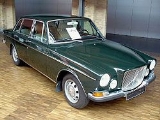
Volvo 164

 
Volvo 164

   Email Print
   Bookmark   Link


Volvo 164


The Volvo 164 was manufactured by Volvo Cars
Volvo Cars

Volvo Cars, or Volvo Personvagnar AB, is a Swedish automaker founded in 1927 in the city of Gothenburg, Sweden — and currently owned by Ford Motor Company....
 beginning in late 1968 for the 1969 model year
Model year

The model year of a product is a number used in North America to describe approximately when a product was produced.The model year and the actual calendar year of production do not always coincide....
. The company built 146,008 examples before production ended in 1975.

Introduced with a faux wood dashboard, a six cylinder engine and an optional leather interior, the 164 represented Volvo's first venture into the luxury segment.

lass="link1" onMouseover='showByLink("m1691894",this)' onMouseout='hide("m1691894")'href="http://www.absoluteastronomy.com/topics/Jan_Wilsgaard">Jan Wilsgaard
Jan Wilsgaard

Jan Wilsgaard, born in 1930 in Brooklyn, New York, was the Chief Designer at Volvo Cars from 1950-1990, having studied at Gothenburg School of Applied Arts before joining Volvo when co-founder Assar Gabrielsson still headed the company....
 designed the 164 — initially in the late 1950s as a concept car
Concept car

A concept vehicle or show vehicle is a Automobile prototype made to showcase a concept, new styling, technology and more. They are often shown at Auto show to gauge customer reaction to new and radical designs which may or may not have a chance of being produced....
 called the P358 powered by a V8.


Discussion
Ask a question about 'Volvo 164'
Start a new discussion about 'Volvo 164'
Answer questions from other users
Full Discussion Forum


Encyclopedia


The Volvo 164 was manufactured by Volvo Cars
Volvo Cars

Volvo Cars, or Volvo Personvagnar AB, is a Swedish automaker founded in 1927 in the city of Gothenburg, Sweden — and currently owned by Ford Motor Company....
 beginning in late 1968 for the 1969 model year
Model year

The model year of a product is a number used in North America to describe approximately when a product was produced.The model year and the actual calendar year of production do not always coincide....
. The company built 146,008 examples before production ended in 1975.

Introduced with a faux wood dashboard, a six cylinder engine and an optional leather interior, the 164 represented Volvo's first venture into the luxury segment.

History

Jan Wilsgaard
Jan Wilsgaard

Jan Wilsgaard, born in 1930 in Brooklyn, New York, was the Chief Designer at Volvo Cars from 1950-1990, having studied at Gothenburg School of Applied Arts before joining Volvo when co-founder Assar Gabrielsson still headed the company....
 designed the 164 — initially in the late 1950s as a concept car
Concept car

A concept vehicle or show vehicle is a Automobile prototype made to showcase a concept, new styling, technology and more. They are often shown at Auto show to gauge customer reaction to new and radical designs which may or may not have a chance of being produced....
 called the P358 powered by a V8. The P358 was cancelled when the home market was found too small. The front styling was inspired both by the Wolseley 6/99
Wolseley 6/99

The Wolseley Motor Company 6/99 was the final large Wolseley car. Styled by Pinin Farina with additions by BMC staff sylists, the basic vehicle was also sold under two of British Motor Corporation's other marques as the Austin Westminster and Vanden Plas Princess....
 and the Volvo P1900
Volvo P1900

The Volvo P1900 is a fibreglass-bodied roadster built in small numbers in 1956 and 1957 by Volvo Cars of Sweden.Volvo's president and founder Assar Gabrielsson got the idea for the car when he saw a Chevrolet Corvette in America and wanted to make something similar....
.


In 1968 Volvo introduced the 164 as an extension of the 140-series
Volvo 140

Volvo Cars began manufacturing the Volvo 140 series at Torslandaverken in the late summer of 1966 for model year 1967 and production continued through model year 1974....
, equipping the 164 with a 3.0 litre straight-6. The bodywork of the 164 from the windshield forward differed from the 140: including a longer bonnet accommodating the bigger engine and a larger, more prominent grille. The interior was equipped with a faux wood dash and optional leather.

Engine and powertrain

The 164 was powered by a 3-litre OHV straight 6 cylinder
Straight-6

The straight-6 or inline-6 engine is a six cylinder internal combustion engine with all six cylinder mounted in a straight line along the crankcase....
 engine, the B30
Volvo B30 engine

This B30 was a straight-6 automobile engine produced by Volvo Cars starting in 1969, and used in the company's Volvo 164 sedan from 1969 through 1975....
, which was a 6-cylinder derivative of the proven B20 4-cylinder engine that powered most other Volvo models.

The 164 was the first 6 cylinder equipped Volvo in 10 years, since the PV800 series
Volvo Sugga

-|Volvo Sugga is the nickname for the PV800 series of automobiles from Volvo Cars. The Sugga series includes the military 4WD Raptgb 915 , TP21/P2104 , P2104 ....
 ceased production in 1958.

1969-1971 models were equipped with dual Zenith Stromberg
Zenith Carburetters

Zenith Carburetters was a British company making carburetor. In 1955 they joined with their major pre-war rival Solex Carburettors and over time the Zenith brand name fell into disuse....
 175CD2SE constant-depression carburetor
Carburetor

A carburetor or carburettor , is a device that blends Earth's atmosphere and fuel for an internal combustion engine. It was invented by Karl Benz before 1885 and patented in 1886....
s. In 1972, Bosch
Robert Bosch GmbH

Robert Bosch Gesellschaft mit beschr?nkter Haftung is a German diversified technology-based corporation which was started in 1886 by Robert Bosch in Stuttgart, Germany....
's first volume-production electronic fuel injection
Fuel injection

Fuel injection is a system for mixing fuel with air in an internal combustion engine. It has become the primary fuel delivery system used in gasoline Automobile engines, having almost completely replaced carburetors in the late 1980s....
 system, D-Jetronic
Jetronic

Jetronic is a trade name for a type of fuel injection technology marketed by Robert Bosch GmbH from the 1960s forward. Bosch licensed the concept to many automobile manufacturers....
, was offered as optional equipment. Carburetors were dropped and "D-Jet" became standard equipment for the 1973 model year. Cars equipped with the fuel injection were badged as 164E models, the "E" standing for einspritzung (German for fuel injection). Like other fuel-injected Volvos, the 164E models gave improved performance and driveability with less-toxic exhaust emissions than their carbureted counterparts. The D-Jetronic system, however, was not renowned for fuel economy or easy hot-engine restarts.

Transmission

Transmission options included a manual 4-speed (M400) gearbox, which was known as the M410 when equipped with the optional electrically-operated Laycock de Normanville overdrive
Overdrive (mechanics)

Overdrive can refer to two different things.An overdrive is a device which was commonly used in automobiles to allow the choice of an extra-high overall gear ratio for high speed cruising, thus fuel efficiency, at the cost of less torque....
. Both the M400 and M410 had Volvo's "remote control" shifter, which used a conventionally short, vertical shift stick placed between the front seats. Manual-shift models other than the 164 and the P1800 continued until 1971 to use Volvo's direct-control shifter, featuring an extremely long, almost horizontal shift lever with its pivot point well under the dashboard. A 3-speed automatic transmission
Automatic transmission

An automatic transmission is an automobile gearbox that can change gear ratios automatically as the vehicle moves, freeing the driver from having to shift gears manual transmission....
, the Borg Warner BW35, was also offered. The automatic shift selector was mounted on the steering column from 1969 through 1972, and on the floor from 1973 through 1975. Despite its rough operation and inefficiency, the BW35 was popular in the North American market.

Body and chassis

The 164 was only offered as a 4-door sedan, and shares many body and chassis components with its 144 forebear. From the cowl rearward, body sheetmetal is identical. The front was lengthened 100 millimeters in wheelbase and 60 millimeters in overall length to accommodate the longer 6-cylinder engine. Because of the shared components between the 140 and 164, several private parties have constructed station wagon
Station wagon

A station wagon in American English, Australian English, Canadian English and New Zealand English usage and an estate car in British English usage, is a passenger automobile with a car body style similar to a sedan but with the roofline following the full, sometimes extended rear cargo area, i.e. ending with a more vertical door...
 and 2-door hardtop
Hardtop

A hardtop is a term for a rigid, rather than canvas, automobile roof. It has been used in several contexts: detachable hardtops, retractable hardtop roofs, and the so-called pillarless hardtop body style....
 versions with 164 front ends. Despite strenuous calls from North American Volvo dealers for a 6-cylinder Volvo station wagon, Volvo is said to have produced only a single 165 estate car (with a long wheelbase), pictured below. This car may have been given to designer Jan Wilsgaard
Jan Wilsgaard

Jan Wilsgaard, born in 1930 in Brooklyn, New York, was the Chief Designer at Volvo Cars from 1950-1990, having studied at Gothenburg School of Applied Arts before joining Volvo when co-founder Assar Gabrielsson still headed the company....
 on his retirement from Volvo.

Descendants

When developing the 262C coupé in the mid-seventies, Volvo employed a 164 as a testbed. The resulting two-door "162" with a lowered, vinyl-covered roof (recognizable in the later 262C) remains on display at the Volvo Museum in Gothenburg, Sweden.

External links