

Victorian literature

Encyclopedia
Victorian literature is the literature produced during the reign of Queen Victoria
(1837–1901) (the Victorian era
). It forms a link and transition between the writers of the romantic
period and the very different literature of the 20th century.
The 19th century saw the novel
become the leading form of literature in English. The works by pre-Victorian writers such as Jane Austen
and Walter Scott
had perfected both closely observed social satire and adventure stories. Popular works opened a market for the novel amongst a reading public. The 19th century is often regarded as a high point in British literature
as well as in other countries such as France
, the United States
and Russia
. Books, and novels in particular, became ubiquitous, and the "Victorian novelist" created legacy works with continuing appeal.
is a prime exemplar of Victorian novelist. Extraordinarily popular in his day with his characters taking on a life of their own beyond the page, Dickens is still one of the most popular and read authors of that time. His first real novel, The Pickwick Papers
, written at only twenty-five, was an overnight success, and all his subsequent works sold extremely well. He worked diligently and prolifically to produce entertaining writing the public wanted, but also to offer commentary on social challenges of the era. The comedy of his first novel has a satirical edge which pervades his writings. These deal with the plight of the poor and oppressed and end with a ghost story
cut short by his death. The slow trend in his fiction towards darker themes is mirrored in much of the writing of the century, and literature after his death in 1870 is notably different from that at the start of the era.
William Thackeray was Dickens's great rival at the time. With a similar style but a slightly more detached, acerbic and barbed satirical view of his characters, he also tended to depict situations of a more middle class
flavour than Dickens. He is best known for his novel Vanity Fair, subtitled A Novel without a Hero, which is also an example of a form popular in Victorian literature: the historical novel
, in which very recent history is depicted. Anthony Trollope
tended to write about a slightly different part of the structure, namely the landowning and professional classes.
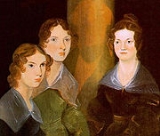
Away from the big cities and the literary society, Haworth
in West Yorkshire
held a powerhouse of novel writing: the home of the Brontë
family. Anne
, Charlotte
and Emily Brontë
had time in their short lives to produce masterpieces of fiction although these were not immediately appreciated by Victorian critics. Wuthering Heights
, Emily's only work, in particular has violence, passion, the supernatural, heightened emotion and emotional distance, an unusual mix for any novel but particularly at this time. It is a prime example of Gothic Romanticism
from a woman's point of view during this period of time, examining class, myth, and gender. Another important writer of the period was George Eliot
, a pseudonym
which concealed a woman, Mary Ann Evans, who wished to write novels which would be taken seriously rather than the romances
which women of the time were supposed to write.
. As children began to be able to read, literature for young people became a growth industry, with not only established writers producing works for children (such as Dickens' A Child's History of England
) but also a new group of dedicated children's authors. Writers like Lewis Carroll
, R. M. Ballantyne and Anna Sewell
wrote mainly for children, although they had an adult following. Other authors such as Anthony Hope
and Robert Louis Stevenson
wrote mainly for adults, but their adventure novel
s are now generally classified as for children. Other genres include nonsense verse
, poetry
which required a child-like interest (e.g. Lewis Carroll
). School stories flourished: Thomas Hughes
' Tom Brown's Schooldays
and Kipling's Stalky & Co.
are classics.
 Poetry in a sense settled down from the upheavals of the romantic
era and much of the work of the time is seen as a bridge between this earlier era and the modernist poetry
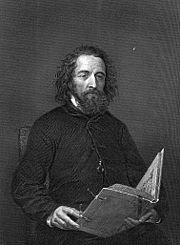
of the next century. Alfred Lord Tennyson held the poet laureate
ship for over forty years. Some Victorian poetry highly regarded at the time, such as William Ernest Henley's Invictus
, is now seen as jingoistic and bombastic, but Tennyson's Charge of the Light Brigade
was a fierce criticism of a famous military blunder; a pillar of the establishment not failing to attack the establishment. Comic verse abounded in the Victorian era. Magazines such as Punch magazine and Fun magazine
teemed with humorous invention and were aimed at a well-educated readership. The most famous collection of Victorian comic verse is the Bab Ballads
.
The husband and wife poetry team of Elizabeth Barrett Browning
and Robert Browning
conducted their love affair through verse and produced many tender and passionate poems. Both Matthew Arnold
and Gerard Manley Hopkins
wrote poems which sit somewhere in between the exultation of nature of the romantic Poetry
and the Georgian Poetry
of the early 20th century. Arnold's works hearken forward to some of the themes of these later poets, while Hopkins drew inspiration from verse forms of Old English
poetry such as Beowulf
.
The reclaiming of the past was a major part of Victorian literature with an interest in both classical literature but also the medieval literature
of England. The Victorians loved the heroic, chivalrous stories of knights of old and they hoped to regain some of that noble, courtly behaviour and impress it upon the people both at home and in the wider empire
. The best example of this is Alfred Tennyson's Idylls of the King
, which blended the stories of King Arthur
, particularly those by Thomas Malory
, with contemporary concerns and ideas. The Pre-Raphaelite Brotherhood
also drew on myth and folklore for their art, with Dante Gabriel Rossetti
contemporaneously regarded as the chief poet amongst them, although his sister Christina
is now held by scholars to be a stronger poet.
In dramatic, farce
s, musical burlesques, extravaganza
s and comic opera
s competed with Shakespeare productions and serious drama by the likes of James Planché
and Thomas William Robertson
. In 1855, the German Reed Entertainments began a process of elevating the level of (formerly risqué) musical theatre in Britain that culminated in the famous series of comic operas by Gilbert and Sullivan
and were followed by the 1890s with the first Edwardian musical comedies. The first play to achieve 500 consecutive performances was the London comedy Our Boys
by H. J. Byron, opening in 1875. Its astonishing new record of 1,362 performances was bested in 1892 by Charley's Aunt
by Brandon Thomas
. After W. S. Gilbert
, Oscar Wilde
became the leading poet and dramatist of the late Victorian period. Wilde's plays, in particular, stand apart from the many now forgotten plays of Victorian times and have a much closer relationship to those of the Edwardian dramatists such as George Bernard Shaw
, many of whose most important works were written in the 20th century. Wilde's 1895 comic masterpiece, The Importance of Being Earnest
, was the greatest of the plays in which he held an ironic mirror to the aristocracy while displaying virtuosic mastery of wit and paradoxical wisdom. It has remained extremely popular.
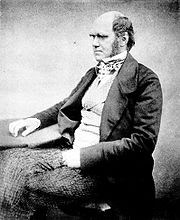 The Victorian era was an important time for the development of science and the Victorians had a mission to describe and classify the entire natural world. Much of this writing does not rise to the level of being regarded as literature but one book in particular, Charles Darwin
's On the Origin of Species, remains famous. The theory of evolution
contained within the work shook many of the ideas the Victorians had about themselves and their place in the world. Although it took a long time to be widely accepted, it would dramatically change subsequent thought and literature.
Other important non-fiction
works of the time are the philosophical writings of John Stuart Mill
covering logic
, economics
, liberty
and utilitarianism
. The large and influential histories of Thomas Carlyle
: The French Revolution, A History, On Heroes and Hero Worship and Thomas Babington Macaulay: The History of England from the Accession of James II. The greater number of novels that contained overt criticism of religion did not stifle a vigorous list of publications on the subject of religion. Two of the most important of these are John Henry Newman and Henry Edward Manning who both wished to revitalise Anglicanism
with a return to the Roman Catholic Church
. In a somewhat opposite direction, the ideas of socialism
were permeating political thought at the time with Friedrich Engels
writing his Condition of the Working Classes in England and William Morris
writing the early socialist utopian novel News from Nowhere
. One other important and monumental work begun in this era was the Oxford English Dictionary
which would eventually become the most important historical dictionary of the English language
.
's works and Susan Fenimore Cooper
's Rural Hours (1850) were canonical influences on Victorian nature writing. In the U.K., Philip Gosse
and Sarah Bowdich Lee
were two of the most popular nature writers in the early part of the Victorian era. The Illustrated London News, founded in 1842, was the world's first illustrated weekly newspaper and often published articles and illustrations dealing with nature; in the second half of the 19th century, books, articles, and illustrations on nature became widespread and popular among an increasingly urbanized reading public.
, famous detective of the times, Barry Lee, big time gang leader, Sexton Blake
, Phileas Fogg
, and other fictional characters of the era, such as Dracula
, Edward Hyde, The Invisible Man
, and many other fictional characters who often had exotic enemies to foil.
Spanning the 18th and 19th centuries, there was a particular type of story-writing known as gothic. Gothic literature combines romance and horror in attempt to thrill and terrify the reader. Possible features in a gothic novel are foreign monsters, ghosts, curses, hidden rooms and witchcraft. Gothic tales usually take place in locations such as castles, monasteries, and cemeteries, although the gothic monsters sometimes cross over into the real world, making appearances in cities such as London and Paris.
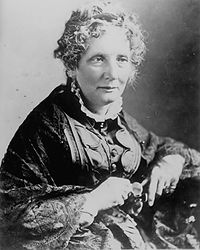 Writers from the United States
and the British colonies of Australia
, New Zealand
and Canada
were influenced by the literature of Britain and are often classed as a part of Victorian literature, although they were gradually developing their own distinctive voices. Victorian writers of Canadian literature
include Grant Allen
, Susanna Moodie
and Catherine Parr Traill. Australian literature
has the poets Adam Lindsay Gordon
and Banjo Paterson
, who wrote Waltzing Matilda
and New Zealand literature
includes Thomas Bracken
and Frederick Edward Maning
. From the sphere of literature of the United States during this time are some of the country's greats including: Emily Dickinson
, Ralph Waldo Emerson
, Nathaniel Hawthorne
, Oliver Wendell Holmes, Sr.
, Henry James
, Herman Melville
, Harriet Beecher Stowe
, Henry David Thoreau
, Mark Twain
and Walt Whitman
.
The problem with the classification of Victorian literature is great difference between the early works of the period and the later works which had more in common with the writers of the Edwardian period and many writers straddle this divide. People such as Arthur Conan Doyle
, Rudyard Kipling
, H. G. Wells
, Bram Stoker
, H. Rider Haggard
, Jerome K. Jerome
and Joseph Conrad
all wrote some of their important works during Victoria's reign but the sensibility of their writing is frequently regarded as Edwardian.
Victoria of the United Kingdom
Victoria was the monarch of the United Kingdom of Great Britain and Ireland from 20 June 1837 until her death. From 1 May 1876, she used the additional title of Empress of India....
(1837–1901) (the Victorian era
Victorian era
The Victorian era of British history was the period of Queen Victoria's reign from 20 June 1837 until her death on 22 January 1901. It was a long period of peace, prosperity, refined sensibilities and national self-confidence...
). It forms a link and transition between the writers of the romantic
Romanticism
Romanticism was an artistic, literary and intellectual movement that originated in the second half of the 18th century in Europe, and gained strength in reaction to the Industrial Revolution...
period and the very different literature of the 20th century.
The 19th century saw the novel
Novel
A novel is a book of long narrative in literary prose. The genre has historical roots both in the fields of the medieval and early modern romance and in the tradition of the novella. The latter supplied the present generic term in the late 18th century....
become the leading form of literature in English. The works by pre-Victorian writers such as Jane Austen
Jane Austen
Jane Austen was an English novelist whose works of romantic fiction, set among the landed gentry, earned her a place as one of the most widely read writers in English literature, her realism and biting social commentary cementing her historical importance among scholars and critics.Austen lived...
and Walter Scott
Walter Scott
Sir Walter Scott, 1st Baronet was a Scottish historical novelist, playwright, and poet, popular throughout much of the world during his time....
had perfected both closely observed social satire and adventure stories. Popular works opened a market for the novel amongst a reading public. The 19th century is often regarded as a high point in British literature
British literature
British Literature refers to literature associated with the United Kingdom, Isle of Man and Channel Islands. By far the largest part of British literature is written in the English language, but there are bodies of written works in Latin, Welsh, Scottish Gaelic, Scots, Cornish, Manx, Jèrriais,...
as well as in other countries such as France
France
The French Republic , The French Republic , The French Republic , (commonly known as France , is a unitary semi-presidential republic in Western Europe with several overseas territories and islands located on other continents and in the Indian, Pacific, and Atlantic oceans. Metropolitan France...
, the United States
United States
The United States of America is a federal constitutional republic comprising fifty states and a federal district...
and Russia
Russia
Russia or , officially known as both Russia and the Russian Federation , is a country in northern Eurasia. It is a federal semi-presidential republic, comprising 83 federal subjects...
. Books, and novels in particular, became ubiquitous, and the "Victorian novelist" created legacy works with continuing appeal.
Novelists
Charles DickensCharles Dickens
Charles John Huffam Dickens was an English novelist, generally considered the greatest of the Victorian period. Dickens enjoyed a wider popularity and fame than had any previous author during his lifetime, and he remains popular, having been responsible for some of English literature's most iconic...
is a prime exemplar of Victorian novelist. Extraordinarily popular in his day with his characters taking on a life of their own beyond the page, Dickens is still one of the most popular and read authors of that time. His first real novel, The Pickwick Papers
The Pickwick Papers
The Posthumous Papers of the Pickwick Club is the first novel by Charles Dickens. After the publication, the widow of the illustrator Robert Seymour claimed that the idea for the novel was originally her husband's; however, in his preface to the 1867 edition, Dickens strenuously denied any...
, written at only twenty-five, was an overnight success, and all his subsequent works sold extremely well. He worked diligently and prolifically to produce entertaining writing the public wanted, but also to offer commentary on social challenges of the era. The comedy of his first novel has a satirical edge which pervades his writings. These deal with the plight of the poor and oppressed and end with a ghost story
Ghost story
A ghost story may be any piece of fiction, or drama, or an account of an experience, that includes a ghost, or simply takes as a premise the possibility of ghosts or characters' belief in them. Colloquially, the term can refer to any kind of scary story. In a narrower sense, the ghost story has...
cut short by his death. The slow trend in his fiction towards darker themes is mirrored in much of the writing of the century, and literature after his death in 1870 is notably different from that at the start of the era.
William Thackeray was Dickens's great rival at the time. With a similar style but a slightly more detached, acerbic and barbed satirical view of his characters, he also tended to depict situations of a more middle class
Middle class
The middle class is any class of people in the middle of a societal hierarchy. In Weberian socio-economic terms, the middle class is the broad group of people in contemporary society who fall socio-economically between the working class and upper class....
flavour than Dickens. He is best known for his novel Vanity Fair, subtitled A Novel without a Hero, which is also an example of a form popular in Victorian literature: the historical novel
Historical novel
According to Encyclopædia Britannica, a historical novel is-Development:An early example of historical prose fiction is Luó Guànzhōng's 14th century Romance of the Three Kingdoms, which covers one of the most important periods of Chinese history and left a lasting impact on Chinese culture.The...
, in which very recent history is depicted. Anthony Trollope
Anthony Trollope
Anthony Trollope was one of the most successful, prolific and respected English novelists of the Victorian era. Some of his best-loved works, collectively known as the Chronicles of Barsetshire, revolve around the imaginary county of Barsetshire...
tended to write about a slightly different part of the structure, namely the landowning and professional classes.
Away from the big cities and the literary society, Haworth
Haworth
Haworth is a rural village in the City of Bradford metropolitan borough of West Yorkshire, England. It is located amongst the Pennines, southwest of Keighley and west of Bradford. The surrounding areas include Oakworth and Oxenhope...
in West Yorkshire
West Yorkshire
West Yorkshire is a metropolitan county within the Yorkshire and the Humber region of England with a population of 2.2 million. West Yorkshire came into existence as a metropolitan county in 1974 after the passage of the Local Government Act 1972....
held a powerhouse of novel writing: the home of the Brontë
Brontë
The Brontës were a nineteenth-century literary family associated with Haworth in the West Riding of Yorkshire, England. The sisters, Charlotte , Emily , and Anne , are well-known as poets and novelists...
family. Anne
Anne Brontë
Anne Brontë was a British novelist and poet, the youngest member of the Brontë literary family.The daughter of a poor Irish clergyman in the Church of England, Anne Brontë lived most of her life with her family at the parish of Haworth on the Yorkshire moors. For a couple of years she went to a...
, Charlotte
Charlotte Brontë
Charlotte Brontë was an English novelist and poet, the eldest of the three Brontë sisters who survived into adulthood, whose novels are English literature standards...
and Emily Brontë
Emily Brontë
Emily Jane Brontë 30 July 1818 – 19 December 1848) was an English novelist and poet, best remembered for her only novel, Wuthering Heights, now considered a classic of English literature. Emily was the third eldest of the four surviving Brontë siblings, between the youngest Anne and her brother...
had time in their short lives to produce masterpieces of fiction although these were not immediately appreciated by Victorian critics. Wuthering Heights
Wuthering Heights
Wuthering Heights is a novel by Emily Brontë published in 1847. It was her only novel and written between December 1845 and July 1846. It remained unpublished until July 1847 and was not printed until December after the success of her sister Charlotte Brontë's novel Jane Eyre...
, Emily's only work, in particular has violence, passion, the supernatural, heightened emotion and emotional distance, an unusual mix for any novel but particularly at this time. It is a prime example of Gothic Romanticism
Romanticism
Romanticism was an artistic, literary and intellectual movement that originated in the second half of the 18th century in Europe, and gained strength in reaction to the Industrial Revolution...
from a woman's point of view during this period of time, examining class, myth, and gender. Another important writer of the period was George Eliot
George Eliot
Mary Anne Evans , better known by her pen name George Eliot, was an English novelist, journalist and translator, and one of the leading writers of the Victorian era...
, a pseudonym
Pseudonym
A pseudonym is a name that a person assumes for a particular purpose and that differs from his or her original orthonym...
which concealed a woman, Mary Ann Evans, who wished to write novels which would be taken seriously rather than the romances
Romance novel
The romance novel is a literary genre developed in Western culture, mainly in English-speaking countries. Novels in this genre place their primary focus on the relationship and romantic love between two people, and must have an "emotionally satisfying and optimistic ending." Through the late...
which women of the time were supposed to write.
The style of the Victorian novel
Victorian novels tend to be idealized portraits of difficult lives in which hard work, perseverance, love and luck win out in the end; virtue would be rewarded and wrongdoers are suitably punished. They tended to be of an improving nature with a central moral lesson at heart. While this formula was the basis for much of earlier Victorian fiction, the situation became more complex as the century progressed.Children's literature
The Victorians are credited with 'inventing childhood', partly via their efforts to stop child labour and the introduction of compulsory educationCompulsory education
Compulsory education refers to a period of education that is required of all persons.-Antiquity to Medieval Era:Although Plato's The Republic is credited with having popularized the concept of compulsory education in Western intellectual thought, every parent in Judea since Moses's Covenant with...
. As children began to be able to read, literature for young people became a growth industry, with not only established writers producing works for children (such as Dickens' A Child's History of England
A Child's History of England
A Child's History of England is a book by Charles Dickens. It first appeared in serial form in Household Words, running from January 25, 1851 to December 10, 1853. Dickens also published the work in book form in three volumes: the first volume on December 20, 1851; the second, December 25, 1852;...
) but also a new group of dedicated children's authors. Writers like Lewis Carroll
Lewis Carroll
Charles Lutwidge Dodgson , better known by the pseudonym Lewis Carroll , was an English author, mathematician, logician, Anglican deacon and photographer. His most famous writings are Alice's Adventures in Wonderland and its sequel Through the Looking-Glass, as well as the poems "The Hunting of the...
, R. M. Ballantyne and Anna Sewell
Anna Sewell
Anna Sewell was an English novelist, best known as the author of the classic novel Black Beauty.-Biography:Anna Mary Sewell was born in Great Yarmouth, Norfolk, England into a devoutly Quaker family...
wrote mainly for children, although they had an adult following. Other authors such as Anthony Hope
Anthony Hope
Sir Anthony Hope Hawkins, better known as Anthony Hope , was an English novelist and playwright. Although he was a prolific writer, especially of adventure novels, he is remembered best for only two books: The Prisoner of Zenda and its sequel Rupert of Hentzau...
and Robert Louis Stevenson
Robert Louis Stevenson
Robert Louis Balfour Stevenson was a Scottish novelist, poet, essayist and travel writer. His best-known books include Treasure Island, Kidnapped, and Strange Case of Dr Jekyll and Mr Hyde....
wrote mainly for adults, but their adventure novel
Adventure novel
The adventure novel is a genre of novels that has adventure, an exciting undertaking involving risk and physical danger, as its main theme.-History:...
s are now generally classified as for children. Other genres include nonsense verse
Nonsense verse
Nonsense verse is a form of light, often rhythmical verse, usually for children, depicting peculiar characters in amusing and fantastical situations. It is whimsical and humorous in tone and tends to employ fanciful phrases and meaningless made-up words. Nonsense verse is closely related to...
, poetry
Poetry
Poetry is a form of literary art in which language is used for its aesthetic and evocative qualities in addition to, or in lieu of, its apparent meaning...
which required a child-like interest (e.g. Lewis Carroll
Lewis Carroll
Charles Lutwidge Dodgson , better known by the pseudonym Lewis Carroll , was an English author, mathematician, logician, Anglican deacon and photographer. His most famous writings are Alice's Adventures in Wonderland and its sequel Through the Looking-Glass, as well as the poems "The Hunting of the...
). School stories flourished: Thomas Hughes
Thomas Hughes
Thomas Hughes was an English lawyer and author. He is most famous for his novel Tom Brown's Schooldays , a semi-autobiographical work set at Rugby School, which Hughes had attended. It had a lesser-known sequel, Tom Brown at Oxford .- Biography :Hughes was the second son of John Hughes, editor of...
' Tom Brown's Schooldays
Tom Brown's Schooldays
Tom Brown's Schooldays is a novel by Thomas Hughes. The story is set at Rugby School, a public school for boys, in the 1830s; Hughes attended Rugby School from 1834 to 1842...
and Kipling's Stalky & Co.
Stalky & Co.
Stalky & Co. is a book published in 1899 by Rudyard Kipling, about adolescent boys at a British boarding school. It is a collection of linked short stories in format, with some information about the charismatic Stalky character in later life. The character Beetle, one of the main trio, is partly...
are classics.
Poetry and drama
Romanticism
Romanticism was an artistic, literary and intellectual movement that originated in the second half of the 18th century in Europe, and gained strength in reaction to the Industrial Revolution...
era and much of the work of the time is seen as a bridge between this earlier era and the modernist poetry
Modernist poetry
Modernist poetry refers to poetry written between 1890 and 1950 in the tradition of modernist literature in the English language, but the dates of the term depend upon a number of factors, including the nation of origin, the particular school in question, and the biases of the critic setting the...
of the next century. Alfred Lord Tennyson held the poet laureate
Poet Laureate
A poet laureate is a poet officially appointed by a government and is often expected to compose poems for state occasions and other government events...
ship for over forty years. Some Victorian poetry highly regarded at the time, such as William Ernest Henley's Invictus
Invictus
"Invictus" is a short Victorian poem by the English poet William Ernest Henley .- Background :At the age of 12, Henley contracted tuberculosis of the bone. A few years later, the disease progressed to his foot, and physicians announced that the only way to save his life was to amputate directly...
, is now seen as jingoistic and bombastic, but Tennyson's Charge of the Light Brigade
The Charge of the Light Brigade (poem)
"The Charge of the Light Brigade" is an 1854 narrative poem by Alfred, Lord Tennyson about the Charge of the Light Brigade at the Battle of Balaclava during the Crimean War...
was a fierce criticism of a famous military blunder; a pillar of the establishment not failing to attack the establishment. Comic verse abounded in the Victorian era. Magazines such as Punch magazine and Fun magazine
Fun (magazine)
Fun was a Victorian weekly magazine, first published on 21 September 1861. The magazine was founded by the actor and playwright H. J. Byron in competition with Punch magazine.-Description:...
teemed with humorous invention and were aimed at a well-educated readership. The most famous collection of Victorian comic verse is the Bab Ballads
Bab Ballads
The Bab Ballads are a collection of light verse by W. S. Gilbert, illustrated with his own comic drawings. Gilbert wrote the Ballads before he became famous for his comic opera librettos with Arthur Sullivan...
.
The husband and wife poetry team of Elizabeth Barrett Browning
Elizabeth Barrett Browning
Elizabeth Barrett Browning was one of the most prominent poets of the Victorian era. Her poetry was widely popular in both England and the United States during her lifetime. A collection of her last poems was published by her husband, Robert Browning, shortly after her death.-Early life:Members...
and Robert Browning
Robert Browning
Robert Browning was an English poet and playwright whose mastery of dramatic verse, especially dramatic monologues, made him one of the foremost Victorian poets.-Early years:...
conducted their love affair through verse and produced many tender and passionate poems. Both Matthew Arnold
Matthew Arnold
Matthew Arnold was a British poet and cultural critic who worked as an inspector of schools. He was the son of Thomas Arnold, the famed headmaster of Rugby School, and brother to both Tom Arnold, literary professor, and William Delafield Arnold, novelist and colonial administrator...
and Gerard Manley Hopkins
Gerard Manley Hopkins
Gerard Manley Hopkins, S.J. was an English poet, Roman Catholic convert, and Jesuit priest, whose posthumous 20th-century fame established him among the leading Victorian poets...
wrote poems which sit somewhere in between the exultation of nature of the romantic Poetry
Romantic poetry
Romanticism, a philosophical, literary, artistic and cultural era which began in the mid/late-1700s as a reaction against the prevailing Enlightenment ideals of the day , also influenced poetry...
and the Georgian Poetry
Georgian Poetry
Georgian Poetry was the title of a series of anthologies showcasing the work of a school of English poetry that established itself during the early years of the reign of King George V of the United Kingdom....
of the early 20th century. Arnold's works hearken forward to some of the themes of these later poets, while Hopkins drew inspiration from verse forms of Old English
Old English language
Old English or Anglo-Saxon is an early form of the English language that was spoken and written by the Anglo-Saxons and their descendants in parts of what are now England and southeastern Scotland between at least the mid-5th century and the mid-12th century...
poetry such as Beowulf
Beowulf
Beowulf , but modern scholars agree in naming it after the hero whose life is its subject." of an Old English heroic epic poem consisting of 3182 alliterative long lines, set in Scandinavia, commonly cited as one of the most important works of Anglo-Saxon literature.It survives in a single...
.
The reclaiming of the past was a major part of Victorian literature with an interest in both classical literature but also the medieval literature
Medieval literature
Medieval literature is a broad subject, encompassing essentially all written works available in Europe and beyond during the Middle Ages . The literature of this time was composed of religious writings as well as secular works...
of England. The Victorians loved the heroic, chivalrous stories of knights of old and they hoped to regain some of that noble, courtly behaviour and impress it upon the people both at home and in the wider empire
British Empire
The British Empire comprised the dominions, colonies, protectorates, mandates and other territories ruled or administered by the United Kingdom. It originated with the overseas colonies and trading posts established by England in the late 16th and early 17th centuries. At its height, it was the...
. The best example of this is Alfred Tennyson's Idylls of the King
Idylls of the King
Idylls of the King, published between 1856 and 1885, is a cycle of twelve narrative poems by the English poet Alfred, Lord Tennyson which retells the legend of King Arthur, his knights, his love for Guinevere and her tragic betrayal of him, and the rise and fall of Arthur's kingdom...
, which blended the stories of King Arthur
King Arthur
King Arthur is a legendary British leader of the late 5th and early 6th centuries, who, according to Medieval histories and romances, led the defence of Britain against Saxon invaders in the early 6th century. The details of Arthur's story are mainly composed of folklore and literary invention, and...
, particularly those by Thomas Malory
Thomas Malory
Sir Thomas Malory was an English writer, the author or compiler of Le Morte d'Arthur. The antiquary John Leland as well as John Bale believed him to be Welsh, but most modern scholars, beginning with G. L...
, with contemporary concerns and ideas. The Pre-Raphaelite Brotherhood
Pre-Raphaelite Brotherhood
The Pre-Raphaelite Brotherhood was a group of English painters, poets, and critics, founded in 1848 by William Holman Hunt, John Everett Millais and Dante Gabriel Rossetti...
also drew on myth and folklore for their art, with Dante Gabriel Rossetti
Dante Gabriel Rossetti
Dante Gabriel Rossetti was an English poet, illustrator, painter and translator. He founded the Pre-Raphaelite Brotherhood in 1848 with William Holman Hunt and John Everett Millais, and was later to be the main inspiration for a second generation of artists and writers influenced by the movement,...
contemporaneously regarded as the chief poet amongst them, although his sister Christina
Christina Rossetti
Christina Georgina Rossetti was an English poet who wrote a variety of romantic, devotional, and children's poems...
is now held by scholars to be a stronger poet.
In dramatic, farce
Farce
In theatre, a farce is a comedy which aims at entertaining the audience by means of unlikely, extravagant, and improbable situations, disguise and mistaken identity, verbal humour of varying degrees of sophistication, which may include word play, and a fast-paced plot whose speed usually increases,...
s, musical burlesques, extravaganza
Extravaganza
An extravaganza is a literary or musical work characterized by freedom of style and structure and usually containing elements of burlesque, pantomime, music hall and parody. It sometimes also has elements of cabaret, circus, revue, variety, vaudeville and mime...
s and comic opera
Comic opera
Comic opera denotes a sung dramatic work of a light or comic nature, usually with a happy ending.Forms of comic opera first developed in late 17th-century Italy. By the 1730s, a new operatic genre, opera buffa, emerged as an alternative to opera seria...
s competed with Shakespeare productions and serious drama by the likes of James Planché
James Planche
James Robinson Planché was a British dramatist, antiquary and officer of arms. Over a period of approximately 60 years he wrote, adapted, or collaborated on 176 plays in a wide range of genres including extravaganza, farce, comedy, burletta, melodrama and opera...
and Thomas William Robertson
Thomas William Robertson
Thomas William Robertson , usually known professionally as T. W. Robertson, was an Anglo-Irish dramatist and innovative stage director best known for a series of realistic or naturalistic plays produced in London in the 1860s that broke new ground and inspired playwrights such as W.S...
. In 1855, the German Reed Entertainments began a process of elevating the level of (formerly risqué) musical theatre in Britain that culminated in the famous series of comic operas by Gilbert and Sullivan
Gilbert and Sullivan
Gilbert and Sullivan refers to the Victorian-era theatrical partnership of the librettist W. S. Gilbert and the composer Arthur Sullivan . The two men collaborated on fourteen comic operas between 1871 and 1896, of which H.M.S...
and were followed by the 1890s with the first Edwardian musical comedies. The first play to achieve 500 consecutive performances was the London comedy Our Boys
Our Boys
Our Boys is a comedy in three acts written by Henry James Byron, first performed in London on 16 January 1875 at the Vaudeville Theatre. Until it was surpassed by the run of Charley's Aunt in the 1890s, it was the world's longest-running play, up to that time, with 1,362 performances until April...
by H. J. Byron, opening in 1875. Its astonishing new record of 1,362 performances was bested in 1892 by Charley's Aunt
Charley's Aunt
Charley's Aunt is a farce in three acts written by Brandon Thomas. It broke all historic records for plays of any kind, with an original London run of 1,466 performances....
by Brandon Thomas
Brandon Thomas
Walter Brandon Thomas was an English actor, playwright and song writer, best known as the author of the farce Charley's Aunt....
. After W. S. Gilbert
W. S. Gilbert
Sir William Schwenck Gilbert was an English dramatist, librettist, poet and illustrator best known for his fourteen comic operas produced in collaboration with the composer Sir Arthur Sullivan, of which the most famous include H.M.S...
, Oscar Wilde
Oscar Wilde
Oscar Fingal O'Flahertie Wills Wilde was an Irish writer and poet. After writing in different forms throughout the 1880s, he became one of London's most popular playwrights in the early 1890s...
became the leading poet and dramatist of the late Victorian period. Wilde's plays, in particular, stand apart from the many now forgotten plays of Victorian times and have a much closer relationship to those of the Edwardian dramatists such as George Bernard Shaw
George Bernard Shaw
George Bernard Shaw was an Irish playwright and a co-founder of the London School of Economics. Although his first profitable writing was music and literary criticism, in which capacity he wrote many highly articulate pieces of journalism, his main talent was for drama, and he wrote more than 60...
, many of whose most important works were written in the 20th century. Wilde's 1895 comic masterpiece, The Importance of Being Earnest
The Importance of Being Earnest
The Importance of Being Earnest, A Trivial Comedy for Serious People is a play by Oscar Wilde. First performed on 14 February 1895 at St. James's Theatre in London, it is a farcical comedy in which the protagonists maintain fictitious personae in order to escape burdensome social obligations...
, was the greatest of the plays in which he held an ironic mirror to the aristocracy while displaying virtuosic mastery of wit and paradoxical wisdom. It has remained extremely popular.
Science, philosophy and discovery
Charles Darwin
Charles Robert Darwin FRS was an English naturalist. He established that all species of life have descended over time from common ancestry, and proposed the scientific theory that this branching pattern of evolution resulted from a process that he called natural selection.He published his theory...
's On the Origin of Species, remains famous. The theory of evolution
Evolution
Evolution is any change across successive generations in the heritable characteristics of biological populations. Evolutionary processes give rise to diversity at every level of biological organisation, including species, individual organisms and molecules such as DNA and proteins.Life on Earth...
contained within the work shook many of the ideas the Victorians had about themselves and their place in the world. Although it took a long time to be widely accepted, it would dramatically change subsequent thought and literature.
Other important non-fiction
Non-fiction
Non-fiction is the form of any narrative, account, or other communicative work whose assertions and descriptions are understood to be fact...
works of the time are the philosophical writings of John Stuart Mill
John Stuart Mill
John Stuart Mill was a British philosopher, economist and civil servant. An influential contributor to social theory, political theory, and political economy, his conception of liberty justified the freedom of the individual in opposition to unlimited state control. He was a proponent of...
covering logic
Logic
In philosophy, Logic is the formal systematic study of the principles of valid inference and correct reasoning. Logic is used in most intellectual activities, but is studied primarily in the disciplines of philosophy, mathematics, semantics, and computer science...
, economics
Economics
Economics is the social science that analyzes the production, distribution, and consumption of goods and services. The term economics comes from the Ancient Greek from + , hence "rules of the house"...
, liberty
Liberty
Liberty is a moral and political principle, or Right, that identifies the condition in which human beings are able to govern themselves, to behave according to their own free will, and take responsibility for their actions...
and utilitarianism
Utilitarianism
Utilitarianism is an ethical theory holding that the proper course of action is the one that maximizes the overall "happiness", by whatever means necessary. It is thus a form of consequentialism, meaning that the moral worth of an action is determined only by its resulting outcome, and that one can...
. The large and influential histories of Thomas Carlyle
Thomas Carlyle
Thomas Carlyle was a Scottish satirical writer, essayist, historian and teacher during the Victorian era.He called economics "the dismal science", wrote articles for the Edinburgh Encyclopedia, and became a controversial social commentator.Coming from a strict Calvinist family, Carlyle was...
: The French Revolution, A History, On Heroes and Hero Worship and Thomas Babington Macaulay: The History of England from the Accession of James II. The greater number of novels that contained overt criticism of religion did not stifle a vigorous list of publications on the subject of religion. Two of the most important of these are John Henry Newman and Henry Edward Manning who both wished to revitalise Anglicanism
Anglicanism
Anglicanism is a tradition within Christianity comprising churches with historical connections to the Church of England or similar beliefs, worship and church structures. The word Anglican originates in ecclesia anglicana, a medieval Latin phrase dating to at least 1246 that means the English...
with a return to the Roman Catholic Church
Roman Catholic Church
The Catholic Church, also known as the Roman Catholic Church, is the world's largest Christian church, with over a billion members. Led by the Pope, it defines its mission as spreading the gospel of Jesus Christ, administering the sacraments and exercising charity...
. In a somewhat opposite direction, the ideas of socialism
Socialism
Socialism is an economic system characterized by social ownership of the means of production and cooperative management of the economy; or a political philosophy advocating such a system. "Social ownership" may refer to any one of, or a combination of, the following: cooperative enterprises,...
were permeating political thought at the time with Friedrich Engels
Friedrich Engels
Friedrich Engels was a German industrialist, social scientist, author, political theorist, philosopher, and father of Marxist theory, alongside Karl Marx. In 1845 he published The Condition of the Working Class in England, based on personal observations and research...
writing his Condition of the Working Classes in England and William Morris
William Morris
William Morris 24 March 18343 October 1896 was an English textile designer, artist, writer, and socialist associated with the Pre-Raphaelite Brotherhood and the English Arts and Crafts Movement...
writing the early socialist utopian novel News from Nowhere
News from Nowhere
News from Nowhere is a classic work combining utopian socialism and soft science fiction written by the artist, designer and socialist pioneer William Morris...
. One other important and monumental work begun in this era was the Oxford English Dictionary
Oxford English Dictionary
The Oxford English Dictionary , published by the Oxford University Press, is the self-styled premier dictionary of the English language. Two fully bound print editions of the OED have been published under its current name, in 1928 and 1989. The first edition was published in twelve volumes , and...
which would eventually become the most important historical dictionary of the English language
English language
English is a West Germanic language that arose in the Anglo-Saxon kingdoms of England and spread into what was to become south-east Scotland under the influence of the Anglian medieval kingdom of Northumbria...
.
Nature writing
In the U.S.A., Henry David ThoreauHenry David Thoreau
Henry David Thoreau was an American author, poet, philosopher, abolitionist, naturalist, tax resister, development critic, surveyor, historian, and leading transcendentalist...
's works and Susan Fenimore Cooper
Susan Fenimore Cooper
Susan Augusta Fenimore Cooper was an American writer and amateur naturalist. She was born in Scarsdale, New York, the daughter of the well known novelist James Fenimore Cooper. She was his second child, and the eldest to survive her youth...
's Rural Hours (1850) were canonical influences on Victorian nature writing. In the U.K., Philip Gosse
Philip Henry Gosse
Philip Henry Gosse was an English naturalist and popularizer of natural science, virtually the inventor of the seawater aquarium, and a painstaking innovator in the study of marine biology...
and Sarah Bowdich Lee
Sarah Bowdich Lee
Sarah Bowdich Lee was an English author, illustrator, traveller, zoologist, botanist, and pteridologist....
were two of the most popular nature writers in the early part of the Victorian era. The Illustrated London News, founded in 1842, was the world's first illustrated weekly newspaper and often published articles and illustrations dealing with nature; in the second half of the 19th century, books, articles, and illustrations on nature became widespread and popular among an increasingly urbanized reading public.
Supernatural and fantastic literature
The old Gothic tales that came out of the late 19th century are the first examples of the genre of fantastic fiction. These tales often centered on larger-than-life characters such as Sherlock HolmesSherlock Holmes
Sherlock Holmes is a fictional detective created by Scottish author and physician Sir Arthur Conan Doyle. The fantastic London-based "consulting detective", Holmes is famous for his astute logical reasoning, his ability to take almost any disguise, and his use of forensic science skills to solve...
, famous detective of the times, Barry Lee, big time gang leader, Sexton Blake
Sexton Blake
Sexton Blake is a fictional detective who appeared in many British comic strips and novels throughout the 20th century. He was described by Professor Jeffrey Richards on the BBC in The Radio Detectives in 2003 as "the poor man's Sherlock Holmes"...
, Phileas Fogg
Phileas Fogg
Phileas Fogg is the main fictional character in the 1873 Jules Verne novel Around the World in Eighty Days.Fogg attempts to circumnavigate the late Victorian world in eighty days, or less, for a wager of £20,000 with members of London's Reform Club. He takes the wager and leaves with Passepartout,...
, and other fictional characters of the era, such as Dracula
Dracula
Dracula is an 1897 novel by Irish author Bram Stoker.Famous for introducing the character of the vampire Count Dracula, the novel tells the story of Dracula's attempt to relocate from Transylvania to England, and the battle between Dracula and a small group of men and women led by Professor...
, Edward Hyde, The Invisible Man
The Invisible Man
The Invisible Man is a science fiction novella by H.G. Wells published in 1897. Wells' novel was originally serialised in Pearson's Weekly in 1897, and published as a novel the same year...
, and many other fictional characters who often had exotic enemies to foil.
Spanning the 18th and 19th centuries, there was a particular type of story-writing known as gothic. Gothic literature combines romance and horror in attempt to thrill and terrify the reader. Possible features in a gothic novel are foreign monsters, ghosts, curses, hidden rooms and witchcraft. Gothic tales usually take place in locations such as castles, monasteries, and cemeteries, although the gothic monsters sometimes cross over into the real world, making appearances in cities such as London and Paris.
The influence of Victorian literature
United States
The United States of America is a federal constitutional republic comprising fifty states and a federal district...
and the British colonies of Australia
Australia
Australia , officially the Commonwealth of Australia, is a country in the Southern Hemisphere comprising the mainland of the Australian continent, the island of Tasmania, and numerous smaller islands in the Indian and Pacific Oceans. It is the world's sixth-largest country by total area...
, New Zealand
New Zealand
New Zealand is an island country in the south-western Pacific Ocean comprising two main landmasses and numerous smaller islands. The country is situated some east of Australia across the Tasman Sea, and roughly south of the Pacific island nations of New Caledonia, Fiji, and Tonga...
and Canada
Canada
Canada is a North American country consisting of ten provinces and three territories. Located in the northern part of the continent, it extends from the Atlantic Ocean in the east to the Pacific Ocean in the west, and northward into the Arctic Ocean...
were influenced by the literature of Britain and are often classed as a part of Victorian literature, although they were gradually developing their own distinctive voices. Victorian writers of Canadian literature
Canadian literature
Canadian literature is literature originating from Canada. Collectively it is often called CanLit. Some criticism of Canadian literature has focused on nationalistic and regional themes, although this is only a small portion of Canadian Literary criticism...
include Grant Allen
Grant Allen
Charles Grant Blairfindie Allen was a science writer, author and novelist, and a successful upholder of the theory of evolution.-Biography:...
, Susanna Moodie
Susanna Moodie
Susanna Moodie, born Strickland , was an English-born Canadian author who wrote about her experiences as a settler in Canada, which was a British colony at the time.-Biography:...
and Catherine Parr Traill. Australian literature
Australian literature
Australian literature is the written or literary work produced in the area or by the people of the Commonwealth of Australia and its preceding colonies. During its early western history, Australia was a collection of British colonies, therefore, its literary tradition begins with and is linked to...
has the poets Adam Lindsay Gordon
Adam Lindsay Gordon
Adam Lindsay Gordon was an Australian poet, jockey and politician.- Early life :Gordon was born at Fayal in the Azores, son of Captain Adam Durnford Gordon who had married his first cousin, Harriet Gordon, both of whom were descended from Adam of Gordon of the ballad...
and Banjo Paterson
Banjo Paterson
Andrew Barton "Banjo" Paterson, OBE was an Australian bush poet, journalist and author. He wrote many ballads and poems about Australian life, focusing particularly on the rural and outback areas, including the district around Binalong, New South Wales where he spent much of his childhood...
, who wrote Waltzing Matilda
Waltzing Matilda
"Waltzing Matilda" is Australia's most widely known bush ballad. A country folk song, the song has been referred to as "the unofficial national anthem of Australia"....
and New Zealand literature
New Zealand literature
New Zealand literature is essentially literature in English that is either written by New Zealanders, or migrants, dealing with New Zealand themes or places and is primarily a 20th Century creation...
includes Thomas Bracken
Thomas Bracken
Thomas Bracken was a noted late 19th century poet. He wrote "God Defend New Zealand", one of the two National anthems of New Zealand and was the first person to publish the phrase "God's Own Country" as applied to New Zealand.-Background and early years:Bracken was born at Clones, County...
and Frederick Edward Maning
Frederick Edward Maning
Frederick Edward Maning was a notable early settler in New Zealand, a writer and judge of the Native Land Court. He published two books under the pseudonym of "a Pakeha Maori."...
. From the sphere of literature of the United States during this time are some of the country's greats including: Emily Dickinson
Emily Dickinson
Emily Elizabeth Dickinson was an American poet. Born in Amherst, Massachusetts, to a successful family with strong community ties, she lived a mostly introverted and reclusive life...
, Ralph Waldo Emerson
Ralph Waldo Emerson
Ralph Waldo Emerson was an American essayist, lecturer, and poet, who led the Transcendentalist movement of the mid-19th century...
, Nathaniel Hawthorne
Nathaniel Hawthorne
Nathaniel Hawthorne was an American novelist and short story writer.Nathaniel Hawthorne was born in 1804 in the city of Salem, Massachusetts to Nathaniel Hathorne and the former Elizabeth Clarke Manning. His ancestors include John Hathorne, a judge during the Salem Witch Trials...
, Oliver Wendell Holmes, Sr.
Oliver Wendell Holmes, Sr.
Oliver Wendell Holmes, Sr. was an American physician, professor, lecturer, and author. Regarded by his peers as one of the best writers of the 19th century, he is considered a member of the Fireside Poets. His most famous prose works are the "Breakfast-Table" series, which began with The Autocrat...
, Henry James
Henry James
Henry James, OM was an American-born writer, regarded as one of the key figures of 19th-century literary realism. He was the son of Henry James, Sr., a clergyman, and the brother of philosopher and psychologist William James and diarist Alice James....
, Herman Melville
Herman Melville
Herman Melville was an American novelist, short story writer, essayist, and poet. He is best known for his novel Moby-Dick and the posthumous novella Billy Budd....
, Harriet Beecher Stowe
Harriet Beecher Stowe
Harriet Beecher Stowe was an American abolitionist and author. Her novel Uncle Tom's Cabin was a depiction of life for African-Americans under slavery; it reached millions as a novel and play, and became influential in the United States and United Kingdom...
, Henry David Thoreau
Henry David Thoreau
Henry David Thoreau was an American author, poet, philosopher, abolitionist, naturalist, tax resister, development critic, surveyor, historian, and leading transcendentalist...
, Mark Twain
Mark Twain
Samuel Langhorne Clemens , better known by his pen name Mark Twain, was an American author and humorist...
and Walt Whitman
Walt Whitman
Walter "Walt" Whitman was an American poet, essayist and journalist. A humanist, he was a part of the transition between transcendentalism and realism, incorporating both views in his works. Whitman is among the most influential poets in the American canon, often called the father of free verse...
.
The problem with the classification of Victorian literature is great difference between the early works of the period and the later works which had more in common with the writers of the Edwardian period and many writers straddle this divide. People such as Arthur Conan Doyle
Arthur Conan Doyle
Sir Arthur Ignatius Conan Doyle DL was a Scottish physician and writer, most noted for his stories about the detective Sherlock Holmes, generally considered a milestone in the field of crime fiction, and for the adventures of Professor Challenger...
, Rudyard Kipling
Rudyard Kipling
Joseph Rudyard Kipling was an English poet, short-story writer, and novelist chiefly remembered for his celebration of British imperialism, tales and poems of British soldiers in India, and his tales for children. Kipling received the 1907 Nobel Prize for Literature...
, H. G. Wells
H. G. Wells
Herbert George Wells was an English author, now best known for his work in the science fiction genre. He was also a prolific writer in many other genres, including contemporary novels, history, politics and social commentary, even writing text books and rules for war games...
, Bram Stoker
Bram Stoker
Abraham "Bram" Stoker was an Irish novelist and short story writer, best known today for his 1897 Gothic novel Dracula...
, H. Rider Haggard
H. Rider Haggard
Sir Henry Rider Haggard, KBE was an English writer of adventure novels set in exotic locations, predominantly Africa, and a founder of the Lost World literary genre. He was also involved in agricultural reform around the British Empire...
, Jerome K. Jerome
Jerome K. Jerome
Jerome Klapka Jerome was an English writer and humorist, best known for the humorous travelogue Three Men in a Boat.Jerome was born in Caldmore, Walsall, England, and was brought up in poverty in London...
and Joseph Conrad
Joseph Conrad
Joseph Conrad was a Polish-born English novelist.Conrad is regarded as one of the great novelists in English, although he did not speak the language fluently until he was in his twenties...
all wrote some of their important works during Victoria's reign but the sensibility of their writing is frequently regarded as Edwardian.
External links
- The Victorian Web
- Victorian Women Writers Project
- Victorian Studies Bibliography
- Victorian Links
- Victorian Short Fiction Project
- Mostly-Victorian.com - Victorian literature from magazines such as The Strand.
- http://www.russelljames.co.uk/VWAP%20page.htm - Victorian Writers and Poets