
|
|
|
|
Uri Avnery
|
| |
|
| |
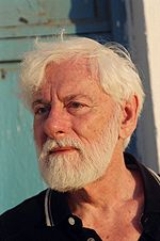
Uri Avnery (also transliterated Uri Avneri, born September 10, 1923 in Beckum, Germany as Helmut Ostermann), is a German-born Israeli journalist, left-wing peace activist, and former Knesset member, who during his teens was a member of the right-wing Revisionist Zionist movement.
ry made aliyah (emigrated to the region that would become the State of Israel) in 1933. He abandoned school after the 7th grade (age 14) in order to work and help his parents starting out as a clerk for a lawyer, a job he held for 5-6 years.
He also joined the Revisionist Zionist paramilitary group, the Irgun, at age 15 and was writing for an inside journal.

Discussion
Ask a question about 'Uri Avnery'
Start a new discussion about 'Uri Avnery'
Answer questions from other users
|
Encyclopedia
Uri Avnery (also transliterated Uri Avneri, born September 10, 1923 in Beckum, Germany as Helmut Ostermann), is a German-born Israeli journalist, left-wing peace activist, and former Knesset member, who during his teens was a member of the right-wing Revisionist Zionist movement.
Biography
Avnery made aliyah (emigrated to the region that would become the State of Israel) in 1933. He abandoned school after the 7th grade (age 14) in order to work and help his parents starting out as a clerk for a lawyer, a job he held for 5-6 years.
He also joined the Revisionist Zionist paramilitary group, the Irgun, at age 15 and was writing for an inside journal. He started writing for outside papers at the age of 17 and left the Irgun at the age of 19 after becoming disenchanted with their tactics, stating in a 2003 interview that "I didn't like the methods of terror applied by the Irgun at the time", noting he did not back killing people in retaliation for similar acts by the Arabs.
In the 1948 Arab-Israeli War Avnery was a fighter in the Samson's Foxes commando unit (and also wrote its anthem). Afterwards, he wrote a book about the war, called In the Fields of Philistia (Bi-Sdot Pleshet).
During the 1950s and the 1960s Avnery was, with Shalom Cohen, co-publisher and editor of the HaOlam HaZeh weekly magazine, an anti-establishment tabloid known for many sensational scoops and for featuring nudes on its back cover. The formula seemed to work, as for many years it was Israel's leading alternative-media publication.
In 1965 Avnery created a political party bearing the name of his and Cohen's magazine, HaOlam HaZeh Koah Hadash, and was elected to the Knesset in the 1965 election. Although he retained his seat in the 1969 election, the party disintegrated and Avnery founded a new party, Meri, though it failed to win any seats in the 1973 elections. He returned to the Knesset as a member of the Left Camp of Israel after the 1977 election, but did not retain his seat in the 1981 election. He was later involved in the Progressive List for Peace.
Avnery famously met Yasser Arafat on July 3, 1982, during the Siege of Beirut said to have been the first time an Israeli met personally with Arafat.
He later turned to left-wing activism and founded the Gush Shalom (Peace Bloc) movement in 1993, which he continues to lead as of 2009. He is a devout secularist and strongly opposed to the Orthodox influence in religious and political life.
Death threats
In 1975, Avnery was seriously injured in a knife attack; the attempted assassin was later officially declared insane.
In 2006, settler activist Baruch Marzel called on the Israeli military to carry out "a targeted killing" against Avnery whilst being interviewed on Channel 10.
Quotes
- "You cant talk to me about terrorism, I was a terrorist."
Recent activities
- Avnery is a contributor to the news and opinion sites CounterPunch, Information Clearing House, LewRockwell.com and The Exception Magazine.
- In 2002, a documentary directed by Yair Lev was made about Avnery's life entitled Uri Avnery: Warrior for Peace.
- In 2001, Avnery and his wife Rachel Avnery were honoured with the Right Livelihood Award, sometimes called the "Alternative Nobel Prize" "
for their unwavering conviction, in the midst of violence, that peace can only be achieved through justice and reconciliation.".
Bibliography (partial list):
- Avnery, Uri (1968): Israel Without Zionists: A Plea for Peace in the Middle East, MacMillan Co., New York, Hardbound (1st Edition in 1968; many reprints)
- Avnery, Uri (1986): My Friend, the Enemy, Zed Books; Paperback. 1986 ISBN 0862322154 Paperback; Lawrence Hill & Co, 1987 ISBN 0882082132 Hard cover; Lawrence Hill Books (1987) ISBN 0882082124
- Avnery, Uri (2008): 1948: A Soldier's Tale - The Bloody Road to Jerusalem, Oneworld Publications; Paperback. 2008 ISBN 978-1-85168-629-2 (English edition of two books originally published in Hebrew in 1949 and '50)
External links
|
| |
|
|