
Uranian astrology is a relatively recent methodological approach to
astrologyAstrology consists of a number of belief systems which hold that there is a relationship between astronomical phenomena and events in the human world...
based on teachings of
GermanGermany , officially the Federal Republic of Germany , is a federal parliamentary republic in Europe. The country consists of 16 states while the capital and largest city is Berlin. Germany covers an area of 357,021 km2 and has a largely temperate seasonal climate...
surveyor/
astrologerAn astrologer practices one or more forms of astrology. Typically an astrologer draws a horoscope for the time of an event, such as a person's birth, and interprets celestial points and their placements at the time of the event to better understand someone, determine the auspiciousness of an...
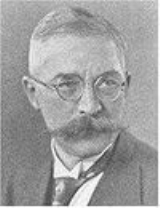
Alfred WitteAlfred Witte was a German surveyor, astrologer, an amateur astronomer, and the founder of the Hamburg School of Astrology...
(1878–1941), founder of the
Hamburg School of AstrologyThe Hamburg School of Astrology originated in Hamburg, Germany, and revolved around the research and teachings of surveyor/astrologer/amateur astronomer Alfred Witte. The term Hamburg School of Astrology originated in 1923 at the Second German Astrological Congress in Leipzig, Germany, where the...
. Witte revived and further developed the use of mathematical
midpointThe midpoint is the middle point of a line segment. It is equidistant from both endpoints.-Formulas:...
s. Prior to 1970, elements of psychological astrology in Uranian astrology were sparse; however psychological astrology is today integrated by many Uranian Astrologers, who believe that other psychological, social, genetic, and free-will variables operate in tandem with astrological indicators, and continue to affect how energies will ultimately manifest.
Uranian astrology is a relatively recent methodological approach to
astrologyAstrology consists of a number of belief systems which hold that there is a relationship between astronomical phenomena and events in the human world...
based on teachings of
GermanGermany , officially the Federal Republic of Germany , is a federal parliamentary republic in Europe. The country consists of 16 states while the capital and largest city is Berlin. Germany covers an area of 357,021 km2 and has a largely temperate seasonal climate...
surveyor/
astrologerAn astrologer practices one or more forms of astrology. Typically an astrologer draws a horoscope for the time of an event, such as a person's birth, and interprets celestial points and their placements at the time of the event to better understand someone, determine the auspiciousness of an...
Alfred WitteAlfred Witte was a German surveyor, astrologer, an amateur astronomer, and the founder of the Hamburg School of Astrology...
(1878–1941), founder of the
Hamburg School of AstrologyThe Hamburg School of Astrology originated in Hamburg, Germany, and revolved around the research and teachings of surveyor/astrologer/amateur astronomer Alfred Witte. The term Hamburg School of Astrology originated in 1923 at the Second German Astrological Congress in Leipzig, Germany, where the...
. Witte revived and further developed the use of mathematical
midpointThe midpoint is the middle point of a line segment. It is equidistant from both endpoints.-Formulas:...
s. Prior to 1970, elements of psychological astrology in Uranian astrology were sparse; however psychological astrology is today integrated by many Uranian Astrologers, who believe that other psychological, social, genetic, and free-will variables operate in tandem with astrological indicators, and continue to affect how energies will ultimately manifest.
Explanation
Along with extensive midpoint analysis, Uranian Astrology incorporates the use of 16th-harmonic angles/astrological aspects, singled out for their correlation with dynamic energy manifestations. These include the conjunction (0°), opposition (180°), square (90°), semi-square (45°), and sesqui-quadrate (135°), as well as all other multiples of 22.5° angles (67.5, 112.5, 157.5). (See the article on the astrological aspects for more information)
Early development
In his early writings in the 1920s, Witte experimented with numerous historical astrology techniques, including the astrological houses, planetary formulae similar to 'Arabic parts', and planetary
rulershipIn astrology, a planet's domicile is the zodiac sign over which it has rulership. This is a separate concept from the houses of the horoscope. A planetary ruler is given to each sign, over which the planet is said to have a more powerful influence when positioned therein...
systems. His approach to astrology was to verify or deny assumptions by means of observation rather than rely blindly on astrological traditions. Witte also proposed the existence of transneptunian planets, which are considered essential to the practice of Uranian astrology. These astrologically derived transneptunian factors have as of 2009 neither been proven nor disproven to be among what astronomers have generically labeled Trans-Neptunian Objects, or Kuiper Belt, Scattered Disk, or Oort Cloud phenomena.
The Transneptunian factors proposed by Witte and Sieggrün are as follows.
Witte’s transneptunian hypothetical planets were, Cupido, Hades, Zeus and Kronos. Later in 1924, fellow Uranian Astrologer, Friedrich Sieggrün, expanded the list of transneptunian hypothetical planets to include Apollon, Admetos, Vulkanus and Poseidon. Witte disagreed with Sieggrün’s additions and endeavored to confirm only the validity of the four transneptunians he originally proposed. However, other Uranian Astrologers adopted and used Sieggrün’s additions to the transneptunian grouping.
Some Uranian Astrologers believe that these might possibly be gravitational centers among asteroidal belts rather than actual planets by definition, but have claimed that their effect on earthly affairs is substantial.
Transneptunian factors posited by Witte and Sieggrün
| Name | | OP | AU | | Source | Earlier data |
| Cupido |
|
262.5 |
41.0 |
|
Witte/Neely |
262.5 estimated by Witte in 1923 |
| Hades |
|
360.6 |
50.7 |
|
Witte/Neely |
360.66 estimated by Witte in 1924 |
| Zeus |
|
455.6 |
59.2 |
|
Witte/Neely |
455.6 estimated by Witte |
| Kronos |
|
521.8 |
64.8 |
|
Witte/Neely |
521.8 estimated by Witte in 1924 |
| Apollon |
|
589.4 |
70.4 |
|
Neely |
earlier estimated at 576 by Sieggrün |
| Admetos |
|
631.7 |
73.7 |
|
Neely |
earlier estimated at 617 by Sieggrün |
| Vulcanus |
|
679.0 |
77.4 |
|
Neely |
earlier estimated at 663 by Sieggrün |
| Poseidon |
|
765.3 |
83.5 |
|
Neely |
earlier estimated at 745 by Sieggrün in 1934 |
OP=Orbital/Revolutionary Period in years, rounded to first decimal.
AU=Distance from Sun in Astronomical Units, rounded to first decimal.
Note that the values established by Witte were proven to be quite accurate by ongoing research since the 1920s, while the values posited by Sieggrün required minor adjustments to correlate with later research results.
World War II
Witte was considered an enemy of the German Third Reich, and committed suicide shortly before he was supposed to have been interned in a
NaziNazism, the common short form name of National Socialism was the ideology and practice of the Nazi Party and of Nazi Germany...
concentration camp, in 1941. During the Third Reich, German
physicianA physician is a health care provider who practices the profession of medicine, which is concerned with promoting, maintaining or restoring human health through the study, diagnosis, and treatment of disease, injury and other physical and mental impairments...
and astrologer Reinhold Ebertin took Witte's core teachings, but rejected the Trans-neptunian factors because of the controversy over them, and renamed his derivative of Uranian astrology "
CosmobiologyHistorically, the term 'Kosmobiologie' was used by the German medical astrologer Friedrich Feerhow and Swiss statistician Karl Krafft in a more general sense "to designate that branch of astrology working on scientific foundations and keyed to the natural sciences"....
". After World War II, Witte's work was resumed primarily by the German astrologer Ludwig Rudolph, who had also been interned by the Nazis. Rudolph continued to develop and refine Witte's methods while resisting the efforts of some colleagues, including Hermann Lefeldt, to re-emphasize traditional astrological methods in order to give his work more popular appeal.
Mid-20th-century developments
Richard Svehla, an Ohio astrologer, was among the first to translate German materials from the early experimental years of the Hamburg School of astrology into English, in the 1930s. Later, Hans Niggemann, a German naval officer and proponent of Hamburg School astrology, who had emigrated to New York, translated more of the earlier German astrological texts from the 1940s and 1950s, primarily those of the traditionalist Lefeldt, and these led to an enthusiasm in New York and Massachusetts for what American astrologers called Uranian Astrology or the "Uranian System" at that time. Ilse Schnitzler, in Germany, assisted Lefeldt in the laborious task (before computers) of alphabetizing the astrologically-significant historical findings of Witte and Sieggrün in a book called Lexikon für Planetenbilder (published in 1957) and Niggemann translated this book and presented it as the Key to Uranian Astrology in the 1960s. Both books were based on the 1946 edition of Witte/Lefeldt's 'Regelwerk'. Among Niggemann's contemporary enthusiasts was Charles Emerson. Roger Jacobson's "Language of Uranian Astrology" reflected quite closely the perspective and methodology presented by Lefeldt in his 1962 German text "Methodik der Astrologischen Häuser und Planetenbilder", along with some original insights by Jacobson. During the 1970s in Germany, a new shift in the Hamburg School of Astrology, from which Uranian Astrology originated, put more emphasis on critical testing rather than parroting or perpetuation of historical methods and teachings, and a new generation of literature appeared, increasingly distinct from the earlier English translations and derivatives dubbed "Uranian System". A renewed drive for continuation of Alfred Witte's emphasis on critical contemporary research via sorting, testing, and further prioritization of techniques was led by
Ruth BrummundRuth Brummund is a German astrologer involved in astrological research. Prior to that she was a chemist.-Life:Brummund was born in Johannisburg , East Prussia...
in Germany. Karl Ambjornson, in San Francisco, produced original writings conveying techniques based on the more recent research in Germany and the United States of that time.
Late 20th-century and 21st-century developments
In the 1970s, German
astrologerAn astrologer practices one or more forms of astrology. Typically an astrologer draws a horoscope for the time of an event, such as a person's birth, and interprets celestial points and their placements at the time of the event to better understand someone, determine the auspiciousness of an...
,
psychologistPsychologist is a professional or academic title used by individuals who are either:* Clinical professionals who work with patients in a variety of therapeutic contexts .* Scientists conducting psychological research or teaching psychology in a college...
, and
chemistA chemist is a scientist trained in the study of chemistry. Chemists study the composition of matter and its properties such as density and acidity. Chemists carefully describe the properties they study in terms of quantities, with detail on the level of molecules and their component atoms...
, Ruth Brummund, a student of Rudolph, began re-formulating a Uranian Astrology methodology based on the more recent research during the time that she was Vice-President of the
Hamburg School of AstrologyThe Hamburg School of Astrology originated in Hamburg, Germany, and revolved around the research and teachings of surveyor/astrologer/amateur astronomer Alfred Witte. The term Hamburg School of Astrology originated in 1923 at the Second German Astrological Congress in Leipzig, Germany, where the...
. Brummund published a new Regelwerk-Neufassung (translated as Revised Rulebook) in 1979, and a substantially expanded second edition in 1990. She also published a new Lexikon-Neufassung, which included the newer findings from Hamburg School research, including psychological correlates, in 1982 -- and this book has been further updated to include the findings since 1982 in electronic format (in both German and English) in a Uranian software program published in France, developed in cooperation with Brummund, and used by her to teach current Uranian methods. As Hamburg School traditionalists regained organizational control and sought to resurrect the teachings of Lefeldt, Brummund went on to form the school of Uranische Astrologie in 1993 to maintain the focus on the more research-proven efficient methods of midpoint analysis, discarding the unproductive experimental techniques used by Lefeldt-Niggemann. Brummund has emphasized the importance of using the term 'transneptunian factors' until such time as their astronomical nature is fully understood, to emphasize the importance of validating their effect in astrological paradigms rather than dismiss them because of questions over their status in traditional astronomical terms.
While the term "Uranian Astrology" has been used by some American astrologers to include the historical teachings disseminated by Lefeldt and Niggemann (propagated primarily on the Atlantic coast of the United States and among émigrés from there), many of the Lefeldt-Niggemann methods are considered to be speculative and functionally obsolete, and no longer a component of Uranian Astrology as defined by Brummund's German School of Uranische Astrologie, which has gained greater popularity on the Pacific coast of the United States and in East Asia, particularly in Thailand, since the 1990s.
One of the main differences between those defining Uranian Astrology differently is historical fundamentalism versus ongoing progressive scientific analysis of methods and comparison of methods for effectiveness. The traditionalists tend to emphasize the immutable truth of historical texts, while the progressives emphasize that newer references tend to be based on more recent research, and are thus more likely to be comprehensive, objective, and based on longer experience. The differences are not unlike those between fundamentalist and progressive scholars or scientists in other fields.
Recent American variants
One highly popular Uranian Astrology variant in the United States was begun by Emma Belle Donath and further developed to a much larger degree by Martha Lang Wescott. This approach integrates extensive use of midpoints involving other astronomically-verified small-body asteroids and centaurs along with transneptunians, and substantial use of techniques from paradigms outside those of the traditions of German Uranian Astrology, including solar and lunar returns (which Jacobson also advocated in earlier years). The work and approach of Wescott places significant, but not exclusive, emphasis on the psychological aspects of astrology and includes numerous factors in chart analysis.