

United Farmers of Ontario

Encyclopedia
The United Farmers of Ontario (UFO) was a political party
in Ontario
, Canada
. It was the Ontario provincial branch of the United Farmers
movement of the early part of the 20th century.
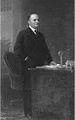 The UFO was founded in 1914 by the union of various farmers' organizations that had been created over the previous fifteen years. James J. Morrison
was the leading figure in the party, serving as its general secretary
and secretary of the United Farmers Co-operative Company Ltd. (the purchasing co-operative the UFO operated on behalf of its members). The organization grew rapidly and by 1917 it had 350 local clubs and 12,000 members. The UFO had a comprehensive farmer's platform that called for the nationalization of railways, progressive tax
ation, and legislation that would facilitate the operation of co-operatives. In 1917, supporters of the UF formed the Farmers' Publishing Company and purchased The Weekly Sun renaming it The Farmer's Sun to act as the organ of the UFO.
The UFO entered politics by contesting and winning a by-election
in Manitoulin in 1918, in which Beniah Bowman
was elected as the party's first Member of the Legislative Assembly
(MLA). In the subsequent 1919 provincial election
, with over 50,000 members, the party sought to hold the balance of power
so it could introduce legislation friendly to farmers. It co-operated with the Independent Labour Party with the two organizations not running candidates against each other - the UFO contested rural ridings and the ILP stood candidates in urban areas. In total there were 64 UFO candidates, 20 ILP candidates and 10 Farmer-Labour candidates in the 1919 provincial election
. The UFO platform called for the abolition of political patronage
, better educational opportunities in rural areas, cheap electric power, conservation of forests, proportional representation
and "direct legislation"
. The UFO also favoured prohibition
and budgetary restraint, two platform planks that were at odds with the views of urban Labour supporters. To the shock of everyone, including itself, when it won 45 seats and formed a coalition government
with the support of Labour MLAs in the Legislative Assembly of Ontario
despite having no leader.
As the United Farmers were initially a single-issue party
, Morrison opposed forming a government, believing that the party should concern itself solely with agricultural issues and that it would not be able to represent the entire province. Furthermore, he viewed the Independent Labour Party as inimical to farmers' interests and opposed a coalition with them to form a majority government
. Morrison was offered the position of UFO caucus leader and Premier of Ontario
following the election but declined as did Sir Adam Beck
; the position instead went Ernest C. Drury.
, with Drury as Premier and two of the ILP MLAs in the cabinet. Morrison remained outside of the legislature and government as the general secretary of the UFO. Morrison opposed a number of the coalition's initiatives, perceiving the UFO's actions as a broad-based Progressive government rather than a "class-based" United Farmer government and believed that the party should not be in government but should hold the balance of power
in order to force the government of the day to pass pro-farmer legislation.
Drury's Farmer-Labour government created the first Department of Welfare for the province and brought in allowances for widows and children, a minimum wage
for women and standarized adoption procedures. His government also expanded Ontario Hydro and promoted rural electification, created the Province of Ontario Savings Office
- a provincially owned bank that was designed to lend money to farmers at a lower rate - began the first major reforestation program in North America, and initiated construction of the modern highway system. The government was also a strict enforcer of temperance
measures. Drury also arranged for a grant for unknown researchers Frederick Banting
and Charles Best who would go on to discover insulin
. The UFO was initially popular growing to 1,500 clubs and 60,000 members by 1920.
The government under Drury tried to be a "people's government" rather than a "class government" and argued for a "broadening out" of the party to include labour and others, but in so doing, alienated the base of the government's support, particularly farmers. The UFO government clashed with the UFO organization (led by James J. Morrison) which ultimately withdrew its support from the government.
The party's base of farmer supporters began to turn away from the party, causing the Drury government to lose the election of 1923
. A mere seventeen United Farmer and four Labour members returned to the legislature, compared to 75 Conservatives. Drury lost his own seat.
 Though the United Farmers of Ontario remained the second largest party in the legislature, they were denied Official Opposition status by Conservative premier Howard Ferguson
. The position was instead given to the Liberals with W.E.N. Sinclair as Leader of the Opposition
, despite the party having three fewer seats than the UFO. Morrison had previously announced that the UFO would be withdrawing from politics, which Ferguson had used as justification for the move. Manning Doherty
, interim leader of the UFO caucus, could do nothing aside from win a ruling from the Speaker that, as leader of a caucus of more than 15 MLAs, he was entitled to an extra salary.
Eighteen months following the general election, William Raney
became leader of what was now referred to as the "Progressive" bloc of MLAs which initially included Farmer and Labour MLAs. Leslie Oke and Beniah Bowman
refused to accept the leadership of Raney, a non-farmer, and also disagreed with the creation of a "Progressive Party" which would include non-farmers - they insisted on continuing to sit as UFO members rather than with the Progressive group with the support of the Farmer's Sun. Bowman resigned from the legislature in 1926 in order to enter federal politics.
The issue which dominated Ontario politics in the late 1920s was the Ferguson
government's proposal to repeal the Ontario Temperance Act
and replace prohibition with government control of liquor. The Liberals, were split on the issue - most of their MLAs were "dry" but some were "wets" who were opposed to prohibition. The Progressives under Raney, however, were adamantly in favour of prohibition and opposed to Ferguson's proposals. This led to an estrangement with Labour MLA Karl Homuth who supported Ferguson's proposals and would eventually join the Conservatives.
The 1926 provincial election
reduced the farmer-labour contingent to thirteen Progressive MLAs and one Labour MLA (Homuth - who had broken with the Progressives and supported the government) while two new UFO MLAs, Thomas Farquhar
and Farquhar Oliver
joined Oke's faction. Several weeks after the election the UFO convention voted to formally cease running its own candidates though a handful of local UFO clubs continued to nominate candidates for some years.
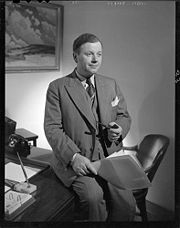 Raney resigned from the legislature the next year in order to accept an appointment to the Supreme Court of Ontario
and 72 year old John Giles Lethbridge
was chosen as the new leader of the Progressives. In the 1929 election
, only five Progressives, one Labour and one UFO MLA won re-election. Lethbridge, like Raney in the previous election, campaigned largely on the issue of prohibition
. After Lethbridge lost his seat in the 1929 election Harry Nixon
, who had served as Provincial Secretary
in Drury's government, became the leader of the remaining Progressives. In the early 1930s, Nixon and the Progressives agreed to an alliance with former UFO activist Mitchell Hepburn
who, in 1930, became leader of the Liberal Party. A group of four Liberal-Progressive
MLAs, led by Nixon, were elected in the 1934 election
, who joined Hepburn to form a government and were ultimately absorbed into the Liberal Party. (see Liberal-Progressives (Ontario) for more information)
In 1932, leading UFO member Agnes Macphail
(originally elected to the Progressive Party
) encouraged the United Farmers of Ontario to affiliate with Co-operative Commonwealth Federation
(CCF) when it was formed. It did so, and MacPhail became the first President of the Ontario CCF in 1932, but the UFO disaffiliated from the CCF in 1934 due to allegations of Communist
influence in the party and, like United Farmers groups in the provinces of western Canada, ultimately decided to withdraw entirely from electoral politics. Many United Farmers joined the CCF as individuals. The UFO's newspaper, the Farmer's Sun was sold to Graham Spry
and Alan Plaunt
and became an organ for the League for Social Reconstruction
.
By the mid 1930s, the UFO had become a lobby group who advocated through sitting UFO politicians such as Macphail and Farquhar Oliver
, who were allowed to continue to run for office under the UFO banner.
In the 1935 federal election
, the UFO's provincial executive voted to endorse the new Reconstruction Party of Canada
formed by H.H. Stevens however many local UFO groups backed the Co-operative Commonwealth Federation
and UFO MP Agnes MacPhail continued to work with the CCF on an informal basis. Other UFOers backed the Liberals. The Reconstruction Party won 11% of the vote in Ontario in the 1935 federal election, more than the CCF, but failed to win a seat in the province and only won 1 seat nationally.
In 1940, Oliver, the last remaining UFO member of the legislature and a supporter of the Hepburn government since 1934, joined the Hepburn cabinet and formally became a Liberal. MacPhail lost her seat as the last United Farmers MP in the House of Commons in the 1940 election
. She turned to provincial politics and won election to the Ontario legislature on behalf of the CCF in the 1943 provincial election
while Oliver became Liberal Party leader in 1945.
In 1944, the UFO joined with other farmers' organizations to dissolve into Ontario Federation of Agriculture
and ceased to exist as a formal organization. In 1948 the United Farmers' Co-operative became the United Co-operatives of Ontario and remains one of the largest farmer-owned co-operatives in Canada.
+Leslie Warner Oke
led a UFO rump of three MLAs from 1926 until 1929.
Political party
A political party is a political organization that typically seeks to influence government policy, usually by nominating their own candidates and trying to seat them in political office. Parties participate in electoral campaigns, educational outreach or protest actions...
in Ontario
Ontario
Ontario is a province of Canada, located in east-central Canada. It is Canada's most populous province and second largest in total area. It is home to the nation's most populous city, Toronto, and the nation's capital, Ottawa....
, Canada
Canada
Canada is a North American country consisting of ten provinces and three territories. Located in the northern part of the continent, it extends from the Atlantic Ocean in the east to the Pacific Ocean in the west, and northward into the Arctic Ocean...
. It was the Ontario provincial branch of the United Farmers
United Farmers of Ontario
The United Farmers of Ontario was a political party in Ontario, Canada. It was the Ontario provincial branch of the United Farmers movement of the early part of the 20th century.- Foundation and rise :...
movement of the early part of the 20th century.
Foundation and rise (1914-1919)
James J. Morrison
James J. Morrison was a farm leader in Ontario, Canada, a founder of the United Farmers of Ontario in 1914, and a leader of the co-operative movement...
was the leading figure in the party, serving as its general secretary
General secretary
-International intergovernmental organizations:-International nongovernmental organizations:-Sports governing bodies:...
and secretary of the United Farmers Co-operative Company Ltd. (the purchasing co-operative the UFO operated on behalf of its members). The organization grew rapidly and by 1917 it had 350 local clubs and 12,000 members. The UFO had a comprehensive farmer's platform that called for the nationalization of railways, progressive tax
Progressive tax
A progressive tax is a tax by which the tax rate increases as the taxable base amount increases. "Progressive" describes a distribution effect on income or expenditure, referring to the way the rate progresses from low to high, where the average tax rate is less than the marginal tax rate...
ation, and legislation that would facilitate the operation of co-operatives. In 1917, supporters of the UF formed the Farmers' Publishing Company and purchased The Weekly Sun renaming it The Farmer's Sun to act as the organ of the UFO.
The UFO entered politics by contesting and winning a by-election
By-election
A by-election is an election held to fill a political office that has become vacant between regularly scheduled elections....
in Manitoulin in 1918, in which Beniah Bowman
Beniah Bowman
Beniah Bowman was an Ontario farmer and political figure. He represented Manitoulin in the Legislative Assembly of Ontario from October 24, 1918 to October 18, 1926 and Algoma East in the Canadian House of Commons from 1926 to 1930 as a United Farmers member.He was born in Waterloo County, Ontario...
was elected as the party's first Member of the Legislative Assembly
Member of the Legislative Assembly
A Member of the Legislative Assembly or a Member of the Legislature , is a representative elected by the voters of a constituency to the legislature or legislative assembly of a sub-national jurisdiction....
(MLA). In the subsequent 1919 provincial election
Ontario general election, 1919
The Ontario general election, 1919 was the 15th general election held in the Province of Ontario, Canada. It was held on October 20, 1919, to elect the 111 Members of the 15th Legislative Assembly of Ontario ....
, with over 50,000 members, the party sought to hold the balance of power
Balance of power (parliament)
In parliamentary politics, the term balance of power sometimes describes the pragmatic mechanism exercised by a minor political party or other grouping whose guaranteed support may enable an otherwise minority government to obtain and hold office...
so it could introduce legislation friendly to farmers. It co-operated with the Independent Labour Party with the two organizations not running candidates against each other - the UFO contested rural ridings and the ILP stood candidates in urban areas. In total there were 64 UFO candidates, 20 ILP candidates and 10 Farmer-Labour candidates in the 1919 provincial election
Ontario general election, 1919
The Ontario general election, 1919 was the 15th general election held in the Province of Ontario, Canada. It was held on October 20, 1919, to elect the 111 Members of the 15th Legislative Assembly of Ontario ....
. The UFO platform called for the abolition of political patronage
Patronage
Patronage is the support, encouragement, privilege, or financial aid that an organization or individual bestows to another. In the history of art, arts patronage refers to the support that kings or popes have provided to musicians, painters, and sculptors...
, better educational opportunities in rural areas, cheap electric power, conservation of forests, proportional representation
Proportional representation
Proportional representation is a concept in voting systems used to elect an assembly or council. PR means that the number of seats won by a party or group of candidates is proportionate to the number of votes received. For example, under a PR voting system if 30% of voters support a particular...
and "direct legislation"
Direct democracy
Direct democracy is a form of government in which people vote on policy initiatives directly, as opposed to a representative democracy in which people vote for representatives who then vote on policy initiatives. Direct democracy is classically termed "pure democracy"...
. The UFO also favoured prohibition
Prohibition
Prohibition of alcohol, often referred to simply as prohibition, is the practice of prohibiting the manufacture, transportation, import, export, sale, and consumption of alcohol and alcoholic beverages. The term can also apply to the periods in the histories of the countries during which the...
and budgetary restraint, two platform planks that were at odds with the views of urban Labour supporters. To the shock of everyone, including itself, when it won 45 seats and formed a coalition government
Coalition government
A coalition government is a cabinet of a parliamentary government in which several political parties cooperate. The usual reason given for this arrangement is that no party on its own can achieve a majority in the parliament...
with the support of Labour MLAs in the Legislative Assembly of Ontario
Legislative Assembly of Ontario
The Legislative Assembly of Ontario , is the legislature of the Canadian province of Ontario, and is the second largest provincial legislature of Canada...
despite having no leader.
As the United Farmers were initially a single-issue party
Single-issue politics
Single-issue politics involves political campaigning or political support based on one essential policy area or idea.-Political expression:...
, Morrison opposed forming a government, believing that the party should concern itself solely with agricultural issues and that it would not be able to represent the entire province. Furthermore, he viewed the Independent Labour Party as inimical to farmers' interests and opposed a coalition with them to form a majority government
Majority government
A majority government is when the governing party has an absolute majority of seats in the legislature or parliament in a parliamentary system. This is as opposed to a minority government, where even the largest party wins only a plurality of seats and thus must constantly bargain for support from...
. Morrison was offered the position of UFO caucus leader and Premier of Ontario
Premier of Ontario
The Premier of Ontario is the first Minister of the Crown for the Canadian province of Ontario. The Premier is appointed as the province's head of government by the Lieutenant Governor of Ontario, and presides over the Executive council, or Cabinet. The Executive Council Act The Premier of Ontario...
following the election but declined as did Sir Adam Beck
Adam Beck
Sir Adam Beck was a politician and hydroelectricity advocate who founded the Hydro-Electric Power Commission of Ontario.-Biography:...
; the position instead went Ernest C. Drury.
Forming the government (1919-1923)
Despite Morrison's objections, the UFO joined with 10 Independent Labour Party MLAs (an 11th ILP MLA, Morrison MacBride, broke with his colleagues and sat in Opposition) and one Independent to form a coalition governmentCoalition government
A coalition government is a cabinet of a parliamentary government in which several political parties cooperate. The usual reason given for this arrangement is that no party on its own can achieve a majority in the parliament...
, with Drury as Premier and two of the ILP MLAs in the cabinet. Morrison remained outside of the legislature and government as the general secretary of the UFO. Morrison opposed a number of the coalition's initiatives, perceiving the UFO's actions as a broad-based Progressive government rather than a "class-based" United Farmer government and believed that the party should not be in government but should hold the balance of power
Balance of power (parliament)
In parliamentary politics, the term balance of power sometimes describes the pragmatic mechanism exercised by a minor political party or other grouping whose guaranteed support may enable an otherwise minority government to obtain and hold office...
in order to force the government of the day to pass pro-farmer legislation.
Drury's Farmer-Labour government created the first Department of Welfare for the province and brought in allowances for widows and children, a minimum wage
Minimum wage
A minimum wage is the lowest hourly, daily or monthly remuneration that employers may legally pay to workers. Equivalently, it is the lowest wage at which workers may sell their labour. Although minimum wage laws are in effect in a great many jurisdictions, there are differences of opinion about...
for women and standarized adoption procedures. His government also expanded Ontario Hydro and promoted rural electification, created the Province of Ontario Savings Office
Province of Ontario Savings Office
The Province of Ontario Savings Office was a government-run banking institution created by the Ontario Government in 1922, and closed in 2003 when its assets were sold to the Desjardins Credit Union.- History :...
- a provincially owned bank that was designed to lend money to farmers at a lower rate - began the first major reforestation program in North America, and initiated construction of the modern highway system. The government was also a strict enforcer of temperance
Temperance movement
A temperance movement is a social movement urging reduced use of alcoholic beverages. Temperance movements may criticize excessive alcohol use, promote complete abstinence , or pressure the government to enact anti-alcohol legislation or complete prohibition of alcohol.-Temperance movement by...
measures. Drury also arranged for a grant for unknown researchers Frederick Banting
Frederick Banting
Sir Frederick Grant Banting, KBE, MC, FRS, FRSC was a Canadian medical scientist, doctor and Nobel laureate noted as one of the main discoverers of insulin....
and Charles Best who would go on to discover insulin
Insulin
Insulin is a hormone central to regulating carbohydrate and fat metabolism in the body. Insulin causes cells in the liver, muscle, and fat tissue to take up glucose from the blood, storing it as glycogen in the liver and muscle....
. The UFO was initially popular growing to 1,500 clubs and 60,000 members by 1920.
The government under Drury tried to be a "people's government" rather than a "class government" and argued for a "broadening out" of the party to include labour and others, but in so doing, alienated the base of the government's support, particularly farmers. The UFO government clashed with the UFO organization (led by James J. Morrison) which ultimately withdrew its support from the government.
The party's base of farmer supporters began to turn away from the party, causing the Drury government to lose the election of 1923
Ontario general election, 1923
The Ontario general election, 1923 was the 16th general election held in the Province of Ontario, Canada. It was held on June 25, 1923, to elect the 111 Members of the 16th Legislative Assembly of Ontario ....
. A mere seventeen United Farmer and four Labour members returned to the legislature, compared to 75 Conservatives. Drury lost his own seat.
Decline (1923-1929)
Howard Ferguson
George Howard Ferguson, PC was a Conservative politician and the ninth Premier of Ontario, Canada, from 1923 to 1930.-Background:He was the son of Charles Frederick Ferguson who served in the Canadian House of Commons...
. The position was instead given to the Liberals with W.E.N. Sinclair as Leader of the Opposition
Leader of the Opposition (Ontario)
The Leader of the Opposition in Ontario is usually leader of the largest party in the Ontario legislature which is not the government. The current official opposition is formed by the Ontario Progressive Conservative Party, and Tim Hudak is the current Leader of the Opposition.Ontario's first...
, despite the party having three fewer seats than the UFO. Morrison had previously announced that the UFO would be withdrawing from politics, which Ferguson had used as justification for the move. Manning Doherty
Manning Doherty
Manning William Doherty was a farmer, businessman and politician serving as Ontario's Minister of Agriculture during the United Farmers of Ontario-Labour government of 1919 to 1923 and as leader of the Progressives in Opposition before leaving provincial politics.Doherty was the descendant of an...
, interim leader of the UFO caucus, could do nothing aside from win a ruling from the Speaker that, as leader of a caucus of more than 15 MLAs, he was entitled to an extra salary.
Eighteen months following the general election, William Raney
William Raney
William Edgar Raney, K.C. was a lawyer, politician and judge in Ontario, Canada, in the early twentieth century.-Background and early career:...
became leader of what was now referred to as the "Progressive" bloc of MLAs which initially included Farmer and Labour MLAs. Leslie Oke and Beniah Bowman
Beniah Bowman
Beniah Bowman was an Ontario farmer and political figure. He represented Manitoulin in the Legislative Assembly of Ontario from October 24, 1918 to October 18, 1926 and Algoma East in the Canadian House of Commons from 1926 to 1930 as a United Farmers member.He was born in Waterloo County, Ontario...
refused to accept the leadership of Raney, a non-farmer, and also disagreed with the creation of a "Progressive Party" which would include non-farmers - they insisted on continuing to sit as UFO members rather than with the Progressive group with the support of the Farmer's Sun. Bowman resigned from the legislature in 1926 in order to enter federal politics.
The issue which dominated Ontario politics in the late 1920s was the Ferguson
Howard Ferguson
George Howard Ferguson, PC was a Conservative politician and the ninth Premier of Ontario, Canada, from 1923 to 1930.-Background:He was the son of Charles Frederick Ferguson who served in the Canadian House of Commons...
government's proposal to repeal the Ontario Temperance Act
Ontario Temperance Act
Ontario Temperance Act was a law passed in Ontario in 1916 to prohibit the sale of alcohol, a period known as Prohibition. This meant the province remained dry in legal terms, but smugglers continued to import alcohol into the province. The cause was the demand of religious elements led by women...
and replace prohibition with government control of liquor. The Liberals, were split on the issue - most of their MLAs were "dry" but some were "wets" who were opposed to prohibition. The Progressives under Raney, however, were adamantly in favour of prohibition and opposed to Ferguson's proposals. This led to an estrangement with Labour MLA Karl Homuth who supported Ferguson's proposals and would eventually join the Conservatives.
The 1926 provincial election
Ontario general election, 1926
The Ontario general election, 1926 was the 17th general election held in the Province of Ontario, Canada. It was held on December 1, 1926, to elect the 112 Members of the 17th Legislative Assembly of Ontario ....
reduced the farmer-labour contingent to thirteen Progressive MLAs and one Labour MLA (Homuth - who had broken with the Progressives and supported the government) while two new UFO MLAs, Thomas Farquhar
Thomas Farquhar
Thomas Farquhar was a Canadian politician.- Life and early work :...
and Farquhar Oliver
Farquhar Oliver
Farquhar Robert Oliver was a politician in Ontario, Canada.Oliver was elected to the Legislative Assembly of Ontario as a United Farmers of Ontario Member of the Legislative Assembly in the 1926 provincial election at the age of 22.Oliver was re-elected as a UFO MLA in the 1929 election and was...
joined Oke's faction. Several weeks after the election the UFO convention voted to formally cease running its own candidates though a handful of local UFO clubs continued to nominate candidates for some years.
End of the movement (1927-1940)
Supreme Court of Ontario
The Supreme Court of Ontario was a superior court of the Canadian province of Ontario. Now defunct, in 1989 the Courts of Justice Amendment Act, 1989 was enacted by the Government to create one large superior trial court for Ontario...
and 72 year old John Giles Lethbridge
John Giles Lethbridge
John Giles Lethbridge was an Ontario farmer and political figure. He represented Middlesex West in the Legislative Assembly of Ontario from 1919 to 1929 as a United Farmers and then Progressive member.-Family background:...
was chosen as the new leader of the Progressives. In the 1929 election
Ontario general election, 1929
The Ontario general election, 1929 was the 18th general election held in the Province of Ontario, Canada. It was held on October 30, 1929, to elect the 112 Members of the 18th Legislative Assembly of Ontario ....
, only five Progressives, one Labour and one UFO MLA won re-election. Lethbridge, like Raney in the previous election, campaigned largely on the issue of prohibition
Prohibition
Prohibition of alcohol, often referred to simply as prohibition, is the practice of prohibiting the manufacture, transportation, import, export, sale, and consumption of alcohol and alcoholic beverages. The term can also apply to the periods in the histories of the countries during which the...
. After Lethbridge lost his seat in the 1929 election Harry Nixon
Harry Nixon
Harry Corwin Nixon was a Canadian politician and briefly the 13th Premier of Ontario.He was born on a farm near St...
, who had served as Provincial Secretary
Provincial Secretary
The Provincial Secretary was a senior position in the executive councils of British North America's colonial governments, and was retained by the Canadian provincial governments for at least a century after Canadian Confederation was proclaimed in 1867...
in Drury's government, became the leader of the remaining Progressives. In the early 1930s, Nixon and the Progressives agreed to an alliance with former UFO activist Mitchell Hepburn
Mitchell Hepburn
Mitchell Frederick Hepburn was the 11th Premier of Ontario, Canada, from 1934 to 1942. He was the youngest Premier in Ontario history, appointed at age 37....
who, in 1930, became leader of the Liberal Party. A group of four Liberal-Progressive
Liberal-Progressive
Liberal-Progressive was a label used by a number of candidates in Canadian elections between 1926 and 1953. In federal and Ontario politics, there was no formal Liberal-Progressive party, but it was an alliance between two separate parties...
MLAs, led by Nixon, were elected in the 1934 election
Ontario general election, 1934
The Ontario general election, 1934 was the 19th general election held in the Province of Ontario, Canada. It was held on June 19, 1934, to elect the 90 Members of the 19th Legislative Assembly of Ontario ....
, who joined Hepburn to form a government and were ultimately absorbed into the Liberal Party. (see Liberal-Progressives (Ontario) for more information)
In 1932, leading UFO member Agnes Macphail
Agnes Macphail
Agnes Campbell Macphail was the first woman to be elected to the Canadian House of Commons, and one of the first two women elected to the Legislative Assembly of Ontario...
(originally elected to the Progressive Party
Progressive Party of Canada
The Progressive Party of Canada was a political party in Canada in the 1920s and 1930s. It was linked with the provincial United Farmers parties in several provinces and, in Manitoba, ran candidates and formed governments as the Progressive Party of Manitoba...
) encouraged the United Farmers of Ontario to affiliate with Co-operative Commonwealth Federation
Co-operative Commonwealth Federation
The Co-operative Commonwealth Federation was a Canadian political party founded in 1932 in Calgary, Alberta, by a number of socialist, farm, co-operative and labour groups, and the League for Social Reconstruction...
(CCF) when it was formed. It did so, and MacPhail became the first President of the Ontario CCF in 1932, but the UFO disaffiliated from the CCF in 1934 due to allegations of Communist
Communism
Communism is a social, political and economic ideology that aims at the establishment of a classless, moneyless, revolutionary and stateless socialist society structured upon common ownership of the means of production...
influence in the party and, like United Farmers groups in the provinces of western Canada, ultimately decided to withdraw entirely from electoral politics. Many United Farmers joined the CCF as individuals. The UFO's newspaper, the Farmer's Sun was sold to Graham Spry
Graham Spry
- Further reading :*Babe, Robert. "Graham Spry" in Canadian Communications Thought: Ten Foundational Writers. Toronto: University of Toronto Press. ISBN 0-8020-7949-0.*McChesney, Robert W. , Canadian Journal of Communication 24....
and Alan Plaunt
Alan Plaunt
Alan Butterworth Plaunt was a Canadian broadcasting pioneer, journalist and activist.The son of a wealthy lumber family, Plaunt attended the University of Toronto and University of Oxford and was a keen observer of the fledgling British Broadcasting Corporation while in Britain becoming a believer...
and became an organ for the League for Social Reconstruction
League for Social Reconstruction
The League for Social Reconstruction was a circle of Canadian socialist intellectuals officially formed in 1932, though it had its beginnings during a camping retreat in 1931. These academics were advocating radical social and economic reforms and political education. Industrialization,...
.
By the mid 1930s, the UFO had become a lobby group who advocated through sitting UFO politicians such as Macphail and Farquhar Oliver
Farquhar Oliver
Farquhar Robert Oliver was a politician in Ontario, Canada.Oliver was elected to the Legislative Assembly of Ontario as a United Farmers of Ontario Member of the Legislative Assembly in the 1926 provincial election at the age of 22.Oliver was re-elected as a UFO MLA in the 1929 election and was...
, who were allowed to continue to run for office under the UFO banner.
In the 1935 federal election
Canadian federal election, 1935
The Canadian federal election of 1935 was held on October 14, 1935 to elect members of the Canadian House of Commons of the 18th Parliament of Canada. The Liberal Party of William Lyon Mackenzie King won a majority government, defeating Prime Minister R.B. Bennett's Conservative Party.The central...
, the UFO's provincial executive voted to endorse the new Reconstruction Party of Canada
Reconstruction Party of Canada
The Reconstruction Party was a Canadian political party founded by Henry Herbert Stevens, a long-time Conservative Member of Parliament . Stevens served as Minister of Trade in the Arthur Meighen government of 1921, and as Minister of Trade and Commerce from 1930 to 1934 in the Depression-era...
formed by H.H. Stevens however many local UFO groups backed the Co-operative Commonwealth Federation
Co-operative Commonwealth Federation
The Co-operative Commonwealth Federation was a Canadian political party founded in 1932 in Calgary, Alberta, by a number of socialist, farm, co-operative and labour groups, and the League for Social Reconstruction...
and UFO MP Agnes MacPhail continued to work with the CCF on an informal basis. Other UFOers backed the Liberals. The Reconstruction Party won 11% of the vote in Ontario in the 1935 federal election, more than the CCF, but failed to win a seat in the province and only won 1 seat nationally.
In 1940, Oliver, the last remaining UFO member of the legislature and a supporter of the Hepburn government since 1934, joined the Hepburn cabinet and formally became a Liberal. MacPhail lost her seat as the last United Farmers MP in the House of Commons in the 1940 election
Canadian federal election, 1940
The Canadian federal election of 1940 was the 19th general election in Canadian history. It was held March 26, 1940 to elect members of the Canadian House of Commons of the 19th Parliament of Canada...
. She turned to provincial politics and won election to the Ontario legislature on behalf of the CCF in the 1943 provincial election
Ontario general election, 1943
The Ontario general election of 1943 was held on August 4, 1943, to elect the 90 Members of the 21st Legislative Assembly of Ontario of the Province of Ontario, Canada....
while Oliver became Liberal Party leader in 1945.
In 1944, the UFO joined with other farmers' organizations to dissolve into Ontario Federation of Agriculture
Ontario Federation of Agriculture
The Ontario Federation of Agriculture is a general farm organization established in 1936 and headquartered in Guelph, Ontario. The OFA comprises 52 county farm organizations from across the province. Bette Jean Crews was acclaimed OFA President at the 2008 Annual General Meeting, held in Toronto,...
and ceased to exist as a formal organization. In 1948 the United Farmers' Co-operative became the United Co-operatives of Ontario and remains one of the largest farmer-owned co-operatives in Canada.
UFO/Progressive leaders
- E.C. Drury, 1919–1924
- Manning DohertyManning DohertyManning William Doherty was a farmer, businessman and politician serving as Ontario's Minister of Agriculture during the United Farmers of Ontario-Labour government of 1919 to 1923 and as leader of the Progressives in Opposition before leaving provincial politics.Doherty was the descendant of an...
, 1924–1925 - William Edgar Raney, 1925-1927+
- John Giles LethbridgeJohn Giles LethbridgeJohn Giles Lethbridge was an Ontario farmer and political figure. He represented Middlesex West in the Legislative Assembly of Ontario from 1919 to 1929 as a United Farmers and then Progressive member.-Family background:...
, 1927–1929 - Harry NixonHarry NixonHarry Corwin Nixon was a Canadian politician and briefly the 13th Premier of Ontario.He was born on a farm near St...
, 1929–1934
+Leslie Warner Oke
Leslie Warner Oke
Leslie Warner Oke was an Ontario farmer and political figure. He represented Lambton East in the Legislative Assembly of Ontario from 1919 to 1929 as a United Farmers member....
led a UFO rump of three MLAs from 1926 until 1929.
See also
- List of United Farmers/Labour MLAs in the Ontario legislature
- James J. Morrison#Collapse of Drury government
- E.C. Drury#Opposition of J.J.Morrison and other controversies
- J O L Spracklin#Prohibition controversies and manslaughter trial
- Progressive PartyProgressive Party of CanadaThe Progressive Party of Canada was a political party in Canada in the 1920s and 1930s. It was linked with the provincial United Farmers parties in several provinces and, in Manitoba, ran candidates and formed governments as the Progressive Party of Manitoba...
- List of Progressive/United Farmer MPs
- Cooperative Commonwealth Federation
- Co-operative Commonwealth Federation (Ontario Section)Co-operative Commonwealth Federation (Ontario Section)The Co-operative Commonwealth Federation – The Farmer-Labor Party of Ontario, or more informally and commonly known as The Ontario CCF, was a democratic socialist political party that existed from 1932 to 1961. It was the provincial wing of the National CCF. The party officially had no leader in...
- Labour Party
- United Farmers (disambiguation)
- United Farmers of AlbertaUnited Farmers of AlbertaThe United Farmers of Alberta is an association of Alberta farmers that has served many different roles throughout its history as a lobby group, a political party, and as a farm-supply retail chain. Since 1934 it has primarily been an agricultural supply cooperative headquartered in Calgary...
- List of Ontario political parties
- List of Ontario general elections