
All Topics  
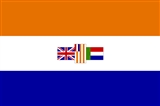
Union of South Africa


   Email Print
   Bookmark   Link


Union of South Africa


The Union of South Africa is the historic predecessor to the present-day state of the Republic of South Africa. It came into being on 31 May 1910, with the previously separate colonies of the Cape
Cape Colony

The Cape Colony, part of modern South Africa, was established by the Dutch East India Company in 1652, with the founding of Cape Town. It was subsequently occupied by the United Kingdom of Great Britain and Ireland in 1795 when the Netherlands were occupied by French Revolution, so that the French revolutionaries could not take possession of...
, Natal
Colony of Natal

The Colony of Natal was a British colony in south-eastern Africa. It was proclaimed a British colony on May 4, 1843 after the British government had annexed the Boer Natalia Republic, and on 31 May1910 combined with three other colonies to form the Union of South Africa....
, Transvaal
Transvaal

File:Flag of Transvaal.svgFile:Transvaal map.pngFile:Spelterini Transvaal.jpgThe Transvaal is the name of an area of northern South Africa....
 and the Orange Free State
Orange Free State

The Republic of the Orange Free State was an independent Boere-Afrikaner republic in southern Africa during the second half of the 19th century, and later a British Orange River Colony and a Provinces of South Africa of the Union of South Africa....
, plus the German South-West Africa
German South-West Africa

German South West Africa was a colony of German Empire from 1884 until 1915, when it was taken over by South Africa and administered as South West Africa, finally becoming Namibia in 1990....
 colony in 1915, becoming Provinces in the Union of South Africa.

It was founded as a dominion
Dominion

A dominion, often Dominion, refers to one of a group of autonomy polity that were nominally under United Kingdom sovereignty, constituting the British Empire and Commonwealth of Nations, from the late 19th century....
, later Commonwealth
Commonwealth of Nations

The Commonwealth of Nations, also known as the Commonwealth or the British Commonwealth, is an intergovernmental organization of fifty-three independent member states....
 realm
Commonwealth Realm

A Commonwealth realm is any one of 16 Sovereignty states within the Commonwealth of Nations that each have Elizabeth II of the United Kingdom as their monarch....
, but became a republic
Republic

A republic is a state or country that is not led by a hereditary monarch but in which the people have an impact on its government. The word originates from the Latin term res publica....
 on 31 May 1961, henceforth known as the Republic of South Africa.

Main features Unlike Canada and Australia, the Union was a unitary state
Unitary state

A unitary state is a country whose three organs of state are governed as one single unit. The political power of government in such states may well be transferred to lower levels, to national, regional or local elected assemblies, governors and mayors , but the central government retains the principal right to recall such delegated power ....
, rather than a federation
Federation

A federation is a Political union comprising a number of partially self-governing states or regions united by a central government. In a federation, the self-governing status of the state is typically constitutionally entrenched and may not be altered by a Unilateralism decision of the central government....
, with each colony's parliaments being abolished and replaced with provincial councils.


Discussion
Ask a question about 'Union of South Africa'
Start a new discussion about 'Union of South Africa'
Answer questions from other users
Full Discussion Forum


Recent Posts


Encyclopedia


South Africa Red Ensign
The Union of South Africa is the historic predecessor to the present-day state of the Republic of South Africa. It came into being on 31 May 1910, with the previously separate colonies of the Cape
Cape Colony

The Cape Colony, part of modern South Africa, was established by the Dutch East India Company in 1652, with the founding of Cape Town. It was subsequently occupied by the United Kingdom of Great Britain and Ireland in 1795 when the Netherlands were occupied by French Revolution, so that the French revolutionaries could not take possession of...
, Natal
Colony of Natal

The Colony of Natal was a British colony in south-eastern Africa. It was proclaimed a British colony on May 4, 1843 after the British government had annexed the Boer Natalia Republic, and on 31 May1910 combined with three other colonies to form the Union of South Africa....
, Transvaal
Transvaal

File:Flag of Transvaal.svgFile:Transvaal map.pngFile:Spelterini Transvaal.jpgThe Transvaal is the name of an area of northern South Africa....
 and the Orange Free State
Orange Free State

The Republic of the Orange Free State was an independent Boere-Afrikaner republic in southern Africa during the second half of the 19th century, and later a British Orange River Colony and a Provinces of South Africa of the Union of South Africa....
, plus the German South-West Africa
German South-West Africa

German South West Africa was a colony of German Empire from 1884 until 1915, when it was taken over by South Africa and administered as South West Africa, finally becoming Namibia in 1990....
 colony in 1915, becoming Provinces in the Union of South Africa.

It was founded as a dominion
Dominion

A dominion, often Dominion, refers to one of a group of autonomy polity that were nominally under United Kingdom sovereignty, constituting the British Empire and Commonwealth of Nations, from the late 19th century....
, later Commonwealth
Commonwealth of Nations

The Commonwealth of Nations, also known as the Commonwealth or the British Commonwealth, is an intergovernmental organization of fifty-three independent member states....
 realm
Commonwealth Realm

A Commonwealth realm is any one of 16 Sovereignty states within the Commonwealth of Nations that each have Elizabeth II of the United Kingdom as their monarch....
, but became a republic
Republic

A republic is a state or country that is not led by a hereditary monarch but in which the people have an impact on its government. The word originates from the Latin term res publica....
 on 31 May 1961, henceforth known as the Republic of South Africa.

Constitution


Main features

Unlike Canada and Australia, the Union was a unitary state
Unitary state

A unitary state is a country whose three organs of state are governed as one single unit. The political power of government in such states may well be transferred to lower levels, to national, regional or local elected assemblies, governors and mayors , but the central government retains the principal right to recall such delegated power ....
, rather than a federation
Federation

A federation is a Political union comprising a number of partially self-governing states or regions united by a central government. In a federation, the self-governing status of the state is typically constitutionally entrenched and may not be altered by a Unilateralism decision of the central government....
, with each colony's parliaments being abolished and replaced with provincial councils. A bicameral parliament
Parliament

A parliament is a legislature, especially in those countries whose system of government is based on the Westminster system modeled after that of the United Kingdom....
 was created, consisting of a House of Assembly
House of Assembly

House of Assembly is a name given to the legislature or lower house of a bicameral legislature, in some countries, often at subnational level....
 and Senate
Senate

A senate is a deliberative assembly, often the upper house or chamber of a legislature or Parliament. There have been many such bodies in history, the first of which was the Roman Senate....
, and its members were elected mostly by the country's white minority. During the course of the Union the franchise changed on several occasions often to suit the needs of the government of the day. Parliamentary Supremacy was entrenched and save for procedural safeguards the courts were unable to intervene in Parliament's decisions or policies.

Capitals

Owing to disagreements over where the Union's capital city
Capital City

Capital City was a television show produced by Euston Films which focused on the lives of investment bankers in London living and working on the corporate trading floor for the fictional international bank Shane-Longman....
 should be, a compromise was reached in which every province would be dealt a share of the benefits of the capital: the administration would be seated in Pretoria
Pretoria

Pretoria is a city located in the northern part of Gauteng Province, South Africa. It is one of the country's three Capital , serving as the Executive and de facto national capital; the others are Cape Town, the legislature capital, and Bloemfontein, the judicial capital....
 (Transvaal), the Seat of Parliament would be in Cape Town
Cape Town

Cape Town is the second most populous city in South Africa, forming part of the metropolitan municipality of the City of Cape Town. It is the provincial Capital of the Western Cape, as well as the legislature capital of South Africa, where the Parliament of South Africa and many government offices are located....
 (Cape Province), the Appellate Division would be in Bloemfontein
Bloemfontein

Bloemfontein The city is situated on dry grassland at , at an altitude of 1,395 metres above sea level. The city is home to 369,568 residents, while the Mangaung Local Municipality has a population of 645,455....
 (Orange Free State), and Pietermaritzburg
Pietermaritzburg

Pietermaritzburg is the capital and second largest city of the province of KwaZulu-Natal in South Africa. It was founded in 1838. Popularly called Maritzburg, and abbreviated PMB, it is home to a campus of the University of KwaZulu-Natal, and is a major producer of aluminium as well as timber and dairy products....
 (Natal) was given financial compensation. This arrangement effectively continues today, as most organs of state with the notable exception of the Constitutional Court, Human Rights Commission (both in Johannesburg), the Supreme Court of Appeal and Judicial Services Commission (both in Bloemfontein) and Parliament (Cape Town), being located in Pretoria. However, the only reference in the current South African Constitution is that Cape Town is the Seat of Parliament.

Relationship to the Crown

The Union initially remained under the British Crown
British monarchy

The Monarchy of the United Kingdom is the constitutional monarchy of the United Kingdom and its British overseas territory.The present monarch, Queen Elizabeth II of the United Kingdom, has reigned since 6 February 1952....
 as self-governing dominion
Dominion

A dominion, often Dominion, refers to one of a group of autonomy polity that were nominally under United Kingdom sovereignty, constituting the British Empire and Commonwealth of Nations, from the late 19th century....
 of the British Empire
British Empire

The British Empire comprised the dominions, Crown colony, protectorates, League of Nations mandate, and other Dependent territory ruled or administered by the United Kingdom , that had originated with the overseas colonies and trading posts established by England in the late 16th and early 17th centuries....
. With the passage of the Statute of Westminster
Statute of Westminster 1931

The Statute of Westminster 1931 is an Act of Parliament of the Parliament of the United Kingdom which established a status of legislative equality between the self-governing dominions of the British Empire and the United Kingdom, with a few residual exceptions....
 in 1931, the Union was considered equal in status to the other Commonwealth Realm
Commonwealth Realm

A Commonwealth realm is any one of 16 Sovereignty states within the Commonwealth of Nations that each have Elizabeth II of the United Kingdom as their monarch....
s, and the United Kingdom could no longer legislate on behalf of South Africa. Thus, a legally separate South African Crown came into being, and the King reigned in the country as King of South Africa
King of South Africa

The King or Queen of South Africa was titular head of state of the Union of South Africa during the state's existence as a Dominion of the British Empire and later a Commonwealth Realm from May 31, 1910 to May 31, 1961, when the country became the Republic of South Africa....
 rather than King of the United Kingdom. The Monarch was represented in South Africa by a Governor-General
Governor-General of the Union of South Africa

The Governor-General of the Union of South Africa was the representative of the Monarchy of the United Kingdom and later King of South Africa in South Africa between May 31,1910 and May 31,1961....
, while effective power was exercised by the Prime Minister
List of Prime Ministers of South Africa

The Prime Minister of South Africa was the head of government in South Africa between 1910 and 1984.The King of South Africa was the head of state, until 1961, when the non-executive State President of South Africa assumed that role, following South Africa's departure from the Commonwealth of Nations, and the establishment of a republic....
 (who was Head of Government
Head of government

The head of government is the chief officer of the executive branch of a government, often presiding over a cabinet . In a parliamentary system, the head of government is often styled Prime Minister, President of the Government, Premier, etc....
). Louis Botha
Louis Botha

Louis Botha was an Afrikaner and first Prime Minister of the Union of South Africa?the forerunner of the modern South African state. He was one of 13 children born to Louis Botha and Salomina Adriana van Rooyen ....
, formerly a Boer
Boer

Boer is the Dutch language word for farmer which came to denote the descendants of the proto Afrikaans-speaking pastoralists of the eastern Cape frontier in Southern Africa during the 18th century as well as those who left the Cape Colony during the 19th century to settle in the Orange Free State, Transvaal and to a lesser extent Natal Pro...
 general, was appointed first Prime Minister of the Union, heading a coalition representing the white Afrikaner
Afrikaner

Afrikaners are Afrikaans-speaking people who have been established in Southern Africa since the 17th century and are mainly of northwestern European ethnic groups descent....
 and English-speaking communities. Prosecutions before courts were instituted in the name of the Crown (cited in the format Rex v Accused) and government officials served in the name of the Crown.

During the course of the Union the Royal Styles of the Monarch were modified, with Elizabeth II being the last reigning Queen of South Africa.

Languages

As an entrenched clause in the Constitution originally, Dutch
Dutch language

Dutch is a West Germanic languages spoken by over 22 million people as a first language, and about 5 million people as a second language."1% of the EU population claims to speak Dutch well enough in order to have a conversation." Outside the European Union the number of second language speakers of Dutch is very small. Most native...
 was an official language
Official language

An official language is a language that is given a special legal status in a particular country, state, or other territory. Typically a nation's official language will be the one used in that nation's courts, parliament and administration....
 alongside English, but it was de facto replaced by Afrikaans
Afrikaans

Afrikaans is an Indo-European language, derived from Dutch language and thus classified as Low Franconian languages West Germanic languages. It is mainly spoken in South Africa and Namibia, with smaller numbers of speakers living in Botswana, Angola, Swaziland, Zimbabwe, Lesotho, Zambia, Australia, New Zealand, United States of America, Taiwa...
 in 1926 whilst officially Dutch and Afrikaans co-existed legally until the 1960s.

Final days of the South Africa Act and legacy

Following a referendum on 5 October 1960, in which whites voted in favour of a republic
Republic

A republic is a state or country that is not led by a hereditary monarch but in which the people have an impact on its government. The word originates from the Latin term res publica....
, the Union became the Republic of South Africa
South Africa

The Republic of South Africa, also known by Official names of South Africa, is a country located at the southern tip of the continent of Africa....
 on 31 May 1961 and left the Commonwealth
Commonwealth of Nations

The Commonwealth of Nations, also known as the Commonwealth or the British Commonwealth, is an intergovernmental organization of fifty-three independent member states....
 in the face of condemnation of its apartheid policies. Subsequently the South African Parliament passed a Constitution that repealed the South Africa Act
South Africa Act 1909

The South Africa Act 1909 was an Act of Parliament of the British Parliament which created the Union of South Africa from the British Colonies of the Cape Colony, Natal, South Africa, Orange River Colony, and the Transvaal....
. The features of the Union were carried over with very little change to the newly formed Republic. The decision to transform from a Union to Republic was narrowly decided in the referendum. The decision together with South Africa's insistence on adhering to its policy of apartheid resulted in South Africa's de facto expulsion from the Commonwealth of Nations (South Africa left the association when it was resolved that she would not be permitted to remain on the terms she wished).

Uniting two races

The framers of the Union had a fairly different conception of race than is presently held by society. Subsequently a fair amount of consideration concerning it occurred. It may be said that the Union was so pre-occupied with uniting the white races (the British and the Boers) into a single race that it enabled the gulf between whites and blacks to enlarge.

Segregation

The South Africa Act
South Africa Act 1909

The South Africa Act 1909 was an Act of Parliament of the British Parliament which created the Union of South Africa from the British Colonies of the Cape Colony, Natal, South Africa, Orange River Colony, and the Transvaal....
 dealt with race in two specific provisions. First it entrenched the vote of the Cape Colony which operated free of racial considerations (although due to socio-economic restrictions no real political expression of non-whites was possible). Second it made "native affairs" a matter for the national government. The practice therefore was to establish a Minister of Native Affairs.

Reasons for unification

At the close of the Anglo Boer War in 1902, the four colonies were for the first time under a common flag, and the most significant obstacle to unification that prevented previous plans at unification was no longer applicable. Subsequently the long-standing desire of many colonial administrators to establish a unified structure became immediately possible. The most notable previous attempt was probably Lord Carnaveron's Federation plans.

South African customs union and trade tariffs

The matter of trade tariffs had been a long-standing source of conflict between the various political units of Southern Africa. Essentially at the heart of the crisis lay the fact that the Transvaal was a landlocked economic hub that resented its dependence on its neighbours, as well as the costs it was incurring through rail and harbour customs.

The Cape Colony was heavily dependent upon customs as a source of tax revenue and subsequently was directly competing with both Natal and Portuguese East Africa (Mozambique). At the time of unification the bulk of cargo destined for the Witwatersrand area entered through Lourenço Marques (now Maputo in Mozambique) owing largely to the relative distance and the ZARs policy of reducing its dependence on the British Empire. The South African Customs Union came into existence in 1906, but various problems existed with the arrangements particularly because the Transvaal was insistent on dominating the Union.

After Unification the South African Customs Union continued to exist including the other British territories (the Protectorates and Rhodesia)

The Union of South Africa and Southern Rhodesia

In 1922 the colony of Southern Rhodesia
Southern Rhodesia

Southern Rhodesia was the name of the British colony situated north of the Limpopo River and the Union of South Africa, and known today as Zimbabwe....
 had a chance (ultimately rejected) to join the Union through a referendum
Southern Rhodesia government referendum, 1922

The Southern Rhodesia government referendum of October 27, 1922 saw the voters of the colony of Southern Rhodesia by a comfortable majority reject the chance to join the Union of South Africa in favour of establishing a responsible government within the colony....
. The referendum resulted from the fact that by 1920 British South Africa Company
British South Africa Company

The British South Africa Company was established by Cecil Rhodes through the amalgamation of the Central Search Association and the Exploring Company Ltd., receiving a Royal Charter in 1889....
 rule in Southern Rhodesia was no longer practical with many favouring some form of 'responsible government'. Some favoured responsible government within Southern Rhodesia while others (especially in Matabeleland) favoured membership in the Union of South Africa.

Prior to the referendum representatives of Southern Rhodesia visited Cape Town where the Prime Minister of South Africa, Jan Smuts
Jan Smuts

Field Marshal Jan Christiaan Smuts, Order of Merit, Companion of Honour, Privy Counsellor, Efficiency Decoration, King's Counsel, Royal Society, Order of the Tower and Sword was a prominent South African and British Commonwealth of Nations statesman, military leader and philosopher....
, eventually offered terms he considered reasonable and which the United Kingdom government found acceptable. Although opinion among the United Kingdom government, the South African government and the British South Africa Company favoured the union option (and none tried to interfere in the referendum), when the referendum was held the results saw 59.4% in favour of responsible government for a separate colony and 40.6% in favour of joining the Union of South Africa.

The Union of South Africa and South-West Africa

Following the outbreak of the First World War in 1914 the Union of South Africa occupied and annexed the German colony of South-West Africa. With the establishment of the League of Nations and cessation of the war, South Africa obtained a Class C Mandate
League of Nations mandate

A League of Nations mandate refers to a legal status for certain territories transferred from the control of one country to another following World War I, or the legal instruments that contained the terms for administering the territory on behalf of the League....
 to administer South-West Africa "under the laws of the mandatory (South Africa) as integral portions of its territory". Subsequently the Union of South Africa generally regarded South-West Africa as a fifth province, although this was never an official status.

With the creation of the United Nations, the Union applied for the incorporation of South-West Africa, but its application was rejected by the U.N., which invited South Africa to prepare a Trusteeship
Trusteeship

Trusteeship may refer to*Trust law *Trusteeship *United Nations Trusteeship...
 agreement instead. This invitation was in turn rejected by the Union, which subsequently did not modify the administration of South-West Africa and continued to adhere to the original mandate. This caused a complex set of legal wranglings that were not finalised when the Union was replaced with the Republic of South Africa. In 1949, the Union passed a law bringing South-West Africa into closer association with it including giving South-West Africa representation in the South African parliament. Ultimately the Republic reneged on its obligations to South-West Africa.

Walvis Bay
Walvis Bay

Walvis Bay , is the name of both a port in Namibia and the bay on which it lies.The bay has been a haven for sea vessels because of its natural deepwater harbour, protected by the Pelican Point sand spit, being the only natural harbour of any size along the country's coast....
, which is now in Namibia
Namibia

Namibia, officially the Republic of Namibia, is a country in southern Africa on the Atlantic Ocean coast. It shares borders with Angola and Zambia to the north, Botswana to the east, and South Africa to the south....
, was originally a part of the Union of South Africa as it was a part of the Cape Colony at the time of Unification (it fell under the magisterial district of Cape Town). In 1921 Walvis Bay was integrated with the Class C Mandate over South-West Africa for the rest of the Union's duration and for part of the Republic era.

The Statute of Westminster

The Statute of Westminster 1931
Statute of Westminster 1931

The Statute of Westminster 1931 is an Act of Parliament of the Parliament of the United Kingdom which established a status of legislative equality between the self-governing dominions of the British Empire and the United Kingdom, with a few residual exceptions....
 passed by the Imperial Parliament in December 1931, which repealed the Colonial Laws Validity Act and implemented the Balfour Declaration 1926, had a profound impact on the constitutional structure and status of the Union. The most notable effect was that the South African Parliament was released from many restrictions concerning the handling of the so called "native question". However the repeal was not sufficient to enable the South African Parliament to ignore the entrenched clauses of its constitution (the South Africa Act
South Africa Act 1909

The South Africa Act 1909 was an Act of Parliament of the British Parliament which created the Union of South Africa from the British Colonies of the Cape Colony, Natal, South Africa, Orange River Colony, and the Transvaal....
) which lead to the constitutional crisis of the 1950s.

Bibliography


  • CJ Muller (ed) 500 Years History of South Africa, H&R Academica 1969
  • L Thompson A History of South Africa, Johnathan Ball Publishers 2006. ISBN 1-86842-236-4
  • L Thompson, The Unification of South Africa 1902 - 1910, Oxford University Press 1960.


See also

  • South Africa Act 1909
    South Africa Act 1909

    The South Africa Act 1909 was an Act of Parliament of the British Parliament which created the Union of South Africa from the British Colonies of the Cape Colony, Natal, South Africa, Orange River Colony, and the Transvaal....
  • Republic of South Africa


External links