

Umbanda

Encyclopedia
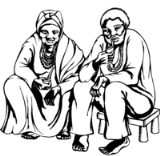
| Umbanda Old Black Women and Men Spirits Images |
Umbanda is an Afro-Brazilian
Afro-Brazilian
In Brazil, the term "preto" is one of the five categories used by the Brazilian Census, along with "branco" , "pardo" , "amarelo" and "indígena"...
religion
Religion
Religion is a collection of cultural systems, belief systems, and worldviews that establishes symbols that relate humanity to spirituality and, sometimes, to moral values. Many religions have narratives, symbols, traditions and sacred histories that are intended to give meaning to life or to...
that blends African religions with Catholicism
Catholicism
Catholicism is a broad term for the body of the Catholic faith, its theologies and doctrines, its liturgical, ethical, spiritual, and behavioral characteristics, as well as a religious people as a whole....
, Spiritism
Spiritism
Spiritism is a loose corpus of religious faiths having in common the general belief in the survival of a spirit after death. In a stricter sense, it is the religion, beliefs and practices of the people affiliated to the International Spiritist Union, based on the works of Allan Kardec and others...
and Kardecism, and considerable indigenous lore.
Umbanda is related to, and has many similarities with, other Afro-Brazilian religions like Candomblé
Candomblé
Candomblé is an African-originated or Afro-Brazilian religion, practised chiefly in Brazil by the "povo de santo" . It originated in the cities of Salvador, the capital of Bahia and Cachoeira, at the time one of the main commercial crossroads for the distribution of products and slave trade to...
and Quimbanda
Quimbanda
Quimbanda is an Afro-Brazilian religion practiced primarily in the urban city centers of Brazil. Quimbanda practices are typically associated with magic, rituals involving animal sacrifice and marginal locations, orishas, exus, and pomba gira spirits. Quimbanda was originally contained under the...
, but has its own identity.
Although some of its beliefs and most of its practices existed in the late 19th century in almost all Brazil, it is assumed that Umbanda originated in Rio de Janeiro
Rio de Janeiro
Rio de Janeiro , commonly referred to simply as Rio, is the capital city of the State of Rio de Janeiro, the second largest city of Brazil, and the third largest metropolitan area and agglomeration in South America, boasting approximately 6.3 million people within the city proper, making it the 6th...
and surrounding areas in the early 20th century, mainly due to the work of a psychic (medium), Zélio Fernandino de Moraes
Zélio Fernandino de Moraes
Zélio Fernandino de Moraes was a Brazilian medium who is considered the founder of the Umbanda Branca sect.He was born on 10 April 1891 in São Gonçalo. At the age of 17, Zélio joined the Brazilian Navy. He was hospitalized with paralysis, but claimed to have been miraculously healed...
, who practiced Umbanda among the poor Afro-Brazilian population. Since then, Umbanda has spread across mainly southern Brazil and even to neighboring countries like Uruguay
Uruguay
Uruguay ,officially the Oriental Republic of Uruguay,sometimes the Eastern Republic of Uruguay; ) is a country in the southeastern part of South America. It is home to some 3.5 million people, of whom 1.8 million live in the capital Montevideo and its metropolitan area...
and Argentina
Argentina
Argentina , officially the Argentine Republic , is the second largest country in South America by land area, after Brazil. It is constituted as a federation of 23 provinces and an autonomous city, Buenos Aires...
.
Umbanda has many branches, each one with a different set of beliefs and practices. Some common beliefs are the existence of a single, supreme creator god represented in the Orixá
Orisha
An Orisha is a spirit or deity that reflects one of the manifestations of Olodumare in the Yoruba spiritual or religious system....
Olorum or Oxala); the existence of natural forces or deities called Orixás
Orisha
An Orisha is a spirit or deity that reflects one of the manifestations of Olodumare in the Yoruba spiritual or religious system....
, some of them synchronistic with Catholic saints that act as divine energy and forces of nature; spirits of deceased people that counsel and guide believers through troubles in the material world; psychics, or mediums, who have a natural ability that can be perfected to bring messages from the spiritual world of Orixás
Orisha
An Orisha is a spirit or deity that reflects one of the manifestations of Olodumare in the Yoruba spiritual or religious system....
and the guiding spirits; reincarnation and spiritual evolution through many material lives (karmic law
Karma
Karma in Indian religions is the concept of "action" or "deed", understood as that which causes the entire cycle of cause and effect originating in ancient India and treated in Hindu, Jain, Buddhist and Sikh philosophies....
) and the practice of charity and social fraternity.
Basic beliefs and practices
The Umbanda creeds and practices are an eclectic mixture from three main sources:- from Catholicism, Umbanda adopted the ideas of Supreme and Only One Creator God, The Gospel scriptures, the cult of saints (associated with the OrixásOrishaAn Orisha is a spirit or deity that reflects one of the manifestations of Olodumare in the Yoruba spiritual or religious system....
and their icons, some feasts and the practice of charity; - Umbanda adopted the creeds in spiritismSpiritismSpiritism is a loose corpus of religious faiths having in common the general belief in the survival of a spirit after death. In a stricter sense, it is the religion, beliefs and practices of the people affiliated to the International Spiritist Union, based on the works of Allan Kardec and others...
as a medium to contact the spirits of deceased people, reincarnation and spiritual evolution through many physical existences, the practice of charity; - from the African-Brazilian religions, specially the Umbanda rituals practiced mostly in Rio de JaneiroRio de JaneiroRio de Janeiro , commonly referred to simply as Rio, is the capital city of the State of Rio de Janeiro, the second largest city of Brazil, and the third largest metropolitan area and agglomeration in South America, boasting approximately 6.3 million people within the city proper, making it the 6th...
, São PauloSão PauloSão Paulo is the largest city in Brazil, the largest city in the southern hemisphere and South America, and the world's seventh largest city by population. The metropolis is anchor to the São Paulo metropolitan area, ranked as the second-most populous metropolitan area in the Americas and among...
and BahiaBahiaBahia is one of the 26 states of Brazil, and is located in the northeastern part of the country on the Atlantic coast. It is the fourth most populous Brazilian state after São Paulo, Minas Gerais and Rio de Janeiro, and the fifth-largest in size...
, the Umbanda adopted the worship of OrixásOrishaAn Orisha is a spirit or deity that reflects one of the manifestations of Olodumare in the Yoruba spiritual or religious system....
, the incantations practices and most of its rituals (songs, dances, foods, beverages, cigar smoking, divination using cowrie shells – "jogo de búzios"). But Umbanda rejected the witchcraft, the colorful costumes and the animal sacrifices allowed in the CandombléCandombléCandomblé is an African-originated or Afro-Brazilian religion, practised chiefly in Brazil by the "povo de santo" . It originated in the cities of Salvador, the capital of Bahia and Cachoeira, at the time one of the main commercial crossroads for the distribution of products and slave trade to...
and Quiumbanda rituals.
Another important source of creeds and practices are those using the wisdom of the Oriental, esoteric and occultism philosophies (e.g., Tarot
Tarot
The tarot |trionfi]] and later as tarocchi, tarock, and others) is a pack of cards , used from the mid-15th century in various parts of Europe to play a group of card games such as Italian tarocchini and French tarot...
cards, David's Star
Star of David
The Star of David, known in Hebrew as the Shield of David or Magen David is a generally recognized symbol of Jewish identity and Judaism.Its shape is that of a hexagram, the compound of two equilateral triangles...
, Johrei – healing using the hands).
The opposite side of the Umbanda, i.e., the practices that intended to cause evil doings, became known as Quimbanda
Quimbanda
Quimbanda is an Afro-Brazilian religion practiced primarily in the urban city centers of Brazil. Quimbanda practices are typically associated with magic, rituals involving animal sacrifice and marginal locations, orishas, exus, and pomba gira spirits. Quimbanda was originally contained under the...
, although most Umbandists consider Candomblé, a religion closer to the African roots, a kind of black witchcraft. Umbanda is juxtaposed with Quimbanda
Quimbanda
Quimbanda is an Afro-Brazilian religion practiced primarily in the urban city centers of Brazil. Quimbanda practices are typically associated with magic, rituals involving animal sacrifice and marginal locations, orishas, exus, and pomba gira spirits. Quimbanda was originally contained under the...
which now reclaims its identity as a separate, more African religion and distinct from both Umbanda and Candomblé
Candomblé
Candomblé is an African-originated or Afro-Brazilian religion, practised chiefly in Brazil by the "povo de santo" . It originated in the cities of Salvador, the capital of Bahia and Cachoeira, at the time one of the main commercial crossroads for the distribution of products and slave trade to...
.
One hundred years after its establishment, Umbanda is divided itself into several branches with different beliefs, creeds and practices. Some of these newer streams, such as Umbanda d'Angola and Umbanda Jejê, have a body of rituals, ceremonies and philosophies that makes them closer to other African-Brazilian religion Candomblé
Candomblé
Candomblé is an African-originated or Afro-Brazilian religion, practised chiefly in Brazil by the "povo de santo" . It originated in the cities of Salvador, the capital of Bahia and Cachoeira, at the time one of the main commercial crossroads for the distribution of products and slave trade to...
. The Umbanda Esotérica is heavily influenced by Oriental, esoteric and occultism philosophies.
Three principal items
The three major beliefs claimed by Umbandists are: The Pantheon, the Spirits' World and the Reincarnation.Pantheon
Umbanda has one supreme being related to the Catholic God known as Olorum (or Zambi) and many divine intermediary deities called OrixásOrisha
An Orisha is a spirit or deity that reflects one of the manifestations of Olodumare in the Yoruba spiritual or religious system....
.
The Orixás
Orisha
An Orisha is a spirit or deity that reflects one of the manifestations of Olodumare in the Yoruba spiritual or religious system....
are further divided into different legions, phalanges, sub-phalanges, guides and protectors. These groups can then be divided up even further into a multitude of spiritual beings.
Orisha
An Orisha is a spirit or deity that reflects one of the manifestations of Olodumare in the Yoruba spiritual or religious system....
- Oxalá
- He is the chief OrixáOrishaAn Orisha is a spirit or deity that reflects one of the manifestations of Olodumare in the Yoruba spiritual or religious system....
who represents the Lord's Light, the Beginning, the Verbum. His celestial is the Sun, his ritual day is Sunday and his sacred color is white.
- He is the chief Orixá
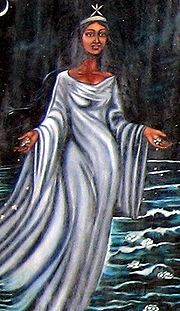
- YemanjáYemajaYemanja is an orisha, originally of the Yoruba religion, who has become prominent in many Afro-American religions. Africans from what is now called Yorubaland brought Yemaya/Yemoja and a host of other deities/energy forces in nature with them when they were brought to the shores of the Americas as...
- She represents the feminine principle of creation. She is linked to the sea (and so considered the patron of fishermen) and to the moonlight. Her celestial body is the ocean, her ritual day is Saturday, and her sacred colors are bright blue and silver.
- XangôShangoIn the Yorùbá religion, Sàngó is perhaps one of the most popular Orisha; also known as the god of fire, lightning and thunder...
- He is the lord of justice and represents the lightning bolt. His ritual day is Wednesday and his sacred colors are red and/or brown. He is evoked when people need justice.
- OxumOshunOshun, or Ochun in the Yoruba religion, is an Orisha who reigns over love, intimacy, beauty, wealth and diplomacy. She is worshipped also in Brazilian Candomblé Ketu, with the name spelled Oxum. She should not be confused, however, with a different Orisha of a similar name spelled "Osun," who is...
- She is the goddess of the rivers, of money, and of love. She is worshipped on Saturday and her sacred color is yellow and navy blue.
- Ogun
- He is a warrior that protects people in the military. He is evoked when someone wants help in a battle. His ritual day is Tuesday, and his sacred colour is blue in CandombléCandombléCandomblé is an African-originated or Afro-Brazilian religion, practised chiefly in Brazil by the "povo de santo" . It originated in the cities of Salvador, the capital of Bahia and Cachoeira, at the time one of the main commercial crossroads for the distribution of products and slave trade to...
and red in Umbanda.
- He is a warrior that protects people in the military. He is evoked when someone wants help in a battle. His ritual day is Tuesday, and his sacred colour is blue in Candomblé
- Oxóssi
- He is a hunter and protector of Nature. His day is Thursday and his sacred color is green.
- IbejiIbejiIbeji is a term in the Yoruba language meaning "twins."- Overview :The Yoruba are a major African ethnic group; in their culture twins are traditionally very important beings. In the Yoruba language "ibeji" literally means "twins". Carved wooden figures made to house the soul of a dead twin are...
- Those are entities often related to children spirits, like the Crianças spirits. Their day is Sunday and their sacred colours are blue and pink.
- Omolu
- He is the Lord of Death and Diseases, the OrixáOrishaAn Orisha is a spirit or deity that reflects one of the manifestations of Olodumare in the Yoruba spiritual or religious system....
that brings health and heals. He is evoked when someone is sick, in order to cure. His ritual day is Monday, and his sacred colours are black and white or yellow and white.
- He is the Lord of Death and Diseases, the Orixá
World of the Spirits
Most followers of Umbanda believe that there are three distinct levels of spirits.- 1. Pure Spirits
- This level includes the angels, archangels, cherubim and seraphim, spirits that reached spiritual perfection. They are equated to the Biblical entities that communicated with the prophets and the Virgin MaryMary (mother of Jesus)Mary , commonly referred to as "Saint Mary", "Mother Mary", the "Virgin Mary", the "Blessed Virgin Mary", or "Mary, Mother of God", was a Jewish woman of Nazareth in Galilee...
.
- This level includes the angels, archangels, cherubim and seraphim, spirits that reached spiritual perfection. They are equated to the Biblical entities that communicated with the prophets and the Virgin Mary
- 2. Good Spirits
- This level includes the spirits that possess mediums (psychics) or initiates during the Umbanda public ceremonies and act as Guias (guides) advising and helping the believers. These are the following spirits:
- Caboclos (Half-breed Native Brazilian Peasants)
- Those are spirits of deceased Native Brazilians or Half-breed Native Brazilinas. They are highly knowledgeable about medical herbs, often prescribing inexpensive remedies to ill people.
- Preto Velho (Old Black Man)
- Those are spirits of old slaves who died in captivity or after being beaten or flogged by their masters. They are wise, peaceful and kind spirits that know all about suffering, compassion, forgiveness and hope. Some of them are considered to be the old Yoruban priests that were first brought to Brazil. They also often prescribe herbal remedies. The female counterpart of this spirit is the Preta Velha ("old black woman") who demonstrates maternal compassion and concern. In the beginning of Umbanda, Preto Velho introduced himself as an old slave who died after being flogged for some unjust accusation; today, Pretos Velhos introduce themselves as old slaves who died in persecution after they run away from the plantation.
- Crianças (Children)
- Those are the spirits of deceased children, generally characterized as being pure and joyful.
- Baianos (People from Bahia State)
- The spirits of people who were learned in Umbanda, also considered as the spirits of deceased ancestors.
- Boiadeiros
- The spirits of deceased cowboys who lived a hard life in the sertão, the arid hinterlands of Northeastern Brazil.
- Marujos or Marinheiros (Sailors)
- Spirits of deceased sailors or fishermen that use the power of the ocean to protect people from evil.
- Exu
- The Umbanda Exu is a phalanx of spirits that are adjusted to Karma following the laws of Jesus Christ. They are confused with demons by the use of tridents, but the Tridents were never Satan's but Poseidon's, and they symbolize the fight against all evil. The offerings are made in the Small Kalunga (cemetery) or at crossroads. The offerings are done only when required by the spirits, never intending to harm anyone.
They never use black magic or ask for animal sacrifice. They protect people while they're on the streets, roads, nightclubs, etc., and also protect them from evil spirits (called obsessing spirits which are spirits that weren't touched by the light yet and use people to feed their bad habits such as addictions to drugs or low emotional states like anger, rage, sadness, guilt, revenge, etc.) and help people opening paths full of learning and success.
Most famous Exus:
Lock-street (the souls of Embaré or the seven crossroads) - Tranca-ruas
Exu Skull - Exu Caveira
Exu Marabô - Exu Marabô
Exu Tiriri - Exu Tiriri
This line is another type of Exu: The Malandragem.
The Phalange Malandragem are spirits of bohemians who do almost everything as Street Exus. But they also teach what to do when dealing with people. They're good at giving advices.
"Malandragem"'s most famous entities:
Zé Pilintra
John Razor (João Navalha)
Mary Razor (Maria Navalha)
The female exus are the Pomba-Giras. Their action field is love but under no circumstances will they perform black magic. Pomba-Giras, like all Exus, undo black magic that exists in Quiumbanda always following Christian laws.
- 3. Darker Spirits
-
- Some Umbanda believers avoid the spirits of this level, considered dark incarnations (obsessing spirits). Sometimes impure spirits can possess some psychics and cause many annoyances in a cult. So, priests and priestesses should know how to treat and send them to the correspondent evolved spiritual city which is connected to the Umbanda house, where they'll be cleaned by higher spirits, tought to find the light and evolve. So, the spirits of the city help during the process as much as the guides of the Umbanda psychics also help. The guides are responsible, in this case, for taking the darker spirits to the spiritual city and rebalancing the psychic.
Reincarnation
The Law of the Reincarnation is the central point of the Karmic Law. It states that God creates spirits with Self Will all the time. The spirits universally pass through many stages of evolution. They have the choice of being good or bad, through ordinary acts and the love that they display towards other people. When they "die", they judge themselves; the good ones advance to a superior stage of spiritual evolution. Those who not succeed should reincarnate in the same or in an inferior level.Umbanda temples, priests and priestesses
Umbanda temples are autonomous organizations that focus around a leader, mediums (psychics who are able to intermediate communications between the physical and the spiritual worlds), initiates (people with psychic abilities who are being taught in the ways of Umbanda) and lay members.During its first years, the Umbanda rituals were performed in poor suburban houses because the followers had no resources, and also to avoid police persecution. Most often, the leader's own house was used as a place for religious meetings. The rituals were performed in the backyard. Sometimes, a tent was pitched to protect the meeting from rain. Today, the Umbanda religious buildings are still called Terreiro (backyard) or Tenda (tent). When the religion flourished, buildings were specially constructed for ritual use.
Tendas or Terreiros usually look like ordinary houses when seen from the street. Some religious artifacts like African styled ceramic vases can be put on the walls or ceilings to give a touch of religious appearance to the house. A wood board with the name of the temple usually is placed over the main entrance. Larger Umbanda houses often are laid out in a fashion similar to a humble Catholic church. Even when the Tenda or Terreiro is specially built to be used in Umbanda rituals, a separated part is used as the home of the leader and his or her family. The areas for residence and rituals are close enough to be considered a single unit.
If a building is not available, rituals are still performed in a private backyard as well.
Generally the Terreiro – the actual room used for rituals – is a large area covered by a simple roof of ceramic singles, with an altar at the back.
Also, the Tendas or Terreiros is used directly or in a support capacity for charitable works to provide child care, medical clinics, assistance to orphanages, and distribution of medicines and/or food.
The Terreiros have as their main leader a priest or priestess called "pai-de-santo
Pai-de-santo
A Pai-de-santo is a male priest in Umbanda, Candomblé and other African-Brazilian religions. In Portuguese those words means father of saint, which is a improper translation from the Yoruba language word "babalorishá", a title given to the African religions priests. Babá means father, and the...
" ("father-of-saint", if he is a male) or "mãe-de-santo
Mãe-de-santo
A Mãe-de-santo is a priestess in Umbanda, Candomblé and other African-Brazilian religions. In Portuguese those words means mother of saint, which is a improper translation from the Yoruba language word "iyalorishá", a title given to priest women in African religions. Iyá means mother, and the...
" ("mother-of-saint", if she is female). The initiates, men or women, are usually called "filhos-de-santo" ("children-of-saint", masculine plural form), to show the structure within the religion. This does not imply sainthood on the part of the priest or priestess, but responsibility for certain rituals related to each saint they serve, (also called Orixás
Orisha
An Orisha is a spirit or deity that reflects one of the manifestations of Olodumare in the Yoruba spiritual or religious system....
), as well as the saints of the filhos-de-santo under his/her responsibility.
Umbanda developed with almost no sexual discrimination. The leader could be male or female, pai-de-santo
Pai-de-santo
A Pai-de-santo is a male priest in Umbanda, Candomblé and other African-Brazilian religions. In Portuguese those words means father of saint, which is a improper translation from the Yoruba language word "babalorishá", a title given to the African religions priests. Babá means father, and the...
or mãe-de-santo
Mãe-de-santo
A Mãe-de-santo is a priestess in Umbanda, Candomblé and other African-Brazilian religions. In Portuguese those words means mother of saint, which is a improper translation from the Yoruba language word "iyalorishá", a title given to priest women in African religions. Iyá means mother, and the...
, and his or her prestige depends only on their psychic powers and the wisdom shown within their pieces of advice. Its main difference when compared to the Catholic Church is that in Umbanda, homossexuals face no prejudice, for Umbanda does not judge his/her believers by sex, race or sexual choice.
Each Umbanda Terreiro practices the same religion with variations, according to the policies of the pai-de-santo
Pai-de-santo
A Pai-de-santo is a male priest in Umbanda, Candomblé and other African-Brazilian religions. In Portuguese those words means father of saint, which is a improper translation from the Yoruba language word "babalorishá", a title given to the African religions priests. Babá means father, and the...
's or the mãe-de-santo
Mãe-de-santo
A Mãe-de-santo is a priestess in Umbanda, Candomblé and other African-Brazilian religions. In Portuguese those words means mother of saint, which is a improper translation from the Yoruba language word "iyalorishá", a title given to priest women in African religions. Iyá means mother, and the...
's spiritual mentor, as well as in accordance with the teachings and philosophies of the various traditions within Umbanda. During these ceremonies, the priests, priestesses, and initiates wear white costumes and pay homage to the spirits and Orixás
Orisha
An Orisha is a spirit or deity that reflects one of the manifestations of Olodumare in the Yoruba spiritual or religious system....
.
Rituals & ceremonies
One hundred years after its establishment, Umbanda is divided into several branches with different rituals and ceremonies. As the Terreiros de Umbanda are loosely united by the Umbanda federations, there is not a strong adherence to a single code of rite, ceremonies and creeds.The Umbanda Branca, the original form created by Zélio de Moraes
Zélio Fernandino de Moraes
Zélio Fernandino de Moraes was a Brazilian medium who is considered the founder of the Umbanda Branca sect.He was born on 10 April 1891 in São Gonçalo. At the age of 17, Zélio joined the Brazilian Navy. He was hospitalized with paralysis, but claimed to have been miraculously healed...
and his group, adopts the worship of Orixás
Orisha
An Orisha is a spirit or deity that reflects one of the manifestations of Olodumare in the Yoruba spiritual or religious system....
and the African incantations practices, but they rejected the black witchcraft, the colorful costumes and the animal sacrifices practiced in the Macumba
Macumba
Macumba is a word of African origins. Various explanations of its meaning include "a musical instrument", the name of a Central African deity, and simply "magic". It was the name used for all Bantu religious practices mainly in Bahia Afro-Brazilian in the 19th Century...
and Quimbanda
Quimbanda
Quimbanda is an Afro-Brazilian religion practiced primarily in the urban city centers of Brazil. Quimbanda practices are typically associated with magic, rituals involving animal sacrifice and marginal locations, orishas, exus, and pomba gira spirits. Quimbanda was originally contained under the...
rituals. The pais-de-santo
Pai-de-santo
A Pai-de-santo is a male priest in Umbanda, Candomblé and other African-Brazilian religions. In Portuguese those words means father of saint, which is a improper translation from the Yoruba language word "babalorishá", a title given to the African religions priests. Babá means father, and the...
s and the mães-de-santo
Mãe-de-santo
A Mãe-de-santo is a priestess in Umbanda, Candomblé and other African-Brazilian religions. In Portuguese those words means mother of saint, which is a improper translation from the Yoruba language word "iyalorishá", a title given to priest women in African religions. Iyá means mother, and the...
always wear white outfits during the ceremonies of the Umbanda Branca. On the other hand, Umbanda d'Angola and Umbanda Jejê are newer sects with a body of rituals, ceremonies and philosophies that equate themselves with other African-Brazilian religions such as Candomblé
Candomblé
Candomblé is an African-originated or Afro-Brazilian religion, practised chiefly in Brazil by the "povo de santo" . It originated in the cities of Salvador, the capital of Bahia and Cachoeira, at the time one of the main commercial crossroads for the distribution of products and slave trade to...
, Jurema and Catimbó. Another recent branch, called Umbanda Esotérica, is heavily influenced by Eastern philosophies. The older Terreiros de Umbanda, those established before 1940, have not integrated these new trends and still practice the original rites and ceremonies in a simpler way, specially dedicating themselves to charity works, as preached by Zélio de Moraes
Zélio Fernandino de Moraes
Zélio Fernandino de Moraes was a Brazilian medium who is considered the founder of the Umbanda Branca sect.He was born on 10 April 1891 in São Gonçalo. At the age of 17, Zélio joined the Brazilian Navy. He was hospitalized with paralysis, but claimed to have been miraculously healed...
and his group.
Umbanda ceremonies are generally open to the public and may take place several times a week. Atabaque (Conga drums) and chanting play a central role in some Umbanda congregations, but are almost non-existent in others. The ceremonies may include offers to the spirits comprising fruits, wine, farofa
Farofa
Farofa is a toasted manioc flour mixture, though variants are made with maize flour , and flavors can vary. It is eaten in South America and West Africa, especially in Brazil and Nigeria, where a variant is known as gari. It can be found commercially produced and packaged but is often prepared at...
, cachaça
Cachaça
Cachaça is a liquor made from fermented sugarcane.It is the most popular distilled alcoholic beverage in Brazil. It is also known as aguardente, pinga, caninha and many other names...
, popcorn
Popcorn
Popcorn, or popping corn, is corn which expands from the kernel and puffs up when heated. Corn is able to pop because, like sorghum, quinoa and millet, its kernels have a hard moisture-sealed hull and a dense starchy interior. This allows pressure to build inside the kernel until an explosive...
, cigarette
Cigarette
A cigarette is a small roll of finely cut tobacco leaves wrapped in a cylinder of thin paper for smoking. The cigarette is ignited at one end and allowed to smoulder; its smoke is inhaled from the other end, which is held in or to the mouth and in some cases a cigarette holder may be used as well...
s, hard cider and other types of food or beverages. Each Orixá or spirit receives a proper offering, and initiation rites that range from the simple to complex.
During the ceremonies the priests and priestesses (pai-de-santo
Pai-de-santo
A Pai-de-santo is a male priest in Umbanda, Candomblé and other African-Brazilian religions. In Portuguese those words means father of saint, which is a improper translation from the Yoruba language word "babalorishá", a title given to the African religions priests. Babá means father, and the...
, mãe-de-santo
Mãe-de-santo
A Mãe-de-santo is a priestess in Umbanda, Candomblé and other African-Brazilian religions. In Portuguese those words means mother of saint, which is a improper translation from the Yoruba language word "iyalorishá", a title given to priest women in African religions. Iyá means mother, and the...
, filhos-de-santo, initiates) and the public attending the meeting sing together, dance, drink beverages and smoke cigars under the spirit's influence. However, the use of such elements by these spirits aren't due to any addictions - they are used as sacred elements that help the spirits to nulify any negative energies surrounding the assisted person. The priests and priestesses are separated from the attending public, usually by a small fence. The priests, priestesses and some of the public gradually get immersed in the singing and dancing, and suddenly get possessed by deities and spirits, starting to act and speak with their personas. Those in the public attending who become possessed are recognized as owners of special psychic power and, usually, after the ceremony, are invited to become initiates in the Terreiro. Sometimes, an experienced pai-de-santo
Pai-de-santo
A Pai-de-santo is a male priest in Umbanda, Candomblé and other African-Brazilian religions. In Portuguese those words means father of saint, which is a improper translation from the Yoruba language word "babalorishá", a title given to the African religions priests. Babá means father, and the...
or mãe-de-santo
Mãe-de-santo
A Mãe-de-santo is a priestess in Umbanda, Candomblé and other African-Brazilian religions. In Portuguese those words means mother of saint, which is a improper translation from the Yoruba language word "iyalorishá", a title given to priest women in African religions. Iyá means mother, and the...
can dance and sing all night without, for mysterious reasons, being possessed by deities or spirits.
Intervention by spiritual beings in followers' daily lives is a central belief, so participation in Umbanda rites is important to appease deities and spirits.
Music and dancing are always present in the Umbanda rituals. The public sing together the "pontos", religious songs intended to improve the psychics' concentration level. These songs often are taught by the spirits themselves, and their lyrics tell about charity, faith, and the Orixás' deeds. A "ponto" example is translated below:
-
- Ponto de Mamãe OxumOshunOshun, or Ochun in the Yoruba religion, is an Orisha who reigns over love, intimacy, beauty, wealth and diplomacy. She is worshipped also in Brazilian Candomblé Ketu, with the name spelled Oxum. She should not be confused, however, with a different Orisha of a similar name spelled "Osun," who is...
(Umbanda Song of Mommy OxumOshunOshun, or Ochun in the Yoruba religion, is an Orisha who reigns over love, intimacy, beauty, wealth and diplomacy. She is worshipped also in Brazilian Candomblé Ketu, with the name spelled Oxum. She should not be confused, however, with a different Orisha of a similar name spelled "Osun," who is...
)
- Ponto de Mamãe Oxum
-
- Water streams like crystal
- Through Father Olorum's feet
- Father Olorum created Nature
- And made the Waterfalls
- Which XangôShangoIn the Yorùbá religion, Sàngó is perhaps one of the most popular Orisha; also known as the god of fire, lightning and thunder...
blessed - I am going to ask the permission of OxaláObatalaIn the religion of the Yoruba people, Obàtálá is the creator of human bodies, which were supposedly brought to life by Olorun's breath.Obàtálá is also the owner of all ori or heads. Any orisha may lay claim to an individual, but until that individual is initiated into the priesthood of that orisha,...
- To bath in the waterfall
- To clean all evil
Historical background
In the late-19th century, many Brazilian scholars criticized the African-Brazilian religions, claiming they were primitive and hindered modernization. At the same time, the Allan KardecAllan Kardec
Allan Kardec is the pen name of the French teacher and educator Hippolyte Léon Denizard Rivail . He is known today as the systematizer of Spiritism for which he laid the foundation with the five books of the Spiritist Codification.-Early life:Rivail was born in Lyon in 1804...
's Spiritism
Spiritism
Spiritism is a loose corpus of religious faiths having in common the general belief in the survival of a spirit after death. In a stricter sense, it is the religion, beliefs and practices of the people affiliated to the International Spiritist Union, based on the works of Allan Kardec and others...
, a development of spiritualism
Spiritualism
Spiritualism is a belief system or religion, postulating the belief that spirits of the dead residing in the spirit world have both the ability and the inclination to communicate with the living...
creeds, was increasingly accepted by the Brazilian urban middle-class with followers since 1865. The kardecists – followers of the Spiritism
Spiritism
Spiritism is a loose corpus of religious faiths having in common the general belief in the survival of a spirit after death. In a stricter sense, it is the religion, beliefs and practices of the people affiliated to the International Spiritist Union, based on the works of Allan Kardec and others...
– were mainly middle class and white people, many of them belonging to military and professional careers. They were deeply influenced by Auguste Comte
Auguste Comte
Isidore Auguste Marie François Xavier Comte , better known as Auguste Comte , was a French philosopher, a founder of the discipline of sociology and of the doctrine of positivism...
's philosophy, the Positivism
Positivism
Positivism is a a view of scientific methods and a philosophical approach, theory, or system based on the view that, in the social as well as natural sciences, sensory experiences and their logical and mathematical treatment are together the exclusive source of all worthwhile information....
, that aimed to join religion and science and to help the development of society to a higher level.
Beginning
On November 15, 1908, a group of kardecists met to a séance in the neighborhood of Neves, São GonçaloSão Gonçalo, Rio de Janeiro
São Gonçalo is a municipality located in the Brazilian state of Rio de Janeiro. It is located at 22 ° 49'37 "south latitude and 43 º 03'14" west longitude at an altitude of 19 meters. Its population in 2008 is 982,832 inhabitants, being the second most populous city in the state after the capital...
city, near the Federal Capital, Rio de Janeiro
Rio de Janeiro
Rio de Janeiro , commonly referred to simply as Rio, is the capital city of the State of Rio de Janeiro, the second largest city of Brazil, and the third largest metropolitan area and agglomeration in South America, boasting approximately 6.3 million people within the city proper, making it the 6th...
. Among them was Zélio Fernandino de Moraes
Zélio Fernandino de Moraes
Zélio Fernandino de Moraes was a Brazilian medium who is considered the founder of the Umbanda Branca sect.He was born on 10 April 1891 in São Gonçalo. At the age of 17, Zélio joined the Brazilian Navy. He was hospitalized with paralysis, but claimed to have been miraculously healed...
, a 17 years old boy who was studying to join the Navy School and became a Naval Officer. During the séance, Zélio de Moraes
Zélio Fernandino de Moraes
Zélio Fernandino de Moraes was a Brazilian medium who is considered the founder of the Umbanda Branca sect.He was born on 10 April 1891 in São Gonçalo. At the age of 17, Zélio joined the Brazilian Navy. He was hospitalized with paralysis, but claimed to have been miraculously healed...
incorporated a spirit who identified himself as the Caboclo das Sete Encruzilhadas (Half-Indian Peasant of the Seven Crossroads). After that, Zélio de Moraes
Zélio Fernandino de Moraes
Zélio Fernandino de Moraes was a Brazilian medium who is considered the founder of the Umbanda Branca sect.He was born on 10 April 1891 in São Gonçalo. At the age of 17, Zélio joined the Brazilian Navy. He was hospitalized with paralysis, but claimed to have been miraculously healed...
incorporated another spirit who identified himself as Pai Antônio (Father Anthony), a wise and old slave that had died after being savagely flogged by his master (a character similar to the Uncle Tom from Harriet Beecher Stowe
Harriet Beecher Stowe
Harriet Beecher Stowe was an American abolitionist and author. Her novel Uncle Tom's Cabin was a depiction of life for African-Americans under slavery; it reached millions as a novel and play, and became influential in the United States and United Kingdom...
's novel). Although the spirits of Indians and Afro-Brazilians were incorporated by the shamans in the various forms of Macumba
Macumba
Macumba is a word of African origins. Various explanations of its meaning include "a musical instrument", the name of a Central African deity, and simply "magic". It was the name used for all Bantu religious practices mainly in Bahia Afro-Brazilian in the 19th Century...
creeds practiced around Rio de Janeiro
Rio de Janeiro
Rio de Janeiro , commonly referred to simply as Rio, is the capital city of the State of Rio de Janeiro, the second largest city of Brazil, and the third largest metropolitan area and agglomeration in South America, boasting approximately 6.3 million people within the city proper, making it the 6th...
city in the 19th century, the kardecists considered them inferior or undeveloped spirits.
There are many, diverse and contradictory depositions of the events of that day, but most of the séance attendants were deeply outraged by the incorporation of underdeveloped spirits that could not provide useful or good advices.
Some depositions told that the incorporated spirits, the half-Indian Caboclo das Setes Encruzilhadas and the old black man Pai Antônio defied the kardecists asking them: "Why do you believe that a humble person can not be a soul that evolved to a superior plane during his physical life?.
According to one of the depositions, the spirit of the caboclo prophesied: "If you criticize the black and Indian (caboclo) spirits as underdeveloped, I should say that tomorrow I will be in the house of this instrument (the psychic Zélio de Moraes
Zélio Fernandino de Moraes
Zélio Fernandino de Moraes was a Brazilian medium who is considered the founder of the Umbanda Branca sect.He was born on 10 April 1891 in São Gonçalo. At the age of 17, Zélio joined the Brazilian Navy. He was hospitalized with paralysis, but claimed to have been miraculously healed...
) to start a new cult where this black and Indian people could release their messages and, so, fulfill the mission that the spiritual plane has entrust them."
In 1970 Zélio de Moraes
Zélio Fernandino de Moraes
Zélio Fernandino de Moraes was a Brazilian medium who is considered the founder of the Umbanda Branca sect.He was born on 10 April 1891 in São Gonçalo. At the age of 17, Zélio joined the Brazilian Navy. He was hospitalized with paralysis, but claimed to have been miraculously healed...
told his own version of the events to Ronaldo Linares, today chairman of the Federação Umbandista do Grande ABC (Umbandist Federation of the ABC Region, near São Paulo
São Paulo
São Paulo is the largest city in Brazil, the largest city in the southern hemisphere and South America, and the world's seventh largest city by population. The metropolis is anchor to the São Paulo metropolitan area, ranked as the second-most populous metropolitan area in the Americas and among...
city). He told that the spirit introduced himself as a Brazilian caboclo (half-Indian peasant) and was contested in the séance by a kardecist psychic who said that he could see "the remains of a priest garments over him". The caboclo then explained: "You are seeing the remains of a previous existence. I was a priest, my name was Gabriel Malagrida, I was charged of witchcraft and sacrificed in the Inquisition bonfire for having prophesied the earthquake that destroyed Lisbon in 1755. But, in my last physical existence, God allowed the privilege of being born as a Brazilian Indian". When asked about his name, the spirit answered: "If a name is necessary, call me the Caboclo das Sete Encruzilhadas (Half-Indian Peasant of the Seven Crossroads), because for me there will be no closed path. I come bringing the Umbanda, a religion that will harmonize the families and will last until the End of the Centuries."
Due to these events, in the 1970s, November 15 was chosen as the day of Umbanda inauguration.
First years and the development
The first Terreiro de Umbanda was founded by Zélio de MoraesZélio Fernandino de Moraes
Zélio Fernandino de Moraes was a Brazilian medium who is considered the founder of the Umbanda Branca sect.He was born on 10 April 1891 in São Gonçalo. At the age of 17, Zélio joined the Brazilian Navy. He was hospitalized with paralysis, but claimed to have been miraculously healed...
in an uncertain date of the 1920s and named Centro Espírita Nossa Senhora da Piedade (Spiritism
Spiritism
Spiritism is a loose corpus of religious faiths having in common the general belief in the survival of a spirit after death. In a stricter sense, it is the religion, beliefs and practices of the people affiliated to the International Spiritist Union, based on the works of Allan Kardec and others...
Center of Our Lady of Sorrows
Our Lady of Sorrows
Our Lady of Sorrows , the Sorrowful Mother or Mother of Sorrows , and Our Lady of the Seven Sorrows or Our Lady of the Seven Dolours are names by which the Blessed Virgin Mary is referred to in relation to sorrows in her life...
). In 1940 Zélio de Moraes
Zélio Fernandino de Moraes
Zélio Fernandino de Moraes was a Brazilian medium who is considered the founder of the Umbanda Branca sect.He was born on 10 April 1891 in São Gonçalo. At the age of 17, Zélio joined the Brazilian Navy. He was hospitalized with paralysis, but claimed to have been miraculously healed...
made a statute for this first Terreiro that was used as reference by the most of Terreiros that followed.
The Umbanda religion started in a time when the Brazilian society was passing through a strong transformation process. The predominance of the agriculture in Brazilian economy was decreasing and the first steps of a late industrial revolution was expanding the working class.
The American anthropologist Diana Brown, that pioneered the studies of Umbanda in the 1960s, verified that the Umbanda founders were most middle class people, unsatisfied with the kardecist Spiritism
Spiritism
Spiritism is a loose corpus of religious faiths having in common the general belief in the survival of a spirit after death. In a stricter sense, it is the religion, beliefs and practices of the people affiliated to the International Spiritist Union, based on the works of Allan Kardec and others...
that they previously followed and were occasional attendants of the Centros de Macumba (Macumba worships places) in the favelas (slums). The first Umbanda followers preferred the African and Native Brazilian spirits and gods worshipped in the Macumba rather than the highly evolved spirits of Spiritism
Spiritism
Spiritism is a loose corpus of religious faiths having in common the general belief in the survival of a spirit after death. In a stricter sense, it is the religion, beliefs and practices of the people affiliated to the International Spiritist Union, based on the works of Allan Kardec and others...
considering them more able to heal and treat a broader spectrum of diseases and life problems.
The first Umbanda followers felt that the Macumba
Macumba
Macumba is a word of African origins. Various explanations of its meaning include "a musical instrument", the name of a Central African deity, and simply "magic". It was the name used for all Bantu religious practices mainly in Bahia Afro-Brazilian in the 19th Century...
rituals were more stimulating and dramatic than the Spiritism
Spiritism
Spiritism is a loose corpus of religious faiths having in common the general belief in the survival of a spirit after death. In a stricter sense, it is the religion, beliefs and practices of the people affiliated to the International Spiritist Union, based on the works of Allan Kardec and others...
séances, but they rejected the animal sacrifices and the incorporation of what they considered devilish spirits, oftentimes called Kiumbas or Obsessing Spirits.
Umbanda was born with an inner contraction. The first driving force intend to differentiate its practices from the presumed primitive African-Brazilian religions that they considered black witchcraft. The opposite driving force was the psychics incorporation of true Brazilian characters that honoured the Native Brazilians, the black slaves and their descendants.
The first effort was made to "purify" the new-born religion taking out some of the African influence from the Umbanda. This kardecist Spiritism
Spiritism
Spiritism is a loose corpus of religious faiths having in common the general belief in the survival of a spirit after death. In a stricter sense, it is the religion, beliefs and practices of the people affiliated to the International Spiritist Union, based on the works of Allan Kardec and others...
side of Umbanda is called Umbanda Branca (White Umbanda). The name does not refer to white people, but white witchcraft, opposing the Umbanda cult to the Quimbanda
Quimbanda
Quimbanda is an Afro-Brazilian religion practiced primarily in the urban city centers of Brazil. Quimbanda practices are typically associated with magic, rituals involving animal sacrifice and marginal locations, orishas, exus, and pomba gira spirits. Quimbanda was originally contained under the...
(black witchcraft) of traditional African rites (Macumba
Macumba
Macumba is a word of African origins. Various explanations of its meaning include "a musical instrument", the name of a Central African deity, and simply "magic". It was the name used for all Bantu religious practices mainly in Bahia Afro-Brazilian in the 19th Century...
).
According to the anthropologist Diana Brown, Zélio de Moraes
Zélio Fernandino de Moraes
Zélio Fernandino de Moraes was a Brazilian medium who is considered the founder of the Umbanda Branca sect.He was born on 10 April 1891 in São Gonçalo. At the age of 17, Zélio joined the Brazilian Navy. He was hospitalized with paralysis, but claimed to have been miraculously healed...
had just a symbolic participation in the creation of the Umbanda, acting like the speaker of a group that previously participated in Macumba
Macumba
Macumba is a word of African origins. Various explanations of its meaning include "a musical instrument", the name of a Central African deity, and simply "magic". It was the name used for all Bantu religious practices mainly in Bahia Afro-Brazilian in the 19th Century...
cults. A collective effort was made by Zélio de Moraes
Zélio Fernandino de Moraes
Zélio Fernandino de Moraes was a Brazilian medium who is considered the founder of the Umbanda Branca sect.He was born on 10 April 1891 in São Gonçalo. At the age of 17, Zélio joined the Brazilian Navy. He was hospitalized with paralysis, but claimed to have been miraculously healed...
and his group to promote the Umbanda Branca, developing practices acceptable by the white middle class and modernizing the African-Brazilian religions. Zélio de Moraes
Zélio Fernandino de Moraes
Zélio Fernandino de Moraes was a Brazilian medium who is considered the founder of the Umbanda Branca sect.He was born on 10 April 1891 in São Gonçalo. At the age of 17, Zélio joined the Brazilian Navy. He was hospitalized with paralysis, but claimed to have been miraculously healed...
believed that he had made a rupture with the kardecist Spiritism
Spiritism
Spiritism is a loose corpus of religious faiths having in common the general belief in the survival of a spirit after death. In a stricter sense, it is the religion, beliefs and practices of the people affiliated to the International Spiritist Union, based on the works of Allan Kardec and others...
, but he only expressed the eclectic mixture that developed before and after the appearance of the Caboclo das Sete Encruzilhadas.
The Umbanda's initial defy was to incorporate the African influences and simultaneously to be different from its African origins. The Centro Espírita Nossa Senhora da Piedade, the first Umbanda's Terreiro keeps in its name the kardecist Spiritism
Spiritism
Spiritism is a loose corpus of religious faiths having in common the general belief in the survival of a spirit after death. In a stricter sense, it is the religion, beliefs and practices of the people affiliated to the International Spiritist Union, based on the works of Allan Kardec and others...
reference (Centro Espírita – Spiritism
Spiritism
Spiritism is a loose corpus of religious faiths having in common the general belief in the survival of a spirit after death. In a stricter sense, it is the religion, beliefs and practices of the people affiliated to the International Spiritist Union, based on the works of Allan Kardec and others...
Center) and also honor a Catholic saint (Nossa Senhora da Piedade – Our Lady of Sorrows).
The first followers desperately needed to distinguish themselves from the Macumba
Macumba
Macumba is a word of African origins. Various explanations of its meaning include "a musical instrument", the name of a Central African deity, and simply "magic". It was the name used for all Bantu religious practices mainly in Bahia Afro-Brazilian in the 19th Century...
and other African-Brazilian
Afro-Brazilian
In Brazil, the term "preto" is one of the five categories used by the Brazilian Census, along with "branco" , "pardo" , "amarelo" and "indígena"...
religions followers, for until the second half of the 20th century, all these faithful were considered criminals by the Brazilian government and periodically repressed. Despite the religious freedom assured by the first Brazilian Republican Constitution in 1891, the Criminal Law of 1890 forbade the "practice of Spiritism
Spiritism
Spiritism is a loose corpus of religious faiths having in common the general belief in the survival of a spirit after death. In a stricter sense, it is the religion, beliefs and practices of the people affiliated to the International Spiritist Union, based on the works of Allan Kardec and others...
, witchcraft and its sortileges). The Criminal Law of 1942 still condemned the "sorcerers", but not all, only those accused of using his or hers powers to evil doings. The anthropologist Yvonne Maggie says that, repressing the witchcraft, the Criminal Law demonstrates that the elite governing Brazil somehow believed in the supernatural power of the sorcerers. Note that Brazilian legislators were not aware of witchcraft like that practiced in Europe, but only aimed to repress the African-Brazilian religions like Macumba
Macumba
Macumba is a word of African origins. Various explanations of its meaning include "a musical instrument", the name of a Central African deity, and simply "magic". It was the name used for all Bantu religious practices mainly in Bahia Afro-Brazilian in the 19th Century...
and Candomblé
Candomblé
Candomblé is an African-originated or Afro-Brazilian religion, practised chiefly in Brazil by the "povo de santo" . It originated in the cities of Salvador, the capital of Bahia and Cachoeira, at the time one of the main commercial crossroads for the distribution of products and slave trade to...
that they equated to sorcery.
Expansion during Vargas Dictatorship
The first stage of the Umbanda expansion coincides with the social and political changes that occurred in the 1930s and with the nationalist and populist dictatorship of Getúlio VargasGetúlio Vargas
Getúlio Dornelles Vargas served as President of Brazil, first as dictator, from 1930 to 1945, and in a democratically elected term from 1951 until his suicide in 1954. Vargas led Brazil for 18 years, the most for any President, and second in Brazilian history to Emperor Pedro II...
(1930 to 1945). According to the anthropologist Diana Brown, Umbanda chose symbols like the caboclos (half-Indian Peasants) and pretos-velhos (old black men) influenced by the intense nationalism of Getúlio Vargas
Getúlio Vargas
Getúlio Dornelles Vargas served as President of Brazil, first as dictator, from 1930 to 1945, and in a democratically elected term from 1951 until his suicide in 1954. Vargas led Brazil for 18 years, the most for any President, and second in Brazilian history to Emperor Pedro II...
regime and its efforts to create a national culture that unified the Brazilian people.
The esteem of Brazilian natives and slaves generate the idea that the Umbanda is the only genuinely Brazilian religion, a fact contested by many scholars. The anthropologist Émerson Giumbelli remember that when Umbanda was consolidated around the 1930s, many religions also appeared and were reinforced with the same nationalist appeal. Giumbelli cites the cases of kardecist Spiritism
Spiritism
Spiritism is a loose corpus of religious faiths having in common the general belief in the survival of a spirit after death. In a stricter sense, it is the religion, beliefs and practices of the people affiliated to the International Spiritist Union, based on the works of Allan Kardec and others...
with the 1938 release of the book "Brasil, Coração do Mundo, Pátria do Evangelho" ("Brazil, Heart of the World, Fatherland of the Gospel") by the renowned psychic Chico Xavier
Chico Xavier
Chico Xavier, born Francisco de Paula Cândido was a popular medium in Brazil's spiritism movement who wrote 413 books, ostensibly using a process known as "psychography"....
, and the development of the Santo Daime
Santo Daime
Santo Daime is a syncretic spiritual practice founded in the 1930s in the Brazilian Amazonian state of Acre by Raimundo Irineu Serra, known as Mestre Irineu...
religion in the Acre
Acre
The acre is a unit of area in a number of different systems, including the imperial and U.S. customary systems. The most commonly used acres today are the international acre and, in the United States, the survey acre. The most common use of the acre is to measure tracts of land.The acre is related...
State.
Getúlio Vargas
Getúlio Vargas
Getúlio Dornelles Vargas served as President of Brazil, first as dictator, from 1930 to 1945, and in a democratically elected term from 1951 until his suicide in 1954. Vargas led Brazil for 18 years, the most for any President, and second in Brazilian history to Emperor Pedro II...
became known as "pai dos pobres" (Patron of the Poors) and, also, as "pai da Umbanda" (Father of the Umbanda) among the emergent urban and working class. Until 1966 many Umbanda Terreiros had a Getúlio Vargas
Getúlio Vargas
Getúlio Dornelles Vargas served as President of Brazil, first as dictator, from 1930 to 1945, and in a democratically elected term from 1951 until his suicide in 1954. Vargas led Brazil for 18 years, the most for any President, and second in Brazilian history to Emperor Pedro II...
picture in a place of honor.
Despite the identification with the objectives of the Getúlio Vargas
Getúlio Vargas
Getúlio Dornelles Vargas served as President of Brazil, first as dictator, from 1930 to 1945, and in a democratically elected term from 1951 until his suicide in 1954. Vargas led Brazil for 18 years, the most for any President, and second in Brazilian history to Emperor Pedro II...
Dictatorship, the Umbanda followers were persecuted. The police repression interrupted religious meetings, beat the psychics and followers and confiscated their instruments of cult. An entire collection of icons, costumes, garbs, amulets, instruments and objects of African-Brazilian
Afro-Brazilian
In Brazil, the term "preto" is one of the five categories used by the Brazilian Census, along with "branco" , "pardo" , "amarelo" and "indígena"...
religions confiscated by policemen is still kept in the Museu da Polícia (Museum of Police) in Rio de Janeiro
Rio de Janeiro
Rio de Janeiro , commonly referred to simply as Rio, is the capital city of the State of Rio de Janeiro, the second largest city of Brazil, and the third largest metropolitan area and agglomeration in South America, boasting approximately 6.3 million people within the city proper, making it the 6th...
city. Until recently, this collection was named the Collection of Black Witchcraft.
A notable victim of the police repression was Euclydes Barbosa
Euclydes Barbosa
Euclydes Barbosa, best known as Jaú was an association footballer who played in the central defender position....
(1909–88). He was a great soccer back player known by the nickname Jaú, that played with the Corinthians team from 1932 to 1937 and with the Brazil's National Team in 1938 World Cup in France. Jaú was also a pai-de-santo (father-of-saint), priest of Umbanda cults, the precursor of Umbanda religion in São Paulo
São Paulo
São Paulo is the largest city in Brazil, the largest city in the southern hemisphere and South America, and the world's seventh largest city by population. The metropolis is anchor to the São Paulo metropolitan area, ranked as the second-most populous metropolitan area in the Americas and among...
city and one of the first organizers in the 1950s of the Iemanjá feast in the São Paulo State beaches. Jaú was illegally imprisoned, beaten, tortured and publicly humiliated by the police because of his religious activities. Some Umbanda leaders call him the great martyr of their religion.
Prime years after the Vargas Dictatorship
In the latter half of the 20th century the Afro-Brazilian Umbanda grew rapidly among transformation of CandombléCandomblé
Candomblé is an African-originated or Afro-Brazilian religion, practised chiefly in Brazil by the "povo de santo" . It originated in the cities of Salvador, the capital of Bahia and Cachoeira, at the time one of the main commercial crossroads for the distribution of products and slave trade to...
that was first noticed in Bahia.
The independent Terreiros of Umbanda started to unite themselves in federations to strengthen its position against social discrimination and police repression. The first federation was founded by Zélio Fernandino in 1939.
The end of the Getúlio Vargas
Getúlio Vargas
Getúlio Dornelles Vargas served as President of Brazil, first as dictator, from 1930 to 1945, and in a democratically elected term from 1951 until his suicide in 1954. Vargas led Brazil for 18 years, the most for any President, and second in Brazilian history to Emperor Pedro II...
Dictatorship and the reestablishment of democracy in 1945 advanced the religion freedom environment. In 1953, two Umbanda federations were founded in São Paulo. However, the Umbanda cults were still looked with suspicion by the Police Departments that demanded a compulsory registration of the Terreiros. Only in 1964, this obligation was released and just a civil registration in a public notary is required.
The populist character of the politics in Brazil between 1945 (the end of Getúlio Vargas
Getúlio Vargas
Getúlio Dornelles Vargas served as President of Brazil, first as dictator, from 1930 to 1945, and in a democratically elected term from 1951 until his suicide in 1954. Vargas led Brazil for 18 years, the most for any President, and second in Brazilian history to Emperor Pedro II...
Dictatorship) and 1964 (the start of the Military Dictatorship) supported the expansion of Umbanda. Then politicians became usual attendants of the Terreiros, specially before the elections.
A research conducted by the anthropologists Lísias Nogueira Negrão and Maria Helena Concone revealed that in the 1940s in São Paulo, just 58 religious organizations were registered as Umbanda Terreiros, but 803 organizations declared themselves as Spiritism
Spiritism
Spiritism is a loose corpus of religious faiths having in common the general belief in the survival of a spirit after death. In a stricter sense, it is the religion, beliefs and practices of the people affiliated to the International Spiritist Union, based on the works of Allan Kardec and others...
Centers. In the 1950s, positions inverted: 1,025 organizations declared themselves as Umbanda Terreiros, 845 as Spiritism
Spiritism
Spiritism is a loose corpus of religious faiths having in common the general belief in the survival of a spirit after death. In a stricter sense, it is the religion, beliefs and practices of the people affiliated to the International Spiritist Union, based on the works of Allan Kardec and others...
Centers and only one Candomblé
Candomblé
Candomblé is an African-originated or Afro-Brazilian religion, practised chiefly in Brazil by the "povo de santo" . It originated in the cities of Salvador, the capital of Bahia and Cachoeira, at the time one of the main commercial crossroads for the distribution of products and slave trade to...
Terreiro. The apex was during the 1970s, with 7,627 Umbanda Terreiros, 856 Candomblé
Candomblé
Candomblé is an African-originated or Afro-Brazilian religion, practised chiefly in Brazil by the "povo de santo" . It originated in the cities of Salvador, the capital of Bahia and Cachoeira, at the time one of the main commercial crossroads for the distribution of products and slave trade to...
Terreiros and 202 Spiritism
Spiritism
Spiritism is a loose corpus of religious faiths having in common the general belief in the survival of a spirit after death. In a stricter sense, it is the religion, beliefs and practices of the people affiliated to the International Spiritist Union, based on the works of Allan Kardec and others...
Centers.
Brazil went from having around 50,000 Terreiros in the 1960s to 300,000 by the early 1980s. By the mid 1980s there had been an end to military rule and an increase in cultural consciousness. These changes allowed for the condemning of slavery and the celebration of African heritage including the cult of the Orixás (Yoruba gods).
The period from the 1950s to the 1970s was the prime of the Umbanda religion. Police repression decreased, the number of followers soared, but the Catholic Church opposition increased. An intense religious campaign against the Umbanda cults was conducted in the pulpits and the press. Umbanda received criticism from the Catholic Church, which disagreed with the worship of spirits and the comparison that many Umbandistas made between Catholic Saints and Orixás (African gods). Despite the criticism, even today, many Umbanda members also claim to be devout Catholics as well. After the Vatican Council II (1962–65), the Catholic Church sought an ecumenical or tolerant relation even with the African-Brazilian religions.
At this time, Umbanda become part of popular culture as many novelists and songwriters have written or sung about them. Several of Jorge Amado
Jorge Amado
Jorge Leal Amado de Faria was a Brazilian writer of the Modernist school. He was the best-known of modern Brazilian writers, his work having been translated into some 49 languages and popularized in film, notably Dona Flor and her Two Husbands in 1978...
's works, for instance, are concerned with the trials and tribulations of the Afro-Brazilians. From the 1960s, many songs about Umbanda and the other Afro-Brazilian religions became popular. Among the notable Brazilian composers who treated the subject, Tom Jobim, Toquinho
Toquinho
Antônio Pecci Filho , better known as Toquinho , is a Brazilian singer and guitarist. He is well-known for his collaborations, as composer and performer, with Vinicius de Moraes.-Childhood and musical studies:...
, Vinícius de Moraes
Vinicius de Moraes
Marcus Vinicius de Moraes , known as Vinicius de Moraes and nicknamed O Poetinho , was born in Rio de Janeiro, Brazil. Son of Lydia Cruz de Moraes and Clodoaldo Pereira da Silva Moraes, he was a seminal figure in contemporary Brazilian music...
, Geraldo Vandré
Geraldo Vandré
Geraldo Vandré , is a Brazilian singer, composer and guitar player.In 1966 his song Disparada , interpreted by Jair Rodrigues, was a success at the Record Festival...
and Clara Nunes
Clara Nunes
Clara Nunes; August 12, 1943 – April 2, 1983) was a samba singer, regarded as one of the greatest of her generation. She became the first female singer in Brazil to sell over 100,000 copies, and her achievements in the samba genre earned her the title of "Queen of Samba".She had enormous...
are the most widely known. In the 1970s poet Vinícius de Moraes
Vinicius de Moraes
Marcus Vinicius de Moraes , known as Vinicius de Moraes and nicknamed O Poetinho , was born in Rio de Janeiro, Brazil. Son of Lydia Cruz de Moraes and Clodoaldo Pereira da Silva Moraes, he was a seminal figure in contemporary Brazilian music...
married his last wife, Gesse, in an Umbandista ceremony witnessed by many prominent figures of Brazilian culture and politics. Although largely accepted as part of Brazilian culture, at this time, most scholars considered Candomblé
Candomblé
Candomblé is an African-originated or Afro-Brazilian religion, practised chiefly in Brazil by the "povo de santo" . It originated in the cities of Salvador, the capital of Bahia and Cachoeira, at the time one of the main commercial crossroads for the distribution of products and slave trade to...
the pure and authentic religion, and despised Umbanda as just a kitsch eclectic cult.
Opposition
In 1974 Umbanda practitioners (Including declared and undeclared) were estimated to be about 30 million in a population of 120 million Brazilians.After the 1970s the Umbanda cults begun to be opposed by Pentecostals. Some Evangelical Pentecostal Churches, which have gained many adherents in Latin America in the last two decades, have begun attempting to evangelize and, in some cases, persecute practitioners of Umbanda and other African-derived religions. Pentecostals always have a deep faith in the existence of spirits, but consider them demon
Demon
call - 1347 531 7769 for more infoIn Ancient Near Eastern religions as well as in the Abrahamic traditions, including ancient and medieval Christian demonology, a demon is considered an "unclean spirit" which may cause demonic possession, to be addressed with an act of exorcism...
s. The practice of Umbanda and all the African-Brazilian religions are seen by the Pentecostal Churches as black witchcraft
Witchcraft
Witchcraft, in historical, anthropological, religious, and mythological contexts, is the alleged use of supernatural or magical powers. A witch is a practitioner of witchcraft...
and devil worship, and the incorporation of Orixás is called demon possession.
Umbanda practitioners have taken cases to national courts and achieved a high measure of success. In 2005 the Superior Órgão de Umbanda do Estado de São Paulo (Superior Organization of Umbanda in São Paulo State) won a judicial case in the Federal Court against the television broadcasting systems Rede Record and Rede Mulher, that belong to the Igreja Universal do Reino de Deus
Universal Church of the Kingdom of God
Universal Church of the Kingdom of God is a Pentecostal Christian organisation established in Brazil on July 9, 1977, with a presence in many countries...
, a Neo Pentecostal Church. The Public Attorney (Ministério Público) denounced television programs that treated the African-Brazilian religions in a derogatory and discriminating way.
The Pentecostal Churches converted a large number of the Umbanda followers, especially in the favelas. The Favela de Dona Marta, a shantytown in Rio de Janeiro, had in the middle of 1980s, six Terreiros de Umbanda, one Terreiro de Candomblé
Candomblé
Candomblé is an African-originated or Afro-Brazilian religion, practised chiefly in Brazil by the "povo de santo" . It originated in the cities of Salvador, the capital of Bahia and Cachoeira, at the time one of the main commercial crossroads for the distribution of products and slave trade to...
and one Spiritism
Spiritism
Spiritism is a loose corpus of religious faiths having in common the general belief in the survival of a spirit after death. In a stricter sense, it is the religion, beliefs and practices of the people affiliated to the International Spiritist Union, based on the works of Allan Kardec and others...
Center. Today, all of them are closed, and there are eight Pentecostal Churches in the same shantytown.
Since the 1970s Umbanda has been seen as part of the African heritage of Brazil. This allowed the development of some Umbanda rites like Umbanda d'Angola and Umbanda Jejê that emphasize the African tradition, coming closer to Candomblé rituals, and diverging from the Umbanda Branca created by Zélio de Moraes
Zélio Fernandino de Moraes
Zélio Fernandino de Moraes was a Brazilian medium who is considered the founder of the Umbanda Branca sect.He was born on 10 April 1891 in São Gonçalo. At the age of 17, Zélio joined the Brazilian Navy. He was hospitalized with paralysis, but claimed to have been miraculously healed...
and his group. The influence of Oriental religions and the European occult
Occult
The word occult comes from the Latin word occultus , referring to "knowledge of the hidden". In the medical sense it is used to refer to a structure or process that is hidden, e.g...
created another Umbanda branch called the Umbanda Esotérica.
Today
In the 2000 Brazilian census, 432 thousand Brazilians declared themselves Umbandistas, a 20% drop in relation to the 1991 census. Many people attend the Terreiros of Umbanda seeking counseling or healing, but they do not consider themselves Umbandistas.Despite all the troubles in the past or present, the Umbanda remains strong and renovated in Brazilian main cities like Rio de Janeiro (the greatest concentration of Umbandists) and São Paulo (the second greatest concentration of Umbandistas). After the 1970s, Porto Alegre, the capital of the most southern Brazilian State, became the base of expansion of the Umbanda to Uruguay, Argentina. Today, Umbanda followers can be found in various parts of the United States as well.
Umbanda was traditionally a religion of the black population and promoted emancipation and participation; however, since the 1920s and early 1930s, Umbanda followers (as well as leaders and mediums) have come from various social, racial, and ethnic groups. The American anthropologist Diana Brown made a field research in a Rio de Janeiro's favela (shantytown) in 1966. Originally, she believed that the Umbanda was a religion of poor black people. Her study, "Umbanda – Politics of an Urban Religious Movement", published in 1974, demonstrated that Umbanda, despite its strong presence in poor neighborhoods, was a religion created and dominated by the white middle class. The spread of Umbanda in the middle class during the 1970s allured the participation even of descendants of immigrants from countries distant from African traditions. So, one can find descendants of Italian, Syrian-Lebanese and Japanese immigrants attending rites in the Terreiros de Umbanda, or even as Umbanda religious leaders (pai-de-santo
Pai-de-santo
A Pai-de-santo is a male priest in Umbanda, Candomblé and other African-Brazilian religions. In Portuguese those words means father of saint, which is a improper translation from the Yoruba language word "babalorishá", a title given to the African religions priests. Babá means father, and the...
or mãe-de-santo
Mãe-de-santo
A Mãe-de-santo is a priestess in Umbanda, Candomblé and other African-Brazilian religions. In Portuguese those words means mother of saint, which is a improper translation from the Yoruba language word "iyalorishá", a title given to priest women in African religions. Iyá means mother, and the...
).
Notable Umbandists
- Clara NunesClara NunesClara Nunes; August 12, 1943 – April 2, 1983) was a samba singer, regarded as one of the greatest of her generation. She became the first female singer in Brazil to sell over 100,000 copies, and her achievements in the samba genre earned her the title of "Queen of Samba".She had enormous...
— Brazilian samba singer. - Vinícius de MoraesVinicius de MoraesMarcus Vinicius de Moraes , known as Vinicius de Moraes and nicknamed O Poetinho , was born in Rio de Janeiro, Brazil. Son of Lydia Cruz de Moraes and Clodoaldo Pereira da Silva Moraes, he was a seminal figure in contemporary Brazilian music...
— Brazilian Poet. - Herivelto MartinsHerivelto MartinsHerivelto de Oliveira Martins was a Brazilian composer, singer, and music player....
— MPB singer and songwriter.
External links
- Templo Espiritual de Umbanda – Tata Ventania e Maria Mulambo, London, England
- Adriana Berlinski – Medium of Caboclo das 7 Encrzilhadas
- Templo Sagrado de Umbanda in Portugal
- AEVB – Associação Espírita Vó Barbina
- Casa Branca de Omolu
- Preces, sincretismo, oferendas, Umbanda e Quimbanda
- Terreiro de Umbanda Pai Maneco
- GRUEL Grupo Umbanda é Luz
- The Umbanda Temple
- www.nossaumbanda.com - Nossa Umbanda - Conceitos, ciência e religião andando juntas
- - Núcleo Umbandista São Sebastião - O que a Umbanda faz e o que ela não faz