


Ubayd Allah al-Mahdi Billah

Encyclopedia
Abdullah al-Mahdi Billah (r. 909-934) , often referred to as Ubayd Allah, is the founder of the Fatimid
dynasty, the only major Shi'a caliphate
in Islam
, and established Fatimid rule throughout much of North Africa.
's existence. Subsequently, these Imams traveled long and far towards the Iranian Plateau
and distanced themselves from the epicenter of the political scenario. Al Mahdi's father, Imam al Husain al Mastoor returned in secrecy to Syria
and began to control the Dawa
's affairs from there in complete concealment. He sent two Dai's of great calibre, abul Qasim and Abu 'Abdullah Al-Husayn Al-Shi'i
to Yemen
and Western Africa respectively to build the foundation for what was to be the Fatimid Caliphate.
Imam al Husain al Mastoor died soon after the birth of his son, Al Mahdi. An extremely trustworthy system of information gatherers helped Al Mahdi to be updated on each development which took place in North Africa which was to be the launching pad of the soon to be Empire.
After establishing himself as the first Imam
of the Fatimid dynasty he made claim to genealogic origins dating as far back as Fatimah
, the daughter of the Prophet of Islam, Muhammad, through Husayn
, Fatimah's son, and Ismail.
The above interpretation of the Fatimid history is only an interpretation of some of the writers. Other authors who have extensively written on the Fatimids such as "al-Maqrizi" have denied the above theory.
He began his conquest by establishing his headquarters at Salamiyah
and began riding towards north-western Africa, which at the time was under Aghlabid
rule, following the propagandist success of his chief da'i, Abu 'Abdullah Al-Husayn Al-Shi'i
. Al-Shi'i, along with laying claim to being the precursor to the Mahdi
, was instrumental in sowing the seeds of sedition among the Berber tribes of North Africa, specifically the Kutamah tribe.
It was Al-Shi'i's success which was the signal to Sa'id who set off from Salamyah disguised as a merchant. However, he was captured by the Aghlabid ruler Ziyadat-Allah
and thrown into a dungeon in Sijilmasah. Al-Shi'i was then required to rescue Sa'id in 909 after which the Aghlabid dynasty, the last stronghold of Sunni Islam in North Africa, was expelled from region.
'Abdullah Al-Mahdi, as-Sa'id was now to be known, established himself at the former Aghlabid residence at Raqqadah, a suburb of Al-Qayrawan in Tunisia. Two years after he achieved power, 'Abdullah had his missionary-commander Al-Shi'i executed. After that his power only grew. At the time of his death he had extended his reign to Morocco
of the Idrisids, as well as Egypt itself. In 920, 'Abdullah took up residence at the newly established capital of the empire, Al-Mahdiyyah, which he founded on the Tunisian coast sixteen miles south-east of Al-Qayrawan, and which he named after himself.
After his death, 'Abdullah was succeeded by his son, Abu Al-Qasim Muhammad Al-Qaim, who continued his expansionist policy.
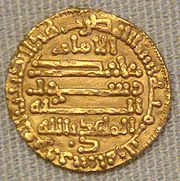
Fatimid
The Fatimid Islamic Caliphate or al-Fāṭimiyyūn was a Berber Shia Muslim caliphate first centered in Tunisia and later in Egypt that ruled over varying areas of the Maghreb, Sudan, Sicily, the Levant, and Hijaz from 5 January 909 to 1171.The caliphate was ruled by the Fatimids, who established the...
dynasty, the only major Shi'a caliphate
Caliphate
The term caliphate, "dominion of a caliph " , refers to the first system of government established in Islam and represented the political unity of the Muslim Ummah...
in Islam
Islam
Islam . The most common are and . : Arabic pronunciation varies regionally. The first vowel ranges from ~~. The second vowel ranges from ~~~...
, and established Fatimid rule throughout much of North Africa.
History
At the beginning of the Abbasid realm in Baghdad, the Alids faced severe persecution by the ruling party as they were a direct threat to the Abbasid Caliphate. Owing to the political complexities, the forefathers of Imam Abdullah opted to conceal themselves which helped them secure the DawaDawah
Da‘wah or Dawah usually denotes the preaching of Islam. Da‘wah literally means "issuing a summons" or "making an invitation", being the active participle of a verb meaning variously "to summon" or "to invite"...
's existence. Subsequently, these Imams traveled long and far towards the Iranian Plateau
Iranian plateau
The Iranian plateau, or Iranic plateau, is a geological formation in Southwest Asia. It is the part of the Eurasian Plate wedged between the Arabian and Indian plates, situated between the Zagros mountains to the west, the Caspian Sea and the Kopet Dag to the north, the Hormuz Strait and Persian...
and distanced themselves from the epicenter of the political scenario. Al Mahdi's father, Imam al Husain al Mastoor returned in secrecy to Syria
Syria
Syria , officially the Syrian Arab Republic , is a country in Western Asia, bordering Lebanon and the Mediterranean Sea to the West, Turkey to the north, Iraq to the east, Jordan to the south, and Israel to the southwest....
and began to control the Dawa
Dawah
Da‘wah or Dawah usually denotes the preaching of Islam. Da‘wah literally means "issuing a summons" or "making an invitation", being the active participle of a verb meaning variously "to summon" or "to invite"...
's affairs from there in complete concealment. He sent two Dai's of great calibre, abul Qasim and Abu 'Abdullah Al-Husayn Al-Shi'i
Abu 'Abdullah Al-Husayn Al-Shi'i
Abu 'Abdullah al-Husayn ibn Ahmad ibn Zakariyya al-Shi'i was a Da'i for the Isma'ilis in Yemen and North Africa mainly among the Kutama Berbers, whose teachings influenced the rise of the Fatimid dynasty.He was born in Kufa in Iraq and was active in the...
to Yemen
Yemen
The Republic of Yemen , commonly known as Yemen , is a country located in the Middle East, occupying the southwestern to southern end of the Arabian Peninsula. It is bordered by Saudi Arabia to the north, the Red Sea to the west, and Oman to the east....
and Western Africa respectively to build the foundation for what was to be the Fatimid Caliphate.
Imam al Husain al Mastoor died soon after the birth of his son, Al Mahdi. An extremely trustworthy system of information gatherers helped Al Mahdi to be updated on each development which took place in North Africa which was to be the launching pad of the soon to be Empire.
After establishing himself as the first Imam
Imam
An imam is an Islamic leadership position, often the worship leader of a mosque and the Muslim community. Similar to spiritual leaders, the imam is the one who leads Islamic worship services. More often, the community turns to the mosque imam if they have a religious question...
of the Fatimid dynasty he made claim to genealogic origins dating as far back as Fatimah
Fatimah
Fatimah was a daughter of the Islamic prophet Muhammad from his first wife Khadijah bint Khuwaylid. She is regarded by Muslims as an exemplar for men and women. She remained at her father's side through the difficulties suffered by him at the hands of the Quraysh of Mecca...
, the daughter of the Prophet of Islam, Muhammad, through Husayn
Husayn
Hussein , is an Arabic name which is the diminutive of Hassan, meaning "good", "handsome" or "beautiful"...
, Fatimah's son, and Ismail.
The above interpretation of the Fatimid history is only an interpretation of some of the writers. Other authors who have extensively written on the Fatimids such as "al-Maqrizi" have denied the above theory.
He began his conquest by establishing his headquarters at Salamiyah
Salamiyah
thumb|200px|A full view of Shmemis .Salamiyah is a city and district in western Syria, in the Hama Governorate. It is located 33 km southeast of Hama, 45 km northeast of Homs...
and began riding towards north-western Africa, which at the time was under Aghlabid
Aghlabid
The Aghlabids were a dynasty of emirs, members of the Arab tribe of Bani Tamim, who ruled Ifriqiya, nominally on behalf of the Abbasid Caliph, for about a century, until overthrown by the new power of the Fatimid.-History:...
rule, following the propagandist success of his chief da'i, Abu 'Abdullah Al-Husayn Al-Shi'i
Abu 'Abdullah Al-Husayn Al-Shi'i
Abu 'Abdullah al-Husayn ibn Ahmad ibn Zakariyya al-Shi'i was a Da'i for the Isma'ilis in Yemen and North Africa mainly among the Kutama Berbers, whose teachings influenced the rise of the Fatimid dynasty.He was born in Kufa in Iraq and was active in the...
. Al-Shi'i, along with laying claim to being the precursor to the Mahdi
Mahdi
In Islamic eschatology, the Mahdi is the prophesied redeemer of Islam who will stay on Earth for seven, nine or nineteen years- before the Day of Judgment and, alongside Jesus, will rid the world of wrongdoing, injustice and tyranny.In Shia Islam, the belief in the Mahdi is a "central religious...
, was instrumental in sowing the seeds of sedition among the Berber tribes of North Africa, specifically the Kutamah tribe.
It was Al-Shi'i's success which was the signal to Sa'id who set off from Salamyah disguised as a merchant. However, he was captured by the Aghlabid ruler Ziyadat-Allah
Ziyadat Allah III of Aghlabids
Abu Mudhar Ziyadat Allah III was the eleventh and last Emir of the Aghlabids in Ifriqiya He came to power after the murder of his father Abdullah II in 903. He immediately had all his brothers and uncles executed to eliminate any possible rivals...
and thrown into a dungeon in Sijilmasah. Al-Shi'i was then required to rescue Sa'id in 909 after which the Aghlabid dynasty, the last stronghold of Sunni Islam in North Africa, was expelled from region.
'Abdullah Al-Mahdi, as-Sa'id was now to be known, established himself at the former Aghlabid residence at Raqqadah, a suburb of Al-Qayrawan in Tunisia. Two years after he achieved power, 'Abdullah had his missionary-commander Al-Shi'i executed. After that his power only grew. At the time of his death he had extended his reign to Morocco
Morocco
Morocco , officially the Kingdom of Morocco , is a country located in North Africa. It has a population of more than 32 million and an area of 710,850 km², and also primarily administers the disputed region of the Western Sahara...
of the Idrisids, as well as Egypt itself. In 920, 'Abdullah took up residence at the newly established capital of the empire, Al-Mahdiyyah, which he founded on the Tunisian coast sixteen miles south-east of Al-Qayrawan, and which he named after himself.
After his death, 'Abdullah was succeeded by his son, Abu Al-Qasim Muhammad Al-Qaim, who continued his expansionist policy.
See also
- Fatimid Caliphate
- Imamah (Shi'a Ismaili doctrine)Imamah (Shi'a Ismaili doctrine)The Ismaili view on the Imamah differs from the Twelver Shi'a view, in particular because the Imam in Ismailism is the Noor of God . Ismailis believe that the Noor of God is present in the Imam, and that there is only a Ẓāhirī difference between each one...
- Imamah (Shi'a doctrine)Imamah (Shi'a doctrine)Imāmah is the Shia doctrine of religious, spiritual and political leadership of the Ummah. The Shīa believe that the A'immah are the true Caliphs or rightful successors of Muḥammad, and further that Imams are possessed of divine knowledge and authority as well as being part of the Ahl al-Bayt,...
- List of Ismaili imams
- People claiming to be the MahdiPeople claiming to be the MahdiIn Shia and Sunni eschatology, the Mahdi is a Messianic figure who, it is believed, will appear on Earth before the Day of Judgment and, alongside Jesus, will rid the world of wrongdoing, injustice and tyranny...