
All Topics  
Twenty-One Demands


   Email Print
   Bookmark   Link


Twenty-One Demands


The were a set of demands made by the Empire of Japan
Empire of Japan

The Empire of Japan was a Japanese political entity that existed during the period from the Meiji Restoration in 1868 until its defeat in World War II in 1945....
 under Prime Minister
Prime Minister of Japan

The is the usual English-language term used for the head of government of Japan, although the literal translation of the Japanese name for the office is Prime Minister of the Cabinet....
 Okuma Shigenobu
Okuma Shigenobu

Marquis ; was a Japanese statesman and the 8th and 17th Prime Minister of Japan. One of the most popular statesmen in Japanese history, Okuma was also an early advocate of Western science and culture in Japan, and founder of Waseda University....
 sent to the nominal government of the Republic of China
Republic of China

The Republic of China , also known as Nationalist China is a country in East Asia that has evolved from a single-party state with full global recognition into a multi-party democratic state with Political status of Taiwan....
 on January 18, 1915, resulting in two treaties with Japan on May 25, 1915.

n had gained a large sphere of interest in northern China
Northern China

Northern China or North China may mean:* North China* North China Plain* Northern and southern China - rough geographic regions in China...
 and Manchuria
Manchuria

Manchuria is a historical name given to a vast geographic region in northeast Asia. Depending on the definition of its extent, Manchuria either falls entirely within People's Republic of China, or is divided between China and Russia....
 through its victories in the First Sino-Japanese War
First Sino-Japanese War

The First Sino-Japanese War was a war fought between Qing Dynasty China and Meiji period Imperial Japan over the control of Korea. The Sino-Japanese War would come to symbolize the degeneration and enfeeblement of the Qing Dynasty and demonstrate how successful modernization had been in Japan since the Meiji Restoration as compared with the...
 and the Russo-Japanese War
Russo-Japanese War

The Russo-Japanese War or the Manchurian Campaign in some English sources, was a conflict that grew out of the rival imperialism ambitions of the Russian Empire and the Empire of Japan over Manchuria and Korea....
, and had thus joined the ranks of the European imperialist powers in their scramble to establish political and economic domination over China.


Discussion
Ask a question about 'Twenty-One Demands'
Start a new discussion about 'Twenty-One Demands'
Answer questions from other users
Full Discussion Forum


Encyclopedia


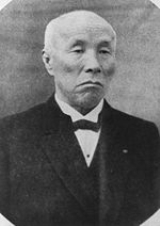
Okuma Shigenobu
The were a set of demands made by the Empire of Japan
Empire of Japan

The Empire of Japan was a Japanese political entity that existed during the period from the Meiji Restoration in 1868 until its defeat in World War II in 1945....
 under Prime Minister
Prime Minister of Japan

The is the usual English-language term used for the head of government of Japan, although the literal translation of the Japanese name for the office is Prime Minister of the Cabinet....
 Okuma Shigenobu
Okuma Shigenobu

Marquis ; was a Japanese statesman and the 8th and 17th Prime Minister of Japan. One of the most popular statesmen in Japanese history, Okuma was also an early advocate of Western science and culture in Japan, and founder of Waseda University....
 sent to the nominal government of the Republic of China
Republic of China

The Republic of China , also known as Nationalist China is a country in East Asia that has evolved from a single-party state with full global recognition into a multi-party democratic state with Political status of Taiwan....
 on January 18, 1915, resulting in two treaties with Japan on May 25, 1915.

Background

Japan had gained a large sphere of interest in northern China
Northern China

Northern China or North China may mean:* North China* North China Plain* Northern and southern China - rough geographic regions in China...
 and Manchuria
Manchuria

Manchuria is a historical name given to a vast geographic region in northeast Asia. Depending on the definition of its extent, Manchuria either falls entirely within People's Republic of China, or is divided between China and Russia....
 through its victories in the First Sino-Japanese War
First Sino-Japanese War

The First Sino-Japanese War was a war fought between Qing Dynasty China and Meiji period Imperial Japan over the control of Korea. The Sino-Japanese War would come to symbolize the degeneration and enfeeblement of the Qing Dynasty and demonstrate how successful modernization had been in Japan since the Meiji Restoration as compared with the...
 and the Russo-Japanese War
Russo-Japanese War

The Russo-Japanese War or the Manchurian Campaign in some English sources, was a conflict that grew out of the rival imperialism ambitions of the Russian Empire and the Empire of Japan over Manchuria and Korea....
, and had thus joined the ranks of the European imperialist powers in their scramble to establish political and economic domination over China. With the overthrow of the Qing Dynasty
Qing Dynasty

The Qing Dynasty , also known as the Manchu Dynasty, followed the Ming Dynasty in History of China, and was the last ruling Chinese Dynasties of China, ruling from 1644 to 1912 ....
 in the Xinhai Revolution
Xinhai Revolution

The Xinhai Revolution or Hsinhai Revolution , also known as the 1911 Revolution or the Chinese Revolution, began with the Wuchang Uprising on October 10, 1911 and ended with the abdication of Emperor Puyi on February 12, 1912....
, and the establishment of the new Republic of China under General Yuan Shikai
Yuan Shikai

Yuan Shikai was an important Chinese people general and politician famous for his influence during the Qing Dynasty#Rule of Empress Dowager Cixi, his role in the events leading up to the abdication of the Pu Yi of China, his autocratic rule as the second President of the Republic of China of the Republic of China, and his short-lived attem...
, Japan saw an opportunity to expand its position in China.

Although China later joined on the side of the Allies
Allies of World War I

File:Map Europe alliances 1914-en.svgThe Entente Powers were the countries at war with the Central Powers during World War I. The main allies were the Russian Empire, French Third Republic, the British Empire, Kingdom of Italy , the Empire of Japan, and the United States....
 in World War I
World War I

World War I, or the First World War , was a global military conflict which involved the Great powers, organized into two opposing military alliances: the Allies of World War I and the Central Powers....
, the Japanese demanded the German spheres of influence in China, and also wanted special economic rights for the Japanese nationals living in parts of China

Initial negotiations

Japan, under Prime Minister
Prime Minister of Japan

The is the usual English-language term used for the head of government of Japan, although the literal translation of the Japanese name for the office is Prime Minister of the Cabinet....
 Okuma Shigenobu
Okuma Shigenobu

Marquis ; was a Japanese statesman and the 8th and 17th Prime Minister of Japan. One of the most popular statesmen in Japanese history, Okuma was also an early advocate of Western science and culture in Japan, and founder of Waseda University....
 and Foreign Minister
Minister for Foreign Affairs (Japan)

The of Japan is the Cabinet of Japan member responsible for Japanese foreign policy and the chief executive of the Ministry of Foreign Affairs .Since the end of the Occupied Japan, the position has been one of the most powerful in the Cabinet, as Japan's economic interests have long relied on external relations....
 Kato Takaaki
Kato Takaaki

Count , was a Japanese politician and the 24th Prime Minister of Japan from 11 June 1924 to 28 January 1926. He is also known as Kato Komei....
, drafted the initial list of Twenty-One Demands, which were reviewed by the genro
Genro

was an unofficial designation given to certain retired elder Japanese statesmen, considered the "founding fathers" of modern Japan, who served as informal extraconstitutional advisors to the emperor, during the Meiji period and Taisho period periods in History of Japan....
 and Emperor Taisho
Emperor Taisho

The was the 123rd Emperor of Japan, according to the traditional order of succession, reigning from July 30, 1912, until his death in 1926.The Emperor?s personal name was ....
, and approved by the Diet
Diet of Japan

The is Japan's bicameral legislature. It is composed of a lower house, called the House of Representatives of Japan, and an upper house, called the House of Councillors....
. This list was presented to Yuan Shikai on January 18, 1915, with warnings of dire consequences if China were to reject.

The Twenty One Demands were grouped into five groups:

  • Group 1 confirmed Japan's recent acquisitions in Shandong Province, and expanded Japan's sphere of influence over the railways, coasts and major cities of the province.


  • Group 2 pertained to Japan's South Manchuria Railway Zone
    South Manchuria Railway Zone

    The , or SMR Zone, was the area of Japanese extraterritorial rights in northeast China, in connection with the operation of the South Manchurian Railway....
    , extending the leasehold over the territory into the twenty-first century, and expanding Japan's sphere of influence
    Sphere of influence

    A sphere of influence is an area or region over which an organization or state exercises cultural, economic, military or political domination....
     in southern Manchuria
    Manchuria

    Manchuria is a historical name given to a vast geographic region in northeast Asia. Depending on the definition of its extent, Manchuria either falls entirely within People's Republic of China, or is divided between China and Russia....
     and eastern Inner Mongolia
    Inner Mongolia

    Inner Mongolia is the Mongols autonomous region of China of the People's Republic of China, located in the country's north.Inner Mongolia borders, from east to west, the provinces of Heilongjiang, Jilin, Liaoning, Hebei, Shanxi, Shaanxi, Ningxia, and Gansu, while to the north it borders Mongolia and Russia....
    , to include rights of settlement and extraterritoriality
    Extraterritoriality

    Extraterritoriality is the state of being exempt from the jurisdiction of local law, usually as the result of diplomatic negotiations. Extraterritoriality can also be applied to physical places, such as embassy, consulates, or military bases of foreign countries, or offices of the United Nations....
    , appointment of financial and administrative officials to the government and priority for Japanese investments in those areas.


  • Group 3 gave Japan control of the Hanyeping mining and metallurgical complex, already deep in debt to Japan.


  • Group 4 barred China from giving any further coastal or island concessions to foreign powers except for Japan.


  • Group 5 contained a miscellaneous set of demands, ranging from Japanese advisors appointed to the Chinese central government and to administer the Chinese police force (which would severely intrude on Chinese sovereignty) to allowing Japanese Buddhist
    Buddhism

    Buddhism is a family of beliefs and practices considered by most to be a religionand is based on the teachings attributed to Siddhartha Gautama, commonly known as "The Buddha" , who was born in what is today Nepal....
     preachers to conduct missionary activities in China.


Knowing the negative reaction "Group 5" would cause, Japan initially tried to keep its contents secret. The Chinese government attempted to stall for as long as possible and leaked the full contents of the Twenty-One Demands to the European powers in hopes that a perceived threat to their own political/economic spheres of interest would help contain Japan.

The Japanese ultimatum

After China rejected Japan's revised proposal on April 26, the genro intervened and deleted ‘Group 5’ from the document, as these had proved to be the most objectionable to the Chinese government. A reduced set of "Thirteen Demands" was transmitted on May 7 in the form of an ultimatum, with a two-day deadline for response. Yuan Shikai, competing with other local warlord
Warlord

A warlord is a person with power who has military dictatorship over a subnational area due to armed forces loyal to the warlord and not to a central authority....
s to become the ruler of all China, was not in a position to risk war with Japan, and accepted appeasement
Appeasement

Appeasement is "the policy of settling international quarrels by admitting and satisfying grievances through rational negotiation and compromise, thereby avoiding the resort to an armed conflict which would be expensive, bloody, and possibly dangerous." The term is most often applied to the foreign policy of United Kingdom Prime Minister of t...
, a tactic which was followed by his successors. The final form of the treaty was signed by both parties on May 25, 1915.

Consequences

The results of the revised final (Thirteen Demands) version of the Twenty-One Demands were far more negative for Japan than positive. Without "Group 5", the new treaty gave Japan little that it did not already have in China.

On the other hand, the United States
United States

The United States of America is a Federal government constitutional republic comprising U.S. state and a federal district. The country is situated mostly in central North America, where its Contiguous United States and Washington, D.C., the Capital districts and territories, lie between the Pacific Ocean and Atlantic Oceans, Borders of the U...
 expressed strongly negative reactions to Japan's rejection of the Open Door Policy
Open Door Policy

The Open Door Policy is a concept in foreign affairs. As a theory, the Open Door Policy originates with British commercial practice, as was reflected in treaties concluded with Qing Dynasty China after the First Opium War ....
. In the Bryan Note issued by United States Secretary of State
Secretary of State

Secretary of State is a commonly used title for a member of government. The role varies between countries, and in some cases there are multiple Secretaries of State in the government....
 William Jennings Bryan
William Jennings Bryan

William Jennings Bryan was the Democratic Party nominee for President of the United States in 1896, 1900 and 1908, a lawyer, and the 41st United States Secretary of State under President Woodrow Wilson....
 on March 13, 1915, the United States, while affirming Japan's "special interests" in Manchuria
Manchuria

Manchuria is a historical name given to a vast geographic region in northeast Asia. Depending on the definition of its extent, Manchuria either falls entirely within People's Republic of China, or is divided between China and Russia....
, Mongolia
Mongolia

Mongolia is a landlocked country in East Asia and Central Asia. It borders Russia to the north and People's Republic of China to the south, east and west....
 and Shandong
Shandong

For the people of Shandong, see Shandong people is a coastal political divisions of China of eastern People's Republic of China. Its abbreviation is 'Lu', after the state of Lu that existed here during the Spring and Autumn Period....
, expressed concern over further encroachments to Chinese sovereignty.

Japan's closest ally at that time, Great Britain
Great Britain

Great Britain is an island lying to the northwest of Continental Europe. It is the List of islands by area, and the largest in Europe. With a population of 58.9 million people it is List of islands by population....
 also expressed concern over what was perceived as Japan's overbearing, bullying approach to diplomacy, and the British Foreign Office in particular was unhappy with Japanese attempts to establish what would effectively be a Japanese protectorate
Protectorate

A protectorate, in international law, is an autonomous territory that is protected diplomatically or militarily against third parties by a stronger state or entity, in exchange for which the protectorate usually accepts specified obligations, which may vary greatly, depending on the real nature of their relationship....
 over all of China.

In China, the overall political impact of Japan's actions was highly negative, creating a considerable amount of public ill-will towards Japan
Anti-Japanese sentiment

Anti-Japanese sentiment involves hatred, grievance, distrust, dehumanization, intimidation, fear, hostility, and/or general dislike of the Japanese people as ethnic or national group, Japan, Culture of Japan, and/or anything Japanese....
, resulting in the May Fourth Movement, and a significant upsurge in nationalism
Nationalism

Nationalism refers to an ideology, a feeling, a form of culture, or a social movement that focuses on the nation. While there is significant debate over the historical origins of nations, nearly all Expert accept that nationalism, at least as an ideology and social movement, is a Modernity phenomenon originating in Europe....
.

Japan continued to push for outright control over Shandong Province and they won European diplomatic recognition for their claim at the Treaty of Versailles
Treaty of Versailles

The Treaty of Versailles was one of the peace treaty at the end of World War I. It ended the declaration of war between German Empire and Allies of World War I....
 (despite the refusal of the Chinese Delegation to sign the treaty). This in turn provoked ill-will from the United States Government as well as wide-spread hostility within China. A large-scale boycott against Japanese goods was just one effect.

See also

  • Second Sino-Japanese War
    Second Sino-Japanese War

    The Second Sino-Japanese War was the largest Asian war in the twentieth century. From 1937 to 1941, it was fought between the Republic of China and the Empire of Japan....
  • History of the Republic of China
    History of the Republic of China

    The history of the Republic of China begins after the Qing Dynasty in 1912, when the formation of the Republic of China ended over two thousand years of Imperial rule....
  • Warlord era
    Warlord era

    The Warlord era is the period in the history of the Republic of China, from 1916 to the late-1930s, when the country was divided among Warlord, a division that continued until the fall of the Nationalist government in the mainland China regions of Sichuan, Shanxi, Qinghai, Ningxia, Guangdong, Guangxi, Gansu, Yunnan, and Xinjiang....


External links