

Troy VII

Encyclopedia
Troy VII, in the mound at Hisarlik
, is an archaeological layer of Troy
representing late Hittite Empire to Neo-Hittite
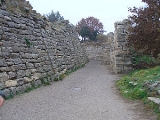
times (ca. 1300 to 950 BC). It was a walled city with towers reaching a height of nine meters; the foundations of one of its bastions measure 18 meters by 18 meters. Manfred Korfmann
, who excavated the site in the 1980s, estimated the area of Troy VII at 200,000 square metres (50 acres) or more and put its population at five to ten thousand inhabitants, which makes it "by the standards of its day a large and important city".
The city was built following the destruction of Troy VIh, probably by an earthquake, in about 1300 BC. A number of layers are distinguished:
and is believed to correspond to Assuwa
n Wilusa
known from Hittite sources dating to the period of roughly 1300–1250 BC.
These dates correspond closely to the mythical chronology of Greece as calculated by classical authors, placing the construction of the walls of Troy by Poseidon
, Apollo
and Aeacus
at 1282 BC and the sack of Troy by the Greeks at 1183 BC.
Troy VIIa appears to have been destroyed by a war, perhaps the source of the legendary Trojan War
, and there are traces of a fire. Partial human remains were found in houses and in the streets, and near the north-western ramparts a human skeleton with skull injuries and a broken jawbone. Three bronze arrowheads were found, two in the fort and one in the city. However, only small portions of the city have been excavated, and the finds are too scarce to clearly favour destruction by war over a natural disaster.
Until excavations in 1988, one of the problems with this identification was that Troy VII seemed to be a hill-top fort, and not a city of the size described by Homer. The 1988 discovery of a small section of a possible city circuit wall enclosing a much larger area suggests a city "at least ten times larger than earlier excavators — and thus the broader public — had supposed".
 The site remained inhabited following the destruction of Troy VIIa. Troy VIIb dates to a time when Greek
influence began to extend to the area (the "Greek Dark Ages
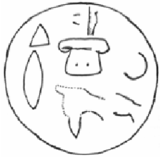
"). Troy VIIb1 (ca. 1120 BC) and Troy VIIb2 (ca. 1020 BC) appear to have been destroyed by fires. Troy VIIb3 was deserted in the mid-10th century BC, and the site remained uninhabited for more than 200 years before a new settlement, Troy VIII, was established around 700 BC. The site was again uninhabited throughout Classical Antiquity
, until the foundation of Roman Ilium
at the site (Troy IX) in the 20s BC.
Hisarlik
Hisarlik , often spelled Hissarlik, is the modern name for the site of ancient Troy, also known as Ilion, and is located in what is now Turkey...
, is an archaeological layer of Troy
Troy
Troy was a city, both factual and legendary, located in northwest Anatolia in what is now Turkey, southeast of the Dardanelles and beside Mount Ida...
representing late Hittite Empire to Neo-Hittite
Neo-Hittite
The states that are called Neo-Hittite, or more recently Syro-Hittite, were Luwian, Aramaic and Phoenician-speaking political entities of the Iron Age northern Syria and southern Anatolia that arose following the collapse of the Hittite Empire around 1180 BC and lasted until roughly 700 BC...
times (ca. 1300 to 950 BC). It was a walled city with towers reaching a height of nine meters; the foundations of one of its bastions measure 18 meters by 18 meters. Manfred Korfmann
Manfred Korfmann
Manfred Osman Korfmann was a German archaeologist.- Biography :...
, who excavated the site in the 1980s, estimated the area of Troy VII at 200,000 square metres (50 acres) or more and put its population at five to ten thousand inhabitants, which makes it "by the standards of its day a large and important city".
The city was built following the destruction of Troy VIh, probably by an earthquake, in about 1300 BC. A number of layers are distinguished:
- Troy VIIa: ca. 13th century BC13th century BCThe 13th century BC was the period from 1300 to 1201 BC.-Events:*1300 BC: Cemetery H culture comes to an end.*1292 BC: End of the Eighteenth dynasty of Egypt, start of the Nineteenth Dynasty....
- Troy VIIb1: 12th century BC12th century BC-Overview:The 12th century BC is the period from 1200 to 1101 BC. Although many human societies were literate in this period, most individual persons mentioned in this article ought to be considered legendary rather than historical...
- Troy VIIb2: 11th century BC11th century BCThe 11th century BC comprises all years from 1100 BC to 1001 BC. Although many human societies were literate in this period, some of the individuals mentioned below may be considered legendary rather than fully historical.-Events:...
- Troy VIIb3: until ca. 950 BC
VIIa
The city of the archaeological layer known as Troy VIIa, which has been dated on the basis of pottery styles to the mid- to late-13th century BC, lasted for about a century, with a destruction layer at ca. 1190 BC. It is the most often-cited candidate for the Troy of HomerHomer
In the Western classical tradition Homer , is the author of the Iliad and the Odyssey, and is revered as the greatest ancient Greek epic poet. These epics lie at the beginning of the Western canon of literature, and have had an enormous influence on the history of literature.When he lived is...
and is believed to correspond to Assuwa
Assuwa
The Assuwa league was a confederation of states in western Anatolia, defeated by the Hittites under an earlier Tudhaliya I around 1400 BC. The league formed to oppose the Hittite empire. The list of its members contains 22 names, including [...]uqqa, Warsiya, Taruisa, Wilusiya and Karkija .Some of...
n Wilusa
Wilusa
Wilusa was a city of the late Bronze Age Assuwa confederation of western Anatolia.It is known from six references in 13th century BC Hittite sources, including...
known from Hittite sources dating to the period of roughly 1300–1250 BC.
These dates correspond closely to the mythical chronology of Greece as calculated by classical authors, placing the construction of the walls of Troy by Poseidon
Poseidon
Poseidon was the god of the sea, and, as "Earth-Shaker," of the earthquakes in Greek mythology. The name of the sea-god Nethuns in Etruscan was adopted in Latin for Neptune in Roman mythology: both were sea gods analogous to Poseidon...
, Apollo
Apollo
Apollo is one of the most important and complex of the Olympian deities in Greek and Roman mythology...
and Aeacus
Aeacus
Aeacus was a mythological king of the island of Aegina in the Saronic Gulf.He was son of Zeus and Aegina, a daughter of the river-god Asopus. He was born on the island of Oenone or Oenopia, to which Aegina had been carried by Zeus to secure her from the anger of her parents, and whence this...
at 1282 BC and the sack of Troy by the Greeks at 1183 BC.
Troy VIIa appears to have been destroyed by a war, perhaps the source of the legendary Trojan War
Trojan War
In Greek mythology, the Trojan War was waged against the city of Troy by the Achaeans after Paris of Troy took Helen from her husband Menelaus, the king of Sparta. The war is among the most important events in Greek mythology and was narrated in many works of Greek literature, including the Iliad...
, and there are traces of a fire. Partial human remains were found in houses and in the streets, and near the north-western ramparts a human skeleton with skull injuries and a broken jawbone. Three bronze arrowheads were found, two in the fort and one in the city. However, only small portions of the city have been excavated, and the finds are too scarce to clearly favour destruction by war over a natural disaster.
Until excavations in 1988, one of the problems with this identification was that Troy VII seemed to be a hill-top fort, and not a city of the size described by Homer. The 1988 discovery of a small section of a possible city circuit wall enclosing a much larger area suggests a city "at least ten times larger than earlier excavators — and thus the broader public — had supposed".
VIIb
Greeks
The Greeks, also known as the Hellenes , are a nation and ethnic group native to Greece, Cyprus and neighboring regions. They also form a significant diaspora, with Greek communities established around the world....
influence began to extend to the area (the "Greek Dark Ages
Greek Dark Ages
The Greek Dark Age or Ages also known as Geometric or Homeric Age are terms which have regularly been used to refer to the period of Greek history from the presumed Dorian invasion and end of the Mycenaean Palatial civilization around 1200 BC, to the first signs of the Greek city-states in the 9th...
"). Troy VIIb1 (ca. 1120 BC) and Troy VIIb2 (ca. 1020 BC) appear to have been destroyed by fires. Troy VIIb3 was deserted in the mid-10th century BC, and the site remained uninhabited for more than 200 years before a new settlement, Troy VIII, was established around 700 BC. The site was again uninhabited throughout Classical Antiquity
Classical antiquity
Classical antiquity is a broad term for a long period of cultural history centered on the Mediterranean Sea, comprising the interlocking civilizations of ancient Greece and ancient Rome, collectively known as the Greco-Roman world...
, until the foundation of Roman Ilium
Troy
Troy was a city, both factual and legendary, located in northwest Anatolia in what is now Turkey, southeast of the Dardanelles and beside Mount Ida...
at the site (Troy IX) in the 20s BC.