
All Topics  
Trews

 
Trews

   Email Print
   Bookmark   Link


Trews


Trews (Gaelic Truis or older Truibhs) are men's clothing
Clothing

A feature of all human societies, except perhaps the most primitive, is the wearing of clothing or clothes, especially in public. The primary purpose of clothing is functional, as a protection from the weather....
 for the legs and lower abdomen, a traditional form of Scottish
Scotland

conventional_long_name = ScotlandAlba|common_name= Scotland|image_flag = Flag of Scotland.svg|flag_width = 130px...
 apparel
Scottish apparel

The term Scottish dress describes the national dress of Scotland. It is often characterized by the appearance of tartan patterns in some form....
.


Discussion
Ask a question about 'Trews'
Start a new discussion about 'Trews'
Answer questions from other users
Full Discussion Forum


Recent Posts


Encyclopedia


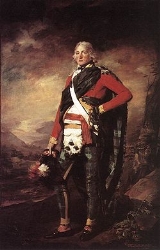
Raeburn Sir John Sinclair 1794 95
Allan Highlandwedding1780 Detail
Trews (Gaelic Truis or older Truibhs) are men's clothing
Clothing

A feature of all human societies, except perhaps the most primitive, is the wearing of clothing or clothes, especially in public. The primary purpose of clothing is functional, as a protection from the weather....
 for the legs and lower abdomen, a traditional form of Scottish
Scotland

conventional_long_name = ScotlandAlba|common_name= Scotland|image_flag = Flag of Scotland.svg|flag_width = 130px...
 apparel
Scottish apparel

The term Scottish dress describes the national dress of Scotland. It is often characterized by the appearance of tartan patterns in some form....
. Trews could be trimmed with leather, probably buckskin
Buckskin (leather)

Buckskin is the soft, pliable, porous preserved hide of an animal, usually deer, moose or Red Deer or even cowhide tanned to order, but potentially any animal's hide,....
, especially on the inner leg to prevent wear from riding on horseback.

Trews may be the origin of the word trousers
Trousers

Trousers are an item of clothing worn on the lower part of the body from the waist to the ankles, covering both legs separately . Such items of clothing are often referred to as pants in countries such as Canada, South Africa and The United States....
.

Tartan
Tartan

Tartan is a pattern consisting of criss-crossed horizontal and vertical bands in multiple colours. Tartans originated in woven cloth, now used in many other materials....
 trews shared the fate of other items of Highland dress, including proscription under the Dress Act of 1746 that banned Highlanders from wearing the truis ("Trowse"), and resurrection during the Romantic Revival. See kilt
Kilt

The kilt is a knee-length garment with pleats at the rear, originating in the traditional dress of men and boys in the Scottish Highlands of the 16th century....
 for a full discussion.

Origins

Illustrations in the Book of Kells
Book of Kells

The Book of Kells is an illuminated manuscript in Latin, containing the Gospel of the New Testament together with various prefatory texts and tables....
 and on the Cross of Muiredach show soldiers wearing short truis-like garments which reached to just above or just below the knee. Those illustrated in the Book of Kells are of a single colour, tight-fitting and end below the knee while those shown on the cross panel are loose-fitting, striped and gathered just above the knee. Also illustrated in the Book of Kells are long tight-fitting truis which are secured by loops under the foot.

The word is triubhas in Scottish Gaelic. Truis or trews are anglicised spellings.

Edward Dwelly, Faclair Gàidhlig gu Beurla: Illustrated Gaelic to English Dictionary
Colin Mark, The Gaelic-English Dictionary


Traditional trews

Traditional trews were form-fitting garments, similar to the footed hose
Hose (clothing)

Hose are any of various styles of men's clothing for the legs and lower body, worn from the Middle Ages through the seventeenth century, when the term fell out of use in favor of breeches and stockings....
 of the Renaissance
Renaissance

The Renaissance was a cultural movement that spanned roughly the 14th to the 17th century, beginning in Italy in the late Middle Ages and later spreading to the rest of Europe....
, from which they probably evolved. They could be cut as Knee-breeches or full length.

These trews were cut on the cross-grain (US bias
Bias (textile)

The bias or cross-grain direction of a piece of weave Textile, usually referred to simply as "the bias" or "the cross-grain", is at 45 degrees to its Warp and weft threads....
), which allowed the fabric to stretch sufficiently to mould to the body, and placed the tartan
Tartan

Tartan is a pattern consisting of criss-crossed horizontal and vertical bands in multiple colours. Tartans originated in woven cloth, now used in many other materials....
 "sett" on the diagonal.

Traditional trews are actually long hose
Hose

A hose is a hollow Tubing designed to carry fluids from one location to another. Hoses are also sometimes called tube or pipe , or more generally tubing ....
. These hose came all the way up to the waist and were attached to a linen cloth (NB: These were not trousers). They were fastened at the lower leg, below the knee, by a garter
Garter

Garter can refer to:*Garter , an item of clothing used to hold up stockings*Order of the Garter, a senior British order of chivalry...
 (the precursor to the flashes of the Highland Dress) as can be seen in the painting by David Morier of the Battle of Culloden
Battle of Culloden

The Battle of Culloden was the final clash between the French-supported Jacobitism and the House of Hanover British Government in the 1745 Jacobite Rising#The 'Forty-Five'....
. It is said in Scottish Tradition Lore
Lore

Lore may refer to:* Lore, all the facts and traditions about a particular subject that have been accumulated over time through education or experience....
 that these truibhas were actually the common garment of the 16th to 18th Centuries in the Highlands
Scottish Highlands

The Scottish Highlands include the rugged and mountainous regions of Scotland north and west of the Highland Boundary Fault, although the exact boundaries are not clearly defined, particularly to the east....
. It is also a fascinating note that when travelling, in order to avoid getting the trews wet when crossing streams, the Highlander
Highlander

Highlander may refer to:...
 would wear shorter hose
Hose

A hose is a hollow Tubing designed to carry fluids from one location to another. Hoses are also sometimes called tube or pipe , or more generally tubing ....
, ones that would only reach up to the knee, and wrap his "bed-garments" around his waist, a form of the Great Kilt.

Modern trews and military trews

Modern trews are more like trousers (and are not traditional), with the fabric cut on the straight grain but without a side seam
Seam

Seam may refer to:* Seam , an indie rock band from Chicago, Illinois* Can seamer, a machine used to seal a lid to a can body, such as in paint or food cans...
, and are often high-waisted, to be worn with a short jacket
Jacket

A jacket is a type of sleeved Hip - or waist-length garment for the upper body. For clothing older than the 1850s, a distinction is often maintained with a coat , but in many instances the terms are now interchangeable....
, as a warmer alternative to the kilt
Kilt

The kilt is a knee-length garment with pleats at the rear, originating in the traditional dress of men and boys in the Scottish Highlands of the 16th century....
.

Colonel Sir John Sinclair of the Caithness (see image), proved to his own satisfaction that "the truis" was an older dress than the kilt.

Until the establishment of the Royal Regiment of Scotland in 2006, military trews were usually worn by members of the lowland Scottish
Scottish Lowlands

The Scottish Lowlands , although not officially a geographical area of the country, in normal usage is generally meant to include those parts of Scotland not referred to as the Scottish Highlands , that is, everywhere due south and east of a line between Stonehaven and Helensburgh ....
 regiments as part of their No 1, mess
Mess

A mess is the place where military personnel socialise, eat, and live. In some societies this military usage has extended to other disciplined services eateries such as civilian fire fighting and police forces....
 and full dress uniforms. Members of highland Scottish
Scottish Highlands

The Scottish Highlands include the rugged and mountainous regions of Scotland north and west of the Highland Boundary Fault, although the exact boundaries are not clearly defined, particularly to the east....
 regiments were usually authorized to wear kilt
Kilt

The kilt is a knee-length garment with pleats at the rear, originating in the traditional dress of men and boys in the Scottish Highlands of the 16th century....
s with these orders of dress. However, all Highland regiments, in more recent times, wore trews with less formal orders of barracks and training dress. They were also part of the uniform of the composite regiment
Regiment

A regiment is a military unit, composed of variable numbers of battalions, commanded by a Colonel. Depending on the nation, military branch, mission, and organization, a modern regiment resembles a brigade, in that both range in size from a few hundred to 5,000 soldiers ....
 known as The Highlanders (Seaforth, Gordons and Camerons)
The Highlanders (Seaforth, Gordons and Camerons)

The Highlanders was an infantry regiment, part of the Scottish Division. The regiment was the only one in the British Army with a Gaelic language motto - Cuidich 'n Righ which means "Aid the King"....
 formed in 1994. The new Royal Regiment of Scotland comprises all the former Scottish infantry line infantry regiments and continues to wear trews in certain limited orders of dress.

It is interesting to note that historically, trews were part of the Highland cultural tradition, not Lowland. As such, when Lowland regiments became the first of the Scottish regiments to be formed in the mid-1660s to late 1680s, the Lowland soldiers wore standard British military uniform and had no desire to wear tartan items and march to the bagpipes, which they considered to be part of a foreign and savage culture. From these early beginnings up to 1881, the famous Lowland regiments (1st, 21st, 25th, 26th, 70th, 90th, 94th and 99th) wore standard English uniform.

Meanwhile, from 1739 onward, the Highland regiments which were raised insisted on the familiarity of their native dress and Great Highland war-pipes, albeit in a modified form to suit a British military identity, as part of their cultural identity. They wore the complex belted plaid and latterly, to encourage recruits unfamiliar with such garb, they adopted the simpler kilt. However, trews were increasingly worn as off-duty dress and even campaign dress from the late 18th Century. Highland regiments stationed in hot or unhealthy surroundings often took to wearing simple white cotton trousers or tartan trews. For example, the 91st Highland Regt of Foot wore trews during the Walcheren
Walcheren

Media:Nl-Walcheren.ogg is a former island in the province of Zeeland in the Netherlands at the mouth of the Scheldt estuary. It lies between the Oosterschelde in the north and the Westerschelde in the south and is roughly the shape of a rhombus....
 campaign of 1809 and more famously, the 93rd Highland Regiment of Foot wore trews and round unfeathered Highland bonnets during the war of 1812-1815 against the USA, when taking part in the British campaign to capture New Orleans in January 1815 and during the disastrous Battle of Chalmette Plain itself (lithographs of the battle wrongly depict them wearing kilts). The year 1809 was a disastrous one for several Highland regiments. The 71st Highland Regiment of Foot was converted to Light Infantry, but kept its Highland status. But though Highland, now being part of the elite Light Infantry corps meant they have to adhere to the Light Infantry
Light infantry

Traditionally light infantry were soldiers whose job was to provide a skirmishing screen ahead of the main body of infantry, Harassment and delaying the enemy advance....
 collective image and so they gave up their kilts (but kept their bagpipes). They also adopted a red/white/green diced band around their new light infantry shako caps. However, other Highland regiments who due to:- the ongoing Highland Clearances, competition from the Royal Navy for recruits, campaign casualties etc, had to increasingly recruit men from the Lowlands, England, Wales and especially Ireland to keep up their numbers. Even Germans and Swiss were admitted. The War Office in London decided that the recruits from South Britain found Highland dress objectionable which affected recruitment and so several Highland regiments were singled out to lose Highland status including Highland dress, officers' Highland weapons and the right to have regimental pipers. These regiments were the 72nd, 73rd, 74th, 75th and 91st. The regiments keeping the kilt and pipers etc were the 42nd, 78th, 79th, 92nd and 93rd. Despite constant appeals, the ex-Highland regiments were refused any repreive and so they soldiered on in standard English-style uniforms.

In 1822, however, following King George IV's successful first visit to Scotland including a separate coronation, he ordered the resumption of Highland dress and traditions for one de-kilted regiment. The regiment chosen was the most senior of the de-kilted regiments, the 72nd. They adopted the Highland feather bonnet, the Highland version of the red coatee, but in lieu of kilts, they were ordered to wear trews for all duties etc. The tartan chosen was a new form of red or Royal Stewart called Prince Charles Edward Stuart, reflecting the new romantic fashion for all things Jacobite. In 1835, after various appeals, the 71st Highland Light Infantry was granted Highland dress, partly as per the 72nd style, but with the old 71st's traditional large MacKenzie sett and with their stylish Light Infantry shako instead of the feather bonnet. In 1845, after lobbying in high circles, the 74th resumed Highland dress in a copy of the elegant 71st HLI dress with shako, but the 74th's now wore the Black Watch/white-striped sett called Lamont tartan (the 74th's originally came from South Argyll and Lamont was the main South Argyll clan having associations with the regiment. This invented clan tartan was basically universal Black Watch/Government sett with the regiment's white facing colour added as a stripe and called Lamont). In 1864, after much appealing from the regiment through the years to the War Office and finally to Queen Victoria etc and with the Duke of Argyll's involvement, the 91st Argyllshire Regiment of Foot became the 91st Argyllshire Highlanders and adopted the latest style of 71st/74th Highland dress, with trews of Campbell of Cawdor tartan. Indeed, the royal connection to the regiment was strengthened in 1871 when the Queen's daughter, Princess Louise
Princess Louise

Princess Louise may be any of:* Princess Louise single-funnel coastal liner that was a docked restaurant ship in Los Angeles Harbor for some years....
, married the Duke of Argyll
Duke of Argyll

The title Duke of Argyll was created in the British Peerage of Scotland in 1701 and in the Peerage of the United Kingdom in 1892. The Earls, Marquesses, and Dukes of Argyll were for several centuries among the most powerful, if not the most powerful, noble family in Scotland....
's son, the Marquis of Lorne. The 91st furnished a guard of honour
Guard of honour

A ceremonial guard of honour is a military practice to honour the fallen in war, or to honor visiting foreign dignitary. A guard of honour can is also a ceremony for public figures who have died....
 at the wedding. Princess Louise took a great interest in the regiment and when it merged with the 93rd Sutherland Highlanders in 1881, she became Honorary Colonel-in-Chief
Colonel-in-Chief

In the British Army and other Commonwealth of Nations armies, the Colonel-in-Chief of a regiment is its patron. This position is distinct from that of Colonel ....
 of the new regiment Princess Louise's (Argyll & Sutherland Highlanders), a position she held until her death in 1939. Queen Elizabeth II is the current Honorary C-in-C.

When the Childers
Childers

Childers may mean:*Childers, Queensland, Australia*Childers reforms of the British armyChilders may also refer to:*Erskine Hamilton Childers and Rita Childers his wife...
 reform of 1881 took place, numbered regiments were amalgamated and new county regiments formed, the 42nd (Royal Highland Regiment - Black Watch) and 73rd (Perthshire) combined to form the 1st and 2nd Batts Royal Highland Regt - Black Watch, 71st (Highland Light Infantry) and 74th (Highlanders)combined to form 1st & 2nd Highland Light Infantry, 75th (Stirlingshire) and 92nd Gordon Highlanders combined to form 1st and 2nd Gordon Highlanders, and 91st Argyllshire Highlanders and 93rd Sutherland Highlanders combined to form 1st & 2nd Argyll and Sutherland Highlanders, only the HLI continued wearing trews (and diced shako). The rest of the above-mentioned Highland regiments and converted regiments now wore the kilt. But in 1881, the Lowland regiments were granted permission (with mixed reception from the regiments - the Royal Scots wanted kilts while the Royal Scots Fusiliers wanted to continue with English dress and tall fur cap as befitted a Fusilier regiment) to wear the HLI style of Highland dress - except instead of a diced shako, they continued to wear their English-style police helmets with spike on top. Having no tartan tradition, the Lowland regiments adopted the Government tartan (Black Watch) for their trews. The combination of 26th Cameronians and 90th Perthshire Light Infantry resulted in a conversion to a rifle regiment - the Scottish Rifles (Cameronians) in dark-green and black uniforms instead of standard scarlet. As the years progressed, the Lowland regiments grew into the new look and even adopted regimental tartans. The Scottish Rifles even adopted a dark green/black version of the HLI shako. In 1904, the Royal Scots and King's Own Scottish Borderers adopted a new parade headgear, a stiff form of tam-o-shanter with black-cock's tail feathers. By now, the Royal Scots were wearing trews of Hunting Stewart
Stewart

Stewart is a popular Scottish given name and surname; it may also refer to:...
 tartan, Royal Scots Fusiliers were still in Black Watch
Black Watch

The Black Watch, 3rd Battalion, Royal Regiment of Scotland is an infantry battalion of the Royal Regiment of Scotland.Prior to 28 March 2006, the Black Watch was an infantry regiment in its own right; The Black Watch from 1931 to 2006, and The Royal Highland Regiment from 1881 to 1931....
 tartan, King's Own Scottish Borderers were now in Leslie
Leslie

Leslie can refer to any of the following:...
 tartan and the Scottish Rifles in Douglas
Douglas

Douglas is a common surname of Scottish origin, thought to derive from the Goidelic languages Dubh Glas, meaning black, or black-green, water, referring to locations either at Douglas in Scotland or Douglas in Ireland....
.

This of course blurred the Highland status of the Highland Light Infantry in the public mind. The War Office and the regiment still considered them as Highland as the other Highland Regiments, but despite the fact that the Black Watch, Gordon Highlanders and Argyll & Sutherland Highlanders all had their regimental depots/HQ's and major parts of their regimental areas set in the Lowlands, there was growing perception of the HLI being a Lowland regiment. This was increased when their regimental HQ was grouped into the Lowland district for purposes of forming the Territorial Force in 1908. From now on, territorial battalions of the new Territorial Force would be part of the Lowland Division (later titled 52nd Lowland Division). In WW1, the HLI wore standard non-kilted khaki uniforms with khaki trousers and glengarry
Glengarry

Glengarry is a boat-shaped cap without a peak made of thick-milled woollen material with a toorie or bobble on top and ribbons hanging down behind....
 or tam o'shanter. By default of a hijacking of their regimental dress by the Lowland regiments and the passage of events around them, the HLI had become effectively Lowland. They protested their Highland status for many years and continued after the end of WW2. Amazingly, in 1948, at a time of government cut-backs and disbandments, their Highland status was re-confirmed and to ensure no misunderstanding in the light of trews now being thought of as Lowland military dress, the HLI were given the kilted form of Highland dress as worn by the other Highland regiments.

The kilting of the HLI was short-lived however when, in 1959 spending cut-backs, the government ordered the loss of one Scottish battalion by amalgamation of one Highland and one Lowland regiment. The HLI and Royal Scots Fusiliers were chosen and became the Royal Highland Fusiliers
Royal Highland Fusiliers

The Royal Highland Fusiliers was a regular Scottish line infantry regiment of the British Army, part of the Scottish Division, and abbreviated as 'The RHF'....
 - a Lowland regiment.

Interestingly, due to the continued military use of trews by the Lowland regiments, the perception of trews as Lowland dress spilled over into civilian wear, so that for many years, trews began to be viewed as Lowland dress, rather than the Highland kilt. However, in recent years, a re-surgence in Highland history and traditions has seen trews re-enter the Highland wardrobe, whilst interested Lowlanders have now encompassed these traditions within a wider Scottish template.

Highland dance


Today, the sideways kicking step of Scottish highland dance
Scottish highland dance

The term Highland Dancing is used today to refer to a style of Competitive dance solo dancing which evolved into its current form during the nineteenth and twentieth centuries in the context of competitions at public events , where it is typically performed to the accompaniment of bagpipe music....
rs performing the Seann Truibhas dance is said to symbolise the kicking off of the trews or trousers in favour of the kilt, through the trews can still be worn today as a warmer alternative to the kilt in colder months.

Considering that tartan trews were part of the Highland wardrobe for chieftains and gentlemen whilst on horseback (the large Highland ponies) from the early 1600s onward, it is more likely that the 'Truibhas' in the dance represent English-style plain trousers (breeches), adopted under duress by Highlanders following the ban on their native Highland kilted dress effective from 1 August 1747.

Plus-fours and golf attire

Tartan
Tartan

Tartan is a pattern consisting of criss-crossed horizontal and vertical bands in multiple colours. Tartans originated in woven cloth, now used in many other materials....
 plus-fours are traditional golfing attire that are based on the traditional trews. These pants extend 4 inches below the knee and are often worn with argyle
Argyle (pattern)

The argyle pattern is made of diamonds in a diagonal checkerboard arrangement. The word is sometimes used to refer to an individual diamond in the design but more commonly refers to the overall pattern....
 knee-socks. Plus-fours were first introduced to the USA by the Prince of Wales
Prince of Wales

Prince of Wales is a title traditionally granted to the Heir Apparent to the reigning monarch of the United Kingdom . The current Prince of Wales is Charles, Prince of Wales, the eldest son of Elizabeth II of the United Kingdom....
 during a 1924 visit. The full-length plaid pants popular with many golfers are also based on trews, but are cut fuller for more freedom of movement and warmer climates.

Gallery images


External links