

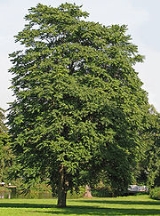
Tree of heaven

Encyclopedia
Ailanthus altissima commonly known as tree of heaven, ailanthus, or in Standard Chinese
as chouchun , is a deciduous
tree in the Simaroubaceae
family. It is native to both northeast and central China
and Taiwan
. Unlike other members of the genus Ailanthus
, it is found in temperate climates rather than the tropics. The tree grows rapidly and is capable of reaching heights of 15 metres (49.2 ft) in 25 years. However, the species is also short lived and rarely lives more than 50 years.
In China, the tree of heaven has a long and rich history. It was mentioned in the oldest extant Chinese dictionary and listed in countless Chinese medical texts for its purported ability to cure ailments ranging from mental illness to baldness. The roots, leaves and bark are still used today in traditional Chinese medicine
, primarily as an astringent
. The tree has been grown extensively both in China and abroad as a host plant for the ailanthus silkmoth, a moth involved in silk
production. Ailanthus has become a part of western culture as well, with the tree serving as the central metaphor and subject matter of the best-selling American novel A Tree Grows in Brooklyn by Betty Smith
.
The tree was first brought from China to Europe in the 1740s and to the United States in 1784. It was one of the first trees brought west during a time when chinoiserie
was dominating European arts, and was initially hailed as a beautiful garden specimen. However, enthusiasm soon waned after gardeners became familiar with its suckering
habits and its foul smelling odour. Despite this, it was used extensively as a street tree during much of the 19th century. Outside of Europe and the United States, the plant has been spread to many other areas beyond its native range. In a number of these, it has become an invasive species
due to its ability to quickly colonise disturbed areas and suppress competition with allelopathic
chemicals. It is considered a noxious weed in Australia
, the United States
, New Zealand
and several countries in southern
and eastern Europe
. The tree also resprouts
vigorously when cut, making its eradication difficult and time consuming. In many urban areas, it has acquired the derisive nicknames of "ghetto palm" and "stink tree".
 A. altissima is a medium-sized tree that reaches heights between 17 and 27 metres (56 and 90 ft) with a diameter at breast height of about 1 metre (40 in). The bark
is smooth and light grey, often becoming somewhat rougher with light tan fissures as the tree ages. The twigs are stout, smooth to lightly pubescent, and reddish or chestnut in colour. They have lenticel
s as well as heart-shaped leaf scars (i.e. a scar left on the twig after a leaf falls) with many bundle scars (i.e. small marks where the veins of the leaf once connected to the tree) around the edges. The bud
s are finely pubescent, dome shaped, and partially hidden behind the petiole
, though they are completely visible in the dormant season at the sinuses of the leaf scars. The branches are light to dark gray in colour, smooth, lustrous, and containing raised lenticels that become fissures with age. The ends of the branches become pendulous. All parts of the plant have a distinguishing strong odour that is often likened to peanuts, cashews, or rotting cashews.
The leaves
are large, odd- or even-pinnate
ly compound, and arranged alternately on the stem. They range in size from 30 to 90 cm (0.984251968503937 to 3 ft) in length and contain 10–41 leaflets organised in pairs, with the largest leaves found on vigorous young sprouts. The rachis
is light to reddish-green with a swollen base. The leaflet
s are ovate-lanceolate
with entire margins, somewhat asymmetric and occasionally not directly opposite to each others. Each leaflet is 5 to 18 cm (2 to 7.1 in) long and 2.5 to 5 cm (0.984251968503937 to 2 in) wide. They have a long tapering end while the bases have two to four teeth, each containing one or more glands at the tip. The leaflets' upper sides are dark green in colour with light green veins, while the undersides are a more whitish green. The petioles are 5 to 12 mm (0.196850393700787 to 0.47244094488189 in) long. The lobed bases and glands distinguish it from similar sumac species.
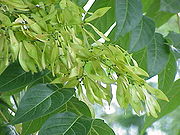 The flower
s are small and appear in large panicle
s up to 50 cm (19.7 in) in length at the end of new shoots. The individual flowers are yellowish green to reddish in colour, each with five petal
s and sepal
s. The sepals are cup-shaped, lobed and united while the petals are valvate (i.e. they meet at the edges without overlapping), white and hairy towards the inside. They appear from mid-April in the south of its range to July in the north. A. altissima is dioecious
, with male and female flowers being borne on different individuals. Male trees produce three to four times as many flowers as the females, making the male flowers more conspicuous. Furthermore, the male plants emit a foul-smelling odour while flowering to attract pollinating insects. Female flowers contain ten (or rarely five through abortion) sterile stamen
s (stamenoides) with heart-shaped anthers. The pistil is made up of five free carpels (i.e. they are not fused), each containing a single ovule
. Their styles are united and slender with star-shaped stigma
s. The male flowers are similar in appearance, but they of course lack a pistil and the stamens do function, each being topped with a globular anther and a glandular green disc. The seed
s borne on the female trees are 5 mm in diameter and each is encapsulated in a samara
that is 2.5 cm long (1 in) and 1 cm (0.393700787401575 in) broad, appearing July though August, but usually persisting on the tree until the next spring. The samara is twisted at the tips, making it spin as it falls and assisting wind dispersal. The females can produce huge amounts of seeds, normally around 30,000 per kilogram (14,000/lb
) of tree.
by the French Jesuit Pierre Nicholas d'Incarville. D'Incarville had sent seeds from Peking via Siberia
to his botanist friend Bernard de Jussieu
in the 1740s. The seeds sent by d'Incarville were thought to be from the economically important and similar looking Chinese varnish tree (Toxicodendron vernicifluum), which he had observed in the lower Yangtze region, rather than the tree of heaven. D'Incarville attached a note indicating this, which caused much taxonomic confusion over the next few decades. In 1751, Jussieu planted a few seeds in France
and sent others on to Philip Miller
, the superintendent at the Chelsea Physic Garden
, and to Philip C. Webb, the owner of an exotic plant garden in Busbridge
, England
.
Confusion in naming began when the tree was described by all three men with three different names. In Paris, Linnaeus gave the plant the name Rhus succedanea, while it was known commonly as grand vernis du Japon. In London the specimens were named by Miller as Toxicodendron altissima and in Busbridge it was dubbed in the old classification system as Rhus Sinese foliis alatis. There are extant records from the 1750s of disputes over the proper name between Philip Miller and John Ellis, curator of Webb's garden in Busbridge. Rather than the issue being resolved, more names soon appeared for the plant: Jakob Friedrich Ehrhart
observed a specimen in Utrecht
in 1782 and named it Rhus cacodendron.
Light was shed on the taxonomic status of ailanthus in 1788 when René Louiche Desfontaines
observed the samaras of the Paris specimens, which were still labelled Rhus succedanea, and came to the conclusion that the plant was not a sumac
. He published an article with an illustrated description and gave it the name Ailanthus glandulosa, placing it in the same genus as the tropical species then known as A. integrifolia (white siris, now A. triphysa
). The name is derived from the Ambonese
word ailanto, meaning "heaven-tree" or "tree reaching for the sky". The specific glandulosa, referring to the glands on the leaves, persisted until as late as 1957, but it was ultimately made invalid as a later homonym at the species level. The current species name comes from Walter T. Swingle who was employed by the United States Department of Plant Industry. He decided to transfer Miller's older specific name into the genus of Desfontaines, resulting in the accepted name Ailanthus altissima. Altissima is Latin for "tallest", and refers to the sizes the tree can reach. The plant is sometimes incorrectly cited with the specific epithet in the masculine (glandulosus or altissimus), which is incorrect since botanical, like Classical Latin
, treats most tree names as feminine.
There are three varieties
of A. altissima:
, Taiwan
and northern Korea
. In Taiwan it is present as var. takanai. In China it is native to every province
except Gansu
, Heilongjiang
, Hainan
, Jilin
, Ningxia
, Qinghai
, Xinjiang
, and Tibet
.
The tree prefers moist and loamy soils, but is adaptable to a very wide range of soil conditions and pH
values. It is drought-hardy, but not tolerant of flooding. It also does not tolerate deep shade. In China it is often found in limestone
-rich areas. The tree of heaven is found within a wide range of climatic conditions. In its native range it is found at high altitudes in Taiwan as well as lower ones in mainland China. In the U.S. it is found in arid regions bordering the Great Plains
, very wet regions in the southern Appalachians, and cold areas of the lower Rocky Mountains
. Prolonged cold and snow cover cause dieback
, though the trees re-sprout from the roots.
as well as to Japan
. It is possible that the tree is native to these areas, but it is generally agreed that the tree was a very early introduction. Within China itself it has also been naturalised beyond its native range in areas such as Qinghai
, Ningxia
and Xinjiang
.
In 1784, not long after Jussieu had sent seeds to England, some were forwarded to the United States
by William Hamilton, a gardener in Philadelphia. In both Europe and America it quickly became a favoured ornamental, especially as a street tree, and by 1840 it was available in most nurseries. The tree was separately brought to California
in the 1890s by Chinese immigrants who came during the California Gold Rush
. It has escaped cultivation in all areas where it was introduced, but most extensively in the United States. It has naturalised across much of Europe, including Germany
, Austria
, Switzerland
, the Pannonian region (i.e. southeastern Europe from Italy
and Hungary
south to Bosnia and Herzegovina
) and most countries of the Mediterranean Basin
. In Montenegro
and Albania
A. altissima is widespread in both rural and urban areas and while in the first it was introduced as an ornamental plant, it very soon invaded native ecosystem
s with disastrous results and became an invasive species. Ailanthus has also been introduced to Argentina
, Australia
(where it is a declared weed in New South Wales and Victoria), New Zealand
(where it is listed under the National Pest Plant Accord
and is classed an "unwanted organism"), the Middle East and in some countries in South Asia such as Pakistan
.
In North America
, A. altissima is present from Massachusetts
in the east, west to southern Ontario
, southwest to Iowa
, south to Texas
, and east to the north of Florida
. On the west coast it is found from New Mexico
west to California and north to Washington. In the east of its range it grows most extensively in disturbed areas of cities, where it was long ago present as a planted street tree. It also grows along roads and railways. For example, a 2003 study in North Carolina
found the tree of heaven was present on 1.7% of all highway and railroad edges in the state and had been expanding its range at the rate of 4.76% counties per year. Similarly, another study conducted in southwestern Virginia determined that the tree of heaven is thriving along approximately 30% of the state's interstate highway system length or mileage. It sometimes enters undisturbed areas as well and competes with native plants. In western North America it is most common in mountainous areas around old dwellings and abandoned mining operations.
 Ailanthus is an opportunistic plant that thrives in full sun and disturbed areas. It spreads aggressively both by seeds and vegetatively by root sprouts, re-sprouting rapidly after being cut. It is considered a shade-intolerant tree and cannot compete in low-light situations, though it is sometimes found competing with hardwoods, but such competition rather indicates it was present at the time the stand was established. On the other hand, a study in an old-growth hemlock
-hardwood forest in New York
found that Ailanthus was capable of competing successfully with native trees in canopy gaps where only 2 to 15% of full sun was available. The same study characterised the tree as using a "gap-obligate" strategy in order to reach the forest canopy, meaning it grows rapidly during a very short period rather than growing slowly over a long period. It is a short lived tree in any location and rarely lives more than 50 years. Ailanthus is among the most pollution-tolerant of tree species, including sulfur dioxide
, which it absorbs in its leaves. It can withstand cement dust and fumes from coal tar operations, as well as resist ozone
exposure relatively well. Furthermore, high concentrations of mercury
have been found built up in tissues of the plant.
Ailanthus has been used to re-vegetate areas where acid mine drainage has occurred and it has been shown to tolerate pH levels as low as 4.1 (approximately that of tomato juice). It can withstand very low phosphorus
levels and high salinity levels. The drought-tolerance of the tree is strong due to its ability to effectively store water in its root system. It is frequently found in areas where few trees can survive. The roots are also aggressive enough to cause damage to subterranean sewers and pipes. Along highways it often forms dense thickets in which few other tree species are present, largely due to the toxins it produces to prevent competition.
.jpg) Ailanthus produces an allelopathic chemical
Ailanthus produces an allelopathic chemical
called ailanthone, which inhibits the growth of other plants. The inhibitors are strongest in the bark and roots, but are also present in the leaves, wood and seeds of the plant. One study showed that a crude extract of the root bark inhibited 50% of a sample of garden cress
(Lepidium sativum) seeds from germinating. The same study tested the extract as an herbicide on garden cress, redroot pigweed (Amaranthus retroflexus), velvetleaf
(Abutilon theophrastii), yellow bristlegrass (Setaria glauca), barnyard grass (Echinochloa crusgalli), pea
(Pisum sativum cv. Sugar Snap) and maize
(Zea mays cv.
Silver Queen). It proved able to kill nearly 100% of seedlings with the exception of velvetleaf, which showed some resistance. Another experiment showed a water extract of the chemical was either lethal or highly damaging to 11 North American hardwood
s and 34 conifers, with the white ash (Fraxinus americana) being the only plant not adversely affected. The chemical does not, however, affect the tree of heaven's own seedlings, indicating that A. altissima has a defence mechanism to prevent autotoxicity
. Resistance in various plant species has been shown to increase with exposure. Populations without prior exposure to the chemicals are most susceptible to them. Seeds produced from exposed plants have also been shown to be more resistant than their unexposed counterparts.
The tree of heaven is a very rapidly growing tree, possibly the fastest growing tree in North America. Growth of one to two metres (3.3 to 6.6 ft) per year for the first four years is considered normal. Shade considerably hampers growth rates. Older trees, while growing much slower, still do so faster than other trees. Studies found that California
n trees grew faster than their East Coast
counterparts, and American trees in general grew faster than Chinese ones.
In northern Europe
the tree of heaven was not considered naturalised in cities until after the Second World War. This has been attributed to the tree's ability to colonise areas of rubble of destroyed buildings where most other plants would not grow. In addition, the warmer microclimate
in cities offers a more suitable habitat than the surrounding rural areas. For example, one study in Germany found the tree of heaven growing in 92% of densely populated areas of Berlin
, 25% of its suburbs and only 3% of areas outside the city altogether. In other areas of Europe this is not the case as climates are mild enough for the tree to flourish. It has colonised natural areas in Hungary
, for example, and is considered a threat to biodiversity at that country's Aggtelek National Park
.
Several species of Lepidoptera
utilise the leaves of ailanthus as food, including the Indian moon moth (Actias selene) and the common grass yellow
(Eurema hecabe). In North America the tree is the host plant for the ailanthus webworm
(Atteva aurea), though this ermine moth
is native to Central
and South America
and originally used other members of the mostly tropical Simaroubaceae
as its hosts. In its native range A. altissima is associated with at least 32 species of arthropods and 13 species of fungi.
Due to the tree of heaven's weedy habit, landowners and other organisations often resort to various methods of control in order to keep its populations in check. For example, the city of Basel
in Switzerland has an eradication program for the tree. It can be very difficult to eradicate, however. Means of eradication can be physical, thermal, managerial, biological or chemical. A combination of several of these can be most effective, though they must of course be compatible. All have some positive and negative aspects, but the most effective regimen is generally a mixture of chemical and physical control. It involves the application of foliar or basal herbicides in order to kill existing trees, while either hand pulling or mowing seedlings in order to prevent new growth.For a more thorough discussion, see the entry for Ailanthus ailtissima in the Wikimanual of Gardening at Wikibooks
.
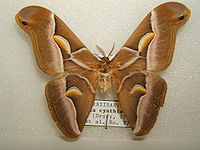 In addition to its use as an ornamental plant, the tree of heaven is also used for its wood, medicinal properties, and as a host plant to feed silkworms of the moth Samia cynthia
, which produces silk
that is stronger and cheaper than mulberry
silk, although with inferior gloss and texture. It is also unable to take dye. This type of silk is known under various names: "pongee
", "eri silk
" and "Shantung silk", the last name being derived from Shandong Province in China where this silk is often produced. Its production is particularly well known in the Yantai
region of that province. The moth has also been introduced in the United States.
The pale yellow, close-grained and satiny wood of ailanthus has been used in cabinet work. It is flexible and well suited to the manufacture of kitchen steamers
, which are important in Chinese cuisine
for cooking mantou
, pastries and rice. Zhejiang Province in eastern China is most famous for producing these steamers. It is also considered a good source of firewood across much of its range as it moderately hard and heavy, yet readily available. There are problems with using the wood as lumber, however. Because the trees exhibit rapid growth for the first few years, the trunk has uneven texture between the inner and outer wood, which can cause the wood to twist or crack during drying. Techniques have been developed for drying the wood so as to prevent this cracking, allowing it to be commercially harvested. Although the live tree tends to have very flexible wood, the wood is quite hard once properly dried.
, a noted American horticulturalist and professor at the University of Georgia, reported meeting, in 1982, a grower who could not find any buyers. He further writes (his emphasis): In Europe, however, the tree is still used in the garden to some degree as its habit is generally not as invasive as it is in America. In the United Kingdom
it is especially common in London
squares, streets, and parks, though it is also frequently found in gardens of southern England and East Anglia
. It becomes rare in the north, occurring only infrequently in southern Scotland
. It is also rare in Ireland
. In Germany
the tree is commonly planted in gardens. The tree has furthermore become unpopular in cultivation in the west because it is short-lived and that the trunk soon becomes hollow, making trees more than two feet in diameter unstable in high winds.
A few cultivar
s exist, but they are not often sold outside of China and probably not at all in North America:
and douchi
. After sitting for a day the liquid was strained out and given to the patient over the course of several days.
Another source from 684 AD, during the Tang dynasty
and recorded in Li Shizhen
's Compendium of Materia Medica
, states that when the leaves are taken internally, they make one incoherent and sleepy, while when used externally they can be effectively used to treat boils, abscess
es and itches. Yet another recipe recorded by Li uses the leaves to treat baldness. This formula calls for young leaves of ailanthus, catalpa
and peach
tree to be crushed together and the resulting liquid applied to the scalp to stimulate hair growth.
The dried bark
, however, is still an officinal
drug and is listed in the modern Chinese materia medica
as chun bai pi , meaning "white bark of spring". Modern works treat it in detail, discussing chemical constituents, how to identify the product and its pharmaceutical uses. It is prepared by felling the tree in fall or spring, stripping the bark and then scraping off the hardest, outermost portion, which is then sun-dried, soaked in water, partially re-dried in a basket and finally cut into strips. The bark is said to have cooling and astringent
properties and is primarily used to treat dysentery
, intestinal hemorrhage, menorrhagia
and spermatorrhea
. It is only prescribed in amounts between 4 and 10 grams, so as not to poison the patients. Li's Compendium has 18 recipes that call for the bark. Asian and European chemists have found some justification for its medical use as it contains a long list of active chemicals that include quassin
and saponin
, while ailanthone, the allelopathic chemical in the tree of heaven, is a known antimalarial agent. It is available in most shops dealing in Chinese traditional medicine. A tincture of the root-bark has been used successfully in treating cardiac palpitation, asthma
and epilepsy
.
The samara
s are also used in modern Chinese medicine under the name feng yan cao , meaning "herbal phoenix eye". They are used as a hemostatic agent, spermatorrhea
and for treating patients with blood in their feces or urine. It was clinically shown to be able to treat trichomoniasis
, a vaginal infection caused by the protozoan Trichomonas vaginalis. In occident, an extract of the bark sold under the synonym A. glandulosa is sometimes used as an herbal remedy for various ailments including cancer
.
Anecdotal evidence suggests that the plant may be mildly toxic. The noxious odours have been associated with nausea and headaches, as well as with contact dermatitis
reported in both humans and sheep, who also developed weakness and paralysis. It contains a quinone
irritant, 2,6-dimethoxybenzoquinone, as well as active quassin
oids (ailanthone itself being one) which may account for these effects, but they have, however, proved difficult or impossible to reproduce in humans and goats. In one trial a tincture from the blossom and foliage caused nausea, vomiting and muscular relaxation.
Ailanthus altissima swingle has potent anti-anaphylactic and anti-inflammatory properties.
, the Erya
, written in the 3rd century BC, the tree of heaven is mentioned second among a list of trees. It was mentioned again in a materia medica
compiled during the Tang dynasty
in 656 AD. Each work favoured a different character, however, and there is still some debate in the Chinese botanical community as to which character should be used. The current name, chouchun , means "stinking spring", and is a relatively new appellation. People living near the lower Yellow River
know it by the name chunshu , meaning "spring tree". The name stems from the fact that A. altissima is one of the last trees to come out of dormancy, and as such its leaves coming out would indicate that winter was truly over.
In Chinese literature
, ailanthus is often used for two rather extreme metaphors, with a mature tree representing a father and a stump being a spoiled child. This manifests itself occasionally when expressing best wishes to a friend's father and mother in a letter, where one can write "wishing your ailanthus and daylily
are strong and happy", with ailanthus metaphorically referring to the father and daylily to the mother. Furthermore, one can scold a child by calling him a "good-for-nothing ailanthus stump sprout", meaning the child is irresponsible. This derives from the literature of Zhuangzi
, a Taoist philosopher, who referred to a tree that had developed from a sprout at the stump and was thus unsuitable for carpentry due to its irregular shape. Later scholars associated this tree with ailanthus and applied the metaphor to children who, like stump sprouts of the tree, will not develop into a worthwhile human being if they don't follow rules or traditions.
uses the tree of heaven as its central metaphor, using it as an analogy for the ability to thrive in a difficult environment. At the time as well as now, ailanthus was common in neglected urban areas. She writes:
Ailanthus is also sometimes counter-nickname
d "tree from hell" due to its prolific invasiveness and the difficulty in eradicating it. In certain parts of the United States, the species has been nicknamed the "ghetto palm" because of its propensity for growing in the inhospitable conditions of urban areas, or on abandoned and poorly maintained properties.
Until March 26, 2008, a 60 feet (18.3 m)-tall member of the species was a prominent "centerpiece" of the sculpture garden at the Noguchi Museum
in the borough of Queens
in New York City
. The tree had been spared by the sculptor Isamu Noguchi
when in 1975 he bought the building which would become the museum and cleaned up its back lot. The tree was the only one he left in the yard, and the staff would eat lunch with Noguchi under it. "[I]n a sense, the sculpture garden was designed around the tree", said a former aide to Noguchi, Bonnie Rychlak, who later became the museum curator. By 2008, the old tree was found to be dying and in danger of crashing into the building, which was about to undergo a major renovation. The museum hired the Detroit Tree of Heaven Woodshop, an artists' collective, to use the wood to create benches, sculptures and other amenities in and around the building. The tree's rings were counted, revealing its age to be 75, and museum officials hoped it would regenerate from a sucker
.
in Sweden
, was influenced by the idea of the "ghetto palm" and installed a living ailanthus tree taken from Detroit for an international art show called Shrinking Cities at the Kunst-Werke Institute for Contemporary Art
in Berlin
in 2004.
Standard Chinese
Standard Chinese, or Modern Standard Chinese, also known as Mandarin or Putonghua, is the official language of the People's Republic of China and Republic of China , and is one of the four official languages of Singapore....
as chouchun , is a deciduous
Deciduous
Deciduous means "falling off at maturity" or "tending to fall off", and is typically used in reference to trees or shrubs that lose their leaves seasonally, and to the shedding of other plant structures such as petals after flowering or fruit when ripe...
tree in the Simaroubaceae
Simaroubaceae
The Simaroubaceae is a small, mostly tropical, family in the order Sapindales. In recent decades it has been subject to much taxonomic debate, with several small families being split off...
family. It is native to both northeast and central China
China
Chinese civilization may refer to:* China for more general discussion of the country.* Chinese culture* Greater China, the transnational community of ethnic Chinese.* History of China* Sinosphere, the area historically affected by Chinese culture...
and Taiwan
Taiwan
Taiwan , also known, especially in the past, as Formosa , is the largest island of the same-named island group of East Asia in the western Pacific Ocean and located off the southeastern coast of mainland China. The island forms over 99% of the current territory of the Republic of China following...
. Unlike other members of the genus Ailanthus
Ailanthus
Ailanthus is a genus of trees belonging to the family Simaroubaceae, in the order Sapindales . The genus is native from east Asia south to northern Australasia....
, it is found in temperate climates rather than the tropics. The tree grows rapidly and is capable of reaching heights of 15 metres (49.2 ft) in 25 years. However, the species is also short lived and rarely lives more than 50 years.
In China, the tree of heaven has a long and rich history. It was mentioned in the oldest extant Chinese dictionary and listed in countless Chinese medical texts for its purported ability to cure ailments ranging from mental illness to baldness. The roots, leaves and bark are still used today in traditional Chinese medicine
Traditional Chinese medicine
Traditional Chinese Medicine refers to a broad range of medicine practices sharing common theoretical concepts which have been developed in China and are based on a tradition of more than 2,000 years, including various forms of herbal medicine, acupuncture, massage , exercise , and dietary therapy...
, primarily as an astringent
Astringent
An astringent substance is a chemical compound that tends to shrink or constrict body tissues, usually locally after topical medicinal application. The word "astringent" derives from Latin adstringere, meaning "to bind fast"...
. The tree has been grown extensively both in China and abroad as a host plant for the ailanthus silkmoth, a moth involved in silk
Silk
Silk is a natural protein fiber, some forms of which can be woven into textiles. The best-known type of silk is obtained from the cocoons of the larvae of the mulberry silkworm Bombyx mori reared in captivity...
production. Ailanthus has become a part of western culture as well, with the tree serving as the central metaphor and subject matter of the best-selling American novel A Tree Grows in Brooklyn by Betty Smith
Betty Smith
Betty Smith, née Elisabeth Wehner , was an American author.-Biography:Born on December 15, 1896 in Brooklyn, New York to German immigrants, she grew up poor in Williamsburg, Brooklyn and attended Girl's High School. These experiences served as the framework to her first novel, A Tree Grows in...
.
The tree was first brought from China to Europe in the 1740s and to the United States in 1784. It was one of the first trees brought west during a time when chinoiserie
Chinoiserie
Chinoiserie, a French term, signifying "Chinese-esque", and pronounced ) refers to a recurring theme in European artistic styles since the seventeenth century, which reflect Chinese artistic influences...
was dominating European arts, and was initially hailed as a beautiful garden specimen. However, enthusiasm soon waned after gardeners became familiar with its suckering
Basal shoot
A basal shoot, root sprout, adventitious shoot, water sprout or sucker is a shoot or cane which grows from a bud at the base of a tree or shrub or from its roots. This shoot then becomes, or takes the form of, a singular plant. A plant that produces suckers is referred to as surculose...
habits and its foul smelling odour. Despite this, it was used extensively as a street tree during much of the 19th century. Outside of Europe and the United States, the plant has been spread to many other areas beyond its native range. In a number of these, it has become an invasive species
Invasive species
"Invasive species", or invasive exotics, is a nomenclature term and categorization phrase used for flora and fauna, and for specific restoration-preservation processes in native habitats, with several definitions....
due to its ability to quickly colonise disturbed areas and suppress competition with allelopathic
Allelopathy
Allelopathy is a biological phenomenon by which an organism produces one or more biochemicals that influence the growth, survival, and reproduction of other organisms. These biochemicals are known as allelochemicals and can have beneficial or detrimental effects on the target organisms...
chemicals. It is considered a noxious weed in Australia
Australia
Australia , officially the Commonwealth of Australia, is a country in the Southern Hemisphere comprising the mainland of the Australian continent, the island of Tasmania, and numerous smaller islands in the Indian and Pacific Oceans. It is the world's sixth-largest country by total area...
, the United States
United States
The United States of America is a federal constitutional republic comprising fifty states and a federal district...
, New Zealand
New Zealand
New Zealand is an island country in the south-western Pacific Ocean comprising two main landmasses and numerous smaller islands. The country is situated some east of Australia across the Tasman Sea, and roughly south of the Pacific island nations of New Caledonia, Fiji, and Tonga...
and several countries in southern
Southern Europe
The term Southern Europe, at its most general definition, is used to mean "all countries in the south of Europe". However, the concept, at different times, has had different meanings, providing additional political, linguistic and cultural context to the definition in addition to the typical...
and eastern Europe
Eastern Europe
Eastern Europe is the eastern part of Europe. The term has widely disparate geopolitical, geographical, cultural and socioeconomic readings, which makes it highly context-dependent and even volatile, and there are "almost as many definitions of Eastern Europe as there are scholars of the region"...
. The tree also resprouts
Basal shoot
A basal shoot, root sprout, adventitious shoot, water sprout or sucker is a shoot or cane which grows from a bud at the base of a tree or shrub or from its roots. This shoot then becomes, or takes the form of, a singular plant. A plant that produces suckers is referred to as surculose...
vigorously when cut, making its eradication difficult and time consuming. In many urban areas, it has acquired the derisive nicknames of "ghetto palm" and "stink tree".
Description
Bark
Bark is the outermost layers of stems and roots of woody plants. Plants with bark include trees, woody vines and shrubs. Bark refers to all the tissues outside of the vascular cambium and is a nontechnical term. It overlays the wood and consists of the inner bark and the outer bark. The inner...
is smooth and light grey, often becoming somewhat rougher with light tan fissures as the tree ages. The twigs are stout, smooth to lightly pubescent, and reddish or chestnut in colour. They have lenticel
Lenticel
A lenticel is an airy aggregation of cells within the structural surfaces of the stems, roots, and other parts of vascular plants. It functions as a pore, providing a medium for the direct exchange of gasses between the internal tissues and atmosphere, thereby bypassing the periderm, which would...
s as well as heart-shaped leaf scars (i.e. a scar left on the twig after a leaf falls) with many bundle scars (i.e. small marks where the veins of the leaf once connected to the tree) around the edges. The bud
Bud
In botany, a bud is an undeveloped or embryonic shoot and normally occurs in the axil of a leaf or at the tip of the stem. Once formed, a bud may remain for some time in a dormant condition, or it may form a shoot immediately. Buds may be specialized to develop flowers or short shoots, or may have...
s are finely pubescent, dome shaped, and partially hidden behind the petiole
Petiole (botany)
In botany, the petiole is the stalk attaching the leaf blade to the stem. The petiole usually has the same internal structure as the stem. Outgrowths appearing on each side of the petiole are called stipules. Leaves lacking a petiole are called sessile, or clasping when they partly surround the...
, though they are completely visible in the dormant season at the sinuses of the leaf scars. The branches are light to dark gray in colour, smooth, lustrous, and containing raised lenticels that become fissures with age. The ends of the branches become pendulous. All parts of the plant have a distinguishing strong odour that is often likened to peanuts, cashews, or rotting cashews.
The leaves
Leaf
A leaf is an organ of a vascular plant, as defined in botanical terms, and in particular in plant morphology. Foliage is a mass noun that refers to leaves as a feature of plants....
are large, odd- or even-pinnate
Pinnate
Pinnate is a term used to describe feather-like or multi-divided features arising from both sides of a common axis in plant or animal structures, and comes from the Latin word pinna meaning "feather", "wing", or "fin". A similar term is pectinate, which refers to a comb-like arrangement of parts...
ly compound, and arranged alternately on the stem. They range in size from 30 to 90 cm (0.984251968503937 to 3 ft) in length and contain 10–41 leaflets organised in pairs, with the largest leaves found on vigorous young sprouts. The rachis
Rachis
Rachis is a biological term for a main axis or "shaft".-In zoology:In vertebrates a rachis can refer to the series of articulated vertebrae, which encase the spinal cord. In this case the rachis usually form the supporting axis of the body and is then called the spine or vertebral column...
is light to reddish-green with a swollen base. The leaflet
Leaflet
A leaflet in botany is a part of a compound leaf. A leaflet may resemble an entire leaf, but it is not borne on a stem as a leaf is, but rather on a vein of the whole leaf. Compound leaves are common in many plant families...
s are ovate-lanceolate
Leaf shape
In botany, leaf shape is characterised with the following terms :* Acicular : Slender and pointed, needle-like* Acuminate : Tapering to a long point...
with entire margins, somewhat asymmetric and occasionally not directly opposite to each others. Each leaflet is 5 to 18 cm (2 to 7.1 in) long and 2.5 to 5 cm (0.984251968503937 to 2 in) wide. They have a long tapering end while the bases have two to four teeth, each containing one or more glands at the tip. The leaflets' upper sides are dark green in colour with light green veins, while the undersides are a more whitish green. The petioles are 5 to 12 mm (0.196850393700787 to 0.47244094488189 in) long. The lobed bases and glands distinguish it from similar sumac species.
Flower
A flower, sometimes known as a bloom or blossom, is the reproductive structure found in flowering plants . The biological function of a flower is to effect reproduction, usually by providing a mechanism for the union of sperm with eggs...
s are small and appear in large panicle
Panicle
A panicle is a compound raceme, a loose, much-branched indeterminate inflorescence with pedicellate flowers attached along the secondary branches; in other words, a branched cluster of flowers in which the branches are racemes....
s up to 50 cm (19.7 in) in length at the end of new shoots. The individual flowers are yellowish green to reddish in colour, each with five petal
Petal
Petals are modified leaves that surround the reproductive parts of flowers. They often are brightly colored or unusually shaped to attract pollinators. Together, all of the petals of a flower are called a corolla. Petals are usually accompanied by another set of special leaves called sepals lying...
s and sepal
Sepal
A sepal is a part of the flower of angiosperms . Collectively the sepals form the calyx, which is the outermost whorl of parts that form a flower. Usually green, sepals have the typical function of protecting the petals when the flower is in bud...
s. The sepals are cup-shaped, lobed and united while the petals are valvate (i.e. they meet at the edges without overlapping), white and hairy towards the inside. They appear from mid-April in the south of its range to July in the north. A. altissima is dioecious
Plant sexuality
Plant sexuality covers the wide variety of sexual reproduction systems found across the plant kingdom. This article describes morphological aspects of sexual reproduction of plants....
, with male and female flowers being borne on different individuals. Male trees produce three to four times as many flowers as the females, making the male flowers more conspicuous. Furthermore, the male plants emit a foul-smelling odour while flowering to attract pollinating insects. Female flowers contain ten (or rarely five through abortion) sterile stamen
Stamen
The stamen is the pollen producing reproductive organ of a flower...
s (stamenoides) with heart-shaped anthers. The pistil is made up of five free carpels (i.e. they are not fused), each containing a single ovule
Ovule
Ovule means "small egg". In seed plants, the ovule is the structure that gives rise to and contains the female reproductive cells. It consists of three parts: The integument forming its outer layer, the nucellus , and the megaspore-derived female gametophyte in its center...
. Their styles are united and slender with star-shaped stigma
Gynoecium
Gynoecium is most commonly used as a collective term for all carpels in a flower. A carpel is the ovule and seed producing reproductive organ in flowering plants. Carpels are derived from ovule-bearing leaves which evolved to form a closed structure containing the ovules...
s. The male flowers are similar in appearance, but they of course lack a pistil and the stamens do function, each being topped with a globular anther and a glandular green disc. The seed
Seed
A seed is a small embryonic plant enclosed in a covering called the seed coat, usually with some stored food. It is the product of the ripened ovule of gymnosperm and angiosperm plants which occurs after fertilization and some growth within the mother plant...
s borne on the female trees are 5 mm in diameter and each is encapsulated in a samara
Samara (fruit)
A samara is a type of fruit in which a flattened wing of fibrous, papery tissue develops from the ovary wall. A samara is a simple dry fruit and indehiscent . It is a winged achene...
that is 2.5 cm long (1 in) and 1 cm (0.393700787401575 in) broad, appearing July though August, but usually persisting on the tree until the next spring. The samara is twisted at the tips, making it spin as it falls and assisting wind dispersal. The females can produce huge amounts of seeds, normally around 30,000 per kilogram (14,000/lb
Pound (mass)
The pound or pound-mass is a unit of mass used in the Imperial, United States customary and other systems of measurement...
) of tree.
Taxonomy
The first scientific descriptions of the tree of heaven were made shortly after it was introduced to EuropeEurope
Europe is, by convention, one of the world's seven continents. Comprising the westernmost peninsula of Eurasia, Europe is generally 'divided' from Asia to its east by the watershed divides of the Ural and Caucasus Mountains, the Ural River, the Caspian and Black Seas, and the waterways connecting...
by the French Jesuit Pierre Nicholas d'Incarville. D'Incarville had sent seeds from Peking via Siberia
Siberia
Siberia is an extensive region constituting almost all of Northern Asia. Comprising the central and eastern portion of the Russian Federation, it was part of the Soviet Union from its beginning, as its predecessor states, the Tsardom of Russia and the Russian Empire, conquered it during the 16th...
to his botanist friend Bernard de Jussieu
Bernard de Jussieu
Bernard de Jussieu was a French naturalist, younger brother of Antoine de Jussieu.Bernard de Jussieu was born in Lyon...
in the 1740s. The seeds sent by d'Incarville were thought to be from the economically important and similar looking Chinese varnish tree (Toxicodendron vernicifluum), which he had observed in the lower Yangtze region, rather than the tree of heaven. D'Incarville attached a note indicating this, which caused much taxonomic confusion over the next few decades. In 1751, Jussieu planted a few seeds in France
France
The French Republic , The French Republic , The French Republic , (commonly known as France , is a unitary semi-presidential republic in Western Europe with several overseas territories and islands located on other continents and in the Indian, Pacific, and Atlantic oceans. Metropolitan France...
and sent others on to Philip Miller
Philip Miller
Philip Miller FRS was a Scottish botanist.Miller was chief gardener at the Chelsea Physic Garden from 1722 until he was pressured to retire shortly before his death...
, the superintendent at the Chelsea Physic Garden
Chelsea Physic Garden
The Chelsea Physic Garden was established as the Apothecaries’ Garden in London, England in 1673. It is the second oldest botanical garden in Britain, after the University of Oxford Botanic Garden, which was founded in 1621.Its rock garden is the oldest English garden devoted to alpine plants...
, and to Philip C. Webb, the owner of an exotic plant garden in Busbridge
Busbridge
Busbridge is a village and civil parish in the borough of Waverley in Surrey. It has a population of 758. It forms part of the Waverley ward of Bramley, Busbridge and Hascombe....
, England
England
England is a country that is part of the United Kingdom. It shares land borders with Scotland to the north and Wales to the west; the Irish Sea is to the north west, the Celtic Sea to the south west, with the North Sea to the east and the English Channel to the south separating it from continental...
.
Confusion in naming began when the tree was described by all three men with three different names. In Paris, Linnaeus gave the plant the name Rhus succedanea, while it was known commonly as grand vernis du Japon. In London the specimens were named by Miller as Toxicodendron altissima and in Busbridge it was dubbed in the old classification system as Rhus Sinese foliis alatis. There are extant records from the 1750s of disputes over the proper name between Philip Miller and John Ellis, curator of Webb's garden in Busbridge. Rather than the issue being resolved, more names soon appeared for the plant: Jakob Friedrich Ehrhart
Jakob Friedrich Ehrhart
Jakob Friedrich Ehrhart was a German botanist, a pupil of Carolus Linnaeus at Uppsala University, and later Director of the Botanical Garden of Hannover, where he produced several major botanical works between 1780–1793...
observed a specimen in Utrecht
Utrecht (province)
Utrecht is the smallest province of the Netherlands in terms of area, and is located in the centre of the country. It is bordered by the Eemmeer in the north, Gelderland in the east, the river Rhine in the south, South Holland in the west, and North Holland in the northwest...
in 1782 and named it Rhus cacodendron.
Light was shed on the taxonomic status of ailanthus in 1788 when René Louiche Desfontaines
René Louiche Desfontaines
René Louiche Desfontaines was a French botanist.Desfontaines was born near Tremblay in Brittany. He attended the Collège de Rennes and in 1773 went to Paris to study medicine. His interest in botany originated from lectures at the Jardin des Plantes given by Louis Guillaume Lemonnier...
observed the samaras of the Paris specimens, which were still labelled Rhus succedanea, and came to the conclusion that the plant was not a sumac
Sumac
Sumac is any one of approximately 250 species of flowering plants in the genus Rhus and related genera, in the family Anacardiaceae. Sumacs grow in subtropical and temperate regions throughout the world, especially in Africa and North America....
. He published an article with an illustrated description and gave it the name Ailanthus glandulosa, placing it in the same genus as the tropical species then known as A. integrifolia (white siris, now A. triphysa
Ailanthus triphysa
Ailanthus triphysa is an Asian and Australian rainforest tree.-Distribution:It occurs in India, Sri Lanka, China, Malaysia, Burma, Thailand, Laos, Philippines, Indonesia and Vietnam...
). The name is derived from the Ambonese
Ambonese
The Ambonese, also known as South Moluccans, are an Indonesian ethnic group of mixed Malay-Papuan origin. They are mostly Christians or Muslims. Ambonese are from Ambon Island in Maluku, an island group east of Sulawesi and north of Timor in Indonesia. The predominant language of the island is...
word ailanto, meaning "heaven-tree" or "tree reaching for the sky". The specific glandulosa, referring to the glands on the leaves, persisted until as late as 1957, but it was ultimately made invalid as a later homonym at the species level. The current species name comes from Walter T. Swingle who was employed by the United States Department of Plant Industry. He decided to transfer Miller's older specific name into the genus of Desfontaines, resulting in the accepted name Ailanthus altissima. Altissima is Latin for "tallest", and refers to the sizes the tree can reach. The plant is sometimes incorrectly cited with the specific epithet in the masculine (glandulosus or altissimus), which is incorrect since botanical, like Classical Latin
Classical Latin
Classical Latin in simplest terms is the socio-linguistic register of the Latin language regarded by the enfranchised and empowered populations of the late Roman republic and the Roman empire as good Latin. Most writers during this time made use of it...
, treats most tree names as feminine.
There are three varieties
Variety (biology)
In botanical nomenclature, variety is a taxonomic rank below that of species: as such, it gets a three-part infraspecific name....
of A. altissima:
- A. altissima var. altissima, which is the type variety and is native to mainland ChinaMainland ChinaMainland China, the Chinese mainland or simply the mainland, is a geopolitical term that refers to the area under the jurisdiction of the People's Republic of China . According to the Taipei-based Mainland Affairs Council, the term excludes the PRC Special Administrative Regions of Hong Kong and...
. - A. altissima var. tanakai, which is endemic to northern TaiwanTaiwanTaiwan , also known, especially in the past, as Formosa , is the largest island of the same-named island group of East Asia in the western Pacific Ocean and located off the southeastern coast of mainland China. The island forms over 99% of the current territory of the Republic of China following...
highlands. It differs from the type in having yellowish bark, odd-pinnate leaves that are also shorter on average at 45 to 60 cm (17.7 to 23.6 in) long with only 13–25 scythe-like leaflets. It is listed as endangered in the IUCN Red ListIUCN Red ListThe IUCN Red List of Threatened Species , founded in 1963, is the world's most comprehensive inventory of the global conservation status of biological species. The International Union for Conservation of Nature is the world's main authority on the conservation status of species...
of threatened species due to loss of habitat for building and industrial plantations. - A. altissima var. sutchuenensis, which differs in having red branchlets.
Distribution and habitat
A. altissima is native to northern and central ChinaChina
Chinese civilization may refer to:* China for more general discussion of the country.* Chinese culture* Greater China, the transnational community of ethnic Chinese.* History of China* Sinosphere, the area historically affected by Chinese culture...
, Taiwan
Taiwan
Taiwan , also known, especially in the past, as Formosa , is the largest island of the same-named island group of East Asia in the western Pacific Ocean and located off the southeastern coast of mainland China. The island forms over 99% of the current territory of the Republic of China following...
and northern Korea
Korea
Korea ) is an East Asian geographic region that is currently divided into two separate sovereign states — North Korea and South Korea. Located on the Korean Peninsula, Korea is bordered by the People's Republic of China to the northwest, Russia to the northeast, and is separated from Japan to the...
. In Taiwan it is present as var. takanai. In China it is native to every province
Province (China)
A province, in the context of Chinese government, is a translation of sheng formally provincial level divisions, which is an administrative division. Provinces, municipalities, autonomous regions, and the special administrative regions, make up the four types of province of administrative division...
except Gansu
Gansu
' is a province located in the northwest of the People's Republic of China.It lies between the Tibetan and Huangtu plateaus, and borders Mongolia, Inner Mongolia, and Ningxia to the north, Xinjiang and Qinghai to the west, Sichuan to the south, and Shaanxi to the east...
, Heilongjiang
Heilongjiang
For the river known in Mandarin as Heilong Jiang, see Amur River' is a province of the People's Republic of China located in the northeastern part of the country. "Heilongjiang" literally means Black Dragon River, which is the Chinese name for the Amur. The one-character abbreviation is 黑...
, Hainan
Hainan
Hainan is the smallest province of the People's Republic of China . Although the province comprises some two hundred islands scattered among three archipelagos off the southern coast, of its land mass is Hainan Island , from which the province takes its name...
, Jilin
Jilin
Jilin , is a province of the People's Republic of China located in the northeastern part of the country. Jilin borders North Korea and Russia to the east, Heilongjiang to the north, Liaoning to the south, and Inner Mongolia to the west...
, Ningxia
Ningxia
Ningxia, formerly transliterated as Ningsia, is an autonomous region of the People's Republic of China. Located in Northwest China, on the Loess Plateau, the Yellow River flows through this vast area of land. The Great Wall of China runs along its northeastern boundary...
, Qinghai
Qinghai
Qinghai ; Oirat Mongolian: ; ; Salar:) is a province of the People's Republic of China, named after Qinghai Lake...
, Xinjiang
Xinjiang
Xinjiang is an autonomous region of the People's Republic of China. It is the largest Chinese administrative division and spans over 1.6 million km2...
, and Tibet
Tibet
Tibet is a plateau region in Asia, north-east of the Himalayas. It is the traditional homeland of the Tibetan people as well as some other ethnic groups such as Monpas, Qiang, and Lhobas, and is now also inhabited by considerable numbers of Han and Hui people...
.
The tree prefers moist and loamy soils, but is adaptable to a very wide range of soil conditions and pH
PH
In chemistry, pH is a measure of the acidity or basicity of an aqueous solution. Pure water is said to be neutral, with a pH close to 7.0 at . Solutions with a pH less than 7 are said to be acidic and solutions with a pH greater than 7 are basic or alkaline...
values. It is drought-hardy, but not tolerant of flooding. It also does not tolerate deep shade. In China it is often found in limestone
Limestone
Limestone is a sedimentary rock composed largely of the minerals calcite and aragonite, which are different crystal forms of calcium carbonate . Many limestones are composed from skeletal fragments of marine organisms such as coral or foraminifera....
-rich areas. The tree of heaven is found within a wide range of climatic conditions. In its native range it is found at high altitudes in Taiwan as well as lower ones in mainland China. In the U.S. it is found in arid regions bordering the Great Plains
Great Plains
The Great Plains are a broad expanse of flat land, much of it covered in prairie, steppe and grassland, which lies west of the Mississippi River and east of the Rocky Mountains in the United States and Canada. This area covers parts of the U.S...
, very wet regions in the southern Appalachians, and cold areas of the lower Rocky Mountains
Rocky Mountains
The Rocky Mountains are a major mountain range in western North America. The Rocky Mountains stretch more than from the northernmost part of British Columbia, in western Canada, to New Mexico, in the southwestern United States...
. Prolonged cold and snow cover cause dieback
Forest dieback
Forest dieback is a condition in trees or woody plants in which peripheral parts are killed, either by parasites or due to conditions like acid rain and drought....
, though the trees re-sprout from the roots.
As an exotic plant
The earliest introductions of A. altissima to countries outside of its native range were to the southern areas of KoreaKorea
Korea ) is an East Asian geographic region that is currently divided into two separate sovereign states — North Korea and South Korea. Located on the Korean Peninsula, Korea is bordered by the People's Republic of China to the northwest, Russia to the northeast, and is separated from Japan to the...
as well as to Japan
Japan
Japan is an island nation in East Asia. Located in the Pacific Ocean, it lies to the east of the Sea of Japan, China, North Korea, South Korea and Russia, stretching from the Sea of Okhotsk in the north to the East China Sea and Taiwan in the south...
. It is possible that the tree is native to these areas, but it is generally agreed that the tree was a very early introduction. Within China itself it has also been naturalised beyond its native range in areas such as Qinghai
Qinghai
Qinghai ; Oirat Mongolian: ; ; Salar:) is a province of the People's Republic of China, named after Qinghai Lake...
, Ningxia
Ningxia
Ningxia, formerly transliterated as Ningsia, is an autonomous region of the People's Republic of China. Located in Northwest China, on the Loess Plateau, the Yellow River flows through this vast area of land. The Great Wall of China runs along its northeastern boundary...
and Xinjiang
Xinjiang
Xinjiang is an autonomous region of the People's Republic of China. It is the largest Chinese administrative division and spans over 1.6 million km2...
.
In 1784, not long after Jussieu had sent seeds to England, some were forwarded to the United States
United States
The United States of America is a federal constitutional republic comprising fifty states and a federal district...
by William Hamilton, a gardener in Philadelphia. In both Europe and America it quickly became a favoured ornamental, especially as a street tree, and by 1840 it was available in most nurseries. The tree was separately brought to California
California
California is a state located on the West Coast of the United States. It is by far the most populous U.S. state, and the third-largest by land area...
in the 1890s by Chinese immigrants who came during the California Gold Rush
California Gold Rush
The California Gold Rush began on January 24, 1848, when gold was found by James W. Marshall at Sutter's Mill in Coloma, California. The first to hear confirmed information of the gold rush were the people in Oregon, the Sandwich Islands , and Latin America, who were the first to start flocking to...
. It has escaped cultivation in all areas where it was introduced, but most extensively in the United States. It has naturalised across much of Europe, including Germany
Germany
Germany , officially the Federal Republic of Germany , is a federal parliamentary republic in Europe. The country consists of 16 states while the capital and largest city is Berlin. Germany covers an area of 357,021 km2 and has a largely temperate seasonal climate...
, Austria
Austria
Austria , officially the Republic of Austria , is a landlocked country of roughly 8.4 million people in Central Europe. It is bordered by the Czech Republic and Germany to the north, Slovakia and Hungary to the east, Slovenia and Italy to the south, and Switzerland and Liechtenstein to the...
, Switzerland
Switzerland
Switzerland name of one of the Swiss cantons. ; ; ; or ), in its full name the Swiss Confederation , is a federal republic consisting of 26 cantons, with Bern as the seat of the federal authorities. The country is situated in Western Europe,Or Central Europe depending on the definition....
, the Pannonian region (i.e. southeastern Europe from Italy
Italy
Italy , officially the Italian Republic languages]] under the European Charter for Regional or Minority Languages. In each of these, Italy's official name is as follows:;;;;;;;;), is a unitary parliamentary republic in South-Central Europe. To the north it borders France, Switzerland, Austria and...
and Hungary
Hungary
Hungary , officially the Republic of Hungary , is a landlocked country in Central Europe. It is situated in the Carpathian Basin and is bordered by Slovakia to the north, Ukraine and Romania to the east, Serbia and Croatia to the south, Slovenia to the southwest and Austria to the west. The...
south to Bosnia and Herzegovina
Bosnia and Herzegovina
Bosnia and Herzegovina , sometimes called Bosnia-Herzegovina or simply Bosnia, is a country in Southern Europe, on the Balkan Peninsula. Bordered by Croatia to the north, west and south, Serbia to the east, and Montenegro to the southeast, Bosnia and Herzegovina is almost landlocked, except for the...
) and most countries of the Mediterranean Basin
Mediterranean Basin
In biogeography, the Mediterranean Basin refers to the lands around the Mediterranean Sea that have a Mediterranean climate, with mild, rainy winters and hot, dry summers, which supports characteristic Mediterranean forests, woodlands, and scrub vegetation...
. In Montenegro
Montenegro
Montenegro Montenegrin: Crna Gora Црна Гора , meaning "Black Mountain") is a country located in Southeastern Europe. It has a coast on the Adriatic Sea to the south-west and is bordered by Croatia to the west, Bosnia and Herzegovina to the northwest, Serbia to the northeast and Albania to the...
and Albania
Albania
Albania , officially known as the Republic of Albania , is a country in Southeastern Europe, in the Balkans region. It is bordered by Montenegro to the northwest, Kosovo to the northeast, the Republic of Macedonia to the east and Greece to the south and southeast. It has a coast on the Adriatic Sea...
A. altissima is widespread in both rural and urban areas and while in the first it was introduced as an ornamental plant, it very soon invaded native ecosystem
Ecosystem
An ecosystem is a biological environment consisting of all the organisms living in a particular area, as well as all the nonliving , physical components of the environment with which the organisms interact, such as air, soil, water and sunlight....
s with disastrous results and became an invasive species. Ailanthus has also been introduced to Argentina
Argentina
Argentina , officially the Argentine Republic , is the second largest country in South America by land area, after Brazil. It is constituted as a federation of 23 provinces and an autonomous city, Buenos Aires...
, Australia
Australia
Australia , officially the Commonwealth of Australia, is a country in the Southern Hemisphere comprising the mainland of the Australian continent, the island of Tasmania, and numerous smaller islands in the Indian and Pacific Oceans. It is the world's sixth-largest country by total area...
(where it is a declared weed in New South Wales and Victoria), New Zealand
New Zealand
New Zealand is an island country in the south-western Pacific Ocean comprising two main landmasses and numerous smaller islands. The country is situated some east of Australia across the Tasman Sea, and roughly south of the Pacific island nations of New Caledonia, Fiji, and Tonga...
(where it is listed under the National Pest Plant Accord
National Pest Plant Accord
The National Pest Plant Accord identifies pest plants that are prohibited from sale and commercial propagation and distribution across New Zealand....
and is classed an "unwanted organism"), the Middle East and in some countries in South Asia such as Pakistan
Pakistan
Pakistan , officially the Islamic Republic of Pakistan is a sovereign state in South Asia. It has a coastline along the Arabian Sea and the Gulf of Oman in the south and is bordered by Afghanistan and Iran in the west, India in the east and China in the far northeast. In the north, Tajikistan...
.
In North America
North America
North America is a continent wholly within the Northern Hemisphere and almost wholly within the Western Hemisphere. It is also considered a northern subcontinent of the Americas...
, A. altissima is present from Massachusetts
Massachusetts
The Commonwealth of Massachusetts is a state in the New England region of the northeastern United States of America. It is bordered by Rhode Island and Connecticut to the south, New York to the west, and Vermont and New Hampshire to the north; at its east lies the Atlantic Ocean. As of the 2010...
in the east, west to southern Ontario
Ontario
Ontario is a province of Canada, located in east-central Canada. It is Canada's most populous province and second largest in total area. It is home to the nation's most populous city, Toronto, and the nation's capital, Ottawa....
, southwest to Iowa
Iowa
Iowa is a state located in the Midwestern United States, an area often referred to as the "American Heartland". It derives its name from the Ioway people, one of the many American Indian tribes that occupied the state at the time of European exploration. Iowa was a part of the French colony of New...
, south to Texas
Texas
Texas is the second largest U.S. state by both area and population, and the largest state by area in the contiguous United States.The name, based on the Caddo word "Tejas" meaning "friends" or "allies", was applied by the Spanish to the Caddo themselves and to the region of their settlement in...
, and east to the north of Florida
Florida
Florida is a state in the southeastern United States, located on the nation's Atlantic and Gulf coasts. It is bordered to the west by the Gulf of Mexico, to the north by Alabama and Georgia and to the east by the Atlantic Ocean. With a population of 18,801,310 as measured by the 2010 census, it...
. On the west coast it is found from New Mexico
New Mexico
New Mexico is a state located in the southwest and western regions of the United States. New Mexico is also usually considered one of the Mountain States. With a population density of 16 per square mile, New Mexico is the sixth-most sparsely inhabited U.S...
west to California and north to Washington. In the east of its range it grows most extensively in disturbed areas of cities, where it was long ago present as a planted street tree. It also grows along roads and railways. For example, a 2003 study in North Carolina
North Carolina
North Carolina is a state located in the southeastern United States. The state borders South Carolina and Georgia to the south, Tennessee to the west and Virginia to the north. North Carolina contains 100 counties. Its capital is Raleigh, and its largest city is Charlotte...
found the tree of heaven was present on 1.7% of all highway and railroad edges in the state and had been expanding its range at the rate of 4.76% counties per year. Similarly, another study conducted in southwestern Virginia determined that the tree of heaven is thriving along approximately 30% of the state's interstate highway system length or mileage. It sometimes enters undisturbed areas as well and competes with native plants. In western North America it is most common in mountainous areas around old dwellings and abandoned mining operations.
Ecology
Tsuga
Tsuga is a genus of conifers in the family Pinaceae. The common name hemlock is derived from a perceived similarity in the smell of its crushed foliage to that of the unrelated plant poison hemlock....
-hardwood forest in New York
New York
New York is a state in the Northeastern region of the United States. It is the nation's third most populous state. New York is bordered by New Jersey and Pennsylvania to the south, and by Connecticut, Massachusetts and Vermont to the east...
found that Ailanthus was capable of competing successfully with native trees in canopy gaps where only 2 to 15% of full sun was available. The same study characterised the tree as using a "gap-obligate" strategy in order to reach the forest canopy, meaning it grows rapidly during a very short period rather than growing slowly over a long period. It is a short lived tree in any location and rarely lives more than 50 years. Ailanthus is among the most pollution-tolerant of tree species, including sulfur dioxide
Sulfur dioxide
Sulfur dioxide is the chemical compound with the formula . It is released by volcanoes and in various industrial processes. Since coal and petroleum often contain sulfur compounds, their combustion generates sulfur dioxide unless the sulfur compounds are removed before burning the fuel...
, which it absorbs in its leaves. It can withstand cement dust and fumes from coal tar operations, as well as resist ozone
Ozone
Ozone , or trioxygen, is a triatomic molecule, consisting of three oxygen atoms. It is an allotrope of oxygen that is much less stable than the diatomic allotrope...
exposure relatively well. Furthermore, high concentrations of mercury
Mercury (element)
Mercury is a chemical element with the symbol Hg and atomic number 80. It is also known as quicksilver or hydrargyrum...
have been found built up in tissues of the plant.
Ailanthus has been used to re-vegetate areas where acid mine drainage has occurred and it has been shown to tolerate pH levels as low as 4.1 (approximately that of tomato juice). It can withstand very low phosphorus
Phosphorus
Phosphorus is the chemical element that has the symbol P and atomic number 15. A multivalent nonmetal of the nitrogen group, phosphorus as a mineral is almost always present in its maximally oxidized state, as inorganic phosphate rocks...
levels and high salinity levels. The drought-tolerance of the tree is strong due to its ability to effectively store water in its root system. It is frequently found in areas where few trees can survive. The roots are also aggressive enough to cause damage to subterranean sewers and pipes. Along highways it often forms dense thickets in which few other tree species are present, largely due to the toxins it produces to prevent competition.
Allelopathy
Allelopathy is a biological phenomenon by which an organism produces one or more biochemicals that influence the growth, survival, and reproduction of other organisms. These biochemicals are known as allelochemicals and can have beneficial or detrimental effects on the target organisms...
called ailanthone, which inhibits the growth of other plants. The inhibitors are strongest in the bark and roots, but are also present in the leaves, wood and seeds of the plant. One study showed that a crude extract of the root bark inhibited 50% of a sample of garden cress
Garden cress
Garden cress is a fast-growing, edible herb that is botanically related to watercress and mustard, sharing their peppery, tangy flavor and aroma...
(Lepidium sativum) seeds from germinating. The same study tested the extract as an herbicide on garden cress, redroot pigweed (Amaranthus retroflexus), velvetleaf
Velvetleaf
Velvetleaf is a common name used for plants with soft-haired leaves:* Abutilon theophrasti * Limnocharis flava Buchenau...
(Abutilon theophrastii), yellow bristlegrass (Setaria glauca), barnyard grass (Echinochloa crusgalli), pea
Pea
A pea is most commonly the small spherical seed or the seed-pod of the pod fruit Pisum sativum. Each pod contains several peas. Peapods are botanically a fruit, since they contain seeds developed from the ovary of a flower. However, peas are considered to be a vegetable in cooking...
(Pisum sativum cv. Sugar Snap) and maize
Maize
Maize known in many English-speaking countries as corn or mielie/mealie, is a grain domesticated by indigenous peoples in Mesoamerica in prehistoric times. The leafy stalk produces ears which contain seeds called kernels. Though technically a grain, maize kernels are used in cooking as a vegetable...
(Zea mays cv.
Cultivar
A cultivar'Cultivar has two meanings as explained under Formal definition. When used in reference to a taxon, the word does not apply to an individual plant but to all those plants sharing the unique characteristics that define the cultivar. is a plant or group of plants selected for desirable...
Silver Queen). It proved able to kill nearly 100% of seedlings with the exception of velvetleaf, which showed some resistance. Another experiment showed a water extract of the chemical was either lethal or highly damaging to 11 North American hardwood
Hardwood
Hardwood is wood from angiosperm trees . It may also be used for those trees themselves: these are usually broad-leaved; in temperate and boreal latitudes they are mostly deciduous, but in tropics and subtropics mostly evergreen.Hardwood contrasts with softwood...
s and 34 conifers, with the white ash (Fraxinus americana) being the only plant not adversely affected. The chemical does not, however, affect the tree of heaven's own seedlings, indicating that A. altissima has a defence mechanism to prevent autotoxicity
Autotoxicity
Autotoxicity is a form of allelopathy in which a species inhibits growth or reproduction of members of that same species through the production of chemicals that are released into the environment....
. Resistance in various plant species has been shown to increase with exposure. Populations without prior exposure to the chemicals are most susceptible to them. Seeds produced from exposed plants have also been shown to be more resistant than their unexposed counterparts.
The tree of heaven is a very rapidly growing tree, possibly the fastest growing tree in North America. Growth of one to two metres (3.3 to 6.6 ft) per year for the first four years is considered normal. Shade considerably hampers growth rates. Older trees, while growing much slower, still do so faster than other trees. Studies found that California
California
California is a state located on the West Coast of the United States. It is by far the most populous U.S. state, and the third-largest by land area...
n trees grew faster than their East Coast
East Coast of the United States
The East Coast of the United States, also known as the Eastern Seaboard, refers to the easternmost coastal states in the United States, which touch the Atlantic Ocean and stretch up to Canada. The term includes the U.S...
counterparts, and American trees in general grew faster than Chinese ones.
In northern Europe
Northern Europe
Northern Europe is the northern part or region of Europe. Northern Europe typically refers to the seven countries in the northern part of the European subcontinent which includes Denmark, Estonia, Latvia, Lithuania, Norway, Finland and Sweden...
the tree of heaven was not considered naturalised in cities until after the Second World War. This has been attributed to the tree's ability to colonise areas of rubble of destroyed buildings where most other plants would not grow. In addition, the warmer microclimate
Microclimate
A microclimate is a local atmospheric zone where the climate differs from the surrounding area. The term may refer to areas as small as a few square feet or as large as many square miles...
in cities offers a more suitable habitat than the surrounding rural areas. For example, one study in Germany found the tree of heaven growing in 92% of densely populated areas of Berlin
Berlin
Berlin is the capital city of Germany and is one of the 16 states of Germany. With a population of 3.45 million people, Berlin is Germany's largest city. It is the second most populous city proper and the seventh most populous urban area in the European Union...
, 25% of its suburbs and only 3% of areas outside the city altogether. In other areas of Europe this is not the case as climates are mild enough for the tree to flourish. It has colonised natural areas in Hungary
Hungary
Hungary , officially the Republic of Hungary , is a landlocked country in Central Europe. It is situated in the Carpathian Basin and is bordered by Slovakia to the north, Ukraine and Romania to the east, Serbia and Croatia to the south, Slovenia to the southwest and Austria to the west. The...
, for example, and is considered a threat to biodiversity at that country's Aggtelek National Park
Aggtelek National Park
Aggtelek National Park is a national park in Northern Hungary, in the Aggtelek Karst region. It was founded in 1985. It contains 198.92 km² . It has been part of the UNESCO World Heritage since 1995...
.
Several species of Lepidoptera
Lepidoptera
Lepidoptera is a large order of insects that includes moths and butterflies . It is one of the most widespread and widely recognizable insect orders in the world, encompassing moths and the three superfamilies of butterflies, skipper butterflies, and moth-butterflies...
utilise the leaves of ailanthus as food, including the Indian moon moth (Actias selene) and the common grass yellow
Eurema hecabe
The Large Grass Yellow or Common Grass Yellow is a small pierid butterfly species found in Asia or Africa. They are found flying close to the ground and are found in open grass and scrub habitats...
(Eurema hecabe). In North America the tree is the host plant for the ailanthus webworm
Ailanthus webworm
The Ailanthus webworm, Atteva aurea, is an ermine moth now found commonly in the United States. It was formerly known under the scientific name Atteva punctella ....
(Atteva aurea), though this ermine moth
Ermine moth
The family Yponomeutidae are known as the ermine moths, with several hundred species, most of them in the tropics. The larvae tend to form communal webs, and some are minor pests in agriculture, forestry, and horticulture. Some of the adults are very attractive...
is native to Central
Central America
Central America is the central geographic region of the Americas. It is the southernmost, isthmian portion of the North American continent, which connects with South America on the southeast. When considered part of the unified continental model, it is considered a subcontinent...
and South America
South America
South America is a continent situated in the Western Hemisphere, mostly in the Southern Hemisphere, with a relatively small portion in the Northern Hemisphere. The continent is also considered a subcontinent of the Americas. It is bordered on the west by the Pacific Ocean and on the north and east...
and originally used other members of the mostly tropical Simaroubaceae
Simaroubaceae
The Simaroubaceae is a small, mostly tropical, family in the order Sapindales. In recent decades it has been subject to much taxonomic debate, with several small families being split off...
as its hosts. In its native range A. altissima is associated with at least 32 species of arthropods and 13 species of fungi.
Due to the tree of heaven's weedy habit, landowners and other organisations often resort to various methods of control in order to keep its populations in check. For example, the city of Basel
Basel
Basel or Basle In the national languages of Switzerland the city is also known as Bâle , Basilea and Basilea is Switzerland's third most populous city with about 166,000 inhabitants. Located where the Swiss, French and German borders meet, Basel also has suburbs in France and Germany...
in Switzerland has an eradication program for the tree. It can be very difficult to eradicate, however. Means of eradication can be physical, thermal, managerial, biological or chemical. A combination of several of these can be most effective, though they must of course be compatible. All have some positive and negative aspects, but the most effective regimen is generally a mixture of chemical and physical control. It involves the application of foliar or basal herbicides in order to kill existing trees, while either hand pulling or mowing seedlings in order to prevent new growth.For a more thorough discussion, see the entry for Ailanthus ailtissima in the Wikimanual of Gardening at Wikibooks
Wikibooks
Wikibooks is a Wiki hosted by the Wikimedia Foundation for the creation of free content textbooks and annotated texts that anyone can edit....
.
Uses
Samia cynthia
The Ailanthus silkmoth is a saturniid moth, used to produce silk fabric but not as domesticated as the silkworm, Bombyx mori. The moth has very large wings of 113-125 mm, with a quarter-moon shaped spot on both the upper and lower wings, whitish and yellow stripes and brown background...
, which produces silk
Silk
Silk is a natural protein fiber, some forms of which can be woven into textiles. The best-known type of silk is obtained from the cocoons of the larvae of the mulberry silkworm Bombyx mori reared in captivity...
that is stronger and cheaper than mulberry
Mulberry
Morus is a genus of flowering plants in the family Moraceae. The 10–16 species of deciduous trees it contains are commonly known as Mulberries....
silk, although with inferior gloss and texture. It is also unable to take dye. This type of silk is known under various names: "pongee
Pongee
Pongee is a soft thin woven cloth. In the early 1900s, pongee was an important export from China to the United States. Pongee is still woven in silk by many mills across China. Generally it would vary in weight between 36 to about 50gm/sq m. In lighter variants, it is called Paj...
", "eri silk
Eri silk
Eri Silk comes from the worm Samia cynthia ricini, found in North East of India and some parts of China and Japan. The name Eri is derived from the Assamese word ‘era’, which means castor as the silkworm feeds on castor plants. One of the common names, the 'Ailanthus Silk moth', refers to the host...
" and "Shantung silk", the last name being derived from Shandong Province in China where this silk is often produced. Its production is particularly well known in the Yantai
Yantai
Yantai is a prefecture-level city in northeastern Shandong province, People's Republic of China. Located on the southern coast of the Bohai Sea and the eastern coast of the Laizhou Bay, Yantai borders the cities of Qingdao and Weihai to the southwest and east respectively.The largest fishing...
region of that province. The moth has also been introduced in the United States.
The pale yellow, close-grained and satiny wood of ailanthus has been used in cabinet work. It is flexible and well suited to the manufacture of kitchen steamers
Steaming
Steaming is a method of cooking using steam. Steaming is considered a healthy cooking technique and capable of cooking almost all kinds of food.-Method:...
, which are important in Chinese cuisine
Chinese cuisine
Chinese cuisine is any of several styles originating in the regions of China, some of which have become highly popular in other parts of the world – from Asia to the Americas, Australia, Western Europe and Southern Africa...
for cooking mantou
Mantou
Mantou, often referred to as Chinese steamed bun/bread, is a kind of steamed bun originating in China. They are typically eaten as a staple in northern parts of China where wheat, rather than rice, is grown. They are made with milled wheat flour, water and leavening agents...
, pastries and rice. Zhejiang Province in eastern China is most famous for producing these steamers. It is also considered a good source of firewood across much of its range as it moderately hard and heavy, yet readily available. There are problems with using the wood as lumber, however. Because the trees exhibit rapid growth for the first few years, the trunk has uneven texture between the inner and outer wood, which can cause the wood to twist or crack during drying. Techniques have been developed for drying the wood so as to prevent this cracking, allowing it to be commercially harvested. Although the live tree tends to have very flexible wood, the wood is quite hard once properly dried.
Cultivation
Tree of heaven is a popular ornamental tree in China and valued for its tolerance of difficult growing conditions. It was once very popular in cultivation in both Europe and North America, but this popularity dropped, especially in the United States, due to the disagreeable odor of its blossoms and the weediness of its habit. The problem of odor was previously avoided by only selling pistillate plants since only males produce the smell, but a higher seed production also results. Michael DirrMichael Dirr
Michael A. Dirr, Ph.D is a horticulturist and a professor of horticulture at the University of Georgia. He is an expert on woody plants.-Education and Experience:...
, a noted American horticulturalist and professor at the University of Georgia, reported meeting, in 1982, a grower who could not find any buyers. He further writes (his emphasis): In Europe, however, the tree is still used in the garden to some degree as its habit is generally not as invasive as it is in America. In the United Kingdom
United Kingdom
The United Kingdom of Great Britain and Northern IrelandIn the United Kingdom and Dependencies, other languages have been officially recognised as legitimate autochthonous languages under the European Charter for Regional or Minority Languages...
it is especially common in London
London
London is the capital city of :England and the :United Kingdom, the largest metropolitan area in the United Kingdom, and the largest urban zone in the European Union by most measures. Located on the River Thames, London has been a major settlement for two millennia, its history going back to its...
squares, streets, and parks, though it is also frequently found in gardens of southern England and East Anglia
East Anglia
East Anglia is a traditional name for a region of eastern England, named after an ancient Anglo-Saxon kingdom, the Kingdom of the East Angles. The Angles took their name from their homeland Angeln, in northern Germany. East Anglia initially consisted of Norfolk and Suffolk, but upon the marriage of...
. It becomes rare in the north, occurring only infrequently in southern Scotland
Scotland
Scotland is a country that is part of the United Kingdom. Occupying the northern third of the island of Great Britain, it shares a border with England to the south and is bounded by the North Sea to the east, the Atlantic Ocean to the north and west, and the North Channel and Irish Sea to the...
. It is also rare in Ireland
Ireland
Ireland is an island to the northwest of continental Europe. It is the third-largest island in Europe and the twentieth-largest island on Earth...
. In Germany
Germany
Germany , officially the Federal Republic of Germany , is a federal parliamentary republic in Europe. The country consists of 16 states while the capital and largest city is Berlin. Germany covers an area of 357,021 km2 and has a largely temperate seasonal climate...
the tree is commonly planted in gardens. The tree has furthermore become unpopular in cultivation in the west because it is short-lived and that the trunk soon becomes hollow, making trees more than two feet in diameter unstable in high winds.
A few cultivar
Cultivar
A cultivar'Cultivar has two meanings as explained under Formal definition. When used in reference to a taxon, the word does not apply to an individual plant but to all those plants sharing the unique characteristics that define the cultivar. is a plant or group of plants selected for desirable...
s exist, but they are not often sold outside of China and probably not at all in North America:
- ‘Hongye’ – The name is Chinese and means "red leaves". As the name implies it has attractive vivid red foliage
- ‘Thousand Leaders’
- ‘Metro’ – A male cultivar with a tighter crown than usual and a less weedy habit
- ‘Erythrocarpa’ – The fruits are a striking red
- ‘Pendulifolia’ – Leaves are much longer and hang elegantly
Medicinal
Nearly every part of A. altissima has some application in Chinese traditional medicine. One of the oldest recipes, recorded in a work from 732 AD, is used for treating mental illness. It involved chopped root material, young boys' urineUrine
Urine is a typically sterile liquid by-product of the body that is secreted by the kidneys through a process called urination and excreted through the urethra. Cellular metabolism generates numerous by-products, many rich in nitrogen, that require elimination from the bloodstream...
and douchi
Douchi
Douchi , also called Chinese fermented black beans , is a flavoring most popular in the cuisine of China, and is used to make black bean sauce....
. After sitting for a day the liquid was strained out and given to the patient over the course of several days.
Another source from 684 AD, during the Tang dynasty
Tang Dynasty
The Tang Dynasty was an imperial dynasty of China preceded by the Sui Dynasty and followed by the Five Dynasties and Ten Kingdoms Period. It was founded by the Li family, who seized power during the decline and collapse of the Sui Empire...
and recorded in Li Shizhen
Li Shizhen
Li Shizhen , courtesy name Dongbi , was one of the greatest Chinese herbologists and acupuncturists in Chinese history. His major contribution to medicine was his 27-year work, which is found in his epic book the Bencao Gangmu...
's Compendium of Materia Medica
Compendium of Materia Medica
Bencao Gangmu , also known as Compendium of Materia Medica, is a Chinese materia medica work written by Li Shizhen in the Ming Dynasty. It is a work epitomizing materia medica in the Ming Dynasty. The Bencao Gangmu is regarded as the most complete and comprehensive medical book ever written in the...
, states that when the leaves are taken internally, they make one incoherent and sleepy, while when used externally they can be effectively used to treat boils, abscess
Abscess
An abscess is a collection of pus that has accumulated in a cavity formed by the tissue in which the pus resides due to an infectious process or other foreign materials...
es and itches. Yet another recipe recorded by Li uses the leaves to treat baldness. This formula calls for young leaves of ailanthus, catalpa
Catalpa
Catalpa, commonly called catalpa or catawba, is a genus of flowering plants in the trumpet vine family, Bignoniaceae, native to warm temperate regions of North America, the Caribbean, and East Asia....
and peach
Peach
The peach tree is a deciduous tree growing to tall and 6 in. in diameter, belonging to the subfamily Prunoideae of the family Rosaceae. It bears an edible juicy fruit called a peach...
tree to be crushed together and the resulting liquid applied to the scalp to stimulate hair growth.
The dried bark
Bark
Bark is the outermost layers of stems and roots of woody plants. Plants with bark include trees, woody vines and shrubs. Bark refers to all the tissues outside of the vascular cambium and is a nontechnical term. It overlays the wood and consists of the inner bark and the outer bark. The inner...
, however, is still an officinal
Officinal
Officinal is a term applied in medicine to drugs, plants and herbs, which are sold in a chemist or druggist shop, and to medical preparations of such drugs, et cetera, as are made in accordance with the prescriptions authorized by a pharmacopoeia. Not to be confused with the word "official"...
drug and is listed in the modern Chinese materia medica
Materia medica
Materia medica is a Latin medical term for the body of collected knowledge about the therapeutic properties of any substance used for healing . The term 'materia medica' derived from the title of a work by the Ancient Greek physician Pedanius Dioscorides in the 1st century AD, De materia medica libre...
as chun bai pi , meaning "white bark of spring". Modern works treat it in detail, discussing chemical constituents, how to identify the product and its pharmaceutical uses. It is prepared by felling the tree in fall or spring, stripping the bark and then scraping off the hardest, outermost portion, which is then sun-dried, soaked in water, partially re-dried in a basket and finally cut into strips. The bark is said to have cooling and astringent
Astringent
An astringent substance is a chemical compound that tends to shrink or constrict body tissues, usually locally after topical medicinal application. The word "astringent" derives from Latin adstringere, meaning "to bind fast"...
properties and is primarily used to treat dysentery
Dysentery
Dysentery is an inflammatory disorder of the intestine, especially of the colon, that results in severe diarrhea containing mucus and/or blood in the faeces with fever and abdominal pain. If left untreated, dysentery can be fatal.There are differences between dysentery and normal bloody diarrhoea...
, intestinal hemorrhage, menorrhagia
Menorrhagia
Menorrhagia is an abnormally heavy and prolonged menstrual period at regular intervals. Causes may be due to abnormal blood clotting, disruption of normal hormonal regulation of periods or disorders of the endometrial lining of the uterus...
and spermatorrhea
Spermatorrhea
Spermatorrhea is a condition of excessive, accidental ejaculation.It is a recognized disorder in Traditional Chinese Medicine, in which certain patterns of involuntary ejaculation reflect problems with kidney qi....
. It is only prescribed in amounts between 4 and 10 grams, so as not to poison the patients. Li's Compendium has 18 recipes that call for the bark. Asian and European chemists have found some justification for its medical use as it contains a long list of active chemicals that include quassin
Quassin
Quassin is a white bitter, crystalline substance extracted from the quassia tree. It is one of the most bitter substances found in nature with a bitter threshold of 0.08 ppm and it is 50 times more bitter than quinine....
and saponin
Saponin
Saponins are a class of chemical compounds, one of many secondary metabolites found in natural sources, with saponins found in particular abundance in various plant species...
, while ailanthone, the allelopathic chemical in the tree of heaven, is a known antimalarial agent. It is available in most shops dealing in Chinese traditional medicine. A tincture of the root-bark has been used successfully in treating cardiac palpitation, asthma
Asthma
Asthma is the common chronic inflammatory disease of the airways characterized by variable and recurring symptoms, reversible airflow obstruction, and bronchospasm. Symptoms include wheezing, coughing, chest tightness, and shortness of breath...
and epilepsy
Epilepsy
Epilepsy is a common chronic neurological disorder characterized by seizures. These seizures are transient signs and/or symptoms of abnormal, excessive or hypersynchronous neuronal activity in the brain.About 50 million people worldwide have epilepsy, and nearly two out of every three new cases...
.
The samara
Samara (fruit)
A samara is a type of fruit in which a flattened wing of fibrous, papery tissue develops from the ovary wall. A samara is a simple dry fruit and indehiscent . It is a winged achene...
s are also used in modern Chinese medicine under the name feng yan cao , meaning "herbal phoenix eye". They are used as a hemostatic agent, spermatorrhea
Spermatorrhea
Spermatorrhea is a condition of excessive, accidental ejaculation.It is a recognized disorder in Traditional Chinese Medicine, in which certain patterns of involuntary ejaculation reflect problems with kidney qi....
and for treating patients with blood in their feces or urine. It was clinically shown to be able to treat trichomoniasis
Trichomoniasis
Trichomoniasis, sometimes referred to as "trich", is a common cause of vaginitis. It is a sexually transmitted disease, and is caused by the single-celled protozoan parasite Trichomonas vaginalis producing mechanical stress on host cells and then ingesting cell fragments after cell death...
, a vaginal infection caused by the protozoan Trichomonas vaginalis. In occident, an extract of the bark sold under the synonym A. glandulosa is sometimes used as an herbal remedy for various ailments including cancer
Cancer
Cancer , known medically as a malignant neoplasm, is a large group of different diseases, all involving unregulated cell growth. In cancer, cells divide and grow uncontrollably, forming malignant tumors, and invade nearby parts of the body. The cancer may also spread to more distant parts of the...
.
Anecdotal evidence suggests that the plant may be mildly toxic. The noxious odours have been associated with nausea and headaches, as well as with contact dermatitis
Contact dermatitis
Contact dermatitis is a term for a skin reaction resulting from exposure to allergens or irritants . Phototoxic dermatitis occurs when the allergen or irritant is activated by sunlight....
reported in both humans and sheep, who also developed weakness and paralysis. It contains a quinone
Quinone
A quinone is a class of organic compounds that are formally "derived from aromatic compounds [such as benzene or naphthalene] by conversion of an even number of –CH= groups into –C– groups with any necessary rearrangement of double bonds," resulting in "a fully conjugated cyclic dione structure."...
irritant, 2,6-dimethoxybenzoquinone, as well as active quassin
Quassin
Quassin is a white bitter, crystalline substance extracted from the quassia tree. It is one of the most bitter substances found in nature with a bitter threshold of 0.08 ppm and it is 50 times more bitter than quinine....
oids (ailanthone itself being one) which may account for these effects, but they have, however, proved difficult or impossible to reproduce in humans and goats. In one trial a tincture from the blossom and foliage caused nausea, vomiting and muscular relaxation.
Ailanthus altissima swingle has potent anti-anaphylactic and anti-inflammatory properties.
China
In addition to the tree of heaven's various uses, it has also been a part of Chinese culture for many centuries and has more recently attained a similar status in the west. Within the oldest extant Chinese dictionaryChinese dictionary
Chinese dictionaries date back over two millennia to the Eastern Zhou Dynasty, which is a significantly longer lexicographical history than any other language. There are hundreds of dictionaries for Chinese, and this article will introduce some of the most important...
, the Erya
Erya
The Erya is the oldest extant Chinese dictionary or Chinese encyclopedia. Bernhard Karlgren concluded that "the major part of its glosses must reasonably date from" the 3rd century BC....
, written in the 3rd century BC, the tree of heaven is mentioned second among a list of trees. It was mentioned again in a materia medica
Materia medica
Materia medica is a Latin medical term for the body of collected knowledge about the therapeutic properties of any substance used for healing . The term 'materia medica' derived from the title of a work by the Ancient Greek physician Pedanius Dioscorides in the 1st century AD, De materia medica libre...
compiled during the Tang dynasty
Tang Dynasty
The Tang Dynasty was an imperial dynasty of China preceded by the Sui Dynasty and followed by the Five Dynasties and Ten Kingdoms Period. It was founded by the Li family, who seized power during the decline and collapse of the Sui Empire...
in 656 AD. Each work favoured a different character, however, and there is still some debate in the Chinese botanical community as to which character should be used. The current name, chouchun , means "stinking spring", and is a relatively new appellation. People living near the lower Yellow River
Yellow River
The Yellow River or Huang He, formerly known as the Hwang Ho, is the second-longest river in China and the sixth-longest in the world at the estimated length of . Originating in the Bayan Har Mountains in Qinghai Province in western China, it flows through nine provinces of China and empties into...
know it by the name chunshu , meaning "spring tree". The name stems from the fact that A. altissima is one of the last trees to come out of dormancy, and as such its leaves coming out would indicate that winter was truly over.
In Chinese literature
Chinese literature
Chinese literature extends thousands of years, from the earliest recorded dynastic court archives to the mature fictional novels that arose during the Ming Dynasty to entertain the masses of literate Chinese...
, ailanthus is often used for two rather extreme metaphors, with a mature tree representing a father and a stump being a spoiled child. This manifests itself occasionally when expressing best wishes to a friend's father and mother in a letter, where one can write "wishing your ailanthus and daylily
Daylily
Daylily is the general nonscientific name of a species, hybrid or cultivar of the genus Hemerocallis . Daylily cultivar flowers are highly diverse in colour and form, as a result of hybridization efforts of gardening enthusiasts and professional horticulturalists...
are strong and happy", with ailanthus metaphorically referring to the father and daylily to the mother. Furthermore, one can scold a child by calling him a "good-for-nothing ailanthus stump sprout", meaning the child is irresponsible. This derives from the literature of Zhuangzi
Zhuangzi
Zhuangzi was an influential Chinese philosopher who lived around the 4th century BCE during the Warring States Period, a period corresponding to the philosophical summit of Chinese thought — the Hundred Schools of Thought, and is credited with writing—in part or in whole—a work known by his name,...
, a Taoist philosopher, who referred to a tree that had developed from a sprout at the stump and was thus unsuitable for carpentry due to its irregular shape. Later scholars associated this tree with ailanthus and applied the metaphor to children who, like stump sprouts of the tree, will not develop into a worthwhile human being if they don't follow rules or traditions.
United States
The 1943 book A Tree Grows in Brooklyn by Betty SmithBetty Smith
Betty Smith, née Elisabeth Wehner , was an American author.-Biography:Born on December 15, 1896 in Brooklyn, New York to German immigrants, she grew up poor in Williamsburg, Brooklyn and attended Girl's High School. These experiences served as the framework to her first novel, A Tree Grows in...
uses the tree of heaven as its central metaphor, using it as an analogy for the ability to thrive in a difficult environment. At the time as well as now, ailanthus was common in neglected urban areas. She writes:
Ailanthus is also sometimes counter-nickname
Nickname
A nickname is "a usually familiar or humorous but sometimes pointed or cruel name given to a person or place, as a supposedly appropriate replacement for or addition to the proper name.", or a name similar in origin and pronunciation from the original name....
d "tree from hell" due to its prolific invasiveness and the difficulty in eradicating it. In certain parts of the United States, the species has been nicknamed the "ghetto palm" because of its propensity for growing in the inhospitable conditions of urban areas, or on abandoned and poorly maintained properties.
Until March 26, 2008, a 60 feet (18.3 m)-tall member of the species was a prominent "centerpiece" of the sculpture garden at the Noguchi Museum
Noguchi Museum
The Noguchi Museum, chartered as The Isamu Noguchi Foundation and Garden Museum, was designed and created by the Japanese-American sculptor Isamu Noguchi in 1985 to preserve and display his sculptures, architectural models, stage designs, drawings, and furniture designs. It is a two story museum...
in the borough of Queens
Queens
Queens is the easternmost of the five boroughs of New York City. The largest borough in area and the second-largest in population, it is coextensive with Queens County, an administrative division of New York state, in the United States....
in New York City
New York City
New York is the most populous city in the United States and the center of the New York Metropolitan Area, one of the most populous metropolitan areas in the world. New York exerts a significant impact upon global commerce, finance, media, art, fashion, research, technology, education, and...
. The tree had been spared by the sculptor Isamu Noguchi
Isamu Noguchi
was a prominent Japanese American artist and landscape architect whose artistic career spanned six decades, from the 1920s onward. Known for his sculpture and public works, Noguchi also designed stage sets for various Martha Graham productions, and several mass-produced lamps and furniture pieces,...
when in 1975 he bought the building which would become the museum and cleaned up its back lot. The tree was the only one he left in the yard, and the staff would eat lunch with Noguchi under it. "[I]n a sense, the sculpture garden was designed around the tree", said a former aide to Noguchi, Bonnie Rychlak, who later became the museum curator. By 2008, the old tree was found to be dying and in danger of crashing into the building, which was about to undergo a major renovation. The museum hired the Detroit Tree of Heaven Woodshop, an artists' collective, to use the wood to create benches, sculptures and other amenities in and around the building. The tree's rings were counted, revealing its age to be 75, and museum officials hoped it would regenerate from a sucker
Basal shoot
A basal shoot, root sprout, adventitious shoot, water sprout or sucker is a shoot or cane which grows from a bud at the base of a tree or shrub or from its roots. This shoot then becomes, or takes the form of, a singular plant. A plant that produces suckers is referred to as surculose...
.
Europe
Ingo Vetter, a German artist and professor of fine arts at Umea UniversityUmeå University
Umeå University is a university in Umeå in the mid-northern region of Sweden. The university was founded in 1965 and is the fifth oldest within Sweden's present borders....
in Sweden
Sweden
Sweden , officially the Kingdom of Sweden , is a Nordic country on the Scandinavian Peninsula in Northern Europe. Sweden borders with Norway and Finland and is connected to Denmark by a bridge-tunnel across the Öresund....
, was influenced by the idea of the "ghetto palm" and installed a living ailanthus tree taken from Detroit for an international art show called Shrinking Cities at the Kunst-Werke Institute for Contemporary Art
Kunst-Werke Institute for Contemporary Art
The Kunst-Werke Institute for Contemporary Art is a contemporary art institution in Berlin’s Mitte District. It is located at - Auguststrasse 69 D-10117 Berlin....
in Berlin
Berlin
Berlin is the capital city of Germany and is one of the 16 states of Germany. With a population of 3.45 million people, Berlin is Germany's largest city. It is the second most populous city proper and the seventh most populous urban area in the European Union...
in 2004.
External links
- Ailanthus altissima - Tree of Heaven – Introduction of Non-native plants to Massachusetts
- National Park Service fact sheet
- U.S. Forest Service Database entry on distribution and occurrence
- Ailanthus altissima at the PLANTS database
- Plant Conservation Alliance's Alien Plant Working Group
- Species Profile- Tree-of-Heaven (Ailanthus altissima), National Invasive Species Information Center, United States National Agricultural LibraryUnited States National Agricultural LibraryThe United States National Agricultural Library is one of the world's largest agricultural research libraries, and serves as a National Library of the United States and as the library of the United States Department of Agriculture...
. Lists general information and resources for Tree-of-Heaven.