
|
|
|
|
Treaty of Waitangi
|
| |
|
| |
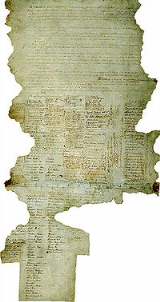
The Treaty of Waitangi is a treaty first signed on February 6, 1840, by representatives of the British Crown, and various Maori chiefs from the northern North Island of New Zealand. The Treaty established a British governor in New Zealand, recognised Maori ownership of their lands and other properties, and gave Maori the rights of British subjects. However the English and Maori language versions of the Treaty differ significantly, and so there is no consensus as to exactly what was agreed to. From the British point of view, the Treaty gave Britain sovereignty over New Zealand, and the Governor the right to run the country; Maori seem to have had a range of understandings, many of which conflicted with the British understanding.

Discussion
Ask a question about 'Treaty of Waitangi'
Start a new discussion about 'Treaty of Waitangi'
Answer questions from other users
|
Timeline
|
|
1840 Treaty of Waitangi, document granting British sovereignty in New Zealand, is signed.
|
Encyclopedia
The Treaty of Waitangi is a treaty first signed on February 6, 1840, by representatives of the British Crown, and various Maori chiefs from the northern North Island of New Zealand. The Treaty established a British governor in New Zealand, recognised Maori ownership of their lands and other properties, and gave Maori the rights of British subjects. However the English and Maori language versions of the Treaty differ significantly, and so there is no consensus as to exactly what was agreed to. From the British point of view, the Treaty gave Britain sovereignty over New Zealand, and the Governor the right to run the country; Maori seem to have had a range of understandings, many of which conflicted with the British understanding. After the initial signing at Waitangi, copies of the Treaty were taken around New Zealand and over the following months many other chiefs signed.
Until the 1970s, the Treaty was generally ignored by both the courts and parliament, although it was usually depicted in New Zealand historiography as a generous and benevolent act on the part of the Crown. From at least the 1860s, Maori looked to the Treaty, with little success, for rights and remedies for land loss and unequal treatment by the state. From the late 1960s, Maori began drawing attention to breaches of the Treaty, and subsequent histories have emphasised problems with its translation. In 1975 the Waitangi Tribunal was established as a permanent commission of inquiry tasked with researching breaches of the Treaty by the Crown or its agents, and suggesting means of redress.
Today it is generally considered the founding document of New Zealand as a nation; despite this, the Treaty is often the subject of heated debate. Many Maori feel that the Crown did not keep its side of the bargain, and have presented evidence of this before sittings of the Tribunal, despite a contrary view from some in the non-Maori population that Maori pay too much attention to the Treaty and use it to claim 'special privileges'. The Crown is not obliged to give effect to the recommendations of the Tribunal, but nonetheless in many instances has accepted that it breached the Treaty and its principles. Settlements to date have consisted of millions of dollars in money and assets, as well as apologies.
The signing of the TreatyThe Treaty of Waitangi was instituted by the British Government on the advice of officials in the Colonial Office, prompted by concerns over lawlessness, Maori tribal wars and the prospect of formal colonisation of New Zealand by a private firm, the New Zealand Company. Historian Claudia Orange claims that the Colonial Office had initially planned a Maori New Zealand in which European settlers would be accommodated, but by 1839 had shifted to "a settler New Zealand in which a place had to be kept for Maori."
Naval officer Captain William Hobson, who had earlier spent time in New Zealand, was dispatched from London in August 1839 with instructions to take the constitutional steps needed to establish a British colony. He was instructed to negotiate a voluntary transfer of sovereignty from Maori to the British Crown. This was necessary, as the House of Commons ruled that as the Declaration of Independence of New Zealand had been ratified in 1836, any move by the British Crown to annex New Zealand would be unlawful. He was sworn in as Lieutenant-Governor in Sydney and arrived in the Bay of Islands on January 29, 1840.
The following day (January 30, 1840), Hobson attended the Christ Church at Kororareka (Russell); where he publicly read a number of proclamations. The first was in relation to the extension of the boundaries of New South Wales to include the islands of New Zealand. The second was in relation to Hobson's own appointment as Lieutenant-Governor. The third was in relation to land transactions (notably the issue of pre-emption).
Without a draft document prepared by lawyers or Colonial Office officials, Hobson was forced to write his own treaty with the help of his secretary, James Freeman, and British Resident James Busby, neither of whom was a lawyer. (Busby had previously drafted the Declaration of the Independence of New Zealand which had been signed by a few Maori chiefs in 1835, and which was ratified by the Crown the following year.) The entire treaty was prepared in four days. Realising that a treaty in English could be neither understood, debated or agreed to by Maori, Hobson instructed missionary Henry Williams and his son Edward to translate the document into Maori and this was done overnight on February 4.
On February 5, copies of the treaty in both languages were put before a gathering of northern chiefs inside a large marquee on the lawn in front of Busby’s house at Waitangi. Hobson read the treaty aloud in English and Williams read his Maori version. Maori speakers debated the treaty for five hours, during which time chiefs Te Kemara, Rewa, Moka 'Kainga-mataa' and a number of others opposed the Treaty; whilst chiefs such as Pumuka, Te Wharerahi, Tamati Waka Nene and his brother Eruera Maihi Patuone suggested that they were accepting of the Crown. Afterwards, the chiefs then moved to a river flat below Busby’s house and lawn and continued deliberations late into the night. Although Hobson had planned for the signing to occur on February 7; the following morning 45 of them were ready to sign and so, Hobson hastily arranged for this to occur.
Hobson headed the British signatories. Of the 40 or so Maori chiefs, the Ngapuhi rangatira Hone Heke was the first to sign the treaty. To enhance the authority of the treaty eight further copies were made and sent around the country to gather additional signatures:
About 50 meetings were held from February to September 1840 to discuss and sign the copies, and a further 500 signatures were added to the treaty. A number of chiefs and some tribal groups refused to sign, including Tuhoe, Te Arawa and Ngati Tuwharetoa. Recently (2007) Maori academic Brent Kerehona, suggested that despite historians, both past and present, claiming that the chief Moka 'Kainga-mataa' signed the Treaty at Waitangi on February 6; he did not do so, refusing out of protest. Some were not given the opportunity to sign. Nonetheless, on 21 May 1840, Governor Hobson proclaimed sovereignty over the whole country, and New Zealand was constituted as a colony separate from New South Wales on 16 November 1840.
The anniversary of the signing of the Treaty is now a New Zealand public holiday, Waitangi Day, on 6 February. The first Waitangi Day was not until 1947 (although there were some commemorations before that) and the day was not made a public holiday until 1974. The commemoration has often been the focus of protest by Maori and has frequently attracted controversy. The anniversary is officially commemorated at the Treaty house at Waitangi, where the Treaty was first signed.
Subsequent historyIn 1841, the Treaty narrowly escaped destruction when the government offices in Auckland were destroyed by fire. When the capital was relocated, the Treaty documents were fastened together and deposited in a safe in the Colonial Secretary's office in Auckland and later in Wellington. The documents were untouched until 1865 when a list of signatories was produced.
In 1877, the English language rough draft of the Treaty was published along with photolithographic facsimiles of the Treaty, and the originals were returned to storage. In 1908, Dr Hocken found the Treaty in poor condition, eaten by rodents. The document was restored by the Dominion Museum in 1913.
In February 1940, the Treaty was taken to Waitangi for display in the Treaty house during the Centenary celebrations - this was possibly the first time the Treaty had been on public display since it was signed.
After the outbreak of war with Japan, the Treaty was placed with other state documents in an outsize luggage trunk and deposited for secure custody with the Public Trustee at Palmerston North by the local MP, who did not tell staff what was in the case. But, as the case was too large to fit in the safe, the Treaty spent the war at the side of a back corridor in the Public Trust office.
In 1956, the Department of Internal Affairs placed the Treaty into the care of the Alexander Turnbull Library and it was eventually displayed in 1961. Further preservation steps were taken in 1966, with improvements to the display conditions. From 1977 to 1980, the Library extensively restored the documents before the Treaty was deposited in the Reserve Bank.
In anticipation of a decision to exhibit the treaty in 1990 (the sesquicentennial of the signing), full documentation and reproduction photography was carried out. Several years of planning culminated with the opening of the Constitution Room at the then National Archives by the Prime Minister in November 1990. The documents are currently on permanent display in the Constitution Room at Archives New Zealand's headquarters in Wellington.
Meaning and interpretationThe Treaty itself is short, consisting of only three articles. The first article of the English version grants the Queen of the United Kingdom sovereignty over New Zealand. The second article guarantees to the chiefs full "exclusive and undisturbed possession of their Lands and Estates Forests Fisheries and other properties." It also specifies that Maori will sell land only to the Crown. The third article guarantees to all Maori the same rights as all other British subjects.
The English and Maori versions differ. This has made it difficult to interpret the Treaty and continues to undermine its effect. The most critical difference revolves around the interpretation of three Maori words; Kawanatanga (literally, governorship) which is ceded to the Queen in the first article; Rangatiratanga (literally chieftainship) which is retained by the chiefs in the second, and Taonga (precious things/properties), which the chiefs are guaranteed ownership and control of, also in the second article. Few Maori had good understanding of either sovereignty or 'governorship' and so some academics, such as Moana Jackson, question whether Maori fully understood that they were ceding sovereignty to the British Crown.
Furthermore, kawanatanga is transliterated from 'governorship' and was not part of the Maori language per se. There is considerable debate about what would have been a more appropriate term. Some scholars, notably Ruth Ross, argue that mana (prestige, authority) would have more accurately conveyed the transfer of sovereignty. However, it has more recently been argued by others, for example Judith Binney, that 'mana' would not have been appropriate. This is because mana is not the same thing as sovereignty, and also because no-one can give up their mana.
The English language version recognises Maori rights to 'properties', which seems to imply physical and perhaps intellectual property, whereas the Maori version mentions 'taonga', meaning 'treasures' or 'precious things'. In Maori usage the term applies much more broadly than 'properties' and since the 1980s courts have found that the term can encompass intangible things such as language and culture. The pre-emption clause is generally not well translated, and many Maori apparently believed that they were simply giving the English Queen first offer on land, after which they could sell it to anyone. Doubt has been cast on whether Hobson himself actually understood the concept of pre-emption. Another, less important, difference is that Ingarani, meaning England alone, is used throughout in the Maori version, whereas "the United Kingdom of Great Britain and Ireland" is used in the first paragraph of the English.
The entire issue is further complicated by the fact that, at the time, Maori society was an oral rather than literate one. Maori present at the signing of the Treaty would have placed more value and reliance on what Hobson and the missionaries said, rather than the words of the actual Treaty.
Maori beliefs and attitudes towards ownership and use of land were different from those prevailing in Britain and Europe. The chiefs saw themselves as 'kaitiaki' or guardians of the land, and would traditionally grant permission for the land to be used for a time for a particular purpose. Some may have thought that they were leasing the land rather than selling it, leading to disputes with the occupant settlers.
Effect of the TreatyThe treaty was never ratified by Britain and carried no legal force in New Zealand until receiving limited recognition in 1975. The Colonial Office and early New Zealand governors were initially fairly supportive of the Treaty as it gave them authority over both New Zealand Company settlers and Maori. As the Crown acquired more substantive sovereignty over New Zealand, the Treaty became less useful, although it was used to justify the idea that Waikato and Taranaki were rebels against the Crown in the wars of the 1860s. Court cases later in the 19th century established the principle that the Treaty was a 'legal nullity' which could be ignored by both the courts and government. This argument was supported by the claim that New Zealand had become a colony when annexed by proclamation in January 1840, before the treaty was signed. Furthermore, Hobson only claimed to have taken possession of the North Island by Treaty. The South Island he claimed for Britain by right of discovery, by observing that Maori were so sparse in the South Island, that it could be considered uninhabited.
Despite this, Maori frequently used the Treaty to argue for a range of issues, including greater independence and return of confiscated and unfairly purchased land. This was especially the case from the mid 19th century, when they lost numerical superiority and generally lost control of most of the country.
The short-term effect of the Treaty was to prevent the sale of Maori land to anyone other than the Crown. This was intended to protect Maori from the kinds of shady land purchases which had alienated indigenous people in other parts of the world from their land with minimal compensation. Indeed, anticipating the Treaty, the New Zealand Company made several hasty land deals and shipped settlers from England to New Zealand, assuming that the settlers would not be evicted from land they occupied. Essentially the Treaty was an attempt to establish a system of property rights for land with the Crown controlling and overseeing land sale, to prevent abuse.
Initially this worked well. Maori were eager to sell land, and settlers eager to buy. The Crown mediated the process to ensure that the true owners were properly identified (difficult for tribally owned land) and fairly compensated, by the standards of the time. However after a while Maori became disillusioned and less willing to sell, while the Crown came under increasing pressure from settlers wishing to buy. Consequently government land agents were involved in a number of very dubious land purchases. Agreements were negotiated with only one owner of tribally owned land and in some cases land was purchased from the wrong people altogether. Eventually this led to the New Zealand Wars which culminated in the confiscation of a large part of the Waikato and Taranaki.
In later years, this oversight role was in the native land court, later renamed the Maori Land Court. It was through these courts that much Maori land became alienated, and the way in which they functioned is much criticised today. Over the longer term, the land purchase aspect of the treaty declined in importance, while the clauses of the Treaty which deal with sovereignty and Maori rights took on greater importance.
However irrelevant in law, the treaty returned to the public eye after the Treaty house and grounds were purchased by Governor General Viscount Bledisloe in the early 1930s and donated to the nation. The dedication of the site as a national reserve in 1934 was probably the first major event held there since the 1840s. The profile of the Treaty was further raised by the centenary of 1940. For most of the twentieth century, text books, government publicity and many historians touted it as the moral foundation of colonisation and to set race relations in New Zealand above those of colonies in North America, Africa and Australia. Its lack of legal significance in 1840 and subsequent breaches tended to be overlooked until the 1970s, when these issues were raised by Maori protest.
Legal standing of the Treaty The Treaty itself has never been ratified or enacted as statute law in New Zealand, although it does appear in authoritative collections of treaties, and is sometimes referred to in specific pieces of legislation. There are two major points of legal debate concerning the Treaty:
- Whether or not the Treaty was the means by which the British Crown gained sovereignty over New Zealand, and
- Whether or not the Treaty is binding on the Crown.
SovereigntyMost 19th century legal theorists believed that in order for a Treaty to be valid, both parties had to be or represent governments with actual power over the territory they claimed to represent. It has been argued that since there was no central New Zealand government in 1839, and Maori chiefs did not govern their territories in the way that European monarchs or governments did, they were not capable of having or giving up sovereignty over New Zealand. Therefore the British gained possession of New Zealand by right of discovery, settlement and/or conquest. This argument acknowledges that Maori were in New Zealand first, but claims that since they supposedly lacked organized government, this did not matter.
Recently it has been argued that Maori of this period did have government, although not in the European sense. To claim that this is the only kind of government that counts is, it is argued, Eurocentric and racist.
Others have argued that whatever the state of Maori government in 1839, the British had acknowledged Maori sovereignty with the Declaration of the Independence of New Zealand and by offering them the Treaty. Therefore, if both parties had agreed on the Treaty it was valid, in a pragmatic if not necessarily a legal sense.
Some Maori activists dispute the idea that the Treaty transferred sovereignty from Maori chiefs to the Crown. There are two arguments to back this claim:
- That the Maori version of the Treaty does not transfer sovereignty, but only Kawanatanga, and that this is not the same thing, and;
- That Maori were "tricked" into signing the Treaty and so the entire document is invalid.
Is the Treaty binding on the Crown?While the above issue is mostly academic, since the Crown does have sovereignty in New Zealand, however it got it, the question of whether New Zealand governments or the Crown have to pay any attention to the Treaty has been hotly contested virtually since 1840. This has been a point of a number of court cases:
- R v Symonds (1847). The Treaty was found to be binding on the Crown.
- Wi Parata v Bishop of Wellington (1877). Judge James Prendergast called the Treaty ‘a simple nullity’ and claimed that it was neither a valid treaty nor binding on the Crown. Although the Treaty’s status was not a major part of the case, Prendergast’s judgment on the Treaty’s validity was considered definitive for many decades.
- Te Heuheu Tukino v Aotea District Maori Land Board (1938). The Treaty was seen as valid in terms of the transfer of sovereignty, but the judge ruled that as it was not part of New Zealand law it was not binding on the Crown.
- New Zealand Maori Council v Attorney General (1987). Also known as the SOE case, this defined the "principles of the Treaty". The State Owned Enterprises Act stated that nothing in the Act permitted the government to act inconsistently with the principles of the Treaty, and the proposed sale of government assets was found to be in breach of these. This case established the principle that if the Treaty is mentioned in a piece of legislation, it takes precedence over other parts of that legislation should they come into conflict.
- New Zealand Maori Council v Attorney General (1990). This case concerned FM radio frequencies and found that the Treaty could be relevant even concerning legislation which did not mention it.
Since the late 1980s the Treaty has become much more legally important. However because of uncertainties about its meaning and translation, it still does not have a firm place in New Zealand law or jurisprudence.
Treaty claimsDuring the late 1960s and 1970s, the Treaty of Waitangi became the focus of a strong Maori protest movement which rallied around calls for the government to "honour the treaty" and to "redress treaty grievances." Maori expressed their frustration about continuing violations of the treaty and subsequent legislation by government officials, as well as inequitable legislation and unsympathetic decisions by the Maori Land Court alienating Maori land from its Maori owners.
On 10 October 1975, the Treaty of Waitangi Act, which was to provide for the observance and confirmation of the principles of the Treaty, received the royal assent. This established the Waitangi Tribunal to hear claims of official violations of the Treaty of Waitangi. Originally its mandate was limited to recent claims, but in 1985 this was extended to allow it to consider Crown actions dating back to 1840, including the period covered by the New Zealand Wars.
During the early 1990s, the government began to negotiate settlements of historical (pre-1992) claims. February 2006, there have been 20 such settlements of various sizes, totalling approximately $700 million. Settlements generally include financial redress, a formal Crown apology for breaches of the Treaty, and recognition of the group's cultural associations with various sites.
While during the 1990s there was broad agreement between major political parties that the settlement of historical claims was appropriate, in recent years it has become the subject of heightened debate. Claims of a "Treaty of Waitangi Grievance Industry", which profits from making frivolous claims of violations of the Treaty of Waitangi, have been made by a number of political figures, including former National Party Leader Don Brash. Although claims relating to loss of land by Maori are relatively uncontroversial, debate has focused on claims that fall outside common law concepts of ownership, or relate to technologies developed since colonisation. Examples include the ownership of the radio spectrum and the protection of language.
The Treaty today Because of the short length and limited scope of the Treaty, it is not a suitable document to be a formal written constitution and is not recognised as such. However, it is seen as an important document and the principles of the treaty continue to influence political and legal discourse in New Zealand.
See also
Further reading- Simpson, Miria. (1990). Nga Tohu O Te Tiriti/Making a Mark: The signatories to the Treaty of Waitangi. Wellington: National Library of New Zealand.
External links- — original research
- — argument that an English draft of the Treaty found in 1989 is the one that was translated into the Maori version that was signed on 6 Feb 1840.
- Review of historical literature relating to the Littlewood Treaty.
- — at the Network Waitangi Otautahi
|
| |
|
|