
All Topics  
Transvaal


   Email Print
   Bookmark   Link


Transvaal


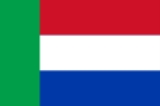
- "Vierkleur".]] taken by Eduard Spelterini
Eduard Spelterini

Eduard Spelterini was a Switzerland pioneer of ballooning and of aerial photography....
 in July 1911.]]

The Transvaal (Afrikaans, lit. beyond the Vaal River
Vaal River

The Vaal River is the largest tributary of the Orange River in South Africa. The river has its source in the Drakensberg mountains in Mpumalanga, east of Johannesburg and about 30 km north of Clarens, Free State in the Free State at a source known as the Ash River....
) is the name of an area of northern South Africa
South Africa

The Republic of South Africa, also known by Official names of South Africa, is a country located at the southern tip of the continent of Africa....
. Originally the bulk of the independent Boer
Boer

Boer is the Dutch language word for farmer which came to denote the descendants of the proto Afrikaans-speaking pastoralists of the eastern Cape frontier in Southern Africa during the 18th century as well as those who left the Cape Colony during the 19th century to settle in the Orange Free State, Transvaal and to a lesser extent Natal Pro...
 South African Republic
South African Republic

The South African Republic , often informally known as the Transvaal Republic, was an independent Boer-ruled country in Southern Africa during the second half of the 19th century....
, after the Anglo-Boer War of 1899-1902 it became the Transvaal Colony, and one of the founding provinces
Provinces of South Africa

South Africa is currently divided into nine provinces. On the eve of the South African general election, 1994, South Africa's former homelands, also known as Bantustans, were reintegrated and the four existing provinces were divided into nine....
 of the Union of South Africa
Union of South Africa

The Union of South Africa is the historic predecessor to the present-day state of the Republic of South Africa. It came into being on 31 May 1910, with the previously separate colonies of the Cape Colony, Colony of Natal, Transvaal and the Orange Free State, plus the German South-West Africa colony in 1915, becoming Provinces in the Union of...
, with its regional capital in Pretoria
Pretoria

Pretoria is a city located in the northern part of Gauteng Province, South Africa. It is one of the country's three Capital , serving as the Executive and de facto national capital; the others are Cape Town, the legislature capital, and Bloemfontein, the judicial capital....
, from 1910 until 1994. The province no longer exists, and its territory now forms the provinces of Gauteng
Gauteng

Gauteng is a Provinces of South Africa of South Africa. It was formed from part of the old Transvaal after South Africa's first all-race elections on 27 April 1994....
, Limpopo and Mpumalanga and part of the North West Province.


Discussion
Ask a question about 'Transvaal'
Start a new discussion about 'Transvaal'
Answer questions from other users
Full Discussion Forum


Encyclopedia


- "Vierkleur".]] taken by Eduard Spelterini
Eduard Spelterini

Eduard Spelterini was a Switzerland pioneer of ballooning and of aerial photography....
 in July 1911.]]

The Transvaal (Afrikaans, lit. beyond the Vaal River
Vaal River

The Vaal River is the largest tributary of the Orange River in South Africa. The river has its source in the Drakensberg mountains in Mpumalanga, east of Johannesburg and about 30 km north of Clarens, Free State in the Free State at a source known as the Ash River....
) is the name of an area of northern South Africa
South Africa

The Republic of South Africa, also known by Official names of South Africa, is a country located at the southern tip of the continent of Africa....
. Originally the bulk of the independent Boer
Boer

Boer is the Dutch language word for farmer which came to denote the descendants of the proto Afrikaans-speaking pastoralists of the eastern Cape frontier in Southern Africa during the 18th century as well as those who left the Cape Colony during the 19th century to settle in the Orange Free State, Transvaal and to a lesser extent Natal Pro...
 South African Republic
South African Republic

The South African Republic , often informally known as the Transvaal Republic, was an independent Boer-ruled country in Southern Africa during the second half of the 19th century....
, after the Anglo-Boer War of 1899-1902 it became the Transvaal Colony, and one of the founding provinces
Provinces of South Africa

South Africa is currently divided into nine provinces. On the eve of the South African general election, 1994, South Africa's former homelands, also known as Bantustans, were reintegrated and the four existing provinces were divided into nine....
 of the Union of South Africa
Union of South Africa

The Union of South Africa is the historic predecessor to the present-day state of the Republic of South Africa. It came into being on 31 May 1910, with the previously separate colonies of the Cape Colony, Colony of Natal, Transvaal and the Orange Free State, plus the German South-West Africa colony in 1915, becoming Provinces in the Union of...
, with its regional capital in Pretoria
Pretoria

Pretoria is a city located in the northern part of Gauteng Province, South Africa. It is one of the country's three Capital , serving as the Executive and de facto national capital; the others are Cape Town, the legislature capital, and Bloemfontein, the judicial capital....
, from 1910 until 1994. The province no longer exists, and its territory now forms the provinces of Gauteng
Gauteng

Gauteng is a Provinces of South Africa of South Africa. It was formed from part of the old Transvaal after South Africa's first all-race elections on 27 April 1994....
, Limpopo and Mpumalanga and part of the North West Province. Despite its official disintegration, the Transvaal is still a commonly used geographical term and retains its historical meaning.

History


The Transvaal was colonised by Boer
Boer

Boer is the Dutch language word for farmer which came to denote the descendants of the proto Afrikaans-speaking pastoralists of the eastern Cape frontier in Southern Africa during the 18th century as well as those who left the Cape Colony during the 19th century to settle in the Orange Free State, Transvaal and to a lesser extent Natal Pro...
 settlers who left the British-dominated Cape Colony in the 1830s and 1840s in what came to be known as the Great Trek
Great Trek

The Great Trek was an eastward and north-eastward migration during the 1830s and 1840s of the Boere-Afrikaner , who descended from settlers from western mainland Europe, most notably from the Netherlands....
. The emigrating Boers established several republics to the north, outside British control - after the British occupation of the former Dutch colony in 1795 and again in 1806. The Great Trek was spurred on by discontent with British rule, the economic upheavals caused by anti slavey laws, lack of protection against raiding Xhosa
Xhosa

The Xhosa people are speakers of Bantu languages living in south-east South Africa, and in the last two centuries throughout the southern and central-southern parts of the country....
 bands, and Anglicisation
Anglicisation

Anglicisation or anglicization is a process of conversion of verbal or written elements of any other language into a more comprehensible English language for an English speaker....
 of established Dutch traditions. Many autonomous groups, each with its own goals, set out. Some, moving north-east, 'behind' the Nguni
Nguni

Nguni languages are mostly spoken by Nguni people, which are group of clans and nations living in south-east Africa.The languages are a group of Bantu languages spoken in southern Africa including Zulu language, Xhosa language, Swati language, amaHlubi,Phuthi language and Ndebele language ....
 societies (Xhosa and Zulu
Zulu

The Zulu are the largest South African ethnic group of an estimated 10-11 million people who live mainly in the province of KwaZulu-Natal, South Africa....
), established the first independent republic, Natalia
Natalia

It is the Russian version of the the Latin variant "Natalie", meaning "birthday" in reference to the birth of Christ, and was traditionally given to girls born around Christmas....
. This was soon occupied by the British in 1843 via their outpost, Port Natal, on the coast. Two years later the voortrekkers established Transoranje, (1845, later the Orange Free State
Orange Free State

The Republic of the Orange Free State was an independent Boere-Afrikaner republic in southern Africa during the second half of the 19th century, and later a British Orange River Colony and a Provinces of South Africa of the Union of South Africa....
). Finally, the voortrekkers migrated further north and established a number of smaller republics across the Vaal river, Transvaal, later to be united in the Zuid Afrikaanse Republiek (South African Republic
South African Republic

The South African Republic , often informally known as the Transvaal Republic, was an independent Boer-ruled country in Southern Africa during the second half of the 19th century....
), or ZAR.

The trekkers took advantage of the political vacuum left after the Zulu wars and their aftermath, and easily overcame the indigenous peoples. In the 1850s, the British came to an understanding with the Boer republics, recognising independence to the ZAR in what is now the Transvaal. However, in 1877 Britain annexed the ZAR as a convenient way of resolving the border dispute between the Boers and the Zulus. This also saved the Transvaal from financial ruin, as the government had completely run out of money. The Boer republic regained its independence in 1881 after the so-called First Boer War
First Boer War

The First Boer War also known as the First Anglo-Boer War or the Transvaal War, was fought from 16 December 1880 until 23 March 1881....
.

Beginning in 1885, the discovery of a tremendous lode
Lode

In geology, a lode is a deposit of wikt:metalliferous ore that fills or is embedded in a fissure in a rock formation or a vein of ore that is deposited or embedded between layers of rock....
 of gold in the Witwatersrand
Witwatersrand

The Witwatersrand is a low, sedimentary range of hills, at an elevation of 1700-1800 metres above sea-level, which runs in an east-west direction through Gauteng in South Africa....
 led to the immigration of many foreigners (uitlanders) to the Transvaal. In short time the economy of the Transvaal boomed. The wealth of the Transvaal state was bound to overcome the British controlled, Boer dominated Cape Colony, and it was speculated the Boers might eject the British from power in the region. Furthermore, the longer this new source of gold remained out of British control, the position of London as the centre of the world's gold trade was threatened. In these days of the international gold standard, this meant London's position as the world's financial centre in jeopardy, as well as its role as a listening station for Empire intelligence. Using the ZAR refusal to grant Uitlander franchise as a pretext, the British therefore planned a takeover of Transvaal, as a parallel to their seizure years prior of the former Orange Free State and the immense diamond fields of Kimberley therein. In 1895 foreign mine owners funded an attempted coup d'état known as The Jameson Raid
Jameson Raid

The Jameson Raid was a raid on Paul Kruger's South African Republic carried out by a British colonial statesman Leander Starr Jameson and his Rhodesian and Bechuanaland policemen over the New Year weekend of 1895-96....
. The financiers of the Raid were dissatisfied with the Boer's taxation and restrictions on business. The raid was an awakening for the Boers and led to massive armament, mainly from German suppliers.

Increasing fear of British designs on the Transvaal and the amassing of British forces on their borders led the Boers to make a preemptive strike in 1899. The Second Boer War
Second Boer War

The Second Boer War , commonly referred to as The Boer War and also known as the South African War , the Anglo-Boer War and in Afrikaans as the Boereoorlog or Tweede Vryheidsoorlog , was fought from 11 October 1899 until 31 May 1902, between the British Empire and the two independent Boer republics of the Orange Fre...
 lasted for three years. By the end of 1902 Britain employed 500,000 soldiers against a fighting force of approximately 64,000 Boers. Boer women and children were incarcerated in concentration camps and about 26,000 died of malnutrition, poor hygiene and disease. This demoralising blow, coupled with the British use of torched earth strategy and a blockade enforced through the entire Transvaal forced the Boer military leaders into submission. A defeated Transvaal was incorporated into the British Empire in 1902. The war also had immense effects on British policy domestically, within Europe and throughout the Empire. The Second Boer War made clear that the Empire was more vulnerable than assumed, and was, in many senses, a rehearsal for greater events that would come to pass twelve years later, in 1914.

In 1910, the Boer republics joined with the Cape Colony to form the Union of South Africa
Union of South Africa

The Union of South Africa is the historic predecessor to the present-day state of the Republic of South Africa. It came into being on 31 May 1910, with the previously separate colonies of the Cape Colony, Colony of Natal, Transvaal and the Orange Free State, plus the German South-West Africa colony in 1915, becoming Provinces in the Union of...
. Half a century later, in 1961, the union ceased to be part of the Commonwealth of Nations
Commonwealth of Nations

The Commonwealth of Nations, also known as the Commonwealth or the British Commonwealth, is an intergovernmental organization of fifty-three independent member states....
 and became the Republic of South Africa. The PWV (Pretoria
Pretoria

Pretoria is a city located in the northern part of Gauteng Province, South Africa. It is one of the country's three Capital , serving as the Executive and de facto national capital; the others are Cape Town, the legislature capital, and Bloemfontein, the judicial capital....
-Witwatersrand
Witwatersrand

The Witwatersrand is a low, sedimentary range of hills, at an elevation of 1700-1800 metres above sea-level, which runs in an east-west direction through Gauteng in South Africa....
-Vereeniging) area in the Transvaal became South Africa's economic powerhouse, a position it still holds today.

In 1994, after the fall of apartheid, the former provinces were restructured, and a cohesive Transvaal ceased to exist. Parts of the old Transvaal now belong to the new Gauteng, North West, Limpopo and Mpumalanga provinces. However, even before 1994 the Transvaal province was subdivided into regions for a number of purposes (such as for sporting divisions), into Northern Transvaal (Pretoria, and Limpopo province now), Eastern Transvaal (Mpumalanga province now), Western Transvaal (Northwest province now) and Southern Transvaal (Gauteng province now, excluding Pretoria)

The Transvaal is still used as a provincial division of the High Court of South Africa
High Court of South Africa

The High Court of South Africa is a court of law in South Africa. The court, when constituted in 1994, inherited the jurisdiction of the provincial and local divisions of the Supreme Court of South Africa that was formally abolished following the post apartheid settlement ....
, as of 2006.

Geography

The Transvaal province lay between Vaal River
Vaal River

The Vaal River is the largest tributary of the Orange River in South Africa. The river has its source in the Drakensberg mountains in Mpumalanga, east of Johannesburg and about 30 km north of Clarens, Free State in the Free State at a source known as the Ash River....
 in the south, and the Limpopo River
Limpopo River

The Limpopo River rises in central southern Africa, and flows generally eastwards to the Indian Ocean. It is around long, with a drainage basin in size....
 in the north, roughly between 22 1/2 and 27 1/2 S, and 25 and 32 E. To its south it bordered with the Orange Free State
Orange Free State

The Republic of the Orange Free State was an independent Boere-Afrikaner republic in southern Africa during the second half of the 19th century, and later a British Orange River Colony and a Provinces of South Africa of the Union of South Africa....
 and Natal
Natal Province

Natal, meaning Christmas in Portuguese language, was a name given by the Portuguese people Vasco da Gama to the place after he had arrived on ship on the 25th of December and found the African Royal King Menzi Xaba and his people celebrating the birth of a king, Nkayishana, Menzi's son....
 provinces, to its west were the Cape Province
Cape Province

The Cape of Good Hope Province was a province in the Union of South Africa and subsequently the Republic of South Africa. It encompassed the old Cape Colony, and had Cape Town as its capital....
 and the Bechuanaland Protectorate
Bechuanaland Protectorate

The Bechuanaland Protectorate was a protectorate established on March 31, 1885, by the United Kingdom in southern Africa. It became the Republic of Botswana on 30 September 1966....
 (later Botswana
Botswana

The Republic of Botswana , is a landlocked country in Southern Africa. Citizens of Botswana are called "Batswana" , regardless of ethnicity. Formerly a British protectorate of Bechuanaland Protectorate, Botswana adopted its new name after becoming independent within the Commonwealth of Nations on 30 September 1966....
), to its north Rhodesia
Rhodesia

Rhodesia was the name adopted when the formerly British colonies of Southern Rhodesia declared itself independent on 11 November 1965. The name was also used with the establishment of Zimbabwe Rhodesia in 1979....
 (later Zimbabwe
Zimbabwe

Zimbabwe , is a landlocked country located in the southern part of the continent of Africa, between the Zambezi and Limpopo River rivers. It is bordered by South Africa to the south, Botswana to the southwest, Zambia to the northwest and Mozambique to the east....
), and to its east Portuguese East Africa
Portuguese East Africa

Portuguese East Africa is the common name by which the Portuguese Empire's territorial expansion in East Africa was known across different periods of time....
 (later Mozambique
Mozambique

Mozambique, officially the Republic of Mozambique , is a country in southeastern Africa bordered by the Indian Ocean to the east, Tanzania to the north, Malawi and Zambia to the northwest, Zimbabwe to the west and Swaziland and South Africa to the southwest....
) and Swaziland
Swaziland

The Kingdom of Swaziland is a landlocked country in Southern Africa, bordered to the north, south, and west by South Africa, and to the east by Mozambique....
. Except on the south-west, these borders were mostly well defined by natural features.

Several Bantustan
Bantustan

A bantustan or euphemistically black african homeland or simply homeland, was territory set aside for black inhabitants of South Africa and South-West Africa , as part of the policy of South Africa under apartheid....
s were entirely inside the Transvaal: Venda
Venda

Venda was a bantustan in northern South Africa, now part of Limpopo Province province. It was founded as a homeland for the Venda people, speakers of the Venda language....
, KwaNdebele
KwaNdebele

KwaNdebele was a bantustan in South Africa, intended by the apartheid government as a semi-independent homeland for the Matabele people. The homeland was created when the South African government purchased nineteen white-owned farms and installed a government....
, Gazankulu
Gazankulu

Gazankulu was a bantustan in South Africa, intended by the apartheid government to be a semi-independent homeland for the Shangaan. It was carved out of the former Transvaal Province and given self-rule in 1971, with its capital at Giyani....
, KaNgwane
KaNgwane

KaNgwane was a bantustan in South Africa, intended by the apartheid government to be a semi-independent homeland for the Swazi people. Formerly called the "Swazi Territory", the homeland was granted nominal self-rule in 1981....
 and Lebowa
Lebowa

Lebowa was a bantustan located in the Transvaal in north eastern South Africa. Seshego initially acted as Lebowa's capital while the purpose-built Lebowakgomo was being constructed....
. Parts of Bophuthatswana
Bophuthatswana

Bophuthatswana was a bantustan in the northwest of South Africa. It had a surface area of approximately 40 000 km? and consisted of seven enclaves dispersed over the former South African provinces of Cape Province, Transvaal and Orange Free State....
 were also in the Transvaal, with other parts in Cape Province
Cape Province

The Cape of Good Hope Province was a province in the Union of South Africa and subsequently the Republic of South Africa. It encompassed the old Cape Colony, and had Cape Town as its capital....
 and Orange Free State
Orange Free State

The Republic of the Orange Free State was an independent Boere-Afrikaner republic in southern Africa during the second half of the 19th century, and later a British Orange River Colony and a Provinces of South Africa of the Union of South Africa....
.

Within the Transvaal lies the Waterberg Massif, a prominent ancient geological feature of the South African landscape.

Divisions:
  • Zoutpansberg
    Zoutpansberg

    Zoutpansberg was the north-eastern division of the Transvaal, South Africa. This was the district to which Louis Trichardt and Jan van Rensburg, the forerunners of the Great Trek, journeyed in 1835....


Cities in the Transvaal:
  • Heidelberg
    Heidelberg, Gauteng

    Heidelberg is a South African town situated at the foot of the Suikerbosrand next to the N3 highway, South Africa, which connects Johannesburg and Durban....
  • Johannesburg
    Johannesburg

    Johannesburg also known as Joburg, is the largest city in South Africa. Johannesburg is the province Capital of Gauteng the wealthiest province in South Africa, having the largest economy of any metropolitan region in Sub-Saharan Africa....
  • Messina
  • Nelspruit
    Nelspruit

    Nelspruit is a city of 221,474 people situated in northeastern South Africa. It is the capital of the Mpumalanga province . Located on the Crocodile River , Nelspruit lies about 100 kilometres west of the Mozambique border and 330 kilometres east of Johannesburg....
  • Pietersburg
    Pietersburg

    Pietersburg is one of the larger city and former capital of the Limpopo province, South Africa....
  • Pretoria
    Pretoria

    Pretoria is a city located in the northern part of Gauteng Province, South Africa. It is one of the country's three Capital , serving as the Executive and de facto national capital; the others are Cape Town, the legislature capital, and Bloemfontein, the judicial capital....
  • Vereeniging


See also

  • Flag of Transvaal
    Flag of Transvaal

    The Flag of Transvaal is the flag of the former Transvaal province of South Africa. Its origin can be traced back to the flag of the historic Transvaal Republic, officially called the South African Republic....
  • History of South Africa
    History of South Africa

    The history of South Africa is marked by imigration and ethnic conflict. The Khoisan peoples are the aboriginal people of the region who have lived there for millennia....


External links