

Tonsil

Encyclopedia
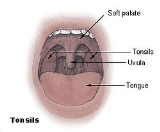
Palatine tonsils, occasionally called the faucial tonsils, are the tonsils that can be seen on the left and right sides at the back of the throat.
Tonsillitis
is an inflammation
of the tonsils and will often, but not necessarily, cause a sore throat and fever
. In chronic
cases tonsillectomy
may be indicated.
, poliovirus
, Streptococcus pneumoniae
, Haemophilus influenzae
, Staphylococcus aureus
, and the lipopolysaccharide
of E. coli. Most Immunoglobulin A
produced by tonsillar B cells in vitro appears to be 7S monomers, although a significant proportion may be l0S dimeric IgA.
In addition to humoral immunity elicited by tonsillar and adenoid
al B cells following antigenic stimulation, there is considerable T-cell response in palatine tonsils. Thus, natural infection or intranasal immunization with live, attenuated rubella
virus vaccine has been reported to prime tonsillar lymphocytes much better than subcutaneous vaccination. Also, natural infection with varicella zoster virus
has been found to stimulate tonsillar lymphocytes better than lymphocytes from peripheral blood
.
Combined tonsillectomy and adenoidectomy
had a profound detrimental effect on the local IgA response in the nasopharyngeal fluid against poliovirus. These immunological observations paralleled the increased incidence of paralytic poliomyelitis
after this operation. Thus, it is obvious that the tonsil have an important role to play in the defense of the host against bacterial and viral infections, and the success of regional mucosal immunity induced by intranasal vaccines most likely depends on these immunocompetent tissues in the oropharynx
and nasopharynx
.
Altogether, therefore, several pieces of direct and indirect evidence indicate that the palatine tonsils are continuously engaged in local immune responses to microorganisms. If the tonsillar lymphocytes became overwhelmed with this persistent stimulation they may be unable to respond to other antigens; the immunological response, particularly in recurrent tonsillitis, may then be impaired. Once this immunological impairment occurs, the tonsil is no longer able to function adequately in local protection nor can it appropriately reinforce the secretory immune system of the upper respiratory tract.
y proteins or glycoproteins which control or modulate the activities of target cells, resulting in gene activation, leading to mitotic division, growth and differentiation, migration, or apoptosis
. They are produced by wide range of cell types upon antigen-specific and non-antigen specific stimuli. It has been reported by many studies that the clinic outcome of many infectious, autoimmune, or malignant diseases appears to be influenced by the overall balance of production (profiles) of pro-inflammatory and anti-inflammatory cytokines. Therefore, determination of cytokine profiles in tonsil study will provide key information for further in-depth analysis of the cause and underlying mechanisms of these disorders, as well as the role and possible interactions between the T- and B-lymphocytes and other immunocompetent cells.
The cytokine network represents a very sophisticated and versatile regulatory system that is essential to the immune system for overcoming the various defense strategies of microorganisms. Through several studies, the Th1
and Th2 cytokines and cytokine mRNA are both detectable in Tonsillar Hypertrophy and Recurrent Tonsillitis groups. It showed that human palatine tonsil is an active immunological organ containing a wide range of cytokine-producing cells. Both Th1 and Th2 cells are involved in the pathophysiology
of TH and RT conditions. Indeed, human tonsils persistently harbor microbial antigens even when the subject is asymptomatic of ongoing infection. It could also be an effect of ontogeny of the immune system.
s (MALT), located at the entrance to the upper respiratory and gastrointestinal tracts to protect the body from the entry of exogenous material through mucosal sites. In consequence it is a site of, and potential focus for infections, and is one of the chief immunocompetent tissues in the oropharynx
. It forms part of the Waldeyer's ring, which comprises the nasopharyngeal
tonsil or adenoid (NT), the paired tubal tonsil
s (TT), the paired palatine tonsils (PT) and the lingual tonsil (LT). From the pharyngeal side, they are covered with a stratified squamous epithelium, whereas a fibrous capsule links them to the wall of the pharynx. Through the capsule pass trabecules that contain small blood vessels, nerves and lymphatic vessels. These trabecules divide the tonsil into lobules.
In children, the tonsils are common sites of infections that may give rise to acute or chronic tonsillitis. However, it is still an open question whether tonsillar hypertrophy is also caused by a persistent infection. Tonsillectomy is one of the most common major operations performed on children. The indications for the operation have been complicated by the controversy over the benefits of removing a chronically infected tissue and the possible harm caused by eliminating an important immune inductive tissue.
The information that is necessary to make a rational decision to resolve this controversy can be obtained by understanding the immunological potential of the normal palatine tonsils and comparing these functions with the changes that occur in the chronically diseased counterparts.
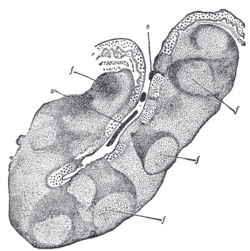 Palatine tonsils consist of approximately 15 crypts, which result in a large internal surface. The tonsils contain four lymphoid compartments that influence immune functions, namely the reticular crypt epithelium
, the extrafollicular area, the mantle zones of lymphoid
follicles, and the follicular germinal centers. In human palatine tonsils, the very first part exposed to the outside environment is tonsillar epithelium.
is the inflammation of tonsils. Acute tonsillitis is the most common manifestation of tonsillar disease. It is associated with sore throat, fever, and difficulty swallowing
. The tonsils may appear normal sized or enlarged but are usually erythematous. Often, but not always, exudate
s can be seen. Not all these signs and symptoms are present in every patient.
, dysphagia
and/or daytime hypersomnolence. These may lead to behavioral/mood changes in patients and facilitate the need for a polysomnography
in order to determine the degree to which these symptoms are disrupting their sleep.
Tonsillitis
Tonsillitis
Tonsillitis is an inflammation of the tonsils most commonly caused by viral or bacterial infection. Symptoms of tonsillitis include sore throat and fever. While no treatment has been found to shorten the duration of viral tonsillitis, bacterial causes are treatable with antibiotics...
is an inflammation
Inflammation
Inflammation is part of the complex biological response of vascular tissues to harmful stimuli, such as pathogens, damaged cells, or irritants. Inflammation is a protective attempt by the organism to remove the injurious stimuli and to initiate the healing process...
of the tonsils and will often, but not necessarily, cause a sore throat and fever
Fever
Fever is a common medical sign characterized by an elevation of temperature above the normal range of due to an increase in the body temperature regulatory set-point. This increase in set-point triggers increased muscle tone and shivering.As a person's temperature increases, there is, in...
. In chronic
Chronic (medicine)
A chronic disease is a disease or other human health condition that is persistent or long-lasting in nature. The term chronic is usually applied when the course of the disease lasts for more than three months. Common chronic diseases include asthma, cancer, diabetes and HIV/AIDS.In medicine, the...
cases tonsillectomy
Tonsillectomy
A tonsillectomy is a 3,000-year-old surgical procedure in which the tonsils are removed from either side of the throat. The procedure is performed in response to cases of repeated occurrence of acute tonsillitis or adenoiditis, obstructive sleep apnea, nasal airway obstruction, snoring, or...
may be indicated.
Local immunity
Tonsillar (relating to palatine tonsil) B cells can mature to produce all the five major Ig classes. Furthermore, when incubated in vitro with either mitogens or specific antigens, they produce specific antibodies against diphtheria toxoidDiphtheria
Diphtheria is an upper respiratory tract illness caused by Corynebacterium diphtheriae, a facultative anaerobic, Gram-positive bacterium. It is characterized by sore throat, low fever, and an adherent membrane on the tonsils, pharynx, and/or nasal cavity...
, poliovirus
Poliovirus
Poliovirus, the causative agent of poliomyelitis, is a human enterovirus and member of the family of Picornaviridae.Poliovirus is composed of an RNA genome and a protein capsid. The genome is a single-stranded positive-sense RNA genome that is about 7500 nucleotides long. The viral particle is...
, Streptococcus pneumoniae
Streptococcus pneumoniae
Streptococcus pneumoniae, or pneumococcus, is Gram-positive, alpha-hemolytic, aerotolerant anaerobic member of the genus Streptococcus. A significant human pathogenic bacterium, S...
, Haemophilus influenzae
Haemophilus influenzae
Haemophilus influenzae, formerly called Pfeiffer's bacillus or Bacillus influenzae, Gram-negative, rod-shaped bacterium first described in 1892 by Richard Pfeiffer during an influenza pandemic. A member of the Pasteurellaceae family, it is generally aerobic, but can grow as a facultative anaerobe. H...
, Staphylococcus aureus
Staphylococcus aureus
Staphylococcus aureus is a facultative anaerobic Gram-positive coccal bacterium. It is frequently found as part of the normal skin flora on the skin and nasal passages. It is estimated that 20% of the human population are long-term carriers of S. aureus. S. aureus is the most common species of...
, and the lipopolysaccharide
Lipopolysaccharide
Lipopolysaccharides , also known as lipoglycans, are large molecules consisting of a lipid and a polysaccharide joined by a covalent bond; they are found in the outer membrane of Gram-negative bacteria, act as endotoxins and elicit strong immune responses in animals.-Functions:LPS is the major...
of E. coli. Most Immunoglobulin A
IGA
Iga or IGA may stand for:-Given name:* a female given name of Polish origin. The name originates from the female given name Jadwiga and stands for gia,or gina in the USA....
produced by tonsillar B cells in vitro appears to be 7S monomers, although a significant proportion may be l0S dimeric IgA.
In addition to humoral immunity elicited by tonsillar and adenoid
Adenoid
Adenoids are a mass of lymphoid tissue situated posterior to the nasal cavity, in the roof of the nasopharynx, where the nose blends into the throat....
al B cells following antigenic stimulation, there is considerable T-cell response in palatine tonsils. Thus, natural infection or intranasal immunization with live, attenuated rubella
Rubella
Rubella, commonly known as German measles, is a disease caused by the rubella virus. The name "rubella" is derived from the Latin, meaning little red. Rubella is also known as German measles because the disease was first described by German physicians in the mid-eighteenth century. This disease is...
virus vaccine has been reported to prime tonsillar lymphocytes much better than subcutaneous vaccination. Also, natural infection with varicella zoster virus
Varicella zoster virus
Varicella zoster virus is one of eight herpes viruses known to infect humans . It commonly causes chicken-pox in children and Herpes zoster in adults and rarely in children.-Nomenclature:...
has been found to stimulate tonsillar lymphocytes better than lymphocytes from peripheral blood
Peripheral blood cell
Peripheral blood cells are the cellular components of blood, consisting of red blood cells, white blood cells, and platelets, which are found within the circulating pool of blood and not sequestered within the lymphatic system, spleen, liver, or bone marrow....
.
Combined tonsillectomy and adenoidectomy
Adenoidectomy
Adenoidectomy is the surgical removal of the adenoids. They may be removed for several reasons, including impaired breathing through the nose and chronic infections or earaches. The surgery is less common for adults. It is most often done on an outpatient basis under general anesthesia....
had a profound detrimental effect on the local IgA response in the nasopharyngeal fluid against poliovirus. These immunological observations paralleled the increased incidence of paralytic poliomyelitis
Poliomyelitis
Poliomyelitis, often called polio or infantile paralysis, is an acute viral infectious disease spread from person to person, primarily via the fecal-oral route...
after this operation. Thus, it is obvious that the tonsil have an important role to play in the defense of the host against bacterial and viral infections, and the success of regional mucosal immunity induced by intranasal vaccines most likely depends on these immunocompetent tissues in the oropharynx
Oropharynx
The Oropharynx reaches from the Uvula to the level of the hyoid bone.It opens anteriorly, through the isthmus faucium, into the mouth, while in its lateral wall, between the two palatine arches, is the palatine tonsil....
and nasopharynx
Nasopharynx
The nasopharynx is the uppermost part of the pharynx. It extends from the base of the skull to the upper surface of the soft palate; it differs from the oral and laryngeal parts of the pharynx in that its cavity always remains patent .-Lateral:On its lateral wall is the pharyngeal ostium of the...
.
Altogether, therefore, several pieces of direct and indirect evidence indicate that the palatine tonsils are continuously engaged in local immune responses to microorganisms. If the tonsillar lymphocytes became overwhelmed with this persistent stimulation they may be unable to respond to other antigens; the immunological response, particularly in recurrent tonsillitis, may then be impaired. Once this immunological impairment occurs, the tonsil is no longer able to function adequately in local protection nor can it appropriately reinforce the secretory immune system of the upper respiratory tract.
Cytokine action
Cytokines are humoral immunomodulatorImmunomodulator
An immunomodulator, also known as an immunotherapy is a substance which has an effect on the immune system.- Immunosuppressants :Inhibits immune response in organ transplantation and autoimmune diseases.- Immunostimulants :...
y proteins or glycoproteins which control or modulate the activities of target cells, resulting in gene activation, leading to mitotic division, growth and differentiation, migration, or apoptosis
Apoptosis
Apoptosis is the process of programmed cell death that may occur in multicellular organisms. Biochemical events lead to characteristic cell changes and death. These changes include blebbing, cell shrinkage, nuclear fragmentation, chromatin condensation, and chromosomal DNA fragmentation...
. They are produced by wide range of cell types upon antigen-specific and non-antigen specific stimuli. It has been reported by many studies that the clinic outcome of many infectious, autoimmune, or malignant diseases appears to be influenced by the overall balance of production (profiles) of pro-inflammatory and anti-inflammatory cytokines. Therefore, determination of cytokine profiles in tonsil study will provide key information for further in-depth analysis of the cause and underlying mechanisms of these disorders, as well as the role and possible interactions between the T- and B-lymphocytes and other immunocompetent cells.
The cytokine network represents a very sophisticated and versatile regulatory system that is essential to the immune system for overcoming the various defense strategies of microorganisms. Through several studies, the Th1
T helper cell
T helper cells are a sub-group of lymphocytes, a type of white blood cell, that play an important role in the immune system, particularly in the adaptive immune system. These cells have no cytotoxic or phagocytic activity; they cannot kill infected host cells or pathogens. Rather, they help other...
and Th2 cytokines and cytokine mRNA are both detectable in Tonsillar Hypertrophy and Recurrent Tonsillitis groups. It showed that human palatine tonsil is an active immunological organ containing a wide range of cytokine-producing cells. Both Th1 and Th2 cells are involved in the pathophysiology
Pathophysiology
Pathophysiology is the study of the changes of normal mechanical, physical, and biochemical functions, either caused by a disease, or resulting from an abnormal syndrome...
of TH and RT conditions. Indeed, human tonsils persistently harbor microbial antigens even when the subject is asymptomatic of ongoing infection. It could also be an effect of ontogeny of the immune system.
Anatomy
The palatine tonsil is one of the mucosa-associated lymphoid tissueMucosa-associated lymphoid tissue
The mucosa-associated lymphoid tissue is the diffusion system of small concentrations of lymphoid tissue found in various sites of the body, such as the gastrointestinal tract, thyroid, breast, lung, salivary glands, eye, and skin.MALT is populated by lymphocytes such as T cells and B cells, as...
s (MALT), located at the entrance to the upper respiratory and gastrointestinal tracts to protect the body from the entry of exogenous material through mucosal sites. In consequence it is a site of, and potential focus for infections, and is one of the chief immunocompetent tissues in the oropharynx
Oropharynx
The Oropharynx reaches from the Uvula to the level of the hyoid bone.It opens anteriorly, through the isthmus faucium, into the mouth, while in its lateral wall, between the two palatine arches, is the palatine tonsil....
. It forms part of the Waldeyer's ring, which comprises the nasopharyngeal
Nasopharynx
The nasopharynx is the uppermost part of the pharynx. It extends from the base of the skull to the upper surface of the soft palate; it differs from the oral and laryngeal parts of the pharynx in that its cavity always remains patent .-Lateral:On its lateral wall is the pharyngeal ostium of the...
tonsil or adenoid (NT), the paired tubal tonsil
Tubal tonsil
The tubal tonsil is one of the four main tonsil groups which include the Palatine tonsil, the Lingual tonsil, the Pharyngeal tonsil, and the Tubal tonsil....
s (TT), the paired palatine tonsils (PT) and the lingual tonsil (LT). From the pharyngeal side, they are covered with a stratified squamous epithelium, whereas a fibrous capsule links them to the wall of the pharynx. Through the capsule pass trabecules that contain small blood vessels, nerves and lymphatic vessels. These trabecules divide the tonsil into lobules.
In children, the tonsils are common sites of infections that may give rise to acute or chronic tonsillitis. However, it is still an open question whether tonsillar hypertrophy is also caused by a persistent infection. Tonsillectomy is one of the most common major operations performed on children. The indications for the operation have been complicated by the controversy over the benefits of removing a chronically infected tissue and the possible harm caused by eliminating an important immune inductive tissue.
The information that is necessary to make a rational decision to resolve this controversy can be obtained by understanding the immunological potential of the normal palatine tonsils and comparing these functions with the changes that occur in the chronically diseased counterparts.
Tonsillar crypts
Epithelium
Epithelium is one of the four basic types of animal tissue, along with connective tissue, muscle tissue and nervous tissue. Epithelial tissues line the cavities and surfaces of structures throughout the body, and also form many glands. Functions of epithelial cells include secretion, selective...
, the extrafollicular area, the mantle zones of lymphoid
Lymphoid
Lymphoid is a term used to describe lymph or the lymphatic system.In the context of lymphoid leukemia, it refers specifically to lymphocytes Lymphoid leukemias and lymphomas are now considered to be tumors of the same type of cell lineage. They are called "leukemia" when in the blood or marrow and...
follicles, and the follicular germinal centers. In human palatine tonsils, the very first part exposed to the outside environment is tonsillar epithelium.
Diseases
The pathogenesis of infectious/inflammatory disease in the tonsils most likely has its basis in their anatomic location and their inherent function as organ of immunity, processing infectious material, and other antigens and then becoming, paradoxically, a focus of infection/inflammation. No single theory of pathogenesis has yet been accepted, however. Viral infection with secondary bacterial invasion may be one mechanism of the initiation of chronic disease, but the effects of the environment, host factors, the widespread use of antibiotics, ecological considerations, and diet all may play a role.Acute tonsillitis
TonsillitisTonsillitis
Tonsillitis is an inflammation of the tonsils most commonly caused by viral or bacterial infection. Symptoms of tonsillitis include sore throat and fever. While no treatment has been found to shorten the duration of viral tonsillitis, bacterial causes are treatable with antibiotics...
is the inflammation of tonsils. Acute tonsillitis is the most common manifestation of tonsillar disease. It is associated with sore throat, fever, and difficulty swallowing
Dysphagia
Dysphagia is the medical term for the symptom of difficulty in swallowing. Although classified under "symptoms and signs" in ICD-10, the term is sometimes used as a condition in its own right. Sufferers are sometimes unaware of their dysphagia....
. The tonsils may appear normal sized or enlarged but are usually erythematous. Often, but not always, exudate
Exudate
An exudate is any fluid that filters from the circulatory system into lesions or areas of inflammation. It can apply to plants as well as animals. Its composition varies but generally includes water and the dissolved solutes of the main circulatory fluid such as sap or blood...
s can be seen. Not all these signs and symptoms are present in every patient.
Recurrent tonsillitis
Recurrent infection has been variably defined as from four to seven episodes of acute tonsillitis in one year, five episodes for two consecutive years or three episodes per year for 3 consecutive years.Tonsillar hypertrophy
Tonsillar hypertrophy is the enlargement of the tonsils, but without the history of inflammation. Obstructive tonsillar hypertrophy is currently the most common reason for tonsillectomy. These patients present with varying degrees of disturbed sleep which may include symptoms of loud snoring, irregular breathing, nocturnal choking and coughing, frequent awakenings, sleep apneaSleep apnea
Sleep apnea is a sleep disorder characterized by abnormal pauses in breathing or instances of abnormally low breathing, during sleep. Each pause in breathing, called an apnea, can last from a few seconds to minutes, and may occur 5 to 30 times or more an hour. Similarly, each abnormally low...
, dysphagia
Dysphagia
Dysphagia is the medical term for the symptom of difficulty in swallowing. Although classified under "symptoms and signs" in ICD-10, the term is sometimes used as a condition in its own right. Sufferers are sometimes unaware of their dysphagia....
and/or daytime hypersomnolence. These may lead to behavioral/mood changes in patients and facilitate the need for a polysomnography
Polysomnography
Polysomnography , also known as a sleep study, is a multi-parametric test used in the study of sleep and as a diagnostic tool in sleep medicine. The test result is called a polysomnogram, also abbreviated PSG...
in order to determine the degree to which these symptoms are disrupting their sleep.