

Tijuca Forest

Encyclopedia
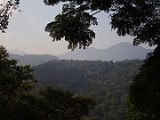
The Tijuca Forest is a mountainous hand-planted rainforest
in the city of Rio de Janeiro
, Brazil
. It is the world's largest urban forest
, covering some 32 km² (12.4 mi²). The forest shares its name with the Tijuca
bairro
or neighborhood that contains it.
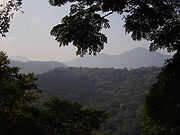 The Tijuca Forest is home to hundreds of species of plants and wildlife
, many threatened by extinction
, found only in the Atlantic Rainforest (Mata Atlântica in Portuguese
). After all the original forest had been destroyed to make way for coffee farms, Tijuca was replanted by Major Manuel Gomes Archer in the second half of the 19th century in a successful effort to protect Rio's water supply.
One favela
named Mata Machado exists in the Tijuca Forest. Its inhabitants are mainly the descendants of those who migrated to the region in the 1930s to take part in the replanting effort. Though conditions have improved recently under the Favela-Bairro Project, Mata Machado still contributes to environmental degradation
in the forest.
In 1961, Tijuca Forest was declared a National Park
. The Forest contains a number of attractions, most notably the colossal sculpture of Christ the Redeemer
atop Corcovado
mountain. Other attractions include the Cascatinha Waterfall; the Mayrink Chapel, with hi hi hi hi hi hi murals painted by Cândido Portinari
; the light pagoda-style gazebo at Vista Chinesa outlook; and the giant granite picnic table called the Mesa do Imperador. Among its impressive peaks is the Pedra da Gávea
.
Rainforest
Rainforests are forests characterized by high rainfall, with definitions based on a minimum normal annual rainfall of 1750-2000 mm...
in the city of Rio de Janeiro
Rio de Janeiro
Rio de Janeiro , commonly referred to simply as Rio, is the capital city of the State of Rio de Janeiro, the second largest city of Brazil, and the third largest metropolitan area and agglomeration in South America, boasting approximately 6.3 million people within the city proper, making it the 6th...
, Brazil
Brazil
Brazil , officially the Federative Republic of Brazil , is the largest country in South America. It is the world's fifth largest country, both by geographical area and by population with over 192 million people...
. It is the world's largest urban forest
Urban forest
An urban forest is a forest or a collection of trees that grow within a city, town or a suburb. In a wider sense it may include any kind of woody plant vegetation growing in and around human settlements. In a narrower sense it describes areas whose ecosystems are inherited from wilderness...
, covering some 32 km² (12.4 mi²). The forest shares its name with the Tijuca
Tijuca
Tijuca is a neighbourhood of the Northern Zone of the city of Rio de Janeiro, Brazil. It comprises the region of Saens Peña and Afonso Pena squares. According to the 2000 Census, the district has close to 150,000 inhabitants...
bairro
Bairro
Bairro is a Portuguese word and refers to a community or region within a city or municipality. Bairros exist in the majority of large cities in the world. Related words in English include neighborhood, district, borough or subdivision...
or neighborhood that contains it.
Wildlife
Wildlife includes all non-domesticated plants, animals and other organisms. Domesticating wild plant and animal species for human benefit has occurred many times all over the planet, and has a major impact on the environment, both positive and negative....
, many threatened by extinction
Extinction
In biology and ecology, extinction is the end of an organism or of a group of organisms , normally a species. The moment of extinction is generally considered to be the death of the last individual of the species, although the capacity to breed and recover may have been lost before this point...
, found only in the Atlantic Rainforest (Mata Atlântica in Portuguese
Portuguese language
Portuguese is a Romance language that arose in the medieval Kingdom of Galicia, nowadays Galicia and Northern Portugal. The southern part of the Kingdom of Galicia became independent as the County of Portugal in 1095...
). After all the original forest had been destroyed to make way for coffee farms, Tijuca was replanted by Major Manuel Gomes Archer in the second half of the 19th century in a successful effort to protect Rio's water supply.
One favela
Favela
A favela is the generally used term for a shanty town in Brazil. In the late 18th century, the first settlements were called bairros africanos . This was the place where former slaves with no land ownership and no options for work lived. Over the years, many freed black slaves moved in...
named Mata Machado exists in the Tijuca Forest. Its inhabitants are mainly the descendants of those who migrated to the region in the 1930s to take part in the replanting effort. Though conditions have improved recently under the Favela-Bairro Project, Mata Machado still contributes to environmental degradation
Environmental degradation
Environmental degradation is the deterioration of the environment through depletion of resources such as air, water and soil; the destruction of ecosystems and the extinction of wildlife...
in the forest.
In 1961, Tijuca Forest was declared a National Park
National park
A national park is a reserve of natural, semi-natural, or developed land that a sovereign state declares or owns. Although individual nations designate their own national parks differently A national park is a reserve of natural, semi-natural, or developed land that a sovereign state declares or...
. The Forest contains a number of attractions, most notably the colossal sculpture of Christ the Redeemer
Christ the Redeemer (statue)
Christ the Redeemer is a statue of Jesus Christ in Rio de Janeiro, Brazil; considered the largest Art Deco statue in the world and the 5th largest statue of Jesus in the world. It is tall, including its pedestal, and wide. It weighs 635 tonnes , and is located at the peak of the Corcovado...
atop Corcovado
Corcovado
Corcovado, meaning "hunchback" in Portuguese, is a mountain in central Rio de Janeiro, Brazil. The granite peak is located in the Tijuca Forest, a national park. It is sometimes confused with nearby Sugarloaf Mountain...
mountain. Other attractions include the Cascatinha Waterfall; the Mayrink Chapel, with hi hi hi hi hi hi murals painted by Cândido Portinari
Cândido Portinari
Candido Portinari was one of the most important Brazilian painters and also a prominent and influential practitioner of the neo-realism style in painting....
; the light pagoda-style gazebo at Vista Chinesa outlook; and the giant granite picnic table called the Mesa do Imperador. Among its impressive peaks is the Pedra da Gávea
Pedra da Gávea
Pedra da Gávea , is an impressive monolith rising 842 meters above sea level at the highest point, located in Floresta da Tijuca in Barra da Tijuca, Rio de Janeiro. It is the world's largest monolith on a coastline...
.