


Third Anglo-Maratha War

Encyclopedia
The Third Anglo-Maratha War (1817–1818) was the final and decisive conflict between the British East India Company
and the Maratha Empire
in India
. The war left the Company in control of most of India. It began with an invasion of Maratha territory by 110,400 British East India Company troops, the largest such British controlled force amassed in India. The troops were led by the Governor General
Hastings
and he was supported by a force under General Thomas Hislop
. The operations began with action against Pindaris, a band of Muslim and Maratha robbers from central India.
The Peshwa Baji Rao II
's forces, followed by those of Mudhoji II Bhonsle
of Nagpur
and Malharrao Holkar III
of Indore
, rose against the British company. Pressure and diplomacy convinced the fourth major Maratha leader, Daulatrao Shinde of Gwalior, to remain neutral even though he lost control of Rajasthan
. British victories were swift, resulting in the breakup of the Maratha Empire and the loss of Maratha independence. The Peshwa was defeated in the battles of Khadki
and Koregaon
and he was forced to flee. Several minor battles were fought by the Peshwa's forces to prevent his capture.
The Peshwa was eventually captured and placed on a small estate at Bithur, near Kanpur. Most of his territory was annexed and became part of the Bombay Presidency
. The Maharaja of Satara
was restored as the ruler of his territory as a princely state
. In 1848 this territory was also annexed by the Bombay Presidency under the doctrine of lapse
policy of Lord Dalhousie. Bhonsle was defeated in the battle of Sitabaldi
and Holkar in the battle of Mahidpur
. The northern portion of Bhonsle's dominions in and around Nagpur, together with the Peshwa's territories in Bundelkhand
, were annexed by British India as the Saugor and Nerbudda Territories
. The defeat of the Bhonsle and Holkar also resulted in the acquisition of the Maratha kingdoms of Nagpur and Indore by the British. Along with Gwalior from Shinde and Jhansi
from the Peshwa, all of these territories became princely states acknowledging British control. The British proficiency in Indian war-making was demonstrated through their rapid victories in Khadki, Sitabardi, Mahidpur, Koregaon, and Satara.
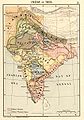 The Maratha Empire was founded in 1674 by Shivaji of the Bhosle dynasty. Common elements of the citizenry of Shivaji's Maratha Empire were the Marathi
language, the Hindu religion, a strong sense of belonging, and a national feeling. Shivaji led resistance efforts to free the Marathas from the Muslim Sultanate of Bijapur and established rule of the native Marathas. This kingdom was known as the Hindavi Swarajya
("Indian self-rule") in the Marathi
language. Shivaji's capital was located at Raigad. Shivaji successfully defended his kingdom from attacks by the Mughal Empire
. A key component of the Maratha administration was the council of eight ministers called the Ashta Pradhan
(council of eight). The senior-most member of the Ashta Pradhan was called the Peshwa or the Mukhya Pradhan (prime minister). The Peshwa was the right-hand man of Shivaji. Shivaji and most of the Maratha warriors belonged to the Maratha
caste of the four tier Hindu
caste system whereas all of the Peshwas belonged to the Brahmin
caste. After Shivaji's death the Maratha empire began to disintegrate. The Peshwas transformed themselves into hereditary rulers of the state. A struggle for power between Tarabai, Chhatrapati Ramraja and the incumbent Peshwa led to the elderly Tarabai imprisoning Ramraja leading to the end of the Bhosale epic. Shivaji's descendant was stripped of his power and was kept a prisoner in the fortress of Satara
.
at neighbouring Vasai in May 1739. In an effort to keep the Marathas out of Bombay, the British sent envoys to negotiate a treaty. The envoys were successful, and a treaty was signed on 12 July 1739 that gave the British East India Company rights to free trade in Maratha territory. In the south, the Nizam of Hyderabad had enlisted the support of the French for his war against the Marathas. In reaction to this, the Peshwa requested support from the British, but was refused. Unable to see the rising power of the British, the Peshwa set a precedent by seeking their help to solve internal Maratha conflicts. Despite the lack of support, the Marathas managed to defeat the Nizam over a period of five years.
During the period 1750–1761, the British defeated the French in India and established supremacy in Bengal
in the east and Madras in the south. They were unable to expand to the west as the Marathas were dominant there, but they entered Surat
on the west coast via the sea.
The Marathas marched beyond the Indus
as their empire grew. The responsibility for managing the sprawling Maratha empire in the north was entrusted to two Maratha leaders, Shinde and Holkar, as the Peshwa was busy in the south. The two leaders did not act in concert, and their polices were influenced by personal interests and financial demands. They alienated other Hindu rulers like the Rajputs, the Jats, and the Rohillas, and they failed to diplomatically win over other Muslim leaders. A large blow to the Marathas came in their defeat on 14 January 1761 at Panipat against the Afghan Ahmad Shah Abdali. An entire generation of Maratha leaders lay dead on the battlefield as a result of that conflict. Between 1761 and 1773, the Marathas regained the lost ground in the north.
in 1773. Due to this, the Marathas virtually disappeared from north India. Raghunathrao
was ousted from the seat of Peshwa due to continuing internal Maratha rivalries. He sought help from the British, and they signed the Treaty of Surat
with him in March 1775. This treaty gave him military assistance in exchange for control of Salsette Island
and Bassein Fort
. The treaty set off discussions amongst the British in India as well as in Europe because of the serious implications of a confrontation with the powerful Marathas. Another cause for concern was that the Bombay Council had exceeded its constitutional authority by signing such a treaty. The treaty was the cause of the start of the First Anglo-Maratha War
. This war was virtually a stalemate, with no side being able to defeat the other. The war concluded with the treaty of Salabai in May 1782, mediated by Mahadji Shinde. The foresight of Warren Hastings
was the main reason for the success of the British in the war. He had destroyed the anti-British coalition and created a division between the Shinde, the Bhonsle, and the Peshwa. The Marathas were still in a very strong position when the new British Governor General Cornwallis
arrived in India in 1786. After the treaty of Salabai, the British followed a policy of coexistence in the north. The British and the Marathas enjoyed more than two decades of peace, thanks to the diplomacy of Nana Phadnavis, the Brahmin minister in the court of the 11-year-old Peshwa Baji Rao II
. The situation changed soon after Nana's death in 1800. The power struggle between Holkar and Shinde caused Holkar to attack the Peshwa in Pune in 1801, since the Peshwa sided with Shinde. The Peshwa Baji Rao II fled Pune to safety on a British warship. Baji Rao feared loss of his own powers and signed the treaty of Vasai. This made the Peshwa in effect a subsidiary ally of the British. In response to the treaty, the Bhonsle and Shinde attacked the British, refusing to accept the betrayal of their sovereignty to the British by the Peshwa. This was the start of the Second Anglo-Maratha War
in 1803. Both were defeated by the British, and all Maratha leaders lost large parts of their territory to the British.
at Pune because of his knowledge of the languages and customs of the region.
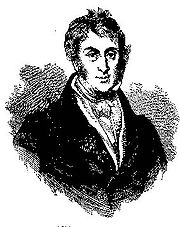 At the time of the war, the power of the British East India Company was on the rise whereas the Maratha Empire was on the decline. The British had been victorious in the previous Anglo-Maratha war. The Peshwa of the Maratha Empire at this time was Baji Rao II
. Several Maratha leaders who had formerly sided with the Peshwa were now under British control or protection. The British had an arrangement with the Gaekwad
dynasty of the Maratha province of Baroda to prevent the Peshwa from collecting revenue in that province. Gaekwad sent an envoy to the Peshwa in Pune to negotiate a dispute regarding revenue collection. The envoy, Gangadhar Shastri, was under British protection. He was murdered, and the Peshwa's minister Trimbak Dengle was suspected of the crime. The British seized the opportunity to force Baji Rao into a treaty. The treaty (The Treaty of Pune) was signed on 13 June 1817. Key terms imposed on the Peshwa included the admission of Dengle's guilt, renouncing claims on Gaekwad, and surrender of significant swaths of territory to the British. These included his most important strongholds in the Deccan, the seaboard of Konkan, and all places north of the Narmada
and south of the Tungabhadra rivers. The Peshwa was also not to communicate with any other powers in India. The British Resident Mountstuart Elphinstone
also asked the Peshwa to disband his cavalry.
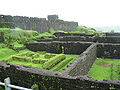 The Peshwa disbanded his cavalry, but secretly asked them to stand by, and offered them seven months' advance pay. Baji Rao entrusted Bapu Gokhale
with preparations for war. In August 1817, the forts at Sinhagad, Raigad, and Purandar were fortified by the Peshwa. Gokhale secretly recruited troops for the impending war. Many Bhils and Ramoshis
were hired. Efforts were made to unify Bhonsle, Shinde, and Holkar; even the mercenary Pindari
s were approached. The Peshwa identified unhappy Indians in the service of the British Resident Elphinstone and secretly recruited them. One such person was Jaswant Rao Ghorpade. Efforts were made to secretly recruit Europeans as well. Some Indians, such as Balaji Pant Natu
, stood steadfastly with the British. Several of the Indian sepoys rejected the Peshwa's offers, and others reported the matter to their superior officers. On 19 October 1817, Baji Rao II celebrated the Dassera
festival in Pune, where troops were assembled in large numbers. During the celebrations, a large flank of the Maratha cavalry pretended they were charging towards the British sepoys but wheeled off at the last minute. This display was intended as a slight towards Elphinstone and as a scare tactic to prompt the defection and recruitment of British sepoys to the Peshwa's side. The Peshwa made plans to kill Elphinstone, despite opposition from Gokhale. Elphinstone was fully aware of these developments thanks to the espionage work of Balaji Pant Natu and Ghorpade. Burton provides an estimate of the strength of various Maratha powers in or around 1817:
Burton's estimate of the various Maratha powers totals to 81,00 infantry, 106,000 horse or cavalry and 589 guns. Of these the Peshwa had the highest number of cavalry at 28,000 along with 14,000 infantry and 37 guns. The Peshwa headquarters was in Pune, which was the southernmost location amongst the other Maratha powers. Holkar had the second largest cavalry amounting to 20,000, and an infantry force of 8,000. His guns totaled to 107 guns. Shinde and Bhonsle had similar numbers of cavalry and infantry with each having 15,000 and 16,000 cavalry respectively. Shinde had 16,000 infantry and Bhonsle, 18,000. Shinde had the larger share of guns amounting to 140 whereas Bhonsle had 85. Holkar, Shinde and Bhonsle were headquartered in Indore, Gwalior and Nagpur respectively. The Pashtun leader Amir Khan was located in Tonk in Rajputana and his strength was 12,000 cavalry, 10,000 infantry and 200 guns. The Pindaris were located north of the Narmada valley in Chambal and Malwa region of central India. Three Pindari leaders sided with Shinde, these were Setu, Karim Khan and Dost Mohammad. They were mostly horsemen with strengths of 10,000, 6,000 and 4,000. The rest of the Pindari chiefs, Tulsi, Imam Baksh, Sahib Khan, Kadir Baksh, Nathu and Bapu were allied with Holkar. Tulsi and Imam Baksh each had 2,000 horsemen, Kadir Baksh, 21,500. Sahib Khan, Nathu and Bapu had 1,000, 750 and 150 horsemen.
 The Peshwa's territory was in an area called the Desha, now part of the modern state of Maharashtra. The region consists of the valleys of the Krishna
and Godavari
rivers and the plateaus of the Sahyadri Mountains. Shinde's territory around Gwalior and Bundelkhand
was a region of rolling hills and fertile valleys that slopes down toward the Indo-Gangetic Plain
to the north. The Pindari territory was the valleys and forests of the Chambal
, the north western region of the modern state of Madhya Pradesh
. It was a mountainous region with a harsh climate. The Pindaris also operated from Malwa, a plateau region in the north west of the state of Madhya Pradesh, north of the Vindhya Range
. Holkar was based in the upper Narmada River
valley.
The war was mostly a mopping-up operation intended to complete the expansion of the earlier Anglo-Maratha war, which was stopped due to economic concerns of the British. The war began as a campaign against the Pindaris. Seeing that the British were in conflict with the Pindaris, the Peshwa's forces attacked the British at 16:00 on 5 November 1817 with the Maratha left attacking the British right. The Maratha forces comprised 20,000 cavalry, 8,000 infantry, and 20 guns whereas the British had 2,000 cavalry, 1,000 infantry, and eight guns. On the Maratha side, an additional 5,000 horse and 1,000 infantry were guarding the Peshwa at Parvati Hill
. The British numbers include Captain Ford's unit, which was en route from Dapodi to Khadki
. The British had also asked General Smith to come to Khadki for the battle but they did not anticipate he would arrive in time.
Three hills in the region were the Parvati Hill, the Chaturshringi Hill
, and the Khadki hill. The Peshwa watched the battle from the Parvati Hill whereas the British East India Company troops were based on the Khadki hill. The two hills are separated by a distance of four kilometres. The river Mula is shallow and narrow and could be crossed at several locations. A few canals (nallas in Marathi) joined the river and though these were not obstacles, some of them were obscured due to the vegetation in the area.
The Maratha army was a mix of Rohillas, Rajputs, and Marathas. It also included a small force of the Portuguese
under their officer, de Pinto. The left flank of the Maratha army, commanded by Moropant Dixit and Raste, was stationed on the flat ground on which the University of Pune
stands today. The centre was commanded by Bapu Gokhale and the right was under Vinchurkar. British troop movements began on 1 November 1817 when Colonel Burr moved his forces towards what is now Bund Garden via the Holkar Bridge. The Maratha were successful initially in creating and exploiting a gap in the British left and centre. These successes were nullified by the Maratha horses being thrown into disarray by a hidden canal and the temporary loss of command by Gokhale, whose horse was shot. The Marathas were rendered leaderless when Moropant Dixit on the right was shot dead. The British infantry advanced steadily, firing volley after volley, causing the Maratha cavalry to retreat in a matter of four hours. The British soon claimed victory. The British lost 86 men and the Maratha about 500.
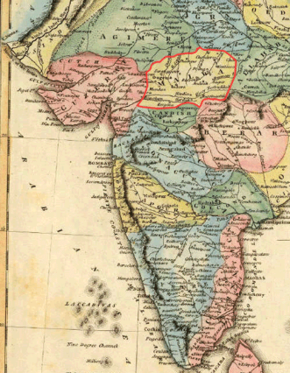 After the second Anglo-Maratha war, Shinde and Holkar had lost many of their territories to the British. They encouraged the Pindaris to raid the British territories. The Pindaris, who were mostly cavalry, came to be known as the Shindeshahi and the Holkarshahi after the patronage they received from the respective defeated Maratha leaders. The Pindari leaders were Setu, Karim Khan, Dost Mohammad, Tulsi, Imam Baksh, Sahib Khan, Kadir Baksh, Nathu, and Bapu. Of these, Setu, Karim Khan, and Dost Mohammad belonged to Shindeshahi and the rest to Holkarshahi. The total strength of the Pindaris in 1814 was estimated at 33,000. The Pindaris frequently raided villages in Central India. The result of the Pindari raids was that Central India was being rapidly reduced to the condition of a desert because the peasants were unable to support themselves on the land. They had no option but to join the robber bands or starve. In 1815, 25,000 Pindaris entered the Madras Presidency
and destroyed over 300 villages on the Coromandel coast
. Another band swept the Nizam's kingdom while a third entered Malabar
. Other Pindari raids on British territory followed in 1816 and 1817. Francis Rawdon-Hastings saw that there could not be peace or security in India until the predatory Pindaris were extinguished.
in the north under his personal command, and the Army of the Deccan under General Hislop
in the south. The British plan was to normalize relations with the Shinde, Holkar, and Amir Khan. The three were known to be well disposed towards the Pindaris and harboured them in their territories. Shinde was secretly planning with the Peshwa and the Nepal Ministry to form a coalition against the British. His correspondence with Nepal was intercepted and presented to him in Durbar. He was forced to enter into a treaty by which he pledged to assist the British against the Pindaris and to prevent any new gangs being formed in his territory. Diplomacy, pressure, and the treaty of Gwalior kept Shinde out of the war. Amir Khan disbanded his army on condition of being guaranteed the possession of the principality of Tonk
in Rajputana
. He sold his guns to the British and agreed to prevent predatory gangs from operating from his territory. The army for the war was composed of two armies, the Grand Army or the Bengal Army with a strength of 40,000 troops and the Army of the Deccan with a strength of 70,400. The Grand Army was divided in to three divisions and a reserve. The left division was led by Major General Marshall and the central division was under Francis Rawdon-Hastings. The reserve was under General Ochterlony. The second army, the Army of the Deccan was composed of five divisions. The divisions were led by General Hislop
, Brigadier General Doveton, General Malcolm, Brigadier General Smith, Lieutenant Colonel Adams. The Army of Deccan comprised 70,400 troops, bringing the total strength of the entire composite British East India Company army to 110,400. In addition the Madras and Pune residencies each had two battalions and a detail of an artillery unit. The Madras residency had an additional three troops of the 6th Bengal Cavalry. In October and early November, the first division of the Grand Army was sent to Sind, the second to Chambal, the third to Eastern Narmada. The reserve division was used to pressurise Amir Khan. The effect of the dispatching of the first and second divisions was to cut off Shinde from his potential allies. He and Amir Khan were thus pressured in to signing a treaty.
The first and third division of the army of the deccan were concentrated at Harda to hold the fords of the Narmada. The second division was used placed at Malkapur to keep a watch on the Berar Ghats. The fourth division marched to Khandesh occupying the region between Pune and Amravati
(Berar) administrative divisions whereas the fifth division was placed at Hoshangabad
and the reserve division was placed between the Bhima
and Krishna
rivers.
. A force of 5,000 additional Marathas was located at the confluence of two rivers—the Mula
and the Mutha
—under the leadership of Vinchurkar, but they remained idle. Bapu Gokhale retreated to guard the Peshwa in flight. The next morning, General Smith advanced towards the city of Pune and found that the Peshwa had fled towards the city of Satara
. During the day Pune surrendered, and great care was taken by General Smith for the protection of the peaceful part of the community. Order was soon re-established. The British forces entered Shanivar Wada on 17 November and the Union flag was hoisted by the British spy Balaji Pant Natu.
The Peshwa now fled to Koregaon
. The Battle of Koregaon
took place on 1 January 1818 on the banks of the river Bhima, north west of Pune. General Stauton arrived near Koregaon along with 500 infantry, two six-pounder guns, and 200 irregular horsemen. Only 24 of the infantry were of European origin; they were from the Madras Artillery. The rest of the infantry was composed of Indians employed by the British. The small village of Koregaon was on the north bank of the river, which was shallow and narrow at this time of year. The village had a fortified enclosure constructed in the standard Maratha fashion. Stauton occupied the village but was unable to take the fortified enclosure, which was occupied by the Marathas. The British were cut off from the river, their only source of water. A fierce battle ensued that lasted the entire day. Streets and guns were captured and recaptured, changing hands several times. The Peshwa watched the battle from atop a nearby hill about two miles away. The Marathas evacuated the village and retreated during the night. The British lost 175 men and about a third of the irregular horse, with more than half of the European officers wounded. The Marathas lost 500 to 600 men. When the British found the village evacuated in the morning, Staunton took his battered troops and pretended to march on to Pune, but actually went to Shirur. The gallant defense by such a small and disciplined British force against an overwhelmingly large Maratha force is recorded in the annals of the British East India Company as the most glorious example of valor and fortitude.
After the battle the British forces under general Pritzler pursued the Peshwa, who fled southwards towards Karnataka
with the Raja of Satara. The Peshwa continued his flight southward throughout the month of January. Not receiving support from the Raja of Mysore, the Peshwa doubled back and passed General Pritzlier to head towards Solapur
. Until 29 January the pursuit of the Peshwa had not been productive. Whenever Baji Rao was pressed by the British, Gokhale and his light troops hovered around the Peshwa and fired long shots. Some skirmishes took place, and the Marathas were frequently hit by shells from the horse artillery. There was, however, no advantageous result to either party. On 7 February General Smith entered Satara and captured the royal palace of the Marathas. He symbolically raised the British flag. The next day, the Bhagwa Zenda—the flag of Shivaji and the Marathas—was raised in its place. To gain support of the population, the British declared that they would not interfere with the tenets of any religion. They announced that all Watans, Inams
, pensions, and annual allowances would be continued provided that the recipients withdrew from the service of Baji Rao. During this time Baji Rao remained in the vicinity of Solapur.
On 19 February, General Smith got word that the Peshwa was headed for Pandharpur
. General Smith's troops attacked the Peshwa at Ashti
en route. During this battle, Gokhale died while defending the Peshwa from the British. He fought bravely and died with a sword in his hand. The Raja of Satara was captured along with his brother and mother. The Raja was glad to be free from servitude to the Konkanastha Brahmins
and Baji Rao. The Maratha king, first imprisoned by Tarabai in the 1750s had lost power much earlier but was reinstated by Madhav rao Peshwa in 1763 after Tarabai's death. Since then the king had retained a titular position of appointing the Peshwas. The Emperor Alamgir II in his farman to the Peshwa had complimented them for looking after the Chhatrapati family.(Bharat Itihas Sanshodhan mandal Quarterly July 1920). The Chhatrapati declared in favour of the British and this ended the Peshwa's legal position as head of the Maratha confederacy. . The death of Gokhale and the skirmish at Ashti hastened the end of the war. Soon after this Baji Rao was deserted by the Patwardhan
s.
By 10 April 1818, General Smith's forces had taken the forts of Sinhagad
and Purandar. Mountstuart Elphinstone mentions the capture of Sinhagadh in his diary entry for 13 February 1818: "The garrison contained no Marathas, but consisted of 100 Arabs, 600 Gosains, and 400 Konkani. The Killadar was a boy of eleven; the real Governor, Appajee Punt Sewra, a mean-looking Carcoon. The garrison was treated with great liberality; and, though there was much property and money in the place, the Killadar was allowed to have whatever he claimed as his own." On 3 June 1818 Baji Rao surrendered to the British and negotiated the sum of eight lakhs as annual maintenance. Baji Rao obtained promises from the British in favor of the Jagirdars, his family, the Brahmins, and religious institutions. The Peshwa was sent to Bithur near Kanpur. While the downfall and banishment of the Peshwa was mourned all over the Maratha Empire as a national defeat, the Peshwa seemed unaffected. He contracted more marriages and spent his long life engaged in religious performances and excessive drinking.
 Madhoji Bhonsle, also known as Appa Saheb, consolidated his power in Nagpur after the murder of his cousin, the imbecile ruler Parsoji Bhonsle. He entered into a treaty with the British on 27 May 1816. He ignored the request of the British Resident Jenkins to refrain from contact with Baji Rao II. Jenkins asked Appa Saheb to disband his growing concentration of troops and come to the residency, which he also refused to do. Appa Saheb openly declared support for the Peshwa, who was already fighting the British near Pune. As it was now clear that a battle was in the offing, Jenkins asked for reinforcements from nearby British East India Company troops. He already had about 1,500 men under Lieutenant-Colonel Hopentoun Scott. Jenkins sent word for Colonel Adams to march to Nagpur with his troops. Like other Maratha leaders, Appa Shaeb employed Arabs in his army. They were typically involved in holding fortresses. While they were known to be among the bravest of troops, they were not amenable to discipline and order. The total strength of the Marathas was about 18,000.
The Residency was to the west of the Sitabardi hill, a 300 yards (274.3 m) hillock running north-south. The British East India Company troops occupied the north end of the hillock. The Marathas, fighting with the Arabs, made good initial gains by charging up the hill and forcing the British to retreat to the south. British commanders began arriving with reinforcements: Lieutenant Colonel Rahan on 29 November, Major Pittman on 5 December, and Colonel Doveton on 12 December. The British counterattack was severe and Appa Saheb was forced to surrender. The British lost 300 men, of which 24 were Europeans; the Marathas lost an equal number. A treaty was signed on 9 January 1818. Appa Saheb was allowed to rule over nominal territories with several restrictions. Most of his territory, including the forts, was now controlled by the British. They built additional fortifications on Sitabardi hill.
A few days later Appa Saheb was arrested. He was being escorted to Allahabad when he escaped to Punjab to seek refuge with the Sikhs. They turned him down and he was captured once again by the British near Jodhpur. Raja Mansingh of Jodhpur stood surety for him and he remained in Jodhpur, where he died on 15 July 1849 at 44 years of age.
 Holkar was offered terms similar to those offered to Shinde; the only difference was that Holkar accepted and respected the independence of Amir Khan. The Court of Holkar was at this time practically nonexistent. When Tantia Jog, an official of the Holkar, urged acceptance of the offer he was suspected of being in collusion with the British. In reality he made the suggestion because he was aware of the power of the British as he had seen their armies in action when he had commanded a battalion in the past. Holkar responded to the Peshwa's call for insurrection against the British by initiating a battle in Mahidpur.
The battle of Mahidpur between Holkar and the British was fought on 21 December 1817. The charge on the British side was led by Malcolm himself. A deadly battle ensued lasting from midday until 3:00 am. Malcolm was loyally served by European and Indian soldiers and all displayed great bravery. Lieutenant General Thomas Hislop was commander in chief of the Madras army. Hislop came in sight of the Holkar army about 9:00 am. The British East India Company's army lost 800 men but Holkar's force was destroyed. The British East India Company's losses were 800 killed or wounded but Holkar's loss was much larger with about 3,000 killed or wounded. These losses meant Holkar was deprived of any means of rising in arms against the British, and this broke the power of the Holkar dynasty. The battle of Mahidpur proved disastrous for the Maratha fortunes. Henry Durand wrote, "After the battle of Mahidpur not only the Peshwa's but the real influence of the Mahratta States of Holkar and Shinde were dissolved and replaced by British supremacy." Although the power of the Holkar family was broken, the remaining troops remained hostile and a division was retained to disperse them. The ministers made overtures of peace, and on 6 January 1818 the Treaty of Mandeswar was signed; Holkar accepted the British terms in totality. Holkar came under British authority as an independent prince subject to the advice of a British Resident.
. The Peshwa surrendered on 3 June 1818 and was sent off to Bithur near Kanpur under the terms of the treaty signed on 3 June 1818. Of the Pindari leaders, Karim Khan surrendered to Malcolm in February 1818; Wasim Mohammad surrendered to Shinde and eventually poisoned himself; and Setu was killed by a tiger.
The war left the British, under the auspices of the British East India Company, in control of virtually all of present-day India south of the Sutlej River. The famed Nassak Diamond
was acquired by the Company as part of the spoils of the war. The British acquired large chunks of territory from the Maratha Empire and in effect put an end to their most dynamic opposition. The terms of surrender Malcolm offered to the Peshwa were controversial amongst the British for being too liberal: The Peshwa was offered a luxurious life near Kanpur and given a pension of about 80,000 pounds. A comparison was drawn with Napoleon, who was confined to a small rock in the south Atlantic and given a small sum for his maintenance. Trimbakji Dengale was captured after the war and was sent to the fortress of Chunar in Bengal where he spent the rest of his life. With all active resistance over, John Malcolm played a prominent part in capturing and pacifying the remaining fugitives.
The Peshwa's territories were absorbed into the Bombay Presidency
and the territory seized from the Pindaris became the Central Provinces
of British India. The princes of Rajputana became symbolic feudal lords who accepted the British as the paramount power. Thus Francis Rawdon-Hastings redrew the map of India to a state which remained more or less unaltered until the time of Lord Dalhousie. The British brought an obscure descendant of Shivaji, the founder of the Maratha Empire, to be the ceremonial head of the Maratha Confederacy to replace the seat of the Peshwa. An infant from the Holkar family was appointed as the ruler of Nagpur under British guardianship. The Peshwa adopted a son, Nana Sahib
, who went on to be one of the leaders of the Rebellion of 1857. After 1818, Montstuart Elphinstone reorganized the administrative divisions for revenue collection, thus reducing the importance of the Patil
, the Deshmukh, and the Deshpande
. The new government felt a need to communicate with the local Marathi
-speaking population; Elphinstone pursued a policy of planned standardization of the Marathi language in the Bombay Presidency starting after 1820.
British East India Company
The East India Company was an early English joint-stock company that was formed initially for pursuing trade with the East Indies, but that ended up trading mainly with the Indian subcontinent and China...
and the Maratha Empire
Maratha Empire
The Maratha Empire or the Maratha Confederacy was an Indian imperial power that existed from 1674 to 1818. At its peak, the empire covered much of South Asia, encompassing a territory of over 2.8 million km²....
in India
India
India , officially the Republic of India , is a country in South Asia. It is the seventh-largest country by geographical area, the second-most populous country with over 1.2 billion people, and the most populous democracy in the world...
. The war left the Company in control of most of India. It began with an invasion of Maratha territory by 110,400 British East India Company troops, the largest such British controlled force amassed in India. The troops were led by the Governor General
Governor-General of India
The Governor-General of India was the head of the British administration in India, and later, after Indian independence, the representative of the monarch and de facto head of state. The office was created in 1773, with the title of Governor-General of the Presidency of Fort William...
Hastings
Francis Rawdon-Hastings, 1st Marquess of Hastings
Francis Edward Rawdon-Hastings, 1st Marquess of Hastings KG PC , styled The Honourable Francis Rawdon from birth until 1762 and as The Lord Rawdon between 1762 and 1783 and known as The Earl of Moira between 1793 and 1816, was an Irish-British politician and military officer who served as...
and he was supported by a force under General Thomas Hislop
Sir Thomas Hislop, 1st Baronet
Sir Thomas Hislop, 1st Baronet, GCB was a senior British Army officer of the late eighteenth and early nineteenth centuries. Serving exclusively in colonial campaigns, Hislop fought in the West Indies between 1796 and 1810 and subsequently in India, where he was a senior commander during the Third...
. The operations began with action against Pindaris, a band of Muslim and Maratha robbers from central India.
The Peshwa Baji Rao II
Baji Rao II
Baji Rao II was the last Peshwa of the Maratha Confederacy, and governed from 1796 to 1818. His reign was marked by confrontations with the British.-Biography:...
's forces, followed by those of Mudhoji II Bhonsle
Mudhoji II Bhonsle
Mudhoji II Bhonsle, also known as Appa Sahib, ruled the Kingdom of Nagpur in central India from 1816 to 1818. His reign coincided with the Third Anglo-Maratha War between the Maratha Confederacy and the United Kingdom, which ended with the defeat of the Marathas.On the death of Raghoji II in 1816,...
of Nagpur
Nagpur
Nāgpur is a city and winter capital of the state of Maharashtra, the largest city in central India and third largest city in Maharashtra after Mumbai and Pune...
and Malharrao Holkar III
Holkar
The Holkar dynasty , whose earliest known clan-man was Malhar Rao, who joined the service of the Peshwa in 1721, and quickly rose to the ranks of Subedar...
of Indore
Indore
Indore is one of the major city in India, the largest city and commercial center of the state of Madhya Pradesh in central India. Indore is located 190 km west of the state capital Bhopal. According to the 2011 Indian census, Indore city has a population of 1,960,631...
, rose against the British company. Pressure and diplomacy convinced the fourth major Maratha leader, Daulatrao Shinde of Gwalior, to remain neutral even though he lost control of Rajasthan
Rajasthan
Rājasthān the land of Rajasthanis, , is the largest state of the Republic of India by area. It is located in the northwest of India. It encompasses most of the area of the large, inhospitable Great Indian Desert , which has an edge paralleling the Sutlej-Indus river valley along its border with...
. British victories were swift, resulting in the breakup of the Maratha Empire and the loss of Maratha independence. The Peshwa was defeated in the battles of Khadki
Battle of Khadki
The Battle of Khadki took place at Khadki on November 5, 1817 between the forces of the British East India Company and those of Bajirao II, the Peshwa of the Maratha Empire...
and Koregaon
Battle of Koregaon
The Battle of Koregaon took place on January 1, 1818, at the bank of the river Bhima in Koregaon, northwest of Pune, India. A small force of 500 men of the 2nd Battalion 1st Regiment of the Bombay Native Light Infantry under the command of Capt. F. F...
and he was forced to flee. Several minor battles were fought by the Peshwa's forces to prevent his capture.
The Peshwa was eventually captured and placed on a small estate at Bithur, near Kanpur. Most of his territory was annexed and became part of the Bombay Presidency
Bombay Presidency
The Bombay Presidency was a province of British India. It was established in the 17th century as a trading post for the English East India Company, but later grew to encompass much of western and central India, as well as parts of post-partition Pakistan and the Arabian Peninsula.At its greatest...
. The Maharaja of Satara
Satara
Satara is a city located in the Satara District of Maharashtra state of India. The town is 2320 ft. above sea-level, near the confluence of the Krishna and its tributary river Venna. The city was the capital of the Maratha empire in the 17th century, hence one of the the historical cities of...
was restored as the ruler of his territory as a princely state
Princely state
A Princely State was a nominally sovereign entitity of British rule in India that was not directly governed by the British, but rather by an Indian ruler under a form of indirect rule such as suzerainty or paramountcy.-British relationship with the Princely States:India under the British Raj ...
. In 1848 this territory was also annexed by the Bombay Presidency under the doctrine of lapse
Doctrine of lapse
The Doctrine of Lapse was an annexation policy purportedly devised by Lord Dalhousie, who was the Governor General for the British in India between 1848 and 1856...
policy of Lord Dalhousie. Bhonsle was defeated in the battle of Sitabaldi
Sitabuldi Fort
Sitabuldi fort is located in the middle of Nagpur, India, atop a small hillock. The fort was built by Appa Sahib or Mudhoji II Bhonsle of the Kingdom of Nagpur, just before he fought against the British East India Company during the Third Anglo-Maratha War. The area surrounding the hillock is now...
and Holkar in the battle of Mahidpur
Battle of Mahidpur
The Battle of Mahidpur was fought during the Third Anglo-Maratha War between the Marathas and the British led by Sir Thomas Hislop at Mahidpur, a town in the Malwa region, on 20 December 1817....
. The northern portion of Bhonsle's dominions in and around Nagpur, together with the Peshwa's territories in Bundelkhand
Bundelkhand
Bundelkhand anciently known as Chedi Kingdom is a geographic region of central India...
, were annexed by British India as the Saugor and Nerbudda Territories
Saugor and Nerbudda Territories
The Saugor and Nerbudda Territories was a region of British India, located in central part of present-day Madhya Pradesh state in central India. It includes the present-day districts of Sagar , Damoh, Jabalpur, and Narsinghpur...
. The defeat of the Bhonsle and Holkar also resulted in the acquisition of the Maratha kingdoms of Nagpur and Indore by the British. Along with Gwalior from Shinde and Jhansi
Jhansi
Jhansi Hindi:झाँसी, , Marathi: झाशी, is a historical city of India. Jhansi is the administrative headquarters of Jhansi District and Jhansi Division. The original walled city grew up around its stone fort, which crowns a neighboring rock. This district is on the bank of river Betwa.The National...
from the Peshwa, all of these territories became princely states acknowledging British control. The British proficiency in Indian war-making was demonstrated through their rapid victories in Khadki, Sitabardi, Mahidpur, Koregaon, and Satara.
The Marathas and the British
Marathi language
Marathi is an Indo-Aryan language spoken by the Marathi people of western and central India. It is the official language of the state of Maharashtra. There are over 68 million fluent speakers worldwide. Marathi has the fourth largest number of native speakers in India and is the fifteenth most...
language, the Hindu religion, a strong sense of belonging, and a national feeling. Shivaji led resistance efforts to free the Marathas from the Muslim Sultanate of Bijapur and established rule of the native Marathas. This kingdom was known as the Hindavi Swarajya
Hindavi Swarajya
Hindavi Swarajya is a term that has been used to describe movements seeking to remove external influences from India, including the Moghul and British empires....
("Indian self-rule") in the Marathi
Marathi language
Marathi is an Indo-Aryan language spoken by the Marathi people of western and central India. It is the official language of the state of Maharashtra. There are over 68 million fluent speakers worldwide. Marathi has the fourth largest number of native speakers in India and is the fifteenth most...
language. Shivaji's capital was located at Raigad. Shivaji successfully defended his kingdom from attacks by the Mughal Empire
Mughal Empire
The Mughal Empire , or Mogul Empire in traditional English usage, was an imperial power from the Indian Subcontinent. The Mughal emperors were descendants of the Timurids...
. A key component of the Maratha administration was the council of eight ministers called the Ashta Pradhan
Ashta Pradhan
The Ashta Pradhan was a council of eight men that helped with the administration of the Maratha empire. The council was formed in 1674 by founding Emperor Chhatrapati Shivaji....
(council of eight). The senior-most member of the Ashta Pradhan was called the Peshwa or the Mukhya Pradhan (prime minister). The Peshwa was the right-hand man of Shivaji. Shivaji and most of the Maratha warriors belonged to the Maratha
Maratha
The Maratha are an Indian caste, predominantly in the state of Maharashtra. The term Marāthā has three related usages: within the Marathi speaking region it describes the dominant Maratha caste; outside Maharashtra it can refer to the entire regional population of Marathi-speaking people;...
caste of the four tier Hindu
Hindu
Hindu refers to an identity associated with the philosophical, religious and cultural systems that are indigenous to the Indian subcontinent. As used in the Constitution of India, the word "Hindu" is also attributed to all persons professing any Indian religion...
caste system whereas all of the Peshwas belonged to the Brahmin
Brahmin
Brahmin Brahman, Brahma and Brahmin.Brahman, Brahmin and Brahma have different meanings. Brahman refers to the Supreme Self...
caste. After Shivaji's death the Maratha empire began to disintegrate. The Peshwas transformed themselves into hereditary rulers of the state. A struggle for power between Tarabai, Chhatrapati Ramraja and the incumbent Peshwa led to the elderly Tarabai imprisoning Ramraja leading to the end of the Bhosale epic. Shivaji's descendant was stripped of his power and was kept a prisoner in the fortress of Satara
Satara
Satara is a city located in the Satara District of Maharashtra state of India. The town is 2320 ft. above sea-level, near the confluence of the Krishna and its tributary river Venna. The city was the capital of the Maratha empire in the 17th century, hence one of the the historical cities of...
.
Growing British power
While the Marathas were fighting the Mughals in the early 18th century, the British held settlements in Bombay, Madras and Calcutta. The British fortified the naval base of Bombay after they saw the Marathas defeat the PortuguesePortuguese India
The Portuguese Viceroyalty of India , later the Portuguese State of India , was the aggregate of Portugal's colonial holdings in India.The government started in 1505, six years after the discovery of a sea route to India by Vasco da Gama, with the nomination of the first Viceroy Francisco de...
at neighbouring Vasai in May 1739. In an effort to keep the Marathas out of Bombay, the British sent envoys to negotiate a treaty. The envoys were successful, and a treaty was signed on 12 July 1739 that gave the British East India Company rights to free trade in Maratha territory. In the south, the Nizam of Hyderabad had enlisted the support of the French for his war against the Marathas. In reaction to this, the Peshwa requested support from the British, but was refused. Unable to see the rising power of the British, the Peshwa set a precedent by seeking their help to solve internal Maratha conflicts. Despite the lack of support, the Marathas managed to defeat the Nizam over a period of five years.
During the period 1750–1761, the British defeated the French in India and established supremacy in Bengal
Bengal
Bengal is a historical and geographical region in the northeast region of the Indian Subcontinent at the apex of the Bay of Bengal. Today, it is mainly divided between the sovereign land of People's Republic of Bangladesh and the Indian state of West Bengal, although some regions of the previous...
in the east and Madras in the south. They were unable to expand to the west as the Marathas were dominant there, but they entered Surat
Surat
Surat , also known as Suryapur, is the commercial capital city of the Indian state of Gujarat. Surat is India's Eighth most populous city and Ninth-most populous urban agglomeration. It is also administrative capital of Surat district and one of the fastest growing cities in India. The city proper...
on the west coast via the sea.
The Marathas marched beyond the Indus
Indus River
The Indus River is a major river which flows through Pakistan. It also has courses through China and India.Originating in the Tibetan plateau of western China in the vicinity of Lake Mansarovar in Tibet Autonomous Region, the river runs a course through the Ladakh district of Jammu and Kashmir and...
as their empire grew. The responsibility for managing the sprawling Maratha empire in the north was entrusted to two Maratha leaders, Shinde and Holkar, as the Peshwa was busy in the south. The two leaders did not act in concert, and their polices were influenced by personal interests and financial demands. They alienated other Hindu rulers like the Rajputs, the Jats, and the Rohillas, and they failed to diplomatically win over other Muslim leaders. A large blow to the Marathas came in their defeat on 14 January 1761 at Panipat against the Afghan Ahmad Shah Abdali. An entire generation of Maratha leaders lay dead on the battlefield as a result of that conflict. Between 1761 and 1773, the Marathas regained the lost ground in the north.
Anglo-Maratha relations
The Maratha gains in the north were undone because of the contradictory policies of Holkar and Shinde and the internal disputes in the family of the Peshwa which culminated in the murder of Narayanrao PeshwaNarayanrao Peshwa
Narayanrao Peshwa was fifth Peshwa or ruler of the Maratha Empire from November 1772 till his death by murder in August 1773.-Early life and ascendancy to Peshwa:...
in 1773. Due to this, the Marathas virtually disappeared from north India. Raghunathrao
Raghunathrao
Raghunathrao was Peshwa of the Maratha Confederacy from 1773 to 1774. He was instrumental in the downfall of the Peshwa clan.-Early life:Raghunathrao, also known as "Raghoba" and "Ragho Bharari," was the younger brother of Nanasaheb Peshwa. His father was Peshwa Bajirao I & mother was Kashibai....
was ousted from the seat of Peshwa due to continuing internal Maratha rivalries. He sought help from the British, and they signed the Treaty of Surat
Treaty of Surat
The Treaty of Surat was a treaty by which Raghunathrao, one of the claimants to the throne of the Peshwa, agreed to cede Salsette and Bassein Fort to the English, in consideration of being himself restored to Poona. The military operations that followed are known as the First Maratha War...
with him in March 1775. This treaty gave him military assistance in exchange for control of Salsette Island
Salsette Island
Salsette Island is an island in Maharashtra state on India's west coast. The metropolis of Mumbai and the city of Thane lie on this island, making it the 14th most populous island and the fourth most densely populated island in the world, after Migingo Island in Kenya, Ap Lei Chau in Hong Kong,...
and Bassein Fort
Bassein Fort
Bassein Fort is a large fort in Vasai village, in the Vasai taluka of the District of Thane, Konkan Division, Maharashtra State, Republic of India...
. The treaty set off discussions amongst the British in India as well as in Europe because of the serious implications of a confrontation with the powerful Marathas. Another cause for concern was that the Bombay Council had exceeded its constitutional authority by signing such a treaty. The treaty was the cause of the start of the First Anglo-Maratha War
First Anglo-Maratha War
The First Anglo-Maratha War was the first of three Anglo-Maratha wars fought between the British East India Company and Maratha Empire in India. The war began with the Treaty of Surat and ended with the Treaty of Salbai.-Background:...
. This war was virtually a stalemate, with no side being able to defeat the other. The war concluded with the treaty of Salabai in May 1782, mediated by Mahadji Shinde. The foresight of Warren Hastings
Warren Hastings
Warren Hastings PC was the first Governor-General of India, from 1773 to 1785. He was famously accused of corruption in an impeachment in 1787, but was acquitted in 1795. He was made a Privy Councillor in 1814.-Early life:...
was the main reason for the success of the British in the war. He had destroyed the anti-British coalition and created a division between the Shinde, the Bhonsle, and the Peshwa. The Marathas were still in a very strong position when the new British Governor General Cornwallis
Charles Cornwallis, 1st Marquess Cornwallis
Charles Cornwallis, 1st Marquess Cornwallis KG , styled Viscount Brome between 1753 and 1762 and known as The Earl Cornwallis between 1762 and 1792, was a British Army officer and colonial administrator...
arrived in India in 1786. After the treaty of Salabai, the British followed a policy of coexistence in the north. The British and the Marathas enjoyed more than two decades of peace, thanks to the diplomacy of Nana Phadnavis, the Brahmin minister in the court of the 11-year-old Peshwa Baji Rao II
Baji Rao II
Baji Rao II was the last Peshwa of the Maratha Confederacy, and governed from 1796 to 1818. His reign was marked by confrontations with the British.-Biography:...
. The situation changed soon after Nana's death in 1800. The power struggle between Holkar and Shinde caused Holkar to attack the Peshwa in Pune in 1801, since the Peshwa sided with Shinde. The Peshwa Baji Rao II fled Pune to safety on a British warship. Baji Rao feared loss of his own powers and signed the treaty of Vasai. This made the Peshwa in effect a subsidiary ally of the British. In response to the treaty, the Bhonsle and Shinde attacked the British, refusing to accept the betrayal of their sovereignty to the British by the Peshwa. This was the start of the Second Anglo-Maratha War
Second Anglo-Maratha War
The Second Anglo-Maratha War was the second conflict between the British East India Company and the Maratha Empire in India.-Background:...
in 1803. Both were defeated by the British, and all Maratha leaders lost large parts of their territory to the British.
The British East India Company
The British had travelled thousands of miles to arrive in India. They studied Indian geography and mastered local languages to deal with the Indians. They were technologically advanced, with superior equipment to that available locally. Chhabra hypothesizes that even if the British technical superiority were discounted, they would have won the war regardless because of the discipline and organization in their ranks. After the first Anglo-Maratha war, Warren Hastings declared in 1783 that the peace established with the Marathas was on such a firm ground that it was not going to be shaken for years to come. The British now felt the need of a new permanent approach to establish and maintain continuous contact with the Peshwa's court in Pune. The British appointed Charles Malet, a senior merchant from Bombay, to be a permanent ResidentResident (title)
A Resident, or in full Resident Minister, is a government official required to take up permanent residence in another country. A representative of his government, he officially has diplomatic functions which are often seen as a form of indirect rule....
at Pune because of his knowledge of the languages and customs of the region.
Prelude
The Maratha Empire had failed to upgrade its guerilla warfare tactics as their Empire grew. Efforts to westernise the armies were half-hearted and undisciplined: Newer techniques were not absorbed by the soldiers while the older methods and experience were lost. The Maratha Empire lacked an efficient spy system, and they were poor students of diplomacy. Maratha artillery was outdated, and they did not manufacture their own guns. Weapons were imported and the supply often failed. Foreign officers were responsible for the handling of the imported guns; the Marathas never trained their own men in any considerable numbers for the purpose. Military movements were made without knowledge of local geography; when moving troops or retreating they would suddenly come across a river and be trapped when they were unable to locate boats or a crossing. The enemy would take advantage of this to gain the best position and the Marathas would lose the battle or would be overtaken and slaughtered while fleeing.Baji Rao II
Baji Rao II was the last Peshwa of the Maratha Confederacy, and governed from 1796 to 1818. His reign was marked by confrontations with the British.-Biography:...
. Several Maratha leaders who had formerly sided with the Peshwa were now under British control or protection. The British had an arrangement with the Gaekwad
Gaekwad
The Gaekwad or Gaikwad was a Maratha dynasty that ruled the princely state of Baroda in western India from the mid-18th century until 1947...
dynasty of the Maratha province of Baroda to prevent the Peshwa from collecting revenue in that province. Gaekwad sent an envoy to the Peshwa in Pune to negotiate a dispute regarding revenue collection. The envoy, Gangadhar Shastri, was under British protection. He was murdered, and the Peshwa's minister Trimbak Dengle was suspected of the crime. The British seized the opportunity to force Baji Rao into a treaty. The treaty (The Treaty of Pune) was signed on 13 June 1817. Key terms imposed on the Peshwa included the admission of Dengle's guilt, renouncing claims on Gaekwad, and surrender of significant swaths of territory to the British. These included his most important strongholds in the Deccan, the seaboard of Konkan, and all places north of the Narmada
Narmada River
The Narmada , also called Rewa is a river in central India and the fifth largest river in the Indian subcontinent. It is the third largest river that completely flows within India after Ganges and Godavari...
and south of the Tungabhadra rivers. The Peshwa was also not to communicate with any other powers in India. The British Resident Mountstuart Elphinstone
Mountstuart Elphinstone
Mountstuart Elphinstone was a Scottish statesman and historian, associated with the government of British India. He later became the Governor of Bombay where he is credited with the opening of several educational institutions accessible to the Indian population...
also asked the Peshwa to disband his cavalry.
Maratha planning
Bapu Gokhale
Bapu Gokhale was a general working for the Marathas in the Third Anglo-Maratha War. He was entrusted by Peshwa Baji Rao II with the preparations of the Third Anglo-Maratha War against the British in 1818. He died on February 19, 1818 during the battle of Ashti while defending the Peshwa from the...
with preparations for war. In August 1817, the forts at Sinhagad, Raigad, and Purandar were fortified by the Peshwa. Gokhale secretly recruited troops for the impending war. Many Bhils and Ramoshis
Boyar
A boyar, or bolyar , was a member of the highest rank of the feudal Moscovian, Kievan Rus'ian, Bulgarian, Wallachian, and Moldavian aristocracies, second only to the ruling princes , from the 10th century through the 17th century....
were hired. Efforts were made to unify Bhonsle, Shinde, and Holkar; even the mercenary Pindari
Pindari
The Pendharis or Free Companions were dispersed throughout the Maratha states and were countenanced and protected by the Maratha chiefs to whom they acted as agents for supplying all the commissariat required by their armies. They were composed of different tribes who congregated together solely...
s were approached. The Peshwa identified unhappy Indians in the service of the British Resident Elphinstone and secretly recruited them. One such person was Jaswant Rao Ghorpade. Efforts were made to secretly recruit Europeans as well. Some Indians, such as Balaji Pant Natu
Balaji Pant Natu
Balaji Pant Natu was a British spy working against the Marathas in the Third Anglo-Maratha War. He belonged to the Chitpavan Brahmin community of Maharashtra coming from the powerful Natu family in Pune. When the British forces entered Shanivar Wada on November 17, 1817, Natu unfurled the Union...
, stood steadfastly with the British. Several of the Indian sepoys rejected the Peshwa's offers, and others reported the matter to their superior officers. On 19 October 1817, Baji Rao II celebrated the Dassera
Vijayadashami
Vijayadashami also known as Dasara, is one of the most important festivals celebrated in various forms, across India, Nepal and Bangladesh...
festival in Pune, where troops were assembled in large numbers. During the celebrations, a large flank of the Maratha cavalry pretended they were charging towards the British sepoys but wheeled off at the last minute. This display was intended as a slight towards Elphinstone and as a scare tactic to prompt the defection and recruitment of British sepoys to the Peshwa's side. The Peshwa made plans to kill Elphinstone, despite opposition from Gokhale. Elphinstone was fully aware of these developments thanks to the espionage work of Balaji Pant Natu and Ghorpade. Burton provides an estimate of the strength of various Maratha powers in or around 1817:
Burton's estimate of the various Maratha powers totals to 81,00 infantry, 106,000 horse or cavalry and 589 guns. Of these the Peshwa had the highest number of cavalry at 28,000 along with 14,000 infantry and 37 guns. The Peshwa headquarters was in Pune, which was the southernmost location amongst the other Maratha powers. Holkar had the second largest cavalry amounting to 20,000, and an infantry force of 8,000. His guns totaled to 107 guns. Shinde and Bhonsle had similar numbers of cavalry and infantry with each having 15,000 and 16,000 cavalry respectively. Shinde had 16,000 infantry and Bhonsle, 18,000. Shinde had the larger share of guns amounting to 140 whereas Bhonsle had 85. Holkar, Shinde and Bhonsle were headquartered in Indore, Gwalior and Nagpur respectively. The Pashtun leader Amir Khan was located in Tonk in Rajputana and his strength was 12,000 cavalry, 10,000 infantry and 200 guns. The Pindaris were located north of the Narmada valley in Chambal and Malwa region of central India. Three Pindari leaders sided with Shinde, these were Setu, Karim Khan and Dost Mohammad. They were mostly horsemen with strengths of 10,000, 6,000 and 4,000. The rest of the Pindari chiefs, Tulsi, Imam Baksh, Sahib Khan, Kadir Baksh, Nathu and Bapu were allied with Holkar. Tulsi and Imam Baksh each had 2,000 horsemen, Kadir Baksh, 21,500. Sahib Khan, Nathu and Bapu had 1,000, 750 and 150 horsemen.
Commencement
Krishna River
The Krishna River , is one of the longest rivers in central-southern India, about . It is also referred to as Krishnaveni in its original nomenclature...
and Godavari
Godavari River
The Godavari is a river that runs from western to southern India and is considered to be one of the big river basins in India. With a length of 1465 km, it is the second longest river in India , that runs within the country and also the longest river in South India...
rivers and the plateaus of the Sahyadri Mountains. Shinde's territory around Gwalior and Bundelkhand
Bundelkhand
Bundelkhand anciently known as Chedi Kingdom is a geographic region of central India...
was a region of rolling hills and fertile valleys that slopes down toward the Indo-Gangetic Plain
Indo-Gangetic plain
The northern Plains also known as the Indo - Gangetic Plain and The North Indian River Plain is a large and fertile plain encompassing most of northern and eastern India, the most populous parts of Pakistan, parts of southern Nepal and virtually all of Bangladesh...
to the north. The Pindari territory was the valleys and forests of the Chambal
Chambal Division
Chambal Division is an administrative geographical unit of Madhya Pradesh state of India. Morena is the administrative headquarters of the division. Currently , the division consists of the three districts of Morena, Bhind and Sheopur....
, the north western region of the modern state of Madhya Pradesh
Madhya Pradesh
Madhya Pradesh , often called the Heart of India, is a state in central India. Its capital is Bhopal and Indore is the largest city....
. It was a mountainous region with a harsh climate. The Pindaris also operated from Malwa, a plateau region in the north west of the state of Madhya Pradesh, north of the Vindhya Range
Vindhya Range
The Vindhya Range is a range of older rounded mountains and hills in the west-central Indian subcontinent, which geographically separates the Indian subcontinent into northern India and Southern India.- Introduction :...
. Holkar was based in the upper Narmada River
Narmada River
The Narmada , also called Rewa is a river in central India and the fifth largest river in the Indian subcontinent. It is the third largest river that completely flows within India after Ganges and Godavari...
valley.
The war was mostly a mopping-up operation intended to complete the expansion of the earlier Anglo-Maratha war, which was stopped due to economic concerns of the British. The war began as a campaign against the Pindaris. Seeing that the British were in conflict with the Pindaris, the Peshwa's forces attacked the British at 16:00 on 5 November 1817 with the Maratha left attacking the British right. The Maratha forces comprised 20,000 cavalry, 8,000 infantry, and 20 guns whereas the British had 2,000 cavalry, 1,000 infantry, and eight guns. On the Maratha side, an additional 5,000 horse and 1,000 infantry were guarding the Peshwa at Parvati Hill
Parvati Hill
Parvati Hill is a hillock in Pune, India. The hillock rises up to above sea level. Atop the hillock is the Parvati Temples, which are one of the most scenic locations in Pune. The temple is the oldest heritage structure in Pune and was built in the Peshwa Dynasty rule. It is also used as an...
. The British numbers include Captain Ford's unit, which was en route from Dapodi to Khadki
Khadki
There is also an Andean instrument called the Kirki.Khadki is a city neighbourhood of Pune. It has an army base, two ordinance factories and several breweries....
. The British had also asked General Smith to come to Khadki for the battle but they did not anticipate he would arrive in time.
Three hills in the region were the Parvati Hill, the Chaturshringi Hill
Chaturshringi Hill
Chaturshringi HillThere is a famous temple at the base of this hill.It is close to the intersection of University Road, Baner Road and Pashan Road and also Senapati Bapat Road.Attractions nearby besides the temple are University of Pune and E Square....
, and the Khadki hill. The Peshwa watched the battle from the Parvati Hill whereas the British East India Company troops were based on the Khadki hill. The two hills are separated by a distance of four kilometres. The river Mula is shallow and narrow and could be crossed at several locations. A few canals (nallas in Marathi) joined the river and though these were not obstacles, some of them were obscured due to the vegetation in the area.
The Maratha army was a mix of Rohillas, Rajputs, and Marathas. It also included a small force of the Portuguese
Portuguese India
The Portuguese Viceroyalty of India , later the Portuguese State of India , was the aggregate of Portugal's colonial holdings in India.The government started in 1505, six years after the discovery of a sea route to India by Vasco da Gama, with the nomination of the first Viceroy Francisco de...
under their officer, de Pinto. The left flank of the Maratha army, commanded by Moropant Dixit and Raste, was stationed on the flat ground on which the University of Pune
University of Pune
The University of Pune , is a university located in northwestern Pune, India. It was founded in 1949. Spread over a campus, the university is home to 46 academic departments...
stands today. The centre was commanded by Bapu Gokhale and the right was under Vinchurkar. British troop movements began on 1 November 1817 when Colonel Burr moved his forces towards what is now Bund Garden via the Holkar Bridge. The Maratha were successful initially in creating and exploiting a gap in the British left and centre. These successes were nullified by the Maratha horses being thrown into disarray by a hidden canal and the temporary loss of command by Gokhale, whose horse was shot. The Marathas were rendered leaderless when Moropant Dixit on the right was shot dead. The British infantry advanced steadily, firing volley after volley, causing the Maratha cavalry to retreat in a matter of four hours. The British soon claimed victory. The British lost 86 men and the Maratha about 500.
The Pindaris
Madras Presidency
The Madras Presidency , officially the Presidency of Fort St. George and also known as Madras Province, was an administrative subdivision of British India...
and destroyed over 300 villages on the Coromandel coast
Coromandel Coast
The Coromandel Coast is the name given to the southeastern coast of the Indian Subcontinent between Cape Comorin and False Divi Point...
. Another band swept the Nizam's kingdom while a third entered Malabar
Malabar District
Malabar District was an administrative district of Madras Presidency in British India and independent India's Madras State. The British district included the present-day districts of Kannur, Kozhikode, Wayanad, Malappuram, Palakkad , and Chavakad Taluk of Thrissur District in the northern part of...
. Other Pindari raids on British territory followed in 1816 and 1817. Francis Rawdon-Hastings saw that there could not be peace or security in India until the predatory Pindaris were extinguished.
British planning
To lead an army against the Pindaris in the hope of engaging them in a regular battle was not possible. To effectively crush the Pindaris, they would have to be surrounded so that they could have no means of escape. Francis Rawdon-Hastings obtained authority from the British government to take action against the Pindaris while performing diplomacy with the principal Maratha leaders to act in concert with him. The Pindaris continued to have the sympathy of almost all the Maratha leaders. In 1817 Rawdon-Hastings collected the strongest British army which had yet been seen in India, numbering roughly 120,000 men. The army was assembled from two smaller armies, the Grand Army or Bengal armyBengal Army
The Bengal Army was the army of the Presidency of Bengal, one of the three Presidencies of British India, in South Asia. Although based in Bengal in eastern India, the presidency stretched across northern India and the Himalayas all the way to the North West Frontier Province...
in the north under his personal command, and the Army of the Deccan under General Hislop
Sir Thomas Hislop, 1st Baronet
Sir Thomas Hislop, 1st Baronet, GCB was a senior British Army officer of the late eighteenth and early nineteenth centuries. Serving exclusively in colonial campaigns, Hislop fought in the West Indies between 1796 and 1810 and subsequently in India, where he was a senior commander during the Third...
in the south. The British plan was to normalize relations with the Shinde, Holkar, and Amir Khan. The three were known to be well disposed towards the Pindaris and harboured them in their territories. Shinde was secretly planning with the Peshwa and the Nepal Ministry to form a coalition against the British. His correspondence with Nepal was intercepted and presented to him in Durbar. He was forced to enter into a treaty by which he pledged to assist the British against the Pindaris and to prevent any new gangs being formed in his territory. Diplomacy, pressure, and the treaty of Gwalior kept Shinde out of the war. Amir Khan disbanded his army on condition of being guaranteed the possession of the principality of Tonk
Tonk (princely state)
Tonk was a Princely State of India which by treaty in 1817 accepted British suzerainty. Following the Partition of India in 1947, Tonk acceded to the newly independent Union of India. It was located in the region that is now the Tonk district.-History:...
in Rajputana
Rajputana
Rājputāna was the pre-1949 name of the present-day Indian state of Rājasthān, the largest state of the Republic of India in terms of area. George Thomas was the first in 1800 A.D., to term this region as Rajputana...
. He sold his guns to the British and agreed to prevent predatory gangs from operating from his territory. The army for the war was composed of two armies, the Grand Army or the Bengal Army with a strength of 40,000 troops and the Army of the Deccan with a strength of 70,400. The Grand Army was divided in to three divisions and a reserve. The left division was led by Major General Marshall and the central division was under Francis Rawdon-Hastings. The reserve was under General Ochterlony. The second army, the Army of the Deccan was composed of five divisions. The divisions were led by General Hislop
Sir Thomas Hislop, 1st Baronet
Sir Thomas Hislop, 1st Baronet, GCB was a senior British Army officer of the late eighteenth and early nineteenth centuries. Serving exclusively in colonial campaigns, Hislop fought in the West Indies between 1796 and 1810 and subsequently in India, where he was a senior commander during the Third...
, Brigadier General Doveton, General Malcolm, Brigadier General Smith, Lieutenant Colonel Adams. The Army of Deccan comprised 70,400 troops, bringing the total strength of the entire composite British East India Company army to 110,400. In addition the Madras and Pune residencies each had two battalions and a detail of an artillery unit. The Madras residency had an additional three troops of the 6th Bengal Cavalry. In October and early November, the first division of the Grand Army was sent to Sind, the second to Chambal, the third to Eastern Narmada. The reserve division was used to pressurise Amir Khan. The effect of the dispatching of the first and second divisions was to cut off Shinde from his potential allies. He and Amir Khan were thus pressured in to signing a treaty.
The first and third division of the army of the deccan were concentrated at Harda to hold the fords of the Narmada. The second division was used placed at Malkapur to keep a watch on the Berar Ghats. The fourth division marched to Khandesh occupying the region between Pune and Amravati
Amravati
Amravati is a city in the state of Maharashtra, India and the seventh most populous metropolitan area in Maharashtra. It is also the administrative headquarters of the Amravati district...
(Berar) administrative divisions whereas the fifth division was placed at Hoshangabad
Hoshangabad
Hoshangabad is a city and a municipality in Hoshangabad district in the Indian state of Madhya Pradesh. It is a city in the central india region, located on the south bank of the Narmada River, and is the administrative center of Hoshangabad District.-History:mohammed bharmal & abdeali batawalaThe...
and the reserve division was placed between the Bhima
Bhima
In the Mahābhārata, Bhima is one of the central characters of Mahabharata and the second of the Pandava brothers...
and Krishna
Krishna
Krishna is a central figure of Hinduism and is traditionally attributed the authorship of the Bhagavad Gita. He is the supreme Being and considered in some monotheistic traditions as an Avatar of Vishnu...
rivers.
Attack on the Pindaris
The attack on the Pindaris was carried out as planned. The Pindaris were attacked, and their homes were surrounded and destroyed. General Hislop from the Madras Residency attacked the Pindaris from the south and drove them beyond the Narmada river, where governor general Francis Rawdon-Hastings was waiting with his army. Karim Khan surrendered to the British and was given lands in Gorakhpur. The principal routes from Central India were occupied by British detachments. The Pindari forces were completely broken up, scattered in the course of a single campaign. They made no stand against the regular troops, and even in small bands they were unable to escape the ring of forces drawn around them. The Pindaris rapidly dispersed over the country. The Pindari chiefs were reduced to the condition of hunted outlaws. The desperate Pindaris expected the Marathas to help them, but none dared to give them even a place of shelter for their families. Karim and Setu had still 23,000 men between them but such a force was no match for the armies that surrounded them. In whatever direction they turned they were met by British forces. Defeat followed defeat. One gang made their escape to the south, leaving all their baggage behind them. Many fled to the jungles and perished. Others sought refuge in the villages, but were killed without mercy by the villagers who had not forgotten the sufferings they had been inflicted upon by the Pindaris. The Pindari chiefs Karim Khan and Wasil Mohammed had been present with their Durras at the battle of Mahidpur. Since by this time the Maratha powers had been reduced significantly, the pursuit of Setu and the other leaders was resumed with vigor. All the leaders had surrendered before the end of February and the Pindari system and power was brought to a close. They were removed to Gorakhptir where they obtained grants of land for their subsistence. Karim Khan became a farmer on the small estate he received beyond the Ganges in Gorakpur. Wasil Mohammed attempted to escape. He was found and committed suicide by taking poison. Setu, a Jat by caste, was hunted by John Malcolm from place to place until he had no followers left. He vanished into the jungles of Central India in 1819 and was killed by a tiger.Flight of the Peshwa
On the orders of Elphinstone, General Smith arrived in Yerwada near Pune on 13 November at the site of the present Deccan College. Smith and his troops crossed the river on 15 November and took up positions at Ghorpadi. On the morning of 16 November, the Marathas were engaged in a battle with the British. While the Maratha generals such as Purandare, Raste, and Bapu Gokhale were ready to advance on to the British forces, they were demoralized after learning that the Peshwa and his brother had fled to PurandarPurandar
Purandar may refer to:* Purandar tehsil - for a tehsil in Pune, Maharashtra* Purandar fort - for a fort in Pune, Maharashtra...
. A force of 5,000 additional Marathas was located at the confluence of two rivers—the Mula
Mula
-Places:* Mula, Maldives, a city in the Maldives* Mula, Spain, a town in the autonomous community of Murcia, Spain* Muľa, a village and municipality in southern Slovakia* Mula, a drum used in Cuban music...
and the Mutha
Mutha
Mutha can refer to:* Mutha River, a river in western India* Mutha, Banmauk, a village in north-central Burma* Mutha Records, an independent record label based in New Jersey* A slang term for the word "Mother"...
—under the leadership of Vinchurkar, but they remained idle. Bapu Gokhale retreated to guard the Peshwa in flight. The next morning, General Smith advanced towards the city of Pune and found that the Peshwa had fled towards the city of Satara
Satara
Satara is a city located in the Satara District of Maharashtra state of India. The town is 2320 ft. above sea-level, near the confluence of the Krishna and its tributary river Venna. The city was the capital of the Maratha empire in the 17th century, hence one of the the historical cities of...
. During the day Pune surrendered, and great care was taken by General Smith for the protection of the peaceful part of the community. Order was soon re-established. The British forces entered Shanivar Wada on 17 November and the Union flag was hoisted by the British spy Balaji Pant Natu.
The Peshwa now fled to Koregaon
Koregaon
Koregaon is a small town and surrounding tehsil in the Satara subdivision of Satara district in the Indian state of Maharashtra. It is situated on the Satara Pandarpur road about 18 km east of Satara, about 120 km from Pune and 267 km from Mumbai. The Koregaon railway station,...
. The Battle of Koregaon
Battle of Koregaon
The Battle of Koregaon took place on January 1, 1818, at the bank of the river Bhima in Koregaon, northwest of Pune, India. A small force of 500 men of the 2nd Battalion 1st Regiment of the Bombay Native Light Infantry under the command of Capt. F. F...
took place on 1 January 1818 on the banks of the river Bhima, north west of Pune. General Stauton arrived near Koregaon along with 500 infantry, two six-pounder guns, and 200 irregular horsemen. Only 24 of the infantry were of European origin; they were from the Madras Artillery. The rest of the infantry was composed of Indians employed by the British. The small village of Koregaon was on the north bank of the river, which was shallow and narrow at this time of year. The village had a fortified enclosure constructed in the standard Maratha fashion. Stauton occupied the village but was unable to take the fortified enclosure, which was occupied by the Marathas. The British were cut off from the river, their only source of water. A fierce battle ensued that lasted the entire day. Streets and guns were captured and recaptured, changing hands several times. The Peshwa watched the battle from atop a nearby hill about two miles away. The Marathas evacuated the village and retreated during the night. The British lost 175 men and about a third of the irregular horse, with more than half of the European officers wounded. The Marathas lost 500 to 600 men. When the British found the village evacuated in the morning, Staunton took his battered troops and pretended to march on to Pune, but actually went to Shirur. The gallant defense by such a small and disciplined British force against an overwhelmingly large Maratha force is recorded in the annals of the British East India Company as the most glorious example of valor and fortitude.
After the battle the British forces under general Pritzler pursued the Peshwa, who fled southwards towards Karnataka
Karnataka
Karnataka , the land of the Kannadigas, is a state in South West India. It was created on 1 November 1956, with the passing of the States Reorganisation Act and this day is annually celebrated as Karnataka Rajyotsava...
with the Raja of Satara. The Peshwa continued his flight southward throughout the month of January. Not receiving support from the Raja of Mysore, the Peshwa doubled back and passed General Pritzlier to head towards Solapur
Solapur
Solapur is a city in South Western Maharashtra, India governed by municipal corporation.Solapur is one of the four districts that form the region of Western Maharashtra . It is the fourth largest district in Maharashtra in terms of land area and seventh largest in terms of population...
. Until 29 January the pursuit of the Peshwa had not been productive. Whenever Baji Rao was pressed by the British, Gokhale and his light troops hovered around the Peshwa and fired long shots. Some skirmishes took place, and the Marathas were frequently hit by shells from the horse artillery. There was, however, no advantageous result to either party. On 7 February General Smith entered Satara and captured the royal palace of the Marathas. He symbolically raised the British flag. The next day, the Bhagwa Zenda—the flag of Shivaji and the Marathas—was raised in its place. To gain support of the population, the British declared that they would not interfere with the tenets of any religion. They announced that all Watans, Inams
Inamdar
Inamdar is a surname and an obsolete feudal title:* Inamdar * Inamdar...
, pensions, and annual allowances would be continued provided that the recipients withdrew from the service of Baji Rao. During this time Baji Rao remained in the vicinity of Solapur.
On 19 February, General Smith got word that the Peshwa was headed for Pandharpur
Pandharpur
Pandharpur is an important pilgrimage city on the Bhimā river in Solāpur district, Maharashtra, India. The Vithoba temple attracts about half a million Hindu pilgrims during the major yātrā in the month of Ashadh ....
. General Smith's troops attacked the Peshwa at Ashti
Ashti, Wardha
Ashti is a town and the tehsil headquarters in Arvi subdivision of Wardha district in the Indian state of Maharashtra....
en route. During this battle, Gokhale died while defending the Peshwa from the British. He fought bravely and died with a sword in his hand. The Raja of Satara was captured along with his brother and mother. The Raja was glad to be free from servitude to the Konkanastha Brahmins
Chitpavan
The Chitpavan or Chitpawan, also known as Konkanastha Brahmins , are a Smarta Brahmin community of Konkan, the coastal region of western Maharashtra in India....
and Baji Rao. The Maratha king, first imprisoned by Tarabai in the 1750s had lost power much earlier but was reinstated by Madhav rao Peshwa in 1763 after Tarabai's death. Since then the king had retained a titular position of appointing the Peshwas. The Emperor Alamgir II in his farman to the Peshwa had complimented them for looking after the Chhatrapati family.(Bharat Itihas Sanshodhan mandal Quarterly July 1920). The Chhatrapati declared in favour of the British and this ended the Peshwa's legal position as head of the Maratha confederacy. . The death of Gokhale and the skirmish at Ashti hastened the end of the war. Soon after this Baji Rao was deserted by the Patwardhan
Patwardhan
The Patwardhan family is a prominent clan in modern India who previously ruled over a number of princely states of the British Raj. These included Jamkhandi, Kuruntwad, Miraj and Sangli...
s.
By 10 April 1818, General Smith's forces had taken the forts of Sinhagad
Sinhagad
Sinhagad, Sinhgarh, or Sinhgad , is a fortress located roughly 30 kilometres southwest of the city of Pune, India. Previously called Kondhana , the fort has been the site of many important battles, most notably the battle of Sinhagad in 1670...
and Purandar. Mountstuart Elphinstone mentions the capture of Sinhagadh in his diary entry for 13 February 1818: "The garrison contained no Marathas, but consisted of 100 Arabs, 600 Gosains, and 400 Konkani. The Killadar was a boy of eleven; the real Governor, Appajee Punt Sewra, a mean-looking Carcoon. The garrison was treated with great liberality; and, though there was much property and money in the place, the Killadar was allowed to have whatever he claimed as his own." On 3 June 1818 Baji Rao surrendered to the British and negotiated the sum of eight lakhs as annual maintenance. Baji Rao obtained promises from the British in favor of the Jagirdars, his family, the Brahmins, and religious institutions. The Peshwa was sent to Bithur near Kanpur. While the downfall and banishment of the Peshwa was mourned all over the Maratha Empire as a national defeat, the Peshwa seemed unaffected. He contracted more marriages and spent his long life engaged in religious performances and excessive drinking.
Events in Nagpur
The Residency was to the west of the Sitabardi hill, a 300 yards (274.3 m) hillock running north-south. The British East India Company troops occupied the north end of the hillock. The Marathas, fighting with the Arabs, made good initial gains by charging up the hill and forcing the British to retreat to the south. British commanders began arriving with reinforcements: Lieutenant Colonel Rahan on 29 November, Major Pittman on 5 December, and Colonel Doveton on 12 December. The British counterattack was severe and Appa Saheb was forced to surrender. The British lost 300 men, of which 24 were Europeans; the Marathas lost an equal number. A treaty was signed on 9 January 1818. Appa Saheb was allowed to rule over nominal territories with several restrictions. Most of his territory, including the forts, was now controlled by the British. They built additional fortifications on Sitabardi hill.
A few days later Appa Saheb was arrested. He was being escorted to Allahabad when he escaped to Punjab to seek refuge with the Sikhs. They turned him down and he was captured once again by the British near Jodhpur. Raja Mansingh of Jodhpur stood surety for him and he remained in Jodhpur, where he died on 15 July 1849 at 44 years of age.
Subjugation of Holkar
The battle of Mahidpur between Holkar and the British was fought on 21 December 1817. The charge on the British side was led by Malcolm himself. A deadly battle ensued lasting from midday until 3:00 am. Malcolm was loyally served by European and Indian soldiers and all displayed great bravery. Lieutenant General Thomas Hislop was commander in chief of the Madras army. Hislop came in sight of the Holkar army about 9:00 am. The British East India Company's army lost 800 men but Holkar's force was destroyed. The British East India Company's losses were 800 killed or wounded but Holkar's loss was much larger with about 3,000 killed or wounded. These losses meant Holkar was deprived of any means of rising in arms against the British, and this broke the power of the Holkar dynasty. The battle of Mahidpur proved disastrous for the Maratha fortunes. Henry Durand wrote, "After the battle of Mahidpur not only the Peshwa's but the real influence of the Mahratta States of Holkar and Shinde were dissolved and replaced by British supremacy." Although the power of the Holkar family was broken, the remaining troops remained hostile and a division was retained to disperse them. The ministers made overtures of peace, and on 6 January 1818 the Treaty of Mandeswar was signed; Holkar accepted the British terms in totality. Holkar came under British authority as an independent prince subject to the advice of a British Resident.
End of the war and its effects
At the end of the war, all of the Maratha powers had surrendered to the British. Shinde and the Pashtun Amir Khan were subdued by the use of diplomacy and pressure, which resulted in the Treaty of Gwailor on 5 November 1817. Under this treaty, Shinde surrendered Rajasthan to the British and agreed to help them fight the Pindaris. Amir Khan agreed to sell his guns to the British and received a land grant at Tonk in Rajuptana. Holkar was defeated on 21 December 1817 and signed the Treaty of Mandeswar on 6 January 1818. Under this treaty the Holkar state became subsidiary to the British. The young Malhar Rao was raised to the throne. Bhonsle was defeated on 26 November 1817 and was captured but he escaped to live out his life in JodhpurJodhpur
Jodhpur , is the second largest city in the Indian state of Rajasthan. It is located west from the state capital, Jaipur and from the city of Ajmer. It was formerly the seat of a princely state of the same name, the capital of the kingdom known as Marwar...
. The Peshwa surrendered on 3 June 1818 and was sent off to Bithur near Kanpur under the terms of the treaty signed on 3 June 1818. Of the Pindari leaders, Karim Khan surrendered to Malcolm in February 1818; Wasim Mohammad surrendered to Shinde and eventually poisoned himself; and Setu was killed by a tiger.
The war left the British, under the auspices of the British East India Company, in control of virtually all of present-day India south of the Sutlej River. The famed Nassak Diamond
Nassak Diamond
The Nassak Diamond is a large, diamond that originated as a larger diamond in the 15th century in India...
was acquired by the Company as part of the spoils of the war. The British acquired large chunks of territory from the Maratha Empire and in effect put an end to their most dynamic opposition. The terms of surrender Malcolm offered to the Peshwa were controversial amongst the British for being too liberal: The Peshwa was offered a luxurious life near Kanpur and given a pension of about 80,000 pounds. A comparison was drawn with Napoleon, who was confined to a small rock in the south Atlantic and given a small sum for his maintenance. Trimbakji Dengale was captured after the war and was sent to the fortress of Chunar in Bengal where he spent the rest of his life. With all active resistance over, John Malcolm played a prominent part in capturing and pacifying the remaining fugitives.
The Peshwa's territories were absorbed into the Bombay Presidency
Bombay Presidency
The Bombay Presidency was a province of British India. It was established in the 17th century as a trading post for the English East India Company, but later grew to encompass much of western and central India, as well as parts of post-partition Pakistan and the Arabian Peninsula.At its greatest...
and the territory seized from the Pindaris became the Central Provinces
Central Provinces
The Central Provinces was a province of British India. It comprised British conquests from the Mughals and Marathas in central India, and covered parts of present-day Madhya Pradesh, Chhattisgarh and Maharashtra states. Its capital was Nagpur....
of British India. The princes of Rajputana became symbolic feudal lords who accepted the British as the paramount power. Thus Francis Rawdon-Hastings redrew the map of India to a state which remained more or less unaltered until the time of Lord Dalhousie. The British brought an obscure descendant of Shivaji, the founder of the Maratha Empire, to be the ceremonial head of the Maratha Confederacy to replace the seat of the Peshwa. An infant from the Holkar family was appointed as the ruler of Nagpur under British guardianship. The Peshwa adopted a son, Nana Sahib
Nana Sahib
Nana Sahib , born as Dhondu Pant, was an Indian leader during the Rebellion of 1857. As the adopted son of the exiled Maratha Peshwa Baji Rao II, he sought to restore the Maratha confederacy and the Peshwa tradition....
, who went on to be one of the leaders of the Rebellion of 1857. After 1818, Montstuart Elphinstone reorganized the administrative divisions for revenue collection, thus reducing the importance of the Patil
Patil
Patil is an Indian title or lastname. "Patil" is predominantly used by Inhabitants of Deccan Maratha people . The native language of most Patils is predominantly either Kannada or Marathi...
, the Deshmukh, and the Deshpande
Deshpande
Deshpande is one of the most famous Brahmin surnames in the state of Maharashtra and North Karnataka, . Deshpande was the revenue post created by the King Krishnadevrai of Devgiri . One Deshpande used to be appointed superior to about 10 Pandes. More than 96% of Deshpandes belong to the Deshastha...
. The new government felt a need to communicate with the local Marathi
Marathi language
Marathi is an Indo-Aryan language spoken by the Marathi people of western and central India. It is the official language of the state of Maharashtra. There are over 68 million fluent speakers worldwide. Marathi has the fourth largest number of native speakers in India and is the fifteenth most...
-speaking population; Elphinstone pursued a policy of planned standardization of the Marathi language in the Bombay Presidency starting after 1820.