
Home      Discussion      Topics      Dictionary      Almanac
Signup       Login
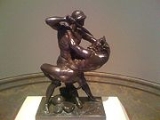
Theseus

Theseus

Overview
For other uses, see Theseus (disambiguation)
Theseus (disambiguation)
Theseus was the king of Athens. The name may also refer to:*HMS Theseus, three ships of the Royal Navy*Bristol Theseus, an aircraft engine*Theseus Program, a German research program...


Discussion
Ask a question about 'Theseus'
Start a new discussion about 'Theseus'
Answer questions from other users
Full Discussion Forum
 
Unanswered Questions
Encyclopedia
For other uses, see Theseus (disambiguation)
Theseus (disambiguation)
Theseus was the king of Athens. The name may also refer to:*HMS Theseus, three ships of the Royal Navy*Bristol Theseus, an aircraft engine*Theseus Program, a German research program...


Theseus ˈ ( tʰɛːsěu̯s) was the mythical founder-king of Athens
Athens
Athens , is the capital and largest city of Greece. Athens dominates the Attica region and is one of the world's oldest cities, as its recorded history spans around 3,400 years. Classical Athens was a powerful city-state...

, son of Aethra, and fathered by Aegeus
Aegeus
In Greek mythology, Aegeus , also Aigeus, Aegeas or Aigeas , was an archaic figure in the founding myth of Athens. The "goat-man" who gave his name to the Aegean Sea was, next to Poseidon, the father of Theseus, the founder of Athenian institutions and one of the kings of Athens.-His reign:Upon the...

 and Poseidon
Poseidon
Poseidon was the god of the sea, and, as "Earth-Shaker," of the earthquakes in Greek mythology. The name of the sea-god Nethuns in Etruscan was adopted in Latin for Neptune in Roman mythology: both were sea gods analogous to Poseidon...

, both of whom Aethra had slept with in one night. Theseus was a founder-hero, like Perseus
Perseus
Perseus ,Perseos and Perseas are not used in English. the legendary founder of Mycenae and of the Perseid dynasty of Danaans there, was the first of the mythic heroes of Greek mythology whose exploits in defeating various archaic monsters provided the founding myths of the Twelve Olympians...

, Cadmus
Cadmus
Cadmus or Kadmos , in Greek mythology was a Phoenician prince, the son of king Agenor and queen Telephassa of Tyre and the brother of Phoenix, Cilix and Europa. He was originally sent by his royal parents to seek out and escort his sister Europa back to Tyre after she was abducted from the shores...

, or Heracles
Heracles
Heracles ,born Alcaeus or Alcides , was a divine hero in Greek mythology, the son of Zeus and Alcmene, foster son of Amphitryon and great-grandson of Perseus...

, all of whom battled and overcame foes that were identified with an archaic religious and social order. As Heracles was the Dorian hero, Theseus was the Athenian founding hero, considered by them as their own great reformer: his name comes from the same root as ("thesmos"), Greek for institution. He was responsible for the synoikismos ("dwelling together")—the political unification of Attica under Athens, represented emblematically in his journey of labours, subduing highly localized ogres and monstrous beasts. Because he was the unifying king, Theseus built and occupied a palace on the fortress of the Acropolis
Acropolis
Acropolis means "high city" in Greek, literally city on the extremity and is usually translated into English as Citadel . For purposes of defense, early people naturally chose elevated ground to build a new settlement, frequently a hill with precipitous sides...

 that may have been similar to the palace that was excavated in Mycenae
Mycenae
Mycenae is an archaeological site in Greece, located about 90 km south-west of Athens, in the north-eastern Peloponnese. Argos is 11 km to the south; Corinth, 48 km to the north...

. Pausanias
Pausanias (geographer)
Pausanias was a Greek traveler and geographer of the 2nd century AD, who lived in the times of Hadrian, Antoninus Pius and Marcus Aurelius. He is famous for his Description of Greece , a lengthy work that describes ancient Greece from firsthand observations, and is a crucial link between classical...

 reports that after the synoikismos, Theseus established a cult of Aphrodite Pandemos ("Aphrodite of all the People") and Peitho
Peitho
In Greek mythology, Peitho is the goddess who personifies persuasion and seduction. Her Roman name is Suadela. Pausanias reports that after the unification of Athens, Theseus set up a cult of Aphrodite Pandemos and Peitho on the south slope of Acropolis at Athens. Peitho, in her role as an...

 on the southern slope of the Acropolis.

In The Frogs
The Frogs
The Frogs is a comedy written by the Ancient Greek playwright Aristophanes. It was performed at the Lenaia, one of the Festivals of Dionysus, in 405 BC, and received first place.-Plot:...

, Aristophanes
Aristophanes
Aristophanes , son of Philippus, of the deme Cydathenaus, was a comic playwright of ancient Athens. Eleven of his forty plays survive virtually complete...

 credited him with inventing many everyday Athenian traditions. If the theory of a Minoan
Minoan civilization
The Minoan civilization was a Bronze Age civilization that arose on the island of Crete and flourished from approximately the 27th century BC to the 15th century BC. It was rediscovered at the beginning of the 20th century through the work of the British archaeologist Arthur Evans...

 hegemony
Hegemony
Hegemony is an indirect form of imperial dominance in which the hegemon rules sub-ordinate states by the implied means of power rather than direct military force. In Ancient Greece , hegemony denoted the politico–military dominance of a city-state over other city-states...

 is correct, he may have been based on Athens' liberation from this political order rather than on a historical individual.

Plutarch
Plutarch
Plutarch then named, on his becoming a Roman citizen, Lucius Mestrius Plutarchus , c. 46 – 120 AD, was a Greek historian, biographer, essayist, and Middle Platonist known primarily for his Parallel Lives and Moralia...

's vita of Theseus makes use of varying accounts of the death of the Minotaur
Minotaur
In Greek mythology, the Minotaur , as the Greeks imagined him, was a creature with the head of a bull on the body of a man or, as described by Roman poet Ovid, "part man and part bull"...

, Theseus' escape and the love of Ariadne
Ariadne
Ariadne , in Greek mythology, was the daughter of King Minos of Crete, and his queen Pasiphaë, daughter of Helios, the Sun-titan. She aided Theseus in overcoming the Minotaur and was the bride of the god Dionysus.-Minos and Theseus:...

 for Theseus, in order to construct a literalistic biography, a vita. Plutarch's sources, not all of whose texts have survived independently, included Pherecydes
Pherecydes
Pherecydes was the name of:*Pherecydes of Syros, a pre-Socratic philosopher and author from the island of Syros, by some believed to have influenced Pythagoras...

 (mid-sixth century BC), Demon (ca 300 BC), Philochorus
Philochorus
Philochorus, of Athens, Greek historian during the 3rd century BC, , was a member of a priestly family. He was a seer and interpreter of signs, and a man of considerable influence....

 and Cleidemus
Cleidemus
Cleidemus was a Greek author, perhaps of the fifth or fourth century BCE but definitely later than the battle of Plataea in 479 BCE, who produced a lost book called Atthis , dealing with the traditional origins of Athenian law and institutions...

 (both fourth century BC).

Early Years


Aegeus
Aegeus
In Greek mythology, Aegeus , also Aigeus, Aegeas or Aigeas , was an archaic figure in the founding myth of Athens. The "goat-man" who gave his name to the Aegean Sea was, next to Poseidon, the father of Theseus, the founder of Athenian institutions and one of the kings of Athens.-His reign:Upon the...

, one of the primordial kings of Athens, found a bride, Aethra who was the daughter of king Pittheus
Pittheus
In Greek mythology, Pittheus was a son of Pelops, father of Aethra, and grandfather of Theseus. He was the King of Troezen, which he had named after his brother Troezen...

 at Troezen
Troezen
Troezen is a small town and a former municipality in the northeastern Peloponnese, Greece. Since the 2011 local government reform it is part of the municipality Troizinia, of which it is a municipal unit....

, a small city southwest of Athens. On their wedding night, Aethra waded through the sea to the island of Sphairia that rests close to the coast and lay there with Poseidon
Poseidon
Poseidon was the god of the sea, and, as "Earth-Shaker," of the earthquakes in Greek mythology. The name of the sea-god Nethuns in Etruscan was adopted in Latin for Neptune in Roman mythology: both were sea gods analogous to Poseidon...

 (god of the sea and earthquakes). The mix gave Theseus a combination of divine as well as mortal characteristics in his nature; such double fathers, one immortal and one mortal, was a familiar feature of Greek heroes. After Aethra became pregnant, Aegeus decided to return to Athens. Before leaving, however, he buried his sandals
Sandal (footwear)
Sandals are an open type of outdoor footwear, consisting of a sole held to the wearer's foot by straps passing over the instep and, sometimes, around the ankle...

 and sword
Sword
A sword is a bladed weapon used primarily for cutting or thrusting. The precise definition of the term varies with the historical epoch or the geographical region under consideration...

 under a huge rock and told Aethra that when their son grew up, he should move the rock, if he were hero enough, and take the tokens for himself as evidence of his royal parentage. In Athens, Aegeus was joined by Medea
Medea
Medea is a woman in Greek mythology. She was the daughter of King Aeëtes of Colchis, niece of Circe, granddaughter of the sun god Helios, and later wife to the hero Jason, with whom she had two children, Mermeros and Pheres. In Euripides's play Medea, Jason leaves Medea when Creon, king of...

, who had fled Corinth
Ancient Corinth
Corinth, or Korinth was a city-state on the Isthmus of Corinth, the narrow stretch of land that joins the Peloponnesus to the mainland of Greece, roughly halfway between Athens and Sparta. The modern town of Corinth is located approximately northeast of the ancient ruins...

 after slaughtering the children she had borne Jason
Jason
Jason was a late ancient Greek mythological hero from the late 10th Century BC, famous as the leader of the Argonauts and their quest for the Golden Fleece. He was the son of Aeson, the rightful king of Iolcus...

, and had taken Aegeus as her new consort. Priestess and consort together represented the old order in Athens.

Thus Theseus was raised in the land of his mother. When Theseus grew up and became a brave young man, he moved the rock and recovered his father's tokens. His mother then told him the truth about his father's identity and that he must take the sword and sandals back to king Aegeus to claim his birthright. To journey to Athens, Theseus could choose to go by sea (which was the safe way) or by land, following a dangerous path around the Saronic Gulf
Saronic Gulf
The Saronic Gulf or Gulf of Aegina in Greece forms part of the Aegean Sea and defines the eastern side of the isthmus of Corinth. It is the eastern terminus of the Corinth Canal, which cuts across the isthmus.-Geography:The gulf includes the islands of; Aegina, Salamis, and Poros along with...

, where he would encounter a string of six entrances to the Underworld
Greek underworld
The Greek underworld was made up of various realms believed to lie beneath the earth or at its farthest reaches.This includes:* The great pit of Tartarus, originally the exclusive prison of the old Titan gods, it later came to be the dungeon home of damned souls.* The land of the dead ruled by the...

, each guarded by a chthonic
Chthonic
Chthonic designates, or pertains to, deities or spirits of the underworld, especially in relation to Greek religion. The Greek word khthon is one of several for "earth"; it typically refers to the interior of the soil, rather than the living surface of the land or the land as territory...

 enemy. Young, brave and ambitious, Theseus decided to go alone by the land route, and defeated a great many bandits along the way.

The Six Entrances of the Underworld

  • At the first site, which was Epidaurus
    Epidaurus
    Epidaurus was a small city in ancient Greece, at the Saronic Gulf. Two modern towns bear the name Epidavros : Palaia Epidavros and Nea Epidavros. Since 2010 they belong to the new municipality of Epidavros, part of the peripheral unit of Argolis...

    , sacred to Apollo
    Apollo
    Apollo is one of the most important and complex of the Olympian deities in Greek and Roman mythology...

     and the healer Aesculapius, Theseus turned the tables on the chthonic bandit, the "clubber" Periphetes
    Periphetes
    Periphetes is the name of several characters from Greek mythology.The most prominent Periphetes, also known as Corynetes or the Club-Bearer, was a son of Hephaestus and Anticleia. Like his father, he was lame in one leg with only one eye as a Cyclopes would have...

    , who beat his opponents into the Earth, and took from him the stout staff that often identifies Theseus in vase-paintings. At the time, Theseus was called the Mother Dog for many reasons.


  • At the Isthmian
    Isthmian
    Isthmian is the adjective pertaining to an isthmusIt may also refer to:* Isthmian Games, one of the Panhellenic Games of Ancient Greece* Isthmian League, a regional football league covering London and South East England...

     entrance to the Underworld was a robber named Sinis often called "Pityokamptes" (Greek: Πιτυοκάμπτης, "he who bends Pinetrees"). He would capture travelers, tie them between two pine
    Pine
    Pines are trees in the genus Pinus ,in the family Pinaceae. They make up the monotypic subfamily Pinoideae. There are about 115 species of pine, although different authorities accept between 105 and 125 species.-Etymology:...

     trees which were bent down to the ground, and then let the trees go, tearing his victims apart. Theseus killed him by his own method. He then became intimate with Sinis's daughter, Perigune
    Perigune
    In Greek mythology, Perigune was the beautiful daughter of Sinis.After Theseus killed her father, she hid herself in a bed of rushes and asparagus. Theseus was unable to find her, but it was said that she revealed herself anyway after he promised not to harm her. She later bore Theseus's first male...

    , fathering the child Melanippus
    Melanippus
    In Greek mythology, there were nine people named Melanippus :#One of the sons of Agrius, killed by Diomedes.#Son of Perigune and Theseus, the father of Ioxus who, together with Ornytus, led a colony to Caria and became the ancestor of the family Ioxides.#Son of Astacus, defended Thebes in Seven...

    .

  • In another deed north of the Isthmus
    Isthmus
    An isthmus is a narrow strip of land connecting two larger land areas usually with waterforms on either side.Canals are often built through isthmuses where they may be particularly advantageous to create a shortcut for marine transportation...

    , at a place called Crommyon, he killed an enormous pig, the Crommyonian Sow
    Crommyonian Sow
    In Greek mythology, the Crommyonian Sow , was a wild pig, which ravaged the region around the village of Crommyon between Megara and Corinth, and was eventually slain by Theseus in his early adventures. According to Apollodorus, it was said by some to be the daughter of Echidna and Typhon, and...

    , bred by an old crone named Phaea. Some versions name the sow herself as Phaea. Apollodorus
    Apollodorus
    Apollodorus of Athens son of Asclepiades, was a Greek scholar and grammarian. He was a pupil of Diogenes of Babylon, Panaetius the Stoic, and the grammarian Aristarchus of Samothrace...

     described the Crommyonian sow as an offspring of Typhon
    Typhon
    Typhon , also Typhoeus , Typhaon or Typhos was the last son of Gaia, fathered by Tartarus, and the most deadly monster of Greek mythology. He was known as the "Father of all monsters"; his wife Echidna was likewise the "Mother of All Monsters."Typhon was described in pseudo-Apollodorus,...

     and Echidna
    Echidna (mythology)
    In Greek mythology, Echidna was half woman half snake, known as the "Mother of All Monsters" because most of the monsters in Greek myth were mothered by her...

    .

  • Near Megara
    Megara
    Megara is an ancient city in Attica, Greece. It lies in the northern section of the Isthmus of Corinth opposite the island of Salamis, which belonged to Megara in archaic times, before being taken by Athens. Megara was one of the four districts of Attica, embodied in the four mythic sons of King...

     an elderly robber named Sciron
    Sciron
    In Greek mythology, Sciron or Sceiron was a bandit killed by Theseus on the way from Troezen to Athens.An Isthmian outlaw, he was the son of either Pelops or Poseidon. He dwelled at the Sceironian Rocks, a cliff on the Saronic coast of the Isthmus of Corinth; He robbed travelers passing the...

     forced travellers along the narrow cliff-face pathway to wash his feet. While they knelt, he kicked them off the cliff behind them, where they were eaten by a sea monster (or, in some versions, a giant turtle
    Turtle
    Turtles are reptiles of the order Testudines , characterised by a special bony or cartilaginous shell developed from their ribs that acts as a shield...

    ). Theseus pushed him off the cliff.

  • Another of these enemies was Cercyon
    Cercyon
    Cercyon - Κερκύων was a figure in Greek mythology. He was the King of Eleusis, and a very strong man. According to the different versions, he was the son of:*Poseidon and one of the daughters of Amphictyon, or...

    , king at the holy site of Eleusis, who challenged passers-by to a wrestling match and, when he had beaten them, killed them. Theseus beat Cercyon at wrestling and then killed him instead. In interpretations of the story that follow the formulas of Frazer's The Golden Bough
    The Golden Bough
    The Golden Bough: A Study in Magic and Religion is a wide-ranging, comparative study of mythology and religion, written by Scottish anthropologist Sir James George Frazer . It first was published in two volumes in 1890; the third edition, published 1906–15, comprised twelve volumes...

    , Cercyon was a "year-King
    Sacred king
    In many historical societies, the position of kingship carries a sacral meaning, that is, it is identical with that of a high priest and of judge. The concept of theocracy is related, although a sacred king need not necessarily rule through his religious authority; rather, the temporal position...

    ", who was required to do an annual battle for his life, for the good of his kingdom, and was succeeded by the victor. Theseus overturned this archaic religious rite by refusing to be sacrificed.

  • The last bandit was Procrustes
    Procrustes
    In Greek mythology Procrustes or "the stretcher [who hammers out the metal]", also known as Prokoptas or Damastes "subduer", was a rogue smith and bandit from Attica who physically attacked people by stretching them or cutting off their legs, so as to force them to fit the size of an iron bed...

     the Stretcher, who had two beds, one of which he offered to passers-by in the plain of Eleusis. He then made them fit into it, either by stretching them or by cutting off their feet. Since he had two beds of different lengths, no one would fit. Theseus turned the tables on Procrustes, cutting off his legs and decapitating him with his own axe.

Medea and the Marathonian Bull, Androgeus and the Pallantides


When Theseus arrived at Athens, he did not reveal his true identity immediately. Aegeus
Aegeus
In Greek mythology, Aegeus , also Aigeus, Aegeas or Aigeas , was an archaic figure in the founding myth of Athens. The "goat-man" who gave his name to the Aegean Sea was, next to Poseidon, the father of Theseus, the founder of Athenian institutions and one of the kings of Athens.-His reign:Upon the...

 gave him hospitality but was suspicious of the young, powerful stranger's intentions. Aegeus's wife Medea
Medea
Medea is a woman in Greek mythology. She was the daughter of King Aeëtes of Colchis, niece of Circe, granddaughter of the sun god Helios, and later wife to the hero Jason, with whom she had two children, Mermeros and Pheres. In Euripides's play Medea, Jason leaves Medea when Creon, king of...

 recognized Theseus immediately as Aegeus' son and worried that Theseus would be chosen as heir to Aegeus' kingdom instead of her son Medus
Medus
In Greek mythology, Medus was the son of Medea. His father is generally agreed to be Aegeas, although Hesiod states that Jason fathered him and Cheiron raised him. Medus was driven from Athens to Colchis with his mother. Medea's father Aeetes was the former king of Colchis, and Aeetes's brother...

. She tried to arrange to have Theseus killed by asking him to capture the Marathonian Bull
Cretan Bull
In Greek mythology, the Cretan Bull was either the bull that carried away Europa or the bull Pasiphaë fell in love with, giving birth to the Minotaur.- Origin :...

, an emblem of Cretan power.

On the way to Marathon
Marathon, Greece
Marathon is a town in Greece, the site of the battle of Marathon in 490 BC, in which the heavily outnumbered Athenian army defeated the Persians. The tumulus or burial mound for the 192 Athenian dead that was erected near the battlefield remains a feature of the coastal plain...

, Theseus took shelter from a storm in the hut of an ancient woman named Hecale
Hecale
In Greek mythology, Hecale, or Hekálē, was an old woman who offered succor to Theseus on his way to capture the Marathonian Bull.On the way to Marathon to capture the Bull, Theseus sought shelter from a storm in a shack owned by an ancient lady named Hecale. She swore to make a sacrifice to Zeus if...

. She swore to make a sacrifice to Zeus
Zeus
In the ancient Greek religion, Zeus was the "Father of Gods and men" who ruled the Olympians of Mount Olympus as a father ruled the family. He was the god of sky and thunder in Greek mythology. His Roman counterpart is Jupiter and his Etruscan counterpart is Tinia.Zeus was the child of Cronus...

 if Theseus were successful in capturing the bull. Theseus did capture the bull, but when he returned to Hecale's hut, she was dead. In her honor Theseus gave her name to one of the deme
Deme
In Ancient Greece, a deme or demos was a subdivision of Attica, the region of Greece surrounding Athens. Demes as simple subdivisions of land in the countryside seem to have existed in the 6th century BC and earlier, but did not acquire particular significance until the reforms of Cleisthenes in...

s of Attica, making its inhabitants in a sense her adopted children.

When Theseus returned victorious to Athens, where he sacrificed the Bull, Medea tried to poison him. At the last second, Aegeus recognized the sandals, shield, and sword, and knocked the poisoned wine cup from Theseus's hand. Thus father and son were reunited, and Medea, it was said, fled to Asia.

When Theseus had appeared in the town, his reputation had preceded him, having travelled along the notorious coastal road from Troezen and slain some of the most feared bandits there. It was not long before the Pallantides
Pallantides
In Greek mythology, the Pallantidai were the fifty children of Pallas, nobles of Attica. They fought against their cousin, Theseus because they would not accept him as king. Leos, a herald of Theseus, warned him of their schemes and an ambush they had prepared for him...

' hopes of succeeding the apparently childless Aegeus would be lost if they did not get rid of Theseus (the Pallantides were the sons of Pallas
Pallas (son of Pandion)
In Greek mythology Pallas was one of the four sons of Pandion II and Pylia. Upon the death of Pandion, Pallas and his brothers took control of Athens from Metion, who had seized the throne from Pandion. They divided the government in four but Aegeas became king...

 and nephews of King Aegeus, who were then living at the royal court in the sanctuary of Delphic Apollo). So they set a trap for him. One band of them would march on the town from one side while another lay in wait near a place called Gargettus in ambush. The plan was that once Theseus, Aegeus and the palace guards had been forced out the front, the other half would surprise them from behind. However, Theseus was not fooled. Informed of the plan by a herald named Leos, he crept out of the city at midnight and surprised the Pallantides. "Theseus then fell suddenly upon the party lying in ambush, and slew them all. Thereupon the party with Pallas dispersed," Plutarch reported.

Theseus and the Minotaur


Pasiphae
Pasiphaë
In Greek mythology, Pasiphaë , "wide-shining" was the daughter of Helios, the Sun, by the eldest of the Oceanids, Perse; Like her doublet Europa, her origins were in the East, in her case at Colchis, the palace of the Sun; she was given in marriage to King Minos of Crete. With Minos, she was the...

, wife of King Minos of Crete, had several children before the Minotaur
Minotaur
In Greek mythology, the Minotaur , as the Greeks imagined him, was a creature with the head of a bull on the body of a man or, as described by Roman poet Ovid, "part man and part bull"...

. The eldest of these, Androgeus, set sail for Athens to take part in the Pan-Athenian games which were held there every five years. Being strong and skillful, he did very well, winning some events outright. He soon became a crowd favorite, much to the resentment of the Pallantides and they assassinated him, incurring the wrath of Minos.

When King Minos had heard of what befell his son, he ordered the Cretan fleet to set sail for Athens. Minos asked Aegeus for his son's assassins, and if they were to be handed to him, the town would be spared. However, not knowing who they were, King Aegeus surrendered the whole town to Minos' mercy. His retribution was that, at the end of every Great Year
Great year
The Great Year is an archaic cosmological conception, found in different cultures, which acquired new interpretations with the development of astronomical knowledge In the Western tradition Plato has been the main source for the idea, so it was also frequently called 'Platonic year'...

 (seven solar years), the seven most courageous youths and the seven most beautiful maidens were to board a boat and be sent as tribute to Crete, never to be seen again.

In another version, King Minos of Crete had waged war with the Athenians and was successful. He then demanded that, at nine-year intervals, seven Athenian boys and seven Athenian girls were to be sent to Crete to be devoured by the Minotaur
Minotaur
In Greek mythology, the Minotaur , as the Greeks imagined him, was a creature with the head of a bull on the body of a man or, as described by Roman poet Ovid, "part man and part bull"...

, a half-man, half-bull monster that lived in the Labyrinth
Labyrinth
In Greek mythology, the Labyrinth was an elaborate structure designed and built by the legendary artificer Daedalus for King Minos of Crete at Knossos...

 created by Daedalus
Daedalus
In Greek mythology, Daedalus was a skillful craftsman and artisan.-Family:...

.

On the third occasion, Theseus volunteered to slay the monster. He took the place of one of the youths and set off with a black sail, promising to his father, Aegeus
Aegeus
In Greek mythology, Aegeus , also Aigeus, Aegeas or Aigeas , was an archaic figure in the founding myth of Athens. The "goat-man" who gave his name to the Aegean Sea was, next to Poseidon, the father of Theseus, the founder of Athenian institutions and one of the kings of Athens.-His reign:Upon the...

, that if successful he would return with a white sail. Like the others, Theseus was stripped of his weapons when they sailed. On his arrival in Crete, Ariadne
Ariadne
Ariadne , in Greek mythology, was the daughter of King Minos of Crete, and his queen Pasiphaë, daughter of Helios, the Sun-titan. She aided Theseus in overcoming the Minotaur and was the bride of the god Dionysus.-Minos and Theseus:...

, King Minos' daughter, fell in love with Theseus and, on the advice of Daedalus, gave him a ball of thread. This was so he could find his way out of the Labyrinth. That night, Ariadne escorted Theseus to the Labyrinth, and Theseus promised that if he returned from the Labyrinth he would take Ariadne with him. As soon as Theseus entered the Labyrinth, he tied one end of the ball of string to the door post and brandished his sword which he had kept hidden from the guards inside his tunic. Theseus followed Daedalus' instructions given to Ariadne; go forwards, always down and never left or right. Theseus came to the heart of the Labyrinth and also upon the sleeping Minotaur. The beast awoke and a tremendous fight then occurred. Theseus overpowered the Minotaur with his strength and stabbed the beast in the throat with his sword (according to one scholium
Scholium
Scholia , are grammatical, critical, or explanatory comments, either original or extracted from pre-existing commentaries, which are inserted on the margin of the manuscript of an ancient author, as glosses. One who writes scholia is a scholiast...

, Theseus strangled it on Pindar's Fifth Nemean Ode).

After decapitating the beast, Theseus used the string to escape the Labyrinth and managed to escape with all of the young Athenians and Ariadne as well as her younger sister Phaedra
Phaedra (mythology)
In Greek mythology, Phaedra is the daughter of Minos and Pasiphaë, wife of Theseus and the mother of Demophon of Athens and Acamas. Phaedra's name derives from the Greek word φαιδρός , which meant "bright"....

. On the return journey Theseus abandoned Ariadne on the island of Naxos. In other versions of the story, the god Dionysus
Dionysus
Dionysus was the god of the grape harvest, winemaking and wine, of ritual madness and ecstasy in Greek mythology. His name in Linear B tablets shows he was worshipped from c. 1500—1100 BC by Mycenean Greeks: other traces of Dionysian-type cult have been found in ancient Minoan Crete...

 appeared to Theseus and told him that he had already chosen Ariadne
Ariadne
Ariadne , in Greek mythology, was the daughter of King Minos of Crete, and his queen Pasiphaë, daughter of Helios, the Sun-titan. She aided Theseus in overcoming the Minotaur and was the bride of the god Dionysus.-Minos and Theseus:...

 for his bride, and to abandon her on Naxos, a favorite island. Ariadne then cursed Theseus to forget to change the black sail to white. Seeing a black sail, Theseus' father Aegeus committed suicide by throwing himself into the sea (hence named Aegean
Aegean Sea
The Aegean Sea[p] is an elongated embayment of the Mediterranean Sea located between the southern Balkan and Anatolian peninsulas, i.e., between the mainlands of Greece and Turkey. In the north, it is connected to the Marmara Sea and Black Sea by the Dardanelles and Bosporus...

). Theseus and the other Athenian youths returned safely. Theseus returned safely back as a king of heroes.

Ship of Theseus


According to Plutarch
Plutarch
Plutarch then named, on his becoming a Roman citizen, Lucius Mestrius Plutarchus , c. 46 – 120 AD, was a Greek historian, biographer, essayist, and Middle Platonist known primarily for his Parallel Lives and Moralia...

's Life of Theseus, the ship Theseus used on his return from Crete
Minoan civilization
The Minoan civilization was a Bronze Age civilization that arose on the island of Crete and flourished from approximately the 27th century BC to the 15th century BC. It was rediscovered at the beginning of the 20th century through the work of the British archaeologist Arthur Evans...

 to Athens
Classical Athens
The city of Athens during the classical period of Ancient Greece was a notable polis of Attica, Greece, leading the Delian League in the Peloponnesian War against Sparta and the Peloponnesian League. Athenian democracy was established in 508 BC under Cleisthenes following the tyranny of Hippias...

 was kept in the Athenian harbor as a memorial for several centuries.
The ship wherein Theseus and the youth of Athens
Athens
Athens , is the capital and largest city of Greece. Athens dominates the Attica region and is one of the world's oldest cities, as its recorded history spans around 3,400 years. Classical Athens was a powerful city-state...

 returned had thirty oars, and was preserved by the Athenians down even to the time of Demetrius Phalereus
Demetrius Phalereus
Demetrius of Phalerum was an Athenian orator originally from Phalerum, a student of Theophrastus and one of the first Peripatetics...

, for they took away the old planks as they decayed, putting in new and stronger timber in their place...


The ship had to be maintained in a seaworthy state, for, in return for Theseus's successful mission, the Athenians had pledged to honour Apollo
Apollo
Apollo is one of the most important and complex of the Olympian deities in Greek and Roman mythology...

 every year henceforth. Thus, the Athenians sent a religious mission to the island of Delos
Delos
The island of Delos , isolated in the centre of the roughly circular ring of islands called the Cyclades, near Mykonos, is one of the most important mythological, historical and archaeological sites in Greece...

 (one of Apollo's most sacred sanctuaries) on the Athenian state galley — the ship itself — to pay their fealty to the god. To preserve the purity of the occasion, no executions were permitted between the time when the religious ceremony began to when the ship returned from Delos, which took several weeks.

To preserve the ship, any wood that wore out or rotted was replaced; it was, thus, unclear to philosophers how much of the original ship actually remained, giving rise to the philosophical question whether it should be considered "the same" ship or not. Such philosophical questions about the nature of identity
Identity and change
The relationship between identity and change in the philosophical field of metaphysics seems, at first glance, deceptively simple, and belies the complexity of the issues involved. This article explores "the problem of change and identity".- Change :...

 are sometimes referred to as the Ship of Theseus Paradox
Ship of Theseus
The Ship of Theseus, also known as Theseus' paradox, or various variants, notably grandfather's axe and Trigger's Broom is a paradox that raises the question of whether an object which has had all its component parts replaced remains fundamentally the same object.The paradox is most notably...

.

Regardless of these issues of the originality of the ship's structure, for Athenians the preserved ship kept fresh their understanding that Theseus had been an actual, historic figure — which none then doubted — and gave them a tangible connection to their divine providence.

Theseus and Pirithous


Theseus's best friend was Pirithous
Pirithous
In Greek mythology, Pirithous - Πειρίθοος was the King of the Lapiths in Thessaly and husband of Hippodamia, at whose wedding the famous Battle of Lapiths and Centaurs occurred....

, prince of the Lapiths. Pirithous had heard stories of Theseus's courage and strength in battle but wanted proof, so he rustled Theseus's herd of cattle and drove it from Marathon
Marathon, Greece
Marathon is a town in Greece, the site of the battle of Marathon in 490 BC, in which the heavily outnumbered Athenian army defeated the Persians. The tumulus or burial mound for the 192 Athenian dead that was erected near the battlefield remains a feature of the coastal plain...

, and Theseus set out in pursuit. Pirithous took up his arms and the pair met to do battle, but were so impressed with each other they took an oath of friendship and joined the hunt for the Calydonian Boar
Calydonian Boar
The Calydonian Boar is one of the monsters of Greek mythology that had to be overcome by heroes of the Olympian age. Sent by Artemis to ravage the region of Calydon in Aetolia because its king failed to honor her in his rites to the gods, it was killed in the Calydonian Hunt, in which many male...

. In Iliad I, Nestor
Nestor (mythology)
In Greek mythology, Nestor of Gerenia was the son of Neleus and Chloris and the King of Pylos. He became king after Heracles killed Neleus and all of Nestor's siblings...

 numbers Pirithous and Theseus "of heroic fame" among an earlier generation of heroes of his youth, "the strongest men that Earth has bred, the strongest men against the strongest enemies, a savage mountain-dwelling tribe whom they utterly destroyed." No trace of such an oral tradition, which Homer's listeners would have recognized in Nestor's allusion, survived in literary epic. Later, Pirithous was preparing to marry Hippodamia
Hippodamia
Hippodamia was a daughter of King Oenomaus and wife of Pelops with whom her offspring were Thyestes, Atreus, Pittheus, Alcathous, Troezen, Hippalcimus, Copreus, Astydameia, Nicippe, Eurydice and others....

. The centaur
Centaur
In Greek mythology, a centaur or hippocentaur is a member of a composite race of creatures, part human and part horse...

s were guests at the wedding feast, but got drunk and tried to abduct the women, including Hippodamia. The Lapiths won the ensuing battle.

In Ovid
Ovid
Publius Ovidius Naso , known as Ovid in the English-speaking world, was a Roman poet who is best known as the author of the three major collections of erotic poetry: Heroides, Amores, and Ars Amatoria...

's Metamorphoses Theseus fights against and kills Eurytus
Eurytus
Eurytus, Erytus , or Eurytos is the name of eleven characters in Greek mythology, and of at least one historical figure.-King of Oechalia:...

, the "fiercest of all the fierce centaurs" at the wedding of Pirithous
Pirithous
In Greek mythology, Pirithous - Πειρίθοος was the King of the Lapiths in Thessaly and husband of Hippodamia, at whose wedding the famous Battle of Lapiths and Centaurs occurred....

 and Hippodamia
Hippodamia (wife of Pirithous)
Hippodamia and δαμάζειν damazein , "Tamer of horses"; also known as Deidamia ), daughter of Atrax or Butes, was the bride of King Pirithous of the Lapiths. At their wedding, Hippodamia, the other female guests, and the young boys were almost abducted by the Centaurs. Pirithous and his friend,...

.

The abduction of Helen and encounter with Hades


Theseus, a great abductor of women, and his bosom companion, Pirithous, since they were sons of Zeus and Poseidon, pledged themselves to marry daughters of Zeus. Theseus, in an old tradition, chose Helen, and together they kidnapped her, intending to keep her until she was old enough to marry. Pirithous chose Persephone
Persephone
In Greek mythology, Persephone , also called Kore , is the daughter of Zeus and the harvest-goddess Demeter, and queen of the underworld; she was abducted by Hades, the god-king of the underworld....

. They left Helen with Theseus's mother, Aethra at Aphidna, whence she was rescued by the Dioscuri.

On Pirithous' behalf they travelled to the underworld, domain of Persephone
Persephone
In Greek mythology, Persephone , also called Kore , is the daughter of Zeus and the harvest-goddess Demeter, and queen of the underworld; she was abducted by Hades, the god-king of the underworld....

 and her husband, Hades
Hades
Hades , Hadēs, originally , Haidēs or , Aidēs , meaning "the unseen") was the ancient Greek god of the underworld. The genitive , Haidou, was an elision to denote locality: "[the house/dominion] of Hades". Eventually, the nominative came to designate the abode of the dead.In Greek mythology, Hades...

. As they wandered through the outskirts of Tartarus, Theseus sat down to rest on a rock. As he did so he felt his limbs change and grow stiff. He tried to rise but could not. He was fixed to the rock on which he sat. Then, as he turned to cry out to his friend Pirithous, he saw that he himself was crying out too. Around him was standing the terrible band of Furies with snakes in their hair, torches and long whips in their hands. Before these monsters the hero's courage failed and by them was led away to eternal punishment.

For many months in half darkness, Theseus sat immovably fixed to the rock, mourning both for his friend and for himself. In the end he was rescued by Heracles. He had come down to the underworld for his 12th task. There he persuaded Persephone to forgive him for the part he had taken in the rash venture of Pirithous. So Theseus was restored to the upper air but Pirithous never left the kingdom of the dead for when he tried to free Pirithous, the Underworld shook. When Theseus returned to Athens, he found that the Dioscuri had taken Helen and Aethra to Sparta
Sparta
Sparta or Lacedaemon, was a prominent city-state in ancient Greece, situated on the banks of the River Eurotas in Laconia, in south-eastern Peloponnese. It emerged as a political entity around the 10th century BC, when the invading Dorians subjugated the local, non-Dorian population. From c...

.

Hippolyta


Theseus, believed either to be in the company of Heracles
Heracles
Heracles ,born Alcaeus or Alcides , was a divine hero in Greek mythology, the son of Zeus and Alcmene, foster son of Amphitryon and great-grandson of Perseus...

, or of his own accord, had been on a quest in the land of the Amazons
Amazons
The Amazons are a nation of all-female warriors in Greek mythology and Classical antiquity. Herodotus placed them in a region bordering Scythia in Sarmatia...

, a race of all-female warriors who had sex with men for reproduction but killed or banished any male children born. Sensing no trouble or malice from Theseus, the Amazons decided to welcome him by having the queen Hippolyta
Hippolyta
In Greek mythology, Hippolyta or Hippolyte is the Amazonian queen who possessed a magical girdle she was given by her father Ares, the god of war. The girdle was a waist belt that signified her authority as queen of the Amazons....

 go aboard his ship bearing gifts. After boarding the ship, Theseus left for Athens, claiming Hippolyta as his bride. This sparked a war between the Amazons and the Athenians. Hippolyta eventually bore a son for Theseus, whom they named Hippolytus
Hippolytus (mythology)
thumb|260px|The Death of Hippolytus, by [[Sir Lawrence Alma-Tadema]] .In Greek mythology, Hippolytus was a son of Theseus and either Antiope or Hippolyte...

 (Ἱππόλυτος). Theseus lost his love for Hippolyta, however, once he had seen Phaedra
Phaedra (mythology)
In Greek mythology, Phaedra is the daughter of Minos and Pasiphaë, wife of Theseus and the mother of Demophon of Athens and Acamas. Phaedra's name derives from the Greek word φαιδρός , which meant "bright"....

.

Plutarch's Life places Hyppolyta's Amazonian sister, Antiope, as the Amazonian kidnapped by Theseus. In this account, Antiope is the mother of Hyppolytus (named after her sister).

Phaedra and Hippolytus


Phaedra
Phaedra (mythology)
In Greek mythology, Phaedra is the daughter of Minos and Pasiphaë, wife of Theseus and the mother of Demophon of Athens and Acamas. Phaedra's name derives from the Greek word φαιδρός , which meant "bright"....

, Theseus's second wife, bore Theseus two sons, Demophon
Demophon
In Greek mythology, Demophon referred to two men:*Demophon of Athens*Demophon of Eleusis...

 and Acamas
Acamas
Acamas was a name attributed to several characters in Greek mythology. The following three all fought in the Trojan War, and only the first was not mentioned by Homer....

. While these two were still in their infancy, Phaedra fell in love with Hippolytus
Hippolytus (mythology)
thumb|260px|The Death of Hippolytus, by [[Sir Lawrence Alma-Tadema]] .In Greek mythology, Hippolytus was a son of Theseus and either Antiope or Hippolyte...

, Theseus's son by Hippolyta
Hippolyta
In Greek mythology, Hippolyta or Hippolyte is the Amazonian queen who possessed a magical girdle she was given by her father Ares, the god of war. The girdle was a waist belt that signified her authority as queen of the Amazons....

. According to some versions of the story, Hippolytus had scorned Aphrodite
Aphrodite
Aphrodite is the Greek goddess of love, beauty, pleasure, and procreation.Her Roman equivalent is the goddess .Historically, her cult in Greece was imported from, or influenced by, the cult of Astarte in Phoenicia....

 to become a devotee of Artemis
Artemis
Artemis was one of the most widely venerated of the Ancient Greek deities. Her Roman equivalent is Diana. Some scholars believe that the name and indeed the goddess herself was originally pre-Greek. Homer refers to her as Artemis Agrotera, Potnia Theron: "Artemis of the wildland, Mistress of Animals"...

, so Aphrodite made Phaedra fall in love with him as punishment. He rejected her out of chastity.

Alternatively, in Euripides' version, Hippolytus
Hippolytus (play)
Hippolytus is an Ancient Greek tragedy by Euripides, based on the myth of Hippolytus, son of Theseus. The play was first produced for the City Dionysia of Athens in 428 BC and won first prize as part of a trilogy....

, Phaedra's nurse told Hippolytus of her mistress's love and he swore he would not reveal the nurse as his source of information. To ensure that she would die with dignity, Phaedra wrote to Theseus on a tablet claiming that Hippolytus had raped her before hanging herself. Theseus believed her and used one of the three wishes he had received from Poseidon
Poseidon
Poseidon was the god of the sea, and, as "Earth-Shaker," of the earthquakes in Greek mythology. The name of the sea-god Nethuns in Etruscan was adopted in Latin for Neptune in Roman mythology: both were sea gods analogous to Poseidon...

 against his son. The curse caused Hippolytus' horses to be frightened by a sea monster, usually a bull, and drag their rider to his death. Artemis would later tell Theseus the truth, promising to avenge her loyal follower on another follower of Aphrodite.

In a version by Seneca
Seneca the Younger
Lucius Annaeus Seneca was a Roman Stoic philosopher, statesman, dramatist, and in one work humorist, of the Silver Age of Latin literature. He was tutor and later advisor to emperor Nero...

, the Roman playwright, entitled Phaedra
Phaedra (Seneca)
Phaedra, sometimes known as Hippolytus, is a play by Seneca the Younger, telling the story of Phaedra and her taboo love for her stepson Hippolytus...

, after Phaedra told Theseus that Hippolytus had raped her, Theseus killed his son himself, and Phaedra committed suicide out of guilt, for she had not intended for Hippolytus to die.

In yet another version, Phaedra simply told Theseus Hippolytus had raped her and did not kill herself, and Dionysus
Dionysus
Dionysus was the god of the grape harvest, winemaking and wine, of ritual madness and ecstasy in Greek mythology. His name in Linear B tablets shows he was worshipped from c. 1500—1100 BC by Mycenean Greeks: other traces of Dionysian-type cult have been found in ancient Minoan Crete...

 sent a wild bull which terrified Hippolytus's horses.

A cult grew up around Hippolytus, associated with the cult of Aphrodite
Aphrodite
Aphrodite is the Greek goddess of love, beauty, pleasure, and procreation.Her Roman equivalent is the goddess .Historically, her cult in Greece was imported from, or influenced by, the cult of Astarte in Phoenicia....

. Girls who were about to be married offered locks of their hair to him. The cult believed that Asclepius
Asclepius
Asclepius is the God of Medicine and Healing in ancient Greek religion. Asclepius represents the healing aspect of the medical arts; his daughters are Hygieia , Iaso , Aceso , Aglæa/Ægle , and Panacea...

 had resurrected Hippolytus and that he lived in a sacred forest near Aricia in Latium
Latium
Lazio is one of the 20 administrative regions of Italy, situated in the central peninsular section of the country. With about 5.7 million residents and a GDP of more than 170 billion euros, Lazio is the third most populated and the second richest region of Italy...

.

Other stories and his death


According to sources, Theseus also was one of the Argonauts
Argonauts
The Argonauts ) were a band of heroes in Greek mythology who, in the years before the Trojan War, accompanied Jason to Colchis in his quest to find the Golden Fleece. Their name comes from their ship, the Argo, which was named after its builder, Argus. "Argonauts", therefore, literally means...

, although Apollonius of Rhodes
Apollonius of Rhodes
Apollonius Rhodius, also known as Apollonius of Rhodes , early 3rd century BCE – after 246 BCE, was a poet, and a librarian at the Library of Alexandria...

 states in the Argonautica that Theseus was still in the underworld at this time. Both statements are inconsistent with Medea
Medea
Medea is a woman in Greek mythology. She was the daughter of King Aeëtes of Colchis, niece of Circe, granddaughter of the sun god Helios, and later wife to the hero Jason, with whom she had two children, Mermeros and Pheres. In Euripides's play Medea, Jason leaves Medea when Creon, king of...

 being Aegeus' wife by the time Theseus first came to Athens. With Phaedra, Theseus fathered Acamas
Acamas
Acamas was a name attributed to several characters in Greek mythology. The following three all fought in the Trojan War, and only the first was not mentioned by Homer....

, who was one of those who hid in the Trojan Horse
Trojan Horse
The Trojan Horse is a tale from the Trojan War about the stratagem that allowed the Greeks finally to enter the city of Troy and end the conflict. In the canonical version, after a fruitless 10-year siege, the Greeks constructed a huge wooden horse, and hid a select force of men inside...

 during the Trojan War
Trojan War
In Greek mythology, the Trojan War was waged against the city of Troy by the Achaeans after Paris of Troy took Helen from her husband Menelaus, the king of Sparta. The war is among the most important events in Greek mythology and was narrated in many works of Greek literature, including the Iliad...

. Theseus welcomed the wandering Oedipus
Oedipus
Oedipus was a mythical Greek king of Thebes. He fulfilled a prophecy that said he would kill his father and marry his mother, and thus brought disaster on his city and family...

 and helped Adrastus
Adrastus
Adrastus or Adrestus , traditionally translated as "nonparticipant" or "uncooperative", was a legendary king of Argos during the war of the Seven Against Thebes.-Mythological tradition:...

 to bury the Seven Against Thebes
Seven Against Thebes
The Seven against Thebes is the third play in an Oedipus-themed trilogy produced by Aeschylus in 467 BC. The trilogy is sometimes referred to as the Oedipodea. It concerns the battle between an Argive army led by Polynices and the army of Thebes led by Eteocles and his supporters. The trilogy won...

.

Lycomedes
Lycomedes
Lycomedes , in Greek mythology, was the King of Scyros during the Trojan War.-Lycomedes and Achilles:Before the war, Thetis sent her son Achilles, disguised as a girl, to Lycomedes's court, as a prophecy had decreed that he would die at Troy. It was there that Achilles married Lycomedes' daughter...

 of the island of Skyros
Skyros
Skyros is an island in Greece, the southernmost of the Sporades, an archipelago in the Aegean Sea. Around the 2nd millennium BC and slightly later, the island was known as The Island of the Magnetes where the Magnetes used to live and later Pelasgia and Dolopia and later Skyros...

 threw Theseus off a cliff after he had lost popularity in Athens. In 475 BC, in response to an oracle, Cimon of Athens, having conquered Skyros for the Athenians, identified as the remains of Theseus "a coffin of a great corpse with a bronze spear-head by its side and a sword." (Plutarch, Life of Cimon, quoted Burkert 1985, p. 206). The remains found by Cimon were reburied in Athens. The early modern name Theseion (Temple of Theseus) was mistakenly applied to the Temple of Hephaestus
Temple of Hephaestus
The Temple of Hephaestus, also known as the Hephaisteion or earlier as the Theseion, is the best-preserved ancient Greek temple; it remains standing largely as built. It is a Doric peripteral temple, and is located at the north-west side of the Agora of Athens, on top of the Agoraios Kolonos hill....

 which was thought to be the actual site of the hero's tomb
Temenos
Temenos is a piece of land cut off and assigned as an official domain, especially to kings and chiefs, or a piece of land marked off from common uses and dedicated to a god, a sanctuary, holy grove or holy precinct: The Pythian race-course is called a temenos, the sacred valley of the Nile is the ...

.

Adaptations of the myth


Racine
Jean Racine
Jean Racine , baptismal name Jean-Baptiste Racine , was a French dramatist, one of the "Big Three" of 17th-century France , and one of the most important literary figures in the Western tradition...

's Phèdre
Phèdre
Phèdre is a dramatic tragedy in five acts written in alexandrine verse by Jean Racine, first performed in 1677.-Composition and premiere:...

 (1677) features Theseus as well as Hippolytus and the title character.

Mary Renault
Mary Renault
Mary Renault born Eileen Mary Challans, was an English writer best known for her historical novels set in Ancient Greece...

's The King Must Die
The King Must Die
For the song by Elton John, see The King Must Die The King Must Die is a 1958 bildungsroman and historical novel by Mary Renault that traces the early life and adventures of Theseus, a hero in Greek mythology. Naturally, it is set in Ancient Greece: Troizen, Corinth, Eleusis, Athens, Knossos in...

(1958) is a dramatic retelling of the Theseus legend through the return from Crete to Athens. While fictional, it is generally faithful to the spirit and flavor of the best-known variations of the original story. The sequel is The Bull from the Sea
The Bull from the Sea
The Bull from the Sea is the sequel to Mary Renault's The King Must Die. It continues the story of the mythological hero Theseus after his return from Crete.-Plot introduction:...

(1962), about the hero's later career.

Theseus is also a prominent character as the Duke of Athens in William Shakespeare
William Shakespeare
William Shakespeare was an English poet and playwright, widely regarded as the greatest writer in the English language and the world's pre-eminent dramatist. He is often called England's national poet and the "Bard of Avon"...

's plays, A Midsummer Night's Dream
A Midsummer Night's Dream
A Midsummer Night's Dream is a play that was written by William Shakespeare. It is believed to have been written between 1590 and 1596. It portrays the events surrounding the marriage of the Duke of Athens, Theseus, and the Queen of the Amazons, Hippolyta...

and The Two Noble Kinsmen
The Two Noble Kinsmen
The Two Noble Kinsmen is a Jacobean tragicomedy, first published in 1634 and attributed to John Fletcher and William Shakespeare. Its plot derives from "The Knight's Tale" in Geoffrey Chaucer's The Canterbury Tales....

. Hippolyta
Hippolyta
In Greek mythology, Hippolyta or Hippolyte is the Amazonian queen who possessed a magical girdle she was given by her father Ares, the god of war. The girdle was a waist belt that signified her authority as queen of the Amazons....

 also appears in both plays.

John Dempsey's "Ariadne's Brother: A Novel on the Fall of Bronze Age Crete" (Athens, Greece: Kalendis 1996, 679pp., ISBN 960-219-062-0) tells the Minoan Cretan version of these events based on both archaeology and myth.

Steven Pressfield
Steven Pressfield
Steven Pressfield is an American novelist and author of screenplays, principally of military historical fiction set in classical antiquity...

's Last of the Amazons is a fictional account of Theseus meeting and subsequent marriage to Antiope and the ensuing war. Theseus also appears as a major character in Geoffrey Chaucer
Geoffrey Chaucer
Geoffrey Chaucer , known as the Father of English literature, is widely considered the greatest English poet of the Middle Ages and was the first poet to have been buried in Poet's Corner of Westminster Abbey...

's The Knight's Tale
The Knight's Tale
"The Knight's Tale" is the first tale from Geoffrey Chaucer's The Canterbury Tales. The story introduces many typical aspects of knighthood such as courtly love and ethical dilemmas. The story is written in iambic pentameter end-rhymed couplets.-Story:...

.

Jorge Luis Borges
Jorge Luis Borges
Jorge Francisco Isidoro Luis Borges Acevedo , known as Jorge Luis Borges , was an Argentine writer, essayist, poet and translator born in Buenos Aires. In 1914 his family moved to Switzerland where he attended school, receiving his baccalauréat from the Collège de Genève in 1918. The family...

 also presents an interesting variation of the myth in a short story, "La Casa de Asterion" ("The House of Asterion
The House of Asterion
"The House of Asterion" is a short story by Argentine writer Jorge Luis Borges, first published in Los Anales de Buenos Aires in May 1947. It was reprinted in the short-story collection El Aleph in 1949.-Plot summary:The story takes the form of a monologue by Asterion...

"), which depends for its full effect on the reader's not realizing until the end that Asterion, the narrator, is the Minotaur.

British comedian Tony Robinson
Tony Robinson
Tony Robinson is an English actor, comedian, author, broadcaster and political campaigner. He is best known for playing Baldrick in the BBC television series Blackadder, and for hosting Channel 4 programmes such as Time Team and The Worst Jobs in History. Robinson is a member of the Labour Party...

 wrote a version of the Theseus story entitled "Theseus: Super Hero".

Theseus is played by Bob Mathias
Bob Mathias
Robert Bruce "Bob" Mathias was an American decathlete, two-time Olympic gold medalist, actor and United States Congressman representing the state of California.-Early life and athletic career:...

 in the 1960 film Minotaur, the Wild Beast of Crete
Minotaur, the Wild Beast of Crete
Minotaur, the Wild Beast of Crete is a 1960 historical drama film loosely based on the Greek legend of Theseus, the Athenian hero who is said to have slain a minotaur on Minoan Crete around 1500 or 1450 BC...

.

Tom Hardy
Tom Hardy
Edward Thomas "Tom" Hardy is an English actor. He is best known for playing the title character in the 2008 British film Bronson, the character of Eames in Inception, and the villain Praetor Shinzon in Star Trek Nemesis...

 played Theseus in the 2006 film Minotaur
Minotaur (film)
Minotaur is a 2006 horror film, directed by Jonathan English. It stars Tom Hardy, Tony Todd, Ingrid Pitt and Rutger Hauer. It was filmed in Luxembourg.-Plot:Long ago in the Iron Age a shadow loomed over the lonely village of Thena...

.

Theseus appears as a boss character in the game God of War II
God of War II
God of War II is an action-adventure video game released for the PlayStation 2 by Sony Computer Entertainment's Santa Monica division in March, 2007....

voiced by Paul Eiding
Paul Eiding
Paul Eiding is an American voice actor, voice instructor, and actor, perhaps best known as the voice actor behind Perceptor in the original Transformers cartoon, Roy Campbell in the Metal Gear series, the narrator in Diablo, Judicator Aldaris in StarCraft, and Max Tennyson in Ben 10, Ben 10: Alien...

. In the game, Theseus is charged with protecting the Sisters of Fate by acting as the keeper of the enormous Steeds of Time. Kratos battles and kills him to retrieve the Horsekeeper's Key in his possession. Ironically, Theseus employs Minotaurs to attack Kratos.

A Soviet cartoon called "The Labyrinth" was made in 1971. In addition to the titular adventure, it also features Theseus encountering the Crommyonian sow and Procrustes.

Kir Bulychev
Kir Bulychev
Kir Bulychev or Bulychov was a pen name of Igor Vsevolodovich Mojeiko , who was a Soviet and Russian science fiction writer and historian. He received a Master's degree in 1965 and a Ph.D. in 1981 and wrote his first science fiction story in 1965...

 wrote a book in 1993 called An Attempt on Theseus' Life (Покушение на Тезея) about a plot to assassinate a man during a virtual reality
Virtual reality
Virtual reality , also known as virtuality, is a term that applies to computer-simulated environments that can simulate physical presence in places in the real world, as well as in imaginary worlds...

 tour in which he lives through Theseus' life.

In the 2011 Tarsem Singh film, Immortals, Theseus (played by Henry Cavill
Henry Cavill
Henry William Dalgliesh Cavill is a British actor. He has appeared in the films The Count of Monte Cristo and Stardust, and played the role of Charles Brandon, 1st Duke of Suffolk, on the Showtime series The Tudors, from 2007 until 2010...

) leads a war against the Titans.

Primary sources


  • Apollodorus
    Apollodorus
    Apollodorus of Athens son of Asclepiades, was a Greek scholar and grammarian. He was a pupil of Diogenes of Babylon, Panaetius the Stoic, and the grammarian Aristarchus of Samothrace...

    , Bibliotheca
    Bibliotheca (Pseudo-Apollodorus)
    The Bibliotheca , in three books, provides a comprehensive summary of traditional Greek mythology and heroic legends, "the most valuable mythographical work that has come down from ancient times," Aubrey Diller observed, whose "stultifying purpose" was neatly expressed in the epigram noted by...

  • Ovid
    Ovid
    Publius Ovidius Naso , known as Ovid in the English-speaking world, was a Roman poet who is best known as the author of the three major collections of erotic poetry: Heroides, Amores, and Ars Amatoria...

    , Metamorphoses
  • Plutarch
    Plutarch
    Plutarch then named, on his becoming a Roman citizen, Lucius Mestrius Plutarchus , c. 46 – 120 AD, was a Greek historian, biographer, essayist, and Middle Platonist known primarily for his Parallel Lives and Moralia...

    , Theseus

Secondary sources


  • Burkert, Walter
    Walter Burkert
    Walter Burkert is a German scholar of Greek mythology and cult.An emeritus professor of classics at the University of Zurich, Switzerland, he also has taught in the United Kingdom and the United States...

    , Greek Religion (1985)
  • Kerenyi, Karl
    Karl Kerényi
    Károly Kerényi was a Hungarian scholar in classical philology, one of the founders of modern studies in Greek mythology.- Hungary 1897–1943 :...

    , The Heroes of the Greeks (1959)
  • Price, Anne, The Quest for Theseus (London, 1970) examines the Theseus-Minotaur-Ariadne myth and its historical basis, and later treatments and adaptations of it in Western culture.
  • Ruck, Carl A.P. and Danny Staples, The World of Classical Myth: ch. IX "Theseus: making the new Athens" (1994), pp. 203–222.
  • Walker, Henry J., Theseus and Athens, Oxford University Press (US 1995). The most thorough scholarly examination of Theseus's archaic origins and classical myth and cult, and his place in classical literature and the beek and stuff like that.

External links