
All Topics  
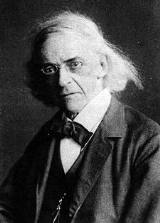
Theodor Mommsen

 
Theodor Mommsen

   Email Print
   Bookmark   Link


Theodor Mommsen


Christian Matthias Theodor Mommsen (30 November 1817 – 1 November 1903) was a German
Germany

Germany , officially the Federal Republic of Germany , is a country in Central Europe. It is bordered to the north by the North Sea, Denmark, and the Baltic Sea; to the east by Poland and the Czech Republic; to the south by Austria and Switzerland; and to the west by France, Luxembourg, Belgium, and the Netherlands....
 classical scholar
Classics

Classics is the branch of the Humanities comprising the languages, literature, philosophy, history, art, and other culture of the ancient Mediterranean World; especially Ancient Greece and Ancient Rome during Classical Antiquity ....
, historian
Historian

A historian is an individual who studies and writes about history, and is regarded as an authority on it. Historians are concerned with the continuous, systematic narrative and research of past events as relating to the human race; as well as the study of all events in time....
, jurist
Jurist

A jurist or jurisconsult is a professional who studies, develops, applies, or otherwise deals with the law. The term is widely used in American English, but in the United Kingdom and many Commonwealth of Nations countries it has only historical and specialist usage....
, journalist
Journalist

A journalist is a person who practices journalism, the gathering and dissemination of information about current events, trends, issues, and people while striving for viewpoints that aren't biased....
, politician
Politician

A politician is an individual who is involved in influencing public decision making through the influence of politics or a person who influences the way a society is governed....
, archaeologist, and writer
Writer

A writer is anyone who creates a written work, although the word usually designates those who write creatively or professionally, as well as those who have written in many different forms....
 generally regarded as the greatest classicist of the 19th century. His work regarding Roman history is still of fundamental importance for contemporary research. He received the Nobel Prize in Literature
Nobel Prize in Literature

The Nobel Prize in Literature is awarded annually, since 1901, to an author from any country who has, in the words from the will of Alfred Nobel, produced "in the field of literature the most outstanding work in an ideal direction" ....
 in 1902, and was also a prominent German politician, as a member of the Prussian and German parliaments.


Discussion
Ask a question about 'Theodor Mommsen'
Start a new discussion about 'Theodor Mommsen'
Answer questions from other users
Full Discussion Forum


Encyclopedia


Christian Matthias Theodor Mommsen (30 November 1817 – 1 November 1903) was a German
Germany

Germany , officially the Federal Republic of Germany , is a country in Central Europe. It is bordered to the north by the North Sea, Denmark, and the Baltic Sea; to the east by Poland and the Czech Republic; to the south by Austria and Switzerland; and to the west by France, Luxembourg, Belgium, and the Netherlands....
 classical scholar
Classics

Classics is the branch of the Humanities comprising the languages, literature, philosophy, history, art, and other culture of the ancient Mediterranean World; especially Ancient Greece and Ancient Rome during Classical Antiquity ....
, historian
Historian

A historian is an individual who studies and writes about history, and is regarded as an authority on it. Historians are concerned with the continuous, systematic narrative and research of past events as relating to the human race; as well as the study of all events in time....
, jurist
Jurist

A jurist or jurisconsult is a professional who studies, develops, applies, or otherwise deals with the law. The term is widely used in American English, but in the United Kingdom and many Commonwealth of Nations countries it has only historical and specialist usage....
, journalist
Journalist

A journalist is a person who practices journalism, the gathering and dissemination of information about current events, trends, issues, and people while striving for viewpoints that aren't biased....
, politician
Politician

A politician is an individual who is involved in influencing public decision making through the influence of politics or a person who influences the way a society is governed....
, archaeologist, and writer
Writer

A writer is anyone who creates a written work, although the word usually designates those who write creatively or professionally, as well as those who have written in many different forms....
 generally regarded as the greatest classicist of the 19th century. His work regarding Roman history is still of fundamental importance for contemporary research. He received the Nobel Prize in Literature
Nobel Prize in Literature

The Nobel Prize in Literature is awarded annually, since 1901, to an author from any country who has, in the words from the will of Alfred Nobel, produced "in the field of literature the most outstanding work in an ideal direction" ....
 in 1902, and was also a prominent German politician, as a member of the Prussian and German parliaments. His works on Roman law
Roman law

Roman law is the law system of ancient Rome. As used in the West the term commonly refers to legal developments prior to the Roman/Byzantine state's adopting Greek language as its official language in the 7th century....
 and on the law of obligations
Law of obligations

The Law of Obligations is one of the component private law elements of the civil law system of law. The Law of Obligations finds its origins in Roman law which is defined as a ?legal tie? or ?legal bond? in the Institutes of Justinian....
 had a significant impact on the German civil code
Civil code

A civil code is a systematic compilation of laws designed to comprehensively deal with the core areas of private law. A jurisdiction that has a civil code generally also has a code of civil procedure....
 (BGB)
Bürgerliches Gesetzbuch

The B?rgerliches Gesetzbuch is the civil code of Germany. In development since 1881, it became effective on January 1 1900, and was considered a massive and groundbreaking project....
.

Life

Mommsen was born in Garding
Garding

Garding is a town in the district of Nordfriesland, Schleswig-Holstein, Germany. It has a population of 2700 . It is located in the Eiderstedt peninsula, and part of the Amt Eiderstedt....
 in Schleswig
Schleswig

Schleswig or South Jutland is a region covering the area about 60 km north and 70 km south of the border between Germany and Denmark. The region is also known archaically in English language as Sleswick....
 in 1817, and grew up in Bad Oldesloe
Bad Oldesloe

Bad Oldesloe is a town located in the northern Germany state of Schleswig-Holstein. It is the capital of the Stormarn Kreis .The area has been inhabited since mesolithic times....
, where his father was a Lutheran
Lutheranism

Lutheranism is a major branch of Western Christianity that identifies with the teachings of the sixteenth-century Germans Reformer Martin Luther....
 minister. He studied mostly at home, though he attended the gymnasium
Gymnasium (school)

A gymnasium is a type of school providing secondary education in some parts of Europe, comparable to English Grammar schools in the United Kingdoms or sixth form colleges and U.S....
 in Altona
Altona

Altona may refer to:* Altona, Hamburg, Germany** Altona-Nord, Hamburg, Germany*Altona, Illinois, United States*Altona, Indiana, United States...
 for four years. He studied Greek
Ancient Greek

Ancient Greek is the historical stage in the development of the Greek language spanning across the Archaic Greece , Classical Greece , and Hellenistic civilization periods of ancient Greece and the classical antiquity....
 and Latin
Latin

Latin is an Italic language, historically spoken in Latium and Ancient Rome. Through the Military history of the Roman Empire, Latin spread throughout the Mediterranean and a large part of Europe....
 and received his diploma in 1837, with the degree of Doctor of Roman Law. As he could not afford to study at one of the more prestigious German universities, he enrolled at the university of Kiel
University of Kiel

The University of Kiel is a university in the city of Kiel, Germany. It was founded in 1665 as the Academia Holsatorum Chiloniensis by Christian Albert, Duke of Holstein-Gottorp and has approximately 23,000 students today....
 in Holstein
Holstein

Holstein is the region between the rivers Elbe and Eider River. It is part of Schleswig-Holstein, the northernmost state of Germany.Holstein once existed as the County of Holstein , the later Duchy of Holstein , and was the northernmost territory of the Holy Roman Empire....
.

Mommsen studied jurisprudence
Jurisprudence

Jurisprudence is the theory and philosophy of law. Scholars of jurisprudence, or legal philosophers, hope to obtain a deeper understanding of the nature of law, of legal reasoning, legal systems and of legal institutions....
 at Kiel from 1838 to 1843. Thanks to a Danish grant, he was able to visit France
France

France , officially the French Republic , is a country whose Metropolitan France is located in Western Europe and that also comprises various Overseas departments and territories of France....
 and Italy
Italy

Italy , officially the Italian Republic , is a country located on the Italian Peninsula in Southern Europe and on the two largest islands in the Mediterranean Sea, Sicily and Sardinia....
 to study preserved classical Roman inscriptions. During the revolution of 1848 he supported monarchists and worked as a war correspondent in then-Danish Rendsburg
Rendsburg

Rendsburg is a town on the Kiel Canal in the northeastern part of Schleswig-Holstein, Germany. It is the capital of the Kreis of Rendsburg-Eckernfoerde....
, supporting the German annexation of Schleswig-Holstein
Schleswig-Holstein

Schleswig-Holstein is the Northern Germany of the sixteen States of Germany of Germany. Its capital city is Kiel, other notable cities are L?beck and Flensburg....
 and constitutional reform. He became a professor of law
LAW

LAW may refer to:* Anti-tank warfare, e.g. the US Army M72 LAW or the British Army LAW 80*Palestinian Society for the Protection of Human Rights ...
 in the same year at the University of Leipzig
University of Leipzig

The University of Leipzig , located in Leipzig in the Free State of Saxony, Germany, is one of the oldest University in Europeand currently the List_of_universities_in_Germany#Universities_by_age university in Germany....
. When Mommsen protested against the new constitution of Saxony
Kingdom of Saxony

The Kingdom of Saxony , lasting between 1806 and 1918, was an independent member of a number of historical confederacies in Napoleonic through Germany....
 in 1851, he had to resign. However, the next year he obtained a professorship in Roman law at the University of Zurich
University of Zurich

The University of Zurich , located in the city of Zurich, is the largest university in Switzerland, with over 24,000 students. It was founded in 1833 from the existing colleges of theology, law, medicine and a new Faculty of philosophy....
 and then spent a couple of years in exile. In 1854 he became a professor of law at the University of Breslau where he met Jakob Bernays
Jakob Bernays

Jakob Bernays was a Germany philologist and philosophy writer....
. Mommsen became a research professor at the Berlin Academy of Sciences
Prussian Academy of Sciences

The Prussian Academy of Sciences was an academy established in Berlin on 11 July 1700.Prince-elector Frederick I of Prussia of Brandenburg founded the academy under the name of Kurf?rstlich Brandenburgische Societ?t der Wissenschaften upon the advice of Gottfried Leibniz, who was appointed president....
 in 1857. He later helped to create and manage the German Archaeological Institute in Rome.

In 1858 Mommsen was appointed a member of the Academy of Sciences in Berlin, and he also became professor of Roman History at the University of Berlin in 1861, where he held lectures up to 1887. Mommsen received high recognition for his academic achievements: the medal Pour le Mérite
Pour le Mérite

The Pour le M?rite, known informally during World War I as the Blue Max , was the Kingdom of Prussia's highest military Order until the end of World War I....
 in 1868, honorary citizenship of Rome
Rome

Rome is the capital city of Italy and Lazio, and is Italy's largest and most populous city, with 2,724,347 residents in an urban area of some ....
, and the Nobel prize for literature in 1902 for his main work Römische Geschichte (Roman History). (He is one of the very few non-fiction
Non-fiction

Non-fiction is an document or representation of a subject which is presented as fact. This presentation may be accurate or not; that is, it can give either a true or a false account of the subject in question....
 writers to receive the Nobel prize in literature.)

Mommsen had sixteen children with his wife Marie (daughter of the editor Karl Reimer from Leipzig), some of whom died in childhood. Two of his great-grandsons, Hans
Hans Mommsen

Hans Mommsen is a left-wing German historian. He is the twin brother of Wolfgang Mommsen....
 and Wolfgang
Wolfgang Mommsen

Wolfgang Justin Mommsen was a left-wing German historian. He was the twin brother of Hans Mommsen....
, are prominent German historians.

Mommsen worked hard. He rose at five and began to work in his library. Whenever he went out, he took one of his books along to read, and contemporaries often found him reading whilst walking in the streets.

1880 fire

At 2 a.m. on 7 July 1880 a fire occurred in the upper floor workroom-library of Mommsen's house at Marchstraße 6 in Berlin
Berlin

Berlin is the Capital of Germany city and one of sixteen States of Germany of Germany. With a population of 3.4 million within its city limits, Berlin is the country's largest city....
.. Several old manuscript
Manuscript

A manuscript is any document that is written by hand, as opposed to being printed or reproduced in some other way. The term may also be used for information that is hand-recorded in other ways than writing, for example inscriptions that are chiselled upon a hard material or scratched as with a knife point in plaster or with a stylus on a wa...
s were burnt to ashes, including Manuscript 0.4.36 which was on loan from the library of Trinity College, Cambridge
Trinity College, Cambridge

Trinity College is one of the 31 Colleges of the University of Cambridge of the University of Cambridge. Trinity has more members than any other college in Cambridge or University of Oxford, with around 700 undergraduates, 430 graduate students, and over 160 Fellows; however, counting only the student body it has somewhat fewer than Homert...
; There is information that the Manuscript of Jordanes from Heidelberg University
Ruprecht Karl University of Heidelberg

The Ruprecht Karl University of Heidelberg is a public university research university located in Heidelberg, Baden-W?rttemberg, Germany. Founded in 1386, it is the List_of_universities_in_Germany#Universities_by_age and was the third university established in the Holy Roman Empire....
 library was burnt. Two other important manuscripts, from Brussels
Brussels

Brussels , officially the Brussels Capital-Region, is the de facto capital city of the European Union and the largest urban area in Belgium....
 and Halle
Halle, Saxony-Anhalt

Halle is the largest city in the Germany States of Germany of Saxony-Anhalt. It is also called Halle an der Saale in order to distinguish it from Halle, North Rhine-Westphalia in North Rhine-Westphalia....
, were also destroyed.

Scholarly works

Theodor Mommsen
Mommsen published over 1,500 works, and effectively established a new framework for the systematic study of Roman
Rome

Rome is the capital city of Italy and Lazio, and is Italy's largest and most populous city, with 2,724,347 residents in an urban area of some ....
 history. He pioneered epigraphy
Epigraphy

Epigraphy is the study of wikt:inscriptions or wikt:epigraphs engraved into stone or other durable materials, or cast in metal, the science of classifying them as to cultural context and date, elucidating them and assessing what conclusions can be deduced from them....
, the study of inscriptions in material artifacts. Although the unfinished History of Rome
History of Rome (Mommsen)

History of Rome is a multi-volume history of ancient Rome written by Theodor Mommsen. It was originally intended to be in five volumes spanning the history of Rome from its inception to the emperor Diocletian....
 has been widely considered as his main work, the work most relevant today is perhaps the Corpus Inscriptionum Latinarum
Corpus Inscriptionum Latinarum

The Corpus Inscriptionum Latinarum is a comprehensive collection of ancient Latin inscriptions. It forms an authoritative source for documenting the surviving epigraphy of classical antiquity....
, a collection of Roman inscriptions he contributed to the Berlin Academy
Prussian Academy of Sciences

The Prussian Academy of Sciences was an academy established in Berlin on 11 July 1700.Prince-elector Frederick I of Prussia of Brandenburg founded the academy under the name of Kurf?rstlich Brandenburgische Societ?t der Wissenschaften upon the advice of Gottfried Leibniz, who was appointed president....
.

  • Roman Provinces under the Empire, 1884


  • History of Rome
    History of Rome (Mommsen)

    History of Rome is a multi-volume history of ancient Rome written by Theodor Mommsen. It was originally intended to be in five volumes spanning the history of Rome from its inception to the emperor Diocletian....
    : Mommsen's most famous work appeared in three volumes between 1854 and 1856, and expounded Roman history up to the end of the Roman republic
    Roman Republic

    The Roman Republic was the phase of the Ancient Rome characterized by a republican form of government; a period which began with the overthrow of the Roman Roman Kingdom, c....
     and the rule of Julius Caesar
    Julius Caesar

    'Gaius Julius Caesar' , July 13, 100 BC ? March 15, 44 BC,) was a Roman Republic military and political leader. He played a critical role in the transformation of the Roman Republic into the Roman Empire....
    . He closely compared the political thought and terminology of the late Republic
    Roman Republic

    The Roman Republic was the phase of the Ancient Rome characterized by a republican form of government; a period which began with the overthrow of the Roman Roman Kingdom, c....
    , with the situation of his own time (the nation-state
    Nation-state

    The nation-state is a certain form of state that derives its legitimacy from serving as a Sovereignty entity for a nation as a sovereign territorial unit....
    , democracy
    Democracy

    Democracy is a form of government in which power is held directly or indirectly by citizens under a free electoral system. It is derived from the Greek language d?????at?a , "popular government" which was coined from d???? , "people" and ???t?? , "rule, strength" in the middle of the 5th-4th century BC to denote the political syst...
     and incipent imperialism
    Imperialism

    Imperialism has two meanings; one describing an action and the other describing an attitude.#Action: Imperialism is the practice of extending the power, control or rule by one country over areas outside its borders....
    ). It is one of the great classics of historical works. Mommsen never wrote a continuation of his Roman history to incorporate the imperial period
    Roman Empire

    The Roman Empire was the Roman Republic phase of the Ancient Rome, characterised by an autocracy form of government and large territorial holdings in Europe and around the Mediterranean....
    . Notes taken during his lectures on the Roman Empire between 1863 and 1886 were published (in 1992) under the title A History of Rome Under the Emperors. In 1885 a description of the Roman provinces in the imperial period appeared as volume 5 of Roman History (The Provinces of the Roman Empire from Caesar to Diocletian). There was no volume 4. The work has also received some criticism, accusing him of "journalism", and in 1931 Egon Friedell
    Egon Friedell

    Egon Friedell born Egon Friedmann 21 January 1878 in Vienna, died 16 March 1938 in Vienna, was a prominent Austrian philosopher, historian, journalist, actor, cabaret performer and theatre critic....
     argued that in his hands "Crassus becomes a speculator in the manner of Louis Philippe
    Louis-Philippe of France

    Louis-Philippe , was List of French monarchs from 1830 to 1848 in what was known as the July Monarchy. He was the last king to rule France, although Napoleon III of France, styled as an emperor, would serve as its last monarch....
    , the brothers Gracchus are Socialist leaders, and the Gauls
    Gallia

    Gallia is the name of:*Gaul , the region of Western Europe occupied by present-day France, Belgium and other neighbouring countries.*Gallia County, Ohio, a county in southern Ohio in the United States of America....
     are Indians
    Indigenous peoples of the Americas

    The indigenous peoples of the Americas are the pre-Columbian inhabitants of the Americas, their descendants, and many ethnic groups who identify with those peoples....
    , etc."


  • Roman Chronology to the Time of Caesar (1858) written with his brother August Mommsen.


  • Roman Constitutional Law (1871-1888). This systematic treatment of Roman constitutional law
    Roman law

    Roman law is the law system of ancient Rome. As used in the West the term commonly refers to legal developments prior to the Roman/Byzantine state's adopting Greek language as its official language in the 7th century....
     in three volumes has been of importance for research on ancient history.


  • Roman Criminal Law (1899)


  • Monumentum Ancyranum


  • Iordanis Romana et Getica (1882) was Mommsen's critical edition of Jordanes
    Jordanes

    Jordanes , was a 6th century Roman bureaucrat , who turned his hand to history later in life.Though he also wrote Romana , a book about the history of Rome, his most known work is his Getica, written in Constantinople about AD 551 ....
    ' The Origin and Deeds of the Goths and has subsequently come to be generally known simply as Getica
    Getica (Jordanes)

    De origine actibusque Getarum , or the Getica, written by Jordanes in 551, is a summary of a voluminous account by Cassiodorus of the origin and history of the Goths, the now lost Libri XII De Rebus Gestis Gothorum....
    .
  • More than 1,500 further studies and treatises on single issues.


A bibliography of over 1,000 of his works is given by Zangemeister in Mommsen als Schriftsteller (1887; continued by Jacobs, 1905).

Mommsen as editor and organiser

While he was secretary of the Historical-Philological Class at the Berlin Academy
Prussian Academy of Sciences

The Prussian Academy of Sciences was an academy established in Berlin on 11 July 1700.Prince-elector Frederick I of Prussia of Brandenburg founded the academy under the name of Kurf?rstlich Brandenburgische Societ?t der Wissenschaften upon the advice of Gottfried Leibniz, who was appointed president....
 (1874-1895), Mommsen organised countless scientific projects, mostly editions of original sources.

Corpus Inscriptionum Latinarum

At the beginning of his scientific career, when he published the inscriptions of the Neapolitan
Naples

Naples is a city in southern Italy, the capital of the region of Campania and of the province of Naples. The city is known for its rich history, art, culture and gastronomy, playing an important role throughout much of its existence; it is over 2,800 years old....
 Kingdom (1852), Mommsen already had in mind a collection of all known ancient Latin inscriptions. He received additional impetus and training from Bartolomeo Borghesi
Bartolomeo Borghesi

Bartolomeo Borghesi was an Italian people antiquarian who was a key figure in establishing the science of numismatics.He was born at Savignano sul Rubicone, near Rimini, and studied at Bologna and Rome....
 of San Marino
San Marino

The Most Serene Republic of San Marino is a country in the Apennine Mountains. It is a landlocked country Enclave and exclave, completely surrounded by Italy....
. The complete Corpus Inscriptionum Latinarum
Corpus Inscriptionum Latinarum

The Corpus Inscriptionum Latinarum is a comprehensive collection of ancient Latin inscriptions. It forms an authoritative source for documenting the surviving epigraphy of classical antiquity....
 would consist of sixteen volumes. Fifteen of them appeared in Mommsen's lifetime and he wrote five of them himself. The basic principle of the edition (contrary to previous collections) was the method of autopsy, according to which all copies (i.e., modern transcriptions) of inscriptions were to be checked and compared to the original.

Further editions and research projects

Mommsen published the fundamental collections in Roman law: the Corpus Iuris Civilis and the Codex Theodosianus
Codex Theodosianus

The Codex Theodosianus was a compilation of the Roman law of the Roman Empire under the Christian emperors since 312. A commission was established by Theodosius II in 429 and the compilation was published in the eastern half of the Roman Empire in 438....
. Furthermore, he played an important role in the publication of the Monumenta Germaniae Historica
Monumenta Germaniae Historica

The Monumenta Germaniae Historica is a comprehensive series of carefully edited and published sources for the study of History of Germany from the end of the Roman Empire to 1500....
, the edition of the texts of the Church Fathers
Church Fathers

The Church Fathers, Early Church Fathers, or Fathers of the Church are the early and influential theology and writers in the Christian Church, particularly those of the first five centuries of Christian history....
, the Limes Romanus
Limes

A limes was a border defense or delimiting system of Ancient Rome. It marked the Borders of the Roman Empire.The Latin language noun limes had a number of different meanings: a path or balk delimiting Field , a boundary line or marker, any road or path, any channel, such as a stream channel, or any distinction or difference....
 (Roman frontiers) research and countless other projects.

Mommsen as politician

Mommsen was a delegate to the Prussian House of Representatives from 1863–66 and again from 1873–79, and delegate to the Reichstag
Reichstag (institution)

The Reichstag was the parliament of the Holy Roman Empire, the North German Confederation, and of Germany until 1945. The main chamber of the German parliament is now called Bundestag , but the building in which it meets is still called "Reichstag" ....
 from 1881–1884, at first for the liberal German Progress Party
German Progress Party

The German Progress Party was the first modern political party with a program in Germany, founded by the liberal members of the Prussian Lower House in 6 June, 1861....
 (Deutsche Fortschrittspartei), later for the National Liberal Party
National Liberal Party (Germany)

The National Liberal Party was a Germany political party which flourished between 1867 and 1918. It was formed by those Prussian liberals who put aside their differences with Otto von Bismarck over domestic policy due to their support for his highly successful foreign policy, which resulted in the unification of Germany....
, and finally for the Secessionists. He was very concerned with questions about academic and educational policies and held national positions. Disappointed with the politics of the German Empire
German Empire

The German Empire is the name commonly used in English to describe Germany from the unification of Germany and proclamation of William I, German Emperor as German Emperor on 18 January 1871, to 1918, when it became Weimar republic after defeat in World War I and the abdication of William II, German Emperor ....
, regarding whose future he was quite pessimistic, in the end he advised collaboration between Liberals and Social Democrats. Mommsen strongly disagreed with Otto von Bismarck
Otto von Bismarck

Otto Eduard Leopold von Bismarck, Count of Bismarck-Sch?nhausen, Duke of Lauenburg, Prince of Bismarck, , was a Kingdom of Prussia and Germany statesman and aristocrat of the 19th century....
 about social policies in 1881, using strong language and narrowly avoiding prosecution.

In 1879, his colleague Heinrich von Treitschke
Heinrich von Treitschke

Heinrich Gotthard von Treitschke was a nationalism Germany historian and political writer during the time of the German Empire....
 began a political campaign against Jews (the so-called Berliner Antisemitismusstreit). Mommsen strongly opposed antisemitism and wrote a harsh pamphlet in which he denounced von Treitschke's views. Mommsen viewed a solution to antisemitism in voluntary cultural assimilation
Cultural assimilation

Cultural assimilation is when an individual or individuals adopts some or all aspects of a dominant culture . Cultural assimilation is a process of socialization....
, suggesting that the Jews could follow the example of the people of Holstein
Holstein

Holstein is the region between the rivers Elbe and Eider River. It is part of Schleswig-Holstein, the northernmost state of Germany.Holstein once existed as the County of Holstein , the later Duchy of Holstein , and was the northernmost territory of the Holy Roman Empire....
, Hanover and other German states, which gave up some of the special customs when integrating in Prussia
Prussia

Prussia was, most recently, a historic state originating out of the Duchy of Prussia and the Margraviate of Brandenburg. This state had for centuries substantial influence on Germany and European history....
.

Mommsen was a violent supporter of German nationalism, maintaining a militant attitude towards the Slavic nations
Slavic peoples

The Slavic Peoples are a linguistic branch of Indo-European peoples, living mainly in eastern Europe. From the early 6th century they spread from their original homeland to inhabit most of eastern Central Europe, Eastern Europe and the Balkans....
. In an 1897 letter to the Neue Freie Presse
Neue Freie Presse

Neue Freie Presse was a Vienna newspaper founded by Adolf Werthner together with the journalists Max Friedl?nder and Michael Etienne on 1 September 1864....
 of Vienna
Vienna

Vienna is the Capital of Republic of Austria and also one of the nine states of Austria. Vienna is Austria's primary city, with a population of about 1.7 million...
, Mommsen called Czechs "apostles of barbarism" and wrote that "the Czech skull is impervious to reason, but it is susceptible to blows".

Influence of Mommsen


Fellow Nobel Laureate (1925) Bernard Shaw
George Bernard Shaw

George Bernard Shaw, was an Irish people playwright.Although Shaw's first profitable writing was music and literary criticism, his talent was for drama, and he wrote more than 60 plays....
 cited Mommsen's interpretation of the last First Consul of the Republic, Julius Caesar, as one of the inspirations for his 1898 (1905 on Broadway
Broadway theatre

Broadway theatre, commonly called simply Broadway, refers to theatrical performances presented in one of the 39 large professional theaters with 500 seats or more located in the Theatre District, New York in Manhattan, New York City....
) play, Caesar and Cleopatra
Caesar and Cleopatra (play)

Caesar and Cleopatra, a play written in 1898 by George Bernard Shaw, was first staged in 1901 and first published with Captain Brassbound's Conversion and The Devil's Disciple in his 1901 collection, Three Plays for Puritans....
.

The playwright Heiner Müller
Heiner Müller

Heiner M?ller was a Germany dramatist, poet, writer, essayist and theatre director. Described as "the theatre's greatest living poet" since Samuel Beckett, M?ller is arguably the most important German dramatist of the 20th century after Bertolt Brecht....
 wrote a 'performance text' entitled Mommsens Block (1993), inspired by the publication of Mommsen's fragmentary notes on the later Roman empire and by the East German government's decision to replace a statue of Karl Marx
Karl Marx

Karl Heinrich Marx was a Germanphilosophy, political economy, historian, sociologist, humanism, political theorist and revolutionary credited as the founder of communism....
 outside the Humboldt University of Berlin
Humboldt University of Berlin

The Humboldt University of Berlin is Berlin's oldest university, founded in 1810 as the University of Berlin by the liberal Prussian educational reformer and linguist Wilhelm von Humboldt, whose university model has strongly influenced other European and Western universities....
 with one of Mommsen.

There is a Gymnasium
Gymnasium (school)

A gymnasium is a type of school providing secondary education in some parts of Europe, comparable to English Grammar schools in the United Kingdoms or sixth form colleges and U.S....
 (academic high school) named for Mommsen in his hometown of Bad Oldesloe
Bad Oldesloe

Bad Oldesloe is a town located in the northern Germany state of Schleswig-Holstein. It is the capital of the Stormarn Kreis .The area has been inhabited since mesolithic times....
, Schleswig-Holstein, Germany.

Further reading

  • Wilhelm Weber
    Wilhelm Weber

    Wilhelm Weber can refer to:*Wilhelm Eduard Weber was a German physicist.*Wilhelm Weber SS-Obersturmf?hrer 33. Waffen-Grenadier-Division der SS Charlemagne , awarded the Knight's Cross....
    , Theodor Mommsen (1929)
  • W. Warde Fowler, Theodor Mommsen: His Life and Work (1909)
  • Mommsen, Theodor: Römische Geschichte. 8 Volumes. dtv, München 2001. ISBN 3-423-59055-6
  • Heuß, Alfred: Theodor Mommsen und das 19. Jahrhundert. Kiel 1956; reprinted Stuttgart 1996. ISBN 3-515-06966-6
  • Wickert, Lothar: Theodor Mommsen. 4 volumes. Frankfurt/Main, 1959?1980.
  • Rebenich, Stefan: Theodor Mommsen: eine Biographie. Beck, München 2002. ISBN 3-406-49295-9
  • Josef Wiesehöfer (ed.), Theodor Mommsen: Gelehrter, Politiker und Literat, unter Mitarbeit von Henning Börm. Stuttgart, 2005. (see )
  • Anthony Grafton - Roman Monument (History Today September 2006)


External links

  • .
  • Phönix aus der Asche Theodor Mommsen und die Monumenta Germaniae Historica