
All Topics  
The Selfish Gene

 
The Selfish Gene

   Email Print
   Bookmark   Link


The Selfish Gene


Not to be confused with Selfish DNA
Selfish DNA

Selfish DNA refers to those sequences of DNA which, in their purest form, have two distinct properties: the DNA sequence spreads by forming additional copies of itself within the genome; and it makes no specific contribution to the reproductive success of its host organism....
.


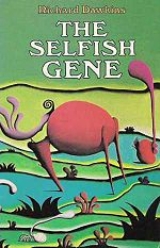
The Selfish Gene is a book on evolution
Evolution

In biology, evolution is change in the heritability trait of a population of organisms from one generation to the next. These changes are caused by a combination of three main processes: variation, reproduction, and selection....
 by Richard Dawkins
Richard Dawkins

Clinton Richard Dawkins, Royal Society#Fellowship, Royal Society of Literature is a United Kingdom ethology, evolutionary biology and popular science author....
, published in 1976
1976 in literature

The year 1976 in literature involved some significant events and new books....
. It builds upon the principal theory of George C. Williams's
George C. Williams

Professor George Christopher Williams is an United States evolutionary biologist.Williams is a professor of biology at the State University of New York at Stony Brook....
 first book Adaptation and Natural Selection
Adaptation and Natural Selection

Adaptation and Natural Selection: A Critique of Some Current Evolutionary Thought is a 1966 book by the United States evolutionary biologist George C....
. Dawkins coined the term selfish gene as a way of expressing the gene-centred view of evolution, which holds that evolution is best viewed as acting on gene
Gene

A gene is the basic unit of heredity in a living organism. All living things depend on genes. Genes hold the information to build and maintain their cell and pass genetic trait to offspring....
s and that selection at the level of organisms or populations almost never overrides selection based on genes.


Discussion
Ask a question about 'The Selfish Gene'
Start a new discussion about 'The Selfish Gene'
Answer questions from other users
Full Discussion Forum


Recent Posts


Encyclopedia


Not to be confused with Selfish DNA
Selfish DNA

Selfish DNA refers to those sequences of DNA which, in their purest form, have two distinct properties: the DNA sequence spreads by forming additional copies of itself within the genome; and it makes no specific contribution to the reproductive success of its host organism....
.


The Selfish Gene is a book on evolution
Evolution

In biology, evolution is change in the heritability trait of a population of organisms from one generation to the next. These changes are caused by a combination of three main processes: variation, reproduction, and selection....
 by Richard Dawkins
Richard Dawkins

Clinton Richard Dawkins, Royal Society#Fellowship, Royal Society of Literature is a United Kingdom ethology, evolutionary biology and popular science author....
, published in 1976
1976 in literature

The year 1976 in literature involved some significant events and new books....
. It builds upon the principal theory of George C. Williams's
George C. Williams

Professor George Christopher Williams is an United States evolutionary biologist.Williams is a professor of biology at the State University of New York at Stony Brook....
 first book Adaptation and Natural Selection
Adaptation and Natural Selection

Adaptation and Natural Selection: A Critique of Some Current Evolutionary Thought is a 1966 book by the United States evolutionary biologist George C....
. Dawkins coined the term selfish gene as a way of expressing the gene-centred view of evolution, which holds that evolution is best viewed as acting on gene
Gene

A gene is the basic unit of heredity in a living organism. All living things depend on genes. Genes hold the information to build and maintain their cell and pass genetic trait to offspring....
s and that selection at the level of organisms or populations almost never overrides selection based on genes. An organism is expected to evolve to maximize its inclusive fitness
Inclusive fitness

In evolutionary biology and evolutionary psychology, inclusive fitness refers to an organisms' personal reproductive success plus the amount of fitness an individual induces in its genetic kin....
—the number of copies of its genes passed on globally (rather than by a particular individual). As a result, populations will tend towards an evolutionarily stable strategy
Evolutionarily stable strategy

In game theory and behavioural ecology, an evolutionarily stable strategy is a strategy which, if adopted by a population genetics of players, cannot be invaded by any alternative strategy that is initially rare....
. The book also coins the term meme
Meme

A meme is a unit or element of culture ideas, symbols or practices; such units or elements transmit from one mind to another through speech, gestures, rituals, or other imitable phenomena....
 for a unit of human cultural evolution analogous to the gene, suggesting that such "selfish" replication may also model human culture, in a different sense. Memetics
Memetics

Memetics is an approach to evolutionary models of cultural information transfer based on the concept of the meme. Starting from a metaphor used in the writings of Richard Dawkins, it has since turned into a new area of study, one that looks at the self-replicating units of culture....
 has become the subject of many studies since the publication of the book.

"Selfish" genes

In describing genes as being "selfish", the author does not intend (as he states unequivocally in the work) to imply that they are driven by any motives or will—merely that their effects can be accurately described as if they do. The contention is that the genes that get passed on are the ones whose consequences serve their own implicit interests (to continue being replicated), not necessarily those of the organism, much less any larger level. This view explains altruism at the individual level in nature, especially in kin relationships (when an individual sacrifices its own life to protect the lives of kin, it is acting in the interest of its own genes). Some people find this metaphor entirely clear, while others find it confusing, misleading or simply redundant to ascribe mental attributes to something that is mindless. For example, Andrew Brown
Andrew Brown (Guardian journalist)

Andrew Brown is a journalist and writer; editor of the Belief section of the Guardian's Comment is Free as well as a weekly web column and other work....
 has written:

"Selfish", when applied to genes, doesn't mean "selfish" at all. It means, instead, an extremely important quality for which there is no good word in the English language: "the quality of being copied by a Darwinian selection process." This is a complicated mouthful. There ought to be a better, shorter word—but "selfish" isn't it.


Organisms as survival machines

A crude analogy can be found in the old saying about a chicken being just an egg's way of making more eggs. In a similar inversion, Dawkins describes biological organisms as "vehicles" or survival machines, with genes as the "replicators
DNA replication

DNA replication, the basis for heredity, is a fundamental process occurring in all living organisms to copy their DNA. This process is "semiconservative replication" in that each strand of the original double-stranded DNA molecule serves as template for the reproduction of the complementary strand....
" that create these organisms as a means of acquiring resources and copying themselves. From an organism-centric perspective, genes can be thought of as a blueprint for some feature that might benefit the organism; but from a gene-centric perspective, the sole implicit purpose is to benefit themselves. A related concept here is outlined in Dawkins' later work, The Extended Phenotype
The Extended Phenotype

The Extended Phenotype is a 1982 book by Richard Dawkins. A revised edition was published in 1999 with an afterword by the philosopher Daniel Dennett....
, in which the consequences of the genes to the environment outside the organism are considered.

Genes and selection

Dawkins proposes that gene combinations which help an organism to survive and reproduce tend to also improve the gene's own chances of being passed on and, as a result, frequently "successful" genes will also be beneficial to the organism. An example of this might be a gene that protects the organism against a disease, which helps the gene spread and also helps the organism.

Genes can reproduce at the expense of the organism


There are other times when the implicit interests of the vehicle and replicator are in conflict, such as the genes behind certain male spiders' instinctive mating behaviour, which increase the organism's inclusive fitness by allowing it to reproduce, but shorten its life by exposing it to the risk of being eaten by the cannibalistic female. Another good example is the existence of segregation distortion
Intragenomic conflict

The selfish gene theory postulates that natural selection will increase the frequency of those genes whose phenotypic effects ensure their successful DNA replication....
 genes that are detrimental to their host but nonetheless propagate themselves at its expense. Likewise, the existence of junk DNA
Junk DNA

In evolutionary biology and molecular biology, junk DNA is a provisional label for the portions of the DNA sequence of a chromosome or a genome for which no Function has been identified....
 that provides no benefit to its host, once a puzzle, can be more easily explained. A more controversial example is aging, in which an old organism's death makes room for its offspring, benefiting its genes at the cost of the organism.

Power struggles are rare


These examples might suggest that there is a power-struggle between genes and their host. In fact, the claim is that there isn't much of a struggle because the genes usually win without a fight. Only if the organism becomes intelligent enough to understand its own interests, as distinct from those of its genes, can there be true conflict. An example of this would be a person deciding to use contraception, even though their genes lose out due to this decision.

Many phenomena explained


When looked at from the point of view of gene selection, many biological phenomena that, in prior models, were difficult to explain become easier to understand. In particular, phenomena such as kin selection
Kin selection

Some organisms tend to exhibit strategies that favor the reproductive success of their relatives, even at a cost to their own survival and/or reproduction....
 and eusociality
Eusociality

Eusociality is a term used for the highest level of social organization in a hierarchical classification. The term "eusocial" was introduced in 1966 by Suzanne Batra and given a more definitive meaning by E....
, where organisms act altruistically
Altruism

Altruism is the deliberate pursuit of the interests or welfare of others or the public interest....
, against their individual interests (in the sense of health, safety or personal reproduction) to help related organisms reproduce, can be explained as gene sets "helping" copies of themselves (or sequences with the same phenotypic effect
Phenotype

A phenotype is any observable characteristic or trait_ of an organism: such as its morphology , development, biochemical or physiological properties, or behavior....
) in other bodies to replicate. Interestingly, the "selfish" actions of genes lead to unselfish actions by organisms.

Prior to the 1960s, it was common for such behaviour to be explained in terms of group selection
Group selection

In evolutionary biology, group selection refers to the idea that alleles can become fixed or spread in a population because of the benefits they bestow on groups, regardless of the alleles' effect on the fitness of individuals within that group....
, where the benefits to the organism or even population were supposed to account for the popularity of the genes responsible for the tendency towards that behaviour. This was shown not to be an evolutionarily stable strategy, in that it would only take a single individual with a tendency towards more selfish behaviour to undermine a population otherwise filled only with the gene for altruism towards non-kin.

Acclaim and criticism

The book was extremely popular when first published, and continues to be widely read. It has sold over a million copies, and has been translated into more than 25 languages. Proponents argue that the central point, that the gene is the unit of selection, usefully completes and extends the explanation of evolution given by Charles Darwin
Charles Darwin

Charles Robert Darwin Royal Society was an English people natural history who realised and presented compelling evidence that all species of life have evolution over time from common descent, through the process he called natural selection....
 before the basic mechanisms of genetics were understood. Critics argue that it oversimplifies the relationship between genes and the organism.

Other types of selection suggested


Most modern evolutionary biologists
Evolutionary biology

Evolutionary biology is a sub-field of biology concerned with the origin of species from a common descent and descent of species, as well as their evolution, multiplication and diversity over time....
 accept that the idea is consistent with many processes in evolution. However, the view that selection on other levels, such as organisms and populations, seldom opposes selection on genes is more controversial. While naïve versions of group selectionism have been disproved, more sophisticated formulations make accurate predictions in some cases while positing selection at higher levels. Nevertheless, the explanatory gains of using sophisticated formulations of group selectionism as opposed to Dawkins's gene-centred selectionism are still under dispute.

Unit of selection or of evolution


Some biologists have criticised the idea for describing the gene as the unit of selection, but suggest describing the gene as the unit of evolution, on the grounds that selection is a "here and now" event of reproduction and survival, while evolution is the long-term trend of shifting allele
Allele

An allele is one member of a pair or series of different forms of a gene. Usually alleles are coding region, but sometimes the term is used to refer to a junk DNA....
 frequencies.

Moral arguments


Another criticism of the book, made by the philosopher
Philosophy

Philosophy is the study of general problems concerning matters such as existence, knowledge, truth, beauty, justice, validity, mind, and language....
 Mary Midgley
Mary Midgley

Mary Midgley, n?e Scrutton , is an English ethics. She was a Senior Lecturer in Philosophy at Newcastle University and is known for her work on religion, science, ethics and humankind's relationship with animals....
 in her book Evolution as a Religion, is that it discusses philosophical and moral
Morality

Morality has three principal meanings.In its first, descriptive usage, morality means a code of conduct which is held to be authoritative in matters of right and wrong....
 questions that go beyond the biological arguments that Dawkins makes. For instance, humanity finally gaining power over the "selfish replicators" is a major theme at the end of the book. This view is criticized by primatologist Frans de Waal
Frans de Waal

Frans B.M. de Waal, PhD , is a Netherlands psychologist, primatologist and ethologist. He is the Charles Howard Candler professor of Primate Behavior in the Emory University psychology department in Atlanta, Georgia, and director of the Living Links Center at the Yerkes National Primate Research Center and author of numerous books including...
, who refers to it as the "veneer theory
Veneer theory

Veneer Theory is a term coined by Netherlands primatologist Frans de Waal in his book Primates and Philosophers: How Morality Evolved to denote the view that human morality is "a cultural overlay, a thin veneer hinding an otherwise selfish and brutish nature"....
". Dawkins has pointed out that he is only describing how things are under evolution, not endorsing them as morally good.

Ontological criticism

The philosopher David Stove
David Stove

David Charles Stove , was an Australian philosophy of science.His work in philosophy of science included detailed criticisms of David Hume's inductive skepticism, as well as what he regarded as the irrationalism of his disciplinary contemporaries Karl Popper, Thomas Kuhn, Imre Lakatos, and Paul Feyerabend....
 argues in in the book Against the Idols of the Age Published by Transaction Publishers in 2001, that The Selfish Gene introduces unsubstantiated metaphysics
Metaphysics

Metaphysics investigates principles of reality transcending those of any particular science. cosmology and ontology are traditional branches of metaphysics....
 and accuses Dawkins of establishing a religion.

Editions

The Selfish Gene was first published in 1976 in eleven chapters with a preface by the author and a foreword by Robert Trivers
Robert Trivers

Robert L. Trivers is an United States evolutionary biologist and sociobiologist, most noted for proposing the theories of reciprocal altruism , parental investment , and parent-offspring conflict ....
. A second edition was published in 1989. This edition added two extra chapters, and substantial endnotes to the preceding chapters, reflecting new findings and thoughts. It also added a second preface by the author, but the original foreword by Trivers was dropped. In 2006, a 30th anniversary edition was published which reinstated the Trivers foreword and contained a new introduction by the author (alongside the previous two prefaces), and also some selected extracts from reviews at the back.

30th anniversary celebrations (2006)

For the 30th anniversary of the publication of The Selfish Gene, a festschrift
Festschrift

In academia, a wikt:festschrift is a book honoring a respected academic and presented during his or her lifetime. The term, borrowed from German language, could be translated as celebration publication or celebratory writing....
 was published entitled Richard Dawkins: How a Scientist Changed the Way We Think
Richard Dawkins: How a Scientist Changed the Way We Think

Richard Dawkins: How a Scientist Changed the Way We Think is a festschrift of 25 essays written in recognition of the life and work of Richard Dawkins....
. (An anniversary edition of The Selfish Gene was also published as mentioned above.) In March 2006, a special event entitled was held at the London School of Economics
London School of Economics

The London School of Economics and Political Science, more commonly referred to as The London School of Economics or LSE, is a specialist college of the University of London in London, England....
. The event was organised by Helena Cronin
Helena Cronin

Dr. Helena Cronin is a noted Darwinian philosopher and rationalist. She is the co-director of the CPNSS and the Darwin Centre at the London School of Economics....
, and chaired by Melvyn Bragg
Melvyn Bragg

Melvyn Bragg, Baron Bragg, Royal Society of Literature, Royal Television Society is a United Kingdom author and broadcaster....
.

External links

  • and
  • on the BBC World Book Club
    World Book Club

    World Book Club is a radio programme on the BBC World Service featuring famous authors discussing their books with the public. It is broadcast on the first Saturday of each month, with repeats into the following Monday....