
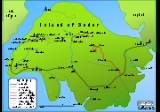
The Railway Series is a set of story books about a railway system located on the fictional
Island of SodorSodor is a fictional island in the Irish Sea used as the setting for The Railway Series books by the Rev. W. Awdry, and later used in the Thomas the Tank Engine and Friends television series.-Inspiration and creation:...
. There are 42 books in the series, the first being published in 1945. Twenty-six were written by the Rev. W. (Wilbert) Awdry, up to 1972. A further 16 were written by his son,
Christopher AwdryChristopher Awdry is an English author best known for his contributions to The Railway Series of books featuring Thomas the Tank Engine, which was started by his father, the Rev. W. Awdry. He has also produced children's books based on a number of other railways, as well as non-fiction articles...
; 14 between 1983 and 1996 and a further book in 2007. Another book was Released in 2011
Nearly all of
The Railway Series stories were based upon real-life events. As a lifelong railway enthusiast, the Rev. Awdry was keen that his stories should be as realistic as possible. The engine characters were almost all based upon real classes of locomotive, and some of the railways themselves were directly based upon real lines in the British Isles.
Characters and stories from the books formed the basis of the children's
televisionTelevision is a telecommunication medium for transmitting and receiving moving images that can be monochrome or colored, with accompanying sound...
series
Thomas and Friends.
Audio adaptations of the Railway Series have been recorded at various times under the title
The Railway StoriesThe Railway Stories are a series of audio adaptations of The Railway Series books by the Rev. W Awdry and his son Christopher.Nearly all of the 41 books in the series have been recorded by one of five different narrators: Johnny Morris, William Rushton, Ted Robbins, Michael Angelis, and even the...
.
Origins
The stories began in 1942, when two-year-old Christopher Awdry had caught
measlesMeasles, also known as rubeola or morbilli, is an infection of the respiratory system caused by a virus, specifically a paramyxovirus of the genus Morbillivirus. Morbilliviruses, like other paramyxoviruses, are enveloped, single-stranded, negative-sense RNA viruses...
and was confined to a darkened room. His father would tell him stories and rhymes to cheer him up. One of Christopher's favourite rhymes was:
The precise origins of this rhyme are unknown, but research by
Brian SibleyBrian Sibley is an English writer. He is author of over 100 hours of radio drama and has written and presented hundreds of radio documentaries, features and weekly programmes.- Early life :...
suggests that it originated at some point prior to the First World War. Wilbert Awdry's answers to Christopher's questions about the rhyme led to the creation of a short story,
Edward's Day Out. This told the story of
Edward the Blue EngineEdward the Blue Engine is a fictional anthropomorphic steam locomotive from The Railway Series children's books by the Rev W. Awdry, and the related TV Series Thomas the Tank Engine and Friends. He is a blue 4-4-0 tender engine with red stripes, about the same size as James the Red Engine, and has...
, an old engine who is allowed out of the shed for a day. Another story about Edward followed, which this time also featured a character called
Gordon the Big EngineGordon the Big Engine is a fictional anthropomorphic tender locomotive in The Railway Series books by Rev. W. Awdry. Gordon is painted blue and carries the number 4. Gordon views himself as the most important engine because he is the biggest and he pulls the Express...
, named after a child living on the same road whom Christopher considered rather bossy .
A third story had its origins in a
limerickA limerick is a kind of a witty, humorous, or nonsense poem, especially one in five-line or meter with a strict rhyme scheme , which is sometimes obscene with humorous intent. The form can be found in England as of the early years of the 18th century...
of which Christopher was fond, and which Awdry used to introduce
The Sad Story of Henry:
As with the previous rhyme, the origins of this are uncertain, but the Rev. Awdry received a letter telling him that a similar poem had appeared in a book of children's rhymes, published in 1902:
This story introduced the popular characters
Henry the Green EngineHenry the Green Engine is a fictional anthropomorphic 4-6-0 steam locomotive from The Railway Series books written by the Reverend Wilbert Vere Awdry and his son, Christopher Awdry, and the spin-off children's television series, Thomas the Tank Engine and Friends.Henry lives on the fictitious...
and the Fat Director. Encouraged by Margaret, his wife, Awdry submitted the three stories to Edmund Ward for publication in 1943. The head of the children's books division requested a fourth story to bring the three engines together and redeem Henry, who had been bricked up in a tunnel in the previous story. Although Wilbert had not intended that the three engines live on the same railway, he complied with the request in the story
Edward, Gordon and Henry. The four stories were published in 1945 as a single volume,
The Three Railway Engines, illustrated by William Middleton.
Christmas 1942 saw the genesis of the character that grew to become the most famous fictional locomotive in the world. Awdry constructed a toy
tank engineA tank locomotive or tank engine is a steam locomotive that carries its water in one or more on-board water tanks, instead of pulling it behind it in a tender. It will most likely also have some kind of bunker to hold the fuel. There are several different types of tank locomotive dependent upon...
for Christopher, which gained the name
ThomasThomas the Tank Engine is a fictional steam locomotive in The Railway Series books by the Reverend Wilbert Awdry and his son, Christopher. He became the most popular character in the series, and the accompanying television spin-off series, Thomas and Friends.Thomas is a tank engine, painted blue...
. Stories about Thomas were requested by Christopher, and 1946 saw the publication of
Thomas the Tank Engine. This was illustrated by Reginald Payne, whom Wilbert felt to be a great improvement over Middleton. Like its predecessor, this book was a success and Awdry was asked to write stories about
JamesJames the Red Engine is a fictional anthropomorphic tender locomotive from The Railway Series children's books by the Rev. W. Awdry, and the spin-off TV series Thomas and Friends. James is a mixed-traffic engine, which means he is just as capable of pulling coaches as trucks...
, a character who first appeared in
Thomas and the Breakdown Train, the final story in
Thomas the Tank Engine. The book
James the Red Engine appeared in 1948, the year in which the railways in Britain were nationalised, and from this point onwards the Fat Director was known by his familiar title of the Fat Controller.
James the Red Engine was notable as the first book to be illustrated by C. Reginald Dalby, perhaps the most famous of the Railway Series artists, and certainly the most controversial. Dalby illustrated every volume up to
Percy the Small Engine (1956), and also produced new illustrations for
The Three Railway Engines and made changes to those of
Thomas the Tank Engine.
Successive books would introduce such popular characters as
Annie and ClarabelAnnie and Clarabel are fictional characters from The Railway Series of children's books by the Rev. W. Awdry and the related Thomas the Tank Engine and Friends television series...
,
Percy the Small EnginePercy the Small Engine is a fictional anthropomorphic steam engine from The Railway Series of children's books written by the Reverend Wilbert Vere Awdry and his son, Christopher Awdry...
and
Toby the Tram EngineToby the Tram Engine is a fictional anthropomorphic tram engine in The Railway Series by the Rev. W. Awdry and his son, Christopher; he also appears in the spin-off television series Thomas and Friends...
.
In making the stories as real as possible, Awdry took a lot of inspiration from a number of sources in his extensive library, and found the Railway Gazette's 'Scrapheap' column particularly useful as a source of unusual railway incidents that were recreated for the Railway Series characters.
Awdry continued working on the Railway Series until 1972, when
Tramway Engines (book 26 in the series) was published. However, he had been finding it increasingly difficult to come up with ideas for new stories, and after this he felt that "the well had run dry" and so decided that the time had come to retire. He wrote no further Railway Series volumes, but later wrote a spin-off story for the television series
Thomas' Christmas Party and expanded versions of some of his earlier stories, as well as writing
The Island of Sodor: Its People, History and Railways. In addition, he wrote a number of short stories and articles for Thomas the Tank Engine Annuals.
Continuation
Christopher Awdry, for whom the stories were first devised, continued writing the stories almost by accident. He was a keen railway enthusiast like his father, and it was on a visit to the
Nene Valley RailwayThe Nene Valley Railway is a preserved railway in Cambridgeshire, England, running between Peterborough Nene Valley and Yarwell Junction. The line is currently seven and a half miles in length...
that he received the inspiration for his first story. A railwayman's account of a locomotive running out of steam short of its destination became
Triple Header, a story in which
ThomasThomas the Tank Engine is a fictional steam locomotive in The Railway Series books by the Reverend Wilbert Awdry and his son, Christopher. He became the most popular character in the series, and the accompanying television spin-off series, Thomas and Friends.Thomas is a tank engine, painted blue...
,
PercyPercy the Small Engine is a fictional anthropomorphic steam engine from The Railway Series of children's books written by the Reverend Wilbert Vere Awdry and his son, Christopher Awdry...
and
DuckDuck the Great Western Engine is a fictional steam engine from The Railway Series by the Rev. W. Awdry and the spin-off television series Thomas and Friends. He is a green 0-6-0 pannier tank locomotive and lives and works on the Island of Sodor....
take on
Gordon'sGordon the Big Engine is a fictional anthropomorphic tender locomotive in The Railway Series books by Rev. W. Awdry. Gordon is painted blue and carries the number 4. Gordon views himself as the most important engine because he is the biggest and he pulls the Express...
Express but find it more than they can handle. Christopher devised three other stories,
Stop Thief!,
Mind That Bike and
Fish.
He showed them to his father, who suggested that he submit them for publication, with his blessing. At the time, work on the
television adaptationThomas and Friends is a British children's television series, first broadcast on the ITV network in September 1984. Until 2003, it was named Thomas the Tank Engine and Friends. This series was shot on 35mm film...
was underway, and so Kaye and Ward (then publishers of the series) were willing to revive the Railway Series. The book
Really Useful Engines was published in 1983. By coincidence, Rev. W. Awdry had considered this as a title for his own 27th volume before abandoning the project.
Thirteen more books followed, including the series' 50th anniversary volume,
Thomas and the Fat Controller's Engines. A number of stories were also written for the television series, most notably
More About Thomas the Tank Engine, the Railway Series' 30th volume.
However, Christopher Awdry found himself increasingly coming into conflict with his publishers, which ironically arose through the success of the television series. The television series had made Thomas its central character, and therefore the most well-known of the engines. Consequently, the publishers were increasingly demanding stories that would focus on Thomas at the expense of other characters. As a compromise, volumes appeared that were named after Thomas but did not actually focus upon him.
Thomas and the Fat Controller's Engines featured only one story about Thomas and
Thomas Comes Home did not feature Thomas until the last page.
The series' 40th volume,
New Little Engine, appeared in 1996. The then publisher,
EgmontThe Egmont Group is a media corporation founded and rooted in Copenhagen, Denmark. The business area of Egmont has traditionally been magazine publishing but has over the years evolved to comprise media generally....
, expressed no further interest in publishing new Railway Series books and allowed the existing back catalogue to go out of print.
Despite this setback, in 2005 Christopher's own publishing company, Sodor Enterprises, published a book entitled
Sodor: Reading Between the Lines. This volume expanded the fictional world of Sodor up to the present day and dealt with many of the factual aspects of the series. With this publishing company he also wrote several railway-based children's books, most of which were set on real railways in Britain. He continues to promote the original stories and to participate in Railway Series-related events.
Fortunately, for fans of the series, the publishers reviewed their policy and, in 2006, started to re-introduce the books in their original format. After many years of being unavailable, the fourteen books written by Christopher were also re-released, early in August 2007.
Furthermore, Christopher wrote a new book, extending the series to 41 volumes. The new book, titled "Thomas and Victoria", addresses issues relating to the
railway preservation movementthumb|right|the Historical [[Khyber train safari|Khyber Railway]] goes through the [[Khyber Pass]], [[Pakistan]]A heritage railway , preserved railway , tourist railway , or tourist railroad is a railway that is run as a tourist attraction, in some cases by volunteers, and...
. It is illustrated by
Clive SpongClive Spong is an English illustrator of The Railway Series books by the Rev. W. Awdry. He illustrated the books written by Christopher Awdry published since 1983.Books:*Really Useful Engines*James and the Diesel Engines...
, and was published on 3 September 2007.
The End
For many years, many of the books in the Railway Series were unavailable to buy in their original format, and the publishers would not publish any new stories. There was a selected print run in 2004 consisting of just the original 26 books, but by 2005, the sixtieth anniversary, there was still disappointment from the Awdry family that all of the stories were not being published in their original format. In August 2007, Christopher Awdry's first fourteen books were reissued, and number 41,
Thomas and Victoria was released the following month. An omnibus edition of Christopher Awdry's books including book 41,
The New Collection, was released at the same time. In July 2011, Egmont Books UK released another Railway Series book, no. 42 in the series entitled
Thomas and his Friends. The final story ended with the words "The End". It is not yet known whether this will be the last ever Railway Series book.
What might have been
Christopher Awdry said that he had other material, which he hoped would be published. He narrated new stories about the narrow gauge engines on 'Duncan Days' at the Talyllyn Railway in Wales but now these look unlikely to see the light of day. His 2005 book
Sodor: Reading Between the Lines updated readers on developments since 1996.
Illustrators
The Railway Series is perhaps as highly regarded for its illustrations as for its writing, which in the immediate post-Second World War era were seen as uniquely vivid and colourful. Indeed, some critics (notably
Miles KingtonMiles Beresford Kington was a British journalist, musician and broadcaster.-Early life :...
) have claimed that the quality of the illustrations outshines that of the writing.
The first edition of
The Three Railway Engines was illustrated by the artist William Middleton, with whom Awdry was deeply dissatisfied. The second artist to work on the series was Reginald Payne, who illustrated
Thomas the Tank Engine in a far more realistic style. Despite an early disagreement as to how Thomas should look, Awdry was ultimately pleased with the pictures produced.
Payne proved impossible to contact to illustrate
James the Red Engine – he had suffered from a nervous breakdown – and so C. Reginald Dalby was hired. Dalby also illustrated the next eight books in the series. The Three Railway Engines was reprinted with Dalby's artwork replacing William Middleton's and he also touched up the artwork for the second book. His work on the series proved popular with readers, but not so with the author, who repeatedly clashed with him over issues of accuracy and consistency. Dalby resigned from the series in 1956, following an argument over the portrayal of
Percy the Small EnginePercy the Small Engine is a fictional anthropomorphic steam engine from The Railway Series of children's books written by the Reverend Wilbert Vere Awdry and his son, Christopher Awdry...
in the book of the same name.As Awdry built a model of Percy from scratch to use as a reference,Dalby didn't pay attention to it. Despite the tempestuous relationship with Awdry, he is probably the best remembered of the series' artists.
The series was taken over from
The Eight Famous Engines (1957) by
John T. KenneyJohn T. Kenney was an English illustrator who worked on a number of the Railway Series books by W.V. Awdry...
, whose style was less colourful but more realistic than Dalby's.For a reference,Kenney used models of Awdry's model engines. As a result of his commitment to realism and technical accuracy, he enjoyed a far more comfortable working relationship with Awdry, which lasted until
Gallant Old Engine (1962), when his eyesight began to fail him.
The artist initially chosen to replace him was the Swedish artist Gunvor Edwards. She began illustrating
Stepney the "Bluebell" Engine, but felt unsuited to the work. She was assisted for that volume by her husband Peter, who effectively took over from then on. Both artists retained credit for the work, and the "Edwards era" lasted until Wilbert Awdry's last volume,
Tramway Engines. The style used in these volumes was still essentially realistic, but had something of an
impressionistImpressionism was a 19th-century art movement that originated with a group of Paris-based artists whose independent exhibitions brought them to prominence during the 1870s and 1880s...
feel.
When Christopher Awdry took the series over in 1983, the publisher was keen to find an illustrator who would provide work that was appealing and gem-colorful like Dalby's pictures, but also realistic like the Kenney and Edwards' volumes. The artist chosen was
Clive SpongClive Spong is an English illustrator of The Railway Series books by the Rev. W. Awdry. He illustrated the books written by Christopher Awdry published since 1983.Books:*Really Useful Engines*James and the Diesel Engines...
. He illustrated all of Christopher Awdry's books, a greater number than any other artist working on the Railway Series. He also produced illustrations for a number of
spin-offIn media, a spin-off is a radio program, television program, video game, or any narrative work, derived from one or more already existing works, that focuses, in particular, in more detail on one aspect of that original work...
stories written by the Awdrys, and his artwork was used in
The Island of Sodor: Its People, History and Railways.
Format and presentation
The books were produced in an unusual
landscapePage orientation is the way in which a rectangular page is oriented for normal viewing. The two most common types of orientation are portrait and landscape...
format. Each one was around 60 pages long, 30 of which would be text and 30 illustrations. The books were each divided into four stories (with the exception of
Henry the Green Engine, which was divided into five).
Each book from
Thomas the Tank Engine onwards opened with a foreword. This would act as a brief introduction to the book, its characters or its themes. They were written as a letter, usually to the readers (addressed as "Dear Friends") but sometimes to individual children who had played some part in the story's creation. The foreword to
Thomas the Tank Engine was a letter to Christopher Awdry. This section would often advertise real railways or acknowledge the assistance of people or organisations. The foreword to
The Little Old Engine is unique in acknowledging the fact that Skarloey (and, by implication, the entirety of the Railway Series) is fictional.
The unusual shape of the books made them instantly recognisable. However, it did prompt complaints from booksellers that they were difficult to display, and even that they could easily be shoplifted. Nonetheless, the format was imitated by publishers Ian Allan for their
Sammy the ShunterSammy the Shunter is a fictitious steam locomotive created by Eileen Gibb, featuring in a series of children's books published in the 1940s and 1950s.-Description:...
and Chuffalong books.
Unusually for children's books of the
austerityIn economics, austerity is a policy of deficit-cutting, lower spending, and a reduction in the amount of benefits and public services provided. Austerity policies are often used by governments to reduce their deficit spending while sometimes coupled with increases in taxes to pay back creditors to...
period, the Railway Series was printed in full colour from the start, which is cited by many critics as one of its major selling points in the early days.
Sodor
The Rev. W. Awdry received numerous letters from young fans asking questions about the engines and their railway, as well as letters concerning inconsistencies within the stories. In an effort to answer these, he began to develop a specific setting for the books. On a visit to the
Isle of ManThe Isle of Man , otherwise known simply as Mann , is a self-governing British Crown Dependency, located in the Irish Sea between the islands of Great Britain and Ireland, within the British Isles. The head of state is Queen Elizabeth II, who holds the title of Lord of Mann. The Lord of Mann is...
, he discovered that the
bishopA bishop is an ordained or consecrated member of the Christian clergy who is generally entrusted with a position of authority and oversight. Within the Catholic Church, Eastern Orthodox, Oriental Orthodox Churches, in the Assyrian Church of the East, in the Independent Catholic Churches, and in the...
there is known as the
Bishop of Sodor and ManThe Bishop of Sodor and Man is the Ordinary of the Diocese of Sodor and Man in the Province of York in the Church of England. The diocese covers the Isle of Man. The see is in the town of Peel where the bishop's seat is located at the Cathedral Church of St German, elevated to cathedral status on 1...
. The "Sodor" part of the title comes from the
SudreysSodor and Man is a diocese of the Church of England. Originally much larger, today it covers just the Isle of Man and its adjacent islets.-Early history:...
, but Awdry decided that a
fictional islandSodor is a fictional island in the Irish Sea used as the setting for The Railway Series books by the Rev. W. Awdry, and later used in the Thomas the Tank Engine and Friends television series.-Inspiration and creation:...
between the Isle of Man and
EnglandEngland is a country that is part of the United Kingdom. It shares land borders with Scotland to the north and Wales to the west; the Irish Sea is to the north west, the Celtic Sea to the south west, with the North Sea to the east and the English Channel to the south separating it from continental...
by that name would be an ideal setting for his stories.
In partnership with his brother George (the librarian of the
National Liberal ClubThe National Liberal Club, known to its members as the NLC, is a London gentlemen's club, now also open to women, which was established by William Ewart Gladstone in 1882 for the purpose of providing club facilities for Liberal Party campaigners among the newly-enlarged electorate after the Third...
), he gradually devised Sodor's history, geography, language, industries and even geology. The results were published in the book
The Island of Sodor: Its People, History and Railways in 1987.
Cameo appearances
The Awdrys both wrote about Sodor as if it were a real place that they visited, and that the stories were obtained first-hand from the engines and Controllers. This was often "documented" in the foreword to each book. However, in some of the Rev. W. Awdry's later books, he made appearances as an actual character. The character was known as the
Thin Clergyman and was described as a writer, though his real name and connections to the series were never made explicit.
He was invariably accompanied by the
Fat Clergyman, the
Rev. "Teddy" BostonThe Reverend Edwin Richard Boston MA , known as Teddy Boston, was a Church of England clergyman and author. He built a narrow gauge railway in the grounds of his Rectory at Cadeby, Leicestershire, and was immortalized as the "Fat Clergyman" in The Railway Series children's books by the Rev. W...
, who was a fellow railway enthusiast and close friend. The two Clergymen were portrayed as railway enthusiasts, and were responsible for annoying the
Small EnginesThe Arlesdale Railway, more commonly known as the Small Railway, is a fictional railway on the Island of Sodor from the Railway Series books by the Rev. W. Awdry and Christopher Awdry....
and discovering Duke the Lost Engine. They were often figures of fun, liable to be splashed with water or to fall through a roof.
Awdry also appeared in a number of illustrations, usually as a joke on the part of the illustrator. In one illustration by John T. Kenney in
Duck and the Diesel Engine he appears with a figure who bears a strong resemblance to C. Reginald Dalby, which
Brian SibleyBrian Sibley is an English writer. He is author of over 100 hours of radio drama and has written and presented hundreds of radio documentaries, features and weekly programmes.- Early life :...
has suggested might be a dig at Dalby's inaccurate rendition of the character of
DuckDuck the Great Western Engine is a fictional steam engine from The Railway Series by the Rev. W. Awdry and the spin-off television series Thomas and Friends. He is a green 0-6-0 pannier tank locomotive and lives and works on the Island of Sodor....
.
A vicar appears in
Edward the Blue Engine and other volumes as the owner of
Trevor the Traction EngineTrevor the Traction Engine is a fictional anthropomorphic character from The Railway Series children's books by the Rev. W. Awdry, and the spin-off TV Series Thomas the Tank Engine and Friends....
. This may be a reference to Teddy Boston, who had himself saved a
traction engineA traction engine is a self-propelled steam engine used to move heavy loads on roads, plough ground or to provide power at a chosen location. The name derives from the Latin tractus, meaning 'drawn', since the prime function of any traction engine is to draw a load behind it...
from scrap.
Reginald Dalby illustrated the entire Awdry family – Wilbert, Margaret, Christopher, Veronica and Hilary – watching Percy pass through a station ("Percy runs away" in
Troublesome Engines (p53)). Otherwise, Christopher Awdry never appeared in the books, but would often describe meetings with the engines in the book forewords, usually with some degree of humour.
Other people associated with the Railway Series were also referenced. In Dalby's books, he made allusions to himself twice on store signs (Seen in
Off the Rails and
Saved from Scrap) and a reference to E.T.L. Marriott, who edited the Railway Series, in
Percy Takes the Plunge on a 'Ship Chandlers' company sign. Peter Edwards also notes that he based
Gordon'sGordon the Big Engine is a fictional anthropomorphic tender locomotive in The Railway Series books by Rev. W. Awdry. Gordon is painted blue and carries the number 4. Gordon views himself as the most important engine because he is the biggest and he pulls the Express...
face on Eric Marriot's.
The Fat Controller (originally The Fat Director in the earliest books which pre-dated the nationalisation of Britain's railways in 1948) was a fictional character, although Mr Gerard Fiennes, one of the highest-regarded managers on British Railways, published his autobiography "I tried to run a Railway" on his retirement in 1968, and says that he originally wanted to call the book "The Fat Controller" but the publishers would not permit this.
The Thin Controller, in charge of the narrow-gauge trains in the books which are based on the
Talyllyn RailwayThe Talyllyn Railway is a narrow-gauge preserved railway in Wales running for from Tywyn on the Mid-Wales coast to Nant Gwernol near the village of Abergynolwyn. The line was opened in 1866 to carry slate from the quarries at Bryn Eglwys to Tywyn, and was the first narrow gauge railway in Britain...
in Wales, was based on Mr Edward Thomas, the manager of the Talyllyn Railway in its last years before enthusiasts took it over in 1951.
A number of the stories are based on articles (often quite brief mentions) which appeared in railway enthusiast publications of the period. There were very few of these publications compared to modern times, but the monthly Railway Magazine was a long-running enthusiasts' companion and the origins of several stories can be recognised, as also the railway books and histories written by Mr Hamilton Ellis, one of the early railway book writers.
British Railways: The Other Railway
Developments on British Railways were often mirrored, satirised and even attacked in the Railway Series. The book
Troublesome Engines (1950), for example, dealt with industrial disputes on British Railways. As the series went on, comparisons with the real railways of Britain became more explicit, with engines and locations of British Railways (always known as "
The Other RailwayIn the children's books The Railway Series, by the Rev. W. Awdry, The Other Railway refers to British Railways , the UK nationalised rail organisation that existed from 1948 until 1997....
") making appearances in major or cameo roles.
The most obvious theme relating to British Railways was the decline of steam locomotion and its replacement with diesels. The first real instance of this was in the book
Duck and the Diesel Engine (1958) in which an unpleasant diesel shunter arrives, causes trouble and is sent away. This theme may have been visited again in
The Twin Engines (1960), in which an engine is ordered from Scotland, and two arrive, implying the other went to Sodor with his brother to avoid being scrapped. The 1963 volume
Stepney the "Bluebell" Engine explained that steam engines were actually being scrapped to make way for these diesels, and again featured a diesel getting his comeuppance. The book
Enterprising Engines was published in 1968, the year when steam finally disappeared from British Railways, and was the most aggressive towards
dieselisationDieselisation or dieselization is a term generally used for the increasingly common use of diesel fuel in vehicles, as opposed to gasoline or steam engines.-Water Transport:...
and
Dr BeechingRichard Beeching, Baron Beeching , commonly known as Doctor Beeching, was chairman of British Railways and a physicist and engineer...
's
modernisation planThe Beeching Axe or the Beeching Cuts are informal names for the British Government's attempt in the 1960s to reduce the cost of running British Railways, the nationalised railway system in the United Kingdom. The name is that of the main author of The Reshaping of British Railways, Dr Richard...
. It features yet another arrogant diesel who is sent away, an additional one who stays on the Island of Sodor, a visit by the real
Flying ScotsmanThe LNER Class A3 Pacific locomotive No. 4472 Flying Scotsman was built in 1923 for the London and North Eastern Railway at Doncaster Works to a design of H.N. Gresley...
locomotive, a steam engine, Oliver, making a daring escape to Sodor, and Sir Topham Hatt making a declaration that the steam engines of his railway will still be in service.
Thereafter, the books were less critical towards BR. Indeed, by the time of Christopher Awdry's 1984 book
James and the Diesel Engines, the series was acknowledging that diesels could, in fact, be useful.
Preservation movement
With the series' popularity and Rev. W. Awdry's interest in railways, it was perhaps inevitable that he would use the books to promote steam railways in the UK. The first instance of this was the creation of the
Skarloey RailwayOn the fictional Island of Sodor in The Railway Series by Rev. W. Awdry, the Skarloey Railway is a narrow gauge railway which runs from the main line at Crovan's Gate to the passenger terminus at Skarloey. Beyond Skarloey the line continues to a slate quarry.In the stories, the railway is run by...
, a railway on Sodor that closely resembled the
Talyllyn RailwayThe Talyllyn Railway is a narrow-gauge preserved railway in Wales running for from Tywyn on the Mid-Wales coast to Nant Gwernol near the village of Abergynolwyn. The line was opened in 1866 to carry slate from the quarries at Bryn Eglwys to Tywyn, and was the first narrow gauge railway in Britain...
in
WalesWales is a country that is part of the United Kingdom and the island of Great Britain, bordered by England to its east and the Atlantic Ocean and Irish Sea to its west. It has a population of three million, and a total area of 20,779 km²...
, of which Rev. W. Awdry was a member. Books focusing on this railway would inevitably include a promotion for the Talyllyn Railway, either in the stories themselves, in a footnote or in the foreword.
From the 1980s onwards, this association was carried further, with the Awdrys permitting the Talyllyn Railway to repaint one of their engines in the guise of its Sodor "twin". The first engine to receive this treatment was their No. 3, Sir Haydn, which was repainted to resemble the character Sir Handel. The second was No. 4, Edward Thomas, which became Peter Sam. In 2006 No. 6, Douglas runs in the guise of Duncan. As well as paint schemes and names taken from the books' artwork, these locomotives are fitted with fibreglass "faces" taken from the books as well, which delight children but dismay locomotive enthusiast purists. These characters' appearances have been written into the Railway Series' continuity by Christopher Awdry in the form of visits by the fictional engines to the Talyllyn Railway.
Two other railways on Sodor are directly based on real railways. The
Culdee Fell RailwayThe Culdee Fell Railway is a fictional narrow gauge rack and pinion railway appearing in the book Mountain Engines written by the Rev. W. Awdry. The stories are based on incidents in the history of the Snowdon Mountain Railway....
(usually known as the Mountain Railway) is based on the
Snowdon Mountain RailwayThe Snowdon Mountain Railway is a narrow gauge rack and pinion mountain railway in Gwynedd, north-west Wales. It is a tourist railway that travels for from Llanberis to the summit of Snowdon, the highest peak in England and Wales....
, also in Wales. The Small Railway, more correctly known as the
Arlesdale RailwayThe Arlesdale Railway, more commonly known as the Small Railway, is a fictional railway on the Island of Sodor from the Railway Series books by the Rev. W. Awdry and Christopher Awdry....
, is based on the
Ravenglass and Eskdale RailwayThe Ravenglass and Eskdale Railway is a minimum gauge heritage railway in Cumbria, England. The line runs from Ravenglass to Dalegarth Station near Boot in the valley of Eskdale, in the Lake District...
in
CumbriaCumbria , is a non-metropolitan county in North West England. The county and Cumbria County Council, its local authority, came into existence in 1974 after the passage of the Local Government Act 1972. Cumbria's largest settlement and county town is Carlisle. It consists of six districts, and in...
. Some other lines on Sodor are heavily inspired by real lines. For example, Duke's railway (the
Mid Sodor RailwayThe Mid Sodor Railway is a fictional narrow gauge railway on the Island of Sodor in The Railway Series of children's books by the Rev.W.Awdry and Christopher Awdry. The railway was closed in 1947, but three of its engines survive on the Skarloey Railway...
) acknowledges the
FfestiniogThe Ffestiniog Railway is a narrow gauge heritage railway, located in Gwynedd, Wales. It is a major tourist attraction located mainly within the Snowdonia National Park....
and
Corris RailwayThe Corris Railway is a narrow gauge preserved railway based in Corris on the border between Merionethshire and Montgomeryshire in Mid-Wales....
and Duck's branch line (aka the Little Western) bears a resemblance to the South Devon Railway.
From
Duck and the Diesel Engine onwards, a number of real engines and railways were explicitly featured. The characters of
Flying ScotsmanThe LNER Class A3 Pacific locomotive No. 4472 Flying Scotsman was built in 1923 for the London and North Eastern Railway at Doncaster Works to a design of H.N. Gresley...
,
City of TruroNumber 3440 City Of Truro is a Great Western Railway 3700 Class 4-4-0 locomotive, designed by George Jackson Churchward and built at the GWR Swindon Works in 1903. . It is one of the contenders for the first steam locomotive to travel in excess of...
, Stepney and Wilbert were all real locomotives that made significant appearances in the Railway Series, the latter two having entire volumes dedicated to them,
Stepney the "Bluebell" Engine and
Wilbert the Forest Engine . Wilbert's appearance was of particular significance. The locomotive in question was named in tribute to Rev. W. Awdry, the president of the
Dean Forest RailwayThe Dean Forest Railway is a long heritage railway that runs between Lydney and Parkend in the Forest of Dean, Gloucestershire. The route was part of the Severn and Wye Railway which ran from Lydney to Cinderford. The society that operates the line started steam locomotive operations in 1971, and...
at the time. Christopher Awdry wrote
Wilbert the Forest Engine in gratitude.
Thomas and the Great Railway Show (1991) featured a visit by
ThomasThomas the Tank Engine is a fictional steam locomotive in The Railway Series books by the Reverend Wilbert Awdry and his son, Christopher. He became the most popular character in the series, and the accompanying television spin-off series, Thomas and Friends.Thomas is a tank engine, painted blue...
to the
National Railway MuseumThe National Railway Museum is a museum in York forming part of the British National Museum of Science and Industry and telling the story of rail transport in Britain and its impact on society. It has won many awards, including the European Museum of the Year Award in 2001...
in York, along with appearances by several of the real locomotives living there. At the end of this book, Thomas is made an honorary member of the National Collection. This was mirrored by the real life inclusion of the Railway Series in the National Railway Museum's extensive library of railway books in recognition of their influence on railway preservation.
Thomas and Victoria (2007) focuses on the rescue and restoration of a coach.
Victoria had been used as a summerhouse in an orchard by the railway, but was rescued by the Fat Controller who then sent her to the works at Crovan's Gate to be restored. She then became part of the vintage train, working with
TobyToby the Tram Engine is a fictional anthropomorphic tram engine in The Railway Series by the Rev. W. Awdry and his son, Christopher; he also appears in the spin-off television series Thomas and Friends...
and Henrietta. The formation of a vintage train is based on the activities by the
Furness RailwayThe Furness Railway was a railway company operating in the Furness area of Lancashire in North West England.-History:The company was established on May 23, 1844 when the Furness Railway Act was passed by Parliament...
Trust
http://www.furnessrailwaytrust.org.uk/frco.htm, but coach restoration is common on
heritage railwaythumb|right|the Historical [[Khyber train safari|Khyber Railway]] goes through the [[Khyber Pass]], [[Pakistan]]A heritage railway , preserved railway , tourist railway , or tourist railroad is a railway that is run as a tourist attraction, in some cases by volunteers, and...
s.
Characters
The series has featured numerous characters, both railway-based and otherwise. Some of the more notable ones are:
- Thomas the Tank Engine
Thomas the Tank Engine is a fictional steam locomotive in The Railway Series books by the Reverend Wilbert Awdry and his son, Christopher. He became the most popular character in the series, and the accompanying television spin-off series, Thomas and Friends.Thomas is a tank engine, painted blue...
- Edward the Blue Engine
Edward the Blue Engine is a fictional anthropomorphic steam locomotive from The Railway Series children's books by the Rev W. Awdry, and the related TV Series Thomas the Tank Engine and Friends. He is a blue 4-4-0 tender engine with red stripes, about the same size as James the Red Engine, and has...
- Henry the Green Engine
Henry the Green Engine is a fictional anthropomorphic 4-6-0 steam locomotive from The Railway Series books written by the Reverend Wilbert Vere Awdry and his son, Christopher Awdry, and the spin-off children's television series, Thomas the Tank Engine and Friends.Henry lives on the fictitious...
- Gordon the Big Engine
Gordon the Big Engine is a fictional anthropomorphic tender locomotive in The Railway Series books by Rev. W. Awdry. Gordon is painted blue and carries the number 4. Gordon views himself as the most important engine because he is the biggest and he pulls the Express...
- James the Red Engine
James the Red Engine is a fictional anthropomorphic tender locomotive from The Railway Series children's books by the Rev. W. Awdry, and the spin-off TV series Thomas and Friends. James is a mixed-traffic engine, which means he is just as capable of pulling coaches as trucks...
- Percy the Small Engine
Percy the Small Engine is a fictional anthropomorphic steam engine from The Railway Series of children's books written by the Reverend Wilbert Vere Awdry and his son, Christopher Awdry...
- Toby the Tram Engine
Toby the Tram Engine is a fictional anthropomorphic tram engine in The Railway Series by the Rev. W. Awdry and his son, Christopher; he also appears in the spin-off television series Thomas and Friends...
- Duck the Great Western Engine
Duck the Great Western Engine is a fictional steam engine from The Railway Series by the Rev. W. Awdry and the spin-off television series Thomas and Friends. He is a green 0-6-0 pannier tank locomotive and lives and works on the Island of Sodor....
- Donald and Douglas
Donald and Douglas are two fictional steam locomotives from The Railway Series books by the Rev. W. Awdry. They also appear in Thomas and Friends, the television series based on the books...
- Trevor the Traction Engine
Trevor the Traction Engine is a fictional anthropomorphic character from The Railway Series children's books by the Rev. W. Awdry, and the spin-off TV Series Thomas the Tank Engine and Friends....
- Annie and Clarabel
Annie and Clarabel are fictional characters from The Railway Series of children's books by the Rev. W. Awdry and the related Thomas the Tank Engine and Friends television series...
, Thomas's coaches
- The Fat Controller
The Fat Controller is the head of the railway in The Railway Series of books written by the Rev. W. V. Awdry. In the first two books in the series he is known as The Fat Director...
For information on all the characters, see:
- Major characters in The Railway Series
Many characters have appeared in the books of The Railway Series by the Rev. Wilbert Awdry and Christopher Awdry, and in the spin-off television series, Thomas and Friends.This article profiles the most significant characters of the series...
- Minor characters in The Railway Series
The Railway Series by the Reverend W. V. Awdry and Christopher Awdry is populated with many and varied characters. Some of these had only a few stories or pages devoted to them and, as such, they cannot be regarded as 'major' characters....
- The Other Railway
In the children's books The Railway Series, by the Rev. W. Awdry, The Other Railway refers to British Railways , the UK nationalised rail organisation that existed from 1948 until 1997....
Books
The following table lists the titles of all 42 books in the Railway Series.
Books 1 - 26 written by The Rev. W. Awdry.
Books 27 onwards written by Christopher Awdry.
| Author |
Vol. |
Title |
Year |
Characters' first appearance |
Illustrator |
| Rev. W. Awdry |
1 |
The Three Railway Engines |
1945 |
Edward Edward the Blue Engine is a fictional anthropomorphic steam locomotive from The Railway Series children's books by the Rev W. Awdry, and the related TV Series Thomas the Tank Engine and Friends. He is a blue 4-4-0 tender engine with red stripes, about the same size as James the Red Engine, and has... GordonGordon the Big Engine is a fictional anthropomorphic tender locomotive in The Railway Series books by Rev. W. Awdry. Gordon is painted blue and carries the number 4. Gordon views himself as the most important engine because he is the biggest and he pulls the Express... HenryHenry the Green Engine is a fictional anthropomorphic 4-6-0 steam locomotive from The Railway Series books written by the Reverend Wilbert Vere Awdry and his son, Christopher Awdry, and the spin-off children's television series, Thomas the Tank Engine and Friends.Henry lives on the fictitious... Fat Director |
William Middleton (later completely redrawn by C. Reginald Dalby) |
| 2 |
Thomas the Tank Engine |
1946 |
ThomasThomas the Tank Engine is a fictional steam locomotive in The Railway Series books by the Reverend Wilbert Awdry and his son, Christopher. He became the most popular character in the series, and the accompanying television spin-off series, Thomas and Friends.Thomas is a tank engine, painted blue... JamesJames the Red Engine is a fictional anthropomorphic tender locomotive from The Railway Series children's books by the Rev. W. Awdry, and the spin-off TV series Thomas and Friends. James is a mixed-traffic engine, which means he is just as capable of pulling coaches as trucks... |
Reginald Payne (later partially redrawn by C. Reginald Dalby) |
| 3 |
James the Red Engine |
1948 |
The Fat ControllerThe Fat Controller is the head of the railway in The Railway Series of books written by the Rev. W. V. Awdry. In the first two books in the series he is known as The Fat Director... (his title after Nationalisation) |
C. Reginald Dalby |
| 4 |
Tank Engine Thomas Again |
1949 |
Annie and ClarabelAnnie and Clarabel are fictional characters from The Railway Series of children's books by the Rev. W. Awdry and the related Thomas the Tank Engine and Friends television series... Terence the TractorTerence the Tractor is a fictional anthropomorphic crawler tractor from The Railway Series of children's books by the Rev. W. Awdry, and the spin-off TV series Thomas the Tank Engine and Friends.... Bertie the BusBertie the Bus is a small red bus character from The Railway Series books by the Rev. W Awdry and who also appears in the spin-off children's television series Thomas and Friends.-Book character:...
|
| 5 |
Troublesome Engines |
1950 |
Percy Percy the Small Engine is a fictional anthropomorphic steam engine from The Railway Series of children's books written by the Reverend Wilbert Vere Awdry and his son, Christopher Awdry...
|
| 6 |
Henry the Green Engine |
1951 |
Henry (post-rebuild) |
| 7 |
Toby the Tram Engine |
1952 |
Toby Toby the Tram Engine is a fictional anthropomorphic tram engine in The Railway Series by the Rev. W. Awdry and his son, Christopher; he also appears in the spin-off television series Thomas and Friends... Henrietta the Coach |
| 8 |
Gordon the Big Engine |
1953 |
|
| 9 |
Edward the Blue Engine |
1954 |
Trevor the Traction Engine Trevor the Traction Engine is a fictional anthropomorphic character from The Railway Series children's books by the Rev. W. Awdry, and the spin-off TV Series Thomas the Tank Engine and Friends....
|
| 10 |
Four Little Engines |
1955 |
SkarloeySkarloey is a fictional locomotive from The Railway Series by Rev. W. Awdry. He is one of the oldest engines on the Island of Sodor. Skarloey lives and works on the Skarloey Railway as Engine No.1.-Railway Series history:... RheneasRheneas is a fictional locomotive from The Railway Series by Rev. W. Awdry and the children's TV series Thomas and Friends. He is one of the oldest engines on the Island of Sodor... Sir HandelSir Handel is a fictional steam locomotive from The Railway Series children's books by the Rev. W. Awdry and its spin-off TV series, Thomas and Friends. Sir Handel lives and works on the Skarloey Railway on the Island of Sodor as Engine No.3... Peter SamPeter Sam is a fictional steam locomotive The Railway Series children's books by the Rev. W. Awdry and the spin-off TV series Thomas and Friends. Peter Sam lives and works on the Skarloey Railway on the Island of Sodor as engine No. 4.... Thin ControllerThe Owner Carriages: Agnes, Ruth, Lucy, Jemima, Beatrice Mrs Last |
| 11 |
Percy the Small Engine |
1956 |
DuckDuck the Great Western Engine is a fictional steam engine from The Railway Series by the Rev. W. Awdry and the spin-off television series Thomas and Friends. He is a green 0-6-0 pannier tank locomotive and lives and works on the Island of Sodor.... Harold the HelicopterHarold the Helicopter is a character in the Railway Series books by the Rev. W. Awdry and Christopher Awdry and the television series Thomas the Tank Engine and Friends....
|
| 12 |
The Eight Famous Engines |
1957 |
The Foreign Engine Jinty and Pug |
John T. Kenney John T. Kenney was an English illustrator who worked on a number of the Railway Series books by W.V. Awdry...
|
| 13 |
Duck and the Diesel Engine |
1958 |
City of Truro Diesel |
| 14 |
The Little Old Engine |
1959 |
Rusty the diesel Duncan Carriages: Cora, Ada, Jane, Mabel, Gertrude, Millicent |
| 15 |
The Twin Engines |
1960 |
Donald and Douglas Donald and Douglas are two fictional steam locomotives from The Railway Series books by the Rev. W. Awdry. They also appear in Thomas and Friends, the television series based on the books... Spiteful Brake Van |
| 16 |
Branch Line Engines |
1961 |
Daisy the Diesel Rail-Car |
| 17 |
Gallant Old Engine |
1962 |
George the Steamroller Nancy the Guard's Daughter |
| 18 |
Stepney the "Bluebell" Engine |
1963 |
Stepney Caroline the car The Diesel/D4711 |
Gunvor & Peter Edwards |
| 19 |
Mountain Engines |
1964 |
Culdee Ernest Wilfred Godred Lord Harry Alaric Eric Catherine (coach) The Truck Lord Harry Barrane Mr Walter Richards |
| 20 |
Very Old Engines |
1965 |
Neil |
| 21 |
Main Line Engines |
1966 |
BoCo Bill and Ben |
| 22 |
Small Railway Engines |
1967 |
Mike Rex Bert Ballast Spreader The Small Controller (Mr. Fergus Duncan) |
| 23 |
Enterprising Engines |
1968 |
Flying Scotsman D199 (Spamcan) Bear Oliver Toad Coaches: Isabel, Dulcie, Alice, Mirabel |
| 24 |
Oliver the Western Engine |
1969 |
S.C.Ruffey Fred Pelhay Bulgy |
| 25 |
Duke the Lost Engine |
1970 |
Duke Falcon Stuart Stanley |
| 26 |
Tramway Engines |
1972 |
Mavis |
| Christopher Awdry |
27 |
Really Useful Engines |
1983 |
Tom Tipper |
Clive Spong Clive Spong is an English illustrator of The Railway Series books by the Rev. W. Awdry. He illustrated the books written by Christopher Awdry published since 1983.Books:*Really Useful Engines*James and the Diesel Engines...
|
| 28 |
James and the Diesel Engines |
1984 |
Old Stuck-up The Works Diesel |
| 29 |
Great Little Engines |
1985 |
|
| 30 |
More About Thomas the Tank Engine |
1986 |
|
| 31 |
Gordon the High-Speed Engine |
1987 |
Pip & Emma 31 120 D10751 |
| 32 |
Toby, Trucks and Trouble |
1988 |
The Old Engine Bulstrode |
| 33 |
Thomas and the Twins |
1989 |
|
| 34 |
Jock the New Engine |
1990 |
Arlesdale Railway The Arlesdale Railway, more commonly known as the Small Railway, is a fictional railway on the Island of Sodor from the Railway Series books by the Rev. W. Awdry and Christopher Awdry.... engines: Frank, Jock |
| 35 |
Thomas and the Great Railway Show |
1991 |
Engines at the National Railway Museum |
| 36 |
Thomas Comes Home |
1992 |
|
| 37 |
Henry and the Express |
1993 |
|
| 38 |
Wilbert the Forest Engine |
1994 |
Wilbert Sixteen |
| 39 |
Thomas and the Fat Controller's Engines |
1995 |
|
| 40 |
New Little Engine |
1996 |
Fred Kathy & Lizzie (cleaners) Ivo Hugh |
| 41 |
Thomas and Victoria |
2007 |
Victoria (a coach) Helena (a coach similar to Victoria) Albert |
| 42 |
Thomas and his Friends |
2011 |
|
Criticism of Thomas
Some commentators have criticised the Railway Series as representing values more relevant to the 1940s and 1950s, when Awdry invented the characters, than to the 21st Century. In their book "Train Tracks: Work, Play and Politics on the Railways", Gillian Reynolds and Gayle Letherby criticised the race, gender and class politics of the stories. In a critique of Letherby and Reynolds's work in
The GuardianThe Guardian, formerly known as The Manchester Guardian , is a British national daily newspaper in the Berliner format...
, Ian Jack was deeply critical of their findings: "...the real charm of the books lies in the illustrations rather than the words. The stories themselves are plain little things, with jerky sentences that are hard to read aloud with much parental conviction, and four basic plot lines: Troublesome Trucks, Proud Engine Gets His Comeuppance, Small Engine Shows His Worth, New Engine Is Shunned (And Then Wins Friends)." Jack is particularly scathing about Reynolds' and Letherby's assertion that
Toby the Tram EngineToby the Tram Engine is a fictional anthropomorphic tram engine in The Railway Series by the Rev. W. Awdry and his son, Christopher; he also appears in the spin-off television series Thomas and Friends...
somehow reflects the "marginalisation and assimilation" of West Indian migrants arriving in Britain in the 1950s: "It seems unlikely that West Indian migration was much on [Awdry's] mind in rural East Anglia, but, yes, the subconscious is a funny thing — though not quite as funny a thing as social studies."
External links