
All Topics  
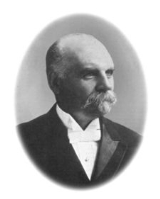
Thaddeus S. C. Lowe

 
Thaddeus S. C. Lowe

   Email Print
   Bookmark   Link


Thaddeus S. C. Lowe


Thaddeus Sobieski Coulincourt Lowe (August 20, 1832 - January 16, 1913), also known as Professor T. S. C. Lowe, was an American Civil War
American Civil War

The American Civil War , also known as the War Between the States and several Naming the American Civil War, was a civil war in the United States....
 aeronaut, scientist and inventor. Lowe lived a life that was full of claims to fame. Despite being born of poor pioneer farming stock, Lowe showed an interest in meteorology with his intent study of the winds and cloud movements. He particularly recognized the strong easterly, high altitude wind which gave him a notion of flying in it.


Discussion
Ask a question about 'Thaddeus S. C. Lowe'
Start a new discussion about 'Thaddeus S. C. Lowe'
Answer questions from other users
Full Discussion Forum


Encyclopedia


Thaddeus Sobieski Coulincourt Lowe (August 20, 1832 - January 16, 1913), also known as Professor T. S. C. Lowe, was an American Civil War
American Civil War

The American Civil War , also known as the War Between the States and several Naming the American Civil War, was a civil war in the United States....
 aeronaut, scientist and inventor. Lowe lived a life that was full of claims to fame. Despite being born of poor pioneer farming stock, Lowe showed an interest in meteorology with his intent study of the winds and cloud movements. He particularly recognized the strong easterly, high altitude wind which gave him a notion of flying in it. As an older teenager Lowe became fascinated with the properties of lighter-than-air gases, in particular, hydrogen. By age 21 he took up aviation, which at the time was piloting balloons. Between his chemistry lecturing and giving balloon rides he was able to put enough money together for a formal education thus furthering his studies in chemistry
Chemistry

Chemistry is the science concerned with the composition, structure, and properties of matter, as well as the changes it undergoes during chemical reactions....
, meteorology
Meteorology

Meteorology is the interdisciplinary scientific study of the Earth's atmosphere that focuses on weather processes and forecasting . Studies in the field stretch back millennia, though significant progress in meteorology did not occur until the eighteenth century....
, and aviation
Aviation

File:Norwegian military Bell 412SP helicopters.jpgAviation refers to activities involving man-made flying devices , including the people, organizations, and regulatory bodies involved with them....
. By the late 1850s he was well known for his advanced theories in the meteorological sciences as well as his balloon building. Among his aspirations were plans for a transatlantic flight.

Lowe's scientific endeavors were cut short by the onset of the American Civil War
American Civil War

The American Civil War , also known as the War Between the States and several Naming the American Civil War, was a civil war in the United States....
. He recognized his patriotic duty in offering his services as an aeronaut for the purposes of performing aerial reconnaissance on the Confederate troops on behalf of the Union Army
Union Army

The Union Army was the army that fought for the Union during the American Civil War. It was also known as the Federal Army, the U.S....
. In July 1861 Lowe was appointed Chief Aeronaut of the Union Army Balloon Corps
Union Army Balloon Corps

The Union Army Balloon Corps was a branch of the Union Army during the American Civil War, established by presidential appointee Thaddeus S. C. Lowe....
 by President Abraham Lincoln
Abraham Lincoln

Abraham Lincoln was the List of Presidents of the United States President of the United States. He successfully led the country through its greatest internal crisis, the American Civil War, preserving the Union and ending slavery....
. Though his work was generally successful, it was not fully appreciated by all members of the military, and disputes over his operations and pay scale forced him to resign in 1863. Lowe returned to the private sector and continued his scientific exploration of hydrogen gas manufacturing. He invented the water gas
Water gas

Water gas is a Syngas, containing carbon monoxide and hydrogen. It is an useful product but requires careful handling because of the risk of carbon monoxide poisoning....
 process by which large amounts of hydrogen gas could be produced from steam and charcoal. His inventions and patents on this process and ice making machines made him a millionaire.

In 1887 he moved to Los Angeles, California
Los Angeles, California

Los Angeles is the largest city in the U.S. state of California and the List of United States cities by population in the United States. Often abbreviated as L.A. and nicknamed The City of Angels, Los Angeles is rated as a beta global city, has an estimated population of 3.8 million and spans over in Southern California....
, and eventually built a 24,000 sq. ft. (2,230 m2) home in Pasadena
Pasadena, California

Pasadena is a city in Los Angeles County, California, California, United States. Famous for hosting the annual Rose Bowl Game American football game and the Tournament of Roses Parade, Pasadena is the home of many leading scientific and cultural institutions, including the California Institute of Technology , the Jet Propulsion Laboratory ,...
. He opened several ice making plants and founded Citizen's Bank of Los Angeles. Lowe was introduced to David J. Macpherson, a civil engineer, who had drawn up plans for a scenic mountain railroad. In 1891 they incorporated the Pasadena & Mount Wilson Railroad Co. and began the construction of what would become the Mount Lowe Railway into the hills above Altadena. The railway opened on July 4, 1893 and was met with quick interest and success. Lowe continued construction toward Oak Mountain, renamed Mount Lowe
Mount Lowe (California)

Mount Lowe is a mountain on the southern fold of the San Gabriel Mountains. Originally named Oak Mountain, it was renamed for Thaddeus S. C. Lowe, who is credited for being the first white man to set foot on and plant the American flag at its peak, and who built the Mount Lowe Railway to its foot in 1896....
, at an exhaustive rate, both physically and financially. By 1899 Lowe had gone into receivership and eventually lost the railway to Jared S. Torrance. Lowe's fortunes had been all but lost, and he lived out his remaining days at his daughter's home in Pasadena where he died at age 81.

Early life


Heritage
Thaddeus Lowe was born August 20, 1832 to Clovis and Alpha Green Lowe in Jefferson Mills, Coos County, New Hampshire. Lowe’s grandfather, Levi Lowe, fought in the Revolutionary War and his father was a drummer boy in the War of 1812. Both Clovis and Alpha were native New Hampshirites, of pioneer stock and descendants of 17th century Pilgrims. Clovis was a cobbler, but later became a Jefferson merchant. He dabbled in politics and was even elected to state legislature at one time. His politics and opinion were well respected in the state.

Youth
Versions of the life of young Thaddeus vary. He was the second child in a family of five and was named Thaddeus Sobieski Constantine, more than likely after the character Thaddeus Constantine Sobieski in an 1803 novel ‘’Thaddeus of Warsaw’’ by Scottish author Jane Porter. It is confused about his life around the age of ten whether his mother had died and Clovis married Mary Randall, or if Lowe was sent away to another farm during which time his mother died and his father remarried. He apparently did work for another farm owned by the Plaisted’s, but that he lived there is uncertain. Clovis and Mary had seven more children, but there is a timeline confusion that may indicate she already had children when she married Clovis.

What is consistent in the stories of Lowe are accounts of his insatiable appetite for learning. He couldn’t read enough, and he had questions beyond the answering of his father or teachers. Lowe was also limited in the amount of time he had for school. His farm chores only allowed him the three winter months to attend Common School at Jefferson Hills, two miles away. The school had no books, but like Abraham Lincoln Thad would spend his evenings in front of the fireplace reading books loaned from his teacher’s personal library.

By age fourteen Thad had ventured out on his own first to Portland, Maine
Portland, Maine

Portland is the largest city in the U.S. state of Maine and the county seat of Cumberland County, Maine. The city population was 64,249 at the 2000 United States Census....
, then back to Boston where he joined his older brother Joseph in the shoe [parts] cutting trade. At eighteen Thad became quite ill and returned home. While he was still recuperating when his younger brother invited him to attend a chemistry lecture by one Professor Reginald Dinkelhoff featuring the phenomena of lighter-than-air gases, specifically hydrogen. When the Professor requested a volunteer from the audience, an eager Thaddeus jumped to the fore. Dinkelhoff could see the interest in his eyes and after the show offered to take him on the road with him as an assistant. Lowe did so and after two years upon the professor’s retirement bought out the show using the appellation “Thaddeus Sobieski Counlicourt Lowe, Professor of Chemistry.”

Self-made scientist and aeronaut
The lecture circuit business proved lucrative enough for Lowe to seek out the education he so lacked as a child. He tried medicine
Medicine

Medicine is the art and science of healing. It encompasses a range of health care practices evolved to maintain and restore health by the prevention and treatment of illness....
 to fulfill his grandmother's wish, but the boredom redirected him to his first interest, aviation
Aviation

File:Norwegian military Bell 412SP helicopters.jpgAviation refers to activities involving man-made flying devices , including the people, organizations, and regulatory bodies involved with them....
 with the use of lighter-than-air gases. American balloonists used coke
Coke (fuel)

Cokes are the solid carbonaceous material derived from destructive distillation of low-ash, low-sulfur bituminous coal. Cokes from coal are grey, hard, and porous....
 gas to inflate limp silk bags, as opposed to the original French balloons
Hot air balloon

The hot air balloon is the oldest successful human-carrying flight technology. On November 21, 1783, in Paris, France, the first manned flight was made by Jean-Fran?ois Pil?tre de Rozier and Fran?ois Laurent d'Arlandes in a hot air balloon created by the Montgolfier brothers....
 which were cotton weave over rigid frameworks that were stood over fires to collect hot smoke (hot air). By the late 1850s Lowe had become a foremost balloon builder and continued his lucrative business as a showman giving balloon rides to passersby and fairground attendees.

Leontine
In 1855, at one of his lectures, he was introduced to a pretty Parisian actress, 19-year-old Leontine Augustine Gaschon. (Her father was a palace guard of King Louis Phillipe who fled to the U.S. as a political refugee.) A week later, on February 14, 1855, Thaddeus and Leontine wed. Their union would produce ten children, seven girls and three boys. Lowe continued with his scientific endeavors and the dream owning his own balloon with the wild idea of making a transatlantic flight
Transatlantic flight

Transatlantic flight is the flight of an aircraft, whether fixed-wing aircraft, balloon or other device, which involves crossing the Atlantic Ocean — with a starting point in North America or South America and ending in Europe or Africa, or vice versa....
 via the high winds he observed. He poured over the book of John Wise
John Wise (balloonist)

John Wise was a pioneer in the field of Balloon . He made over 400 flights during his lifetime and was responsible for several innovations in balloon design....
, A System of Aeronautics which had specific instructions for the construction of aerostats, the cutting, the sewing, the leak proofing.

In 1857 Lowe built and piloted his first balloon in tethered flight at a small farm in Hoboken, New Jersey
Hoboken, New Jersey

Hoboken is a City in Hudson County, New Jersey, New Jersey, United States. As of the 2000 United States Census, the city's population was 38,577....
. Thad’s father joined in the balloon making business and had become an accomplished aeronaut himself. In 1858 the Lowes built the larger balloon Enterprise
Enterprise (balloon)

The Enterprise was a gas inflated aerostat built by Thaddeus S. C. Lowe along with his father Clovis in 1858. It was the second balloon built by Lowe at his Hoboken, N.J....
 and several others.

Lowe continued with his scientific endeavors and avocation to make a transatlantic flight
Transatlantic flight

Transatlantic flight is the flight of an aircraft, whether fixed-wing aircraft, balloon or other device, which involves crossing the Atlantic Ocean — with a starting point in North America or South America and ending in Europe or Africa, or vice versa....
 via the high winds. In 1859 Lowe began the construction of a mammoth balloon to be named the City of New York. Meanwhile he espoused the theory of transatlantic flight to many who had stock market interests in Europe. The recently laid transatlantic cable had failed, and sea travel was undependably slow. He amassed supporters from all corners of the business and scientific communities, in particular one Prof. Joseph Henry
Joseph Henry

Joseph Henry was an American scientist who served as the first Secretary of the Smithsonian Institution. During his lifetime, he was considered one of the greatest American scientists since Benjamin Franklin....
 of the Smithsonian Institution
Smithsonian Institution

The Smithsonian Institution is an educational and research institute and associated museum complex, administered and funded by the government of the United States and by funds from its Financial endowment, contributions, and profits from its shops and its magazine....
 who wrote:

The Smithsonian Institution has long been aware of the work and theories of Professor Lowe and we have found his statements scientifically sound. It is with great pleasure and satisfaction that we welcome proof of his genius. We shall follow the outcome of his plan with interest.


Transatlantic attempts
City of Ny Balloon
Lowe's latest mammoth balloon, the City of New York, was a massive 103-foot (31.394 m.) diameter balloon with an 11-1/2 ton (10,432.6 kg) lift capacity (on coke gas, 22-1/2 ton [20,411.6 kg.] on hydrogen), which included a 20-foot (6 m.) diameter, 8-man canvas covered gondola and a suspended lifeboat named for his wife Leontine. It was prepared for a test flight to be launched at Reservoir Square in New York on November 1, 1859. Unfortunately the local gas company was not able to deliver a sufficient supply of gas. Within a week Lowe was invited to Philadelphia by Prof. John C. Cresson of the Benjamin Franklin Institute of Sciences, who also happened to be Chairman of the Board of the Point Breeze Gas Works. They promised a sufficient supply of gas. Lowe stored the balloon in Hoboken and waited for spring to do the test flight.

Before the test flight the balloon was renamed the Great Western, on the advice of newspaperman Horace Greeley
Horace Greeley

Horace Greeley was an United States editor of a leading History of American newspapers, a founder of the Liberal Republican Party , a reformer, and a politician....
, to rival the maiden voyage of the steamship Great Eastern
SS Great Eastern

The Steamship Great Eastern was an iron sailing steam ship designed by Isambard Kingdom Brunel. She was the largest ship ever built at the time of her 1858 launch, and had the capacity to carry 4,000 passengers around the world without refueling....
 in the spring of 1860. Lowe made the flight successfully on June 28, 1860, from Philadelphia to New Jersey, but on his first attempt at a transatlantic launch on September 7, the Great Western was ripped open by a wind. A second attempt on September 29 was halted when the repaired spot on the balloon bulged during inflation. Lowe would need to overhaul the GW and wait for the next late spring.

A second test flight, at the suggestion of Prof. Henry, was made from Cincinnati
Cincinnati, Ohio

Cincinnati is a city in the U.S. state of Ohio and the county seat of Hamilton County, Ohio. The municipality is located in southwestern Ohio and is situated on the Ohio River at the Ohio-Kentucky border....
 and was to return him to the eastern seaboard. For this flight he used the smaller balloon Enterprise. His flight took off on the early morning of April 19, 1861, two days after Virginia
Virginia

The Commonwealth of Virginia is an United States U.S. state on the East Coast of the United States of the Southern United States. The state is known as the "Old Dominion" and sometimes as "Mother of Presidents", because it is the birthplace of Lists of United States Presidents by place of birth#By state....
 had seceded from the Union
Union (American Civil War)

During the American Civil War, the Union was a name used to refer to the Federal government of the United States of the United States, which was supported by the twenty-three states which were not part of the secession attempt by the 11 states that formed the Confederate States of America....
. The flight misdirected him to Unionville, South Carolina where he was put under house arrest as a Yankee
Yankee

The term Yankee, sometimes abbreviated to Yank, has a few related meanings, often referring to someone of United States origin or heritage. Within the United States its meaning has varied over time....
 spy. Having established his identity as a man of science, he was allowed to return home where he had received word from Secretary of the Treasury Salmon P. Chase
Salmon P. Chase

Salmon Portland Chase was an United States politician and jurist in the American Civil War era who served as United States Senator from Ohio and List of Governors of Ohio of Ohio; as United States Secretary of the Treasury under President of the United States Abraham Lincoln; and as Chief Justice of the United States....
 to come to Washington with his balloon. The American Civil War
American Civil War

The American Civil War , also known as the War Between the States and several Naming the American Civil War, was a civil war in the United States....
 permanently ended Lowe's attempt at a transatlantic crossing.

Participation in the Civil War (1861-1863)


Chief Aeronaut
On the evening of June 11, 1861 Lowe met President Lincoln
Abraham Lincoln

Abraham Lincoln was the List of Presidents of the United States President of the United States. He successfully led the country through its greatest internal crisis, the American Civil War, preserving the Union and ending slavery....
 and offered to perform a demonstration with the Enterprise and a telegraph set from a height some 500 feet (152.4 m.) above the White House
White House

The White House is the official residence and principal workplace of the President of the United States. Located at 1600 Pennsylvania Avenue in Washington, D.C., it was built between 1792 and 1800 of white-painted Aquia sandstone in the late Georgian architecture and has been the executive residence of every U.S....
. In the telegraph message Lowe asserted:

Lowe was competing for the position with three other prominent balloonists, Mr. John Wise, Mr. John LaMountain, and the Allen Brothers, Ezra and James. Wise and LaMountain were old critics of Lowe, but were not able to obtain the assignment so easily.

Lowe's first outing was performed at First Bull Run with General Irvin McDowell
Irvin McDowell

Irvin McDowell was a career United States United States Army, famous for his defeat during the First Battle of Bull Run, the first large-scale battle of the American Civil War....
 and the Army of Northeastern Virginia. His performance was impressive though he had the misfortune of having to land behind enemy lines. Fortunately he was found by members of the 31st New York Volunteers before the enemy could discover him, but after the landing he had twisted his ankle and was not able to walk out with them. They returned to Fort Corcoran to report his position. Eventually his wife Leontine, disguised as an old hag, came to his rescue with a buckboard and canvas covers and was able to extract him and his equipment safely.

Word of his exploits got back to the President who ordered Gen. Winfield Scott
Winfield Scott

Winfield Scott was a United States Army general, and unsuccessful List of United States Presidential candidates of the Whig Party in 1852. Known as "Old Fuss and Feathers" and the "Grand Old Man of the Army", he served on active duty as a general longer than any other man in American history and many historians rate him the ablest America...
 to see to Lowe's formation of a Balloon Corps with Lowe as Chief Aeronaut. It was almost four months before Lowe received orders and provisions to construct four (eventually seven) balloons equipped with mobile hydrogen gas generators. At the same time he assembled a band of men whom he would instruct in the methodology of military ballooning. The newly formed Union Army Balloon Corps
Union Army Balloon Corps

The Union Army Balloon Corps was a branch of the Union Army during the American Civil War, established by presidential appointee Thaddeus S. C. Lowe....
 remained a civilian contract organization, never receiving military commissions, a dangerous position lest any one of the men be captured as spies and summarily executed.

Peninsula Campaign
Lowe returned to the Army of the Potomac now under Gen. George McClellan with his new military balloon the Eagle, though his generators were not ready. He performed ascensions over Yorktown after which the Confederates retreated toward Richmond. Lowe was given use of a converted coal barge, the George Washington Parke Custis, onto which he loaded two new balloons and two new hydrogen gas generators, with which Lowe performed the first observations over water thereby making the GWP Custis the first ever aircraft carrier. In Lowe’s Report he stated:

Lowe went on to serve in the Peninsula Campaign
Peninsula Campaign

The Peninsula Campaign of the American Civil War was a major Union operation launched in southeastern Virginia from March through July 1862, the first large-scale offensive in the Eastern Theater of the American Civil War....
 of 1862, making observations over Mechanicsville, Virginia
Mechanicsville, Hanover County, Virginia

Mechanicsville is a census designated place in Hanover County, Virginia, Virginia,? United States. The population was 30,464 at the United States Census, 2000....
, and the ensuing Battle of Seven Pines
Battle of Seven Pines

The Battle of Seven Pines, also known as the Battle of Fair Oaks or Fair Oaks Station, took place on May 31 and June 1, 1862, in Henrico County, Virginia, as part of the Peninsula Campaign of the American Civil War....
 and Fair Oaks.

The picture to the right depicts Lowe's ascent in the Intrepid over the Battle of Fair Oaks
Battle of Seven Pines

The Battle of Seven Pines, also known as the Battle of Fair Oaks or Fair Oaks Station, took place on May 31 and June 1, 1862, in Henrico County, Virginia, as part of the Peninsula Campaign of the American Civil War....
 where his observations of the oncoming Confederate Army and the timely manner in which he reported troop movements saved the isolated army of General Heintzelman
Samuel P. Heintzelman

Samuel Peter Heintzelman was a United States Army General officer. He served in the Seminole War, the Mexican-American War, the Cortina Troubles, and the American Civil War, rising to the command of a corps....
. Though he had used the hydrogen gas generators (each balloon camp was assigned two generator units), the inflation time was still another hour off. He quickly transferred the gas from the Constitution into the Intrepid by cutting a hole in the bottom of a camp kettle and connecting the balloons at the valve ends. The process took fifteen minutes, a time savings later valued at "a million dollars a minute."

The muddy bogs around Fair Oaks and the Chickahominy River gave rise to many exotic diseases such as typhoid and malaria. Lowe contracted malaria and was put out of service for more than a month. The unsuccessful Army of the Potomac was ordered to retreat to Washington from and Lowe's wagons and mules were commandeered for the withdrawal and eventually returned to the Quartermaster. When Lowe returned to Washington he was hard pressed to be put back into service. Eventually he was called to Sharpsburg and Fredericksburg where his services were used.

Troubled balloon corps
The Balloon Corps was reassigned to the Engineers Corps. Lowe had been paid as a Colonel ($10 gold per day), but in March 1863, Captain Comstock was put in charge of the newly reassigned air division and cut Lowe's pay to $6 cash ($3 gold). At the same time a Congressional assessment was being made of the air division and a disparaging third party report, which Lowe refuted in a lengthy response, gave pause to the Union commanders for further use of balloons. Lowe tendered his resignation in May 1863 and the Allen Brothers took charge of the Balloon Corps, but by August the Corps had ceased to exist.

Return to the private sector

Lowe sought to recuperate from the effects of malaria and the fatigue of war. He and Leontine returned to Jefferson, New Hampshire
Jefferson, New Hampshire

Jefferson is a New England town in Coos County, New Hampshire, New Hampshire, United States. The population was 1,006 at the 2000 census. It is home to Agnew State Forest in the south, parts of the White Mountain National Forest in the south and northeast, and two theme parks: and ....
 where he spent time with his with family. He had a month’s return to Washington in the Fall of 1863 to complete his war report to the Secretary, then returned home to buy a farm near Valley Forge where the farming life allowed him to recompose himself.

The advanced techniques of aerial reconnaissance developed by Lowe became influential around the world, Great Britain, France, even Brazil offered him the position of major-general if he were to organize a balloon corps for them. Having had enough of war, he declined the offer, but he did send them a balloon with equipment including portable generators. He consulted with their military experts and recruited his best aeronauts, the Allen Brothers (aforementioned), to assist them.

During his Civil War days Lowe met a German youth who was nosing around the army balloon camp. The young man’s name was Count Ferdinand von Zeppelin
Ferdinand von Zeppelin

Ferdinand Adolf August Heinrich Graf von Zeppelin also called Count Zeppelin) was a German aircraft manufacturer, the founder of the Zeppelin Airship company....
 who shared his own fascination with aeronautics. General McClellan had put all balloon ride-alongs off limits, so Lowe sent von Zeppelin to Poolesville
Poolesville, Maryland

Poolesville is a town in Montgomery County, Maryland, Maryland, United States with a population of approximately 5000 people. The name of the town comes from the brothers John Poole, Sr....
 to visit with his German assistant aeronaut John Steiner who could entertain the lad in his own Language. Von Zeppelin returned in the 1870’s to interview Lowe on all of his aeronautic techniques. Of course it would be Count Ferdinand von Zeppelin who would design the dirigible aircraft that bore his name.

Lowe made a new home in Norristown, Pennsylvania
Norristown, Pennsylvania

Norristown is a municipality in Montgomery County, Pennsylvania, 6 miles northwest of the city limits of Philadelphia, Pennsylvania, on the Schuylkill River....
 where he continued with his scientific endeavors with hydrogen gas, improving upon and patenting the water gas
Water gas

Water gas is a Syngas, containing carbon monoxide and hydrogen. It is an useful product but requires careful handling because of the risk of carbon monoxide poisoning....
 process by which high volumes of the volatile fuel could be made from passing steam over hot coal. The industry revolutionized home heating and lighting along the eastern seaboard. He held several patents on ice making machines
Refrigeration

Refrigeration is the process of removing heat from an enclosed space, or from a substance, and moving it to a place where it is unobjectionable....
 including his perfected “Compression Ice Machine” which would revolutionize the cold storage industry. He even discovered that gas burning through a platinum mantle
Gas mantle

An incandescent gas mantle, gas mantle, or Welsbach mantle is a device for generating bright white light when heated by a flame. The name refers to its original heat source, existing gas lights which filled the street lighting of Europe and North America in the late 19th century, mantle referring to the way it was hung above the f...
 produced a bright illumination (as later found in the Coleman
Coleman Company

Coleman Company, Inc. is an American company that specializes in outdoor recreation products. Historically, Coleman was known for camping gear....
 lantern
Lantern

A lantern is a portable lighting device used to illuminate broad areas. Lanterns may be used for signaling, or as general light sources for camping....
).

He bought an old steamship in which he installed his refrigerating units and began shipping fresh fruit from New York to Galveston, and fresh beef back. This was an historical first where people were able to eat fresh beef that hadn't been packed in preservative salts. His steamship venture failed due to his lack of knowledge about shipping, but the industry was picked up by several other countries.

Lowe also manufactured products that ran on hydrogen gas. With these and his several patents Lowe amassed a fortune. For his achievements Lowe received the coveted Elliott Cresson Grand Medal of Honor for the Invention Held to be Most Useful to Mankind.

Lowe's gas process


In 1873, Lowe developed and patented the water gas
Water gas

Water gas is a Syngas, containing carbon monoxide and hydrogen. It is an useful product but requires careful handling because of the risk of carbon monoxide poisoning....
 process by which large amounts of hydrogen
Hydrogen

Hydrogen is the chemical element with atomic number 1. It is represented by the chemical symbol H. At standard temperature and pressure, hydrogen is a colorless, odorless, nonmetallic, tasteless, highly combustion and explosive Diatomic molecule gas with the molecular formula H2....
 gas could be generated for residential and commercial use in heating and lighting. Unlike the common coal gas, or coke gas which was used in municipal service, this gas provided a more efficient heating fuel. The process used the water gas shift reaction
Water gas shift reaction

The water-gas shift reaction is a chemical reaction in which carbon monoxide reacts with water to form carbon dioxide and hydrogen:The water-gas shift reaction is an important industrial reaction....
:

CO + H2O ? CO2 + H2


The process was discovered by the passing of high-pressure steam over hot coal
Coal

Coal is a readily combustion black or brownish-black sedimentary rock. The harder forms, such as anthracite, can be regarded as metamorphic rock because of later exposure to elevated temperature and pressure....
, the major source of coke gas. Lowe's process improved upon the chimney systems by which the coal could remain superheated thereby maintaining a consistently high supply of the gas. This process created a thermo-chemical reaction of applying hydrogen, in the steam, to carbon monoxide
Carbon monoxide

Carbon monoxide, with the chemical formula CO, is a colorless and odorless, tasteless, yet highly toxic gas. Its molecules consist of one carbon atom covalent bond to one oxygen atom....
, in the coke gas. The reaction produced carbon dioxide and pure hydrogen which after a process of cooling and "scrubbing," passing through water vapor
Water vapor

Water vapor or water vapour , also aqueous vapor, is the gas phase of water . Water vapor is one Phase of the water cycle within the hydrosphere....
, left just a pure hydrogen gas.

The process spurred on the industry of gas manufacturing, and gasification
Gasification

Gasification is a process that converts carbonaceous materials, such as coal, petroleum, biofuel, or biomass, into carbon monoxide and hydrogen by reacting the raw material at high temperatures with a controlled amount of oxygen and/or steam....
 plants were established quickly along the Eastern seaboard of the United States. Similar processes, like the Haber Process
Haber process

The Haber process, also called the Haber?Bosch process, is the nitrogen fixation reaction of nitrogen and hydrogen, over an enriched iron Catalysis, to produce ammonia....
, led to the manufacture of ammonia
Ammonia

Ammonia is a chemical compound with the chemical formula nitrogenhydrogen. It is normally encountered as a gas with a characteristic pungent odor....
 (NH3) by the combining of nitrogen
Nitrogen

Nitrogen is a chemical element that has the symbol N and atomic number 7 and atomic mass 14.00674?. Elemental nitrogen is a colorless, odorless, tasteless and mostly inert diatomic gas at standard conditions, constituting 78% by volume of Earth's atmosphere....
, found in air
AIR

Air is the part of Earth's atmosphere that humans breath and as such Air .Air may also refer to:...
, with high volumes of hydrogen. This spurred on the refrigeration
Refrigeration

Refrigeration is the process of removing heat from an enclosed space, or from a substance, and moving it to a place where it is unobjectionable....
 industry which long used ammonia as its refrigerant
Refrigerant

A refrigerant is a compound used in a heat engine that undergoes a phase change from a gas to a liquid and back. The two main uses of refrigerants are refrigerators/freezers and air conditioners ....
. Prof. Lowe also held several patents on artificial ice making machines, and was able to run successful businesses in cold storage as well as products which operated on hydrogen gas.

Retirement in Pasadena, California

In 1887 Lowe moved to Los Angeles and in 1890 to Pasadena, California
Pasadena, California

Pasadena is a city in Los Angeles County, California, California, United States. Famous for hosting the annual Rose Bowl Game American football game and the Tournament of Roses Parade, Pasadena is the home of many leading scientific and cultural institutions, including the California Institute of Technology , the Jet Propulsion Laboratory ,...
 where he built a 24,000 sq. ft. mansion
Mansion

A mansion is a large dwelling house. The word itself derives from the Latin word mansio In the Roman Empire, a mansio was an official stopping place on a Roman road, or via, where cities sprang up, and where the villas of provincial officials came to be placed....
. He started a water-gas company, founded the Citizens Bank of Los Angeles, established several ice plants, and bought a Pasadena opera house.

Mount Lowe Railway

Early Pasadenans always had a dream of a scenic mountain railroad to the crest of the San Gabriel Mountains
San Gabriel Mountains

The San Gabriel Mountains are located in northern Los Angeles County, California and western San Bernardino County, California, United States. The mountain range forms a barrier between the Greater Los Angeles Area and the Mojave Desert....
. It was one Mr. David J. Macpherson, a civil engineer graduate of Cornell University, who had the general plans for just such a railroad. He was introduced to Prof. Lowe with the idea of the two men putting Macpherson’s plans and Lowe’s money together in one venture.

In 1891 Lowe and Macpherson incorporated the Pasadena & Mount Wilson Railroad (later the Mount Lowe Railway
Mount Lowe Railway

}}|width: ;|}}|width: 25em;}} font-size:90%; text-align: left;"|-|-| colspan="2" align="center" style="font-size:large;" | |-! colspan="2" style="background-color:#efefef; text-align: center;" | Info...
). Unable to obtain all the rights of way to Mt. Wilson
Mount Wilson (California)

Mount Wilson is one of the more prominent peaks in the San Gabriel Mountains, part of the Angeles National Forest in Los Angeles County, California, USA....
, the two men redirected their railway toward Oak Mountain via the Echo promontory. The difference between this and any other scenic mountain railway of its kind was that it was all electric traction trolley
Tram

A tram, tramcar, trolley, trolley car, or streetcar is a railroad car, of lighter weight and construction than a train, designed for the transport of passengers within, close to, or between villages, towns and/or cities, on tracks running primarily on streets....
 (streetcar), the only one of its kind to ever exist. Oak Mountain was later renamed Mount Lowe
Mount Lowe (California)

Mount Lowe is a mountain on the southern fold of the San Gabriel Mountains. Originally named Oak Mountain, it was renamed for Thaddeus S. C. Lowe, who is credited for being the first white man to set foot on and plant the American flag at its peak, and who built the Mount Lowe Railway to its foot in 1896....
, and to make it official, Andrew McNally, the map printer
Rand McNally

Rand McNally is the preeminent United States publisher of maps, atlases, and globes for travel, reference, commercial, and educational uses. It also provides online consumer street maps and directions, as well as commercial transportation routing software and mileage data....
 from Chicago who was also moved to Altadena, had the name Mt. Lowe printed on all his maps.

Lowe opened the first section of the railway on July 4, 1893, from the corner of Lake and Calaveras in Altadena to the Rubio Pavilion in the Rubio Canyon, then transferring to a steep 2,800-foot-long (853.44 m>) funicular
Funicular

A funicular, also known as a funicular railway, incline, inclined railway, inclined plane, or cliff railway, is a type of self-contained cable railway in which a wire rope attached to a pair of tram-like vehicles on Rail tracks#Railway rail moves them up and down a very steep slope, the ascending and descending v...
 to Echo Mountain
Echo Mountain

Echo Mountain is a promontory above Altadena, California. It was shaped from an alluvial fan between Rubio and Las Flores canyons. It is geographically defined by Castle Canyon to its leeward side, Rubio Canyon at its foot, and Las Flores Canyon on its windward side....
. At the top there was a 40-room chalet. In 1894 he added an 80-room hotel, the Echo Mountain House, and the observatory. By 1896 the upper division was finished into Grand Canyon at Ye Alpine Tavern. Altogether there were some seven miles (11.265 km) of track. Lowe lost the venture to receivership in 1899, which left him impoverished. The MLR became part of Henry Huntington's recently formed Pacific Electric Railway
Pacific Electric Railway

The Pacific Electric Railway , also known as the Red Car system, was a mass transit system in Southern California using streetcars, light rail, and buses....
 (also known as "Red Car") in 1902.

The only part of the railway property that remained Lowe's was the observatory on Echo Mountain. It boasted a 16-inch (406.4 mm) reflective telescope
Optical telescope

An optical telescope is a telescope which is used to gather and Focus light mainly from the Visible spectrum part of the electromagnetic spectrum for directly viewing a magnification image for making a photograph, or collecting data through electronic s....
 from which many astronomical
Astronomy

Astronomy is the science of Astronomical object and Phenomenon that originate outside the Earth's atmosphere . It is concerned with the evolution, physics, chemistry, meteorology, and motion of celestial objects, as well as the physical cosmology....
 finds were made. It was blown down in a gale in 1928. The railway fell in stages to the Echo Mountain House fire, a kitchen fire on February 4, 1900; a wind aided brush fire on Echo Mountain in 1905, which wiped out everything except the observatory and the astronomer's cabin; a Rubio Canyon flash flood in 1909 that destroyed the Pavilion; and an electrical fire that razed the Tavern in 1936. The line was abandoned after the Los Angeles deluge of March 1938.

Death and legacy

Lowe died at his daughter's Pasadena, California
Pasadena, California

Pasadena is a city in Los Angeles County, California, California, United States. Famous for hosting the annual Rose Bowl Game American football game and the Tournament of Roses Parade, Pasadena is the home of many leading scientific and cultural institutions, including the California Institute of Technology , the Jet Propulsion Laboratory ,...
 home at age 81 after a few years of failing health. To his name is left Mount Lowe in the San Gabriel Range
San Gabriel Mountains

The San Gabriel Mountains are located in northern Los Angeles County, California and western San Bernardino County, California, United States. The mountain range forms a barrier between the Greater Los Angeles Area and the Mojave Desert....
 of Southern California. Lowe was buried at Mountain View Cemetery in Altadena, California, Next to him lies his wife Leontine who passed but a year later. Also buried near the Lowe monument are his two sons Leon and Sobieski and other family members whose names differ due to the married names of the seven daughters. Many of the family members returned to the East Coast. A nearby monument has been separately erected for his son Thaddeus and his wife.

There are no grandsons to account for carrying on the name of Lowe, but many of the children and grandchildren of the daughters carry the Lowe name as a middle name.

The Mount Lowe Railway was placed on the National Register of Historic Places
National Register of Historic Places

The National Register of Historic Places is the United States government official list of districts, sites, buildings, structures, and objects deemed worthy of preservation....
 on January 6, 1993. Lowe is a member of the U.S. Army Military Intelligence Hall of Fame
Military Intelligence Hall of Fame

The Military Intelligence Hall of Fame is a Hall of Fame established by the Military Intelligence Corps of the United States Army to honor soldiers and civilians who have made exceptional contributions to Military Intelligence....
.

Thaddeus Lowe in popular culture

Lowe was portrayed by Stuart Whitman in the movie High Flying Spy in 1972, produced by Walt Disney Production

See also

  • Pancho Lowe Barnes
    Pancho Barnes

    Florence Lowe "Pancho" Barnes , was a pioneer of women's aviation and the owner of the celebrated Rancho Oro Verde Fly-Inn Dude Ranch located on land annexed into Edwards Air Force Base in southern California's Antelope Valley in the southwestern United States....
    , granddaughter and aviation pioneer


External links

  • , extensive site with many photographs.