
Home      Discussion      Topics      Dictionary      Almanac
Signup       Login
Tarlac

Tarlac

Overview
Tarlac is a landlocked province
Provinces of the Philippines
The provinces of the Philippines are the primary administrative divisions of the Philippines. There are 80 provinces, further subdivided into component cities and municipalities. The National Capital Region as well as independent cities are autonomous from any provincial government...

 of the Philippines
Philippines
The Philippines officially known as the Republic of the Philippines, is a country in Southeast Asia with Manila as its capital city. It comprises 7,107 islands in the western Pacific Ocean....

 located in the Central Luzon
Central Luzon
Central Luzon , also known as Region III , is an administrative division or region of the Republic of the Philippines, primarily serve to organize the 7 provinces of the vast central plain of the island of Luzon , for administrative convenience...

 region
Regions of the Philippines
In the Philippines, regions are administrative division that serve primarily to organize the 80 provinces for administrative convenience...

. Its capital is Tarlac City
Tarlac City
Tarlac City is a 1st class city in the province of Tarlac, Philippines. Tarlac City was governed by former Philippines senator Benigno Aquino, Jr. and Tarlac is shown on the back of the Philippines 500 peso note that features him...

. Tarlac borders Pampanga
Pampanga
Pampanga is a province of the Philippines located in the Central Luzon region. Its capital is the City of San Fernando, Pampanga. Pampanga is bordered by the provinces of Bataan and Zambales to the west, Tarlac and Nueva Ecija to the north, and Bulacan to the southeast...

 to the south, Nueva Ecija
Nueva Ecija
Nueva Ecija is a landlocked province of the Philippines located in the Central Luzon region. Its capital is Palayan City...

 to the east, Pangasinan
Pangasinan
Pangasinan is one of the provinces of the Republic of the Philippines. The provincial capital is Lingayen. Pangasinan is located on the west central area of the island of Luzon along the Lingayen Gulf. The total land area of Pangasinan is 5,368.82 square kilometers. According to the latest...

 to the north, and Zambales
Zambales
Zambales is a province of the Philippines located in the Central Luzon region. Its capital is Iba. Zambales borders Pangasinan to the north, Tarlac and Pampanga to the east, and Bataan to the south. The province lies between the South China Sea and the Zambales Mountains. With a land area of...

 to the west. It is a part of central Luzon
Luzon
Luzon is the largest and most economically and politically important island in the Philippines and one of the three island groups in the country, with Visayas and Mindanao being the other two...

, which is composed of Pampanga
Pampanga
Pampanga is a province of the Philippines located in the Central Luzon region. Its capital is the City of San Fernando, Pampanga. Pampanga is bordered by the provinces of Bataan and Zambales to the west, Tarlac and Nueva Ecija to the north, and Bulacan to the southeast...

, Bulacan
Bulacan
Bulacan , officially called the Province of Bulacan or simply Bulacan Province, is a first class province of the Republic of the Philippines located in the Central Luzon Region in the island of Luzon, north of Manila , and part of the Metro Luzon Urban Beltway Super...

, Bataan
Bataan
Bataan is a province of the Philippines occupying the whole of Bataan Peninsula on Luzon. The province is part of the Central Luzon region. The capital of Bataan is Balanga City and is bordered by the provinces of Zambales and Pampanga to the north...

, and Nueva Ecija
Nueva Ecija
Nueva Ecija is a landlocked province of the Philippines located in the Central Luzon region. Its capital is Palayan City...

.

As of the 2000 census, Tarlac has a population of 1,068,783. Its population density is 350/km². Pampango or Kapampangan
Kapampangan language
Kapampangan, also spelled Capampangan, is one of the major languages of the Philippines. It is the language spoken in the province of Pampanga, the southern half of the province of Tarlac and the northern portion of the province of Bataan. Kapampangan is also understood in some barrios of Bulacan...

 is spoken by more than half of the population followed by Ilocano spoken by 41%.
Discussion
Ask a question about 'Tarlac'
Start a new discussion about 'Tarlac'
Answer questions from other users
Full Discussion Forum
 
Encyclopedia
Tarlac is a landlocked province
Provinces of the Philippines
The provinces of the Philippines are the primary administrative divisions of the Philippines. There are 80 provinces, further subdivided into component cities and municipalities. The National Capital Region as well as independent cities are autonomous from any provincial government...

 of the Philippines
Philippines
The Philippines officially known as the Republic of the Philippines, is a country in Southeast Asia with Manila as its capital city. It comprises 7,107 islands in the western Pacific Ocean....

 located in the Central Luzon
Central Luzon
Central Luzon , also known as Region III , is an administrative division or region of the Republic of the Philippines, primarily serve to organize the 7 provinces of the vast central plain of the island of Luzon , for administrative convenience...

 region
Regions of the Philippines
In the Philippines, regions are administrative division that serve primarily to organize the 80 provinces for administrative convenience...

. Its capital is Tarlac City
Tarlac City
Tarlac City is a 1st class city in the province of Tarlac, Philippines. Tarlac City was governed by former Philippines senator Benigno Aquino, Jr. and Tarlac is shown on the back of the Philippines 500 peso note that features him...

. Tarlac borders Pampanga
Pampanga
Pampanga is a province of the Philippines located in the Central Luzon region. Its capital is the City of San Fernando, Pampanga. Pampanga is bordered by the provinces of Bataan and Zambales to the west, Tarlac and Nueva Ecija to the north, and Bulacan to the southeast...

 to the south, Nueva Ecija
Nueva Ecija
Nueva Ecija is a landlocked province of the Philippines located in the Central Luzon region. Its capital is Palayan City...

 to the east, Pangasinan
Pangasinan
Pangasinan is one of the provinces of the Republic of the Philippines. The provincial capital is Lingayen. Pangasinan is located on the west central area of the island of Luzon along the Lingayen Gulf. The total land area of Pangasinan is 5,368.82 square kilometers. According to the latest...

 to the north, and Zambales
Zambales
Zambales is a province of the Philippines located in the Central Luzon region. Its capital is Iba. Zambales borders Pangasinan to the north, Tarlac and Pampanga to the east, and Bataan to the south. The province lies between the South China Sea and the Zambales Mountains. With a land area of...

 to the west. It is a part of central Luzon
Luzon
Luzon is the largest and most economically and politically important island in the Philippines and one of the three island groups in the country, with Visayas and Mindanao being the other two...

, which is composed of Pampanga
Pampanga
Pampanga is a province of the Philippines located in the Central Luzon region. Its capital is the City of San Fernando, Pampanga. Pampanga is bordered by the provinces of Bataan and Zambales to the west, Tarlac and Nueva Ecija to the north, and Bulacan to the southeast...

, Bulacan
Bulacan
Bulacan , officially called the Province of Bulacan or simply Bulacan Province, is a first class province of the Republic of the Philippines located in the Central Luzon Region in the island of Luzon, north of Manila , and part of the Metro Luzon Urban Beltway Super...

, Bataan
Bataan
Bataan is a province of the Philippines occupying the whole of Bataan Peninsula on Luzon. The province is part of the Central Luzon region. The capital of Bataan is Balanga City and is bordered by the provinces of Zambales and Pampanga to the north...

, and Nueva Ecija
Nueva Ecija
Nueva Ecija is a landlocked province of the Philippines located in the Central Luzon region. Its capital is Palayan City...

.

Demographics


As of the 2000 census, Tarlac has a population of 1,068,783. Its population density is 350/km². Pampango or Kapampangan
Kapampangan language
Kapampangan, also spelled Capampangan, is one of the major languages of the Philippines. It is the language spoken in the province of Pampanga, the southern half of the province of Tarlac and the northern portion of the province of Bataan. Kapampangan is also understood in some barrios of Bulacan...

 is spoken by more than half of the population followed by Ilocano spoken by 41%. Tagalog
Tagalog language
Tagalog is an Austronesian language spoken in the Philippines by about 22 million people.It is related to Austronesian languages such as Chamorro , Indonesian, Malay, Javanese and Paiwan , Cham , and Tetum...

 is widely understood.

Economy


The economy of Tarlac is dominantly agricultural
Agriculture
Agriculture is the production of food and goods through farming and forestry. Agriculture was the key development that led to the rise of human civilization, with the husbandry of domesticated animals and plants creating food surpluses that enabled the development of more densely populated and...

. Principal crops are rice
Rice
Rice is the seed of a monocot plant Oryza sativa, of the grass family . As a cereal grain, it is the most important staple food for a large part of the world's human population, especially in East, South, Southeast Asia, the Middle East, Latin America, and the West Indies...

 and sugarcane
Sugarcane
Sugarcane, or sugar cane, is any of six to thirty-seven species of tall perennial grasses of the genus Saccharum . Native to warm temperate to tropical regions of Asia, they have stout, jointed, fibrous stalks that are rich in sugar, and measure two to six meters tall...

. Other major crops are corn
Maize
Maize , is a herbaceous plant domesticated in Mesoamerica and subsequently spread throughout the American continents...

 and coconut
Coconut
The Coconut Palm is a member of the family Arecaceae . It is the only species in the genus Cocos, and is a large palm, growing to 30 m tall, with pinnate leaves 4–6 m long, pinnae 60–90 cm long; old leaves break away cleanly leaving the trunk smooth. The term coconut refers to the seed of the...

; vegetables such as eggplant, garlic
Garlic
Allium sativum, commonly known as garlic, is a species in the onion family Alliaceae. Its close relatives include the onion, shallot, leek, and chive. Garlic has been used throughout recorded history for both culinary and medicinal purposes. It has a characteristic pungent, spicy flavor that...

, and onion
Onion
Onion is a term used for many plants in the genus Allium. They are known by the common name "onion" but, used without qualifiers, it usually refers to Allium cepa. Allium cepa is also known as the "garden onion" or "bulb" onion...

; and fruit trees like mango
Mango
Mangoes belong to the genus Mangifera, consisting of numerous species of tropical fruiting trees in the flowering plant family Anacardiaceae. The mango is indigenous to the Indian Subcontinent...

, banana
Banana
Banana is the common name for a herbaceous plants of the genus Musa, and the commonly eaten fruit it produces. They are native to the tropical region of Southeast Asia, and are likely to have been first domesticated in Papua New Guinea. Today, they are cultivated throughout the tropics.Banana...

, and calamansi.

Because the province is landlocked, its fish production is limited to fishponds. On the boundary with Zambales
Zambales
Zambales is a province of the Philippines located in the Central Luzon region. Its capital is Iba. Zambales borders Pangasinan to the north, Tarlac and Pampanga to the east, and Bataan to the south. The province lies between the South China Sea and the Zambales Mountains. With a land area of...

 in the west, forest lands provide timber for the logging industry. Mineral reserves such as manganese and iron can also be found along the western section.

Tarlac has its own rice and corn mills as well as sawmills and logging outfits. It has three sugar centrals. Other firms service agricultural needs such as fertilizer. Among its cottage industries, ceramics making has become important because of the abundant supply of clay. Some of the major industries here are the making of the delicious and famous Chicharon and Iniruban in the municipality of Camiling, Ylang Ylang products of Anao and the Muscovado sugar products of Victoria. Besides those products, the province also boosts its sugar products in the Philippines. It is next to Negros Occidental which is the nation`s sugar capital. Tilapia is also improving in Tarlac and it will soon be the Tilapia capital oF the Philippines.

Geography


Eastern Tarlac is a plain, while Western Tarlac is hilly to mountainous. Becaus of this, the province owns a large portion of mountains like Mt. Telakawa, which is the highest mountain in the province located at Capas, Tarlac. Mt. Bueno is located also in Capas. The other mountains are Mt. Dueg and Mt. Maasin, found in the municipality of San Clemente. Also noted are Mt. Papaac, Bacsay, Cayasan and Birbira of Camiling. The whole of Mayantoc and San Jose are mountainous so it is suitable for the highest natural resources and forest products in the province such as coal, iron, copper, vegetables, fruits, log fires, sand, rocks and forest animals such as wild boar, deer etc.

Political


Tarlac is subdivided into 17 municipalities and 1 city
Cities of the Philippines
A city is a tier of local government in the Philippines. All Philippine cities are chartered cities, whose existence as corporate and administrative entities is governed by their own specific charters in addition to the Local Government Code of 1991, which specifies the administrative structure and...

. These divisions are further subdivided into 511 barangay
Barangay
A barangay , also known by its former Spanish adopted name, the barrio, is the smallest administrative division in the Philippines and is the native Filipino term for a village, district or ward. Barangays are further subdivided into smaller areas called Puroks...

s. The province comprises three congressional district
Congressional district
A congressional district is an electoral constituency that elects a single member of a congress. Countries with congressional districts include the United States, the Philippines, and Japan...

s.

Municipalities


  • Anao
    Anao, Tarlac
    Anao is a 5th class municipality in the province of Tarlac, Philippines. According to the latest census, it has a population of 10,806 people in 2,086 households....

  • Bamban
    Bamban, Tarlac
    Bamban is a 3rd class municipality in the province of Tarlac, Philippines. According to the latest census, it has a population of 61,644 people in 9,113 households....

  • Camiling
    Camiling, Tarlac
    Camiling is a 1st class municipality of the province of Tarlac in the Philippines. According to the latest census, it has a population of 79,941 people in 15,324 households...

  • Capas
    Capas, Tarlac
    Capas is a 1st class municipality in the province of Tarlac, Philippines. According to the latest census, it has a population of 122,084 people in 18,333 households....

  • Concepcion
    Concepcion, Tarlac
    Concepcion is a 1st class municipality in the province of Tarlac, Philippines. According to the latest census, it has a population of 135,213 people in 20,851 households. The 2007 Municipal Survey counted Concepcion with 133,011 of Population.- Geography :...

  • Gerona
    Gerona, Tarlac
    Gerona is a 2nd class municipality in the province of Tarlac, Philippines. According to the latest census, it has a population of 82,022 people in 15,769 households.The MacArthur Highway cuts through the center of the town.-Geography:...

  • La Paz
    La Paz, Tarlac
    La Paz is a 3rd class municipality in the province of Tarlac, Philippines. According to the latest census, it has a population of 61,324 people in 10,361 households.-Geography:...

  • Mayantoc
    Mayantoc, Tarlac
    Mayantoc is a 3rd class municipality in the province of Tarlac, Philippines. According to the latest census, it has a population of 27,274 people in 5,578 households.-Barangays:Mayantoc is politically subdivided into 24 barangays.-External links:**...

  • Moncada
    Moncada, Tarlac
    Moncada is a 2nd class municipality in the province of Tarlac, Philippines. According to the latest census, it has a population of 54,547 people in 10,144 households.-Barangays:Moncada is politically subdivided into 37 barangays.-External links:**...


  • Paniqui
    Paniqui, Tarlac
    Paniqui is a first class municipality in the province of Tarlac, Philippines. According to the latest census, it has a population of 83,311 people in 16,828 households....

  • Pura
    Pura, Tarlac
    Pura is a 5th class municipality in the province of Tarlac, Philippines. According to the latest census, it has a population of 22,188 people in 4,600 households.-Barangays:Pura is politically subdivided into 16 barangays.-External links:*****...

  • Ramos
    Ramos, Tarlac
    Ramos is a 5th class municipality in the province of Tarlac, Philippines. According to the latest census, it has a population of 16,889 people in 3,528 households.-Barangays:Ramos is politically subdivided into 9 barangays.* Coral-Iloco* Guiteb...

  • San Clemente
    San Clemente, Tarlac
    San Clemente is a 5th class municipality in the province of Tarlac, Philippines. According to the latest census, it has a population of 12,458 people in 2,462 households.-Barangays:San Clemente is politically subdivided into 12 barangays.* Balloc...

  • San Jose
    San Jose, Tarlac
    San Jose is a 4th class municipality in the province of Tarlac, Philippines. According to the latest census, it has a population of 32,728 people in 5,860 households...

  • San Manuel
    San Manuel, Tarlac
    San Manuel is a 5th class municipality in the province of Tarlac, Philippines. According to the latest census, it has a population of 23,463 people in 4,176 households.-Barangays:San Manuel is politically subdivided into 15 barangays.* Colubot* Lanat...

  • Santa Ignacia
    Santa Ignacia, Tarlac
    Santa Ignacia is a 3rd class municipality in the province of Tarlac, Philippines. According to the latest census, it has a population of 43,560 people in 8,145 households.-Barangays:Santa Ignacia is politically subdivided into 24 barangays....

  • Victoria
    Victoria, Tarlac
    Victoria is a 2nd class municipality in the province of Tarlac, Philippines. According to the latest census, it has a population of 57,085 people in 10,535 households....


Physical


The province is situated at the center of the central plains of Luzon
Luzon
Luzon is the largest and most economically and politically important island in the Philippines and one of the three island groups in the country, with Visayas and Mindanao being the other two...

, landlocked by four provinces: Pampanga
Pampanga
Pampanga is a province of the Philippines located in the Central Luzon region. Its capital is the City of San Fernando, Pampanga. Pampanga is bordered by the provinces of Bataan and Zambales to the west, Tarlac and Nueva Ecija to the north, and Bulacan to the southeast...

 on the south, Nueva Ecija
Nueva Ecija
Nueva Ecija is a landlocked province of the Philippines located in the Central Luzon region. Its capital is Palayan City...

 on the east, Pangasinan
Pangasinan
Pangasinan is one of the provinces of the Republic of the Philippines. The provincial capital is Lingayen. Pangasinan is located on the west central area of the island of Luzon along the Lingayen Gulf. The total land area of Pangasinan is 5,368.82 square kilometers. According to the latest...

 on the north, and Zambales
Zambales
Zambales is a province of the Philippines located in the Central Luzon region. Its capital is Iba. Zambales borders Pangasinan to the north, Tarlac and Pampanga to the east, and Bataan to the south. The province lies between the South China Sea and the Zambales Mountains. With a land area of...

 on the west. Approximately 75% of the province is plain while the rest is hilly to mountainous.

Like the rest of Central Luzon
Central Luzon
Central Luzon , also known as Region III , is an administrative division or region of the Republic of the Philippines, primarily serve to organize the 7 provinces of the vast central plain of the island of Luzon , for administrative convenience...

, the province has two distinct seasons: dry from November to April and wet for the rest of the year.

History


Tarlac's name is a Hispanized derivation from a talahib weed called in Ilokano word "Malatarlak".
Tarlac was originally a part of the provinces of Pampanga
Pampanga
Pampanga is a province of the Philippines located in the Central Luzon region. Its capital is the City of San Fernando, Pampanga. Pampanga is bordered by the provinces of Bataan and Zambales to the west, Tarlac and Nueva Ecija to the north, and Bulacan to the southeast...

 and Pangasinan
Pangasinan
Pangasinan is one of the provinces of the Republic of the Philippines. The provincial capital is Lingayen. Pangasinan is located on the west central area of the island of Luzon along the Lingayen Gulf. The total land area of Pangasinan is 5,368.82 square kilometers. According to the latest...

. It was the last Central Luzon
Central Luzon
Central Luzon , also known as Region III , is an administrative division or region of the Republic of the Philippines, primarily serve to organize the 7 provinces of the vast central plain of the island of Luzon , for administrative convenience...

 province to be organized under the Spanish administration in 1874.

During the Philippine Revolution
Philippine Revolution
The Philippine Revolution was an armed military conflict between the people of the Philippines and the Spanish colonial authorities which resulted in the secession of the Philippine Islands from the Spanish Empire....

 of 1896, Tarlac was one of the first eight provinces to rise in arms against Spain. It became the new seat of the first Philippine Republic
First Philippine Republic
The Philippine Republic , more commonly known as the First Philippine Republic or the Malolos Republic was a short-lived insurgent government in the Philippines...

 in March 1899 when Emilio Aguinaldo
Emilio Aguinaldo
Emilio Aguinaldo y Famy was a Filipino general, politician, and independence leader. He played an instrumental role in Philippine independence during the Philippine Revolution against Spain and the Philippine-American War that resisted American occupation...

 abandoned the former capital, Malolos, Bulacan. This lasted only for a month, as the seat was moved to Nueva Ecija
Nueva Ecija
Nueva Ecija is a landlocked province of the Philippines located in the Central Luzon region. Its capital is Palayan City...

 in Aguinaldo's attempt to elude the pursuing Americans.

On October 23, 1899, Gregorio Aglipay
Gregorio Aglipay
Gregorio Labayan Aglipay was the first Filipino Supreme Bishop of the Philippine Independent Church.-Early life:...

, military vicar general of the revolutionary forces, called the Filipino clergy to a conference in Paniqui
Paniqui, Tarlac
Paniqui is a first class municipality in the province of Tarlac, Philippines. According to the latest census, it has a population of 83,311 people in 16,828 households....

. There, they drafted the constitution of the Philippine Independent Church
Philippine Independent Church
The Philippine Independent Church, The Philippine Independent Church, The Philippine Independent Church, (officially the ir the IFI, also known as the Philippine Independent Catholic Church or the Ilocano: Siwayawaya a Simbaan nga ti Filipinas (sometimes also know as ), is a Christian denomination...

. They called for the Filipinization of the clergy, which eventually led to a schism in the Roman Catholic Church
Roman Catholic Church
The Catholic Church, also known as the Roman Catholic Church, is the world's largest Christian church. With more than a billion members, over half of all Christians and more than one-sixth of the world's population, the Catholic Church is a communion of the Western, or Latin Rite Church, and...

 in the Philippines.

Tarlac was captured by American forces in November 1899. A civil government was established in the province in 1901.

During the World War II, Camp O'Donnell
Camp O'Donnell
Camp O'Donnell was a facility of the United States Air Force in Capas, Tarlac, The Philippines. Before the facility was transferred to the Air Force, it was first a Philippine Constabulary post then a United States Army facility....

 in Capas
Capas, Tarlac
Capas is a 1st class municipality in the province of Tarlac, Philippines. According to the latest census, it has a population of 122,084 people in 18,333 households....

 became the terminal point of the infamous "Bataan Death March
Bataan Death March
The Bataan Death March took place in the Philippines in 1942 and was later accounted as a Japanese war crime. The 60-mile march occurred after the three-month Battle of Bataan, part of the Battle of the Philippines , during World War II...

", involving Filipino and American soldiers who surrendered in Bataan
Bataan
Bataan is a province of the Philippines occupying the whole of Bataan Peninsula on Luzon. The province is part of the Central Luzon region. The capital of Bataan is Balanga City and is bordered by the provinces of Zambales and Pampanga to the north...

 on April 9, 1942. The camp was so overcrowded that many allied prisoners who survived the grueling march died here of hunger and disease.

In the beginning of 1945, American & Filipino forces with the Filipino guerillas liberated Camp O'Donnell
Camp O'Donnell
Camp O'Donnell was a facility of the United States Air Force in Capas, Tarlac, The Philippines. Before the facility was transferred to the Air Force, it was first a Philippine Constabulary post then a United States Army facility....

. The Raid at Capas resulted in the rescue of American, Filipino and other allied Prisoners of War.
On January 20, 1945, Tarlac was recaptured by combined Filipino and American troops together with the guerrilla fighters against the Japanese Imperial forces during the liberation.

In the early 1950s, Tarlac was the hotbed of the Huks
Hukbalahap
The Hukbalahap was the military arm of the Communist Party of the Philippines , formed in 1942 to fight the Japanese Empire's occupation of the Philippines during World War II. It fought a second war from 1946 to 1954 against the pro-Western leaders of their newly independent country...

, a local communist movement. It was suppressed at first but had resurgence in 1965.

Tarlac is the home province of Corazon C. Aquino (1933-2009), President of the Philippines (1986-1992) and her husband, former Senator Benigno S. Aquino, Jr., whose assassination at the Manila International Airport
Ninoy Aquino International Airport
The Ninoy Aquino International Airport or NAIA , is the airport serving the general area of Manila and its surrounding metropolitan area...

 in 1983 started the protest movement against the Marcos
Ferdinand Marcos
Ferdinand Emmanuel Edralin Marcos was President of the Philippines from 1965 to 1986. He was a lawyer, member of the Philippine House of Representatives and a member of the Philippine Senate . He was Senate President in 1963...

 dictatorship, which culminated in the People Power Revolution of 1986. Former President Aquino was a member of the Cojuangco family, one of the richest in the country.

Tarlac is also the home province of General Carlos P. Romulo
Carlos P. Rómulo
Carlos Peña Rómulo was a Filipino diplomat, politician, soldier, journalist and author. He was a reporter at 16, a newspaper editor by the age of 20, and a publisher at 32...

 (from the town of Camiling), who served as president of the University of the Philippines, Philippine ambassador to the United Nations, president of the General Assembly and chairman of the Security Council.

Tarlac is also the home province of Onofre D. Corpuz, also from the town of Camiling, who served as president of the University of the Philippines and secretary of education. It is also the home province of actress-turned-politician, Vilma Santos
Vilma Santos
Vilma Santos-Recto is arguably the most awarded actress of Philippine Cinema and its long-reigning box office queen for almost four decades in the running...

, who is the incumbent governor of Batangas province.

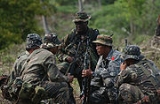
Tarlac Military Testing Ground


Recently the Philippine Army has used Crow Valley in Tarlac as a testing ground for both Philippine forces and allies. Many of the Philippine Military testings were done on March 17, 2006 http://www.timawa.net/walkarounds/3-16-06/ most likely as a part of Operation Enduring Freedom - Philippines
Operation Enduring Freedom - Philippines
Operation Enduring Freedom - Philippines is part of Operation Enduring Freedom and the U.S. Global War on Terrorism. About 600 U.S. military personnel are advising and assisting the Armed Forces of the Philippines in the Southern Philippines...

.

Belenismo sa Tarlac


“Belenismo sa Tarlac” (project to transform it to “Belen capital” of the Philippines) was launched by Isabel Cojuangco-Suntay, sister of former Ambassador Eduardo Cojuangco Jr., president of the Tarlac Heritage Foundation. 2007 Belen Festival began in September, with the first Belen-making workshop to Dec. 16. Sen. Loren Legarda
Loren Legarda
Lorna Regina Bautista Legarda , better known as Loren Legarda, is a Filipino broadcast journalist and politician. In the 2004 Philippines general election, she ran for the position of Vice-President as the running mate of Fernando Poe, Jr. As of 2007, she is serving her second term as an incumbent...

led the awarding of 16 winners in 5 categories -- personal, grand, monumental, municipal and diorama. The Tarlac police office Belen, built by at least 24 policemen, won the first prize; Asiaten Hotel was second and restaurant Coconut Grill was third.

External links