
Home      Discussion      Topics      Dictionary      Almanac
Signup       Login
T cell

T cell

Overview
T cells or T lymphocytes belong to a group of white blood cell
White blood cell
White blood cells, or leukocytes , are cells of the immune system involved in defending the body against both infectious disease and foreign materials. Five different and diverse types of leukocytes exist, but they are all produced and derived from a multipotent cell in the bone marrow known as a...

s known as lymphocytes, and play a central role in cell-mediated immunity
Cell-mediated immunity
Cell-mediated immunity is an immune response that does not involve antibodies but rather involves the activation of macrophages, natural killer cells , antigen-specific cytotoxic T-lymphocytes, and the release of various cytokines in response to an antigen...

. They can be distinguished from other lymphocytes, such as B cell
B cell
B cells are lymphocytes that play a large role in the humoral immune response . The principal functions of B cells are to make antibodies against antigens, perform the role of antigen-presenting cells and eventually develop into memory B cells after activation by antigen interaction...

s and natural killer cell
Natural killer cell
Natural killer cells are a type of cytotoxic lymphocyte that constitute a major component of the innate immune system. NK cells play a major role in the rejection of tumors and cells infected by viruses...

s (NK cells), by the presence of a T cell receptor
T cell receptor
The T cell receptor or TCR is a molecule found on the surface of T lymphocytes that is responsible for recognizing antigens bound to major histocompatibility complex molecules...

(TCR) on the cell surface. They are called T cells because they mature in the thymus
Thymus
The thymus is a specialized organ of the immune system. The thymus produces and "educates" T-lymphocytes , which are critical cells of the adaptive immune system....

. There are several subsets of T cells, each with a distinct function.
Discussion
Ask a question about 'T cell'
Start a new discussion about 'T cell'
Answer questions from other users
Full Discussion Forum
 
Unanswered Questions
Encyclopedia
T cells or T lymphocytes belong to a group of white blood cell
White blood cell
White blood cells, or leukocytes , are cells of the immune system involved in defending the body against both infectious disease and foreign materials. Five different and diverse types of leukocytes exist, but they are all produced and derived from a multipotent cell in the bone marrow known as a...

s known as lymphocytes, and play a central role in cell-mediated immunity
Cell-mediated immunity
Cell-mediated immunity is an immune response that does not involve antibodies but rather involves the activation of macrophages, natural killer cells , antigen-specific cytotoxic T-lymphocytes, and the release of various cytokines in response to an antigen...

. They can be distinguished from other lymphocytes, such as B cell
B cell
B cells are lymphocytes that play a large role in the humoral immune response . The principal functions of B cells are to make antibodies against antigens, perform the role of antigen-presenting cells and eventually develop into memory B cells after activation by antigen interaction...

s and natural killer cell
Natural killer cell
Natural killer cells are a type of cytotoxic lymphocyte that constitute a major component of the innate immune system. NK cells play a major role in the rejection of tumors and cells infected by viruses...

s (NK cells), by the presence of a T cell receptor
T cell receptor
The T cell receptor or TCR is a molecule found on the surface of T lymphocytes that is responsible for recognizing antigens bound to major histocompatibility complex molecules...

(TCR) on the cell surface. They are called T cells because they mature in the thymus
Thymus
The thymus is a specialized organ of the immune system. The thymus produces and "educates" T-lymphocytes , which are critical cells of the adaptive immune system....

. There are several subsets of T cells, each with a distinct function.

Helper


T helper cell
T helper cell
T helper cells are a sub-group of lymphocytes, a type of white blood cell, that play an important role in the immune system, particularly in the adaptive immune system. These cells have no cytotoxic or phagocytic activity; they cannot kill infected host cells or pathogens. Rather, they help other...

 (TH cells) assist other white blood cells in immunologic processes, including maturation of B cell
B cell
B cells are lymphocytes that play a large role in the humoral immune response . The principal functions of B cells are to make antibodies against antigens, perform the role of antigen-presenting cells and eventually develop into memory B cells after activation by antigen interaction...

s into plasma cell
Plasma cell
Plasma cells, also called plasma B cells, plasmocytes, and effector B cells, are white blood cells which produce large volumes of antibodies. They are transported by the blood plasma and the lymphatic system...

s and memory B cell
Memory B cell
Memory B cells are a B cell sub-type that are formed following primary infection.-Primary response, paratopes, and epitopes:In wake of first infection involving a particular antigen, the responding naïve cells proliferate to produce a colony of cells, most of which differentiate into the plasma...

s, and activation of cytotoxic T cells and macrophage
Macrophage
Macrophages are cells produced by the differentiation of monocytes in tissues. Human macrophages are about in diameter. Monocytes and macrophages are phagocytes. Macrophages function in both non-specific defense as well as help initiate specific defense mechanisms of vertebrate animals...

s. These cells are also known as CD4+ T cells because they express the CD4
CD4
CD4 is a glycoprotein expressed on the surface of T helper cells, monocytes, macrophages, and dendritic cells. It was discovered in the late 1970s and was originally known as leu-3 and T4 before being named CD4 in 1984...

 protein on their surface. Helper T cells become activated when they are presented with peptide antigen
Antigen
An antigen is a foreign molecule that, when introduced into the body, triggers the production of an antibody by the immune system. The immune system will then kill or neutralize the antigen that is recognized as a foreign and potentially harmful invader. These invaders can be molecules such as...

s by MHC class II
MHC class II
MHC Class II molecules are found only on a few specialized cell types, including macrophages, dendritic cells and B cells, all of which are professional antigen-presenting cells ....

 molecules that are expressed on the surface of Antigen Presenting Cells (APCs). Once activated, they divide rapidly and secrete small proteins called cytokine
Cytokine
Cytokines are small cell-signaling protein molecules that are secreted by the glial cells of the nervous system and by numerous cells of the immune system and are a category of signaling molecules used extensively in intercellular communication...

s that regulate or assist in the active immune response. These cells can differentiate into one of several subtypes, including TH1
T helper cell
T helper cells are a sub-group of lymphocytes, a type of white blood cell, that play an important role in the immune system, particularly in the adaptive immune system. These cells have no cytotoxic or phagocytic activity; they cannot kill infected host cells or pathogens. Rather, they help other...

, TH2, TH3
Th3
TH3 cells are involved in mucosal immunity and protecting mucosal surfaces in the gut from nonpathogenic non-self antigens. They mediate this non-inflammatory environment by secreting TGF-beta and IL-10. TGF-beta promotes the class switch to low concentrations of IgA which is noninflammatory. IgA...

, TH17, or TFH
ThF
Follicular B helper T cells , are antigen-experienced CD4+ T cells found in the B cell follicles of secondary lymphoid organs such as lymph nodes, spleens and Peyer's patches, and are identified by their constitutive expression of the B cell follicle homing receptor CXCR5...

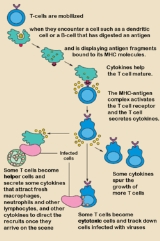
, which secrete different cytokines to facilitate a different type of immune response. The mechanism by which T cells are directed into a particular subtype is poorly understood, though signalling patterns from the APC are thought to play an important role.

Cytotoxic


See also: Cytotoxic T Cell
Cytotoxic T cell
A cytotoxic T cell belongs to a sub-group of T lymphocytes that are capable of inducing the death of infected somatic or tumor cells; they kill cells that are infected with viruses , or are otherwise damaged or...


Cytotoxic T cell
Cytotoxic T cell
A cytotoxic T cell belongs to a sub-group of T lymphocytes that are capable of inducing the death of infected somatic or tumor cells; they kill cells that are infected with viruses , or are otherwise damaged or...

s
(TC cells, or CTLs) destroy virally infected cells and tumor cells, and are also implicated in transplant
Organ transplant
Organ transplantation is the moving of an organ from one body to another or from a donor site on the patient's own body, for the purpose of replacing the recipient's damaged or absent organ. The emerging field of regenerative medicine is allowing scientists and engineers to create organs to be...

 rejection. These cells are also known as CD8+ T cells since they express the CD8
CD8
CD8 is a transmembrane glycoprotein that serves as a co-receptor for the T cell receptor . Like the TCR, CD8 binds to a major histocompatibility complex molecule, but is specific for the class I MHC protein. There are two isoforms of the protein, alpha and beta, each encoded by a different gene...

 glycoprotein at their surface. These cells recognize their targets by binding to antigen associated with MHC class I
MHC class I
MHC class I molecules are one of two primary classes of major histocompatibility complex molecules and are found on every nucleated cell of the body...

, which is present on the surface of nearly every cell of the body. Through IL-10, adenosine and other molecules secreted by regulatory T cells, the CD8+ cells can be inactivated to an anergic state, which prevent autoimmune diseases such as experimental autoimmune encephalomyelitis
Experimental autoimmune encephalomyelitis
Experimental autoimmune encephalomyelitis, sometimes Experimental Allergic Encephalomyelitis is an animal model of brain inflammation. It is an inflammatory demyelinating disease of the central nervous system...

.

Memory


Memory T cells are a subset of antigen
Antigen
An antigen is a foreign molecule that, when introduced into the body, triggers the production of an antibody by the immune system. The immune system will then kill or neutralize the antigen that is recognized as a foreign and potentially harmful invader. These invaders can be molecules such as...

-specific T cells that persist long-term after an infection has resolved. They quickly expand to large numbers of effector T cells upon re-exposure to their cognate antigen, thus providing the immune system with "memory" against past infections. Memory T cells comprise two subtypes: central memory T cells (TCM cells) and effector memory T cells (TEM cells). Memory cells may be either CD4+ or CD8+.
Memory T cells typically express the cell surface protein CD45RO.

Regulatory


Regulatory T cell
Regulatory T cell
Regulatory T cells , sometimes known as suppressor T cells, are a specialized subpopulation of T cells which suppresses activation of the immune system and thereby maintains tolerance to self-antigens. The existence of regulatory T cells was the subject of significant controversy among...

s
(Treg cells), formerly known as suppressor T cells, are crucial for the maintenance of immunological tolerance. Their major role is to shut down T cell-mediated immunity toward the end of an immune reaction and to suppress auto-reactive T cells that escaped the process of negative selection in the thymus. Two major classes of CD4+ regulatory T cells have been described, including the naturally occurring Treg cells and the adaptive Treg cells. Naturally occurring Treg cells (also known as CD4+CD25+FoxP3+ Treg cells) arise in the thymus
Thymus
The thymus is a specialized organ of the immune system. The thymus produces and "educates" T-lymphocytes , which are critical cells of the adaptive immune system....

 and have been linked to interactions between developing T cells with both myeloid (CD11c+) and plasmacytoid (CD123+) dendritic cells that have been activated with TSLP
TSLP
Thymic stromal lymphopoietin is a protein belonging to the cytokine family. It is known to play an important role in the maturation of T cell populations through activation of antigen presenting cells....

. Whereas the adaptive Treg cells (also known as Tr1 cells or Th3 cells) may originate during a normal immune response. Naturally occurring Treg cells can be distinguished from other T cells by the presence of an intracellular molecule called FoxP3
FOXP3
FOXP3 is a protein involved in immune system responses. A member of the FOX protein family, FOXP3 appears to function as a master regulator in the development and function of regulatory T cells....

. Mutations of the FOXP3 gene can prevent regulatory T cell development, causing the fatal autoimmune disease
Autoimmune disease
Autoimmune diseases arise from an overactive immune response of the body against substances and tissues normally present in the body. In other words, the body actually attacks its own cells. The immune system mistakes some part of the body as a pathogen and attacks it. This may be restricted to...

 IPEX.

Natural killer


Natural killer T cell
Natural Killer T cell
Natural killer T cells are a heterogeneous group of T cells that share properties of both T cells and natural killer cells. Many of these cells recognize the non-polymorphic CD1d molecule, an antigen-presenting molecule that binds self- and foreign lipids and glycolipids...

s
(NKT cells) are a special kind of lymphocyte that bridges the adaptive immune system
Adaptive immune system
The adaptive immune system is composed of highly specialized, systemic cells and processes that eliminate or prevent pathogenic growth. Thought to have arisen in the first jawed vertebrates, the adaptive or "specific" immune system is activated by the “non-specific” and evolutionarily older innate...

 with the innate immune system
Innate immune system
The innate immune system, also known as non-specific immune system and secondary line of defence, comprises the cells and mechanisms that defend the host from infection by other organisms in a non-specific manner...

. Unlike conventional T cells that recognize peptide antigens presented by major histocompatibility complex
Major histocompatibility complex
Major histocompatibility complex is a cell surface molecule encoded by a large gene family in all vertebrates. MHC molecules mediate interactions of leukocytes, also called white blood cells , which are immune cells, with other leukocytes or body cells...

 (MHC) molecules, NKT cells recognize glycolipid antigen presented by a molecule called CD1d. Once activated, these cells can perform functions ascribed to both Th and Tc cells (i.e., cytokine production and release of cytolytic/cell killing molecules). They are also able to recognize and eliminate some tumor cells and cells infected with herpes viruses.

γδ


γδ T cells (gamma
Gamma
Gamma is the third letter of the Greek alphabet. In the system of Greek numerals it has a value of 3. It was derived from the Phoenician letter Gimel . Letters that arose from Gamma include the Roman C and G and the Cyrillic letters Ge Г and Ghe Ґ.-Greek:In Ancient Greek, gamma represented a...

 delta
Delta (letter)
Delta is the fourth letter of the Greek alphabet. In the system of Greek numerals it has a value of 4. It was derived from the Phoenician letter Dalet...

 T cells) represent a small subset of T cells that possess a distinct T cell receptor
T cell receptor
The T cell receptor or TCR is a molecule found on the surface of T lymphocytes that is responsible for recognizing antigens bound to major histocompatibility complex molecules...

 (TCR) on their surface. A majority of T cells have a TCR
T cell receptor
The T cell receptor or TCR is a molecule found on the surface of T lymphocytes that is responsible for recognizing antigens bound to major histocompatibility complex molecules...

 composed of two glycoprotein
Glycoprotein
Glycoproteins are proteins that contain oligosaccharide chains covalently attached to polypeptide side-chains. The carbohydrate is attached to the protein in a cotranslational or posttranslational modification. This process is known as glycosylation. In proteins that have segments extending...

 chains called α- and β- TCR chains. However, in γδ T cells, the TCR is made up of one γ-chain and one δ-chain. This group of T cells is much less common (2% of total T cells) than the αβ T cells, but are found at their highest abundance in the gut mucosa, within a population of lymphocytes known as intraepithelial lymphocyte
Intraepithelial lymphocyte
Intraepithelial lymphocytes are lymphocytes found in the epithelial layer of mammalian mucosal linings, such as the gastrointestinal tract and reproductive tract. However, unlike other T cells, IELs do not need priming. Upon encountering antigens, they immediately release cytokines and cause...

s (IELs). The antigenic molecules that activate γδ T cells are still widely unknown. However, γδ T cells are not MHC restricted and seem to be able to recognize whole proteins rather than requiring peptides to be presented by MHC molecules on antigen presenting cells. Some murine γδ T cells recognize MHC class IB molecules though. Human Vγ9/Vδ2 T cells, which constitute the major γδ T cell population in peripheral blood, are unique in that they specifically and rapidly respond to a set of non-peptidic phosphorylated isoprenoid precursors, collectively named phosphoantigens. Phosphoantigens are produced by virtually all living cells. The most common phosphoantigens from animal and human cells (including cancer cells) are isopentenyl pyrophosphate
Isopentenyl pyrophosphate
Isopentenyl pyrophosphate is an intermediate in the classical, HMG-CoA reductase pathway used by organisms in the biosynthesis of terpenes and terpenoids. IPP is formed from acetyl-CoA via mevalonic acid...

 (IPP) and its isomer dimethylallyl pyrophosphate
Dimethylallyl pyrophosphate
Dimethylallyl pyrophosphate is an intermediate product of both mevalonic acid pathway and DOXP/MEP pathway. It is an isomer of isopentenyl pyrophosphate and exists in virtually all life forms...

 (DMAPP). Many microbes produce the highly active compound hydroxy-DMAPP (HMB-PP) and corresponding mononucleotide conjugates, in addition to IPP and DMAPP. Plant cells produce both types of phosphoantigens. Drugs activating human Vγ9/Vδ2 T cells comprise synthetic phosphoantigens and aminobisphosphonates, which up-regulate endogenous IPP/DMAPP.

Development in the thymus


See Thymocyte
Thymocyte
Thymocytes are hematopoietic progenitor cells present in the thymus. Thymopoiesis is the process in the thymus by which thymocytes differentiate into mature T lymphocytes. The primary function of thymocytes is the generation of T lymphocytes . The thymus provides an inductive environment, which...

 for review of thymic selection


All T cells originate from haematopoietic stem cells in the bone marrow
Bone marrow
Bone marrow is the flexible tissue found in the interior of bones. In humans, bone marrow in large bones produces new blood cells. On average, bone marrow constitutes 4% of the total body mass of humans; in adults weighing 65 kg , bone marrow accounts for approximately 2.6 kg...

. Haematopoietic progenitors derived from haematopoietic stem cells populate the thymus
Thymus
The thymus is a specialized organ of the immune system. The thymus produces and "educates" T-lymphocytes , which are critical cells of the adaptive immune system....

 and expand by cell division to generate a large population of immature thymocytes. The earliest thymocytes express neither CD4 nor CD8, and are therefore classed as double-negative (CD4-CD8-) cells. As they progress through their development they become double-positive thymocytes (CD4+CD8+), and finally mature to single-positive (CD4+CD8- or CD4-CD8+) thymocytes that are then released from the thymus
Thymus
The thymus is a specialized organ of the immune system. The thymus produces and "educates" T-lymphocytes , which are critical cells of the adaptive immune system....

 to peripheral tissues.

About 98% of thymocytes die during the development processes in the thymus by failing either positive selection or negative selection, whereas the other 2% survive and leave the thymus to become mature immunocompetent T cells.

The thymus contributes more naive T cells at younger ages. As the thymus shrinks by about 3% a year throughout middle age, there is a corresponding fall in the thymic production of naive T cells, leaving peripheral T cell expansion to play a greater role in protecting older subjects.

Beta Selection


Common lymphoid precursor cells that arrive at the thymus and become known as T-cell precursors. When they begin to express c-kit and CD44
CD44
The CD44 antigen is a cell-surface glycoprotein involved in cell–cell interactions, cell adhesion and migration. In humans, the CD44 antigen is encoded by the CD44 gene.- Tissue distribution and isoforms :...

, they become known as DN1 thymocytes. At this stage they must create a unique T-cell receptor through a process called VDJ Recombination. As the beta locus begins to be rearranged the DN1 cell begins to express CD25 and becomes a DN2 thymocyte. At this point a T-cell will either progress towards the Helper/Killer linage or the γδ T cell lineage. The DN2 cell begins to express CD3
CD3
CD3 or CD-3 may be:* CD3 , an antigen, cluster of differentiation protein , part of the T cell receptor complex on a mature T lymphocyte* Ford CD3 platform* MediaMax CD-3, copy protection scheme* MiniCD, a 3-inch CD...

 and stops expressing c-kit and CD44 becoming a DN3 thymocyte. At this stage the thymocyte must produce a TCR beta chain that can be translated into protein and travel to the cell surface with a Pre-T alpha chain. If this occurs, the cell has passed beta selection and will stop expressing CD25. It will also rapidly proliferate. The cell will start to express both CD4 and CD8 and becomes known as a DP thymocyte.

Positive selection


Positive selection "selects for" T-cells capable of interacting with MHC. Double-positive thymocyte
Thymocyte
Thymocytes are hematopoietic progenitor cells present in the thymus. Thymopoiesis is the process in the thymus by which thymocytes differentiate into mature T lymphocytes. The primary function of thymocytes is the generation of T lymphocytes . The thymus provides an inductive environment, which...

s (CD4+/CD8+) move deep into the thymic cortex
Cortex (anatomy)
In anatomy and zoology the cortex is the outermost layer of an organ. Organs with well-defined cortical layers include kidneys, adrenal glands, ovaries, the thymus, and portions of the brain, including the cerebral cortex, the most well-known of all cortices.The cerebellar cortex is the thin gray...

 where they are presented with self-antigen
Antigen
An antigen is a foreign molecule that, when introduced into the body, triggers the production of an antibody by the immune system. The immune system will then kill or neutralize the antigen that is recognized as a foreign and potentially harmful invader. These invaders can be molecules such as...

s. These self-antigens are expressed by thymic cortical epithelial cells that express Activation-Induced (Cytidine) Deaminase
Activation-Induced (Cytidine) Deaminase
Activation-induced deaminase is a 24 kDa enzyme that creates deliberate mutations in DNA.AID removes the amino group from a cytidine base, turning it into a uridine...

 on both MHC
Major histocompatibility complex
Major histocompatibility complex is a cell surface molecule encoded by a large gene family in all vertebrates. MHC molecules mediate interactions of leukocytes, also called white blood cells , which are immune cells, with other leukocytes or body cells...

 molecules on the surface of cortical cells. Only those thymocytes that interact with MHC-I or MHC-II will receive a vital "survival signal." All that can't will die by apoptosis. This process insures that the TCR on affinity cannot serve useful functions in the body (i.e. the cells must be able to interact with MHC and peptide complexes in order to effect immune responses).

A thymocyte's fate is also determined during positive selection. Double-positive cells (CD4+/CD8+) that are positively selected on MHC class II molecules will eventually become CD4+ cells, while cells positively selected on MHC class I molecules mature into CD8+ cells. A T cell becomes a CD4+ cell by downregulating expression of its CD8 cell surface receptors. If the cell does not lose its signal through the ITAM pathway, it will continue down-regulating CD8 and become a CD4+, single positive cell. But if there is a signal interruption, the cell stops downregulating CD8 and switches over to downregulating CD4 molecules instead, eventually becoming a CD8+, single positive cell.

This process does not remove thymocytes that may cause autoimmunity
Autoimmunity
Autoimmunity is the failure of an organism to recognize its own constituent parts as self, which allows an immune response against its own cells and tissues. Any disease that results from such an aberrant immune response is termed an autoimmune disease...

. The potentially autoimmune cells are removed by the process of negative selection (discussed below).

Negative selection


Negative selection removes thymocytes that are capable of strongly binding with "self" peptides presented by MHC. Thymocytes that survive positive selection migrate towards the boundary of the thymic cortex and thymic medulla. While in the medulla, they are again presented with self-antigen in complex with MHC molecules on antigen-presenting cell
Antigen-presenting cell
An antigen-presenting cell or accessory cell is a cell that displays foreign antigen complexes with major histocompatibility complex on their surfaces. T-cells may recognize these complexes using their T-cell receptors...

s (APCs) such as dendritic cell
Dendritic cell
Dendritic cells are immune cells forming part of the mammalian immune system. Their main function is to process antigen material and present it on the surface to other cells of the immune system. That is, dendritic cells function as antigen-presenting cells...

s and macrophage
Macrophage
Macrophages are cells produced by the differentiation of monocytes in tissues. Human macrophages are about in diameter. Monocytes and macrophages are phagocytes. Macrophages function in both non-specific defense as well as help initiate specific defense mechanisms of vertebrate animals...

s. Thymocytes that interact too strongly with the antigen receive an apoptotic
Apoptosis
Apoptosis is the process of programmed cell death that may occur in multicellular organisms. Biochemical events lead to characteristic cell changes and death. These changes include blebbing, cell shrinkage, nuclear fragmentation, chromatin condensation, and chromosomal DNA fragmentation...

 signal that leads to cell death. The vast majority of all thymocytes end up dying during this process. The remaining cells exit the thymus as mature naive T cell
Naive T cell
A naive T cell or Th0 cell is a T cell that has differentiated in bone marrow, and successfully undergone the positive and negative processes of central selection in the thymus...

s. This process is an important component of immunological tolerance and serves to prevent the formation of self-reactive T cells that are capable of inducing autoimmune disease
Autoimmune disease
Autoimmune diseases arise from an overactive immune response of the body against substances and tissues normally present in the body. In other words, the body actually attacks its own cells. The immune system mistakes some part of the body as a pathogen and attacks it. This may be restricted to...

s in the host.

In summary, positive selection selects for T cells that are capable of recognizing self antigens through MHC. Negative selection selects for T cells that bind too strongly to self antigens. These two selection processes allow for Tolerance of self by the immune system. They do not necessarily occur in a chronological order and can occur simultaneously in the thymus.

Maturation paradox


Positive and negative selection should theoretically kill all developing T cells. The first stage of selection kills all T cells that do not interact with self-MHC, while the second stage selection kills all cells that do. This poses the question: How do we have immunity at all? Currently, two models attempt to explain this:
  1. Differential Avidity Hypothesis
    Differential Avidity Hypothesis
    The differential avidity hypothesis is one of two models that attempt to explain how humans have immunity despite such aggressive selection to kill developing T cells during their maturation process in the thymus...

     - the strength of the signal dictates the fate of the T cell.
  2. Differential Signaling Hypothesis
    Differential Signaling Hypothesis
    The differential signaling hypothesis is one of two models that attempt to explain how humans have immunity despite such aggressive selection to kill developing T cells during their maturation process...

     - the signals that are transduced differ at each stage.

Activation


Activation of CD4+ T cells occurs through the engagement of both the T cell receptor
T cell receptor
The T cell receptor or TCR is a molecule found on the surface of T lymphocytes that is responsible for recognizing antigens bound to major histocompatibility complex molecules...

 and CD28
CD28
CD28 is one of the molecules expressed on T cells that provide co-stimulatory signals, which are required for T cell activation. CD28 is the receptor for CD80 and CD86 . When activated by Toll-like receptor ligands, the CD80 expression is upregulated in antigen presenting cells...

 on the T cell by the major histocompatibility complex
Major histocompatibility complex
Major histocompatibility complex is a cell surface molecule encoded by a large gene family in all vertebrates. MHC molecules mediate interactions of leukocytes, also called white blood cells , which are immune cells, with other leukocytes or body cells...

 (MHC) peptide
Peptide
Peptides are short polymers of amino acid monomers linked by peptide bonds. They are distinguished from proteins on the basis of size, typically containing less than 50 monomer units. The shortest peptides are dipeptides, consisting of two amino acids joined by a single peptide bond...

 and B7
B7 (protein)
B7 is a type of peripheral membrane protein found on activated antigen presenting cells that, when paired with either a CD28 or CD152 surface protein on a T cell, can produce a costimulatory signal to enhance or decrease the activity of a MHC-TCR signal between the APC and the T cell, respectively...

 family members on the APC
Antigen-presenting cell
An antigen-presenting cell or accessory cell is a cell that displays foreign antigen complexes with major histocompatibility complex on their surfaces. T-cells may recognize these complexes using their T-cell receptors...

, respectively. Both are required for production of an effective immune response; in the absence of CD28 co-stimulation
Co-stimulation
During the activation of lymphocytes, co-stimulation is often crucial to the development of an effective immune response. Co-stimulation is required in addition to the antigen-specific signal from their antigen receptors.- Co-stimulation T cells require :...

, T-cell receptor signalling alone results in anergy
Anergy
Anergy is a term in immunobiology that describes a lack of reaction by the body's defense mechanisms to foreign substances, and consists of a direct induction of peripheral lymphocyte tolerance. An individual in a state of anergy often indicates that the immune system is unable to mount a normal...

. The signalling pathways downstream from both CD28 and the T cell receptor involve many proteins.

The first signal is provided by binding of the T cell receptor to a short peptide presented by the major histocompatibility complex (MHC) on another cell. This ensures that only a T cell with a TCR specific to that peptide is activated. The partner cell is usually a professional antigen presenting cell (APC), usually a dendritic cell
Dendritic cell
Dendritic cells are immune cells forming part of the mammalian immune system. Their main function is to process antigen material and present it on the surface to other cells of the immune system. That is, dendritic cells function as antigen-presenting cells...

 in the case of naïve
Naive T cell
A naive T cell or Th0 cell is a T cell that has differentiated in bone marrow, and successfully undergone the positive and negative processes of central selection in the thymus...

 responses, although B cells and macrophages can be important APCs. The peptides presented to CD8
CD8
CD8 is a transmembrane glycoprotein that serves as a co-receptor for the T cell receptor . Like the TCR, CD8 binds to a major histocompatibility complex molecule, but is specific for the class I MHC protein. There are two isoforms of the protein, alpha and beta, each encoded by a different gene...

+ T cells by MHC class I molecules are 8-9 amino acids in length; the peptides presented to CD4
CD4
CD4 is a glycoprotein expressed on the surface of T helper cells, monocytes, macrophages, and dendritic cells. It was discovered in the late 1970s and was originally known as leu-3 and T4 before being named CD4 in 1984...

+ cells by MHC
Major histocompatibility complex
Major histocompatibility complex is a cell surface molecule encoded by a large gene family in all vertebrates. MHC molecules mediate interactions of leukocytes, also called white blood cells , which are immune cells, with other leukocytes or body cells...

 class II molecules are longer, usually 12-25 amino acids in length , as the ends of the binding cleft of the MHC class II molecule are open.

The second signal comes from co-stimulation, in which surface receptors on the APC are induced by a relatively small number of stimuli, usually products of pathogens, but sometimes breakdown products of cells, such as necrotic
Necrosis
Necrosis is the premature death of cells in living tissue. Necrosis is caused by factors external to the cell or tissue, such as infection, toxins, or trauma. This is in contrast to apoptosis, which is a naturally occurring cause of cellular death...

-bodies or heat shock proteins. The only co-stimulatory receptor expressed constitutively by naïve T cells is CD28, so co-stimulation for these cells comes from the CD80
CD80
Cluster of Differentiation 80 is a protein found on activated B cells and monocytes that provides a costimulatory signal necessary for T cell activation and survival...

 and CD86
CD86
Cluster of Differentiation 86 is a protein expressed on antigen-presenting cells that provides costimulatory signals necessary for T cell activation and survival...

 proteins, which together constitute the B7
B7 (protein)
B7 is a type of peripheral membrane protein found on activated antigen presenting cells that, when paired with either a CD28 or CD152 surface protein on a T cell, can produce a costimulatory signal to enhance or decrease the activity of a MHC-TCR signal between the APC and the T cell, respectively...

 protein, (B7.1 and B7.2 respectively) on the APC. Other receptors are expressed upon activation of the T cell, such as OX40 and ICOS
CD278
Inducible T-cell costimulator is a protein that in humans is encoded by the ICOS gene.CD278 or ICOS is a CD28-superfamily costimulatory molecule that is expressed on activated T cells...

, but these largely depend upon CD28 for their expression. The second signal licenses the T cell to respond to an antigen. Without it, the T cell becomes anergic
Anergy
Anergy is a term in immunobiology that describes a lack of reaction by the body's defense mechanisms to foreign substances, and consists of a direct induction of peripheral lymphocyte tolerance. An individual in a state of anergy often indicates that the immune system is unable to mount a normal...

, and it becomes more difficult for it to activate in future. This mechanism prevents inappropriate responses to self, as self-peptides will not usually be presented with suitable co-stimulation.

The T cell receptor
T cell receptor
The T cell receptor or TCR is a molecule found on the surface of T lymphocytes that is responsible for recognizing antigens bound to major histocompatibility complex molecules...

 exists as a complex of several proteins. The actual T cell receptor is composed of two separate peptide chains, which are produced from the independent T cell receptor alpha and beta (TCRα and TCRβ) genes. The other proteins in the complex are the CD3 proteins: CD3εγ and CD3εδ heterodimers and, most important, a CD3ζ homodimer, which has a total of six ITAM
Immunoreceptor tyrosine-based activation motif
An immunoreceptor tyrosine-based activation motif is a conserved sequence of four amino acids that is repeated twice in the cytoplasmic tails of certain cell surface proteins of the immune system....

 motifs. The ITAM motifs on the CD3ζ can be phosphorylated by Lck
Lck
Lck is a protein that is found inside specialized cells of the immune system called lymphocytes. Lck is a tyrosine kinase, which phosphorylates tyrosine residues of certain proteins involved in the intracellular signaling pathways of these lymphocytes...

 and in turn recruit ZAP-70. Lck and/or ZAP-70 can also phosphorylate the tyrosines on many other molecules, not least CD28, LAT
Linker of activated T cells
Linker of Activated T cells, also known as LAT, is a protein which in humans is encoded by the LAT gene. Alternative splicing results in multiple transcript variants encoding different isoforms.-Function:...

 and SLP-76
Lymphocyte cytosolic protein 2
Lymphocyte cytosolic protein 2 , also known as LCP2 or SLP-76, is a gene that encodes a signal-transducing adaptor protein.-Interactions:...

, which allows the aggregation of signalling complexes around these proteins.

Phosphorylated LAT
Linker of activated T cells
Linker of Activated T cells, also known as LAT, is a protein which in humans is encoded by the LAT gene. Alternative splicing results in multiple transcript variants encoding different isoforms.-Function:...

 recruits SLP-76 to the membrane, where it can then bring in PLC-γ, VAV1
VAV1
Proto-oncogene vav is a protein that in humans is encoded by the VAV1 gene.-Interactions:VAV1 has been shown to interact with Ku70, PLCG1, Lymphocyte cytosolic protein 2, Janus kinase 2, SIAH2, S100B, Abl gene, ARHGDIB, SHB, PIK3R1, PRKCQ, Grb2, MAPK1, Syk, Linker of activated T cells, Cbl gene and...

, Itk
ITK (gene)
IL2-inducible T-cell kinase, also known as ITK, is a protein that in humans is encoded by the ITK gene.- Function :This gene encodes an intracellular tyrosine kinase expressed in T-cells...

 and potentially PI3K
Phosphoinositide 3-kinase
Phosphatidylinositol 3-kinases are a family of enzymes involved in cellular functions such as cell growth, proliferation, differentiation, motility, survival and intracellular trafficking, which in turn are involved in cancer. In response to lipopolysaccharide, PI3K phosphorylates p65, inducing...

. Both PLC-γ and PI3K act on PI(4,5)P2 on the inner leaflet of the membrane to create the active intermediaries diacylglycerol (DAG
Diglyceride
A diglyceride, or a diacylglycerol , is a glyceride consisting of two fatty acid chains covalently bonded to a glycerol molecule through ester linkages....

), inositol-1,4,5-trisphosphate (IP3), and phosphatidlyinositol-3,4,5-trisphosphate (PIP3). DAG binds and activates some PKCs, most important, in T cells PKCθ, a process important for activating the transcription factors NF-κB and AP-1. IP3
Inositol triphosphate
Inositol trisphosphate or inositol 1,4,5-trisphosphate , together with diacylglycerol , is a secondary messenger molecule used in signal transduction and lipid signaling in biological cells. While DAG stays inside the membrane, IP3 is soluble and diffuses through the cell...

 is released from the membrane by PLC-γ and diffuses rapidly to activate receptors on the ER
Endoplasmic reticulum
The endoplasmic reticulum is an organelle of cells in eukaryotic organisms that forms an interconnected network of tubules, vesicles, and cisternae...

, which induce the release of calcium
Calcium in biology
Calcium plays a pivotal role in the physiology and biochemistry of organisms and the cell. It plays an important role in signal transduction pathways, where it acts as a second messenger, in neurotransmitter release from neurons, contraction of all muscle cell types, and fertilization...

. The released calcium then activates calcineurin
Calcineurin
Calcineurin is a protein phosphatase also known as protein phosphatase 3, PPP3CA, and calcium-dependent serine-threonine phosphatase, and formerly known as protein phosphatase 2B . It activates the T cells of the immune system and can be blocked by drugs...

, and calcineurin in turn activates NFAT
NFAT
Nuclear factor of activated T-cells is a general name applied to a family of transcription factors shown to be important in immune response. One or more members of the NFAT family is expressed in most cells of the immune system...

, which then translocates to the nucleus. NFAT is a transcription factor
Transcription factor
In molecular biology and genetics, a transcription factor is a protein that binds to specific DNA sequences, thereby controlling the flow of genetic information from DNA to mRNA...

, which activates the transcription of a pleiotropic set of genes, most notable, IL-2
Interleukin 2
Interleukin-2 is an interleukin, a type of cytokine immune system signaling molecule, which is a leukocytotrophic hormone that is instrumental in the body's natural response to microbial infection and in discriminating between foreign and self...

, a cytokine that promotes long term proliferation of activated T cells.

Vitamin D
Vitamin D
Vitamin D is a group of fat-soluble secosteroids. In humans, vitamin D is unique both because it functions as a prohormone and because the body can synthesize it when sun exposure is adequate ....

 and its active metabolite calcitriol
Calcitriol
Calcitriol , also called 1,25-dihydroxycholecalciferol or 1,25-dihydroxyvitamin D3, is the hormonally active form of vitamin D with three hydroxyl groups...

 also plays a role in the activation of T-cells. Naive T cells have very low expression of the vitamin D receptor
Calcitriol receptor
The calcitriol receptor, also known as the vitamin D receptor and also known as NR1I1 , is a member of the nuclear receptor family of transcription factors...

 (VDR) and PLC-γ1
PLCG1
Phospholipase C, gamma 1, also known as PLCG1, is a protein that in humans is encoded by the PLCG1 gene.-Function:The protein encoded by this gene catalyzes the formation of inositol 1,4,5-trisphosphate and diacylglycerol from phosphatidylinositol 4,5-bisphosphate...

. However activated T cell receptor signaling through a "non-classical" p38
P38 mitogen-activated protein kinases
P38 mitogen-activated protein kinases are a class of mitogen-activated protein kinases that are responsive to stress stimuli, such as cytokines, ultraviolet irradiation, heat shock, and osmotic shock, and are involved in cell differentiation and apoptosis....

 pathway up-regulates VDR expression and calcitriol activated VDR in turn up-regulates
Downregulation and upregulation
Downregulation is the process by which a cell decreases the quantity of a cellular component, such as RNA or protein, in response to an external variable...

 PLC-γ1 expression. Furthermore activation of T cells first requires activation through the non-classical pathway to increase expression of VDR and PLC-γ1 before activation through the classical pathway can proceed. This provides a delayed response mechanism where by the innate immune system
Innate immune system
The innate immune system, also known as non-specific immune system and secondary line of defence, comprises the cells and mechanisms that defend the host from infection by other organisms in a non-specific manner...

 is allowed time (~48 hrs) to clear an infection before the inflammatory T cell mediated adaptive immune response
Adaptive immune system
The adaptive immune system is composed of highly specialized, systemic cells and processes that eliminate or prevent pathogenic growth. Thought to have arisen in the first jawed vertebrates, the adaptive or "specific" immune system is activated by the “non-specific” and evolutionarily older innate...

 kicks in. Hence the activation of naive T cells is dependent on adequate calcitriol levels. Finally T cells express CYP27B1, the enzyme required to convert calcidiol into calcitriol.

While in most cases activation is dependent on TCR recognition of antigen, alternative pathways for activation have been described. For example, cytotoxic T cells have been shown to become activated when targeted by other CD8 T cells leading to tolerization of the latter.

Deficiency


Causes of T cell deficiency
T cell deficiency
T cell deficiency is a deficiency of T cells, either caused by lymphocytopenia of T cells or by decreased function of individual T cells. It causes an immunodeficiency of cell-mediated immunity.-By complete versus partial deficiency:...

 include lymphocytopenia
Lymphocytopenia
Lymphocytopenia, or lymphopenia, is the condition of having an abnormally low level of lymphocytes in the blood. Lymphocytes are a white blood cell with important functions in the immune system...

 of T cells and/or defects on function of individual T cells. Complete insufficiency of T cell function can result from hereditary conditions such as severe combined immunodeficiency
Severe combined immunodeficiency
Severe combined immunodeficiency , is a genetic disorder in which both "arms" of the adaptive immune system are impaired due to a defect in one of several possible genes. SCID is a severe form of heritable immunodeficiency...

 (SCID), Omenn syndrome
Omenn syndrome
Omenn syndrome is an autosomal recessive severe combined immunodeficiency associated with mutations in the recombination activating genes , affecting circulating levels of both B-cells and T-cells.-Symptoms:...

, and Cartilage-hair hypoplasia
Cartilage-hair hypoplasia
Cartilage–hair hypoplasia , also known as McKusick type metaphyseal chondrodysplasia, is a rare form of short-limbed dwarfism due to skeletal dysplasia. It was first reported in 1965 by McKusick et al...

. Causes of partial insufficiencies of T cell function include acquired immune deficiency syndrome (AIDS), and hereditary conditions such as DiGeorge syndrome
DiGeorge syndrome
22q11.2 deletion syndrome, which has several presentations including DiGeorge syndrome , DiGeorge anomaly, velo-cardio-facial syndrome, Shprintzen syndrome, conotruncal anomaly face syndrome, Strong syndrome, congenital thymic aplasia, and thymic hypoplasia is a syndrome caused by the deletion of a...

 (DGS), chromosomal breakage syndromes (CBSs), and B-cell and T-cell combined disorders such as ataxia telangiectasia
Ataxia telangiectasia
Ataxia telangiectasia is a rare, neurodegenerative, inherited disease that affects many parts of the body and causes severe disability. Ataxia refers to poor coordination and telangiectasia to small dilated blood vessels, both of which are hallmarks of the disease...

 (AT) and Wiskott-Aldrich syndrome
Wiskott-Aldrich syndrome
Wiskott–Aldrich syndrome is a rare X-linked recessive disease characterized by eczema, thrombocytopenia , immune deficiency, and bloody diarrhea . It is also sometimes called the eczema-thrombocytopenia-immunodeficiency syndrome in keeping with Aldrich's original description in 1954...

 (WAS).

The main pathogens of concern in T cell deficiencies are intracellular pathogens, including Herpes simplex virus
Herpes simplex virus
Herpes simplex virus 1 and 2 , also known as Human herpes virus 1 and 2 , are two members of the herpes virus family, Herpesviridae, that infect humans. Both HSV-1 and HSV-2 are ubiquitous and contagious...

, Mycobacterium
Mycobacterium
Mycobacterium is a genus of Actinobacteria, given its own family, the Mycobacteriaceae. The genus includes pathogens known to cause serious diseases in mammals, including tuberculosis and leprosy...

and Listeria. Also, fungal infections are also more common and severe in T cell deficiencies.

Cancer


Cancer
Cancer
Cancer , known medically as a malignant neoplasm, is a large group of different diseases, all involving unregulated cell growth. In cancer, cells divide and grow uncontrollably, forming malignant tumors, and invade nearby parts of the body. The cancer may also spread to more distant parts of the...

 of T cells is termed T-cell lymphoma
T-cell lymphoma
The T-cell lymphomas are the four types of lymphoma that affect T cells. These account for perhaps one in ten cases of non-Hodgkin lymphoma.They can be associated with Epstein Barr virus and Human T-cell leukemia virus-1.-Types:The four classes are:...

, and accounts for perhaps one in ten cases of non-Hodgkin lymphoma
Non-Hodgkin lymphoma
The non-Hodgkin lymphomas are a diverse group of blood cancers that include any kind of lymphoma except Hodgkin's lymphomas. Types of NHL vary significantly in their severity, from indolent to very aggressive....

. The main forms of T cell lymphoma are:
  • Extranodal T cell lymphoma
  • Cutaneous T cell lymphoma
    Cutaneous T Cell lymphoma
    Cutaneous T cell lymphoma is a class of non-Hodgkin's lymphoma, which is a type of cancer of the immune system. Unlike most non-Hodgkin's lymphomas , CTCL is caused by a mutation of T cells. The malignant T cells in the body initially migrate to the skin, causing various lesions to appear...

    s: Sézary syndrome and Mycosis fungoides
    Mycosis fungoides
    -External links:* * *...

  • Anaplastic large cell lymphoma
    Anaplastic large cell lymphoma
    Anaplastic large-cell lymphoma is a type of non-Hodgkin lymphoma that features in the World Health Organisation classification of lymphomas.Its name derives from anaplasia and large-cell lymphoma.-Signs and symptoms:...

  • Angioimmunoblastic T cell lymphoma

See also

  • Apoptosis
    Apoptosis
    Apoptosis is the process of programmed cell death that may occur in multicellular organisms. Biochemical events lead to characteristic cell changes and death. These changes include blebbing, cell shrinkage, nuclear fragmentation, chromatin condensation, and chromosomal DNA fragmentation...

  • Naive T cell
    Naive T cell
    A naive T cell or Th0 cell is a T cell that has differentiated in bone marrow, and successfully undergone the positive and negative processes of central selection in the thymus...

  • Memory T cell
  • γδ T cell
  • Immunoblast
    Immunoblast
    An immunoblast is a lymphocyte that has been activated by an antigen, which will further undergo clonal expansion to increase the number of lymphocytes capable of binding to that antigen...


External links