

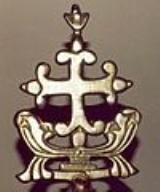
Syro-Malabar Catholic Church

Encyclopedia
The Syro-Malabar Catholic Church in India is an East Syrian Rite
, Major Archiepiscopal
Church in full communion
with the Catholic Church. It is one of the 22 sui iuris
Eastern Catholic Churches in the Catholic Church. It is the largest of the Saint Thomas Christian
denominations with more than 3.6 million believers. It is also the second largest Eastern Catholic Church in communion with the Bishop of Rome.
The church is headed by the Major Archbishop of Ernakulam-Angamaly, Mar George Alencherry the Patriarch and Gate of All India. Saint Alphonsa is the first saint from within the Church. The members of the Church are locally known as Surianis or Syrian Catholics or Roman Catholic Syrian Christians (RCSC).
landed at Kodungalloor (Muziris
) in 52 A.D. St. Thomas is said to have preached and established Christian communities in different parts of India and he died at Mylapur in 72 A.D. It is also believed that St. Thomas founded seven churches or communities in Kerala
; at Kodungalloor, Niranam
, Kollam
, Chayal, Kottakkavu, Kokkamangalam
and Palayoor
.
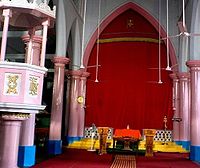 From early centuries the Church of St. Thomas Christians came into communication with the Christian communities that came to be known as East Syrian Church. This relationship made the St. Thomas Christians share the liturgical, spiritual and other ecclesiastical traditions with the East Syrian Church (therefore they are grouped under Chaldean Rite). The Christians of St. Thomas kept their distinctive character especially in Church administration and socio-cultural and ascetic- spiritual life. At least from the 4th century until the end of the 16th century the Bishops of the Church of Malabar were sent from the East Syrian Church , appointed by the Patriarch of the East Syrian Church. While the bishops originally hailing from Persia who arrived here were placed in charge of liturgy , the administration of the church remained under the control of the local Archdeacon, who was also the head of the local community.
The bishops who came from the East Syrian Church, were concerned with spiritual matters. Essentially, the Thomas Christians followed three distinct ways of activity in their religious sphere: their liturgy was of East Syrian Church:their culture was purely Indian:they had their own style of life. The governance of the Church was through Palliyogam, Synod, etc. as was prevalent in Oriental Churches.
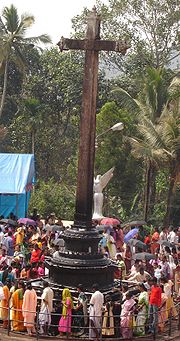 The Syro-Malabar Catholic Archdiocese of Thrissur was the first Catholic diocese of India
,
formed through a special proclamation of the then Pope Leo XIII
in May 1887. The Portuguese Admiral Vasco da Gama
landed at Calicut
on 20 May 1498. When he and the Portuguese missionaries arrived they found no Christians in the country except in Malabar. The Christians they found were St. Thomas Christians. The Christians were friendly to Portuguese missionaries at first; there was an exchange of gifts between them, and these groups were delighted at their common faith.
Later, due to certain differences, mainly in the liturgy, the relations between them became more and more strained. Under the Padroado
(patronage) agreement with the Holy See
the Portuguese missionaries started to interfere and things took a turn for the worse. They suspected the Indian Christians of heresy and schism and wanted to introduce the Latin customs and Latin manner of ecclesiastical administration, severing the East Syrian connection.
The Portuguese began a Roman Catholic (Latin Rite) diocese in Goa
(1534) and another at Cochin (1558) in the hope of bringing the St. Thomas Christians under real Catholic jurisdiction, at that time So called Kerala Chucrh church was under the jurisdiction of heretic seats,(Nestorians, which was unanimously condemned by Universal Church council) mainly from Persia. In a Goan Synod held in 1585, it was decided to introduce the Latin liturgy and practices among the Thomas Christians. In the Synod of Diamper
of 1599, the Portuguese Archbishop, Don Alexis Menezes succeeded in appointing a Latin bishop to govern the St. Thomas Christians. The Portuguese padroado (patronage) was extended over them. The strife between the Portuguese missionaries and the indigenous Christians and their Mesopotamian prelates was of an ecclesiological
and jurisdictional character. Attempts to resist the Latinization process were branded as heretical. Under their Archdeacon, the Thomas Christians resisted, and, consequently, the once united Church in full communion with the East Syrian Patriarch ended up in various denominations.
. Under the leadership of Archdeacon Thomas, the Thomas Christians publicly took an oath that they would not obey the Jesuit bishops.
To support their claim for legitimacy, Catholics called those who supported the Oath, the Puthenkoottukar or New Party, while they called themselves the Pazhayakoottukar or Old Party. These terms were considered biased by those supporting the Oath and their spiritual descendants.
Rome sent Carmelites in two groups from the Propagation of the Faith
to Malabar headed by Fr. Sebastiani and Fr. Hyacinth. Fr. Sebastiani arrived first in 1655. He began to deal directly with the Archdeacon, Mar Thomas I. Fr. Sebastiani gained the support of many, especially with the support of Alexander Parampil, Alexandar Kadavil and the Vicar of Muttam. These were the three councilors of Mar Thomas I, who were reconciled with Gracia (SJ) before the arrival of Sebastaini, according to Jesuit reports.
Between 1661 and 1662, out of the 116 churches, the Carmelites reclaimed eighty-four churches, leaving Archdeacon Mar Thomas I with thirty-two churches. The eighty-four churches and their congregations were the body from which the Syro Malabar Church has descended. The other thirty-two churches and their congregations represented the nucleus from which the Syriac Orthodox (Jacobites & Orthodox), Thozhiyur, Mar Thoma (Reformed Syrians), Syro Malankara Catholics have originated.
In 1665 Mar Gregorios, a Bishop sent by the Syriac Orthodox Patriarch of Antioch, arrived in India. The dissident group under the leadership of the Archdeacon welcomed him. Though most of the St. Thomas Christians gradually relented in their strong opposition to the Western control, the arrival of the Bishop Mar Gregory of the Syriac Orthodox Church in 1665 marked the beginning of a formal schism among the St. Thomas Christians. Those who accepted the West Syrian theological and liturgical tradition of the Syriac Orthodox Church of Antioch of Mar Gregory became known as the Jacobite, The Catholics remained in communion with Rome and later came to be known as the Syro Malabar Church.
and Paremmakkal Thomma Kathanar went to Rome
in 1778. While they were in Europe, Kariatty Joseph Kathanar was installed in Portugal as the Archbishop of Kodungalloor Archdiocese. While journeying home, they stayed in Goa
where Kariattil died before he could formally take charge. Before he died, Kariattil appointed Kathanar as the Administrator of Kodungalloor Archdiocese after him. The new administrator ran the affairs of the church establishing his headquarters at Angamaly
. In 1792, the headquarters of the Archdiocese was shifted to Vadayar
because of the attacks of Tippu Sultan. In the last four years of his life, Thomma Kathanar managed church administration from his own parish, Ramapuram
.
After being under Chaldean bishops earlier and under Latin Rite Roman Catholic bishops from 1599, St. Thomas Christians got their own dioceses from 1887. They came to be known as the Syro Malabar Catholics from that point on, to differentiate them from the Latin Rite Catholics in Kerala. The Syro Malabar Hierarchy was restored on 21 December 1923 with Mar Augustine Kandathil as the first Metropolitan
and Head of the Church.
in India and its people. According to Fr. Placid Podipara "they are Hindu or Indian in culture, Christian in religion and Syro-Oriental in worship". The head of the Church of St. Thomas Christians, sent by the Assyrian Church of the East Syrian/Chaldean church assumed the title The Metropolitan of All India.
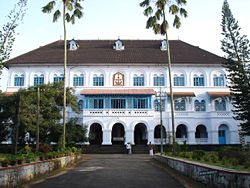 In the second half of 20th century, there was a movement for better understanding of the liturgical rites. A restored Eucharistic liturgy, drawing on the original East Syrian sources, was approved by Pope Pius XII
in 1957 and for the first time on the feast of St. Thomas
on July 3, 1962, the vernacular, Malayalam, was introduced for the celebration of the Syro-Malabar rite Mass. Currently they celebrate the Divine Liturgy of Addai and Mari in Malayalam, Syriac or English.
The Latinization
of the Syro-Malabar rite churches was brought to a head when in 1896 Ladislaus Zaleski, the Apostolic Delegate to India
, requested permission to translate the Roman Pontifical
into Syriac. This was the choice of the Malabar prelates, who chose it over the East Syrian Rite
and West Syrian Rite
pontificals. Various problems and concerns delayed the approval of this translation, until in 1934 Pope Pius XI
stated that Latinization
was no longer to be encouraged among Eastern Rite Catholics. He initiated a process of liturgical reform that sought to restore the oriental nature of the Latinized Syro-Malabar rite. A restored Eucharistic liturgy
, drawing on the original East Syrian sources, was approved by Pius XII in 1957 and introduced in 1962.
Syro Malabar Church has its own liturgical year
. It is ordered according to the flow of salvation history. It focuses on the historical life of Jesus. There are nine seasons for the liturgical year. They are:
, Kochi. The newly constructed curial building was opened on 3 July 1998.
The administration of the Syro-Malabar Church has executive and judicial roles. The major archbishop, officials, various commissions, committees, and the permanent synod form the executive part. The permanent synod and other offices are formed in accordance with the CCEO. The officials include the chancellor, vice-chancellor, and other officers. Various commissions are appointed by the major archbishop: Liturgy, Pastoral care of the migrant and Evangelisation, Particular Law, Catechism, Ecumenism, Catholic Doctrine, Clergy and Institutes of Consecrated Life and Societies of Apostolic Life. The members of the commissions are ordinarily bishops. But there are also priests in different commissions. For judicial activities there is the major archiepiscopal ordinary tribunal formed in accordance with CCEO and it has a statutes and sufficient personnel with a president, as its head. The Major archiepiscopal curia functions in the curial building in Kerala, India.
They have prepared the particular law for their Church and promulgated part by part in Synodal News, the official Bulletin of this Church. There are statutes for the permanent synod, for the superior and ordinary tribunals. Regarding economo, CCEO c. 122 § 2 is specific in the particular law, that the term of the office shall be five years and the same person shall not be appointed for more than two terms consecutively.
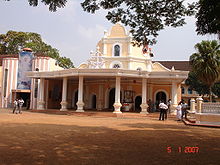
According to "Annuario Pontificio
"- The Pontifical year Book for 2008, there are about 3,947,396 members in Syro Malabar Church.
Archeparchy of Ernakulam-Angamaly has 510,000 members with 347 parishes, 731 religious/secular priests, 632 male religious and 4935 female religious. Archeparchy of Trichur has 471,328 members with 195 parishes, 418 religious/secular priests, 358 male religious and 3315 female religious. Eparchy of Idukki has 400,000 members with 129 parishes, 119 religious/secular priests, 109 male religious and 1320 female religious.
Archeparchy of Changanacherry has 390,000 members with 266 parishes, 615 religious/secular priests, 534 male religious and 2705 female religious. Eparchy of Palai has 348,128 members with 169 parishes, 502 religious/secular priests, 127 male religious and 3312 female religious. Archeparchy of Tellicherry has 317,782 members with 222 parishes, 293 religious/secular priests, 263 male religious and 1664 female religious.. Eparchy of Irinjalakuda has 258,200 members with 128 parishes, 233 religious/secular priests, 132 male religious and 2350 female religious.
Eparchy of Kothamangalam has 217,420 members with 115 parishes, 242 religious/secular priests, 163 male religious and 2210 female religious. Eparchy of Kanjirapally has 192,000 members with 136 parishes, 314 religious/secular priests, 210 male religious and 1840 female religious. Archeparchy of Kottayam has 175,300 members with 149 parishes, 161 religious/secular priests, 107 male religious and 1233 female religious. Eparchy of Mananthavady has 170,100 members with 140 parishes, 413 religious/secular priests, 358 male religious and 1546 female religious. Eparchy of Thamarasserry has 129,600 members with 128 parishes, 247 religious/secular priests, 257 male religious and 1321 female religious.. Eparchy of Palghat has 68,004 members with 106 parishes, 167 religious/secular priests, 82 male religious and 1360 female religious.
According to a study conducted, in Kerala about 30 percent of the Syro Malabar Church members lived in the erstwhile Cochin State. The remaining 70 percent lived in Travancore state. In the Travancore State, Meenachil Taluk had the largest proportion, followed by Changanaserry Taluk.
Erstwhile Cochin State, Meenachil and Changanaserry together had 56 percent of the total Syro Malabar Population. Kottayam
, Muvattupuzha
, Kanjirappally
, Thodupuzha
, Kothamangalam
, Cherthala
, Mukundapuram (irinjalakkuda-chalakkudy), Wadakkancherry, Thrissur, North Parur, Alwaye, Kunnathunadu, Ambalapuzha, Kuttanad, Peerumedu, Nedumkandam and Devikulam etc. are the prominent taluks.
Eparchy of Kalyan has 100,000 members with 106 parishes, 146 religious/secular priests, 105 male religious and 270 female religious. St. Thomas Syro-Malabar Catholic Diocese of Chicago, USA has 85,000 members with 11 parishes, 45 religious/secular priests, 13 male religious and 16 female religious. Eparchy of Chanda has 14,079 members with 5 parishes, 51 religious/secular priests, 182 male religious and 352 female religious. Eparchy of Adilabad, has 13,273 members with 25 parishes, 50 religious/secular priests, 41 male religious and 143 female religious. Eparchy of Rajkot has 12,850 members with 12 parishes, 140 religious/secular priests, 142 male religious and 421 female religious.
East Syrian Rite
The East Syrian Rite is a Christian liturgy, also known as the Assyro-Chaldean Rite, Assyrian or Chaldean Rite, and the Persian Rite although it originated in Edessa, Mesopotamia...
, Major Archiepiscopal
Major Archbishop
right|200 px|thumb|Archbishop [[Sviatoslav Shevchuk]], Major Archbishop of Kyiv-HalychIn the Eastern Catholic Churches, major archbishop is a title for an hierarch to whose archiepiscopal see is granted the same jurisdiction in his autonomous particular Church that an Eastern patriarch has in...
Church in full communion
Full communion
In Christian ecclesiology, full communion is a relationship between church organizations or groups that mutually recognize their sharing the essential doctrines....
with the Catholic Church. It is one of the 22 sui iuris
Sui iuris
Sui iuris, commonly also spelled sui juris, is a Latin phrase that literally means “of one’s own laws”.-Secular law:In civil law the phrase sui juris indicates legal competence, the capacity to manage one’s own affairs...
Eastern Catholic Churches in the Catholic Church. It is the largest of the Saint Thomas Christian
Syrian Malabar Nasrani
The Syrian Malabar Nasrani people, also known as Saint Thomas Christians, "'Nasrani Mappila'" and Nasranis, are an ethnoreligious group from Kerala, India, adhering to the various churches of the Saint Thomas Christian tradition...
denominations with more than 3.6 million believers. It is also the second largest Eastern Catholic Church in communion with the Bishop of Rome.
The church is headed by the Major Archbishop of Ernakulam-Angamaly, Mar George Alencherry the Patriarch and Gate of All India. Saint Alphonsa is the first saint from within the Church. The members of the Church are locally known as Surianis or Syrian Catholics or Roman Catholic Syrian Christians (RCSC).
Origin of St. Thomas Christians
It is believed that St. Thomas the ApostleThomas the Apostle
Thomas the Apostle, also called Doubting Thomas or Didymus was one of the Twelve Apostles of Jesus. He is best known for questioning Jesus' resurrection when first told of it, then proclaiming "My Lord and my God" on seeing Jesus in . He was perhaps the only Apostle who went outside the Roman...
landed at Kodungalloor (Muziris
Muziris
Muziris is an ancient sea-port in Southwestern India on the Periyar River 3.2 km from its mouth. The derivation of the name Muziris is said to be from "Mucciripattanam," "mucciri" means "cleft palate" and "pattanam" means "city". Near Muziris, Periyar River was branched into two like a...
) in 52 A.D. St. Thomas is said to have preached and established Christian communities in different parts of India and he died at Mylapur in 72 A.D. It is also believed that St. Thomas founded seven churches or communities in Kerala
Kerala
or Keralam is an Indian state located on the Malabar coast of south-west India. It was created on 1 November 1956 by the States Reorganisation Act by combining various Malayalam speaking regions....
; at Kodungalloor, Niranam
Niranam
Niranam is a village in central Travancore region in Kerala, India. It was a port in ancient Kerala, on the confluence of the Manimala and Achankovil River. It is almost from Tiruvalla in Pathanamthitta District of Kerala...
, Kollam
Kollam
Kollam , often anglicized as ', is a city in the Indian state of Kerala. The city lies on the banks of Ashtamudi Lake on the Arabian sea coast and is situated about north of the state capital, Thiruvananthapuram...
, Chayal, Kottakkavu, Kokkamangalam
Kokkamangalam
Kokkamangalam is a village in Alappuzha district of Kerala state, south India. Tradition holds it to be one of the seven Christian communities in Kerala founded by the Apostle Thomas.Kokkamangalam is situated midway between Cochin and Kumarakom...
and Palayoor
Palayoor
Palayoor or is a part of Thrissur district and is located on the west coast of Kerala, in India. By road it is 28 km from Thrissur on the Thrissur – Chavakad route via Pavaratty. It is very near to Guruvayoor, which is only 2 km away....
.
East Syrian relationship
The bishops who came from the East Syrian Church, were concerned with spiritual matters. Essentially, the Thomas Christians followed three distinct ways of activity in their religious sphere: their liturgy was of East Syrian Church:their culture was purely Indian:they had their own style of life. The governance of the Church was through Palliyogam, Synod, etc. as was prevalent in Oriental Churches.
Arrival of Portuguese in Malabar
India
India , officially the Republic of India , is a country in South Asia. It is the seventh-largest country by geographical area, the second-most populous country with over 1.2 billion people, and the most populous democracy in the world...
,
formed through a special proclamation of the then Pope Leo XIII
Pope Leo XIII
Pope Leo XIII , born Vincenzo Gioacchino Raffaele Luigi Pecci to an Italian comital family, was the 256th Pope of the Roman Catholic Church, reigning from 1878 to 1903...
in May 1887. The Portuguese Admiral Vasco da Gama
Vasco da Gama
Vasco da Gama, 1st Count of Vidigueira was a Portuguese explorer, one of the most successful in the Age of Discovery and the commander of the first ships to sail directly from Europe to India...
landed at Calicut
History of Kozhikode
Kozhikode , also known as Calicut, is a city in the southern Indian state of Kerala. It is the third largest city in Kerala and the headquarters of Kozhikode district....
on 20 May 1498. When he and the Portuguese missionaries arrived they found no Christians in the country except in Malabar. The Christians they found were St. Thomas Christians. The Christians were friendly to Portuguese missionaries at first; there was an exchange of gifts between them, and these groups were delighted at their common faith.
Later, due to certain differences, mainly in the liturgy, the relations between them became more and more strained. Under the Padroado
Padroado
The Padroado , was an arrangement between the Holy See and the kingdom of Portugal, affirmed by a series of treaties, by which the Vatican delegated to the kings of Spain and Portugal the administration of the local Churches...
(patronage) agreement with the Holy See
Holy See
The Holy See is the episcopal jurisdiction of the Catholic Church in Rome, in which its Bishop is commonly known as the Pope. It is the preeminent episcopal see of the Catholic Church, forming the central government of the Church. As such, diplomatically, and in other spheres the Holy See acts and...
the Portuguese missionaries started to interfere and things took a turn for the worse. They suspected the Indian Christians of heresy and schism and wanted to introduce the Latin customs and Latin manner of ecclesiastical administration, severing the East Syrian connection.
The Portuguese began a Roman Catholic (Latin Rite) diocese in Goa
Goa
Goa , a former Portuguese colony, is India's smallest state by area and the fourth smallest by population. Located in South West India in the region known as the Konkan, it is bounded by the state of Maharashtra to the north, and by Karnataka to the east and south, while the Arabian Sea forms its...
(1534) and another at Cochin (1558) in the hope of bringing the St. Thomas Christians under real Catholic jurisdiction, at that time So called Kerala Chucrh church was under the jurisdiction of heretic seats,(Nestorians, which was unanimously condemned by Universal Church council) mainly from Persia. In a Goan Synod held in 1585, it was decided to introduce the Latin liturgy and practices among the Thomas Christians. In the Synod of Diamper
Synod of Diamper
The Synod of Diamper, held at Udayamperoor/Diamper, is a diocesan synod by which Latin usages were formally adopted by the Christians of Saint Thomas. It was convened on June 20, 1599, under the leadership of Aleixo de Menezes, Archbishop of Goa. Archdeacon George was forced to comply with the...
of 1599, the Portuguese Archbishop, Don Alexis Menezes succeeded in appointing a Latin bishop to govern the St. Thomas Christians. The Portuguese padroado (patronage) was extended over them. The strife between the Portuguese missionaries and the indigenous Christians and their Mesopotamian prelates was of an ecclesiological
Ecclesiology
Today, ecclesiology usually refers to the theological study of the Christian church. However when the word was coined in the late 1830s, it was defined as the science of the building and decoration of churches and it is still, though rarely, used in this sense.In its theological sense, ecclesiology...
and jurisdictional character. Attempts to resist the Latinization process were branded as heretical. Under their Archdeacon, the Thomas Christians resisted, and, consequently, the once united Church in full communion with the East Syrian Patriarch ended up in various denominations.
Divisions among Saint Thomas Christians
A protest took place in 1653 with the Coonan Cross OathCoonan Cross Oath
The Coonan Cross Oath , taken on January 3, 1653, was a public avowal by members of the Saint Thomas Christian community of Kerala, India that they would not submit to Portuguese dominance in ecclesiastical and secular life...
. Under the leadership of Archdeacon Thomas, the Thomas Christians publicly took an oath that they would not obey the Jesuit bishops.
To support their claim for legitimacy, Catholics called those who supported the Oath, the Puthenkoottukar or New Party, while they called themselves the Pazhayakoottukar or Old Party. These terms were considered biased by those supporting the Oath and their spiritual descendants.
Rome sent Carmelites in two groups from the Propagation of the Faith
Congregation for the Evangelization of Peoples
The Congregation for the Evangelization of Peoples in Rome is the congregation of the Roman Curia responsible for missionary work and related activities...
to Malabar headed by Fr. Sebastiani and Fr. Hyacinth. Fr. Sebastiani arrived first in 1655. He began to deal directly with the Archdeacon, Mar Thomas I. Fr. Sebastiani gained the support of many, especially with the support of Alexander Parampil, Alexandar Kadavil and the Vicar of Muttam. These were the three councilors of Mar Thomas I, who were reconciled with Gracia (SJ) before the arrival of Sebastaini, according to Jesuit reports.
Between 1661 and 1662, out of the 116 churches, the Carmelites reclaimed eighty-four churches, leaving Archdeacon Mar Thomas I with thirty-two churches. The eighty-four churches and their congregations were the body from which the Syro Malabar Church has descended. The other thirty-two churches and their congregations represented the nucleus from which the Syriac Orthodox (Jacobites & Orthodox), Thozhiyur, Mar Thoma (Reformed Syrians), Syro Malankara Catholics have originated.
In 1665 Mar Gregorios, a Bishop sent by the Syriac Orthodox Patriarch of Antioch, arrived in India. The dissident group under the leadership of the Archdeacon welcomed him. Though most of the St. Thomas Christians gradually relented in their strong opposition to the Western control, the arrival of the Bishop Mar Gregory of the Syriac Orthodox Church in 1665 marked the beginning of a formal schism among the St. Thomas Christians. Those who accepted the West Syrian theological and liturgical tradition of the Syriac Orthodox Church of Antioch of Mar Gregory became known as the Jacobite, The Catholics remained in communion with Rome and later came to be known as the Syro Malabar Church.
Restoration of the Syro-Malabar hierarchy
After the split in the church, some priests and laymen have attempted to persuade the hierarchy to improve the identity of the local church and for the appointment of bishops from local priests. To represent their position, Kerala's Syrian Catholics Joseph KariattilMar Joseph Kariattil
Mar Joseph Kariattil [Mar Ouseph Kariattil ] was the first native Indian to be appointed as Archbishop of the Syrian Catholics in the territory now comprising Kerala, India....
and Paremmakkal Thomma Kathanar went to Rome
Rome
Rome is the capital of Italy and the country's largest and most populated city and comune, with over 2.7 million residents in . The city is located in the central-western portion of the Italian Peninsula, on the Tiber River within the Lazio region of Italy.Rome's history spans two and a half...
in 1778. While they were in Europe, Kariatty Joseph Kathanar was installed in Portugal as the Archbishop of Kodungalloor Archdiocese. While journeying home, they stayed in Goa
Goa
Goa , a former Portuguese colony, is India's smallest state by area and the fourth smallest by population. Located in South West India in the region known as the Konkan, it is bounded by the state of Maharashtra to the north, and by Karnataka to the east and south, while the Arabian Sea forms its...
where Kariattil died before he could formally take charge. Before he died, Kariattil appointed Kathanar as the Administrator of Kodungalloor Archdiocese after him. The new administrator ran the affairs of the church establishing his headquarters at Angamaly
Angamaly
Angamaly is a satellite town of the city of Kochi, situated north of the city center and a municipality in Ernakulam district, Kerala, India. It is one of the entry points or gateways to Ernakulam district from northern Kerala...
. In 1792, the headquarters of the Archdiocese was shifted to Vadayar
Vadayar
-Demographics: India census, Vadayar had a population of 22145 with 10884 males and 11261 females....
because of the attacks of Tippu Sultan. In the last four years of his life, Thomma Kathanar managed church administration from his own parish, Ramapuram
Ramapuram, Kottayam
Ramapuram is a town in the Kottayam district of the Indian state of Kerala.-General information:The word "Ramapuram" means "the abode of Lord Rama", the village's chief deity. Ramapuram is unique in the sense that it houses the temple of Rama as well as his three brothers in a radius of just...
.
After being under Chaldean bishops earlier and under Latin Rite Roman Catholic bishops from 1599, St. Thomas Christians got their own dioceses from 1887. They came to be known as the Syro Malabar Catholics from that point on, to differentiate them from the Latin Rite Catholics in Kerala. The Syro Malabar Hierarchy was restored on 21 December 1923 with Mar Augustine Kandathil as the first Metropolitan
Metropolitan bishop
In Christian churches with episcopal polity, the rank of metropolitan bishop, or simply metropolitan, pertains to the diocesan bishop or archbishop of a metropolis; that is, the chief city of a historical Roman province, ecclesiastical province, or regional capital.Before the establishment of...
and Head of the Church.
Time line of events
Time line of events- 1 Ancient Era
- 2 Portuguese Era
- 3 Era of Divisions
- 4 Arrival of the Protestants and further splits
- 5 Era of Self-governance
- 6 A Sui iuris Church.
Syro-Malabar Identity
The Syro-Malabar identity is unique to the state of KeralaKerala
or Keralam is an Indian state located on the Malabar coast of south-west India. It was created on 1 November 1956 by the States Reorganisation Act by combining various Malayalam speaking regions....
in India and its people. According to Fr. Placid Podipara "they are Hindu or Indian in culture, Christian in religion and Syro-Oriental in worship". The head of the Church of St. Thomas Christians, sent by the Assyrian Church of the East Syrian/Chaldean church assumed the title The Metropolitan of All India.
Liturgy
Pope Pius XII
The Venerable Pope Pius XII , born Eugenio Maria Giuseppe Giovanni Pacelli , reigned as Pope, head of the Catholic Church and sovereign of Vatican City State, from 2 March 1939 until his death in 1958....
in 1957 and for the first time on the feast of St. Thomas
Thomas the Apostle
Thomas the Apostle, also called Doubting Thomas or Didymus was one of the Twelve Apostles of Jesus. He is best known for questioning Jesus' resurrection when first told of it, then proclaiming "My Lord and my God" on seeing Jesus in . He was perhaps the only Apostle who went outside the Roman...
on July 3, 1962, the vernacular, Malayalam, was introduced for the celebration of the Syro-Malabar rite Mass. Currently they celebrate the Divine Liturgy of Addai and Mari in Malayalam, Syriac or English.
The Latinization
Liturgical Latinisation
Liturgical Latinisation, also known as Latinisation, is the process by which liturgical and other aspects of the Churches of Eastern Christianity were altered to resemble more closely the practices of the Latin Rite of the Catholic Church...
of the Syro-Malabar rite churches was brought to a head when in 1896 Ladislaus Zaleski, the Apostolic Delegate to India
India
India , officially the Republic of India , is a country in South Asia. It is the seventh-largest country by geographical area, the second-most populous country with over 1.2 billion people, and the most populous democracy in the world...
, requested permission to translate the Roman Pontifical
Roman Pontifical
The Roman Pontifical or Pontifical, also referred to in Latin as the Pontificale or Pontificale Romanum, is the Roman Catholic liturgical book that contains the rites performed by bishops....
into Syriac. This was the choice of the Malabar prelates, who chose it over the East Syrian Rite
East Syrian Rite
The East Syrian Rite is a Christian liturgy, also known as the Assyro-Chaldean Rite, Assyrian or Chaldean Rite, and the Persian Rite although it originated in Edessa, Mesopotamia...
and West Syrian Rite
West Syrian Rite
The West Syrian Rite, also known as the Syrian Rite or the Syro-Antiochene Rite, is a Christian liturgical rite chiefly practiced in the Syriac Orthodox Church and churches related to or descended from it. It is part of the liturgical family known as the Antiochene Rite, which originated in the...
pontificals. Various problems and concerns delayed the approval of this translation, until in 1934 Pope Pius XI
Pope Pius XI
Pope Pius XI , born Ambrogio Damiano Achille Ratti, was Pope from 6 February 1922, and sovereign of Vatican City from its creation as an independent state on 11 February 1929 until his death on 10 February 1939...
stated that Latinization
Liturgical Latinisation
Liturgical Latinisation, also known as Latinisation, is the process by which liturgical and other aspects of the Churches of Eastern Christianity were altered to resemble more closely the practices of the Latin Rite of the Catholic Church...
was no longer to be encouraged among Eastern Rite Catholics. He initiated a process of liturgical reform that sought to restore the oriental nature of the Latinized Syro-Malabar rite. A restored Eucharistic liturgy
Liturgy
Liturgy is either the customary public worship done by a specific religious group, according to its particular traditions or a more precise term that distinguishes between those religious groups who believe their ritual requires the "people" to do the "work" of responding to the priest, and those...
, drawing on the original East Syrian sources, was approved by Pius XII in 1957 and introduced in 1962.
Faith and communion of Syro-Malabarians
The St. Thomas Christians got their bishops from the Assyrian Church of the East/Chaldean Church from ca. 500 AD till the end of the sixteenth century, until it was stopped by the Portuguese Roman Catholics in 1597, after the death of Mar Abraham.Knanaya Catholics
The Knanaya Catholics and their Jewish identity and practices were acknowledged by the Vatican under Pope Pius X, by establishing in 1911 a separate vicariate apostolic under the Syro Malabar Church for the Knanaya Jewish Christians, named the Knanaya Catholic Vicariate Apostolic of Kottayam and headed first by the Bishop Mar Mathew Makil. It was elevated to an eparchy by Pope Pius X in his Bull “Universi Christiani” in 1923 and to an metropolitan archeparchy in 2005.The Arch-diocese of Kottayam spans not just the Kottayam district and surroundings, but the entire state of Kerala, throughout India, and also overseas.Liturgical calendar
Syro Malabar Church has its own liturgical year
Liturgical year
The liturgical year, also known as the church year, consists of the cycle of liturgical seasons in Christian churches which determines when feast days, including celebrations of saints, are to be observed, and which portions of Scripture are to be read. Distinct liturgical colours may appear in...
. It is ordered according to the flow of salvation history. It focuses on the historical life of Jesus. There are nine seasons for the liturgical year. They are:
- AnnunciationAnnunciationThe Annunciation, also referred to as the Annunciation to the Blessed Virgin Mary or Annunciation of the Lord, is the Christian celebration of the announcement by the angel Gabriel to Virgin Mary, that she would conceive and become the mother of Jesus the Son of God. Gabriel told Mary to name her...
(Subara) - Epiphany (Denha)
- Great Fast (Sawma Rabba)
- ResurrectionResurrection of JesusThe Christian belief in the resurrection of Jesus states that Jesus returned to bodily life on the third day following his death by crucifixion. It is a key element of Christian faith and theology and part of the Nicene Creed: "On the third day he rose again in fulfillment of the Scriptures"...
(Qyamta) - Apostles (Slihe)
- Summer (Qaita)
- Elijah-Cross (Elijah-Sliba)MosesMosesMoses was, according to the Hebrew Bible and Qur'an, a religious leader, lawgiver and prophet, to whom the authorship of the Torah is traditionally attributed...
(Muse)
- Dedication of the Church (Qudas-Edta)
Major feasts
Major feasts of the Church are,- Dukrana of our Father in Faith - Mar Thoma Sleeha Commemorated on July 3
- Marth Anna (Saint Alphonsa) - commemorated 28 July
- Blessed Chavara Kuriakose Elias - commemorated 3 January
- Servant of GodServant of GodServant of God is a title given to individuals by various religions, but in general the phrase is used to describe a person believed to be pious in his or her faith tradition. In the Catholic Church, it designates someone who is being investigated by the Church for possibly being recognized as a...
Varghese Payapilly PalakkappillyVarghese Payapilly PalakkappillyVarghese Payapilly Palakkappilly was a Syrian Catholic priest from the Indian state of Kerala and the founder of the Congregation of the Sisters of the Destitute.-Family:...
– commemorated 5 October - Blessed Euphrasia - commemorated 29 August
- Mar Bartholomeo Sleeha - commemorated 24 August
- Martha Simoni and her 7 Children - commemorated 21 August
- The Assumption of Marth Mariam - commemorated on 15 August
- Transfiguration - commemorated 6 August
- Mar Addai and Mar Mari - commemorated on the Second Friday of Qaita (Summer)
- The 12 Apostles of our Lord, Iso' Misiha - commemorated 19 July
- The 70 Apostles - commemorated 17 July
- Mar Quriaqos and mother Yolethe - commemorated 15 July
- Mar Aprem- Commemorated - commemorated 9 June
- Blessed Mariam Thresia - commemorated 8 June
- Holy PentecostPentecostPentecost is a prominent feast in the calendar of Ancient Israel celebrating the giving of the Law on Sinai, and also later in the Christian liturgical year commemorating the descent of the Holy Spirit upon the disciples of Christ after the Resurrection of Jesus...
- commemorated on 31 May - The Ascension of our Lord Jesus Christ - commemorated 21 May
- Mar Addai Sleeha - commemorated 10 May
- Mar Geevarghese Sahadha - commemorated 24 April
- New Sunday - commemorated 19 April
- All Saints Day - commemorated on the first Friday of the Season of Resurrection
- Entry of our Lord, Iso' Misiha into JerusalemPalm SundayPalm Sunday is a Christian moveable feast that falls on the Sunday before Easter. The feast commemorates Jesus' triumphal entry into Jerusalem, an event mentioned in all four Canonical Gospels. ....
- Osana Sunday - The AnnunciationAnnunciationThe Annunciation, also referred to as the Annunciation to the Blessed Virgin Mary or Annunciation of the Lord, is the Christian celebration of the announcement by the angel Gabriel to Virgin Mary, that she would conceive and become the mother of Jesus the Son of God. Gabriel told Mary to name her...
of Most Holy Mother - commemorated 25 March - Remembrance of all Departed Faithful - commemorated on Last Friday of Denha
- The feast of Denha, the Epiphany - commemorated on 6 January
- The NativityNativity of JesusThe Nativity of Jesus, or simply The Nativity, refers to the accounts of the birth of Jesus in two of the Canonical gospels and in various apocryphal texts....
of our Lord, God and Saviour Iso M'siha - commemorated 25 December - Mar Thoma Sliba - commemorated 18 December
- Immaculate ConceptionImmaculate ConceptionThe Immaculate Conception of Mary is a dogma of the Roman Catholic Church, according to which the Virgin Mary was conceived without any stain of original sin. It is one of the four dogmata in Roman Catholic Mariology...
of Martha Mariam - commemorated 8 December - Blessed Kunjachan - commemorated 16 October
Syro-Malabar major archiepiscopal curia
The curia of the Syro-Malabar Church began to function in March 1993 at the archbishop’s house of Ernakulam-Angamaly. Later, on 27 May 1995, it was shifted to new premises at Mount St. Thomas near KakkanadKakkanad
Kakkanad is a region in the city of Kochi, in the state of Kerala, India. This is the part of Kochi where much of its IT industry is based in. It is also the administrative headquarters of the District of Ernakulam ....
, Kochi. The newly constructed curial building was opened on 3 July 1998.
The administration of the Syro-Malabar Church has executive and judicial roles. The major archbishop, officials, various commissions, committees, and the permanent synod form the executive part. The permanent synod and other offices are formed in accordance with the CCEO. The officials include the chancellor, vice-chancellor, and other officers. Various commissions are appointed by the major archbishop: Liturgy, Pastoral care of the migrant and Evangelisation, Particular Law, Catechism, Ecumenism, Catholic Doctrine, Clergy and Institutes of Consecrated Life and Societies of Apostolic Life. The members of the commissions are ordinarily bishops. But there are also priests in different commissions. For judicial activities there is the major archiepiscopal ordinary tribunal formed in accordance with CCEO and it has a statutes and sufficient personnel with a president, as its head. The Major archiepiscopal curia functions in the curial building in Kerala, India.
They have prepared the particular law for their Church and promulgated part by part in Synodal News, the official Bulletin of this Church. There are statutes for the permanent synod, for the superior and ordinary tribunals. Regarding economo, CCEO c. 122 § 2 is specific in the particular law, that the term of the office shall be five years and the same person shall not be appointed for more than two terms consecutively.
Saints and Blesseds
- St. ThomasThomas the ApostleThomas the Apostle, also called Doubting Thomas or Didymus was one of the Twelve Apostles of Jesus. He is best known for questioning Jesus' resurrection when first told of it, then proclaiming "My Lord and my God" on seeing Jesus in . He was perhaps the only Apostle who went outside the Roman...
- Saint Alphonsa- Eparchy of Palai - canonized on 12 October 2008 by Pope Benedict XVI.
- Blessed Kuriakose ChavaraKuriakose Elias ChavaraBlessed Kuriakose Elias Chavara was the co-founder and first prior-general of the Congregation of the Carmelites of Mary Immaculate and of the Congregation of the Sisters of the Mother of Carmel....
- Archeparchy of Changanacherry – Founder of CMI - declared Blessed by Pope John Paul II at KottayamKottayamKottayam is a city in the Indian state of Kerala, spread over an area of 55.40 km2. It is the administrative capital of the Kottayam district. Kottayam Kottayam (Malayalam: കോട്ടയം) is a city in the Indian state of Kerala, spread over an area of 55.40 km2. It is the administrative...
, IndiaIndiaIndia , officially the Republic of India , is a country in South Asia. It is the seventh-largest country by geographical area, the second-most populous country with over 1.2 billion people, and the most populous democracy in the world...
on 8 February 1986. - Blessed Mariam ThressiaMariam ThressiaBlessed Mariam Thressia from Puthenchira, a locale in the city of Thrissur, Kerala, India.-External links:*...
– Eparchy of Irinjalakuda - declared Blessed by Pope John Paul II in Rome on 9 April 2000. - Blessed Thevarparampil KunjachanThevarparampil KunjachanBlessed Thevarparampil Kunjachan was a priest who dedicated himself to the spiritual and temporal welfare of a marginalised set of people who were poor and exploited for generations.-Early life:...
– Eparchy of Palai - declared Blessed on 30 April 2006 by Mar Varkey Vithayathil, the Major Archbishop of the Syro-Malabar Church at Ramapuram, Palai as the delegate of Pope Benedict XVI. - Blessed Euphrasia EluvathingalEuphrasia EluvathingalBlessed Sister Euphrasia Eluvathingal or Euphrasia of the Sacred Heart of Jesus is the fifth Syro-Malabar Catholic Church nun and a member of Carmelites of Mary Immaculate beatified by the Roman Catholic Church in 2006...
– Eparchy of Irinjalakuda - declared Blessed on 3 December 2006 by Mar Varkey Vithayathil, the Archbishop of ThrissurArchbishop of ThrissurThe Archbishop of Thrissur is the chief bishop and principal leader of the nearly half a million Syro Malabar Catholics now used to be the largest catholic diocese in India, when it included the Syro-Malabar Catholic Archdiocese of Thrissur, Syro-Malabar Catholic Diocese of Irinjalakuda,...
at OllurOllurOllur is a major suburban area and an old commercial town in the Thrissur district of Kerala state, South India. It is situated about 5 km away from Swaraj Round on National Highway 47 commonly referred to as NH47 towards Ernakulam. From ancient time onwards Ollur was a major business centre...
, ThrissurThrissurThis article is about the city in India. For the district, see Thrissur district. For the urban agglomeration area of Thrissur see Thrissur Metropolitan Area...
as the delegate of Pope Benedict XVI.
Eparchies
There are 29 eparchies. Five of them are Archeparchies at present – Ernakulam-Angamaly, Changanacherry, Trichur, Tellicherry and Kottayam. There are other 13 eparchies – Bhadravathi, Belthangady, Irinjalakuda, Kanjirapally, Kothamangalam, Idukki, Mananthavady, Mandya, Palai, Palghat, Ramanathapuram, Thamarassery and Thuckalay within the proper territory of the Major Archiepiscopal Church. There are 11 eparchies outside Kerala – Adilabad, Bijnor, Chanda, Gorakhpur, Jagdalpur, Kalyan, Rajkot, Sagar, Satna, Ujjain and the St. Thomas Eparchy of Chicago in the United States of America.Metropolitan archeparchies
The believers of this church are organized under 5 Archdioceses. All five are in Kerala.- Metropolitan Archeparchy of Ernakulam-Angamaly
- Metropolitan Archeparchy Changanassery
- Metropolitan Archeparchy of KottayamSyro-Malabar Catholic Archeparchy of KottayamThe Syro-Malabar Catholic Archeparchy of Kottayam is a Roman Catholic eparchy in India, under the Syro-Malabar Catholic Church, comprising Syro-Malabar faithful of the Knanaya ethnoreligious group.-History of the Archeparchy:...
- Metropolitan Archeparchy of Tellicherry
- Metropolitan Archeparchy of Thrissur
Eparchies
- Eparchy of AdilabadSyro-Malabar Catholic Diocese of AdilabadSyro-Malabar Catholic Diocese of Adilabad was created by Pope John Paul II on July 23, 1999. The first bishop, Mar Joseph Kunnath, CMI, was ordained bishop on October 6, 1999 at which time the diocese also was inaugurated.-External links:* *...
- Eparchy of BelthangadySyro-Malabar Catholic Diocese of BelthangadyThe Syro-Malabar Catholic Diocese of Belthangady is a Roman Catholic diocese in India, under the Syro-Malabar Catholic Church. It was established in 1999 by Pope John Paul II's Bull "Cum Ampla". It is a suffragan diocese of the Syro-Malabar Catholic Church's Archdiocese of Tellicherry...
- Eparchy of BhadravathiSyro-Malabar Catholic Diocese of BhadravathiThe Syro-Malabar Catholic Diocese of Bhadravathi was created by Benedict XVI's Papal bull "Cum Ampla" as a suffragan of the Archdiocese of Tellicherry....
- Eparchy of BijnorSyro-Malabar Catholic Diocese of BijnorThe Syro-Malabar Catholic Archdiocese of Bijnor is a Syro-Malabar Catholic diocese in Uttarakhand, India. Its current bishop is the Most Rev. John Vadakel, of the Carmelites of Mary Immaculate , who was ordained bishop 22 October 2009....
- Eparchy of ChandaSyro-Malabar Catholic Diocese of ChandaThe Syro-Malabar Catholic Diocese of Chanda is a diocese of the Eastern Rite Syro-Malabar Catholic Church, located in India. It was created in 1977 by the Bull 'Nostra Ipsorum’ of Pope Paul VI, Januarius Palathuruthy CMI became the first bishop. Currently, the bishop is Vijay Anand...
- Eparchy of Chicago
- Eparchy of GorakhpurSyro-Malabar Catholic Diocese of GorakhpurThe Syro-Malabar Catholic Diocese of Gorakhpur is a Roman Catholic diocese in India, under the Syro-Malabar Catholic Church. It was erected by Pope John Paul II in 1984 through the Bull "Ex quo Divinum Concilium". Mar Thomas Thuruthimattam, CST was appointed bishop of Gorakhpur on July 15, 2006...
- Eparchy of IdukkiSyro-Malabar Catholic Diocese of IdukkiThe Syro-Malabar Catholic Diocese of Idukki is a Roman Catholic diocese in India, under the Syro-Malabar Catholic Church. It is a suffragan diocese of Ernakulam-Angamaly. The creation of the diocese is contained in an Apostolic Constitution "Maturescens catholica fideis" put forth by Pope John...
- Eparchy of IrinjalakudaSyro-Malabar Catholic Diocese of IrinjalakudaThe Syro-Malabar Catholic Diocese of Irinjalakuda is situated in Irinjalakuda city of Thrissur District of Kerala, India. The Diocese was created by Pope Paul VI in his Bull Trichurensis Eparchiae of June 22, 1978. Mar James Pazhayattil was the first Bishop. He was succeeded by Mar Pauly Kannookadan...
- Eparchy of Jagadalpur
- Eparchy of KalyanSyro-Malabar Catholic Diocese of KalyanThe Syro-Malabar Catholic Diocese of Kalyan is a diocese in India within the Syro-Malabar Catholic Church, based in Kalyan, India. Its first bishop was Paul Chittilapilly; the current bishop is Mar Thomas Elavanal. -Churches / Parishes under the Diocese:...
- Eparchy of KothamangalamSyro-Malabar Catholic Diocese of KothamangalamThe Syro-Malabar Catholic Diocese of Kothamangalam is a Roman Catholic diocese in India, under the Syro-Malabar Catholic Church. It was established by Pope Pius XII in 1957...
- Eparchy of KanjirappallySyro-Malabar Catholic Diocese of KanjirappallyThe Syro-Malabar Catholic Diocese of Kanjirapally is a Roman Catholic diocese in India, under the Syro-Malabar Catholic Church.It was erected by Pope Paul VI in the bull "Nos Beati Petri Successores" in February 1977, which separated the eastern part of the Archdiocese of Changanachery and erected...
- Eparchy of MananthavadySyro-Malabar Catholic Diocese of MananthavadyThe Syro-Malabar Catholic Diocese of Mananthavady is a Roman Catholic diocese in India, under the Syro-Malabar Catholic Church. It was established in 1973 by Pope Paul VI...
- Eparchy of MandyaSyro-Malabar Catholic Diocese of MandyaThe Syro-Malabar Catholic Diocese of Mandya is situated in Mandya city in Mandya District of Karnataka. The Diocese includes for civil districts of Karnataka, namely, Mandya, Hassan, Mysore and Chamarajnagar. The Diocese of Mandya was created by bifurcating Syro-Malabar Catholic Diocese of...
- Eparchy of PalghatSyro-Malabar Catholic Diocese of Palghat-History of Diocese of Palghat :The Eparchy of Palghat was erected on June 20, 1974, through the Decree "Apostolico Requirente" by Pope Paul VI, bifurcating the eparchy of Trichur and adding into the territory of the new eparchy a few parishes of the eparchy of Tellichery, which were in the...
- Eparchy of Palai
- Eparchy of RajkotSyro-Malabar Catholic Diocese of RajkotThe Syro-Malabar Catholic Diocese of Rajkot is a Roman Catholic Eastern-rite diocese, or eparchy, in India, under the Syro-Malabar Catholic Church...
- Eparchy of RamanathapuramSyro-Malabar Catholic Diocese of RamanathapuramThe Syro-Malabar Catholic Diocese of Ramanathapuram is situated in Ramanathapuram city in Coimbatore District of Tamil Nadu. The Diocese includes Coimbatore, Tirupur, Erode and Karur districts. The Diocese of Ramanathapuram was created by bifurcating Syro-Malabar Catholic Diocese of Palghat. The...
- Eparchy of SagarSyro-Malabar Catholic Diocese of SagarThe Syro-Malabar Catholic Diocese of Sagar is a Roman Catholic diocese in India, under the Syro-Malabar Catholic Church. It was created by the Papal Bull "Divina Verba" of Pope Paul VI, and Mar Clemens Thottunkal was appointed its first bishop....
- Eparchy of SatnaSyro-Malabar Catholic Diocese of SatnaThe Syro-Malabar Catholic Diocese of Satna is a Roman Catholic diocese in India, under the Syro-Malabar Catholic Church. It was erected on February 26, 1977. Matthew Vaniakizhakel, C.V. is the current bishop of this diocese.-External links:*...
- Eparchy of ThuckalaySyro-Malabar Catholic Diocese of ThuckalayThe Syro-Malabar Catholic Diocese of Thuckalay is a Roman Catholic diocese in India, under the Syro-Malabar Catholic Church. It was founded on November 11, 1996. The see is currently sede vacante..-External links:*...
- Eparchy of ThamarasserySyro-Malabar Catholic Diocese of ThamarasseryThe Syro-Malabar Catholic Diocese of Thamarassery is a Roman Catholic diocese in India, under the Syro-Malabar Catholic Church. It was created on April 28, 1986. On Monday, January 18, 2010, the Synod of Bishops of the Syro-Malabar Church, meeting at Mt. St...
- Eparchy of UjjainSyro-Malabar Catholic Diocese of UjjainThe Syro-Malabar Catholic Eparchy of Ujjain is a Syro-Malabar eparchy in India, under the Syro-Malabar Catholic Church. It was created as Apostolic Exarchiate on July 29, 1968 and John Perumattam was named its first Exarch...
Statistics
| Institutions | # |
|---|---|
| Parishes | 3200 |
| Semi- Parishes | 538 |
| Missions | 490 |
| Institutes of Consecrated Life- Men & Women | 53 |
| Major & Minor Seminary | 71 |
| Regular,Technical & Other Colleges | 503 |
| Teachers’ Training Institutes | 23 |
| Higher Secandary & Primary Schools | 2639 |
| Kindergartens | 1685 |
| Non-formal & Adult Education | 503 |
| Special Schools | 390 |
| Health Care Institutions | 700 |
| Nurses Training Schools | 44 |
| Hospitals,Dispensaries & Health Centers | 670 |
| Specialized Health Care Centers,Incurables & Leprosy Care Centers | 54 |
| Old age Homes | 211 |
| Children’s Homes | 185 |
| Orphanages | 230 |
| Rehabilitation Centers and other institutions | 1616 |
| Total | 13,805 |
| Personnel | |
| Religious sisters | 35000 |
| Religious Brothers | 6836 |
| Diocesan and religious priests | 9121 |
| Bishops | 39 |
| Seminarians (men studying for the priesthood) | 2607 |
| Major Arch Bishop | 1 |
| Total | 50,997 |
According to "Annuario Pontificio
Annuario Pontificio
The Annuario Pontificio is the annual directory of the Holy See. It lists all the popes to date and all officials of the Holy See's departments...
"- The Pontifical year Book for 2008, there are about 3,947,396 members in Syro Malabar Church.
Within the proper territory
There are sixteen eparchies within the proper territory of the Syro Malabar Church.Archeparchy of Ernakulam-Angamaly has 510,000 members with 347 parishes, 731 religious/secular priests, 632 male religious and 4935 female religious. Archeparchy of Trichur has 471,328 members with 195 parishes, 418 religious/secular priests, 358 male religious and 3315 female religious. Eparchy of Idukki has 400,000 members with 129 parishes, 119 religious/secular priests, 109 male religious and 1320 female religious.
Archeparchy of Changanacherry has 390,000 members with 266 parishes, 615 religious/secular priests, 534 male religious and 2705 female religious. Eparchy of Palai has 348,128 members with 169 parishes, 502 religious/secular priests, 127 male religious and 3312 female religious. Archeparchy of Tellicherry has 317,782 members with 222 parishes, 293 religious/secular priests, 263 male religious and 1664 female religious.. Eparchy of Irinjalakuda has 258,200 members with 128 parishes, 233 religious/secular priests, 132 male religious and 2350 female religious.
Eparchy of Kothamangalam has 217,420 members with 115 parishes, 242 religious/secular priests, 163 male religious and 2210 female religious. Eparchy of Kanjirapally has 192,000 members with 136 parishes, 314 religious/secular priests, 210 male religious and 1840 female religious. Archeparchy of Kottayam has 175,300 members with 149 parishes, 161 religious/secular priests, 107 male religious and 1233 female religious. Eparchy of Mananthavady has 170,100 members with 140 parishes, 413 religious/secular priests, 358 male religious and 1546 female religious. Eparchy of Thamarasserry has 129,600 members with 128 parishes, 247 religious/secular priests, 257 male religious and 1321 female religious.. Eparchy of Palghat has 68,004 members with 106 parishes, 167 religious/secular priests, 82 male religious and 1360 female religious.
According to a study conducted, in Kerala about 30 percent of the Syro Malabar Church members lived in the erstwhile Cochin State. The remaining 70 percent lived in Travancore state. In the Travancore State, Meenachil Taluk had the largest proportion, followed by Changanaserry Taluk.
Erstwhile Cochin State, Meenachil and Changanaserry together had 56 percent of the total Syro Malabar Population. Kottayam
Kottayam
Kottayam is a city in the Indian state of Kerala, spread over an area of 55.40 km2. It is the administrative capital of the Kottayam district. Kottayam Kottayam (Malayalam: കോട്ടയം) is a city in the Indian state of Kerala, spread over an area of 55.40 km2. It is the administrative...
, Muvattupuzha
Muvattupuzha
Muvattupuzha is a municipality in Ernakulam district in the Indian state of Kerala. It is a junction of three districts namely Ernakulam, Kottayam and Idukki. The town is bordered by Kottayam district on southern side and Idukki district on eastern side approximately 20 km from the town...
, Kanjirappally
Kanjirappally
Kanjirappally is a taluk and a town in Kottayam district, in the state of Kerala, India. Rubber plantations are a major source of income for the local population. The place has a large population of Syrian Catholic Christians....
, Thodupuzha
Thodupuzha
Thodupuzha is a town and a municipality in Idukki district in the Indian state of Kerala, spread over an area of 35.43 km2. It is 62 km from Ernakulam. Geographical Classification of Thodupuzha Region is Midland or Idanad....
, Kothamangalam
Kothamangalam
Kothamangalam is a town located in eastern part of Ernakulam district in the Indian state of Kerala situated 45 km north east of Kochi City. It is located around 14 km north east to the town of Muvattupuzha. The town is situated in the foothills of the Western Ghats mountain ranges. It...
, Cherthala
Cherthala
Cherthala is a town located in the district of Alappuzha, in the state of Kerala, India. It is located 30 km south of the city of Kochi and 22 km north of Alappuzha town, on the Kochi-Alappuzha streatch of both the National Highway 47 as well as the costal Rail-route.lt is 85 km from the...
, Mukundapuram (irinjalakkuda-chalakkudy), Wadakkancherry, Thrissur, North Parur, Alwaye, Kunnathunadu, Ambalapuzha, Kuttanad, Peerumedu, Nedumkandam and Devikulam etc. are the prominent taluks.
Outside the proper territory
There are eleven eparchies outside the proper territory of the Syro Malabar Church.Eparchy of Kalyan has 100,000 members with 106 parishes, 146 religious/secular priests, 105 male religious and 270 female religious. St. Thomas Syro-Malabar Catholic Diocese of Chicago, USA has 85,000 members with 11 parishes, 45 religious/secular priests, 13 male religious and 16 female religious. Eparchy of Chanda has 14,079 members with 5 parishes, 51 religious/secular priests, 182 male religious and 352 female religious. Eparchy of Adilabad, has 13,273 members with 25 parishes, 50 religious/secular priests, 41 male religious and 143 female religious. Eparchy of Rajkot has 12,850 members with 12 parishes, 140 religious/secular priests, 142 male religious and 421 female religious.
Syro Malabar Religious Congregations
The Religious Congregations are divided in the Eastern Catholic Church Law (Code of Canons of the Oriental Churches – CCEO) as Monasteries, Hermitages, Orders, Congregations, Societies of Common Life in the Manner of Religious, Secular Institutes and Societies of Apostolic Life.List of prominent Syro-Malabar Catholics in history
See also
- Sisters of the DestituteSisters of the DestituteSisters of the Destitute is a Syro-Malabar Catholic women's order.-History:The Congregation of the Sisters of the Destitute was founded by Servant of God Varghese Payapilly Palakkappilly in Chunangamvely, Kerala on 19 March 1927....
- Carmelites of Mary ImmaculateCarmelites of Mary ImmaculateThe Carmelites of Mary Immaculate is an religious order for men in the Syro-Malabar Church. It is the first Catholic religious congregation founded in India. The first monastery of the order was established on 11 May 1831 at Mannanam, Kerala, India...
- Congregation of Saint Thérèse of LisieuxCongregation of Saint Thérèse of LisieuxThe Congregation of Saint Thérèse of Lisieux is the first religious brothers congregation founded in the Syro-Malabar Church in India and the first congregation in the name of St. Thérèse of Lisieux in India...
- Christianity in IndiaChristianity in IndiaChristianity is India's third-largest religion, with approximately 24 million followers, constituting 2.3% of India's population. The works of scholars and Eastern Christian writings and 14th century Portuguese missionaries created an illusion to convert Indians that Christianity was introduced to...
- Syro-Malankara Catholic ChurchSyro-Malankara Catholic ChurchThe Syro-Malankara Catholic Church is an Eastern Catholic Church in full communion with the Holy See...
- Syrian Malabar NasraniSyrian Malabar NasraniThe Syrian Malabar Nasrani people, also known as Saint Thomas Christians, "'Nasrani Mappila'" and Nasranis, are an ethnoreligious group from Kerala, India, adhering to the various churches of the Saint Thomas Christian tradition...