

.gif)
Swedish People's Party (Finland)

Encyclopedia
The Swedish People's Party of Finland is a Swedish-speaking minority and mainly liberal party in Finland
. The party's main election issues has since its founding been the Swedish-speaking Finns' right to their own language and to maintain the Swedish language
's position in Finland. The party has been in governmental position since 1979 with one or two seats in the government
and has collaborated with the right
as well as the left wing
in the Finnish parliament
. The fact that both the right and the left wing need the support from the party has done that they have been able to affect Finnish politics
in a larger scale than the party's actual size. The position of the Swedish language as one of two official language
s in Finland and the Swedish-speaking minority's right to the Swedish culture are two of the results of the party's influence in Finnish politics. The party is a member of Liberal International
and the European Liberal Democrat and Reform Party
.
based on members in the Diet of Finland
, is the historical predecessor of the Swedish People's Party of Finland. It was a part of the Svecoman movement and its main policy was opposition of the Fennoman
movement. Unlike Fennomans who were largely conservative on other matters than the language question, the Swedish Party was classical liberal. Axel Lille
and Axel Olof Freudenthal
are often considered as some of the main "founding fathers" of the movement. Most of the membership of the Liberal Party joined the Swedish Party in the 1880s, after the Liberals ceased to exist as a distinct party. The Swedish People's Party of Finland was founded in the 1906 party congress of the Swedish Party, making it one of the oldest parties in Finland. The first leader of SFP was Axel Lille
.
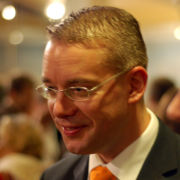
The current leader of the party is Stefan Wallin
. In the Parliament of Finland
the representative for Åland is usually included in SFP's parliamentary group, regardless of his/her party affiliation. This is because the political parties in Åland have no counterparts in Mainland Finland
, but the SFP's interests have much in common with those of Åland as far as the Swedish language is concerned.
The party receives its main electoral support from the Swedish
speaking minority, which makes up about 5.5% of Finland's population. During its history, the party has suffered slow but steady decline in adherence, following the decline of the percentage of Swedish-speaking population: in 1907 it got 12% of national votes, after World War II 7% and in the 2011 parliamentary election
4.3% (9 MPs). In municipal elections, it holds large majorities in municipalities with a Swedish-speaking majority.
Despite its position as one of the minor political parties in the Finnish parliament it has frequently been one of the partners forming the governing coalition cabinets. Since 1956, the year when Urho Kekkonen
was elected President, the party has been nearly continuously in the government. It has been part of all coalitions with the significant exception of Paasio's first government (1966–68), which included only socialists (Social Democratic Party
(SDP), the split SDP faction Social Democratic Union of Workers and Smallholders and Finnish People's Democratic League
) and the Centre Party
. Short periods of rule by single-party minority governments, Miettunen government (1961–62, Centre) and Paasio's second government (1972, SDP) and of nonpartisan caretaker government
s have also interrupted its stay in the government. For this reason, SFP is often criticized for being a single-issue party that allegedly accepts nearly all policies as long as its own vital interest, the status of the Swedish language is maintained. Interestingly, although Vanhanen's first government made Swedish a voluntary subject in the upper secondary school's matriculation exam, SFP remained in the government. In contrast, the Greens
left the previous government after its decision to build a new nuclear power plant in 2002.
Recently the SFP has emphasized the liberal part of its programme, attempting to woo voters outside its traditional Swedish-speaking electorate. In 2010 the party added the word Suomen ("of Finland") to its official Finnish name.
s of Finland. The SFP has as its main raison d'être the protection and strengthening of the position of Swedish of Finland
.
The Swedish People's Party of Finland has the most eclectic profile of any of the political parties in Finland, its members and supporters including (chiefly):
Although the SFP represents a small minority of Finland, Swedish mother tongue per se is not much of a political handicap. Several times Swedish speaking president
ial candidates have gathered considerable support, although not necessarily as candidates for the Swedish People's Party of Finland:
Finland
Finland , officially the Republic of Finland, is a Nordic country situated in the Fennoscandian region of Northern Europe. It is bordered by Sweden in the west, Norway in the north and Russia in the east, while Estonia lies to its south across the Gulf of Finland.Around 5.4 million people reside...
. The party's main election issues has since its founding been the Swedish-speaking Finns' right to their own language and to maintain the Swedish language
Swedish language
Swedish is a North Germanic language, spoken by approximately 10 million people, predominantly in Sweden and parts of Finland, especially along its coast and on the Åland islands. It is largely mutually intelligible with Norwegian and Danish...
's position in Finland. The party has been in governmental position since 1979 with one or two seats in the government
Government of Finland
Finland is a republic with a representative democracy governed accordingly to the principles of parliamentarism. Legislative power is vested in the Parliament of Finland . Executive power is exercised by the Cabinet, officially termed Council of State , which is led by the Prime Minister, the Head...
and has collaborated with the right
Right-wing politics
In politics, Right, right-wing and rightist generally refer to support for a hierarchical society justified on the basis of an appeal to natural law or tradition. To varying degrees, the Right rejects the egalitarian objectives of left-wing politics, claiming that the imposition of equality is...
as well as the left wing
Left-wing politics
In politics, Left, left-wing and leftist generally refer to support for social change to create a more egalitarian society...
in the Finnish parliament
Parliament of Finland
The Eduskunta , is the parliament of Finland. The unicameral parliament has 200 members and meets in the Parliament House in Helsinki. The latest election to the parliament took place on April 17, 2011.- Constitution :...
. The fact that both the right and the left wing need the support from the party has done that they have been able to affect Finnish politics
Politics of Finland
Politics of Finland takes place in a framework of a parliamentary representative democratic republic and of a multi-party system. The President of Finland is the head of state, leads the foreign policy, and is the Commander-in-chief of the Defense Forces. The Prime Minister of Finland is the head...
in a larger scale than the party's actual size. The position of the Swedish language as one of two official language
Official language
An official language is a language that is given a special legal status in a particular country, state, or other jurisdiction. Typically a nation's official language will be the one used in that nation's courts, parliament and administration. However, official status can also be used to give a...
s in Finland and the Swedish-speaking minority's right to the Swedish culture are two of the results of the party's influence in Finnish politics. The party is a member of Liberal International
Liberal International
Liberal International is a political international federation for liberal parties. Its headquarters is located at 1 Whitehall Place, London, SW1A 2HD within the National Liberal Club. It was founded in Oxford in 1947, and has become the pre-eminent network for liberal parties and for the...
and the European Liberal Democrat and Reform Party
European Liberal Democrat and Reform Party
The European Liberal Democrat and Reform Party is a European political party mainly active in the European Union, composed of 56 national-level liberal and liberal-democratic parties from across Europe...
.
History and electorate
The Swedish Party (1870–1906), a parliamentary elite partyElite party
An elite party is a political party consisting of members of the societal elite, particularly members of parliament, who agree to co-operate politically in the spirit of principles and goals. The first to describe this party model was Edmund Burke in 1770...
based on members in the Diet of Finland
Diet of Finland
The Diet of Finland , was the legislative assembly of the Grand Duchy of Finland from 1809 to 1906 and the recipient of the powers of the Swedish Riksdag of the Estates....
, is the historical predecessor of the Swedish People's Party of Finland. It was a part of the Svecoman movement and its main policy was opposition of the Fennoman
Fennoman
The Fennomans were the most important political movement in the 19th century Grand Principality of Finland. They succeeded the fennophile interests of the 18th and early 19th century.-History:...
movement. Unlike Fennomans who were largely conservative on other matters than the language question, the Swedish Party was classical liberal. Axel Lille
Axel Lille
Axel Johan Lille was a Swedish-speaking Finnish journalist and politician and the main founder of the Swedish People's Party and its leader 1907–1917...
and Axel Olof Freudenthal
Axel Olof Freudenthal
Axel Olof Freudenthal , was a Swedish-speaking Finnish philologist and politician.He was born in Siuntio, and studied at the University of Helsinki where the nationalistic movement struggle between the Fennomans and the Svecomans was raging...
are often considered as some of the main "founding fathers" of the movement. Most of the membership of the Liberal Party joined the Swedish Party in the 1880s, after the Liberals ceased to exist as a distinct party. The Swedish People's Party of Finland was founded in the 1906 party congress of the Swedish Party, making it one of the oldest parties in Finland. The first leader of SFP was Axel Lille
Axel Lille
Axel Johan Lille was a Swedish-speaking Finnish journalist and politician and the main founder of the Swedish People's Party and its leader 1907–1917...
.
The current leader of the party is Stefan Wallin
Stefan Wallin
Stefan Erik Wallin is a Swedish-speaking Finnish politician. He is currently Finland's Minister of Defence in Jyrki Katainen's cabinet....
. In the Parliament of Finland
Parliament of Finland
The Eduskunta , is the parliament of Finland. The unicameral parliament has 200 members and meets in the Parliament House in Helsinki. The latest election to the parliament took place on April 17, 2011.- Constitution :...
the representative for Åland is usually included in SFP's parliamentary group, regardless of his/her party affiliation. This is because the political parties in Åland have no counterparts in Mainland Finland
Mainland Finland
Mainland Finland is a term used for instance in statistics to exclude the autonomous Åland Islands under Finnish sovereignty. Mainland Finland is not to be confused with Finland Proper, which is the province adjacent to Åland...
, but the SFP's interests have much in common with those of Åland as far as the Swedish language is concerned.
The party receives its main electoral support from the Swedish
Finland-Swedish
Finland Swedish is a general term for the closely related cluster of dialects of Swedish spoken in Finland by Swedish-speaking Finns as their mother tongue...
speaking minority, which makes up about 5.5% of Finland's population. During its history, the party has suffered slow but steady decline in adherence, following the decline of the percentage of Swedish-speaking population: in 1907 it got 12% of national votes, after World War II 7% and in the 2011 parliamentary election
Finnish parliamentary election, 2011
An election to the Eduskunta was held on 17 April 2011 after the termination of the previous parliamentary term. Advance voting, which included voting by Finnish expatriates, was held between 6 and 12 April with a turnout of 31.2%....
4.3% (9 MPs). In municipal elections, it holds large majorities in municipalities with a Swedish-speaking majority.
Despite its position as one of the minor political parties in the Finnish parliament it has frequently been one of the partners forming the governing coalition cabinets. Since 1956, the year when Urho Kekkonen
Urho Kekkonen
Urho Kaleva Kekkonen , was a Finnish politician who served as Prime Minister of Finland and later as the eighth President of Finland . Kekkonen continued the “active neutrality” policy of his predecessor President Juho Kusti Paasikivi, a doctrine which came to be known as the “Paasikivi–Kekkonen...
was elected President, the party has been nearly continuously in the government. It has been part of all coalitions with the significant exception of Paasio's first government (1966–68), which included only socialists (Social Democratic Party
Social Democratic Party of Finland
The Social Democratic Party of Finland is one of the three major political parties in Finland, along with the Centre Party and the National Coalition Party. Jutta Urpilainen is the current SDP leader. The party has been in the Finnish government cabinet for long periods and has set many...
(SDP), the split SDP faction Social Democratic Union of Workers and Smallholders and Finnish People's Democratic League
Finnish People's Democratic League
Finnish People's Democratic League was a Finnish political organisation with the aim of uniting those left of the Finnish Social Democratic Party...
) and the Centre Party
Centre Party (Finland)
The Centre Party is a centrist and Nordic agrarian political party in Finland. It is one of the four largest political parties in the country, along with the Social Democratic Party , the National Coalition Party and the True Finns , and currently has 35 seats in the Finnish Parliament...
. Short periods of rule by single-party minority governments, Miettunen government (1961–62, Centre) and Paasio's second government (1972, SDP) and of nonpartisan caretaker government
Caretaker government
Caretaker government is a type of government that rules temporarily. A caretaker government is often set up following a war until stable democratic rule can be restored, or installed, in which case it is often referred to as a provisional government...
s have also interrupted its stay in the government. For this reason, SFP is often criticized for being a single-issue party that allegedly accepts nearly all policies as long as its own vital interest, the status of the Swedish language is maintained. Interestingly, although Vanhanen's first government made Swedish a voluntary subject in the upper secondary school's matriculation exam, SFP remained in the government. In contrast, the Greens
Green League
The Green League is a centrist green liberal political party in Finland. It has ten seats in the Finnish Parliament and two in the European Parliament. The current chairperson is Ville Niinistö....
left the previous government after its decision to build a new nuclear power plant in 2002.
Recently the SFP has emphasized the liberal part of its programme, attempting to woo voters outside its traditional Swedish-speaking electorate. In 2010 the party added the word Suomen ("of Finland") to its official Finnish name.
Political positions
The Swedish language is one of the two official languageOfficial language
An official language is a language that is given a special legal status in a particular country, state, or other jurisdiction. Typically a nation's official language will be the one used in that nation's courts, parliament and administration. However, official status can also be used to give a...
s of Finland. The SFP has as its main raison d'être the protection and strengthening of the position of Swedish of Finland
Finland-Swedish
Finland Swedish is a general term for the closely related cluster of dialects of Swedish spoken in Finland by Swedish-speaking Finns as their mother tongue...
.
The Swedish People's Party of Finland has the most eclectic profile of any of the political parties in Finland, its members and supporters including (chiefly):
- fishermen and farmers from the Swedish-speaking coastal areas.
- small-town dwellers from the adjacent Swedish-speaking and bi-lingual towns.
- green-minded and left-leaning middle-class intellectuals.
- liberals in general, who currently have no representation of their own in the Finnish parliament, and who as such benefit from the predominantly liberal values of the SFP.
Although the SFP represents a small minority of Finland, Swedish mother tongue per se is not much of a political handicap. Several times Swedish speaking president
President of Finland
The President of the Republic of Finland is the nation's head of state. Under the Finnish constitution, executive power is vested in the President and the government, with the President possessing extensive powers. The President is elected directly by the people of Finland for a term of six years....
ial candidates have gathered considerable support, although not necessarily as candidates for the Swedish People's Party of Finland:
- In 1956 the Swedish-speaking Social DemocratSocial Democratic Party of FinlandThe Social Democratic Party of Finland is one of the three major political parties in Finland, along with the Centre Party and the National Coalition Party. Jutta Urpilainen is the current SDP leader. The party has been in the Finnish government cabinet for long periods and has set many...
FagerholmKarl-August FagerholmKarl-August Fagerholm was Speaker of Parliament and three times Prime Minister of Finland . Fagerholm became chairman of the Social Democrats after the armistice in the Continuation War...
got one elector's vote less than needed to be elected, and the Agrarian Urho KekkonenUrho KekkonenUrho Kaleva Kekkonen , was a Finnish politician who served as Prime Minister of Finland and later as the eighth President of Finland . Kekkonen continued the “active neutrality” policy of his predecessor President Juho Kusti Paasikivi, a doctrine which came to be known as the “Paasikivi–Kekkonen...
was elected. - In 1994 the SFP's candidate Elisabeth RehnElisabeth RehnMärta Elisabeth Rehn is a former MP of the Swedish People's Party and the first female Minister of Defence in Finland. In the 1994 presidential elections she was narrowly defeated by Martti Ahtisaari.Elisabeth Rehn spent her childhood in Mäntsälä, where her father worked as a community medical...
was defeated by the Social Democrat candidate Martti AhtisaariMartti AhtisaariMartti Oiva Kalevi Ahtisaari is a Finnish politician, the tenth President of Finland , Nobel Peace Prize laureate and United Nations diplomat and mediator, noted for his international peace work....
, also with a narrow margin (53.9% to 46.1%).
List of party leaders
- Axel LilleAxel LilleAxel Johan Lille was a Swedish-speaking Finnish journalist and politician and the main founder of the Swedish People's Party and its leader 1907–1917...
(1906–1917) - Eric von Rettig (1917–1934)
- Ernst von Born (1934–1945)
- Ralf TörngrenRalf TörngrenRalf Johan Gustaf Törngren, , was a Finnish politician. He was the party leader of the Swedish People's Party , a member of the Finnish parliament and the Prime Minister of Finland 5 May-20 October 1954...
(1945–1955) - Ernst von Born (1955–1956)
- Lars Erik Taxell (1956–1966)
- Jan-Magnus JanssonJan-Magnus JanssonJan-Magnus Jansson was a Finnish politician .Jansson was a Professor of general state science at the University of Helsinki 1954–74 and chancellor for the Åbo Akademi University 1985 to 1991...
(1966–1973) - Kristian Gestrin (1973–1974)
- Carl Olof Tallgren (1974–1977)
- Pär Stenbäck (1977–1985)
- Christoffer Taxell (1985–1990)
- Ole NorrbackOle NorrbackJohan Ole Norrback is a Finland-Swedish politician and diplomat.Norrback graduated as a folkskola teacher in 1965 and was the ombudsman for the Swedish People's Party in Ostrobothnia between 1967 and 1971, and a member of the Swedish Ostrobothnia's Region Board between 1971 and 1989...
(1990–1998) - Jan-Erik EnestamJan-Erik EnestamJan-Erik Enestam is a Finland-Swedish politician from the Swedish People's Party. He has a degree from the Åbo Akademi university in Turku....
(1998–2006) - Stefan WallinStefan WallinStefan Erik Wallin is a Swedish-speaking Finnish politician. He is currently Finland's Minister of Defence in Jyrki Katainen's cabinet....
(2006–)
See also
- Contributions to liberal theoryContributions to liberal theoryIndividual contributors to classical liberalism and political liberalism are associated with philosophers of the Enlightenment. Liberalism as a specifically named ideology begins in the late 18th century as a movement towards self-government and away from aristocracy...
- Liberalism worldwideLiberalism worldwideThis article gives information on liberalism in diverse countries around the world. It is an overview of parties that adhere more or less to the ideas of political liberalism and is therefore a list of liberal parties around the world....
- List of liberal parties
- Liberal democracyLiberal democracyLiberal democracy, also known as constitutional democracy, is a common form of representative democracy. According to the principles of liberal democracy, elections should be free and fair, and the political process should be competitive...
- Liberalism and centrism in FinlandLiberalism and centrism in FinlandThis article gives an overview of liberalism and centrism in Finland. It is limited to liberal and centrist parties with substantial support, mainly proved by having had a representation in parliament. The sign ⇒ means a reference to another party in that scheme...
- Finland's language strifeFinland's language strifeThe language strife was one of the major conflicts of Finland's national history and domestic politics. It revolved around the question of what status Swedish—the language which since the Middle Ages had been the main language of administration and high culture in Finland—and, on the other hand,...
- Swedish Assembly of FinlandSwedish Assembly of FinlandThe Swedish Assembly of Finland is an official consultative parliament representing the Swedish-speaking minority in Finland.-Elections:Elections are held every four years, and candidates are nominated by the political parties which are either bilingual or Swedish-speaking...
- SvecomanSvecomanThe Svecoman movement was a Swedish nationalist movement that arose in the Grand Duchy of Finland at the end of the 19th century chiefly as a reaction to the demands for increased use of Finnish vigorously presented by the Fennoman movement...
- Rolf WittingRolf WittingRolf Johan Witting was a renowned oceanographist and Swedish-speaking Finnish politician, member of four of Finland's cabinets 1926–1943...
- Axel Olof FreudenthalAxel Olof FreudenthalAxel Olof Freudenthal , was a Swedish-speaking Finnish philologist and politician.He was born in Siuntio, and studied at the University of Helsinki where the nationalistic movement struggle between the Fennomans and the Svecomans was raging...