

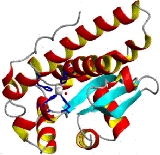
Superoxide dismutase

Encyclopedia
Superoxide dismutases are a class of enzymes that catalyze the dismutation of superoxide
into oxygen
and hydrogen peroxide
. As such, they are an important antioxidant
defense in nearly all cells exposed to oxygen. One of the exceedingly rare exceptions is Lactobacillus plantarum
and related lactobacilli
, which use a different mechanism.
may be written with the following half-reactions :
where M = Cu
(n=1) ; Mn
(n=2) ; Fe
(n=2) ; Ni
(n=2).
In this reaction the oxidation state
of the metal cation oscillates between n and n+1.
and Joe McCord
, SOD enzymes were previously thought to be several metalloproteins with unknown function (for example, CuZnSOD was known as erythrocuprein). Several common forms of SOD exist: they are proteins cofactored
with copper
and zinc
, or manganese
, iron
, or nickel
. For example, Brewer (1967) identified a protein that became known as superoxide dismutase as an indophenol oxidase by protein analysis of starch gels using the phenazine-tetrazolium technique.
There are three major families of superoxide dismutase, depending on the metal cofactor: Cu/Zn (which binds both copper and zinc), Fe and Mn types (which bind either iron or manganese), and the Ni type, which binds nickel.
In higher plants, SOD isozymes have been localized in different cell compartments. Mn-SOD is present in mitochondria and peroxisomes. Fe-SOD has been found mainly in chloroplasts but has also been detected in peroxisomes, and CuZn-SOD has been localized in cytosol, chloroplasts, peroxisomes, and apoplast.
is located in the cytoplasm
, SOD2
in the mitochondria
, and SOD3
is extracellular
. The first is a dimer
(consists of two units), whereas the others are tetramers (four subunits). SOD1 and SOD3 contain copper and zinc, whereas SOD2, the mitochondrial enzyme, has manganese
in its reactive centre. The gene
s are located on chromosomes 21, 6, and 4, respectively (21q22.1, 6q25.3 and 4p15.3-p15.1).
(ROS). ROS can form as a result of drought, injury, herbicides and pesticides, ozone, plant metabolic activity, nutrient deficiencies, photoinhibition, temperature above and below ground, toxic metals, and UV or gamma rays. Specifically, molecular O2 is reduced to O2- (an ROS called superoxide) when it absorbs an excited electron released from compounds of the electron transport chain. Superoxide is known to denature enzymes, oxidize lipids, and fragment DNA. SODs catalyze the production of O2 and H2O2 from superoxide (O2-), which results in less harmful reactants.
When acclimating to increased levels of oxidative stress, SOD concentrations typically increase with the degree of stress conditions. The compartmentalization of different forms of SOD throughout the plant makes them counteract stress very effectively. There are three well-known and studied classes of SOD metallic coenzymes that exist in plants. First, Fe SODs consist of two species, one homodimer (containing 1-2 g Fe) and one tetramer (containing 2-4 g Fe). They are thought to be the most ancient SOD metalloenzymes and are found within both prokaryotes and eukaryotes. Fe SODs are most abundantly localized inside plant chloroplasts, where are they are indigenous. Second, Mn SODs consist of a homodimer and homotetramer species each containing a single Mn(III) atom per subunit. They are predominantly found in mitochondrion and peroxisomes. Third, Cu-Zn SODs have electrical properties very different from the other two classes. These are concentrated in the chloroplast
, cytosol
, and in some cases the extracellular space. Note that Cu-Zn SODs provide less protection than Fe SODs when localized in the chloroplast.
) therefore produce superoxide dismutase to protect themselves from being killed.
The reaction of superoxide with non-radicals is spin forbidden
. In biological systems, this means its main reactions are with itself (dismutation) or with another biological radical such as nitric oxide
(NO) or a metal. The superoxide anion radical (O2−) spontaneously dismutes to O2 and hydrogen peroxide (H2O2) quite rapidly (~105 M−1s−1 at pH 7). SOD is necessary because superoxide reacts with sensitive and critical cellular targets. For example, it reacts the NO radical, and makes toxic peroxynitrite
. The dismutation rate is second order with respect to initial superoxide concentration. Thus, the half-life of superoxide, although very short at high concentrations (e.g., 0.05 seconds at 0.1mM) is actually quite long at low concentrations (e.g., 14 hours at 0.1 nM). In contrast, the reaction of superoxide with SOD is first order with respect to superoxide concentration. Moreover, superoxide dismutase has the largest kcat/KM (an approximation of catalytic efficiency) of any known enzyme (~7 x 10⁹ M−1s−1), this reaction being only limited by the frequency of collision between itself and superoxide. That is, the reaction rate is "diffusion limited". Even at the subnanomolar concentrations achieved by the high concentrations of SOD within cells, superoxide inactivates the citric acid cycle enzyme aconitase
, can poison energy metabolism, and releases potentially toxic iron. Aconitase is one of several iron-sulfur containing (de)hydratases in metabolic pathways shown to be inactivated by superoxide.
in the cell, and, as such, SOD serves a key antioxidant role. The physiological importance of SODs is illustrated by the severe pathologies evident in mice genetically engineered to lack these enzymes. Mice lacking SOD2 die several days after birth, amid massive oxidative stress
. Mice lacking SOD1 develop a wide range of pathologies, including hepatocellular carcinoma, an acceleration of age-related muscle mass loss, an earlier incidence of cataracts and a reduced lifespan. Mice lacking SOD3 do not show any obvious defects and exhibit a normal lifespan, though they are more sensitive to hyperoxic injury. Knockout mice
of any SOD enzyme are more sensitive to the lethal effects of superoxide generating drugs, such as paraquat
and diquat
.
Drosophila
lacking SOD1 have a dramatically shortened lifespan, whereas flies lacking SOD2 die before birth. SOD knockdowns in C. elegans
do not cause major physiological disruptions. Knockout or null mutations in SOD1 are highly detrimental to aerobic growth in the yeast Sacchormyces cerevisiae and result in a dramatic reduction in post-diauxic lifespan. SOD2 knockout or null mutations cause growth inhibition on respiratory carbon sources in addition to decreased post-diauxic lifespan.
Several prokaryotic SOD null mutants have been generated, including E. Coli. The loss of periplasmic CuZnSOD causes loss of virulence and might be an attractive target for new antibiotics.
) can cause familial amyotrophic lateral sclerosis
(ALS, a form of motor neuron disease). The most common mutation in the U.S. is A4V, while the most intensely studied is G93A. The other two isoforms of SOD have not been linked to any human diseases, however, in mice inactivation of SOD2 causes perinatal lethality and inactivation of SOD1 causes hepatocellular carcinoma
. Mutations in SOD1
can cause familial ALS, by a mechanism that is presently not understood, but not due to loss of enzymatic activity or a decrease in the conformational stability of the SOD1 protein. Overexpression of SOD1 has been linked to the neural disorders seen in Down syndrome
. Genetic polymorphisms in SOD enzymes and their altered expressions and activities are associated with oxidative DNA damage and subsequently the individual’s risk of cancer susceptibility.
SOD has proved to be highly effective in treatment of colonic inflammation in experimental colitis
. Treatment with SOD decreases reactive oxygen species
generation and oxidative stress
and, thus, inhibits endothelial activation and indicate that modulation of factors that govern adhesion molecule expression and leukocyte-endothelial interactions. Therefore, such as antioxidants may be important new therapies for the treatment of inflammatory bowel disease
.
In recent years it has become more apparent that in mice the extracellular superoxide dismutase (SOD3, ecSOD) is critical in the development of hypertension. In other studies, diminished SOD3 activity was linked to lung diseases such as Acute Respiratory Distress Syndrome (ARDS) or Chronic obstructive pulmonary disease (COPD).
Superoxide dismutase is also not expressed in neural crest cells in the developing fetus
. Hence, high levels of free radicals can cause damage to them and induce dysraphic anomalies (neural tube defects).
, perhaps through reversion of myofibroblasts back to fibroblasts.
Superoxide
A superoxide, also known by the obsolete name hyperoxide, is a compound that possesses the superoxide anion with the chemical formula O2−. The systematic name of the anion is dioxide. It is important as the product of the one-electron reduction of dioxygen O2, which occurs widely in nature...
into oxygen
Oxygen
Oxygen is the element with atomic number 8 and represented by the symbol O. Its name derives from the Greek roots ὀξύς and -γενής , because at the time of naming, it was mistakenly thought that all acids required oxygen in their composition...
and hydrogen peroxide
Hydrogen peroxide
Hydrogen peroxide is the simplest peroxide and an oxidizer. Hydrogen peroxide is a clear liquid, slightly more viscous than water. In dilute solution, it appears colorless. With its oxidizing properties, hydrogen peroxide is often used as a bleach or cleaning agent...
. As such, they are an important antioxidant
Antioxidant
An antioxidant is a molecule capable of inhibiting the oxidation of other molecules. Oxidation is a chemical reaction that transfers electrons or hydrogen from a substance to an oxidizing agent. Oxidation reactions can produce free radicals. In turn, these radicals can start chain reactions. When...
defense in nearly all cells exposed to oxygen. One of the exceedingly rare exceptions is Lactobacillus plantarum
Lactobacillus plantarum
Lactobacillus plantarum is a widespread member of the genus Lactobacillus, commonly found in many fermented food products as well as anaerobic plant matter. It is also present in saliva . It has the ability to liquefy gelatin. L...
and related lactobacilli
Lactobacillus
Lactobacillus is a genus of Gram-positive facultative anaerobic or microaerophilic rod-shaped bacteria. They are a major part of the lactic acid bacteria group, named as such because most of its members convert lactose and other sugars to lactic acid. They are common and usually benign...
, which use a different mechanism.
Reaction
The SOD-catalysed dismutation of superoxideSuperoxide
A superoxide, also known by the obsolete name hyperoxide, is a compound that possesses the superoxide anion with the chemical formula O2−. The systematic name of the anion is dioxide. It is important as the product of the one-electron reduction of dioxygen O2, which occurs widely in nature...
may be written with the following half-reactions :
- M(n+1)+-SOD + O2− → Mn+-SOD + O2
- Mn+-SOD + O2− + 2H+ → M(n+1)+-SOD + H2O2.
where M = Cu
Copper
Copper is a chemical element with the symbol Cu and atomic number 29. It is a ductile metal with very high thermal and electrical conductivity. Pure copper is soft and malleable; an exposed surface has a reddish-orange tarnish...
(n=1) ; Mn
Manganese
Manganese is a chemical element, designated by the symbol Mn. It has the atomic number 25. It is found as a free element in nature , and in many minerals...
(n=2) ; Fe
Iron
Iron is a chemical element with the symbol Fe and atomic number 26. It is a metal in the first transition series. It is the most common element forming the planet Earth as a whole, forming much of Earth's outer and inner core. It is the fourth most common element in the Earth's crust...
(n=2) ; Ni
Nickel
Nickel is a chemical element with the chemical symbol Ni and atomic number 28. It is a silvery-white lustrous metal with a slight golden tinge. Nickel belongs to the transition metals and is hard and ductile...
(n=2).
In this reaction the oxidation state
Oxidation state
In chemistry, the oxidation state is an indicator of the degree of oxidation of an atom in a chemical compound. The formal oxidation state is the hypothetical charge that an atom would have if all bonds to atoms of different elements were 100% ionic. Oxidation states are typically represented by...
of the metal cation oscillates between n and n+1.
General
Discovered by Irwin FridovichIrwin Fridovich
Irwin Fridovich is an American biochemist who, together with his graduate student Joe M. McCord, discovered the enzyme superoxide dismutase . He is currently Professor emeritus of Biochemistry at Duke University. Superoxide dismutase is a central enzyme for the detoxification of harmful oxygen free...
and Joe McCord
Joe M. McCord
Joe Milton McCord is an American biochemist and current Professor of Medicine at the University of Colorado at Denver. He is most famous for his discovery, along with Irwin Fridovich, of the enzyme superoxide dismutase. For this work, Dr. McCord has earned numerous awards and recognition...
, SOD enzymes were previously thought to be several metalloproteins with unknown function (for example, CuZnSOD was known as erythrocuprein). Several common forms of SOD exist: they are proteins cofactored
Cofactor (biochemistry)
A cofactor is a non-protein chemical compound that is bound to a protein and is required for the protein's biological activity. These proteins are commonly enzymes, and cofactors can be considered "helper molecules" that assist in biochemical transformations....
with copper
Copper proteins
Copper proteins are proteins that contain one or more copper ions as prosthetic groups. The metal centres in the copper proteins can be classified into several types:...
and zinc
Zinc
Zinc , or spelter , is a metallic chemical element; it has the symbol Zn and atomic number 30. It is the first element in group 12 of the periodic table. Zinc is, in some respects, chemically similar to magnesium, because its ion is of similar size and its only common oxidation state is +2...
, or manganese
Manganese
Manganese is a chemical element, designated by the symbol Mn. It has the atomic number 25. It is found as a free element in nature , and in many minerals...
, iron
Iron
Iron is a chemical element with the symbol Fe and atomic number 26. It is a metal in the first transition series. It is the most common element forming the planet Earth as a whole, forming much of Earth's outer and inner core. It is the fourth most common element in the Earth's crust...
, or nickel
Nickel
Nickel is a chemical element with the chemical symbol Ni and atomic number 28. It is a silvery-white lustrous metal with a slight golden tinge. Nickel belongs to the transition metals and is hard and ductile...
. For example, Brewer (1967) identified a protein that became known as superoxide dismutase as an indophenol oxidase by protein analysis of starch gels using the phenazine-tetrazolium technique.
There are three major families of superoxide dismutase, depending on the metal cofactor: Cu/Zn (which binds both copper and zinc), Fe and Mn types (which bind either iron or manganese), and the Ni type, which binds nickel.
- Copper and zinc – most commonly used by eukaryoteEukaryoteA eukaryote is an organism whose cells contain complex structures enclosed within membranes. Eukaryotes may more formally be referred to as the taxon Eukarya or Eukaryota. The defining membrane-bound structure that sets eukaryotic cells apart from prokaryotic cells is the nucleus, or nuclear...
s. The cytosolCytosolThe cytosol or intracellular fluid is the liquid found inside cells, that is separated into compartments by membranes. For example, the mitochondrial matrix separates the mitochondrion into compartments....
s of virtually all eukaryoticEukaryoteA eukaryote is an organism whose cells contain complex structures enclosed within membranes. Eukaryotes may more formally be referred to as the taxon Eukarya or Eukaryota. The defining membrane-bound structure that sets eukaryotic cells apart from prokaryotic cells is the nucleus, or nuclear...
cells contain an SOD enzyme with copperCopperCopper is a chemical element with the symbol Cu and atomic number 29. It is a ductile metal with very high thermal and electrical conductivity. Pure copper is soft and malleable; an exposed surface has a reddish-orange tarnish...
and zincZincZinc , or spelter , is a metallic chemical element; it has the symbol Zn and atomic number 30. It is the first element in group 12 of the periodic table. Zinc is, in some respects, chemically similar to magnesium, because its ion is of similar size and its only common oxidation state is +2...
(Cu-Zn-SOD). For example, Cu-Zn-SOD available commercially is normally purified from the bovine erythrocytes: The Cu-Zn enzyme is a homodimer of molecular weight 32,500. The bovine Cu-Zn protein was the first SOD structure to be solved, in 1975. It is an 8-stranded "Greek key" beta-barrel, with the active site held between the barrel and two surface loops. The two subunits are tightly joined back-to-back, primarily by hydrophobic and some electrostatic interactions. The ligands of the copper and zinc are six histidineHistidineHistidine Histidine, an essential amino acid, has a positively charged imidazole functional group. It is one of the 22 proteinogenic amino acids. Its codons are CAU and CAC. Histidine was first isolated by German physician Albrecht Kossel in 1896. Histidine is an essential amino acid in humans...
and one aspartate side-chains; one histidine is shared between the two metals. - Iron or manganese – used by prokaryoteProkaryoteThe prokaryotes are a group of organisms that lack a cell nucleus , or any other membrane-bound organelles. The organisms that have a cell nucleus are called eukaryotes. Most prokaryotes are unicellular, but a few such as myxobacteria have multicellular stages in their life cycles...
s and protistProtistProtists are a diverse group of eukaryotic microorganisms. Historically, protists were treated as the kingdom Protista, which includes mostly unicellular organisms that do not fit into the other kingdoms, but this group is contested in modern taxonomy...
s, and in mitochondria- Iron – E. coli and many other bacteria also contain a form of the enzyme with ironIronIron is a chemical element with the symbol Fe and atomic number 26. It is a metal in the first transition series. It is the most common element forming the planet Earth as a whole, forming much of Earth's outer and inner core. It is the fourth most common element in the Earth's crust...
(Fe-SOD); some bacteria contain Fe-SOD, others Mn-SOD, and some contain both. (For the E. coli Fe-SOD: . Fe-SOD can be found in the plastidPlastidPlastids are major organelles found in the cells of plants and algae. Plastids are the site of manufacture and storage of important chemical compounds used by the cell...
s of plants. The 3D structures of the homologous Mn and Fe superoxide dismutases have the same arrangement of alpha-helices, and their active sites contain the same type and arrangement of amino acid side-chains. - Manganese – Chicken liver (and nearly all other) mitochondria, and many bacteriaBacteriaBacteria are a large domain of prokaryotic microorganisms. Typically a few micrometres in length, bacteria have a wide range of shapes, ranging from spheres to rods and spirals...
(such as E. coli), contain a form with manganeseManganeseManganese is a chemical element, designated by the symbol Mn. It has the atomic number 25. It is found as a free element in nature , and in many minerals...
(Mn-SOD): for example, the Mn-SOD found in human mitochondria. The ligands of the manganese ions are 3 histidineHistidineHistidine Histidine, an essential amino acid, has a positively charged imidazole functional group. It is one of the 22 proteinogenic amino acids. Its codons are CAU and CAC. Histidine was first isolated by German physician Albrecht Kossel in 1896. Histidine is an essential amino acid in humans...
side-chains, an aspartate side-chain and a water molecule or hydroxyHydroxylA hydroxyl is a chemical group containing an oxygen atom covalently bonded with a hydrogen atom. In inorganic chemistry, the hydroxyl group is known as the hydroxide ion, and scientists and reference works generally use these different terms though they refer to the same chemical structure in...
ligandLigandIn coordination chemistry, a ligand is an ion or molecule that binds to a central metal atom to form a coordination complex. The bonding between metal and ligand generally involves formal donation of one or more of the ligand's electron pairs. The nature of metal-ligand bonding can range from...
, depending on the Mn oxidation state (respectively II and III).
- Iron – E. coli and many other bacteria also contain a form of the enzyme with iron
- nickel – prokaryotic. A hexameric structure built from right-handed 4-helix bundles, each containing N-terminal hooks that chelate a Ni ion. The Ni-hook contains the motif His-Cys-X-X-Pro-Cys-Gly-X-Tyr; it provides most of the interactions critical for metal binding and catalysis and is, therefore, a likely diagnostic of NiSODs.
In higher plants, SOD isozymes have been localized in different cell compartments. Mn-SOD is present in mitochondria and peroxisomes. Fe-SOD has been found mainly in chloroplasts but has also been detected in peroxisomes, and CuZn-SOD has been localized in cytosol, chloroplasts, peroxisomes, and apoplast.
Human
In humans (as in all other mammals and most chordates), three forms of superoxide dismutase are present. SOD1SOD1
Superoxide dismutase [Cu-Zn] also known as superoxide dismutase 1 or SOD1 is an enzyme that in humans is encoded by the SOD1 gene. SOD1 is one of three human superoxide dismutases.- Function :...
is located in the cytoplasm
Cytoplasm
The cytoplasm is a small gel-like substance residing between the cell membrane holding all the cell's internal sub-structures , except for the nucleus. All the contents of the cells of prokaryote organisms are contained within the cytoplasm...
, SOD2
SOD2
Superoxide dismutase 2, mitochondrial, also known as SOD2, is an enzyme which in humans is encoded by the SOD2 gene.- Function :This gene is a member of the iron/manganese superoxide dismutase family. It encodes a mitochondrial matrix protein that forms a homotetramer and binds one manganese ion...
in the mitochondria
Mitochondrion
In cell biology, a mitochondrion is a membrane-enclosed organelle found in most eukaryotic cells. These organelles range from 0.5 to 1.0 micrometers in diameter...
, and SOD3
SOD3
Extracellular superoxide dismutase [Cu-Zn] is an enzyme that in humans is encoded by the SOD3 gene.This gene encodes a member of the superoxide dismutase protein family. SODs are antioxidant enzymes that catalyze the dismutation of two superoxide radicals into hydrogen peroxide and oxygen...
is extracellular
Extracellular
In cell biology, molecular biology and related fields, the word extracellular means "outside the cell". This space is usually taken to be outside the plasma membranes, and occupied by fluid...
. The first is a dimer
Protein dimer
In biochemistry, a dimer is a macromolecular complex formed by two, usually non-covalently bound, macromolecules like proteins or nucleic acids...
(consists of two units), whereas the others are tetramers (four subunits). SOD1 and SOD3 contain copper and zinc, whereas SOD2, the mitochondrial enzyme, has manganese
Manganese
Manganese is a chemical element, designated by the symbol Mn. It has the atomic number 25. It is found as a free element in nature , and in many minerals...
in its reactive centre. The gene
Gene
A gene is a molecular unit of heredity of a living organism. It is a name given to some stretches of DNA and RNA that code for a type of protein or for an RNA chain that has a function in the organism. Living beings depend on genes, as they specify all proteins and functional RNA chains...
s are located on chromosomes 21, 6, and 4, respectively (21q22.1, 6q25.3 and 4p15.3-p15.1).
Plants
In higher plants, superoxide dismutase enzymes (SODs) act as antioxidants and protect cellular components from being oxidized by reactive oxygen speciesReactive oxygen species
Reactive oxygen species are chemically reactive molecules containing oxygen. Examples include oxygen ions and peroxides. Reactive oxygen species are highly reactive due to the presence of unpaired valence shell electrons....
(ROS). ROS can form as a result of drought, injury, herbicides and pesticides, ozone, plant metabolic activity, nutrient deficiencies, photoinhibition, temperature above and below ground, toxic metals, and UV or gamma rays. Specifically, molecular O2 is reduced to O2- (an ROS called superoxide) when it absorbs an excited electron released from compounds of the electron transport chain. Superoxide is known to denature enzymes, oxidize lipids, and fragment DNA. SODs catalyze the production of O2 and H2O2 from superoxide (O2-), which results in less harmful reactants.
When acclimating to increased levels of oxidative stress, SOD concentrations typically increase with the degree of stress conditions. The compartmentalization of different forms of SOD throughout the plant makes them counteract stress very effectively. There are three well-known and studied classes of SOD metallic coenzymes that exist in plants. First, Fe SODs consist of two species, one homodimer (containing 1-2 g Fe) and one tetramer (containing 2-4 g Fe). They are thought to be the most ancient SOD metalloenzymes and are found within both prokaryotes and eukaryotes. Fe SODs are most abundantly localized inside plant chloroplasts, where are they are indigenous. Second, Mn SODs consist of a homodimer and homotetramer species each containing a single Mn(III) atom per subunit. They are predominantly found in mitochondrion and peroxisomes. Third, Cu-Zn SODs have electrical properties very different from the other two classes. These are concentrated in the chloroplast
Chloroplast
Chloroplasts are organelles found in plant cells and other eukaryotic organisms that conduct photosynthesis. Chloroplasts capture light energy to conserve free energy in the form of ATP and reduce NADP to NADPH through a complex set of processes called photosynthesis.Chloroplasts are green...
, cytosol
Cytosol
The cytosol or intracellular fluid is the liquid found inside cells, that is separated into compartments by membranes. For example, the mitochondrial matrix separates the mitochondrion into compartments....
, and in some cases the extracellular space. Note that Cu-Zn SODs provide less protection than Fe SODs when localized in the chloroplast.
Bacteria
Human white blood cells generate superoxide and other reactive oxygen species to kill bacteria. During infection, some bacteria (e.g., Burkholderia pseudomalleiBurkholderia pseudomallei
Burkholderia pseudomallei is a Gram-negative, bipolar, aerobic, motile rod-shaped bacterium. It infects humans and animals and causes the disease melioidosis. It is also capable of infecting plants....
) therefore produce superoxide dismutase to protect themselves from being killed.
Biochemistry
Simply stated, SOD outcompetes damaging reactions of superoxide, thus protecting the cell from superoxide toxicity.The reaction of superoxide with non-radicals is spin forbidden
Selection rule
In physics and chemistry a selection rule, or transition rule, formally constrains the possible transitions of a system from one state to another. Selection rules have been derived for electronic, vibrational, and rotational transitions...
. In biological systems, this means its main reactions are with itself (dismutation) or with another biological radical such as nitric oxide
Nitric oxide
Nitric oxide, also known as nitrogen monoxide, is a diatomic molecule with chemical formula NO. It is a free radical and is an important intermediate in the chemical industry...
(NO) or a metal. The superoxide anion radical (O2−) spontaneously dismutes to O2 and hydrogen peroxide (H2O2) quite rapidly (~105 M−1s−1 at pH 7). SOD is necessary because superoxide reacts with sensitive and critical cellular targets. For example, it reacts the NO radical, and makes toxic peroxynitrite
Peroxynitrite
Peroxynitrite is the anion with the formula ONOO−. It is an unstable structural isomer of nitrate, NO3−, which has the same formula but a different structure. Although peroxynitrous acid is highly reactive, its conjugate base peroxynitrite is stable in basic solution...
. The dismutation rate is second order with respect to initial superoxide concentration. Thus, the half-life of superoxide, although very short at high concentrations (e.g., 0.05 seconds at 0.1mM) is actually quite long at low concentrations (e.g., 14 hours at 0.1 nM). In contrast, the reaction of superoxide with SOD is first order with respect to superoxide concentration. Moreover, superoxide dismutase has the largest kcat/KM (an approximation of catalytic efficiency) of any known enzyme (~7 x 10⁹ M−1s−1), this reaction being only limited by the frequency of collision between itself and superoxide. That is, the reaction rate is "diffusion limited". Even at the subnanomolar concentrations achieved by the high concentrations of SOD within cells, superoxide inactivates the citric acid cycle enzyme aconitase
Aconitase
Aconitase is an enzyme that catalyses the stereo-specific isomerization of citrate to isocitrate via cis-aconitate in the tricarboxylic acid cycle, a non-redox-active process.- Function :...
, can poison energy metabolism, and releases potentially toxic iron. Aconitase is one of several iron-sulfur containing (de)hydratases in metabolic pathways shown to be inactivated by superoxide.
Physiology
Superoxide is one of the main reactive oxygen speciesReactive oxygen species
Reactive oxygen species are chemically reactive molecules containing oxygen. Examples include oxygen ions and peroxides. Reactive oxygen species are highly reactive due to the presence of unpaired valence shell electrons....
in the cell, and, as such, SOD serves a key antioxidant role. The physiological importance of SODs is illustrated by the severe pathologies evident in mice genetically engineered to lack these enzymes. Mice lacking SOD2 die several days after birth, amid massive oxidative stress
Oxidative stress
Oxidative stress represents an imbalance between the production and manifestation of reactive oxygen species and a biological system's ability to readily detoxify the reactive intermediates or to repair the resulting damage...
. Mice lacking SOD1 develop a wide range of pathologies, including hepatocellular carcinoma, an acceleration of age-related muscle mass loss, an earlier incidence of cataracts and a reduced lifespan. Mice lacking SOD3 do not show any obvious defects and exhibit a normal lifespan, though they are more sensitive to hyperoxic injury. Knockout mice
Knockout mouse
A knockout mouse is a genetically engineered mouse in which researchers have inactivated, or "knocked out," an existing gene by replacing it or disrupting it with an artificial piece of DNA...
of any SOD enzyme are more sensitive to the lethal effects of superoxide generating drugs, such as paraquat
Paraquat
Paraquat is the trade name for N,N′-dimethyl-4,4′-bipyridinium dichloride, one of the most widely used herbicides in the world. Paraquat, a viologen, is quick-acting and non-selective, killing green plant tissue on contact. It is also toxic to human beings and animals...
and diquat
Diquat
Diquat is a contact herbicide that produces desiccation and defoliation most often available as the dibromide, diquat dibromide. Brand names for this formulation include Aquacide, Dextrone, Preeglone, Deiquat, Detrone, Reglone, Reglon, Reglox, Ortho-Diquat and Weedtrine-D.Diquat is a non-selective...
.
Drosophila
Drosophila
Drosophila is a genus of small flies, belonging to the family Drosophilidae, whose members are often called "fruit flies" or more appropriately pomace flies, vinegar flies, or wine flies, a reference to the characteristic of many species to linger around overripe or rotting fruit...
lacking SOD1 have a dramatically shortened lifespan, whereas flies lacking SOD2 die before birth. SOD knockdowns in C. elegans
Caenorhabditis elegans
Caenorhabditis elegans is a free-living, transparent nematode , about 1 mm in length, which lives in temperate soil environments. Research into the molecular and developmental biology of C. elegans was begun in 1974 by Sydney Brenner and it has since been used extensively as a model...
do not cause major physiological disruptions. Knockout or null mutations in SOD1 are highly detrimental to aerobic growth in the yeast Sacchormyces cerevisiae and result in a dramatic reduction in post-diauxic lifespan. SOD2 knockout or null mutations cause growth inhibition on respiratory carbon sources in addition to decreased post-diauxic lifespan.
Several prokaryotic SOD null mutants have been generated, including E. Coli. The loss of periplasmic CuZnSOD causes loss of virulence and might be an attractive target for new antibiotics.
Role in disease
Mutations in the first SOD enzyme (SOD1SOD1
Superoxide dismutase [Cu-Zn] also known as superoxide dismutase 1 or SOD1 is an enzyme that in humans is encoded by the SOD1 gene. SOD1 is one of three human superoxide dismutases.- Function :...
) can cause familial amyotrophic lateral sclerosis
Amyotrophic lateral sclerosis
Amyotrophic lateral sclerosis , also referred to as Lou Gehrig's disease, is a form of motor neuron disease caused by the degeneration of upper and lower neurons, located in the ventral horn of the spinal cord and the cortical neurons that provide their efferent input...
(ALS, a form of motor neuron disease). The most common mutation in the U.S. is A4V, while the most intensely studied is G93A. The other two isoforms of SOD have not been linked to any human diseases, however, in mice inactivation of SOD2 causes perinatal lethality and inactivation of SOD1 causes hepatocellular carcinoma
Hepatocellular carcinoma
Hepatocellular carcinoma is the most common type of liver cancer. Most cases of HCC are secondary to either a viral hepatitide infection or cirrhosis .Compared to other cancers, HCC is quite a rare tumor in the United States...
. Mutations in SOD1
SOD1
Superoxide dismutase [Cu-Zn] also known as superoxide dismutase 1 or SOD1 is an enzyme that in humans is encoded by the SOD1 gene. SOD1 is one of three human superoxide dismutases.- Function :...
can cause familial ALS, by a mechanism that is presently not understood, but not due to loss of enzymatic activity or a decrease in the conformational stability of the SOD1 protein. Overexpression of SOD1 has been linked to the neural disorders seen in Down syndrome
Down syndrome
Down syndrome, or Down's syndrome, trisomy 21, is a chromosomal condition caused by the presence of all or part of an extra 21st chromosome. It is named after John Langdon Down, the British physician who described the syndrome in 1866. The condition was clinically described earlier in the 19th...
. Genetic polymorphisms in SOD enzymes and their altered expressions and activities are associated with oxidative DNA damage and subsequently the individual’s risk of cancer susceptibility.
SOD has proved to be highly effective in treatment of colonic inflammation in experimental colitis
Colitis
In medicine, colitis refers to an inflammation of the colon and is often used to describe an inflammation of the large intestine .Colitides may be acute and self-limited or chronic, i.e...
. Treatment with SOD decreases reactive oxygen species
Reactive oxygen species
Reactive oxygen species are chemically reactive molecules containing oxygen. Examples include oxygen ions and peroxides. Reactive oxygen species are highly reactive due to the presence of unpaired valence shell electrons....
generation and oxidative stress
Oxidative stress
Oxidative stress represents an imbalance between the production and manifestation of reactive oxygen species and a biological system's ability to readily detoxify the reactive intermediates or to repair the resulting damage...
and, thus, inhibits endothelial activation and indicate that modulation of factors that govern adhesion molecule expression and leukocyte-endothelial interactions. Therefore, such as antioxidants may be important new therapies for the treatment of inflammatory bowel disease
Inflammatory bowel disease
In medicine, inflammatory bowel disease is a group of inflammatory conditions of the colon and small intestine. The major types of IBD are Crohn's disease and ulcerative colitis.-Classification:...
.
In recent years it has become more apparent that in mice the extracellular superoxide dismutase (SOD3, ecSOD) is critical in the development of hypertension. In other studies, diminished SOD3 activity was linked to lung diseases such as Acute Respiratory Distress Syndrome (ARDS) or Chronic obstructive pulmonary disease (COPD).
Superoxide dismutase is also not expressed in neural crest cells in the developing fetus
Fetus
A fetus is a developing mammal or other viviparous vertebrate after the embryonic stage and before birth.In humans, the fetal stage of prenatal development starts at the beginning of the 11th week in gestational age, which is the 9th week after fertilization.-Etymology and spelling variations:The...
. Hence, high levels of free radicals can cause damage to them and induce dysraphic anomalies (neural tube defects).
Cosmetic uses
SOD is used in cosmetic products to reduce free radical damage to skin, for example to reduce fibrosis following radiation for breast cancer. Studies of this kind must be regarded as tentative, however, as there were not adequate controls in the study including a lack of randomization, double-blinding, or placebo. Superoxide dismutase is known to reverse fibrosisFibrosis
Fibrosis is the formation of excess fibrous connective tissue in an organ or tissue in a reparative or reactive process. This is as opposed to formation of fibrous tissue as a normal constituent of an organ or tissue...
, perhaps through reversion of myofibroblasts back to fibroblasts.
External links
(ALS)- The ALS Online Database
- A short but substantive overview of SOD and its literature.
- Damage-Based Theories of Aging Includes a discussion of the roles of SOD1 and SOD2 in aging.
- Physicians' Comm. For Responsible Med.
- SOD and Oxidative Stress Pathway Image
- Historical information on SOD research"The evolution of Free Radical Biology & Medicine: A 20-year history" and "Free Radical Biology & Medicine The last 20 years: The most highly cited papers"
- JM McCord discusses the discovery of SOD