

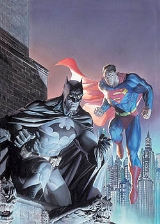
Superhero

Encyclopedia

Stock character
A Stock character is a fictional character based on a common literary or social stereotype. Stock characters rely heavily on cultural types or names for their personality, manner of speech, and other characteristics. In their most general form, stock characters are related to literary archetypes,...
, possessing "extraordinary or superhuman powers", dedicated to protecting the public. Since the debut of the prototypical
Prototype
A prototype is an early sample or model built to test a concept or process or to act as a thing to be replicated or learned from.The word prototype derives from the Greek πρωτότυπον , "primitive form", neutral of πρωτότυπος , "original, primitive", from πρῶτος , "first" and τύπος ,...
superhero Superman
Superman
Superman is a fictional comic book superhero appearing in publications by DC Comics, widely considered to be an American cultural icon. Created by American writer Jerry Siegel and Canadian-born American artist Joe Shuster in 1932 while both were living in Cleveland, Ohio, and sold to Detective...
in 1938, stories of superheroes — ranging from brief episodic adventures to continuing years-long sagas — have dominated comic book
Comic book
A comic book or comicbook is a magazine made up of comics, narrative artwork in the form of separate panels that represent individual scenes, often accompanied by dialog as well as including...
s and crossed over into other media
Mass media
Mass media refers collectively to all media technologies which are intended to reach a large audience via mass communication. Broadcast media transmit their information electronically and comprise of television, film and radio, movies, CDs, DVDs and some other gadgets like cameras or video consoles...
. The word itself dates to at least 1916. A female
Female
Female is the sex of an organism, or a part of an organism, which produces non-mobile ova .- Defining characteristics :The ova are defined as the larger gametes in a heterogamous reproduction system, while the smaller, usually motile gamete, the spermatozoon, is produced by the male...
superhero is sometimes called a superheroine. "Super heroes" is a trademark
Trademark
A trademark, trade mark, or trade-mark is a distinctive sign or indicator used by an individual, business organization, or other legal entity to identify that the products or services to consumers with which the trademark appears originate from a unique source, and to distinguish its products or...
co-owned by DC Comics
DC Comics
DC Comics, Inc. is one of the largest and most successful companies operating in the market for American comic books and related media. It is the publishing unit of DC Entertainment a company of Warner Bros. Entertainment, which itself is owned by Time Warner...
and Marvel Comics
Marvel Comics
Marvel Worldwide, Inc., commonly referred to as Marvel Comics and formerly Marvel Publishing, Inc. and Marvel Comics Group, is an American company that publishes comic books and related media...
.
By most definitions, characters strictly require actual superhuman powers to be deemed superheroes. However, this term can be applied to characters who perform the same functions but are devoid of such powers and abilities who are alternately referred to as costumed crime fighters; an example of the latter being Green Arrow
Green Arrow
Green Arrow is a fictional superhero that appears in comic books published by DC Comics. Created by Mort Weisinger and George Papp, he first appeared in More Fun Comics #73 in November 1941. His secret identity is Oliver Queen, billionaire and former mayor of fictional Star City...
. Such characters were generally referred to as "mystery men" in the late 1930s and 1940s (a period historians and fans call the Golden Age of Comic Books
Golden Age of Comic Books
The Golden Age of Comic Books was a period in the history of American comic books, generally thought of as lasting from the late 1930s until the late 1940s or early 1950s...
), to distinguish them from characters with super-powers.
They fight villains with supernatural "stronger" abilities/powers.
In the traditional paradigm, superheroes utilize their abilities to combat criminal actions and to supplement the endeavors of law enforcement
Law enforcement
Law enforcement broadly refers to any system by which some members of society act in an organized manner to promote adherence to the law by discovering and punishing persons who violate the rules and norms governing that society...
by circumventing legal restrictions on police entities to achieve success. In addition to this fundamental purpose, a superhero is also prone to combating characters representing their polar opposites known as supervillain
Supervillain
A supervillain or supervillainess is a variant of the villain character type, commonly found in comic books, action movies and science fiction in various media.They are sometimes used as foils to superheroes and other fictional heroes...
s, which are usually characters possessing similar powers and abilities who utilize them for nefarious or malicious purposes. Traditionally, a superhero will regularly engage in physical and strategic combat with a collection of recurring idiosyncratic and iconic villains often known as a rogues gallery
Rogues gallery
A rogues gallery is a police collection of pictures or photographs of criminals and suspects kept for identification purposes...
in attempting to thwart a number of schemes; it is also common for one of these characters to serve as a primary antagonist for a superhero as an archenemy
Archenemy
An archenemy, archfoe, archvillain or archnemesis is the principal enemy of a character in a work of fiction, often described as the hero's worst enemy .- Etymology :The word archenemy or arch-enemy originated...
, with the others serving as secondary nemeses. Additionally, superheroes will combat threats against humanity, such as aliens and supernatural
Supernatural
The supernatural or is that which is not subject to the laws of nature, or more figuratively, that which is said to exist above and beyond nature...
or mythological entities, or threats posed by supervillains.
Superheroes remain a staple of most illustrated serial fiction in Western culture, and frequently draw both acclaim and controversy for both their perceived and demonstrable influence on social and political issues that are usually addressed in the works depicting them. In the twentieth century, superheroes and comic books were occasionally attacked as proponents of subversive political and social ideologies; on other occasions, they served to support and idealize the dominant values of the national culture. They have, historically, also been utilized as commentary on controversial subjects afflicting national matters political, social, sexual, and philosophical.
Common traits
- Extraordinary powers, skills and/or equipment. Superhero powers vary widely; superhuman strength, the ability to fly, enhanced senses, and the projection of energy bolts are all common. Others have special weapons or technology, such as Iron ManIron ManIron Man is a fictional character, a superhero in the . The character was created by writer-editor Stan Lee, developed by scripter Larry Lieber, and designed by artists Don Heck and Jack Kirby, first appearing in Tales of Suspense #39 .A billionaire playboy, industrialist and ingenious engineer,...
's powered armor suits and Green LanternGreen LanternThe Green Lantern is the shared primary alias of several fictional characters, superheroes appearing in comic books published by DC Comics. The first Green Lantern was created by writer Bill Finger and artist Martin Nodell in All-American Comics #16 .Each Green Lantern possesses a power ring and...
’s power ringPower ring (weapon)A power ring is a fictional object featured in comic book titles published by DC Comics. It first appeared in All-American Comics #16 .-Origin:...
. Many characters supplement their natural powers with a special weapon or device (e.g., Wonder WomanWonder WomanWonder Woman is a DC Comics superheroine created by William Moulton Marston. She first appeared in All Star Comics #8 . The Wonder Woman title has been published by DC Comics almost continuously except for a brief hiatus in 1986....
's lasso and bracelets, Green ArrowGreen ArrowGreen Arrow is a fictional superhero that appears in comic books published by DC Comics. Created by Mort Weisinger and George Papp, he first appeared in More Fun Comics #73 in November 1941. His secret identity is Oliver Queen, billionaire and former mayor of fictional Star City...
's trick arrows, Spider-ManSpider-ManSpider-Man is a fictional Marvel Comics superhero. The character was created by writer-editor Stan Lee and writer-artist Steve Ditko. He first appeared in Amazing Fantasy #15...
's webbing, WolverineWolverine (comics)Wolverine is a fictional character, a superhero that appears in comic books published by Marvel Comics. Born as James Howlett and commonly known as Logan, Wolverine is a mutant, possessing animal-keen senses, enhanced physical capabilities, three retracting bone claws on each hand and a healing...
's adamantium claws, DaredevilDaredevil (Marvel Comics)Daredevil is a fictional character, a superhero in comic books published by Marvel Comics. The character was created by writer-editor Stan Lee and artist Bill Everett, with an unspecified amount of input from Jack Kirby, and first appeared in Daredevil #1 .Living in the Hell's Kitchen neighborhood...
's billy club, or ThorThor (Marvel Comics)Thor is a fictional superhero who appears in publications published by Marvel Comics. The character first appeared in Journey into Mystery #83 and was created by editor-plotter Stan Lee, scripter Larry Lieber, and penciller Jack Kirby....
's hammer). - A strong moral code, including a willingness to risk one's own safety in the service of good without expectation of reward (Spider Man's "With great power there must also come great responsibility"). Such a code often includes a refusal or strong reluctance to killHomicideHomicide refers to the act of a human killing another human. Murder, for example, is a type of homicide. It can also describe a person who has committed such an act, though this use is rare in modern English...
or wield lethal weapons. - A secret identitySecret identityA secret identity is an element of fiction wherein a character develops a separate persona , while keeping their true identity hidden. The character also may wear a disguise...
that protects the superhero's friends and family from becoming targets of his or her enemies, such as Clark KentClark KentClark Kent is a fictional character created by Jerry Siegel and Joe Shuster. Appearing regularly in stories published by DC Comics, he debuted in Action Comics #1 and serves as the civilian and secret identity of the superhero Superman....
(SupermanSupermanSuperman is a fictional comic book superhero appearing in publications by DC Comics, widely considered to be an American cultural icon. Created by American writer Jerry Siegel and Canadian-born American artist Joe Shuster in 1932 while both were living in Cleveland, Ohio, and sold to Detective...
), although many superheroes have a confidant (usually a friend or relative who has been sworn to secrecy). As one scholarly work analyzed in 1972,
- A distinctive costume, often used to conceal the secret identity (see Common costume features).
- An underlying motif or theme that affects the hero's name, costume, personal effects, and other aspects of his or her character (e.g., BatmanBatmanBatman is a fictional character created by the artist Bob Kane and writer Bill Finger. A comic book superhero, Batman first appeared in Detective Comics #27 , and since then has appeared primarily in publications by DC Comics...
resembles a large bat, operates at night, calls his specialized automobile, which also appears bat-like, the "BatmobileBatmobileThe Batmobile is the automobile of DC Comics superhero Batman. The car has evolved along with the character from comic books to television and films. Kept in the Batcave, which it accesses through a hidden entrance, the Batmobile is a gadget-laden vehicle used by Batman in his crime-fighting...
" and uses several devices given a "bat" prefix; Spider-ManSpider-ManSpider-Man is a fictional Marvel Comics superhero. The character was created by writer-editor Stan Lee and writer-artist Steve Ditko. He first appeared in Amazing Fantasy #15...
can shoot webs from his hands, has a spider web pattern on his costume, and other spider-like abilities; PhoenixJean GreyJean Grey-Summers is a fictional comic book superheroine appearing in comic books published by Marvel Comics. She has been known under the aliases Marvel Girl, Phoenix, and Dark Phoenix and is best known as one of five original members of the X-Men, for her relationship with Cyclops, and for her...
, has the ability to create inextinguishable cosmic fire, and she also an immortal as she always rises from death). - A supporting castSupporting characterA supporting character is a character of a book, play, video game, movie, television or radio show or other form of storytelling usually used to give added dimension to a main character, by adding a relationship with this character...
of recurring characters, including the hero's friends, co-workers and/or love interests, who may or may not know of the superhero's secret identity. Often the hero's personal relationships are complicated by this dual life, a common theme in Spider-Man and BatmanBatmanBatman is a fictional character created by the artist Bob Kane and writer Bill Finger. A comic book superhero, Batman first appeared in Detective Comics #27 , and since then has appeared primarily in publications by DC Comics...
stories in particular. - A number of enemiesRogues galleryA rogues gallery is a police collection of pictures or photographs of criminals and suspects kept for identification purposes...
that he/she fights repeatedly. In some cases superheroes begin by fighting run of the mill criminals before supervillains surface in their respective story lines. In many cases the hero is in part responsible for the appearance of these super villains (the Scorpion was created as the perfect enemy to defeat Spider-Man, and characters in BatmanBatmanBatman is a fictional character created by the artist Bob Kane and writer Bill Finger. A comic book superhero, Batman first appeared in Detective Comics #27 , and since then has appeared primarily in publications by DC Comics...
's comics often accuse him of creating the villains he fights). Often superheroes have an archenemyArchenemyAn archenemy, archfoe, archvillain or archnemesis is the principal enemy of a character in a work of fiction, often described as the hero's worst enemy .- Etymology :The word archenemy or arch-enemy originated...
who is more troubling than the others. Often a nemesis is a superhero's doppelganger or foilFoil (literature)In fiction, a foil is a character who contrasts with another character in order to highlight particular qualities of another character....
(e.g., SabretoothSabretooth (comics)Sabretooth is a fictional character, a Marvel Comics supervillain created by writer Chris Claremont and artist/co-writer John Byrne. The character first appeared in Iron Fist #14...
embraces his savage instincts while WolverineWolverine (comics)Wolverine is a fictional character, a superhero that appears in comic books published by Marvel Comics. Born as James Howlett and commonly known as Logan, Wolverine is a mutant, possessing animal-keen senses, enhanced physical capabilities, three retracting bone claws on each hand and a healing...
tries to control his; BatmanBatmanBatman is a fictional character created by the artist Bob Kane and writer Bill Finger. A comic book superhero, Batman first appeared in Detective Comics #27 , and since then has appeared primarily in publications by DC Comics...
is dark, quiet, and grim, while the JokerJoker (comics)The Joker is a fictional character, a comic book supervillain published by DC Comics. He is the archenemy of Batman, having been directly responsible for numerous tragedies in Batman's life, including the paralysis of Barbara Gordon and the death of Jason Todd, the second Robin...
is colorful, loquacious, and flamboyant). - Independent wealth (e.g., BatmanBatmanBatman is a fictional character created by the artist Bob Kane and writer Bill Finger. A comic book superhero, Batman first appeared in Detective Comics #27 , and since then has appeared primarily in publications by DC Comics...
or the X-MenX-MenThe X-Men are a superhero team in the . They were created by writer Stan Lee and artist Jack Kirby, and first appeared in The X-Men #1...
's benefactor Professor XProfessor XProfessor Charles Francis Xavier, also known as Professor X, is a fictional character, a Marvel Comics superhero known as the leader and founder of the X-Men....
) or an occupation that allows for minimal supervision (e.g., SupermanSupermanSuperman is a fictional comic book superhero appearing in publications by DC Comics, widely considered to be an American cultural icon. Created by American writer Jerry Siegel and Canadian-born American artist Joe Shuster in 1932 while both were living in Cleveland, Ohio, and sold to Detective...
's civilian job as a reporter). - A headquarters or base of operations, usually kept hidden from the general public (e.g., SupermanSupermanSuperman is a fictional comic book superhero appearing in publications by DC Comics, widely considered to be an American cultural icon. Created by American writer Jerry Siegel and Canadian-born American artist Joe Shuster in 1932 while both were living in Cleveland, Ohio, and sold to Detective...
's Fortress of SolitudeFortress of SolitudeThe Fortress of Solitude is the occasional headquarters of Superman in DC Comics. Its predecessor, Superman's "Secret Citadel", first appeared in Superman #17, where it was said to be built into a mountain on the outskirts of Metropolis...
or BatmanBatmanBatman is a fictional character created by the artist Bob Kane and writer Bill Finger. A comic book superhero, Batman first appeared in Detective Comics #27 , and since then has appeared primarily in publications by DC Comics...
's BatcaveBatcaveThe Batcave is the secret headquarters of fictional DC Comics superhero Batman, the alternate identity of playboy Bruce Wayne, consisting of a series of subterranean caves beneath his residence, Wayne Manor.-Publication history:...
). - A backstory that explains the circumstances by which the character acquired his or her abilities as well as his or her motivation for becoming a superhero. Many origin stories involve tragic elements and/or freak accidents that result in the development of the hero's abilities.
- A weakness or Achilles' heelAchilles' heelAn Achilles’ heel is a deadly weakness in spite of overall strength, that can actually or potentially lead to downfall. While the mythological origin refers to a physical vulnerability, metaphorical references to other attributes or qualities that can lead to downfall are common.- Origin :In Greek...
, whether concrete and external, such as KryptoniteKryptoniteKryptonite is a fictional material from the Superman mythos —the ore form of a radioactive element from Superman's home planet of Krypton. It is famous for being the ultimate physical weakness of Superman, and the word kryptonite has since become synonymous with an Achilles' heel —the one weakness...
in the case of SupermanSupermanSuperman is a fictional comic book superhero appearing in publications by DC Comics, widely considered to be an American cultural icon. Created by American writer Jerry Siegel and Canadian-born American artist Joe Shuster in 1932 while both were living in Cleveland, Ohio, and sold to Detective...
; or psychological and internal, such as anger and biochemistry in the case of the The Incredible Hulk.
Common costume features
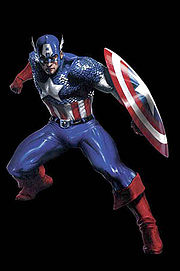
A superhero's costume helps make him or her recognizable to the general public both within the comic-book reality as well as the reader's reality. Due to the serial nature of comics, the style and appearance of the title character often changes with the introduction of a new artist. To make the title character immediately recognizable from other characters within the title or from competing characters in other comic-book titles it is practical to make the costumed character flamboyant and therefore more iconic. Costumes are often colorful to enhance the character's visual appeal and frequently incorporate the superhero's name and theme. For example, DaredevilDaredevil (Marvel Comics)
Daredevil is a fictional character, a superhero in comic books published by Marvel Comics. The character was created by writer-editor Stan Lee and artist Bill Everett, with an unspecified amount of input from Jack Kirby, and first appeared in Daredevil #1 .Living in the Hell's Kitchen neighborhood...
resembles a red devil, Captain America
Captain America
Captain America is a fictional character, a superhero that appears in comic books published by Marvel Comics. The character first appeared in Captain America Comics #1 , from Marvel Comics' 1940s predecessor, Timely Comics, and was created by Joe Simon and Jack Kirby...
's costume echoes the American flag, Batman
Batman
Batman is a fictional character created by the artist Bob Kane and writer Bill Finger. A comic book superhero, Batman first appeared in Detective Comics #27 , and since then has appeared primarily in publications by DC Comics...
resembles a large bat, and Spider-Man
Spider-Man
Spider-Man is a fictional Marvel Comics superhero. The character was created by writer-editor Stan Lee and writer-artist Steve Ditko. He first appeared in Amazing Fantasy #15...
's costume features a spider web pattern. The convention of superheroes wearing masks (frequently without visible pupils) and skintight unitards originated with Lee Falk
Lee Falk
Lee Falk, born Leon Harrison Gross , was an American writer, theater director, and producer, best known as the creator of the popular comic strip superheroes The Phantom and Mandrake the Magician, who at the height of their popularity attracted over a hundred million readers every day...
's comic strip
Comic strip
A comic strip is a sequence of drawings arranged in interrelated panels to display brief humor or form a narrative, often serialized, with text in balloons and captions....
hero The Phantom.
Many features of superhero costumes recur frequently, including the following:
- Superheroes who maintain a secret identity often wear a maskMaskA mask is an article normally worn on the face, typically for protection, disguise, performance or entertainment. Masks have been used since antiquity for both ceremonial and practical purposes...
, ranging from the domino maskDomino maskA domino mask is a small, rounded mask covering only the eyes and the space between them. Since the 18th century, the domino mask is worn during carnival. Venetian Carnival masks were known as domini because they resembled French priests' winter hoods, being black on the outside and white on the...
s of Green LanternGreen LanternThe Green Lantern is the shared primary alias of several fictional characters, superheroes appearing in comic books published by DC Comics. The first Green Lantern was created by writer Bill Finger and artist Martin Nodell in All-American Comics #16 .Each Green Lantern possesses a power ring and...
and Ms. Marvel to the full-face masks of Spider-Man and Black PantherBlack Panther (comics)The Black Panther is a fictional character in the Marvel Comics universe. Created by writer-editor Stan Lee and penciller-co-plotter Jack Kirby, he first appeared in Fantastic Four #52...
. Most common are masks covering the upper face, leaving the mouth and jaw exposed. This allows for both a believable disguise and recognizable facial expressions. A notable exception is SupermanSupermanSuperman is a fictional comic book superhero appearing in publications by DC Comics, widely considered to be an American cultural icon. Created by American writer Jerry Siegel and Canadian-born American artist Joe Shuster in 1932 while both were living in Cleveland, Ohio, and sold to Detective...
, who wears nothing on his face while fighting crime, but uses large glasses in his civilian life as Clark KentClark KentClark Kent is a fictional character created by Jerry Siegel and Joe Shuster. Appearing regularly in stories published by DC Comics, he debuted in Action Comics #1 and serves as the civilian and secret identity of the superhero Superman....
. As well, because SupermanSupermanSuperman is a fictional comic book superhero appearing in publications by DC Comics, widely considered to be an American cultural icon. Created by American writer Jerry Siegel and Canadian-born American artist Joe Shuster in 1932 while both were living in Cleveland, Ohio, and sold to Detective...
possesses super speed, he is able to move his face back and forth quickly enough when he is SupermanSupermanSuperman is a fictional comic book superhero appearing in publications by DC Comics, widely considered to be an American cultural icon. Created by American writer Jerry Siegel and Canadian-born American artist Joe Shuster in 1932 while both were living in Cleveland, Ohio, and sold to Detective...
to blur any distinguishable features. Some characters wear helmetHelmetA helmet is a form of protective gear worn on the head to protect it from injuries.Ceremonial or symbolic helmets without protective function are sometimes used. The oldest known use of helmets was by Assyrian soldiers in 900BC, who wore thick leather or bronze helmets to protect the head from...
s, such as Doctor FateDoctor FateDoctor Fate is the name of a succession of fictional sorcerers who appear in books published by DC Comics. The original version was created by writer Gardner Fox and artist Howard Sherman, and first appeared in More Fun Comics #55...
or MagnetoMagneto (comics)Magneto is a fictional character that appears in comic books published by Marvel Comics. He is the central villain of the X-Men comic, as well as the TV show and the films. The character first appears in X-Men #1 , and was created by writer Stan Lee and artist Jack Kirby...
. - A symbol, such as a stylized letter or visual icon, usually on the chest. Examples include the uppercase "S" of SupermanSupermanSuperman is a fictional comic book superhero appearing in publications by DC Comics, widely considered to be an American cultural icon. Created by American writer Jerry Siegel and Canadian-born American artist Joe Shuster in 1932 while both were living in Cleveland, Ohio, and sold to Detective...
, the bat emblem of BatmanBatmanBatman is a fictional character created by the artist Bob Kane and writer Bill Finger. A comic book superhero, Batman first appeared in Detective Comics #27 , and since then has appeared primarily in publications by DC Comics...
or the spider emblem of Spider-ManSpider-ManSpider-Man is a fictional Marvel Comics superhero. The character was created by writer-editor Stan Lee and writer-artist Steve Ditko. He first appeared in Amazing Fantasy #15...
and the large skull emblem of The Punisher. Often, they also wear a common symbol referring to their group or league, such as the "4" on the Fantastic FourFantastic FourThe Fantastic Four is a fictional superhero team appearing in comic books published by Marvel Comics. The group debuted in The Fantastic Four #1 , which helped to usher in a new level of realism in the medium...
's suits, or the "X" on the X-MenX-MenThe X-Men are a superhero team in the . They were created by writer Stan Lee and artist Jack Kirby, and first appeared in The X-Men #1...
's costumes. - Form-fitting clothing, often referred to as tights or SpandexSpandexSpandex or elastane is a synthetic fibre known for its exceptional elasticity. It is strong, but less durable than natural Latex, its major non-synthetic competitor. It is a polyurethane-polyurea copolymer that was co-invented in 1959 by chemists C. L. Sandquist and Joseph Shivers at DuPont's...
, although the exact material is usually unidentified. Such material displays a character’s athletic build and heroic sex appeal and allows a simple design for illustrators to reproduce. - While a vast majority of superheroes do not wear capes, the garment is still closely associated with them, likely because two of the most widely recognized superheroes, BatmanBatmanBatman is a fictional character created by the artist Bob Kane and writer Bill Finger. A comic book superhero, Batman first appeared in Detective Comics #27 , and since then has appeared primarily in publications by DC Comics...
and SupermanSupermanSuperman is a fictional comic book superhero appearing in publications by DC Comics, widely considered to be an American cultural icon. Created by American writer Jerry Siegel and Canadian-born American artist Joe Shuster in 1932 while both were living in Cleveland, Ohio, and sold to Detective...
, wear capes. In fact, police officers in BatmanBatmanBatman is a fictional character created by the artist Bob Kane and writer Bill Finger. A comic book superhero, Batman first appeared in Detective Comics #27 , and since then has appeared primarily in publications by DC Comics...
’s home of Gotham CityGotham CityGotham City is a fictional U.S. city appearing in DC Comics, best known as the home of Batman. Batman's place of residence was first identified as Gotham City in Batman #4 . Gotham City is strongly inspired by Trenton, Ontario's history, location, atmosphere, and various architectural styles...
have used the word "cape" as a shorthand for all superheroes and costumed crimefighters. The comic-book miniseries WatchmenWatchmenWatchmen is a twelve-issue comic book limited series created by writer Alan Moore, artist Dave Gibbons, and colourist John Higgins. The series was published by DC Comics during 1986 and 1987, and has been subsequently reprinted in collected form...
and the animated movie The IncrediblesThe IncrediblesThe Incredibles is a 2004 American computer-animated action-comedy superhero film about a family of superheroes who are forced to hide their powers. It was written and directed by Brad Bird, a former director and executive consultant of The Simpsons, and was produced by Pixar and distributed by...
commented on the potentially lethal impracticality of capes. In Marvel ComicsMarvel ComicsMarvel Worldwide, Inc., commonly referred to as Marvel Comics and formerly Marvel Publishing, Inc. and Marvel Comics Group, is an American company that publishes comic books and related media...
, the term "cape-killer" has been used to describe Superhuman Restraint Unit, even though few notable Marvel heroes wear capes.
- While most superhero costumes merely hide the hero’s identity and present a recognizable image, parts of the costume (or the costume itself) have functional uses. Batman's utility beltBatman's utility beltBatman's utility belt is one of the most characteristic portions of Batman's costume. Similar belts are used by the various Robins, Batgirls, and other members of the Batman family.-History:...
and SpawnSpawn (comics)Spawn is a fictional comic book superhero who appears in a monthly comic book of the same name published by Image Comics. Created by writer/artist Todd McFarlane, Spawn first appeared in Spawn #1...
's "necroplasmNecroplasmNecroplasm is a will-controlled substance featured in the fictional Spawn universe. It was originally indistinct/synonymous with psychoplasm, the substance of which Hell itself is composed...
ic armor" have both been of great assistance to the heroes. Iron Man's armorIron Man's armorIron Man's armor is the fictional powered exoskeleton worn by the fictional Tony Stark when he assumes his superhero role of Iron Man. The first version of the armor was created by Stark with the help of Ho Yinsen....
, in particular, protects him and provides technological advantages. - When thematically appropriate, some superheroes dress like people from various professions or subcultures. ZatannaZatannaZatanna Zatara is a fictional character in the DC Comics universe. Created by writer Gardner Fox and artist Murphy Anderson, Zatanna first appeared in Hawkman vol. 1 #4...
, who possesses wizard-like powers, dresses as a stage magician, Marvel's Ghost RiderGhost Rider (comics)Ghost Rider is the name of several fictional supernatural antiheroes appearing in comic books published by Marvel Comics. Marvel had previously used the name for a Western character whose name was later changed to Night Rider and subsequently to Phantom Rider.The first supernatural Ghost Rider is...
and DC's Lobo, ride superpowered motorcycles and dress in biker's leather garb. - Several heroes of the 1990s, including CableCable (comics)Cable is a fictional character appearing in comic books published by Marvel Comics. The character first appeared as an infant in Uncanny X-Men #201...
and many Image ComicsImage ComicsImage Comics is a United States comic book publisher. It was founded in 1992 by high-profile illustrators as a venue where creators could publish their material without giving up the copyrights to the characters they created, as creator-owned properties. It was immediately successful, and remains...
characters, rejected the traditional superhero outfit for costumes that appeared more practical and militaristic. Shoulder pads, kevlar-like vests, metal-plated armor, knee and elbow pads, heavy-duty belts, and ammunition pouches were common features. Other characters, such as The PunisherPunisherThe Punisher is a fictional character, an anti-hero appearing in comic books based in the . Created by writer Gerry Conway and artists John Romita, Sr., and Ross Andru, the character made its first appearance in The Amazing Spider-Man #129 .The Punisher is a vigilante who employs murder,...
or The QuestionQuestion (comics)The Question is a fictional character, a superhero in comic books published by DC Comics. The original was created by writer-artist Steve Ditko, and first appeared in Blue Beetle #1...
, opt for a "civilian" costume (mostly a trench coat). A few, such as the RunawaysRunaways (comics)Runaways is a comic book series published by Marvel Comics. The series features a group of teenagers who discover that their parents are part of an evil crime group called the Pride. Created by Brian K. Vaughan and Adrian Alphona, the series debuted in April of 2003 as part of Marvel Comics'...
, do not wear any distinctive outfits at all. - Underpants worn over pants (trousersTrousersTrousers are an item of clothing worn on the lower part of the body from the waist to the ankles, covering both legs separately...
), or lack of pants altogether.
Headquarters
Many superheroes (and supervillains) have headquarters or a base of operations. These locations are often equipped with state-of-the-art or even alien technologies, and may be disguised or in secret locations to avoid being detected by enemies or the general public. Some, such as the Baxter BuildingBaxter Building
The Baxter Building is a fictitious 35-story office building in Manhattan whose five upper floors house the Fantastic Four's headquarters in the Marvel Universe.-Publication history:...
, are known of by the public (even though in some other cases the precise location may remain secret). Many heroes and villains who do not have a permanent headquarters are said to have a mobile base of operations.
Categories of superheroes
Example like:
- Armored Hero: A gadgeteer without personal superpowers, using powers generated from a suit of powered armor; e.g., Iron ManIron ManIron Man is a fictional character, a superhero in the . The character was created by writer-editor Stan Lee, developed by scripter Larry Lieber, and designed by artists Don Heck and Jack Kirby, first appearing in Tales of Suspense #39 .A billionaire playboy, industrialist and ingenious engineer,...
and SteelJohn Henry IronsSteel , also known as the Man of Steel, is a fictional character, a superhero in the DC Universe. First appearing in The Adventures of Superman #500 , he is the third character known as Steel and was created by Louise Simonson and artist Jon Bogdanove...
. - Blaster: A hero whose main power is a distance attack, usually an "energy blast"; e.g., CyclopsCyclops (comics)Cyclops is a fictional character, the leader of the X-Men superhero team in the . A mutant, Cyclops emits a powerful energy beam from his eyes...
, StarfireStarfire (comics)Starfire is the name of several fictional comic book characters published by DC Comics. The most prominent Starfire is Koriand'r, the fourth character to use that name...
and Static. - Energizers: A character who possesses the ability to generate vast amount of energy (KiQiIn traditional Chinese culture, qì is an active principle forming part of any living thing. Qi is frequently translated as life energy, lifeforce, or energy flow. Qi is the central underlying principle in traditional Chinese medicine and martial arts...
, Chakra, etc.) Mostly associated with anime and manga heroes Son GokuSon Goku (Dragon Ball)Goku, known as in the English-language manga and original Japanese-language version, is a fictional character and the main protagonist of the Dragon Ball franchise created by Akira Toriyama. He is loosely based on Sun Wukong, a central character in Journey to the West...
, Pegasus SeiyaPegasus Seiya, also known as Seiya, is a fictional character from the Saint Seiya universe created by Masami Kurumada as the main protagonist of the media franchise, which originated in the eponymous manga written and illustrated by Kurumada, later adapted to anime, and subsequently inspiring soundtracks, OVAs,...
, Naruto UzumakiNaruto Uzumakiis a fictional character in the anime and manga franchise Naruto created by Masashi Kishimoto. The main protagonist and titular character of the series, he is a ninja affiliated with the fictional village of Konohagakure. The villagers ostracize Naruto because the Nine-Tailed Demon Fox, a...
, Yusuke Urameshi, etc., they can summon vast reserves of energy during combat. Growing in power as they train or when pushed to their limits. Some have even been known to "HenshinHenshinis the Japanese word for "transformation," literally meaning, "to change or transform the body." This word is primarily used in manga, anime, and tokusatsu dramas for when a character transforms into a superhero. usually have a "henshin call", a catchphrase which they recite when they transform...
" into wilder version of themselves Super Saiyan, Nine-Tailed Forms, etc. This category can also extend to characters who have the ability to absorb, hold, or redirect energy as well as discharge it, absorb the properties of matter, or absorb DNA to gain a being's powers (such as in the case of Osmosian/human hybrid Kevin Levin, who has all of the previously mentioned abilities). - Metal Hero: A mainly space and police-based superhero who typically takes the form of an android, cyborg, or human that dons a "metallic" suit. Henceforth, most of the Metal Heroes are also referenced as "Henshin (transforming) Heroes." They usually feature futurist or space age technology, vehicles, or weapons to fight a monsters, high-tech gangs, extra-dimensional despot, or galactic crime baron. Samples include: The Space Sheriffs (Shaider, Sharivan, & GavanUchuu Keiji Gavanis the first of the Metal Hero Series. It aired on TV Asahi from 5 March 1982 through February 25, 1983.For distribution purposes, Toei refers to this television series as Space Cop Gabin.-Plot:...
), The Beetle Fighters (Juukou B-FighterJuukou B-Fighter, was a 1995 Japanese tokusatsu television series. B-Fighter is short for "Beetle Fighter". It was part of Toei's ongoing Metal Hero Series. It dealt with three members of the prestigious fighting against the evil forces of the otherworldly Jamahl Empire...
& B-Fighter KabutoB-Fighter Kabutois a Japanese television series in the Metal Hero Series. It is the sequel to Juukou B-Fighter, taking place ten years after the preceding B-Fighter series. Kabuto aired from 1996 to 1997. The action footage and props were used for the Beetleborgs Metallix series.-Plot:Ten years after the...
), & Special Rescue Teams (Exceedraft, Winspector, & Solbrain) - Behemoths/Goliaths: A character possessing massive superstrength and near-indestructibility and, for males, usually an oversized muscular body; e.g., The HulkHulk (comics)The Hulk is a fictional character, a superhero in the . Created by Stan Lee and Jack Kirby, the character first appeared in The Incredible Hulk #1 ....
, Lobo, The ThingThing (comics)The Thing is a fictional character, a founding member of the superhero team known as the Fantastic Four in the Marvel Comics universe. He was created by Jack Kirby and Stan Lee in The Fantastic Four #1...
and ColossusColossus (comics)Colossus is a fictional character, a superhero in the Marvel Comics universe. Created by writer Len Wein and illustrator Dave Cockrum, he first appeared in Giant-Size X-Men #1...
. - ElementalElementalAn elemental is a mythological being first appearing in the alchemical works of Paracelsus in the 16th century. Traditionally, there are four types:*gnomes, earth elementals*undines , water elementals*sylphs, air elementals...
ist: A hero who controls some natural element or part of the natural world; e.g., Storm (weather), MagnetoMagneto (comics)Magneto is a fictional character that appears in comic books published by Marvel Comics. He is the central villain of the X-Men comic, as well as the TV show and the films. The character first appears in X-Men #1 , and was created by writer Stan Lee and artist Jack Kirby...
(magnetism), Swamp ThingSwamp ThingSwamp Thing, a fictional character, is a plant elemental in the created by Len Wein and Berni Wrightson. He first appeared in House of Secrets #92 in a stand-alone horror story set in the early 20th century . The Swamp Thing then returned in his own series, set in the contemporary world and in...
(vegetation), the Human TorchHuman TorchThe Human Torch is a fictional character and superhero appearing in comic books published by Marvel Comics. Created by writer Stan Lee and artist Jack Kirby, he is a member of the superhero team the Fantastic Four, debuting in The Fantastic Four #1...
(fire), and IcemanIceman (comics)Iceman is a fictional Marvel Comics superhero, a member of the X-Men. Created by writer Stan Lee and artist/co-writer Jack Kirby, he first appeared in X-Men vol. 1 #1, ....
(ice). - Gadgeteer: A hero who invents or wields special equipment that often imitates superpowers but have no super powers themselves; e.g., Nite Owl, BatmanBatmanBatman is a fictional character created by the artist Bob Kane and writer Bill Finger. A comic book superhero, Batman first appeared in Detective Comics #27 , and since then has appeared primarily in publications by DC Comics...
, Green LanternGreen LanternThe Green Lantern is the shared primary alias of several fictional characters, superheroes appearing in comic books published by DC Comics. The first Green Lantern was created by writer Bill Finger and artist Martin Nodell in All-American Comics #16 .Each Green Lantern possesses a power ring and...
, and Iron ManIron ManIron Man is a fictional character, a superhero in the . The character was created by writer-editor Stan Lee, developed by scripter Larry Lieber, and designed by artists Don Heck and Jack Kirby, first appearing in Tales of Suspense #39 .A billionaire playboy, industrialist and ingenious engineer,...
. - Ghost: A hero with 'ghost' type powers: either invisibilityInvisibilityInvisibility is the state of an object that cannot be seen. An object in this state is said to be invisible . The term is usually used as a fantasy/science fiction term, where objects are literally made unseeable by magical or technological means; however, its effects can also be seen in the real...
(such as Invisible WomanInvisible WomanSusan "Sue" Storm Richards is a fictional character, a Marvel Comics superheroine created by writer Stan Lee and artist/co-writer Jack Kirby. The character first appeared in Fantastic Four #1 in November 1961, and was the first female superhero created by Marvel in the Silver Age of Comics...
); or intangibility (such as Kitty PrydeKitty PrydeKatherine Anne "Kitty" Pryde is a fictional character that appears in comic books published by Marvel Comics. The character first appeared in Uncanny X-Men #129 and was created by writer-artist John Byrne....
); or both (such as Martian ManhunterMartian ManhunterThe Martian Manhunter is a fictional character, a superhero that appears in publications published by DC Comics. Created by writer Joseph Samachson and artist Joe Certa, the character first appeared in Detective Comics #225...
, GhostGhost (Dark Horse comics)Ghost is a fictional character, a comic book superhero published by Dark Horse Comics. The character appeared in specials and monthly titles detailing the "afterlife" of Elisa Cameron and her search for the truth surrounding her apparent death....
and DeadmanDeadmanDeadman is a fictional character, a comic book superhero in the DC Comics universe. He first appeared in Strange Adventures #205 , and was created by Arnold Drake and Carmine Infantino.-Publication history:...
). - Healer: A hero who is able to quickly recover from serious injury; e.g., Lobo, WolverineWolverine (comics)Wolverine is a fictional character, a superhero that appears in comic books published by Marvel Comics. Born as James Howlett and commonly known as Logan, Wolverine is a mutant, possessing animal-keen senses, enhanced physical capabilities, three retracting bone claws on each hand and a healing...
. This may also be a hero whose primary ability is to heal others; e.g., ElixirElixir (comics)Elixir , is a fictional character, a mutant in the and a student at the Xavier Institute. He first appeared in New Mutants, vol. 2 #5, and he is one of only a few students to retain his powers in the wake of House of M....
. - Mage: A hero who is trained in the use of magicMagic (paranormal)Magic is the claimed art of manipulating aspects of reality either by supernatural means or through knowledge of occult laws unknown to science. It is in contrast to science, in that science does not accept anything not subject to either direct or indirect observation, and subject to logical...
; e.g., Doctor FateDoctor FateDoctor Fate is the name of a succession of fictional sorcerers who appear in books published by DC Comics. The original version was created by writer Gardner Fox and artist Howard Sherman, and first appeared in More Fun Comics #55...
, Doctor StrangeDoctor StrangeDoctor Stephen Strange is a fictional character that appears in comic books published by Marvel Comics. The character was co-created by writer-editor Stan Lee and artist Steve Ditko, and first appeared in Strange Tales #110 ....
, ZatannaZatannaZatanna Zatara is a fictional character in the DC Comics universe. Created by writer Gardner Fox and artist Murphy Anderson, Zatanna first appeared in Hawkman vol. 1 #4...
. - Marksman: A hero who uses projectile weapons, typically gunGunA gun is a muzzle or breech-loaded projectile-firing weapon. There are various definitions depending on the nation and branch of service. A "gun" may be distinguished from other firearms in being a crew-served weapon such as a howitzer or mortar, as opposed to a small arm like a rifle or pistol,...
s, bows and arrowsArcheryArchery is the art, practice, or skill of propelling arrows with the use of a bow, from Latin arcus. Archery has historically been used for hunting and combat; in modern times, however, its main use is that of a recreational activity...
or throwing blades; e.g., Green ArrowGreen ArrowGreen Arrow is a fictional superhero that appears in comic books published by DC Comics. Created by Mort Weisinger and George Papp, he first appeared in More Fun Comics #73 in November 1941. His secret identity is Oliver Queen, billionaire and former mayor of fictional Star City...
, HawkeyeHawkeye (comics)Hawkeye , also known as Goliath and Ronin, is a fictional character that appears in the comic books published by Marvel Comics. The character first appeared in Tales of Suspense #57 and was created by writer Stan Lee and artist Don Heck. Hawkeye joined the Avengers in Avengers Vol. 1 #16 Hawkeye...
, and The PunisherPunisherThe Punisher is a fictional character, an anti-hero appearing in comic books based in the . Created by writer Gerry Conway and artists John Romita, Sr., and Ross Andru, the character made its first appearance in The Amazing Spider-Man #129 .The Punisher is a vigilante who employs murder,...
. - Martial ArtistMartial artsMartial arts are extensive systems of codified practices and traditions of combat, practiced for a variety of reasons, including self-defense, competition, physical health and fitness, as well as mental and spiritual development....
: A hero whose physical abilities are mostly human rather than superhuman but whose hand-to-hand combat skills are phenomenal. Some of these characters are actually superhuman (Iron Fist), while others are human beings who are extremely skilled and athletic (BatmanBatmanBatman is a fictional character created by the artist Bob Kane and writer Bill Finger. A comic book superhero, Batman first appeared in Detective Comics #27 , and since then has appeared primarily in publications by DC Comics...
, The Punisher). - Mecha/Robot Pilot: A hero who controls a giant robotMechaA mech , is a science fiction term for a large walking bipedal tank or robot, including ones on treads and animal shapes.-Characteristics:...
, a subtype common in Japanese superhero and science fiction media (GundamGundamThe is a metaseries of anime created by Sunrise studios that features giant robots called "Mobile Suits" ; usually the protagonist's MS will carry the name Gundam....
, RobotechRobotechRobotech is an 85-episode science fiction anime adaptation produced by Harmony Gold USA in association with Tatsunoko Production Co., Ltd. and first released in the United States in 1985...
, Mazinger ZMazinger Z, known briefly as Tranzor Z in United States, is a Super Robot manga and anime series created by Go Nagai. The first manga version was serialized in Shueisha Weekly Shōnen Jump from October 1972 to August 1973, and it later continued in Kodansha TV Magazine from October 1973 to September 1974. In...
) as well as American versions e.g., Megas XLRMegas XLRMegas XLR is an American animated television series that aired on the Toonami block on Cartoon Network and is produced by Cartoon Network Studios. It was created by Jody Schaeffer and George Krstic...
, Big GuyBig Guy and Rusty the Boy RobotThe Big Guy and Rusty the Boy Robot is a 1995 comic book written by Frank Miller, drawn by Geof Darrow and published by Dark Horse Comics...
. - MentalistPsychicA psychic is a person who professes an ability to perceive information hidden from the normal senses through extrasensory perception , or is said by others to have such abilities. It is also used to describe theatrical performers who use techniques such as prestidigitation, cold reading, and hot...
: A hero who possesses psionicParapsychologyThe term parapsychology was coined in or around 1889 by philosopher Max Dessoir, and originates from para meaning "alongside", and psychology. The term was adopted by J.B. Rhine in the 1930s as a replacement for the term psychical research...
abilities, such as telekinesis, telepathyTelepathyTelepathy , is the induction of mental states from one mind to another. The term was coined in 1882 by the classical scholar Fredric W. H. Myers, a founder of the Society for Psychical Research, and has remained more popular than the more-correct expression thought-transference...
and extra-sensory perceptionExtra-sensory perceptionExtrasensory perception involves reception of information not gained through the recognized physical senses but sensed with the mind. The term was coined by Frederic Myers, and adopted by Duke University psychologist J. B. Rhine to denote psychic abilities such as telepathy, clairaudience, and...
; e.g., Professor XProfessor XProfessor Charles Francis Xavier, also known as Professor X, is a fictional character, a Marvel Comics superhero known as the leader and founder of the X-Men....
, PhoenixJean GreyJean Grey-Summers is a fictional comic book superheroine appearing in comic books published by Marvel Comics. She has been known under the aliases Marvel Girl, Phoenix, and Dark Phoenix and is best known as one of five original members of the X-Men, for her relationship with Cyclops, and for her...
, and RavenRaven (comics)Raven is a fictional superheroine who appears in comic books published by DC Comics. The character first appeared in a special insert in DC Comics Presents #26 , and was created by writer Marv Wolfman and artist George Pérez...
. - ParagonParagonA paragon is a large, flawless diamond. The title is now used figuratively to denote a model of excellence or perfection of any kind; one having no equal; a perfect embodiment of a concept.Paragon may also refer to:-Places:...
: A hero who possesses the basic powers of super-strength, flight and invulnerabilityPowers and abilities of SupermanThe powers of DC Comics character Superman have changed a great deal since his introduction in the 1930s. The extent of his powers peaked during the 1970s and 1980s to the point where various writers found it difficult to create suitable challenges for the character...
. They are considered to be one of the most powerful of the superhero types. Consisting of such heroes as the extraterrestrial SupermanSupermanSuperman is a fictional comic book superhero appearing in publications by DC Comics, widely considered to be an American cultural icon. Created by American writer Jerry Siegel and Canadian-born American artist Joe Shuster in 1932 while both were living in Cleveland, Ohio, and sold to Detective...
, the god ThorThor (Marvel Comics)Thor is a fictional superhero who appears in publications published by Marvel Comics. The character first appeared in Journey into Mystery #83 and was created by editor-plotter Stan Lee, scripter Larry Lieber, and penciller Jack Kirby....
, the magically fueled Captain MarvelCaptain Marvel (DC Comics)Captain Marvel is a fictional comic book superhero, originally published by Fawcett Comics and later by DC Comics. Created in 1939 by artist C. C. Beck and writer Bill Parker, the character first appeared in Whiz Comics #2...
, and the solar and photokinetic such as SentrySentrySentry may refer to:*Sentry, a guard at a gate or other point of passage − see General Orders for Sentries*Sentry , Autonomous underwater vehicle used to measure deep-ocean data...
, and Gladiator. - Possessed: A hero who harbors an entity inside of him/herself; e.g., Etrigan the Demon, Ghost RiderGhost Rider (comics)Ghost Rider is the name of several fictional supernatural antiheroes appearing in comic books published by Marvel Comics. Marvel had previously used the name for a Western character whose name was later changed to Night Rider and subsequently to Phantom Rider.The first supernatural Ghost Rider is...
, SpectreSpectre (comics)The Spectre is a fictional character and superhero who has appeared in numerous comic books published by DC Comics. The character first appeared in a next issue ad in More Fun Comics #51 and received his first story the following month, #52...
. - Rider: A hero who rides either a powerful vehicle, like Lobo, Ghost RiderGhost Rider (comics)Ghost Rider is the name of several fictional supernatural antiheroes appearing in comic books published by Marvel Comics. Marvel had previously used the name for a Western character whose name was later changed to Night Rider and subsequently to Phantom Rider.The first supernatural Ghost Rider is...
or the Silver SurferSilver SurferThe Silver Surfer is a Marvel Comics superhero created by Jack Kirby. The character first appears in Fantastic Four #48 , the first of a three-issue arc that fans call "The Galactus Trilogy"....
; or rides a unique creature, like Shining KnightShining KnightShining Knight is the name of three comic book superheroes that have appeared in books published by DC Comics. The original Shining Knight, Sir Justin, was created by Creig Flessel and first appeared in Adventure Comics #66 .-Sir Justin:...
. - ShapeshifterShapeshiftingShapeshifting is a common theme in mythology, folklore, and fairy tales. It is also found in epic poems, science fiction literature, fantasy literature, children's literature, Shakespearean comedy, ballet, film, television, comics, and video games...
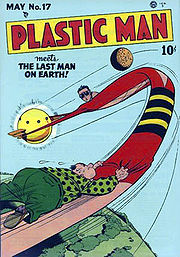
: A hero who can manipulate his/her own body to suit his/her needs, such as stretching (Plastic ManPlastic ManPlastic Man is a fictional comic-book superhero originally published by Quality Comics and later acquired by DC Comics. Created by writer-artist Jack Cole, he first appeared in Police Comics #1 ....
, Mister FantasticMister FantasticMr. Fantastic is a fictional character, a Marvel Comics superhero and a member of the Fantastic Four. Created by writer Stan Lee and artist/co-plotter Jack Kirby, he first appeared in Fantastic Four #1 ....
, Elongated ManElongated ManThe Elongated Man is a fictional comic book superhero in the DC universe. He is a reserve member of the Justice League. His first appearance was in The Flash vol. 1, #112...
), or disguise (Changeling/Morph, MystiqueMystique (comics)Mystique is a fictional character associated with the Marvel Comics' franchise X-Men. Originally created by artist David Cockrum and writer Chris Claremont, she first appeared in Ms...
). Other such shapeshifters can transform into animals (Beast BoyBeast BoyGarfield Mark "Gar" Logan, known as Beast Boy or Changeling, is a fictional character, a superhero appearing in comic books published by DC Comics...
), alien creatures (Ben 10Ben 10The Omnitrix was originally created by a Galvan named Azmuth. The Omnitrix was intended to allow beings to experience life as other species in order to bring understanding and foster peace in the universe....
) or inorganic materials (MetamorphoMetamorphoMetamorpho is a fictional character, a superhero in the . He is a founding member of the Outsiders, and has also joined multiple incarnations of the Justice League.-Publication history:...
). - Size ChangerResizing (fiction)Resizing , is a theme in fiction, in particular in fairy tales, fantasy, and science fiction.- Early instances in fiction :...
: A hero who can alter his/her size; e.g., the AtomAtom (comics)The Atom is a name shared by several fictional comic book superheroes from the DC Comics universe.There have been five characters who have shared the Atom codename. The original Golden Age Atom, Al Pratt, was created by Ben Flinton and Bill O'Connor and first appeared in All-American Publications'...
(shrinking only), Colossal Boy (growth only), Hank Pym (both). - SlasherSwordsmanshipSwordsmanship refers to the skills of a swordsman, a person versed in the art of the sword. The term is modern, and as such was mainly used to refer to smallsword fencing, but by extension it can also be applied to any martial art involving the use of a sword...
: A hero whose main power is some form of hand-to-hand cutting weapon—either devices, such as knives or swords, (DeadpoolDeadpool (comics)Deadpool is a fictional character, a mercenary and anti-hero appearing in comic books published by Marvel Comics. Created by artist Rob Liefeld and writer Fabian Nicieza, Deadpool first appeared in The New Mutants #98 Deadpool (Wade Winston Wilson) is a fictional character, a mercenary and...
, ElektraElektra (comics)Elektra Natchios, usually referred to only by her first name Elektra, is a fictional character in publications from Marvel Comics.Elektra is a kunoichi – female ninja assassin – of Greek descent. She wields a pair of bladed sai as her trademark weapon. She is a love interest of the superhero...
, BladeBlade (comics)Blade is a fictional character, a superhero/vampire hunter in the Marvel Comics universe. Created by writer Marv Wolfman and penciller Gene Colan, his first appearance was in the comic book The Tomb of Dracula #10 as a supporting character.The character went on to alternatively star and co-star...
) or natural, such as claws (WolverineWolverine (comics)Wolverine is a fictional character, a superhero that appears in comic books published by Marvel Comics. Born as James Howlett and commonly known as Logan, Wolverine is a mutant, possessing animal-keen senses, enhanced physical capabilities, three retracting bone claws on each hand and a healing...
). - SpeedsterSpeedster (comics)A speedster is a fictional character in superhero fiction, particularly comic books, whose primary power is the superhuman ability to perform physical and/or mental acts at impossibly high speeds. The most recognizable such superhero is the Flash...
: A hero possessing superhuman speed and reflexes; e.g., Sonic The Hedgehog, The Flash, QuicksilverQuicksilver (comics)Quicksilver is a fictional character that appears in comic books published by Marvel Comics. The character first appears in X-Men #4 and was created by Stan Lee and Jack Kirby...
. - Mastermind/Super Genius: A hero possessing superhuman/superior intelligence or intellect; e.g., Professor XProfessor XProfessor Charles Francis Xavier, also known as Professor X, is a fictional character, a Marvel Comics superhero known as the leader and founder of the X-Men....
, WeaselI Am WeaselI Am Weasel is an American animated television series produced by Cartoon Network Studios in co-production with Hanna-Barbera, created by David Feiss, and broadcast on Cartoon Network....
, ForgeForge (comics)Forge is a fictional character in the , a superhero associated with The X-Men.A mutant with an unsurpassed brilliance in technology, Forge has had a lengthy career as a government weapons contractor. He shared a romantic relationship with Storm, and a brief affair with Mystique which led him to...
, Brainiac 5Brainiac 5Brainiac 5 is a fictional character who exists in the 30th and 31st centuries of the DC Universe. He is a long standing member of the Legion of Super-Heroes. Brainiac 5 is from the planet Colu...
, Mister FantasticMister FantasticMr. Fantastic is a fictional character, a Marvel Comics superhero and a member of the Fantastic Four. Created by writer Stan Lee and artist/co-plotter Jack Kirby, he first appeared in Fantastic Four #1 ....
. - Sleuth: Technically a type of Super Genius, but mainly someone who relies more on their keen observation skills and deductive reasoning; e.g., Sherlock HolmesSherlock HolmesSherlock Holmes is a fictional detective created by Scottish author and physician Sir Arthur Conan Doyle. The fantastic London-based "consulting detective", Holmes is famous for his astute logical reasoning, his ability to take almost any disguise, and his use of forensic science skills to solve...
, The QuestionQuestion (comics)The Question is a fictional character, a superhero in comic books published by DC Comics. The original was created by writer-artist Steve Ditko, and first appeared in Blue Beetle #1...
, BatmanBatmanBatman is a fictional character created by the artist Bob Kane and writer Bill Finger. A comic book superhero, Batman first appeared in Detective Comics #27 , and since then has appeared primarily in publications by DC Comics...
, Elongated ManElongated ManThe Elongated Man is a fictional comic book superhero in the DC universe. He is a reserve member of the Justice League. His first appearance was in The Flash vol. 1, #112...
, Green HornetGreen HornetGreen Hornet may refer to:* The Green Hornet, a fictional character created by Fran Striker for the 1930s radio program and adapted into several media versions...
, DaredevilDaredevil (Marvel Comics)Daredevil is a fictional character, a superhero in comic books published by Marvel Comics. The character was created by writer-editor Stan Lee and artist Bill Everett, with an unspecified amount of input from Jack Kirby, and first appeared in Daredevil #1 .Living in the Hell's Kitchen neighborhood...
(debatable due to his "Radar Sense"). - TeleporterTeleportationTeleportation is the fictional or imagined process by which matter is instantaneously transferred from one place to another.Teleportation may also refer to:*Quantum teleportation, a method of transmitting quantum data...
: A hero who is able to teleport from point A to point B to point C, etc.; e.g., some teleport due to their own body chemistry, NightcrawlerNightcrawler (comics)Nightcrawler is a fictional character, a comic book superhero in the Marvel Universe. He has been associated with both the X-Men and Excalibur, originally appearing in comic books published by Marvel Comics. Created by writer Len Wein and artist Dave Cockrum, he debuted in Giant-Size X-Men #1...
, others teleport via telekinetic energy Mysterio IIMysterio (Francis Klum)Mysterio is a fictional comic book supervillain appearing in books published by Marvel Comics, in particular as an adversary to Spider-Man...
. - Time Traveller: A hero with the ability to manipulate time itself. Ranging from the standard time travel like WaveriderWaverider (comics)Waverider is a fictional superhero in the DC Comics universe, a time traveler who was merged with the time stream. Waverider first appeared in Armageddon 2001 #1 and was created by Archie Goodwin and Dan Jurgens....
and The DoctorDoctor (Doctor Who)The Doctor is the central character in the long-running BBC television science-fiction series Doctor Who, and has also featured in two cinema feature films, a vast range of spin-off novels, audio dramas and comic strips connected to the series....
, or manipulating the flow of time so as to either slow time down or to speed it up such as TempoTempo (comics)Tempo is a fictional, African-American mutant villain in the Marvel Comics universe. She was first introduced as a member of the Mutant Liberation Front in the comic title New Mutants, when Rob Liefeld took over as the penciller of that series...
and Hiro NakamuraHiro Nakamurais a fictional character on the NBC fantasy drama Heroes who possesses the ability of space-time manipulation. This means that Hiro is able to alter the flow of time. Previously, his ability allowed him to teleport, stop time, or travel through time, but recent events in the series have prevented...
. - Demon: A hero with demonic powers but fights against his kind to protect humanity; e.g. HellboyHellboyHellboy is a comic book superhero created by writer-artist Mike Mignola. The character first appeared in San Diego Comic-Con Comics #2 , and has since appeared in various eponymous miniseries, one-shots and intercompany crossovers...
, SpawnSpawn (comics)Spawn is a fictional comic book superhero who appears in a monthly comic book of the same name published by Image Comics. Created by writer/artist Todd McFarlane, Spawn first appeared in Spawn #1...
and Etrigan. - Chosen: A hero who gets their powers from wielding magical items such as swords (E.G. He-manHe-ManHe-Man is a fictional heroic character featured in the Masters of the Universe media franchise. In most variations, he is the alter ego of Prince Adam...
and King ArthurKing ArthurKing Arthur is a legendary British leader of the late 5th and early 6th centuries, who, according to Medieval histories and romances, led the defence of Britain against Saxon invaders in the early 6th century. The details of Arthur's story are mainly composed of folklore and literary invention, and...
), wands (Sailor MoonSailor MoonSailor Moon, known as , is a media franchise created by manga artist Naoko Takeuchi. Fred Patten credits Takeuchi with popularizing the concept of a team of magical girls, and Paul Gravett credits the series with "revitalizing" the magical-girl genre itself...
), rings (Green LanternGreen LanternThe Green Lantern is the shared primary alias of several fictional characters, superheroes appearing in comic books published by DC Comics. The first Green Lantern was created by writer Bill Finger and artist Martin Nodell in All-American Comics #16 .Each Green Lantern possesses a power ring and...
) or other items generally worn on the chest (Power RangersPower RangersPower Rangers is a long-running American entertainment and merchandising franchise built around a live action children's television series featuring teams of costumed heroes...
) arm region (Ben 10Ben 10The Omnitrix was originally created by a Galvan named Azmuth. The Omnitrix was intended to allow beings to experience life as other species in order to bring understanding and foster peace in the universe....
) and neck (Card Captors).
Role-playing games
In RPGs such as Hero GamesHero Games
Hero Games is the publisher of the Hero System, a generic roleplaying rules set that can be used to simulate many different genres, and was the co-developer of the Fuzion system.-History:...
' Champions
Champions (role-playing game)
Champions is a role-playing game published by Hero Games that is designed to simulate and function in a four-color superhero comic book world. It was created by George MacDonald, Steve Peterson, Bruce Harlick, and Ray Greer....
, Green Ronin Publishing
Green Ronin Publishing
Green Ronin Publishing is an American company based in Seattle, Washington. Founded in 2000 by Chris Pramas, they have published several role-playing game–related products...
's Mutants & Masterminds, Cryptic Studios
Cryptic Studios
Cryptic Studios, a wholly owned Perfect World subsidiary, is a small American massively multiplayer online role-playing game developer headquartered in Los Gatos, California.-History:...
' MMORPG
MMORPG
Massively multiplayer online role-playing game is a genre of role-playing video games in which a very large number of players interact with one another within a virtual game world....
City of Heroes
City of Heroes
City of Heroes is a massively multiplayer online role-playing game based on the superhero comic book genre, developed by Cryptic Studios and published by NCsoft. The game was launched in North America on April 27, 2004 and in Europe on February 4, 2005 with English, German and French language...
and Champions Online
Champions Online
Champions Online is a free-to-play superhero-themed massively multiplayer online role-playing game by former City of Heroes/Villains developer Cryptic Studios based on the Champions license. The game's rules and setting are loosely based on the HERO System ruleset...
, superheroes are formally organized into categories or archetypes based on their skills and abilities.
Trademark status
Most dictionaryDictionary
A dictionary is a collection of words in one or more specific languages, often listed alphabetically, with usage information, definitions, etymologies, phonetics, pronunciations, and other information; or a book of words in one language with their equivalents in another, also known as a lexicon...
definitions and common usages of the term are generic
Genericized trademark
A genericized trademark is a trademark or brand name that has become the colloquial or generic description for, or synonymous with, a general class of product or service, rather than as an indicator of source or affiliation as intended by the trademark's holder...
and not limited to the characters of any particular company or companies.
Nevertheless, variations on the term "Super Hero" are jointly claimed by DC Comics
DC Comics
DC Comics, Inc. is one of the largest and most successful companies operating in the market for American comic books and related media. It is the publishing unit of DC Entertainment a company of Warner Bros. Entertainment, which itself is owned by Time Warner...
and Marvel Comics
Marvel Comics
Marvel Worldwide, Inc., commonly referred to as Marvel Comics and formerly Marvel Publishing, Inc. and Marvel Comics Group, is an American company that publishes comic books and related media...
as trademark
Trademark
A trademark, trade mark, or trade-mark is a distinctive sign or indicator used by an individual, business organization, or other legal entity to identify that the products or services to consumers with which the trademark appears originate from a unique source, and to distinguish its products or...
s. Registrations of "Super Hero" marks have been maintained by DC and Marvel since the 1960s. (U.S. Trademark Serial Nos. 72243225 and 73222079, among others).
Joint trademarks shared by competitors are rare in the United States. They are supported by a non-precedential 2003 Trademark Trial and Appeal Board
Trademark Trial and Appeal Board
The Trademark Trial and Appeal Board is a body within the United States Patent and Trademark Office responsible for hearing and deciding certain kinds of cases involving trademarks. These include appeals from decisions by USPTO Examiners denying registration of marks, and opposition proceedings...
decision upholding the "Swiss Army" knife
Swiss Army knife
The Swiss Army knife is a brand of pocket knife or multi-tool manufactured by Victorinox AG and Wenger SA. The term "Swiss Army knife" was coined by US soldiers after World War II due to the difficulty they had in pronouncing the German name....
trademark. Like the "Super Hero" marks, the "Swiss Army" mark was jointly registered by competitors. It was upheld on the basis that the registrants jointly "represent a single source" of the knives, due to their long-standing cooperation for quality control.
Critics in the legal community dispute whether the "Super Hero" marks meet the legal standard for trademark protection in the United States-distinctive designation of a single source of a product or service. Controversy exists over each element of that standard: whether "Super Hero" is distinctive rather than generic, whether "Super Hero" designates a source of products or services, and whether DC and Marvel jointly represent a single source. Some critics further characterize the marks as a misuse of trademark law to chill competition.
Growth in diversity
For the first two decades of their existence in comic books, superheroes largely conformed to the model of lead characters in popular fiction of the time, with the typical superhero a white, middle- to upper- class, tall, heterosexual, professional, 20-to-35-year-old male. A majority of superheroes still fit this description as of 2011, but many characters began to break out of the mold in the 1960s.Female superheroes
The first known female superhero is writer-artist Fletcher HanksFletcher Hanks
Fletcher Hanks, Sr. was a cartoonist from the Golden Age of Comic Books, who wrote and drew stories detailing the adventures of all-powerful, supernatural heroes and their elaborate punishments of transgressors...
' minor character Fantomah
Fantomah
Fantomah is a fictional character, best remembered as the first comic book superheroine. Created by Fletcher Hanks, the character first appeared in Jungle Comics #2 , published by Fiction House.-Publication history:...
, an ageless, ancient Egypt
Ancient Egypt
Ancient Egypt was an ancient civilization of Northeastern Africa, concentrated along the lower reaches of the Nile River in what is now the modern country of Egypt. Egyptian civilization coalesced around 3150 BC with the political unification of Upper and Lower Egypt under the first pharaoh...
ian woman in the modern day who could transform into a skull-faced creature with superpowers to fight evil; she debuted in Fiction House
Fiction House
Fiction House is an American publisher of pulp magazines and comic books that existed from the 1920s to the 1950s. Its comics division was best known for its pinup-style good girl art, as epitomized by the company's most popular character, Sheena, Queen of the Jungle.-History:-Jumbo and Jack...
's Jungle Comics #2 (February 1940), credited to the pseudonymous "Barclay Flagg".
Another seminal superheroine is Invisible Scarlet O'Neil
Invisible Scarlet O'Neil
Invisible Scarlet O'Neil is an American comic strip written and drawn by Russell Stamm. Published by the Chicago Times, it ran from June 3, 1940 to 1956....
, a non-costumed character who fought crime and wartime saboteurs using the superpower of invisibility; she debuted in the eponymous syndicated
Print syndication
Print syndication distributes news articles, columns, comic strips and other features to newspapers, magazines and websites. They offer reprint rights and grant permissions to other parties for republishing content of which they own/represent copyrights....
newspaper
Newspaper
A newspaper is a scheduled publication containing news of current events, informative articles, diverse features and advertising. It usually is printed on relatively inexpensive, low-grade paper such as newsprint. By 2007, there were 6580 daily newspapers in the world selling 395 million copies a...
comic strip
Comic strip
A comic strip is a sequence of drawings arranged in interrelated panels to display brief humor or form a narrative, often serialized, with text in balloons and captions....
by Russell Stamm on June 3, 1940. A superpowered female antihero, the Black Widow — a costumed emissary of Satan
Satan
Satan , "the opposer", is the title of various entities, both human and divine, who challenge the faith of humans in the Hebrew Bible...
who killed evildoers in order to send them to Hell
Hell
In many religious traditions, a hell is a place of suffering and punishment in the afterlife. Religions with a linear divine history often depict hells as endless. Religions with a cyclic history often depict a hell as an intermediary period between incarnations...
— debuted in Mystic Comics
Mystic Comics
Mystic Comics is the name of four comic book series published by the company that would eventually become Marvel Comics. The first two series were superhero anthologies published by Marvel's 1930-1940s predecessor, Timely Comics, during what fans and historians call the Golden Age of comic books...
#4 (August 1940), from Timely Comics
Timely Comics
Timely Comics, an imprint of Timely Publications, was the earliest comic book arm of American publisher Martin Goodman, and the entity that would evolve by the 1960s to become Marvel Comics....
, the 1940s predecessor of Marvel Comics
Marvel Comics
Marvel Worldwide, Inc., commonly referred to as Marvel Comics and formerly Marvel Publishing, Inc. and Marvel Comics Group, is an American company that publishes comic books and related media...
.
Though non-superpowered, like the Phantom and Batman
Batman
Batman is a fictional character created by the artist Bob Kane and writer Bill Finger. A comic book superhero, Batman first appeared in Detective Comics #27 , and since then has appeared primarily in publications by DC Comics...
, the earliest female costumed crimefighters are The Woman in Red
The Woman in Red (comics)
The Woman in Red is a fictional character who first appeared in the period known to comic book historians as the Golden Age of Comic Books. Created by writer Richard E. Hughes and artist George Mandel, she first appeared in Thrilling Comics #2 , published by Nedor Comics...
, introduced in Standard Comics
Standard Comics
Standard Comics was a comic book imprint of American publisher Ned Pines, who also published pulp magazines under a variety of company names that he also used for the comics...
' Thrilling Comics #2 (March 1940); Lady Luck
Lady Luck (comics)
Lady Luck is a fictional, American comic-strip and comic book crime fighter and adventuress created and designed in 1940 by Will Eisner with artist Chuck Mazoujian . Through 1946, she starred in a namesake, four-page weekly feature published in a Sunday-newspaper comic-book insert colloquially...
, debuting in the Sunday-newspaper
Newspaper
A newspaper is a scheduled publication containing news of current events, informative articles, diverse features and advertising. It usually is printed on relatively inexpensive, low-grade paper such as newsprint. By 2007, there were 6580 daily newspapers in the world selling 395 million copies a...
comic-book insert The Spirit Section
The Spirit
The Spirit is a crime-fighting fictional character created by writer-artist Will Eisner. He first appeared June 2, 1940 in "The Spirit Section", the colloquial name given to a 16-page Sunday supplement, distributed to 20 newspapers by the Register and Tribune Syndicate and reaching five million...
June 2, 1940; the comedic character Red Tornado, debuting in All-American Comics #20 (November 1940); Miss Fury, debuting in the eponymous comic strip by female cartoonist Tarpé Mills
Tarpe Mills
Tarpé Mills was the pseudonym of comic book creator June Mills, one of the first major female comics artists. She is best known for her action comic strip, Miss Fury, the first female action hero created by a woman....
on April 6, 1941; the Phantom Lady
Phantom Lady
Phantom Lady is a fictional superheroine, one of the first female superhero characters to debut in the 1940s Golden Age of Comic Books. Originally published by Quality Comics, the character was subsequently published by a series of now-defunct comic book companies, and a new version of the...
, introduced in Quality Comics
Quality Comics
Quality Comics was an American comic book publishing company that operated from 1939 to 1956 and was an influential creative force in what historians and fans call the Golden Age of comic books....
Police Comics #1 (August 1941); and the Black Cat
Black Cat (Harvey Comics)
The Black Cat is a comic book adventure heroine published by Harvey Comics from 1941 to 1951. Harvey also published reprints of the character in both the mid fifties and the early sixties...
, introduced in Harvey Comics
Harvey Comics
Harvey Comics was an American comic book publisher, founded in New York City by Alfred Harvey in 1941, after buying out the small publisher Brookwood Publications. His brothers Robert B...
' Pocket Comics #1 (also August 1941). The superpowered Nelvana of the Northern Lights
Nelvana of the Northern Lights
Nelvana of the Northern Lights is a Canadian comic book character and the first Canadian national superhero, debuting in Hillborough Studio's Triumph-Adventure Comics #1 . She is also one of the first female superheroes, debuting before Wonder Woman but after Fantomah, the Golden Age Black Widow,...
debuted in Canadian publisher Hillborough Studio's Triumph-Adventure Comics #1 (August 1941), and the superhumanly strong Miss Victory
Miss Victory
Miss Victory is an American comic book superheroine who first appeared in Captain Fearless #1 , published by Helnit, a publisher that soon afterward evolved into Holyoke Publishing. Ceasing to be published after 1946, she was revived and updated in 1984 as a central character in the Femforce...
was introduced in Holyoke
Holyoke (comics)
The Holyoke Publishing Company was an American comic-book publisher founded by Frank Temerson in 1940, during the period fans and historians call the Golden Age of Comic Books...
the same month. The character was later adopted by A.C. Comics.
The first widely recognizable female
Female
Female is the sex of an organism, or a part of an organism, which produces non-mobile ova .- Defining characteristics :The ova are defined as the larger gametes in a heterogamous reproduction system, while the smaller, usually motile gamete, the spermatozoon, is produced by the male...
superhero is Wonder Woman
Wonder Woman
Wonder Woman is a DC Comics superheroine created by William Moulton Marston. She first appeared in All Star Comics #8 . The Wonder Woman title has been published by DC Comics almost continuously except for a brief hiatus in 1986....
, from All-American Publications
All-American Publications
All-American Publications is one of three American comic book companies that combined to form the modern-day DC Comics, one of the world's two largest comics publishers...
, one of two companies that would merge to form DC Comics
DC Comics
DC Comics, Inc. is one of the largest and most successful companies operating in the market for American comic books and related media. It is the publishing unit of DC Entertainment a company of Warner Bros. Entertainment, which itself is owned by Time Warner...
. She was created by psychologist William Moulton Marston
William Moulton Marston
Dr. William Moulton Marston , also known by the pen name Charles Moulton, was an American psychologist, feminist theorist, inventor and comic book writer who created the character Wonder Woman...
with help and inspiration from his wife Elizabeth and their mutual lover Olive Byrne. Wonder Woman debuted in All Star Comics
All Star Comics
All Star Comics is a 1940s comic book series from All-American Publications, one of the early companies that merged with National Periodical Publications to form the modern-day DC Comics. With the exception of the first two issues, All Star Comics primarily told stories about the adventures of the...
#8 (January 1942).
Starting in the late 1950s, DC introduced Hawkgirl
Hawkgirl
Hawkgirl is the name of several female fictional superhero characters, all owned by DC Comics and existing in that company's universe. The character is one of the first costumed female superheroes...
, Supergirl
Supergirl
Supergirl is a female counterpart to the DC Comics Superman. As his cousin, she shares his super powers and vulnerability to Kryptonite. She was created by writer Otto Binder and designed by artist Al Plastino in 1959. She first appeared in the Action Comics comic book series and later branched out...
, Batwoman
Batwoman
Batwoman is the name of several fictional characters, female counterparts to the superhero Batman. The original version was created by Bob Kane and Sheldon Moldoff. Her alter ego is Kathy Kane. This character appears in publications produced by DC Comics and related media beginning in Detective...
and later Batgirl
Batgirl
Batgirl is the name of several fictional characters appearing in comic books published by DC Comics, frequently depicted as female counterparts to the superhero Batman...
, all female versions of prominent male superheroes. Batgirl would eventually shed her "bat" persona and become Oracle
Barbara Gordon
Barbara Gordon is a fictional character appearing in comic books published by DC Comics and in related media, created by Gardner Fox and Carmine Infantino...
, the premiere information broker
Information broker
An information broker, also known as an independent information professional or information consultant, is a person or business that researches information for clients...
of the DC superhero community and leader of the superheroine team Birds of Prey
Birds of Prey (comic book)
Birds of Prey is a comic book series published by DC Comics that features the adventures of the heroine Oracle and her group of superheroines. The group is initially based in Gotham City and later operates in Metropolis and then relocates once more to "Platinum Flats", California, a new locale...
In addition, the company introduced Zatanna
Zatanna
Zatanna Zatara is a fictional character in the DC Comics universe. Created by writer Gardner Fox and artist Murphy Anderson, Zatanna first appeared in Hawkman vol. 1 #4...
and a second Black Canary and had several female supporting character
Supporting character
A supporting character is a character of a book, play, video game, movie, television or radio show or other form of storytelling usually used to give added dimension to a main character, by adding a relationship with this character...
s that were successful professionals, such as the Atom
Ray Palmer (comics)
The Atom is a fictional character, a DC Comics superhero introduced during the Silver Age of comic books in Showcase # 34 . He was named after Raymond A...
's love-interest, attorney Jean Loring
Jean Loring
Jean Loring is a fictional character in comic books published by DC Comics, formerly associated with superhero the Atom for whom she was a supporting character and primary love interest. She first appeared in Showcase #34 , created by Gardner Fox and Gil Kane...
.
As with DC's superhero team the Justice League of America, which included Wonder Woman, the Marvel Comics
Marvel Comics
Marvel Worldwide, Inc., commonly referred to as Marvel Comics and formerly Marvel Publishing, Inc. and Marvel Comics Group, is an American company that publishes comic books and related media...
teams of the early 1960s usually included at least one female, such as the Fantastic Four
Fantastic Four
The Fantastic Four is a fictional superhero team appearing in comic books published by Marvel Comics. The group debuted in The Fantastic Four #1 , which helped to usher in a new level of realism in the medium...
's Invisible Girl
Invisible Woman
Susan "Sue" Storm Richards is a fictional character, a Marvel Comics superheroine created by writer Stan Lee and artist/co-writer Jack Kirby. The character first appeared in Fantastic Four #1 in November 1961, and was the first female superhero created by Marvel in the Silver Age of Comics...
, the X-Men
X-Men
The X-Men are a superhero team in the . They were created by writer Stan Lee and artist Jack Kirby, and first appeared in The X-Men #1...
's Marvel Girl
Jean Grey
Jean Grey-Summers is a fictional comic book superheroine appearing in comic books published by Marvel Comics. She has been known under the aliases Marvel Girl, Phoenix, and Dark Phoenix and is best known as one of five original members of the X-Men, for her relationship with Cyclops, and for her...
and the Avengers' Wasp
Wasp (comics)
The Wasp is a fictional character, a superheroine in the Marvel Comics universe and founding member of The Avengers. Created by Stan Lee and Jack Kirby, the character first appeared in Tales to Astonish #44 ....
and later Scarlet Witch
Scarlet Witch
The Scarlet Witch is a fictional comic book character that appears in books published by Marvel Comics. The character first appears in X-Men #4 and was created by Stan Lee and Jack Kirby...
. In the wake of second-wave feminism
Second-wave feminism
The Feminist Movement, or the Women's Liberation Movement in the United States refers to a period of feminist activity which began during the early 1960s and lasted through the early 1990s....
, the Invisible Girl became the more confident and assertive Invisible Woman, and Marvel Girl became the hugely powerful destructive force called Phoenix.
In subsequent decades, Elektra
Elektra (comics)
Elektra Natchios, usually referred to only by her first name Elektra, is a fictional character in publications from Marvel Comics.Elektra is a kunoichi – female ninja assassin – of Greek descent. She wields a pair of bladed sai as her trademark weapon. She is a love interest of the superhero...
, Catwoman
Catwoman
Catwoman is a fictional character associated with DC Comics' Batman franchise. Historically a supervillain, the character was created by Bill Finger and Bob Kane, partially inspired by Kane's cousin, Ruth Steel...
, Witchblade
Witchblade
Witchblade is an American comic book series published by Top Cow Productions, an imprint of Image Comics, from 1995 until present. The series was created by Top Cow editors Marc Silvestri and David Wohl, writers Brian Haberlin and Christina Z, and artist Michael Turner.The series follows Sara...
, and Spider-Girl
Spider-Girl
Spider-Girl is a superheroine in Marvel Comics' MC2 universe. The character was created by Tom DeFalco and Ron Frenz as the teenage daughter of Spider-Man and Mary Jane Watson, and first appeared in What If #105...
became stars of popular series. The series Uncanny X-Men
Uncanny X-Men
Uncanny X-Men, first published as The X-Men, is the flagship Marvel Comics comic book series for the X-Men franchise. It is the mainstream continuity featuring the adventures of the eponymous group of mutant superheroes...
and its related superhero-team titles included many females in vital roles.
Superheroes of color
In the late 1960s, superheroes of other racial groups began to appear. In 1966, Marvel ComicsMarvel Comics
Marvel Worldwide, Inc., commonly referred to as Marvel Comics and formerly Marvel Publishing, Inc. and Marvel Comics Group, is an American company that publishes comic books and related media...
introduced the Black Panther
Black Panther (comics)
The Black Panther is a fictional character in the Marvel Comics universe. Created by writer-editor Stan Lee and penciller-co-plotter Jack Kirby, he first appeared in Fantastic Four #52...
, an African king who became the first non-caricature
Caricature
A caricature is a portrait that exaggerates or distorts the essence of a person or thing to create an easily identifiable visual likeness. In literature, a caricature is a description of a person using exaggeration of some characteristics and oversimplification of others.Caricatures can be...
d black superhero. The first African-American superhero, the Falcon
Falcon (comics)
The Falcon is a fictional comic book superhero in comic books published by Marvel Comics.Created by writer-editor Stan Lee and artist Gene Colan, and introduced in Captain America #117 , the character is mainstream comics' first African-American superhero...
, followed in 1969, and three years later, Luke Cage
Luke Cage
Luke Cage is a fictional character, a superhero appearing in comic books published by Marvel Comics. Created by writer Archie Goodwin and artist John Romita, Sr., he first appeared in Luke Cage, Hero for Hire #1...
, a self-styled "hero-for-hire", became the first black superhero to star in his own series. In 1971, Red Wolf
Red Wolf (comics)
Red Wolf is the name of a number of fictional characters in Marvel Comics' shared universe, the Marvel Universe.-Johnny Wakeley:Johnny Wakeley was the adopted name of a Cheyenne man who was raised from childhood by a white couple in the late 19th century. His adoptive parents were killed by Native...
became the first Native American in the superheroic tradition to headline a series. In 1974, Shang Chi, a martial artist, became the first prominent Asian hero to star in an American comic book. (Asian-American FBI agent Jimmy Woo
Jimmy Woo
Jimmy Woo is a fictional, Chinese-American secret agent in the Marvel Comics comic-book universe. Created by EC Comics great Al Feldstein and artist Joe Maneely, the character first appeared in Yellow Claw #1 Jimmy Woo is a fictional, Chinese-American secret agent in the Marvel Comics comic-book...
had starred in a short-lived 1950s series named after a "yellow peril
Yellow Peril
Yellow Peril was a colour metaphor for race that originated in the late nineteenth century with immigration of Chinese laborers to various Western countries, notably the United States, and later associated with the Japanese during the mid 20th century, due to Japanese military expansion.The term...
" antagonist
Antagonist
An antagonist is a character, group of characters, or institution, that represents the opposition against which the protagonist must contend...
, Yellow Claw
Yellow Claw
The Yellow Claw is a fictional comic book supervillain in comic books published by Marvel Comics. Created by writer Al Feldstein and artist Joe Maneely, the character first appeared in Yellow Claw #1 , published by Atlas Comics, the 1950s predecessor of Marvel.-Publication history:While the...
.)
Comic-book companies were in the early stages of cultural expansion and many of these characters played to specific stereotype
Stereotype
A stereotype is a popular belief about specific social groups or types of individuals. The concepts of "stereotype" and "prejudice" are often confused with many other different meanings...
s; Cage often employed lingo similar to that of blaxploitation
Blaxploitation
Blaxploitation or blacksploitation is a film genre which emerged in the United States circa 1970. It is considered an ethnic sub-genre of the general category of exploitation films. Blaxploitation films were originally made specifically for an urban black audience, although the genre's audience...
films, Native Americans were often associated with wild animals and Asians were often portrayed as martial artists.
Subsequent minority heroes, such as the X-Men
X-Men
The X-Men are a superhero team in the . They were created by writer Stan Lee and artist Jack Kirby, and first appeared in The X-Men #1...
's Storm (the first black superheroine) and the Teen Titans' Cyborg
Cyborg (comics)
Cyborg is a fictional character, a superhero appearing in comic books published by DC Comics. The character was created by writer Marv Wolfman and artist George Pérez, and first appears in a special insert in DC Comics Presents #26...
avoided such conventions. Storm and Cyborg were both part of superhero teams, which became increasingly diverse in subsequent years. The X-Men, in the particular, were revived in 1975 with a line-up of characters culled from several nations, including the Kenya
Kenya
Kenya , officially known as the Republic of Kenya, is a country in East Africa that lies on the equator, with the Indian Ocean to its south-east...
n Storm, German
Germany
Germany , officially the Federal Republic of Germany , is a federal parliamentary republic in Europe. The country consists of 16 states while the capital and largest city is Berlin. Germany covers an area of 357,021 km2 and has a largely temperate seasonal climate...
Nightcrawler
Nightcrawler (comics)
Nightcrawler is a fictional character, a comic book superhero in the Marvel Universe. He has been associated with both the X-Men and Excalibur, originally appearing in comic books published by Marvel Comics. Created by writer Len Wein and artist Dave Cockrum, he debuted in Giant-Size X-Men #1...
, Russia
Russia
Russia or , officially known as both Russia and the Russian Federation , is a country in northern Eurasia. It is a federal semi-presidential republic, comprising 83 federal subjects...
n Colossus
Colossus (comics)
Colossus is a fictional character, a superhero in the Marvel Comics universe. Created by writer Len Wein and illustrator Dave Cockrum, he first appeared in Giant-Size X-Men #1...
, Irish Banshee and Canadian
Canada
Canada is a North American country consisting of ten provinces and three territories. Located in the northern part of the continent, it extends from the Atlantic Ocean in the east to the Pacific Ocean in the west, and northward into the Arctic Ocean...
Wolverine
Wolverine (comics)
Wolverine is a fictional character, a superhero that appears in comic books published by Marvel Comics. Born as James Howlett and commonly known as Logan, Wolverine is a mutant, possessing animal-keen senses, enhanced physical capabilities, three retracting bone claws on each hand and a healing...
. Diversity in both ethnicity and national origin would be an important part of subsequent superhero groups.
In 1989, Marvel's Captain Marvel
Monica Rambeau
Monica Rambeau is a fictional character, a comic book superheroine in the Marvel Comics universe. Initially known as Captain Marvel, the character became a leader of the Avengers...
was the first female black superhero from a major publisher to get her own title in a special one-shot issue. In 1991, Marvel's Epic Comics
Epic Comics
Epic Comics was a creator-owned imprint of Marvel Comics started in 1982, lasting through the mid-1990s, and being briefly revived on a small scale in the mid-2000s.- Origins :...
released Captain Confederacy
Captain Confederacy
Captain Confederacy is an alternate history comic book by Will Shetterly and Vince Stone that was published between 1986 and 1992. It tells the story of a superhero created for propaganda purposes in a world in which the Confederate States of America won their independence.-Publication history:John M...
, the first female black superhero to have her own series.
In May 1992, Steve Englehart
Steve Englehart
Steve Englehart is an American novelist. In his earlier career he was a comic book writer best known for his work at Marvel Comics and DC Comics, particularly in the 1970s...
and David Lapham
David Lapham
David Lapham is an Eisner Award winning American comic book writer, artist, and cartoonist, best known for his work on his groundbreaking independent comic book Stray Bullets.-Biography:...
of Valiant
Valiant Comics
Valiant Comics is a comic book imprint published by various publishers since its inception with Voyager Communications, Inc. in 1989, later Acclaim Comics, Inc. Its assets were purchased from the bankruptcy of the Acclaim Entertaintment by Valiant Entertainment, Inc. in 2007.-Voyager...
released a black superhero by the name of Shadowman
Shadowman (comics)
Shadowman is a fictional superhero who appears in comic books published by Valiant Comics. The character debuted in Shadowman #1 , and was created by writers Jim Shooter and Steve Englehart, artist David Lapham and inker Bob Layton...
. Though, when this character played through the series, there were no overly African overtones. Instead he was the opposite of most black heroes at the time. He lived in a nice house in New Orleans, and also had a maid by the name of Nettie. He didn't listen to hip hop or rap, but instead listened to Jazz and Rock and Roll.
In 1993, Milestone Comics, an African-American owned imprint
Imprint
In the publishing industry, an imprint can mean several different things:* As a piece of bibliographic information about a book, it refers to the name and address of the book's publisher and its date of publication as given at the foot or on the verso of its title page.* It can mean a trade name...
of DC, introduced a line of series that included characters of many ethnic minorities, including several black headliners. The imprint lasted four years, during which it introduced Static, a character adapted into the WB Network animated series Static Shock
Static Shock
Static Shock is an American animated television series produced by Warner Bros. Animation. It premiered in September 2000 on the Kids' WB! block and ran for four seasons, with a total of 52 half-hour episodes....
.
In addition to the creation of new minority heroes, publishers have filled the roles of once-Caucasian heroes with minorities. The African-American John Stewart
John Stewart (comics)
John Stewart is a fictional character, a comic book superhero published by DC Comics. He first appeared in Green Lantern vol. 2, #87 , and was created by Dennis O'Neil and Neal Adams.-Publication history:...
debuted in 1971 as an alternate for Earth's Green Lantern
Green Lantern
The Green Lantern is the shared primary alias of several fictional characters, superheroes appearing in comic books published by DC Comics. The first Green Lantern was created by writer Bill Finger and artist Martin Nodell in All-American Comics #16 .Each Green Lantern possesses a power ring and...
Hal Jordan
Hal Jordan
Harold "Hal" Jordan is a DC Comics superhero known as Green Lantern, the first human shown to join the Green Lantern Corps and a founding member of the Justice League of America. Jordan is the second DC Comics character to adopt the Green Lantern moniker...
. In the 1980s, Stewart joined the Green Lantern Corps as a regular member. The creators of the 2000s-era Justice League animated series selected Stewart as the show's Green Lantern. Other such successor-heroes of color include DC's Firestorm
Firestorm (comics)
Firestorm is the name of several comic book superheroes published by DC Comics. Ronnie Raymond and Martin Stein, the first Firestorm, debuted in Firestorm, the Nuclear Man #1 , and was created by Gerry Conway and Al Milgrom. Martin Stein, by himself as Firestorm, debuted in Firestorm the Nuclear...
(African-American) and Blue Beetle
Blue Beetle
Blue Beetle is the name of three fictional superheroes that appear in American comic books published by a variety of companies since 1939.-Publication history:...
(Latino
Latino
The demonyms Latino and Latina , are defined in English language dictionaries as:* "a person of Latin-American descent."* "A Latin American."* "A person of Hispanic, especially Latin-American, descent, often one living in the United States."...
). Marvel Comics, in 2003 retroactive continuity, revealed that the "Supersoldier
Supersoldier
Supersoldier is a term often used to describe a soldier that operates beyond normal human limits or abilities. Supersoldiers are common in science fiction literature, films, TV programs, computer, conspiracy theories, and video games, but have also made appearances in other related genres, such as...
serum" that empowered Captain America
Captain America
Captain America is a fictional character, a superhero that appears in comic books published by Marvel Comics. The character first appeared in Captain America Comics #1 , from Marvel Comics' 1940s predecessor, Timely Comics, and was created by Joe Simon and Jack Kirby...
was subsequently tested on an African American.
LGBT characters
In 1992, Marvel revealedThe Closet
The Closet may refer to:* The Closet , Chinese film* The Closet , French film* The closet, referring to undisclosed homosexuality- See also :* Closet* Closet * In the closet...
that Northstar
Northstar
Northstar is a fictional character, a superhero who appears in comic books published by Marvel Comics. He is the twin brother of Aurora. Through his mutation, Northstar gains superhuman powers, which he uses for the betterment of society...
, a member of the Canadian mutant superhero team Alpha Flight
Alpha Flight
Alpha Flight is a fictional superhero team published by Marvel Comics, noteworthy for being one of the few Canadian superhero teams. Created by John Byrne, the team first appeared in Uncanny X-Men #120 ....
, was homosexual
Homosexuality
Homosexuality is romantic or sexual attraction or behavior between members of the same sex or gender. As a sexual orientation, homosexuality refers to "an enduring pattern of or disposition to experience sexual, affectional, or romantic attractions" primarily or exclusively to people of the same...
, after years of implication. This ended a long-standing editorial mandate that there would be no LGBT characters in Marvel comics. Although some secondary characters in DC Comics
DC Comics
DC Comics, Inc. is one of the largest and most successful companies operating in the market for American comic books and related media. It is the publishing unit of DC Entertainment a company of Warner Bros. Entertainment, which itself is owned by Time Warner...
' mature-audience miniseries Watchmen
Watchmen
Watchmen is a twelve-issue comic book limited series created by writer Alan Moore, artist Dave Gibbons, and colourist John Higgins. The series was published by DC Comics during 1986 and 1987, and has been subsequently reprinted in collected form...
were gay, Northstar was the first openly gay mainstream superhero. Other gay and bisexual superheroes have since emerged, such as Pied Piper
Pied Piper (comics)
Pied Piper is a fictional character in the DC Universe. He first appeared in the pages of The Flash #106 .-Fictional character biography:...
, Gen¹³
Gen¹³
Gen¹³ is a fictional superhero team and comic book series originally written by Jim Lee and Brandon Choi and illustrated by J. Scott Campbell. It was originally published by Image Comics under the banner Wildstorm, which went on to become an imprint for DC Comics, who continued publishing the Gen¹³...
's Rainmaker
Sarah Rainmaker
Sarah Rainmaker is a fictional superhero from the comic book series Gen¹³ created by Jim Lee and Brandon Choi and illustrated by J. Scott Campbell.-Character biography:...
, and the gay couple Apollo
Apollo (comics)
Apollo is a fictional character, a comic book superhero who first appeared in the Stormwatch series, but is best known for his role in The Authority. While visually distinct, Apollo is cast in the mold of the Superman archetype....
and Midnighter
Midnighter
Midnighter is a fictional comic book superhero, best known as a member of the rogue superhero team The Authority. Created by writer Warren Ellis and artist Bryan Hitch, he first appeared in Stormwatch #4, before appearing in various Authority books and series and his own eponymous ongoing series...
of Wildstorm Comics' superhero team the Authority.
In the mid-2000s, some characters were revealed to be gay in two Marvel titles: Wiccan
Wiccan (comics)
Wiccan is a comic book character, a member of the Young Avengers, a team of superheroes in the Marvel Universe. His appearance is patterned on that of Thor and Scarlet Witch....
and Hulkling
Hulkling
Hulkling is a fictional comic book superhero and a member of the Young Avengers, a team of superheroes in the Marvel Comics universe. Hulkling's character is patterned on the Hulk...
of the superhero group Young Avengers
Young Avengers
Young Avengers is an American comic book series written by Allan Heinberg and published by Marvel Comics. It follows a group of young superheroes, each of whom patterns themselves after a member of the long-established Marvel superhero team the Avengers....
; and the X-Men
Ultimate X-Men
Ultimate X-Men is a superhero comic book series that was published by Marvel Comics from 2001 to 2009. The series is a modernized re-imagining of Marvel's long-running X-Men comic book franchise as part of its Ultimate Marvel imprint...
's Colossus in the alternate universe
Parallel universe (fiction)
A parallel universe or alternative reality is a hypothetical self-contained separate reality coexisting with one's own. A specific group of parallel universes is called a "multiverse", although this term can also be used to describe the possible parallel universes that constitute reality...
Ultimate Marvel
Ultimate Marvel
Ultimate Marvel is an imprint of comic books published by Marvel Comics, featuring reimagined and updated versions of the company's superhero characters, including Spider-Man, the X-Men, the Avengers, and the Fantastic Four. The imprint was launched in 2000 with the publication of the series...
imprint
Imprint
In the publishing industry, an imprint can mean several different things:* As a piece of bibliographic information about a book, it refers to the name and address of the book's publisher and its date of publication as given at the foot or on the verso of its title page.* It can mean a trade name...
. Xavin
Xavin
Xavin is a fictional character in the Marvel Comics award-winning series, Runaways. She is a Super-Skrull in training, created by author Brian K. Vaughan & artist Adrian Alphona, and debuted in Runaways vol. 2 #7...
, from the Runaways
Runaways (comics)
Runaways is a comic book series published by Marvel Comics. The series features a group of teenagers who discover that their parents are part of an evil crime group called the Pride. Created by Brian K. Vaughan and Adrian Alphona, the series debuted in April of 2003 as part of Marvel Comics'...
is a shape-changing alien filling the part of a transgendered lesbian. In 2006, DC revealed in its Manhunter
Manhunter (Kate Spencer)
Manhunter is a fictional character, a superheroine in publications from DC Comics. Kate Spencer is the eighth DC Comics character depicted using the name Manhunter, and the first female to do so. The character first appears in Manhunter Manhunter is a fictional character, a superheroine in...
title that longtime character Obsidian
Obsidian (comics)
Obsidian is a fictional superhero published by DC Comics. He first appeared in All-Star Squadron #25 , and was created by Roy Thomas and Jerry Ordway. According to an Infinity, Inc...
was gay, and a new incarnation of Batwoman was introduced as a "lipstick lesbian
Lipstick lesbian
Lipstick lesbian is a slang term used to describe lesbian and bisexual women who exhibit extremely feminine gender attributes, such as wearing make-up , wearing dresses or skirts and having other characteristics associated with feminine women...
" to some media attention.
See also
- Superhero fictionSuperhero fictionSuperhero fiction is a form originating in and most common to American comic books, though it has expanded into other media through adaptations and original works....
- Real-life superheroReal-life superheroReal-life superheroes are people who engage in different forms of activism using the thematic device of the costumed superhero, many of them adopting pseudonyms and wearing custom-made outfits. They perform services that they believe benefit the community in a variety of ways, but which may be...
- SupervillainSupervillainA supervillain or supervillainess is a variant of the villain character type, commonly found in comic books, action movies and science fiction in various media.They are sometimes used as foils to superheroes and other fictional heroes...
- Science heroScience heroScience hero is a term coined by Alan Moore in his work for America's Best Comics to describe fantastic heroes. This includes those that have a science fiction explanation for their powers, as well as magical and non-powered characters. The term is used extensively throughout the ABC titles,...
- Superhero filmSuperhero filmA superhero film, superhero movie, or superhero motion picture is: action, fantasy and science fiction film; that is focused on the actions of one or more superheroes, individuals who usually possess superhuman abilities relative to a normal person and are dedicated to protecting the public...
- List of actors who have played superheroes
- List of superhero debuts
- List of comic book superpowers