
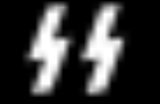
All Topics  
Sturmabteilung

 
Sturmabteilung

   Email Print
   Bookmark   Link


Sturmabteilung


The , abbreviated SA, (German
German language

German is a West Germanic languages, thus related to and classified alongside English language and Dutch language. It is one of the world's world language and the most widely spoken mother tongue in the European Union....
 for "Assault detachment" or "Assault section", usually translated as "stormtroop(er)s
Stormtrooper

The Stormtroopers were specialist military troops which were formed in the last years of World War I as the German army developed new methods of attacking enemy trenches, called "infiltration tactics"....
"), functioned as a paramilitary
Paramilitary

A paramilitary is a force whose function and organisation are similar to those of a professional military force, but which is not regarded as having the same status....
 organization
Organization

An organization is a social arrangement which pursues collective goals, which controls its own performance, and which has a boundary separating it from its environment....
 of the NSDAP the German
Germany

Germany , officially the Federal Republic of Germany , is a country in Central Europe. It is bordered to the north by the North Sea, Denmark, and the Baltic Sea; to the east by Poland and the Czech Republic; to the south by Austria and Switzerland; and to the west by France, Luxembourg, Belgium, and the Netherlands....
 Nazi party
Nazism

Nazism, officially National Socialism , refers to the ideology and practices of the National Socialist German Workers? Party under Adolf Hitler, and the policies adopted by the dictatorial government of Nazi Germany from 1933 to 1945....
. They played a key role in Adolf Hitler
Adolf Hitler

Adolf Hitler was an Austrian-born Germany politician and the leader of the National Socialist German Workers Party , popularly known as the Nazi Party....
's rise to power in the 1930s.

SA men were often called "brownshirts", for the colour of their uniform
Uniform

File:Porfirio Diaz paint.jpgA uniform is a set of standard clothing worn by members of an organization while participating in that organization's activity....
s, and to distinguish them from the Schutzstaffel
Schutzstaffel

The , abbreviated SS- or - was a major Nazi organization under Adolf Hitler and the Nazi Party. The SS grew from a small paramilitary unit to a powerful force that served as the F?hrer's "Praetorian Guard," the Nazi Party's "Shield Squadron" and a force that, fielding almost a million men, managed to exert as much political influence as th...
 (SS), who wore black and brown uniforms (compare the Italian blackshirts
Blackshirts

The Blackshirts were Fascism paramilitary groups in History of Italy as a monarchy and in the World Wars during the period immediately following World War I and until the end of World War II....
).


Discussion
Ask a question about 'Sturmabteilung'
Start a new discussion about 'Sturmabteilung'
Answer questions from other users
Full Discussion Forum


Recent Posts


Encyclopedia


The , abbreviated SA, (German
German language

German is a West Germanic languages, thus related to and classified alongside English language and Dutch language. It is one of the world's world language and the most widely spoken mother tongue in the European Union....
 for "Assault detachment" or "Assault section", usually translated as "stormtroop(er)s
Stormtrooper

The Stormtroopers were specialist military troops which were formed in the last years of World War I as the German army developed new methods of attacking enemy trenches, called "infiltration tactics"....
"), functioned as a paramilitary
Paramilitary

A paramilitary is a force whose function and organisation are similar to those of a professional military force, but which is not regarded as having the same status....
 organization
Organization

An organization is a social arrangement which pursues collective goals, which controls its own performance, and which has a boundary separating it from its environment....
 of the NSDAP the German
Germany

Germany , officially the Federal Republic of Germany , is a country in Central Europe. It is bordered to the north by the North Sea, Denmark, and the Baltic Sea; to the east by Poland and the Czech Republic; to the south by Austria and Switzerland; and to the west by France, Luxembourg, Belgium, and the Netherlands....
 Nazi party
Nazism

Nazism, officially National Socialism , refers to the ideology and practices of the National Socialist German Workers? Party under Adolf Hitler, and the policies adopted by the dictatorial government of Nazi Germany from 1933 to 1945....
. They played a key role in Adolf Hitler
Adolf Hitler

Adolf Hitler was an Austrian-born Germany politician and the leader of the National Socialist German Workers Party , popularly known as the Nazi Party....
's rise to power in the 1930s.

SA men were often called "brownshirts", for the colour of their uniform
Uniform

File:Porfirio Diaz paint.jpgA uniform is a set of standard clothing worn by members of an organization while participating in that organization's activity....
s, and to distinguish them from the Schutzstaffel
Schutzstaffel

The , abbreviated SS- or - was a major Nazi organization under Adolf Hitler and the Nazi Party. The SS grew from a small paramilitary unit to a powerful force that served as the F?hrer's "Praetorian Guard," the Nazi Party's "Shield Squadron" and a force that, fielding almost a million men, managed to exert as much political influence as th...
 (SS), who wore black and brown uniforms (compare the Italian blackshirts
Blackshirts

The Blackshirts were Fascism paramilitary groups in History of Italy as a monarchy and in the World Wars during the period immediately following World War I and until the end of World War II....
). Brown-coloured shirts were chosen as the SA uniform because a large batch of them was cheaply available after World War I
World War I

World War I, or the First World War , was a global military conflict which involved the Great powers, organized into two opposing military alliances: the Allies of World War I and the Central Powers....
, having originally been ordered for German troops serving in Africa
Africa

Africa is the world's second-largest and second most-populous continent, after Asia. At about 30.2 million km? including adjacent islands, it covers 6% of the Earth's total surface area and 20.4% of the total land area....
.

The SA was also the first Nazi paramilitary group to develop pseudo-military titles for bestowal upon its members. The SA ranks
Ranks and insignia of the Sturmabteilung

The ranks and insignia of the Sturmabteilung were the first Nazi party paramilitary ranks to be developed by the Nazi Party in 1920. The titles and phrases used by the SA were eventually adopted by several other Nazi paramilitary groups, among them the Schutzstaffel ....
 would be adopted by several other Nazi Party groups, chief among them the SS. They were very important to Adolf Hitler's rise to power until they were superseded by the SS after the Night of the Long Knives
Night of the Long Knives

The Night of the Long Knives or "Operation Hummingbird", was a purge that took place in Nazi Germany between June 30 and July 2, 1934, when the Nazi Party regime carried out a series of political executions, most of those killed being members of the Sturmabteilung , the paramilitary Brownshirts....
.

History

Sturmabteilung
government to improve ties. See Sino-German cooperation (1911–1941)]] The term Sturmabteilung predates the founding of the Nazi party in 1919. It originally comes from the specialized assault troops used by Germany in World War I
World War I

World War I, or the First World War , was a global military conflict which involved the Great powers, organized into two opposing military alliances: the Allies of World War I and the Central Powers....
 utilising Hutier
Oskar von Hutier

Oskar von Hutier was one of Germany's most successful and innovative generals of World War I.Hutier was born in Erfurt in the Prussian Province of Saxony....
 infiltration tactics
Infiltration tactics

In warfare, infiltration tactics involve small, lightly-equipped infantry forces attacking enemy rear areas while bypassing enemy front-line strongpoints and isolating them for attack by follow-up troops with heavier weapons....
. Instead of a large mass assault, the Sturmabteilung was organized into small squad
Squad

In military terminology, a squad is a small military unit led by a non-commissioned officer that is subordinate to an infantry platoon. In countries following the British Army tradition this organization is referred to as a section ....
s of a few soldiers each. The first official German stormtroop unit was authorized on 2 March 1915; German high command ordered the VIII Corps to form a detachment for the testing of experimental weapons and the development of appropriate tactics that could break the deadlock on the Western front. On 2 October 1916, Generalquartiermeister Erich Ludendorff
Erich Ludendorff

Erich Friedrich Wilhelm Ludendorff was a Imperial Germany Army Officer , victor of Battle of Li?ge, and, with Paul von Hindenburg, one of the victors of the battle of Battle of Tannenberg ....
 ordered all German armies in the west to form a battalion of stormtroops. First applied during the German Eighth Army's siege of Riga, then again at the Battle of Caporetto
Battle of Caporetto

The Battle of Caporetto , took place from 24 October to 9 November 1917, near the town of Kobarid , on the Italian Campaign of World War I. The battle was named after the Italian name of the town of Kobarid ....
, their wider use in March 1918 allowed to push back Italian lines tens of kilometers.

In Munich
Munich

Munich is the capital city of Bavaria, Germany. Munich is located on the River Isar north of the Northern Limestone Alps. Munich is the third largest city in Germany, after Berlin and Hamburg....
 in August of 1920, Hitler created the Ordnertruppen, by organizing and formalizing the organization of a body of ex-soldiers and beer hall brawlers who were to protect gatherings of the Nazi party from disruptions from Social Democrats and Communists. On October 5, 1921 the group was officially renamed the Sturmabteilung, after having for some period endeavored to conceal its true function by calling itself the "Gymnastic and Sports Division" of the party, apparently to try to avoid trouble with the government. On November 4, 1921 the Nazi party held a large public meeting in the Munich Hofbräuhaus
Hofbräuhaus am Platzl

The Hofbr?uhaus am Platzl is a beer hall in the city center of Munich, Germany. The inn originally built in 1607 by List of rulers of Bavaria#Dukes of Bavaria 2 History of Bavaria#Wittelsbachs....
. After Hitler had spoken for some time the meeting erupted into a melee in which a small company of SA distinguished itself by thrashing the opposition. The Nazis called this event "Saalschlacht" (meeting hall battle). Under their popular leader, Stabschef Ernst Röhm
Ernst Röhm

Ernst Julius R?hm, was a Germany army officer and Nazism leader. He was a co-founder of the Sturmabteilung , the Nazi Party militia, and later was SA commander....
, the SA grew in importance within the Nazi power
Power (sociology)

Power is a measure of a person's ability to control the environment around them, including the behavior of other people. The term authority is often used for power, perceived as legitimate by the social structure....
 structure, initially growing in size to thousands of members. In 1922, the Nazi Party created a youth section, the Jugendbund
Jugendbund

The Jugendbund was a group similar to the Hitler Youth, and its predecessor. Specifically it was a youth subsection of the Sturmabteilung . It contained three sections:...
, for young men between the ages of 14 and 18 years. Its successor, the Hitler Youth
Hitler Youth

The Hitler Youth was a paramilitary organization of the Nazi Party. It existed from 1922 to 1945. The HJ was the second oldest paramilitary Nazi group, founded one year after its adult counterpart, the Sturmabteilung ....
, remained under SA command until May 1932.

From April 1924 until late February 1925 the SA was known as the Frontbann
Frontbann

The term Frontbann refers to a reorganized and renamed version of the Sturmabteilung or SA. It was created in April 1924 in an effort to rebuild the Nazi party in the aftermath of the failed Munich Putsch....
 to avoid the temporary ban on the Nazi party. The SA carried out numerous acts of violence against socialist groups throughout the 1920s, typically in minor street-fights called Zusammenstöße ('collisions'). As the Nazis went from an extremist political party in the turbulent times of 1920s Germany to the unquestioned government of the nation, the SA was no longer needed for its original purpose. An organization that could inflict more subtle terror and obedience was needed and the thuggish SA who had been born out of street violence was simply not capable of doing so. The younger SS was more suited to this task and began to take over the previously held roles of the SA.

Nazi Tin Soldiers

Conflicts with other organizations

After Hitler took power in 1933, the SA became increasingly eager for power and saw themselves as the replacement for the German army. This angered the regular army (Reichswehr
Reichswehr

The Reichswehr formed the armed forces of Germany from 1919 until 1935, when it was renamed the Wehrmacht .At the end of World War I, the forces of the German Empire had mostly disintegrated, the men making their way home individually or in small groups....
), who already resented the Nazi party. It also led to tension with other leaders within the party, who saw Röhm's increasingly powerful SA as a threat to their own personal ambitions. Originally an adjunct to the SA, the Schutzstaffel
Schutzstaffel

The , abbreviated SS- or - was a major Nazi organization under Adolf Hitler and the Nazi Party. The SS grew from a small paramilitary unit to a powerful force that served as the F?hrer's "Praetorian Guard," the Nazi Party's "Shield Squadron" and a force that, fielding almost a million men, managed to exert as much political influence as th...
 (SS) was placed under the direct control of Heinrich Himmler
Heinrich Himmler

Heinrich Luitpold Himmler was a Nazi Germany German politician and head of the Schutzstaffel. He was one of the most powerful men in Nazi Germany, competing with Hermann G?ring, Martin Bormann and Joseph Goebbels....
 in part to restrict the power of the SA and their leaders.

Although some of these conflicts were based on personal rivalries, there were also key socioeconomic conflicts between the SS and SA. SS members generally came from the middle class
Middle class

Middle class is the group of people in contemporary society who are between the working class and nobility. This socioeconomic class includes professionals, highly skilled workers, and lower and middle management....
, while the SA had its base among the unemployed and working class
Working class

Working class is a term used in academic sociology and in ordinary conversation to describe, depending on context and speaker, those employed in specific fields or types of work....
. The SA were more radical than the SS, with its leaders arguing the Nazi revolution had not ended when Hitler achieved power, but rather needed to implement socialism in Germany. Despite its sympathy for its own brand of socialism, the SA would often pick street fights with Communists and Social Democrats.

Perhaps the greatest single factor leading to the downfall of the SA however, was Röhm's decision to directly challenge the army, or Reichswehr
Reichswehr

The Reichswehr formed the armed forces of Germany from 1919 until 1935, when it was renamed the Wehrmacht .At the end of World War I, the forces of the German Empire had mostly disintegrated, the men making their way home individually or in small groups....
. After Hitler's seizure of power in 1933, Röhm lobbied Hitler to appoint him Minister of Defense, a position held by the conservative Werner von Blomberg
Werner von Blomberg

Werner Eduard Fritz von Blomberg was a leading member of the German Army until January 1938....
. While Blomberg and others in the traditional military saw the SA as a source of recruits for an enlarged army, Rohm wanted the SA to become the new German military itself. Röhm naturally wanted to lead this new German army himself. Limited by the Treaty of Versailles
Treaty of Versailles

The Treaty of Versailles was one of the peace treaty at the end of World War I. It ended the declaration of war between German Empire and Allies of World War I....
 to one hundred thousand soldiers, army leaders were concerned that they could be swallowed up by the much-larger SA. In January 1934, Röhm presented Blomberg with a memorandum demanding that SA should replace the army as the nation's ground forces, and that the Reichswehr become a training adjunct to the SA. President
President

President is a title held by many leaders of organizations, company, trade unions, university, and country. Etymology, a "president" is one who Wiktionary:Preside, who sits in leadership ....
 Paul von Hindenburg
Paul von Hindenburg

Paul Ludwig Hans Anton von Beneckendorff und von Hindenburg , known universally as Paul von Hindenburg was a German Generalfeldmarschall and statesman....
 would not stand for this, and threatened to impose martial law
Martial law

Martial law is the system of rules that takes effect when the military takes control of the normal administration of justice.Martial law is sometimes imposed during wars or occupied territory in the absence of any other civil government....
 if Hitler did not act against Röhm.

After this ultimatum, Hitler ordered the arrest and subsequent execution of the leadership of the SA, which took place on June 30-July 2, 1934, on what is known as the Night of the Long Knives
Night of the Long Knives

The Night of the Long Knives or "Operation Hummingbird", was a purge that took place in Nazi Germany between June 30 and July 2, 1934, when the Nazi Party regime carried out a series of political executions, most of those killed being members of the Sturmabteilung , the paramilitary Brownshirts....
. At Hitler's behest, senior Nazis, including Himmler, faked a dossier that purported to show that Röhm had received payment from the French to carry out a coup against Hitler. Hitler personally led the SS raid on the Hanselbauer Hotel in Bad Wiessee
Bad Wiessee

Bad Wiessee is a spa town on Lake Tegernsee, Bavaria, Germany.The name Bad stands for "spa" or "baths", while Wiessee derives from "West See", meaning "western part of the lake"....
, where Röhm and SA-Obergruppenführer Edmund Heines
Edmund Heines

Edmund Heines was Ernst R?hm's deputy in the SA, and possibly one of his lovers as well. Adolf Hitler had a close friendship with R?hm, and to a lesser degree with Heines....
 were garrisoned. Victor Lutze became the new leader of the SA, and the organization was soon marginalized in the Nazi power structure in favor of the SS. Membership in the organization dropped from 2.9 million in August 1934 to 1.2 million in April 1938. It became little more than an old comrades association, appearing at the Nuremberg Rallies and called out for ceremonial duties and for lining the streets for parades.

Another factor contributing to the decline of the SA was the reintroduction of conscription in 1935 and the buildup of the German Army. Members of the Hitler Youth enrolled in the Wehrmacht rather than "graduating" to the SA. The SA remained active until the end of the war, but its only significant action after 1934 was Kristallnacht
Kristallnacht

File:1938 Interior of Berlin synagogue after Kristallnacht.jpgKristallnacht or the Night of Broken Glass or "night of shattered crystal" was a pogrom in Nazi Germany on November 9?10, 1938....
, when all SS and SA units were activated to riot against Jews, destroying Jewish businesses and synagogues. After that period until the end of the war, virtually all of its functions were taken over by the SS.

Leaders

The leader of the SA
Leadership ranks of the Sturmabteilung

Leadership ranks of the Sturmabteilung were the military rank held by the commanders of the Sturmabteilung of the Nazi Party between the years of 1920 and 1945....
 was known as the Oberster SA-Führer, translated as Supreme Leader. The following men held this position throughout the existence of the SA:

  • Emil Maurice
    Emil Maurice

    File:Bundesarchiv Bild 146-1980-073-19A, Emil Maurice.jpg Emil Maurice was an early member of the Nazi Party. A watchmaker, he was a close associate of Adolf Hitler with a personal friendship dating back to at least 1919....
     (1920–1921)
  • Hans Ulrich Klintzsche (1921–1923)
  • Hermann Göring
    Hermann Göring

    Hermann Wilhelm G?ring was a Germany politician, military leader and a leading member of the Nazi Party. Among many offices, he was Hitler's designated successor and commander of the Luftwaffe ....
     (1923)
  • None (1923–1925)
  • Franz Pfeffer von Salomon
    Franz Pfeffer von Salomon

    File:Bundesarchiv Bild 119-1587A, Franz von Pfeffer.jpgFranz Pfeffer von Salomon was the first commander of the Sturmabteilung after its 1925 restoration, which followed its temporary abolition in 1923 after the abortive Beer Hall Putsch....
     (1926–1930)
  • Adolf Hitler
    Adolf Hitler

    Adolf Hitler was an Austrian-born Germany politician and the leader of the National Socialist German Workers Party , popularly known as the Nazi Party....
     (1930–1945)


In 1930, to ensure the loyalty of the SA to himself, Adolf Hitler assumed command of the entire organization and remained Oberster SA-Führer for the remainder of the group's existence to 1945. The day to day running of the SA was conducted by the Stabschef-SA
Stabschef (SA)

For other uses of the term "Stabschef" please refer to Chief of StaffStabschef was a paramilitary rank in the Sturmabteilung , the paramilitary stormtroopers associated with the National Socialist German Workers Party....
 (SA Chief of Staff). After 1931, it was the Stabschef who was generally accepted as the Commander of the SA, acting in Hitler's name.

The following personnel held the position of Chief of Staff of the SA:

  • Ernst Röhm
    Ernst Röhm

    Ernst Julius R?hm, was a Germany army officer and Nazism leader. He was a co-founder of the Sturmabteilung , the Nazi Party militia, and later was SA commander....
     (1931–1934)
  • Viktor Lutze
    Viktor Lutze

    Viktor Lutze was an Sturmabteilung officer in Nazi Germany.Lutze was born in Bevergern, Province of Westphalia, the son of a peasant craftsman....
     (1934–1943)
  • Wilhelm Scheppmann (1943–1945)


Organization

The SA was organized throughout Germany
Germany

Germany , officially the Federal Republic of Germany , is a country in Central Europe. It is bordered to the north by the North Sea, Denmark, and the Baltic Sea; to the east by Poland and the Czech Republic; to the south by Austria and Switzerland; and to the west by France, Luxembourg, Belgium, and the Netherlands....
 into several large formations known as Gruppen. Within each Gruppe, there existed subordinate Brigaden and in turn existed regiment
Regiment

A regiment is a military unit, composed of variable numbers of battalions, commanded by a Colonel. Depending on the nation, military branch, mission, and organization, a modern regiment resembles a brigade, in that both range in size from a few hundred to 5,000 soldiers ....
 sized Standarten. SA-Standarten operated out of every major German city and were split into even smaller units, known as Sturmbanne and Stürme.

The command nexus for the entire SA operated out of Stuttgart
Stuttgart

Stuttgart is the capital of the state of Baden-W?rttemberg in southern Germany. The list of cities in Germany, Stuttgart has a population of 590,429 while the metropolitan area referred to as Stuttgart Region has a population of 2.7 million ....
 and was known as the Oberste SA-Führung. The SA supreme command had many sub-offices to handle supply, finance, and recruiting. Unlike the SS, however, the SA did not have a medical corps nor did it establish itself outside of Germany, in occupied territories, once World War II
World War II

World War II, or the Second World War , was a global military conflict which involved a Participants in World War II, including all of the great powers, organised into two opposing military alliances: the Allies of World War II and the Axis powers....
 began.

The SA also had several military training units, the largest of which was the SA-Marine which served as an auxiliary to the Kriegsmarine
Kriegsmarine

The Kriegsmarine was the name of the German Navy between 1935 and 1945, during the Nazi Germany regime, superseding the Reichsmarine, and the Kaiserliche Marine of World War I....
 and performed search and rescue
Search and rescue

Search and rescue is the search for and provision of aid to people who are in distress or imminent danger....
 operations as well as harbor defense.

Similar to the Waffen-SS
Waffen-SS

The Waffen-SS was the combat arm of the Schutzstaffel or SS. It was founded in Germany in 1939 after the SS was split into two units but the title of Waffen-SS only became official on 2 March, 1940....
 wing of the SS, the SA also had an armed military wing, known as Feldherrnhalle. These formations expanded from regimental size in 1940 to a fully-fledged armored corps Panzerkorps Feldherrnhalle
Panzer Corps Feldherrnhalle

The Panzerkorps Feldherrnhalle was an elite Germany panzer corps arrayed in October 1944 out of the remaining troops of the IV. Armeekorps, the Storm Division Rhodos and Panzer-Grenadier-Brigade 17 formed mostly of Sturmabteilung recruits....
 in 1945.

Maxims

  • "Terror must be broken by terror"
  • "All opposition must be stamped into the ground"


Film and media


The SA were prominent in Nazi propaganda
Propaganda

Propaganda is the dissemination of information aimed at influencing the opinions or behaviors of large numbers of people. As opposed to Objectivity providing information, propaganda in its most basic sense presents information in order to influence its audience....
 newsreels of the late 1920s and early 1930s.

The SA make an appearance in several films depicting the end of the Weimar Republic
Weimar Republic

The Weimar Republic was the democracy and republican period of Germany from 1919 to 1933. Following World War I, the republic emerged from the German Revolution in November 1918....
:

  • scenes in the 1972 film Cabaret
    Cabaret (film)

    Cabaret is a 1972 in film American musical film directed by Bob Fosse and starring Liza Minnelli, Michael York and Joel Grey. The film is set in Berlin during the Weimar Republic in 1931, before the rise of the Nazism under Adolf Hitler....
     depict the savage beating of a nightclub bouncer
    Bouncer (doorman)

    A bouncer or doorman is an informal term for a security guard employed at venues such as Bar , nightclubs or concerts to provide security, check Age of majority, and refuse entry to a venue based on criteria such as drunkenness, aggressive behaviour, or other standards....
     by a group of SA men
  • a member of the industrialist Essenbeck family is a member of the SA in the film The Damned
    The Damned (film)

    The Damned is a 1969 film by Luchino Visconti.The Damned has often been regarded as the first of Visconti's films described as 'The German Trilogy'....
    , in which one sequence luridly depicts the Night of the Long Knives.
  • in the play and film Bent
    Bent (play)

    Bent is a 1979 play by Martin Sherman that was later adapted into a 1997 movie by director Sean Mathias. It revolves around the persecution of gay in Third Reich Germany after the murder of Sturmabteilung leader Ernst R?hm....
     by Martin Sherman
    Martin Sherman

    Martin Sherman is an United States screenwriter and playwright.Born in Philadelphia, Pennsylvania to Joseph T. Sherman and Julia Shermanof, Sherman is an openly gay Jew and has lived in London since 1980.....
    , the hero has the misfortune to spend the night with a storm trooper on the Night of the Long Knives, and is caught up in the arrests and sent to a concentration camp.


American Brownshirts feature as one of a group of "villains" who oppose Jake and Elwood in The Blues Brothers
The Blues Brothers

The Blues Brothers are a Grammy Award-nominated United States blues music and soul music Revivalist artist founded in 1978 by comedians Dan Aykroyd and John Belushi as part of a Saturday Night Live musical sketches on Saturday Night Live....
.

In the Season 18 episode of The Simpsons, Rome-old and Juli-eh
Rome-old and Juli-eh

"Rome-old and Juli-eh" is the 15th episode of The Simpsons The Simpsons , which was originally broadcast on March 11, 2007....
, Bart and Lisa get into a battle with a group of delivery people in brown uniforms. When they attack the children's castle, Bart says, "Who knew guys in brown shirts could cause so much trouble?"

In the musical and film The Producers, Franz Liebkind
Franz Liebkind

Franz Liebkind is a fictional character who first appeared in Mel Brooks' 1968 film The Producers , played by Kenneth Mars. The character was played by Brad Oscar in the The Producers of the same title, and by Will Ferrell in the The Producers of the film....
, the Neo-Nazi writer of Springtime for Hitler, sings in the number "In Old Bavaria", "Oh, the mountains und the meadows und the sky/ not to mention hordes of brownshirts passing by."

P. G. Wodehouse
P. G. Wodehouse

Sir Pelham Grenville Wodehouse, Order of the British Empire was a comic writer who enjoyed enormous popular success during a career of more than seventy years and continues to be widely read....
 satirises the Brown Shirts in his Jeeves and Wooster books with Roderick Spode
Roderick Spode

Roderick Spode, 7th Earl of Sidcup, often known as Spode or Lord Sidcup, is a recurring fictional character from the Jeeves novels of British comic writer P....
, 8th Earl of Sidcup and his 'Black Shorts'.

See also

  • Blackshirts
    British Union of Fascists

    The British Union of Fascists was a political party in the United Kingdom formed in 1932 by a former Labour Party government minister and former Member of Parliament of the Conservative Party , Oswald Mosley....
  • Black Brigades
    Black Brigades

    Black Brigades were one of the Fascist paramilitary groups operating in the Italian Social Republic , during the final years of World War II, and after the signing of the Italian Armistice in 1943....
  • Freikorps
    Freikorps

    File:Bundesarchiv Bild 119-1983-0012, Kapp-Putsch, Marienbrigade Erhardt in Berlin.jpgThe designation of Freikorps was originally applied to voluntary armies formed in German lands from the middle of 18th century onwards....
  • National Socialist Motor Corps
    National Socialist Motor Corps

    The National Socialist Motor Corps , also known as the National Socialist Drivers Corps, was a paramilitary organization of the National Socialist German Workers Party that existed from 1931 to 1945....
  • Panzer Corps Feldherrnhalle
    Panzer Corps Feldherrnhalle

    The Panzerkorps Feldherrnhalle was an elite Germany panzer corps arrayed in October 1944 out of the remaining troops of the IV. Armeekorps, the Storm Division Rhodos and Panzer-Grenadier-Brigade 17 formed mostly of Sturmabteilung recruits....
  • Stormtrooper
    Stormtrooper

    The Stormtroopers were specialist military troops which were formed in the last years of World War I as the German army developed new methods of attacking enemy trenches, called "infiltration tactics"....
  • Weimar paramilitary groups
    Weimar paramilitary groups

    Paramilitary groups were formed throughout the Weimar Republic in the wake of Germany's defeat in World War I and the ensuing German Revolution....
  • Brownshirt tactics
    Brownshirt tactics

    The term brownshirt tactics refers to the usage of fear, terror, and images thereof to make people vote for a specific party, notably the populist demagoguery party that promises to be tough on terror, while in reality being the one clandestinely instilling the fear in the first place....
  • SA Men


Further reading


  • Allen, William Sheridan, The Nazi Seizure of Power: The Experience of a Single German Town 1930-1935 by (Quadrangle Books, 1965).
  • Bessel, Richard, Political Violence and The Rise of Nazism : The Storm Troopers in Eastern Germany, 1925-1934, (Yale University Press
    Yale University Press

    Yale University Press is a book publisher 1908 in literature by George Parmly Day. It became an official Academic department of Yale University 1961 in literature, but remains financially and operationally autonomous....
    , 1984, ISBN 0300031718).
  • Campbell, Bruce, The SA Generals and The Rise of Nazism, (University Press of Kentucky
    University Press of Kentucky

    The University Press of Kentucky is the scholarly publisher for the Commonwealth of Kentucky, and was organized in 1969 as successor to the University of Kentucky Press....
    , 1998, ISBN 0813120470).
  • Evans, Richard, The Coming of the Third Reich. Penguin Group, 2004.
  • Evans, Richard, The Third Reich in Power. Penguin Group, 2005.
  • Halcomb, Jill, The SA: A Historical Perspective, (Crown/Agincourt Publishers, 1985, ISBN 0934870136).
  • Hatch, Nicolas H. (trans. and ed.), The Brown Battalions: Hitler's SA in Words and Pictures (Turner, 2000, ISBN 1563115956).
  • Kershaw, Ian, Hitler: 1889-1936 Hubris. W. W. Norton & Company, 1999.
  • Littlejohn, David, The Sturmabteilung: Hitler’s Stormtroopers 1921 – 1945. Osprey Publishing, London, 1990
  • Fischer, Conan, Stormtroopers: A Social, Economic, and Ideological Analysis, 1929-35, (Allen & Unwin, 1983, ISBN 0049430289).
  • Fuller, James David, Collectors Guide to SA Insignia, (Matthäus Publishers, Postal Instant Press, 1985, ISBN 0931065046).
  • Maracin, Paul, The Night of the Long Knives: 48 Hours that Changed the History of the World. The Lyons Press, 2004.
  • Merkl, Peter H., The Making of a Stormtrooper, (Princeton University Press
    Princeton University Press

    The Princeton University Press is an independent Academic publishing with close connections to Princeton University. Its mission is to disseminate scholarship within academia and society at large....
    , 1980, ISBN 0-691-07620-0).


External links