

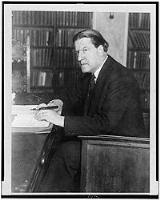
Stephen Samuel Wise

Encyclopedia
Hi, and welcome to Wikipedia! Please understand that this article is frequently subjected to vandalism and the insertion of personal opinions. You will not accomplish anything by vandalizing or failing to use reliable sources at Wikipedia. If you wish to try test editing, you may do so in our sandbox located at http://en.wikipedia.org/wiki/Wikipedia:Sandbox
Thanks!
This page is frequently scrutinized and debated.
If you wish to edit this article with factual, neutral information, scroll down.-->
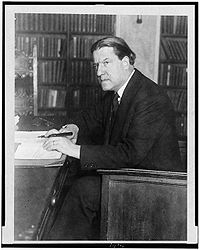 Stephen Samuel Wise (born Weisz, March 17, 1874–April 19, 1949) was an Austro-Hungarian
-born American Reform
rabbi and Zionist
leader.
in the Austro-Hungarian Empire, the son and grandson of rabbis. His grandfather, Joseph Hirsch Weisz, was Chief Rabbi of a small town near Budapest. His father, Aaron Wise
, earned a Ph.D. and ordination in Europe, and emigrated to the United States to serve as rabbi of Congregation Baith Israel Anshei Emes in Brooklyn, New York. Wise's maternal grandfather, Móric Farkasházi Fischer, created the Herend Porcelain Company. When Wise's father Aaron Wise
sought to unionize the company, Moric gave the family one-way tickets to New York.
Wise immigrated to New York as an infant with his family. His father became rabbi of Rodeph Sholom, a Manhattan Conservative congregation of wealthy German Jews.
, Columbia College
(B.A. 1892), and Columbia University
(Ph.D. 1901), and later pursued rabbinical studies under Richard Gottheil, Kohut, Gersoni, Joffe, and Margolis. In 1933, Wise received an L.H.D. from Bates College
.
in Portland, Oregon
; typical of the activists of the Progressive Era
, he attacked "many of the social and political ills of contemporary America." In 1893, he was appointed assistant to Rabbi Henry S. Jacobs of the Congregation B'nai Jeshurun, New York City
, and later in the same year, minister to the same congregation. In 1906, concerning another rabbinical appointment, Wise made a major break with the established Reform movement over the "question whether the pulpit shall be free or whether the pulpit shall not be free, and, by reason of its loss of freedom, reft of its power for good"; in 1907 he established his Free Synagogue
, starting the "free Synagogue" movement.
Rabbi Wise was an early supporter of Zionism, and his support for, and commitment to Political Zionism was very atypical of Reform Judaism
, which was historically and decidedly non-Zionist since the Pittsburgh Platform
in 1885. He was a founder of the New York Federation of Zionist Societies in 1897, which led in the formation of the national Federation of American Zionists (FAZ), a forerunner of the Zionist Organization of America
. At the Second Zionist Congress
(Basel
, 1898), he was a delegate and secretary for the English language. Wise served as honorary secretary of FAZ, in close cooperation with Theodor Herzl
until the latter's death in 1904.
Wise, joining U.S. Supreme Court Justice Louis Brandeis
, Felix Frankfurter
, and others laid the groundwork for a democratically elected nationwide organization of 'ardently Zionist' Jews, 'to represent Jews as a group and not as individuals'. In 1918, following national elections, this Jewish community convened the first American Jewish Congress
in Philadelphia's historic Independence Hall.
movement in Christianity.
Wise founded the Jewish Institute of Religion
in 1922, an educational center in New York City to train rabbis in Reform Judaism
. It was merged into the Hebrew Union College
a year after his death.
When the Federation of American Zionists (FAZ) was originally established, Wise was appointed the position secretary. After the organization transformed into the Zionist Organization of America, Rabbi Wise fulfilled positions as both president and vice president during his lifetime.
Wise was a close friend of President Franklin Delano Roosevelt, who turned to Wise for advice on issues concerning the Jewish community in the United States. In addition, Wise had also acted a liaison to previous President Wilson.
In 1914 Wise co-founded the NAACP (National Association for the Advancement of Colored People). In A History of Jews in America historian Howard Sachar
wrote, "In 1914, Professor Emeritus Joel Spingarn
of Columbia University became chairman of the NAACP and recruited for its board such Jewish leaders as Jacob Schiff, Jacob Billikopf
, and Rabbi Stephen Wise." Other Jewish co-founders included Julius Rosenwald
, Lillian Wald
, and Rabbi Emil G. Hirsch.
In 1925, Wise became Chairperson of Keren Hayesod
whilst he continued his efforts to bring the Reform movement around to a pro-Zionist stance. With the rise to power of the Hitler regime, Wise took the position that public opinion in the United States and elsewhere should be rallied against the Nazis. He, along with Leo Motzkin, encouraged the creation of the World Jewish Congress
in order to create a broader representative body to fight Nazism. He used his influence with President Roosevelt both in this area as well as on the Zionist question.
In 1933, acting as honorary president of the American Jewish Congress, Wise led efforts for a boycott of Nazi Germany. He stated "The time for prudence and caution is past. We must speak up like men. How can we ask our Christian friends to lift their voices in protest against the wrongs suffered by Jews if we keep silent? What is happening in Germany today may happen tomorrow in any other land on earth unless it is challenged and rebuked. It is not the German Jews who are being attacked. It is the Jews". Urged by Wise to protest to the German government, U.S. Secretary of State Cordell Hull issued a mild statement to the American ambassador to Berlin complaining that "unfortunate incidents have indeed occurred and the whole world joins in regretting them."
Wise was an ardent opponent of plans to create a Jewish community in Suriname
. In a letter to Keren Hayesod
emissary Ida Silverman he wrote, "I personally believe, that Steinberg needs to be lynched or hanged and quartered, if that would make his lamented demise more certain." Isaac Nachman Steinberg
being the co-founder of the Freeland League, a territorialist organization that was leading negotiations with the Surinamese government.
During the war years, Wise was elected Co-Chairperson of the American Zionist Emergency Council, a forerunner of AIPAC.
(New York, 1902) from the original Arabic
, and wrote The Beth Israel Pulpit, among other works.
 Wise died on April 19, 1949, aged 75. He is interred in an unmarked mausoleum
in Westchester Hills Cemetery
located in Hastings-on-Hudson, New York
. The Stephen Wise Free Synagogue
, which he founded in 1907 and served as Rabbi until his death, is named after him, as is Stephen S. Wise Temple
in Los Angeles
, which was founded by Rabbi Isaiah Zeldin in 1964.
has criticized Wise for his alleged failure to recognize the Holocaust prior to American entry into World War II
, and the allegation that he dismissed early reports of the Final Solution
as propaganda.
In his book Holocaust Victims Accuse, Moshe Shonfeld asserts that Wise prevented the shipment of food packages from American Jews to Poland due to fear that it would be interpreted by the Allies as giving aid to the enemy. This allegation is also made by historian Saul Friedlander
, who writes: "In the spring of 1941 Rabbi Wise had decided to impose a complete embargo on all aid sent to Jews in occupied countries, in compliance with the U.S. governments's economic boycott of the Axis powers (whereby every food packages was seen as direct or indirect assistance to the enemy)... Strict orders were given to World Jewish Congress representatives in Europe to halt forthwith any shipment of packages to the ghettos, despite the fact that these packages did usually reach their destination, the Jewish Self-Help Association in Warsaw. 'All these operations with and through Poland must cease at once,' Wise cabled to Congress delegates in London and Geneva, 'and at once in English means AT ONCE, not in the future.'"
Authors David Wyman
and Rafael Medoff, in their book A Race Against Death: Peter Bergson, America, and the Holocaust, make a further allegation that Wise displayed a lack of leadership that hindered the Holocaust rescue attempts of others. He is also alleged to have advised President Franklin Roosevelt
not to meet with the 400 Orthodox Rabbis that marched on Washington in 1943
and to have attempted to squelch the broadcast of "We Will Never Die", which sought to bring attention to the slaughter of Jews in Europe.
Thanks!
This page is frequently scrutinized and debated.
If you wish to edit this article with factual, neutral information, scroll down.-->
Austria-Hungary
Austria-Hungary , more formally known as the Kingdoms and Lands Represented in the Imperial Council and the Lands of the Holy Hungarian Crown of Saint Stephen, was a constitutional monarchic union between the crowns of the Austrian Empire and the Kingdom of Hungary in...
-born American Reform
Reform Judaism
Reform Judaism refers to various beliefs, practices and organizations associated with the Reform Jewish movement in North America, the United Kingdom and elsewhere. In general, it maintains that Judaism and Jewish traditions should be modernized and should be compatible with participation in the...
rabbi and Zionist
Zionism
Zionism is a Jewish political movement that, in its broadest sense, has supported the self-determination of the Jewish people in a sovereign Jewish national homeland. Since the establishment of the State of Israel, the Zionist movement continues primarily to advocate on behalf of the Jewish state...
leader.
Early life
Wise was born in BudapestBudapest
Budapest is the capital of Hungary. As the largest city of Hungary, it is the country's principal political, cultural, commercial, industrial, and transportation centre. In 2011, Budapest had 1,733,685 inhabitants, down from its 1989 peak of 2,113,645 due to suburbanization. The Budapest Commuter...
in the Austro-Hungarian Empire, the son and grandson of rabbis. His grandfather, Joseph Hirsch Weisz, was Chief Rabbi of a small town near Budapest. His father, Aaron Wise
Aaron Wise
Aaron Wise was an American Rabbi.Wise was educated in the Talmudic schools of Hungary, including the seminary at Eisenstadt, where he studied under Dr. Hildesheimer. Later he attended the universities of Leipzig and Halle, receiving his doctorate at the latter institution...
, earned a Ph.D. and ordination in Europe, and emigrated to the United States to serve as rabbi of Congregation Baith Israel Anshei Emes in Brooklyn, New York. Wise's maternal grandfather, Móric Farkasházi Fischer, created the Herend Porcelain Company. When Wise's father Aaron Wise
Aaron Wise
Aaron Wise was an American Rabbi.Wise was educated in the Talmudic schools of Hungary, including the seminary at Eisenstadt, where he studied under Dr. Hildesheimer. Later he attended the universities of Leipzig and Halle, receiving his doctorate at the latter institution...
sought to unionize the company, Moric gave the family one-way tickets to New York.
Wise immigrated to New York as an infant with his family. His father became rabbi of Rodeph Sholom, a Manhattan Conservative congregation of wealthy German Jews.
Education
Wise studied at the College of the City of New YorkCity College of New York
The City College of the City University of New York is a senior college of the City University of New York , in New York City. It is also the oldest of the City University's twenty-three institutions of higher learning...
, Columbia College
Columbia College of Columbia University
Columbia College is the oldest undergraduate college at Columbia University, situated on the university's main campus in Morningside Heights in the borough of Manhattan in New York City. It was founded in 1754 by the Church of England as King's College, receiving a Royal Charter from King George II...
(B.A. 1892), and Columbia University
Columbia University
Columbia University in the City of New York is a private, Ivy League university in Manhattan, New York City. Columbia is the oldest institution of higher learning in the state of New York, the fifth oldest in the United States, and one of the country's nine Colonial Colleges founded before the...
(Ph.D. 1901), and later pursued rabbinical studies under Richard Gottheil, Kohut, Gersoni, Joffe, and Margolis. In 1933, Wise received an L.H.D. from Bates College
Bates College
Bates College is a highly selective, private liberal arts college located in Lewiston, Maine, in the United States. and was most recently ranked 21st in the nation in the 2011 US News Best Liberal Arts Colleges rankings. The college was founded in 1855 by abolitionists...
.
Career and activism
In 1900 he launched his career as the rabbi of Congregation Beth IsraelCongregation Beth Israel (Portland, Oregon)
Beth Israel is a Reform congregation and Jewish synagogue in Portland, Oregon, United States. The congregation was founded in 1858, while Oregon was still a territory, and built its first synagogue in 1859.-Architecture:...
in Portland, Oregon
Portland, Oregon
Portland is a city located in the Pacific Northwest, near the confluence of the Willamette and Columbia rivers in the U.S. state of Oregon. As of the 2010 Census, it had a population of 583,776, making it the 29th most populous city in the United States...
; typical of the activists of the Progressive Era
Progressive Era
The Progressive Era in the United States was a period of social activism and political reform that flourished from the 1890s to the 1920s. One main goal of the Progressive movement was purification of government, as Progressives tried to eliminate corruption by exposing and undercutting political...
, he attacked "many of the social and political ills of contemporary America." In 1893, he was appointed assistant to Rabbi Henry S. Jacobs of the Congregation B'nai Jeshurun, New York City
New York City
New York is the most populous city in the United States and the center of the New York Metropolitan Area, one of the most populous metropolitan areas in the world. New York exerts a significant impact upon global commerce, finance, media, art, fashion, research, technology, education, and...
, and later in the same year, minister to the same congregation. In 1906, concerning another rabbinical appointment, Wise made a major break with the established Reform movement over the "question whether the pulpit shall be free or whether the pulpit shall not be free, and, by reason of its loss of freedom, reft of its power for good"; in 1907 he established his Free Synagogue
Stephen Wise Free Synagogue
The Stephen Wise Free Synagogue is a synagogue located at 30 West 68th Street in the New York City borough of Manhattan.In 1905, Rabbi Stephen Samuel Wise then serving a congregation in Portland, Oregon, was under consideration as Rabbi of Temple Emanu–El in New York City, but withdrew his name...
, starting the "free Synagogue" movement.
Rabbi Wise was an early supporter of Zionism, and his support for, and commitment to Political Zionism was very atypical of Reform Judaism
Reform Judaism
Reform Judaism refers to various beliefs, practices and organizations associated with the Reform Jewish movement in North America, the United Kingdom and elsewhere. In general, it maintains that Judaism and Jewish traditions should be modernized and should be compatible with participation in the...
, which was historically and decidedly non-Zionist since the Pittsburgh Platform
Pittsburgh Platform
The Pittsburgh Platform is a pivotal 19th century document in the history of the American Reform Movement in Judaism that called for Jews to adopt a modern approach to the practice of their faith...
in 1885. He was a founder of the New York Federation of Zionist Societies in 1897, which led in the formation of the national Federation of American Zionists (FAZ), a forerunner of the Zionist Organization of America
Zionist Organization of America
The Zionist Organization of America , founded in 1897, was one of the first official Zionist organizations in the United States, and, especially early in the 20th century, the primary representative of Jewish Americans to the World Zionist Organization, espousing primarily Political Zionism.Today,...
. At the Second Zionist Congress
World Zionist Organization
The World Zionist Organization , or WZO, was founded as the Zionist Organization , or ZO, in 1897 at the First Zionist Congress, held from August 29 to August 31 in Basel, Switzerland...
(Basel
Basel
Basel or Basle In the national languages of Switzerland the city is also known as Bâle , Basilea and Basilea is Switzerland's third most populous city with about 166,000 inhabitants. Located where the Swiss, French and German borders meet, Basel also has suburbs in France and Germany...
, 1898), he was a delegate and secretary for the English language. Wise served as honorary secretary of FAZ, in close cooperation with Theodor Herzl
Theodor Herzl
Theodor Herzl , born Benjamin Ze’ev Herzl was an Ashkenazi Jew Austro-Hungarian journalist and the father of modern political Zionism and in effect the State of Israel.-Early life:...
until the latter's death in 1904.
Wise, joining U.S. Supreme Court Justice Louis Brandeis
Louis Brandeis
Louis Dembitz Brandeis ; November 13, 1856 – October 5, 1941) was an Associate Justice on the Supreme Court of the United States from 1916 to 1939.He was born in Louisville, Kentucky, to Jewish immigrant parents who raised him in a secular mode...
, Felix Frankfurter
Felix Frankfurter
Felix Frankfurter was an Associate Justice of the United States Supreme Court.-Early life:Frankfurter was born into a Jewish family on November 15, 1882, in Vienna, Austria, then part of the Austro-Hungarian Empire in Europe. He was the third of six children of Leopold and Emma Frankfurter...
, and others laid the groundwork for a democratically elected nationwide organization of 'ardently Zionist' Jews, 'to represent Jews as a group and not as individuals'. In 1918, following national elections, this Jewish community convened the first American Jewish Congress
American Jewish Congress
The American Jewish Congress describes itself as an association of Jewish Americans organized to defend Jewish interests at home and abroad through public policy advocacy, using diplomacy, legislation, and the courts....
in Philadelphia's historic Independence Hall.
Public and charitable offices
In 1902, he officiated as first vice-president of the Oregon State Conference of Charities and Correction; and, in 1903, he was appointed Commissioner of Child Labor for the state of Oregon, and founded the Peoples' Forum of Oregon. These activities initiated a lifelong commitment to social justice, stemming from his embrace of a Jewish equivalent of the Social GospelSocial Gospel
The Social Gospel movement is a Protestant Christian intellectual movement that was most prominent in the early 20th century United States and Canada...
movement in Christianity.
Wise founded the Jewish Institute of Religion
Jewish Institute of Religion
The Jewish Institute of Religion was an educational establishment created by Rabbi Stephen S. Wise in 1922 in New York City. While generally incorporating Reform Judaism, it was separate from the previously established Hebrew Union College...
in 1922, an educational center in New York City to train rabbis in Reform Judaism
Reform Judaism
Reform Judaism refers to various beliefs, practices and organizations associated with the Reform Jewish movement in North America, the United Kingdom and elsewhere. In general, it maintains that Judaism and Jewish traditions should be modernized and should be compatible with participation in the...
. It was merged into the Hebrew Union College
Hebrew Union College
The Hebrew Union College-Jewish Institute of Religion is the oldest extant Jewish seminary in the Americas and the main seminary for training rabbis, cantors, educators and communal workers in Reform Judaism.HUC-JIR has campuses in Cincinnati, New York, Los Angeles and Jerusalem.The Jerusalem...
a year after his death.
When the Federation of American Zionists (FAZ) was originally established, Wise was appointed the position secretary. After the organization transformed into the Zionist Organization of America, Rabbi Wise fulfilled positions as both president and vice president during his lifetime.
Wise was a close friend of President Franklin Delano Roosevelt, who turned to Wise for advice on issues concerning the Jewish community in the United States. In addition, Wise had also acted a liaison to previous President Wilson.
In 1914 Wise co-founded the NAACP (National Association for the Advancement of Colored People). In A History of Jews in America historian Howard Sachar
Howard Sachar
Howard Morley Sachar is an American historian. He is Professor Emeritus of History and International Affairs at George Washington University in Washington, D.C. and the author of 16 books, as well as numerous articles in scholarly journals, on the subjects of Middle Eastern and Modern European...
wrote, "In 1914, Professor Emeritus Joel Spingarn
Joel Elias Spingarn
Joel Elias Spingarn was an American educator, literary critic, and civil rights activist.-Biography:Spingarn was born in New York City to a well-to-do family. He graduated from Columbia College in 1895...
of Columbia University became chairman of the NAACP and recruited for its board such Jewish leaders as Jacob Schiff, Jacob Billikopf
Jacob Billikopf
Jacob Billikopf, Ph.B., L.L.D., was a nationally known figure in social work, Jewish philanthropy and labor arbitration. Billikopf had a long and distinguished career in public service work...
, and Rabbi Stephen Wise." Other Jewish co-founders included Julius Rosenwald
Julius Rosenwald
Julius Rosenwald was a U.S. clothier, manufacturer, business executive, and philanthropist. He is best known as a part-owner and leader of Sears, Roebuck and Company, and for the Rosenwald Fund which donated millions to support the education of African American children in the rural South, as well...
, Lillian Wald
Lillian Wald
Lillian D. Wald was a nurse; social worker; public health official; teacher; author; editor; publisher; activist for peace, women's, children's and civil rights; and the founder of American community nursing...
, and Rabbi Emil G. Hirsch.
In 1925, Wise became Chairperson of Keren Hayesod
Keren Hayesod
Keren Hayesod – United Israel Appeal is the central fundraising organization for Israel, with operations in 45 countries. The work of Keren Hayesod is carried out in accordance with the Keren Hayesod Law, 5716-1956, passed by the Knesset in January 1956...
whilst he continued his efforts to bring the Reform movement around to a pro-Zionist stance. With the rise to power of the Hitler regime, Wise took the position that public opinion in the United States and elsewhere should be rallied against the Nazis. He, along with Leo Motzkin, encouraged the creation of the World Jewish Congress
World Jewish Congress
The World Jewish Congress was founded in Geneva, Switzerland, in August 1936 as an international federation of Jewish communities and organizations...
in order to create a broader representative body to fight Nazism. He used his influence with President Roosevelt both in this area as well as on the Zionist question.
In 1933, acting as honorary president of the American Jewish Congress, Wise led efforts for a boycott of Nazi Germany. He stated "The time for prudence and caution is past. We must speak up like men. How can we ask our Christian friends to lift their voices in protest against the wrongs suffered by Jews if we keep silent? What is happening in Germany today may happen tomorrow in any other land on earth unless it is challenged and rebuked. It is not the German Jews who are being attacked. It is the Jews". Urged by Wise to protest to the German government, U.S. Secretary of State Cordell Hull issued a mild statement to the American ambassador to Berlin complaining that "unfortunate incidents have indeed occurred and the whole world joins in regretting them."
Wise was an ardent opponent of plans to create a Jewish community in Suriname
Suriname
Suriname , officially the Republic of Suriname , is a country in northern South America. It borders French Guiana to the east, Guyana to the west, Brazil to the south, and on the north by the Atlantic Ocean. Suriname was a former colony of the British and of the Dutch, and was previously known as...
. In a letter to Keren Hayesod
Keren Hayesod
Keren Hayesod – United Israel Appeal is the central fundraising organization for Israel, with operations in 45 countries. The work of Keren Hayesod is carried out in accordance with the Keren Hayesod Law, 5716-1956, passed by the Knesset in January 1956...
emissary Ida Silverman he wrote, "I personally believe, that Steinberg needs to be lynched or hanged and quartered, if that would make his lamented demise more certain." Isaac Nachman Steinberg
Isaac Nachman Steinberg
Isaac Nachman Steinberg was a lawyer, revolutionary, politician, a leader of the Jewish Territorialist movement and writer in Soviet Russia and in exile.-Early life and first exile:...
being the co-founder of the Freeland League, a territorialist organization that was leading negotiations with the Surinamese government.
During the war years, Wise was elected Co-Chairperson of the American Zionist Emergency Council, a forerunner of AIPAC.
Translations
Wise translated "The Improvement of the Moral Qualities," an ethical treatise of the eleventh century by Solomon ibn GabirolSolomon ibn Gabirol
Solomon ibn Gabirol, also Solomon ben Judah , was an Andalucian Hebrew poet and Jewish philosopher with a Neoplatonic bent. He was born in Málaga about 1021; died about 1058 in Valencia.-Biography:...
(New York, 1902) from the original Arabic
Arabic language
Arabic is a name applied to the descendants of the Classical Arabic language of the 6th century AD, used most prominently in the Quran, the Islamic Holy Book...
, and wrote The Beth Israel Pulpit, among other works.
Death
Mausoleum
A mausoleum is an external free-standing building constructed as a monument enclosing the interment space or burial chamber of a deceased person or persons. A monument without the interment is a cenotaph. A mausoleum may be considered a type of tomb or the tomb may be considered to be within the...
in Westchester Hills Cemetery
Westchester Hills Cemetery
The Westchester Hills Cemetery, approximately 20 miles north of New York City, was established at 400 Saw Mill River Road in Hastings-on-Hudson, Westchester County, New York. It welcomes the burial of Christians and Jews, and many well-known entertainers and performers are interred there...
located in Hastings-on-Hudson, New York
Hastings-on-Hudson, New York
Hastings-on-Hudson is a village in Westchester County, New York, United States. It is located in the southwest part of the town of Greenburgh. As of the 2010 census, it had a population of 7,849. It lies on U.S. Route 9, "Broadway" in Hastings...
. The Stephen Wise Free Synagogue
Stephen Wise Free Synagogue
The Stephen Wise Free Synagogue is a synagogue located at 30 West 68th Street in the New York City borough of Manhattan.In 1905, Rabbi Stephen Samuel Wise then serving a congregation in Portland, Oregon, was under consideration as Rabbi of Temple Emanu–El in New York City, but withdrew his name...
, which he founded in 1907 and served as Rabbi until his death, is named after him, as is Stephen S. Wise Temple
Stephen S. Wise Temple
Stephen S. Wise Temple is a large Reform Jewish congregation in the Bel Air neighborhood of Los Angeles, California. Founded in 1964 by Rabbi Isaiah Zeldin with 35 families, the congregation grew rapidly. It is variously stated to be the largest, or one of the largest, Jewish congregations in the...
in Los Angeles
Los Ángeles
Los Ángeles is the capital of the province of Biobío, in the commune of the same name, in Region VIII , in the center-south of Chile. It is located between the Laja and Biobío rivers. The population is 123,445 inhabitants...
, which was founded by Rabbi Isaiah Zeldin in 1964.
Criticism of Wise
Dr. David KranzlerDavid Kranzler
Professor David Kranzler was a researcher and historian specializing in those who rescued Jews during the Holocaust. He was born in Germany on May 19, 1930. To avoid imminent danger from the Nazis, his family fled to the United States in 1937...
has criticized Wise for his alleged failure to recognize the Holocaust prior to American entry into World War II
World War II
World War II, or the Second World War , was a global conflict lasting from 1939 to 1945, involving most of the world's nations—including all of the great powers—eventually forming two opposing military alliances: the Allies and the Axis...
, and the allegation that he dismissed early reports of the Final Solution
Final Solution
The Final Solution was Nazi Germany's plan and execution of the systematic genocide of European Jews during World War II, resulting in the most deadly phase of the Holocaust...
as propaganda.
In his book Holocaust Victims Accuse, Moshe Shonfeld asserts that Wise prevented the shipment of food packages from American Jews to Poland due to fear that it would be interpreted by the Allies as giving aid to the enemy. This allegation is also made by historian Saul Friedlander
Saul Friedländer
Saul Friedländer is an award-winning Israeli historian and currently a professor of history at UCLA.-Biography:...
, who writes: "In the spring of 1941 Rabbi Wise had decided to impose a complete embargo on all aid sent to Jews in occupied countries, in compliance with the U.S. governments's economic boycott of the Axis powers (whereby every food packages was seen as direct or indirect assistance to the enemy)... Strict orders were given to World Jewish Congress representatives in Europe to halt forthwith any shipment of packages to the ghettos, despite the fact that these packages did usually reach their destination, the Jewish Self-Help Association in Warsaw. 'All these operations with and through Poland must cease at once,' Wise cabled to Congress delegates in London and Geneva, 'and at once in English means AT ONCE, not in the future.'"
Authors David Wyman
David Wyman
David S. Wyman is the author of several books on the responses of the United States to Nazi Germany's persecution of and programs to exterminate Jews....
and Rafael Medoff, in their book A Race Against Death: Peter Bergson, America, and the Holocaust, make a further allegation that Wise displayed a lack of leadership that hindered the Holocaust rescue attempts of others. He is also alleged to have advised President Franklin Roosevelt
Franklin D. Roosevelt
Franklin Delano Roosevelt , also known by his initials, FDR, was the 32nd President of the United States and a central figure in world events during the mid-20th century, leading the United States during a time of worldwide economic crisis and world war...
not to meet with the 400 Orthodox Rabbis that marched on Washington in 1943
Rabbis' march
The Rabbis' March was a protest for American and allied action to stop the destruction of European Jewry. It took place in Washington, D.C. on October 6, 1943, three days before Yom Kippur...
and to have attempted to squelch the broadcast of "We Will Never Die", which sought to bring attention to the slaughter of Jews in Europe.