
All Topics  
Stealth aircraft

 
Stealth Aircraft

   Email Print
   Bookmark   Link


Stealth aircraft


Stealth aircraft are aircraft
Aircraft

An aircraft is a vehicle which is able to flight by being supported by the air, or in general, the atmosphere, of a planet. Examples include balloons, airplanes and helicopters....
 that use stealth technology
Stealth technology

Stealth technology also known as LO technology is a sub-discipline of military electronic countermeasures which covers a range of techniques used with stealth aircraft, stealth ship, submarines, and missiles, in order to make them less visible to radar, infrared, sonar and other detection methods....
 to make it harder to be detected by radar and other means than conventional aircraft by employing a combination of features to reduce visibility in the visual, audio, infrared
Infrared

Infrared radiation is electromagnetic radiation whose wavelength is longer than that of visible light , but shorter than that of terahertz radiation and microwaves ....
 and radio frequency (RF)
Radio frequency

Radio frequency is a frequency or rate of oscillation within the range of about 3 Hz to 300 GHz. This range corresponds to frequency of alternating current electrical signals used to produce and detect radio waves....
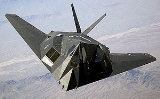
 spectrum. Well known examples include the United States' F-117 Nighthawk
F-117 Nighthawk

The Lockheed Corporation F-117 Nighthawk is a stealth technology ground attack aircraft formerly operated by the United States Air Force. The F-117A's first flight was in 1981, and it achieved Initial Operational Capability status in October 1983....
 (1980s-2008), the B-2 Spirit "Stealth Bomber,"
B-2 Spirit

The Northrop Grumman B-2 Spirit is a multirole heavy bomber with "low observable" stealth aircraft technology capable of penetration dense anti-aircraft warfare to deploy both conventional weapons and nuclear weapon weapons....
 and the F-22 Raptor
F-22 Raptor

The Lockheed Martin/Boeing F-22 Raptor is a Fighter aircraft#Fifth generation jet fighters , fighter aircraft that uses stealth aircraft technology....
.

While no aircraft is totally invisible to radar, stealth aircraft limit current conventional radar's abilities to detect or track them effectively enough to prevent an attack.


Discussion
Ask a question about 'Stealth aircraft'
Start a new discussion about 'Stealth aircraft'
Answer questions from other users
Full Discussion Forum


Recent Posts


Encyclopedia


Stealth aircraft are aircraft
Aircraft

An aircraft is a vehicle which is able to flight by being supported by the air, or in general, the atmosphere, of a planet. Examples include balloons, airplanes and helicopters....
 that use stealth technology
Stealth technology

Stealth technology also known as LO technology is a sub-discipline of military electronic countermeasures which covers a range of techniques used with stealth aircraft, stealth ship, submarines, and missiles, in order to make them less visible to radar, infrared, sonar and other detection methods....
 to make it harder to be detected by radar and other means than conventional aircraft by employing a combination of features to reduce visibility in the visual, audio, infrared
Infrared

Infrared radiation is electromagnetic radiation whose wavelength is longer than that of visible light , but shorter than that of terahertz radiation and microwaves ....
 and radio frequency (RF)
Radio frequency

Radio frequency is a frequency or rate of oscillation within the range of about 3 Hz to 300 GHz. This range corresponds to frequency of alternating current electrical signals used to produce and detect radio waves....
 spectrum. Well known examples include the United States' F-117 Nighthawk
F-117 Nighthawk

The Lockheed Corporation F-117 Nighthawk is a stealth technology ground attack aircraft formerly operated by the United States Air Force. The F-117A's first flight was in 1981, and it achieved Initial Operational Capability status in October 1983....
 (1980s-2008), the B-2 Spirit "Stealth Bomber,"
B-2 Spirit

The Northrop Grumman B-2 Spirit is a multirole heavy bomber with "low observable" stealth aircraft technology capable of penetration dense anti-aircraft warfare to deploy both conventional weapons and nuclear weapon weapons....
 and the F-22 Raptor
F-22 Raptor

The Lockheed Martin/Boeing F-22 Raptor is a Fighter aircraft#Fifth generation jet fighters , fighter aircraft that uses stealth aircraft technology....
.

While no aircraft is totally invisible to radar, stealth aircraft limit current conventional radar's abilities to detect or track them effectively enough to prevent an attack. Stealth is accomplished by using a complex design philosophy to reduce the ability of an opponent's sensors to detect, track and attack an aircraft.

Background


Modern stealth aircraft first became possible when a mathematician working for Lockheed Aircraft during the 1970s adopted a mathematical model developed by Petr Ufimtsev, a Russian scientist, to develop a computer program called Echo 1. Echo made it possible to predict the radar signature an aircraft made with flat panels, called facets. In 1975, engineers at Lockheed Skunk Works
Skunk works

Skunk Works is an official alias for Lockheed Martin?s Advanced Development Programs , formerly called Lockheed Advanced Development Projects....
 found that an airplane made with faceted surfaces could have a very low radar signature because the surfaces would radiate almost all of the radar energy away from the receiver. Lockheed built a model called "the Hopeless Diamond". It was named that because it looked like a squat diamond and looked too hopeless to ever fly. For the first time, designers realized that it might be possible to make an aircraft that was virtually invisible to radar.

Reduced radar cross section is only one of five factors that designers addressed to create a truly stealthy design such as the F-22. The F-22 has also been designed to disguise its infrared emissions to make it harder to detect by infrared homing ("heat seeking") surface-to-air or air-to-air missiles. Designers also addressed making the aircraft less visible to the naked eye, controlling radio transmissions, and noise abatement.

The first combat use of stealth aircraft was in December 1989 during Operation Just Cause in Panama
Panama

Panama, officially the Republic of Panama , is the southernmost country of Central America and, in turn, North America. Situated on an isthmus connecting North and South America, some categorize it as a transcontinental nation....
. On December 20, 1989 two USAF F-117s bombed a Panamanian defense Force Barracks in Rio Hato, Panama. In 1991, F-117s were tasked with attacking the most heavily fortified targets in Iraq and were the only jets allowed to operate inside Baghdad's city limits.

Limitations


Instability of design


Stealth aircraft are designed with a focus on minimal radar cross section
Radar cross section

Radar cross section is a measure of how detectable an object is with a radar. When radar waves are beamed at a target, only a certain amount is reflected back....
 (RCS) rather than aerodynamic performance. Highly stealth aircraft (the F-117 Nighthawk and B-2 Spirit
B-2 Spirit

The Northrop Grumman B-2 Spirit is a multirole heavy bomber with "low observable" stealth aircraft technology capable of penetration dense anti-aircraft warfare to deploy both conventional weapons and nuclear weapon weapons....
) are aerodynamically unstable in all three axes and require constant flight corrections from the fly-by-wire system to maintain controlled flight. Most modern non-stealth fighter aircraft (F-16
F-16 Fighting Falcon

The Lockheed Martin F-16 Fighting Falcon is a Multirole combat aircraft jet aircraft fighter aircraft originally developed by General Dynamics for the United States Air Force....
, Su-27, Gripen
JAS 39 Gripen

The Saab JAS 39 Gripen is a 4.5th generation fighter aircraft#.22Fourth and half.22 generation fighter aircraft manufactured by the Sweden aerospace company Saab....
, Rafale
Dassault Rafale

The Dassault Rafale is a France twin-engined delta-wing highly agile multi-role fighter aircraft designed and built by Dassault Aviation. The Rafale is being produced both for land-based use with the French Air Force and for aircraft carrier-based naval operations with the French Navy....
) are unstable on one or two axes only..

Dogfighting ability


Earlier full stealth aircraft (such as the F-117 and B-2) lack afterburner
AfterBurner

The AfterBurner is a lighting solution for the Game Boy Advance system that was created by Triton-Labs.Originally, portablemonopoly.net was a website created to petition Nintendo to put some kind of light in their Game Boy Advance system....
s, because the hot exhaust would increase their radar cross section and infrared footprint. As a result their performance in air combat maneuvering required in a dogfight
Dogfight

A dogfight or dog fight is aerial combat between fighter aircraft. The term originated during World War I when pilots had to switch off their engines to avoid an aerodynamic stall when turning in the same direction as the aircrafts' torque....
 would never match that of a dedicated fighter aircraft, but that did not matter since they are both designed to be bombers. More modern techniques however allow for stealthy designs such as the F-22 without compromising aerodynamic performance. Even though stealth aircraft have to compromise ultimate performance due to stealth considerations, some new aircraft, like the F-22 and F-35, have performance characteristics that meet or exceed those of current jet fighters due to advances in other technologies such as flight control systems, engines, airframe construction and materials.

Electromagnetic emissions


The high level of computerization and large amount of electronic equipment found inside stealth aircraft are often claimed to make them vulnerable to passive detection. This is highly unlikely and certainly systems such as Tamara
Tamara passive sensor

Tamara was the third generation Czechoslovak electronic support measures system that used measurements of time difference of arrival of pulses at three or four sites to accurately detect and track airborne emitters by multilateration....
 and Kolchuga
Kolchuga passive sensor

The Kolchuga passive sensor is an electronic warfare support measures system developed in Ukraine. Its detection range is limited by line-of-sight but may be up to 800 kilometers for very high altitude, very powerful emitters....
, which are often described as counter-stealth radars, are not designed to detect stray electromagnetic fields of this type. Such systems are designed to detect intentional, higher power emissions such as radar and communication signals. Stealth aircraft are deliberately operated to avoid or reduce such emissions. The F-117 only carries an air to ground payload and is not capable of air to air combat.

Vulnerable modes of flight


Stealth aircraft are still vulnerable to detection immediately before, during, and after using their weaponry. Since stealth payload (reduced RCS bombs and cruise missiles) are not yet generally available, and ordnance mount points create a significant radar return, stealth aircraft carry all armament internally. As soon as weapons bay doors are opened, the plane's RCS will be multiplied and even older generation radar systems will be able to locate the stealth aircraft. While the aircraft will reacquire its stealth as soon as the bay doors are closed, a fast response defensive weapons system has a short opportunity to engage the aircraft.

This vulnerability is addressed by operating in a manner that reduces the risk and consequences of temporary acquisition. The B-2's operational altitude imposes a flight time for defensive weapons that makes it virtually impossible to engage the aircraft during its weapons deployment. New stealth aircraft designs such as the F-22 can release munitions and return to stealthy flight in less than a second.

Some weapons require that the weapon's guidance system acquire the target while the weapon is still attached to the aircraft. This forces relatively extended operations with the bay doors open. In the absence of official information, it is likely that the use of such weapons in stealth aircraft is reduced as much as possible.

In case of 4th and 5th generation "reduced RCS" (semi-stealth) fighter-bomber designs, air-to-ground armament is mainly carried on external pylons, accepting the higher risk of detection. The internal weapon bays are reserved for various anti-aircraft missiles.

Reduced payload

B 2 Spirit Bombing
Fully stealth aircraft carry all armament internally, which limits the payload. By way of comparison, the F-117 carries only two laser or GPS guided bombs, while a non-stealth attack aircraft can carry several times more. This requires the deployment of additional aircraft to engage targets that would normally require a single non-stealth attack aircraft. This apparent disadvantage however is offset by the reduction in fewer supporting aircraft that are required to provide air cover, air-defense suppression and electronic counter measures, making stealth aircraft "force multipliers".

Cost of maintenance


Stealth aircraft are high-maintenance equipment, as their stealth capability requires detail-oriented care. The most obvious aspect is the aircraft's skin, that has a specific shape to reflect radar impulses away from the emission source, and a coating to absorb electromagnetic waves using materials such as graphite-ferrite microspheres. All openings and edges are electromagnetically shielded. The cockpit windows are shielded with delicate gold and indium foil layers.

By way of example, until the relatively recent introduction of improved sealing products, on the B-2 it would often take more hours of work to reseal access panels that were opened for maintenance, than the required maintenance itself. Stealth aircraft skin must also be protected from foreign object damage, as imperfections in the skin can dramatically increase the radar cross section.

In short, stealth depends on maintaining a high level of detail in every aspect of aircraft maintenance. This makes them a serious economic burden on stealth aircraft operators.

Sensitive skin


The B-2 Stealth Bomber has a skin made with highly specialized thermoplastics and composites which are radar-absorbent. A 1997 report by the US Congress' General Accounting Office found that these materials however are susceptible to damage from extreme temperatures, rain and moisture.

Cost of operations


Stealth aircraft are typically more expensive to develop and manufacture. An example is the B-2 Spirit
B-2 Spirit

The Northrop Grumman B-2 Spirit is a multirole heavy bomber with "low observable" stealth aircraft technology capable of penetration dense anti-aircraft warfare to deploy both conventional weapons and nuclear weapon weapons....
 that is many times more expensive to manufacture and support than conventional bomber aircraft. The B-2 program costs the U.S. Air Force almost $45 billion.

Detection

Theoretically there are a number of methods to detect stealth aircraft at long range.

Wing vortices


Both Australia
Australia

Australia, officially the Commonwealth of Australia, is a country in the southern hemisphere comprising the Australia of the world's smallest continent, the major island of Tasmania, and numerous list of islands of Australia in the Indian Ocean and Pacific Oceans....
 and Russia
Russia

Russia , or the Russian Federation , is a list of countries spanning more than one continent country extending over much of northern Eurasia....
 have announced that they have developed processing techniques that allow them to detect the turbulence
Turbulence

In fluid dynamics, turbulence or turbulent flow is a fluid regime characterized by chaotic, stochastic property changes. This includes low momentum diffusion, high momentum convection, and rapid variation of pressure and velocity in space and time....
 of aircraft at reasonably long ranges (possibly negating the stealth technology). However, there is no indication that such detections are accurate enough to allow engagement or even cueing of an engagement system. Position data might be used to direct air defense fighter aircraft and most stealth designs are no match for interceptor aircraft.

Reflected waves


Passive (multistatic) radar
Passive radar

Passive radar systems encompass a class of radar systems that detect and track objects by processing reflections from non-cooperative sources of illumination in the environment, such as commercial broadcast and communications signals....
, bistatic radar
Bistatic radar

Bistatic radar is the name given to a radar system which comprises a transmitter and receiver which are separated by a distance that is comparable to the expected target distance....
 and especially multistatic systems are believed to detect some stealth aircraft better than conventional monostatic radar
Monostatic radar

Monostatic radar is the term given to a radar in which the transmitter and receiver are collocated. This is the conventional configuration for a radar, but the term is used to distinguish it from a bistatic radar or multistatic radar....
s, since first-generation stealth technology (such as the F117) reflects energy away from the transmitter's line of sight
Line-of-sight propagation

Line-of-sight propagation refers to electro-magnetic radiation including light emissions traveling in a straight line. The rays or waves are diffracted, refracted, reflected, or absorbed by atmosphere and obstructions with material and generally cannot travel over the horizon or behind obstacles....
, effectively increasing the radar cross section
Radar cross section

Radar cross section is a measure of how detectable an object is with a radar. When radar waves are beamed at a target, only a certain amount is reflected back....
 (RCS) in other directions, which the passive radars monitor. Such a system typically uses either low frequency broadcast TV and FM radio signals (at which frequencies controlling the aircraft's signature is more difficult). Later stealth approaches do not rely on controlling the specular reflections of radar energy and so the geometrical benefits are unlikely to be significant.

Researchers at the University of Illinois at Urbana-Champaign
University of Illinois at Urbana-Champaign

The University of Illinois at Urbana-Champaign is a public university research university in the state of Illinois, United States. It is the oldest and largest campus in the University of Illinois system....
 with support of DARPA, have shown that it is possible to build a synthetic aperture radar
Synthetic aperture radar

Synthetic-aperture radar is a form of radar in which the large, highly-directional rotating antenna used by conventional radar is replaced with many low-directivity small stationary antennas scattered over some area near or around the target area....
 image of an aircraft target using passive multistatic radar, possibly detailed enough to enable automatic target recognition
Automatic Target Recognition

Automatic target recognition , is the ability for an algorithm or device to recognize targets or objects based on data obtained from sensors.The application of automatic target recognition technology is a critical element of robotic warfare....
 ().

In December 2007, SAAB
Saab

Saab AB is an aerospace and defense company based in Sweden....
 researchers also revealed details a system called Associative Aperture Synthesis Radar (AASR) that would employ a large array of inexpensive and redundant transmitters and a few intelligent receivers to exploit forward scatter
Bistatic radar

Bistatic radar is the name given to a radar system which comprises a transmitter and receiver which are separated by a distance that is comparable to the expected target distance....
 to detect low observable targets. The system was originally designed to detect stealthy cruise missiles and should be just as effective against aircraft. The large array of inexpensive transmitters also provides a degree of protection against anti-radar (or anti-radiation) missiles or attacks.

Infrared (heat)


Some analysts claim infra-red search and track (IRST)
Infra-red search and track

An infra-red search and track system is a method for detecting and tracking objects which give off infrared radiation such as jet aircraft and helicopters....
 systems can be deployed against stealth aircraft, because any aircraft surface heats up due to air friction and with a two channel IRST is a CO2 (4.3 µm absorption maxima) detection possible, thru difference comparing between the low and high channel. A F-22 traveling with Mach 1.7 generate a stagnation temperature of 188°F (86°C) in the shock cone. These analysts also point to the resurgence in such systems in several Russian designs in the 1980s, such as those fitted to the MiG-29
Mikoyan MiG-29

The Mikoyan MiG-29 is a Fourth generation jet fighter fighter aircraft designed in the Soviet Union for an Air superiority fighter role. Developed in the 1970s by the Mikoyan design bureau, it entered service with the Soviet Air Force in 1983, and remains in use by the Russian Air Force as well as in many other nations....
 and Su-27
Sukhoi Su-27

The Sukhoi Su-27 is a one-seat Mach-2 class Jet engine fighter plane originally manufactured by the Soviet Union, and designed by the Sukhoi....
. The latest version of the MiG-29, the MiG-35
Mikoyan MiG-35

The Mikoyan MiG-35 is a further development of the MiG-29 technology. Classified as a Fourth generation jet fighter fighter aircraft, the only existing prototype is the third modification of the existing MiG-29M2 airframe which previously served as MiG-29M2 model demonstrator....
, is equipped with a new Optical Locator System that includes even more advanced IRST capabilities.

Wavelength match


The Dutch company Thales Nederland
Thales Nederland

Thales Nederland B.V. is a subsidiary of Thales Group involved primarily in Navy Defence systems . Other areas of business include air defence, communications, optronics, Cryogenics Refrigeration systems and navigation products....
, formerly known as Holland Signaal, have developed a naval phased-array radar called SMART-L
SMART-L

SMART-L is a long-range search radar for naval ships developed by former Hollandse Signaalapparaten , now Thales Nederland. The Thales/BAE Systems Integrated System Technologies S1850M radar is a derivative of the SMART-L....
, which also is operated at L-Band and is claimed to offer counter stealth benefits. However, as with most claims of counter-stealth capability, these are unproven and untested. True resonant effects might be expected with HF sky wave radar systems, which have wavelengths of tens of metres. However, in this case, the accuracy of the radar systems is such that the detection is of limited value for engagement.

OTH Radar (Over the Horizon Radar)


Over-the-horizon radar

Over-the-horizon radar, or OTH , is a design concept for radar systems to allow them to detect targets at very long ranges, typically up to thousands of kilometers....
 is a design concept that increases radar's effective range over conventional radar. It is claimed that the Australian JORN Jindalee Operational Radar Network
Jindalee Operational Radar Network

The Jindalee Operational Radar Network is an over-the-horizon radar network that can monitor air and sea movements across 37,000 km2....
 can overcome certain stealth characteristics. . It is claimed that the HF frequency used and the method of bouncing radar from ionosphere overcomes the stealth characteristics of the F-117A. In other words, stealth aircraft are optimized for defeating much higher-frequency radar from front-on rather than low-frequency radars from above.

There are unsubstantiated rumours that Australian civilian air traffic controllers have tried to contact, in-air, high-altitude, F-117A pilots crossing the Australian continent without airspace clearance due to datafeed from the JORC. Apparently there was no response from the pilots.

Use of stealth aircraft