


State capitalism

Encyclopedia
The term State capitalism has various meanings, but is usually described as commercial (profit-seeking) economic activity undertaken by the state
with management of the productive forces
in a capitalist manner, even if the state is nominally socialist. State capitalism is usually characterized by the dominance or existence of a significant number of state-owned business enterprises. Examples of state capitalism include Corporatized
government agencies (agencies organized along corporate and business management practices) and states that own controlling shares of publicly-listed corporations
, effectively acting as a large capitalist and shareholder itself.
State capitalism has also come to refer to an economic system where the means of production
are owned privately but the state has considerable control over the allocation of credit
and investment, as in the case of France during the period of dirigisme
. Alternatively, state capitalism may be used (sometimes interchangeably with state monopoly capitalism
) to describe a system where the state intervenes in the economy to protect and advance the interests of large-scale businesses
. This practice is often claimed to be in contrast with the ideals of both socialism
and laissez-faire capitalism.
There are various theories and critiques of state capitalism, some of which have existed since the 1917 October Revolution
or even before. The common themes among them are to identify that the workers do not meaningfully control the means of production
and that commodity relations and production for profit still occur within state capitalism. Other socialists use the term state capitalism to refer to an economic system that is nominally capitalist, such that business and private owners gain the profits from an economy largely subsidized, developed and where decisive research and development is done by the state sector at public cost.
Marxist literature typically defines state capitalism as a social system combining capitalism
—the wage
system of producing and appropriating surplus value
—with ownership or control by a state
. By that definition, a state capitalist country is one where the government controls the economy and essentially acts like a single huge corporation
, extracting the surplus value from the workforce in order to invest it in further production. Friedrich Engels
, in Socialism: Utopian and Scientific, argues that state capitalism would be the final stage of capitalism consisting of ownership and management of large-scale production and communication by the bourgeois state.
This term is also used by some advocates of laissez-faire
capitalism in reference to a private capitalist economy controlled by a state
, often meaning a privately owned economy that is subject to statist economic planning. Some even use the term to refer to capitalist economies such that the state provides substantial public services and regulation of business activity. In the 1930s, Italian Fascist
leader Benito Mussolini
described Italian Fascism's economic system of corporatism
as "state socialism
turned on its head". This term was often used to describe the controlled economies of the great powers in the First World War
.
in 1896 said: "Nobody has combatted State Socialism more than we German Socialists; nobody has shown more distinctively than I, that State Socialism is really State capitalism!"
It has been suggested that the concept of state capitalism can be traced back to Mikhail Bakunin
's critique during the First International of the potential for state exploitation under Marxism, or to Jan Waclav Machajski's argument in The Intellectual Worker (1905) that socialism was a movement of the intelligentsia
as a class, resulting in a new type of society he termed state capitalism. For anarchists, state socialism is equivalent to state capitalism, hence oppressive and merely a shift from private capitalists to the state being the sole employer and capitalist.
During World War I
, using Vladimir Lenin
's idea that Czarism was taking a "Prussian path" to capitalism, the Bolshevik Nikolai Bukharin
identified a new stage in the development of capitalism, in which all sectors of national production and all important social institutions had become managed by the state; he termed this new stage 'state capitalism.'
After the October Revolution, Lenin used the term positively. In spring 1918, during a brief period of economic liberalism prior to the introduction of war communism
, and again during the New Economic Policy
(NEP) of 1921, Lenin justified the introduction of state capitalism controlled politically by the dictatorship of the proletariat
to further central control and develop the productive forces:
. One major tendency of the 1918 Russian communist left criticised the re-employment of authoritarian capitalist relations and methods of production. As Ossinsky in particular argued, "one-man management" (rather than the democratic factory committees workers had established and Lenin abolished) and the other impositions of capitalist discipline would stifle the active participation of workers in the organisation of production; Taylorism converted workers into the appendages of machines, and piece work
imposed individualist rather than collective rewards in production so instilling petty bourgeois values into workers. In sum these measures were seen as the re-transformation of proletarians within production from collective subject back into the atomised objects of capital. The working class, it was argued, had to participate consciously in economic as well as political administration. This tendency within the 1918 left communists emphasized that the problem with capitalist production was that it treated workers as objects. Its transcendence
lay in the workers' conscious creativity and participation, which is reminiscent of Marx's critique of alienation.
These criticisms were revived on the left of the Russian Communist Party after the 10th Congress in 1921, which introduced the New Economic Policy
. Many members of the Workers' Opposition
and the Decists (both later banned) and two new underground Left Communist groups, Gavril Myasnikov
's Workers' Group and the Workers' Truth group, developed the idea that Russia was becoming a state capitalist society governed by a new bureaucratic class. The most developed version of this idea was in a 1931 booklet by Myasnikov.
: After 1929, exiled Mensheviks such as Fyodor Dan began to argue that Stalin's Russia constituted a state capitalist society.
In the United Kingdom, the orthodox Marxist group the Socialist Party of Great Britain
independently developed a similar doctrine. Although initially beginning with the idea that Soviet capitalism differed little from western capitalism, they later began to argue that the bureaucracy held its property in common, much like the Catholic Church's. As John O'Neill notes:
said the term state capitalism "originally arose to designate the phenomena which arise when a bourgeois state takes direct charge of the means of transport or of industrial enterprises" and is therefore a "partial negation" of capitalism. However, Trotsky rejected that description of the USSR claiming instead that it was a degenerated workers' state
. After World War II
, most Trotskyists
accepted an analysis of the Soviet block countries as being deformed workers' states. However, alternative opinions of the Trotskyist tradition have developed the theory of state capitalism as a New Class
theory to explain what they regard as the essentially non-socialist nature of the USSR, Cuba
, China
, and other self-proclaimed socialist states.
The discussion goes back to internal debates in the Left Opposition
during the late 1920s and early 1930s. Ante Ciliga
, a member of the Left Opposition imprisoned at Verkhen-Uralske in the 1930s, described the evolution of many Left Oppositionists to a theory of state capitalism influenced by Gavril Myasnikov
's Workers Group and other Left Communist factions. On release, and returning to activity in the International Left Opposition, Ciliga "was one of the first, after 1936, to raise the theory [of state capitalism] in Trotskyist circles". George Orwell
, who was an anti-Stalinist left
ist like Ciliga, used the term in his Homage to Catalonia
(1938).
After 1940, dissident Trotskyists developed more theoretically sophisticated accounts of state capitalism. One influential formulation has been that of the Johnson-Forest Tendency
of CLR James and Raya Dunayevskaya
who formulated her theory in the early 1940s on the basis of a study of the first three Five Year Plans alongside readings of Marx's early humanist writings
. Their political evolution would lead them away from Trotskyism. Another is that of Tony Cliff
, associated with the International Socialist Tendency
and the British Socialist Workers Party
(SWP), dating back to the late 1940s. Unlike Johnson-Forest, Cliff formulated a theory of state capitalism that would enable his group to remain Trotskyists, albeit heterodox ones. A relatively recent text by Stephen Resnick
and Richard D. Wolff
, Class Theory and History, explores what they term state capitalism in the former Soviet Union
, continuing a theme that has been debated within Trotskyist theory for most of the past century.
Compare with other left-wing theories regarding Soviet-style societies: deformed workers' state
s, degenerated workers' state
s, new class
, state socialism
and bureaucratic collectivism
.
, a major German left communist, developed this idea from the 1920s, and it was later articulated by Dutch council communist Anton Pannekoek, for instance in "State Capitalism and Dictatorship" (1936).
and their Maoist or ‘anti-revisionist
’ adherents around the world often described the Soviet Union
as state-capitalist, essentially using the accepted Marxist definition, albeit on a different basis and in reference to a different span of time from either the Trotskyists or the left-communists. Specifically, the Maoists and their descendants use the term state capitalism as part of their description of the style and politics of Nikita Khrushchev
and his successors, as well as to similar leaders and policies in other self-styled ‘socialist’ states. This was involved in the ideological Sino-Soviet Split
.
After Mao's death, amidst the supporters of the Cultural Revolution
and the exploits of the 'Gang of Four', most extended the state capitalist formulation to China itself, and ceased to support the Communist Party of China
, which likewise distanced itself from these former fraternal
groups. The related theory of Hoxhaism
was developed in 1978, largely by Albaniam president Enver Hoxha
, who insisted that Mao himself had pursued state capitalist and revisionist economic policies.
Most current Communist groups descended from the Maoist ideological tradition still adopt the description of both China and the Soviet Union as being ‘state-capitalist’ from a certain point in their history onwards—most commonly, the Soviet Union from 1956 to its collapse in 1991, and China from 1976 to the present. Maoists and ‘anti-revisionists’ also sometimes use the term ‘Social-imperialism
’ to describe socialist states that they consider to be actually capitalist in essence—their phrase, "socialist in words, imperialist in deeds" denotes this.
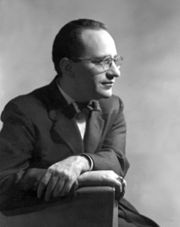 Murray Rothbard
, a laissez-faire
capitalist philosopher, uses the term interchangeably with the term state monopoly capitalism
, and uses it to describe a partnership of government and big business in which the state intervenes on behalf of large capitalists against the interests of consumers. He distinguishes this from laissez-faire capitalism where big business is not protected from market forces. This usage dates from the 1960s, when Harry Elmer Barnes
described the post-New Deal economy of the United States as "state capitalism." More recently, Andrei Illarionov, former economic advisor to Russia
n President
Vladimir Putin
, resigned in December 2005, protesting Russia's "embracement of state capitalism."
The term is not used by the classical liberals to describe the public ownership of the means of production. The economist Ludwig von Mises
explains the reason: "The socialist movement takes great pains to circulate frequently new labels for its ideally constructed state. Each worn-out label is replaced by another which raises hopes of an ultimate solution of the insoluble basic problem of Socialism—until it becomes obvious that nothing has been changed but the name. The most recent slogan is "State Capitalism." It is not commonly realized that this covers nothing more than what used to be called Planned Economy and State Socialism, and that State Capitalism, Planned Economy, and State Socialism diverge only in non-essentials from the "classic" ideal of egalitarian Socialism."
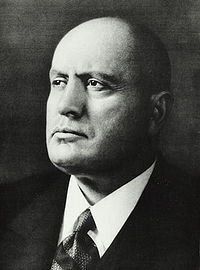 On economic issues, Italian Fascist
leader Benito Mussolini
claimed in 1933 that fascism's "path would lead inexorably into state capitalism, which is nothing more nor less than state socialism
turned on its head. In either event, [whether the outcome be state capitalism or state socialism] the result is the bureaucratization of the economic activities of the nation." Mussolini claimed that capitalism had degenerated in three stages, starting with dynamic or heroic capitalism (1830–1870) followed by static capitalism (1870–1914) and then reaching its final form of decadent capitalism, also known as supercapitalism
beginning in 1914.
Mussolini denounced supercapitalism for causing the "standardization of humankind" and for causing excessive consumption. Mussolini claimed that at this stage of supercapitalism "[it] is then that a capitalist enterprise, when difficulties arise, throws itself like a dead weight into the state's arms. It is then that state intervention begins and becomes more necessary. It is then that those who once ignored the state now seek it out anxiously." Due to the inability of businesses to operate properly when facing economic difficulties, Mussolini claimed that this proved that state intervention into the economy was necessary to stabilize the economy.
Mussolini claimed that dynamic or heroic capitalism and the bourgeoisie
could be prevented from degenerating into static capitalism and then supercapitalism if the concept of economic individualism
were abandoned and if state supervision of the economy was introduced. Private enterprise would control production but it would be supervised by the state. Italian Fascism presented the economic system of corporatism
as the solution that would preserve private enterprise and property while allowing the state to intervene in the economy when private enterprise failed.
in which autonomous entrepreneurial firms produce for lucrative government contracts and are not subject to the discipline of competitive markets. Many consider this as part of a continuum characterizing the modern world economy with "normal" capitalism at one extreme and complete state capitalism like that of the former USSR
at the other.
Both the Trotskyist definition and this one derive from discussion among Marxists at the beginning of the twentieth century, most notably Nikolai Bukharin
who, in his book Imperialism and the world economy thought that advanced, 'imperialist' countries exhibited the latter definition and considered (and rejected) the possibility that they could arrive at the former.
State capitalism is practised by a variety of Western countries with respect to certain strategic resources important for national security
. These may involve private investment as well. For example, a government may own or even monopolize oil production or transport infrastructure to ensure availability in the case of war. Examples include Neste, Statoil
and OMV
.
, who argues that soviet type economies of the 20th century used state capitalism to sustain processes of primitive accumulation.
, political scientist Ian Bremmer
describes China as the primary driver for the rise of state capitalism as a challenge to the free market economies of the developed world, particularly in the aftermath of the 1998 financial crisis.
State (polity)
A state is an organized political community, living under a government. States may be sovereign and may enjoy a monopoly on the legal initiation of force and are not dependent on, or subject to any other power or state. Many states are federated states which participate in a federal union...
with management of the productive forces
Productive forces
Productive forces, "productive powers" or "forces of production" [in German, Produktivkräfte] is a central idea in Marxism and historical materialism....
in a capitalist manner, even if the state is nominally socialist. State capitalism is usually characterized by the dominance or existence of a significant number of state-owned business enterprises. Examples of state capitalism include Corporatized
Corporatization
Corporatization refers to the transformation of state assets or agencies into state-owned corporations in order to introduce corporate management techniques to their administration...
government agencies (agencies organized along corporate and business management practices) and states that own controlling shares of publicly-listed corporations
Public company
This is not the same as a Government-owned corporation.A public company or publicly traded company is a limited liability company that offers its securities for sale to the general public, typically through a stock exchange, or through market makers operating in over the counter markets...
, effectively acting as a large capitalist and shareholder itself.
State capitalism has also come to refer to an economic system where the means of production
Means of production
Means of production refers to physical, non-human inputs used in production—the factories, machines, and tools used to produce wealth — along with both infrastructural capital and natural capital. This includes the classical factors of production minus financial capital and minus human capital...
are owned privately but the state has considerable control over the allocation of credit
Credit (finance)
Credit is the trust which allows one party to provide resources to another party where that second party does not reimburse the first party immediately , but instead arranges either to repay or return those resources at a later date. The resources provided may be financial Credit is the trust...
and investment, as in the case of France during the period of dirigisme
Dirigisme
Dirigisme is an economy in which the government exerts strong directive influence. While the term has occasionally been applied to centrally planned economies, where the state effectively controls both production and allocation of resources , it originally had neither of these meanings when...
. Alternatively, state capitalism may be used (sometimes interchangeably with state monopoly capitalism
State monopoly capitalism
The theory of state monopoly capitalism was initially a Marxist doctrine popularised after World War II. Lenin had claimed in 1916 that World War I had transformed laissez-faire capitalism into monopoly capitalism, but he did not publish any extensive theory about the topic...
) to describe a system where the state intervenes in the economy to protect and advance the interests of large-scale businesses
Big Business
Big business is a term used to describe large corporations, in either an individual or collective sense. The term first came into use in a symbolic sense subsequent to the American Civil War, particularly after 1880, in connection with the combination movement that began in American business at...
. This practice is often claimed to be in contrast with the ideals of both socialism
Socialism
Socialism is an economic system characterized by social ownership of the means of production and cooperative management of the economy; or a political philosophy advocating such a system. "Social ownership" may refer to any one of, or a combination of, the following: cooperative enterprises,...
and laissez-faire capitalism.
There are various theories and critiques of state capitalism, some of which have existed since the 1917 October Revolution
October Revolution
The October Revolution , also known as the Great October Socialist Revolution , Red October, the October Uprising or the Bolshevik Revolution, was a political revolution and a part of the Russian Revolution of 1917...
or even before. The common themes among them are to identify that the workers do not meaningfully control the means of production
Means of production
Means of production refers to physical, non-human inputs used in production—the factories, machines, and tools used to produce wealth — along with both infrastructural capital and natural capital. This includes the classical factors of production minus financial capital and minus human capital...
and that commodity relations and production for profit still occur within state capitalism. Other socialists use the term state capitalism to refer to an economic system that is nominally capitalist, such that business and private owners gain the profits from an economy largely subsidized, developed and where decisive research and development is done by the state sector at public cost.
Marxist literature typically defines state capitalism as a social system combining capitalism
Capitalism
Capitalism is an economic system that became dominant in the Western world following the demise of feudalism. There is no consensus on the precise definition nor on how the term should be used as a historical category...
—the wage
Wage
A wage is a compensation, usually financial, received by workers in exchange for their labor.Compensation in terms of wages is given to workers and compensation in terms of salary is given to employees...
system of producing and appropriating surplus value
Surplus value
Surplus value is a concept used famously by Karl Marx in his critique of political economy. Although Marx did not himself invent the term, he developed the concept...
—with ownership or control by a state
State (polity)
A state is an organized political community, living under a government. States may be sovereign and may enjoy a monopoly on the legal initiation of force and are not dependent on, or subject to any other power or state. Many states are federated states which participate in a federal union...
. By that definition, a state capitalist country is one where the government controls the economy and essentially acts like a single huge corporation
Corporation
A corporation is created under the laws of a state as a separate legal entity that has privileges and liabilities that are distinct from those of its members. There are many different forms of corporations, most of which are used to conduct business. Early corporations were established by charter...
, extracting the surplus value from the workforce in order to invest it in further production. Friedrich Engels
Friedrich Engels
Friedrich Engels was a German industrialist, social scientist, author, political theorist, philosopher, and father of Marxist theory, alongside Karl Marx. In 1845 he published The Condition of the Working Class in England, based on personal observations and research...
, in Socialism: Utopian and Scientific, argues that state capitalism would be the final stage of capitalism consisting of ownership and management of large-scale production and communication by the bourgeois state.
This term is also used by some advocates of laissez-faire
Laissez-faire
In economics, laissez-faire describes an environment in which transactions between private parties are free from state intervention, including restrictive regulations, taxes, tariffs and enforced monopolies....
capitalism in reference to a private capitalist economy controlled by a state
State (polity)
A state is an organized political community, living under a government. States may be sovereign and may enjoy a monopoly on the legal initiation of force and are not dependent on, or subject to any other power or state. Many states are federated states which participate in a federal union...
, often meaning a privately owned economy that is subject to statist economic planning. Some even use the term to refer to capitalist economies such that the state provides substantial public services and regulation of business activity. In the 1930s, Italian Fascist
Italian Fascism
Italian Fascism also known as Fascism with a capital "F" refers to the original fascist ideology in Italy. This ideology is associated with the National Fascist Party which under Benito Mussolini ruled the Kingdom of Italy from 1922 until 1943, the Republican Fascist Party which ruled the Italian...
leader Benito Mussolini
Benito Mussolini
Benito Amilcare Andrea Mussolini was an Italian politician who led the National Fascist Party and is credited with being one of the key figures in the creation of Fascism....
described Italian Fascism's economic system of corporatism
Corporatism
Corporatism, also known as corporativism, is a system of economic, political, or social organization that involves association of the people of society into corporate groups, such as agricultural, business, ethnic, labor, military, patronage, or scientific affiliations, on the basis of common...
as "state socialism
State socialism
State socialism is an economic system with limited socialist characteristics, such as public ownership of major industries, remedial measures to benefit the working class, and a gradual process of developing socialism through government policy...
turned on its head". This term was often used to describe the controlled economies of the great powers in the First World War
World War I
World War I , which was predominantly called the World War or the Great War from its occurrence until 1939, and the First World War or World War I thereafter, was a major war centred in Europe that began on 28 July 1914 and lasted until 11 November 1918...
.
Origins and early uses of the term
The term itself was in use within the socialist movement from the late nineteenth century onwards. Wilhelm LiebknechtWilhelm Liebknecht
Wilhelm Martin Philipp Christian Ludwig Liebknecht was a German social democrat and a principal founder of the SPD. His political career was a pioneering project combining Marxist revolutionary theory with practical, legal political activity...
in 1896 said: "Nobody has combatted State Socialism more than we German Socialists; nobody has shown more distinctively than I, that State Socialism is really State capitalism!"
It has been suggested that the concept of state capitalism can be traced back to Mikhail Bakunin
Mikhail Bakunin
Mikhail Alexandrovich Bakunin was a well-known Russian revolutionary and theorist of collectivist anarchism. He has also often been called the father of anarchist theory in general. Bakunin grew up near Moscow, where he moved to study philosophy and began to read the French Encyclopedists,...
's critique during the First International of the potential for state exploitation under Marxism, or to Jan Waclav Machajski's argument in The Intellectual Worker (1905) that socialism was a movement of the intelligentsia
Intelligentsia
The intelligentsia is a social class of people engaged in complex, mental and creative labor directed to the development and dissemination of culture, encompassing intellectuals and social groups close to them...
as a class, resulting in a new type of society he termed state capitalism. For anarchists, state socialism is equivalent to state capitalism, hence oppressive and merely a shift from private capitalists to the state being the sole employer and capitalist.
During World War I
World War I
World War I , which was predominantly called the World War or the Great War from its occurrence until 1939, and the First World War or World War I thereafter, was a major war centred in Europe that began on 28 July 1914 and lasted until 11 November 1918...
, using Vladimir Lenin
Vladimir Lenin
Vladimir Ilyich Lenin was a Russian Marxist revolutionary and communist politician who led the October Revolution of 1917. As leader of the Bolsheviks, he headed the Soviet state during its initial years , as it fought to establish control of Russia in the Russian Civil War and worked to create a...
's idea that Czarism was taking a "Prussian path" to capitalism, the Bolshevik Nikolai Bukharin
Nikolai Bukharin
Nikolai Ivanovich Bukharin , was a Russian Marxist, Bolshevik revolutionary, and Soviet politician. He was a member of the Politburo and Central Committee , chairman of the Communist International , and the editor in chief of Pravda , the journal Bolshevik , Izvestia , and the Great Soviet...
identified a new stage in the development of capitalism, in which all sectors of national production and all important social institutions had become managed by the state; he termed this new stage 'state capitalism.'
After the October Revolution, Lenin used the term positively. In spring 1918, during a brief period of economic liberalism prior to the introduction of war communism
War communism
War communism or military communism was the economic and political system that existed in Soviet Russia during the Russian Civil War, from 1918 to 1921...
, and again during the New Economic Policy
New Economic Policy
The New Economic Policy was an economic policy proposed by Vladimir Lenin, who called it state capitalism. Allowing some private ventures, the NEP allowed small animal businesses or smoke shops, for instance, to reopen for private profit while the state continued to control banks, foreign trade,...
(NEP) of 1921, Lenin justified the introduction of state capitalism controlled politically by the dictatorship of the proletariat
Dictatorship of the proletariat
In Marxist socio-political thought, the dictatorship of the proletariat refers to a socialist state in which the proletariat, or the working class, have control of political power. The term, coined by Joseph Weydemeyer, was adopted by the founders of Marxism, Karl Marx and Friedrich Engels, in the...
to further central control and develop the productive forces:
Reality tells us that state capitalism would be a step forward. If in a small space of time we could achieve state capitalism, that would be a victory. (Lenin 1918)
Use by Socialists
State capitalism has been used by various socialists, including Anarchists, Marxists and Leninists.Use by the Russian Communist Left
The earliest critique of the USSR as state-capitalist was formulated by various groups advocating left communismLeft communism
Left communism is the range of communist viewpoints held by the communist left, which criticizes the political ideas of the Bolsheviks at certain periods, from a position that is asserted to be more authentically Marxist and proletarian than the views of Leninism held by the Communist International...
. One major tendency of the 1918 Russian communist left criticised the re-employment of authoritarian capitalist relations and methods of production. As Ossinsky in particular argued, "one-man management" (rather than the democratic factory committees workers had established and Lenin abolished) and the other impositions of capitalist discipline would stifle the active participation of workers in the organisation of production; Taylorism converted workers into the appendages of machines, and piece work
Piece work
Piece work is any type of employment in which a worker is paid a fixed "piece rate" for each unit produced or action performed regardless of time...
imposed individualist rather than collective rewards in production so instilling petty bourgeois values into workers. In sum these measures were seen as the re-transformation of proletarians within production from collective subject back into the atomised objects of capital. The working class, it was argued, had to participate consciously in economic as well as political administration. This tendency within the 1918 left communists emphasized that the problem with capitalist production was that it treated workers as objects. Its transcendence
Transcendence (philosophy)
In philosophy, the adjective transcendental and the noun transcendence convey the basic ground concept from the word's literal meaning , of climbing or going beyond, albeit with varying connotations in its different historical and cultural stages...
lay in the workers' conscious creativity and participation, which is reminiscent of Marx's critique of alienation.
These criticisms were revived on the left of the Russian Communist Party after the 10th Congress in 1921, which introduced the New Economic Policy
New Economic Policy
The New Economic Policy was an economic policy proposed by Vladimir Lenin, who called it state capitalism. Allowing some private ventures, the NEP allowed small animal businesses or smoke shops, for instance, to reopen for private profit while the state continued to control banks, foreign trade,...
. Many members of the Workers' Opposition
Workers' Opposition
The Workers' Opposition was a faction of the Russian Communist Party that emerged in 1920 as a response to the perceived over-bureaucratisation that was occurring in Soviet Russia.-Membership:...
and the Decists (both later banned) and two new underground Left Communist groups, Gavril Myasnikov
Gavril Myasnikov
Gavril Ilyich Myasnikov , also transliterated as Gavriil Il'ich Miasnikov, was a Russian metalworker from the Urals, who participated in the Revolution of 1905 and became a Bolshevik underground activist in 1906. Tsarist police arrested him and he spent over seven years at hard labor in Siberia...
's Workers' Group and the Workers' Truth group, developed the idea that Russia was becoming a state capitalist society governed by a new bureaucratic class. The most developed version of this idea was in a 1931 booklet by Myasnikov.
Use by Mensheviks & 'Orthodox' Marxists
Immediately after the Russian Revolution many western Marxists questioned whether socialism was possible in Russia. Specifically, Karl KautskyKarl Kautsky
Karl Johann Kautsky was a Czech-German philosopher, journalist, and Marxist theoretician. Kautsky was recognized as among the most authoritative promulgators of Orthodox Marxism after the death of Friedrich Engels in 1895 until the coming of World War I in 1914 and was called by some the "Pope of...
: After 1929, exiled Mensheviks such as Fyodor Dan began to argue that Stalin's Russia constituted a state capitalist society.
In the United Kingdom, the orthodox Marxist group the Socialist Party of Great Britain
Socialist Party of Great Britain
The Socialist Party of Great Britain , is a small Marxist political party within the impossibilist tradition. It is best known for its advocacy of using the ballot box for revolutionary purposes; opposition to reformism; and its early adoption of the theory of state capitalism to describe the...
independently developed a similar doctrine. Although initially beginning with the idea that Soviet capitalism differed little from western capitalism, they later began to argue that the bureaucracy held its property in common, much like the Catholic Church's. As John O'Neill notes:
Use by Trotskyists
Leon TrotskyLeon Trotsky
Leon Trotsky , born Lev Davidovich Bronshtein, was a Russian Marxist revolutionary and theorist, Soviet politician, and the founder and first leader of the Red Army....
said the term state capitalism "originally arose to designate the phenomena which arise when a bourgeois state takes direct charge of the means of transport or of industrial enterprises" and is therefore a "partial negation" of capitalism. However, Trotsky rejected that description of the USSR claiming instead that it was a degenerated workers' state
Degenerated workers' state
In Trotskyist political theory the term degenerated workers' state has been used since the 1930s to describe the state of the Soviet Union after Joseph Stalin's consolidation of power in or about 1924...
. After World War II
World War II
World War II, or the Second World War , was a global conflict lasting from 1939 to 1945, involving most of the world's nations—including all of the great powers—eventually forming two opposing military alliances: the Allies and the Axis...
, most Trotskyists
Orthodox Trotskyism
Orthodox Trotskyism is a branch of Trotskyism which aims to adhere more closely to the philosophy, methods and positions of Trotsky and the early Fourth International, Lenin, and Marx than other Trotskyists....
accepted an analysis of the Soviet block countries as being deformed workers' states. However, alternative opinions of the Trotskyist tradition have developed the theory of state capitalism as a New Class
New class
The "New Class" model, as a theory of new social groups in post-industrial societies, gained ascendency during the 1970s as social and political scientists noted how "New Class" groups were shaped by post-material orientations in their pursuit of political and social goals...
theory to explain what they regard as the essentially non-socialist nature of the USSR, Cuba
Cuba
The Republic of Cuba is an island nation in the Caribbean. The nation of Cuba consists of the main island of Cuba, the Isla de la Juventud, and several archipelagos. Havana is the largest city in Cuba and the country's capital. Santiago de Cuba is the second largest city...
, China
China
Chinese civilization may refer to:* China for more general discussion of the country.* Chinese culture* Greater China, the transnational community of ethnic Chinese.* History of China* Sinosphere, the area historically affected by Chinese culture...
, and other self-proclaimed socialist states.
The discussion goes back to internal debates in the Left Opposition
Left Opposition
The Left Opposition was a faction within the Bolshevik Party from 1923 to 1927, headed de facto by Leon Trotsky. The Left Opposition formed as part of the power struggle within the party leadership that began with the Soviet founder Vladimir Lenin's illness and intensified with his death in January...
during the late 1920s and early 1930s. Ante Ciliga
Ante Ciliga
Ante Ciliga was Croatian politician, writer and publisher. Ciliga was one of the founders of the Communist Party of Yugoslavia ....
, a member of the Left Opposition imprisoned at Verkhen-Uralske in the 1930s, described the evolution of many Left Oppositionists to a theory of state capitalism influenced by Gavril Myasnikov
Gavril Myasnikov
Gavril Ilyich Myasnikov , also transliterated as Gavriil Il'ich Miasnikov, was a Russian metalworker from the Urals, who participated in the Revolution of 1905 and became a Bolshevik underground activist in 1906. Tsarist police arrested him and he spent over seven years at hard labor in Siberia...
's Workers Group and other Left Communist factions. On release, and returning to activity in the International Left Opposition, Ciliga "was one of the first, after 1936, to raise the theory [of state capitalism] in Trotskyist circles". George Orwell
George Orwell
Eric Arthur Blair , better known by his pen name George Orwell, was an English author and journalist...
, who was an anti-Stalinist left
Anti-Stalinist left
The anti-Stalinist left is an element of left-wing politics that is critical of Joseph Stalin's policies and the political system that developed in the Soviet Union under his rule...
ist like Ciliga, used the term in his Homage to Catalonia
Homage to Catalonia
Homage to Catalonia is political journalist and novelist George Orwell's personal account of his experiences and observations in the Spanish Civil War. The first edition was published in 1938. The book was not published in the United States until February 1952. The American edition had a preface...
(1938).
After 1940, dissident Trotskyists developed more theoretically sophisticated accounts of state capitalism. One influential formulation has been that of the Johnson-Forest Tendency
Johnson-Forest Tendency
The Johnson–Forest tendency, sometimes called the Johnsonites, refers to a radical left tendency in the United States associated with Marxist theorists C.L.R. James and Raya Dunayevskaya, who used the pseudonyms J.R. Johnson and Freddie Forest respectively...
of CLR James and Raya Dunayevskaya
Raya Dunayevskaya
Raya Dunayevskaya was the founder of the philosophy of Marxist Humanism in the United States of America. At one time Leon Trotsky's secretary, she later split with him and ultimately founded the organization News and Letters Committees and was its leader until her death.-Biography:Of Jewish...
who formulated her theory in the early 1940s on the basis of a study of the first three Five Year Plans alongside readings of Marx's early humanist writings
Economic and Philosophical Manuscripts of 1844
Economic & Philosophical Manuscripts of 1844 are a series of notes written between April and August 1844 by Karl Marx. Not published by Marx during his lifetime, they were first released in 1927 by researchers in the Soviet Union.The notebooks are an early expression of Marx's analysis of...
. Their political evolution would lead them away from Trotskyism. Another is that of Tony Cliff
Tony Cliff
Tony Cliff , was a Trotskyist who was a founding member of the Socialist Review Group which went on to become the Socialist Workers Party...
, associated with the International Socialist Tendency
International Socialist Tendency
The International Socialist Tendency is an international grouping of unorthodox Trotskyist organisations based around the ideas of Tony Cliff, founder of the Socialist Workers Party in Britain...
and the British Socialist Workers Party
Socialist Workers Party (Britain)
The Socialist Workers Party is a far left party in Britain founded by Tony Cliff. The SWP's student section has groups at a number of universities...
(SWP), dating back to the late 1940s. Unlike Johnson-Forest, Cliff formulated a theory of state capitalism that would enable his group to remain Trotskyists, albeit heterodox ones. A relatively recent text by Stephen Resnick
Stephen Resnick
Stephen A. Resnick is a North American heterodox economist. He is well-known for his work on Marxian economics, economic methodology, and class analysis.- Biography :...
and Richard D. Wolff
Richard D. Wolff
Richard D. Wolff is an American economist, well-known for his work on Marxian economics, economic methodology, and class analysis.- Early and personal life :...
, Class Theory and History, explores what they term state capitalism in the former Soviet Union
Soviet Union
The Soviet Union , officially the Union of Soviet Socialist Republics , was a constitutionally socialist state that existed in Eurasia between 1922 and 1991....
, continuing a theme that has been debated within Trotskyist theory for most of the past century.
Compare with other left-wing theories regarding Soviet-style societies: deformed workers' state
Deformed workers' state
In Trotskyist political theory, deformed workers' states are states where the bourgeoisie has been overthrown through social revolution, the industrial means of production have been largely nationalized bringing benefits to the working class, but where the working class has never held political power...
s, degenerated workers' state
Degenerated workers' state
In Trotskyist political theory the term degenerated workers' state has been used since the 1930s to describe the state of the Soviet Union after Joseph Stalin's consolidation of power in or about 1924...
s, new class
New class
The "New Class" model, as a theory of new social groups in post-industrial societies, gained ascendency during the 1970s as social and political scientists noted how "New Class" groups were shaped by post-material orientations in their pursuit of political and social goals...
, state socialism
State socialism
State socialism is an economic system with limited socialist characteristics, such as public ownership of major industries, remedial measures to benefit the working class, and a gradual process of developing socialism through government policy...
and bureaucratic collectivism
Bureaucratic collectivism
Bureaucratic collectivism is a theory of class society. It is used by some Trotskyists to describe the nature of the Soviet Union under Joseph Stalin, and other similar states in Central and Eastern Europe and elsewhere .- Theory :...
.
Use by later left communists and council communists
The left communist/council communist traditions outside Russia consider the Soviet system as state capitalist. Otto RühleOtto Rühle
Otto Rühle was a German Marxist active in opposition to both the First and Second World Wars, and a founder with along with Karl Liebknecht, Rosa Luxemburg, Franz Mehring and others of the group and magazine Internationale, which posed a revolutionary internationalism against a world of warring...
, a major German left communist, developed this idea from the 1920s, and it was later articulated by Dutch council communist Anton Pannekoek, for instance in "State Capitalism and Dictatorship" (1936).
Use by Maoists and ‘Anti-Revisionists’
From 1956 to the early 1980s, the Communist Party of ChinaCommunist Party of China
The Communist Party of China , also known as the Chinese Communist Party , is the founding and ruling political party of the People's Republic of China...
and their Maoist or ‘anti-revisionist
Anti-Revisionist
In the Marxist–Leninist movement, anti-revisionism refers to a doctrine which upholds the line of theory and practice associated with Karl Marx, Friedrich Engels, Vladimir Lenin and Joseph Stalin, and usually either Mao Zedong or Enver Hoxha as well...
’ adherents around the world often described the Soviet Union
Soviet Union
The Soviet Union , officially the Union of Soviet Socialist Republics , was a constitutionally socialist state that existed in Eurasia between 1922 and 1991....
as state-capitalist, essentially using the accepted Marxist definition, albeit on a different basis and in reference to a different span of time from either the Trotskyists or the left-communists. Specifically, the Maoists and their descendants use the term state capitalism as part of their description of the style and politics of Nikita Khrushchev
Nikita Khrushchev
Nikita Sergeyevich Khrushchev led the Soviet Union during part of the Cold War. He served as First Secretary of the Communist Party of the Soviet Union from 1953 to 1964, and as Chairman of the Council of Ministers, or Premier, from 1958 to 1964...
and his successors, as well as to similar leaders and policies in other self-styled ‘socialist’ states. This was involved in the ideological Sino-Soviet Split
Sino-Soviet split
In political science, the term Sino–Soviet split denotes the worsening of political and ideologic relations between the People's Republic of China and the Union of Soviet Socialist Republics during the Cold War...
.
After Mao's death, amidst the supporters of the Cultural Revolution
Cultural Revolution
The Great Proletarian Cultural Revolution, commonly known as the Cultural Revolution , was a socio-political movement that took place in the People's Republic of China from 1966 through 1976...
and the exploits of the 'Gang of Four', most extended the state capitalist formulation to China itself, and ceased to support the Communist Party of China
Communist Party of China
The Communist Party of China , also known as the Chinese Communist Party , is the founding and ruling political party of the People's Republic of China...
, which likewise distanced itself from these former fraternal
Fraternal party
Fraternal party literally means brother party. The term refers to a political party officially affiliated with another, often larger and/or international, political party or governmental party....
groups. The related theory of Hoxhaism
Hoxhaism
"Hoxhaism" is an informal term used to refer to a variant of anti-revisionist Marxism-Leninism that developed in the late 1970s due to a split in the Maoist movement, appearing after the ideological row between the Communist Party of China and the Party of Labour of Albania in 1978.The Albanians...
was developed in 1978, largely by Albaniam president Enver Hoxha
Enver Hoxha
Enver Halil Hoxha was a Marxist–Leninist revolutionary andthe leader of Albania from the end of World War II until his death in 1985, as the First Secretary of the Party of Labour of Albania...
, who insisted that Mao himself had pursued state capitalist and revisionist economic policies.
Most current Communist groups descended from the Maoist ideological tradition still adopt the description of both China and the Soviet Union as being ‘state-capitalist’ from a certain point in their history onwards—most commonly, the Soviet Union from 1956 to its collapse in 1991, and China from 1976 to the present. Maoists and ‘anti-revisionists’ also sometimes use the term ‘Social-imperialism
Social-imperialism
Social-imperialism is a Marxist expression, typically used in a derogatory fashion, to describe people, parties, or nations that are "socialist in words, imperialist in deeds"...
’ to describe socialist states that they consider to be actually capitalist in essence—their phrase, "socialist in words, imperialist in deeds" denotes this.
Use by classical liberals and laissez-faire capitalists
Murray Rothbard
Murray Newton Rothbard was an American author and economist of the Austrian School who helped define capitalist libertarianism and popularized a form of free-market anarchism he termed "anarcho-capitalism." Rothbard wrote over twenty books and is considered a centrally important figure in the...
, a laissez-faire
Laissez-faire
In economics, laissez-faire describes an environment in which transactions between private parties are free from state intervention, including restrictive regulations, taxes, tariffs and enforced monopolies....
capitalist philosopher, uses the term interchangeably with the term state monopoly capitalism
State monopoly capitalism
The theory of state monopoly capitalism was initially a Marxist doctrine popularised after World War II. Lenin had claimed in 1916 that World War I had transformed laissez-faire capitalism into monopoly capitalism, but he did not publish any extensive theory about the topic...
, and uses it to describe a partnership of government and big business in which the state intervenes on behalf of large capitalists against the interests of consumers. He distinguishes this from laissez-faire capitalism where big business is not protected from market forces. This usage dates from the 1960s, when Harry Elmer Barnes
Harry Elmer Barnes
Harry Elmer Barnes was a prominent American historian in the 20th century. A "progressive who had some classical liberal impulses," he was associated for virtually his entire career with Columbia University.-Early career:...
described the post-New Deal economy of the United States as "state capitalism." More recently, Andrei Illarionov, former economic advisor to Russia
Russia
Russia or , officially known as both Russia and the Russian Federation , is a country in northern Eurasia. It is a federal semi-presidential republic, comprising 83 federal subjects...
n President
President
A president is a leader of an organization, company, trade union, university, or country.Etymologically, a president is one who presides, who sits in leadership...
Vladimir Putin
Vladimir Putin
Vladimir Vladimirovich Putin served as the second President of the Russian Federation and is the current Prime Minister of Russia, as well as chairman of United Russia and Chairman of the Council of Ministers of the Union of Russia and Belarus. He became acting President on 31 December 1999, when...
, resigned in December 2005, protesting Russia's "embracement of state capitalism."
The term is not used by the classical liberals to describe the public ownership of the means of production. The economist Ludwig von Mises
Ludwig von Mises
Ludwig Heinrich Edler von Mises was an Austrian economist, philosopher, and classical liberal who had a significant influence on the modern Libertarian movement and the "Austrian School" of economic thought.-Biography:-Early life:...
explains the reason: "The socialist movement takes great pains to circulate frequently new labels for its ideally constructed state. Each worn-out label is replaced by another which raises hopes of an ultimate solution of the insoluble basic problem of Socialism—until it becomes obvious that nothing has been changed but the name. The most recent slogan is "State Capitalism." It is not commonly realized that this covers nothing more than what used to be called Planned Economy and State Socialism, and that State Capitalism, Planned Economy, and State Socialism diverge only in non-essentials from the "classic" ideal of egalitarian Socialism."
Use by Italian Fascists
Italian Fascism
Italian Fascism also known as Fascism with a capital "F" refers to the original fascist ideology in Italy. This ideology is associated with the National Fascist Party which under Benito Mussolini ruled the Kingdom of Italy from 1922 until 1943, the Republican Fascist Party which ruled the Italian...
leader Benito Mussolini
Benito Mussolini
Benito Amilcare Andrea Mussolini was an Italian politician who led the National Fascist Party and is credited with being one of the key figures in the creation of Fascism....
claimed in 1933 that fascism's "path would lead inexorably into state capitalism, which is nothing more nor less than state socialism
State socialism
State socialism is an economic system with limited socialist characteristics, such as public ownership of major industries, remedial measures to benefit the working class, and a gradual process of developing socialism through government policy...
turned on its head. In either event, [whether the outcome be state capitalism or state socialism] the result is the bureaucratization of the economic activities of the nation." Mussolini claimed that capitalism had degenerated in three stages, starting with dynamic or heroic capitalism (1830–1870) followed by static capitalism (1870–1914) and then reaching its final form of decadent capitalism, also known as supercapitalism
Supercapitalism (concept in Italian Fascism)
Supercapitalism was a concept that developed in Italian Fascism. Italy's Fascist leader, Benito Mussolini, claimed that at the stage of supercapitalism, "a capitalist enterprise, when difficulties arise, throws itself like a dead weight into the state's arms. It is then that state intervention...
beginning in 1914.
Mussolini denounced supercapitalism for causing the "standardization of humankind" and for causing excessive consumption. Mussolini claimed that at this stage of supercapitalism "[it] is then that a capitalist enterprise, when difficulties arise, throws itself like a dead weight into the state's arms. It is then that state intervention begins and becomes more necessary. It is then that those who once ignored the state now seek it out anxiously." Due to the inability of businesses to operate properly when facing economic difficulties, Mussolini claimed that this proved that state intervention into the economy was necessary to stabilize the economy.
Mussolini claimed that dynamic or heroic capitalism and the bourgeoisie
Bourgeoisie
In sociology and political science, bourgeoisie describes a range of groups across history. In the Western world, between the late 18th century and the present day, the bourgeoisie is a social class "characterized by their ownership of capital and their related culture." A member of the...
could be prevented from degenerating into static capitalism and then supercapitalism if the concept of economic individualism
Individualism
Individualism is the moral stance, political philosophy, ideology, or social outlook that stresses "the moral worth of the individual". Individualists promote the exercise of one's goals and desires and so value independence and self-reliance while opposing most external interference upon one's own...
were abandoned and if state supervision of the economy was introduced. Private enterprise would control production but it would be supervised by the state. Italian Fascism presented the economic system of corporatism
Corporatism
Corporatism, also known as corporativism, is a system of economic, political, or social organization that involves association of the people of society into corporate groups, such as agricultural, business, ethnic, labor, military, patronage, or scientific affiliations, on the basis of common...
as the solution that would preserve private enterprise and property while allowing the state to intervene in the economy when private enterprise failed.
In Western countries
An alternate definition is that state capitalism is a close relationship between the government and private capitalism, such as one in which the private capitalists produce for a guaranteed market. An example of this would be the military-industrial complexMilitary-industrial complex
Military–industrial complex , or Military–industrial-congressional complex is a concept commonly used to refer to policy and monetary relationships between legislators, national armed forces, and the industrial sector that supports them...
in which autonomous entrepreneurial firms produce for lucrative government contracts and are not subject to the discipline of competitive markets. Many consider this as part of a continuum characterizing the modern world economy with "normal" capitalism at one extreme and complete state capitalism like that of the former USSR
Soviet Union
The Soviet Union , officially the Union of Soviet Socialist Republics , was a constitutionally socialist state that existed in Eurasia between 1922 and 1991....
at the other.
Both the Trotskyist definition and this one derive from discussion among Marxists at the beginning of the twentieth century, most notably Nikolai Bukharin
Nikolai Bukharin
Nikolai Ivanovich Bukharin , was a Russian Marxist, Bolshevik revolutionary, and Soviet politician. He was a member of the Politburo and Central Committee , chairman of the Communist International , and the editor in chief of Pravda , the journal Bolshevik , Izvestia , and the Great Soviet...
who, in his book Imperialism and the world economy thought that advanced, 'imperialist' countries exhibited the latter definition and considered (and rejected) the possibility that they could arrive at the former.
State capitalism is practised by a variety of Western countries with respect to certain strategic resources important for national security
National security
National security is the requirement to maintain the survival of the state through the use of economic, diplomacy, power projection and political power. The concept developed mostly in the United States of America after World War II...
. These may involve private investment as well. For example, a government may own or even monopolize oil production or transport infrastructure to ensure availability in the case of war. Examples include Neste, Statoil
Statoil
Statoil ASA is a Norwegian petroleum company established in 1972. It merged with Norsk Hydro in 2007 and was known as StatoilHydro until 2009, when the name was changed back to Statoil ASA. The brand Statoil was retained as a chain of fuel stations owned by StatoilHydro...
and OMV
OMV
OMV is Austria's largest oil-producing, refining and gas station operating company with important activities in other Central European countries...
.
In European studies
Several European scholars and political economists have been using the term increasingly to describe one of the three major varieties of capitalism that prevail in the modern context of the European Union. This approach is mainly influenced by Schmidt's (2002) article on The Futures of European Capitalism, in which he divides modern European capitalism in three groups: Market, Managed and State. Here, state capitalism refers to a system where high coordination between the state, large companies and labour unions ensures economic growth and development in a quasi-corporatist model. The author cites France and, to a lesser extent, Italy as the prime examples of modern European State capitalism. A general theory of Capitalist forms, whereby state capitalism is a particular case, was developed by Ernesto ScrepantiErnesto Screpanti
Ernesto Screpanti is a professor of Political Economy at the University of Siena. He worked on the “rethinking Marxism” research programme, in the attempt to update Marxist analysis by bring it in line with the reality of contemporary capitalism, on the one hand, and to liberate Marxism from any...
, who argues that soviet type economies of the 20th century used state capitalism to sustain processes of primitive accumulation.
Current forms in 21st century
Many analysts assert that China is one of the main examples of state capitalism in the 21st century. In his book, The End of the Free Market: Who Wins the War Between States and CorporationsThe End of the Free Market: Who Wins the War Between States and Corporations
- Summary :The End of the Free Market: Who Wins the War Between States and Corporations?, is a 2010 non-fiction book by Ian Bremmer, that discusses the rise of state capitalism, a system in which governments dominate local economies through ownership of market-dominant companies and large pools of...
, political scientist Ian Bremmer
Ian Bremmer
Ian Bremmer is an American political scientist specializing in US foreign policy, states in transition, and global political risk. He is the president and founder of Eurasia Group, a leading global political risk research and consulting firm...
describes China as the primary driver for the rise of state capitalism as a challenge to the free market economies of the developed world, particularly in the aftermath of the 1998 financial crisis.
See also
- Bureaucratic collectivismBureaucratic collectivismBureaucratic collectivism is a theory of class society. It is used by some Trotskyists to describe the nature of the Soviet Union under Joseph Stalin, and other similar states in Central and Eastern Europe and elsewhere .- Theory :...
- Constitutional economicsConstitutional economicsConstitutional economics is a research program in economics and constitutionalism that has been described as extending beyond the definition of 'the economic analysis of constitutional law' in explaining the choice "of alternative sets of legal-institutional-constitutional rules that constrain the...
- CorporatismCorporatismCorporatism, also known as corporativism, is a system of economic, political, or social organization that involves association of the people of society into corporate groups, such as agricultural, business, ethnic, labor, military, patronage, or scientific affiliations, on the basis of common...
- CorporatizationCorporatizationCorporatization refers to the transformation of state assets or agencies into state-owned corporations in order to introduce corporate management techniques to their administration...
- Crony capitalismCrony capitalismCrony capitalism is a term describing a capitalist economy in which success in business depends on close relationships between business people and government officials...
- Deformed workers' stateDeformed workers' stateIn Trotskyist political theory, deformed workers' states are states where the bourgeoisie has been overthrown through social revolution, the industrial means of production have been largely nationalized bringing benefits to the working class, but where the working class has never held political power...
- Degenerated workers' stateDegenerated workers' stateIn Trotskyist political theory the term degenerated workers' state has been used since the 1930s to describe the state of the Soviet Union after Joseph Stalin's consolidation of power in or about 1924...
- Economic planningEconomic planningEconomic planning refers to any directing or planning of economic activity outside the mechanisisms of the market, in an attempt to achieve specific economic or social outcomes. Planning is an economic mechanism for resource allocation and decision-making in contrast with the market mechanism...
- FascismFascismFascism is a radical authoritarian nationalist political ideology. Fascists seek to rejuvenate their nation based on commitment to the national community as an organic entity, in which individuals are bound together in national identity by suprapersonal connections of ancestry, culture, and blood...
- Government-owned corporationGovernment-owned corporationA government-owned corporation, state-owned company, state-owned entity, state enterprise, publicly owned corporation, government business enterprise, or parastatal is a legal entity created by a government to undertake commercial activities on behalf of an owner government...
- National Oil CorporationNational Oil CorporationThe National Oil Corporation is the national oil company of Libya. It dominates Libya's oil industry, along with a number of smaller subsidiaries, which combined account for around 70% the country's oil output...
- New classNew classThe "New Class" model, as a theory of new social groups in post-industrial societies, gained ascendency during the 1970s as social and political scientists noted how "New Class" groups were shaped by post-material orientations in their pursuit of political and social goals...
- Political economyPolitical economyPolitical economy originally was the term for studying production, buying, and selling, and their relations with law, custom, and government, as well as with the distribution of national income and wealth, including through the budget process. Political economy originated in moral philosophy...
- Raya DunayevskayaRaya DunayevskayaRaya Dunayevskaya was the founder of the philosophy of Marxist Humanism in the United States of America. At one time Leon Trotsky's secretary, she later split with him and ultimately founded the organization News and Letters Committees and was its leader until her death.-Biography:Of Jewish...
- Socialist commodity market
- Sovereign wealth fundSovereign wealth fundA sovereign wealth fund is a state-owned investment fund composed of financial assets such as stocks, bonds, property, precious metals or other financial instruments. Sovereign wealth funds invest globally. Some of them have grabbed attention making bad investments in several Wall Street financial...
- State socialismState socialismState socialism is an economic system with limited socialist characteristics, such as public ownership of major industries, remedial measures to benefit the working class, and a gradual process of developing socialism through government policy...
- StatismStatismStatism is a term usually describing a political philosophy, whether of the right or the left, that emphasises the role of the state in politics or supports the use of the state to achieve economic, military or social goals...
External links
- In Defense of Marxism by Leon TrotskyLeon TrotskyLeon Trotsky , born Lev Davidovich Bronshtein, was a Russian Marxist revolutionary and theorist, Soviet politician, and the founder and first leader of the Red Army....
A collection of essays and letters to members of the US Socialist Workers Party from 1939 to 1940. - Our Recent Congress, Justice 1896 by Wilhelm LiebknechtWilhelm LiebknechtWilhelm Martin Philipp Christian Ludwig Liebknecht was a German social democrat and a principal founder of the SPD. His political career was a pioneering project combining Marxist revolutionary theory with practical, legal political activity...
- What was the USSR? by Aufheben
- State Capitalism in Russia by Tony CliffTony CliffTony Cliff , was a Trotskyist who was a founding member of the Socialist Review Group which went on to become the Socialist Workers Party...
- Toward a Theory of State Capitalism: Ultimate Decision-Making and Class Structure LibertarianLibertarianismLibertarianism, in the strictest sense, is the political philosophy that holds individual liberty as the basic moral principle of society. In the broadest sense, it is any political philosophy which approximates this view...
analysis by Walter E. Grinder and John Hagel. - Against the Theory of State Capitalism by Ted GrantTed GrantEdward "Ted" Grant , 9 July 1913 in Germiston, South Africa – 20 July 2006 in London) was a South African Trotskyist who spent most of his adult life in Britain...
- The Russian Question: A debate between Raya Dunayevskaya and Max Shachtman (May 1947 with August 2005 commentary)
- Imperialism and World Economy by Nikolai BukharinNikolai BukharinNikolai Ivanovich Bukharin , was a Russian Marxist, Bolshevik revolutionary, and Soviet politician. He was a member of the Politburo and Central Committee , chairman of the Communist International , and the editor in chief of Pravda , the journal Bolshevik , Izvestia , and the Great Soviet...
- State Capitalism and Dictatorship by Anton Pannekoek
- The Theory of “State Capitalism”, by Ernest MandelErnest MandelErnest Ezra Mandel, also known by various pseudonyms such as Ernest Germain, Pierre Gousset, Henri Vallin, Walter , was a revolutionary Marxist theorist.-Life:...
(June 1951) - The Marxian Concept of Capital and the Soviet Experience: Essay in the Critique of Political Economy by Paresh Chattopadhyay
- Collection of left-communist links that dismiss the bolshevik state capitalism.
- "The Nature of the Russian Economy" a 1946 Polemic written by Raya DunayevskayaRaya DunayevskayaRaya Dunayevskaya was the founder of the philosophy of Marxist Humanism in the United States of America. At one time Leon Trotsky's secretary, she later split with him and ultimately founded the organization News and Letters Committees and was its leader until her death.-Biography:Of Jewish...
(then writing as Freddie Forest), founder of Marxist HumanismMarxist humanismMarxist humanism is a branch of Marxism that primarily focuses on Marx's earlier writings, especially the Economic and Philosophical Manuscripts of 1844 in which Marx espoused his theory of alienation, as opposed to his later works, which are considered to be concerned more with his structural...
, arguing for a state capitalist position within the Marxist movement. - "Trotskyism after Trotsky: The origins of the International Socialists" Summarization of three key points on which Cliff and the International Socialist Tendency deviated from what is traditionally the orthodox Trotskyist position.
- "C.L.R. James on Marx's Capital and State Capitalism"
- State Capitalism Comes of Age, Foreign AffairsForeign AffairsForeign Affairs is an American magazine and website on international relations and U.S. foreign policy published since 1922 by the Council on Foreign Relations six times annually...
, May/June 2009 - The End of The Free Market: Who Wins the War Between States and Corporations, by Ian BremmerIan BremmerIan Bremmer is an American political scientist specializing in US foreign policy, states in transition, and global political risk. He is the president and founder of Eurasia Group, a leading global political risk research and consulting firm...
, (May 2010)