
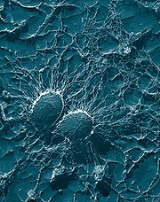
Staphylococcus aureus (icon; meaning the "golden grape-cluster berry", and also known as "golden staph" and Oro staphira) is a
facultative anaerobicA facultative anaerobic organism is an organism, usually a bacterium, that makes ATP by aerobic respiration if oxygen is present but is also capable of switching to fermentation...
Gram-positiveGram-positive bacteria are those that are stained dark blue or violet by Gram staining. This is in contrast to Gram-negative bacteria, which cannot retain the crystal violet stain, instead taking up the counterstain and appearing red or pink...
coccalCoccus can be used to describe any bacterium that has a spherical shape. It is one of the three distinct types of bacteria shapes, the other two being bacillus and spirillum cells...
bacterium. It is frequently found as part of the normal
skin floraThe skin flora are the microorganisms which reside on the skin. Most research has been upon those that reside upon the 2 square metres of human skin. Many of them are bacteria of which there are around 1000 species upon human skin from 19 phyla. The total number of bacteria on an average human has...
on the skin and nasal passages. It is estimated that 20% of the human population are long-term carriers of
S. aureus.
S. aureus is the most common species of staphylococci to cause
Staph infections. The reasons
S. aureus is a successful pathogen are a combination host and bacterial immuno-evasive strategies. One of these strategies is the production of
carotenoidCarotenoids are tetraterpenoid organic pigments that are naturally occurring in the chloroplasts and chromoplasts of plants and some other photosynthetic organisms like algae, some bacteria, and some types of fungus. Carotenoids can be synthesized fats and other basic organic metabolic building...
pigmentA pigment is a material that changes the color of reflected or transmitted light as the result of wavelength-selective absorption. This physical process differs from fluorescence, phosphorescence, and other forms of luminescence, in which a material emits light.Many materials selectively absorb...
staphyloxanthinStaphyloxanthin is a carotenoid pigment that is produced by some strains of Staphylococcus aureus. It acts as a virulence factor. It has an antioxidant action that helps the microbe evade death by reactive oxygen species produced by the host immune system. Staphyloxanthin is responsible for S....
which is responsible for the characteristic golden colour of
S. aureus colonies. This pigment acts as a
virulence factorVirulence factors are molecules expressed and secreted by pathogens that enable them to achieve the following:* colonization of a niche in the host...
, primarily being a bacterial
antioxidantAn antioxidant is a molecule capable of inhibiting the oxidation of other molecules. Oxidation is a chemical reaction that transfers electrons or hydrogen from a substance to an oxidizing agent. Oxidation reactions can produce free radicals. In turn, these radicals can start chain reactions. When...
which helps the microbe evade the hosts immune system in the form of
reactive oxygen speciesReactive oxygen species are chemically reactive molecules containing oxygen. Examples include oxygen ions and peroxides. Reactive oxygen species are highly reactive due to the presence of unpaired valence shell electrons....
which the host uses to kill pathogens.
S. aureus can cause a range of illnesses from minor skin
infectionAn infection is the colonization of a host organism by parasite species. Infecting parasites seek to use the host's resources to reproduce, often resulting in disease...
s, such as
pimpleA pimple, zit or spot is a kind of acne, and one of the many results of excess oil getting trapped in the pores. Some of the varieties are pustules or papules....
s,
impetigoImpetigo is a highly contagious bacterial skin infection most common among pre-school children. People who play close contact sports such as rugby, American football and wrestling are also susceptible, regardless of age. Impetigo is not as common in adults. The name derives from the Latin impetere...
,
boilA boil, also called a furuncle, is a deep folliculitis, infection of the hair follicle. It is always caused by infection by the bacterium Staphylococcus aureus, resulting in a painful swollen area on the skin caused by an accumulation of pus and dead tissue...
s (furuncles),
cellulitisCellulitis is a diffuse inflammation of connective tissue with severe inflammation of dermal and subcutaneous layers of the skin. Cellulitis can be caused by normal skin flora or by exogenous bacteria, and often occurs where the skin has previously been broken: cracks in the skin, cuts, blisters,...
folliculitis,
carbuncleA carbuncle is an abscess larger than a boil, usually with one or more openings draining pus onto the skin. It is usually caused by bacterial infection, most commonly Staphylococcus aureus. The infection is contagious and may spread to other areas of the body or other people...
s, scalded skin syndrome, and
abscessAn abscess is a collection of pus that has accumulated in a cavity formed by the tissue in which the pus resides due to an infectious process or other foreign materials...
es, to life-threatening diseases such as
pneumoniaPneumonia is an inflammatory condition of the lung—especially affecting the microscopic air sacs —associated with fever, chest symptoms, and a lack of air space on a chest X-ray. Pneumonia is typically caused by an infection but there are a number of other causes...
,
meningitisMeningitis is inflammation of the protective membranes covering the brain and spinal cord, known collectively as the meninges. The inflammation may be caused by infection with viruses, bacteria, or other microorganisms, and less commonly by certain drugs...
,
osteomyelitisOsteomyelitis simply means an infection of the bone or bone marrow...
,
endocarditisEndocarditis is an inflammation of the inner layer of the heart, the endocardium. It usually involves the heart valves . Other structures that may be involved include the interventricular septum, the chordae tendineae, the mural endocardium, or even on intracardiac devices...
,
toxic shock syndromeToxic shock syndrome is a potentially fatal illness caused by a bacterial toxin. Different bacterial toxins may cause toxic shock syndrome, depending on the situation. The causative bacteria include Staphylococcus aureus and Streptococcus pyogenes...
(TSS),
bacteremiaBacteremia is the presence of bacteria in the blood. The blood is normally a sterile environment, so the detection of bacteria in the blood is always abnormal....
, and
sepsisSepsis is a potentially deadly medical condition that is characterized by a whole-body inflammatory state and the presence of a known or suspected infection. The body may develop this inflammatory response by the immune system to microbes in the blood, urine, lungs, skin, or other tissues...
. Its incidence is from skin, soft tissue, respiratory, bone, joint, endovascular to wound infections. It is still one of the five most common causes of
nosocomial infectionA nosocomial infection , also known as a hospital-acquired infection or HAI, is an infection whose development is favoured by a hospital environment, such as one acquired by a patient during a hospital visit or one developing among hospital staff...
s, often causing postsurgical wound infections. Each year, some 500,000 patients in American hospitals contract a staphylococcal infection.
Methicillin-resistant S. aureusMethicillin-resistant Staphylococcus aureus is a bacterium responsible for several difficult-to-treat infections in humans. It is also called multidrug-resistant Staphylococcus aureus and oxacillin-resistant Staphylococcus aureus...
, abbreviated
MRSA and often pronounced "
mer-sa" (in North America), is one of a number of greatly-feared strains of
S. aureus which have become resistant to most antibiotics. MRSA strains are most often found associated with institutions such as hospitals, but are becoming increasingly prevalent in community-acquired infections. A recent study by the
Translational Genomics Research InstituteThe Translational Genomics Research Institute , is a non-profit genomics research institute established in 2002 by Jeffrey Trent, the founding Scientific Director of the National Human Genome Research Institute , in Phoenix, Arizona, United States.TGen seeks to employ genetic discoveries to improve...
showed that nearly half (47%) of the
meatMeat is animal flesh that is used as food. Most often, this means the skeletal muscle and associated fat and other tissues, but it may also describe other edible tissues such as organs and offal...
and
poultryPoultry are domesticated birds kept by humans for the purpose of producing eggs, meat, and/or feathers. These most typically are members of the superorder Galloanserae , especially the order Galliformes and the family Anatidae , commonly known as "waterfowl"...
in U.S. grocery stores were contaminated with
S. aureus, with more than half (52%) of those bacteria resistant to antibiotics.
S. aureus was first identified in
AberdeenAberdeen is Scotland's third most populous city, one of Scotland's 32 local government council areas and the United Kingdom's 25th most populous city, with an official population estimate of ....
,
ScotlandScotland is a country that is part of the United Kingdom. Occupying the northern third of the island of Great Britain, it shares a border with England to the south and is bounded by the North Sea to the east, the Atlantic Ocean to the north and west, and the North Channel and Irish Sea to the...
(1880) by the
surgeonIn medicine, a surgeon is a specialist in surgery. Surgery is a broad category of invasive medical treatment that involves the cutting of a body, whether human or animal, for a specific reason such as the removal of diseased tissue or to repair a tear or breakage...
Sir
Alexander OgstonSir Alexander Ogston KCVO MB CM MD was a Scottish surgeon, famous for his discovery of Staphylococcus aureus. He was born in Aberdeen in 1844 and died there in 1929. He was the eldest son of Prof. Francis Ogston .-University of Aberdeen:...
in
pusPus is a viscous exudate, typically whitish-yellow, yellow, or yellow-brown, formed at the site of inflammatory during infection. An accumulation of pus in an enclosed tissue space is known as an abscess, whereas a visible collection of pus within or beneath the epidermis is known as a pustule or...
from surgical abscesses. Abbreviated to
S. aureus or
Staph aureus in medical literature,
Staphylococcus as a generic name in
binomial nomenclatureBinomial nomenclature is a formal system of naming species of living things by giving each a name composed of two parts, both of which use Latin grammatical forms, although they can be based on words from other languages...
is capitalized when used alone or with a specific species. However, it is not capitalized or italicized when used in adjectival forms (as in a staphylococcal infection), or as the plural (staphylococci).
Staphylococcus should not be confused with the similarly-named and medically relevant
genusIn biology, a genus is a low-level taxonomic rank used in the biological classification of living and fossil organisms, which is an example of definition by genus and differentia...
StreptococcusStreptococcus is a genus of spherical Gram-positive bacteria belonging to the phylum Firmicutes and the lactic acid bacteria group. Cellular division occurs along a single axis in these bacteria, and thus they grow in chains or pairs, hence the name — from Greek στρεπτος streptos, meaning...
.
Microbiology
S. aureus is a
facultatively anaerobicA facultative anaerobic organism is an organism, usually a bacterium, that makes ATP by aerobic respiration if oxygen is present but is also capable of switching to fermentation...
,
Gram-positiveGram-positive bacteria are those that are stained dark blue or violet by Gram staining. This is in contrast to Gram-negative bacteria, which cannot retain the crystal violet stain, instead taking up the counterstain and appearing red or pink...
coccusCoccus can be used to describe any bacterium that has a spherical shape. It is one of the three distinct types of bacteria shapes, the other two being bacillus and spirillum cells...
, which appears as
grapeA grape is a non-climacteric fruit, specifically a berry, that grows on the perennial and deciduous woody vines of the genus Vitis. Grapes can be eaten raw or they can be used for making jam, juice, jelly, vinegar, wine, grape seed extracts, raisins, molasses and grape seed oil. Grapes are also...
-like clusters when viewed through a microscope, and has large, round, golden-yellow colonies, often with
hemolysisHemolysis is the breakdown of red blood cells. The ability of bacterial colonies to induce hemolysis when grown on blood agar is used to classify certain microorganisms. This is particularly useful in classifying streptococcal species...
, when grown on
blood agar plateAn agar plate is a Petri dish that contains a growth medium used to culture microorganisms or small plants like the moss Physcomitrella patens.Selective growth compounds may also be added to the media, such as antibiotics....
s. The golden appearance is the
etymologicalEtymology is the study of the history of words, their origins, and how their form and meaning have changed over time.For languages with a long written history, etymologists make use of texts in these languages and texts about the languages to gather knowledge about how words were used during...
root of the bacterium's name;
aureus means "golden" in
LatinLatin is an Italic language originally spoken in Latium and Ancient Rome. It, along with most European languages, is a descendant of the ancient Proto-Indo-European language. Although it is considered a dead language, a number of scholars and members of the Christian clergy speak it fluently, and...
.
S. aureus is
catalaseCatalase is a common enzyme found in nearly all living organisms that are exposed to oxygen, where it catalyzes the decomposition of hydrogen peroxide to water and oxygen...
-positive (meaning it can produce the enzyme catalase), so is able to convert
hydrogen peroxideHydrogen peroxide is the simplest peroxide and an oxidizer. Hydrogen peroxide is a clear liquid, slightly more viscous than water. In dilute solution, it appears colorless. With its oxidizing properties, hydrogen peroxide is often used as a bleach or cleaning agent...
(H
2O
2) to water and oxygen, which makes the catalase test useful to distinguish staphylococci from
enterococciEnterococcus is a genus of lactic acid bacteria of the phylum Firmicutes. Enterococci are Gram-positive cocci that often occur in pairs or short chains, and are difficult to distinguish from streptococci on physical characteristics alone. Two species are common commensal organisms in the...
and
streptococciStreptococcus is a genus of spherical Gram-positive bacteria belonging to the phylum Firmicutes and the lactic acid bacteria group. Cellular division occurs along a single axis in these bacteria, and thus they grow in chains or pairs, hence the name — from Greek στρεπτος streptos, meaning...
. A small percentage of
S. aureus can be differentiated from most other staphylococci by the
coagulase testCoagulase is a protein produced by several microorganisms that enables the conversion of fibrinogen to fibrin. In the laboratory, it is used to distinguish between different types of Staphylococcus isolates. Coagulase negativity excludes S. aureus. That is to say, S...
:
S. aureus is primarily coagulase-positive (meaning it can produce the enzyme coagulase) that causes clot formation, whereas most other
Staphylococcus species are coagulase-negative. However, while the majority of
S. aureus are coagulase-positive, some may be atypical in that they do not produce coagulase (the most common organism in patients with nosocomial bacteremia is coagulase-negative staphylococcus.) Incorrect identification of an isolate can impact implementation of effective treatment and/or control measures.
Role in disease
Strains are responsible for food poisoning through the production of an
enterotoxinAn enterotoxin is a protein toxin released by a microorganism in the intestine. Enterotoxins are chromosomally encoded exotoxins that are produced and secreted from several bacterial organisms. They are often heat-stable, and are of low molecular weight and water-soluble...
, and pathogenicity is also associated with coagulase positivity.
S. aureus may occur as a commensal on
skin-Dermis:The dermis is the layer of skin beneath the epidermis that consists of connective tissue and cushions the body from stress and strain. The dermis is tightly connected to the epidermis by a basement membrane. It also harbors many Mechanoreceptors that provide the sense of touch and heat...
; it also occurs in the nose frequently (in about a third of the population) and the throat less commonly. The occurrence of
S. aureus under these circumstances does not always indicate infection and, therefore, does not always require treatment (indeed, treatment may be ineffective and recolonisation may occur). It can survive on domesticated animals, such as dogs, cats, and horses, and can cause
bumblefootBumblefoot is a bacterial infection and inflammatory reaction on the feet of birds and rodents. This infection is much more likely to occur in captive animals than in those in the wild.- Bumblefoot on birds of prey :...
in chickens. It can survive for hours to weeks, or even months, on dry environmental surfaces, depending on strain. It can host phages, such as
Panton-Valentine leukocidinPanton-Valentine leukocidin is a cytotoxin—one of the β-pore-forming toxins. The presence of PVL is associated with increased virulence of certain strains of Staphylococcus aureus...
, that increase its virulence.
S. aureus can infect other tissues when barriers have been breached (e.g., skin or mucosal lining). This leads to furuncles and
carbuncleA carbuncle is an abscess larger than a boil, usually with one or more openings draining pus onto the skin. It is usually caused by bacterial infection, most commonly Staphylococcus aureus. The infection is contagious and may spread to other areas of the body or other people...
s (a collection of furuncles). In infants,
S. aureus infection can cause a severe disease -
staphylococcal scalded skin syndromeStaphylococcal scalded skin syndrome, SSSS, also known as Pemphigus neonatorum or Ritter's disease, or Localized bullous impetigo is a dermatological condition caused by Staphylococcus aureus.-Pathophysiology:...
(SSSS).
S. aureus infections may spread through contact with pus from an infected wound, skin-to-skin contact with an infected person by producing
hyaluronidaseThe hyaluronidases are a family of enzymes that degrade hyaluronic acid.In humans, there are six associated genes, including HYAL1, HYAL2, HYAL3, and PH-20/SPAM1.-Use as a drug:...
that destroys tissues, and contact with objects such as towels, sheets, clothing, or athletic equipment used by an infected person. Deeply penetrating
S. aureus infections can be severe. Prosthetic joints put a person at particular risk for
septic arthritisSeptic arthritis is the purulent invasion of a joint by an infectious agent which produces arthritis. People with artificial joints are more at risk than the general population but have slightly different symptoms, are infected with different organisms and require different treatment. Septic...
, and staphylococcal
endocarditisEndocarditis is an inflammation of the inner layer of the heart, the endocardium. It usually involves the heart valves . Other structures that may be involved include the interventricular septum, the chordae tendineae, the mural endocardium, or even on intracardiac devices...
(infection of the heart valves) and
pneumoniaPneumonia is an inflammatory condition of the lung—especially affecting the microscopic air sacs —associated with fever, chest symptoms, and a lack of air space on a chest X-ray. Pneumonia is typically caused by an infection but there are a number of other causes...
, which may be rapidly spread at slow rates.
Atopic dermatitis
S. aureus is extremely prevalent in
atopic dermatitisAtopic dermatitis is an inflammatory, chronically relapsing, non-contagious and pruritic skin disorder...
patients who are less resistant to it than other people. It often causes complications, and this disease is mostly found in fertile, active places, including the armpits, hair, and scalp. The large pimples that appear in those areas may cause the worst of the infection if popped. This can lead to
staphylococcal scalded skin syndromeStaphylococcal scalded skin syndrome, SSSS, also known as Pemphigus neonatorum or Ritter's disease, or Localized bullous impetigo is a dermatological condition caused by Staphylococcus aureus.-Pathophysiology:...
(SSSS). A severe form, Ritter's disease, is seen in neonates.
Toxic shock syndrome and S. aureus food poisoning
Some strains of
S. aureus, which produce the
exotoxinAn exotoxin is a toxin excreted by a microorganism, like bacteria, fungi, algae, and protozoa. An exotoxin can cause damage to the host by destroying cells or disrupting normal cellular metabolism. They are highly potent and can cause major damage to the host...
TSST-1, are the causative agents of
toxic shock syndromeToxic shock syndrome is a potentially fatal illness caused by a bacterial toxin. Different bacterial toxins may cause toxic shock syndrome, depending on the situation. The causative bacteria include Staphylococcus aureus and Streptococcus pyogenes...
. Some strains of
S. aureus also produce an
enterotoxinAn enterotoxin is a protein toxin released by a microorganism in the intestine. Enterotoxins are chromosomally encoded exotoxins that are produced and secreted from several bacterial organisms. They are often heat-stable, and are of low molecular weight and water-soluble...
that is the causative agent of
S. aureus gastroenteritis. The gastroenteritis is self-limiting, with the person recovering in eight to 24 hours. Symptoms include nausea, vomiting, diarrhea, and major abdominal pain. Lack of antibody to TSST-1 plays a part in the pathogenesis of toxic shock syndrome.
Mastitis in cows
S. aureus is one of the causal agents of
mastitisMastitis is the inflammation of breast tissue. S. aureus is the most common etiological organism responsible, but S. epidermidis and streptococci are occasionally isolated as well.-Terminology:...
in dairy cows. Its large
polysaccharidePolysaccharides are long carbohydrate molecules, of repeated monomer units joined together by glycosidic bonds. They range in structure from linear to highly branched. Polysaccharides are often quite heterogeneous, containing slight modifications of the repeating unit. Depending on the structure,...
capsule protects the organism from recognition by the cow's immune defenses.
Reproduction
S. aureus reproduces asexually. It starts this process by reproducing its DNA. The membrane stretches out and separates the
DNADeoxyribonucleic acid is a nucleic acid that contains the genetic instructions used in the development and functioning of all known living organisms . The DNA segments that carry this genetic information are called genes, but other DNA sequences have structural purposes, or are involved in...
molecules. The cells form a hollow space that eventually divides into two new cells. The new cell wall does not fully separate from the existing cell wall, which is why the cells are observed in clusters. This cell will eventually reproduce, and
cellsThe cell is the basic structural and functional unit of all known living organisms. It is the smallest unit of life that is classified as a living thing, and is often called the building block of life. The Alberts text discusses how the "cellular building blocks" move to shape developing embryos....
will attach to it.
Toxins
Depending on the strain,
S. aureus is capable of secreting several exotoxins, which can be categorized into three groups. Many of these toxins are associated with specific diseases.
Superantigens have
superantigenSuperantigens are a class of antigens which cause non-specific activation of T-cells resulting in oligoclonal T cell activation and massive cytokine release...
activities that induce
toxic shock syndromeToxic shock syndrome is a potentially fatal illness caused by a bacterial toxin. Different bacterial toxins may cause toxic shock syndrome, depending on the situation. The causative bacteria include Staphylococcus aureus and Streptococcus pyogenes...
(TSS). This group includes the toxin TSST-1, which causes TSS associated with
tamponA tampon is a mass of cotton or rayon or a mixture of the two inserted into a body cavity or wound to absorb bodilyfluid. The most common type in daily use is designed to be inserted into the vagina during menstruation to absorb the flow of menstrual fluid...
use. This is characterized by fever, erythematous rash, hypotension, shock, multiple organ failure, and skin
desquamationDesquamation , also called skin peeling, is the shedding of the outermost membrane or layer of a tissue, such as the skin.-Skin:Normal, nonpathologic desquamation of the skin occurs when keratinocytes, after moving apically over about 14 days, are individually shed unnoticeably...
. The staphylococcal enterotoxins, which cause a form of food poisoning characterized by vomiting and diarrhea one to six hours after ingestion of the toxin, are included in this group.
Exfoliative toxins
- EF toxins are implicated in the disease staphylococcal scalded-skin syndrome (SSSS), which occurs most commonly in infants and young children. It also may occur as epidemics in hospital nurseries. The protease
A protease is any enzyme that conducts proteolysis, that is, begins protein catabolism by hydrolysis of the peptide bonds that link amino acids together in the polypeptide chain forming the protein....
activity of the exfoliative toxins causes peeling of the skin observed with SSSS.
Other toxins
- Staphylococcal toxins that act on cell membranes include alpha toxin
Alpha-toxin, also known as alpha-hemolysin , is the major cytotoxic agent released by bacterium Staphylococcus aureus and the first identified member of the pore forming beta-barrel toxin family. This toxin consists mostly of beta-sheets with only about 10% alpha-helices. The hla gene on the S...
, beta toxinStaphylococcus aureus beta toxin is a toxin produced by Staphylococcus aureus. It is a form of sphingomyelinase called sphingomyelinase C. This enzyme is toxic to a variety of cells, including erythrocytes, fibroblasts, leukocytes, and macrophages. Susceptible cells are subject to lysis of exposed...
, delta toxinStaphylococcus aureus delta toxin is a toxin produced by Staphylococcus aureus. It has a wide spectrum of cytolytic activity....
, and several bicomponent toxins. The bicomponent toxin Panton-Valentine leukocidinPanton-Valentine leukocidin is a cytotoxin—one of the β-pore-forming toxins. The presence of PVL is associated with increased virulence of certain strains of Staphylococcus aureus...
(PVL) is associated with severe necrotizing pneumonia in children. The genes encoding the components of PVL are encoded on a bacteriophageA bacteriophage is any one of a number of viruses that infect bacteria. They do this by injecting genetic material, which they carry enclosed in an outer protein capsid...
found in community-associated methicillin-resistant S. aureusMethicillin-resistant Staphylococcus aureus is a bacterium responsible for several difficult-to-treat infections in humans. It is also called multidrug-resistant Staphylococcus aureus and oxacillin-resistant Staphylococcus aureus...
(MRSA) strains.
Protein A
Protein AProtein A is a 40-60 kDa MSCRAMM surface protein originally found in the cell wall of the bacterium Staphylococcus aureus. It is encoded by the spa gene and its regulation is controlled by DNA topology, cellular osmolarity, and a two-component system called ArlS-ArlR. It has found use in...
is anchored to staphylococcal
peptidoglycanPeptidoglycan, also known as murein, is a polymer consisting of sugars and amino acids that forms a mesh-like layer outside the plasma membrane of bacteria , forming the cell wall. The sugar component consists of alternating residues of β- linked N-acetylglucosamine and N-acetylmuramic acid...
pentaglycine bridges (chains of five
glycineGlycine is an organic compound with the formula NH2CH2COOH. Having a hydrogen substituent as its 'side chain', glycine is the smallest of the 20 amino acids commonly found in proteins. Its codons are GGU, GGC, GGA, GGG cf. the genetic code.Glycine is a colourless, sweet-tasting crystalline solid...
residues) by the
transpeptidaseA transpeptidase is a bacterial enzyme that cross-links the peptidoglycan chains to form rigid cell walls. This enzyme is also known by several other names including DD-peptidase, DD-transpeptidase, D-alanyl-D-alanine carboxypeptidase and serine-type D-Ala-D-Ala carboxypeptidase...
sortaseSortase refers to a group of prokaryotic enzymes which catalyze the assembly of pilins into pili, and the anchoring of pili to the cell wall. They act as both proteases and transpeptidases. Sortase, a transpeptidase present in almost all Gram-positive bacteria, anchors a range of important...
A. Protein A, an IgG-binding protein, binds to the Fc region of an
antibodyAn antibody, also known as an immunoglobulin, is a large Y-shaped protein used by the immune system to identify and neutralize foreign objects such as bacteria and viruses. The antibody recognizes a unique part of the foreign target, termed an antigen...
. In fact, studies involving mutation of genes coding for protein A resulted in a lowered virulence of
S. aureus as measured by survival in blood, which has led to speculation that protein A-contributed virulence requires binding of antibody Fc regions. Protein A in various recombinant forms has been used for decades to bind and purify a wide range of antibodies by immunoaffinity chromatography. Transpeptidases, such as the sortases responsible for anchoring factors like Protein A to the staphylococcal peptidoglycan, are being studied in hopes of developing new antibiotics to target MRSA infections.
Role of pigment in virulence
Some strains of
S. aureus are capable of producing
staphyloxanthinStaphyloxanthin is a carotenoid pigment that is produced by some strains of Staphylococcus aureus. It acts as a virulence factor. It has an antioxidant action that helps the microbe evade death by reactive oxygen species produced by the host immune system. Staphyloxanthin is responsible for S....
- a
carotenoidCarotenoids are tetraterpenoid organic pigments that are naturally occurring in the chloroplasts and chromoplasts of plants and some other photosynthetic organisms like algae, some bacteria, and some types of fungus. Carotenoids can be synthesized fats and other basic organic metabolic building...
pigmentA pigment is a material that changes the color of reflected or transmitted light as the result of wavelength-selective absorption. This physical process differs from fluorescence, phosphorescence, and other forms of luminescence, in which a material emits light.Many materials selectively absorb...
that acts as a virulence factor. It has an
antioxidantAn antioxidant is a molecule capable of inhibiting the oxidation of other molecules. Oxidation is a chemical reaction that transfers electrons or hydrogen from a substance to an oxidizing agent. Oxidation reactions can produce free radicals. In turn, these radicals can start chain reactions. When...
action that helps the microbe evade death by
reactive oxygen speciesReactive oxygen species are chemically reactive molecules containing oxygen. Examples include oxygen ions and peroxides. Reactive oxygen species are highly reactive due to the presence of unpaired valence shell electrons....
used by the host immune system. Staphyloxanthin is responsible for its characteristic golden colour. When comparing a normal strain of
S. aureus with a strain modified to lack staphyloxanthin, the wildtype pigmented strain was more likely to survive incubation with an oxidizing chemical, such as
hydrogen peroxideHydrogen peroxide is the simplest peroxide and an oxidizer. Hydrogen peroxide is a clear liquid, slightly more viscous than water. In dilute solution, it appears colorless. With its oxidizing properties, hydrogen peroxide is often used as a bleach or cleaning agent...
, than the mutant strain was. Colonies of the two strains were also exposed to human
neutrophilsNeutrophil granulocytes are the most abundant type of white blood cells in mammals and form an essential part of the innate immune system. They are generally referred to as either neutrophils or polymorphonuclear neutrophils , and are subdivided into segmented neutrophils and banded neutrophils...
. The mutant colonies quickly succumbed, while many of the pigmented colonies survived. Wounds on mice were inoculated with the two strains. The pigmented strains created lingering
abscessAn abscess is a collection of pus that has accumulated in a cavity formed by the tissue in which the pus resides due to an infectious process or other foreign materials...
es. Wounds with the unpigmented strains healed quickly.
These tests suggest the staphyloxanthin may be key to the ability of
S. aureus to survive immune system attacks. Drugs designed to inhibit the bacterium's production of the staphyloxanthin may weaken it and renew its susceptibility to antibiotics. In fact, because of similarities in the pathways for biosynthesis of staphyloxanthin and human
cholesterolCholesterol is a complex isoprenoid. Specifically, it is a waxy steroid of fat that is produced in the liver or intestines. It is used to produce hormones and cell membranes and is transported in the blood plasma of all mammals. It is an essential structural component of mammalian cell membranes...
, a drug developed in the context of cholesterol-lowering therapy was shown to block
S. aureus pigmentation and disease progression in a mouse infection model.
Classical diagnosis
Depending upon the type of infection present, an appropriate specimen is obtained accordingly and sent to the laboratory for definitive identification by using biochemical or enzyme-based tests. A Gram stain is first performed to guide the way, which should show typical
Gram-positiveGram-positive bacteria are those that are stained dark blue or violet by Gram staining. This is in contrast to Gram-negative bacteria, which cannot retain the crystal violet stain, instead taking up the counterstain and appearing red or pink...
bacteria, cocci, in clusters. Second, the isolate is cultured on
mannitol salt agarMannitol salt agar or MSA is a commonly used growth medium in microbiology. It encourages the growth of a group of certain bacteria while inhibiting the growth of others. This medium is important in medical laboratories by distinguishing pathogenic microbes in a short period of time...
, which is a selective medium with 7–9%
NaClSodium chloride, also known as salt, common salt, table salt or halite, is an inorganic compound with the formula NaCl. Sodium chloride is the salt most responsible for the salinity of the ocean and of the extracellular fluid of many multicellular organisms...
that allows
S. aureus to grow, producing yellow-colored colonies as a result of
mannitolMannitol is a white, crystalline organic compound with the formula . This polyol is used as an osmotic diuretic agent and a weak renal vasodilator...
fermentation and subsequent drop in the medium's
pHIn chemistry, pH is a measure of the acidity or basicity of an aqueous solution. Pure water is said to be neutral, with a pH close to 7.0 at . Solutions with a pH less than 7 are said to be acidic and solutions with a pH greater than 7 are basic or alkaline...
. Furthermore, for differentiation on the species level,
catalaseCatalase is a common enzyme found in nearly all living organisms that are exposed to oxygen, where it catalyzes the decomposition of hydrogen peroxide to water and oxygen...
(positive for all
Staphylococcus species),
coagulaseCoagulase is a protein produced by several microorganisms that enables the conversion of fibrinogen to fibrin. In the laboratory, it is used to distinguish between different types of Staphylococcus isolates. Coagulase negativity excludes S. aureus. That is to say, S...
(
fibrinFibrin is a fibrous, non-globular protein involved in the clotting of blood. It is a fibrillar protein that is polymerised to form a "mesh" that forms a hemostatic plug or clot over a wound site....
clot formation, positive for
S. aureus), DNAse (zone of clearance on nutrient agar),
lipaseA lipase is an enzyme that catalyzes the formation or cleavage of fats . Lipases are a subclass of the esterases.Lipases perform essential roles in the digestion, transport and processing of dietary lipids in most, if not all, living organisms...
(a yellow color and rancid odor smell), and
phosphataseA phosphatase is an enzyme that removes a phosphate group from its substrate by hydrolysing phosphoric acid monoesters into a phosphate ion and a molecule with a free hydroxyl group . This action is directly opposite to that of phosphorylases and kinases, which attach phosphate groups to their...
(a pink color) tests are all done. For staphylococcal food poisoning, phage typing can be performed to determine whether the staphylococci recovered from the food were the source of infection.
Rapid diagnosis and typing
Diagnostic microbiology laboratories and reference laboratoriesA medical laboratory or clinical laboratory is a laboratory where tests are done on clinical specimens in order to get information about the health of a patient as pertaining to the diagnosis, treatment, and prevention of disease.-Departments:...
are key for identifying outbreaks and new strains of
S. aureus. Recent genetic advances have enabled reliable and rapid techniques for the identification and characterization of clinical isolates of
S. aureus in real time. These tools support infection control strategies to limit bacterial spread and ensure the appropriate use of antibiotics. Real-time PCR is being increasingly employed in clinical laboratories as a technique to identifying outbreaks.
Treatment and antibiotic resistance
- The article Methicillin-resistant Staphylococcus aureus
Methicillin-resistant Staphylococcus aureus is a bacterium responsible for several difficult-to-treat infections in humans. It is also called multidrug-resistant Staphylococcus aureus and oxacillin-resistant Staphylococcus aureus...
contains related information on this topic
The treatment of choice for
S. aureus infection is
penicillinPenicillin is a group of antibiotics derived from Penicillium fungi. They include penicillin G, procaine penicillin, benzathine penicillin, and penicillin V....
; in most countries, though, penicillin resistance is extremely common, and first-line therapy is most commonly a penicillinase-resistant β-lactam antibiotic (for example,
oxacillinOxacillin sodium is a narrow spectrum beta-lactam antibiotic of the penicillin class.It was developed by Beecham.-Uses:...
or
flucloxacillinFlucloxacillin or floxacillin is a narrow-spectrum beta-lactam antibiotic of the penicillin class. It is used to treat infections caused by susceptible Gram-positive bacteria. Unlike other penicillins, flucloxacillin has activity against beta-lactamase-producing organisms such as Staphylococcus...
). Combination therapy with
gentamicinGentamicin is an aminoglycoside antibiotic, used to treat many types of bacterial infections, particularly those caused by Gram-negative organisms. However, gentamicin is not used for Neisseria gonorrhoeae, Neisseria meningitidis or Legionella pneumophila...
may be used to treat serious infections, such as
endocarditisInfective endocarditis is a form of endocarditis, or inflammation, of the inner tissue of the heart, such as its valves, caused by infectious agents. The agents are usually bacterial, but other organisms can also be responsible....
, but its use is controversial because of the high risk of damage to the kidneys. The duration of treatment depends on the site of infection and on severity.
Antibiotic resistance in
S. aureus was uncommon when penicillin was first introduced in 1943. Indeed, the original petri dish on which
Alexander FlemingSir Alexander Fleming was a Scottish biologist and pharmacologist. He wrote many articles on bacteriology, immunology, and chemotherapy...
of
Imperial College LondonImperial College London is a public research university located in London, United Kingdom, specialising in science, engineering, business and medicine...
observed the antibacterial activity of the
Penicillium fungus was growing a culture of
S. aureus. By 1950, 40% of hospital
S. aureus isolates were penicillin-resistant; and, by 1960, this had risen to 80%.
Researchers from Italy have identified a bacteriophage active against
S. aureus, including
methicillinMeticillin or methicillin is a narrow-spectrum beta-lactam antibiotic of the penicillin class. It should not be confused with the antibiotic metacycline.-History:Methicillin was developed by Beecham in 1959...
-resistant strains (MRSA), in mice and possibly humans.
Mechanisms of antibiotic resistance
Staphylococcal resistance to penicillin is mediated by penicillinase (a form of
β-lactamaseBeta-lactamases are enzymes produced by some bacteria and are responsible for their resistance to beta-lactam antibiotics like penicillins, cephamycins, and carbapenems . These antibiotics have a common element in their molecular structure: a four-atom ring known as a beta-lactam...
) production: an enzyme that cleaves the β-lactam ring of the penicillin molecule, rendering the antibiotic ineffective. Penicillinase-resistant β-lactam antibiotics, such as
methicillinMeticillin or methicillin is a narrow-spectrum beta-lactam antibiotic of the penicillin class. It should not be confused with the antibiotic metacycline.-History:Methicillin was developed by Beecham in 1959...
,
nafcillin, oxacillin,
cloxacillinCloxacillin is a semisynthetic antibiotic in the same class as penicillin. Cloxacillin was discovered and developed by Beecham. It is sold under a number of trade names, including Cloxapen, Cloxacap, Tegopen and Orbenin....
,
dicloxacillinDicloxacillin is a narrow-spectrum beta-lactam antibiotic of the penicillin class. It is used to treat infections caused by susceptible Gram-positive bacteria. It is active against beta-lactamase-producing organisms such as Staphylococcus aureus, which would otherwise be resistant to most...
, and flucloxacillin, are able to resist degradation by staphylococcal penicillinase.
Resistance to methicillin is mediated via the
mec operonIn genetics, an operon is a functioning unit of genomic DNA containing a cluster of genes under the control of a single regulatory signal or promoter. The genes are transcribed together into an mRNA strand and either translated together in the cytoplasm, or undergo trans-splicing to create...
, part of the staphylococcal cassette chromosome mec (SCC
mec). Resistance is conferred by the
mecA gene, which codes for an altered penicillin-binding protein (PBP2a or PBP2') that has a lower affinity for binding β-lactams (penicillins,
cephalosporinThe cephalosporins are a class of β-lactam antibiotics originally derived from Acremonium, which was previously known as "Cephalosporium".Together with cephamycins they constitute a subgroup of β-lactam antibiotics called cephems.-Medical use:...
s, and
carbapenemCarbapenems are a class of β-lactam antibiotics with a broad spectrum of antibacterial activity. They have a structure that renders them highly resistant to most β-lactamases...
s). This allows for resistance to all β-lactam antibiotics, and obviates their clinical use during MRSA infections. As such, the
glycopeptideGlycopeptides are peptides that contain carbohydrate moieties covalently attached to the side chains of the amino acid residues that constitute the peptide. Over the past few decades it has been recognised that glycans on cell surface and those bound to proteins play a critical role in biology...
vancomycinVancomycin INN is a glycopeptide antibiotic used in the prophylaxis and treatment of infections caused by Gram-positive bacteria. It has traditionally been reserved as a drug of "last resort", used only after treatment with other antibiotics had failed, although the emergence of...
is often deployed against MRSA.
AminoglycosideAn aminoglycoside is a molecule or a portion of a molecule composed of amino-modifiedsugars.Several aminoglycosides function as antibiotics that are effective against certain types of bacteria...
antibiotics, such as
kanamycinKanamycin sulfate is an aminoglycoside antibiotic, available in oral, intravenous, and intramuscular forms, and used to treat a wide variety of infections. Kanamycin is isolated from Streptomyces kanamyceticus.-Mechanism:...
,
gentamicinGentamicin is an aminoglycoside antibiotic, used to treat many types of bacterial infections, particularly those caused by Gram-negative organisms. However, gentamicin is not used for Neisseria gonorrhoeae, Neisseria meningitidis or Legionella pneumophila...
,
streptomycinStreptomycin is an antibiotic drug, the first of a class of drugs called aminoglycosides to be discovered, and was the first antibiotic remedy for tuberculosis. It is derived from the actinobacterium Streptomyces griseus. Streptomycin is a bactericidal antibiotic. Streptomycin cannot be given...
, etc., were once effective against staphylococcal infections until strains evolved mechanisms to inhibit the aminoglycosides' action, which occurs via protonated amine and/or hydroxyl interactions with the
ribosomal RNARibosomal ribonucleic acid is the RNA component of the ribosome, the enzyme that is the site of protein synthesis in all living cells. Ribosomal RNA provides a mechanism for decoding mRNA into amino acids and interacts with tRNAs during translation by providing peptidyl transferase activity...
of the bacterial 30S ribosomal subunit There are three main mechanisms of aminoglycoside resistance mechanisms which are currently and widely accepted: aminoglycoside modifying enzymes, ribosomal mutations, and active efflux of the drug out of the bacteria.
Aminoglycoside-modifying enzymes inactivate the aminoglycoside by covalently attaching either a
phosphateA phosphate, an inorganic chemical, is a salt of phosphoric acid. In organic chemistry, a phosphate, or organophosphate, is an ester of phosphoric acid. Organic phosphates are important in biochemistry and biogeochemistry or ecology. Inorganic phosphates are mined to obtain phosphorus for use in...
,
nucleotideNucleotides are molecules that, when joined together, make up the structural units of RNA and DNA. In addition, nucleotides participate in cellular signaling , and are incorporated into important cofactors of enzymatic reactions...
, or
acetylIn organic chemistry, acetyl is a functional group, the acyl with chemical formula COCH3. It is sometimes represented by the symbol Ac . The acetyl group contains a methyl group single-bonded to a carbonyl...
moiety to either the amine or the alcohol key functional group (or both groups) of the antibiotic. This changes the charge or sterically hinders the antibiotic, decreasing its ribosomal binding affinity. In
S. aureus, the best-characterized aminoglycoside-modifying enzyme is aminoglycoside adenylyltransferase 4' IA (
ANT(4')IA). This enzyme has been solved by
x-ray crystallographyX-ray crystallography is a method of determining the arrangement of atoms within a crystal, in which a beam of X-rays strikes a crystal and causes the beam of light to spread into many specific directions. From the angles and intensities of these diffracted beams, a crystallographer can produce a...
. The enzyme is able to attach an
adenylAdenine is a nucleobase with a variety of roles in biochemistry including cellular respiration, in the form of both the energy-rich adenosine triphosphate and the cofactors nicotinamide adenine dinucleotide and flavin adenine dinucleotide , and protein synthesis, as a chemical component of DNA...
moiety to the 4' hydroxyl group of many aminoglycosides, including kamamycin and gentamicin.
Glycopeptide resistance is mediated by acquisition of the
vanA gene. The
vanA gene originates from the
enterococciEnterococcus is a genus of lactic acid bacteria of the phylum Firmicutes. Enterococci are Gram-positive cocci that often occur in pairs or short chains, and are difficult to distinguish from streptococci on physical characteristics alone. Two species are common commensal organisms in the...
and codes for an enzyme that produces an alternative
peptidoglycanPeptidoglycan, also known as murein, is a polymer consisting of sugars and amino acids that forms a mesh-like layer outside the plasma membrane of bacteria , forming the cell wall. The sugar component consists of alternating residues of β- linked N-acetylglucosamine and N-acetylmuramic acid...
to which
vancomycinVancomycin INN is a glycopeptide antibiotic used in the prophylaxis and treatment of infections caused by Gram-positive bacteria. It has traditionally been reserved as a drug of "last resort", used only after treatment with other antibiotics had failed, although the emergence of...
will not bind.
Today,
S. aureus has become
resistantAntibiotic resistance is a type of drug resistance where a microorganism is able to survive exposure to an antibiotic. While a spontaneous or induced genetic mutation in bacteria may confer resistance to antimicrobial drugs, genes that confer resistance can be transferred between bacteria in a...
to many commonly used antibiotics. In the UK, only 2% of all
S. aureus isolates are sensitive to penicillin, with a similar picture in the rest of the world. The β-lactamase-resistant penicillins (methicillin, oxacillin, cloxacillin, and flucloxacillin) were developed to treat penicillin-resistant
S. aureus, and are still used as first-line treatment. Methicillin was the first antibiotic in this class to be used (it was introduced in 1959), but, only two years later, the first case of MRSA was reported in England.
Despite this, MRSA generally remained an uncommon finding, even in hospital settings, until the 1990s, when there was an explosion in MRSA prevalence in hospitals, where it is now
endemicIn epidemiology, an infection is said to be endemic in a population when that infection is maintained in the population without the need for external inputs. For example, chickenpox is endemic in the UK, but malaria is not...
.
MRSA infections in both the hospital and community setting are commonly treated with non-β-lactam antibiotics, such as
clindamycinClindamycin rINN is a lincosamide antibiotic. It is usually used to treat infections with anaerobic bacteria but can also be used to treat some protozoal diseases, such as malaria...
(a lincosamine) and co-trimoxazole (also commonly known as
trimethoprimTrimethoprim is a bacteriostatic antibiotic mainly used in the prophylaxis and treatment of urinary tract infections.It belongs to the class of chemotherapeutic agents known as dihydrofolate reductase inhibitors...
/
sulfamethoxazoleSulfamethoxazole is a sulfonamide bacteriostatic antibiotic.It is most often used as part of a synergistic combination with trimethoprim in a 5:1 ratio in co-trimoxazole , also known under trade names such as Bactrim, Septrin, or Septra; in Eastern Europe it is marketed as Biseptol...
). Resistance to these antibiotics has also led to the use of new, broad-spectrum anti-Gram-positive antibiotics, such as
linezolidLinezolid is a synthetic antibiotic used for the treatment of serious infections caused by Gram-positive bacteria that are resistant to several other antibiotics...
, because of its availability as an oral drug. First-line treatment for serious invasive infections due to MRSA is currently
glycopeptideGlycopeptides are peptides that contain carbohydrate moieties covalently attached to the side chains of the amino acid residues that constitute the peptide. Over the past few decades it has been recognised that glycans on cell surface and those bound to proteins play a critical role in biology...
antibiotics (
vancomycinVancomycin INN is a glycopeptide antibiotic used in the prophylaxis and treatment of infections caused by Gram-positive bacteria. It has traditionally been reserved as a drug of "last resort", used only after treatment with other antibiotics had failed, although the emergence of...
and
teicoplaninTeicoplanin is an antibiotic used in the prophylaxis and treatment of serious infections caused by Gram-positive bacteria, including methicillin-resistant Staphylococcus aureus and Enterococcus faecalis. It is a glycopeptide antibiotic extracted from Actinoplanes teichomyceticus, with a similar...
). There are number of problems with these antibiotics, such as the need for intravenous administration (there is no oral preparation available), toxicity, and the need to monitor drug levels regularly by blood tests. There are also concerns glycopeptide antibiotics do not penetrate very well into infected tissues (this is a particular concern with infections of the brain and
meningesThe meninges is the system of membranes which envelopes the central nervous system. The meninges consist of three layers: the dura mater, the arachnoid mater, and the pia mater. The primary function of the meninges and of the cerebrospinal fluid is to protect the central nervous system.-Dura...
and in
endocarditisEndocarditis is an inflammation of the inner layer of the heart, the endocardium. It usually involves the heart valves . Other structures that may be involved include the interventricular septum, the chordae tendineae, the mural endocardium, or even on intracardiac devices...
). Glycopeptides must not be used to treat methicillin-sensitive
S. aureus (MSSA), as outcomes are inferior.
Because of the high level of resistance to penicillins and because of the potential for MRSA to develop resistance to vancomycin, the
Centers for Disease Control and PreventionThe Centers for Disease Control and Prevention are a United States federal agency under the Department of Health and Human Services headquartered in Druid Hills, unincorporated DeKalb County, Georgia, in Greater Atlanta...
has published
guidelines for the appropriate use of vancomycin. In situations where the incidence of MRSA infections is known to be high, the attending physician may choose to use a glycopeptide
antibioticAn antibacterial is a compound or substance that kills or slows down the growth of bacteria.The term is often used synonymously with the term antibiotic; today, however, with increased knowledge of the causative agents of various infectious diseases, antibiotic has come to denote a broader range of...
until the identity of the infecting organism is known. After the infection is confirmed to be due to a methicillin-susceptible strain of
S. aureus, treatment can be changed to
flucloxacillinFlucloxacillin or floxacillin is a narrow-spectrum beta-lactam antibiotic of the penicillin class. It is used to treat infections caused by susceptible Gram-positive bacteria. Unlike other penicillins, flucloxacillin has activity against beta-lactamase-producing organisms such as Staphylococcus...
or even
penicillinPenicillin is a group of antibiotics derived from Penicillium fungi. They include penicillin G, procaine penicillin, benzathine penicillin, and penicillin V....
, as appropriate.
Vancomycin-resistant S. aureusVancomycin-resistant Staphylococcus aureus refers to strains of Staphylococcus aureus that have become resistant to the glycopeptide antibiotic vancomycin. With the increase of staphylococcal resistance to methicillin, vancomycin is often a treatment of choice in infections with...
(VRSA) is a strain of
S. aureus that has become resistant to the glycopeptides.
The first case of vancomycin-intermediate
S. aureus (VISA) was reported in Japan in 1996;
but the first case of
S. aureus truly resistant to glycopeptide antibiotics was only reported in 2002.
Three cases of VRSA infection have been reported in the United States as of 2005.
Infection control
Spread of
S. aureus (including MRSA) generally is through human-to-human contact, although recently some veterinarians have discovered the infection can be spread through pets, with environmental contamination thought to play a relatively unimportant part. Emphasis on basic
hand washingHand washing for hand hygiene is the act of cleaning the hands with or without the use of water or another liquid, or with the use of soap, for the purpose of removing soil, dirt, and/or microorganisms....
techniques are, therefore, effective in preventing its transmission. The use of disposable aprons and gloves by staff reduces skin-to-skin contact and, therefore, further reduces the risk of transmission. Please refer to the article on
infection controlInfection control is the discipline concerned with preventing nosocomial or healthcare-associated infection, a practical sub-discipline of epidemiology. It is an essential, though often under-recognized and under-supported, part of the infrastructure of health care...
for further details.
Recently, there have been myriad reported cases of
S. aureus in hospitals across America. The pathogen has had facilitated transportation in medical facilities mainly because of insufficient healthcare worker hygiene.
S. aureus is an incredibly hardy bacterium, as was shown in a study where it survived on polyester for just under three months; polyester is the main material used in hospital privacy curtains.
The bacteria are transported on the hands of healthcare workers, who may pick them up from a seemingly healthy patient carrying a benign or commensal strain of
S. aureus, and then pass it on to the next patient being treated. Introduction of the bacteria into the bloodstream can lead to various complications, including, but not limited to, endocarditis, meningitis, and, if it is widespread,
sepsisSepsis is a potentially deadly medical condition that is characterized by a whole-body inflammatory state and the presence of a known or suspected infection. The body may develop this inflammatory response by the immune system to microbes in the blood, urine, lungs, skin, or other tissues...
.
EthanolEthanol, also called ethyl alcohol, pure alcohol, grain alcohol, or drinking alcohol, is a volatile, flammable, colorless liquid. It is a psychoactive drug and one of the oldest recreational drugs. Best known as the type of alcohol found in alcoholic beverages, it is also used in thermometers, as a...
has proven to be an effective topical sanitizer against MRSA. Quaternary ammonium can be used in conjunction with ethanol to increase the duration of the sanitizing action. The prevention of
nosocomial infectionA nosocomial infection , also known as a hospital-acquired infection or HAI, is an infection whose development is favoured by a hospital environment, such as one acquired by a patient during a hospital visit or one developing among hospital staff...
s involves routine and
terminal cleaningTerminal Cleaning describes a cleaning method used in healthcare environments to control the spread of infections.- Justification :Nosocomial infections claim approximately 90,000 lives in the United States annually...
. Nonflammable alcohol vapor in
CO2Carbon dioxide is a naturally occurring chemical compound composed of two oxygen atoms covalently bonded to a single carbon atom...
NAV-CO2Non-flammable Alcohol Vapor in Carbon Dioxide systems were developed in Japan in the 1990s to sanitize hospitals and ambulances. These systems were developed in response to a need for a safe, effective, and environmentally sound way of sanitizing without the use of toxic or corrosive chemicals...
systems have an advantage, as they do not attack metals or plastics used in medical environments, and do not contribute to antibacterial resistance.
An important and previously unrecognized means of community-associated MRSA colonization and transmission is during sexual contact.
Staff or patients who are found to carry resistant strains of
S. aureus may be required to undergo "eradication therapy", which may include antiseptic washes and shampoos (such as chlorhexidine) and application of topical antibiotic ointments (such as
mupirocinMupirocin is an antibiotic originally isolated from Pseudomonas fluorescens NCIMB 10586, developed by Beecham....
or
neomycinNeomycin is an aminoglycoside antibiotic that is found in many topical medications such as creams, ointments, and eyedrops. The discovery of Neomycin dates back to 1949. It was discovered in the lab of Selman Waksman, who was later awarded the Nobel Prize in Physiology and medicine in 1951...
) to the anterior nares of the nose.
The nonprotein amino acid L-homoarginine is a growth inhibitor of
S. aureus as well as
Candida albicansCandida albicans is a diploid fungus that grows both as yeast and filamentous cells and a causal agent of opportunistic oral and genital infections in humans. Systemic fungal infections including those by C...
. It is assumed to be an
antimetaboliteAn antimetabolite is a chemical that inhibits the use of a metabolite, which is another chemical that is part of normal metabolism. Such substances are often similar in structure to the metabolite that they interfere with, such as the antifolates that interfere with the use of folic acid...
of
arginineArginine is an α-amino acid. The L-form is one of the 20 most common natural amino acids. At the level of molecular genetics, in the structure of the messenger ribonucleic acid mRNA, CGU, CGC, CGA, CGG, AGA, and AGG, are the triplets of nucleotide bases or codons that codify for arginine during...
.
Biological control might be a new possible way to control Staphylococcus aureus in body surfaces. Colonization of body surfaces (especially in the nose) by
Staphylococcus epidermidisStaphylococcus epidermidis is one of thirty-three known species belonging to the genus Staphylococcus. It is part of human skin flora, and consequently part of human flora. It can also be found in the mucous membranes and in animals. Due to contamination, it is probably the most common species...
(inhibitory strain JK16) impairs the establishment of S. aureus.
A 2011 study points to this new possible way to control S.aureus. This study was performed from observations of the nasal microbial flora of a diverse group of people. It was discovered that there are two different strains of S. epidermidis, one that inhibits biofilm formation by S. aureus, S. epidermidis strain JK16 (inhibitory type), and one that does not (non-inhibitory type) S. epidermidis strain JK11. In this study they observed that there were some patients that were not effected by Staphylococcus aureus; this was because these patients had S. aureus together with S. epidermis (inhibitory type), in their nasal microbial flora. This is due to an amensalistic relationship between these microorganisms, the inhibitory strain of S. epidermidis and Staphylococcus aureus.
These findings open the way to a biological control therapy to help in the treatment of S. aureus infections which are becoming a growing threat due to the rise of resistance to conventional antibiotic treatments.
See also
- MRSA
- Vancomycin-resistant Staphylococcus aureus
Vancomycin-resistant Staphylococcus aureus refers to strains of Staphylococcus aureus that have become resistant to the glycopeptide antibiotic vancomycin. With the increase of staphylococcal resistance to methicillin, vancomycin is often a treatment of choice in infections with...
- Staphylococcal infection
Staphylococcus is a genus of Gram-positive bacteria which includes several species that can cause a wide variety of infections in humans and other animals through either toxin production or invasion....
- Facultative anaerobic organism
A facultative anaerobic organism is an organism, usually a bacterium, that makes ATP by aerobic respiration if oxygen is present but is also capable of switching to fermentation...
- Gram-positive bacteria
External links