


Stamp Act 1765

Encyclopedia
The Stamp Act 1765 was a direct tax
imposed by the British Parliament
specifically on the colonies of British America
. The act required that many printed materials in the colonies be produced on stamped paper
produced in London, carrying an embossed revenue stamp
. These printed materials were legal documents, magazines, newspapers and many other types of paper used throughout the colonies. Like previous taxes, the stamp tax had to be paid in valid British currency, not in colonial paper money. The purpose of the tax was to help pay for troops stationed in North America after the British victory in the Seven Years' War
. The British government felt that the colonies were the primary beneficiaries of this military presence, and should pay at least a portion of the expense.
The Stamp Act met great resistance in the colonies. The colonies sent no representatives to Parliament, and therefore had no influence over what taxes were raised, how they were levied, or how they would be spent. Many colonists considered it a violation of their rights as Englishmen
to be taxed without their consent
—consent that only the colonial legislatures could grant. Colonial assemblies sent petitions and protests. The Stamp Act Congress
held in New York City, reflecting the first significant joint colonial response to any British measure, also petitioned Parliament and the King. Local protest groups, led by colonial merchants and landowners, established connections through correspondence that created a loose coalition that extended from New England to Georgia. Protests and demonstrations initiated by the Sons of Liberty
often turned violent and destructive as the masses became involved. Very soon all stamp tax distributors were intimidated into resigning their commissions, and the tax was never effectively collected.
Opposition to the Stamp Act was not limited to the colonies. British merchants and manufacturers, whose exports to the colonies were threatened by colonial economic problems exacerbated by the tax, also pressured Parliament. The Act was repealed on March 18, 1766 as a matter of expedience, but Parliament affirmed its power to legislate for the colonies “in all cases whatsoever” by also passing the Declaratory Act
. This incident increased the colonists' concerns about the intent of the British Parliament that helped the growing movement that became the American Revolution
.
(1756–1763), known in British America
as the French and Indian War
, had been won only at a great financial cost. During the war, the British national debt
nearly doubled, rising from £72,000,000 in 1755 (equal to £ today) to almost £130,000,000 by 1764, equal to £ today. Post-war expenses were expected to remain high because the Bute
ministry decided in early 1763 to keep ten thousand British regular soldiers in the American colonies, which would cost about £225,000 per year, equal to £ today. The primary reason for retaining such a large force was that demobilizing the army would put 1,500 officers, many of whom were well-connected in Parliament
, out of work. This made it politically prudent to retain a large peacetime establishment, but because Britons were averse to maintaining a standing army
at home, it was necessary to garrison the troops elsewhere.
Stationing most of the army in North America made strategic sense because Great Britain had acquired the vast territory of New France
in the 1763 peace treaty
, and troops would be needed to maintain control of the new empire. The outbreak in May 1763 of Pontiac's Rebellion
, an American Indian uprising against Anglo-American occupation and expansion, reinforced the logic of this decision. Some older accounts claimed that Pontiac's Rebellion prompted the decision to garrison 10,000 troops in North America, but the Bute ministry had already made the decision before Pontiac's uprising.
The Bute ministry decided to station troops in North America, but it was George Grenville
—who became prime minister in April 1763—who had to find a way to pay for this large peacetime army. Raising taxes in Britain was out of the question, since there had been virulent protests in England against the Bute ministry's 1763 cider tax
, with Bute being hanged in effigy. The Grenville ministry therefore decided that Parliament would raise this revenue by taxing the American colonists. This was something new: Parliament had previously passed measures to regulate trade in the colonies, but it had never before directly taxed the colonies to raise revenue.
Politicians in London had always expected American colonists to contribute to the cost of their own defense. So long as a French threat existed, there was little trouble convincing colonial legislatures to provide assistance. Such help was normally provided through the raising of colonial militias, which were funded by taxes raised by colonial legislatures. Also, the legislatures were sometimes willing to help maintain regular British units defending the colonies. So long as this sort of help was forthcoming there was little reason for the British Parliament to impose its own taxes on the colonists. But after the peace of 1763, however, colonial militias were quickly stood down. Militia officers, tired of the disdain shown to them by regular British officers and frustrated by the near-impossibility of obtaining regular British commissions, were unwilling to remain in service once the war was over. Colonial legislators were unwilling to maintain militias bereft of qualified officers in the absence of an obvious military threat and balked at requests to help maintain regular British troops since they disputed the need for their presence (at least in terms of the numbers stationed). This caused politicians in London to increasingly believe the colonists were shirking their duty to help pay for the cost of colonial defense.
 The first tax in Grenville's program to raise a revenue in America was the Sugar Act
of 1764, which was a modification of the Molasses Act of 1733. The Molasses Act had imposed a tax of 6 pence per gallon (equal to £ today) on foreign molasses imported into British colonies. The purpose of the Molasses Act was not to actually raise revenue, but instead to make foreign molasses so expensive that it effectively gave a monopoly to molasses imported from the British West Indies. It did not work: colonial merchants avoided the tax by smuggling or, more often, bribing customs officials. The Sugar Act reduced the tax to 3 pence per gallon (equal to £ today) with the hope that the lower rate would increase compliance and thus increase the amount of tax collected. The act also taxed additional imports and included measures to make the customs service more effective.
American colonists initially objected to the Sugar Act
for economic reasons, but before long they recognized that there were constitutional issues involved. The British Constitution guaranteed that British subjects could not be taxed without their consent, which came in the form of representation in Parliament. The colonists elected no members of Parliament, and so for Parliament to tax them was seen as a violation of the British Constitution. There was little time to raise this issue in response to the Sugar Act, but it came to be a major objection to the Stamp Act the following year.
, of the intensity of the protest that the tax would generate.
Stamp act
s had been a very successful method of taxation within Great Britain. It generated over one hundred thousand pounds in tax revenue with very little in collection expenses. By requiring an official stamp on most legal documents, the system was almost self-regulating – a document without the required stamp would be null and void under British law. Imposition of such a tax on the colonies had been considered twice before the Seven Years' War and once again in 1761. Grenville had actually been presented with drafts of colonial stamp acts in September and October 1763, but the proposals lacked the specific knowledge of colonial affairs to describe adequately the documents subject to the stamp. At the time of the passage of the Sugar Act in April 1764, Grenville made it clear that the right to tax the colonies was not in question, and that additional taxes, including a stamp tax, might follow.
The Glorious Revolution
had established the principle of parliamentary supremacy. Control of colonial trade and manufactures extended this principle across the ocean. Although this belief had never been tested on the issue of colonial taxation, the British assumed that the interests of the thirteen colonies were too disparate to make joint colonial action against such a tax likely – an assumption that had its genesis in the failure of the Albany Conference
in 1754. By the end of December 1764 the arrival from the colonies of pamphlets and petitions protesting both the Sugar Act and the proposed stamp tax provided the first warnings of serious colonial opposition.
For Grenville, the first issue was the amount of the tax. Soon after his announcement of the possibility of a tax, he had told American agents that he was not opposed to the Americans suggesting an alternative way of raising the money themselves. However the only other alternative would be to requisition each colony and allow them to determine how to raise their share. This had never worked before, even during the French and Indian War, and there was no political mechanism in place that would have ensured the success of such cooperation. On February 2, 1765 Grenville met with Benjamin Franklin
, Jared Ingersoll
from Philadelphia, Richard Jackson
the agent for Connecticut, and Charles Garth
the agent for South Carolina (Jackson and Garth were also members of Parliament) to discuss the tax. These colonial representatives had no specific alternative to present; they simply suggested that the determination be left to the colonies. Grenville replied that he wanted to raise the money "by means the most easy and least objectionable to the Colonies" and Thomas Whately, who had drafted the Stamp Act, said the delay in implementation had been "out of Tenderness to the colonies" and the tax was judged as "the easiest, the most equal and the most certain."
The debate in Parliament began soon after this meeting. Petitions submitted by the colonies were officially ignored by Parliament. In the debate Charles Townshend said, "...and now will these Americans, children planted by our care, nourished up by our Indulgence until they are grown to a degree of strength and opulence, and protected by our arms, will they grudge to contribute their mite to relieve us from heavy weight of the burden which we lie under?" This led to Colonel Isaac Barré
’s response:
The high taxes on lawyers and college students were designed to limit the growth of a professional class in the colonies.The stamps had to be purchased with sterling, which was scarce, not in colonial currency. So as not to drain currency out of the colonies the revenues were to all be expended in America, especially for supplies and salaries of the new units of British Army units who would be stationed there.
Two features of the Act involving the courts attracted special attention. The tax on court documents specifically included courts "exercising ecclesiastical jurisdiction." These type of courts did not currently exist in the colonies and no bishops, who would preside over the courts, were currently assigned to the colonies. Many colonists or their ancestors had fled England specifically to escape the influence and power of such state-sanctioned religious institutions, and they feared this was the first step to reinstating the old ways in the colonies. Some Anglicans in the northern colonies were already openly advocating the appointment of such bishops, but they were opposed by both southern Anglicans and the non-Anglicans who made up the majority in the northern colonies.
The Act also, following the example established by the Sugar Act, allowed admiralty courts to have jurisdiction for trying violators. However admiralty courts had traditionally been limited to cases involved with the high seas . While the Sugar Act seemed to fall within this precedent, the Stamp Act did not, and the colonists saw this as a further attempt to replace their local courts with courts controlled by England.
 Debate in the colonies over the Stamp Act had actually begun in the spring of 1764 when Parliament passed a resolution that contained the assertion, "That, towards further defraying the said Expences, it may be proper to charge certain Stamp Duties in the said Colonies and Plantations." Both the Sugar Act
and the proposed Stamp Act were designed principally to raise revenue from the colonists. The Sugar Act was to a large extent a continuation of past legislation related primarily to the regulation of trade (termed an external tax), but its stated purpose to collect revenue directly from the colonists for a specific purpose was entirely new. The novelty of the Stamp Act was that it was the first internal tax (a tax based entirely on activities within the colonies) levied directly on the colonies by Parliament. Because of its potential wide application to the colonial economy, the Stamp Act was judged by the colonists to be the most dangerous.
The theoretical issue that would soon hold center stage was the matter of taxation without representation
. Benjamin Franklin had raised this as far back as 1754 at the Albany Congress when he wrote, "That it is suppos’d an undoubted Right of Englishmen not to be taxed but by their own Consent given thro’ their Representatives. That the Colonies have no Representatives in Parliament." The counter to this argument was the theory of virtual representation. Thomas Whately
enunciated this theory in a pamphlet that readily acknowledged that there could be no taxation without consent, but the facts were that at least 75% of British adult males were not represented in Parliament because of property qualifications or other factors. Since members of Parliament were bound to represent the interests of all British citizens and subjects, colonists, like those disenfranchised subjects in the British Isles, were the recipients of virtual representation in Parliament. This theory, however, ignored a crucial difference between the unrepresented in Britain and the colonists. The colonists enjoyed actual representation in their own legislative assemblies, and the issue was whether these legislatures, rather than Parliament, were in fact the sole recipients of the colonists consent with regard to taxation.
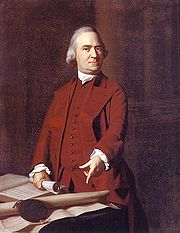
In May 1764, Samuel Adams
of Boston drafted the following that stated the common American position:
Massachusetts appointed a five member Committee of Correspondence
in June 1764 to coordinate action and exchange information regarding the Sugar Act, and in October 1764 Rhode Island formed a similar committee. This attempt at unified action represented a significant step forward in colonial unity and cooperation. The Virginia House of Burgesses in December 1764 sent a protest of the taxes to London, arguing that they did not have the specie required to pay the tax. Massachusetts, New York, New Jersey, Rhode Island, and Connecticut also sent protest to England in 1764. While the content of the messages varied, they all emphasized that taxation of the colonies without colonial assent was a violation of their rights. By the end of 1765, all of the colonies except Georgia and North Carolina had sent some sort of protest passed by colonial legislative assemblies.
The Virginia House of Burgesses
reconvened in early May 1765 after news of the passage of the Act was received. By the end of May it appeared they would not consider the tax and many legislators, including George Washington
, went home. Only 30 out of 116 Burgesses remained, but one of those remaining was Patrick Henry
who was attending his first session. Henry led the opposition to the Stamp Act and his resolutions, proposed May 30, 1765, were passed in the form of the Virginia Resolves
. The Resolves stated:
On June 6, 1765 the Massachusetts Lower House proposed a meeting for the 1st Tuesday of October in New York City:
There was no attempt to keep this meeting a secret; Massachusetts promptly notified its agent in England, a member of Parliament, of the proposed meeting.
"). At night, a crowd, led by Ebenezer MacIntosh, a Seven Years’ War veteran and current shoemaker, cut down the mock Oliver and took it in a funeral procession to the Town House where the legislature met. From there they went to Oliver’s office, tore it down, symbolically stamped the timbers, and took the effigy to Oliver’s home at the foot of Fort Hill where they beheaded and burned the effigy along with Oliver’s stable house and coach and chaise. Greenleaf and Hutchinson were stoned when they tried to stop the mob, which then looted and destroyed the contents of Oliver’s house. Oliver asked to be relieved of his duties the next day. This resignation, however, was not enough. Oliver was ultimately forced by MacIntosh to be paraded through the streets and publicly resign under the Liberty Tree.
As news for the reasons of Andrew Oliver’s resignation spread, violence and threats of aggressive acts increased throughout the colonies as did organized groups of resistance. Throughout the colonies, peasants and middle class members of society formed the foundation for these groups of resistance and soon called themselves the Sons of Liberty. These colonial groups of resistance burned effigies of royal officials, forced Stamp Act collectors to resign and were able to get businessmen and judges to go about without using the proper stamps demanded by Parliament.
On August 26, MacIntosh led an attack on Hutchinson’s house. The mob evicted the family, destroyed the furniture, tore down the interior walls, and emptied the wine cellar. Hutchinson, who had been in public office for three decades estimated his loss at 2,218 pounds (in today’s money, at nearly $250,000). Nash concludes that this attack was more than just a reaction to the Stamp Act:
Governor Francis Bernard offered a 300 pound reward for information on the leaders of the mob, but no information was forthcoming. MacIntosh and several others were arrested, but were freed either by pressure from the merchants or released by mob action.
The street demonstrations originated from the leadership of respectable public leaders such as James Otis
who commanded the Boston Gazette and Samuel Adams
of the "Loyal Nine" of the Boston Caucus, an organization of Boston merchants. They made efforts to control the folks below them on the economic and social scale, but they were often unsuccessful in maintaining a delicate balance between mass demonstrations and riots. These men needed the support of the working class, but also had to establish the legitimacy of their actions to have their protests to England taken seriously. The Loyal Nine, in the autumn, was more of a social club with political interests than anything else. Only in December 1765 did they begin issuing statements as the Sons of Liberty.
was appointed by the Crown, jointly with Dr. Moffatt and Augustus Johnson, stamp masters for Rhode Island.
The street violence spread. In Newport, Rhode Island
, on August 27, a crowd built a gallows near the Town House where they carried effigies of Augustus Johnson, the Rhode Island stamp distributor and two other conservative local figures, Dr. Thomas Moffat and lawyer Martin Howard The crowd was originally led by three merchants, William Ellery, Samuel Vernon, and Robert Crook
, but they soon lost control. That night the crowd, led by a poor man, John Weber, attacked the houses of Moffat and Howard – destroying walls, fences, art, furniture and wine. When Weber was arrested, the local Sons of Liberty, publicly opposed to violence, refused at first to support him until they were persuaded to come to his assistance when retaliation was threatened against their own homes. Weber was released and faded into obscurity.
Howard became the only prominent American to publicly support the Stamp Act in his pamphlet "A Colonist's Defence of Taxation' (1765). After the riots Howard had to leave the colony but was rewarded by the Crown with an appointment as Chief Justice of North Carolina at a salary of ₤1000.
, James McEvers resigned his distributorship four days after the attack on Hutchinson’s house. The stamps for several of the northern colonies arrived in New York Harbor on October 24. Placards appeared throughout the city warning , "the first man that either distributes or makes use of stamped paper
let him take care of his house, person, and effects." New York merchants met on October 31 and agreed not to sell any English goods until the Act was repealed. Crowds of people, uncontrolled by the local leaders, took to the streets for four days of demonstrations, culminating in an attack by two thousand people on Governor Cadwallader Colden
’s home and the burning of two sleighs and a coach. Unrest in New York City
continued through the end of the year, and the Sons of Liberty had difficulty in controlling them.
Other popular demonstrations occurred in Portsmouth, New Hampshire
; Annapolis, Maryland
; Wilmington
and New Bern, North Carolina
; and Charleston, South Carolina
. In Philadelphia, Pennsylvania
, demonstrations were subdued but even targeted Benjamin Franklin's home, although it was not vandalized. By November 16, twelve of the stamp distributors had resigned. The Georgia distributor did not arrive in America until January 1766, but his first and only official action was to resign.
The organization spread month by month after independent starts in several different colonies. By November 6, a committee was set up in New York to correspond with other colonies, and in December an alliance was formed between groups in New York and Connecticut. In January, there was established a correspondence link between Boston and Manhattan, and by March, Providence had initiated connections with New York, New Hampshire, and Newport, Rhode Island. Also, by March, Sons of Liberty organizations had been established in New Jersey, Maryland, and Norfolk, Virginia, and a local group established in North Carolina was attracting interest in South Carolina and Georgia.
While the officers and leaders of the Sons of Liberty “were drawn almost entirely from the middle and upper ranks of colonial society,” they recognized the need to expand their power base to include "the whole of political society, involving all of its social or economic subdivisions." To do this, the Sons of Liberty relied on large public demonstrations to expand their base. They learned early on that controlling such crowds was problematical, although they strived to control "the possible violence of extra-legal gatherings." While the organization professed its loyalty to both local and British established government, possible military action as a defensive measure was always part of their considerations. Throughout the Stamp Act Crisis, the Sons of Liberty professed continued loyalty to the King because they maintained a "fundamental confidence" in the expectation that Parliament would do the right thing and repeal the tax.
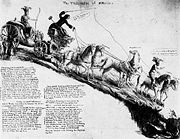
The youngest was 26 year old John Rutledge
of South Carolina, and the oldest was 65 year old Hendrick Fisher
of New Jersey. Ten of the delegates were lawyers, ten were merchants, and seven were planters or land owning farmers; all had served in some type of elective office and all but three were born in the colonies. Four would die before the colonies declared independence, and four would sign the Declaration of Independence; nine would attend the first and second Continental Congresses, and three would be loyalists during the Revolution. New Hampshire declined to send delegates, and North Carolina, Georgia, and Virginia were not represented because their governors did not call their legislatures into session to decide whether to attend. Eventually, every colony affirmed the decisions of the Congress. Six of the nine colonies represented at the Congress agreed to sign the petitions to the king and parliament produced by the Congress. The delegations from New York, Connecticut, and South Carolina were prohibited from signing any documents without first receiving approval from the colonial assemblies that had appointed them.
Massachusetts governor Francis Bernard believed that his colony’s delegates to the Congress would be supportive of Parliament. Timothy Ruggles
was especially Bernard’s man and was elected chairman of the Congress. Ruggles' instructions from Bernard were to "recommend submission to the Stamp Act until Parliament could be persuaded to repeal it." Many delegates felt that a final resolution of the Stamp Act would actually bring Britain and the colonies closer together. Robert Livingston
of New York, stressing the importance of removing the Stamp Act from the public debate, wrote to his colony’s agent in England, "If I really wished to see America in a state of independence I should desire as one of the most effectual means to that end that the stamp act should be enforced."
The congress met for 12 days, including Sundays. There was no audience at the meetings, and no information about the deliberations was released during or after the congress. Their final product was called "The Declaration of Rights and Grievances", and was drawn up by delegate John Dickinson
of Pennsylvania. This Declaration raised fourteen points of colonial protest. In addition protesting to the Stamp Act issue, it asserted that colonists possessed all the rights of Englishmen, and that since they had no voting rights over Parliament, Parliament could not represent the colonists. Only the colonial assemblies had a right to tax the colonies. They also asserted that trial by jury
was a right that the recent Admiralty Courts
abused.
It is significant that in addition to simply arguing for their rights as Englishmen, they also asserted that they had certain natural rights solely because they were human beings. Resolution 3 stated, "That it is inseparably essential to the freedom of a people, and the undoubted right of Englishmen, that no taxes be imposed on them, but with their own consent, given personally, or by their representatives." Both Massachusetts and Pennsylvania in separate resolutions would bring forth the issue even more directly when they referred, respectively, to "the Natural rights of Mankind" and "the common rights of mankind".
Christopher Gadsden
of South Carolina had proposed that since the rights of the colonies did not originate with Parliament that the Congress’ petition should go only to the King. This radical proposal went too far for most delegates and was rejected. The "Declaration of Rights and Grievances" was duly sent to the king, and petitions were also sent to both Houses of Parliament.
, the first lord of the treasury. News of the mob violence began to reach England in October. At the same time that resistance in America was building and accelerating, conflicting sentiments were taking hold in Britain. Some wanted to strictly enforce the Stamp Act over colonial resistance, wary of the precedent that would be set by backing down.
Others, feeling the economic effects of reduced trade with America after the Sugar Act and an inability to collect debts while the colonial economy suffered, began to lobby for a repeal of the Stamp Act. A significant part of colonial protest had included various non-importation agreements among merchants who recognized that a significant portion of British industry and commerce was dependent on the colonial market. This movement had spread through the colonies with a significant base coming from New York City where 200 merchants had met and agreed to import nothing from England until the Stamp Act was repealed.
When Parliament met in December 1765, it rejected a resolution offered by Grenville, who remained in Parliament, that would have condemned colonial resistance to the enforcement of the Act. Outside of Parliament Rockingham and his secretary and member of Parliament, Edmund Burke
, organized London merchants who in turn started a committee of correspondence itself to support repeal of the Stamp Act by urging merchants throughout the country to contact their local representatives in Parliament concerning repeal. When Parliament reconvened on January 14, 1766, the Rockingham ministry formally proposed repeal. Amendments that would have lessened the financial impact on the colonies by allowing colonists to pay the tax in their own script were considered to be too little and too late.
William Pitt
, in the Parliamentary debate, stated that everything done by the Grenville ministry with respect to the colonies "has been entirely wrong." He further stated, "It is my opinion that this Kingdom has no right to lay a tax upon the colonies." While Pitt still maintained that "the authority of this kingdom over the colonies, to be sovereign and supreme, in every circumstance of government and legislature whatsoever," he made the distinction that taxes were not part of governing, but were "a voluntary gift and grant of the Commons alone." He rejected the notion of virtual representation, as "the most contemptible idea that ever entered into the head of man."
Grenville responded to Pitt:
Pitt’s response to Grenville included, "I rejoice that America has resisted. Three millions of people, so dead to all the feelings of liberty as voluntarily to submit to be slaves, would have been fit instruments to make slaves of the rest."
Between January 17 and 27, Rockingham shifted the attention from constitutional arguments to economic by presenting petitions from all over the country complaining of the economic repercussions felt throughout the country. On February 7, the House of Commons rejected a resolution, saying it would back the King in enforcing the Act by 274-134. In an attempt to address both the constitutional and the economic issues, Secretary of State Henry Conway introduced the Declaratory Act
, which affirmed the right of Parliament to tax the colonies, "...in all cases whatsoever," while admitting the inexpediency of attempting to enforce the Stamp Act. Only Pitt and three or four others voted against it. Other resolutions did pass that condemned the riots and demanded compensation from the colonies for those who suffered losses because of the actions of the mobs.
On February 21, a resolution to repeal the Stamp Act was introduced and passed by a vote of 276-168. The King agreed to the repeal on March 17, 1766.
of 1767. In the American Revolution a decade later, the Committees of Correspondence reappeared on a more formal basis. The boycott also became more formalized, as the colonies entered into a non-importation agreement in 1774 known as the Continental Association. While the Sons of Liberty faded after the repeal, they were never again entirely absent. The ability of the colonies to act in concert would also reappear in the Continental Congress
.
Direct tax
The term direct tax generally means a tax paid directly to the government by the persons on whom it is imposed.-General meaning:In the general sense, a direct tax is one paid directly to the government by the persons on whom it is imposed...
imposed by the British Parliament
Parliament of Great Britain
The Parliament of Great Britain was formed in 1707 following the ratification of the Acts of Union by both the Parliament of England and Parliament of Scotland...
specifically on the colonies of British America
British America
For American people of British descent, see British American.British America is the anachronistic term used to refer to the territories under the control of the Crown or Parliament in present day North America , Central America, the Caribbean, and Guyana...
. The act required that many printed materials in the colonies be produced on stamped paper
Stamped paper
Stamped paper refers to an, often, foolscap piece of paper which bears a pre-printed revenue stamp. Stamped papers are not a form of postal stationery...
produced in London, carrying an embossed revenue stamp
Revenue stamp
A revenue stamp, tax stamp or fiscal stamp is a adhesive label used to collect taxes or fees on documents, tobacco, alcoholic drinks, drugs and medicines, playing cards, hunting licenses, firearm registration, and many other things...
. These printed materials were legal documents, magazines, newspapers and many other types of paper used throughout the colonies. Like previous taxes, the stamp tax had to be paid in valid British currency, not in colonial paper money. The purpose of the tax was to help pay for troops stationed in North America after the British victory in the Seven Years' War
Seven Years' War
The Seven Years' War was a global military war between 1756 and 1763, involving most of the great powers of the time and affecting Europe, North America, Central America, the West African coast, India, and the Philippines...
. The British government felt that the colonies were the primary beneficiaries of this military presence, and should pay at least a portion of the expense.
The Stamp Act met great resistance in the colonies. The colonies sent no representatives to Parliament, and therefore had no influence over what taxes were raised, how they were levied, or how they would be spent. Many colonists considered it a violation of their rights as Englishmen
Rights of Englishmen
The rights of Englishmen are the perceived traditional rights of British subjects. The notion refers to various constitutional documents that were created throughout various stages of English history, such as Magna Carta, the Declaration of Right , and others...
to be taxed without their consent
No taxation without representation
"No taxation without representation" is a slogan originating during the 1750s and 1760s that summarized a primary grievance of the British colonists in the Thirteen Colonies, which was one of the major causes of the American Revolution...
—consent that only the colonial legislatures could grant. Colonial assemblies sent petitions and protests. The Stamp Act Congress
Stamp Act Congress
The Stamp Act Congress was a meeting on October 19, 1765 in New York City of representatives from some of the British colonies of North America. They discussed and acted upon the Stamp Act recently passed by the governing Parliament of Great Britain overseas, which did not include any...
held in New York City, reflecting the first significant joint colonial response to any British measure, also petitioned Parliament and the King. Local protest groups, led by colonial merchants and landowners, established connections through correspondence that created a loose coalition that extended from New England to Georgia. Protests and demonstrations initiated by the Sons of Liberty
Sons of Liberty
The Sons of Liberty were a political group made up of American patriots that originated in the pre-independence North American British colonies. The group was formed to protect the rights of the colonists from the usurpations by the British government after 1766...
often turned violent and destructive as the masses became involved. Very soon all stamp tax distributors were intimidated into resigning their commissions, and the tax was never effectively collected.
Opposition to the Stamp Act was not limited to the colonies. British merchants and manufacturers, whose exports to the colonies were threatened by colonial economic problems exacerbated by the tax, also pressured Parliament. The Act was repealed on March 18, 1766 as a matter of expedience, but Parliament affirmed its power to legislate for the colonies “in all cases whatsoever” by also passing the Declaratory Act
Declaratory Act
The Declaratory Act was a declaration by the British Parliament in 1766 which accompanied the repeal of the Stamp Act 1765. The government repealed the Stamp Act because boycotts were hurting British trade and used the declaration to justify the repeal and save face...
. This incident increased the colonists' concerns about the intent of the British Parliament that helped the growing movement that became the American Revolution
American Revolution
The American Revolution was the political upheaval during the last half of the 18th century in which thirteen colonies in North America joined together to break free from the British Empire, combining to become the United States of America...
.
Background
The British victory in the Seven Years' WarSeven Years' War
The Seven Years' War was a global military war between 1756 and 1763, involving most of the great powers of the time and affecting Europe, North America, Central America, the West African coast, India, and the Philippines...
(1756–1763), known in British America
British America
For American people of British descent, see British American.British America is the anachronistic term used to refer to the territories under the control of the Crown or Parliament in present day North America , Central America, the Caribbean, and Guyana...
as the French and Indian War
French and Indian War
The French and Indian War is the common American name for the war between Great Britain and France in North America from 1754 to 1763. In 1756, the war erupted into the world-wide conflict known as the Seven Years' War and thus came to be regarded as the North American theater of that war...
, had been won only at a great financial cost. During the war, the British national debt
Government debt
Government debt is money owed by a central government. In the US, "government debt" may also refer to the debt of a municipal or local government...
nearly doubled, rising from £72,000,000 in 1755 (equal to £ today) to almost £130,000,000 by 1764, equal to £ today. Post-war expenses were expected to remain high because the Bute
John Stuart, 3rd Earl of Bute
John Stuart, 3rd Earl of Bute KG, PC , styled Lord Mount Stuart before 1723, was a Scottish nobleman who served as Prime Minister of Great Britain under George III, and was arguably the last important favourite in British politics...
ministry decided in early 1763 to keep ten thousand British regular soldiers in the American colonies, which would cost about £225,000 per year, equal to £ today. The primary reason for retaining such a large force was that demobilizing the army would put 1,500 officers, many of whom were well-connected in Parliament
Parliament of Great Britain
The Parliament of Great Britain was formed in 1707 following the ratification of the Acts of Union by both the Parliament of England and Parliament of Scotland...
, out of work. This made it politically prudent to retain a large peacetime establishment, but because Britons were averse to maintaining a standing army
Standing army
A standing army is a professional permanent army. It is composed of full-time career soldiers and is not disbanded during times of peace. It differs from army reserves, who are activated only during wars or natural disasters...
at home, it was necessary to garrison the troops elsewhere.
Stationing most of the army in North America made strategic sense because Great Britain had acquired the vast territory of New France
New France
New France was the area colonized by France in North America during a period beginning with the exploration of the Saint Lawrence River by Jacques Cartier in 1534 and ending with the cession of New France to Spain and Great Britain in 1763...
in the 1763 peace treaty
Treaty of Paris (1763)
The Treaty of Paris, often called the Peace of Paris, or the Treaty of 1763, was signed on 10 February 1763, by the kingdoms of Great Britain, France and Spain, with Portugal in agreement. It ended the French and Indian War/Seven Years' War...
, and troops would be needed to maintain control of the new empire. The outbreak in May 1763 of Pontiac's Rebellion
Pontiac's Rebellion
Pontiac's War, Pontiac's Conspiracy, or Pontiac's Rebellion was a war that was launched in 1763 by a loose confederation of elements of Native American tribes primarily from the Great Lakes region, the Illinois Country, and Ohio Country who were dissatisfied with British postwar policies in the...
, an American Indian uprising against Anglo-American occupation and expansion, reinforced the logic of this decision. Some older accounts claimed that Pontiac's Rebellion prompted the decision to garrison 10,000 troops in North America, but the Bute ministry had already made the decision before Pontiac's uprising.
The Bute ministry decided to station troops in North America, but it was George Grenville
George Grenville
George Grenville was a British Whig statesman who rose to the position of Prime Minister of Great Britain. Grenville was born into an influential political family and first entered Parliament in 1741 as an MP for Buckingham...
—who became prime minister in April 1763—who had to find a way to pay for this large peacetime army. Raising taxes in Britain was out of the question, since there had been virulent protests in England against the Bute ministry's 1763 cider tax
Cider Bill of 1763
The Cider Bill of 1763 was a proposed measure by the British government of Lord Bute to put a tax on the production of cider. Britain's national debt had reached unprecedented levels during the early 1760s following the country's involvement in the Seven Years War which had been very expensive.Lord...
, with Bute being hanged in effigy. The Grenville ministry therefore decided that Parliament would raise this revenue by taxing the American colonists. This was something new: Parliament had previously passed measures to regulate trade in the colonies, but it had never before directly taxed the colonies to raise revenue.
Politicians in London had always expected American colonists to contribute to the cost of their own defense. So long as a French threat existed, there was little trouble convincing colonial legislatures to provide assistance. Such help was normally provided through the raising of colonial militias, which were funded by taxes raised by colonial legislatures. Also, the legislatures were sometimes willing to help maintain regular British units defending the colonies. So long as this sort of help was forthcoming there was little reason for the British Parliament to impose its own taxes on the colonists. But after the peace of 1763, however, colonial militias were quickly stood down. Militia officers, tired of the disdain shown to them by regular British officers and frustrated by the near-impossibility of obtaining regular British commissions, were unwilling to remain in service once the war was over. Colonial legislators were unwilling to maintain militias bereft of qualified officers in the absence of an obvious military threat and balked at requests to help maintain regular British troops since they disputed the need for their presence (at least in terms of the numbers stationed). This caused politicians in London to increasingly believe the colonists were shirking their duty to help pay for the cost of colonial defense.
Sugar Act
The Sugar Act, also known as the American Revenue Act or the American Duties Act, was a revenue-raising act passed by the Parliament of Great Britain on April 5, 1764. The preamble to the act stated: "it is expedient that new provisions and regulations should be established for improving the...
of 1764, which was a modification of the Molasses Act of 1733. The Molasses Act had imposed a tax of 6 pence per gallon (equal to £ today) on foreign molasses imported into British colonies. The purpose of the Molasses Act was not to actually raise revenue, but instead to make foreign molasses so expensive that it effectively gave a monopoly to molasses imported from the British West Indies. It did not work: colonial merchants avoided the tax by smuggling or, more often, bribing customs officials. The Sugar Act reduced the tax to 3 pence per gallon (equal to £ today) with the hope that the lower rate would increase compliance and thus increase the amount of tax collected. The act also taxed additional imports and included measures to make the customs service more effective.
American colonists initially objected to the Sugar Act
Sugar Act
The Sugar Act, also known as the American Revenue Act or the American Duties Act, was a revenue-raising act passed by the Parliament of Great Britain on April 5, 1764. The preamble to the act stated: "it is expedient that new provisions and regulations should be established for improving the...
for economic reasons, but before long they recognized that there were constitutional issues involved. The British Constitution guaranteed that British subjects could not be taxed without their consent, which came in the form of representation in Parliament. The colonists elected no members of Parliament, and so for Parliament to tax them was seen as a violation of the British Constitution. There was little time to raise this issue in response to the Sugar Act, but it came to be a major objection to the Stamp Act the following year.
British decision-making
Parliament announced in April 1764 when the Sugar Act was passed that they would also consider a stamp tax in the colonies. Although opposition to this possible tax from the colonies was soon forthcoming, there was little expectation in Britain, either by members of Parliament or American agents in Great Britain such as Benjamin FranklinBenjamin Franklin
Dr. Benjamin Franklin was one of the Founding Fathers of the United States. A noted polymath, Franklin was a leading author, printer, political theorist, politician, postmaster, scientist, musician, inventor, satirist, civic activist, statesman, and diplomat...
, of the intensity of the protest that the tax would generate.
Stamp act
Stamp Act
A stamp act is any legislation that requires a tax to be paid on the transfer of certain documents. Those that pay the tax receive an official stamp on their documents, making them legal documents. The taxes raised under a stamp act are called stamp duty. This system of taxation was first devised...
s had been a very successful method of taxation within Great Britain. It generated over one hundred thousand pounds in tax revenue with very little in collection expenses. By requiring an official stamp on most legal documents, the system was almost self-regulating – a document without the required stamp would be null and void under British law. Imposition of such a tax on the colonies had been considered twice before the Seven Years' War and once again in 1761. Grenville had actually been presented with drafts of colonial stamp acts in September and October 1763, but the proposals lacked the specific knowledge of colonial affairs to describe adequately the documents subject to the stamp. At the time of the passage of the Sugar Act in April 1764, Grenville made it clear that the right to tax the colonies was not in question, and that additional taxes, including a stamp tax, might follow.
The Glorious Revolution
Glorious Revolution
The Glorious Revolution, also called the Revolution of 1688, is the overthrow of King James II of England by a union of English Parliamentarians with the Dutch stadtholder William III of Orange-Nassau...
had established the principle of parliamentary supremacy. Control of colonial trade and manufactures extended this principle across the ocean. Although this belief had never been tested on the issue of colonial taxation, the British assumed that the interests of the thirteen colonies were too disparate to make joint colonial action against such a tax likely – an assumption that had its genesis in the failure of the Albany Conference
Albany Congress
The Albany Congress, also known as the Albany Conference and "The Conference of Albany" or "The Conference in Albany", was a meeting of representatives from seven of the thirteen British North American colonies in 1754...
in 1754. By the end of December 1764 the arrival from the colonies of pamphlets and petitions protesting both the Sugar Act and the proposed stamp tax provided the first warnings of serious colonial opposition.
For Grenville, the first issue was the amount of the tax. Soon after his announcement of the possibility of a tax, he had told American agents that he was not opposed to the Americans suggesting an alternative way of raising the money themselves. However the only other alternative would be to requisition each colony and allow them to determine how to raise their share. This had never worked before, even during the French and Indian War, and there was no political mechanism in place that would have ensured the success of such cooperation. On February 2, 1765 Grenville met with Benjamin Franklin
Benjamin Franklin
Dr. Benjamin Franklin was one of the Founding Fathers of the United States. A noted polymath, Franklin was a leading author, printer, political theorist, politician, postmaster, scientist, musician, inventor, satirist, civic activist, statesman, and diplomat...
, Jared Ingersoll
Jared Ingersoll
Jared Ingersoll was an early American lawyer and statesman from Philadelphia.He was a delegate to the Continental Congress and signed the U.S. Constitution for Pennsylvania...
from Philadelphia, Richard Jackson
Richard Jackson (colonial agent)
Richard Jackson, K.C. , nicknamed "Omniscient Jackson", was a British lawyer and politician. A King's Counsel, he acted as official solicitor or counsel of the Lords Commissioners for Trade and Plantations, owner of lands in New England, and colonial agent of Connecticut.Jackson was called to the...
the agent for Connecticut, and Charles Garth
Charles Garth
Charles Garth, Member of Parliament, Colonial Agent in pre revolutionary America was born in about 1734, son of John Garth MP, and Rebecca, daughter of John Brompton and granddaughter of Sir Richard Raynsford, Lord chief justice of the Kings bench.-Career:...
the agent for South Carolina (Jackson and Garth were also members of Parliament) to discuss the tax. These colonial representatives had no specific alternative to present; they simply suggested that the determination be left to the colonies. Grenville replied that he wanted to raise the money "by means the most easy and least objectionable to the Colonies" and Thomas Whately, who had drafted the Stamp Act, said the delay in implementation had been "out of Tenderness to the colonies" and the tax was judged as "the easiest, the most equal and the most certain."
The debate in Parliament began soon after this meeting. Petitions submitted by the colonies were officially ignored by Parliament. In the debate Charles Townshend said, "...and now will these Americans, children planted by our care, nourished up by our Indulgence until they are grown to a degree of strength and opulence, and protected by our arms, will they grudge to contribute their mite to relieve us from heavy weight of the burden which we lie under?" This led to Colonel Isaac Barré
Isaac Barré
Isaac Barré was an Irish soldier and politician. He earned distinction serving with the British army during the Seven Years' War, and later became a prominent Member of Parliament where he became a vocal supporter of William Pitt. He is known for coining the term "Sons of Liberty" in reference to...
’s response:
Details of tax
The Stamp Act was passed by Parliament on March 22, 1765 with an effective date of November 1, 1765. It passed 205-49 in the House of Commons and unanimously in the House of Lords. Historians Edmund and Helen Morgan describe the specifics of the tax:The high taxes on lawyers and college students were designed to limit the growth of a professional class in the colonies.The stamps had to be purchased with sterling, which was scarce, not in colonial currency. So as not to drain currency out of the colonies the revenues were to all be expended in America, especially for supplies and salaries of the new units of British Army units who would be stationed there.
Two features of the Act involving the courts attracted special attention. The tax on court documents specifically included courts "exercising ecclesiastical jurisdiction." These type of courts did not currently exist in the colonies and no bishops, who would preside over the courts, were currently assigned to the colonies. Many colonists or their ancestors had fled England specifically to escape the influence and power of such state-sanctioned religious institutions, and they feared this was the first step to reinstating the old ways in the colonies. Some Anglicans in the northern colonies were already openly advocating the appointment of such bishops, but they were opposed by both southern Anglicans and the non-Anglicans who made up the majority in the northern colonies.
The Act also, following the example established by the Sugar Act, allowed admiralty courts to have jurisdiction for trying violators. However admiralty courts had traditionally been limited to cases involved with the high seas . While the Sugar Act seemed to fall within this precedent, the Stamp Act did not, and the colonists saw this as a further attempt to replace their local courts with courts controlled by England.
Political responses
Grenville started appointing Stamp Distributors almost immediately after the Act passed Parliament. Applicants were not hard to come by because of the anticipated income that the positions promised, and he appointed Americans in each of the thirteen colonies. Benjamin Franklin even suggested the appointment of John Hughes as the agent for Pennsylvania, indicating that even Franklin was not aware of the turmoil and impact on American-British relations that the tax was going to generate or that these distributors would become the focus of colonial resistance.Sugar Act
The Sugar Act, also known as the American Revenue Act or the American Duties Act, was a revenue-raising act passed by the Parliament of Great Britain on April 5, 1764. The preamble to the act stated: "it is expedient that new provisions and regulations should be established for improving the...
and the proposed Stamp Act were designed principally to raise revenue from the colonists. The Sugar Act was to a large extent a continuation of past legislation related primarily to the regulation of trade (termed an external tax), but its stated purpose to collect revenue directly from the colonists for a specific purpose was entirely new. The novelty of the Stamp Act was that it was the first internal tax (a tax based entirely on activities within the colonies) levied directly on the colonies by Parliament. Because of its potential wide application to the colonial economy, the Stamp Act was judged by the colonists to be the most dangerous.
The theoretical issue that would soon hold center stage was the matter of taxation without representation
No taxation without representation
"No taxation without representation" is a slogan originating during the 1750s and 1760s that summarized a primary grievance of the British colonists in the Thirteen Colonies, which was one of the major causes of the American Revolution...
. Benjamin Franklin had raised this as far back as 1754 at the Albany Congress when he wrote, "That it is suppos’d an undoubted Right of Englishmen not to be taxed but by their own Consent given thro’ their Representatives. That the Colonies have no Representatives in Parliament." The counter to this argument was the theory of virtual representation. Thomas Whately
Thomas Whately
Thomas Whately , an English politician and writer, was a Member of Parliament , who served as Commissioner on the Board of Trade, as Secretary to the Treasury under Lord Grenville, and as Under- secretary of State under Lord North . As an M.P...
enunciated this theory in a pamphlet that readily acknowledged that there could be no taxation without consent, but the facts were that at least 75% of British adult males were not represented in Parliament because of property qualifications or other factors. Since members of Parliament were bound to represent the interests of all British citizens and subjects, colonists, like those disenfranchised subjects in the British Isles, were the recipients of virtual representation in Parliament. This theory, however, ignored a crucial difference between the unrepresented in Britain and the colonists. The colonists enjoyed actual representation in their own legislative assemblies, and the issue was whether these legislatures, rather than Parliament, were in fact the sole recipients of the colonists consent with regard to taxation.
In May 1764, Samuel Adams
Samuel Adams
Samuel Adams was an American statesman, political philosopher, and one of the Founding Fathers of the United States. As a politician in colonial Massachusetts, Adams was a leader of the movement that became the American Revolution, and was one of the architects of the principles of American...
of Boston drafted the following that stated the common American position:
Massachusetts appointed a five member Committee of Correspondence
Committee of correspondence
The Committees of Correspondence were shadow governments organized by the Patriot leaders of the Thirteen Colonies on the eve of American Revolution. They coordinated responses to Britain and shared their plans; by 1773 they had emerged as shadow governments, superseding the colonial legislature...
in June 1764 to coordinate action and exchange information regarding the Sugar Act, and in October 1764 Rhode Island formed a similar committee. This attempt at unified action represented a significant step forward in colonial unity and cooperation. The Virginia House of Burgesses in December 1764 sent a protest of the taxes to London, arguing that they did not have the specie required to pay the tax. Massachusetts, New York, New Jersey, Rhode Island, and Connecticut also sent protest to England in 1764. While the content of the messages varied, they all emphasized that taxation of the colonies without colonial assent was a violation of their rights. By the end of 1765, all of the colonies except Georgia and North Carolina had sent some sort of protest passed by colonial legislative assemblies.
The Virginia House of Burgesses
House of Burgesses
The House of Burgesses was the first assembly of elected representatives of English colonists in North America. The House was established by the Virginia Company, who created the body as part of an effort to encourage English craftsmen to settle in North America...
reconvened in early May 1765 after news of the passage of the Act was received. By the end of May it appeared they would not consider the tax and many legislators, including George Washington
George Washington
George Washington was the dominant military and political leader of the new United States of America from 1775 to 1799. He led the American victory over Great Britain in the American Revolutionary War as commander-in-chief of the Continental Army from 1775 to 1783, and presided over the writing of...
, went home. Only 30 out of 116 Burgesses remained, but one of those remaining was Patrick Henry
Patrick Henry
Patrick Henry was an orator and politician who led the movement for independence in Virginia in the 1770s. A Founding Father, he served as the first and sixth post-colonial Governor of Virginia from 1776 to 1779 and subsequently, from 1784 to 1786...
who was attending his first session. Henry led the opposition to the Stamp Act and his resolutions, proposed May 30, 1765, were passed in the form of the Virginia Resolves
Virginia Resolves
The Virginia Resolves were a series of resolutions passed by the Virginia General Assembly in response to the Stamp Act of 1765. The Stamp Act had been passed by the British Parliament to help pay off some of its debt from its various wars, including the French and Indian War fought in part to...
. The Resolves stated:
On June 6, 1765 the Massachusetts Lower House proposed a meeting for the 1st Tuesday of October in New York City:
There was no attempt to keep this meeting a secret; Massachusetts promptly notified its agent in England, a member of Parliament, of the proposed meeting.
Protests in the streets
While the colonial legislatures were acting, the ordinary citizens of the colonies were also voicing their concerns outside of this formal political process. Historian Gary B. Nash wrote:Massachusetts
Early street protests were most notable in Boston. On August 14, 1765 Andrew Oliver, distributor of stamps for Massachusetts, was hung in effigy "from a giant elm tree at the crossing of Essex and Orange Streets in the city’s South End." Also hung was a Jack boot painted green on the bottom ("a Green-ville sole") – a pun on both Grenville and the Earl of Bute, the two persons most blamed by the colonists. The sheriff, Stephen Greenleaf, was ordered by Lieutenant Governor Thomas Hutchinson to take the effigy down, but was opposed by a large crowd. All day the crowd detoured merchants on Orange Street to have their goods symbolically stamped under the elm (the elm tree later became known as the "Liberty TreeLiberty Tree
The Liberty Tree was a famous elm tree that stood in Boston near Boston Common, in the days before the American Revolution. Ten years before the American Revolution, colonists in Boston staged the first act of defiance against the British government at the tree...
"). At night, a crowd, led by Ebenezer MacIntosh, a Seven Years’ War veteran and current shoemaker, cut down the mock Oliver and took it in a funeral procession to the Town House where the legislature met. From there they went to Oliver’s office, tore it down, symbolically stamped the timbers, and took the effigy to Oliver’s home at the foot of Fort Hill where they beheaded and burned the effigy along with Oliver’s stable house and coach and chaise. Greenleaf and Hutchinson were stoned when they tried to stop the mob, which then looted and destroyed the contents of Oliver’s house. Oliver asked to be relieved of his duties the next day. This resignation, however, was not enough. Oliver was ultimately forced by MacIntosh to be paraded through the streets and publicly resign under the Liberty Tree.
As news for the reasons of Andrew Oliver’s resignation spread, violence and threats of aggressive acts increased throughout the colonies as did organized groups of resistance. Throughout the colonies, peasants and middle class members of society formed the foundation for these groups of resistance and soon called themselves the Sons of Liberty. These colonial groups of resistance burned effigies of royal officials, forced Stamp Act collectors to resign and were able to get businessmen and judges to go about without using the proper stamps demanded by Parliament.
On August 26, MacIntosh led an attack on Hutchinson’s house. The mob evicted the family, destroyed the furniture, tore down the interior walls, and emptied the wine cellar. Hutchinson, who had been in public office for three decades estimated his loss at 2,218 pounds (in today’s money, at nearly $250,000). Nash concludes that this attack was more than just a reaction to the Stamp Act:
Governor Francis Bernard offered a 300 pound reward for information on the leaders of the mob, but no information was forthcoming. MacIntosh and several others were arrested, but were freed either by pressure from the merchants or released by mob action.
The street demonstrations originated from the leadership of respectable public leaders such as James Otis
James Otis, Jr.
James Otis, Jr. was a lawyer in colonial Massachusetts, a member of the Massachusetts provincial assembly, and an early advocate of the political views that led to the American Revolution. The phrase "Taxation without Representation is Tyranny" is usually attributed to him...
who commanded the Boston Gazette and Samuel Adams
Samuel Adams
Samuel Adams was an American statesman, political philosopher, and one of the Founding Fathers of the United States. As a politician in colonial Massachusetts, Adams was a leader of the movement that became the American Revolution, and was one of the architects of the principles of American...
of the "Loyal Nine" of the Boston Caucus, an organization of Boston merchants. They made efforts to control the folks below them on the economic and social scale, but they were often unsuccessful in maintaining a delicate balance between mass demonstrations and riots. These men needed the support of the working class, but also had to establish the legitimacy of their actions to have their protests to England taken seriously. The Loyal Nine, in the autumn, was more of a social club with political interests than anything else. Only in December 1765 did they begin issuing statements as the Sons of Liberty.
Rhode Island
In 1765, Martin HowardMartin Howard
Martin Howard was a politician in colonial Rhode Island. An eminent lawyer and politician, and had been a delegate from Rhode Island to the Albany Congress...
was appointed by the Crown, jointly with Dr. Moffatt and Augustus Johnson, stamp masters for Rhode Island.
The street violence spread. In Newport, Rhode Island
Newport, Rhode Island
Newport is a city on Aquidneck Island in Newport County, Rhode Island, United States, about south of Providence. Known as a New England summer resort and for the famous Newport Mansions, it is the home of Salve Regina University and Naval Station Newport which houses the United States Naval War...
, on August 27, a crowd built a gallows near the Town House where they carried effigies of Augustus Johnson, the Rhode Island stamp distributor and two other conservative local figures, Dr. Thomas Moffat and lawyer Martin Howard The crowd was originally led by three merchants, William Ellery, Samuel Vernon, and Robert Crook
Robert Crook
Robert L. Crook was an American politician from Mississippi.Crook served in the Mississippi State Senate from 1964 to 1992...
, but they soon lost control. That night the crowd, led by a poor man, John Weber, attacked the houses of Moffat and Howard – destroying walls, fences, art, furniture and wine. When Weber was arrested, the local Sons of Liberty, publicly opposed to violence, refused at first to support him until they were persuaded to come to his assistance when retaliation was threatened against their own homes. Weber was released and faded into obscurity.
Howard became the only prominent American to publicly support the Stamp Act in his pamphlet "A Colonist's Defence of Taxation' (1765). After the riots Howard had to leave the colony but was rewarded by the Crown with an appointment as Chief Justice of North Carolina at a salary of ₤1000.
New York
In New YorkNew York
New York is a state in the Northeastern region of the United States. It is the nation's third most populous state. New York is bordered by New Jersey and Pennsylvania to the south, and by Connecticut, Massachusetts and Vermont to the east...
, James McEvers resigned his distributorship four days after the attack on Hutchinson’s house. The stamps for several of the northern colonies arrived in New York Harbor on October 24. Placards appeared throughout the city warning , "the first man that either distributes or makes use of stamped paper
Stamped paper
Stamped paper refers to an, often, foolscap piece of paper which bears a pre-printed revenue stamp. Stamped papers are not a form of postal stationery...
let him take care of his house, person, and effects." New York merchants met on October 31 and agreed not to sell any English goods until the Act was repealed. Crowds of people, uncontrolled by the local leaders, took to the streets for four days of demonstrations, culminating in an attack by two thousand people on Governor Cadwallader Colden
Cadwallader Colden
Cadwallader Colden was a physician, farmer, surveyor, botanist, and a lieutenant governor for the Province of New York.-Biography:...
’s home and the burning of two sleighs and a coach. Unrest in New York City
New York City
New York is the most populous city in the United States and the center of the New York Metropolitan Area, one of the most populous metropolitan areas in the world. New York exerts a significant impact upon global commerce, finance, media, art, fashion, research, technology, education, and...
continued through the end of the year, and the Sons of Liberty had difficulty in controlling them.
Other Colonies
The Stamp Act angered and united the American people like never before. It inspired both political and constitutional forms of literature throughout the colonies, strengthened the colonial political perception and involvement, and created new forms of organized resistance. These organized groups of resistance quickly learned that they could force royal officials to resign by using violent measures and threats.Other popular demonstrations occurred in Portsmouth, New Hampshire
Portsmouth, New Hampshire
Portsmouth is a city in Rockingham County, New Hampshire in the United States. It is the largest city but only the fourth-largest community in the county, with a population of 21,233 at the 2010 census...
; Annapolis, Maryland
Annapolis, Maryland
Annapolis is the capital of the U.S. state of Maryland, as well as the county seat of Anne Arundel County. It had a population of 38,394 at the 2010 census and is situated on the Chesapeake Bay at the mouth of the Severn River, south of Baltimore and about east of Washington, D.C. Annapolis is...
; Wilmington
Wilmington, North Carolina
Wilmington is a port city in and is the county seat of New Hanover County, North Carolina, United States. The population is 106,476 according to the 2010 Census, making it the eighth most populous city in the state of North Carolina...
and New Bern, North Carolina
New Bern, North Carolina
New Bern is a city in Craven County, North Carolina with a population of 29,524 as of the 2010 census.. It is located at the confluence of the Trent and the Neuse rivers...
; and Charleston, South Carolina
Charleston, South Carolina
Charleston is the second largest city in the U.S. state of South Carolina. It was made the county seat of Charleston County in 1901 when Charleston County was founded. The city's original name was Charles Towne in 1670, and it moved to its present location from a location on the west bank of the...
. In Philadelphia, Pennsylvania
Philadelphia, Pennsylvania
Philadelphia is the largest city in the Commonwealth of Pennsylvania and the county seat of Philadelphia County, with which it is coterminous. The city is located in the Northeastern United States along the Delaware and Schuylkill rivers. It is the fifth-most-populous city in the United States,...
, demonstrations were subdued but even targeted Benjamin Franklin's home, although it was not vandalized. By November 16, twelve of the stamp distributors had resigned. The Georgia distributor did not arrive in America until January 1766, but his first and only official action was to resign.
Sons of Liberty
It was during this time of street demonstrations that locally organized groups started to merge into an inter-colonial organization of a type not previously seen in the colonies. Although the term "sons of liberty" had been used in a generic fashion well before 1765, it was only around February 1766 that its influence as an organized group, using the formal name "Sons of Liberty", extended throughout the colonies, leading to the development of a pattern for future resistance to the British that would carry the colonies towards 1776. Historian John C. Miller noted that the name was adopted as a result of Barre's use of the term in his February 1765 speech.The organization spread month by month after independent starts in several different colonies. By November 6, a committee was set up in New York to correspond with other colonies, and in December an alliance was formed between groups in New York and Connecticut. In January, there was established a correspondence link between Boston and Manhattan, and by March, Providence had initiated connections with New York, New Hampshire, and Newport, Rhode Island. Also, by March, Sons of Liberty organizations had been established in New Jersey, Maryland, and Norfolk, Virginia, and a local group established in North Carolina was attracting interest in South Carolina and Georgia.
While the officers and leaders of the Sons of Liberty “were drawn almost entirely from the middle and upper ranks of colonial society,” they recognized the need to expand their power base to include "the whole of political society, involving all of its social or economic subdivisions." To do this, the Sons of Liberty relied on large public demonstrations to expand their base. They learned early on that controlling such crowds was problematical, although they strived to control "the possible violence of extra-legal gatherings." While the organization professed its loyalty to both local and British established government, possible military action as a defensive measure was always part of their considerations. Throughout the Stamp Act Crisis, the Sons of Liberty professed continued loyalty to the King because they maintained a "fundamental confidence" in the expectation that Parliament would do the right thing and repeal the tax.
Stamp Act Congress
The first Stamp Act Congress was held in New York in October 1765. Twenty-seven delegates from nine colonies were the members of the Congress and their responsibility was to draft a set of formal petitions stating why Parliament had no right to tax them. Historian John C. Miller noted:The youngest was 26 year old John Rutledge
John Rutledge
John Rutledge was an American statesman and judge. He was the first Governor of South Carolina following the signing of the Declaration of Independence, the 31st overall...
of South Carolina, and the oldest was 65 year old Hendrick Fisher
Hendrick Fisher
Hendrick Fisher represented Somerset County in the New Jersey Colonial Assembly, was one of three delegates representing New Jersey at the First Colonial Congress in New York in 1765, was elected to New Jersey's Committee of Correspondence, served as a member of the Committee of Safety, was...
of New Jersey. Ten of the delegates were lawyers, ten were merchants, and seven were planters or land owning farmers; all had served in some type of elective office and all but three were born in the colonies. Four would die before the colonies declared independence, and four would sign the Declaration of Independence; nine would attend the first and second Continental Congresses, and three would be loyalists during the Revolution. New Hampshire declined to send delegates, and North Carolina, Georgia, and Virginia were not represented because their governors did not call their legislatures into session to decide whether to attend. Eventually, every colony affirmed the decisions of the Congress. Six of the nine colonies represented at the Congress agreed to sign the petitions to the king and parliament produced by the Congress. The delegations from New York, Connecticut, and South Carolina were prohibited from signing any documents without first receiving approval from the colonial assemblies that had appointed them.
Massachusetts governor Francis Bernard believed that his colony’s delegates to the Congress would be supportive of Parliament. Timothy Ruggles
Timothy Ruggles
Timothy Dwight Ruggles was an American military leader, jurist and politician. He was a delegate to the first Stamp Act congress of 1765.-Early life:...
was especially Bernard’s man and was elected chairman of the Congress. Ruggles' instructions from Bernard were to "recommend submission to the Stamp Act until Parliament could be persuaded to repeal it." Many delegates felt that a final resolution of the Stamp Act would actually bring Britain and the colonies closer together. Robert Livingston
Robert Livingston (1718-1775)
Robert R. Livingston was a prominent politician, and a leading Whig in New York in the years leading up to the American Revolution. He was the son of Robert Livingston of Clermont and married Margaret Beekman, heir to immense tracts of land in Dutchess and Ulster counties...
of New York, stressing the importance of removing the Stamp Act from the public debate, wrote to his colony’s agent in England, "If I really wished to see America in a state of independence I should desire as one of the most effectual means to that end that the stamp act should be enforced."
The congress met for 12 days, including Sundays. There was no audience at the meetings, and no information about the deliberations was released during or after the congress. Their final product was called "The Declaration of Rights and Grievances", and was drawn up by delegate John Dickinson
John Dickinson
John Dickinson may refer to:* John Dickinson , lawyer, Governor of Delaware and Pennsylvania, signer of U.S. Constitution, and namesake of Dickinson College* John D. Dickinson , lawyer and U.S...
of Pennsylvania. This Declaration raised fourteen points of colonial protest. In addition protesting to the Stamp Act issue, it asserted that colonists possessed all the rights of Englishmen, and that since they had no voting rights over Parliament, Parliament could not represent the colonists. Only the colonial assemblies had a right to tax the colonies. They also asserted that trial by jury
Trial by Jury
Trial by Jury is a comic opera in one act, with music by Arthur Sullivan and libretto by W. S. Gilbert. It was first produced on 25 March 1875, at London's Royalty Theatre, where it initially ran for 131 performances and was considered a hit, receiving critical praise and outrunning its...
was a right that the recent Admiralty Courts
Admiralty court
Admiralty courts, also known as maritime courts, are courts exercising jurisdiction over all maritime contracts, torts, injuries and offences.- Admiralty Courts in England and Wales :...
abused.
It is significant that in addition to simply arguing for their rights as Englishmen, they also asserted that they had certain natural rights solely because they were human beings. Resolution 3 stated, "That it is inseparably essential to the freedom of a people, and the undoubted right of Englishmen, that no taxes be imposed on them, but with their own consent, given personally, or by their representatives." Both Massachusetts and Pennsylvania in separate resolutions would bring forth the issue even more directly when they referred, respectively, to "the Natural rights of Mankind" and "the common rights of mankind".
Christopher Gadsden
Christopher Gadsden
Christopher Gadsden , a soldier and statesman from South Carolina, was the principal leader of the South Carolina Patriot movement in the American Revolution. He was a delegate to the Continental Congress and a brigadier general in the Continental Army during the War of Independence...
of South Carolina had proposed that since the rights of the colonies did not originate with Parliament that the Congress’ petition should go only to the King. This radical proposal went too far for most delegates and was rejected. The "Declaration of Rights and Grievances" was duly sent to the king, and petitions were also sent to both Houses of Parliament.
Repeal
Grenville was replaced as Prime Minister on July 10, 1765, by Lord RockinghamCharles Watson-Wentworth, 2nd Marquess of Rockingham
Charles Watson-Wentworth, 2nd Marquess of Rockingham, KG, PC , styled The Hon. Charles Watson-Wentworth before 1733, Viscount Higham between 1733 and 1746, Earl of Malton between 1746 and 1750 and The Earl Malton in 1750, was a British Whig statesman, most notable for his two terms as Prime...
, the first lord of the treasury. News of the mob violence began to reach England in October. At the same time that resistance in America was building and accelerating, conflicting sentiments were taking hold in Britain. Some wanted to strictly enforce the Stamp Act over colonial resistance, wary of the precedent that would be set by backing down.
Others, feeling the economic effects of reduced trade with America after the Sugar Act and an inability to collect debts while the colonial economy suffered, began to lobby for a repeal of the Stamp Act. A significant part of colonial protest had included various non-importation agreements among merchants who recognized that a significant portion of British industry and commerce was dependent on the colonial market. This movement had spread through the colonies with a significant base coming from New York City where 200 merchants had met and agreed to import nothing from England until the Stamp Act was repealed.
When Parliament met in December 1765, it rejected a resolution offered by Grenville, who remained in Parliament, that would have condemned colonial resistance to the enforcement of the Act. Outside of Parliament Rockingham and his secretary and member of Parliament, Edmund Burke
Edmund Burke
Edmund Burke PC was an Irish statesman, author, orator, political theorist and philosopher who, after moving to England, served for many years in the House of Commons of Great Britain as a member of the Whig party....
, organized London merchants who in turn started a committee of correspondence itself to support repeal of the Stamp Act by urging merchants throughout the country to contact their local representatives in Parliament concerning repeal. When Parliament reconvened on January 14, 1766, the Rockingham ministry formally proposed repeal. Amendments that would have lessened the financial impact on the colonies by allowing colonists to pay the tax in their own script were considered to be too little and too late.
William Pitt
William Pitt, 1st Earl of Chatham
William Pitt, 1st Earl of Chatham PC was a British Whig statesman who led Britain during the Seven Years' War...
, in the Parliamentary debate, stated that everything done by the Grenville ministry with respect to the colonies "has been entirely wrong." He further stated, "It is my opinion that this Kingdom has no right to lay a tax upon the colonies." While Pitt still maintained that "the authority of this kingdom over the colonies, to be sovereign and supreme, in every circumstance of government and legislature whatsoever," he made the distinction that taxes were not part of governing, but were "a voluntary gift and grant of the Commons alone." He rejected the notion of virtual representation, as "the most contemptible idea that ever entered into the head of man."
Grenville responded to Pitt:
Pitt’s response to Grenville included, "I rejoice that America has resisted. Three millions of people, so dead to all the feelings of liberty as voluntarily to submit to be slaves, would have been fit instruments to make slaves of the rest."
Between January 17 and 27, Rockingham shifted the attention from constitutional arguments to economic by presenting petitions from all over the country complaining of the economic repercussions felt throughout the country. On February 7, the House of Commons rejected a resolution, saying it would back the King in enforcing the Act by 274-134. In an attempt to address both the constitutional and the economic issues, Secretary of State Henry Conway introduced the Declaratory Act
Declaratory Act
The Declaratory Act was a declaration by the British Parliament in 1766 which accompanied the repeal of the Stamp Act 1765. The government repealed the Stamp Act because boycotts were hurting British trade and used the declaration to justify the repeal and save face...
, which affirmed the right of Parliament to tax the colonies, "...in all cases whatsoever," while admitting the inexpediency of attempting to enforce the Stamp Act. Only Pitt and three or four others voted against it. Other resolutions did pass that condemned the riots and demanded compensation from the colonies for those who suffered losses because of the actions of the mobs.
On February 21, a resolution to repeal the Stamp Act was introduced and passed by a vote of 276-168. The King agreed to the repeal on March 17, 1766.
Later effects
Some aspects of the resistance to the act provided a sort of rehearsal for the resistance to the Townshend ActsTownshend Acts
The Townshend Acts were a series of laws passed beginning in 1767 by the Parliament of Great Britain relating to the British colonies in North America. The acts are named after Charles Townshend, the Chancellor of the Exchequer, who proposed the program...
of 1767. In the American Revolution a decade later, the Committees of Correspondence reappeared on a more formal basis. The boycott also became more formalized, as the colonies entered into a non-importation agreement in 1774 known as the Continental Association. While the Sons of Liberty faded after the repeal, they were never again entirely absent. The ability of the colonies to act in concert would also reappear in the Continental Congress
Continental Congress
The Continental Congress was a convention of delegates called together from the Thirteen Colonies that became the governing body of the United States during the American Revolution....
.
See also
- American RevolutionAmerican RevolutionThe American Revolution was the political upheaval during the last half of the 18th century in which thirteen colonies in North America joined together to break free from the British Empire, combining to become the United States of America...
- Board of Inland Revenue Stamping Department ArchiveBoard of Inland Revenue Stamping Department ArchiveThe Board of Inland Revenue Stamping Department Archive in the British Library contains artefacts from 1710 onwards, and has come into existence through amendments in United Kingdom legislation....
- British Library Philatelic CollectionsBritish Library Philatelic CollectionsThe British Library Philatelic Collections is the national philatelic collection of the United Kingdom with over 8 million items from around the world. It was established in 1891 as part of the British Museum Library, later to become the British Library, with the collection of Thomas Tapling...
- George GrenvilleGeorge GrenvilleGeorge Grenville was a British Whig statesman who rose to the position of Prime Minister of Great Britain. Grenville was born into an influential political family and first entered Parliament in 1741 as an MP for Buckingham...
- Revenue stamps of the United StatesRevenue stamps of the United StatesRevenue stamps have been in use in the United States since colonial times and continue to be issued today.-First stamps:The first revenue stamps used in the America were British colonial issues...