

Somatic hypermutation

Encyclopedia
Somatic hypermutation is a mechanism inside cells
that is part of the way the immune system adapts
to the new foreign elements that confront it (for example, microbes). SHM diversifies the receptors used by the immune system to recognize foreign elements (antigen
s) and allows the immune system to adapt its response to new threats during the lifetime of an organism. Somatic hypermutation involves a programmed process of mutation
affecting the variable regions of immunoglobulin genes. Unlike germline mutation
, SHM affects only individual immune cells, and the mutations are not transmitted to offspring
.
Mistargeted somatic hypermutation is a likely mechanism in the development of B-cell lymphoma
s.
recognizes an antigen, it is stimulated to divide (or proliferate
). During proliferation, the B cell receptor locus
undergoes an extremely high rate of somatic
mutation that is at least 105-106
fold greater than the normal rate of mutation across the genome. Variation is mainly in the form of single base substitutions, with insertions and deletions being less common. These mutations occur mostly at “hotspots” in the DNA
, known as hypervariable region
s. These regions correspond to the complementarity determining region
s; the sites involved in antigen recognition on the immunoglobulin. The exact nature of this targeting is poorly understood, although is thought to be controlled by a balance of error-prone and high fidelity repair. This directed hypermutation allows for the selection of B cells that express immunoglobulin receptors possessing an enhanced ability to recognize and bind a specific foreign antigen
.
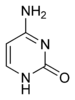
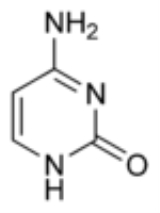
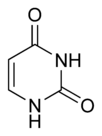 Experimental evidence supports the view that the mechanism of SHM involves deamination
of cytosine
to uracil
in DNA by an enzyme called Activation-Induced (Cytidine) Deaminase
, or AID. A cytosine:guanine
pair is thus directly mutated a to a uracil:guanine mismatch. Uracil residues are not normally found in DNA, therefore, to maintain the integrity of the genome most of these mutations must be repaired by high-fidelity DNA mismatch repair
enzyme
s. The uracil bases are removed by the repair enzyme, uracil-DNA glycosylase. Error-prone DNA polymerases are then recruited to fill in the gap and create mutations.
The synthesis of this new DNA involves error-prone DNA polymerase
s, which often introduce mutations either at the position of the deaminated cytosine itself or neighboring base pair
s. During B cell division the immunoglobulin variable region DNA is transcribed
and translated. The introduction of mutations in the rapidly-proliferating population of B cells ultimately culminates in the production of thousands of B cells, possessing slightly different receptors and varying specificity for the antigen, from which the B cell with highest affinities for the antigen can be selected. The B cells with the greatest affinity will then be selected to differentiate into plasma cell
s producing antibody
and long-lived memory B cell
s contributing to enhanced immune responses upon reinfection.
The hypermutation process also utilizes cells that auto-select against the 'signature' of an organism's own cells. It is hypothesized that failures of this auto-selection process may also lead to the development of an auto-immune response.
Cell (biology)
The cell is the basic structural and functional unit of all known living organisms. It is the smallest unit of life that is classified as a living thing, and is often called the building block of life. The Alberts text discusses how the "cellular building blocks" move to shape developing embryos....
that is part of the way the immune system adapts
Adaptive immune system
The adaptive immune system is composed of highly specialized, systemic cells and processes that eliminate or prevent pathogenic growth. Thought to have arisen in the first jawed vertebrates, the adaptive or "specific" immune system is activated by the “non-specific” and evolutionarily older innate...
to the new foreign elements that confront it (for example, microbes). SHM diversifies the receptors used by the immune system to recognize foreign elements (antigen
Antigen
An antigen is a foreign molecule that, when introduced into the body, triggers the production of an antibody by the immune system. The immune system will then kill or neutralize the antigen that is recognized as a foreign and potentially harmful invader. These invaders can be molecules such as...
s) and allows the immune system to adapt its response to new threats during the lifetime of an organism. Somatic hypermutation involves a programmed process of mutation
Mutation
In molecular biology and genetics, mutations are changes in a genomic sequence: the DNA sequence of a cell's genome or the DNA or RNA sequence of a virus. They can be defined as sudden and spontaneous changes in the cell. Mutations are caused by radiation, viruses, transposons and mutagenic...
affecting the variable regions of immunoglobulin genes. Unlike germline mutation
Germline mutation
A germline mutation is any detectable and heritable variation in the lineage of germ cells. Mutations in these cells are transmitted to offspring, while, on the other hand, those in somatic cells are not. A germline mutation gives rise to a constitutional mutation in the offspring, that is, a...
, SHM affects only individual immune cells, and the mutations are not transmitted to offspring
Offspring
In biology, offspring is the product of reproduction, of a new organism produced by one or more parents.Collective offspring may be known as a brood or progeny in a more general way...
.
Mistargeted somatic hypermutation is a likely mechanism in the development of B-cell lymphoma
B-cell lymphoma
The B-cell lymphomas are types of lymphoma affecting B cells. Lymphomas are "blood cancers" in the lymph glands. They develop more frequently in older adults and in immunocompromised individuals ....
s.
Targeting
When a B cellB cell
B cells are lymphocytes that play a large role in the humoral immune response . The principal functions of B cells are to make antibodies against antigens, perform the role of antigen-presenting cells and eventually develop into memory B cells after activation by antigen interaction...
recognizes an antigen, it is stimulated to divide (or proliferate
Cell growth
The term cell growth is used in the contexts of cell development and cell division . When used in the context of cell division, it refers to growth of cell populations, where one cell grows and divides to produce two "daughter cells"...
). During proliferation, the B cell receptor locus
Locus (genetics)
In the fields of genetics and genetic computation, a locus is the specific location of a gene or DNA sequence on a chromosome. A variant of the DNA sequence at a given locus is called an allele. The ordered list of loci known for a particular genome is called a genetic map...
undergoes an extremely high rate of somatic
Somatic
The term somatic means 'of the body',, relating to the body. In medicine, somatic illness is bodily, not mental, illness. The term is often used in biology to refer to the cells of the body in contrast to the germ line cells which usually give rise to the gametes...
mutation that is at least 105-106
SI prefix
The International System of Units specifies a set of unit prefixes known as SI prefixes or metric prefixes. An SI prefix is a name that precedes a basic unit of measure to indicate a decadic multiple or fraction of the unit. Each prefix has a unique symbol that is prepended to the unit symbol...
fold greater than the normal rate of mutation across the genome. Variation is mainly in the form of single base substitutions, with insertions and deletions being less common. These mutations occur mostly at “hotspots” in the DNA
DNA
Deoxyribonucleic acid is a nucleic acid that contains the genetic instructions used in the development and functioning of all known living organisms . The DNA segments that carry this genetic information are called genes, but other DNA sequences have structural purposes, or are involved in...
, known as hypervariable region
Hypervariable region
A hypervariable region is a location within nuclear DNA or the D-loop of mitochondrial DNA in which base pairs of nucleotides repeat or have substitutions...
s. These regions correspond to the complementarity determining region
Complementarity determining region
Complementarity determining regions are regions within antibodies or T cell receptors where these proteins complement an antigen's shape. Thus, CDRs determine the protein's affinity and specificity for specific antigens...
s; the sites involved in antigen recognition on the immunoglobulin. The exact nature of this targeting is poorly understood, although is thought to be controlled by a balance of error-prone and high fidelity repair. This directed hypermutation allows for the selection of B cells that express immunoglobulin receptors possessing an enhanced ability to recognize and bind a specific foreign antigen
Antigen
An antigen is a foreign molecule that, when introduced into the body, triggers the production of an antibody by the immune system. The immune system will then kill or neutralize the antigen that is recognized as a foreign and potentially harmful invader. These invaders can be molecules such as...
.
Mechanism
Deamination
Deamination is the removal of an amine group from a molecule. Enzymes which catalyse this reaction are called deaminases.In the human body, deamination takes place primarily in the liver, however glutamate is also deaminated in the kidneys. Deamination is the process by which amino acids are...
of cytosine
Cytosine
Cytosine is one of the four main bases found in DNA and RNA, along with adenine, guanine, and thymine . It is a pyrimidine derivative, with a heterocyclic aromatic ring and two substituents attached . The nucleoside of cytosine is cytidine...
to uracil
Uracil
Uracil is one of the four nucleobases in the nucleic acid of RNA that are represented by the letters A, G, C and U. The others are adenine, cytosine, and guanine. In RNA, uracil binds to adenine via two hydrogen bonds. In DNA, the uracil nucleobase is replaced by thymine.Uracil is a common and...
in DNA by an enzyme called Activation-Induced (Cytidine) Deaminase
Activation-Induced (Cytidine) Deaminase
Activation-induced deaminase is a 24 kDa enzyme that creates deliberate mutations in DNA.AID removes the amino group from a cytidine base, turning it into a uridine...
, or AID. A cytosine:guanine
Guanine
Guanine is one of the four main nucleobases found in the nucleic acids DNA and RNA, the others being adenine, cytosine, and thymine . In DNA, guanine is paired with cytosine. With the formula C5H5N5O, guanine is a derivative of purine, consisting of a fused pyrimidine-imidazole ring system with...
pair is thus directly mutated a to a uracil:guanine mismatch. Uracil residues are not normally found in DNA, therefore, to maintain the integrity of the genome most of these mutations must be repaired by high-fidelity DNA mismatch repair
DNA mismatch repair
DNA mismatch repair is a system for recognizing and repairing erroneous insertion, deletion and mis-incorporation of bases that can arise during DNA replication and recombination, as well as repairing some forms of DNA damage....
enzyme
Enzyme
Enzymes are proteins that catalyze chemical reactions. In enzymatic reactions, the molecules at the beginning of the process, called substrates, are converted into different molecules, called products. Almost all chemical reactions in a biological cell need enzymes in order to occur at rates...
s. The uracil bases are removed by the repair enzyme, uracil-DNA glycosylase. Error-prone DNA polymerases are then recruited to fill in the gap and create mutations.
The synthesis of this new DNA involves error-prone DNA polymerase
DNA polymerase
A DNA polymerase is an enzyme that helps catalyze in the polymerization of deoxyribonucleotides into a DNA strand. DNA polymerases are best known for their feedback role in DNA replication, in which the polymerase "reads" an intact DNA strand as a template and uses it to synthesize the new strand....
s, which often introduce mutations either at the position of the deaminated cytosine itself or neighboring base pair
Base pair
In molecular biology and genetics, the linking between two nitrogenous bases on opposite complementary DNA or certain types of RNA strands that are connected via hydrogen bonds is called a base pair...
s. During B cell division the immunoglobulin variable region DNA is transcribed
Transcription (genetics)
Transcription is the process of creating a complementary RNA copy of a sequence of DNA. Both RNA and DNA are nucleic acids, which use base pairs of nucleotides as a complementary language that can be converted back and forth from DNA to RNA by the action of the correct enzymes...
and translated. The introduction of mutations in the rapidly-proliferating population of B cells ultimately culminates in the production of thousands of B cells, possessing slightly different receptors and varying specificity for the antigen, from which the B cell with highest affinities for the antigen can be selected. The B cells with the greatest affinity will then be selected to differentiate into plasma cell
Plasma cell
Plasma cells, also called plasma B cells, plasmocytes, and effector B cells, are white blood cells which produce large volumes of antibodies. They are transported by the blood plasma and the lymphatic system...
s producing antibody
Antibody
An antibody, also known as an immunoglobulin, is a large Y-shaped protein used by the immune system to identify and neutralize foreign objects such as bacteria and viruses. The antibody recognizes a unique part of the foreign target, termed an antigen...
and long-lived memory B cell
Memory B cell
Memory B cells are a B cell sub-type that are formed following primary infection.-Primary response, paratopes, and epitopes:In wake of first infection involving a particular antigen, the responding naïve cells proliferate to produce a colony of cells, most of which differentiate into the plasma...
s contributing to enhanced immune responses upon reinfection.
The hypermutation process also utilizes cells that auto-select against the 'signature' of an organism's own cells. It is hypothesized that failures of this auto-selection process may also lead to the development of an auto-immune response.