


Society of the United Irishmen

Encyclopedia
Liberalism
Liberalism is the belief in the importance of liberty and equal rights. Liberals espouse a wide array of views depending on their understanding of these principles, but generally, liberals support ideas such as constitutionalism, liberal democracy, free and fair elections, human rights,...
political organisation in eighteenth century Ireland
Ireland
Ireland is an island to the northwest of continental Europe. It is the third-largest island in Europe and the twentieth-largest island on Earth...
that sought Parliamentary
Parliament of Great Britain
The Parliament of Great Britain was formed in 1707 following the ratification of the Acts of Union by both the Parliament of England and Parliament of Scotland...
reform. However, it evolved into a revolutionary republic
Republic
A republic is a form of government in which the people, or some significant portion of them, have supreme control over the government and where offices of state are elected or chosen by elected people. In modern times, a common simplified definition of a republic is a government where the head of...
an organisation, inspired by the American Revolution
American Revolution
The American Revolution was the political upheaval during the last half of the 18th century in which thirteen colonies in North America joined together to break free from the British Empire, combining to become the United States of America...
and allied with Revolutionary France. It launched the Irish Rebellion of 1798
Irish Rebellion of 1798
The Irish Rebellion of 1798 , also known as the United Irishmen Rebellion , was an uprising in 1798, lasting several months, against British rule in Ireland...
with the objective of ending British monarchical rule over Ireland and founding an independent Irish republic
Irish Republicanism
Irish republicanism is an ideology based on the belief that all of Ireland should be an independent republic.In 1801, under the Act of Union, the Kingdom of Great Britain and the Kingdom of Ireland merged to form the United Kingdom of Great Britain and Ireland...
.
Foundation
During the 1780s, a few liberal members of the ruling Protestant AscendancyProtestant Ascendancy
The Protestant Ascendancy, usually known in Ireland simply as the Ascendancy, is a phrase used when referring to the political, economic, and social domination of Ireland by a minority of great landowners, Protestant clergy, and professionals, all members of the Established Church during the 17th...
known as the Irish Patriot Party
Irish Patriot Party
The Irish Patriot Party was the name of a number of different political groupings in Ireland throughout the 18th century. They were primarily supportive of Whig concepts of personal liberty combined with an Irish identity that rejected full independence, but advocated strong self-government within...
had promoted expanding the franchise and increasing Catholic and Presbyterian rights in Ireland. This movement was led by the Irish Volunteers
Irish Volunteers (18th century)
The Irish Volunteers were a militia in late 18th century Ireland. The Volunteers were founded in Belfast in 1778 to defend Ireland from the threat of foreign invasion when regular British soldiers were withdrawn from Ireland to fight across the globe during the American War of Independence...
and Henry Grattan
Henry Grattan
Henry Grattan was an Irish politician and member of the Irish House of Commons and a campaigner for legislative freedom for the Irish Parliament in the late 18th century. He opposed the Act of Union 1800 that merged the Kingdoms of Ireland and Great Britain.-Early life:Grattan was born at...
's parliament; though the movement made headway with several partial Catholic emancipation
Catholic Emancipation
Catholic emancipation or Catholic relief was a process in Great Britain and Ireland in the late 18th century and early 19th century which involved reducing and removing many of the restrictions on Roman Catholics which had been introduced by the Act of Uniformity, the Test Acts and the penal laws...
bills between 1778 and 1784, it stalled thereafter until 1793. This frustrated many Irishmen who believed that the Protestant Ascendancy was uniformly under the control of Britain and therefore not looking out for Irish interests. Some of these Irishmen became convinced that that Irish Parliament would never accept Parliamentary Reform while still under the control of a Protestant Ascendancy. However, it was an external event that got things underway.
Thomas Paine
Thomas Paine
Thomas "Tom" Paine was an English author, pamphleteer, radical, inventor, intellectual, revolutionary, and one of the Founding Fathers of the United States...
and his Rights of Man
Rights of Man
Rights of Man , a book by Thomas Paine, posits that popular political revolution is permissible when a government does not safeguard its people, their natural rights, and their national interests. Using these points as a base it defends the French Revolution against Edmund Burke's attack in...
were extremely influential in promoting this ideal in Ireland. In September, 1791, Irishman Theobald Wolfe Tone
Theobald Wolfe Tone
Theobald Wolfe Tone or Wolfe Tone , was a leading Irish revolutionary figure and one of the founding members of the United Irishmen and is regarded as the father of Irish Republicanism. He was captured by British forces at Lough Swilly in Donegal and taken prisoner...
published "Argument on Behalf of the Catholics of Ireland" which maintained that religious division was a tool of the elite to…(balance) the one party by the other, plunder and laugh at the defeat of both" and put forward the case for unity between Catholic
Catholic
The word catholic comes from the Greek phrase , meaning "on the whole," "according to the whole" or "in general", and is a combination of the Greek words meaning "about" and meaning "whole"...
, Protestant
Church of England
The Church of England is the officially established Christian church in England and the Mother Church of the worldwide Anglican Communion. The church considers itself within the tradition of Western Christianity and dates its formal establishment principally to the mission to England by St...
and Dissenter
English Dissenters
English Dissenters were Christians who separated from the Church of England in the 16th, 17th and 18th centuries.They originally agitated for a wide reaching Protestant Reformation of the Established Church, and triumphed briefly under Oliver Cromwell....
. Tone's pamphlet was hugely influential. Tone and friend Thomas Russell
Thomas Russell (rebel)
Thomas Paliser Russell was a co-founder and leader of the United Irishmen was executed for his part in Robert Emmet's rebellion in 1803.-Background:...
became passionate fighters for Catholic Rights. A group of nine Belfast Presbyterians interested in reforming Irish Parliament read Tone's pamphlet and liked his ideas. They invited Tone and Russell to Belfast where the group met on October 14, 1791. At this first meeting, the group, which became known as the United Irishmen, passed the following three resolutions:
- That the weight of EnglishEnglandEngland is a country that is part of the United Kingdom. It shares land borders with Scotland to the north and Wales to the west; the Irish Sea is to the north west, the Celtic Sea to the south west, with the North Sea to the east and the English Channel to the south separating it from continental...
influence in the Government of this country is so great as to require a cordial union among all the people of Ireland, to maintain that balance which is essential to the preservation of our liberties and the extension of our commerce - That the sole constitutional mode by which this influence can be opposed is by a complete and radical reform of the people in Parliament
- That no reform is just which does not include Irishmen of every religious persuasion.
All attendees at the first meeting were Protestant. Two (Theobald Wolfe Tone
Theobald Wolfe Tone
Theobald Wolfe Tone or Wolfe Tone , was a leading Irish revolutionary figure and one of the founding members of the United Irishmen and is regarded as the father of Irish Republicanism. He was captured by British forces at Lough Swilly in Donegal and taken prisoner...
and Thomas Russell
Thomas Russell (rebel)
Thomas Paliser Russell was a co-founder and leader of the United Irishmen was executed for his part in Robert Emmet's rebellion in 1803.-Background:...
) were Anglicans and the rest Presbyterian; most were involved in the linen trade in Belfast. Along with Tone and Russell, the men involved were: William Sinclair
William Sinclair
William de Sancto Claro, or simply William Sinclair , was a 14th century bishop of Dunkeld. He was the son of Amicia de Roskelyn and Sir William Sinclair, Baron of Roslin. He was the brother of Sir Henry Sinclair, baron of Roslin. After the death of Bishop Matthew de Crambeth in 1309, William was...
, Henry Joy McCracken
Henry Joy McCracken
Henry Joy McCracken was an Irish industrialist and a founding member of the Society of the United Irishmen.-History:...
, Samuel Neilson
Samuel Neilson
Samuel Neilson was one of the founder members of the Society of United Irishmen and the founder of its newspaper the Northern Star.-Background:...
, Henry Haslett
Henry Haslett
Henry Haslett was one of the small group who met regularly at the Rev. Stainforth's Rectory that formed the nucleus from which The Philatelic Society, London, subsequently The Royal Philatelic Society London, was formed...
, Gilbert McIlveen, William Simms, Robert Simms
Robert Simms
Robert Simms was an Irish radical.He was the owner of a papermill in Ballyclare and ,with his brother William Simms, the proprietor of the Northern Star newspaper...
, Thomas McCabe and Thomas Pearce.
The movement became supporters of the Catholic Committee, which had been working to get Catholic Emancipation bills through Parliament, repeal the remaining Penal Laws
Penal Laws (Ireland)
The term Penal Laws in Ireland were a series of laws imposed under English and later British rule that sought to discriminate against Roman Catholics and Protestant dissenters in favour of members of the established Church of Ireland....
and abolish the Tithe
Tithe
A tithe is a one-tenth part of something, paid as a contribution to a religious organization or compulsory tax to government. Today, tithes are normally voluntary and paid in cash, cheques, or stocks, whereas historically tithes were required and paid in kind, such as agricultural products...
laws. This was to remove legal disabilities and was not an endorsement of Catholicism itself, as the United Irishmens' revolutionary allies in France
France
The French Republic , The French Republic , The French Republic , (commonly known as France , is a unitary semi-presidential republic in Western Europe with several overseas territories and islands located on other continents and in the Indian, Pacific, and Atlantic oceans. Metropolitan France...
were dechristianizing their new state. Their ultimate goal was to separate religion from politics
Separation of church and state
The concept of the separation of church and state refers to the distance in the relationship between organized religion and the nation state....
.
Up to 1792, the Society was in line with Henry Grattan
Henry Grattan
Henry Grattan was an Irish politician and member of the Irish House of Commons and a campaigner for legislative freedom for the Irish Parliament in the late 18th century. He opposed the Act of Union 1800 that merged the Kingdoms of Ireland and Great Britain.-Early life:Grattan was born at...
's views but came to differ with him as to the best method of reform. Grattan followed Edmund Burke
Edmund Burke
Edmund Burke PC was an Irish statesman, author, orator, political theorist and philosopher who, after moving to England, served for many years in the House of Commons of Great Britain as a member of the Whig party....
and felt that a gradual continuation of reform was the best course. This reform was opposed by the Protestant Ascendancy
Protestant Ascendancy
The Protestant Ascendancy, usually known in Ireland simply as the Ascendancy, is a phrase used when referring to the political, economic, and social domination of Ireland by a minority of great landowners, Protestant clergy, and professionals, all members of the Established Church during the 17th...
majority (elected by a few thousand men) and usually by the viceroy who was appointed by the government in London. The Society planned for a democratic system with 300 constituencies where all adult males were enfranchised and inevitably a break with London.
Movement spreads
Belfast
Belfast is the capital of and largest city in Northern Ireland. By population, it is the 14th biggest city in the United Kingdom and second biggest on the island of Ireland . It is the seat of the devolved government and legislative Northern Ireland Assembly...
's example by founding its own branch of the United Irishmen on 9 November. The organisation also linked up with the Catholic agrarian secret society – The Defenders
Defenders (Ireland)
The Defenders were a militant, vigilante agrarian secret society in 18th century Ireland, mainly Roman Catholic and from Ulster, who allied with the United Irishmen but did little during the rebellion of 1798.-Origin:...
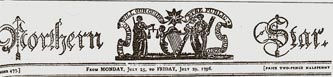
– in 1795, and many of its cells operated as de facto United Irish branches. The movement quickly developed a strategy of spreading its ideals by means of pamphlets, leaflets, newspapers, ballads, "catechisms" and travelling emissaries. The Northern Star of Belfast was especially successful, both commercially and politically and had a wide readership until its suppression in 1797. The spread of the society was watched with growing alarm by the authorities and it was banned in 1793 following the declaration of war by France.
1793–97
Following the French declaration of war on BritainFrench Revolutionary Wars
The French Revolutionary Wars were a series of major conflicts, from 1792 until 1802, fought between the French Revolutionary government and several European states...
in February 1793, the movement was outlawed and went underground from 1794 as they became more determined to force a revolt against British rule. The leadership was divided into those who wished to wait for French aid before rising and the more radical elements that wished to press ahead regardless. However, the suppression of a bloody preemptive rebellion, which broke out in Leitrim
County Leitrim
County Leitrim is a county in Ireland. It is located in the West Region and is also part of the province of Connacht. It is named after the village of Leitrim. Leitrim County Council is the local authority for the county...
in 1793, led to the former faction prevailing and links were forged with the revolutionary French
France
The French Republic , The French Republic , The French Republic , (commonly known as France , is a unitary semi-presidential republic in Western Europe with several overseas territories and islands located on other continents and in the Indian, Pacific, and Atlantic oceans. Metropolitan France...
government with instructions to wait sent to all of the United Irish membership.
Worried by its presence, the Dublin administration conceded some reforms, allowing Catholics the vote, to become barristers and to enroll at Trinity College Dublin in 1793. The Hearth Tax, paid by all households, was abolished in 1795, and St Patrick's seminary
St Patrick's College, Maynooth
St Patrick's College, Maynooth is the "National Seminary for Ireland" , and a Pontifical University, located in the village of Maynooth, 15 miles from Dublin, Ireland. The college and seminary are often referred to as Maynooth College. The college was officially established as the Royal College...
at Maynooth was founded. Catholics were also expected to join the militia and to inform on any United Irish activities.
In 1794, William Drennan
William Drennan
William Drennan ,a physician, poet, educationalist and political radical, was one of the chief architects of the Society of United Irishmen...
became the first leader to be arrested and tried for sedition as the authorities began to react to the growth of the United Irishmen, followed by the Reverend William Jackson
Reverend William Jackson
The Reverend William Jackson was a noted Irish preacher, journalist, playwright, radical, and spy who lived much of his life outside of his homeland.-Early life:...
. In 1795, the Orange Order
Orange Institution
The Orange Institution is a Protestant fraternal organisation based mainly in Northern Ireland and Scotland, though it has lodges throughout the Commonwealth and United States. The Institution was founded in 1796 near the village of Loughgall in County Armagh, Ireland...
was founded as an auxiliary military force to counteract the spread of the United Irishmen on the ground and the loyalty of the hierarchy of the Catholic church was confirmed with the founding of Maynooth College
St Patrick's College, Maynooth
St Patrick's College, Maynooth is the "National Seminary for Ireland" , and a Pontifical University, located in the village of Maynooth, 15 miles from Dublin, Ireland. The college and seminary are often referred to as Maynooth College. The college was officially established as the Royal College...
in the same year. At that stage, the Church and the French republic were enemies because of the dechristianisation of France during the French Revolution
Dechristianisation of France during the French Revolution
The dechristianisation of France during the French Revolution is a conventional description of the results of a number of separate policies, conducted by various governments of France between the start of the French Revolution in 1789 and the Concordat of 1801, forming the basis of the later and...
.
A French fleet
Expédition d'Irlande
The Expédition d'Irlande was an unsuccessful attempt by the First French Republic during the French Revolutionary Wars to assist the outlawed Society of United Irishmen, a popular rebel Irish republican group, in their planned rebellion against British rule...
carrying 15,000 troops set sail for Ireland in 1796, under General Hoche and spent days in sight of the Cork
County Cork
County Cork is a county in Ireland. It is located in the South-West Region and is also part of the province of Munster. It is named after the city of Cork . Cork County Council is the local authority for the county...
coast at Bantry Bay
Bantry Bay
Bantry Bay is a bay located in County Cork, southwest Ireland. The bay runs approximately from northeast to southwest into the Atlantic Ocean. It is approximately 3-to-4 km wide at the head and wide at the entrance....
but weather conditions prevented its landing, and its remnants not wrecked or captured returned to France. The British government responded to the threat it represented by sweeping up much of the United Irish leadership. It imposed martial law
Martial law
Martial law is the imposition of military rule by military authorities over designated regions on an emergency basis— only temporary—when the civilian government or civilian authorities fail to function effectively , when there are extensive riots and protests, or when the disobedience of the law...
from 2 March 1797 in an attempt to break the movement by the widespread use of terror during searches for weapons.
1798 Rebellion
By early 1798, the United Irish membership on the ground (by now 280,000 sworn members) was under severe pressure, suffering from the terror of a roving campaign of disarmament while under instructions to do nothing until the arrival of French aid. In March 1798, the bulk of the leadership was arrested and preemptive risings had already broken out in Tipperary but indecision still divided the rump leadership. Finally, the unrelenting pressure led the militant faction of the United Irishmen to set the date for a general uprising on 23 May without French aid. However, information from informerInformant
An informant is a person who provides privileged information about a person or organization to an agency. The term is usually used within the law enforcement world, where they are officially known as confidential or criminal informants , and can often refer pejoratively to the supply of information...
s led to the arrests of Lord Edward Fitzgerald
Lord Edward FitzGerald
Lord Edward FitzGerald was an Irish aristocrat and revolutionary. He was the fifth son of the 1st Duke of Leinster and the Duchess of Leinster , he was born at Carton House, near Dublin, and died of wounds received in resisting arrest on charge of treason.-Early years:FitzGerald spent most of his...
and Samuel Neilson shortly before the rising but more crucially foiled the planned rising in Dublin which was to be the central core of the planned rebellion.
Nevertheless, tens of thousands rose in the surrounding counties but the resulting rebellion
Irish Rebellion of 1798
The Irish Rebellion of 1798 , also known as the United Irishmen Rebellion , was an uprising in 1798, lasting several months, against British rule in Ireland...
was severely hampered by the lack of leadership and was crushed with vicious brutality. The campaign met with little success except in Wexford
County Wexford
County Wexford is a county in Ireland. It is part of the South-East Region and is also located in the province of Leinster. It is named after the town of Wexford. In pre-Norman times it was part of the Kingdom of Uí Cheinnselaig, whose capital was at Ferns. Wexford County Council is the local...
where a number of massacres of loyalist civilians who were largely Protestant raised the spectre of sectarianism which was seized upon by enemies of the United Irishmen to weaken their non-sectarian appeal. The eventual arrival of 1,000 French troops in Killala, County Mayo
County Mayo
County Mayo is a county in Ireland. It is located in the West Region and is also part of the province of Connacht. It is named after the village of Mayo, which is now generally known as Mayo Abbey. Mayo County Council is the local authority for the county. The population of the county is 130,552...
in August was too little and too late to turn the tide for the United Irishmen. In October, Wolfe Tone himself was captured when a supporting French fleet of 3,000 troops was intercepted and defeated
Battle of Tory Island
The Battle of Tory Island, was a naval action of the French Revolutionary Wars, fought on 12 October 1798 between French and British squadrons off the northwest coast of Donegal, then in the Kingdom of Ireland...
by the Royal Navy
Royal Navy
The Royal Navy is the naval warfare service branch of the British Armed Forces. Founded in the 16th century, it is the oldest service branch and is known as the Senior Service...
near Lough Swilly
Lough Swilly
Lough Swilly in Ireland is a glacial fjord or sea inlet lying between the western side of the Inishowen Peninsula and the Fanad Peninsula, in County Donegal. Along with Carlingford Lough and Killary Harbour it is one of three known glacial fjords in Ireland....
.
Upon his capture, Wolfe Tone famously said, "From my earliest youth I have regarded the connection between Ireland and Great Britain as the curse of the Irish nation, and felt convinced, that while it lasted, this country would never be free or happy. In consequence, I determined to apply all the powers which my individual efforts could move, in order to separate the two countries." After being denied a soldier's death by firing squad, Wolfe Tone cheated the hangman by cutting his throat.
The suppression of the rising was followed by a period of renewed repression of the United Irishmen as the general amnesty offered by Lord Lieutenant
Lord Lieutenant of Ireland
The Lord Lieutenant of Ireland was the British King's representative and head of the Irish executive during the Lordship of Ireland , the Kingdom of Ireland and the United Kingdom of Great Britain and Ireland...
Cornwallis
Cornwallis in Ireland
British General Charles Cornwallis, the 1st Marquess Cornwallis was appointed in June 1798 to serve as both Lord Lieutenant of Ireland and Commander-in-Chief of Ireland, the highest civil and military posts in the Kingdom of Ireland. He held these offices until 1801.Cornwallis had specific...
specifically excluded rebel leaders many of whom were United Irishmen. However the United Irishmen still managed to survive as both a functioning clandestine organisation, especially in Dublin and as a military force with several rebel bands still active, though severely reduced and confined to a few counties.
The United Irishmen and sectarianism

Most of the United Irish leadership and ideologues were born into Presbyterian families. This small part of the population - about 15% - included Wolfe Tone, Lord Edward Fitzgerald
Lord Edward FitzGerald
Lord Edward FitzGerald was an Irish aristocrat and revolutionary. He was the fifth son of the 1st Duke of Leinster and the Duchess of Leinster , he was born at Carton House, near Dublin, and died of wounds received in resisting arrest on charge of treason.-Early years:FitzGerald spent most of his...
, Napper Tandy and Robert Emmet
Robert Emmet
Robert Emmet was an Irish nationalist and Republican, orator and rebel leader born in Dublin, Ireland...
. While the United Irish had declared themselves to be non-sectarian from 1791, there were other liberal Protestants in the Irish Parliament who were also anti-sectarian and sought a more democratic franchise, such as Henry Grattan
Henry Grattan
Henry Grattan was an Irish politician and member of the Irish House of Commons and a campaigner for legislative freedom for the Irish Parliament in the late 18th century. He opposed the Act of Union 1800 that merged the Kingdoms of Ireland and Great Britain.-Early life:Grattan was born at...
and John Curran
John Philpot Curran
John Philpot Curran was an Irish orator, politician and wit, born in Newmarket, County Cork. He was the son of James and Sarah Curran.-Career:...
. Although the United Irishmen was a staunchly non-sectarian
Sectarianism
Sectarianism, according to one definition, is bigotry, discrimination or hatred arising from attaching importance to perceived differences between subdivisions within a group, such as between different denominations of a religion, class, regional or factions of a political movement.The ideological...
body which sought to unite all Irishmen, regardless of religion or descent many among their ranks were former Defenders
Defenders (Ireland)
The Defenders were a militant, vigilante agrarian secret society in 18th century Ireland, mainly Roman Catholic and from Ulster, who allied with the United Irishmen but did little during the rebellion of 1798.-Origin:...
, a term applied to many loosely connected, exclusively Catholic, agrarian resistance groups. Many of these men, as well as their Presbyterian counterparts in Ulster, had been shaped by the sectarianism that was prevalent in eighteenth century Ireland and it was no mean feat to persuade Catholic, Protestant and Dissenter to put aside their differences and view each other simply as fellow Irishmen. Although the project met with remarkable success, it was quickly recognised by the establishment that sectarianism was a useful ally in the fight against the United Irishmen.
The formation of the Orange Order
Orange Institution
The Orange Institution is a Protestant fraternal organisation based mainly in Northern Ireland and Scotland, though it has lodges throughout the Commonwealth and United States. The Institution was founded in 1796 near the village of Loughgall in County Armagh, Ireland...
in 1795 was to prove particularly useful as it provided the Government with allies who had detailed local knowledge of the activities of their enemies. The brutal disarming of Ulster in 1797, where the United Irish had successfully radicalised both Protestants and Catholics, saw thousands of Catholics driven from counties Antrim
County Antrim
County Antrim is one of six counties that form Northern Ireland, situated in the north-east of the island of Ireland. Adjoined to the north-east shore of Lough Neagh, the county covers an area of 2,844 km², with a population of approximately 616,000...
, Down
County Down
-Cities:*Belfast *Newry -Large towns:*Dundonald*Newtownards*Bangor-Medium towns:...
and Armagh
County Armagh
-History:Ancient Armagh was the territory of the Ulaid before the fourth century AD. It was ruled by the Red Branch, whose capital was Emain Macha near Armagh. The site, and subsequently the city, were named after the goddess Macha...
, and the murder, torture and imprisonment of hundreds of Protestants suspected of United Irish sympathies.
Also in 1795 the Dublin administration funded the new St Patrick's College
St Patrick's College, Maynooth
St Patrick's College, Maynooth is the "National Seminary for Ireland" , and a Pontifical University, located in the village of Maynooth, 15 miles from Dublin, Ireland. The college and seminary are often referred to as Maynooth College. The college was officially established as the Royal College...
seminary for Roman Catholic priests, which ensured the support of the Irish Catholic hierarchy. The church was opposed to republicanism, though individual priests were supportive. The French government that supported the United Irish had engaged in a policy of "dechristianisation
Dechristianisation of France during the French Revolution
The dechristianisation of France during the French Revolution is a conventional description of the results of a number of separate policies, conducted by various governments of France between the start of the French Revolution in 1789 and the Concordat of 1801, forming the basis of the later and...
" for some years, and in February 1798 its army had expelled Pope Pius VI
Pope Pius VI
Pope Pius VI , born Count Giovanni Angelo Braschi, was Pope from 1775 to 1799.-Early years:Braschi was born in Cesena...
from Rome and formed the short-lived "Roman Republic"
Roman Republic (18th century)
The Roman Republic was proclaimed on February 15, 1798 after Louis Alexandre Berthier, a general of Napoleon, had invaded the city of Rome on February 10....
. The Catholic hierarchy was therefore in a difficult position, being opposed to the United Irish while fully aware of the underlying social grievances of its members.
Religious division and hatred was, therefore, never completely buried and a minority of the Defenders did not reject completely their previous anti-Protestant outlook. During the course of the 1798 rebellion
Irish Rebellion of 1798
The Irish Rebellion of 1798 , also known as the United Irishmen Rebellion , was an uprising in 1798, lasting several months, against British rule in Ireland...
, United Irish rebels perpetrated several sectarian massacres, most notoriously in County Wexford
County Wexford
County Wexford is a county in Ireland. It is part of the South-East Region and is also located in the province of Leinster. It is named after the town of Wexford. In pre-Norman times it was part of the Kingdom of Uí Cheinnselaig, whose capital was at Ferns. Wexford County Council is the local...
at Scullabogue
Scullabogue Barn massacre
The Scullabogue massacre was an atrocity committed in Scullabogue , near New Ross, County Wexford, Ireland on 5 June 1798, during the 1798 rebellion when insurgents massacred 100-200 loyalists, both Catholic and Protestant, held prisoner in a barn.-Background:A farm and out-buildings in the...
and Wexford Bridge. While sectarianism undoubtedly played a part in many murders during the rising, religion was often taken as a signifier of loyalty or disloyalty by both sides and the fact that Protestants were often among the perpetrators and Catholics among the victims of rebel massacres indicates that victims lost their lives for being perceived as loyalists as opposed to purely religious reasons. Such subtleties were ignored in the aftermath, as the memory of such massacres was simplified and exploited in following years by politicians to cement the sectarian divide and to ensure the loyalty of Protestants to the British Crown.
After 1798
The decision to abolish the Irish ParliamentParliament of Ireland
The Parliament of Ireland was a legislature that existed in Dublin from 1297 until 1800. In its early mediaeval period during the Lordship of Ireland it consisted of either two or three chambers: the House of Commons, elected by a very restricted suffrage, the House of Lords in which the lords...
resulting in the Act of Union
Act of Union 1800
The Acts of Union 1800 describe two complementary Acts, namely:* the Union with Ireland Act 1800 , an Act of the Parliament of Great Britain, and...
in 1800 that created the United Kingdom of Great Britain and Ireland
United Kingdom of Great Britain and Ireland
The United Kingdom of Great Britain and Ireland was the formal name of the United Kingdom during the period when what is now the Republic of Ireland formed a part of it....
played on sectarian hopes and fears and was to gradually erode the United Irishmen by playing Catholic against Protestant. This was despite the original recognition that the "bigotry" (to quote Prime Minister
Prime minister
A prime minister is the most senior minister of cabinet in the executive branch of government in a parliamentary system. In many systems, the prime minister selects and may dismiss other members of the cabinet, and allocates posts to members within the government. In most systems, the prime...
William Pitt
William Pitt the Younger
William Pitt the Younger was a British politician of the late 18th and early 19th centuries. He became the youngest Prime Minister in 1783 at the age of 24 . He left office in 1801, but was Prime Minister again from 1804 until his death in 1806...
) of the Protestant Parliament in Dublin had only contributed to sedition in Ireland.
The failure of Robert Emmet
Robert Emmet
Robert Emmet was an Irish nationalist and Republican, orator and rebel leader born in Dublin, Ireland...
's rebellion in 1803 triggered the effective collapse of the Society of United Irishmen. The last armed rebel group led by James Corcoran
James Corcoran
James Corcoran was an Irish rebel who fought during the rebellion of 1798 and was the leader of the last rebel guerrilla band to be defeated in the years following the suppression of the rebellion.-Rebel activities:...
was destroyed in 1804 and the first half of the 19th century saw sectarianism replace separatism as the touchstone for political unrest in Ireland. Not until the Young Ireland
Young Ireland
Young Ireland was a political, cultural and social movement of the mid-19th century. It led changes in Irish nationalism, including an abortive rebellion known as the Young Irelander Rebellion of 1848. Many of the latter's leaders were tried for sedition and sentenced to penal transportation to...
movement in the 1840s was an attempt made to resurrect the non-sectarian ideals of the United Irishmen. However, the alliance between Catholic and Protestant was never fully regained as Protestants were drawn closer to a "British" identity through fear of having a perceived position of privilege eroded by the slowly growing political power of the Catholic majority. As a consequence, subsequent organised republican
Irish Republicanism
Irish republicanism is an ideology based on the belief that all of Ireland should be an independent republic.In 1801, under the Act of Union, the Kingdom of Great Britain and the Kingdom of Ireland merged to form the United Kingdom of Great Britain and Ireland...
resistance to British rule in Ireland was largely confined to the Catholic population and seen as a threat by the majority of the Protestant population.
See also
- Selected Members
- Samuel NeilsonSamuel NeilsonSamuel Neilson was one of the founder members of the Society of United Irishmen and the founder of its newspaper the Northern Star.-Background:...
- Bagenal HarveyBagenal HarveyBeauchamp Bagenal Harvey was a barrister and a commander of the United Irishmen in the Battle of New Ross during the 1798 Rebellion....
(United Irishmen commander) - William DrennanWilliam DrennanWilliam Drennan ,a physician, poet, educationalist and political radical, was one of the chief architects of the Society of United Irishmen...
- Robert EmmetRobert EmmetRobert Emmet was an Irish nationalist and Republican, orator and rebel leader born in Dublin, Ireland...
- Thomas Addis EmmetThomas Addis EmmetThomas Addis Emmet was an Irish and American lawyer and politician. He was a senior member of the revolutionary republican group United Irishmen in the 1790s and New York State Attorney General 1812–1813.-Background:...
- Michael DwyerMichael DwyerMichael Dwyer was a Society of the United Irishmen leader in the 1798 rebellion. He later fought a guerilla campaign against the British Army in the Wicklow Mountains from 1798-1803.-Early life:...
- Staker Wallace
- The Sheares BrothersThe Sheares BrothersThe Sheares Brothers, Henry , and John were Irish lawyers and members of the Society of United Irishmen, who died in the 1798 rebellion.-Early lives:...
- James HopeJames Hope (Ireland)James Hope was an United Irishmen leader who fought in the 1798 and 1803 rebellions against British rule in Ireland.-Background:...
- Henry Joy McCrackenHenry Joy McCrackenHenry Joy McCracken was an Irish industrialist and a founding member of the Society of the United Irishmen.-History:...
- James OrrJames Orr (poet)James Orr was a poet or rhyming weaver from Ulster also known as the Bard of Ballycarry, who wrote in English and Ulster Scots. He was the foremost of the Ulster Weaver Poets, and was writing contemporaneously with Robert Burns...
- William OrrWilliam OrrWilliam Orr was a member of the United Irishmen who was executed in 1797 in what was widely believed at the time to be "judicial murder" and whose memory led to the rallying cry “Remember Orr” during the 1798 rebellion.-Background:...
- William SampsonWilliam Sampson (attorney)William Sampson was an Irish Protestant lawyer known for his defense of religious liberty in Ireland and America.-Early life:...
- James Napper TandyJames Napper TandyJames Napper Tandy , was an Irish rebel leader.-Political activism:A Dublin Protestant and the son of an ironmonger, Tandy went to the famous Quaker boarding school in Ballitore, south Kildare, also attended by Edmund Burke who was eight years older.He started life as a small tradesman...
- Archibald Hamilton RowanArchibald Hamilton RowanArchibald Hamilton Rowan , christened Archibald Hamilton , was an Irish celebrity and a founding member of The Dublin Society of United Irishmen. He was the son of Gawen Hamilton of Killyleagh Castle, Co...
- Theobald Wolfe ToneTheobald Wolfe ToneTheobald Wolfe Tone or Wolfe Tone , was a leading Irish revolutionary figure and one of the founding members of the United Irishmen and is regarded as the father of Irish Republicanism. He was captured by British forces at Lough Swilly in Donegal and taken prisoner...
- Thomas Muir (political reformer)
- Leonard MacNallyLeonard MacNallyLeonard MacNally buried in Donnybrook Cemetery, Ireland was one of the most infamous government informants against members of the Society of United Irishmen....
(informer)
- Samuel Neilson
- Irish Rebellion of 1798Irish Rebellion of 1798The Irish Rebellion of 1798 , also known as the United Irishmen Rebellion , was an uprising in 1798, lasting several months, against British rule in Ireland...
- United Scotsmen in ScotlandScotlandScotland is a country that is part of the United Kingdom. Occupying the northern third of the island of Great Britain, it shares a border with England to the south and is bounded by the North Sea to the east, the Atlantic Ocean to the north and west, and the North Channel and Irish Sea to the...
- United Irish UprisingUnited Irish UprisingIn April 1800, rumours flew through St. John's, Newfoundland that up to 400 Irishmen had taken the secret oath of the Society of the United Irishmen. It is believed that some 80 or more Irish soldiers in the British army planned to meet and mutiny at the powder shed behind the British garrison at...
in NewfoundlandNewfoundland and LabradorNewfoundland and Labrador is the easternmost province of Canada. Situated in the country's Atlantic region, it incorporates the island of Newfoundland and mainland Labrador with a combined area of . As of April 2011, the province's estimated population is 508,400... - Société des Fils de la LibertéSociété des Fils de la LibertéThe Société des Fils de la Liberté was a paramilitary organization founded in August of 1837 in Lower Canada by young supporters of the Parti patriote who became impatient with the pace of progress of the movement for constitutional and parliamentary reforms...
in QuebecQuebecQuebec or is a province in east-central Canada. It is the only Canadian province with a predominantly French-speaking population and the only one whose sole official language is French at the provincial level.... - Fictional Members
Further reading
- Flanagan, Thomas. The Year of the French. New York: The New York Review of Books, 1979.
External links
- Original Declaration of the United Irishmen
- Declarations and Tests of United Irishmen, from Memoirs of William Sampson (attorney)William Sampson (attorney)William Sampson was an Irish Protestant lawyer known for his defense of religious liberty in Ireland and America.-Early life:...
, 1817