


Sludge

Encyclopedia
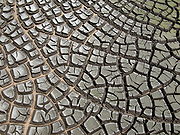
Quasi-solid
Quasi-solid is the physical term for a semi-solid. While similar to a solid in some respects , a quasi-solid also shares some properties of liquids, such as shape conformity to something applying pressure to it, or the ability to flow under pressure...
material left from industrial wastewater
Wastewater
Wastewater is any water that has been adversely affected in quality by anthropogenic influence. It comprises liquid waste discharged by domestic residences, commercial properties, industry, and/or agriculture and can encompass a wide range of potential contaminants and concentrations...
, or sewage
Sewage
Sewage is water-carried waste, in solution or suspension, that is intended to be removed from a community. Also known as wastewater, it is more than 99% water and is characterized by volume or rate of flow, physical condition, chemical constituents and the bacteriological organisms that it contains...
treatment processes. It can also refer to the settled suspension obtained from conventional drinking water treatment, and numerous other industrial processes. The term is also sometimes used as a generic term for solids separated from suspension in a liquid; this 'soupy' material usually contains significant quantities of 'interstitial' water (between the solid particles).
When fresh sewage or wastewater is added to a settling
Settling
Settling is the process by which particulates settle to the bottom of a liquid and form a sediment. Particles that experience a force, either due to gravity or due to centrifugal motion will tend to move in a uniform manner in the direction exerted by that force...
tank
Storage tank
A storage tank is a container, usually for holding liquids, sometimes for compressed gases . The term can be used for reservoirs , and for manufactured containers. The usage of the word tank for reservoirs is common or universal in Indian English, American English and moderately common in British...
, approximately 50% of the suspended solid matter will settle out in an hour and a half. This collection of solids is known as raw sludge or primary solids and is said to be "fresh" before anaerobic processes become active. The sludge will become putrescent
Putrefaction
Putrefaction is one of seven stages in the decomposition of the body of a dead animal. It can be viewed, in broad terms, as the decomposition of proteins, in a process that results in the eventual breakdown of cohesion between tissues and the liquefaction of most organs.-Description:In terms of...
in a short time once anaerobic bacteria take over, and must be removed from the sedimentation tank before this happens.
This is accomplished in one of two ways. In an Imhoff tank
Imhoff tank
The Imhoff tank, named for German engineer Karl Imhoff , is a chamber suitable for the reception and processing of sewage. It may be used for the clarification of sewage by simple settling and sedimentation, along with anaerobic digestion of the extracted sludge...
, fresh sludge is passed through a slot to the lower story or digestion chamber where it is decomposed
Decomposition
Decomposition is the process by which organic material is broken down into simpler forms of matter. The process is essential for recycling the finite matter that occupies physical space in the biome. Bodies of living organisms begin to decompose shortly after death...
by anaerobic bacteria, resulting in liquefaction and reduced volume of the sludge. After digesting for an extended period, the result is called "digested" sludge and may be disposed of by drying and then landfill
Landfill
A landfill site , is a site for the disposal of waste materials by burial and is the oldest form of waste treatment...
ing. More commonly with domestic sewage, the fresh sludge is continuously extracted from the tank mechanically and passed to separate sludge digestion tanks that operate at higher temperatures than the lower story of the Imhoff tank and, as a result, digest much more rapidly and efficiently.
Excess solids from biological processes such as activated sludge may still be referred to as sludge, but the term biosolids, is more commonly used to refer to the material, particularly after further processing such as aerobic composting. Industrial wastewater solids are also referred to as sludge, whether generated from biological or physical-chemical processes. Surface water plants also generate sludge made up of solids removed from the raw water.
Background and history
Biosolids, the product generated from tertiary treatment of waste activated sludge, have been in use in UK and European agriculture for more than 80 years, though there is increasing pressure to stop the practice of land application. In the 1990s there was pressure in some European countries to ban the use of sewage sludge as a fertilizer. Switzerland, Sweden, Austria, and others introduced a ban. Since the 1960s there has been cooperative activity with industry to reduce the inputs of persistent substances from factories. This has been very successful and, for example, the content of cadmium in sewage sludge in major European cities is now only 1% of what it was in 1970.European legislation on dangerous substances has eliminated the production and marketing of some substances that have been of historic concern such as persistent organic micropollutants. The European Commission
European Commission
The European Commission is the executive body of the European Union. The body is responsible for proposing legislation, implementing decisions, upholding the Union's treaties and the general day-to-day running of the Union....
has said repeatedly that the "Directive on the protection of the environment, and in particular of the soil, when sewage sludge is used in agriculture" (86/278/EEC) has been very successful in that there have been no cases of adverse effect where it has been applied. The EC encourages the use of sewage sludge in agriculture because it conserves organic matter and completes nutrient cycles. Recycling of phosphate
Phosphate
A phosphate, an inorganic chemical, is a salt of phosphoric acid. In organic chemistry, a phosphate, or organophosphate, is an ester of phosphoric acid. Organic phosphates are important in biochemistry and biogeochemistry or ecology. Inorganic phosphates are mined to obtain phosphorus for use in...
is regarded as especially important because the phosphate industry predicts that at the current rate of extraction the economic reserves will be exhausted in 100 or at most 250 years.
Of general interest on this topic is the Swanson et al. (2004) brief history of sewage management in New York City [Swanson, R.L., M.L. Bortman, T.P. O’Connor, and H M. Stanford. 2004. Science, policy and the management of sewage materials; The New York City experience. Mar. Poll. Bull. 49: 679-687]. Since 1884 when sewage was first treated the amount of sludge has increased along with population and treatment technology. At first the sludge was discharged directly along the banks of rivers surrounding the city, a bit later piped further into the rivers, and then further still out into the harbor. In 1924, to relieve a dismal condition in New York Harbor which actually putrefied in places as a result of decay of sewage, New York City began dumping sludge at sea at a location in the New York Bight called the 12-Mile Site. This was deemed a successful public health measure and not until the late 1960s was there any examination of its consequences to marine life or to humans. There was accumulation of sludge particles on the seafloor and consequent changes in the numbers and types of benthic organisms. In 1970 a large area around the site was closed to shellfishing From then until to 1986, the practice of dumping at the 12-Mile Site came under increasing pressure stemming from a series of untoward environmental crises in the New York Bight that were attributed partly to sludge dumping. In 1986, sludge dumping was moved still further seaward to a site over the deep ocean called the 106-Mile Site. Then, again in response to political pressure arising from events unrelated to ocean dumping, the practice ended entirely in 1992. Since 1992, New York City sludge has been applied to land (outside of New York state). That practice, now employed by two/thirds of the sewage treatment plants in the US, has been under continued scrutiny. The wider question is whether or not changes on the sea floor caused by the portion of sludge that settles are severe enough to justify the added operational cost and human health concerns of applying sludge to land. The cost versus benefit question is moot in the U.S. because ocean dumping of sludge is banned, but international treaty (London Dumping Convention) allows the practice so, on a global basis, as more and more sewage is treated, every sludge management option deserves practical consideration.
The term biosolids was formally created in 1991 by the Name Change Task Force of the Water Environment Federation
Water Environment Federation
The Water Environment Federation is an organization of engineers and industry related to wastewater, water, and water reuse. WEF, founded in 1928, was formerly known as the "Federation of Sewage Works Associations" and the "Water Pollution Control Federation ." WEF members include experts and...
(WEF), formerly known as the "Federation of Sewage Works Associations" to differentiate raw, untreated sewage sludge from treated and tested sewage sludge that can legally be utilized as soil amendment and fertilizer. The Federation newsletter published a request for alternative names. Members sent in over 250 suggestions, including "all growth," "purenutri," "biolife," "bioslurp," "black gold," "geoslime," "sca-doo," "the end product," "humanure," "hu-doo," "organic residuals," "bioresidue," "urban biomass," "powergro," "organite," "recyclite," "nutri-cake" and "ROSE," short for "recycling of solids environmentally." In June 1991, the Name Change Task Force finally settled on "biosolids," which it defined as the "nutrient-rich, organic byproduct of the nation's wastewater treatment process."
The legal term for biosolids by law is sludge. Treatment processes do not remove cancer causing agents
Carcinogen
A carcinogen is any substance, radionuclide, or radiation that is an agent directly involved in causing cancer. This may be due to the ability to damage the genome or to the disruption of cellular metabolic processes...
(Broad generalised statement). As detailed in the 1995 Plain English Guide to the Part 503 Risk Assessment
, EPA's most comprehensive risk assessment was completed for biosolids.
Treatment process
Sewage sludge is produced from the treatment of wastewater and consists of two basic forms — raw primary sludge (basically faecal material) and secondary sludge (a living ‘culture’ of organisms that help remove contaminants from wastewater before it is returned to rivers or the sea). The sludge is transformed into biosolids using a number of complex treatments such as digestion, thickening, dewatering, drying, and lime/alkaline stabilisation. Some treatment processes such as composting and alkaline stabilization involve significant amendments may dilute contaminant concentrations; depending on the process and the contaminant in question, treatment may decrease or in some cases increase the bioavailability and/or solubility of contaminants. In general, the more effectively a wastewater stream is treated, the greater the resulting concentration of contaminants (to broad - define contaminants)into the product sludge. See also List of waste water treatment technologies.Biosolids
Biosolids, also referred to as treated sludge, is a term used by the waste water industry to denote the byproduct of domestic and commercial sewage and wastewater treatmentSewage treatment
Sewage treatment, or domestic wastewater treatment, is the process of removing contaminants from wastewater and household sewage, both runoff and domestic. It includes physical, chemical, and biological processes to remove physical, chemical and biological contaminants...
. These residuals are further treated to reduce pathogen
Pathogen
A pathogen gignomai "I give birth to") or infectious agent — colloquially, a germ — is a microbe or microorganism such as a virus, bacterium, prion, or fungus that causes disease in its animal or plant host...
s and vector attraction by any of a number of approved methods. Low levels of constituents such as PCB
Polychlorinated biphenyl
Polychlorinated biphenyls are a class of organic compounds with 2 to 10 chlorine atoms attached to biphenyl, which is a molecule composed of two benzene rings. The chemical formula for PCBs is C12H10-xClx...
s, dioxin, and brominated flame retardant
Flame retardant
Flame retardants are chemicals used in thermoplastics, thermosets, textiles and coatings that inhibit or resist the spread of fire. These can be separated into several different classes of chemicals:...
s, may remain in treated sludge.
Recent conclusion of thorough review of literature and 20-year field study of air, land, and water in Arizona concluded that biosolids use is sustainable and improves the soil and crops.
One of the main concerns in the treated sludge is the concentrated metals content; certain metals are regulated while others are not. Leaching methods can be used to reduce the metal content and meet the regulatory limit. The U.S. divides biosolids into two grades: Class B sewage sludge, and Class A treated sewage sludge. Class A sludge has been treated to reduce bacteria prior to application to land; Class B sludge has not.
Depending on their level of treatment and resultant pollutant content, biosolids can be used in regulated applications for non-food agriculture, food agriculture, or distribution for unlimited use. Treated biosolids can be produced in cake, granular, pellet http://www.nefcobiosolids.com/ or liquid form and are spread over land before being incorporated into the soil or injected directly into the soil by specialist contractors. It used to be common practice to dump sewage sludge into the ocean, however, this practice has stopped in many nations due environmental concerns as well to domestic and international laws and treaties. In particular, after the 1991 Congressional ban on ocean dumping, the U.S. Environmental Protection Agency (EPA) instituted a policy of digested sludge reuse on agricultural land. The EPA promoted this policy by presenting it as recycling
Recycling
Recycling is processing used materials into new products to prevent waste of potentially useful materials, reduce the consumption of fresh raw materials, reduce energy usage, reduce air pollution and water pollution by reducing the need for "conventional" waste disposal, and lower greenhouse...
and rechristening
Newspeak
Newspeak is a fictional language in George Orwell's novel Nineteen Eighty-Four. In the novel, it refers to the deliberately impoverished language promoted by the state. Orwell included an essay about it in the form of an appendix in which the basic principles of the language are explained...
sewage sludge as "biosolids", as they are solids
Feces
Feces, faeces, or fæces is a waste product from an animal's digestive tract expelled through the anus or cloaca during defecation.-Etymology:...
produced by biological activities
Defecation
Defecation is the final act of digestion by which organisms eliminate solid, semisolid or liquid waste material from the digestive tract via the anus. Waves of muscular contraction known as peristalsis in the walls of the colon move fecal matter through the digestive tract towards the rectum...
.
A 2004 survey of 48 individuals near affected sites found that most reported irritation symptoms, about half reported an infection within a month of the application, and about a fourth were affected by Staphylococcus aureus
Staphylococcus aureus
Staphylococcus aureus is a facultative anaerobic Gram-positive coccal bacterium. It is frequently found as part of the normal skin flora on the skin and nasal passages. It is estimated that 20% of the human population are long-term carriers of S. aureus. S. aureus is the most common species of...
, including two deaths. The number of reported S. aureus infections was 25 times as high as in hospitalized patients, a high-risk group. The authors point out that regulations call for protective gear when handling Class B biosolids and that similar protections could be considered for residents in nearby areas given the wind conditions.
Khuder, Milz, Bisesi, Vincent, McNulty, and Czajkowski (as cited by Harrison and McBride of the Cornell Waste Management Institute in Case for Caution Revisited: Health and Environmental Impacts of Application of Sewage Sludges to Agricultural Land) conducted a health survey of persons living in close proximity to Class B sludged land. A sample of 437 people exposed to Class B sludge (living within 1 miles (1.6 km) of sludged land) - and using a control group of 176 people not exposed to sludge (not living within 1 miles (1.6 km) of sludged land) reported the following: Although correlation does not imply causation, such extensive correlations may lead reasonable people to conclude that precaution
Precautionary principle
The precautionary principle or precautionary approach states that if an action or policy has a suspected risk of causing harm to the public or to the environment, in the absence of scientific consensus that the action or policy is harmful, the burden of proof that it is not harmful falls on those...
is necessary in dealing with sludge and sludged farmlands.
Harrison and Oakes suggest that, in particular, "until investigations are carried out that answer these questions (...about the safety of Class B sludge...), land application of Class B sludges should be viewed as a practice that subjects neighbors and workers to substantial risk of disease." They further suggest that even Class A treated sludge may have chemical contaminants (including heavy metals, such as lead) or endotoxin
Endotoxin
Endotoxins are toxins associated with some Gram-negative bacteria. An "endotoxin" is a toxin that is a structural molecule of the bacteria that is recognized by the immune system.-Gram negative:...
s present, and a precautionary approach may be justified on this basis, though the vast majority of incidents reported by Lewis, et al. have been correlated with exposure to Class B untreated sludge and not Class A treated sludge.
The EPA has recently (as of 2009) released the Targeted National Sewage Sludge Study, which reports on the level of metals, chemicals, hormones, and other materials present in a statistical sample of sewage sludges. Some highlights include:
- Silver is present to the degree of 20 mg/kg of sludge, on average, a near economically recoverable level, while some sludges of exceptionally high quality have up to 200 milligrams of silver per kilogram of sludge; one outlier demonstrated a silver lode of 800–900 mg per kg of sludge. It is unknown whether mineral speculators have yet invested in the sludge stocks of the United States.
- Barium is present at the rate of 500 mg/kg, while manganese is present at the rate of 1 g/kg sludge.
- High levels of sterols and other hormones have been detected, with averages in the range of up to 1,000,000 µg/kg sludge.
- Lead, arsenic, chromium, and cadmium are estimated by the EPA to be present in detectable quantities in 100% of national sewage sludges in the US, while thallium is only estimated to be present in 94.1% of sludges.
Recent studies (2010) have indicated that pharmaceuticals and personal care products, which often adsorb to sludge during wastewater treatment, can persist in agricultural soils following biosolid application. Some of these chemicals, including potential endocrine disruptor
Endocrine disruptor
Endocrine disruptors are chemicals that interfere with endocrine in animals, including humans. These disruptions can cause cancerous tumors, birth defects, and other developmental disorders...
Triclosan
Triclosan
Triclosan is an antibacterial and antifungal agent. It is a polychloro phenoxy phenol. Despite being used in many consumer products, beyond its use in toothpaste to prevent gingivitis, there is no evidence according to the American Food and Drug Administration that triclosan provides an extra...
, can also travel through the soil column and leach into agricultural tile drainage at detectable levels. Other studies, however, have shown that these chemicals remain adsorbed to surface soil particles, making them more susceptible to surface erosion than infiltration. These studies are also mixed in their findings regarding the persistence of chemicals such as triclosan
Triclosan
Triclosan is an antibacterial and antifungal agent. It is a polychloro phenoxy phenol. Despite being used in many consumer products, beyond its use in toothpaste to prevent gingivitis, there is no evidence according to the American Food and Drug Administration that triclosan provides an extra...
, triclocarban
Triclocarban
Triclocarban , or 3,4,4'-trichlorocarbanilide, is a substance with anti-bacterial and anti-fungal properties that is used in disinfectants, soaps and other household products....
, and other pharmaceuticals. The impact of this persistence in soils is unknown, but the link to human and land animal health is likely tied to the capacity for plants to absorb and accumulate these chemicals in their consumed tissues. Studies of this kind are in early stages, but evidence of root uptake and translocation to leaves did occur for both triclosan
Triclosan
Triclosan is an antibacterial and antifungal agent. It is a polychloro phenoxy phenol. Despite being used in many consumer products, beyond its use in toothpaste to prevent gingivitis, there is no evidence according to the American Food and Drug Administration that triclosan provides an extra...
and triclocarban
Triclocarban
Triclocarban , or 3,4,4'-trichlorocarbanilide, is a substance with anti-bacterial and anti-fungal properties that is used in disinfectants, soaps and other household products....
in soybeans. This effect was not present in corn when tested in a different study.
For produce to be USDA-certified organic, sludge (biosolids) cannot be used.
A PhD thesis studying the addition of sludge to neutralize soil acidity concluded that the practice was not recommended if large amounts (broad - define 'large") are used because the sludge produces acids when it oxidizes.
United States
According to the United States Environmental Protection Agency (EPA), biosolids that meet treatment and pollutant content criteria of Part 503.13 "can be safely recycled and applied as fertilizer to sustainably improve and maintain productive soils and stimulate plant growth." However, they can not be disposed of in a sludge only landfill under Part 503.23 because of high chromium levels and boundary restrictions. After the 1991 Congressional ban on ocean dumping, the US EPA promulgated regulations - 40 CFR Part 503 - that continued to allow the use of biosolids on land as fertilizers and soil amendments which had been previously allowed under Part 257. The EPA promoted biosolids recycling throughout the 1990s. The EPA's Part 503 regulations were developed with input from university, EPA, and USDA researchers from around the country and involved an extensive review of the scientific literature and the largest risk assessment the agency had conducted to that time. However, there was no risk assess for pathogens or chemicals and heavy metals were not considered to be cancer causing agents. The Part 503 regulations became effective in 1993.United States municipal wastewater treatment plants in 1997 produced about 7.7 million dry tons of biosolids, and about 6.8 million dry tons in 1998 according to sources relying on EPA estimates. As of 2002, about 60% of all biosolids were applied to land as a soil amendment and fertilizer
Fertilizer
Fertilizer is any organic or inorganic material of natural or synthetic origin that is added to a soil to supply one or more plant nutrients essential to the growth of plants. A recent assessment found that about 40 to 60% of crop yields are attributable to commercial fertilizer use...
for growing crops. Biosolids that meet the Class B pathogen treatment and pollutant criteria, in accordance with the EPA "Standards for the use or disposal of sewage sludge" (40 CFR Part 503), can be land applied with formal site restrictions and strict record keeping. Biosolids that meet Class A pathogen reduction requirements or equivalent treatment by a "Process to Further Reduce Pathogens" (PFRP) have the least restrictions on use. PFRPs include pasteurization
Pasteurization
Pasteurization is a process of heating a food, usually liquid, to a specific temperature for a definite length of time, and then cooling it immediately. This process slows microbial growth in food...
, heat drying, thermophilic composting (aerobic digestion, most common method), and beta or gamma ray
Gamma ray
Gamma radiation, also known as gamma rays or hyphenated as gamma-rays and denoted as γ, is electromagnetic radiation of high frequency . Gamma rays are usually naturally produced on Earth by decay of high energy states in atomic nuclei...
irradiation
Irradiation
Irradiation is the process by which an object is exposed to radiation. The exposure can originate from various sources, including natural sources. Most frequently the term refers to ionizing radiation, and to a level of radiation that will serve a specific purpose, rather than radiation exposure to...
. Processes to reduce pathogens have no effect on heavy metals and may or may not have effects on the levels of other trace pollutants in biosolids. Treatment processes that involve significant amendments such as composting and alkaline stabilization may dilute total trace metals concentrations, but, depending on the process and the element in question, may decrease or in some cases increase the bioavailability and/or solubility of trace elements. "Composting is not a sterilization process and a properly composted
product maintains an active population of beneficial microorganisms that compete against the pathogenic members. Under some conditions, explosive regrowth of pathogenic microorganisms is possible."
Often thought to consist of only "human waste
Human waste
Human waste is a waste type usually used to refer to byproducts of digestion, such as feces and urine. Human waste is most often transported as sewage in waste water through sewerage systems...
", treated sewage sludge or "biosolids" contain any contaminants from sewage that are not broken down in the treatment process, or which do not remain with the water effluent leaving the treatment plant. The most commonly detected trace contaminants of concern are heavy metals (arsenic, cadmium, copper, etc., some of which are also critical plant micronutrients), and toxic chemicals (e.g. plasticizers, PDBEs, and others generated by human activities, including personal care products and medicines). Synthetic fibers from fabrics persist in biosolids as well as in biosolids-treated soils and may thus serve as an indicator of past biosolids application. Pathogens are not a significant health issue if biosolids are properly treated and site-specific management practices are followed; there is generally a greater concern for products that have been fertilized with un-treated animal wastes and which may be eaten raw.
The National Research Council
United States National Research Council
The National Research Council of the USA is the working arm of the United States National Academies, carrying out most of the studies done in their names.The National Academies include:* National Academy of Sciences...
published "Biosolids Applied to Land: Advancing Standards and Practices" in July 2002. The NRC concluded that while there is no documented scientific evidence that sewage sludge regulations have failed to protect public health, there is persistent uncertainty on possible adverse health effects. The NRC noted that further research is needed and made about 60 recommendations for addressing public health concerns, scientific uncertainties, and data gaps in the science underlying the sewage sludge standards. EPA responded with a commitment to conduct research addressing the NRC recommendations.
The EPA Office of the Inspector General (OIG) completed two assessments in 2000 and 2002 of the EPA sewage sludge program. The follow-up report in 2002 documented that "the EPA cannot assure the public that current land application practices are protective of human health and the environment." The report also documented that there had been an almost 100% reduction in EPA enforcement resources since the earlier assessment. This is probably the greatest issue with the practice: under both the federal program operated by the EPA and those of the several states, there is limited inspection and oversight by agencies charged with regulating these practices. To some degree, this lack of oversight is a function of the perceived (by the regulatory agencies) benign nature of the practice. However, a greater underlying issue is funding. Few states and the US EPA have the discretionary funds necessary to establish and implement a full enforcement program for biosolids. To do so would require substantial spending that most legislatures are unwilling to support. Some states and companies involved in biosolids management have willingly agreed to use a "fee" per unit of biosolids managed to help fund such programs, and generally, where such programs are in place, biosolids land application proceeds without incident, however these fees are seldom sufficient to fully fund a rigorous inspection program.
A cautionary approach to land application of biosolids has been advocated by some for regions where soils have lower capacities for toxics sorption or due to the presence of unknowns in sewage biosolids. In 2007 the Northeast Regional Multi-State Research Committee (NEC 1001) issued conservative guidelines tailored to the soils and conditions typical of the northeastern US.
Alternative pathways for sludge reuse
Feridun of the United Sludge Free Alliance suggests that sludge can be recycled in a variety of ways that are both environmentally beneficial and sustainable, and which do not involve application of biologically active materials to croplands that humans live close to. These include using anaerobic digestion to produce biogasBiogas
Biogas typically refers to a gas produced by the biological breakdown of organic matter in the absence of oxygen. Organic waste such as dead plant and animal material, animal dung, and kitchen waste can be converted into a gaseous fuel called biogas...
, pyrolysis
Pyrolysis
Pyrolysis is a thermochemical decomposition of organic material at elevated temperatures without the participation of oxygen. It involves the simultaneous change of chemical composition and physical phase, and is irreversible...
of the sludge to create syngas
Syngas
Syngas is the name given to a gas mixture that contains varying amounts of carbon monoxide and hydrogen. Examples of production methods include steam reforming of natural gas or liquid hydrocarbons to produce hydrogen, the gasification of coal, biomass, and in some types of waste-to-energy...
and potentially biochar
Biochar
Biochar or terra preta is charcoal created by pyrolysis of biomass. Biochar is under investigation as an approach to carbon sequestration via bio-energy with carbon capture and storage. Biochar thus has the potential to help mitigate climate change, via carbon sequestration...
, or incineration
Incineration
Incineration is a waste treatment process that involves the combustion of organic substances contained in waste materials. Incineration and other high temperature waste treatment systems are described as "thermal treatment". Incineration of waste materials converts the waste into ash, flue gas, and...
in a waste-to-energy
Waste-to-energy
Waste-to-energy or energy-from-waste is the process of creating energy in the form of electricity or heat from the incineration of waste source. WtE is a form of energy recovery...
facility for direct production of electricity
Electricity
Electricity is a general term encompassing a variety of phenomena resulting from the presence and flow of electric charge. These include many easily recognizable phenomena, such as lightning, static electricity, and the flow of electrical current in an electrical wire...
and steam for district heating
District heating
District heating is a system for distributing heat generated in a centralized location for residential and commercial heating requirements such as space heating and water heating...
or industrial uses. Synergies from these processes include a far lower, controlled level of methane
Methane
Methane is a chemical compound with the chemical formula . It is the simplest alkane, the principal component of natural gas, and probably the most abundant organic compound on earth. The relative abundance of methane makes it an attractive fuel...
release (an extremely potent greenhouse gas
Greenhouse gas
A greenhouse gas is a gas in an atmosphere that absorbs and emits radiation within the thermal infrared range. This process is the fundamental cause of the greenhouse effect. The primary greenhouse gases in the Earth's atmosphere are water vapor, carbon dioxide, methane, nitrous oxide, and ozone...
) to the atmosphere from the pyrolyzed/digested/combusted sludge rather than the uncontrolled release of methane from untreated sludge. If methane is captured rather than allowed to outgas, it can be used for fuel, closing the carbon cycle.
Thermal or anaerobic processes greatly reduce the volume of the sludge, as well as achieve remediation the biological concerns. Direct waste-to-energy incineration systems require multi-step cleaning of the exhaust gas, to ensure no hazardous substances are released. In addition, the ash produced by incineration is difficult to use without subsequent treatment due to its high heavy metal content; solutions to this include leaching of the ashes to remove heavy metals followed by reuse of the ash as aggregate for concrete, or if biochar is used, the heavy metals may be fixed in place by the char structure.
Another way to use dried sewage sludge as a energy resource is to burn it together with coal in coal-fired power stations. This is considered as biomass co-firing, which allows power stations to produce the same amount of electricity with less carbon-dioxide emissions.
See also
- By-productBy-productA by-product is a secondary product derived from a manufacturing process or chemical reaction. It is not the primary product or service being produced.A by-product can be useful and marketable or it can be considered waste....
- Ecological sanitationEcological sanitationEcological sanitation, also known as ecosan or eco-san, are terms coined to describe a form of sanitation that usually involves urine diversion and the recycling of water and nutrients contained within human wastes back into the local environment....
- Oil sludgeOil sludgeOil sludge or black sludge is a solid or gel in motor oil caused by the oil gelling or solidifying, usually at temperatures lower than 100 degrees Celsius....
- SanitationSanitationSanitation is the hygienic means of promoting health through prevention of human contact with the hazards of wastes. Hazards can be either physical, microbiological, biological or chemical agents of disease. Wastes that can cause health problems are human and animal feces, solid wastes, domestic...
- Sewage treatmentSewage treatmentSewage treatment, or domestic wastewater treatment, is the process of removing contaminants from wastewater and household sewage, both runoff and domestic. It includes physical, chemical, and biological processes to remove physical, chemical and biological contaminants...
- Suspended solidsSuspended solidsSuspended solids refers to small solid particles which remain in suspension in water as a colloid or due to the motion of the water. It is used as one indicator of water quality....
- Wastewater treatment facility
Government/NGO reports
- "Biosolids Applied to Land: Advancing Standards and Practices", National Research Council, July 2002
- Guidance For Controlling Potential Risks To Workers Exposed to Class B Biosolids, Center for Disease Control (CDC), July, 2002
- Why USDA Should Just Say No: Executive Summary, Environmental Working Group, April 1998
- Why USDA Should Just Say No: Policy Memo, Environmental Working Group, April 1998
- Human Health Risk Evaluation of Land Application of Sewage Sludge/Biosolids, North Carolina Health Department: Occupational and Environmental Epidemiology Branch, November 2005.
Web
- Biosolids FAQs, Biosolids.com
- Sewage Sludge (aka Sewage Biosolids), Cornell Waste Management Institute
- Sewage Sludge, SourceWatch
- Sewage Sludge Basic Information from United Sludge-Free Alliance