
Home      Discussion      Topics      Dictionary      Almanac
Signup       Login
Single photon emission computed tomography

Single photon emission computed tomography

Overview
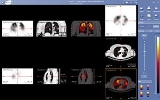
Single-photon emission computed tomography (SPECT, or less commonly, SPET) is a nuclear medicine
Nuclear medicine
In nuclear medicine procedures, elemental radionuclides are combined with other elements to form chemical compounds, or else combined with existing pharmaceutical compounds, to form radiopharmaceuticals. These radiopharmaceuticals, once administered to the patient, can localize to specific organs...

 tomographic
Tomography
Tomography refers to imaging by sections or sectioning, through the use of any kind of penetrating wave. A device used in tomography is called a tomograph, while the image produced is a tomogram. The method is used in radiology, archaeology, biology, geophysics, oceanography, materials science,...

 imaging technique using gamma rays. It is very similar to conventional nuclear medicine planar imaging using a gamma camera
Gamma camera
A gamma camera, also called a scintillation camera or Anger camera, is a device used to image gamma radiation emitting radioisotopes, a technique known as scintigraphy...

. However, it is able to provide true 3D information. This information is typically presented as cross-sectional slices through the patient, but can be freely reformatted or manipulated as required.
Discussion
Ask a question about 'Single photon emission computed tomography'
Start a new discussion about 'Single photon emission computed tomography'
Answer questions from other users
Full Discussion Forum
 
Unanswered Questions
Encyclopedia
Single-photon emission computed tomography (SPECT, or less commonly, SPET) is a nuclear medicine
Nuclear medicine
In nuclear medicine procedures, elemental radionuclides are combined with other elements to form chemical compounds, or else combined with existing pharmaceutical compounds, to form radiopharmaceuticals. These radiopharmaceuticals, once administered to the patient, can localize to specific organs...

 tomographic
Tomography
Tomography refers to imaging by sections or sectioning, through the use of any kind of penetrating wave. A device used in tomography is called a tomograph, while the image produced is a tomogram. The method is used in radiology, archaeology, biology, geophysics, oceanography, materials science,...

 imaging technique using gamma rays. It is very similar to conventional nuclear medicine planar imaging using a gamma camera
Gamma camera
A gamma camera, also called a scintillation camera or Anger camera, is a device used to image gamma radiation emitting radioisotopes, a technique known as scintigraphy...

. However, it is able to provide true 3D information. This information is typically presented as cross-sectional slices through the patient, but can be freely reformatted or manipulated as required.

The basic technique requires injection of a gamma-emitting radioisotope (called radionuclide
Radionuclide
A radionuclide is an atom with an unstable nucleus, which is a nucleus characterized by excess energy available to be imparted either to a newly created radiation particle within the nucleus or to an atomic electron. The radionuclide, in this process, undergoes radioactive decay, and emits gamma...

) into the bloodstream of the patient. On occasion, the radioisotope is a simple soluble dissolved ion, such as a radioisotope of gallium(III), which happens to also have chemical properties that allow it to be concentrated in ways of medical interest for disease detection. However, most of the time in SPECT, a marker radioisotope, which is of interest only for its radioactive properties, has been attached to a special radioligand
Radioligand
A radioligand is a radioactive biochemical substance that is used for diagnosis or for research-oriented study of the receptor systems of the body....

, which is of interest for its chemical binding properties to certain types of tissues. This marriage allows the combination of ligand and radioisotope (the radiopharmaceutical) to be carried and bound to a place of interest in the body, which then (due to the gamma-emission of the isotope) allows the ligand concentration to be seen by a gamma-camera.

Principles


In the same way that a plain X-ray is a 2-dimensional (2-D) view of a 3-dimensional structure, the image obtained by a gamma camera
Gamma camera
A gamma camera, also called a scintillation camera or Anger camera, is a device used to image gamma radiation emitting radioisotopes, a technique known as scintigraphy...

 is a 2-D view of 3-D distribution of a radionuclide
Radionuclide
A radionuclide is an atom with an unstable nucleus, which is a nucleus characterized by excess energy available to be imparted either to a newly created radiation particle within the nucleus or to an atomic electron. The radionuclide, in this process, undergoes radioactive decay, and emits gamma...

.

SPECT imaging is performed by using a gamma camera to acquire multiple 2-D images (also called projections), from multiple angles. A computer is then used to apply a tomographic reconstruction
Tomographic reconstruction
The mathematical basis for tomographic imaging was laid down by Johann Radon. It is applied in computed tomography to obtain cross-sectional images of patients...

 algorithm to the multiple projections, yielding a 3-D dataset. This dataset may then be manipulated to show thin slices along any chosen axis of the body, similar to those obtained from other tomographic techniques, such as MRI, CT
Computed tomography
X-ray computed tomography or Computer tomography , is a medical imaging method employing tomography created by computer processing...

, and PET
Positron emission tomography
Positron emission tomography is nuclear medicine imaging technique that produces a three-dimensional image or picture of functional processes in the body. The system detects pairs of gamma rays emitted indirectly by a positron-emitting radionuclide , which is introduced into the body on a...

.

SPECT is similar to PET in its use of radioactive tracer material and detection of gamma rays. In contrast with PET, however, the tracer used in SPECT emits gamma radiation that is measured directly, whereas PET tracer emits positrons that annihilate with electrons up to a few millimeters away, causing two gamma photons to be emitted in opposite directions. A PET scanner detects these emissions "coincident" in time, which provides more radiation event localization information and, thus, higher resolution images than SPECT (which has about 1 cm resolution). SPECT scans, however, are significantly less expensive than PET scans, in part because they are able to use longer-lived more easily-obtained radioisotopes than PET.

Because SPECT acquisition is very similar to planar gamma camera imaging, the same radiopharmaceuticals may be used. If a patient is examined in another type of nuclear medicine scan but the images are non-diagnostic, it may be possible to proceed straight to SPECT by moving the patient to a SPECT instrument, or even by simply reconfiguring the camera for SPECT image acquisition while the patient remains on the table.

To acquire SPECT images, the gamma camera is rotated around the patient. Projections are acquired at defined points during the rotation, typically every 3–6 degrees. In most cases, a full 360-degree rotation is used to obtain an optimal reconstruction. The time taken to obtain each projection is also variable, but 15–20 seconds is typical. This gives a total scan time of 15–20 minutes.

Multi-headed gamma cameras can provide accelerated acquisition. For example, a dual-headed camera can be used with heads spaced 180 degrees apart, allowing 2 projections to be acquired simultaneously, with each head requiring 180 degrees of rotation. Triple-head cameras with 120-degree spacing are also used.

Cardiac gated acquisitions are possible with SPECT, just as with planar imaging techniques such as MUGA
MUGA scan
A MUGA scan is a time-proven yet dated nuclear medicine test designed to evaluate the function of the right and left ventricles of the heart, thus allowing informed diagnostic intervention in heart failure. It is also called radionuclide angiography, as well as gated blood pool imaging...

. Triggered by Electrocardiogram (EKG) to obtain differential information about the heart in various parts of its cycle, gated myocardial SPECT can be used to obtain quantitative information about myocardial perfusion, thickness, and contractility of the myocardium during various parts of the cardiac cycle, and also to allow calculation of left ventricular ejection fraction, stroke volume, and cardiac output.

HMPAO brain 3D SPECT for neuropsychiatric diagnosis


Most SPECT scanner workstations can render the 2D slices in a variety of formats. In a 3D Surface View, the cortical surface of the brain is reconstructed from the 2D slices. Holes or defects in the surface of the brain actually represent decreases in perfusion, which may be related to decreases in neuronal activity. In a 3D Active View the interior of the brain is displayed as a lattice gridwork. Daniel Amen, a California-based physician who has utilized 3D SPECT scanning heavily in his medical practice, has standardized 3D Active Views such that average activity is shown in a blue color, higher activity is shown in red, and very high activity is shown in white. Some utility of brain HMAPO 3D SPECT scan in neuropsychiatric diagnosis and management has been found.

Application


SPECT can be used to complement any gamma imaging study, where a true 3D representation can be helpful, e.g., tumor imaging, infection (leukocyte) imaging, thyroid imaging or bone imaging.

Because SPECT permits accurate localisation in 3D space, it can be used to provide information about localised function in internal organs, such as functional cardiac or brain imaging.

Myocardial perfusion imaging


Myocardial perfusion imaging (MPI) is a form of functional cardiac imaging, used for the diagnosis of ischemic heart disease. The underlying principle is that under conditions of stress, diseased myocardium receives less blood flow than normal myocardium. MPI is one of several types of cardiac stress test
Cardiac stress test
Cardiac stress test is a test used in medicine and cardiology to measure the heart's ability to respond to external stress in a controlled clinical environment....

.

A cardiac specific radiopharmaceutical is administered, e.g., 99mTc-tetrofosmin
Tetrofosmin
Technetium tetrofosmin is a drug used in nuclear medicine cardiac imaging. It is sold under the brand name Myoview...

 (Myoview, GE healthcare), 99mTc-sestamibi (Cardiolite, Bristol-Myers Squibb). Following this, the heart rate is raised to induce myocardial stress, either by exercise or pharmacologically with adenosine, dobutamine
Dobutamine
Dobutamine is a sympathomimetic drug used in the treatment of heart failure and cardiogenic shock. Its primary mechanism is direct stimulation of β1 receptors of the sympathetic nervous system. Dobutamine was developed by a laboratory led by Drs...

, or dipyridamole
Dipyridamole
Dipyridamole is a drug that inhibits thrombus formation when given chronically and causes vasodilation when given at high doses over a short time.-Mechanism and effects:...

 (aminophylline
Aminophylline
Aminophylline is a bronchodilator. It is a compound of the bronchodilator theophylline with ethylenediamine in 2:1 ratio. The ethylenediamine improves solubility, and the aminophylline is usually found as a dihydrate-Properties:...

 can be used to reverse the effects of dipyridamole).

SPECT imaging performed after stress reveals the distribution of the radiopharmaceutical, and therefore the relative blood flow to the different regions of the myocardium. Diagnosis is made by comparing stress images to a further set of images obtained at rest. As the radionuclide redistributes slowly, it is not usually possible to perform both sets of images on the same day, hence a second attendance is required 1–7 days later (although, with a Tl-201 myocardial perfusion study with dipyridamole, rest images can be acquired as little as two hours post-stress). However, if stress imaging is normal, it is unnecessary to perform rest imaging, as it too will be normal; thus, stress imaging is normally performed first.

MPI has been demonstrated to have an overall accuracy of about 83% (sensitivity: 85%; specificity: 72%), and is comparable with (or better than) other non-invasive tests for ischemic heart disease.

Functional brain imaging


Usually, the gamma-emitting tracer used in functional brain imaging is 99mTc-HMPAO (hexamethylpropylene amine oxime). 99mTc
Technetium-99m
Technetium-99m is a metastable nuclear isomer of technetium-99, symbolized as 99mTc. The "m" indicates that this is a metastable nuclear isomer, i.e., that its half-life of 6 hours is considerably longer than most nuclear isomers that undergo gamma decay...

 is a metastable nuclear isomer
Nuclear isomer
A nuclear isomer is a metastable state of an atomic nucleus caused by the excitation of one or more of its nucleons . "Metastable" refers to the fact that these excited states have half-lives more than 100 to 1000 times the half-lives of the other possible excited nuclear states...

 that emits gamma rays that can be detected by a gamma camera. Attaching it to HMPAO allows 99mTc to be taken up by brain tissue in a manner proportional to brain blood flow, in turn allowing brain blood flow to be assessed with the nuclear gamma camera.

Because blood flow in the brain is tightly coupled to local brain metabolism and energy use, the 99mTc-HMPAO tracer (as well as the similar 99mTc-EC tracer) is used to assess brain metabolism regionally, in an attempt to diagnose and differentiate the different causal pathologies of dementia
Dementia
Dementia is a serious loss of cognitive ability in a previously unimpaired person, beyond what might be expected from normal aging...

. Meta-analysis of many reported studies suggests that SPECT with this tracer is about 74% sensitive at diagnosing Alzheimer's disease vs. 81% sensitivity for clinical exam (mental testing, etc.). More recent studies have shown the accuracy of SPECT in Alzheimer's diagnosis may be as high as 88%. In meta analysis, SPECT was superior to clinical exam and clinical criteria (91% vs. 70%) in being able to differentiate Alzheimer's disease from vascular dementias. This latter ability relates to SPECT's imaging of local metabolism of the brain, in which the patchy loss of cortical metabolism seen in multiple strokes differs clearly from the more even or "smooth" loss of non-occipital cortical brain function typical of Alzheimer's disease.

99mTc-HMPAO SPECT scanning competes with fludeoxyglucose (FDG) PET
Positron emission tomography
Positron emission tomography is nuclear medicine imaging technique that produces a three-dimensional image or picture of functional processes in the body. The system detects pairs of gamma rays emitted indirectly by a positron-emitting radionuclide , which is introduced into the body on a...

 scanning of the brain, which works to assess regional brain glucose metabolism, to provide very similar information about local brain damage from many processes. SPECT is more widely available, however, for the basic reason that the radioisotope generation technology is longer-lasting and far less expensive in SPECT, and the gamma scanning equipment is less expensive as well. The reason for this is that 99mTc is extracted from relatively simple technetium-99m generator
Technetium-99m generator
A technetium-99m generator, or colloquially a technetium cow or moly cow, is a device used to extract the metastable isotope 99mTc of technetium from a source of decaying molybdenum-99...

s, which are delivered to hospitals and scanning centers weekly to supply fresh radioisotope, whereas FDG PET relies on FDG, which must be made in an expensive medical cyclotron
Cyclotron
In technology, a cyclotron is a type of particle accelerator. In physics, the cyclotron frequency or gyrofrequency is the frequency of a charged particle moving perpendicularly to the direction of a uniform magnetic field, i.e. a magnetic field of constant magnitude and direction...

 and "hot-lab" (automated chemistry lab for radiopharmaceutical manufacture), then must be delivered directly to scanning sites, with delivery-fraction for each trip handicapped by its natural short 110-minute half-life.

Reconstruction


Reconstructed images typically have resolutions of 64×64 or 128×128 pixels, with the pixel sizes ranging from 3–6 mm. The number of projections acquired is chosen to be approximately equal to the width of the resulting images. In general, the resulting reconstructed images will be of lower resolution, have increased noise than planar images, and be susceptible to artifacts.

Scanning is time consuming, and it is essential that there is no patient movement during the scan time. Movement can cause significant degradation of the reconstructed images, although movement compensation reconstruction techniques can help with this. A highly uneven distribution of radiopharmaceutical also has the potential to cause artifacts. A very intense area of activity (e.g., the bladder) can cause extensive streaking of the images and obscure neighboring areas of activity. (This is a limitation of the filtered back projection reconstruction algorithm. Iterative reconstruction
Iterative reconstruction
Iterative reconstruction refers to iterative algorithms used to reconstruct 2D and 3D images in certain imaging techniques.For example, in computed tomography an image must be reconstructed from projections of an object...

 is an alternative algorithm that is growing in importance, as it is less sensitive to artifacts and can also correct for attenuation and depth dependent blurring).

Attenuation of the gamma rays within the patient can lead to significant underestimation of activity in deep tissues, compared to superficial tissues. Approximate correction is possible, based on relative position of the activity. However, optimal correction is obtained with measured attenuation values. Modern SPECT equipment is available with an integrated X-ray CT
Computed tomography
X-ray computed tomography or Computer tomography , is a medical imaging method employing tomography created by computer processing...

 scanner. As X-ray CT images are an attenuation map of the tissues, this data can be incorporated into the SPECT reconstruction to correct for attenuation. It also provides a precisely registered
Image registration
Image registration is the process of transforming different sets of data into one coordinate system. Data may be multiple photographs, data from different sensors, from different times, or from different viewpoints. It is used in computer vision, medical imaging, military automatic target...

 CT image, which can provide additional anatomical information.

Typical SPECT acquisition protocols

StudyRadioisotopeEmission energy (keV)Half-life
Half-life
Half-life, abbreviated t½, is the period of time it takes for the amount of a substance undergoing decay to decrease by half. The name was originally used to describe a characteristic of unstable atoms , but it may apply to any quantity which follows a set-rate decay.The original term, dating to...

Radiopharmaceutical
Radioactive tracer
A radioactive tracer, also called a radioactive label, is a substance containing a radioisotope that is used to measure the speed of chemical processes and to track the movement of a substance through a natural system such as a cell or tissue...

Activity (MBq
Becquerel
The becquerel is the SI-derived unit of radioactivity. One Bq is defined as the activity of a quantity of radioactive material in which one nucleus decays per second. The Bq unit is therefore equivalent to an inverse second, s−1...

)
Rotation (degrees)ProjectionsImage resolutionTime per projection (s)
Bone scan technetium-99m
Technetium-99m
Technetium-99m is a metastable nuclear isomer of technetium-99, symbolized as 99mTc. The "m" indicates that this is a metastable nuclear isomer, i.e., that its half-life of 6 hours is considerably longer than most nuclear isomers that undergo gamma decay...

140 6 hours Phosphonates / Bisphosphonates 800 360 120 128 x 128 30
Myocardial perfusion scan technetium-99m 140 6 hours tetrofosmin; Sestamibi
Sestamibi
Technetium sestamibi is a pharmaceutical agent used in nuclear medicine imaging. The drug is a coordination complex of the radioisotope technetium-99m with the ligand methoxyisobutylisonitrile . The generic drug became available late September 2008...

700 180 60 64 x 64 25
Brain scan technetium-99m 140 6 hours HMPAO; ECD 555-1110 360 64 128 x 128 30
Tumor scan iodine-123
Iodine-123
Iodine-123 is a radioactive isotope of iodine used in nuclear medicine imaging, including single photon emission computed tomography . The isotope's half-life is 13.22 hours; the decay by electron capture to tellurium-123 emits gamma radiation with predominant energies of 159 keV and 127 keV...

159 13 hours MIBG 400 360 60 64 x 64 30
White cell scan indium-111 & technetium-99m 171 & 245 67 hours in vitro labelled leucocytes 18 360 60 64 x 64 30

See also


  • Gamma camera
    Gamma camera
    A gamma camera, also called a scintillation camera or Anger camera, is a device used to image gamma radiation emitting radioisotopes, a technique known as scintigraphy...

  • Neuroimaging
    Neuroimaging
    Neuroimaging includes the use of various techniques to either directly or indirectly image the structure, function/pharmacology of the brain...

  • Functional neuroimaging
    Functional neuroimaging
    Functional neuroimaging is the use of neuroimaging technology to measure an aspect of brain function, often with a view to understanding the relationship between activity in certain brain areas and specific mental functions...

  • Magnetic resonance imaging
    Magnetic resonance imaging
    Magnetic resonance imaging , nuclear magnetic resonance imaging , or magnetic resonance tomography is a medical imaging technique used in radiology to visualize detailed internal structures...

  • Positron emission tomography
    Positron emission tomography
    Positron emission tomography is nuclear medicine imaging technique that produces a three-dimensional image or picture of functional processes in the body. The system detects pairs of gamma rays emitted indirectly by a positron-emitting radionuclide , which is introduced into the body on a...

  • ISAS (Ictal-Interictal SPECT Analysis by SPM)
    ISAS (Ictal-Interictal SPECT Analysis by SPM)
    The goal of ictal Single Photon Emission Computed Tomography is to localize the region of seizure onset for epilepsy surgery planning. ISAS is an objective tool for analyzing ictal vs. interictal SPECT scans. ISAS was introduced and validated in two recent studies...


Further reading

.

External links