

Silver Age of Comic Books

Encyclopedia
The Silver Age of Comic Books was a period of artistic advancement and commercial success in mainstream American comic book
s, predominantly those in the superhero
genre. Following the Golden Age of Comic Books
and an interregnum
in the early to mid-1950s, the Silver Age is considered to cover the period from 1956 to circa 1970, and was succeeded by the Bronze
and Modern
Ages. A number of important comics writers and artists contributed to the early part of the era, including writers Stan Lee
, Gardner Fox
, John Broome
, and Robert Kanigher
, and artists Curt Swan
, Jack Kirby
, Gil Kane
, Steve Ditko
, Mike Sekowsky
, Carmine Infantino
, John Buscema
, and John Romita, Sr.
By the end of the Silver Age, a new generation of talent had entered the field, including writers Denny O'Neill, Mike Friedrich
, Roy Thomas
, and Archie Goodwin
, and artists such as Neal Adams
, Jim Steranko
, and Barry Windsor-Smith
.
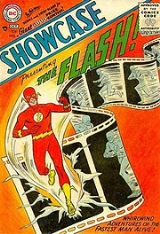
The popularity and circulation of comic books about superheroes declined following the Second World War, and comic books about horror, crime and romance took larger shares of the market. However, controversy arose over alleged links between comic books and juvenile delinquency, focusing in particular on crime and horror titles. In 1954, publishers implemented the Comics Code Authority
to regulate comic content. In the wake of these changes, publishers began introducing superhero stories again, a change that began with the introduction of a new version of DC Comics
's The Flash
in Showcase #4 (Oct. 1956). In response to strong demand, DC began publishing more superhero titles including Justice League of America, which prompted Marvel Comics
to follow suit beginning with Fantastic Four
#1. Silver Age comics have become collectible; as of 2008 the most sought-after comic of the era is Spider-Man
's debut in Amazing Fantasy
#15.
traces the origin of the "Silver Age" term to the letters column
of Justice League of America #42 (Feb. 1966), which went on sale December 9, 1965. Letter-writer Scott Taylor of Westport, Connecticut wrote, "If you guys keep bringing back the heroes from the [1930s-1940s] Golden Age, people 20 years from now will be calling this decade the Silver Sixties!" According to Uslan, the natural hierarchy of gold-silver-bronze, as in Olympic
medals, took hold. "Fans immediately glommed onto this, refining it more directly into a Silver Age version of the Golden Age. Very soon, it was in our vernacular, replacing such expressions as ... 'Second Heroic Age of Comics' or 'The Modern Age' of comics. It wasn't long before dealers were ... specifying it was a Golden Age comic for sale or a Silver Age comic for sale".
 Spanning World War II, when comics provided cheap and disposable escapist entertainment that could be read and then discarded by the troops, the Golden Age of comic books covered the late 1930s to the late 1940s. A number of major superheroes were created during this period, including Superman
, Batman
, Wonder Woman
, Captain Marvel
, and Captain America
. In subsequent years comics were blamed for a rise in juvenile crime statistics, although this rise was shown to be in direct proportion to population growth. When juvenile offenders admitted to reading comics, it was seized on as a common denominator; one notable critic was Fredric Wertham
, author of the book Seduction of the Innocent
(1954), who attempted to shift the blame for juvenile delinquency from the parents of the children to the comic books they read. The result was a decline in the comics industry. To address public concerns, in 1954 the Comics Code Authority was created to regulate and curb violence in comics, marking the start of a new era.
, Superman was available in "great quantity, but little quality." Batman was doing better, but his comics were "lackluster" in comparison to his earlier "atmospheric adventures" of the 1940s, and Wonder Woman, having lost her original writer and artist, was no longer "idiosyncratic" or "interesting." Jacobs describes the arrival of Showcase #4 on the newsstands as "begging to be bought"; the cover featured an undulating film strip
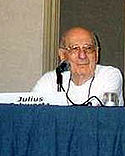
depicting the Flash running so fast that he had escaped from the frame. Editor Julius Schwartz
, writer Gardner Fox
, and artist Carmine Infantino
were some of the people behind the Flash's revitalization. Robert Kanigher
wrote the first stories of the revived Flash, and John Broome
was the writer of many of the earliest stories
 With the success of Showcase #4, several other 1940s superheroes were reworked during Schwartz's tenure, including Green Lantern
, the Atom
, and Hawkman
, as well as the Justice League of America
. The DC artists responsible included Murphy Anderson
, Gil Kane
and Joe Kubert
. Only the characters' names remained the same; their costumes, locales, and identities were altered, and imaginative scientific explanations for their superpowers generally took the place of magic as a modus operandi
in their stories. Schwartz, a lifelong science fiction fan, was the inspiration for the re-imagined Green Lantern—the Golden Age character, railroad engineer Alan Scott
, possessed a ring powered by a magical lantern, but his Silver Age replacement, test pilot Hal Jordan
, had a ring powered by an alien battery and created by an intergalactic police force.
In the mid-1960s, DC established that characters appearing in comics published prior to the Silver Age lived on a parallel Earth
the company dubbed Earth-Two
. Characters introduced in the Silver Age and onward lived on Earth-One
. It was established that the two realities were separated by a vibrational field that could be crossed, should a storyline involve superheroes from different worlds teaming up.
Although the Flash is generally regarded as the first superhero of the Silver Age, the introduction of the Martian Manhunter
in Detective Comics
#225 predates Showcase #4 by almost a year, and some historians consider this character the first Silver Age superhero. However, comics historian Craig Shutt, author of the Comics Buyer's Guide
column "Ask Mister Silver Age", disagrees. Shutt notes that when the Martian Manhunter debuted, he was a detective who used his alien abilities to solve crimes. Although he did ultimately become a charter member of the Justice League of America, originally he was simply a "quirky detective" in the vein of other contemporaneous DC characters who were "TV detectives, Indian detectives, supernatural detectives, [and] animal detectives." Schutt feels the Martian Manhunter only became a superhero in Detective Comics #273 (Nov. 1959), when he received a secret identity and other superhero accouterments. Said Schutt, "Had Flash not come along, I doubt that the Martian Manhunter would've led the charge from his backup position in Detective to a new super-hero age." There were other attempts to revive or create super-heroes before the Flash revival. One such hero that predates Showcase #4 is Captain Comet
, who debuted in Strange Adventures
#9 (June 1951) and whom Comic Book Resources
columnist Steven Grant considers to be the first Silver Age superhero. One more short-lived hero of this time was Fighting American
, created in 1954 by the Captain America
team of Joe Simon
and Jack Kirby
. Other characters include Charlton Comics' Nature Boy, introduced in March 1956; and Atlas Comics' short-lived revivals of Captain America, the Human Torch, and the Sub-Mariner, beginning in Young Men Comics #24, December 1953.
 DC Comics
sparked the superhero's revival with its publications from 1955 to 1960. Marvel Comics
then capitalized on the revived interest in superhero storytelling with sophisticated stories and characterization. In contrast to previous eras, Silver Age characters were "flawed and self-doubting".
DC added to its momentum with its 1960 introduction of Justice League of America, a team consisting of the company's most popular superhero characters. Martin Goodman, a publishing trend-follower with his 1950s Atlas Comics
line, then directed his comic-book editor, Stan Lee
, to create a series about a team of superheroes. Lee recalled in 1974 that "Martin mentioned that he had noticed one of the titles published by National Comics seemed to be selling better than most. It was a book called The [sic] Justice League of America and it was composed of a team of superheroes. ... ' If the Justice League is selling ', spoke he, ' why don't we put out a comic book that features a team of superheroes?'" Marvel Comics's Fantastic Four
was the result.
Under the guidance of writer-editor Stan Lee and artists/co-plotters such as Jack Kirby
and Steve Ditko
, Marvel began its own rise to prominence.With an innovation that changed the comic-book industry, The Fantastic Four #1 initiated a naturalistic style of superheroes with human failings, fears, and inner demons - heroes who squabbled and worried about the likes of rent-money. In contrast to the super-heroic do-gooder archetypes of established superheroes at the time, this ushered in a revolution. With dynamic artwork by Kirby, Steve Ditko, Don Heck, and others complementing Lee's colorful, catchy prose, the new style was known to be very popular among college students who could identify with the angsty and irreverent nature of the characters such as the likes of Spider-Man,X-Men and the Fantastic Four during a time period of massive social upheaval which birthed a new generation of hipper and more countercultural young men and women who found a voice in these books. Marvel was initially restricted in the number of titles it could produce in that its books were distributed by rival National, a situation not alleviated until the late 1960s.
Comics historian Craig Shutt compares DC's and Marvel's differing styles: according to Schutt, DC heroes were straightforward in their dealings with each other, quickly banding together to defeat an enemy. In contrast Marvel's heroes trusted each other less, and would frequently oppose each other before resolving their differences and joining against a common foe. DC's approach settled conflicts between heroes without violence; Marvel's "addressed the age-old, little-kid question of which hero would win in a fight".
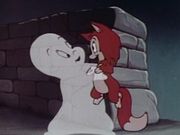 One of the top comics publishers in 1956, Harvey Comics
, discontinued its horror comics
when the Comics Code was implemented and sought a new target audience. Harvey's focus shifted to children from 6 to 12 years of age, especially girls, with characters such as Richie Rich, Casper the Friendly Ghost
, and Little Dot
. Many of the company's comics featured young girls who "defied stereotypes and sent a message of acceptance of those who are different."
Although its characters have inspired a number of nostalgic movies and ranges of merchandise, Harvey comics of the period are not as sought after in the collectors' market as DC and Marvel titles.
The publishers Gilberton
, Dell Comics
, and Gold Key Comics
used their reputations as publishers of wholesome comic books to avoid becoming signatories to the Comics Code and found various ways to continue publishing horror themes comics. Gilberton used its Classics Illustrated
line to reprint comic book versions of Frankenstein and Dr Jekyll and Mr Hyde. Dell began publishing the licensed TV series comic book Twilight Zone in 1961 and published a Dracula title in 1962. Gold Key, in addition to releasing Boris Karloff Thriller, based on the TV series Thriller (and retitled Boris Karloff Tales of Mystery after the show went off the air in 1962), bought the Twilight Zone license from Dell in 1962. In 1965 Gold Key put out three licensed horror-themed comics, two based on the TV horror-comedies The Addams Family
and The Munsters
, and the other titled Ripley's Believe it or Not!, which had three different subtitles: "True Ghost Stories," "True War Stories" (#1 and #5), and "True Demons & Monsters" (#7, #10, #19, #22, #25, #26, and #29).
With the popularity of the Batman television show in 1966 publishers that had specialized in other forms began adding superhero titles to their lines. As well, new publishers sprang up, often using creative talent from the Golden Age. Harvey Comics released Double-Dare Adventures, starring new characters such as B-Man and Magic-Master. Dell Comics published superhero versions of
Frankenstein
, Dracula
and the Werewolf
. Gold Key Comics
published licensed versions of television shows such as Captain Nice
, Frankenstein Jr. and The Impossibles
, and continued the adventures of Walt Disney Pictures
' Goofy
character in Supergoof. Charlton Comics
published a short-lived superhero line with new characters that include Captain Atom
, Judomaster
, the Question, and Thunderbolt. American Comics Group
gave its established character Herbie a secret superhero identity as the Fat Fury, and introduced the characters of Nemesis and Magic-Man. Even the iconic Archie Comics
teens acquired superpowers and superhero identities in comedic titles such as Archie as Pureheart the Powerful and Jughead as Captain Hero.
Archie Comics also launched its own standard, non-humorous superhero characters. The Archie Adventure line (subsequently titled Mighty Comics
) included the Fly, the Jaguar, and the Shield, a revamped Golden Age hero. The success of the Avengers and the Justice League of America prompted Archie to create its own team title, The Mighty Crusaders
, which saw the Comet and Flygirl
join with three characters with their own titles.
The Archie series mixed typical superhero fare with the 1960s' camp
style of the Batman television series
.
One of the new publishers that emerged briefly in the late 1960s was Lightning Comics, which released 3 issues of
Fatman the Human Flying Saucer by Otto Binder and C.C. Beck, the writer
and artist team responsible for many of the Golden Age Captain Marvel
stories. Another was M. F. Enterprises which published 5 issues of a series
also called Captain Marvel; this was a new character from Carl Burgos,
Golden Age creator of the Human Torch, which bore no relation other than
some in-joke allusions to the Golden Age Captain Marvel.
Most of these new series began in 1966 or 1967 and lasted no more than a
year. Tower Comics, which published such characters as Dynamo, Noman and
Undersea Agent, was longer lived; their flagship title Thunder Agents
debuted in late 1965 and lasted for 20 issues, ending in 1969.
, "traditional" comic book historians feel that although the Golden Age deserves study, the only noteworthy aspect of the Silver Age was the advent of underground comics. One commentator has suggested that, "Perhaps one of the reasons underground comics have come to be considered legitimate art is due to the fact that the work of these artists more truly embodies what much of the public believes is true of newspaper strips — that they are written and drawn (i.e., authentically signed by) a single person." While a large number of mainstream-comics professionals both wrote and drew their own material during the Silver Age, as many had since the start of American comic book
s, their work is distinct from what another historian describes as the "raw id on paper" of Robert Crumb
and Gilbert Shelton
. Most often published in black-and-white with glossy color cover and distributed through counterculture
bookstores and head shops, underground comics targeted adults and reflected the counterculture movement of the time,
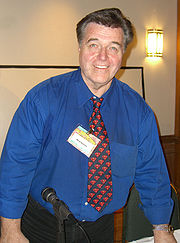 The Silver Age of comic books was followed by the Bronze Age. The demarcation is not clearly defined, but there are a number of possibilities. One suggestion has been the 1969 publication of the last 12 cent comics. Historian Will Jacobs suggests the Silver Age ended in April 1970 when the man who had started it, Julius Schwartz, handed over Green Lantern — starring one of the first revived heroes of the era — to the new-guard team of Denny O'Neil and Neal Adams
in response to reduced sales. John Strausbaugh also connects the end of the Silver Age to Green Lantern. He observes that in 1960, the character embodied the can-do optimism of the era, declaring, "No one in the world suspects that at a moment's notice I can become mighty Green Lantern – with my amazing power ring and invincible green beam! Golly, what a feeling it is!" However, by 1972 Green Lantern had become world weary; "Those days are gone – gone forever – the days I was confident, certain ... I was so young ... so sure I couldn't make a mistake! Young and cocky, that was Green Lantern. Well, I've changed. I'm older now ... maybe wiser, too ... and a lot less happy." Strausbaugh writes that the Silver Age "went out with that whimper." Comics scholar Arnold T. Blumberg places the end of the Silver Age in June 1973, when Spider-Man's girlfriend Gwen Stacy
was killed in a story arc later dubbed "The Night Gwen Stacy Died
", saying the era of "innocence" was ended by "the 'snap' heard round the comic book world — the startling, sickening snap of bone that heralded the death of Gwen Stacy."
Scott, of Comic Book Resources, lists several commonly cited touchstones, including changes in personnel and the publication of particular individual issues. Among the latter are Conan
#1 (1970) and Green Lantern/Green Arrow #76 (April 1970), "often cited as the first books of the Bronze Age." He also notes Jack Kirby's move from Marvel to DC in 1970, and Superman editor Mort Weisinger's retirement that same year. Another possible candidate is the return of horror comics, and the arrival of stories with self-consciously promoted social relevancy. Arnold T. Blumberg has argued that the shift was a gradual process that lasted from the late 1960s until 1973, ending with the death of Gwen Stacy—an "event that many name as the single most memorable moving moment in collective fan recall". He writes that there was a willingness by creators and publishers to tackle more mature themes, even if they "were filtered through the somewhat simplistic lens of the superhero", thus bringing an end to "the light-hearted, carefree Silver Age".
.jpg) According to historian Peter Sanderson, the "neo-silver movement" that began in 1986 with Superman: Whatever Happened to the Man of Tomorrow?
According to historian Peter Sanderson, the "neo-silver movement" that began in 1986 with Superman: Whatever Happened to the Man of Tomorrow?
by Alan Moore
and Curt Swan
, was a backlash against the Bronze Age with a return to Silver Age principles. In Sanderson's opinion, each comics generation rebels against the previous, and the movement was a response to Crisis on Infinite Earths
, which itself was an attack on the Silver Age. Neo-silver comics creators made comics that recognized and assimilated the more sophisticated aspects of the Silver Age.
An important feature of the period was the evolution of the character makeup of superheroes. Young children and girls were targeted during the Silver Age by certain publishers; in particular, Harvey Comics
attracted this group with titles such as Little Dot
. Adult oriented underground comics also began during the Silver Age. Some critics and historians argue that one characteristic of the Silver Age was that science fiction
and aliens replaced magic and gods. Others argue that magic was an important element of both Golden Age and Silver Age characters. and many Golden Age writers and artists were science-fiction fans or professional science-fiction writers who incorporated SF elements into their comic-book stories. Science was a common explanation for the origin of heroes in the Golden Age.
The Silver Age coincided with the rise of pop art
, an artistic movement that used popular cultural artifacts, such as advertising and packaging, as source material for fine, or gallery-exhibited, art. Roy Lichtenstein
, one of the best-known pop art painters, specifically chose individual panels from comic books and repainted the images, modifying them to some extent in the process but including in the painting word and thought balloons and captions as well as enlarged-to-scale color dots imitating the coloring process then used in newsprint comic books. An exhibition of comic strip art was held at the Musée des Arts Décoratifs of the Palais de Louvre
in 1967, and books were soon published that contained serious discussions of the art of comics and the nature of the medium.
In January 1966, a live-action Batman
television show debuted to high ratings. Like pop art, the show took comic-book tropes and re-envisioned them in the context of a different medium. Voiceover narration in each episode articulated the words of comic-book captions while fight scenes had sound effects like "Biff", "Bam" and "Pow" appear as visual effects on the screen, spelled out in large cartoon letters. Circulation for comic books in general and Batman merchandise in particular soared. Other masked or superpowered adventurers appeared on the television screen, so that "American TV in the winter of 1967 appeared to consist of little else but live-action and animated cartoon comic-book heroes, all in living colour." Existing comic-book publishers began creating superhero titles, as did new publishers. By the end of the 1960s, however, the fad had faded; in 1969, the best-selling comic book in the United States was not a superhero series, but the teen-humor book Archie.
's Flash as the embodiment of the design of the era: "as sleek and streamlined as the fins Detroit was sporting on all its models." Other notable artists of the era include Curt Swan
, Gene Colan
, Steve Ditko
, Gil Kane
, Jack Kirby
and Joe Kubert
.
Two artists that changed the comics industry dramatically in the late 1960s were Neal Adams
, considered one of his country's greatest draftsmen, and Jim Steranko
. Both artists expressed a cinematic approach at times that occasionally altered the more conventional panel-based format that has been commonplace for decades. Adams' breakthrough was based on layout and rendering. Best known for returning Batman to his somber roots after the campy success of the Batman television show, his naturalistic depictions of anatomy, faces, and gestures changed comics' style in a way that Strausbaugh sees reflected in modern graphic novels.
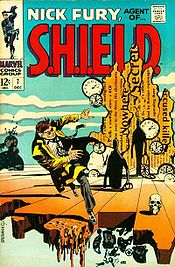 One of the few writer-artists at the time, Steranko made use of a cinematic style of storytelling. Strausbaugh credits him as one of Marvel's strongest creative forces during the late 1960s, his art owing a large debt to Salvador Dalí
. Steranko started by inking and penciling the details of Kirby's artwork on Nick Fury, Agent of S.H.I.E.L.D. beginning in Strange Tales
#151, but by Strange Tales #155 Stan Lee had put him in charge of both writing and drawing Fury's adventures. He exaggerated the James Bond-style spy stories, introducing the vortex beam (which lifts objects), the aphonic bomb (which explodes silently), a miniature electronic absorber (which protected Fury from electricity), and the Q-ray machine (a molecular disintegrator)—all in his first 11-page story.
#15, the first appearance of Spider-Man, is considered the "holy grail
" of Silver Age comics, with a near-mint copy selling for $1.1 million to an unnamed collector on March 7, 2011.
The Official Overstreet Comic Book Price Guide #38
(2008) lists the following 21 comics as the most sought-after by collectors:
or Irwin Donenfeld
of rival DC Comics (then known as National Periodical Publications), who bragged about DC's success with the Justice League, which had debuted in The Brave and the Bold #28 (February 1960) before going on to its own title.
Film producer and comics historian Michael Uslan
later contradicted some specifics, while supporting the story's framework:
American comic book
An American comic book is a small magazine originating in the United States and containing a narrative in the form of comics. Since 1975 the dimensions have standardized at 6 5/8" x 10 ¼" , down from 6 ¾" x 10 ¼" in the Silver Age, although larger formats appeared in the past...
s, predominantly those in the superhero
Superhero
A superhero is a type of stock character, possessing "extraordinary or superhuman powers", dedicated to protecting the public. Since the debut of the prototypical superhero Superman in 1938, stories of superheroes — ranging from brief episodic adventures to continuing years-long sagas —...
genre. Following the Golden Age of Comic Books
Golden Age of Comic Books
The Golden Age of Comic Books was a period in the history of American comic books, generally thought of as lasting from the late 1930s until the late 1940s or early 1950s...
and an interregnum
Interregnum
An interregnum is a period of discontinuity or "gap" in a government, organization, or social order...
in the early to mid-1950s, the Silver Age is considered to cover the period from 1956 to circa 1970, and was succeeded by the Bronze
Bronze Age of Comic Books
The Bronze Age of Comic Books is an informal name for a period in the history of mainstream American comic books usually said to run from 1970 to 1985. It follows the Silver Age of Comic Books....
and Modern
Modern Age of Comic Books
The Modern Age of Comic Books is an informal name for the period in the history of mainstream American comic books generally considered to last from the mid-1980s until present day...
Ages. A number of important comics writers and artists contributed to the early part of the era, including writers Stan Lee
Stan Lee
Stan Lee is an American comic book writer, editor, actor, producer, publisher, television personality, and the former president and chairman of Marvel Comics....
, Gardner Fox
Gardner Fox
Gardner Francis Cooper Fox was an American writer best known for creating numerous comic book characters for DC Comics. Comic-book historians estimate that he wrote over 4,000 comics stories....
, John Broome
John Broome (writer)
John Broome , who additionally used the pseudonyms John Osgood and Edgar Ray Meritt, was an American comic book writer for DC Comics.-Early life and career:...
, and Robert Kanigher
Robert Kanigher
Robert Kanigher was a prolific comic book writer and editor whose career spanned five decades. He was involved with the Wonder Woman franchise for over twenty years, taking over the scripting from creator William Moulton Marston. In addition, Kanigher spent many years in charge of DC Comics' war...
, and artists Curt Swan
Curt Swan
Douglas Curtis Swan was an American comic book artist. The artist most associated with Superman during the period fans and historians call the Silver Age of comic books, Swan produced hundreds of covers and stories from the 1950s through the 1980s.-Early life and career:Curt Swan, whose Swedish...
, Jack Kirby
Jack Kirby
Jack Kirby , born Jacob Kurtzberg, was an American comic book artist, writer and editor regarded by historians and fans as one of the major innovators and most influential creators in the comic book medium....
, Gil Kane
Gil Kane
Eli Katz who worked under the name Gil Kane and in one instance Scott Edward, was a comic book artist whose career spanned the 1940s to 1990s and every major comics company and character.Kane co-created the modern-day versions of the superheroes Green Lantern and the Atom for DC Comics, and...
, Steve Ditko
Steve Ditko
Stephen J. "Steve" Ditko is an American comic book artist and writer best known as the artist co-creator, with Stan Lee, of the Marvel Comics heroes Spider-Man and Doctor Strange....
, Mike Sekowsky
Mike Sekowsky
Michael Sekowsky was a Jewish American comic book artist best known as the exclusive penciler for DC Comics' Justice League of America during most of the 1960s, and as the regular writer and artist on Wonder Woman during the late 1960s and early 1970s.-Early life and career:Mike Sekowsky began...
, Carmine Infantino
Carmine Infantino
Carmine Infantino Carmine Infantino Carmine Infantino (born May 24, 1925, in Brooklyn, New York is an American comic book artist and editor who was a major force in the Silver Age of Comic Books...
, John Buscema
John Buscema
John Buscema, born Giovanni Natale Buscema , was an American comic-book artist and one of the mainstays of Marvel Comics during its 1960s and 1970s ascendancy into an industry leader and its subsequent expansion to a major pop culture conglomerate...
, and John Romita, Sr.
John Romita, Sr.
John V. Romita, Sr. is an Italian-American comic-book artist best known for his work on Marvel Comics' The Amazing Spider-Man...
By the end of the Silver Age, a new generation of talent had entered the field, including writers Denny O'Neill, Mike Friedrich
Mike Friedrich
Mike Friedrich is an American comic book writer and publisher best known for his work at Marvel and DC Comics, and for publishing the anthology series Star*Reach, one of the first independent comics...
, Roy Thomas
Roy Thomas
Roy William Thomas, Jr. is an American comic book writer and editor, and Stan Lee's first successor as editor-in-chief of Marvel Comics. He is possibly best known for introducing the pulp magazine hero Conan the Barbarian to American comics, with a series that added to the storyline of Robert E...
, and Archie Goodwin
Archie Goodwin (comics)
Archie Goodwin was an American comic book writer, editor, and artist. He worked on a number of comic strips in addition to comic books, and is best known for his Warren and Marvel Comics work...
, and artists such as Neal Adams
Neal Adams
Neal Adams is an American comic book and commercial artist known for helping to create some of the definitive modern imagery of the DC Comics characters Superman, Batman, and Green Arrow; as the co-founder of the graphic design studio Continuity Associates; and as a creators-rights advocate who...
, Jim Steranko
Jim Steranko
James F. Steranko is an American graphic artist, comic book writer-artist-historian, magician, publisher and film production illustrator....
, and Barry Windsor-Smith
Barry Windsor-Smith
Barry Windsor-Smith, born Barry Smith is a British comic book illustrator and painter whose best known work has been produced in the United States....
.
The popularity and circulation of comic books about superheroes declined following the Second World War, and comic books about horror, crime and romance took larger shares of the market. However, controversy arose over alleged links between comic books and juvenile delinquency, focusing in particular on crime and horror titles. In 1954, publishers implemented the Comics Code Authority
Comics Code Authority
The Comics Code Authority was a body created as part of the Comics Magazine Association of America, as a tool for the comics-publishing industry to self-regulate the content of comic books in the United States. Member publishers submitted comic books to the CCA, which screened them for adherence to...
to regulate comic content. In the wake of these changes, publishers began introducing superhero stories again, a change that began with the introduction of a new version of DC Comics
DC Comics
DC Comics, Inc. is one of the largest and most successful companies operating in the market for American comic books and related media. It is the publishing unit of DC Entertainment a company of Warner Bros. Entertainment, which itself is owned by Time Warner...
's The Flash
Flash (comics)
The Flash is a name shared by several fictional comic book superheroes from the DC Comics universe. Created by writer Gardner Fox and artist Harry Lampert, the original Flash first appeared in Flash Comics #1 ....
in Showcase #4 (Oct. 1956). In response to strong demand, DC began publishing more superhero titles including Justice League of America, which prompted Marvel Comics
Marvel Comics
Marvel Worldwide, Inc., commonly referred to as Marvel Comics and formerly Marvel Publishing, Inc. and Marvel Comics Group, is an American company that publishes comic books and related media...
to follow suit beginning with Fantastic Four
Fantastic Four
The Fantastic Four is a fictional superhero team appearing in comic books published by Marvel Comics. The group debuted in The Fantastic Four #1 , which helped to usher in a new level of realism in the medium...
#1. Silver Age comics have become collectible; as of 2008 the most sought-after comic of the era is Spider-Man
Spider-Man
Spider-Man is a fictional Marvel Comics superhero. The character was created by writer-editor Stan Lee and writer-artist Steve Ditko. He first appeared in Amazing Fantasy #15...
's debut in Amazing Fantasy
Amazing Fantasy
Amazing Fantasy is an American comic book anthology series published by Marvel Comics from 1961 through 1962, and revived in 1995 and in the 2000s. It is best known as the title that introduced the popular superhero character Spider-Man in 1962...
#15.
Origin of the term
Comics historian and movie producer Michael UslanMichael Uslan
Michael E. Uslan is the originator of the Batman movies and was the first instructor to teach "Comic Book Folklore" at an accredited university...
traces the origin of the "Silver Age" term to the letters column
Comic book letter column
A comic book letter column is a section of a comic book where readers' letters to the publisher appear. Comic book letter columns are also commonly referred to as letter columns , letter pages, letters of comment , or simply letters to the editor...
of Justice League of America #42 (Feb. 1966), which went on sale December 9, 1965. Letter-writer Scott Taylor of Westport, Connecticut wrote, "If you guys keep bringing back the heroes from the [1930s-1940s] Golden Age, people 20 years from now will be calling this decade the Silver Sixties!" According to Uslan, the natural hierarchy of gold-silver-bronze, as in Olympic
Olympic Games
The Olympic Games is a major international event featuring summer and winter sports, in which thousands of athletes participate in a variety of competitions. The Olympic Games have come to be regarded as the world’s foremost sports competition where more than 200 nations participate...
medals, took hold. "Fans immediately glommed onto this, refining it more directly into a Silver Age version of the Golden Age. Very soon, it was in our vernacular, replacing such expressions as ... 'Second Heroic Age of Comics' or 'The Modern Age' of comics. It wasn't long before dealers were ... specifying it was a Golden Age comic for sale or a Silver Age comic for sale".
Background
Superman
Superman is a fictional comic book superhero appearing in publications by DC Comics, widely considered to be an American cultural icon. Created by American writer Jerry Siegel and Canadian-born American artist Joe Shuster in 1932 while both were living in Cleveland, Ohio, and sold to Detective...
, Batman
Batman
Batman is a fictional character created by the artist Bob Kane and writer Bill Finger. A comic book superhero, Batman first appeared in Detective Comics #27 , and since then has appeared primarily in publications by DC Comics...
, Wonder Woman
Wonder Woman
Wonder Woman is a DC Comics superheroine created by William Moulton Marston. She first appeared in All Star Comics #8 . The Wonder Woman title has been published by DC Comics almost continuously except for a brief hiatus in 1986....
, Captain Marvel
Captain Marvel (DC Comics)
Captain Marvel is a fictional comic book superhero, originally published by Fawcett Comics and later by DC Comics. Created in 1939 by artist C. C. Beck and writer Bill Parker, the character first appeared in Whiz Comics #2...
, and Captain America
Captain America
Captain America is a fictional character, a superhero that appears in comic books published by Marvel Comics. The character first appeared in Captain America Comics #1 , from Marvel Comics' 1940s predecessor, Timely Comics, and was created by Joe Simon and Jack Kirby...
. In subsequent years comics were blamed for a rise in juvenile crime statistics, although this rise was shown to be in direct proportion to population growth. When juvenile offenders admitted to reading comics, it was seized on as a common denominator; one notable critic was Fredric Wertham
Fredric Wertham
Fredric Wertham was a Jewish German-American psychiatrist and crusading author who protested the purportedly harmful effects of violent imagery in mass media and comic books on the development of children. His best-known book was Seduction of the Innocent , which purported that comic books are...
, author of the book Seduction of the Innocent
Seduction of the Innocent
Seduction of the Innocent is a book by German-American psychiatrist Fredric Wertham, published in 1954, that warned that comic books were a negative form of popular literature and a serious cause of juvenile delinquency. The book was a minor bestseller that created alarm in parents and galvanized...
(1954), who attempted to shift the blame for juvenile delinquency from the parents of the children to the comic books they read. The result was a decline in the comics industry. To address public concerns, in 1954 the Comics Code Authority was created to regulate and curb violence in comics, marking the start of a new era.
DC Comics
The Silver Age began with the publication of DC Comics's Showcase #4 (Oct. 1956), which introduced the modern version of the Flash. At the time, only three superheroes—Superman, Batman, and Wonder Woman—were still published under their own titles. According to DC comics writer Will JacobsWill Jacobs
Will Jacobs is an American comics and humor writer. He was a coauthor with Gerard Jones on The Beaver Papers, The Comic Book Heroes, and the comic book The Trouble with Girls . He was a contributor to National Lampoon magazine and various DC Comics...
, Superman was available in "great quantity, but little quality." Batman was doing better, but his comics were "lackluster" in comparison to his earlier "atmospheric adventures" of the 1940s, and Wonder Woman, having lost her original writer and artist, was no longer "idiosyncratic" or "interesting." Jacobs describes the arrival of Showcase #4 on the newsstands as "begging to be bought"; the cover featured an undulating film strip
Film stock
Film stock is photographic film on which filmmaking of motion pictures are shot and reproduced. The equivalent in television production is video tape.-1889–1899:...
depicting the Flash running so fast that he had escaped from the frame. Editor Julius Schwartz
Julius Schwartz
Julius "Julie" Schwartz was a comic book and pulp magazine editor, and a science fiction agent and prominent fan. He was born in the Bronx, New York...
, writer Gardner Fox
Gardner Fox
Gardner Francis Cooper Fox was an American writer best known for creating numerous comic book characters for DC Comics. Comic-book historians estimate that he wrote over 4,000 comics stories....
, and artist Carmine Infantino
Carmine Infantino
Carmine Infantino Carmine Infantino Carmine Infantino (born May 24, 1925, in Brooklyn, New York is an American comic book artist and editor who was a major force in the Silver Age of Comic Books...
were some of the people behind the Flash's revitalization. Robert Kanigher
Robert Kanigher
Robert Kanigher was a prolific comic book writer and editor whose career spanned five decades. He was involved with the Wonder Woman franchise for over twenty years, taking over the scripting from creator William Moulton Marston. In addition, Kanigher spent many years in charge of DC Comics' war...
wrote the first stories of the revived Flash, and John Broome
John Broome (writer)
John Broome , who additionally used the pseudonyms John Osgood and Edgar Ray Meritt, was an American comic book writer for DC Comics.-Early life and career:...
was the writer of many of the earliest stories
Green Lantern
The Green Lantern is the shared primary alias of several fictional characters, superheroes appearing in comic books published by DC Comics. The first Green Lantern was created by writer Bill Finger and artist Martin Nodell in All-American Comics #16 .Each Green Lantern possesses a power ring and...
, the Atom
Atom (comics)
The Atom is a name shared by several fictional comic book superheroes from the DC Comics universe.There have been five characters who have shared the Atom codename. The original Golden Age Atom, Al Pratt, was created by Ben Flinton and Bill O'Connor and first appeared in All-American Publications'...
, and Hawkman
Hawkman
Hawkman is a fictional superhero who appears in comic books published by DC Comics. Created by writer Gardner Fox and artist Dennis Neville, the original Hawkman first appeared in Flash Comics #1, published by All-American Publications in 1940....
, as well as the Justice League of America
Justice League
The Justice League, also called the Justice League of America or JLA, is a fictional superhero team that appears in comic books published by DC Comics....
. The DC artists responsible included Murphy Anderson
Murphy Anderson
Murphy Anderson is an American comic book artist, known as one of the premier inkers of his era, who has worked for companies such as DC Comics for over fifty years, starting in the 1930s-'40s Golden Age of Comic Books...
, Gil Kane
Gil Kane
Eli Katz who worked under the name Gil Kane and in one instance Scott Edward, was a comic book artist whose career spanned the 1940s to 1990s and every major comics company and character.Kane co-created the modern-day versions of the superheroes Green Lantern and the Atom for DC Comics, and...
and Joe Kubert
Joe Kubert
Joe Kubert is an American comic book artist who went on to found The Kubert School. He is best known for his work on the DC Comics characters Sgt. Rock and Hawkman...
. Only the characters' names remained the same; their costumes, locales, and identities were altered, and imaginative scientific explanations for their superpowers generally took the place of magic as a modus operandi
Modus operandi
Modus operandi is a Latin phrase, approximately translated as "mode of operation". The term is used to describe someone's habits or manner of working, their method of operating or functioning...
in their stories. Schwartz, a lifelong science fiction fan, was the inspiration for the re-imagined Green Lantern—the Golden Age character, railroad engineer Alan Scott
Alan Scott
Alan Scott is a fictional character, a superhero in the and the first superhero to bear the name Green Lantern.-Publication history:The original Green Lantern was created by young struggling artist Martin Nodell, who was inspired by the sight of a New York Subway employee waving a red lantern to...
, possessed a ring powered by a magical lantern, but his Silver Age replacement, test pilot Hal Jordan
Hal Jordan
Harold "Hal" Jordan is a DC Comics superhero known as Green Lantern, the first human shown to join the Green Lantern Corps and a founding member of the Justice League of America. Jordan is the second DC Comics character to adopt the Green Lantern moniker...
, had a ring powered by an alien battery and created by an intergalactic police force.
In the mid-1960s, DC established that characters appearing in comics published prior to the Silver Age lived on a parallel Earth
Parallel universe (fiction)
A parallel universe or alternative reality is a hypothetical self-contained separate reality coexisting with one's own. A specific group of parallel universes is called a "multiverse", although this term can also be used to describe the possible parallel universes that constitute reality...
the company dubbed Earth-Two
Earth-Two
Earth-Two is a fictional universe appearing in American comic book stories published by DC Comics. First appearing in The Flash #123 , Earth-Two was created to explain how Silver-Age versions of characters such as the Flash could appear in stories with their Golden Age counterparts...
. Characters introduced in the Silver Age and onward lived on Earth-One
Multiverse (DC Comics)
The DC Multiverse is a fictional continuity construct that exists in stories published by comic book company DC Comics. The DC Multiverse consists of numerous worlds, most of them outside DC's main continuity, allowing writers the creative freedom to explore alternative versions of characters and...
. It was established that the two realities were separated by a vibrational field that could be crossed, should a storyline involve superheroes from different worlds teaming up.
Although the Flash is generally regarded as the first superhero of the Silver Age, the introduction of the Martian Manhunter
Martian Manhunter
The Martian Manhunter is a fictional character, a superhero that appears in publications published by DC Comics. Created by writer Joseph Samachson and artist Joe Certa, the character first appeared in Detective Comics #225...
in Detective Comics
Detective Comics
Detective Comics is an American comic book series published monthly by DC Comics since 1937, best known for introducing the iconic superhero Batman in Detective Comics #27 . It is, along with Action Comics, the book that launched with the debut of Superman, one of the medium's signature series, and...
#225 predates Showcase #4 by almost a year, and some historians consider this character the first Silver Age superhero. However, comics historian Craig Shutt, author of the Comics Buyer's Guide
Comics Buyer's Guide
Comics Buyer's Guide , established in 1971, is the longest-running English-language periodical reporting on the American comic book industry...
column "Ask Mister Silver Age", disagrees. Shutt notes that when the Martian Manhunter debuted, he was a detective who used his alien abilities to solve crimes. Although he did ultimately become a charter member of the Justice League of America, originally he was simply a "quirky detective" in the vein of other contemporaneous DC characters who were "TV detectives, Indian detectives, supernatural detectives, [and] animal detectives." Schutt feels the Martian Manhunter only became a superhero in Detective Comics #273 (Nov. 1959), when he received a secret identity and other superhero accouterments. Said Schutt, "Had Flash not come along, I doubt that the Martian Manhunter would've led the charge from his backup position in Detective to a new super-hero age." There were other attempts to revive or create super-heroes before the Flash revival. One such hero that predates Showcase #4 is Captain Comet
Captain Comet
Captain Comet is a fictional DC Comics superhero created by DC Comics Editor Julius Schwartz, writer John Broome, and artist Carmine Infantino....
, who debuted in Strange Adventures
Strange Adventures
Strange Adventures was the title of several American comic books published by DC Comics, most notably a long-running science fiction anthology that began in 1950.-Original series:...
#9 (June 1951) and whom Comic Book Resources
Comic Book Resources
Comic Book Resources, also known as CBR is a website dedicated to the coverage of comic book-related news and discussion.-History:Comic Book Resources was founded by Jonah Weiland in 1996 as a development of the Kingdom Come Message Board, a message forum that Weiland had created to discuss DC...
columnist Steven Grant considers to be the first Silver Age superhero. One more short-lived hero of this time was Fighting American
Fighting American
Fighting American is a patriotic comic book character created in 1954 by writer Joe Simon and artist Jack Kirby, published by Crestwood Publication / Prize Comics and, against normal industry practices of the time, creator-owned...
, created in 1954 by the Captain America
Captain America
Captain America is a fictional character, a superhero that appears in comic books published by Marvel Comics. The character first appeared in Captain America Comics #1 , from Marvel Comics' 1940s predecessor, Timely Comics, and was created by Joe Simon and Jack Kirby...
team of Joe Simon
Joe Simon
Joseph Henry "Joe" Simon is an American comic book writer, artist, editor, and publisher. Simon created or co-created many important characters in the 1930s-1940s Golden Age of Comic Books and served as the first editor of Timely Comics, the company that would evolve into Marvel Comics.With his...
and Jack Kirby
Jack Kirby
Jack Kirby , born Jacob Kurtzberg, was an American comic book artist, writer and editor regarded by historians and fans as one of the major innovators and most influential creators in the comic book medium....
. Other characters include Charlton Comics' Nature Boy, introduced in March 1956; and Atlas Comics' short-lived revivals of Captain America, the Human Torch, and the Sub-Mariner, beginning in Young Men Comics #24, December 1953.
Marvel Comics
DC Comics
DC Comics, Inc. is one of the largest and most successful companies operating in the market for American comic books and related media. It is the publishing unit of DC Entertainment a company of Warner Bros. Entertainment, which itself is owned by Time Warner...
sparked the superhero's revival with its publications from 1955 to 1960. Marvel Comics
Marvel Comics
Marvel Worldwide, Inc., commonly referred to as Marvel Comics and formerly Marvel Publishing, Inc. and Marvel Comics Group, is an American company that publishes comic books and related media...
then capitalized on the revived interest in superhero storytelling with sophisticated stories and characterization. In contrast to previous eras, Silver Age characters were "flawed and self-doubting".
DC added to its momentum with its 1960 introduction of Justice League of America, a team consisting of the company's most popular superhero characters. Martin Goodman, a publishing trend-follower with his 1950s Atlas Comics
Atlas Comics (1950s)
Atlas Comics is the term used to describe the 1950s comic book publishing company that would evolve into Marvel Comics. Magazine and paperback novel publisher Martin Goodman, whose business strategy involved having a multitude of corporate entities, used Atlas as the umbrella name for his comic...
line, then directed his comic-book editor, Stan Lee
Stan Lee
Stan Lee is an American comic book writer, editor, actor, producer, publisher, television personality, and the former president and chairman of Marvel Comics....
, to create a series about a team of superheroes. Lee recalled in 1974 that "Martin mentioned that he had noticed one of the titles published by National Comics seemed to be selling better than most. It was a book called The [sic] Justice League of America and it was composed of a team of superheroes. ... ' If the Justice League is selling ', spoke he, ' why don't we put out a comic book that features a team of superheroes?'" Marvel Comics's Fantastic Four
Fantastic Four
The Fantastic Four is a fictional superhero team appearing in comic books published by Marvel Comics. The group debuted in The Fantastic Four #1 , which helped to usher in a new level of realism in the medium...
was the result.
Under the guidance of writer-editor Stan Lee and artists/co-plotters such as Jack Kirby
Jack Kirby
Jack Kirby , born Jacob Kurtzberg, was an American comic book artist, writer and editor regarded by historians and fans as one of the major innovators and most influential creators in the comic book medium....
and Steve Ditko
Steve Ditko
Stephen J. "Steve" Ditko is an American comic book artist and writer best known as the artist co-creator, with Stan Lee, of the Marvel Comics heroes Spider-Man and Doctor Strange....
, Marvel began its own rise to prominence.With an innovation that changed the comic-book industry, The Fantastic Four #1 initiated a naturalistic style of superheroes with human failings, fears, and inner demons - heroes who squabbled and worried about the likes of rent-money. In contrast to the super-heroic do-gooder archetypes of established superheroes at the time, this ushered in a revolution. With dynamic artwork by Kirby, Steve Ditko, Don Heck, and others complementing Lee's colorful, catchy prose, the new style was known to be very popular among college students who could identify with the angsty and irreverent nature of the characters such as the likes of Spider-Man,X-Men and the Fantastic Four during a time period of massive social upheaval which birthed a new generation of hipper and more countercultural young men and women who found a voice in these books. Marvel was initially restricted in the number of titles it could produce in that its books were distributed by rival National, a situation not alleviated until the late 1960s.
Comics historian Craig Shutt compares DC's and Marvel's differing styles: according to Schutt, DC heroes were straightforward in their dealings with each other, quickly banding together to defeat an enemy. In contrast Marvel's heroes trusted each other less, and would frequently oppose each other before resolving their differences and joining against a common foe. DC's approach settled conflicts between heroes without violence; Marvel's "addressed the age-old, little-kid question of which hero would win in a fight".
Other publishers
Harvey Comics
Harvey Comics was an American comic book publisher, founded in New York City by Alfred Harvey in 1941, after buying out the small publisher Brookwood Publications. His brothers Robert B...
, discontinued its horror comics
Horror comics
Horror comics are comic books, graphic novels, black-and-white comics magazines, and manga focusing on horror fiction. Horror comic books reached a peak in the late 1940s through the mid-1950s, when concern over content and the imposition of the self-censorship Comics Code Authority contributed to...
when the Comics Code was implemented and sought a new target audience. Harvey's focus shifted to children from 6 to 12 years of age, especially girls, with characters such as Richie Rich, Casper the Friendly Ghost
Casper the Friendly Ghost
Casper the Friendly Ghost is the protagonist of the Famous Studios theatrical animated cartoon series of the same name. As his name indicates, he is a ghost, but is quite personable...
, and Little Dot
Little Dot
Little Dot was a comic book character published by Harvey Comics between 1949 and 1982, and then sporadically until 1994. A little girl obsessed with dots, spots, and round, colorful objects, she first appeared in 1949 as a supporting feature in Sad Sack and by 1953 was given her own series,...
. Many of the company's comics featured young girls who "defied stereotypes and sent a message of acceptance of those who are different."
Although its characters have inspired a number of nostalgic movies and ranges of merchandise, Harvey comics of the period are not as sought after in the collectors' market as DC and Marvel titles.
The publishers Gilberton
Gilberton (publisher)
The Gilberton Company, Inc. was an American publisher best known for the comic book series Classics Illustrated. Beginning life as an imprint of the Elliot Publishing Company, the company became independent in 1942, before being sold to the Frawley Corporation in 1967...
, Dell Comics
Dell Comics
Dell Comics was the comic book publishing arm of Dell Publishing, which got its start in pulp magazines. It published comics from 1929 to 1973. At its peak, it was the most prominent and successful American company in the medium...
, and Gold Key Comics
Gold Key Comics
Gold Key Comics was an imprint of Western Publishing created for comic books distributed to newsstands. Also known as Whitman Comics, Gold Key operated from 1962 to 1984.-History:...
used their reputations as publishers of wholesome comic books to avoid becoming signatories to the Comics Code and found various ways to continue publishing horror themes comics. Gilberton used its Classics Illustrated
Classics Illustrated
Classics Illustrated is a comic book series featuring adaptations of literary classics such as Moby Dick, Hamlet, and The Iliad. Created by Albert Kanter, the series began publication in 1941 and finished its first run in 1971, producing 169 issues. Following the series' demise, various companies...
line to reprint comic book versions of Frankenstein and Dr Jekyll and Mr Hyde. Dell began publishing the licensed TV series comic book Twilight Zone in 1961 and published a Dracula title in 1962. Gold Key, in addition to releasing Boris Karloff Thriller, based on the TV series Thriller (and retitled Boris Karloff Tales of Mystery after the show went off the air in 1962), bought the Twilight Zone license from Dell in 1962. In 1965 Gold Key put out three licensed horror-themed comics, two based on the TV horror-comedies The Addams Family
The Addams Family
The Addams Family is a group of fictional characters created by American cartoonist Charles Addams. As named by Charles Addams, the Addams Family characters include Gomez, Morticia, Uncle Fester, Lurch, Grandmama, Wednesday, Pugsley, and Thing....
and The Munsters
The Munsters
The Munsters is a 1960s American family television sitcom depicting the home life of a family of monsters. It starred Fred Gwynne as Herman Munster and Yvonne De Carlo as his wife, Lily Munster. The series was a satire of both traditional monster movies and popular family entertainment of the era,...
, and the other titled Ripley's Believe it or Not!, which had three different subtitles: "True Ghost Stories," "True War Stories" (#1 and #5), and "True Demons & Monsters" (#7, #10, #19, #22, #25, #26, and #29).
With the popularity of the Batman television show in 1966 publishers that had specialized in other forms began adding superhero titles to their lines. As well, new publishers sprang up, often using creative talent from the Golden Age. Harvey Comics released Double-Dare Adventures, starring new characters such as B-Man and Magic-Master. Dell Comics published superhero versions of
Frankenstein
Frankenstein
Frankenstein; or, The Modern Prometheus is a novel about a failed experiment that produced a monster, written by Mary Shelley, with inserts of poems by Percy Bysshe Shelley. Shelley started writing the story when she was eighteen, and the novel was published when she was twenty-one. The first...
, Dracula
Dracula
Dracula is an 1897 novel by Irish author Bram Stoker.Famous for introducing the character of the vampire Count Dracula, the novel tells the story of Dracula's attempt to relocate from Transylvania to England, and the battle between Dracula and a small group of men and women led by Professor...
and the Werewolf
Werewolf
A werewolf, also known as a lycanthrope , is a mythological or folkloric human with the ability to shapeshift into a wolf or an anthropomorphic wolf-like creature, either purposely or after being placed under a curse...
. Gold Key Comics
Gold Key Comics
Gold Key Comics was an imprint of Western Publishing created for comic books distributed to newsstands. Also known as Whitman Comics, Gold Key operated from 1962 to 1984.-History:...
published licensed versions of television shows such as Captain Nice
Captain Nice
Captain Nice was a comedy TV series that ran from January–May 1967 on NBC. Riding the tide of the camp superhero craze of the 1960s, the show's premise involved police chemist Carter Nash , a mild-mannered mama's boy who discovered a secret formula that, when taken, transformed him into Captain...
, Frankenstein Jr. and The Impossibles
The Impossibles (TV series)
The Impossibles was a series of animated cartoons produced by Hanna-Barbera in 1966 and aired on American television by CBS. The series of shorts appeared as part of Frankenstein, Jr. and The Impossibles.-Overview:...
, and continued the adventures of Walt Disney Pictures
Walt Disney Pictures
Walt Disney Pictures is an American film studio owned by The Walt Disney Company. Walt Disney Pictures and Television, a subsidiary of the Walt Disney Studios and the main production company for live-action feature films within the Walt Disney Motion Pictures Group, based at the Walt Disney...
' Goofy
Goofy
Goofy is a cartoon character created in 1932 at Walt Disney Productions. Goofy is a tall, anthropomorphic dog, and typically wears a turtle neck and vest, with pants, shoes, white gloves, and a tall hat originally designed as a rumpled fedora. Goofy is a close friend of Mickey Mouse and Donald Duck...
character in Supergoof. Charlton Comics
Charlton Comics
Charlton Comics was an American comic book publishing company that existed from 1946 to 1985, having begun under a different name in 1944. It was based in Derby, Connecticut...
published a short-lived superhero line with new characters that include Captain Atom
Captain Atom
Captain Atom is a fictional comic book superhero that has existed in three basic incarnations. Created by writer Joe Gill and artist/co-writer Steve Ditko, he first appeared in Space Adventures #33 . Captain Atom was created for Charlton Comics but was later acquired by DC Comics and revised for...
, Judomaster
Judomaster
Judomaster is the name given to three fictional superheroes published by DC Comics. The first Judomaster debuted in Special War Series #4 published by Charlton Comics, and was created by Joe Gill and Frank McLaughlin.-Hadley Jagger:...
, the Question, and Thunderbolt. American Comics Group
American Comics Group
American Comics Group was a New York City-based comic book publisher which operated during the Golden and Silver Age of comic books. ACG published one of the first horror comics titles, Adventures into the Unknown. Another of ACG's claims to fame was the character of Herbie Popnecker, who starred...
gave its established character Herbie a secret superhero identity as the Fat Fury, and introduced the characters of Nemesis and Magic-Man. Even the iconic Archie Comics
Archie Comics
Archie Comics is an American comic book publisher headquartered in the Village of Mamaroneck, Town of Mamaroneck, New York, known for its many series featuring the fictional teenagers Archie Andrews, Betty Cooper, Veronica Lodge, Reggie Mantle and Jughead Jones. The characters were created by...
teens acquired superpowers and superhero identities in comedic titles such as Archie as Pureheart the Powerful and Jughead as Captain Hero.
Archie Comics also launched its own standard, non-humorous superhero characters. The Archie Adventure line (subsequently titled Mighty Comics
Mighty Comics
Mighty Comics Group, sometimes referred to as Archie Adventure Series and Radio Comics, refer to the attempt by Archie Comics to revamp and publish superhero comics in the mid-1960s...
) included the Fly, the Jaguar, and the Shield, a revamped Golden Age hero. The success of the Avengers and the Justice League of America prompted Archie to create its own team title, The Mighty Crusaders
Mighty Crusaders
The Mighty Crusaders is a fictional superhero team published by Archie Comics. The team originally appeared in Fly-Man #31, #32 and #33 before being launched in its own title, Mighty Crusaders. Written by Superman co-creator Jerry Siegel, the series lasted seven issues before being cancelled. The...
, which saw the Comet and Flygirl
Flygirl
Flygirl is a super-heroine published by Archie Comics.Kim Brand was an actress rescued by The Fly from a fall from a hotel window in issue #13 of The Adventures of the Fly. Kim fell in love with the superhero...
join with three characters with their own titles.
The Archie series mixed typical superhero fare with the 1960s' camp
Camp (style)
Camp is an aesthetic sensibility that regards something as appealing because of its taste and ironic value. The concept is closely related to kitsch, and things with camp appeal may also be described as being "cheesy"...
style of the Batman television series
Batman (TV series)
Batman is an American television series, based on the DC comic book character of the same name. It stars Adam West as Batman and Burt Ward as Robin — two crime-fighting heroes who defend Gotham City. It aired on the American Broadcasting Company network for three seasons from January 12, 1966 to...
.
One of the new publishers that emerged briefly in the late 1960s was Lightning Comics, which released 3 issues of
Fatman the Human Flying Saucer by Otto Binder and C.C. Beck, the writer
and artist team responsible for many of the Golden Age Captain Marvel
stories. Another was M. F. Enterprises which published 5 issues of a series
also called Captain Marvel; this was a new character from Carl Burgos,
Golden Age creator of the Human Torch, which bore no relation other than
some in-joke allusions to the Golden Age Captain Marvel.
Most of these new series began in 1966 or 1967 and lasted no more than a
year. Tower Comics, which published such characters as Dynamo, Noman and
Undersea Agent, was longer lived; their flagship title Thunder Agents
debuted in late 1965 and lasted for 20 issues, ending in 1969.
Underground comix
According to John Strausbaugh of The New York TimesThe New York Times
The New York Times is an American daily newspaper founded and continuously published in New York City since 1851. The New York Times has won 106 Pulitzer Prizes, the most of any news organization...
, "traditional" comic book historians feel that although the Golden Age deserves study, the only noteworthy aspect of the Silver Age was the advent of underground comics. One commentator has suggested that, "Perhaps one of the reasons underground comics have come to be considered legitimate art is due to the fact that the work of these artists more truly embodies what much of the public believes is true of newspaper strips — that they are written and drawn (i.e., authentically signed by) a single person." While a large number of mainstream-comics professionals both wrote and drew their own material during the Silver Age, as many had since the start of American comic book
American comic book
An American comic book is a small magazine originating in the United States and containing a narrative in the form of comics. Since 1975 the dimensions have standardized at 6 5/8" x 10 ¼" , down from 6 ¾" x 10 ¼" in the Silver Age, although larger formats appeared in the past...
s, their work is distinct from what another historian describes as the "raw id on paper" of Robert Crumb
Robert Crumb
Robert Dennis Crumb —known as Robert Crumb and R. Crumb—is an American artist, illustrator, and musician recognized for the distinctive style of his drawings and his critical, satirical, subversive view of the American mainstream.Crumb was a founder of the underground comix movement and is regarded...
and Gilbert Shelton
Gilbert Shelton
Gilbert Shelton is an American cartoonist and underground comix artist. He is the creator of The Fabulous Furry Freak Brothers, Fat Freddy's Cat, Wonder Wart-Hog, Philbert Desanex, Not Quite Dead, and the cover art to The Grateful Dead's 1978 album Shakedown Street.He graduated from Lamar High...
. Most often published in black-and-white with glossy color cover and distributed through counterculture
Counterculture
Counterculture is a sociological term used to describe the values and norms of behavior of a cultural group, or subculture, that run counter to those of the social mainstream of the day, the cultural equivalent of political opposition. Counterculture can also be described as a group whose behavior...
bookstores and head shops, underground comics targeted adults and reflected the counterculture movement of the time,
End and aftermath
Neal Adams
Neal Adams is an American comic book and commercial artist known for helping to create some of the definitive modern imagery of the DC Comics characters Superman, Batman, and Green Arrow; as the co-founder of the graphic design studio Continuity Associates; and as a creators-rights advocate who...
in response to reduced sales. John Strausbaugh also connects the end of the Silver Age to Green Lantern. He observes that in 1960, the character embodied the can-do optimism of the era, declaring, "No one in the world suspects that at a moment's notice I can become mighty Green Lantern – with my amazing power ring and invincible green beam! Golly, what a feeling it is!" However, by 1972 Green Lantern had become world weary; "Those days are gone – gone forever – the days I was confident, certain ... I was so young ... so sure I couldn't make a mistake! Young and cocky, that was Green Lantern. Well, I've changed. I'm older now ... maybe wiser, too ... and a lot less happy." Strausbaugh writes that the Silver Age "went out with that whimper." Comics scholar Arnold T. Blumberg places the end of the Silver Age in June 1973, when Spider-Man's girlfriend Gwen Stacy
Gwen Stacy
Gwendolyn "Gwen" Stacy appears as a supporting character in Marvel Comics' Spider-Man series. Created by writer Stan Lee and artist Steve Ditko, she first appeared in The Amazing Spider-Man #31 ....
was killed in a story arc later dubbed "The Night Gwen Stacy Died
The Night Gwen Stacy Died
"The Night Gwen Stacy Died" is a story arc of the Marvel Comics comic book series The Amazing Spider-Man #121-122 , that became a watershed event in the life of the superhero Spider-Man, one of popular culture's most enduring and recognizable fictional characters. The two-issue story, written by...
", saying the era of "innocence" was ended by "the 'snap' heard round the comic book world — the startling, sickening snap of bone that heralded the death of Gwen Stacy."
Scott, of Comic Book Resources, lists several commonly cited touchstones, including changes in personnel and the publication of particular individual issues. Among the latter are Conan
Conan (Marvel Comics)
Conan is a fictional character based on Robert E. Howard's Conan the Barbarian. He was introduced to the comic book world in 1970 with Conan the Barbarian, written by Roy Thomas, illustrated by Barry Smith and published by Marvel Comics....
#1 (1970) and Green Lantern/Green Arrow #76 (April 1970), "often cited as the first books of the Bronze Age." He also notes Jack Kirby's move from Marvel to DC in 1970, and Superman editor Mort Weisinger's retirement that same year. Another possible candidate is the return of horror comics, and the arrival of stories with self-consciously promoted social relevancy. Arnold T. Blumberg has argued that the shift was a gradual process that lasted from the late 1960s until 1973, ending with the death of Gwen Stacy—an "event that many name as the single most memorable moving moment in collective fan recall". He writes that there was a willingness by creators and publishers to tackle more mature themes, even if they "were filtered through the somewhat simplistic lens of the superhero", thus bringing an end to "the light-hearted, carefree Silver Age".
Superman: Whatever Happened to the Man of Tomorrow?
"Whatever Happened to the Man of Tomorrow?" is a 1986 comic book story featuring the DC Comics character of Superman. The story was published in two parts, beginning in Superman #423 and ending in Action Comics #583, both published in September 1986...
by Alan Moore
Alan Moore
Alan Oswald Moore is an English writer primarily known for his work in comic books, a medium where he has produced a number of critically acclaimed and popular series, including Watchmen, V for Vendetta, and From Hell...
and Curt Swan
Curt Swan
Douglas Curtis Swan was an American comic book artist. The artist most associated with Superman during the period fans and historians call the Silver Age of comic books, Swan produced hundreds of covers and stories from the 1950s through the 1980s.-Early life and career:Curt Swan, whose Swedish...
, was a backlash against the Bronze Age with a return to Silver Age principles. In Sanderson's opinion, each comics generation rebels against the previous, and the movement was a response to Crisis on Infinite Earths
Crisis on Infinite Earths
Crisis on Infinite Earths is a 12-issue American comic book limited series and crossover event, produced by DC Comics in 1985 to simplify its then 50-year-old continuity...
, which itself was an attack on the Silver Age. Neo-silver comics creators made comics that recognized and assimilated the more sophisticated aspects of the Silver Age.
Legacy
The Silver Age marked a decline in the prominence of comics in genres such as horror, romance, teen and funny animal humor, or westerns, which were more popular than superhero adventures in the late 1940s through the mid-1950s, and fans of these genres see the Silver Age as a decline from that earlier era.An important feature of the period was the evolution of the character makeup of superheroes. Young children and girls were targeted during the Silver Age by certain publishers; in particular, Harvey Comics
Harvey Comics
Harvey Comics was an American comic book publisher, founded in New York City by Alfred Harvey in 1941, after buying out the small publisher Brookwood Publications. His brothers Robert B...
attracted this group with titles such as Little Dot
Little Dot
Little Dot was a comic book character published by Harvey Comics between 1949 and 1982, and then sporadically until 1994. A little girl obsessed with dots, spots, and round, colorful objects, she first appeared in 1949 as a supporting feature in Sad Sack and by 1953 was given her own series,...
. Adult oriented underground comics also began during the Silver Age. Some critics and historians argue that one characteristic of the Silver Age was that science fiction
Science fiction
Science fiction is a genre of fiction dealing with imaginary but more or less plausible content such as future settings, futuristic science and technology, space travel, aliens, and paranormal abilities...
and aliens replaced magic and gods. Others argue that magic was an important element of both Golden Age and Silver Age characters. and many Golden Age writers and artists were science-fiction fans or professional science-fiction writers who incorporated SF elements into their comic-book stories. Science was a common explanation for the origin of heroes in the Golden Age.
The Silver Age coincided with the rise of pop art
Pop art
Pop art is an art movement that emerged in the mid 1950s in Britain and in the late 1950s in the United States. Pop art challenged tradition by asserting that an artist's use of the mass-produced visual commodities of popular culture is contiguous with the perspective of fine art...
, an artistic movement that used popular cultural artifacts, such as advertising and packaging, as source material for fine, or gallery-exhibited, art. Roy Lichtenstein
Roy Lichtenstein
Roy Lichtenstein was a prominent American pop artist. During the 1960s his paintings were exhibited at the Leo Castelli Gallery in New York City and along with Andy Warhol, Jasper Johns, James Rosenquist and others he became a leading figure in the new art movement...
, one of the best-known pop art painters, specifically chose individual panels from comic books and repainted the images, modifying them to some extent in the process but including in the painting word and thought balloons and captions as well as enlarged-to-scale color dots imitating the coloring process then used in newsprint comic books. An exhibition of comic strip art was held at the Musée des Arts Décoratifs of the Palais de Louvre
Louvre
The Musée du Louvre – in English, the Louvre Museum or simply the Louvre – is one of the world's largest museums, the most visited art museum in the world and a historic monument. A central landmark of Paris, it is located on the Right Bank of the Seine in the 1st arrondissement...
in 1967, and books were soon published that contained serious discussions of the art of comics and the nature of the medium.
In January 1966, a live-action Batman
Batman
Batman is a fictional character created by the artist Bob Kane and writer Bill Finger. A comic book superhero, Batman first appeared in Detective Comics #27 , and since then has appeared primarily in publications by DC Comics...
television show debuted to high ratings. Like pop art, the show took comic-book tropes and re-envisioned them in the context of a different medium. Voiceover narration in each episode articulated the words of comic-book captions while fight scenes had sound effects like "Biff", "Bam" and "Pow" appear as visual effects on the screen, spelled out in large cartoon letters. Circulation for comic books in general and Batman merchandise in particular soared. Other masked or superpowered adventurers appeared on the television screen, so that "American TV in the winter of 1967 appeared to consist of little else but live-action and animated cartoon comic-book heroes, all in living colour." Existing comic-book publishers began creating superhero titles, as did new publishers. By the end of the 1960s, however, the fad had faded; in 1969, the best-selling comic book in the United States was not a superhero series, but the teen-humor book Archie.
Artists
Arlen Schumer, author of The Silver Age of Comic Book Art, singles out Carmine InfantinoCarmine Infantino
Carmine Infantino Carmine Infantino Carmine Infantino (born May 24, 1925, in Brooklyn, New York is an American comic book artist and editor who was a major force in the Silver Age of Comic Books...
's Flash as the embodiment of the design of the era: "as sleek and streamlined as the fins Detroit was sporting on all its models." Other notable artists of the era include Curt Swan
Curt Swan
Douglas Curtis Swan was an American comic book artist. The artist most associated with Superman during the period fans and historians call the Silver Age of comic books, Swan produced hundreds of covers and stories from the 1950s through the 1980s.-Early life and career:Curt Swan, whose Swedish...
, Gene Colan
Gene Colan
Eugene Jules "Gene" Colan was an American comic book artist best known for his work for Marvel Comics, where his signature titles include the superhero series, Daredevil, the cult-hit satiric series Howard the Duck, and The Tomb of Dracula, considered one of comics' classic horror series...
, Steve Ditko
Steve Ditko
Stephen J. "Steve" Ditko is an American comic book artist and writer best known as the artist co-creator, with Stan Lee, of the Marvel Comics heroes Spider-Man and Doctor Strange....
, Gil Kane
Gil Kane
Eli Katz who worked under the name Gil Kane and in one instance Scott Edward, was a comic book artist whose career spanned the 1940s to 1990s and every major comics company and character.Kane co-created the modern-day versions of the superheroes Green Lantern and the Atom for DC Comics, and...
, Jack Kirby
Jack Kirby
Jack Kirby , born Jacob Kurtzberg, was an American comic book artist, writer and editor regarded by historians and fans as one of the major innovators and most influential creators in the comic book medium....
and Joe Kubert
Joe Kubert
Joe Kubert is an American comic book artist who went on to found The Kubert School. He is best known for his work on the DC Comics characters Sgt. Rock and Hawkman...
.
Two artists that changed the comics industry dramatically in the late 1960s were Neal Adams
Neal Adams
Neal Adams is an American comic book and commercial artist known for helping to create some of the definitive modern imagery of the DC Comics characters Superman, Batman, and Green Arrow; as the co-founder of the graphic design studio Continuity Associates; and as a creators-rights advocate who...
, considered one of his country's greatest draftsmen, and Jim Steranko
Jim Steranko
James F. Steranko is an American graphic artist, comic book writer-artist-historian, magician, publisher and film production illustrator....
. Both artists expressed a cinematic approach at times that occasionally altered the more conventional panel-based format that has been commonplace for decades. Adams' breakthrough was based on layout and rendering. Best known for returning Batman to his somber roots after the campy success of the Batman television show, his naturalistic depictions of anatomy, faces, and gestures changed comics' style in a way that Strausbaugh sees reflected in modern graphic novels.
Salvador Dalí
Salvador Domènec Felip Jacint Dalí i Domènech, Marquis de Púbol , commonly known as Salvador Dalí , was a prominent Spanish Catalan surrealist painter born in Figueres,Spain....
. Steranko started by inking and penciling the details of Kirby's artwork on Nick Fury, Agent of S.H.I.E.L.D. beginning in Strange Tales
Strange Tales
Strange Tales is the name of several comic book anthology series published by Marvel Comics. It introduced the features "Doctor Strange" and "Nick Fury, Agent of S.H.I.E.L.D.", and was a showcase for the science fiction/suspense stories of artists Jack Kirby and Steve Ditko, and for the...
#151, but by Strange Tales #155 Stan Lee had put him in charge of both writing and drawing Fury's adventures. He exaggerated the James Bond-style spy stories, introducing the vortex beam (which lifts objects), the aphonic bomb (which explodes silently), a miniature electronic absorber (which protected Fury from electricity), and the Q-ray machine (a molecular disintegrator)—all in his first 11-page story.
Top 21 comics
As of 2008, the collecting of Silver Age comics was on the rise. Possible reasons are that certain Golden Age comics are becoming too expensive or that baby boomers fondly remember the comics from their youth. Amazing FantasyAmazing Fantasy
Amazing Fantasy is an American comic book anthology series published by Marvel Comics from 1961 through 1962, and revived in 1995 and in the 2000s. It is best known as the title that introduced the popular superhero character Spider-Man in 1962...
#15, the first appearance of Spider-Man, is considered the "holy grail
Holy Grail
The Holy Grail is a sacred object figuring in literature and certain Christian traditions, most often identified with the dish, plate, or cup used by Jesus at the Last Supper and said to possess miraculous powers...
" of Silver Age comics, with a near-mint copy selling for $1.1 million to an unnamed collector on March 7, 2011.
The Official Overstreet Comic Book Price Guide #38
Overstreet Comic Book Price Guide
The Overstreet Comic Book Price Guide is an annually published comic book price guide widely considered the primary authority on the subject of American comic book grading and pricing in the hobby/industry....
(2008) lists the following 21 comics as the most sought-after by collectors:
| Title | Issue | Publisher | Relevance |
|---|---|---|---|
| Amazing Fantasy Amazing Fantasy Amazing Fantasy is an American comic book anthology series published by Marvel Comics from 1961 through 1962, and revived in 1995 and in the 2000s. It is best known as the title that introduced the popular superhero character Spider-Man in 1962... |
15 | Marvel | First appearance of Spider-Man |
| Showcase Showcase (comics) Showcase has been the title of several comic anthology series published by DC Comics. The general theme of these series has been to feature new and minor characters as a way to gauge reader interest in them, without the difficulty and risk of featuring "untested" characters in their own ongoing... |
4 | DC Comics | First appearance of Barry Allen as the Flash |
| Fantastic Four Fantastic Four The Fantastic Four is a fictional superhero team appearing in comic books published by Marvel Comics. The group debuted in The Fantastic Four #1 , which helped to usher in a new level of realism in the medium... |
1 | Marvel | First appearance of the Fantastic Four |
| The Amazing Spider-Man The Amazing Spider-Man The Amazing Spider-Man is an American comic book series published by Marvel Comics, featuring the adventures of the fictional superhero Spider-Man. Being the mainstream continuity of the franchise, it began publication in 1963 as a monthly periodical and was published continuously until it was... |
1 | Marvel | Spider-Man gets his own series |
| The Incredible Hulk Hulk (comics) The Hulk is a fictional character, a superhero in the . Created by Stan Lee and Jack Kirby, the character first appeared in The Incredible Hulk #1 .... |
1 | Marvel | First appearance of the Hulk |
| X-Men X-Men The X-Men are a superhero team in the . They were created by writer Stan Lee and artist Jack Kirby, and first appeared in The X-Men #1... |
1 | Marvel | First appearance of X-Men |
| Showcase | 8 | DC Comics | Second Silver Age appearance of the Flash |
| Journey Into Mystery Journey into Mystery Journey into Mystery was an American comic book series published by Atlas Comics, and later its successor Marvel Comics. It featured horror, monster, and science fiction stories... |
83 | Marvel | First appearance of Thor |
| Showcase | 9 | DC Comics | Lois Lane stars in her own adventure |
| The Flash Flash (comics) The Flash is a name shared by several fictional comic book superheroes from the DC Comics universe. Created by writer Gardner Fox and artist Harry Lampert, the original Flash first appeared in Flash Comics #1 .... |
105 | DC Comics | First Flash comic book since Flash Comics was cancelled with issue #104 |
| Tales of Suspense Tales of Suspense Tales of Suspense is the name of an American comic book series and two one-shot comics published by Marvel Comics. The first, which ran from 1959 to 1968, began as a science-fiction anthology that served as a showcase for such artists as Jack Kirby, Steve Ditko, and Don Heck, then featured... |
39 | Marvel | First appearance of Iron Man |
| Brave and the Bold | 28 | DC Comics | First appearance of the Justice League of America |
| Adventure Comics Adventure Comics Adventure Comics was a comic book series published by DC Comics from 1935 to 1983 and then revamped from 2009 to 2011. In its first era, the series ran for 503 issues , making it the fifth-longest-running DC series, behind Detective Comics, Action Comics, Superman, and Batman... |
247 | DC Comics | Superboy meets the Legion of Super-Heroes |
| Justice League of America | 1 | DC Comics | First Issue |
| Showcase | 22 | DC Comics | First appearance of Silver Age Green Lantern |
| Fantastic Four | 5 | Marvel | First appearance of Dr. Doom |
| Tales to Astonish Tales to Astonish Tales to Astonish is the name of two American comic book series and a one-shot comic published by Marvel Comics.The primary title bearing that name was published from 1959-1968... |
27 | Marvel | First appearance of Hank Pym |
| Fantastic Four | 2 | Marvel | Second appearance of the Fantastic Four, first appearance of the Skrulls |
| Green Lantern Green Lantern The Green Lantern is the shared primary alias of several fictional characters, superheroes appearing in comic books published by DC Comics. The first Green Lantern was created by writer Bill Finger and artist Martin Nodell in All-American Comics #16 .Each Green Lantern possesses a power ring and... |
1 | DC Comics | First issue |
| Amazing Spider-Man | 2 | Marvel | First appearance of the Vulture |
| Action Comics | 252 | DC Comics | First appearance of Kara "Supergirl" Zor-El |
See also
- Golden Age of Comic BooksGolden Age of Comic BooksThe Golden Age of Comic Books was a period in the history of American comic books, generally thought of as lasting from the late 1930s until the late 1940s or early 1950s...
- Bronze Age of Comic BooksBronze Age of Comic BooksThe Bronze Age of Comic Books is an informal name for a period in the history of mainstream American comic books usually said to run from 1970 to 1985. It follows the Silver Age of Comic Books....
- Modern Age of Comic BooksModern Age of Comic BooksThe Modern Age of Comic Books is an informal name for the period in the history of mainstream American comic books generally considered to last from the mid-1980s until present day...
Footnotes
Apocryphal legend has it that in 1961, Timely and Atlas publisher Martin Goodman was playing golf with either Jack LiebowitzJack Liebowitz
Jacob "Jack" S. Liebowitz , was an American accountant and publisher, known primarily as the co-owner with Harry Donenfeld of National Allied Publications .-Early life:...
or Irwin Donenfeld
Irwin Donenfeld
Irwin Donenfeld was an American comic book publishing executive for DC Comics. Donenfeld co-owned the firm from 1948 to 1967, holding the positions of Editorial Director and Executive Vice President...
of rival DC Comics (then known as National Periodical Publications), who bragged about DC's success with the Justice League, which had debuted in The Brave and the Bold #28 (February 1960) before going on to its own title.
Film producer and comics historian Michael Uslan
Michael Uslan
Michael E. Uslan is the originator of the Batman movies and was the first instructor to teach "Comic Book Folklore" at an accredited university...
later contradicted some specifics, while supporting the story's framework:
Irwin said he never played golf with Goodman, so the story is untrue. I heard this story more than a couple of times while sitting in the lunchroom at DC's 909 Third Avenue and 75 Rockefeller Plaza office as Sol Harrison and [production chief] Jack Adler were schmoozing with some of us ... who worked for DC during our college summers.... [T]he way I heard the story from Sol was that Goodman was playing with one of the heads of Independent NewsIndependent NewsIndependent News Co. was a magazine and comic book distribution business owned by National Periodical Publications, the parent company of DC Comics. Independent News distributed all DC publications, as well as those of a few rival publishers, in addition to pulp and popular magazines. The company...
, not DC Comics (though DC owned Independent News). ... As the distributor of DC Comics, this man certainly knew all the sales figures and was in the best position to tell this tidbit to Goodman. ... Of course, Goodman would want to be playing golf with this fellow and be in his good graces. ... Sol worked closely with Independent News' top management over the decades and would have gotten this story straight from the horse's mouth.