


Siemens AG

Encyclopedia
Siemens AG (ˈziːməns) is a German multinational
conglomerate company headquartered in Munich
, Germany. It is the largest Europe-based electronics and electrical engineering company.
Siemens is an integrated technology company with activities in the fields of industry, energy and healthcare. It is organised into six main divisions: Industry, Energy, Healthcare, Equity Investments, Siemens IT Solutions and Services and Siemens Financial Services (SFS).
Siemens and its subsidiaries employ approximately 420,800 people across nearly 190 countries and reported global revenue of 76.651 billion euros for the year of 2009. Siemens AG is listed on the Frankfurt Stock Exchange
, and has been listed on the New York Stock Exchange
since March 12, 2001.
on 12 October 1847. Based on the telegraph, his invention used a needle to point to the sequence of letters, instead of using Morse code
. The company, then called Telegraphen-Bauanstalt von Siemens & Halske, opened its first workshop on October 12.
In 1848, the company built the first long-distance telegraph line in Europe; 500 km from Berlin to Frankfurt am Main. In 1850 the founder's younger brother, Carl Wilhelm Siemens
started to represent the company in London. In the 1850s, the company was involved in building long distance telegraph networks in Russia. In 1855, a company branch headed by another brother, Carl Heinrich von Siemens
, opened in St Petersburg, Russia. In 1867, Siemens completed the monumental Indo-European (Calcutta to London) telegraph line.
In 1881, a Siemens AC
Alternator
driven by a watermill
was used to power the world's first electric street lighting in the town of Godalming
, United Kingdom. The company continued to grow and diversified into electric trains and light bulbs. In 1890, the founder retired and left the company to his brother Carl and sons Arnold and Wilhelm.
.
In 1907 Siemens (Siemens & Halske
and Siemens-Schuckert
) had 34,324 employees and was the seventh-largest company in the German empire by number of employees. (see List of German companies by employees in 1907)
In 1919, S&H and two other companies jointly formed the Osram
lightbulb company. A Japanese subsidiary was established in 1923.
During the 1920s and 1930s, S&H started to manufacture radios, television set
s, and electron microscopes.
In 1932, Reiniger, Gebbert & Schall (Erlangen), Phönix AG (Rudolstadt) and Siemens-Reiniger-Veifa mbH (Berlin) merged to form the Siemens-Reiniger-Werke AG (SRW), the third of the so-called parent companies that merged in 1966 to form the present-day Siemens AG.
In the 1930s Siemens constructed the Ardnacrusha Hydro Power station on the River Shannon
in the then Irish Free State
, and it was a world first for its design. The company is remembered for its desire to raise the wages of its under-paid workers only to be overruled by the Cumann na nGaedheal government.
 Preceding World War II, Siemens was involved in funding the rise of the Nazi Party and the secret rearmament of Germany. During the second World War, Siemens supported the Hitler regime, contributed to the war effort and participated in the "Nazification" of the economy. Siemens had many factories in and around notorious concentration camps to build electric switches for military uses. In one example, almost 100,000 men and women from Auschwitz worked in a Siemens factory inside the camp, supplying the electricity to the camp.
Siemens businessman and Nazi Party member John Rabe
is credited with saving hundreds of thousands of Chinese lives during the Nanking Massacre
. He later toured Germany lecturing on the atrocities committed in Nanking.
, S&H started to manufacture computer
s, semiconductor device
s, washing machines, and pacemaker
s.
In 1966, Siemens & Halske
(S&H, founded in 1847), Siemens-Schuckert
werke (SSW, founded in 1903) and Siemens-Reiniger-Werke (SRW, founded in 1932) merged to form Siemens AG.
In 1969, Siemens formed Kraftwerk Union with AEG
by pooling their nuclear power businesses.
The company's first digital telephone exchange was produced in 1980. In 1988 Siemens and GEC acquired the UK defence and technology company Plessey
. Plessey's holdings were split, and Siemens took over the avionics
, radar
and traffic control businesses — as Siemens Plessey
.
In 1985 Siemens bought Allis-Chalmers' interest in the partnership company Siemens-Allis (formed 1978) which supplied electrical control equipment. It was incorporated into Siemens' Energy and Automation division.
In 1987, Siemens reintegrated Kraftwerk Union, the unit overseeing nuclear power business.
In 1991, Siemens acquired Nixdorf Computer AG
and renamed it Siemens Nixdorf Informationssysteme
AG, in order to produce personal computer
s.
In October 1991, Siemens acquired the Industrial Systems Division of Texas Instruments
, Inc, based in Johnson City, Tennessee. This division was organized as Siemens Industrial Automation, Inc., and was later absorbed by Siemens Energy and Automation, Inc.
In 1997 Siemens agreed to sell the defence arm of Siemens Plessey
to British Aerospace
(BAe) and a German aerospace company, DaimlerChrysler Aerospace. BAe and DASA acquired the British and German divisions of the operation respectively.
In 1999, Siemens' semiconductor operations were spun off into a new company known as Infineon Technologies
. Also, Siemens Nixdorf Informationssysteme AG formed part of Fujitsu Siemens Computers
AG in that year. The retail banking
technology group became Wincor Nixdorf
.
In 2000 Shared Medical Systems Corporation was acquired by the Siemens' Medical Engineering Group, eventually becoming part of Siemens Medical Solutions
.
Also in 2000 Atecs-Mannesman was acquired by Siemens, The sale was finalised in April 2001 with 50% of the shares acquired, acquisition, Mannesmann VDO AG merged into Siemens Automotive forming Siemens VDO Automotive AG, Atecs Mannesmann Dematic Systems merged into Siemens Production and Logistics forming Siemens Dematic AG, Mannesmann Demag Delaval merged into the Power Generation division of Siemens AG. Other parts of the company were acquired by Robert Bosch GmbH
at the same time.
In 2001 Chemtech Group of Brazil was incorporated into the Siemens Group, the company provides industrial process optimisation, consultancy and other engineering services
Also in 2001, Siemens formed joint venture Framatome with Areva SA
of France by merging much of their nuclear businesses.
 In 2003 Siemens acquired the flow division of Danfoss
and incorporated it into the Automation and Drives division. Also in 2003 Siemens acquired IndX software (realtime data organisation and presentation). The same year in an unrelated development Siemens reopened its office in Kabul
. Also in 2003 agreed to buy Alstom Industrial Turbines; a manufacturer of small, medium and industrial gas turbines for 1.1 billion Euro.
In 2004 the wind energy company Bonus Energy in Brande
, Denmark was acquired, forming Siemens Wind Power
division. Also in 2004 Siemens invested in Dasan Networks (South Korea, broadband network equipment) acquiring ~40% of the shares, Nokia Siemens disinvested itself of the shares in 2008. The same year Siemens acquired Photo-Scan (UK, CCTV systems) US Filter Corporation (water and Waste Water Treatment Technologies/ Solutions, acquired from Veolia), Hunstville Electronics Corporation (automobile electronics, acquired from Chrysler
), and Chantry Networks (WLAN equipment)
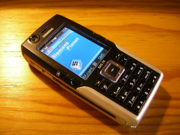
In 2005 Siemens sold the Siemens mobile manufacturing business to BenQ
, forming the BenQ-Siemens
division. Also in 2005 Siemens acquired Flender Holding GmbH (Bocholt
, Germany, gears/industrial drives), Bewator AB (building security systems), Wheelabrator Air Pollution Control, Inc. (Industrial and power station dust control systems), AN Windenegrie GmbH. (Wind energy), Power Technologies Inc. (Schenectady, USA, energy industry software and training), CTI Molecular Imaging (Positron emission tomography
and molecular imaging
systems), Myrio (IPTV
systems), Shaw Power Technologoes International Ltd (UK/USA, electrical engineering consulting, acquired from Shaw Group), and Transmitton (Ashby de la Zouch UK, rail and other industry control and asset management).
In 2006, Siemens announced the purchase of Bayer Diagnostics, which was incorporated into the Medical Solutions Diagnostics division on 1 January 2007, also in 2006 Siemens acquired Controlotron (New York) (ultrasonic flow meters) Also in 2006 Siemens acquired Diagnostic Products Corp., Kadon Electro Mechanical Services Ltd. (now TurboCare Canada Ltd.), Kühnle, Kopp, & Kausch AG, Opto Control, and VistaScape Security Systems
In March 2007 a Siemens board member was temporarily arrested and accused of illegally financing a business-friendly labour association which competes against the union IG Metall
. He has been released on bail. Offices of the labour union and of Siemens have been searched. Siemens denies any wrongdoing. In April the Fixed Networks, Mobile Networks and Carrier Services divisions of Siemens merged with Nokia
's Network Business Group in a 50/50 joint venture, creating a fixed and mobile network company called Nokia Siemens Networks
. Nokia delayed the merger due to bribery investigations against Siemens. In October 2007, a court in Munich found that the company had bribed public officials in Libya, Russia, and Nigeria in return for the awarding of contracts; four former Nigerian Ministers of Communications were among those named as recipients of the payments. The company admitted to having paid the bribes and agreed to pay a fine of 201 million euros. In December 2007, the Nigerian government cancelled a contract with Siemens due to the bribery findings.
Also in 2007 Siemens acquired Vai Ingdesi Automation (Argentina, Industrial Automation), UGS Corp., Dade Behring, Sidelco (Quebec
, Canada), S/D Engineers Inc., and Gesellschaft für Systemforschung und Dienstleistungen im Gesundheitswesen mbH (GSD) (Germany).
In July 2008, Siemens AG announced a joint venture of the Enterprise Communications business with the Gores Group. The Gores Group holding a majority interest of 51% stake, with Siemens AG holding a minority interest of 49%.
In January 2009, Siemens announced to sell its 34% stake in Framatome, complaining limited managerial influence. In March, it announced to form an alliance with Rosatom of Russia to engage in nuclear-power activities.
In April 2009, Fujitsu Siemens Computers
became Fujitsu Technology Solutions
as a result of Fujitsu buying out Siemens' share of the company.
In October 2009, Siemens signed a $418-million contract to buy Solel Solar Systems
an Israeli company in the solar thermal power business.
In March 2011, it was decided to list Osram on the stock market in the autumn, but CEO Peter Löscher said Siemens intended to retain a long-term interest in the company, which was already independent from the technological and managerial viewpoints.
In September 2011 Siemens announced that after the Fukushima disaster
and the turnaround in German energy policy, the company, responsible for building all 17 of Germany's existing nuclear power plants, would leave the nuclear sector
.
In addition two other organisations Siemens IT Solutions and Services and Siemens Financial Services were part of the group, providing services to the other divisions.
The company also operated subsidiaries for Financing (Siemens Financial Services
), Real Estate (Siemens Real Estate), Home Appliances (BSH), Water Technologies (SWT) and Business Services.
for price fixing
in EU electricity markets through a cartel
involving 11 companies, among which ABB, Alstom
, Fuji
, Hitachi Japan, AE Power Systems, Mitsubishi Electric Corp, Schneider
, Areva
, Toshiba
and VA Tech According to the Commission, "between 1988 and 2004, the companies rigged bids for procurement contracts, fixed prices, allocated projects to each other, shared markets and exchanged commercially important and confidential information." Siemens was given the highest fine of €396 million, more than half of the total, for its alleged leadership role in the incident.
In May 2007 a German court convicted two former executives of paying about €6 million in bribes from 1999 to 2002 to help Siemens win natural gas
turbine
supply contracts with Enel
, an Italian energy company. The contracts were valued at about €450 million. Siemens was fined €38 million.
in 2008 to provide Iran's monopoly telecom company with technology that allowed it to intercept the internet communications of its citizens to an unprecedented degree. The technology reportedly allowed it to use 'deep packet inspection
' to read and even change the content of everything from "emails and internet phone calls to images and messages on social-networking sites such as Facebook and Twitter". The technology "enables authorities to not only block communication but to monitor it to gather information about individuals, as well as alter it for disinformation purposes" expert insiders told the Wall Street Journal. During the post-election protests in Iran in June 2009, Iran's internet access was reported to have slowed to less than a tenth of its normal speeds, and experts suspected this was due to the use of the interception technology.
The joint venture company, Nokia-Siemens Networks, asserted in a press release that it provided Iran only with a 'lawful intercept capability' "solely for monitoring of local voice calls". "Nokia Siemens Networks has not provided any deep packet inspection, web censorship or Internet filtering capability to Iran", it said.
book written by Turkmenbashi, the notorious former dictator of Turkmenistan, was translated with assistance of DaimlerChrysler
in 2003 to German , the second part was translated with the aid of Siemens
. This helped the companies to gain contracts in Turkmenistan.
(ECB). In all, Siemens has deposited between 4 to 6 billion Euros ($5.4 to $8.1 billion) mainly in one-week deposits. Only prominent companies can deposit directly with the ECB.
, Siemens also devotes funds to rewarding students and AP teachers. One of its main programs is the Siemens Westinghouse Competition
in mathematics, science, and technology, which annually grants scholarships up to US$100,000 to both individual and team entrants. According to the foundation website, Siemens awards a total of nearly US$2 million in scholarship money every year.
Multinational corporation
A multi national corporation or enterprise , is a corporation or an enterprise that manages production or delivers services in more than one country. It can also be referred to as an international corporation...
conglomerate company headquartered in Munich
Munich
Munich The city's motto is "" . Before 2006, it was "Weltstadt mit Herz" . Its native name, , is derived from the Old High German Munichen, meaning "by the monks' place". The city's name derives from the monks of the Benedictine order who founded the city; hence the monk depicted on the city's coat...
, Germany. It is the largest Europe-based electronics and electrical engineering company.
Siemens is an integrated technology company with activities in the fields of industry, energy and healthcare. It is organised into six main divisions: Industry, Energy, Healthcare, Equity Investments, Siemens IT Solutions and Services and Siemens Financial Services (SFS).
Siemens and its subsidiaries employ approximately 420,800 people across nearly 190 countries and reported global revenue of 76.651 billion euros for the year of 2009. Siemens AG is listed on the Frankfurt Stock Exchange
Frankfurt Stock Exchange
The Frankfurt Stock Exchange is the world's 12th largest stock exchange by market capitalization. Located in Frankfurt am Main, Germany, the Frankfurt Stock Exchange is owned and operated by Deutsche Börse, which also owns the European futures exchange Eurex and the clearing company...
, and has been listed on the New York Stock Exchange
New York Stock Exchange
The New York Stock Exchange is a stock exchange located at 11 Wall Street in Lower Manhattan, New York City, USA. It is by far the world's largest stock exchange by market capitalization of its listed companies at 13.39 trillion as of Dec 2010...
since March 12, 2001.
Founder generation
Siemens & Halske was founded by Werner von SiemensErnst Werner von Siemens
Ernst Werner Siemens, von Siemens since 1888, was a German inventor and industrialist. Siemens' name has been adopted as the SI unit of electrical conductance, the siemens...
on 12 October 1847. Based on the telegraph, his invention used a needle to point to the sequence of letters, instead of using Morse code
Morse code
Morse code is a method of transmitting textual information as a series of on-off tones, lights, or clicks that can be directly understood by a skilled listener or observer without special equipment...
. The company, then called Telegraphen-Bauanstalt von Siemens & Halske, opened its first workshop on October 12.
In 1848, the company built the first long-distance telegraph line in Europe; 500 km from Berlin to Frankfurt am Main. In 1850 the founder's younger brother, Carl Wilhelm Siemens
Carl Wilhelm Siemens
Carl Wilhelm Siemens was a German born engineer who for most of his life worked in Britain and later became a British subject.-Biography:...
started to represent the company in London. In the 1850s, the company was involved in building long distance telegraph networks in Russia. In 1855, a company branch headed by another brother, Carl Heinrich von Siemens
Carl Heinrich von Siemens
Carl Heinrich von Siemens was a German entrepreneur, a child of a tenant farmer. He is a brother of Ernst Werner von Siemens and William Siemens, sons of Christian Ferdinand Siemens and wife Eleonore Deichmann...
, opened in St Petersburg, Russia. In 1867, Siemens completed the monumental Indo-European (Calcutta to London) telegraph line.
In 1881, a Siemens AC
Alternating current
In alternating current the movement of electric charge periodically reverses direction. In direct current , the flow of electric charge is only in one direction....
Alternator
Alternator
An alternator is an electromechanical device that converts mechanical energy to electrical energy in the form of alternating current.Most alternators use a rotating magnetic field but linear alternators are occasionally used...
driven by a watermill
Watermill
A watermill is a structure that uses a water wheel or turbine to drive a mechanical process such as flour, lumber or textile production, or metal shaping .- History :...
was used to power the world's first electric street lighting in the town of Godalming
Godalming
Godalming is a town and civil parish in the Waverley district of the county of Surrey, England, south of Guildford. It is built on the banks of the River Wey and is a prosperous part of the London commuter belt. Godalming shares a three-way twinning arrangement with the towns of Joigny in France...
, United Kingdom. The company continued to grow and diversified into electric trains and light bulbs. In 1890, the founder retired and left the company to his brother Carl and sons Arnold and Wilhelm.
Turn of the 20th century
Siemens & Halske (S&H) was incorporated in 1897, and then merged parts of its activities with Schuckert & Co., Nuremberg in 1903 to become Siemens-SchuckertSiemens-Schuckert
Siemens-Schuckert was a German electrical engineering company headquartered in Berlin, Erlangen and Nuremberg that was incorporated into the Siemens AG in 1966....
.
In 1907 Siemens (Siemens & Halske
Siemens & Halske
Siemens & Halske AG was a German electrical engineering company that later became part of Siemens AG.It was founded on 12 October 1847 as Telegraphen-Bauanstalt von Siemens & Halske by Ernst Werner von Siemens and Johann Georg Halske...
and Siemens-Schuckert
Siemens-Schuckert
Siemens-Schuckert was a German electrical engineering company headquartered in Berlin, Erlangen and Nuremberg that was incorporated into the Siemens AG in 1966....
) had 34,324 employees and was the seventh-largest company in the German empire by number of employees. (see List of German companies by employees in 1907)
In 1919, S&H and two other companies jointly formed the Osram
Osram
Osram, founded 1919, is part of the industry sector of Siemens AG and one of the two leading lighting manufacturers in the world. The name is derived from osmium and Wolfram , as both these elements were commonly used for lighting filaments at the time the company was founded...
lightbulb company. A Japanese subsidiary was established in 1923.
During the 1920s and 1930s, S&H started to manufacture radios, television set
Television set
A television set is a device that combines a tuner, display, and speakers for the purpose of viewing television. Television sets became a popular consumer product after the Second World War, using vacuum tubes and cathode ray tube displays...
s, and electron microscopes.
In 1932, Reiniger, Gebbert & Schall (Erlangen), Phönix AG (Rudolstadt) and Siemens-Reiniger-Veifa mbH (Berlin) merged to form the Siemens-Reiniger-Werke AG (SRW), the third of the so-called parent companies that merged in 1966 to form the present-day Siemens AG.
In the 1930s Siemens constructed the Ardnacrusha Hydro Power station on the River Shannon
River Shannon
The River Shannon is the longest river in Ireland at . It divides the west of Ireland from the east and south . County Clare, being west of the Shannon but part of the province of Munster, is the major exception...
in the then Irish Free State
Irish Free State
The Irish Free State was the state established as a Dominion on 6 December 1922 under the Anglo-Irish Treaty, signed by the British government and Irish representatives exactly twelve months beforehand...
, and it was a world first for its design. The company is remembered for its desire to raise the wages of its under-paid workers only to be overruled by the Cumann na nGaedheal government.
World War II era
Siemens businessman and Nazi Party member John Rabe
John Rabe
John Rabe was a German businessman who is best known for his efforts to stop the atrocities of the Japanese army during the Nanking Occupation and his work to protect and help the Chinese civilians during the event...
is credited with saving hundreds of thousands of Chinese lives during the Nanking Massacre
Nanking Massacre
The Nanking Massacre or Nanjing Massacre, also known as the Rape of Nanking, was a mass murder, genocide and war rape that occurred during the six-week period following the Japanese capture of the city of Nanjing , the former capital of the Republic of China, on December 13, 1937 during the Second...
. He later toured Germany lecturing on the atrocities committed in Nanking.
Post-war
In the 1950s and from their new base in BavariaBavaria
Bavaria, formally the Free State of Bavaria is a state of Germany, located in the southeast of Germany. With an area of , it is the largest state by area, forming almost 20% of the total land area of Germany...
, S&H started to manufacture computer
Computer
A computer is a programmable machine designed to sequentially and automatically carry out a sequence of arithmetic or logical operations. The particular sequence of operations can be changed readily, allowing the computer to solve more than one kind of problem...
s, semiconductor device
Semiconductor device
Semiconductor devices are electronic components that exploit the electronic properties of semiconductor materials, principally silicon, germanium, and gallium arsenide, as well as organic semiconductors. Semiconductor devices have replaced thermionic devices in most applications...
s, washing machines, and pacemaker
Artificial pacemaker
A pacemaker is a medical device that uses electrical impulses, delivered by electrodes contacting the heart muscles, to regulate the beating of the heart...
s.
In 1966, Siemens & Halske
Siemens & Halske
Siemens & Halske AG was a German electrical engineering company that later became part of Siemens AG.It was founded on 12 October 1847 as Telegraphen-Bauanstalt von Siemens & Halske by Ernst Werner von Siemens and Johann Georg Halske...
(S&H, founded in 1847), Siemens-Schuckert
Siemens-Schuckert
Siemens-Schuckert was a German electrical engineering company headquartered in Berlin, Erlangen and Nuremberg that was incorporated into the Siemens AG in 1966....
werke (SSW, founded in 1903) and Siemens-Reiniger-Werke (SRW, founded in 1932) merged to form Siemens AG.
In 1969, Siemens formed Kraftwerk Union with AEG
AEG
Allgemeine Elektricitäts-Gesellschaft was a German producer of electrical equipment founded in 1883 by Emil Rathenau....
by pooling their nuclear power businesses.
The company's first digital telephone exchange was produced in 1980. In 1988 Siemens and GEC acquired the UK defence and technology company Plessey
Plessey
The Plessey Company plc was a British-based international electronics, defence and telecommunications company. It originated in 1917, growing and diversifying into electronics. It expanded after the second world war by acquisition of companies and formed overseas companies...
. Plessey's holdings were split, and Siemens took over the avionics
Avionics
Avionics are electronic systems used on aircraft, artificial satellites and spacecraft.Avionic systems include communications, navigation, the display and management of multiple systems and the hundreds of systems that are fitted to aircraft to meet individual roles...
, radar
Radar
Radar is an object-detection system which uses radio waves to determine the range, altitude, direction, or speed of objects. It can be used to detect aircraft, ships, spacecraft, guided missiles, motor vehicles, weather formations, and terrain. The radar dish or antenna transmits pulses of radio...
and traffic control businesses — as Siemens Plessey
Siemens Plessey
Siemens Plessey was the name given to the Plessey businesses acquired by Siemens in 1989. Plessey, a British-based international electronics, defence and telecommunications company, was at the time the second largest defence electronics contractor to the Ministry of Defence and the largest supplier...
.
In 1985 Siemens bought Allis-Chalmers' interest in the partnership company Siemens-Allis (formed 1978) which supplied electrical control equipment. It was incorporated into Siemens' Energy and Automation division.
In 1987, Siemens reintegrated Kraftwerk Union, the unit overseeing nuclear power business.
In 1991, Siemens acquired Nixdorf Computer AG
Nixdorf Computer AG
Nixdorf Computer AG was a computer company founded by Heinz Nixdorf in 1952. Headquartered in Paderborn, Germany, it became the fourth largest computer company in Europe, and a worldwide specialist in banking and point-of-sale systems...
and renamed it Siemens Nixdorf Informationssysteme
Siemens Nixdorf Informationssysteme
Siemens Nixdorf Informationssysteme, AG was formed in 1990 by the merger of Nixdorf Computer AG and the Siemens' Data Information Services division...
AG, in order to produce personal computer
Personal computer
A personal computer is any general-purpose computer whose size, capabilities, and original sales price make it useful for individuals, and which is intended to be operated directly by an end-user with no intervening computer operator...
s.
In October 1991, Siemens acquired the Industrial Systems Division of Texas Instruments
Texas Instruments
Texas Instruments Inc. , widely known as TI, is an American company based in Dallas, Texas, United States, which develops and commercializes semiconductor and computer technology...
, Inc, based in Johnson City, Tennessee. This division was organized as Siemens Industrial Automation, Inc., and was later absorbed by Siemens Energy and Automation, Inc.
In 1997 Siemens agreed to sell the defence arm of Siemens Plessey
Siemens Plessey
Siemens Plessey was the name given to the Plessey businesses acquired by Siemens in 1989. Plessey, a British-based international electronics, defence and telecommunications company, was at the time the second largest defence electronics contractor to the Ministry of Defence and the largest supplier...
to British Aerospace
British Aerospace
British Aerospace plc was a UK aircraft, munitions and defence-systems manufacturer. Its head office was in the Warwick House in the Farnborough Aerospace Centre in Farnborough, Hampshire...
(BAe) and a German aerospace company, DaimlerChrysler Aerospace. BAe and DASA acquired the British and German divisions of the operation respectively.
In 1999, Siemens' semiconductor operations were spun off into a new company known as Infineon Technologies
Infineon Technologies
Infineon Technologies AG is a German semiconductor manufacturer and was founded on April 1, 1999, when the semiconductor operations of the parent company Siemens AG were spun off to form a separate legal entity. , Infineon has 25,149 employees worldwide...
. Also, Siemens Nixdorf Informationssysteme AG formed part of Fujitsu Siemens Computers
Fujitsu Siemens Computers
Fujitsu Siemens Computers B.V. was a Japanese and German IT vendor. The company was founded in 1999 as a 50/50 joint venture between Fujitsu Limited of Japan and Siemens AG of Germany...
AG in that year. The retail banking
Retail banking
Retail banking is banking in which banking institutions execute transactions directly with consumers, rather than corporations or other banks. Services offered include: savings and transactional accounts, mortgages, personal loans, debit cards, credit cards, and so forth.-Types of...
technology group became Wincor Nixdorf
Wincor Nixdorf
Wincor Nixdorf is a German corporation that provides retail and retail banking hardware, software, and services. Wincor Nixdorf is engaged primarily in the sale, manufacture, installation and service of self-service transaction systems , retail banking equipment, lottery terminals, postal...
.
In 2000 Shared Medical Systems Corporation was acquired by the Siemens' Medical Engineering Group, eventually becoming part of Siemens Medical Solutions
Siemens Medical Solutions
Siemens Healthcare is a supplier to the healthcare industry, and is headquartered in Erlangen, Germany. Prior to being acquired by Siemens in 2000, the company was known as Shared Medical Systems Corporation and traded on the New York Stock Exhange as "SMS"...
.
Also in 2000 Atecs-Mannesman was acquired by Siemens, The sale was finalised in April 2001 with 50% of the shares acquired, acquisition, Mannesmann VDO AG merged into Siemens Automotive forming Siemens VDO Automotive AG, Atecs Mannesmann Dematic Systems merged into Siemens Production and Logistics forming Siemens Dematic AG, Mannesmann Demag Delaval merged into the Power Generation division of Siemens AG. Other parts of the company were acquired by Robert Bosch GmbH
Robert Bosch GmbH
Robert Bosch GmbH is a multinational engineering and electronics company headquartered in Gerlingen, near Stuttgart, Germany. It is the world's largest supplier of automotive components...
at the same time.
In 2001 Chemtech Group of Brazil was incorporated into the Siemens Group, the company provides industrial process optimisation, consultancy and other engineering services
Also in 2001, Siemens formed joint venture Framatome with Areva SA
Areva
AREVA is a French public multinational industrial conglomerate headquartered in the Tour Areva in Courbevoie, Paris. AREVA is mainly known for nuclear power; it also has interests in other energy projects. It was created on 3 September 2001, by the merger of Framatome , Cogema and...
of France by merging much of their nuclear businesses.
Danfoss
The Danfoss Group is a global producer of components and solutions for refrigeration & air conditioning, heating & water, and motion controls. Danfoss has net sales of €2,600 million and employs approximately 22,000 people worldwide with headquarters in Nordborg, Denmark.Danfoss was founded in...
and incorporated it into the Automation and Drives division. Also in 2003 Siemens acquired IndX software (realtime data organisation and presentation). The same year in an unrelated development Siemens reopened its office in Kabul
Kabul
Kabul , spelt Caubul in some classic literatures, is the capital and largest city of Afghanistan. It is also the capital of the Kabul Province, located in the eastern section of Afghanistan...
. Also in 2003 agreed to buy Alstom Industrial Turbines; a manufacturer of small, medium and industrial gas turbines for 1.1 billion Euro.
In 2004 the wind energy company Bonus Energy in Brande
Brande
Brande is a railway town with a population of 6,959 located at the railroad between Vejle and Herning in Ikast-Brande municipality in Region Midtjylland in the central area of the Jutland peninsula in west Denmark....
, Denmark was acquired, forming Siemens Wind Power
Siemens Wind Power
Siemens Wind Power, or SWP, is a wind turbine manufacturer with headquarters and main production facilities established in 1980 in Brande, Denmark. SWP is wholly owned by Siemens of Germany since 2004 through the Renewable Energy division in the Siemens Energy sector...
division. Also in 2004 Siemens invested in Dasan Networks (South Korea, broadband network equipment) acquiring ~40% of the shares, Nokia Siemens disinvested itself of the shares in 2008. The same year Siemens acquired Photo-Scan (UK, CCTV systems) US Filter Corporation (water and Waste Water Treatment Technologies/ Solutions, acquired from Veolia), Hunstville Electronics Corporation (automobile electronics, acquired from Chrysler
Chrysler
Chrysler Group LLC is a multinational automaker headquartered in Auburn Hills, Michigan, USA. Chrysler was first organized as the Chrysler Corporation in 1925....
), and Chantry Networks (WLAN equipment)
In 2005 Siemens sold the Siemens mobile manufacturing business to BenQ
BenQ
BenQ Corporation is a Taiwanese multi-national company that sells and markets consumer electronics, computing and communications devices under the "BenQ" brand name, which stands for the company slogan Bringing Enjoyment and Quality to life .- Company :BenQ sells and markets technology products,...
, forming the BenQ-Siemens
BenQ-Siemens
BenQ-Siemens was the mobile communications subsidiary of Taiwanese BenQ Corp. The division was formed out of BenQ's acquisition of the then struggling Siemens mobile group in 2005. The stated goal of the company was to pull together BenQ's lifestyle experience, their design team and Siemens'...
division. Also in 2005 Siemens acquired Flender Holding GmbH (Bocholt
Bocholt
There are two towns called Bocholt:* Bocholt, Germany* Bocholt, Belgium...
, Germany, gears/industrial drives), Bewator AB (building security systems), Wheelabrator Air Pollution Control, Inc. (Industrial and power station dust control systems), AN Windenegrie GmbH. (Wind energy), Power Technologies Inc. (Schenectady, USA, energy industry software and training), CTI Molecular Imaging (Positron emission tomography
Positron emission tomography
Positron emission tomography is nuclear medicine imaging technique that produces a three-dimensional image or picture of functional processes in the body. The system detects pairs of gamma rays emitted indirectly by a positron-emitting radionuclide , which is introduced into the body on a...
and molecular imaging
Molecular imaging
Molecular imaging originated from the field of radiopharmacology due to the need to better understand the fundamental molecular pathways inside organisms in a noninvasive manner.- Overview :...
systems), Myrio (IPTV
IPTV
Internet Protocol television is a system through which television services are delivered using the Internet protocol suite over a packet-switched network such as the Internet, instead of being delivered through traditional terrestrial, satellite signal, and cable television formats.IPTV services...
systems), Shaw Power Technologoes International Ltd (UK/USA, electrical engineering consulting, acquired from Shaw Group), and Transmitton (Ashby de la Zouch UK, rail and other industry control and asset management).
In 2006, Siemens announced the purchase of Bayer Diagnostics, which was incorporated into the Medical Solutions Diagnostics division on 1 January 2007, also in 2006 Siemens acquired Controlotron (New York) (ultrasonic flow meters) Also in 2006 Siemens acquired Diagnostic Products Corp., Kadon Electro Mechanical Services Ltd. (now TurboCare Canada Ltd.), Kühnle, Kopp, & Kausch AG, Opto Control, and VistaScape Security Systems
In March 2007 a Siemens board member was temporarily arrested and accused of illegally financing a business-friendly labour association which competes against the union IG Metall
IG Metall
IG Metall is the dominant metalworkers' union in Germany. Analysts of German labor relations consider it a major trend-setter in national bargaining. As a metalworkers' union, it represents workers in the motor vehicle industry...
. He has been released on bail. Offices of the labour union and of Siemens have been searched. Siemens denies any wrongdoing. In April the Fixed Networks, Mobile Networks and Carrier Services divisions of Siemens merged with Nokia
Nokia
Nokia Corporation is a Finnish multinational communications corporation that is headquartered in Keilaniemi, Espoo, a city neighbouring Finland's capital Helsinki...
's Network Business Group in a 50/50 joint venture, creating a fixed and mobile network company called Nokia Siemens Networks
Nokia Siemens Networks
Nokia Siemens Networks is a global data networking and telecommunications equipment company headquartered in Espoo, Finland. It is a joint venture between Nokia of Finland and Siemens of Germany...
. Nokia delayed the merger due to bribery investigations against Siemens. In October 2007, a court in Munich found that the company had bribed public officials in Libya, Russia, and Nigeria in return for the awarding of contracts; four former Nigerian Ministers of Communications were among those named as recipients of the payments. The company admitted to having paid the bribes and agreed to pay a fine of 201 million euros. In December 2007, the Nigerian government cancelled a contract with Siemens due to the bribery findings.
Also in 2007 Siemens acquired Vai Ingdesi Automation (Argentina, Industrial Automation), UGS Corp., Dade Behring, Sidelco (Quebec
Quebec
Quebec or is a province in east-central Canada. It is the only Canadian province with a predominantly French-speaking population and the only one whose sole official language is French at the provincial level....
, Canada), S/D Engineers Inc., and Gesellschaft für Systemforschung und Dienstleistungen im Gesundheitswesen mbH (GSD) (Germany).
In July 2008, Siemens AG announced a joint venture of the Enterprise Communications business with the Gores Group. The Gores Group holding a majority interest of 51% stake, with Siemens AG holding a minority interest of 49%.
In January 2009, Siemens announced to sell its 34% stake in Framatome, complaining limited managerial influence. In March, it announced to form an alliance with Rosatom of Russia to engage in nuclear-power activities.
In April 2009, Fujitsu Siemens Computers
Fujitsu Siemens Computers
Fujitsu Siemens Computers B.V. was a Japanese and German IT vendor. The company was founded in 1999 as a 50/50 joint venture between Fujitsu Limited of Japan and Siemens AG of Germany...
became Fujitsu Technology Solutions
Fujitsu Technology Solutions
Fujitsu Technology Solutions is one of the leading European IT vendors with a presence in all key markets in Europe, the Middle East and Africa, plus India...
as a result of Fujitsu buying out Siemens' share of the company.
In October 2009, Siemens signed a $418-million contract to buy Solel Solar Systems
Solel
Solel Solar Systems Ltd. is an Israeli solar thermal equipment designer and manufacturer based in Beit Shemesh, Israel. Solel makes equipment for solar thermal power plants, facilities that use the sun's heat to create steam and turn an electricity generator....
an Israeli company in the solar thermal power business.
In March 2011, it was decided to list Osram on the stock market in the autumn, but CEO Peter Löscher said Siemens intended to retain a long-term interest in the company, which was already independent from the technological and managerial viewpoints.
In September 2011 Siemens announced that after the Fukushima disaster
Fukushima Daiichi nuclear disaster
The is a series of equipment failures, nuclear meltdowns, and releases of radioactive materials at the Fukushima I Nuclear Power Plant, following the Tōhoku earthquake and tsunami on 11 March 2011. The plant comprises six separate boiling water reactors originally designed by General Electric ,...
and the turnaround in German energy policy, the company, responsible for building all 17 of Germany's existing nuclear power plants, would leave the nuclear sector
Nuclear sector
Here is a list of all large companies which are active along the nuclear chain, from uranium mining, processing and enrichment, to the actual operating of nuclear power plant and waste processing.- Source :* http://www.nuclearbanks.org...
.
Management
Peter Löscher (formerly of Merck) is the current president and the CEO as of July 1, 2007. He succeeded Dr. Klaus Kleinfeld after the scandal charges of bribery against Siemens. Gerhard Cromme is the current chairman of the supervisory board of Siemens AG. He succeeded Dr. Heinrich von Pierer on April 26, 2007.Organization structure
Since 1 January 2008, the company is divided into 3 sectors and a total of 15 divisions.- Industry Sector (led by Siegfried Russwurm)
- Comprising six sub-divisions: Industry Automation, Motion Control, Building TechnologiesSiemens Building TechnologiesSiemens Building Technologies, Inc. is part of Siemens AG, a global electronics and information technology company and is a green building endorser...
, Industry Solutions, Mobility (See Siemens Mobility) and OsramOsramOsram, founded 1919, is part of the industry sector of Siemens AG and one of the two leading lighting manufacturers in the world. The name is derived from osmium and Wolfram , as both these elements were commonly used for lighting filaments at the time the company was founded...
- Comprising six sub-divisions: Industry Automation, Motion Control, Building Technologies
- Energy Sector (led by Michael Süß)
- Comprising six sub-divisions: Fossil Power Generation, Renewable Energy, Oil & Gas, Service Rotating Equipment, Power Transmission and Power Distribution
- Healthcare Sector (led by Hermann Requardt)
- Comprising three sub divisions: Imaging & IT, Workflow & Solutions and Diagnostics
- In March 2011, the Supervisory Board approved Löscher's move to re-organize and create a fourth sector, Infrastructure & Cities, which will come into being in October 2011.
In addition two other organisations Siemens IT Solutions and Services and Siemens Financial Services were part of the group, providing services to the other divisions.
Key business areas and subsidiary companies before 2009
Siemens' five operational business areas before 2009 were:- Automation & Control (Automation & Drives, Industrial Solutions & Services, Siemens Building TechnologiesSiemens Building TechnologiesSiemens Building Technologies, Inc. is part of Siemens AG, a global electronics and information technology company and is a green building endorser...
) - Power,
- Transportation
- Rail (see Siemens Transportation SystemsSiemens Transportation SystemsSiemens Mobility is a division of the German Siemens AG conglomerate. The Mobility sub-division brings together Siemens competencies in rail, road, and air traffic solutions....
) - Automotive
- Rail (see Siemens Transportation Systems
- Medical (Siemens Healthcare)
- Information & Communication (Siemens CommunicationsSiemens COMSiemens Communications was the communications and information business of German industrial conglomerate Siemens AG. It was the largest division of Siemens and is divided into Mobile Networks, Fixed Networks and Enterprise business units.-History:...
, Siemens IT Solutions and Services) - Lighting (OSRAM GmbHOsramOsram, founded 1919, is part of the industry sector of Siemens AG and one of the two leading lighting manufacturers in the world. The name is derived from osmium and Wolfram , as both these elements were commonly used for lighting filaments at the time the company was founded...
, OSRAM SylvaniaOsram SylvaniaOsram Sylvania Inc. is the North American operation of lighting manufacturer Osram GmbH, which is owned by Siemens AG. It was established in January 1993, with the acquisition of GTE’s Sylvania lighting division by Osram GmbH....
).
The company also operated subsidiaries for Financing (Siemens Financial Services
Siemens Financial Services
Siemens Financial Services GmbH is a subsidiary of Siemens AG. The company’s global headquarters is in Munich, Germany. The Financial Services division of Siemens offers international financing solutions in the business-to-business area. Financial Services serves Siemens as well as other companies...
), Real Estate (Siemens Real Estate), Home Appliances (BSH), Water Technologies (SWT) and Business Services.
Joint ventures
In addition to the Nokia Siemens telecommunications giant formed in 2006 the company has a number of other joint ventures:- Siemens Traction Equipment Ltd. (STEZ), ZhuzhouZhuzhouZhuzhou , formerly Jianning, is a city in Hunan Province, China, southeast of Changsha beside the Xiangjiang River. It is part of the "ChangZhuTan Golden Triangle"...
China, is a joint venture between Siemens, Zhuzhou CSR Times Electric Co., Ltd.Zhuzhou CSR Times ElectricZhuzhou CSR Times Electric Company Limited is a a subsidiary of CSR Corporation Limited, which engages in research and development, design, manufacture and sales of mass transit electric drive converter and control systems in China. It is headquartered in Zhuzhou, Hunan.It was listed on the Hong...
(TEC) and CSR Zhuzhou Electric Locomotive Co., Ltd. (ZELC). which produces AC drive electric locomotives and AC locomotive traction components.
- Silcar Pty. Ltd., Silcar’s parent companies are Siemens Ltd and Thiess Services Pty Ltd. Silcar has 50/50 shareholders; Siemens Ltd (a global leader in electrical engineering and electronics) and Thiess Services (a leading integrated engineering and services provider in Australasia and South East Asia). Silcar is a 3,000 person Australian organisation providing productivity and reliability for large scale and technically complex plant assets. Services include asset management, design, construction, operations and maintenance. Silcar operates across a range of industries and essential services including power generation, electrical distribution, manufacturing, mining and telecommunications.
2007 Price fixing fine
In January 2007 Siemens was fined €396 million by the European CommissionEuropean Commission
The European Commission is the executive body of the European Union. The body is responsible for proposing legislation, implementing decisions, upholding the Union's treaties and the general day-to-day running of the Union....
for price fixing
Price fixing
Price fixing is an agreement between participants on the same side in a market to buy or sell a product, service, or commodity only at a fixed price, or maintain the market conditions such that the price is maintained at a given level by controlling supply and demand...
in EU electricity markets through a cartel
Cartel
A cartel is a formal agreement among competing firms. It is a formal organization of producers and manufacturers that agree to fix prices, marketing, and production. Cartels usually occur in an oligopolistic industry, where there is a small number of sellers and usually involve homogeneous products...
involving 11 companies, among which ABB, Alstom
Alstom
Alstom is a large multinational conglomerate which holds interests in the power generation and transport markets. According to the company website, in the years 2010-2011 Alstom had annual sales of over €20.9 billion, and employed more than 85,000 people in 70 countries. Alstom's headquarters are...
, Fuji
Fuji
-People:* Mr. Fuji, ring name of wrestling and manager Harry Fujiwara* Keiko Fuji, a Japanese singer of the 1960s and 1970s, and mother of Hikaru Utada* Sumiko Fuji, a Japanese actressFictional characters* Fuji , a character in the Stormwatch series...
, Hitachi Japan, AE Power Systems, Mitsubishi Electric Corp, Schneider
Schneider Electric
Schneider Electric is a French global company. It was founded in 1836 by two brothers, Eugène and Adolphe Schneider.In the first part of the 20th century, Schneider et Cie associated itself with Westinghouse Systems, a major international electrical group at the time. The group began manufacturing...
, Areva
Areva
AREVA is a French public multinational industrial conglomerate headquartered in the Tour Areva in Courbevoie, Paris. AREVA is mainly known for nuclear power; it also has interests in other energy projects. It was created on 3 September 2001, by the merger of Framatome , Cogema and...
, Toshiba
Toshiba
is a multinational electronics and electrical equipment corporation headquartered in Tokyo, Japan. It is a diversified manufacturer and marketer of electrical products, spanning information & communications equipment and systems, Internet-based solutions and services, electronic components and...
and VA Tech According to the Commission, "between 1988 and 2004, the companies rigged bids for procurement contracts, fixed prices, allocated projects to each other, shared markets and exchanged commercially important and confidential information." Siemens was given the highest fine of €396 million, more than half of the total, for its alleged leadership role in the incident.
Bribery case
Siemens agreed to pay a record $1.34 billion in fines in December 2008 after being investigated for serious bribery. The investigation found questionable payments of roughly €1.3 billion, from 2002 to 2006 that triggered a broad range of inquiries in Germany, the United States and many other countries.In May 2007 a German court convicted two former executives of paying about €6 million in bribes from 1999 to 2002 to help Siemens win natural gas
Natural gas
Natural gas is a naturally occurring gas mixture consisting primarily of methane, typically with 0–20% higher hydrocarbons . It is found associated with other hydrocarbon fuel, in coal beds, as methane clathrates, and is an important fuel source and a major feedstock for fertilizers.Most natural...
turbine
Gas turbine
A gas turbine, also called a combustion turbine, is a type of internal combustion engine. It has an upstream rotating compressor coupled to a downstream turbine, and a combustion chamber in-between....
supply contracts with Enel
Enel
Enel may refer to:*Enel SpA, an Italian electricity company*Enel , a fictional villain in the One Piece manga and anime series*Enel, meaning third in the fiction of J. R. R. Tolkien, cf. Awakening of the Elves...
, an Italian energy company. The contracts were valued at about €450 million. Siemens was fined €38 million.
Iran telecoms controversy
Siemens was part of a joint venture with NokiaNokia
Nokia Corporation is a Finnish multinational communications corporation that is headquartered in Keilaniemi, Espoo, a city neighbouring Finland's capital Helsinki...
in 2008 to provide Iran's monopoly telecom company with technology that allowed it to intercept the internet communications of its citizens to an unprecedented degree. The technology reportedly allowed it to use 'deep packet inspection
Deep packet inspection
Deep Packet Inspection is a form of computer network packet filtering that examines the data part of a packet as it passes an inspection point, searching for protocol non-compliance, viruses, spam, intrusions or predefined criteria to decide if the packet can...
' to read and even change the content of everything from "emails and internet phone calls to images and messages on social-networking sites such as Facebook and Twitter". The technology "enables authorities to not only block communication but to monitor it to gather information about individuals, as well as alter it for disinformation purposes" expert insiders told the Wall Street Journal. During the post-election protests in Iran in June 2009, Iran's internet access was reported to have slowed to less than a tenth of its normal speeds, and experts suspected this was due to the use of the interception technology.
The joint venture company, Nokia-Siemens Networks, asserted in a press release that it provided Iran only with a 'lawful intercept capability' "solely for monitoring of local voice calls". "Nokia Siemens Networks has not provided any deep packet inspection, web censorship or Internet filtering capability to Iran", it said.
Ruhnama translations
The first part of the RuhnamaRuhnama
Ruhnama , is a book written by Saparmurat Niyazov, late President for Life of Turkmenistan, combining spiritual/moral guidance, autobiography and revisionist history, much of it is of dubious or disputed factuality and accuracy. The text includes many stories and poems, including those by Sufi poet...
book written by Turkmenbashi, the notorious former dictator of Turkmenistan, was translated with assistance of DaimlerChrysler
DaimlerChrysler
Daimler AG is a German car corporation. By unit sales, it is the thirteenth-largest car manufacturer and second-largest truck manufacturer in the world. In addition to automobiles, Daimler manufactures buses and provides financial services through its Daimler Financial Services arm...
in 2003 to German , the second part was translated with the aid of Siemens
Siemens
Siemens may refer toSiemens, a German family name carried by generations of telecommunications industrialists, including:* Werner von Siemens , inventor, founder of Siemens AG...
. This helped the companies to gain contracts in Turkmenistan.
Finance
Feeling insecure, in September 2011, Siemens transferred more than half-a-billion Euros in cash deposits from a large French bank to the European Central BankEuropean Central Bank
The European Central Bank is the institution of the European Union that administers the monetary policy of the 17 EU Eurozone member states. It is thus one of the world's most important central banks. The bank was established by the Treaty of Amsterdam in 1998, and is headquartered in Frankfurt,...
(ECB). In all, Siemens has deposited between 4 to 6 billion Euros ($5.4 to $8.1 billion) mainly in one-week deposits. Only prominent companies can deposit directly with the ECB.
Siemens Foundation
Through an American sub-organisation known as the Siemens FoundationSiemens Foundation
The Siemens Foundation is a non-profit organization run by Siemens AG. It is responsible for the Siemens Westinghouse Competition, a prestigious science award for high school students in the United States, and also is involved in the Siemens AP Scholar Award...
, Siemens also devotes funds to rewarding students and AP teachers. One of its main programs is the Siemens Westinghouse Competition
Siemens Westinghouse Competition
The Siemens Competition is a science competition funded by the Siemens Foundation and administered by the College Board.- Eligibility requirements :The Siemens Competition is open to high school students who are citizens or permanent residents of the US...
in mathematics, science, and technology, which annually grants scholarships up to US$100,000 to both individual and team entrants. According to the foundation website, Siemens awards a total of nearly US$2 million in scholarship money every year.
See also
- Phoebus cartelPhoebus cartelThe Phoebus cartel was a cartel of, among others, Osram, Philips and General Electric from December 23, 1924 until 1939 that existed to control the manufacture and sale of light bulbs....
- Allis-ChalmersAllis-ChalmersThe Allis-Chalmers Manufacturing Co. of West Allis, Wisconsin, is an American company known for its past as a manufacturer with diverse interests, perhaps most famous for their bright Persian Orange farm tractors...
- BenQ-SiemensBenQ-SiemensBenQ-Siemens was the mobile communications subsidiary of Taiwanese BenQ Corp. The division was formed out of BenQ's acquisition of the then struggling Siemens mobile group in 2005. The stated goal of the company was to pull together BenQ's lifestyle experience, their design team and Siemens'...
- Siemens Enterprise CommunicationsSiemens Enterprise CommunicationsSiemens Enterprise Communications is a joint venture between the American private equity firm The Gores Group and German industrial conglomerate Siemens AG.The joint venture was announced on July 29, 2008, and was launched on October 1, 2008...
- Fujitsu Siemens ComputersFujitsu Siemens ComputersFujitsu Siemens Computers B.V. was a Japanese and German IT vendor. The company was founded in 1999 as a 50/50 joint venture between Fujitsu Limited of Japan and Siemens AG of Germany...
- List of assets owned by Siemens
- Nokia Siemens NetworksNokia Siemens NetworksNokia Siemens Networks is a global data networking and telecommunications equipment company headquartered in Espoo, Finland. It is a joint venture between Nokia of Finland and Siemens of Germany...
- Siemens LimitedSiemens LimitedSiemens Limited is a company in Saudi Arabia and part of the global Siemens AG. Siemens Limited provides comprehensive solutions in many fields, ranging from oil and gas, petrochemicals, and power generation and distribution to information and communications, and health care.- History of Siemens in...
- Siemens mobile
- Siemens Nixdorf InformationssystemeSiemens Nixdorf InformationssystemeSiemens Nixdorf Informationssysteme, AG was formed in 1990 by the merger of Nixdorf Computer AG and the Siemens' Data Information Services division...
- Simatic S5 PLCSimatic S5 PLCThe Simatic S5 PLC is an automation system based on Programmable Logic Controllers. It is manufactured and sold by Siemens AG. Such automation systems control process equipment and machinery used in manufacturing. This product line is considered obsolete, as the manufacturer has since replaced it...
- General ElectricGeneral ElectricGeneral Electric Company , or GE, is an American multinational conglomerate corporation incorporated in Schenectady, New York and headquartered in Fairfield, Connecticut, United States...
, an American industrial conglomerate of similar size and variety of businesses.
Further reading
- Weiher, Siegfried von /Herbert Goetzeler (1984). The Siemens Company, Its Historical Role in the Progress of Electrical Engineering 1847–1980, 2nd ed. Berlin and Munich.
- Feldenkirchen, Wilfried (2000). Siemens, From Workshop to Global Player, Munich.
- Feldenkirchen, Wilfried / Eberhard Posner (2005): The Siemens Entrepreneurs, Continuity and Change, 1847–2005, Ten Portraits, Munich.